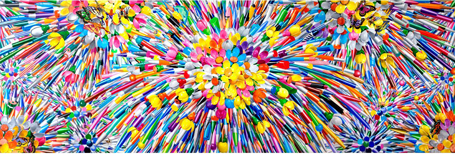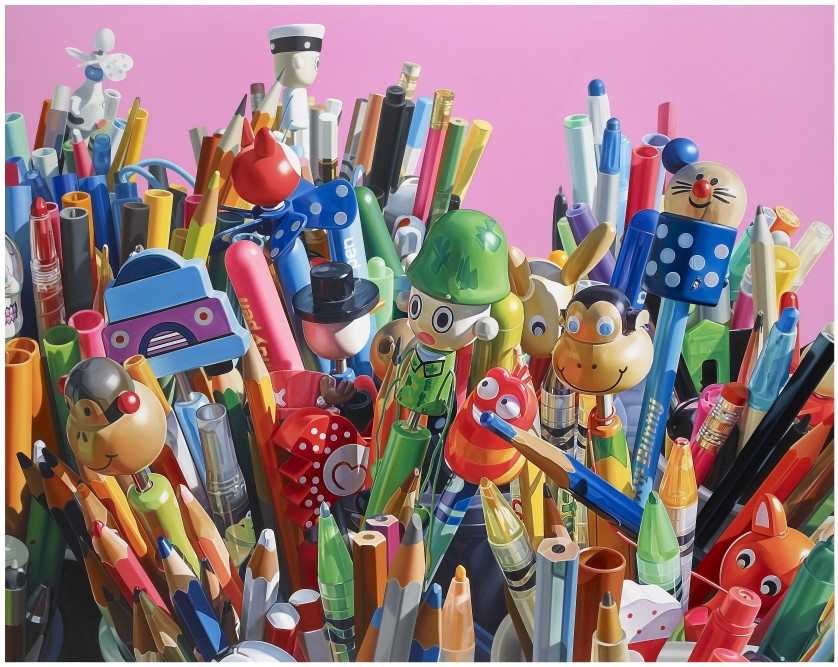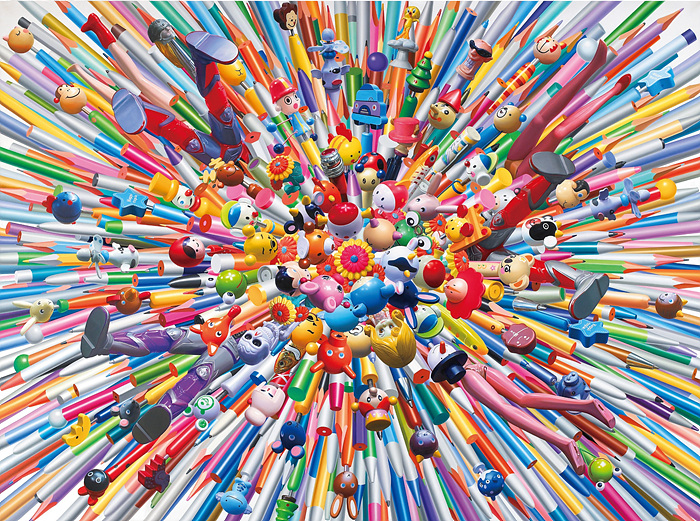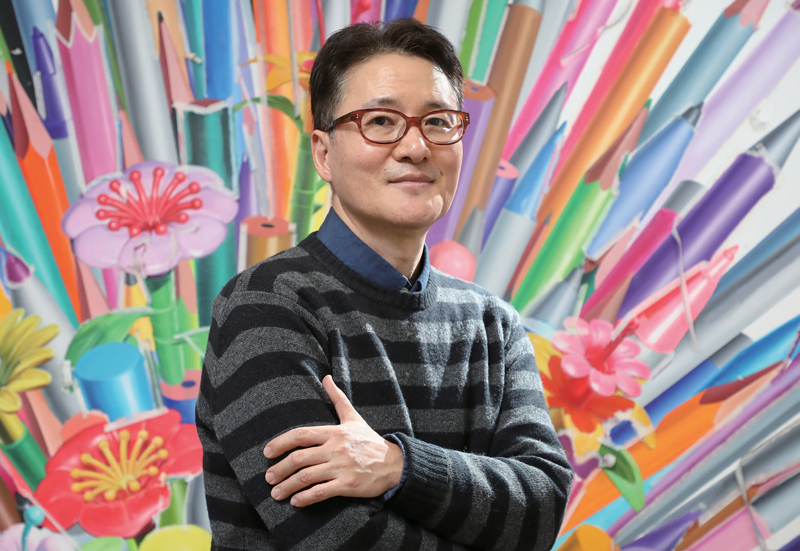

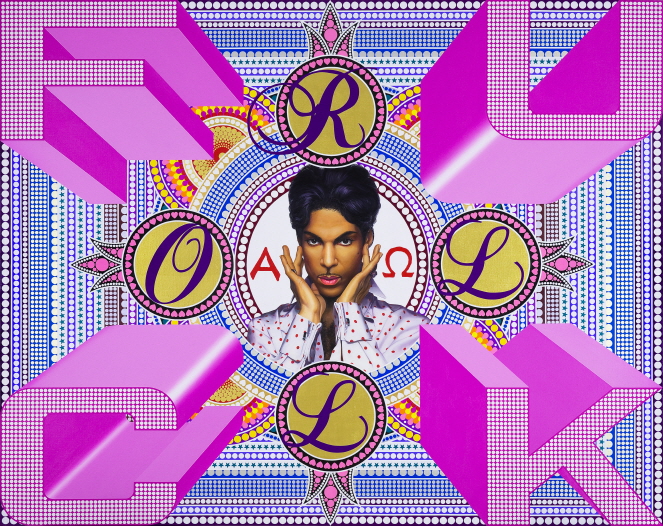
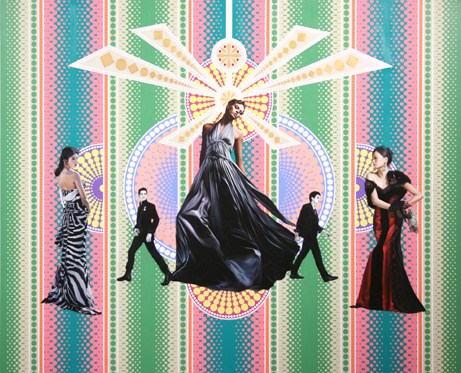
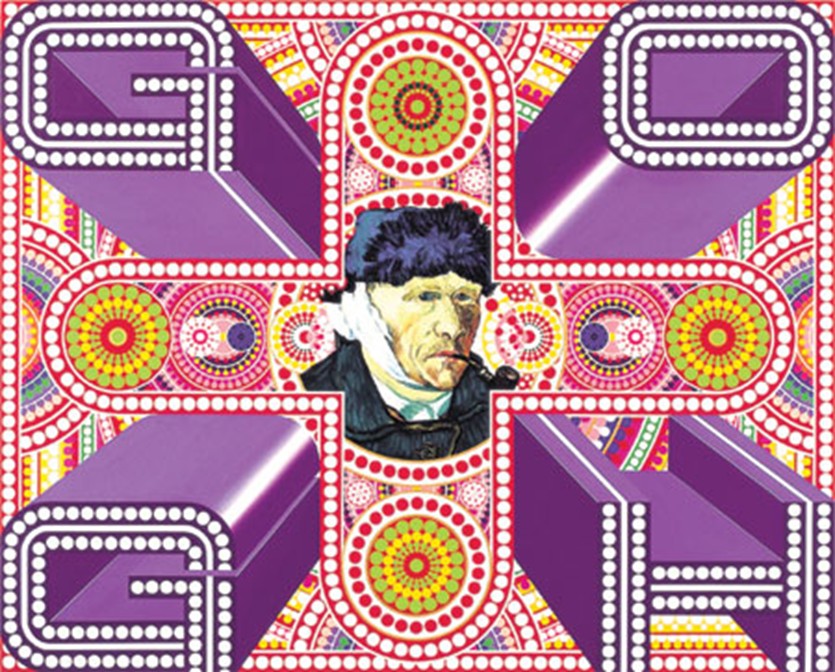
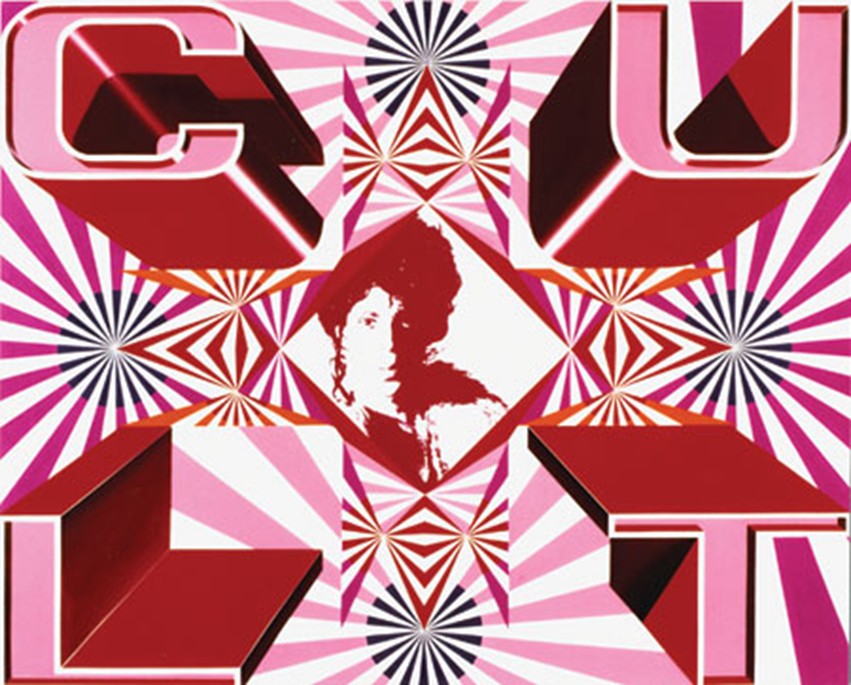
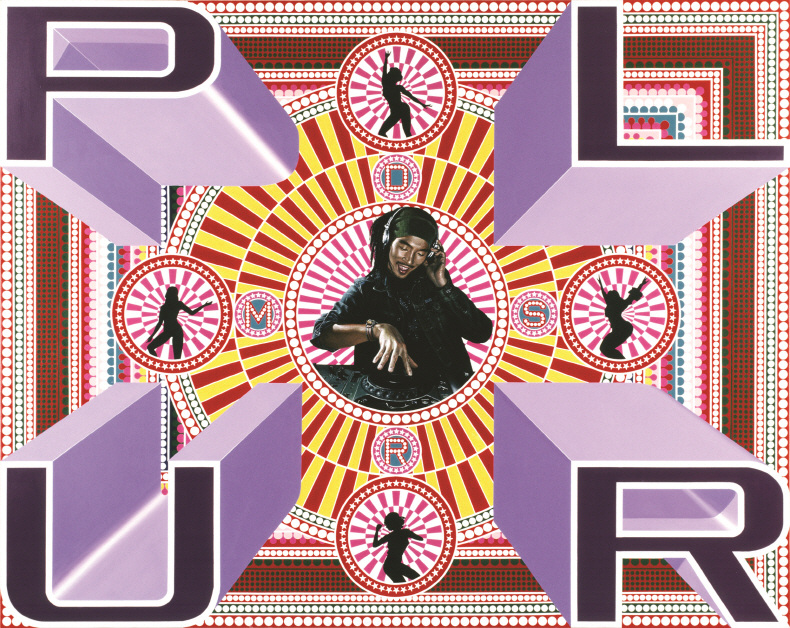
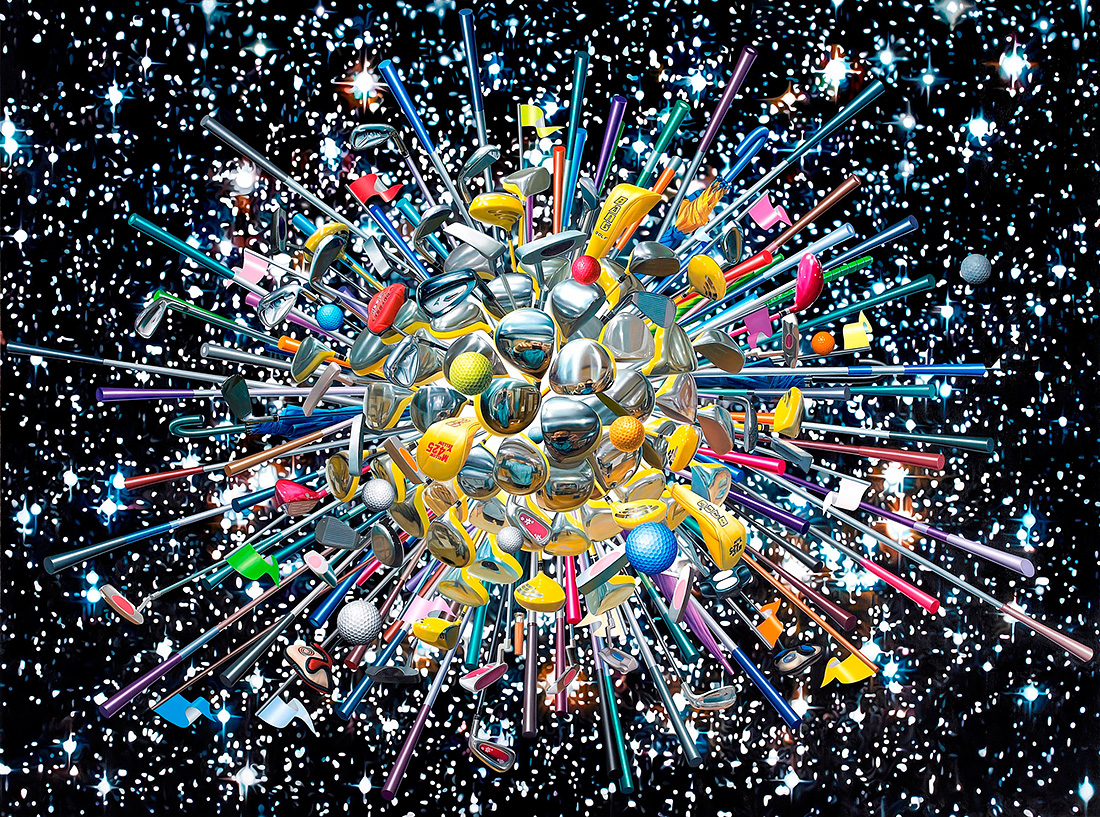
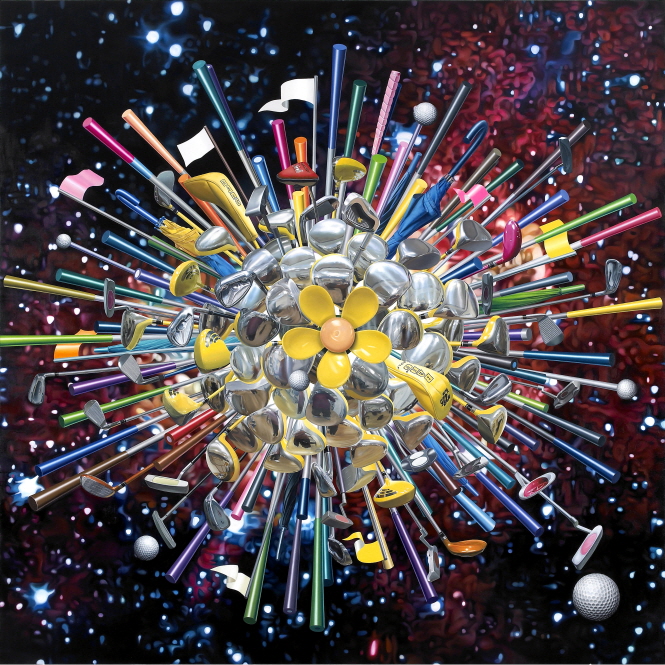

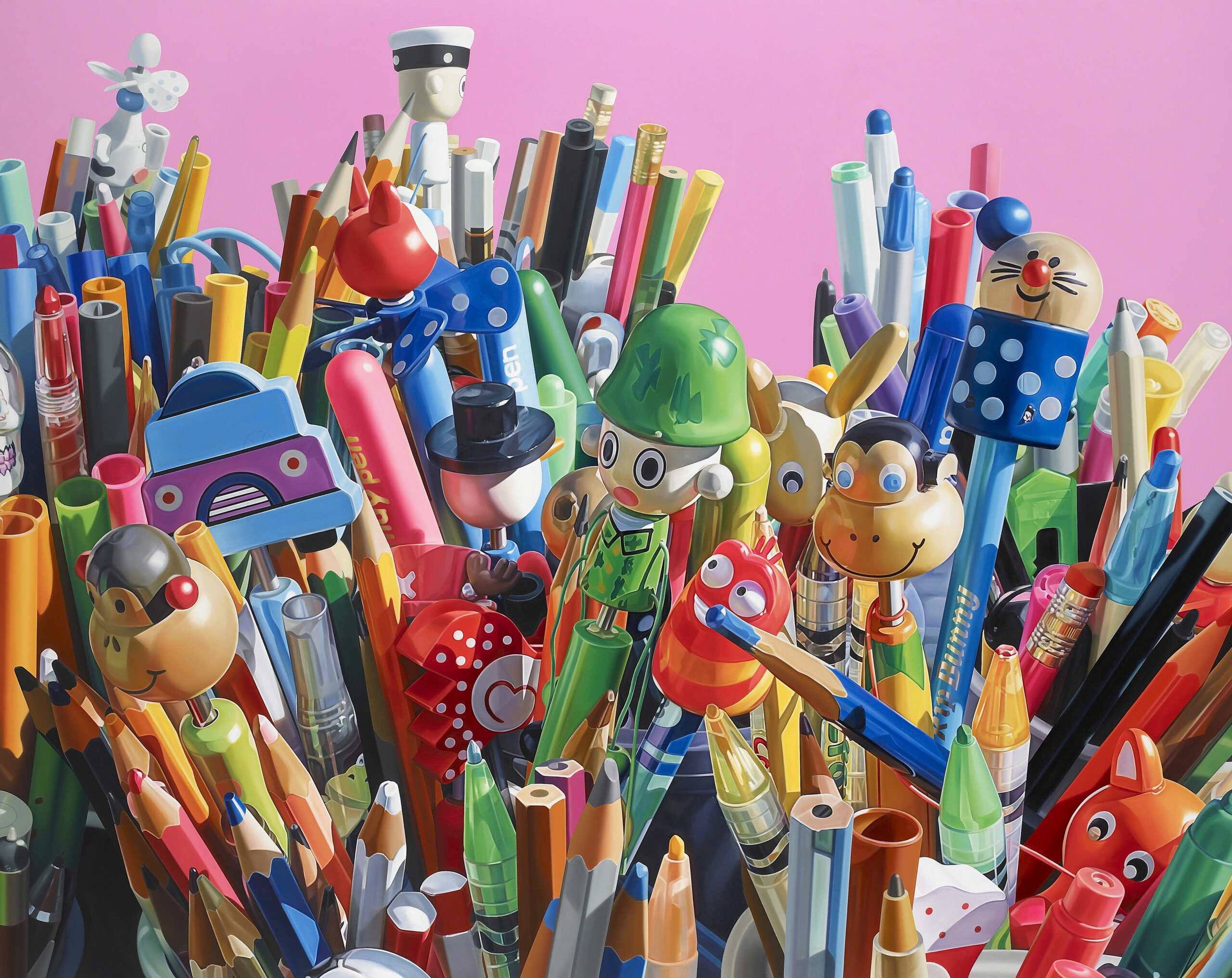
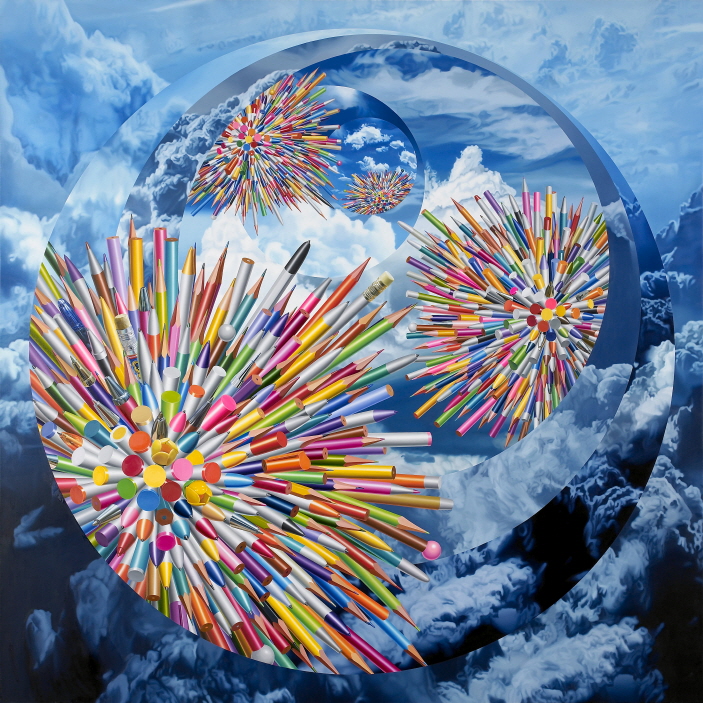

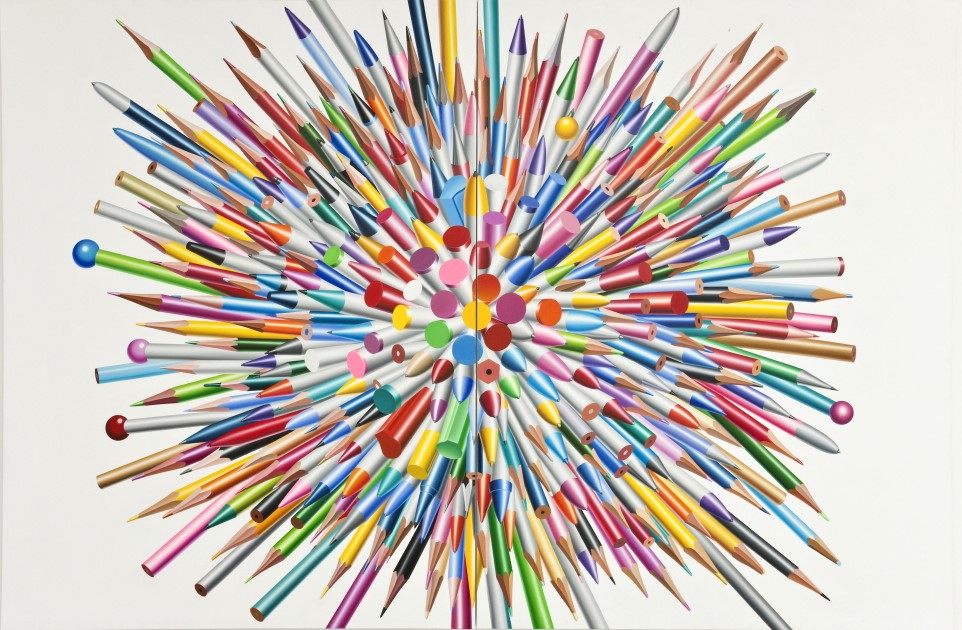

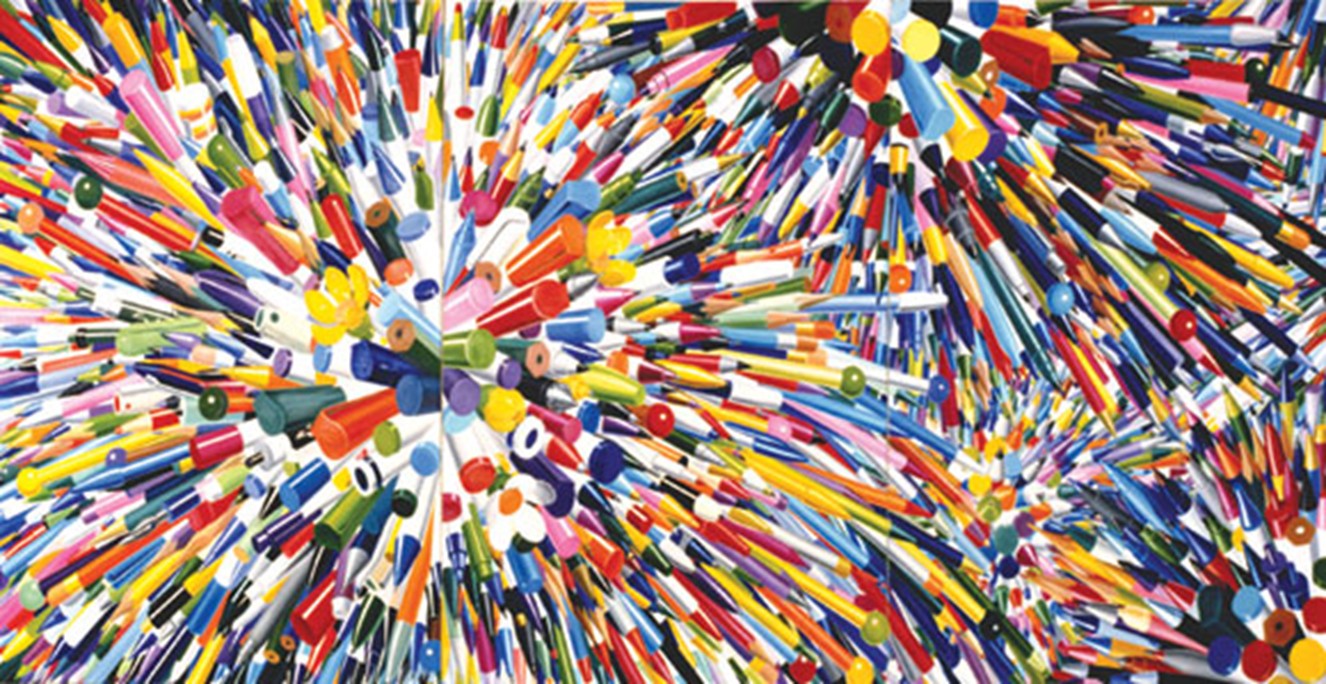
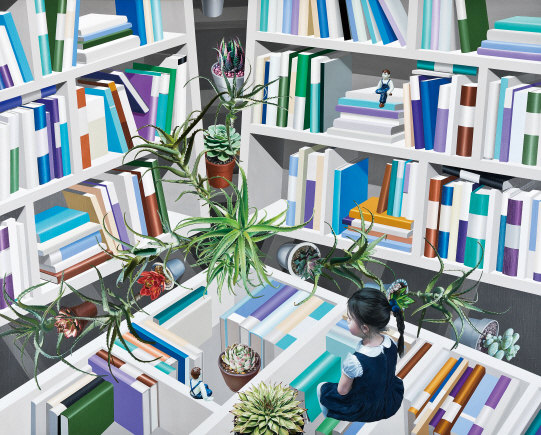
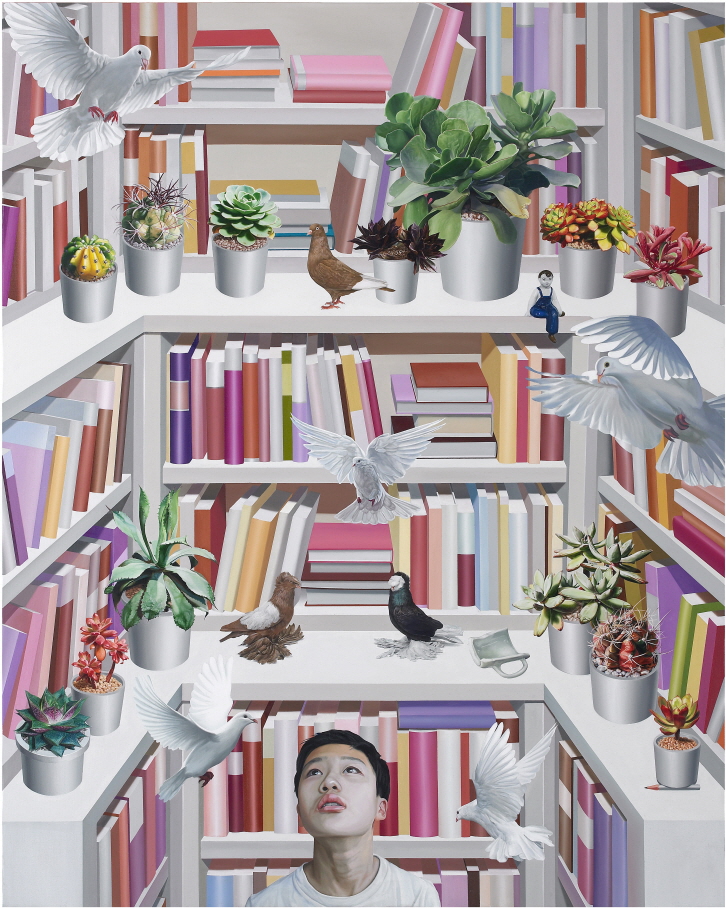
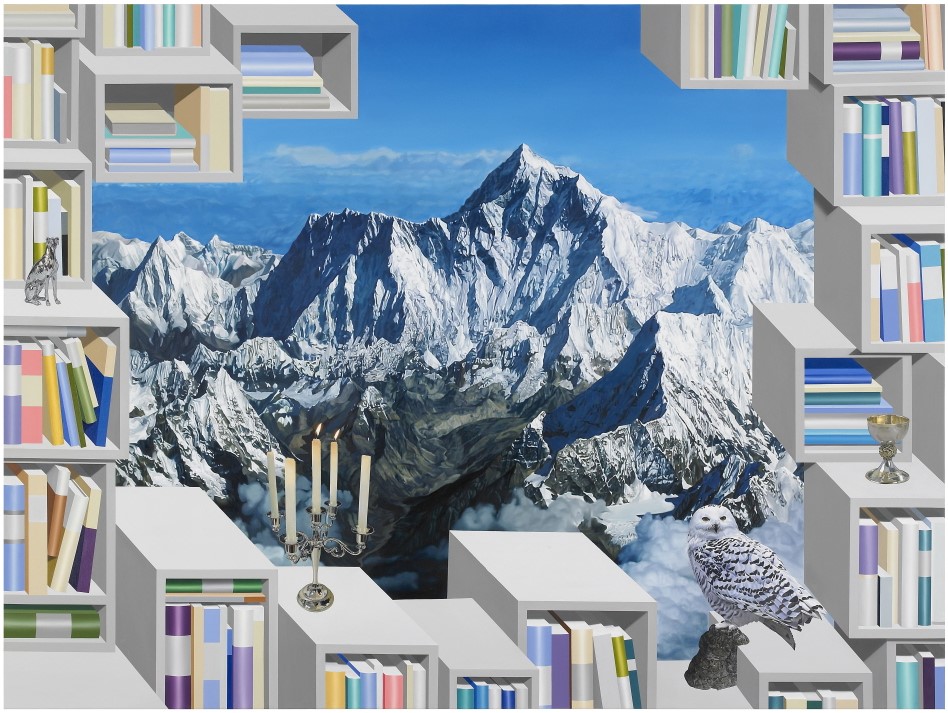
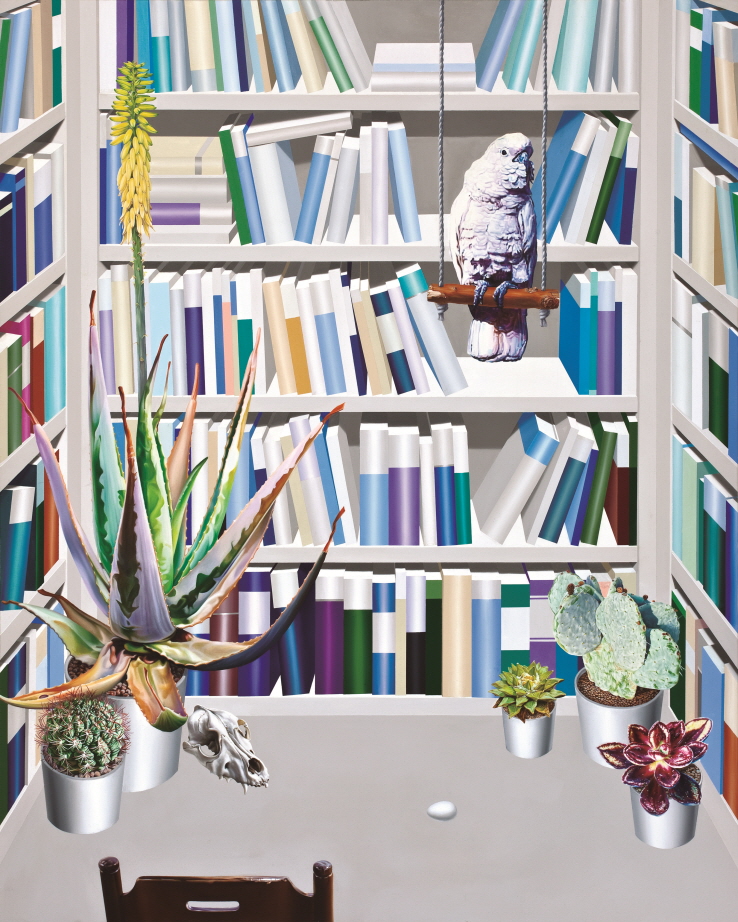
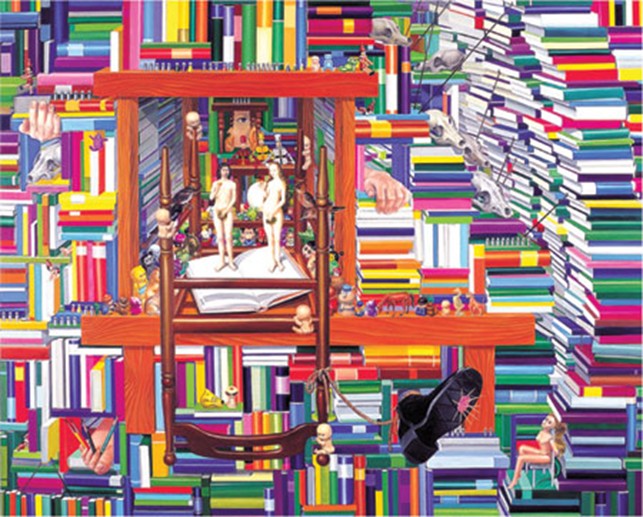
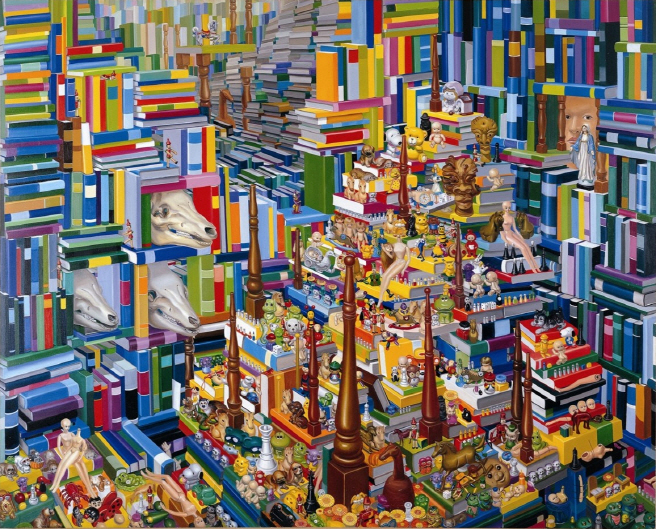
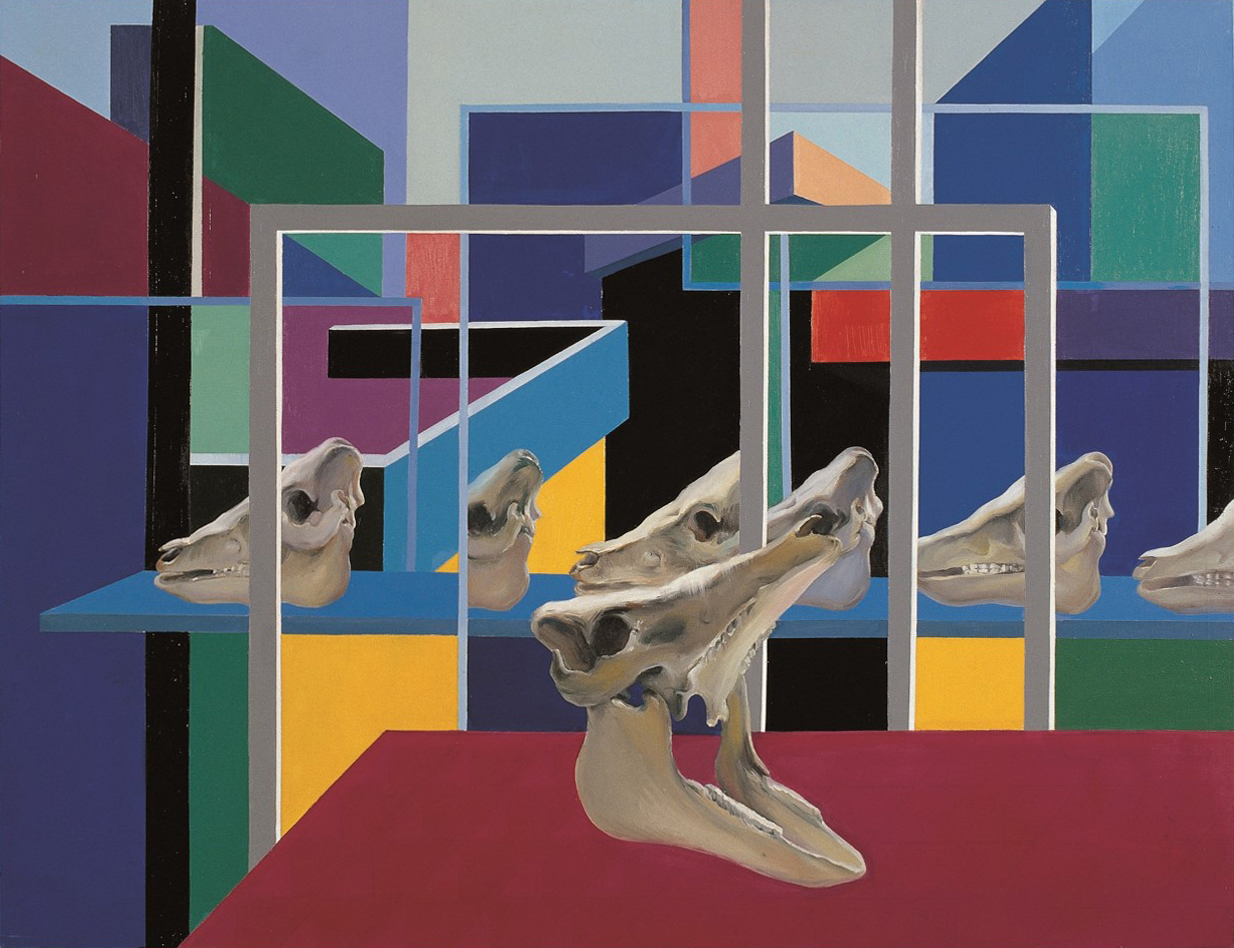
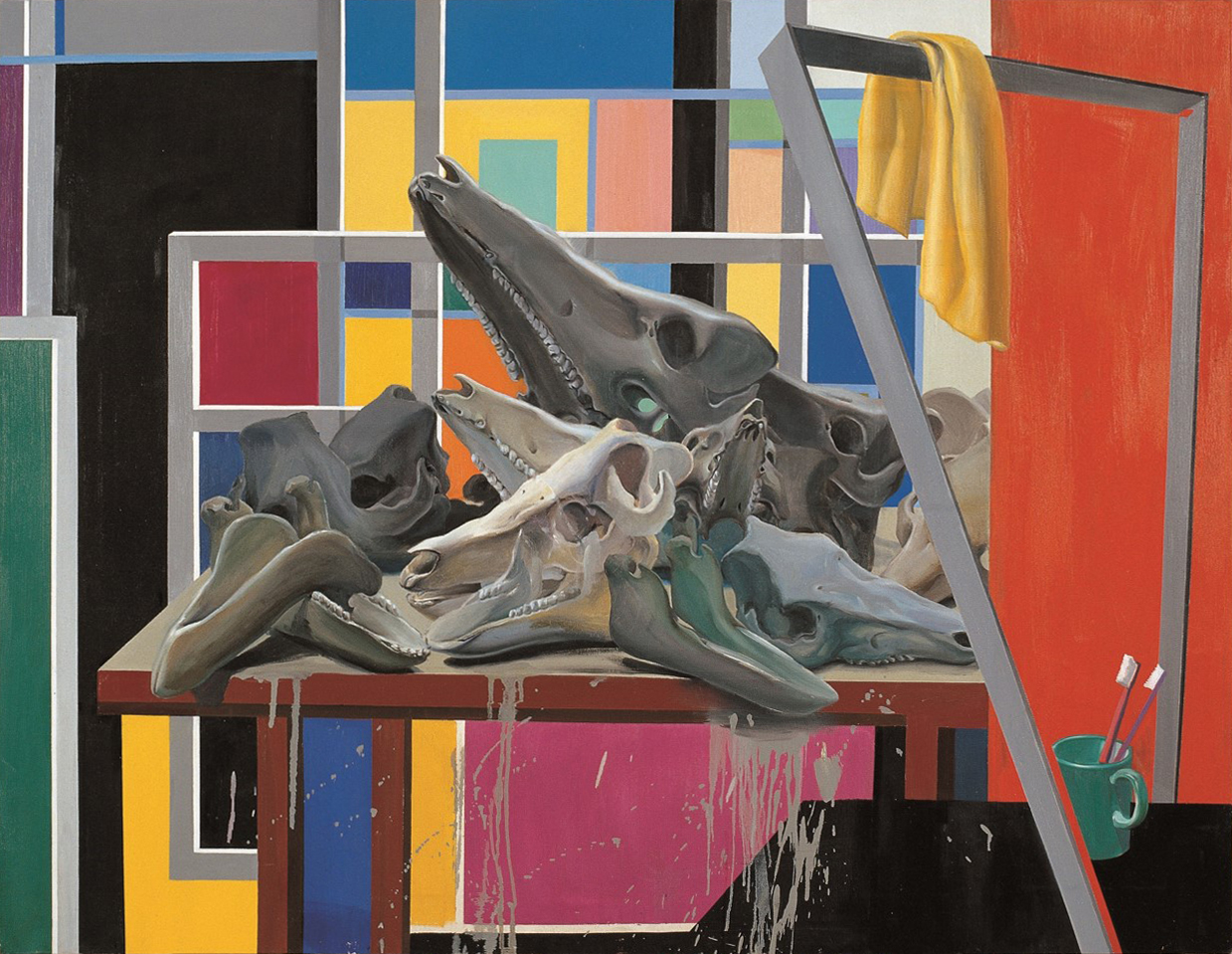
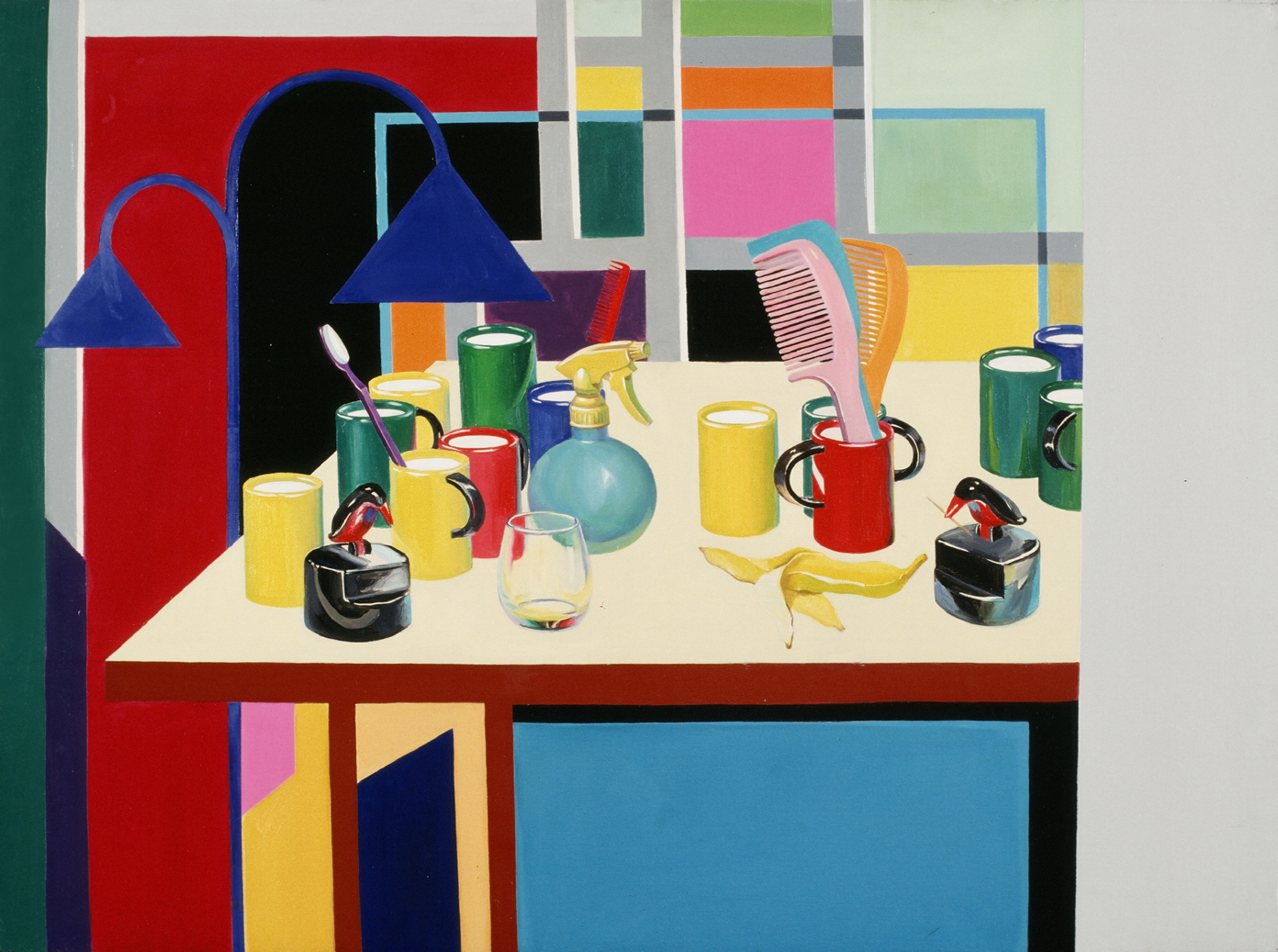
Hong Kyoungtack, Pens3, 2010 © Hong Kyoungtack

“I am Christ, crucified against a dazzling fluorescent background or waiting for resurrection amid the words ‘power, corruption, and lies.’ I am also the hidden creator/ruler of esoteric knowledge and seductive images, and a conductor who DJs the refined grammar of high art and the ephemeral tastes of popular culture. Yet at the same time, I am a painter who knows that all these roles are only ‘virtually’ possible within the imagined dimension I have constructed.” 

The paragraph above is an attempt to describe the artistic subject that Hong Kyoungtack’s paintings sometimes explicitly, sometimes subtly suggest. 

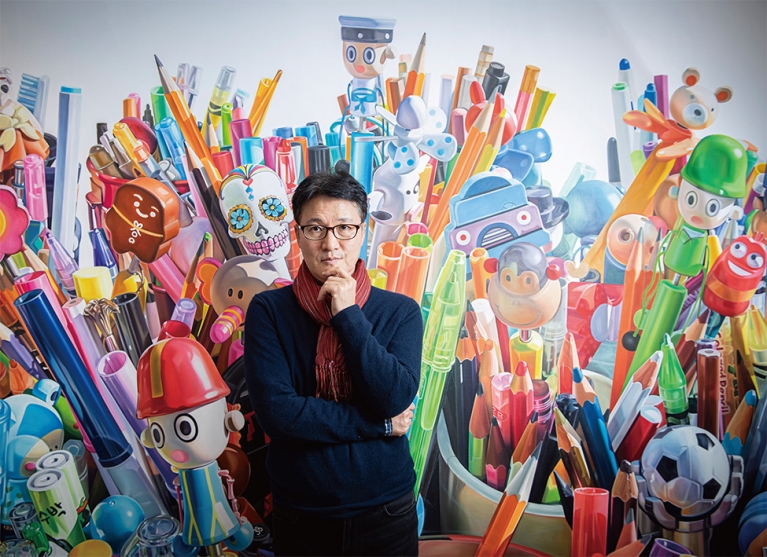
The moment that propelled Hong Kyoungtack into the spotlight beyond the art world and into the realm of mass media and public attention was in May 2007, when a painting titled Pens 1 was sold at Christie’s Hong Kong for a remarkable price. There is little doubt that the unusually intense interest Korean society showed toward the artist and his work at that time was largely tied to money. This phenomenon, however, diminished our opportunity to appreciate his art aesthetically and intellectually, while also delaying the moment in which it could be properly critiqued. As long as artworks cannot be reduced to mere commodities of the market, evaluating them solely in economic terms is both insufficient and problematic.

Some seem content to discuss Hong Kyoungtack’s art in relation to its market value, regarding him as a “flashy star” who struck it lucky. Yet the ‘pencil’ series that captured public attention were in fact works the artist had begun as a senior in university and completed over several years. Moreover, since graduating from Kyungwon University’s Department of Painting in 1995, he had neither pursued graduate studies nor participated in overseas residency programs.

These facts suggest that Hong Kyoungtack has developed his art within a self-constructed creative environment and through self-driven learning. In other words, his paintings are aesthetic outputs shaped independently of external influences such as dominant contemporary art discourses, mechanisms, or speeds. This background is essential for understanding his work, and it serves as a key to explaining the image world created by the artistic subject described earlier. 


Omnipresence, or the Space of Painting

Hong Kyoungtack’s paintings are filled with images that provide such pleasure to the viewer’s senses and thoughts that even a non-ascetic might feel a faint sense of guilt. From sacred figures such as Christ to popular figures like Hollywood actresses, from books representing great intellectual spirit to industrially produced pens that merely transcribe that spirit, from pure statues of the Virgin Mary to naked Barbie dolls, from Adam and Eve in the original paradise to skulls symbolizing the mortality of vulgar humanity—his paintings encyclopedically assemble images of the sacred and the profane, concept and representation, religion and everyday life, worship and play, origin and end.

When the selection of motifs is so extensive and the narrative so expansive, the expected outcomes are twofold: either complete visual chaos or a sense of wonder that transcends ordinary enjoyment. What determines success or failure lies in the artist’s ability to compose the entire canvas, organize the overall context, and control numerous details while weaving them into a coherent narrative. In this regard, Hong Kyoungtack’s exuberant paintings possess a compositional strength that could even persuade Baudelaire, who criticized excessive detail in modern painting. 

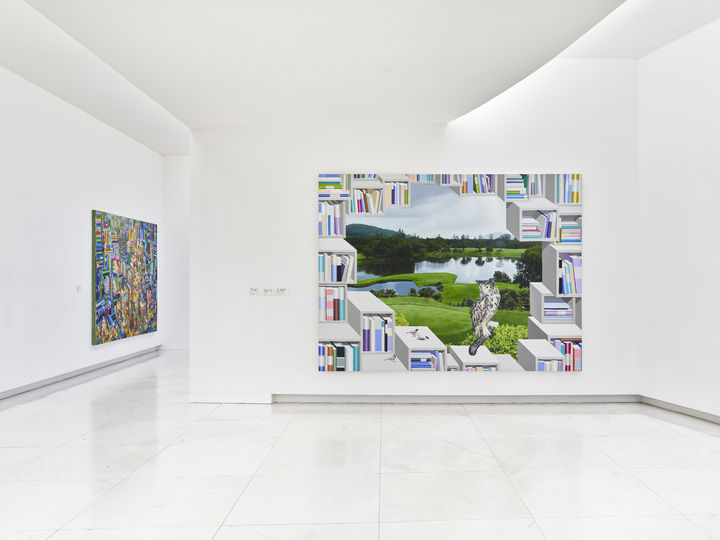
The reason his paintings transcend a mere accumulation of chaotic details and achieve the status of “art of detail” lies in the principle of flatness. More precisely, by rendering all elements across the canvas with equal intensity, the surface achieves a state of equilibrium. Visually and metaphorically, every corner of the canvas is filled—there is no empty space. Consider Pens 1 (1995–1998), where countless pens of various colors and materials are depicted with equal emphasis across a massive canvas measuring 259 by 581 cm.

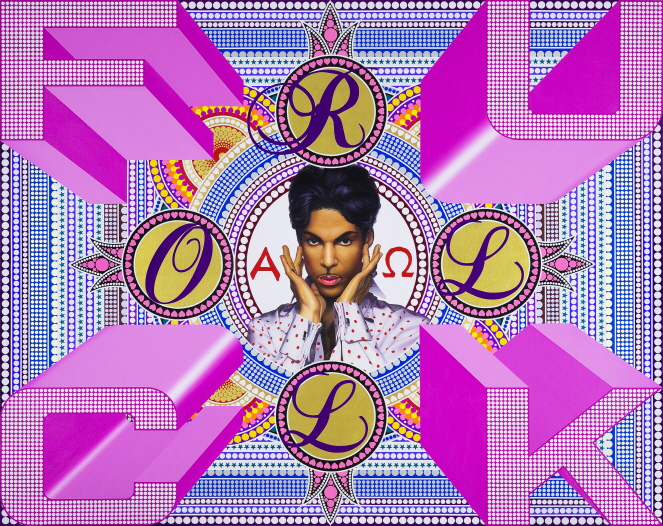
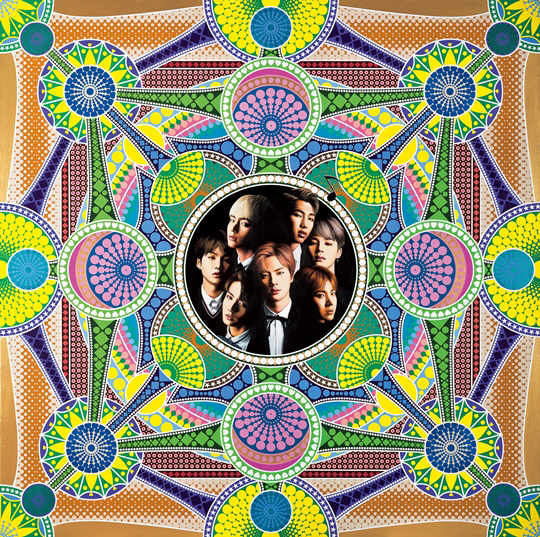
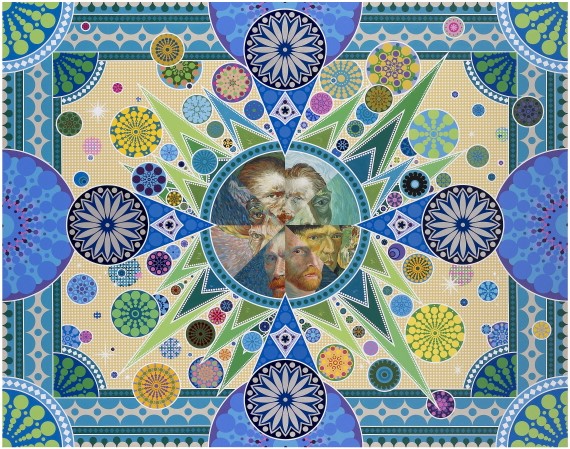
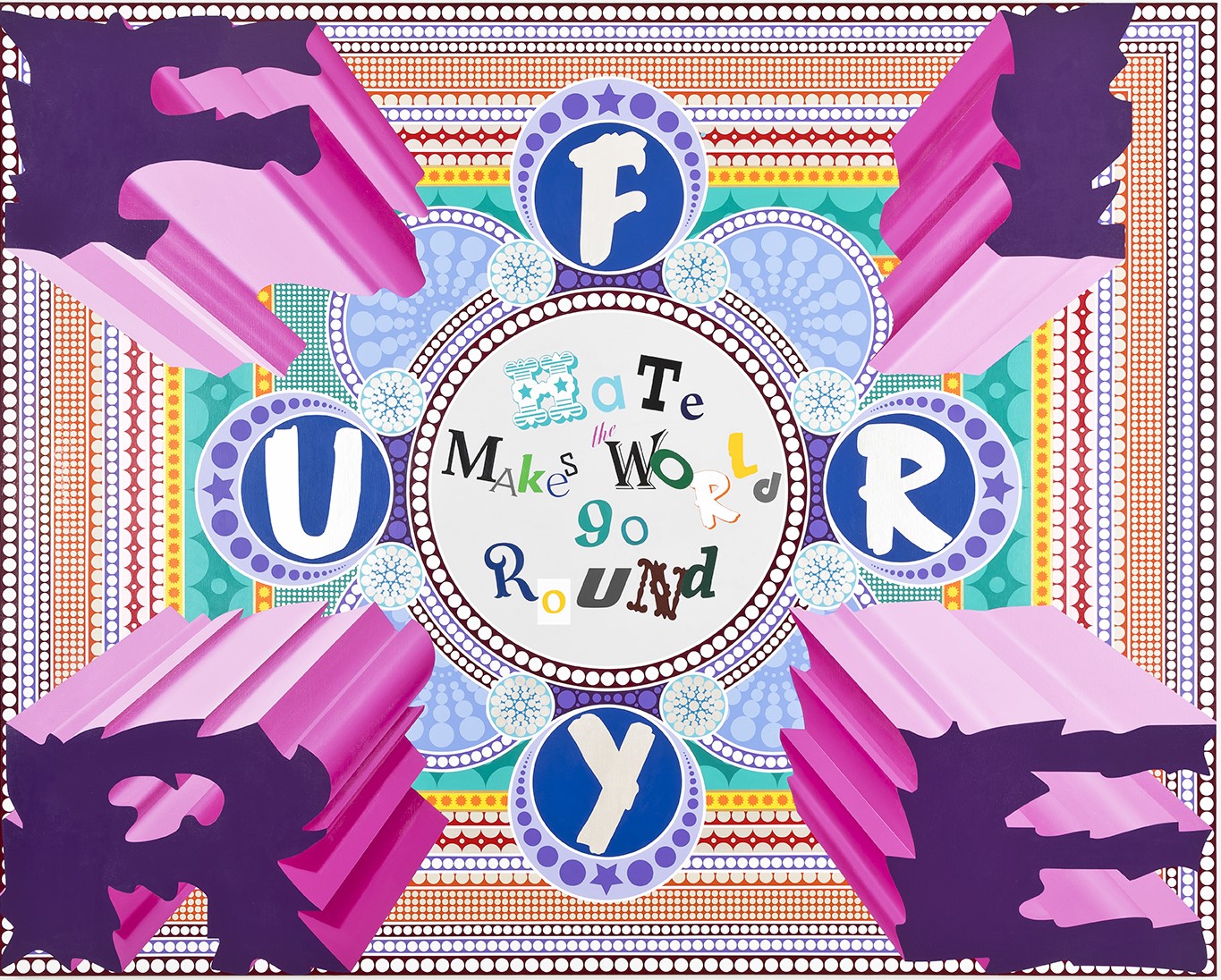
Similarly, in the ‘Funkchestra’ series, despite the diversity of letters, patterns, figures, and motifs, all images exist with equal intensity across the square surface. In works such as Yellow Parrot, the central figure and surrounding patterns share equal visual weight, forming a continuous interplay of surfaces and colors. 

This fully saturated pictorial space demonstrates the painter’s gaze reaching every part of the canvas—an omnipresence akin to the divine privilege of an absolute creator. Had the artist focused only on individual details without maintaining a holistic vision, the flatness would have resulted in superficiality or illusionistic inadequacy. Instead, his flatness aligns, albeit in an inverse direction, with Clement Greenberg’s modernist concept of flatness: whereas modernist abstraction reveals flatness through abstraction, Hong’s work achieves it by uniformly rendering real-world objects across a two-dimensional plane. 

At the same time, one can read in this equalized detail a self-definition of the painter as a quasi-divine subject. In several works, the artist positions himself as an omniscient creator, observing from within the micro-world he has constructed. This gaze, directed outward toward viewers, suggests a creator who both constructs and controls the pictorial space, drawing viewers into it. His statement that “painting is the act of building one’s own temple, and viewing is being invited into it” supports this interpretation.

In one recent work, reminiscent of Holbein’s Dead Christ, the artist portrays himself as a near-nude figure lying in a manner similar to Christ. Unlike Holbein’s depiction of suffering, however, Hong presents a relatively healthy body framed like a fashion magazine cover. This suggests that while he aspires to a divine gaze, he simultaneously seeks secular pleasure and visual delight rather than religious reverence. This complex, omnipresent gaze may be the source of the totalizing surface of his paintings. 


Omnipotence, or the Order of Things

For a painting composed of countless details not to collapse into chaos, the artist must impose a certain order. Traditionally, painting has relied on “relational composition,” arranging subjects and subordinate elements in balanced relation. Minimalism and Pop Art challenged this by adopting mechanical repetition, such as Donald Judd’s identical boxes or Andy Warhol’s serial images. These represent different ways of organizing and understanding the world visually.

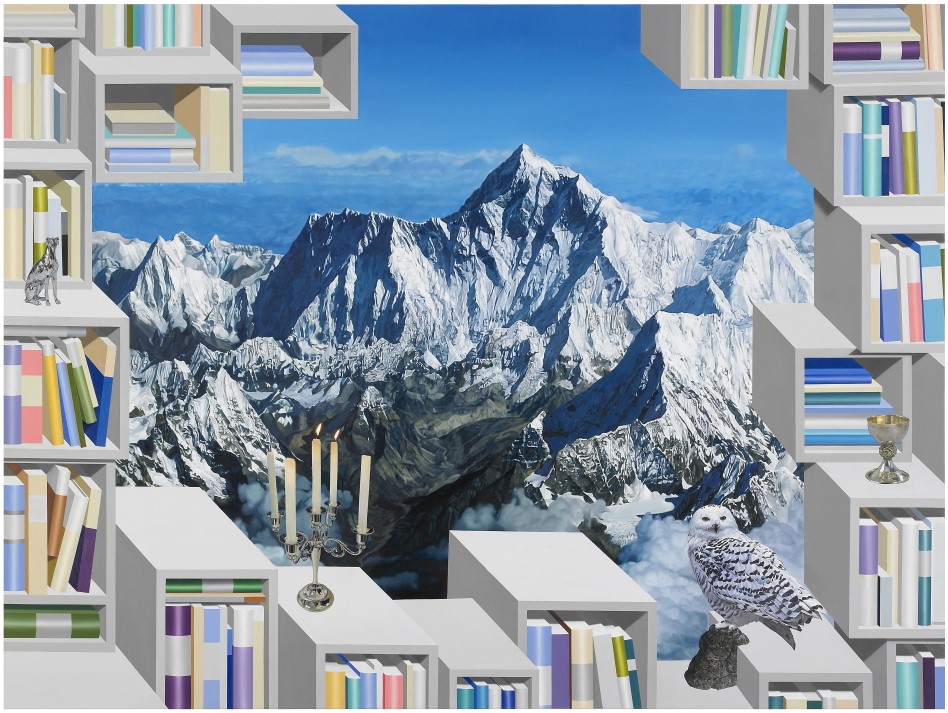
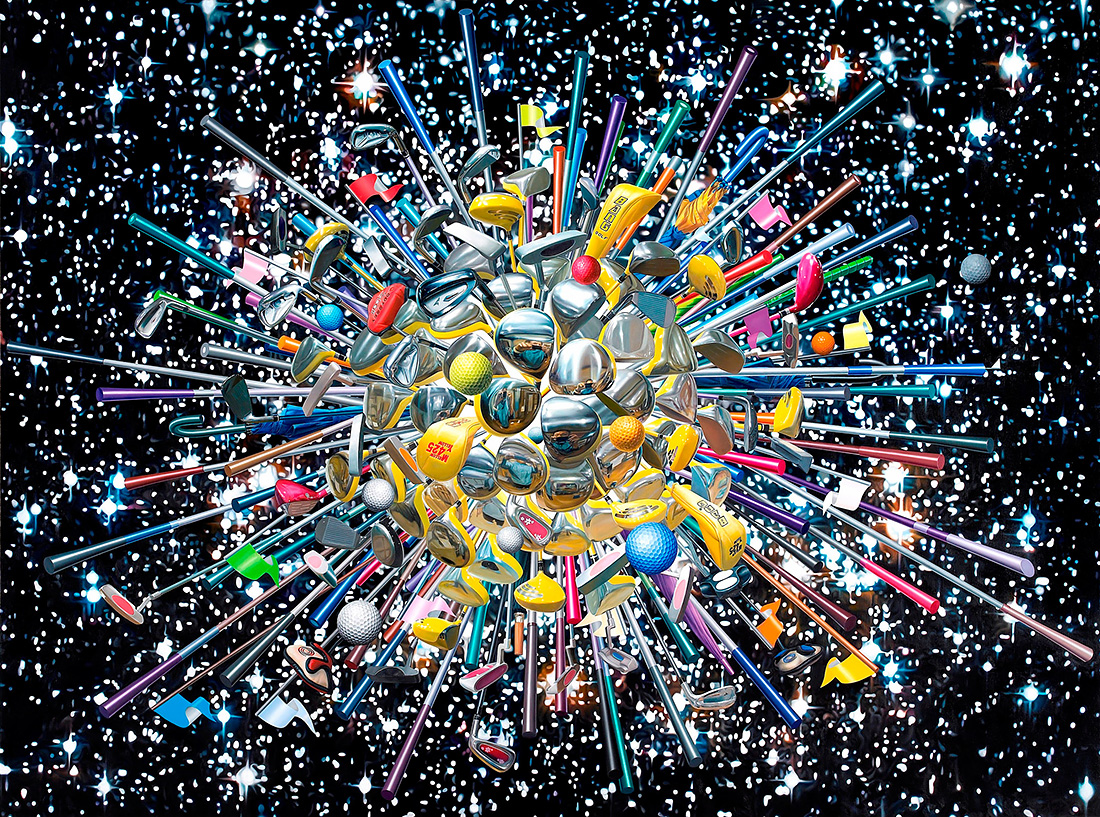
Hong Kyoungtack, however, appears to synthesize these two systems into a third order. While his compositions retain a relational structure of center and periphery, they also incorporate endless repetition of motifs without hierarchy or empty space. This layered order produces the sense of dizziness and wonder one experiences when viewing his ‘Pens,’ ‘Library,’ and ‘Funkchestra’ series. 

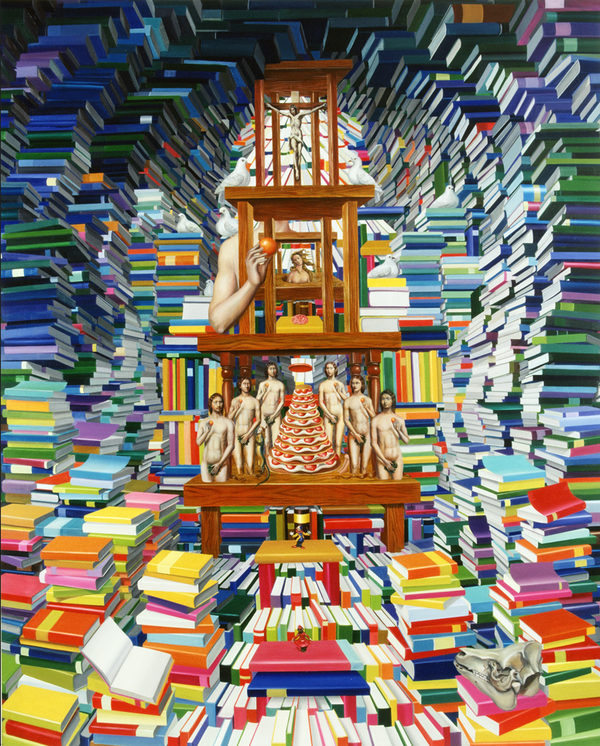
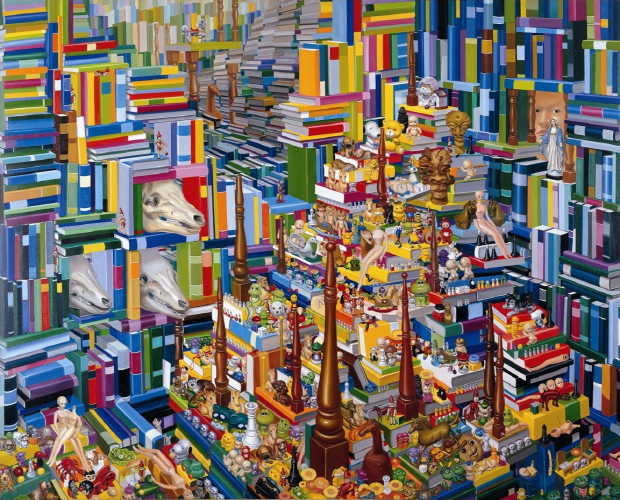
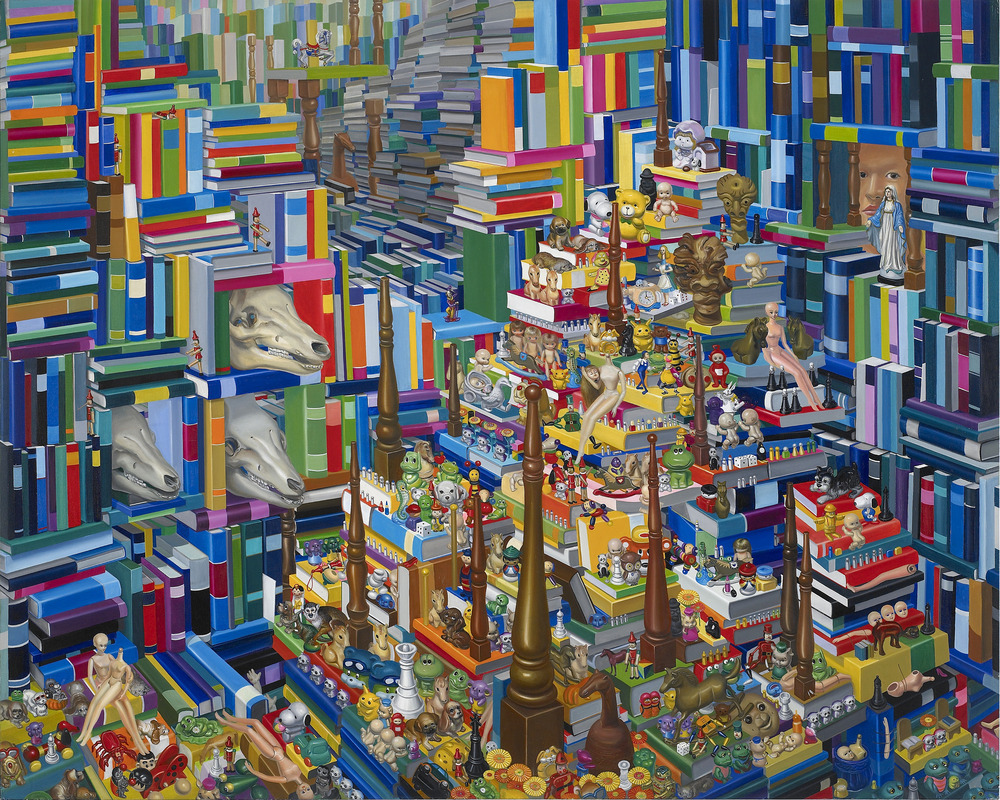
This order can also be read iconographically. In Library 2 (1995–2001), an early precursor to the ‘Funkchestra’ series, the composition radiates outward from a central vanishing point, recalling the structure of religious paintings from the 13th to 15th centuries or works by Caspar David Friedrich. Such compositions evoke feelings of the absolute, the sacred, and the sublime—representing omnipotence. Hong adopts this visual structure but fills it with secular imagery. Instead of sacred figures like the Virgin Mary, one encounters figures such as Marilyn Monroe or John Lennon. This juxtaposition suggests a symbolic equalization or inversion of values.


Hong Kyoungtack, Library 2, 1995-2001 © Hong Kyoungtack

In Library 2, stacked books converge toward a vanishing point featuring Venus from Botticelli’s The Birth of Venus. Above her appears Christ on the cross, while below stand six nude male figures resembling Adam, aligned like stacked pancakes. Beneath them, a pierrot figure gestures toward the viewer, and at the bottom right, a skull faces the center. While the composition maintains a repetitive visual order, iconographically it suggests a hierarchy: human desire beneath beauty, beauty converging toward truth, and above all, divine authority.

Yet this hierarchy is destabilized by elements such as the pierrot and skull, symbols of transience and irony. Thus, the painting simultaneously contains inversion and equality. However, its layered visual and symbolic structures resist a singular interpretation, opening multiple possibilities of meaning. This openness stems from the order representing omnipotence. 


A Painting Without Shadows: The Fascination of Painting

When are we fascinated by a painting? Traditionally, fascination arises when a painting ceases to appear as a painting and instead manifests as reality. Yet Hong Kyoungtack’s work does not rely on illusionistic realism. His objects—books, dolls, figures—are not rendered with photorealistic precision. Nonetheless, they produce fascination through the overwhelming density and uniformity of detail across the surface. 

The absence of variation and empty space implies the absence of shadow. In compositions structured by hierarchy or emptiness, shadows inevitably emerge. Hong’s paintings, lacking such shadows, form a fully illuminated world. This total brightness—possible only within a virtual image world—is what produces their captivating power. 


Source: Kang Sumi, “A World of Painting Without Shadows: Hong Kyoungtack’s Paintings that Simultaneously Evoke Fascination and Blasphemy,” Wonderful Reality of Korean Art, Seoul: Reality Culture Publishing, 2009, pp. 28–39. 

1) See Daniel Arasse, Le Détail: Pour une histoire rapprochée de la peinture, trans. Lee Yoon-young, Detail: For a Close-Up History of Painting, Goyang: Soop, 2007, pp. 27–30.

References