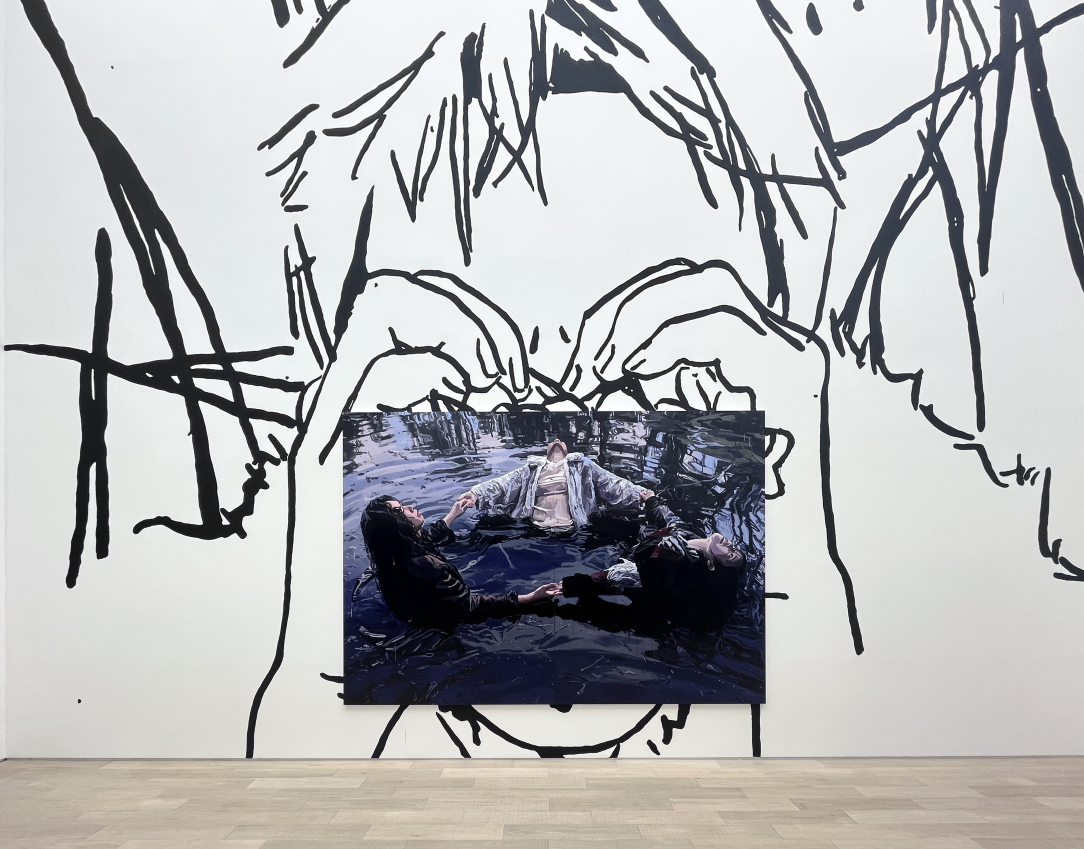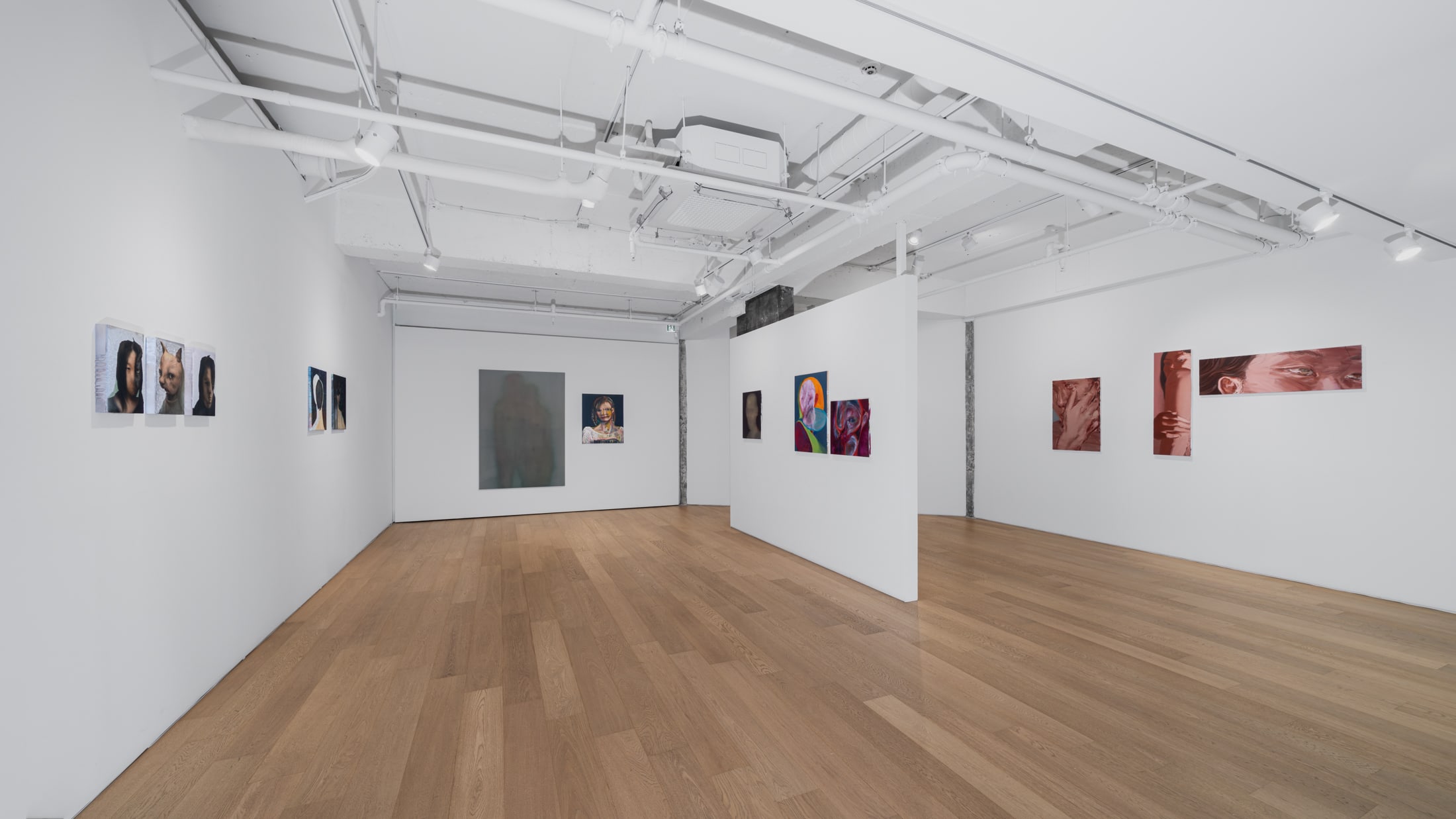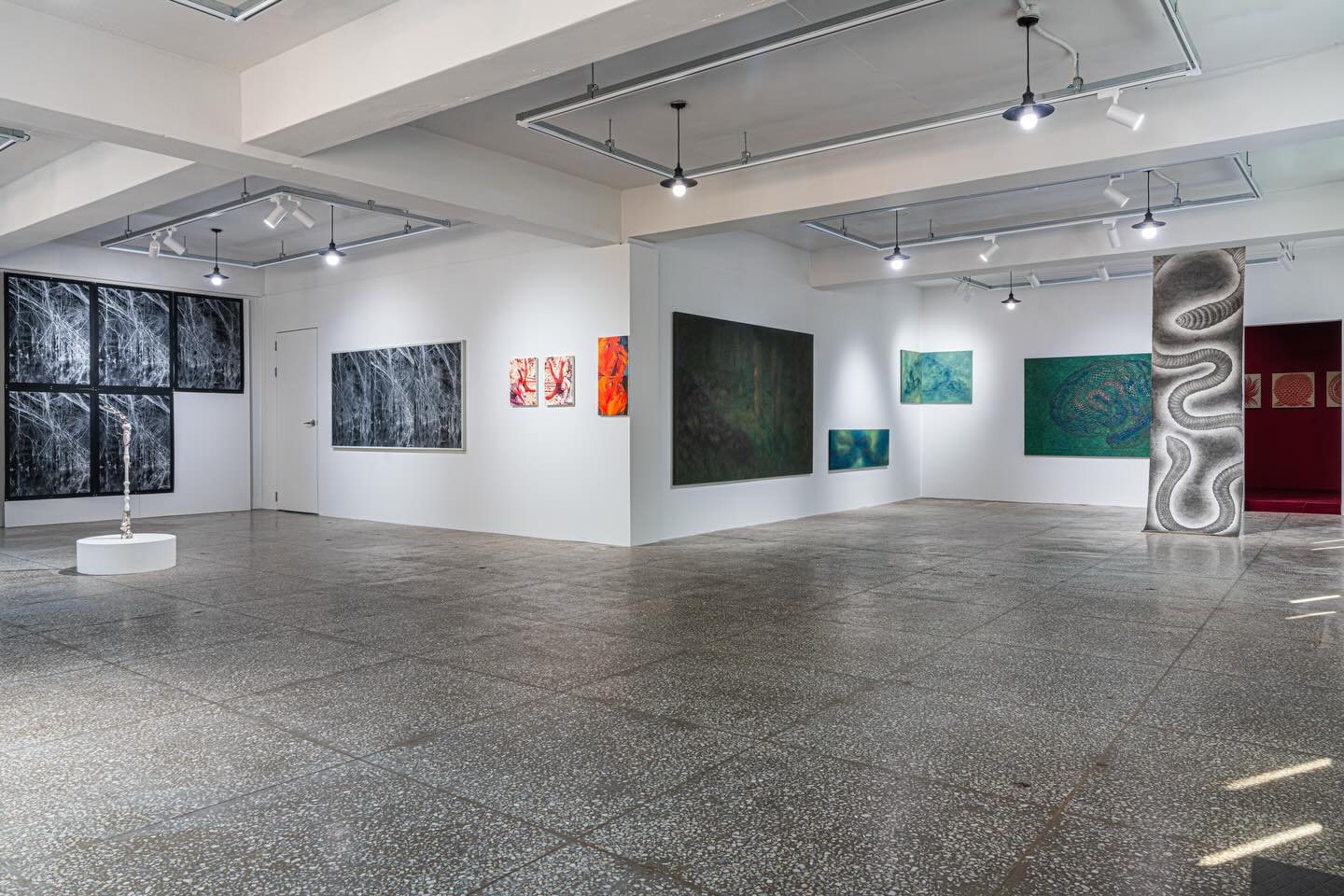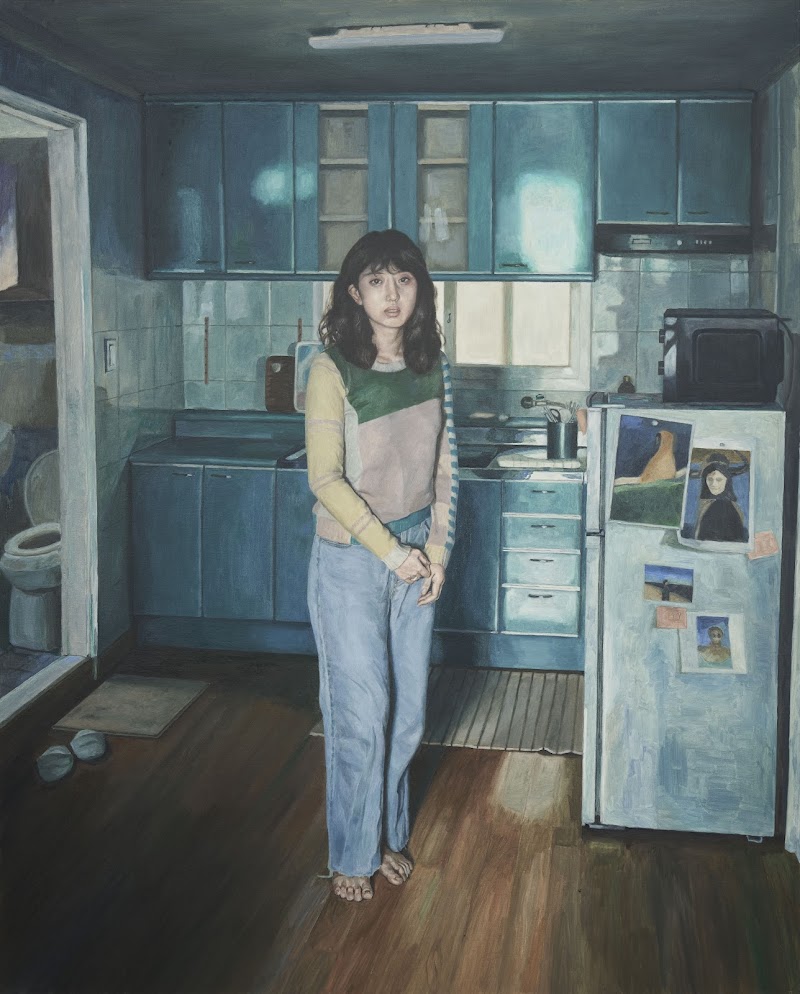


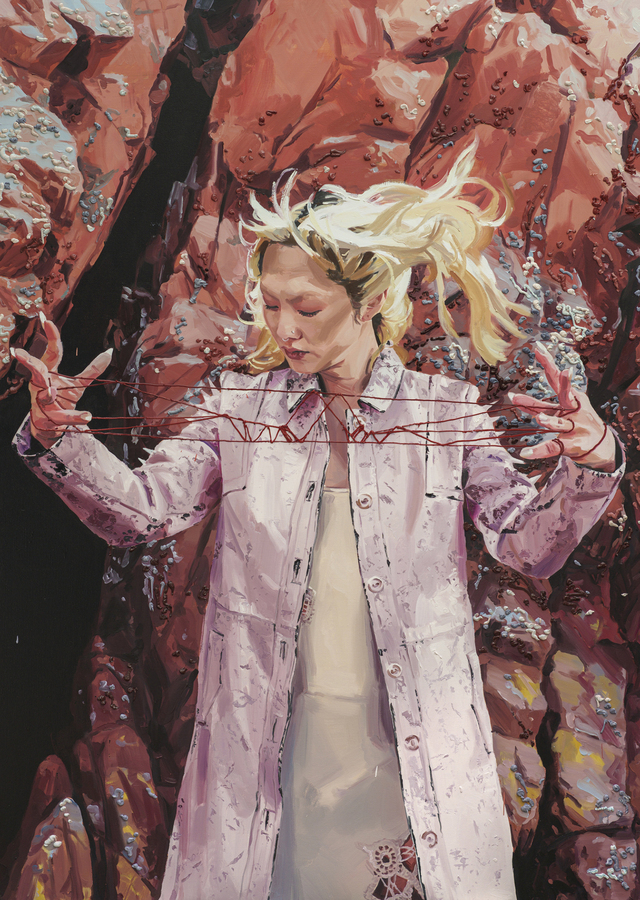
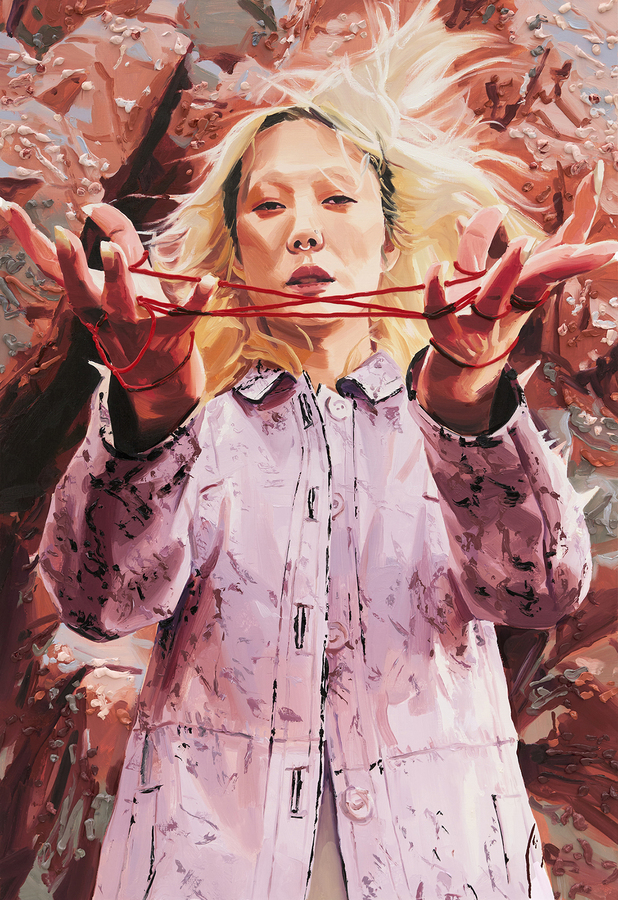
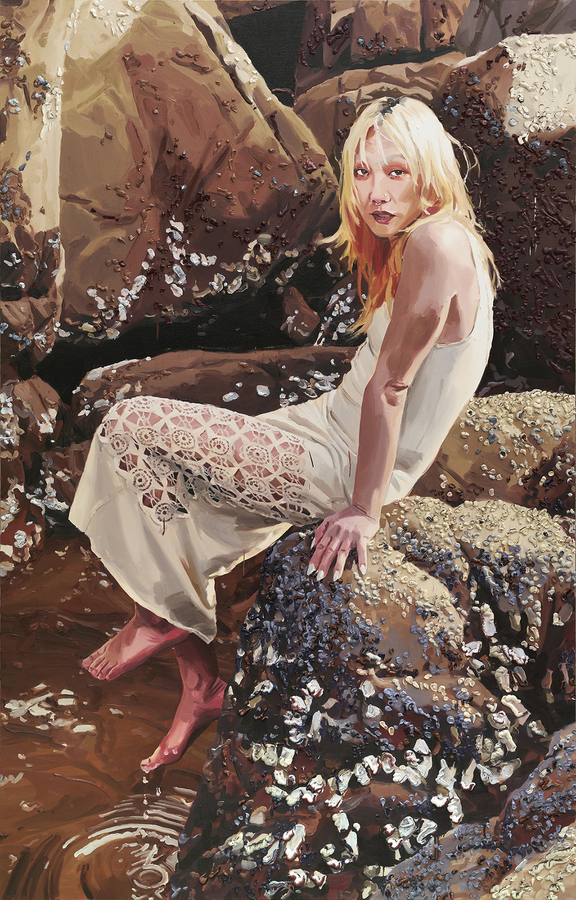
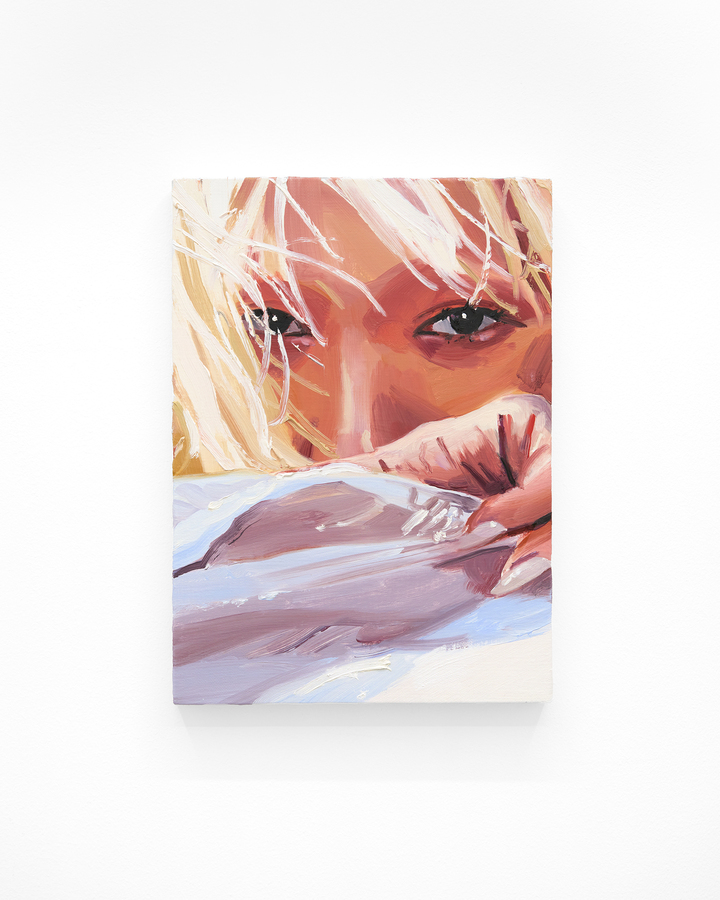
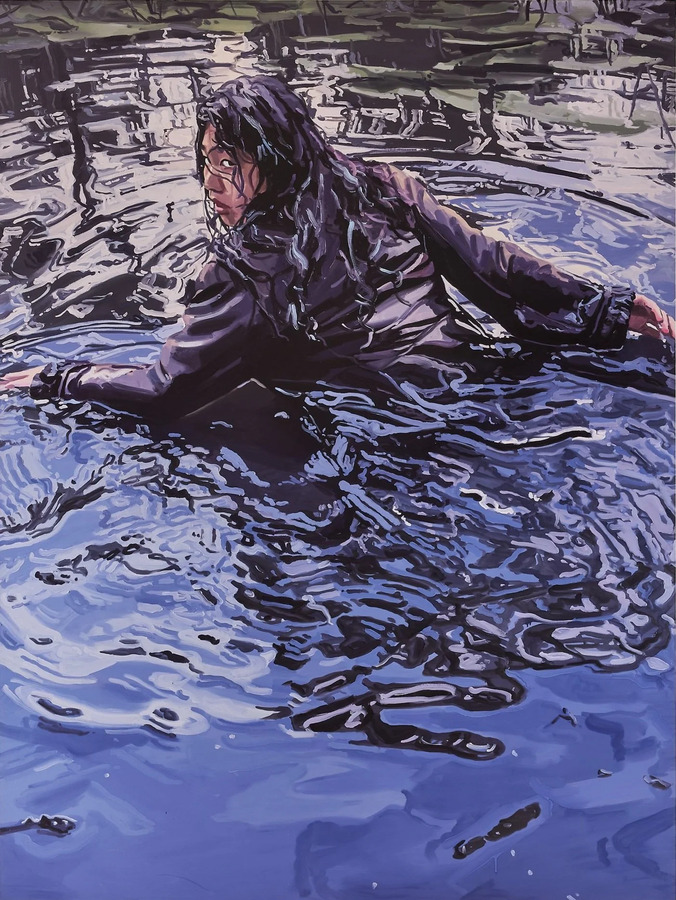
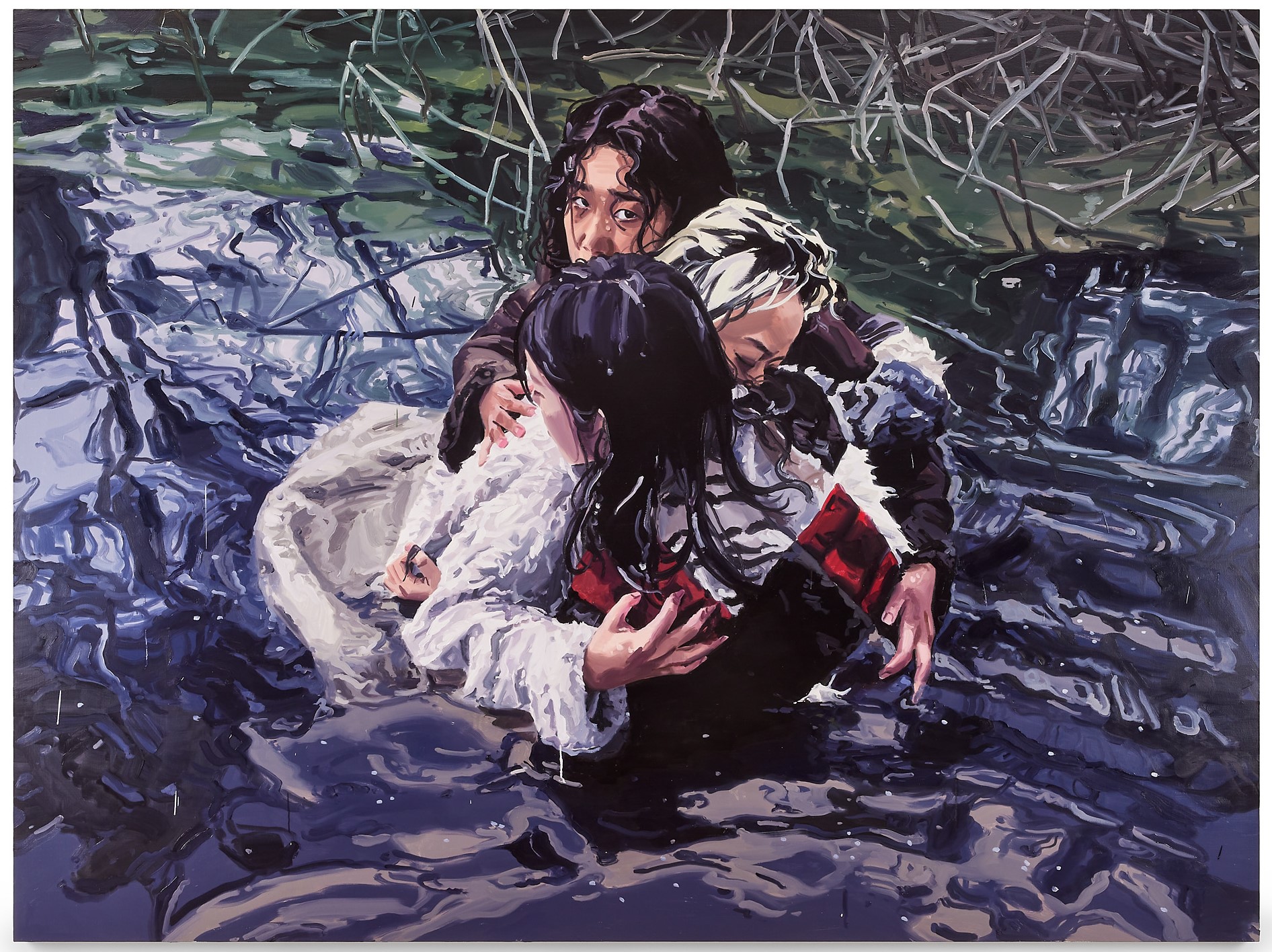
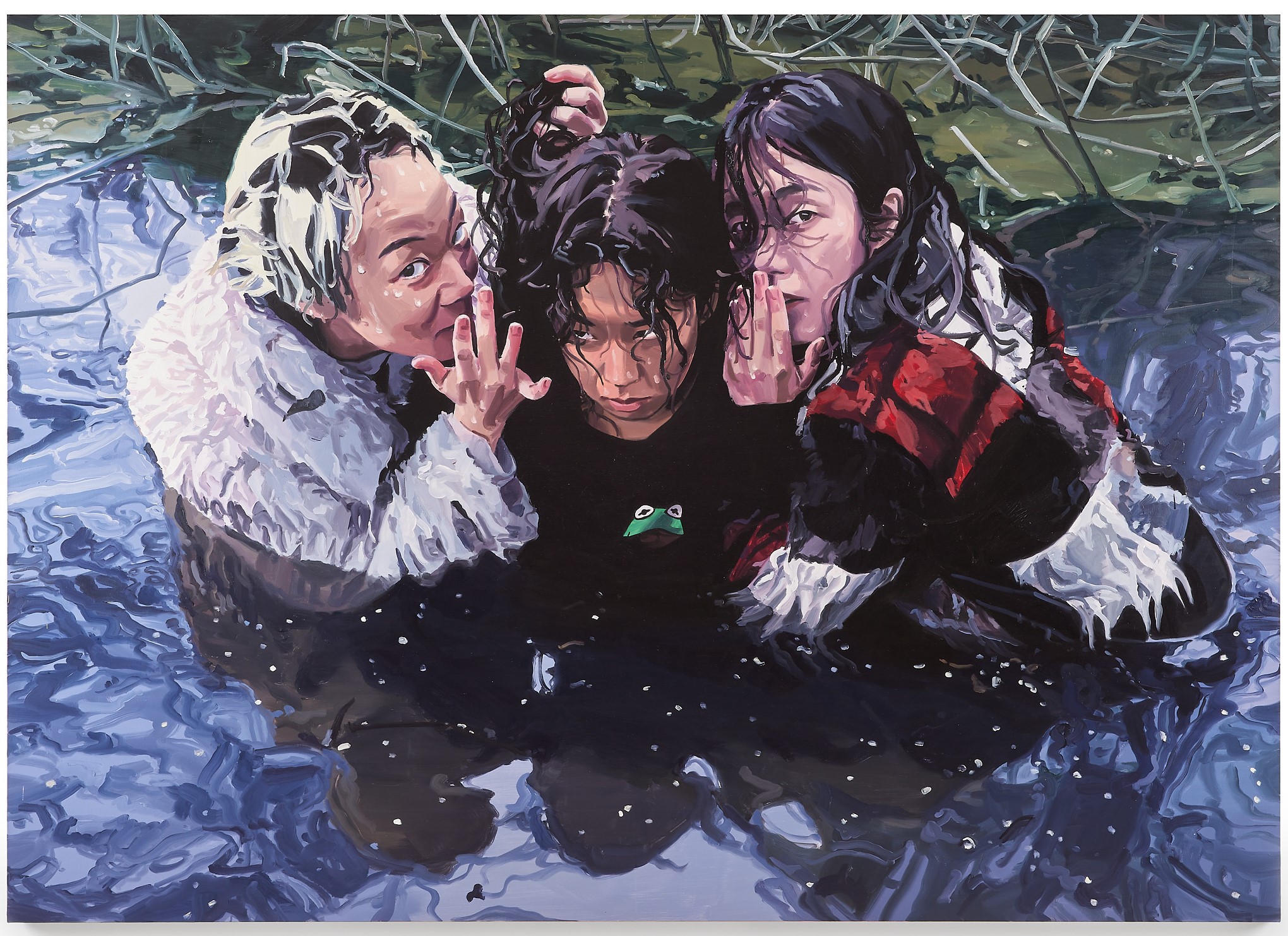
Poster image of 《B-hyeong Bi-yeom Gwi-yeom》 © Sahng-up Gallery

Relationships, Boundaries, Turning Away

One looks—until the painting begins to speak. One waits—until words arise from within. In between, an infinite span of time flickers on and off.
Time—suddenly, it becomes a question. Planck time: said to be the smallest unit of time. Looking it up only deepens the obscurity. It is described as the duration in which a vacuum, at an extremely low energy level, releases an immense burst of energy by passing—at an infinitesimal probability—through a barrier it cannot overcome.

Passing through an unconquerable wall.
I find myself fixated on this rhetorical phrase. Perhaps, for me, a preface is nothing more than a rhetorical investigation that obscures the momentary emergence of a work. Even now, in this very instant, the work lightly brushes words aside.

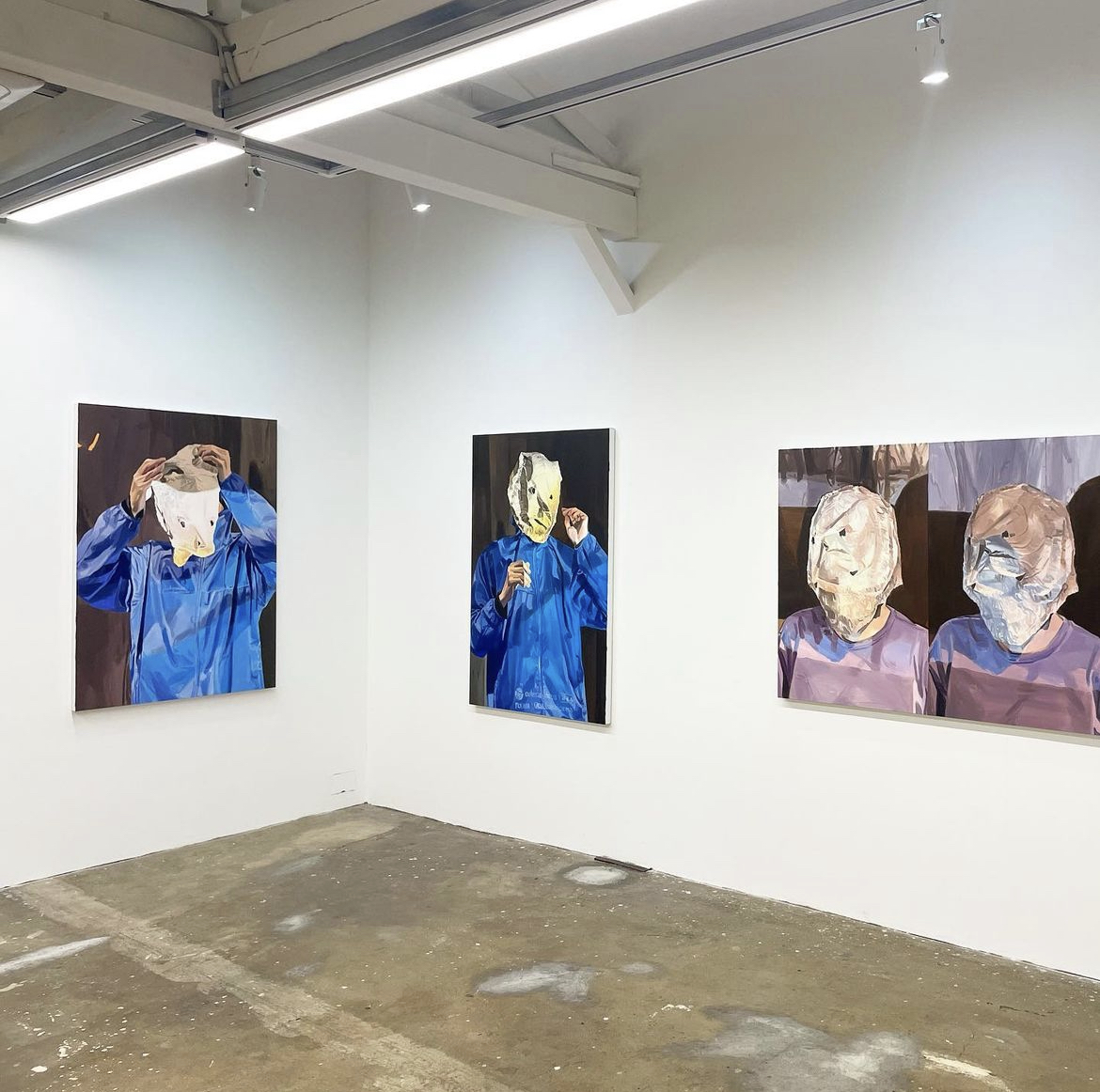
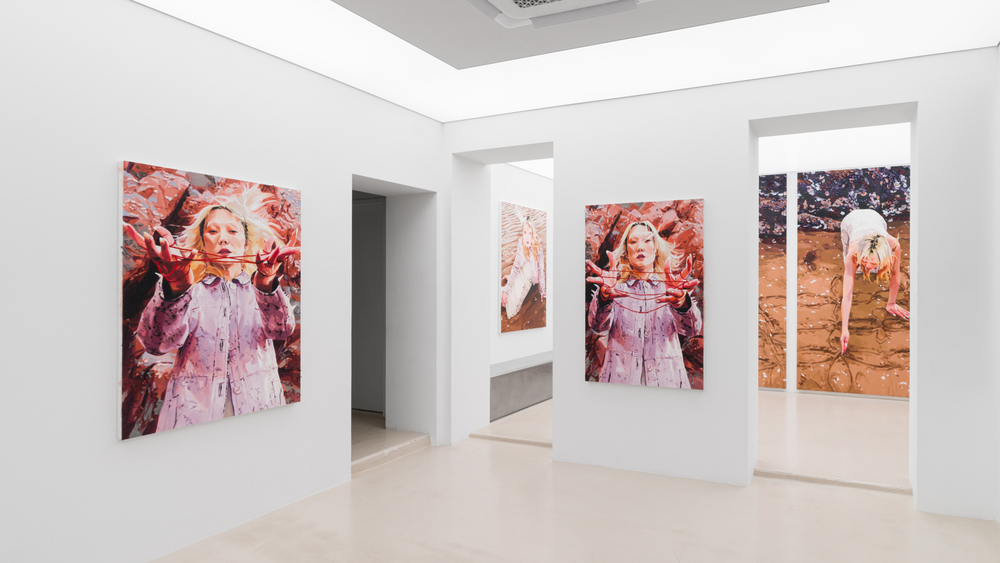
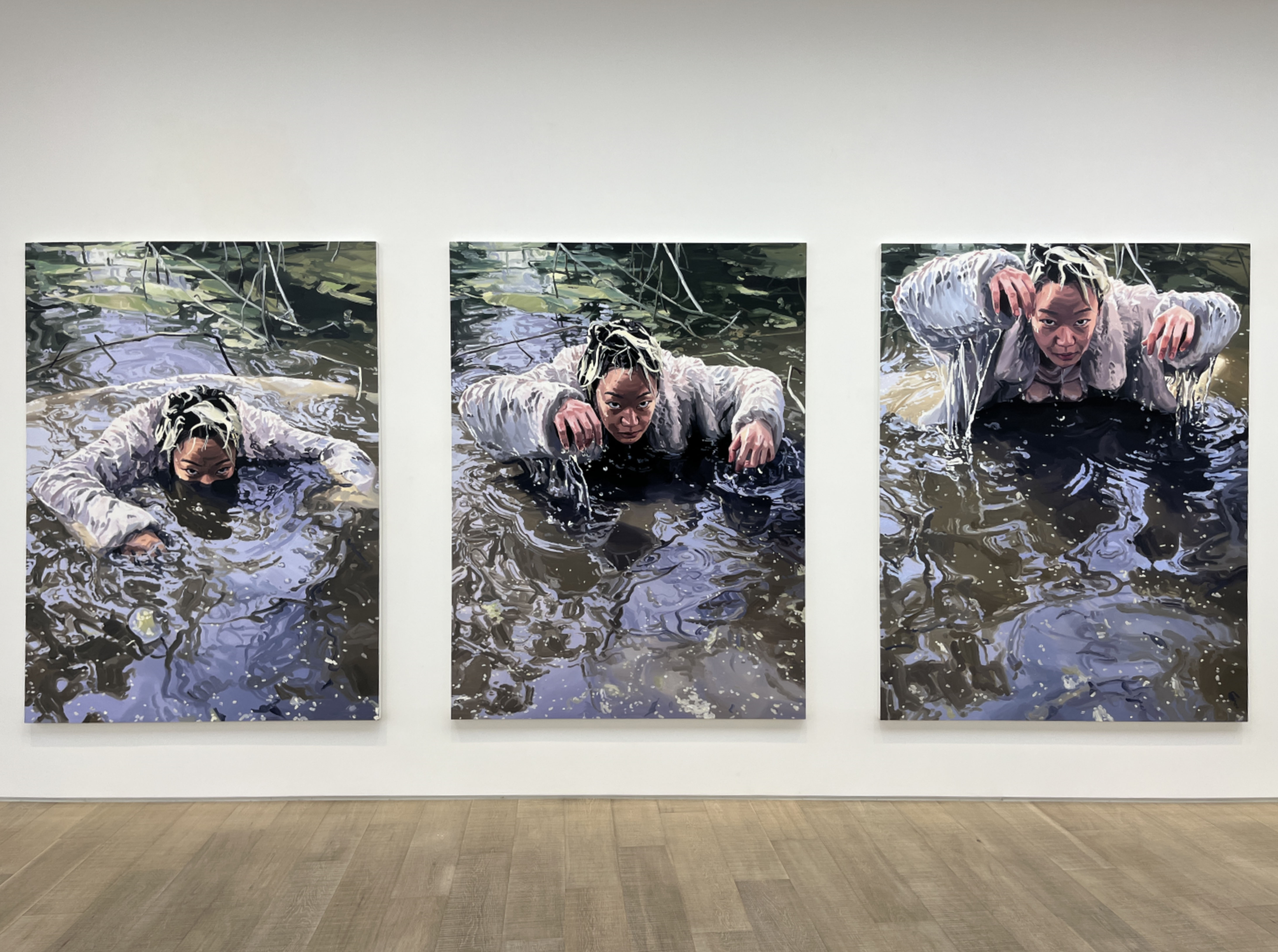
Installation view of 《B-hyeong Bi-yeom Gwi-yeom》 © Sahng-up Gallery

Alibi 1: Relationship

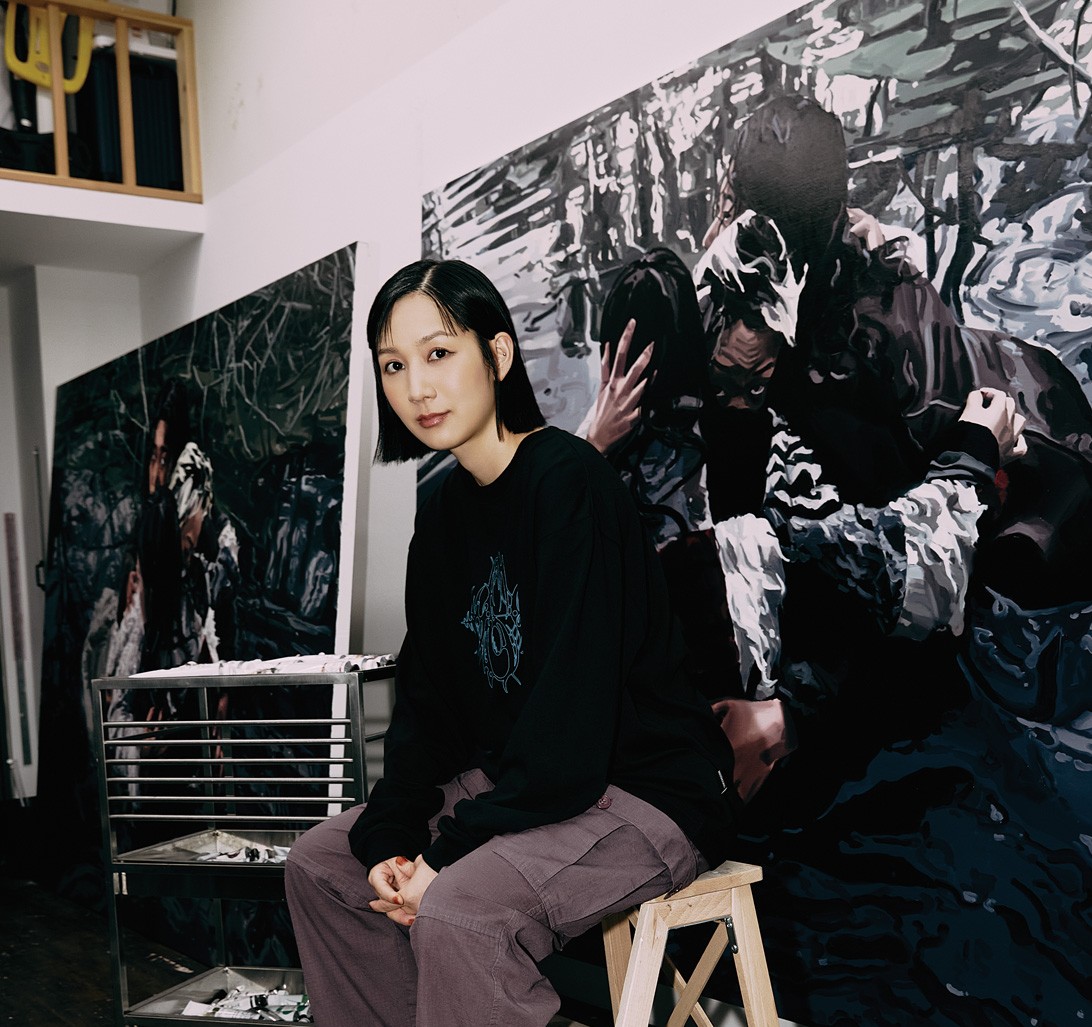
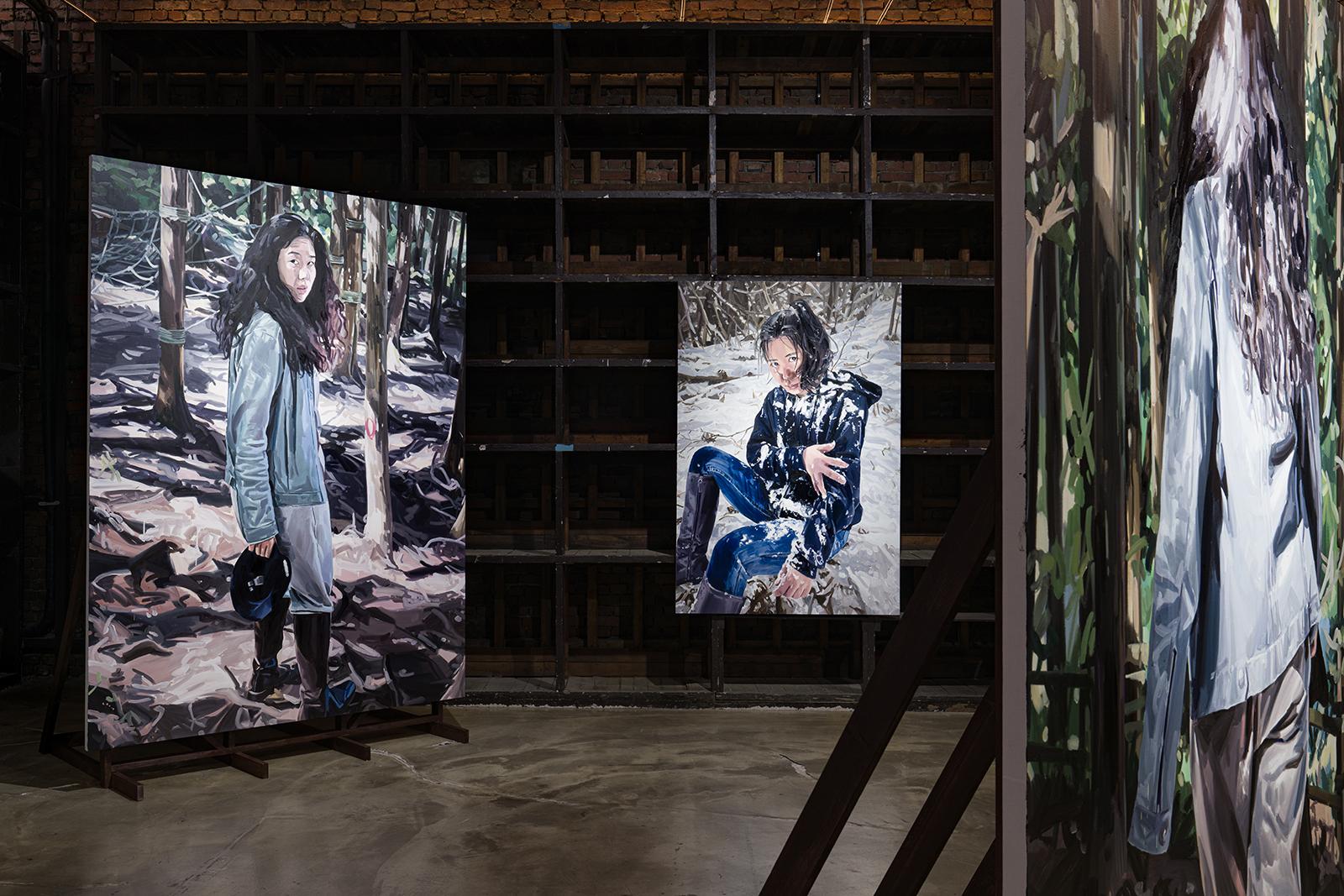
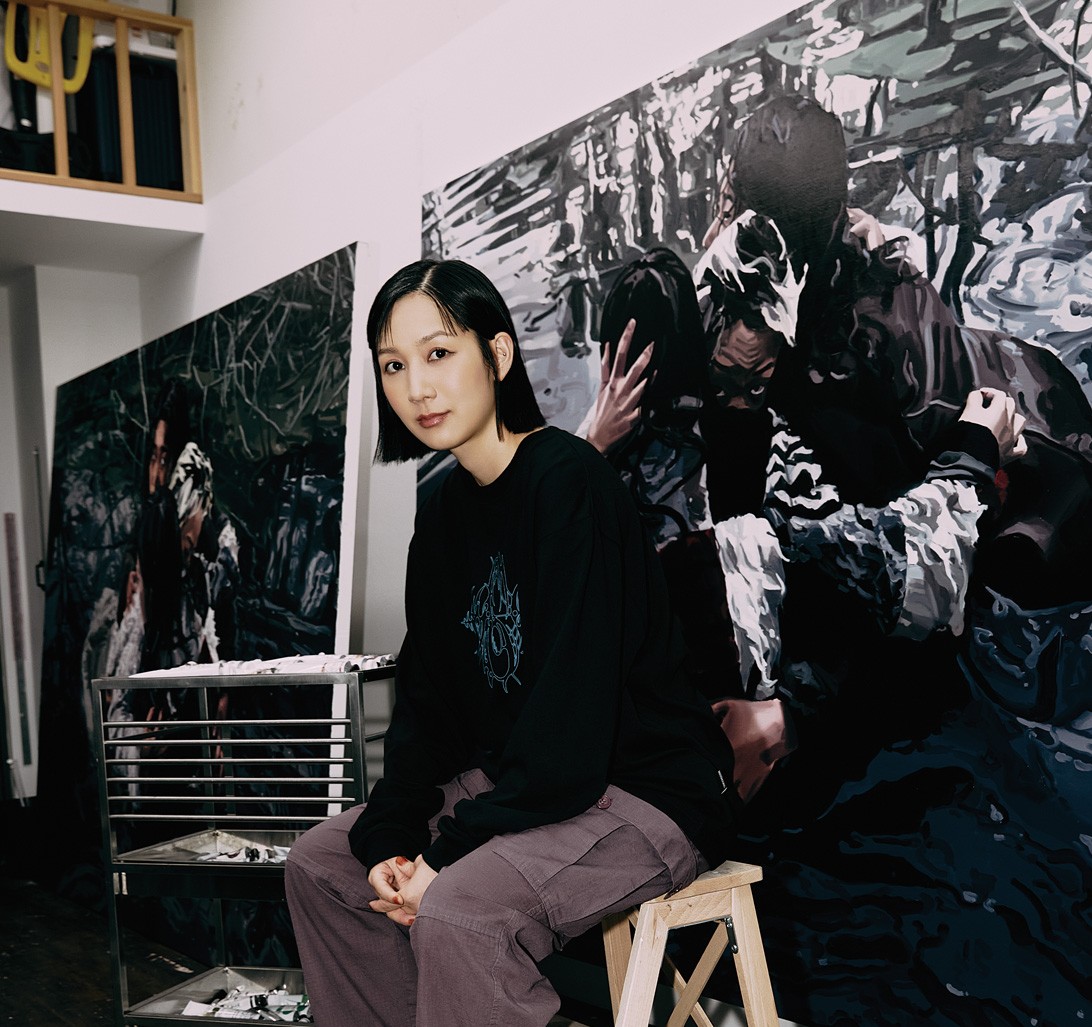
At the outset, the artist began by depicting biker gangs and cults. Gradually, this shifted toward snapshot photographs taken while observing figures in her surroundings, and further into staged photographs that she planned and directed herself. In this exhibition, the works are rendered with reference to the performances of other artists. One observes a progression—from distant landscapes to figures seen from behind, from looking toward to confronting face-to-face. The distance to the subject steadily narrows.

In these works, the artist willingly approaches the world of others—entering, moreover, the highly ambiguous space of artistic practice. To depart from a contemplative gaze is to relinquish a position of safety. In the artist’s own terms, it is a movement toward the subjective, the personal, and the emotional. As such, these paintings leave behind the fingerprints of affect.

This is not merely a question of rendering the visible and the invisible. Above all, what matters is vibration. As though worlds collide—self and other—a momentary “performance” meets the flat plane, producing a tremor. A specific event has occurred there, and the photograph functions as its trace. Alongside these traces, the artist encounters another kind of medial vibration in painting, situated between the restoration and distortion of the event.
The brush repeatedly hurls paint against the wall of the canvas. It is flung back. Debris emerges as color and form.

Observing the motion of painting, it appears less as an act of penetration than as a persistent contact with that which cannot be pierced. And within this, there is unmistakably a trembling—a quiver that resembles an expression. A wavering. As though attempting to pass through an unconquerable wall.

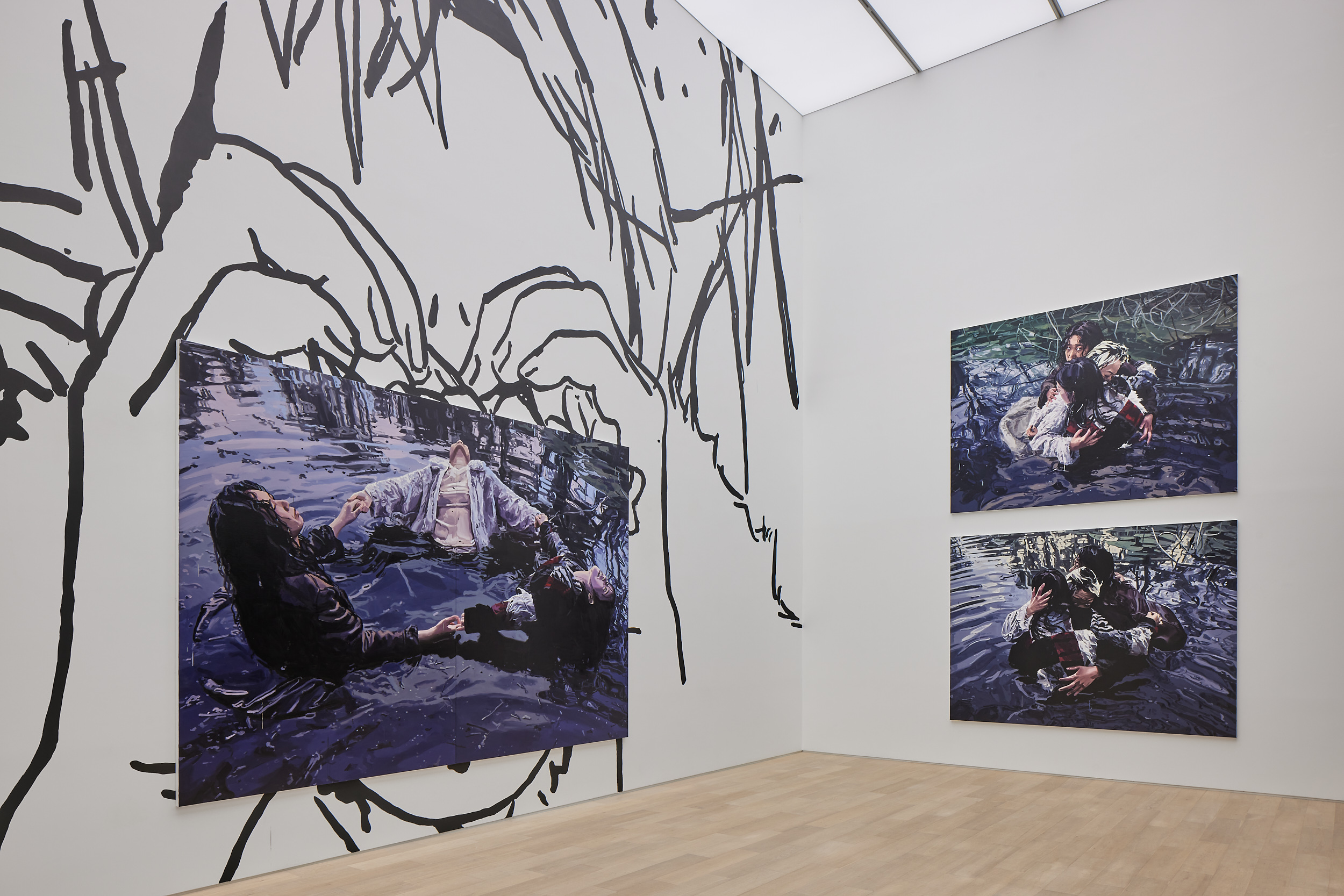
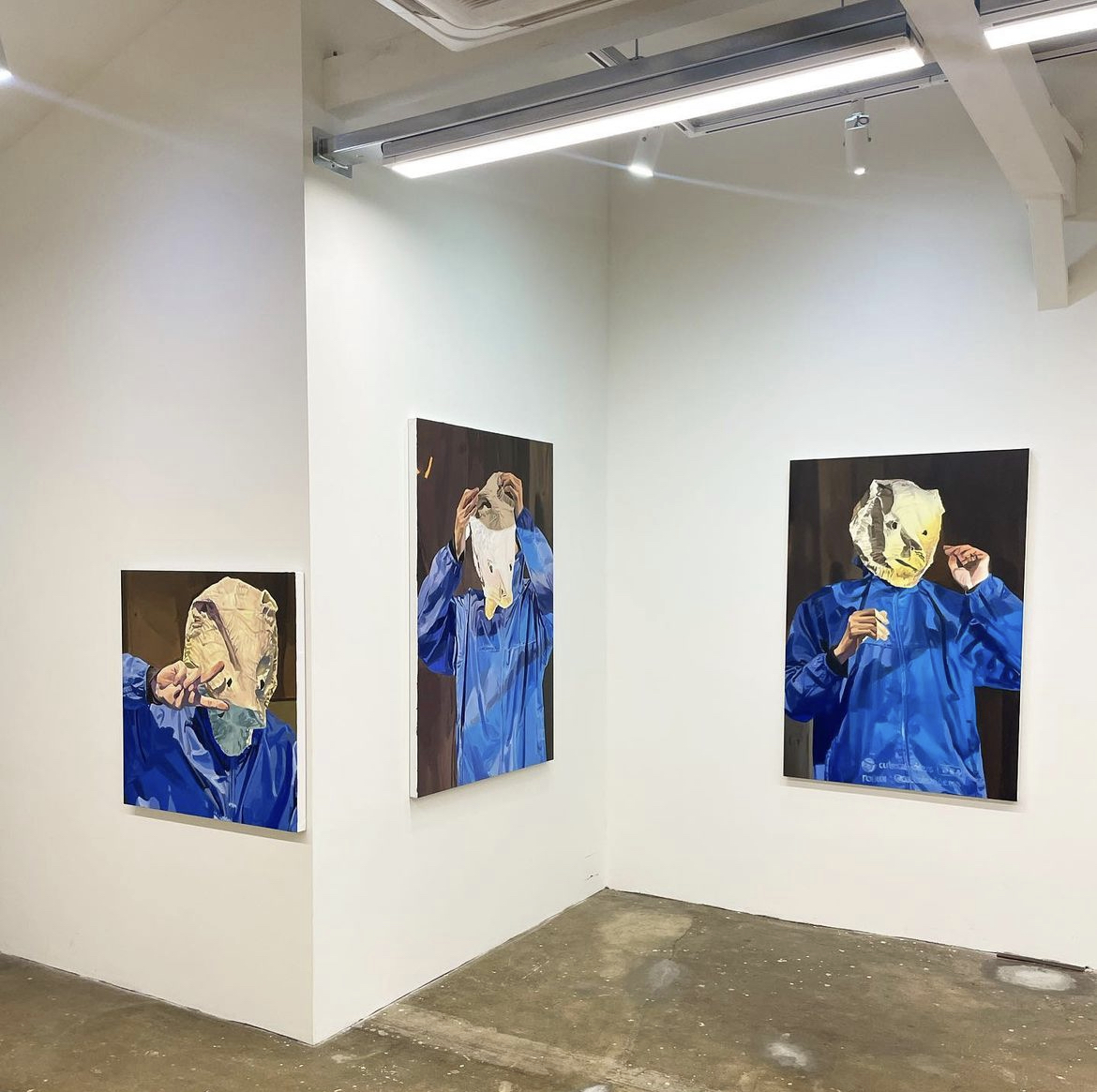
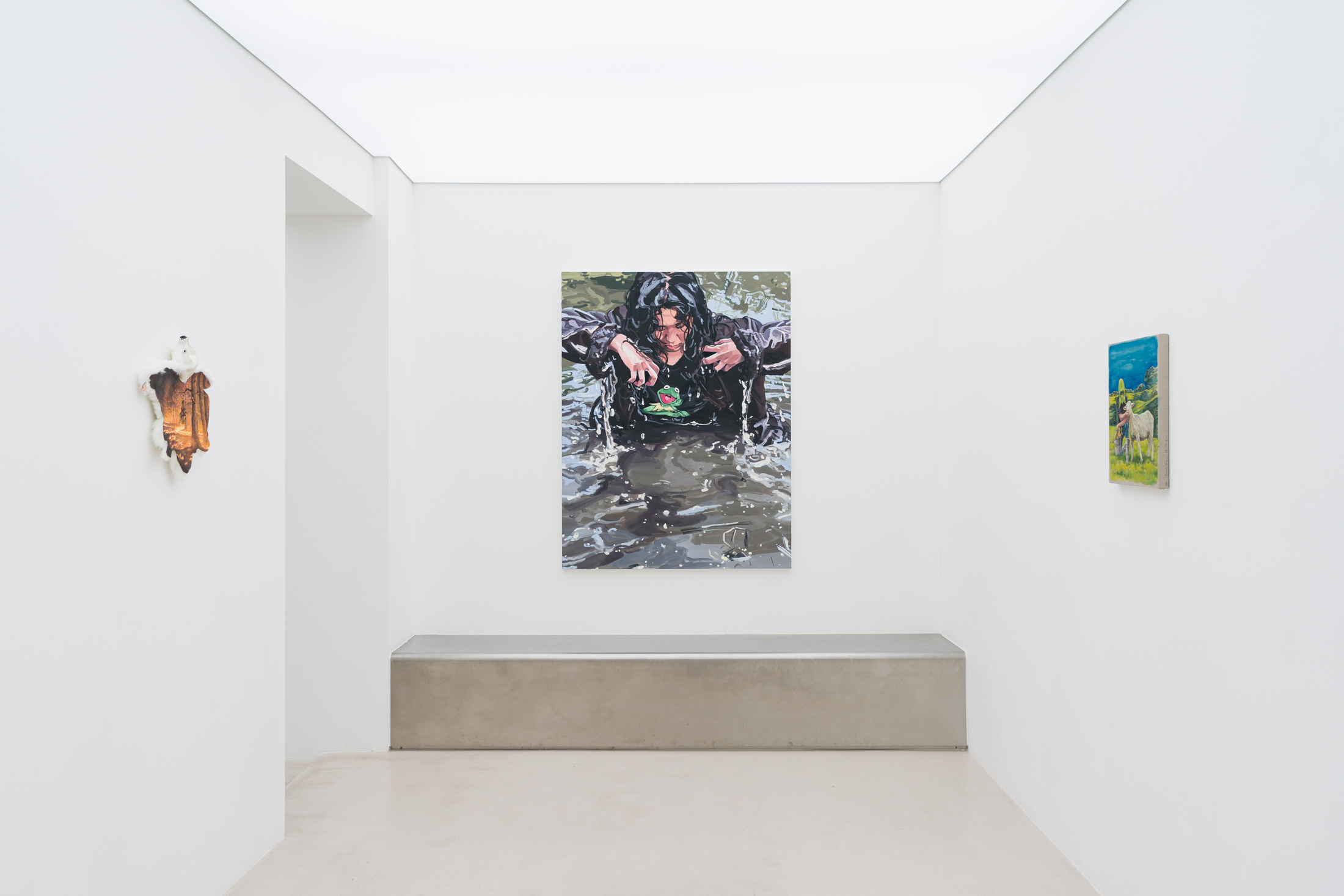
Installation view of 《B-hyeong Bi-yeom Gwi-yeom》 © Sahng-up Gallery

Alibi 2: Boundary

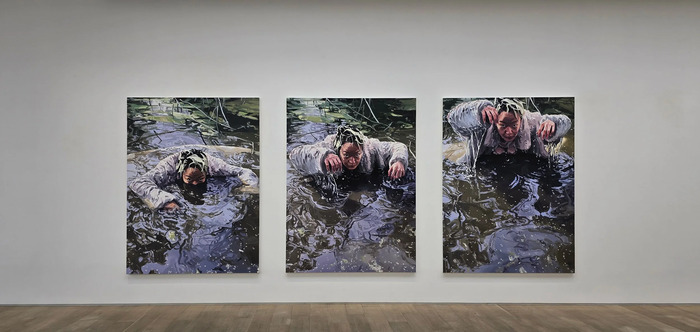
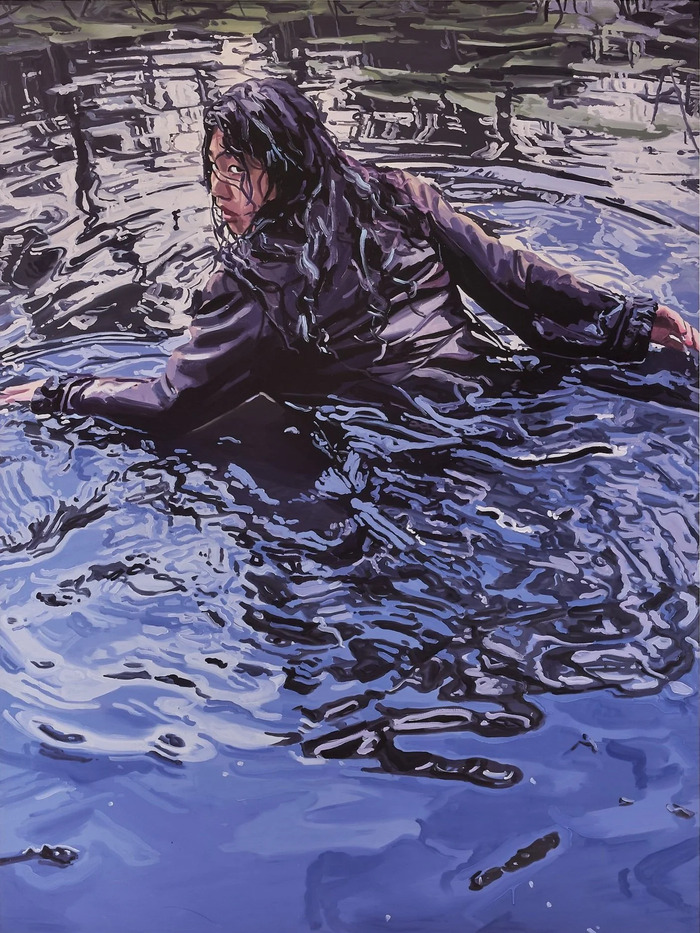
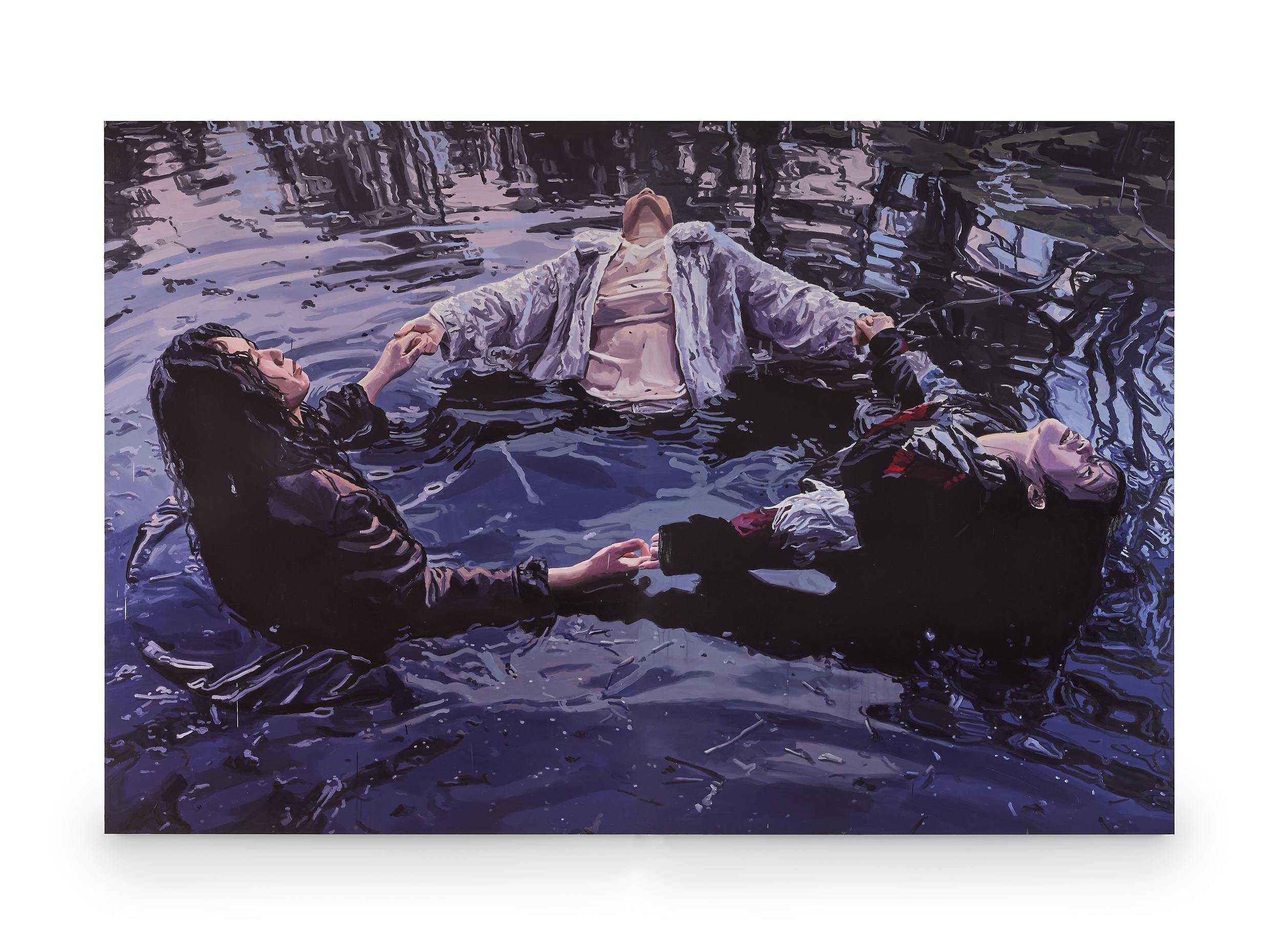
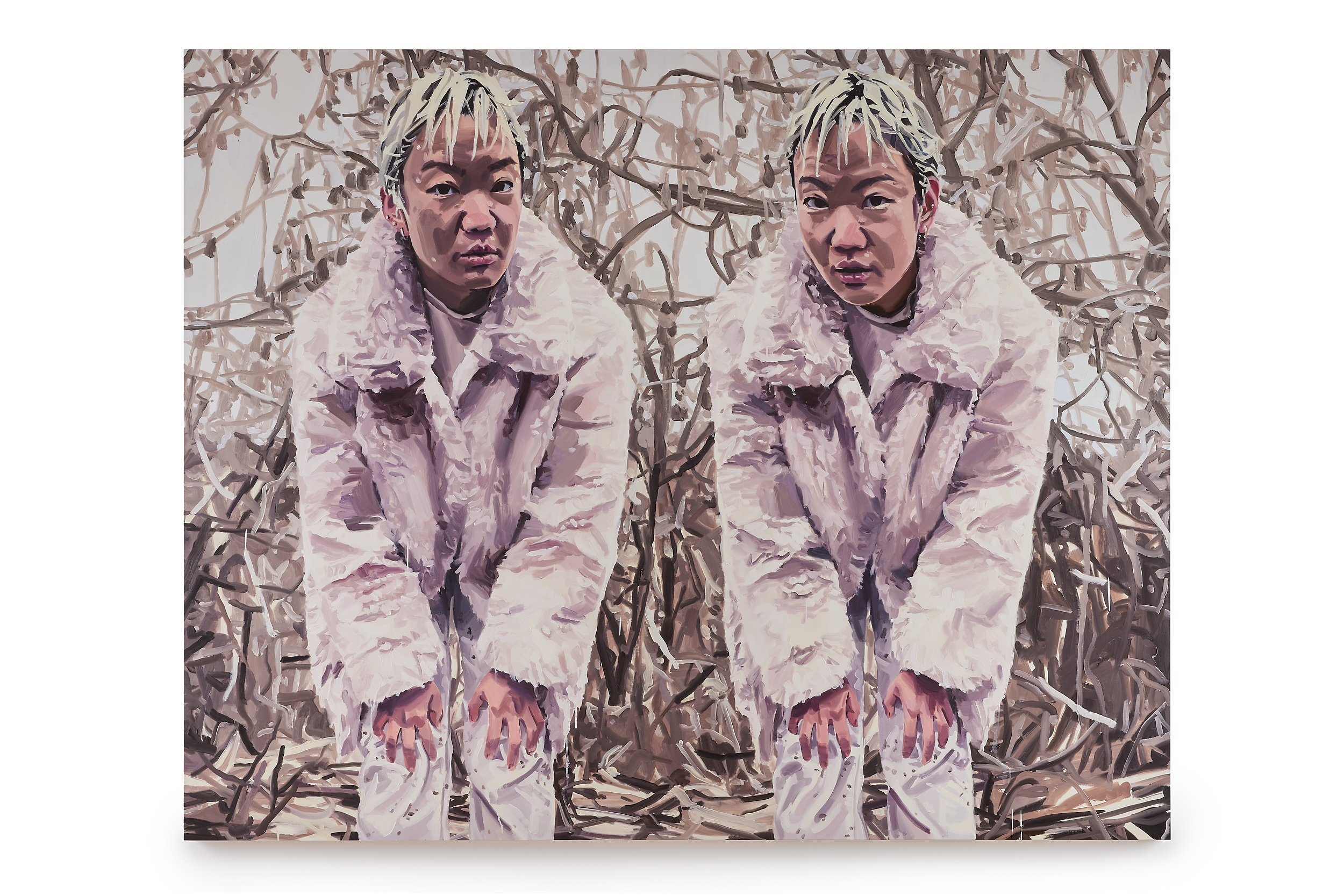
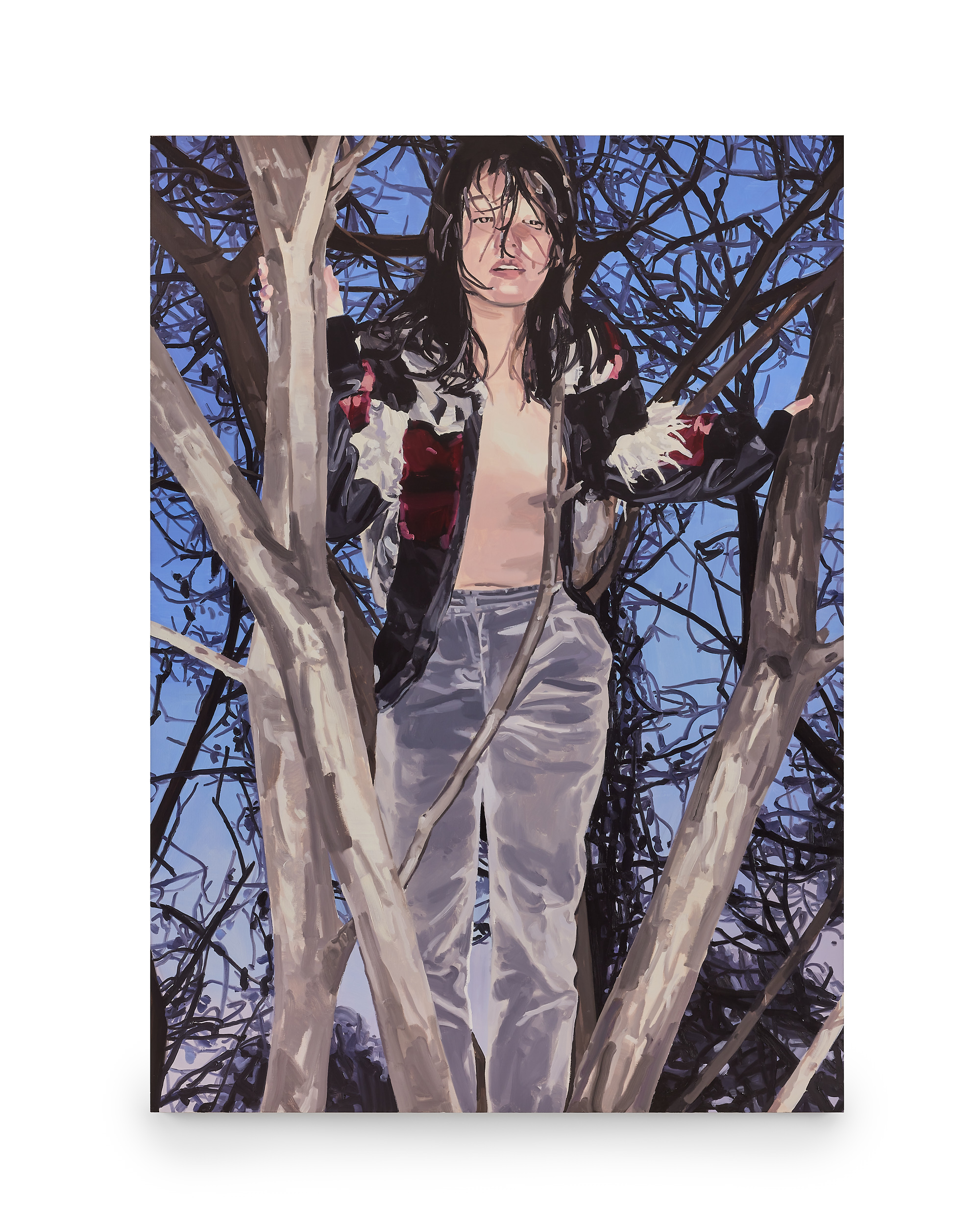
Due to the specificity of its representational mode, we believe we can imagine certain scenes. Yet something feels amiss. The continuity of such scenes no longer operates within the works presented here. Actions extracted from a timeline remain suspended, even as they imply movement. In most works—such as Cave Time, Ambush Ⅰ, and He’s getting too Clingy—color occupies a significant share. One perceives sleek blues, damp blues, and shimmering blues. In contrast, the red that cuts vividly through these blues appears in Caveman, Chroma Key Green, and Durable and Scary. In this way, movements that have departed from narrative seem to scatter clues through color. Following color reveals expressions—subtle angles of creases begin to form.

We soon grow suspicious of the face behind the mask. Yet the mask does not so much reveal the virtual as reassure us that the real exists somewhere. The superficiality of painting exposes the tearing apart of a narrative that would otherwise unfold according to content and temporal sequence. The frequently used title “Cave” operates in a similar manner. It guides the viewer not to Lascaux nor to the catacombs, but to a damp, recessed, “dark brown” space.

There, sound reverberates without depth, and despite this lack of depth, vibration persists. Thus, the cave man hides behind the mask, and the mask behind the image. It points toward depth, retreats, and returns. Yet what assumes volume here is not the real, but the boundary of the plane—the image itself. Like a motion stripped of physical time, it produces an instant that resists explanation, propelling language into leaps.

The exhibition title, too, is tenuously linked through association. Bihyeong–biyeom–gwiyeom: disparate elements loosely connected through phonetic resemblance. As though images were not stacked vertically but arranged horizontally. Perhaps, within a world saturated by language, the way images speak lies in such fleeting moments—when they are briefly interpreted through arbitrary formal similarities, only to slip away.

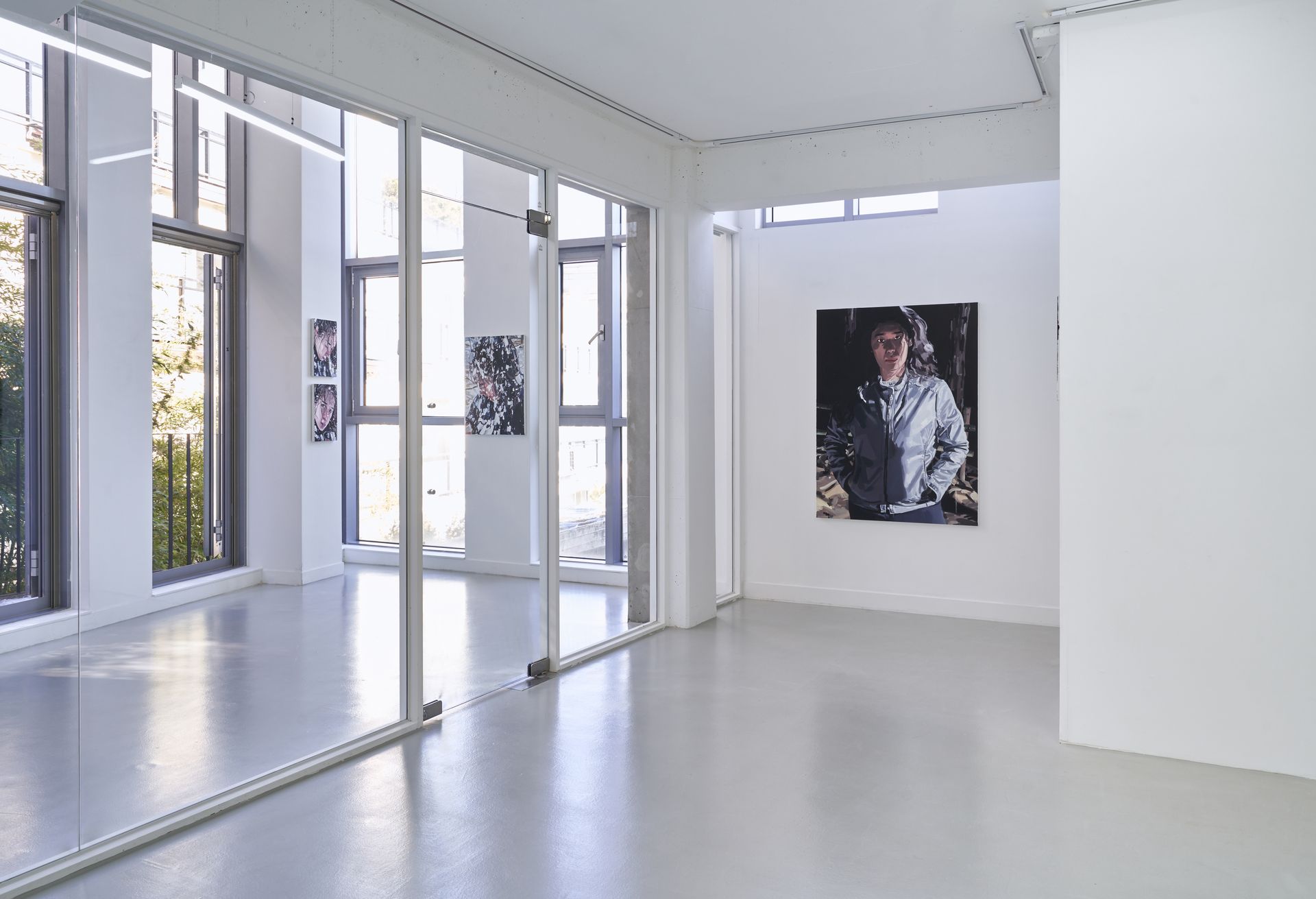
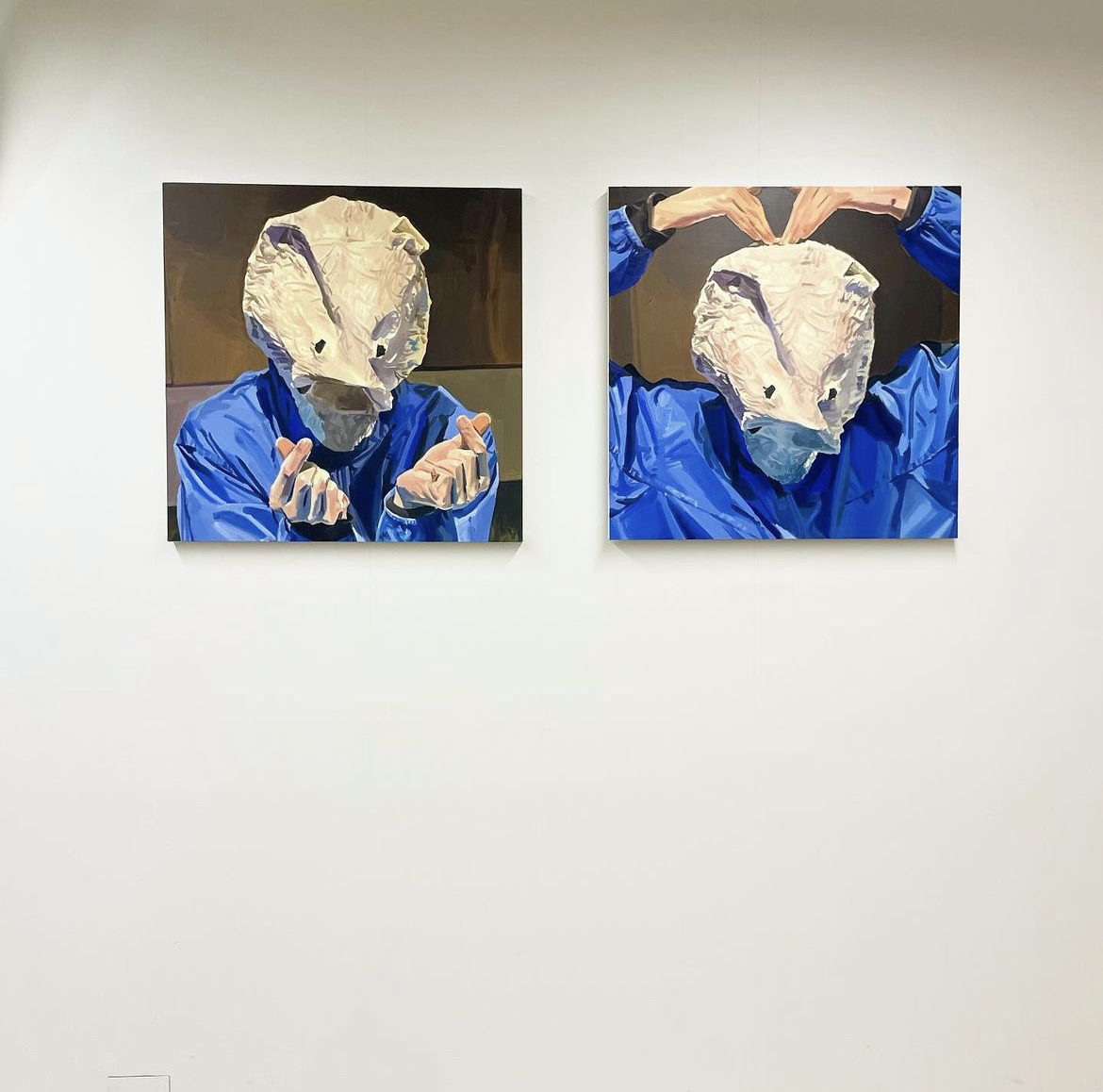
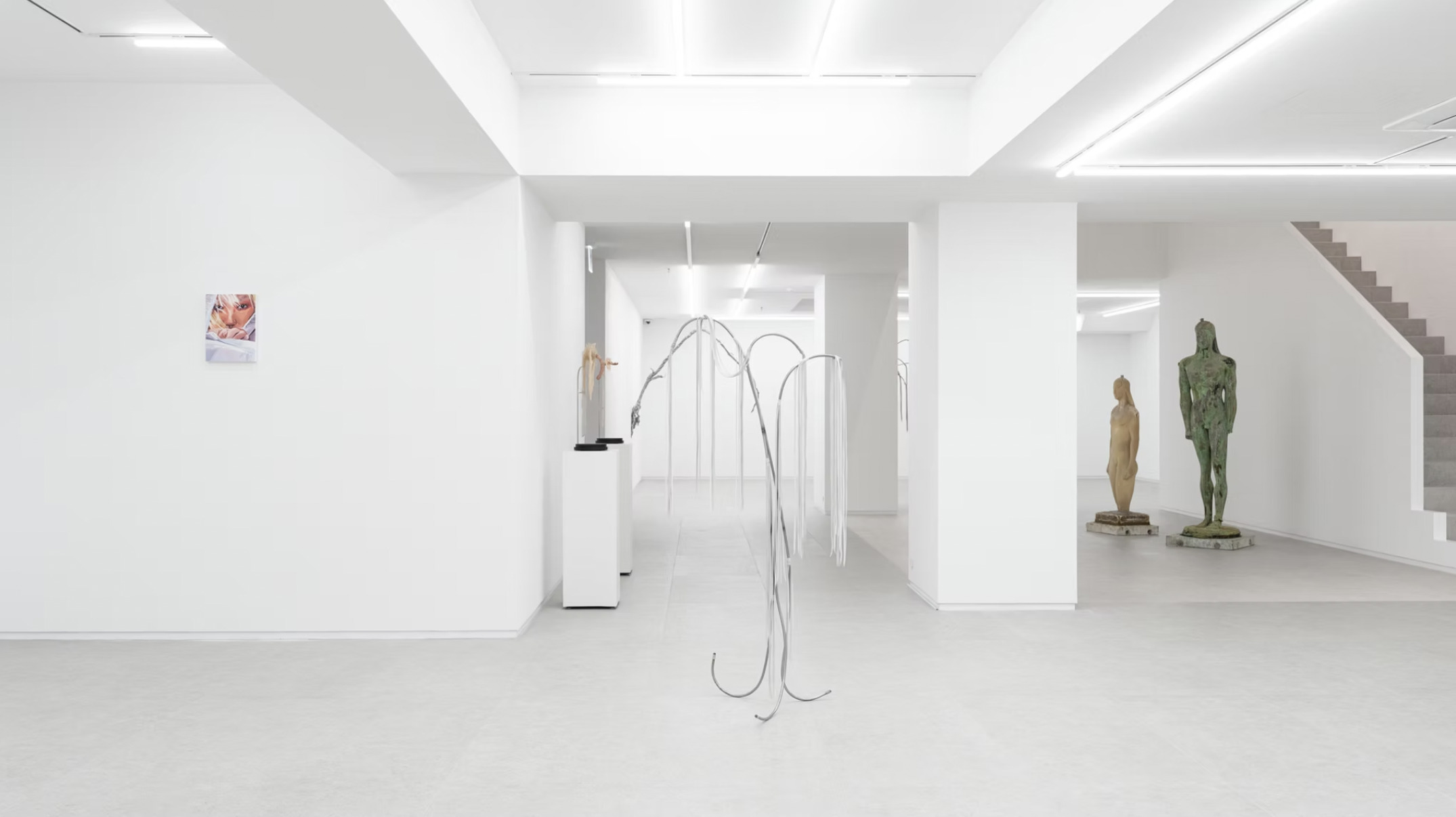
Installation view of 《B-hyeong Bi-yeom Gwi-yeom》 © Sahng-up Gallery

Alibi 3: Turning Away

A particularly intriguing element is the appearance of “letters,” which may serve either as clues to the work or as fabricated alibis. The performance artist featured in the works and the painter who renders them exchange correspondence. These letters contain not so much accounts of one another, but rather descriptions of shared landscapes and fragments of casual conversations about other figures.

Ultimately, the letters return not to questions about the other, but to reflections on the self. Yet when these letters are disclosed, they seem to turn away from their respective authors and instead face one another. A peculiar situation in which self-monologue becomes another’s confession.

This exchange of gazes continues within the works themselves. The gaze of the depicted subject turns downward, while the observing gaze moves upward. This mirrors the very act of painting. As Vilém Flusser suggests, the gesture of drawing is as follows:

We are not alone in this world, and we know it, because the gestures of others around us point toward us. …The image being drawn is both the meaning “given” through this gesture of drawing, and the meaning “received” by anticipating the image that is being drawn. The painter realizes herself within this gesture.

Through the act of being painted, the image becomes a continuous exchange of meaning. It is not self-circulating, but directed outward—toward the world of others. The artist’s waiting resides there. She lies in wait within time, in order to capture fleeting moments that leap from the everyday and the surrounding.

Like the heart that appears in Durable and Scary, it is a fear that is at once absurd and resilient. A sticky, damp contact. Because it must pass through an unconquerable wall. It must.

Even at this very moment, something flickers and passes through the dull expanse of waiting.

References