Exhibitions
《Incomplete darkness》, 2016.07.08 - 2016.07.24, NOWHERE
July 06, 2016
NOWHERE
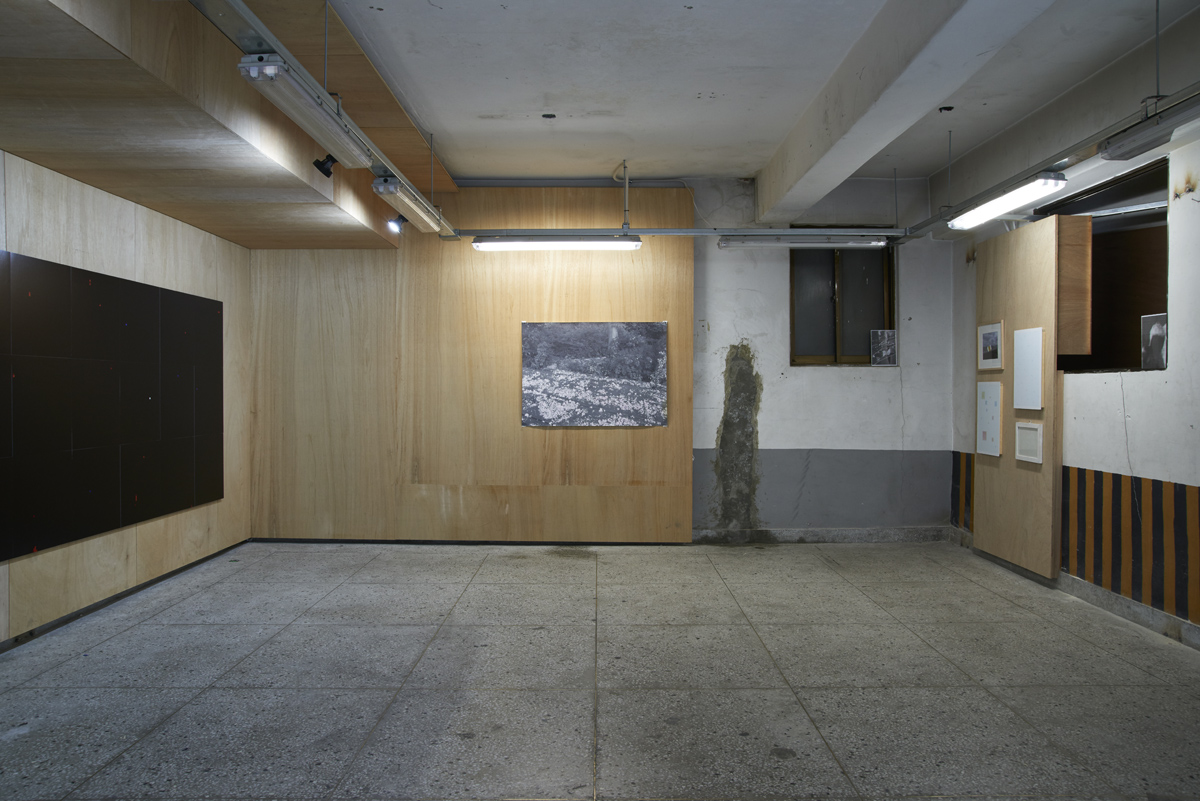
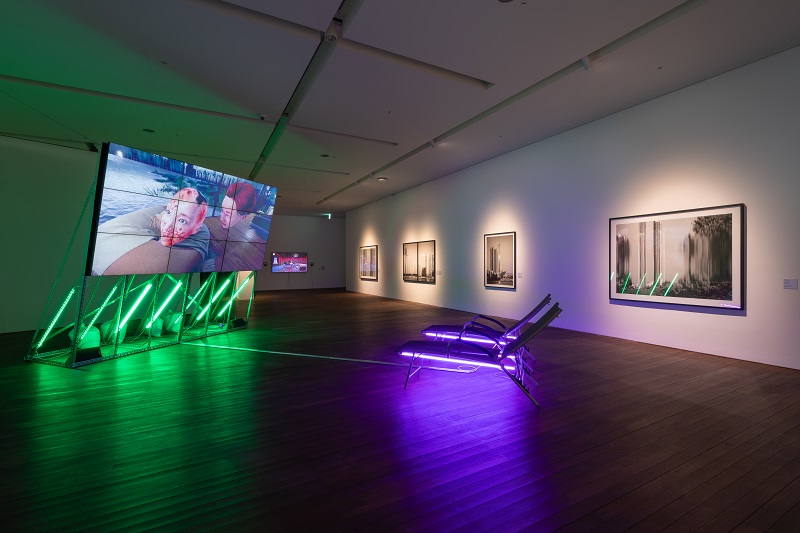
Installation view of 《Incomplete darkness》 © NOWHERE
Can Perfect Darkness Exist?
This exhibition began from a reflection on living in a chaotic era. Observing tones and behaviors that seem to long for the misfortune of others, I began to contemplate the feeling of discomfort. What is it that is wrong, that provokes such discomfort? Is that judgment of “wrongness” truly absolute? And further, does any absolute distinction between right and wrong exist at all? These questions are inherently skeptical, as they ultimately have no answers. And yet, in the face of a turbulent world, dreaming—if only for a fleeting moment—of a perfect world may be inevitable for imperfect human beings.
A perfectly ordered and fulfilled world, where everything is in its rightful place. Yet such flawless perfection may in fact be the other side of another form of violence. Or perhaps, in the process of striving toward such perfection, countless acts of violence are committed simply on the grounds of difference. Therefore, a perfection free of chaos is nothing more than a futile dream. If so, what is it that we should aspire to?
The three artists participating in this exhibition revisit imperfection—fractures, voids, errors, and negations—in their own ways, generating subtle vibrations within those gaps. As imperfect beings, the questions they pose about perfection, in turn, evoke reflections on the errors and incompletions that perfection excludes, as well as on temporal gaps and misunderstandings between individuals.
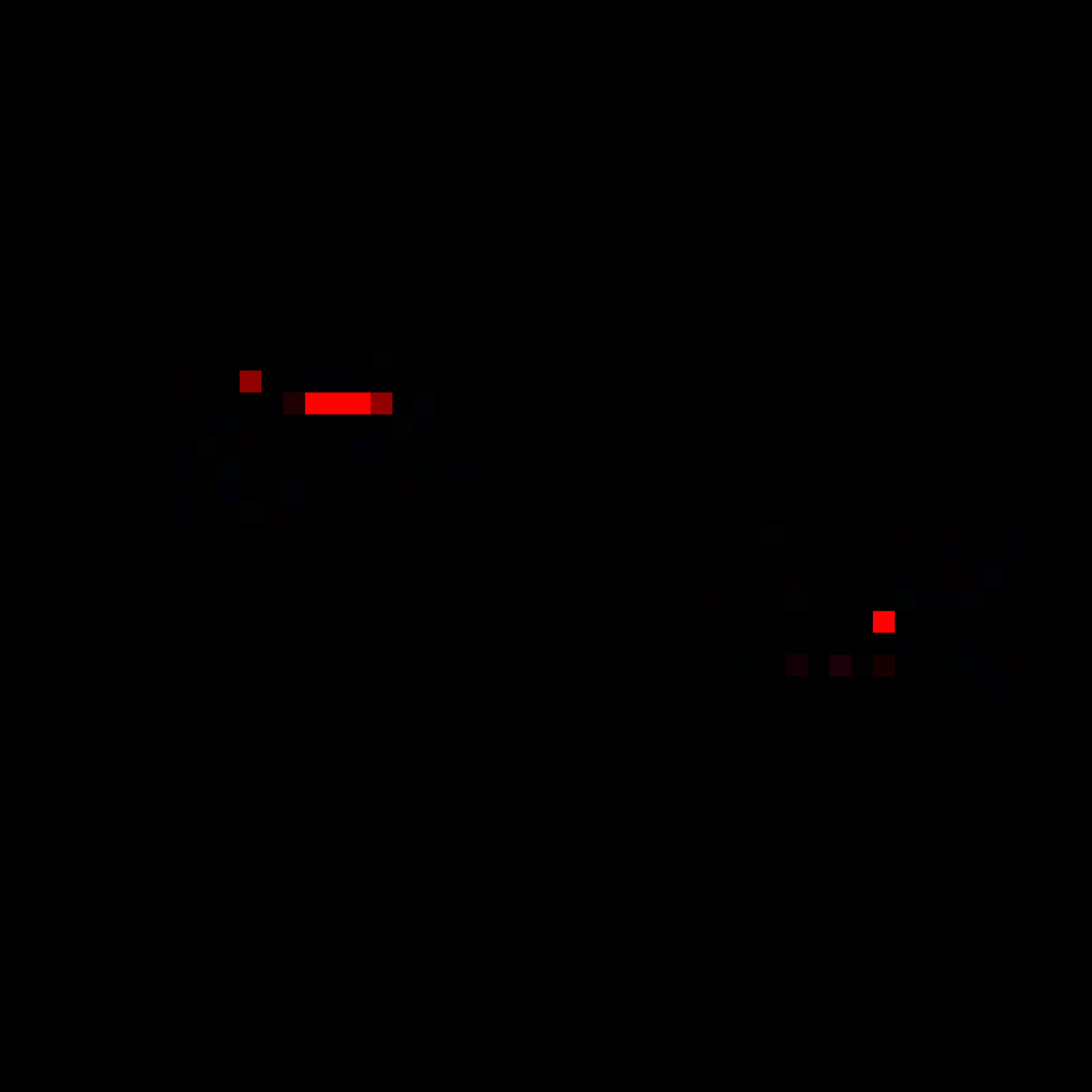
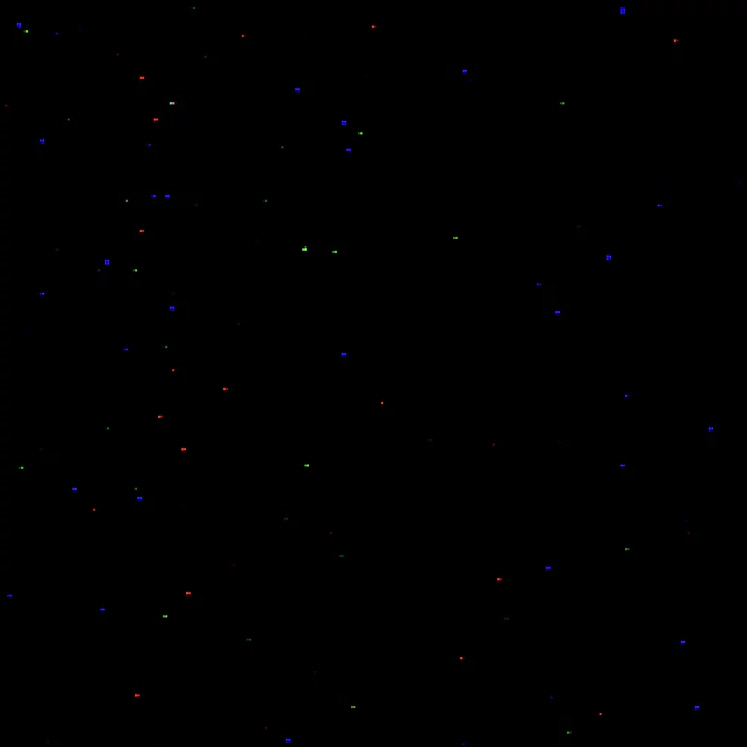
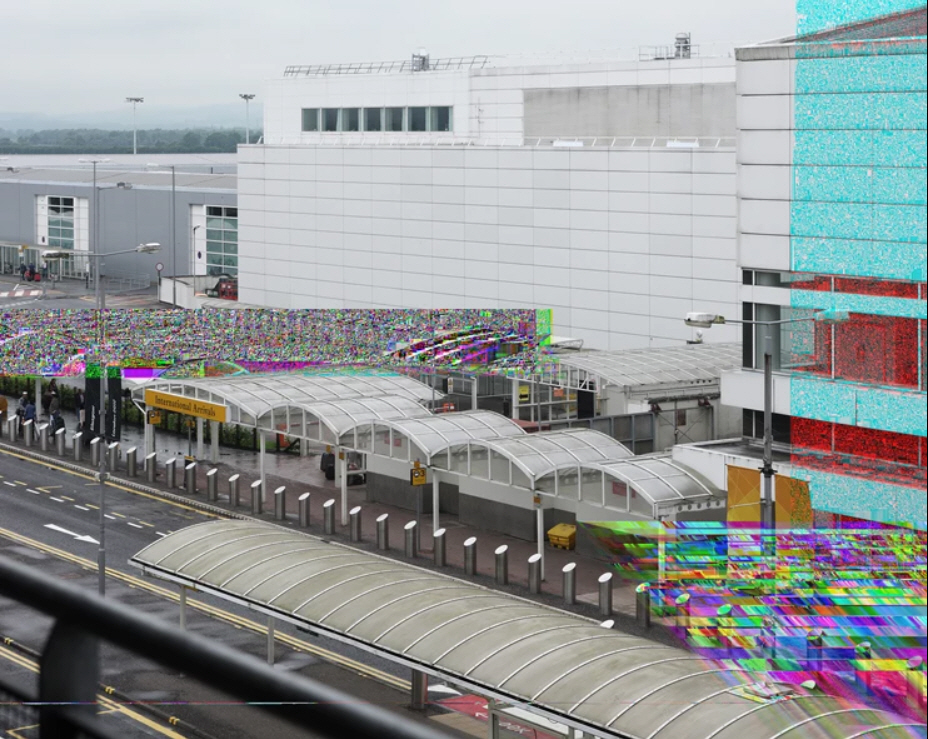
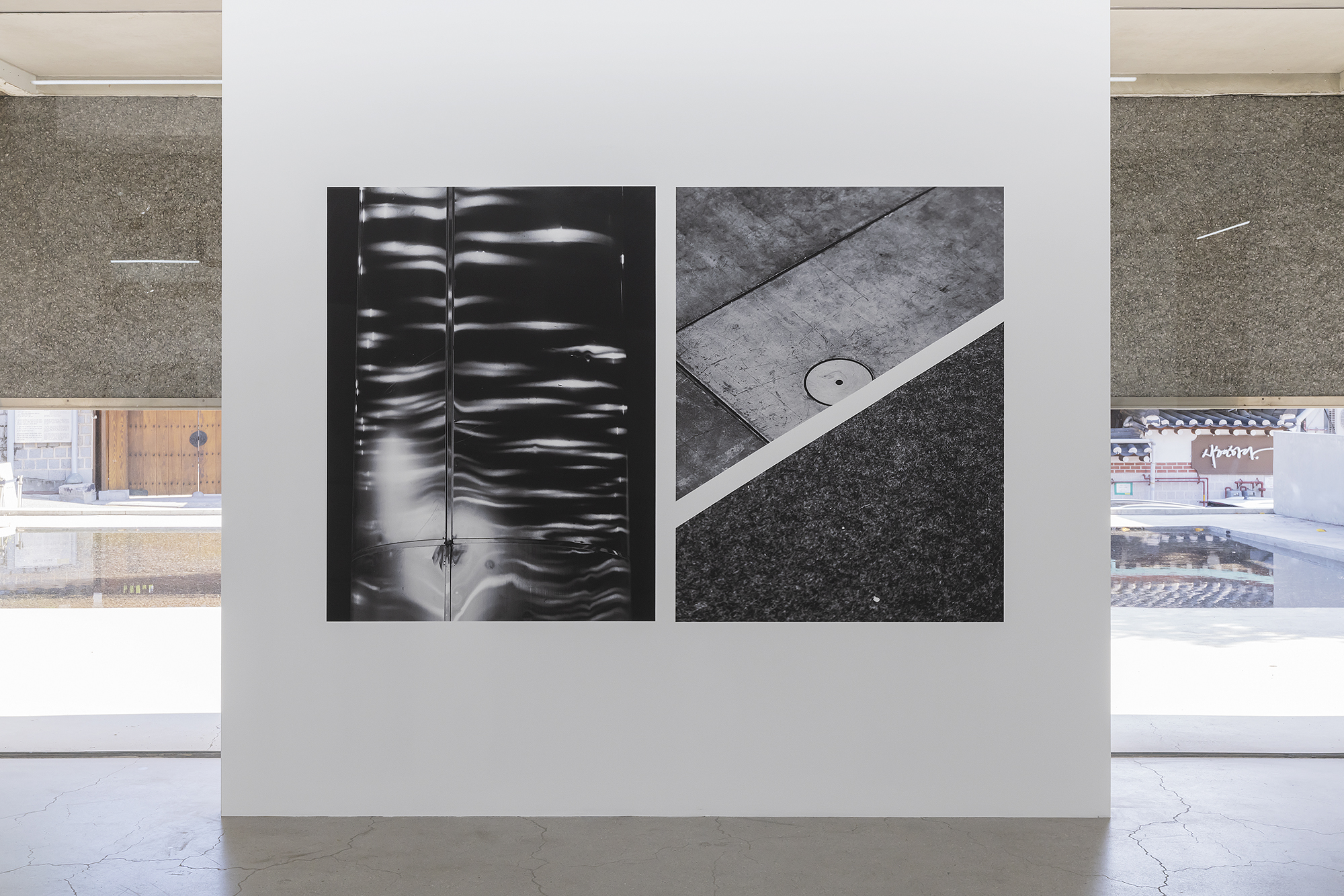
Kim Chunsoo, 183_3540_36152320 #1~#33, 2016 © Kim Chunsoo
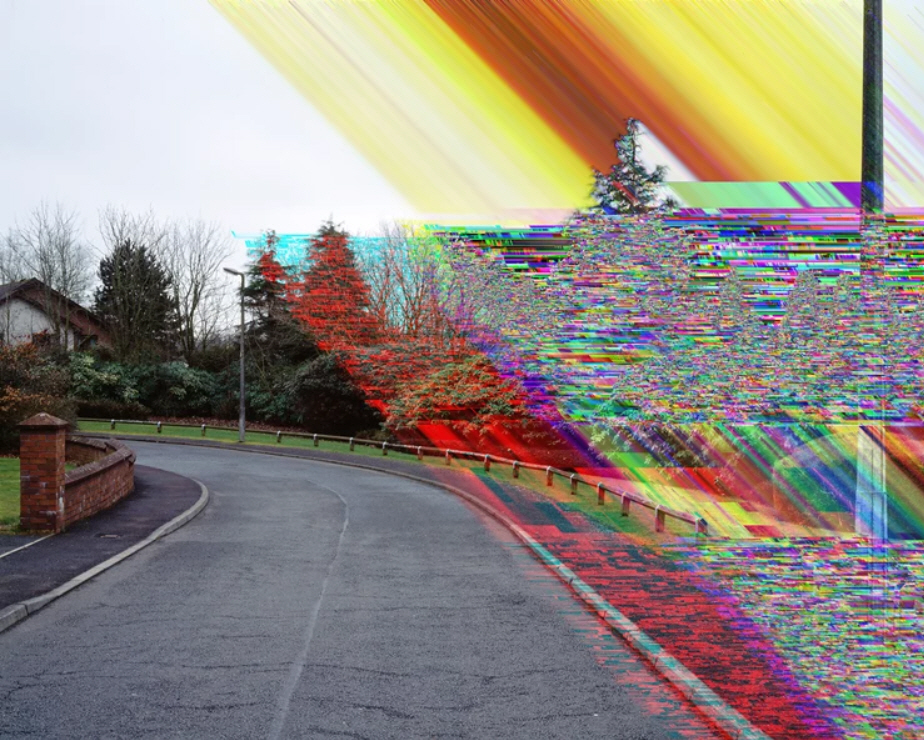
When purchasing a digital camera, one performs a “dead pixel test.” It is an almost ritualistic act of pressing the shutter with all apertures blocked, to check whether any pixels—red or white—appear within the black screen. Through 83_3540_36152320, Kim Chunsoo uses this pursuit of “error-free” imagery to metaphorically reveal a society’s obsession with perfection. Within a society that strives for blackness, these colorful clusters—destined to be concealed—paradoxically shine even more brilliantly as imperfect entities fated for eventual elimination.
Ryu Hyunmin contemplates the unbridgeable gap between reality and the ideal. In search of the perfect horizon paradoxically demonstrates that a perfectly horizontal state is unattainable in reality. A spirit level floating on undulating water continuously brushes past nodal points of horizontality, yet never achieves perfect balance. Much like ideals such as equality or equilibrium that we encounter daily but have never truly realized.
In Dizzy Game, a ball is constantly blown upward along the inclined floor of the Tate Modern’s slanted lobby. The repetitive cycle of failure and challenge in this performative act calls attention to the impossibility of perfection and achievement, or to the precarious presence of failure embedded within success.
Among Cheon Youngmi’s ‘Star’ series, which she has pursued since 2005, the representative work is Secret Star. The “star,” which reveals a complete form depending on the viewer’s perspective, reflects the artist’s intimate gaze. The artist recently experienced a deeply distressing event that nearly disrupted her daily life. The objects of her “love” presented in the exhibition—from her pet rabbit Billy to a rose that has repeatedly survived the brink of death—appear as responses to a driving force that substitutes for conflict.
As if painting delicate hues onto petals that have all fallen during suffering, the artist endures pain and wounds, embracing the fractured passage of time and rendering it beautifully.
“Perfection” operates fully only within imagination or ideals; in reality, it has repeatedly failed, much like the unstable nodal point of a spirit level that seems within reach yet remains unattainable. Yet real life, woven with chance, always exceeds imagination—and for that reason, it is more infinite than imagination itself. The hope that a new trajectory may emerge by continuing to blow a falling ball upward becomes the very force that prevents us from ceasing in the face of failure.
From the smallest aspects of daily life to vast systems, the gap between ideal and reality must be understood not as mere negation, but as another form of possibility. A single particle of light, dismissed as error in pursuit of perfect darkness, may instead become a wondrous presence that comforts life and allows us to endure it. One imagines a single “star” existing far away in the dark night sky.