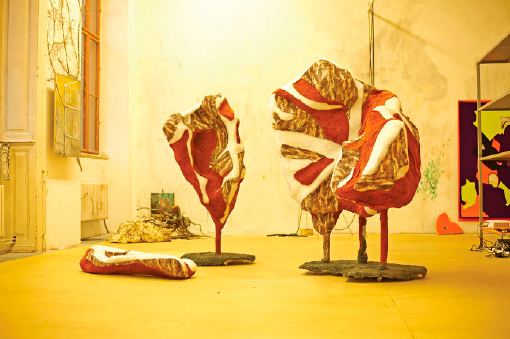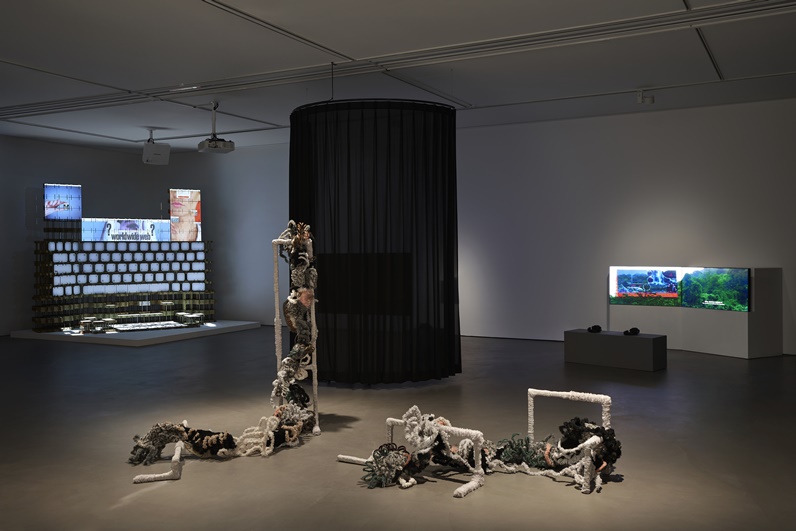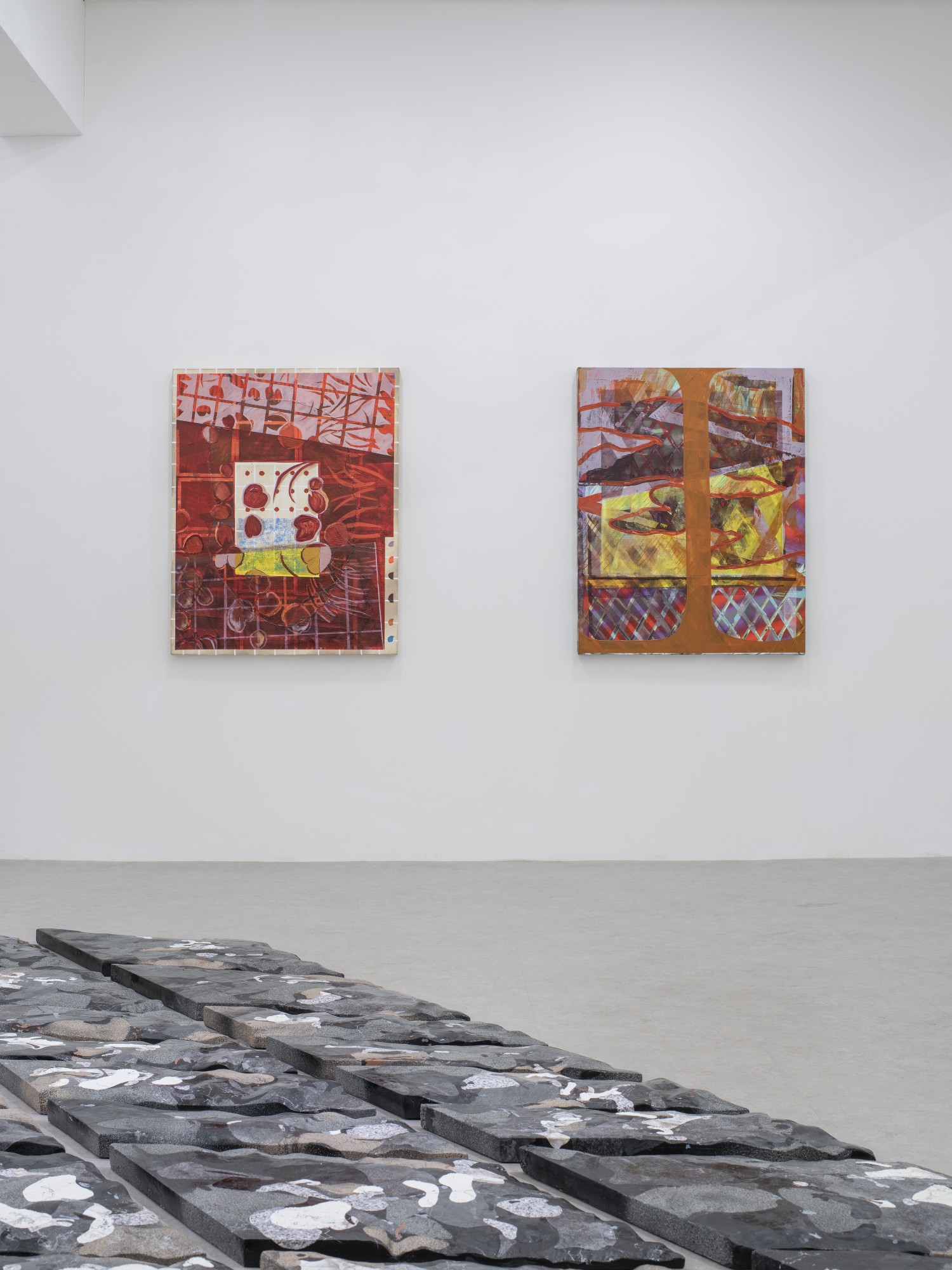
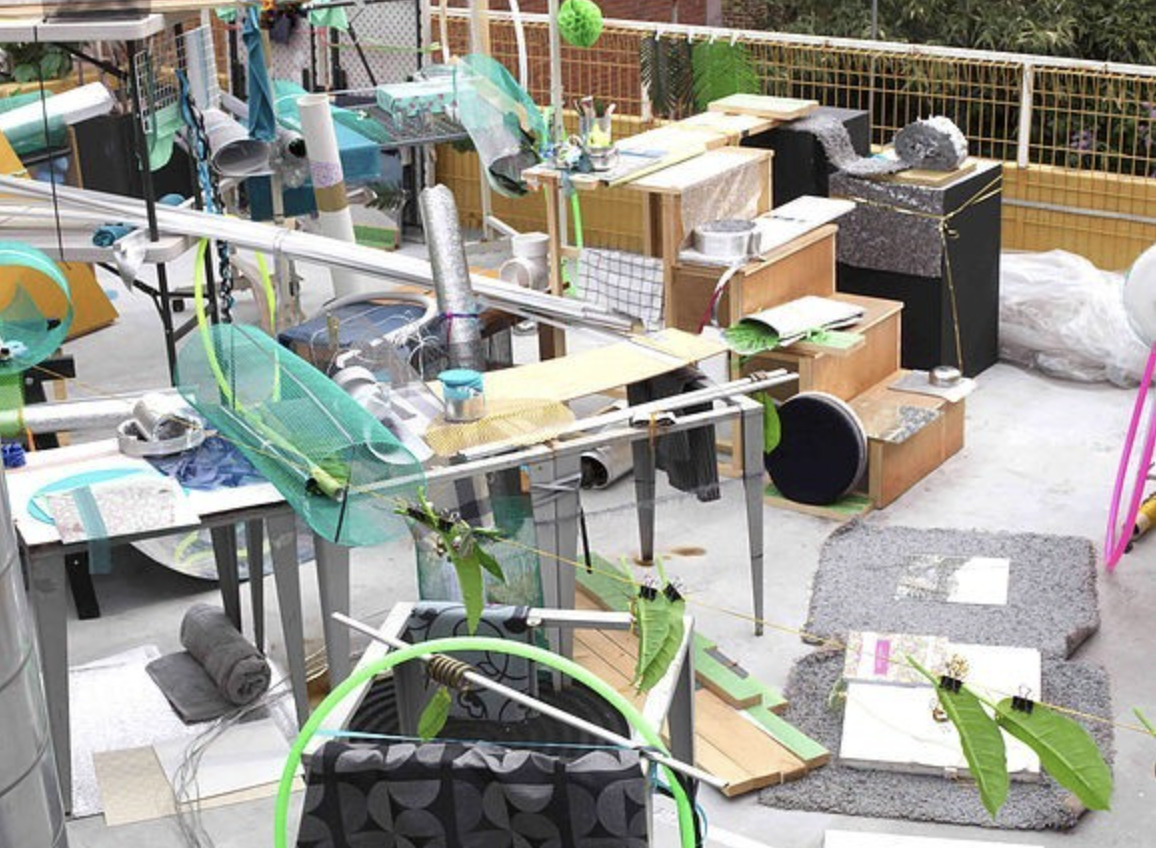
Lim Jeong Soo (b. 1988) has developed a practice centered on sculpture and related performance, with a particular interest in the byproducts generated by social conventions that persist from the past into the present. Asking, “Why do we regard certain actions as right and others as not?”, the artist investigates what factors influence such determinations and how the subject of the “I” that perceives them is defined.


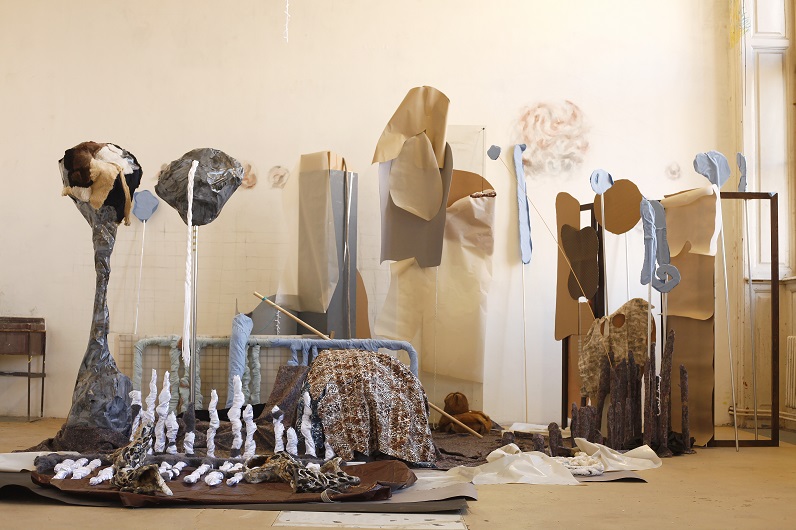
Lim Jeong Soo, Garden Background, 2017, Paper, lumber, artificial flower, Dimensions variable © Lim Jeong Soo

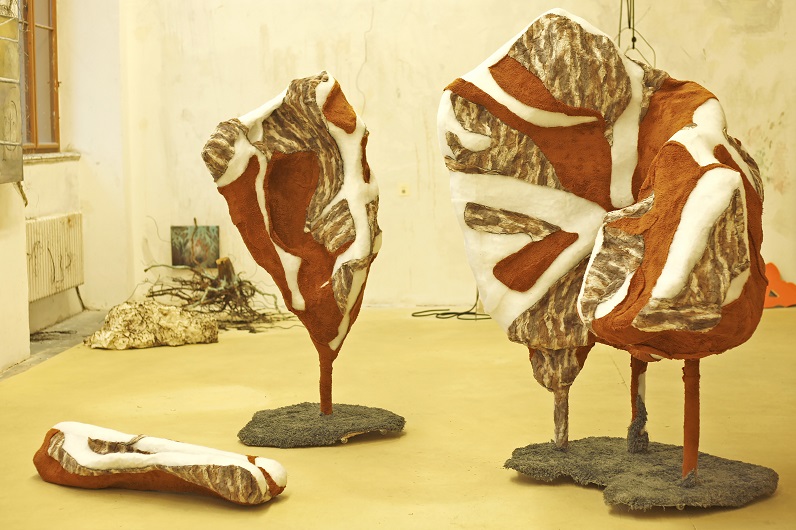
Taking such questions as a point of departure, Lim has created sculptures using materials readily found in everyday surroundings, such as decorative fabrics that mimic the forms of animals and plants, as well as elements drawn directly from nature. Her sculptures place the material qualities of animals, plants, and objects on an equal footing, reconfiguring them into a third kind of entity that moves beyond fixed notions of subjecthood and perspective.


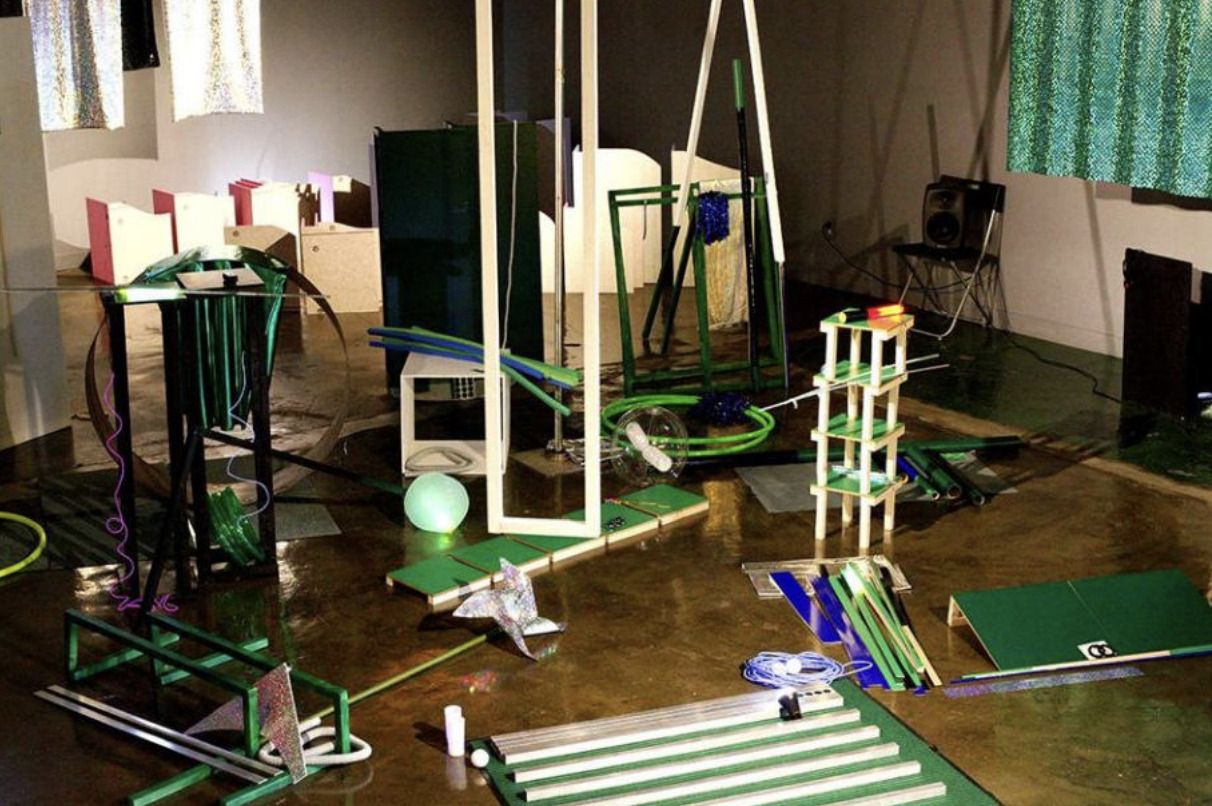
Lim Jeong Soo, Background background, 2017, Wood, fabric, steel, Dimensions variable © Lim Jeong Soo

Lim Jeong Soo approaches herself not as an independent and immutable creation, but as a being composed of energy, and from this perspective pursues subjects that exist outside established categories or along their boundaries.
 
According to her, such subjects include sentences without a subject, the self as an all-encompassing background, individuals who do not belong to a community, superstitions remembered by the body, the mind as an atom, the non-human, and the language of objects.


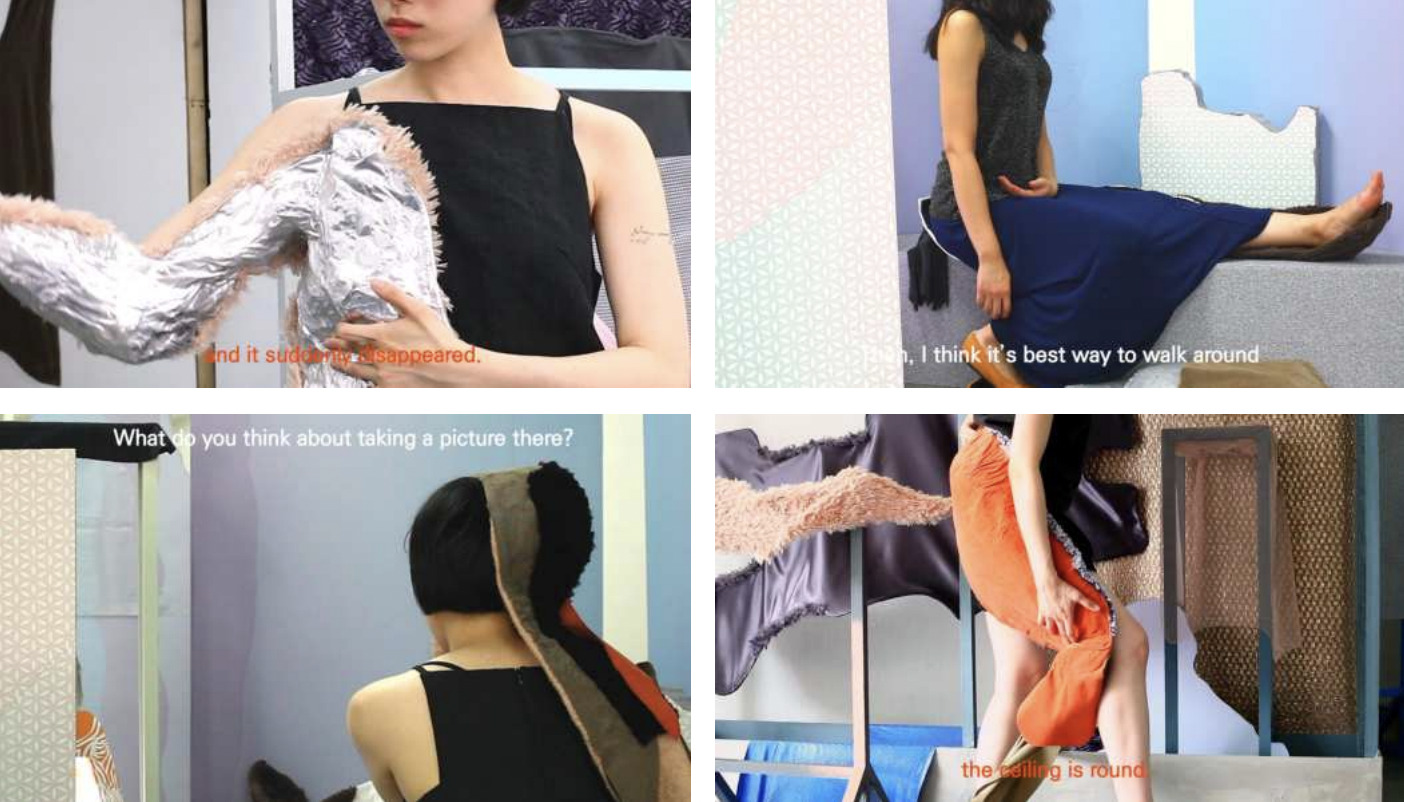
Lim Jeong Soo, Background background, 2017, 2-channel video, color, sound, 5min. © Lim Jeong Soo

She rearranges into a single scene objects that mimic nature—such as artificial flowers, mythical animal figures, and items patterned with animal skins—along with phrases carrying multiple meanings and kitsch images in which human desires are condensed, unfolding contemporary landscapes through sculpture, performance, and video.
 
In doing so, she relates to objects not through their conventional functions but through their surfaces—color, texture, form, and scale. She also regards the human body as one object among others, and through performance engages moments and spaces in which human and nonhuman bodies overlap.


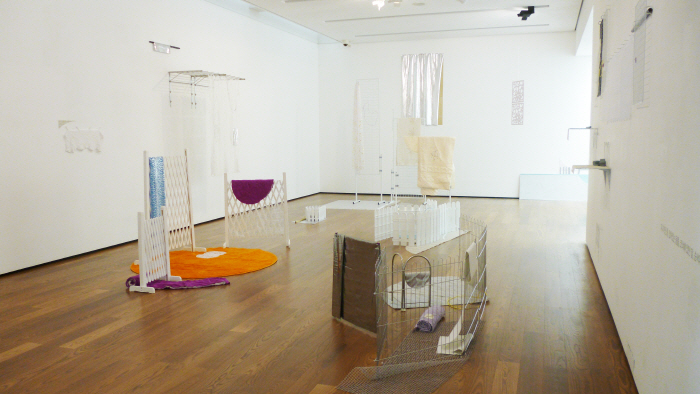
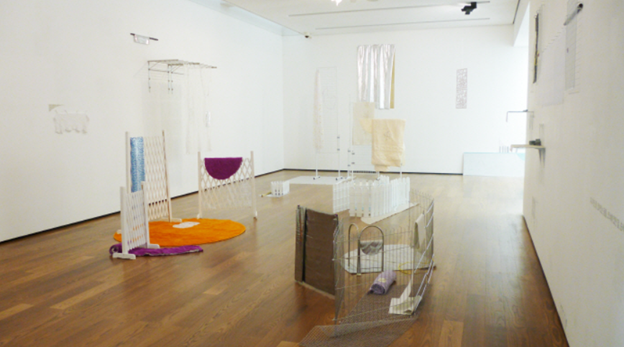
Installation view of 《Wall, Ground, Atmosphere》 (Kim Chong Young Museum, 2017) © Kim Chong Young Museum

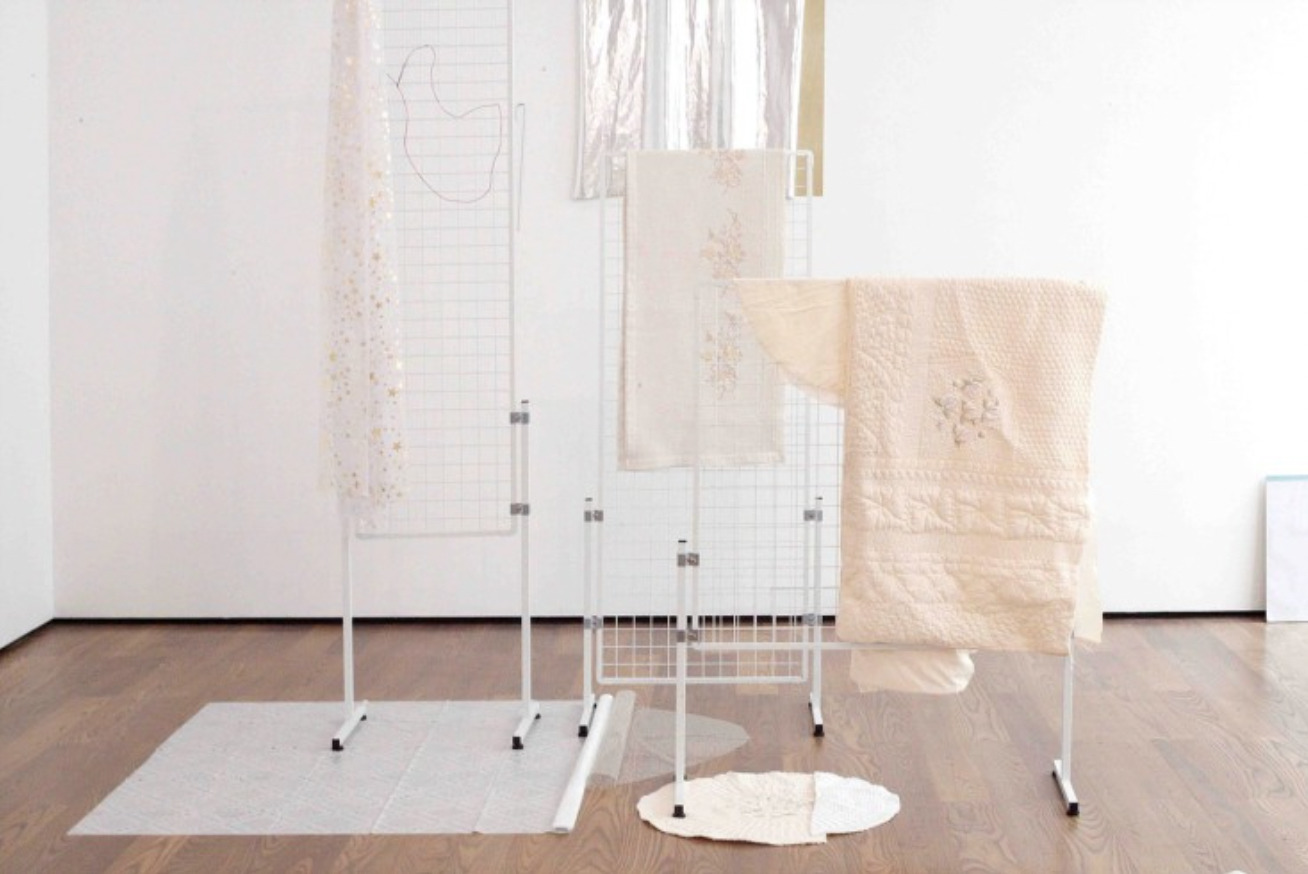
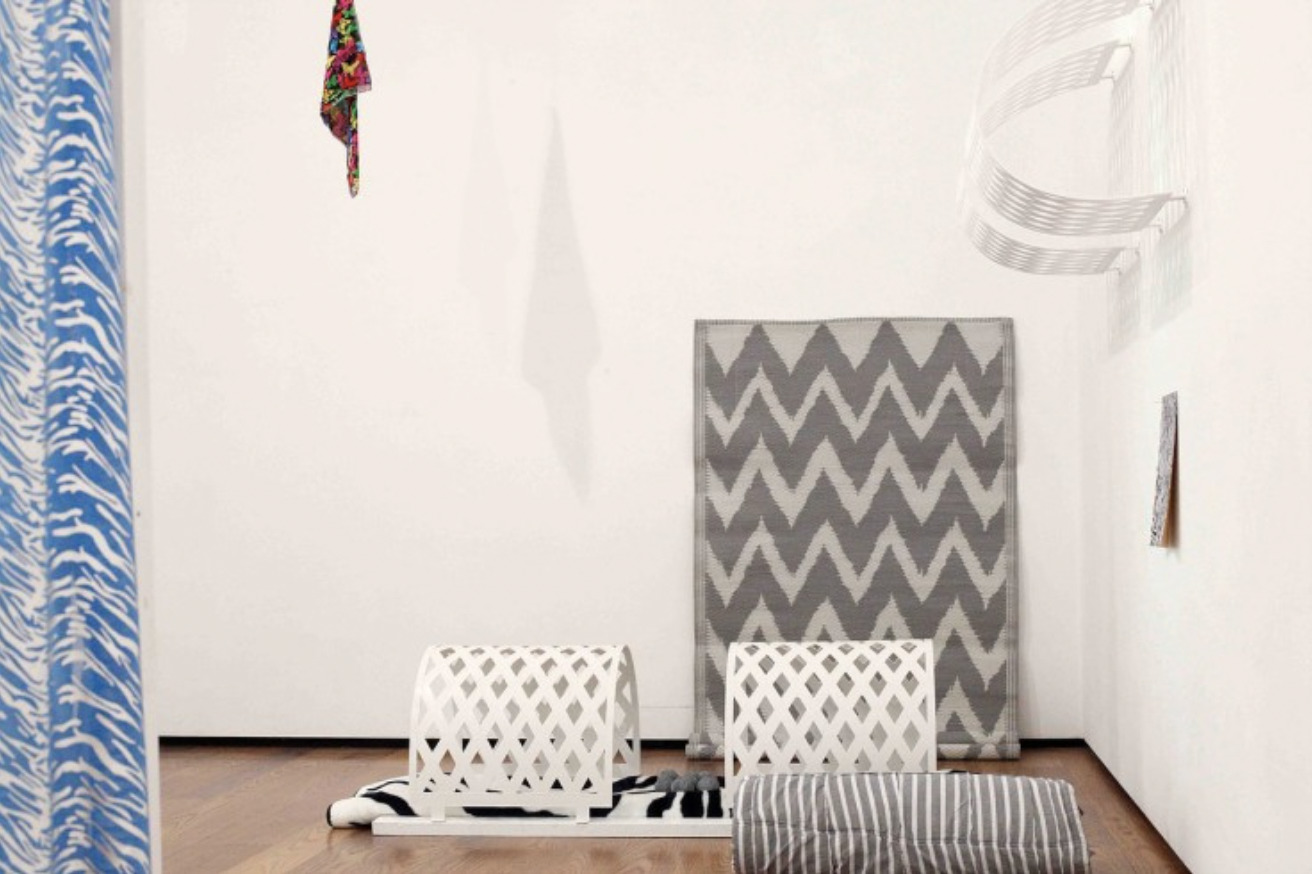
In her 2017 solo exhibition 《Wall, Ground, Atmosphere》 at the Kim Chong Young Museum, Lim presented installations composed of everyday household items such as carpets, blankets, fences, and drying racks. She arranged these objects in clusters throughout the exhibition space and assigned them titles such as butterfly, animal, sun, star, tree, cloud, grass, water droplet, moon, and flower.
 
The reason for giving the names of natural elements to such familiar, utilitarian objects—items so commonplace that they leave little room for reflection—was rooted in her belief that “only by seeing the familiar as unfamiliar can we explore new possibilities.”
 
Lim Jeong Soo invited viewers to project these titles onto the assemblages of everyday objects she presented. Rather than adopting a traditional approach of directly representing specific forms, she combined indirect and associative elements that evoke certain objects, encouraging viewers to reconstruct these fragments in their own ways through the lens of the given titles.


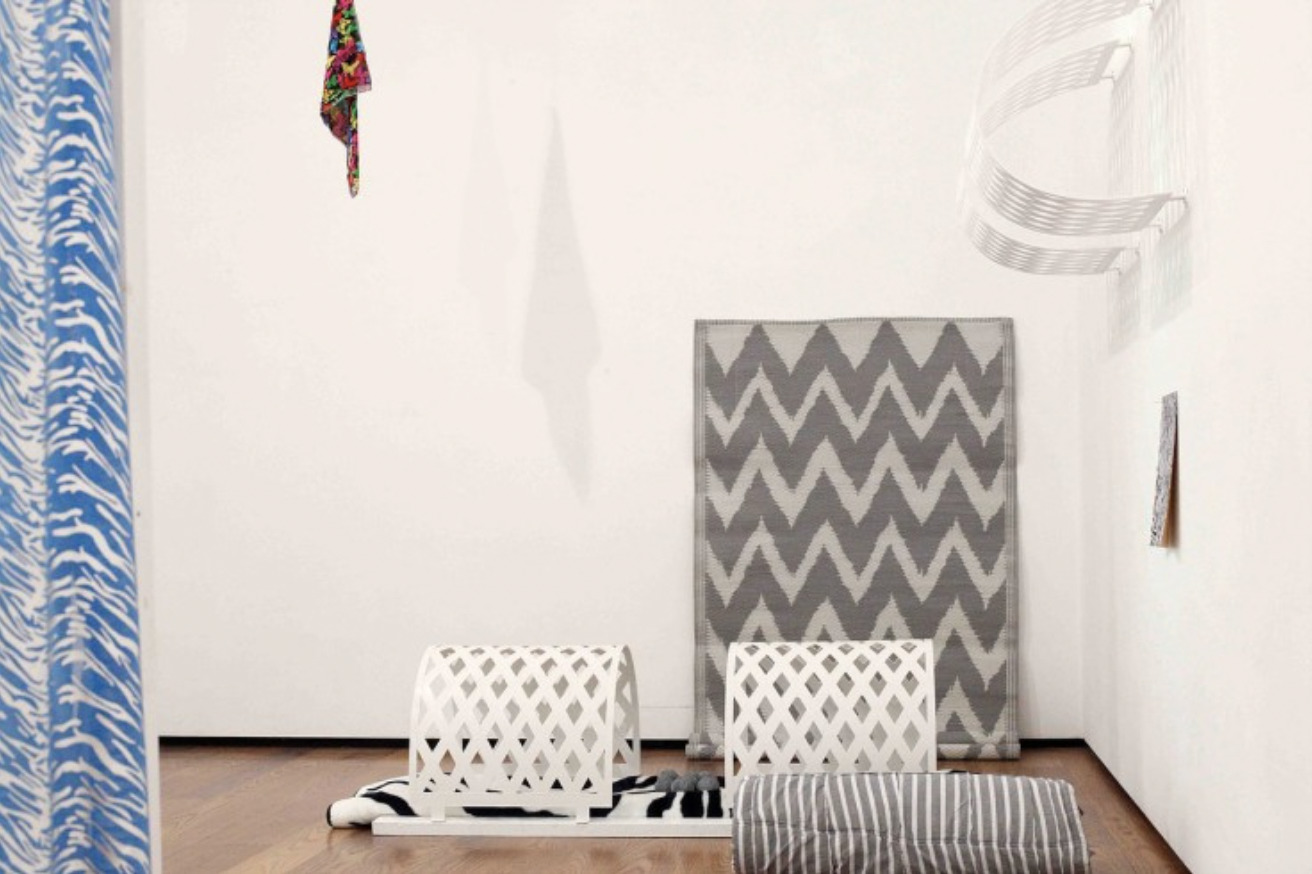
Lim Jeong Soo, Wall, Ground, Atmosphere, 2017, Fabric, wood, steel structure, Dimensions variable © Lim Jeong Soo

Another notable aspect of her work lies in the criteria by which she selects materials. In choosing everyday items, Lim Jeong Soo focuses not on their function or content, but on their decorative patterns. She sees decoration as reflecting perspectives, values, and tastes, and understands that the form of an object and the way it is displayed are closely tied to the identity of the place where it is sold.
 
Accordingly, she primarily uses items that can be purchased in her place of residence, taking into consideration the colors, textures, and forms that reveal the specific character of that locale.


Lim Jeong Soo, Wall, Ground, Atmosphere, 2017, Fabric, wood, steel structure, Dimensions variable © Lim Jeong Soo

The familiar objects thus collected are transformed by the artist into unfamiliar, third-order entities. Lim Jeong Soo’s sculptures are not only experienced visually; they emit a strange energy that meets the viewer’s skin, engaging them as a tactile form of art.
 
For instance, she constructs spaces using objects divided into multiple units, allowing each installed element to exist as an individual sculpture while the entire arrangement is simultaneously perceived as a single, large sculptural entity. In doing so, she enables sculptural energy to flow organically throughout the space.
 
She also carefully considers movement paths and sightlines so that different perspectives reveal different landscapes, allowing objects to be sensed in layered ways. As a result, the act of viewing her work becomes akin to listening to a piece of music composed through the combination of complex elements.


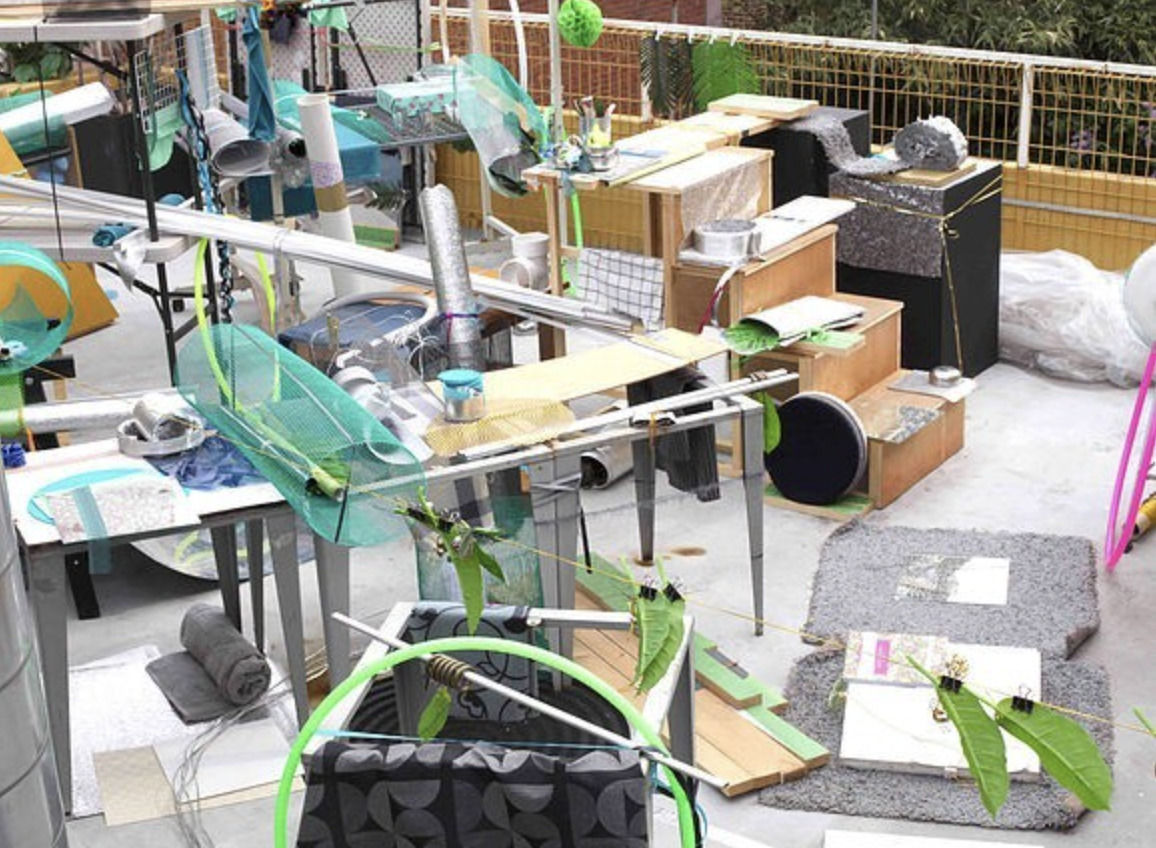
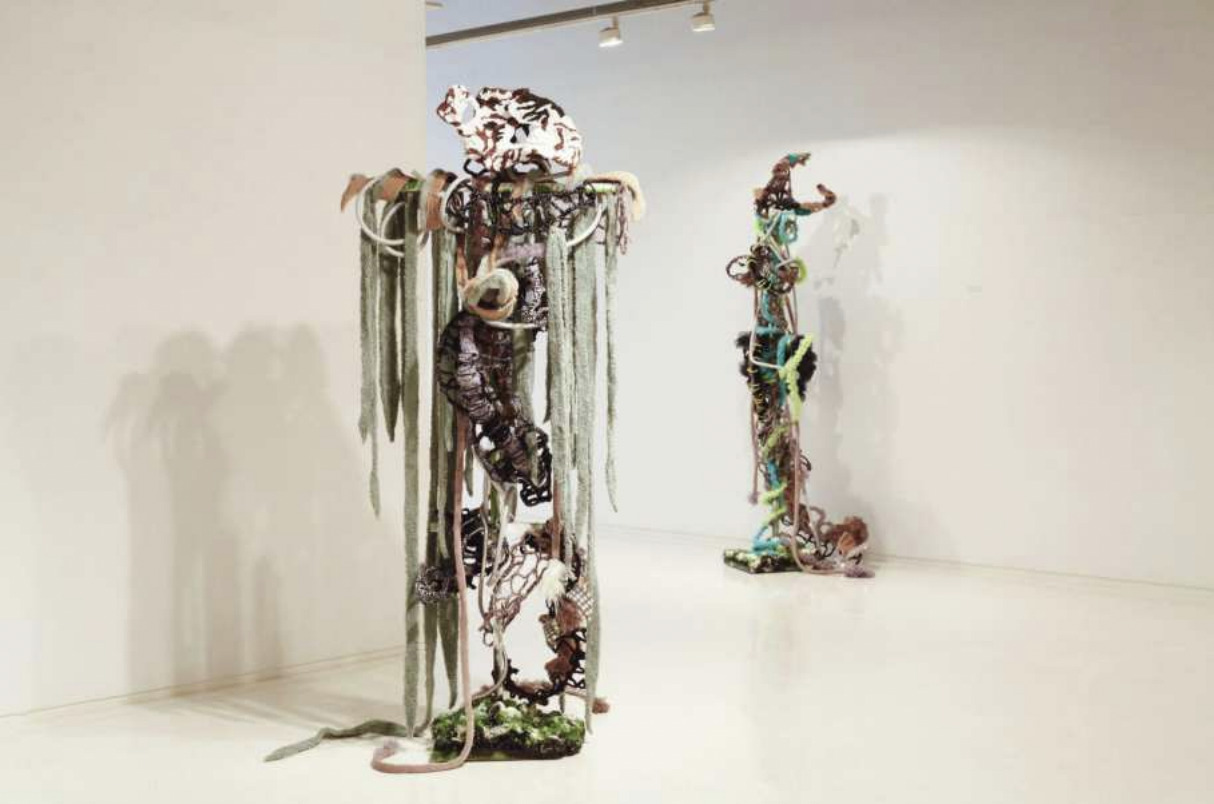
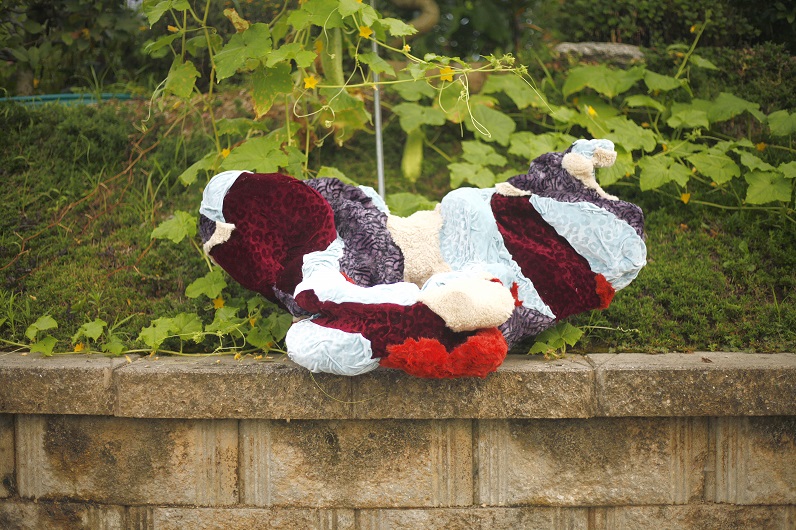
Lim Jeong Soo, Becoming your street tree or becoming your fence of veranda, 2017, Mixed media, Dimensions variable © Lim Jeong Soo

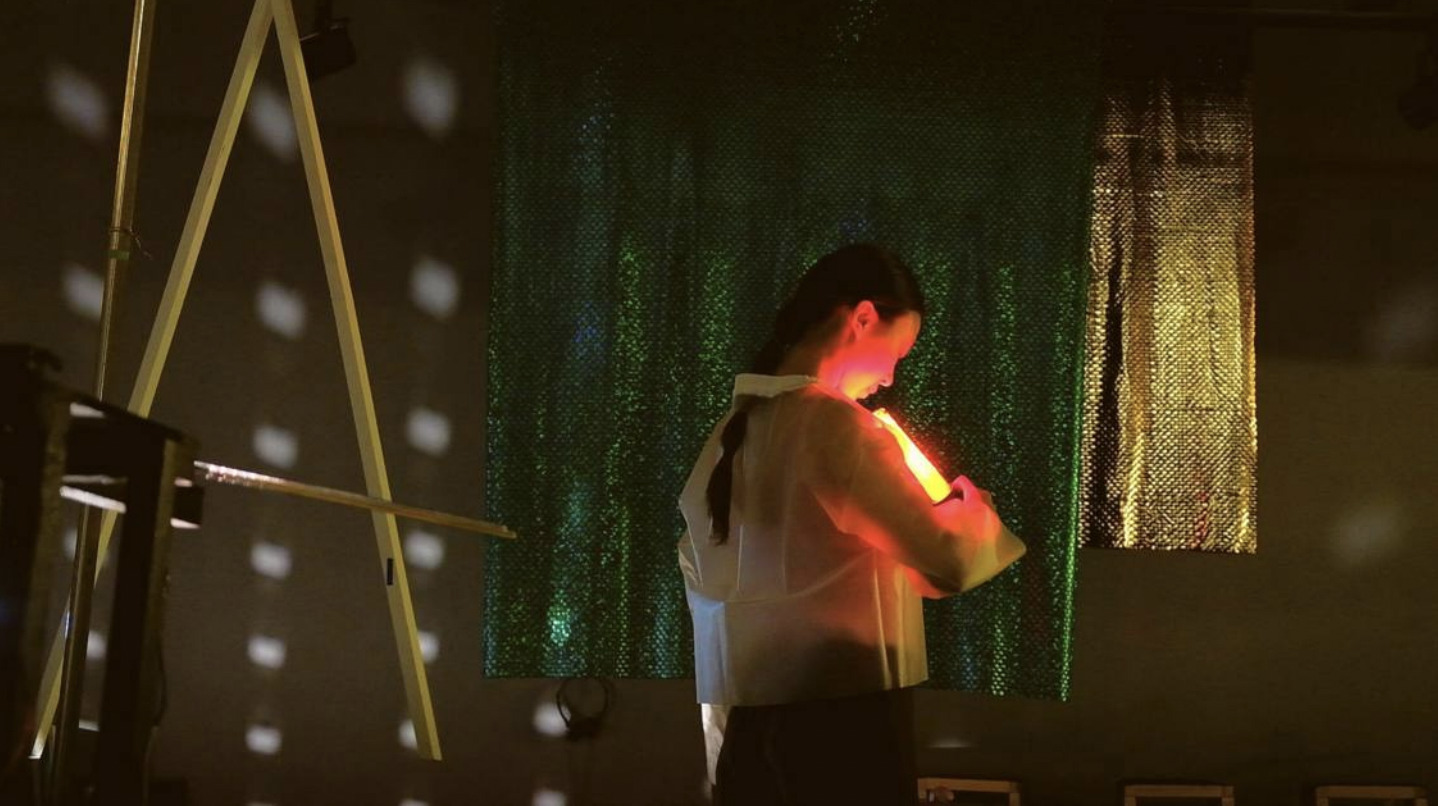
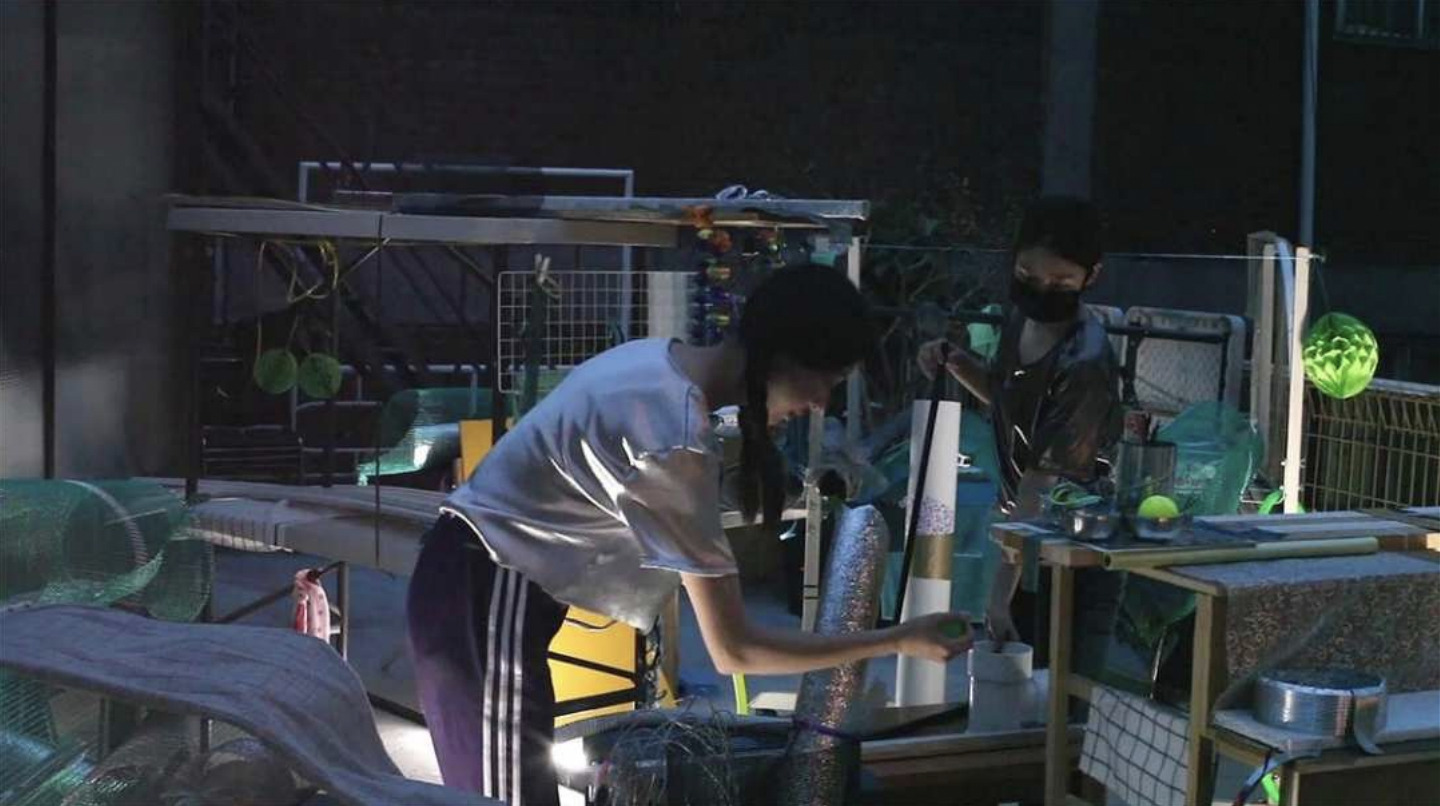
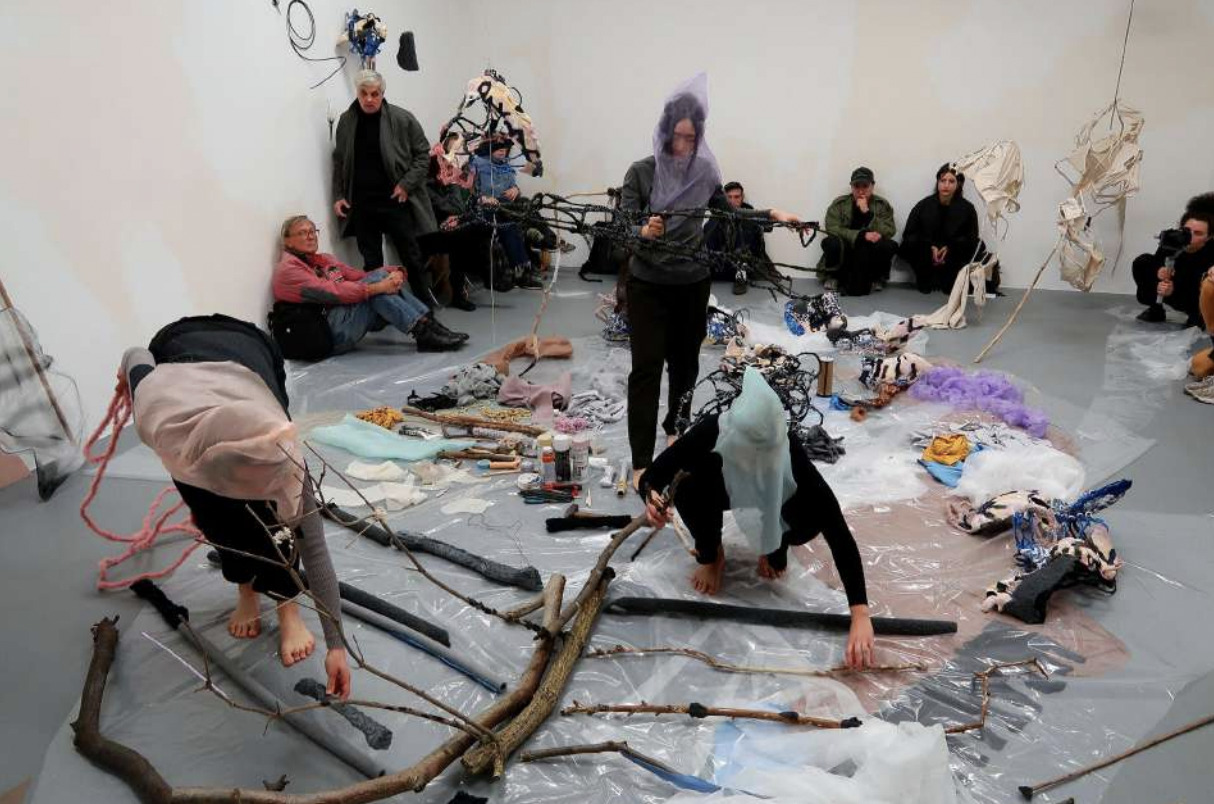
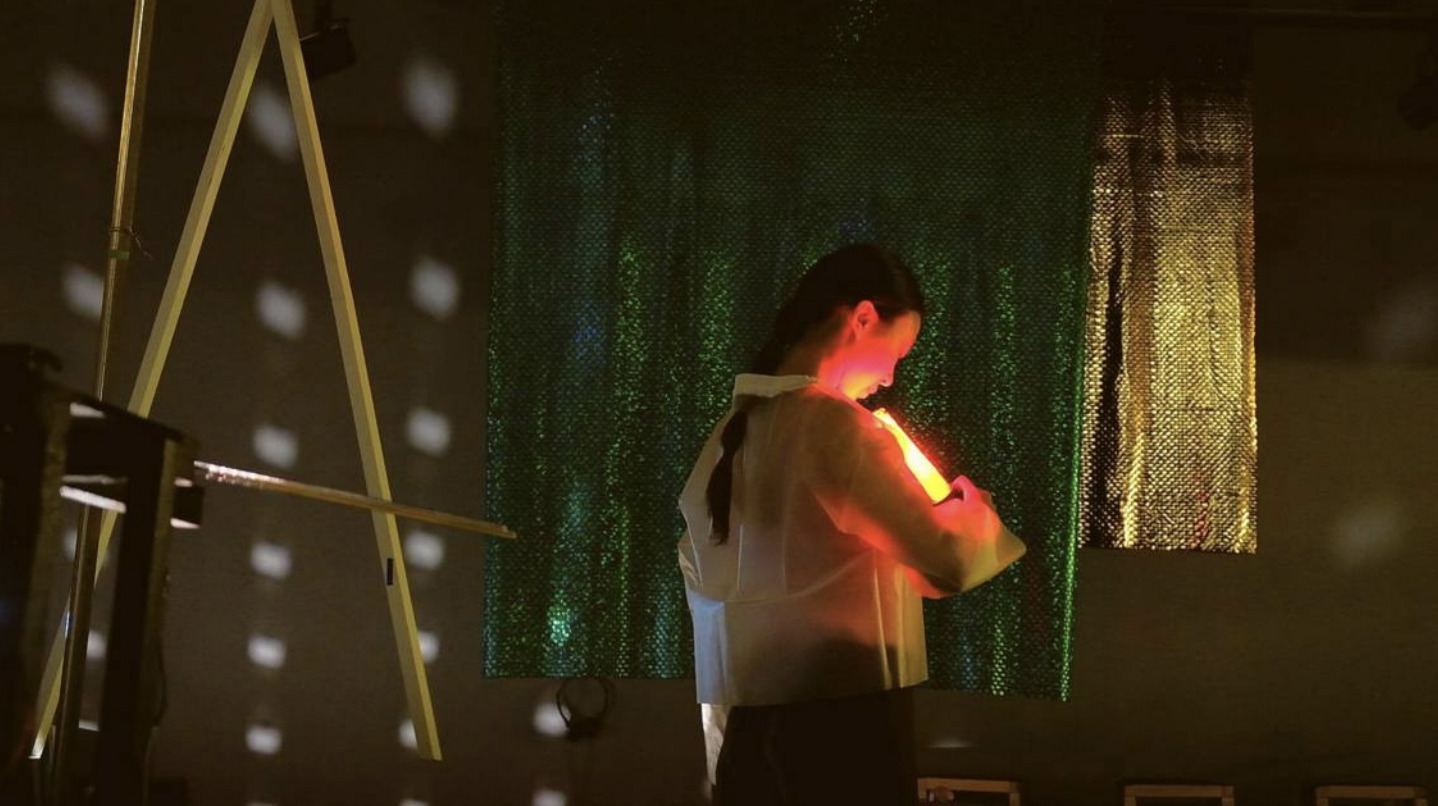
In this way, sculpture expanded into space further becomes both a stage for, and a subject within, the situation of performance. For instance, Becoming your street tree or becoming your fence of veranda (2017), which takes as its material plant-related decorations found in urban environments, functions simultaneously as an installation and as another performer—interacting with the gestures and language of performers to transform the space and generate events.
 
In this work, the artist views artificial plants as a romantic form that reflects the impossibility of humans truly possessing nature. She collected fragmented plant decorations, classifying, connecting, and transforming them while imagining a concrete scene akin to a garden, ultimately completing the installation.


Lim Jeong Soo, Becoming your street tree or becoming your fence of veranda, 2017, Single-channel video, color, sound, 7min 7sec. © Lim Jeong Soo

She then composed sentences that distilled the characteristics of these plant decorations and used them as performance instructions. Phrases such as “let us mingle with things that sway,” “let us exist in no particular order,” and “let us hang at times” were given to the performer, whose movements were inserted into the installation space, creating a scene in which body, object, and language become interconnected.
 
Lim Jeong Soo explains that, through this process, “the installation becomes both a stage for the body and an expanded sculpture, while the video that documents this scene can be understood as ‘a site where the installation is realized.’” She adds that “within these shifts of medium, I pose questions about the flattening of space, the recording of events, and film as a process.”


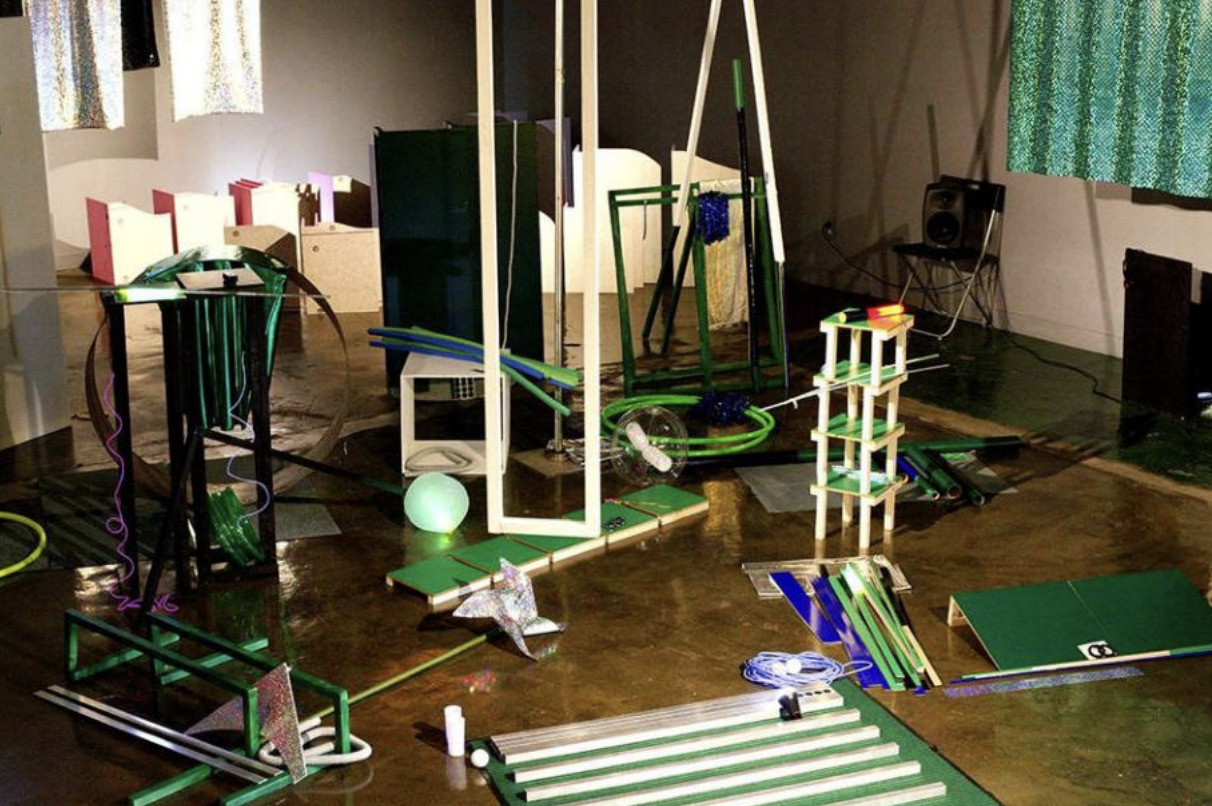
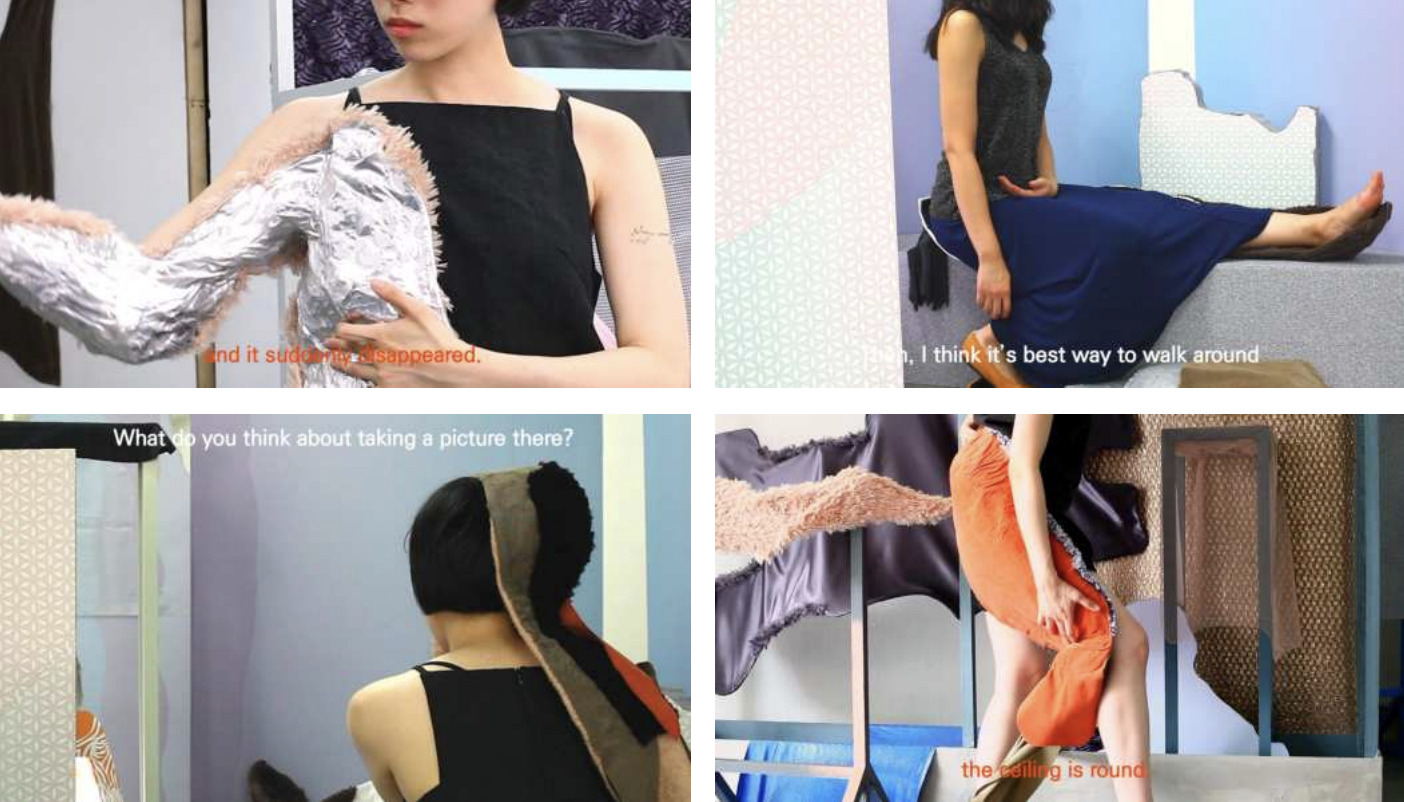
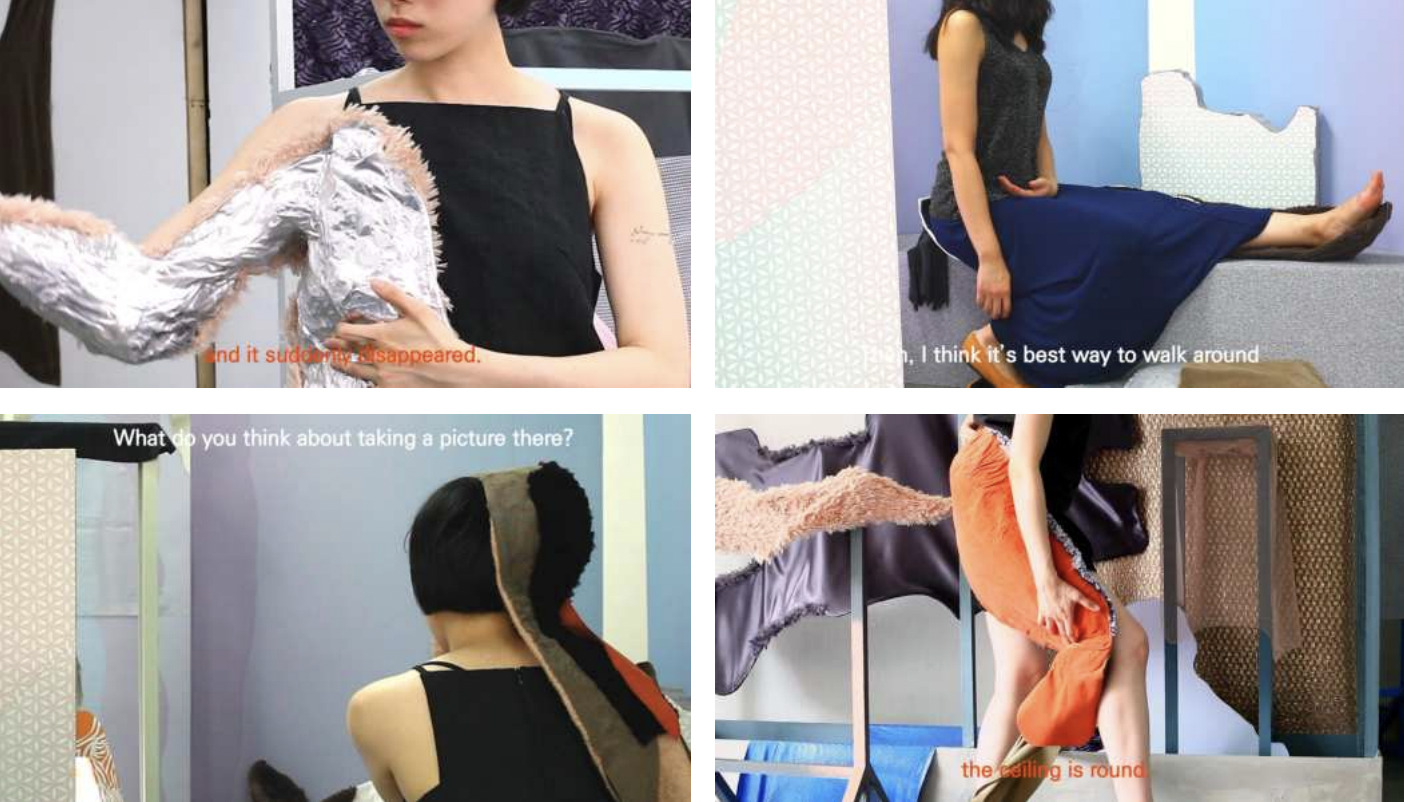
Lim Jeong Soo, 'ZASTAVKA' and 'STANICE', 2019, Single-channel video, color, sound, 7min. © Lim Jeong Soo

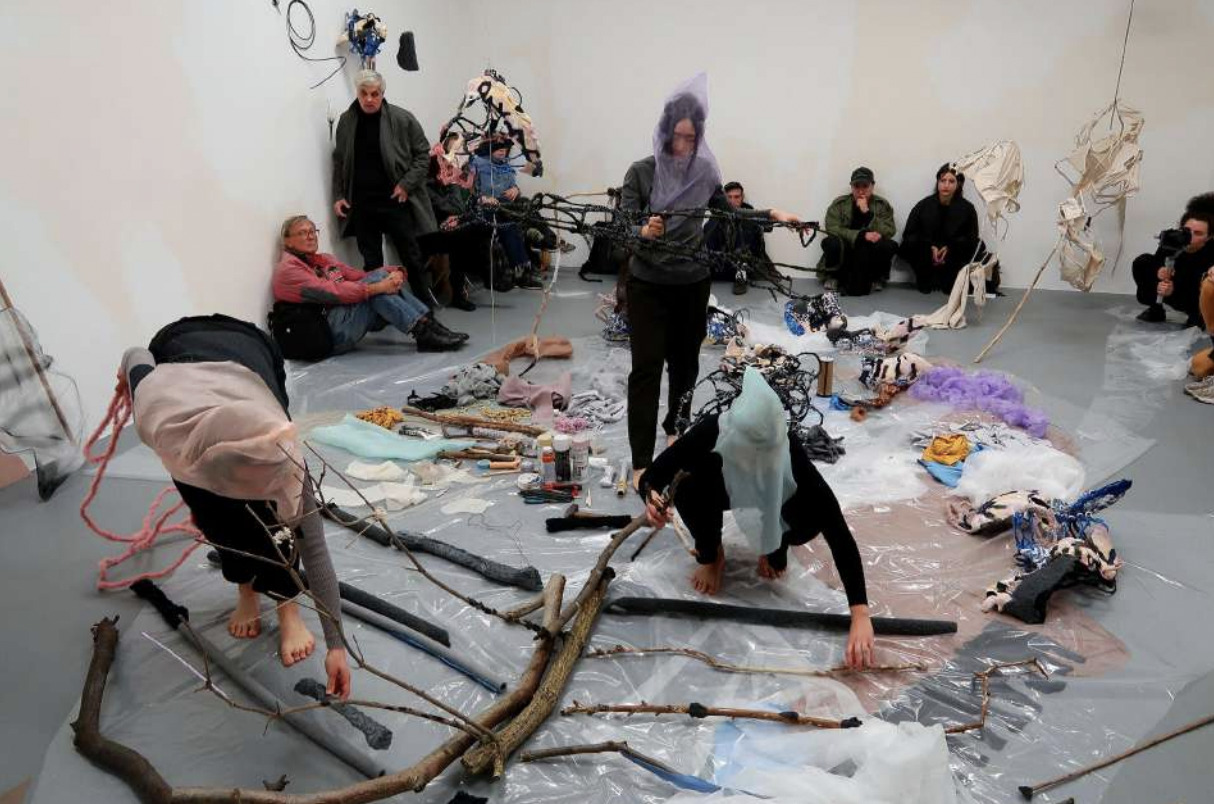
The 2019 solo exhibition 《Station and Station》 further developed the potential of what she describes as “a stage and an expanded sculpture.” The exhibition featured approximately a dozen objects arranged on stage, along with the presence of direct bodily imagery.
 
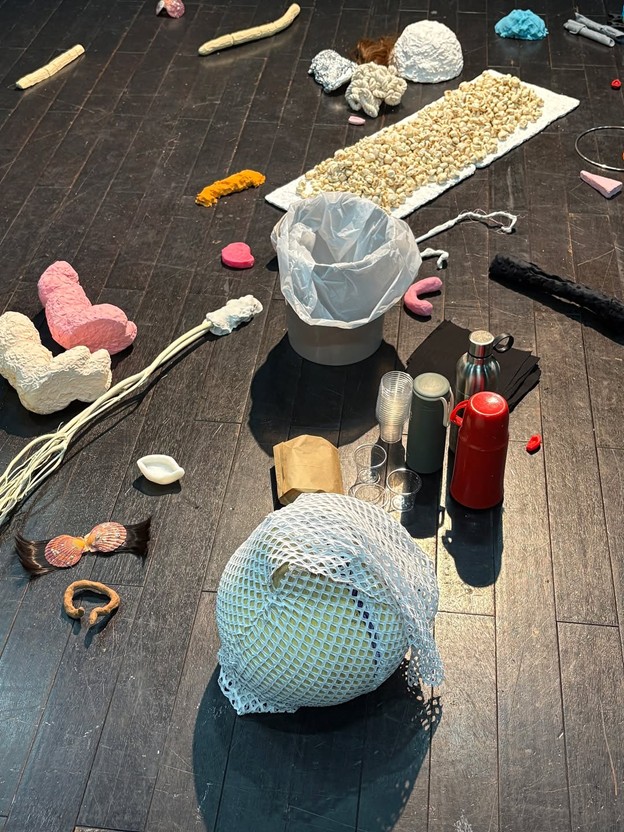
The artist refers to the irregular, body-extended forms—composed of diverse textures and patterns—as “shell objects.” Resembling the body and bearing names that refer to it, these objects were treated as equivalent to the bodies participating in movement on stage. As a result, hierarchies between humans and objects, and between subject and object, are erased on stage, becoming entangled within systems of perception, sensation, and naming.


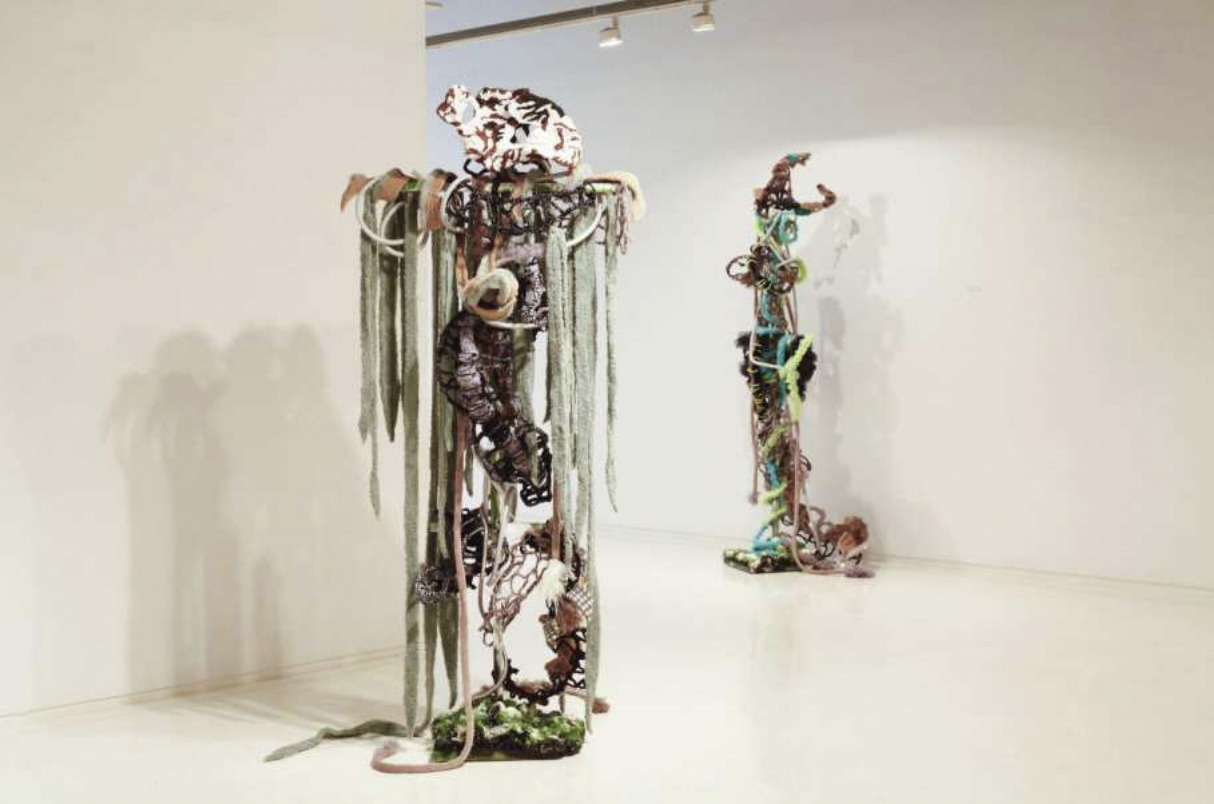
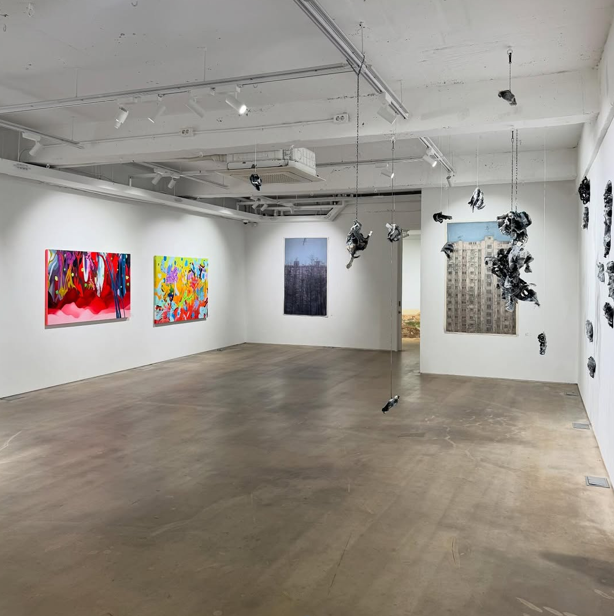
Installation view of 《Finches》 (Gallery DOS, 2024) © Gallery DOS

Furthermore, through the 2024 solo exhibition 《Finches》 held at Gallery DOS, the artist materialized hybrid subjects that exist beyond human-defined categories in sculptural form. In doing so, she evoked unfamiliar sensations while prompting a reconsideration of the universal concepts and social conventions we have long taken for granted.
 
Lim Jeong Soo has sought to reconfigure images of nonhuman beings—historically othered and objectified by human desire for possession—by combining them into forms that are at once familiar and strange, giving rise to a third kind of existence. Elements identifiable on the surface of objects, such as the shapes and colors of their outer shells, become autonomous subjects within the artist’s gaze, moving freely throughout the exhibition space.
 
These masses, whose precise origins remain indeterminate, are presented as artworks emerging from an unknown elsewhere. Possessing value in and of themselves, they move fluidly across socially defined categories, unbound by fixed classifications.


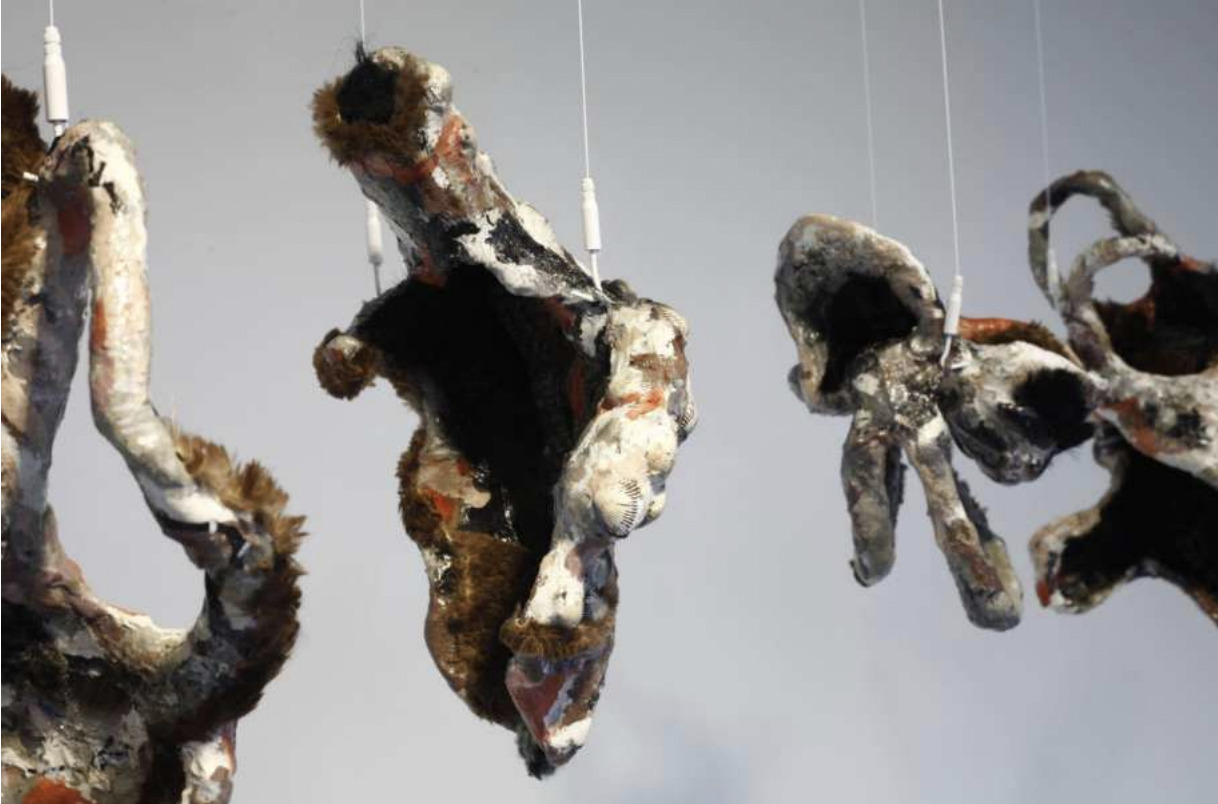
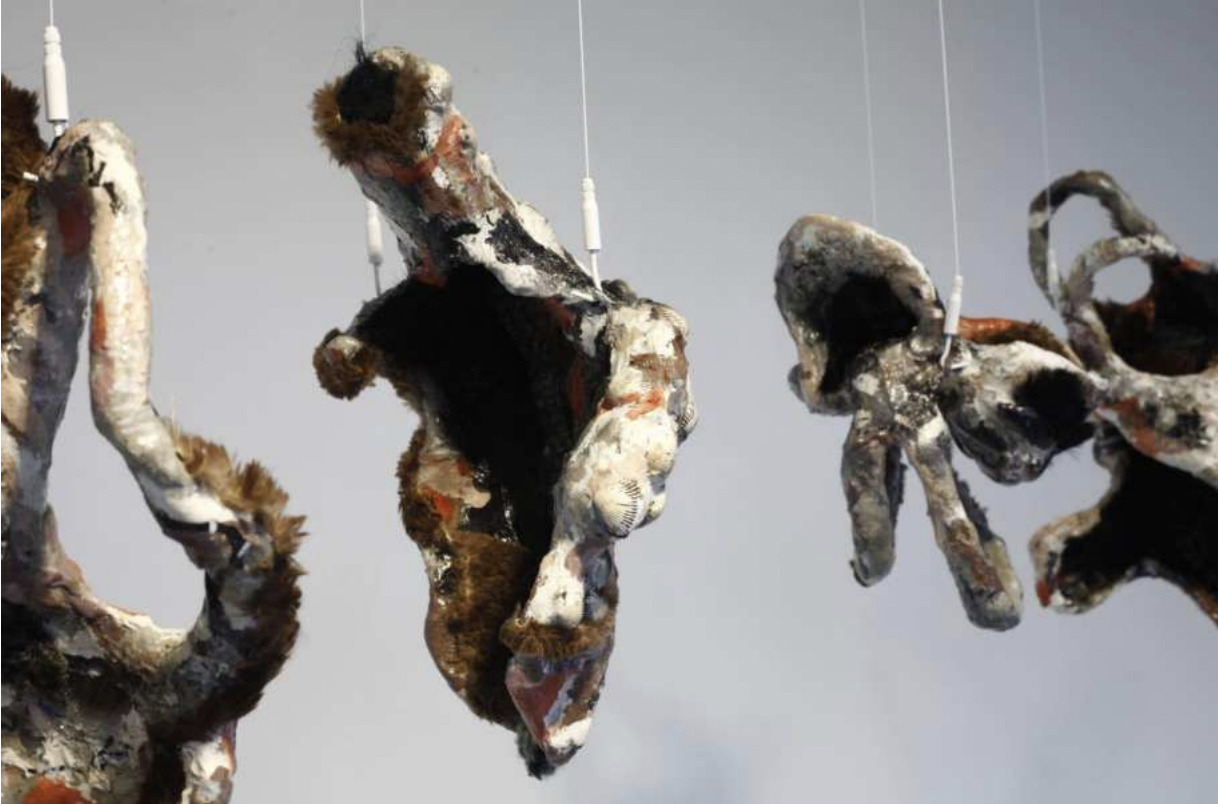
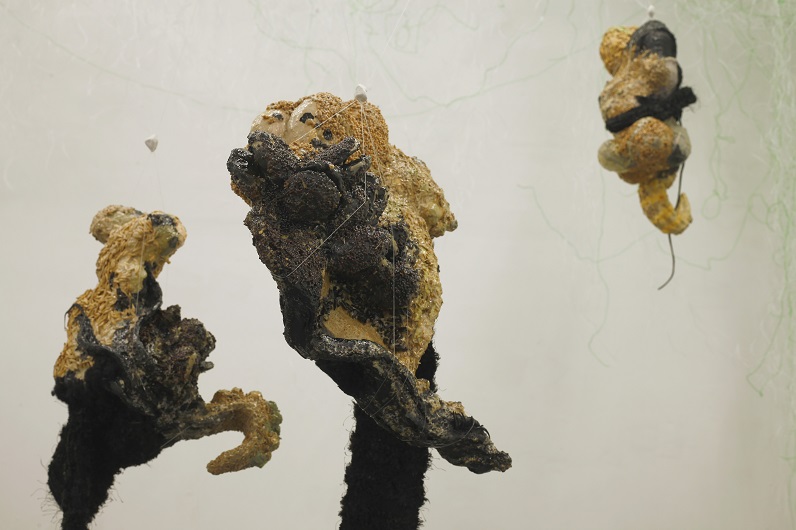
Lim Jeong Soo, Everything is superstition, 2024, Wire, wire mesh, cement, clay, artificial stone, fur, leather, 15x25x30cm (12 pieces) © Lim Jeong Soo

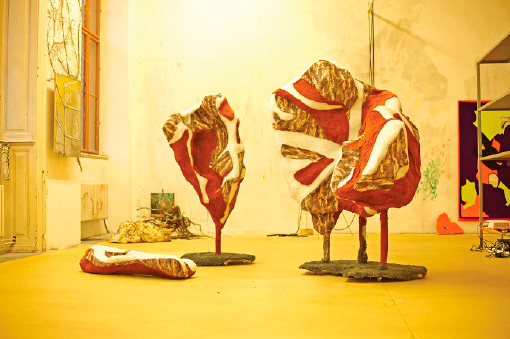
For example, Everything is superstition (2024) comprises 12 pieces of sculptures, each corresponding to a Chinese zodiac sign and incorporating elements such as broken objects, relics, shells, and pottery. While the sculptures beckon us to identify which zodiac animal they each represent, they resemble nothing other than shattered earthenware, broken shards, and hollow shells.
 
Taking its form from an intricate combination of rare organisms, I heard a rumor that Desire has arrived (2024) is a fictional creature that is simultaneously familiar and alien, a representation of various fantasies and desires.


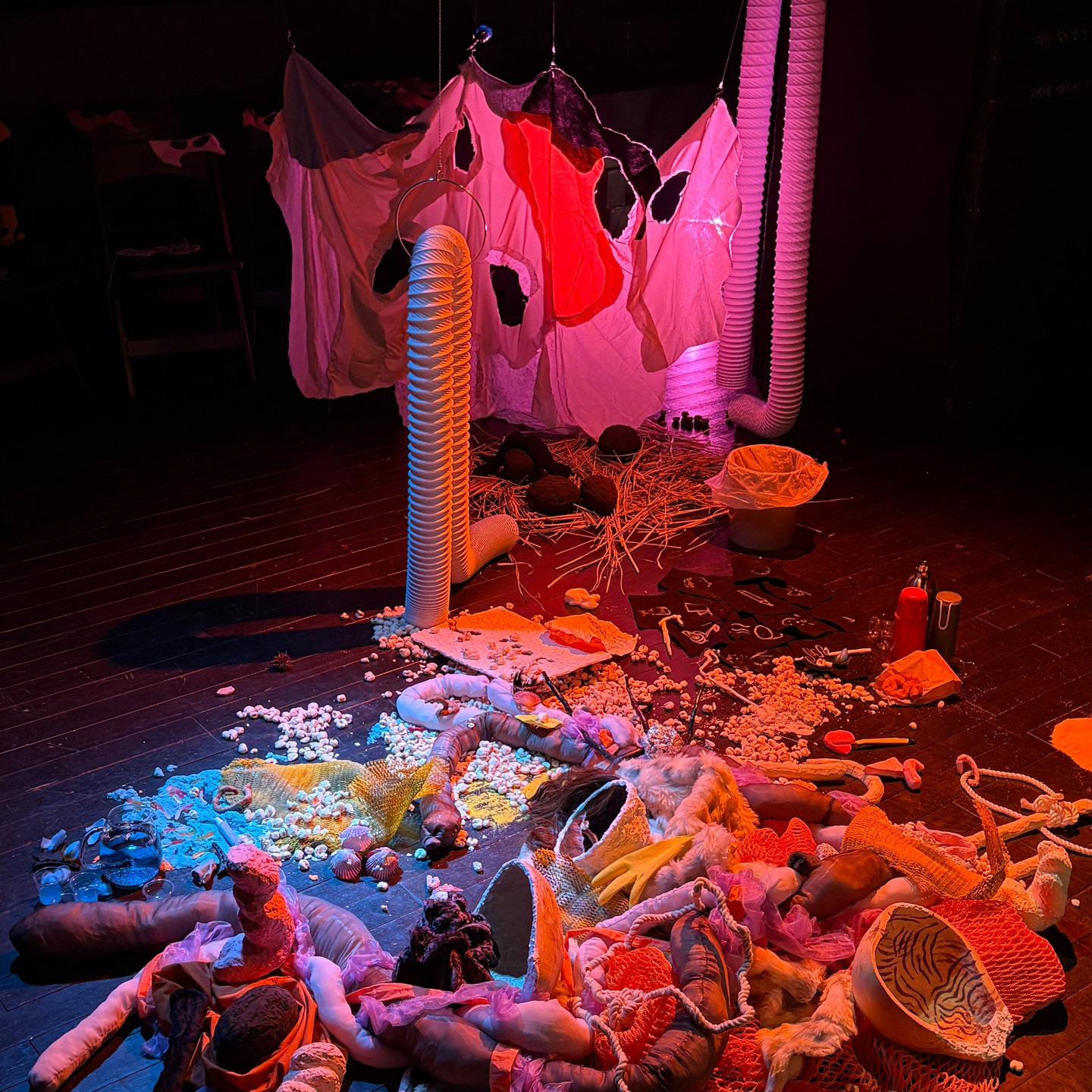
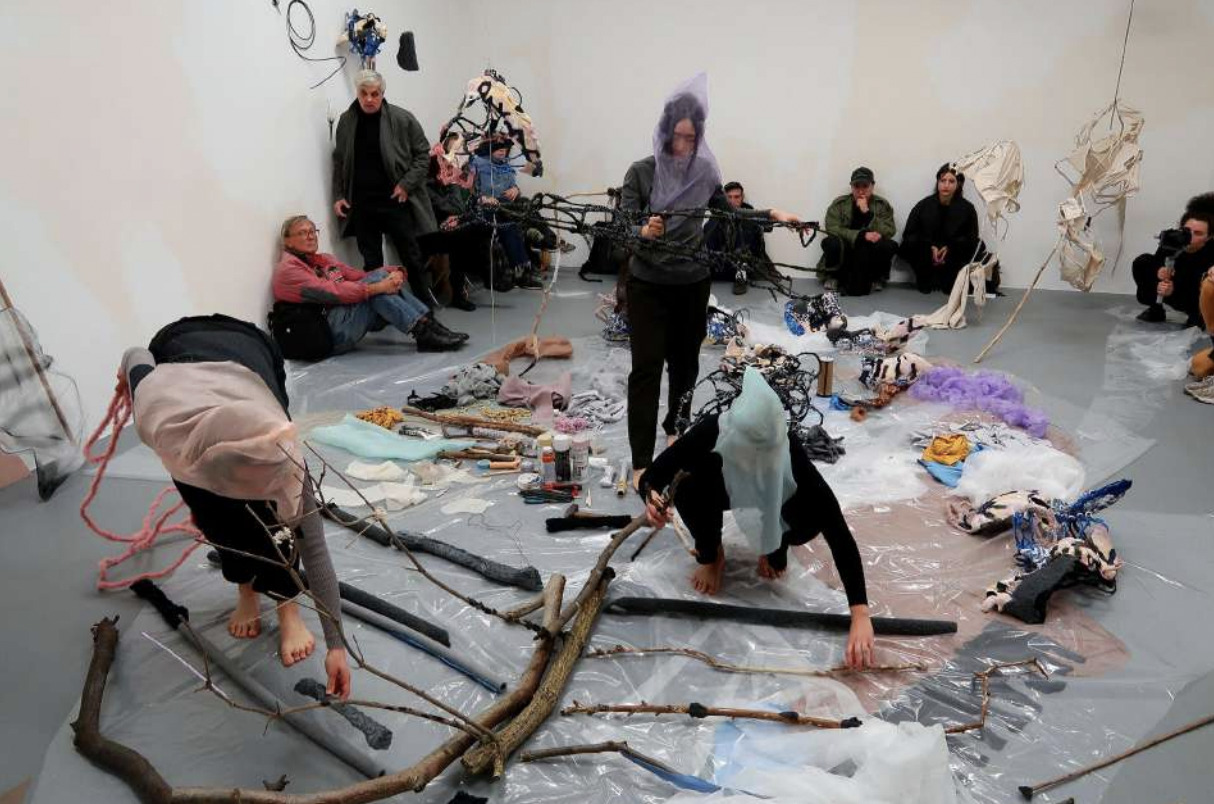
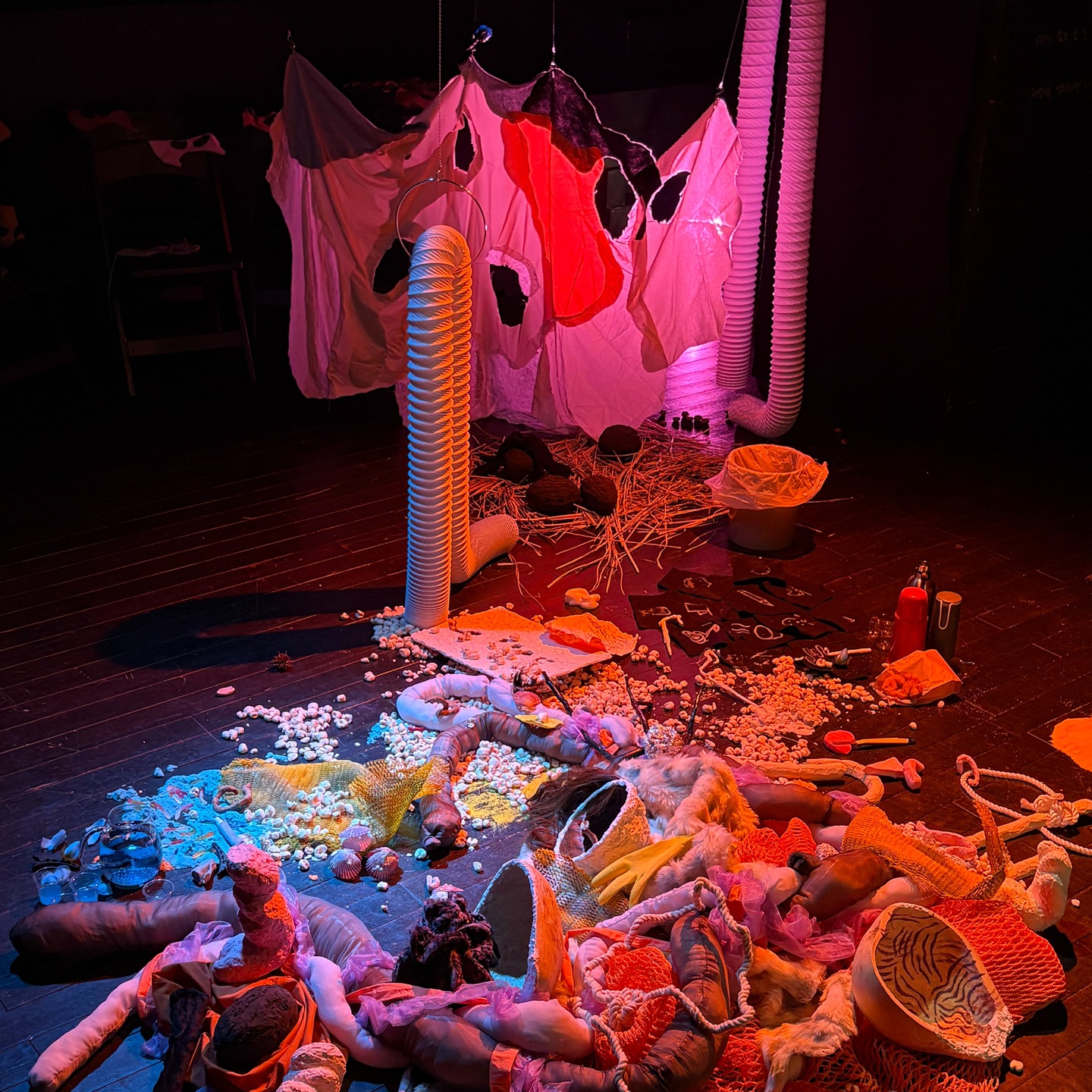
Installation view of 《Heather or Ulcer》 (Space Seoro, 2025) © Lim Jeong Soo

In her recent works, Lim Jeong Soo continues to experiment with expanding literature and writing into gesture, objects, and performance. For instance, the performance Heather or Ulcer (2025) draws on Josef Čapek’s book A Doggie and Pussycat.
 
While translating the book, the artist paid close attention to the various names and objects that appear throughout the text. She was struck by the way relationships among them remain unfixed, as if they lightly overlap with one another for a moment, finding a sense of beauty within this layered state.
 
Against this backdrop, Heather or Ulcer captures hybrid moments that emerge in the gaps where names and memories fall out of alignment, unfolding them into allegorical and sculptural scenes.


Lim Jeong Soo, The Legs of a Whale, 2025, Single-channel video, color, sound, 25min 35sec. © Lim Jeong Soo

In this way, Lim Jeong Soo engages with various byproducts of human culture, continuing a practice that deconstructs the fantasies and romanticisms formed in the process of naming, as well as the ways in which linguistic and bodily acts organize notions of “normality” and “otherness.”
 
In this process, the artist focuses on the surfaces of both human and nonhuman entities, exploring the times and spaces in which they form relationships and overlap through their respective skins.
 
Grounded in the perspective that subjects are fluidly constituted in fleeting moments—like surfaces or fragments—she constructs narratives that cut across objects, animals, and plants. Within these, the human body is objectified, allowing it to move beyond hierarchies between subject and object and instead circulate among them, ultimately subverting an anthropocentric worldview.


Lim Jeong Soo, Galapagos finches, 2024, Combined technique (fur, wire mesh, wire, acrylic, clay), Dimensions variable © Lim Jeong Soo

"Why do we consider some behaviors to be right and others to be wrong? The questions on what factors influence the determination of what "it" is, and on how is the subject, "I", who perceives “it”, defined are the starting point of my work. The subject is formed in a setting of intersecting relationships with multiple objects.
 
Beliefs about what is right are determined by human desires, myths, and customs. In other words, the subject may exist only in a fleeting moment, or it may be its distance from other objects, that is its shape itself which is constantly changing. With a perspective that defines itself not as a human being as an independent and immutable creation but as a mass of energy, I pursue objects outside or on the border of existing categories." (Lim Jeong Soo, Artist’s Note)


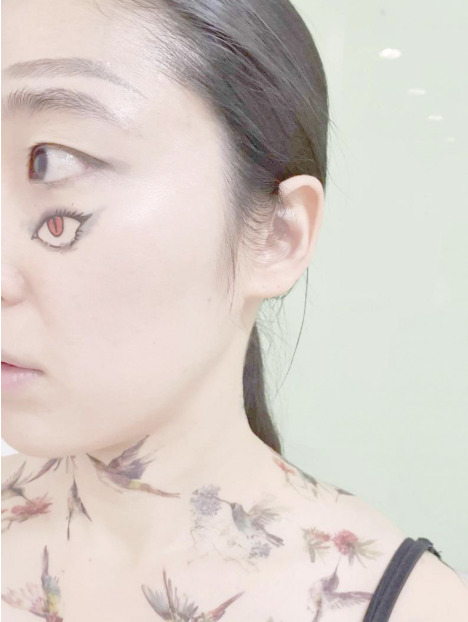
Artist Lim Jeong Soo © Lim Jeong Soo

Lim Jeong Soo earned her MFA in Sculpture from Korea National University of Art and currently pursuing her Follow-up Master of Arts degree in Fine Art, Sculpture from Prague Academy of Art, Architecture and Design. Her recent solo exhibitions include 《About One Thing》 (Artotéka, Prague, 2026), 《Heather or Ulcer》 (Space Seoro, Seoul, 2025), 《Finches》 (Gallery DOS, Seoul, 2024), and 《Station and Station》 (2/W + Weekend, Seoul, 2019).
 
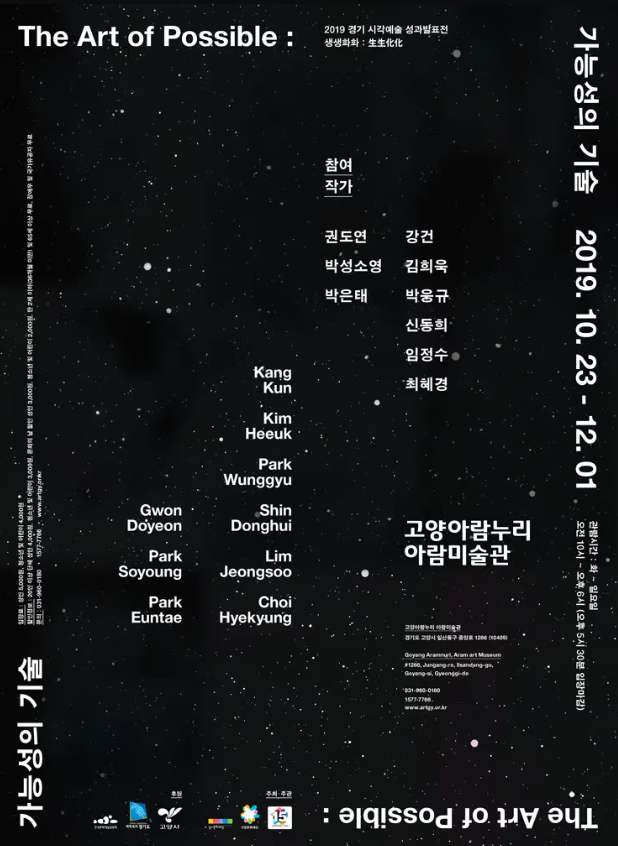
She has also participated in numerous group exhibitions, including 《Undulating Boundary》 (Space 458, Seoul, 2026), 《Primeval Water》 (Galerie 1, Prague, 2025), 《DOOSAN Art Lab Exhibition 2024》 (DOOSAN Gallery, Seoul, 2024), 《The Part In The Story Where Our Accumulating Dust Becomes A Mountain》 (Seoul Museum of Art, Seoul, 2023–2024), 《Kak》 (HITE Collection, Seoul, 2022), 《10 Pictures》 (WESS, Seoul, 2020), and 《Surmountable Podium》 (SeMA Storage, Seoul, 2019).
 
Lim Jeong Soo has participated in international residency programs such as NCCA Art Residence Kronstadt (St. Petersburg, Russia, 2018), Zaratan – Arte Contemporânea (Lisbon, Portugal, 2018), ARE Holland (Enschede, Netherlands, 2017), and Bitamine Faktoria (Irun, Spain, 2016). Her works are held in the collection of the Yangju City Chang Ucchin Museum of Art.
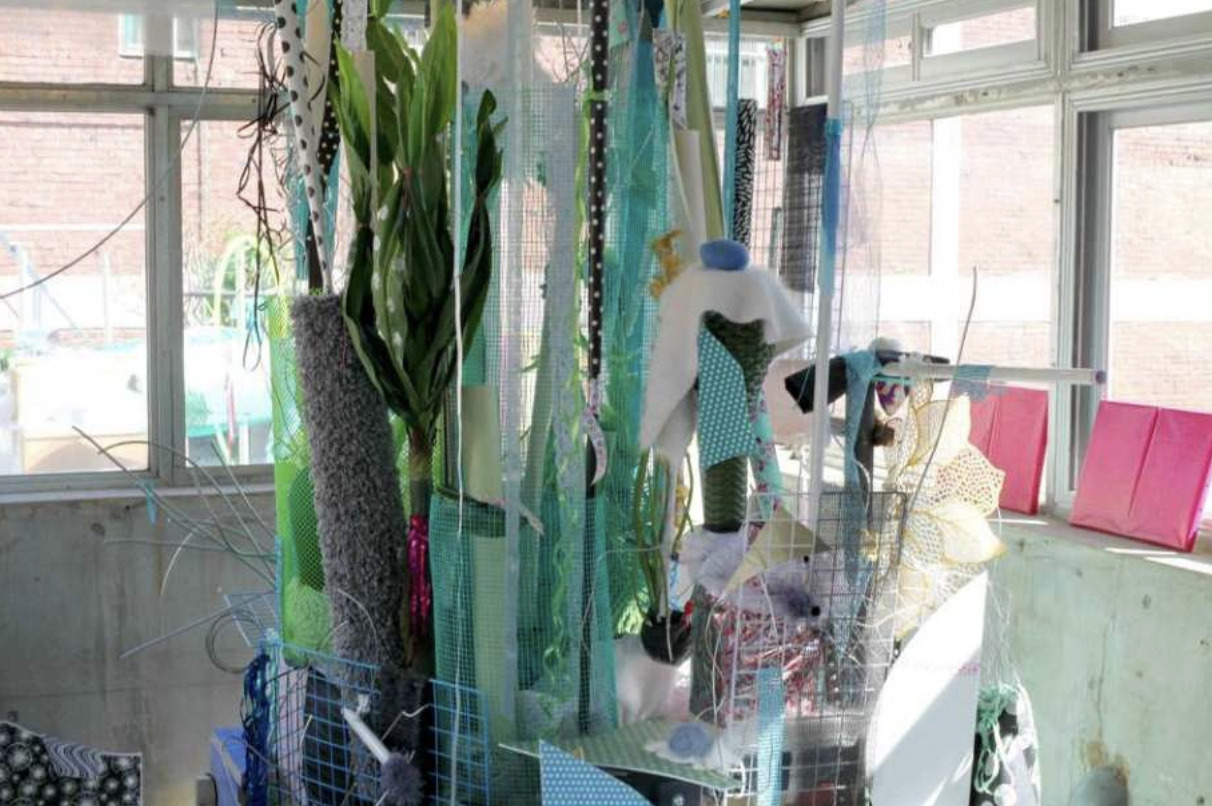
References