Oh Jei-sung has been transforming everyday objects into sculptures
within the realm of art, recording microcosms of individuals and society. The
Time Navigation of a Sculptor (~2023) is a work where the artist has
arranged all the sculptures he has created from preliminary sketches to the
present on a structure reminiscent of a raft. It originates from the artist's
imagination of a sculptor adrift on the sea of a future where the concept of
'time' has vanished. The sculptor, who places each sculpture on the crude raft
in the vast open sea, primarily represents the artist himself or any artist who
reflects on their own work. However, by expanding the keywords of memory,
ocean, and future, this can also be seen as a metaphor for contemporary
humanity, transcending the flow of time, reflecting on various past social
systems and beliefs during this crisis era of the Anthropocene, and leaping
towards a better future.
In Nam Jinu's paintings, a giant squid resembling an animated
character appears alongside a hero. Under the composition reminiscent of
medieval iconography and elaborate decorations, they seem to depict a classical
hero narrative of the hero defeating the alpha predator, the man-eater, to
restore peace in human society. However, upon closer examination in The
Saga of the Monsters: A feast of glory (2023), the giant squid with
its massive size blinks its eyes with a mixture of uncertainty, seemingly questioning
why it is designated as a monster, appearing both threatening and enigmatic. On
the other hand, the heroes with white wings like angels in Predator
(2023) display the cruelty of either the squid or the humans, devouring each
other. The artist, in this way, challenges the fixed hierarchical structure of
existence, from ancient times to the present, which has been defined by gods,
angels, humans, and monsters, and deconstructs classical narratives with a
sense of lightness. Through this, it makes us reflect on the fact that what we
live in is not a sacred 'heaven' but a worldly 'earth,' a murky world that
cannot be divided into good and evil through a binary framework.
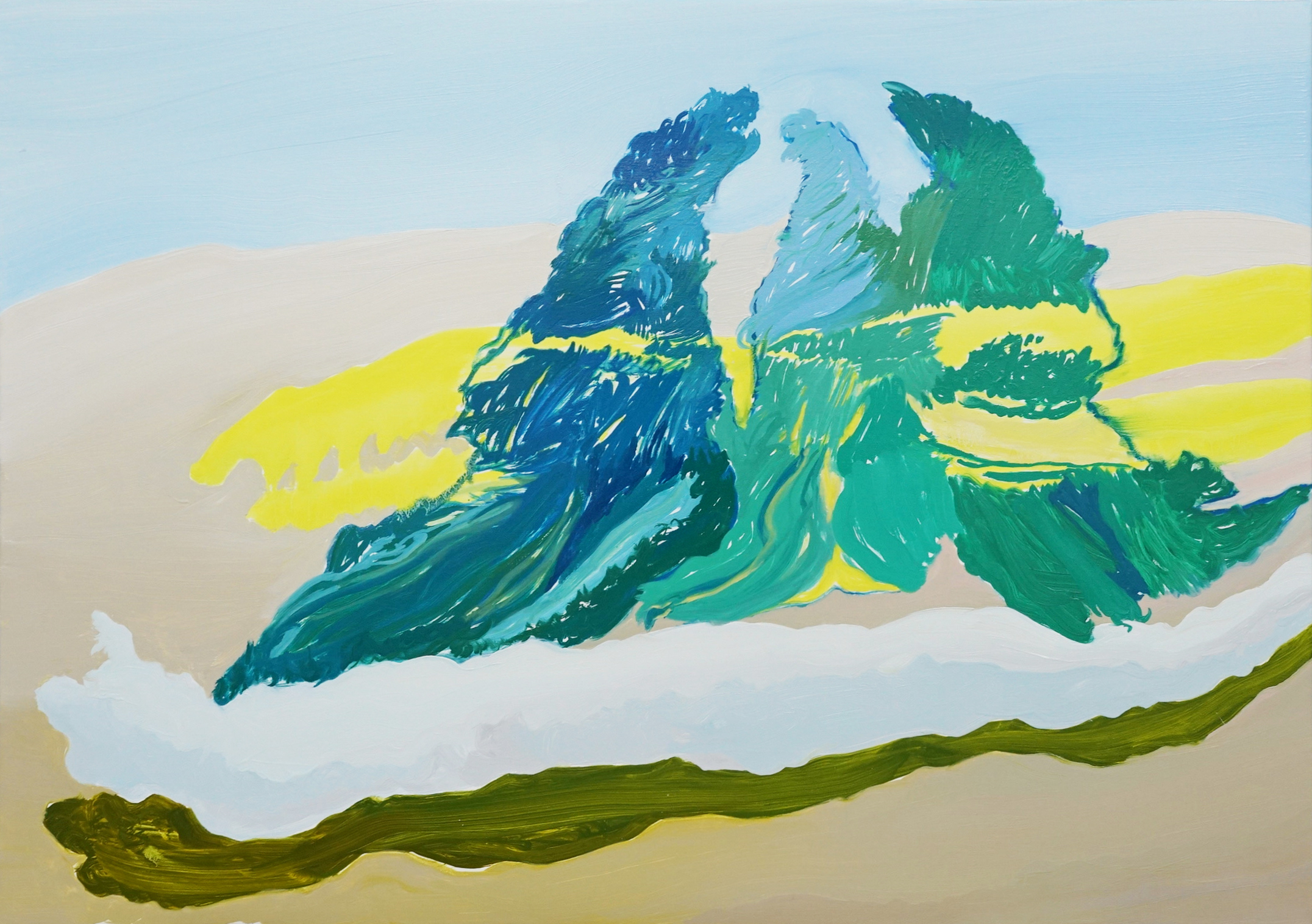
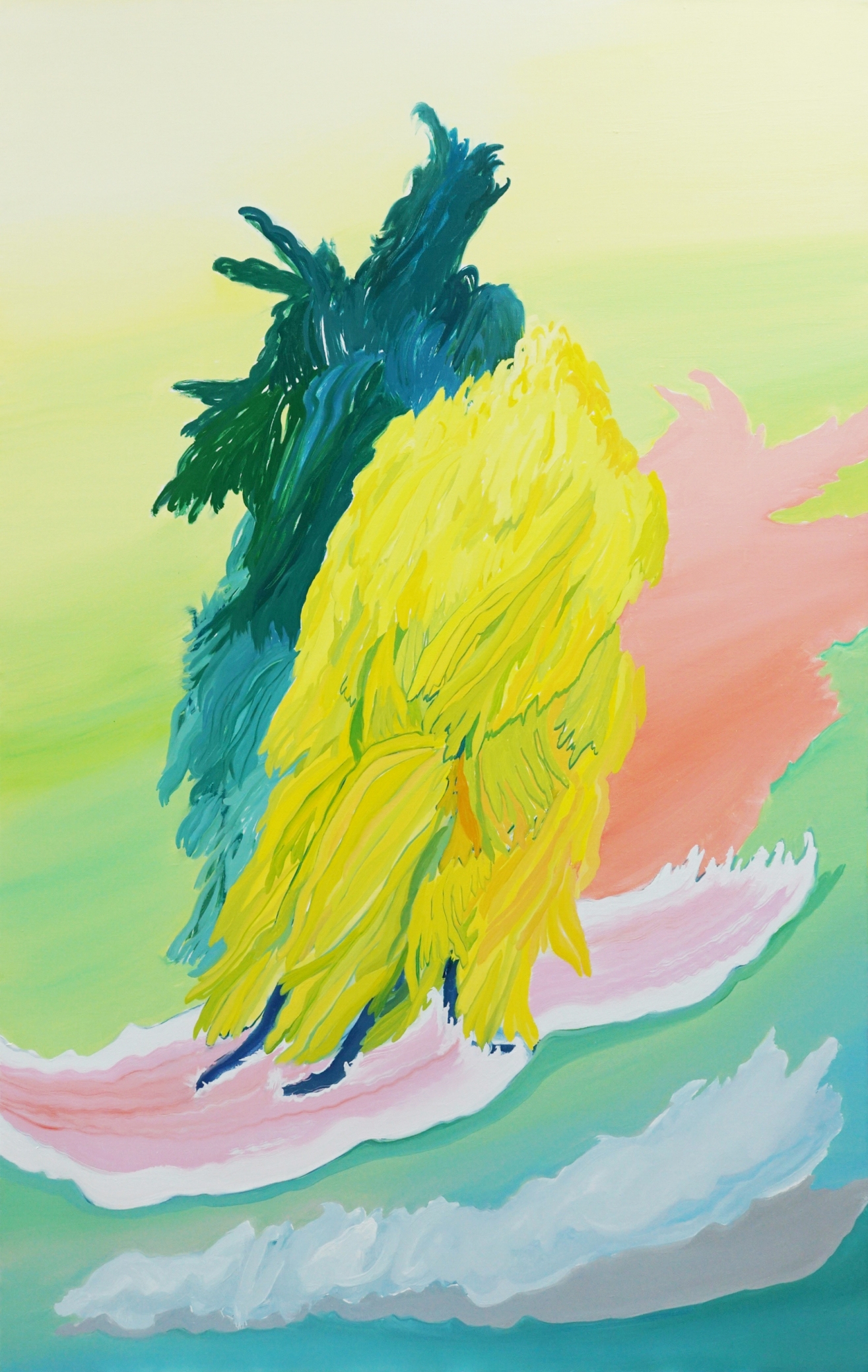
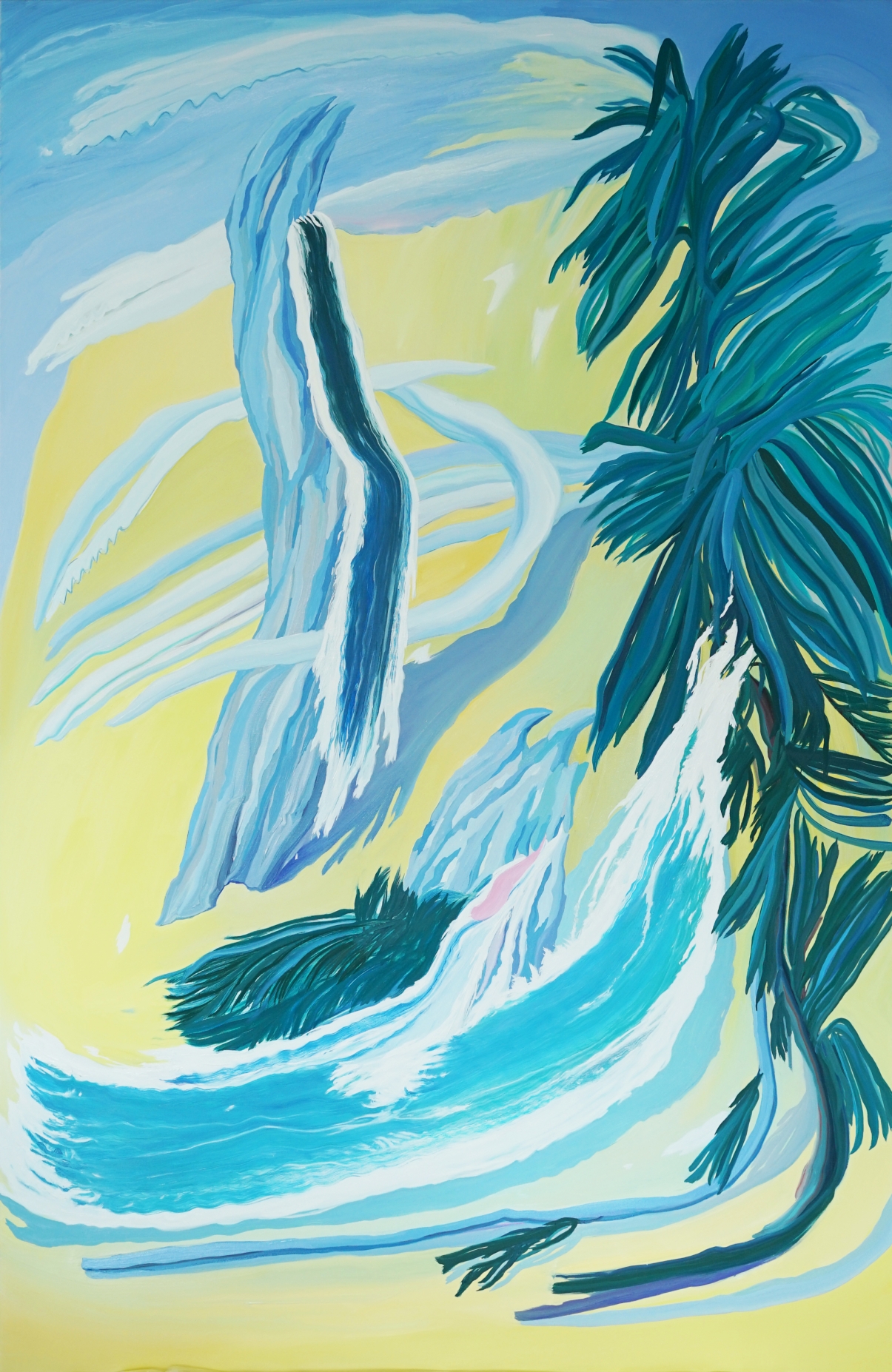
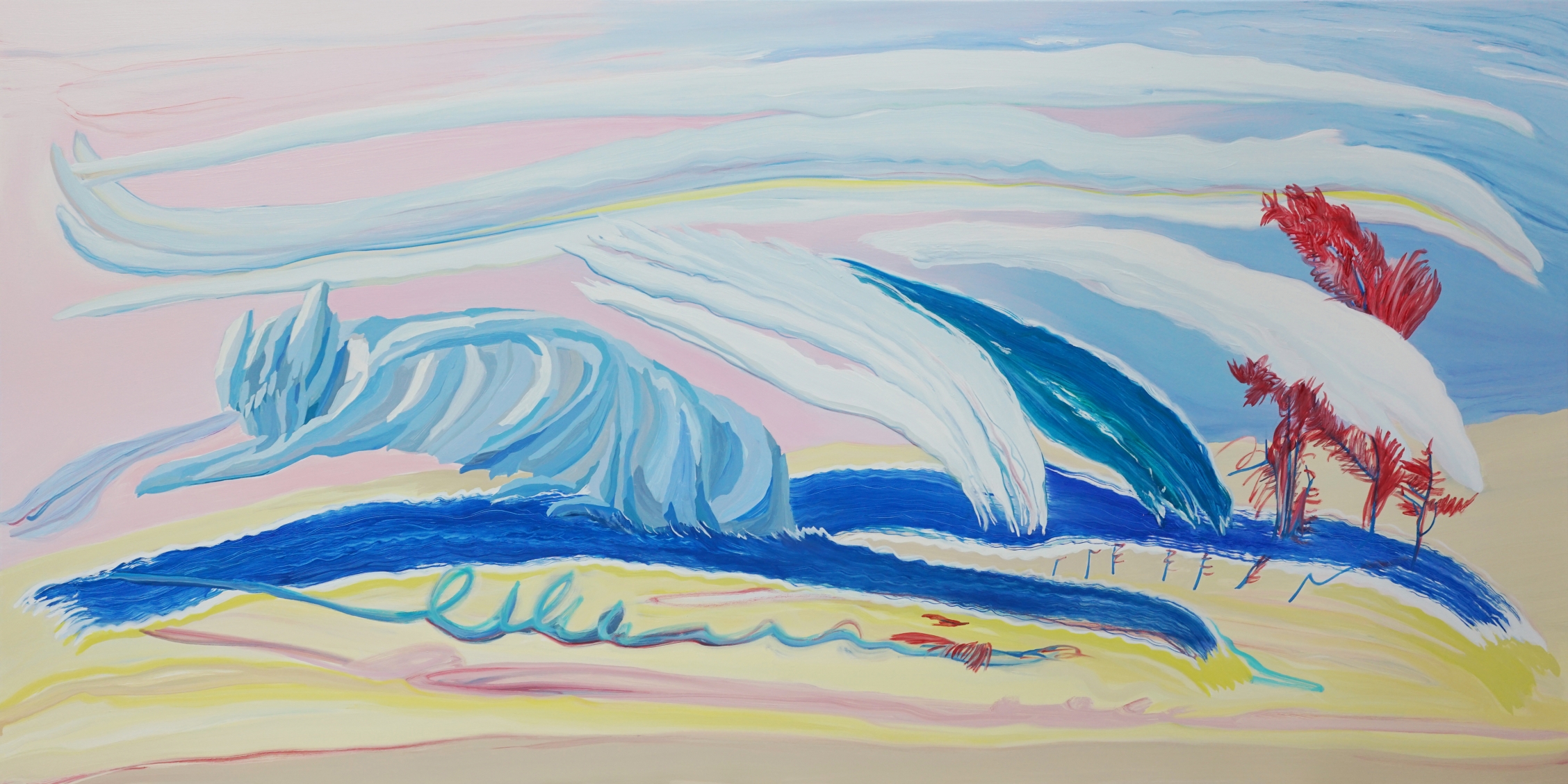
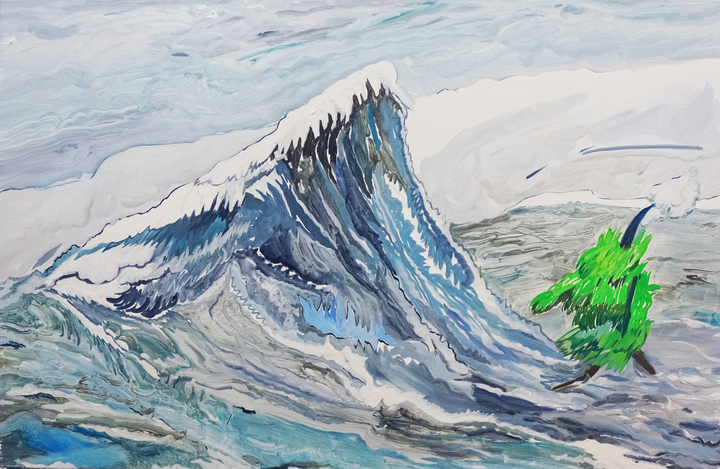
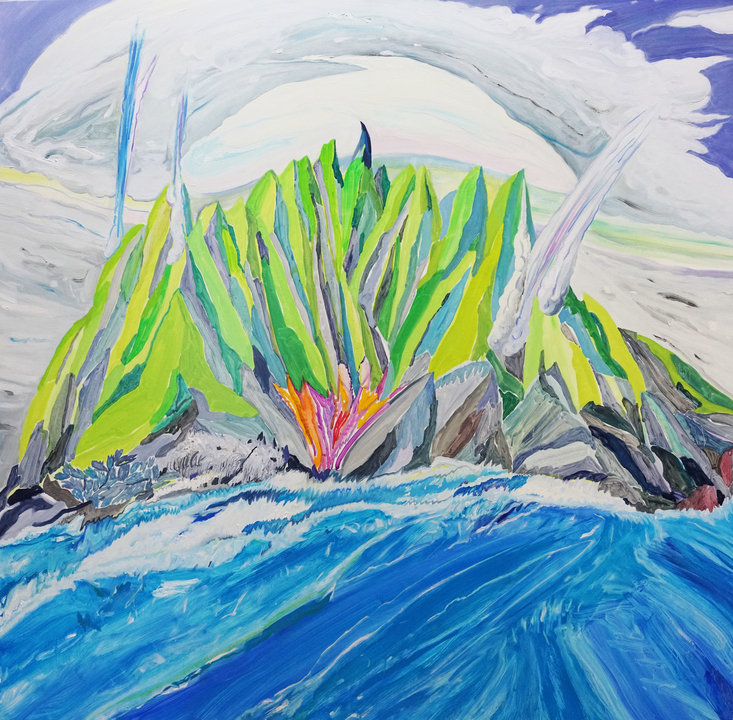
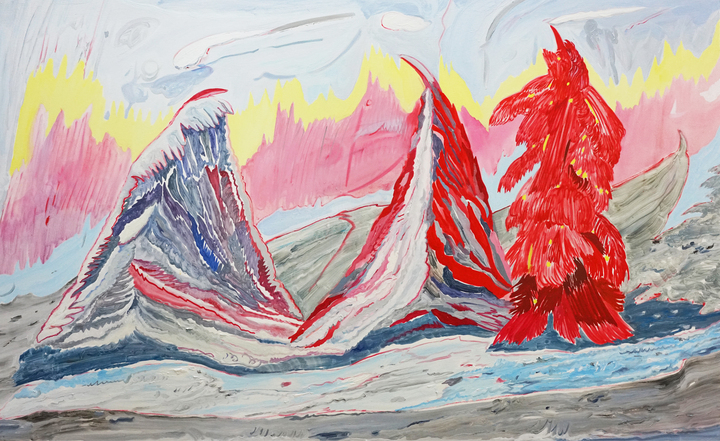
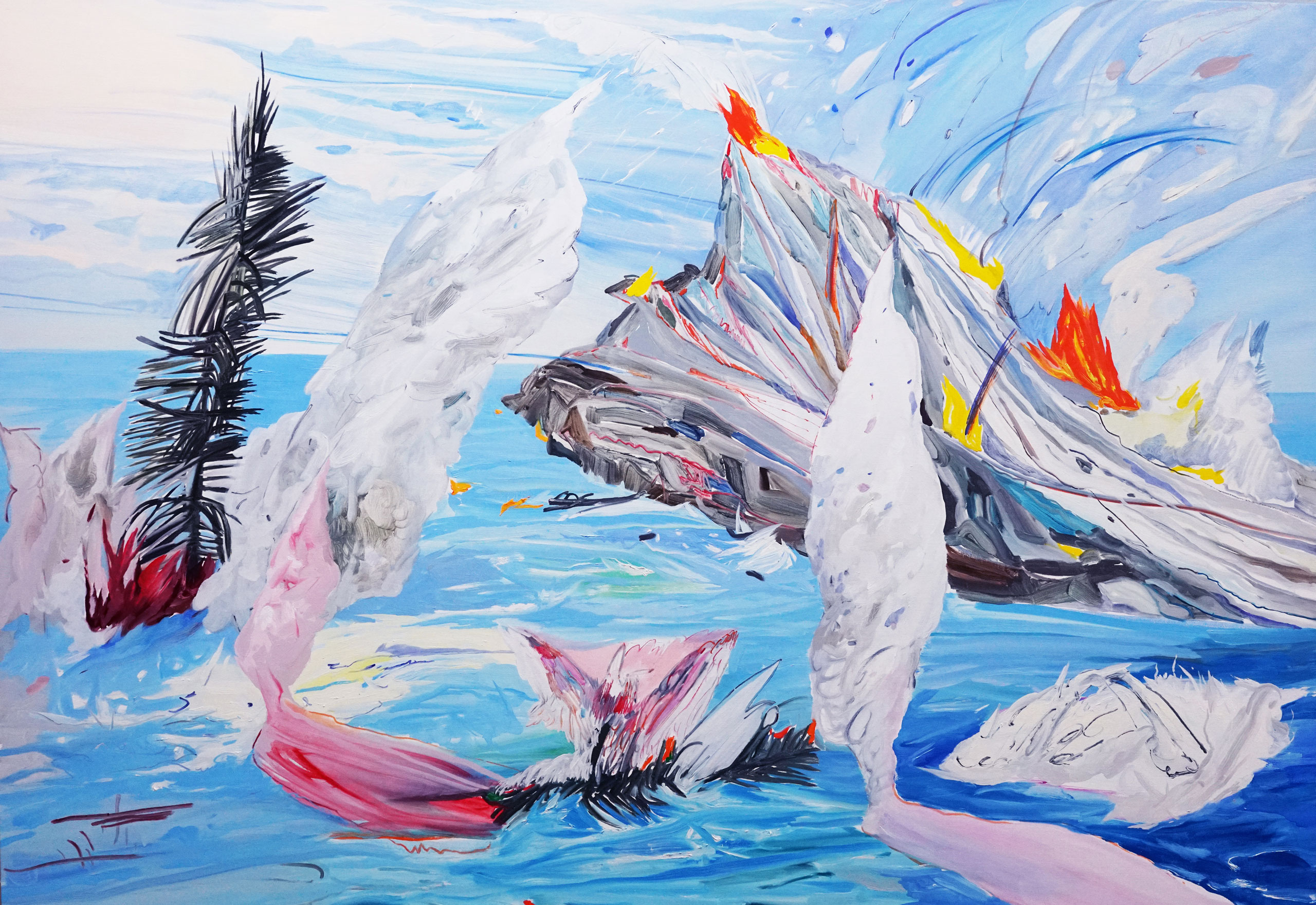
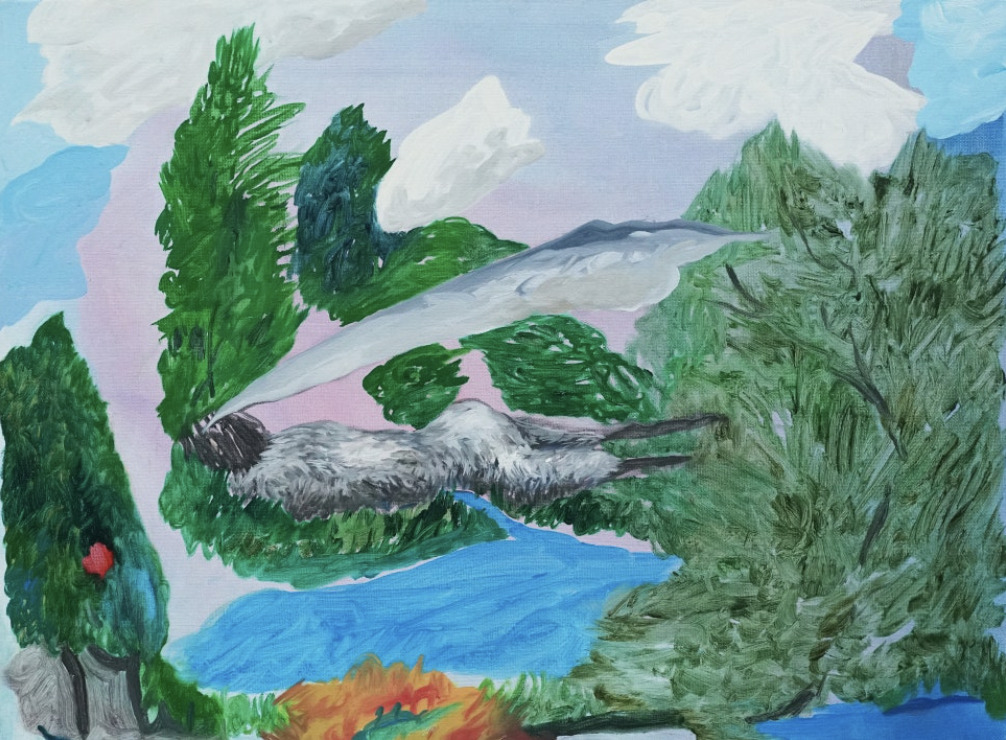
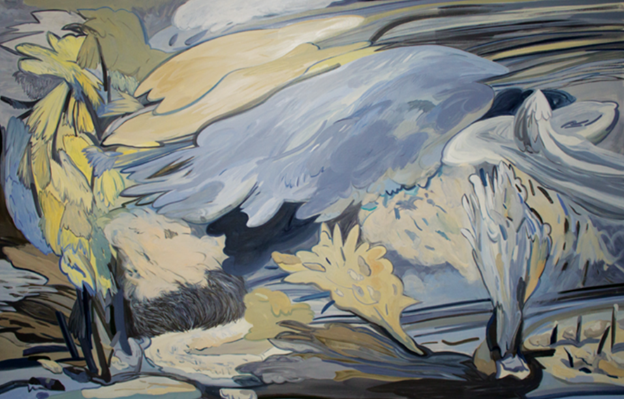
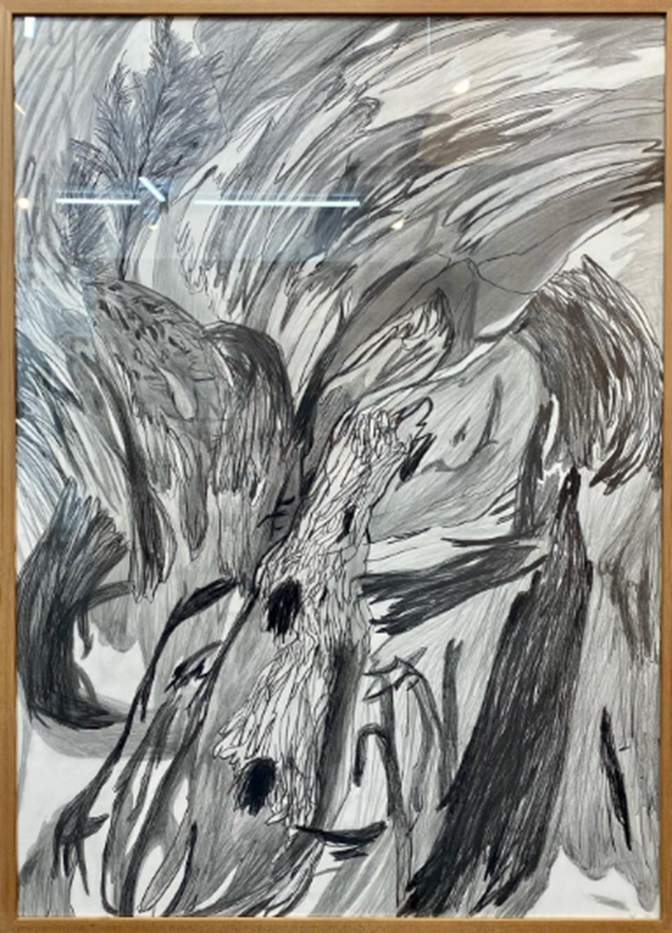
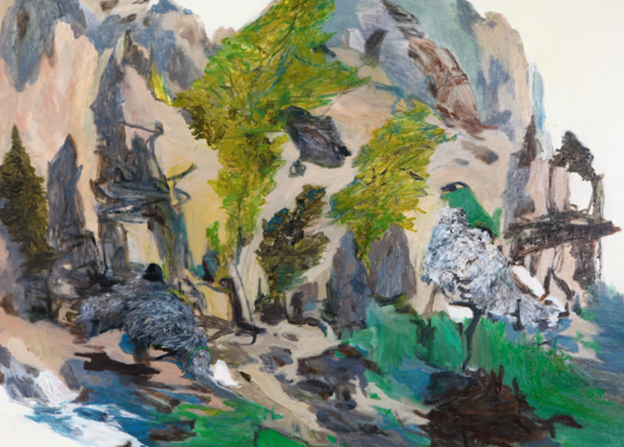
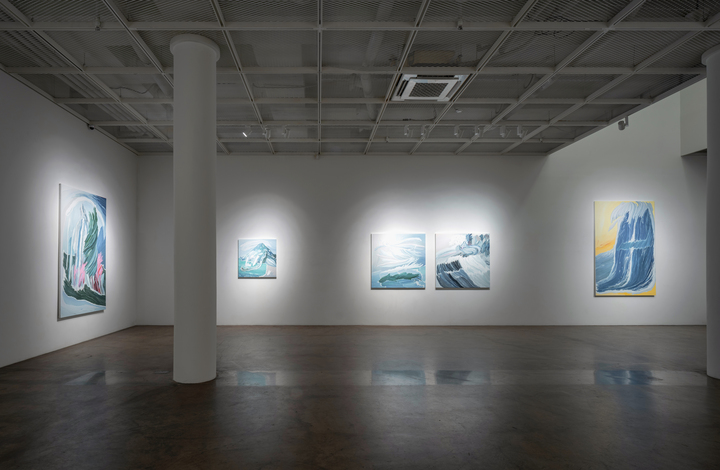
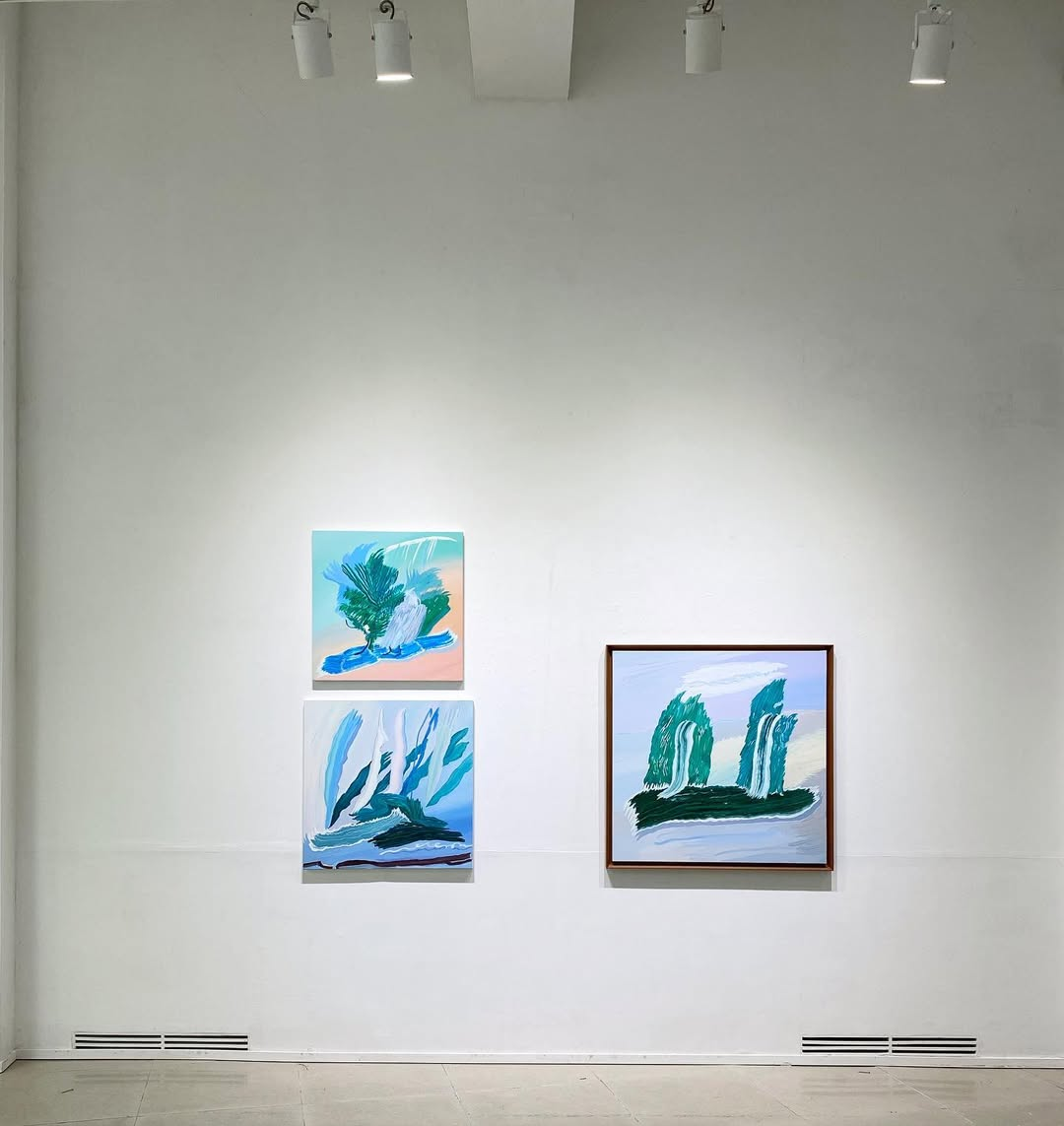
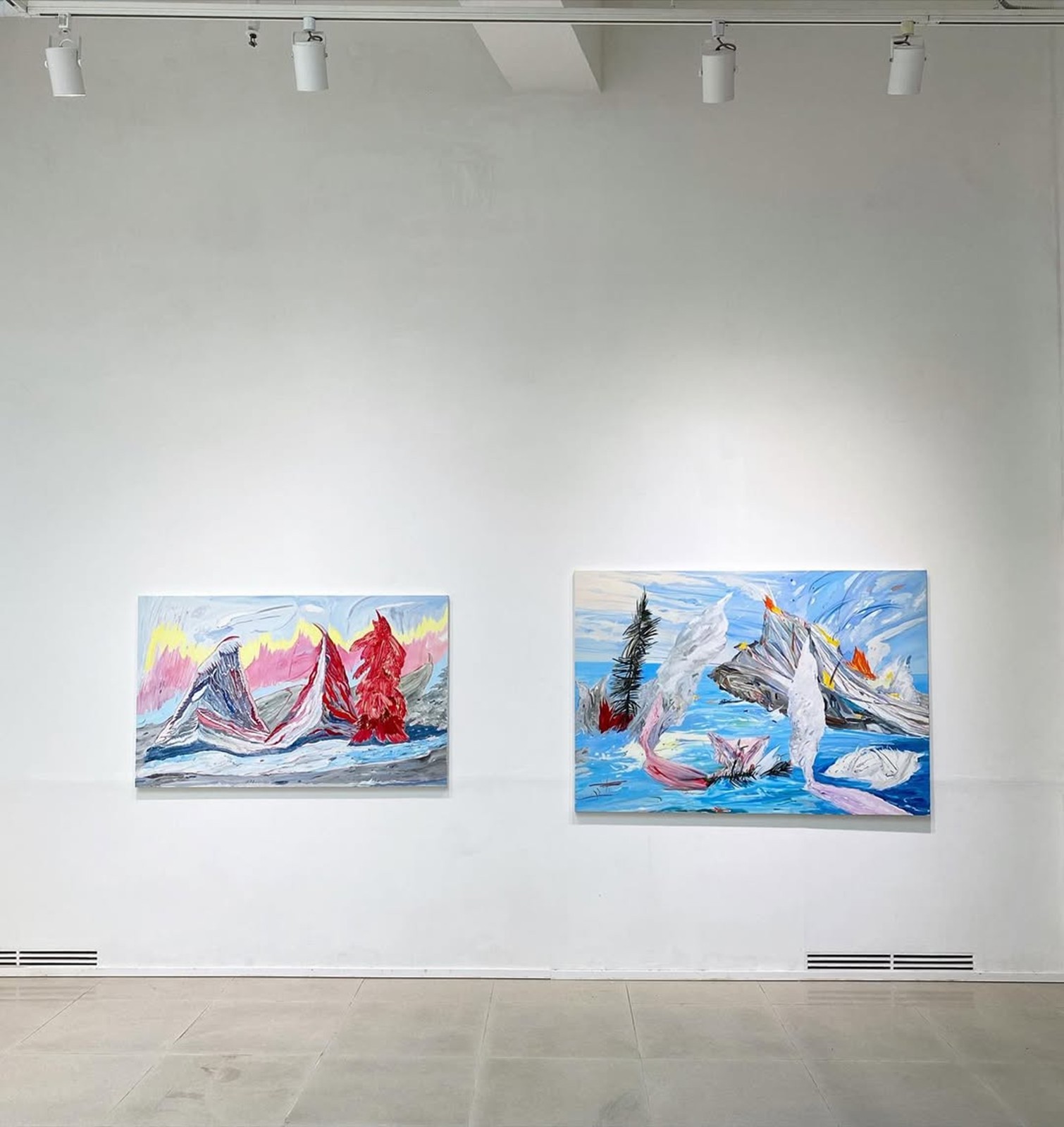
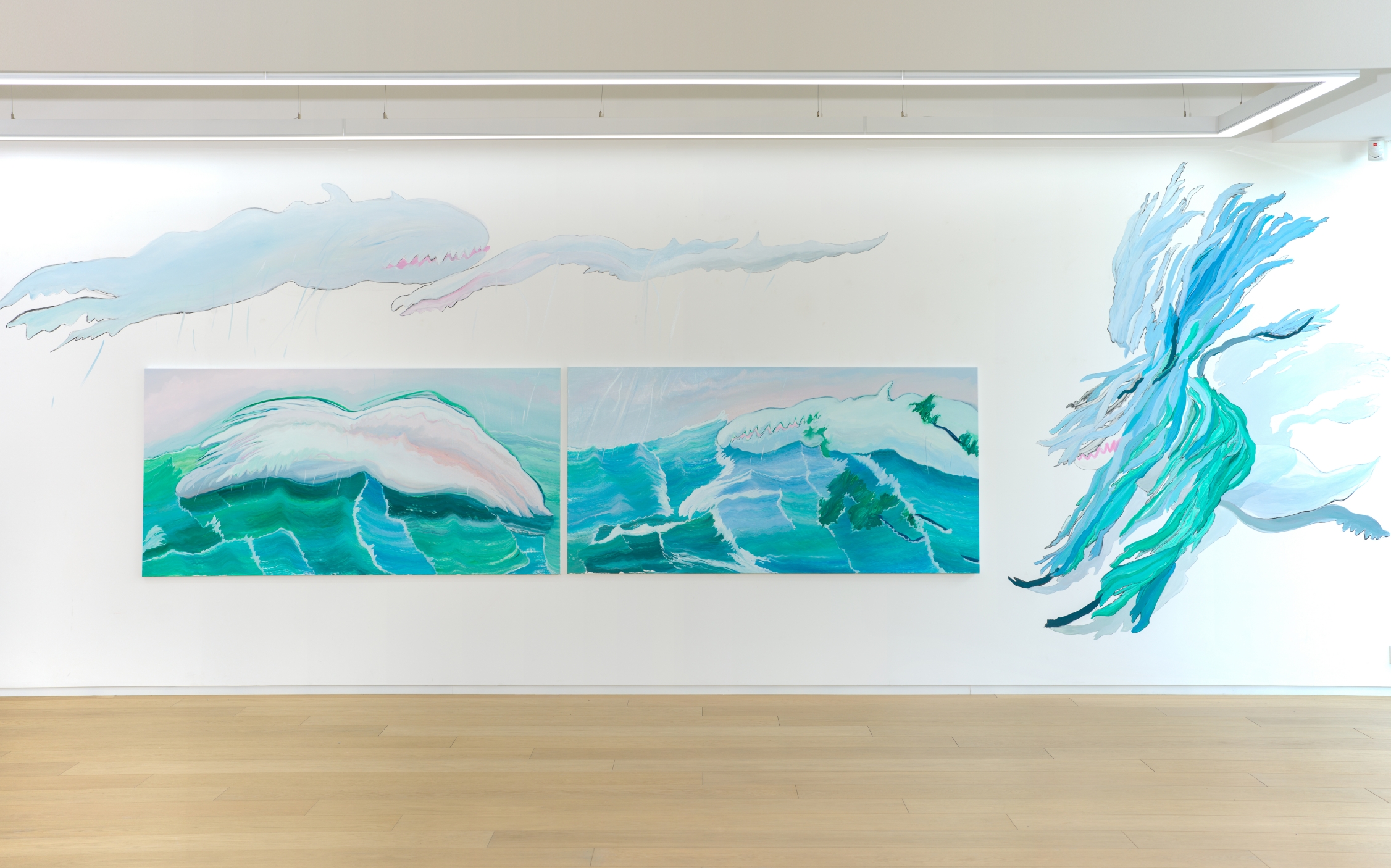
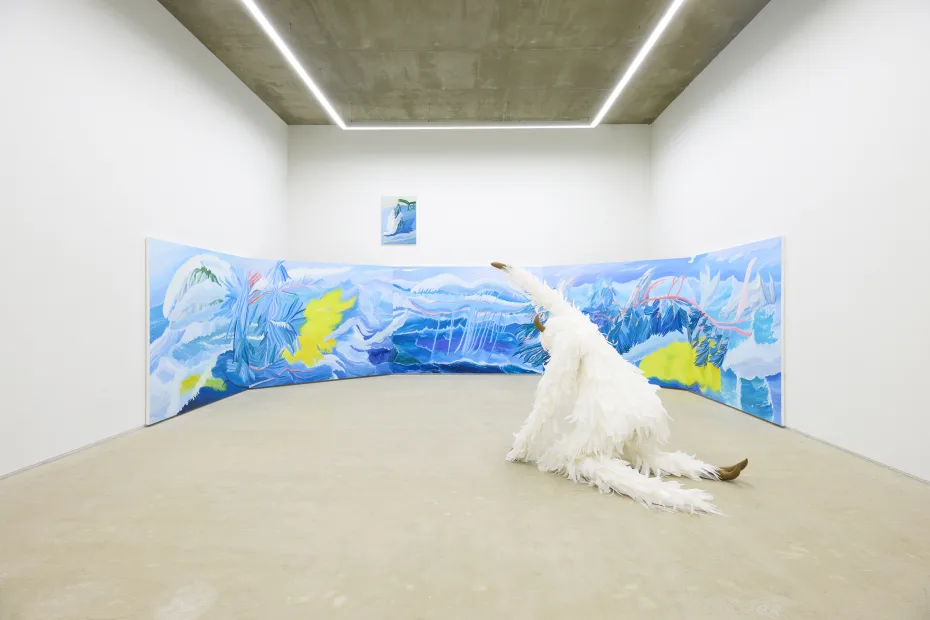
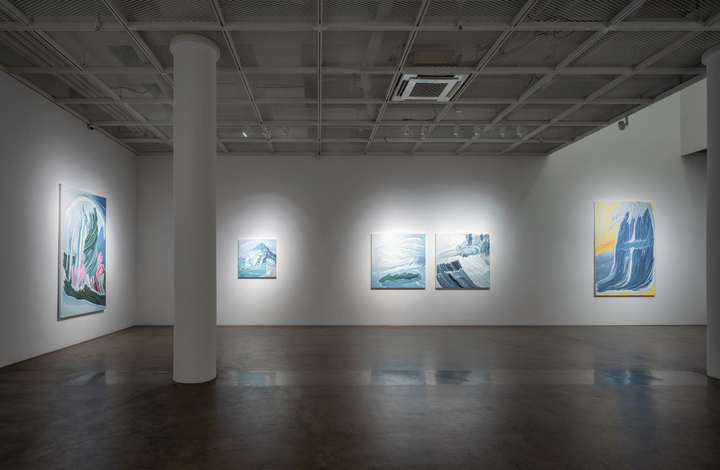
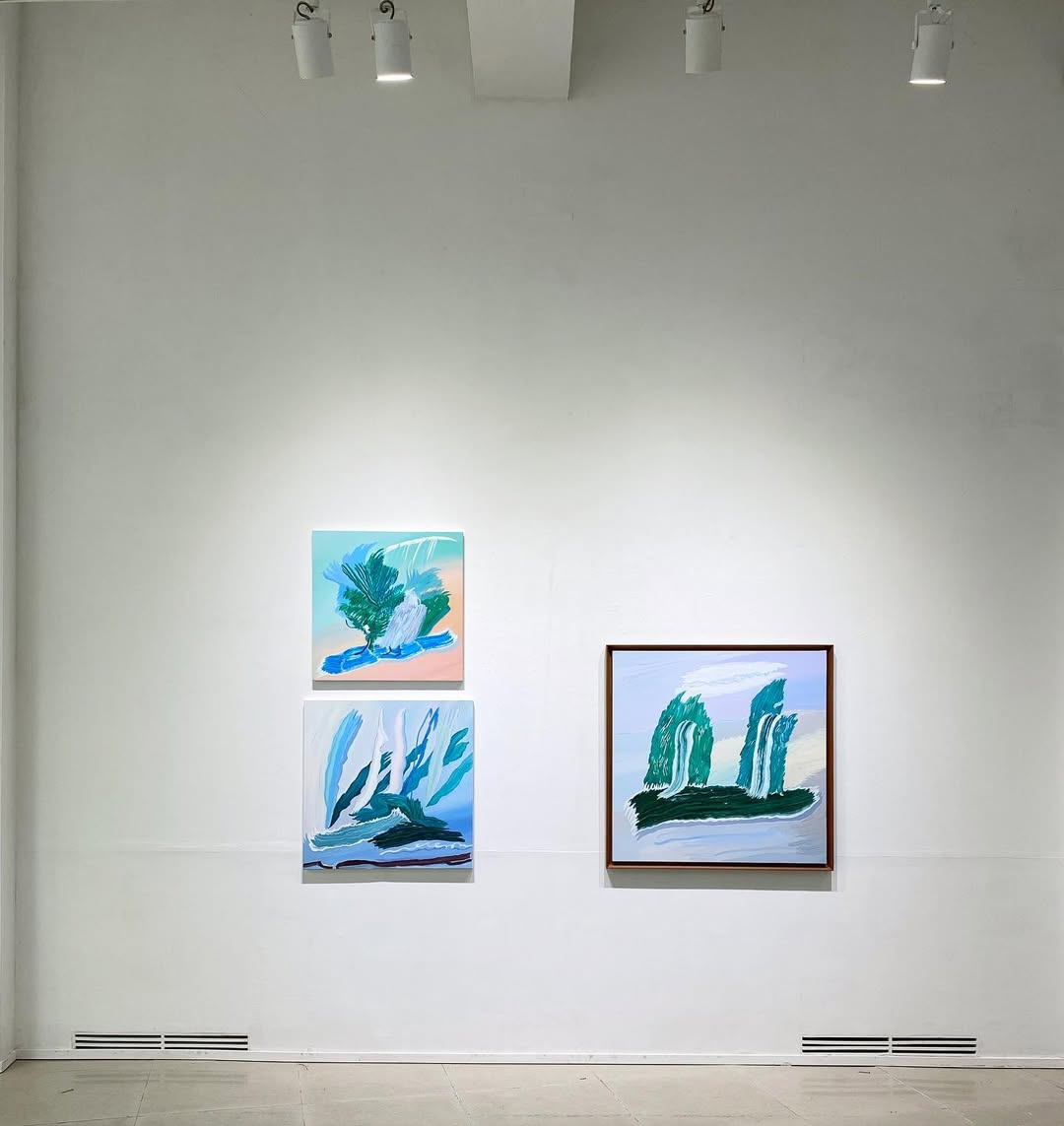
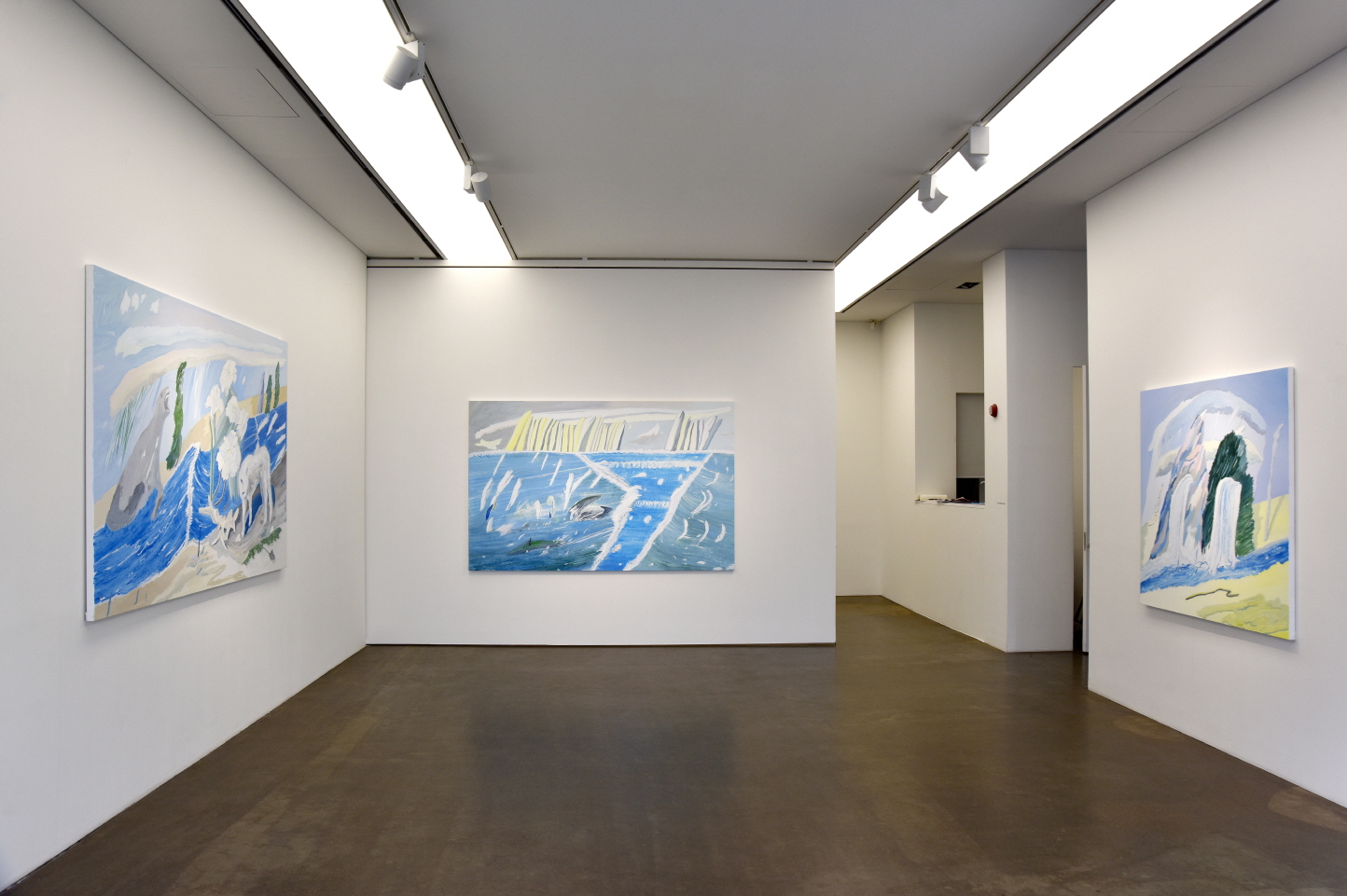
Choi Suin's paintings, such as Look at that
(2020) and A Wish (2023), depict natural landscapes that
evoke images of water, mountains, clouds, and more. Rather than being peaceful,
these scenes are somewhat ambiguous and difficult to grasp. According to the
artist's explanation, the landscapes he paints are actually "fake
nature" filled with colors, shapes, and forms that do not reproduce any
specific object on Earth. Despite being named as fake, they vividly resemble
entities that have been suppressed and disappeared as shadows after the
invention of logical and symbolic symbols represented by language. In the past,
ancient people included sensory impressions and inner psychology experienced
through seeing, hearing, and feeling along with existing objects as part of
nature. Choi Suin's Gas Play (2023) is like a one-act play
where colors and emotions from an era before the formation of rational
hierarchies and concepts coexist with natural subjects. Within the
indeterminate screens that cannot be easily defined, we practice looking at the
world in a way that steps outside the formula of being human-subjects.
Under the exploration of the attributes of representation and
reproduction in photography, Lee Myung-ho has been continuously presenting the
"Photography-Act-Project" that combines canvas and nature to reveal
the hidden value of the subjects. The works showcased in this exhibition are
glimpses of how human-machine-nature collectively shapes the world. Work
View; Tree #18_4 (2021) shows a scene of installing a canvas behind a
tree to create a "painting-like photograph." In a more conceptual
piece, [drənæda]_Nothing But #1
(2020), Lee Myung-ho uses ink to take a photograph on white paper and then
scrapes it away, presenting an empty white screen. Through this, the artist
suggests the paradox that an empty world, representing human desire to grasp
and possess through sight, can reveal more. The white screen evolves from the
outdoor installation Untitled #1_2 (2019) into
three-dimensional form, offering a hybrid experience where the medium of
photography and reality intertwine like the mythological Ariadne's thread in a
labyrinth.
Moojin Brothers have been constructing fictions about peripheral
subjects scattered throughout Korean society, crossing the boundaries between
reality and fantasy in their media works. The Trace of the Box - Now,
Curiosity About the world (2018) juxtaposes about 23 sentences from
Jules Verne's novel "Twenty Thousand Leagues Under the Sea" with our
current image of observing aquariums from high-rise buildings in Seoul. Through
this juxtaposition, they raise questions about the contemporaneity of the thought
system and civilization that humanity has steadily accumulated. Ground
Zero (2021) goes beyond diagnosing the present in which we live and
warns about humanity's future of reverting to past thinking with rigid
attitudes. The model human's life, facing its final moments in an indeterminate
land and era amid storms, symbolizes contemporary individuals who, even amidst
escalating natural disasters following the pandemic, cannot change their
existing attitudes and beliefs. Through these works, Moojin Brothers reflect on
the point humanity has reached, where various ecosystems on Earth are being
destroyed, threatening life, and where humans must move beyond their
conventional beliefs and knowledge systems to perceive the world differently.
Chang Hanna has been working with various types of plastic waste
that undergo weathering processes in natural environments, gradually becoming
mineralized. Scientifically referred to as "plasticglomerate,"
"pyroplastic," and "plasticsphere," the artist bestows upon
these subjects the name "New Rock," infusing them with delicate
contemplation and craftsmanship. Between aesthetic awe and human reflection,
the New Rocks evoke peculiar sensations, and through an outdoor installation
that capitalizes on the spatial characteristics of the museum, they offer an
intriguing approach to hybridity. The piece New Nature_ Ants in New
Rock (2023) blends an ecosystem shaped by artificial materials and
ants, exploring hybrid combinations of human, object, and living entities that
go beyond mutually harmful impacts to create new relationships. Additionally, New
Land Art (2023), situated near Inwangsan, positions New Rocks
collected from the coastline amidst grass, trees, and rocks, blurring the
boundaries between artificial and natural, prompting contemplation about the
ocean and forest's future.
Park Haeul is an SF novelist who has been actively participating
in various anthologies, including the novel "Gipa" (2018) and
"The Papillon by Your Side" (2022). In this exhibition, he presents
the short story "The next things to do ( )," where an elderly man
named Ahn Jin is the protagonist. While immigrating to a strange asteroid
called B632, Ahn Jin faces a desperate situation of being stranded on the
planet after an accident, fleeing from a pursuing monster. However, at some
point, he discovers clues about the monster's true identity and the secrets
surrounding the planet, leading Ahn Jin to find a new way of life. This story
intertwines SF imagination about the future unfolding on the unfamiliar planet
and past human fixed beliefs, considering monsters as hybrids, impure beings,
and objects of evil. It presents an intriguing narrative that is closely
related to the overall exhibition's theme and world view.