Seoul Kim (b. 1988) has developed his practice through a sustained process of posing and responding to fundamental questions about painting as a classical medium. His work engages with the meta-exploration of the way physical elements such as brushes, paint, canvas fabric, and frames work in painting.
 
Kim engages with subjects ranging from influential predecessors in art history to commercial brands of brushes and paints, as well as the physical dynamism imposed upon the act of painting itself. Through these considerations, he gradually establishes his own set of principles for rewriting the historical references and conventions to which visual art has long been indebted, translating them into a contemporary mode.


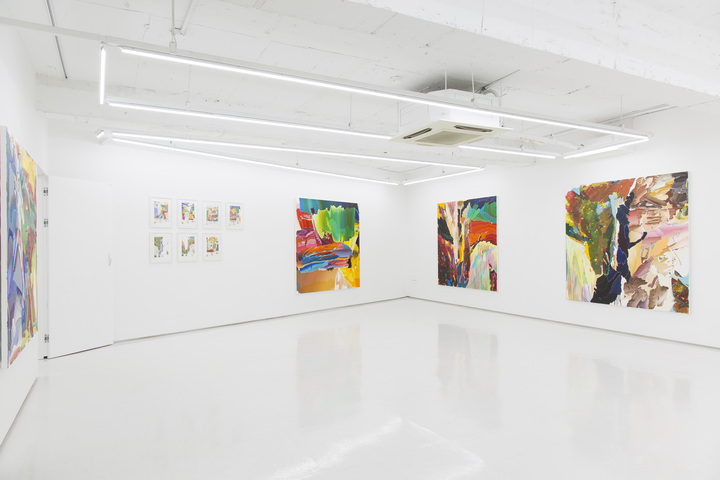
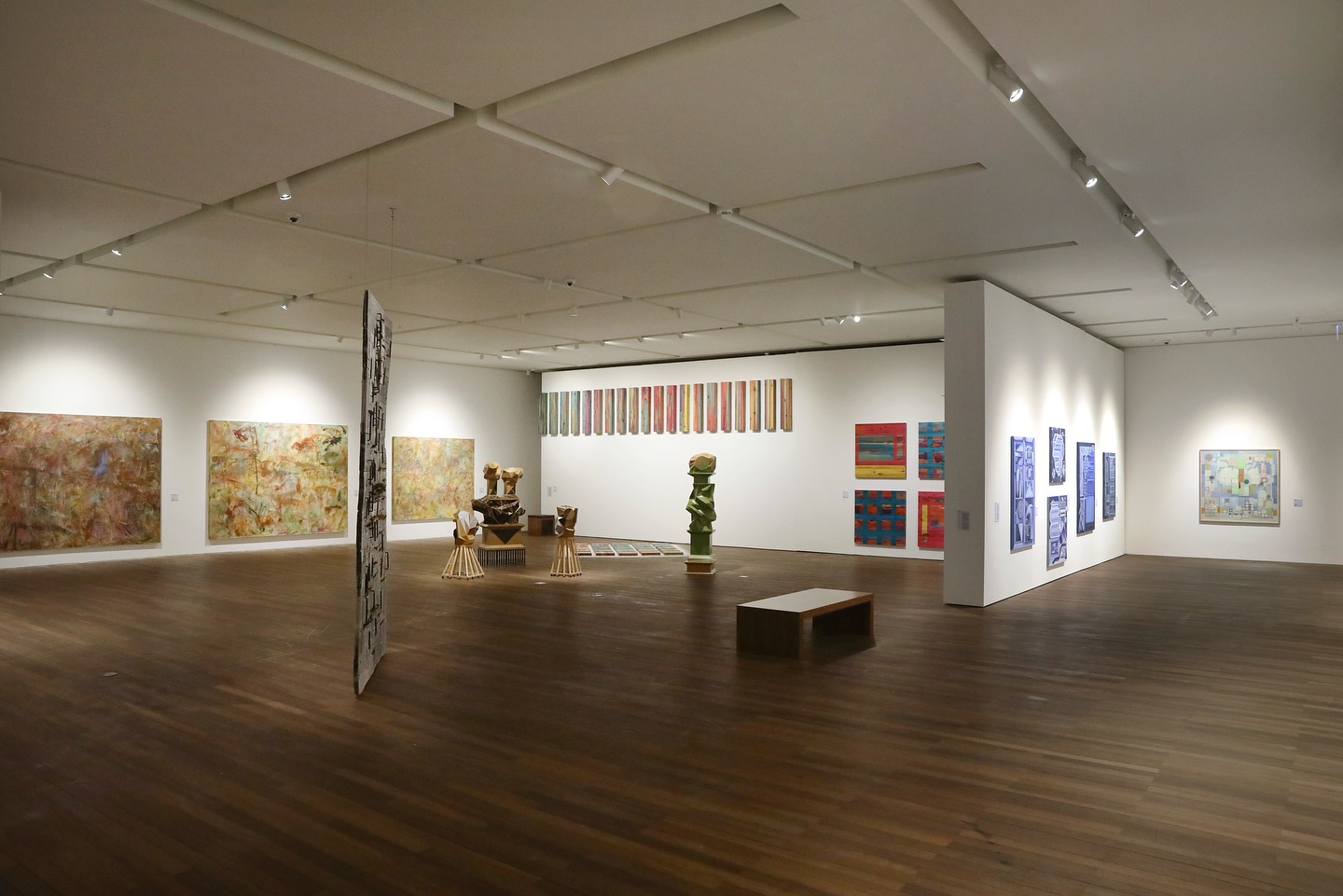
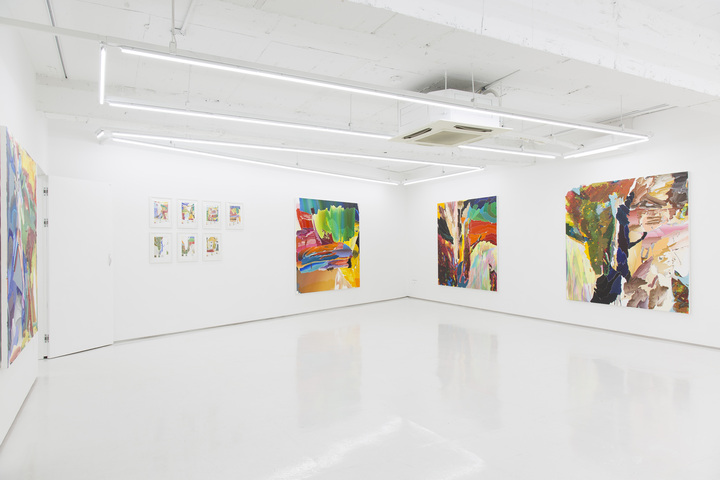
Installation view of 《Uncolored》 (Art Delight Gallery, 2019) ©Art Delight Gallery

Seoul Kim’s first solo exhibition, 《Uncolored》, held at Art Delight Gallery in 2019, introduced a compelling body of work that evoked the stereotypes of abstraction familiar from Western modern and contemporary art history, while simultaneously prompting reflection on a newly rediscovered mode of abstraction situated within the context of 2019.


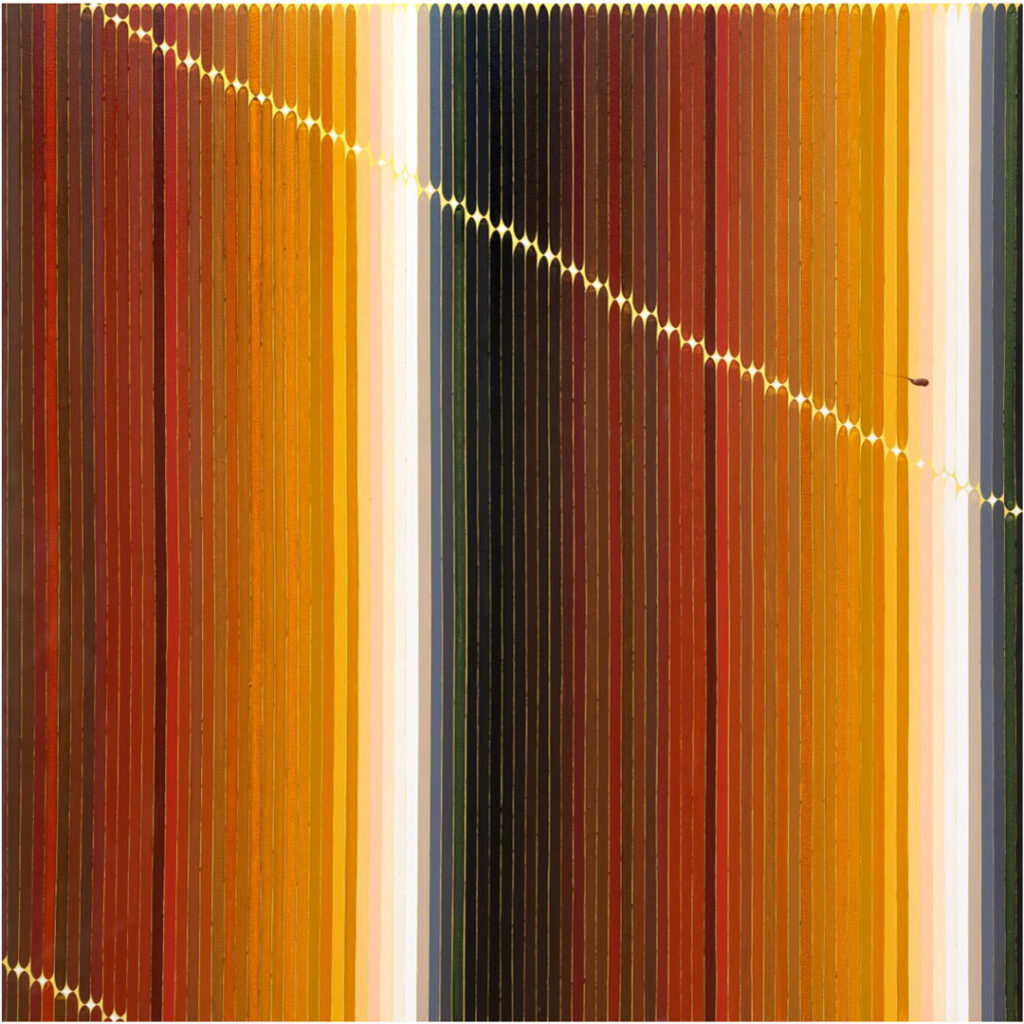
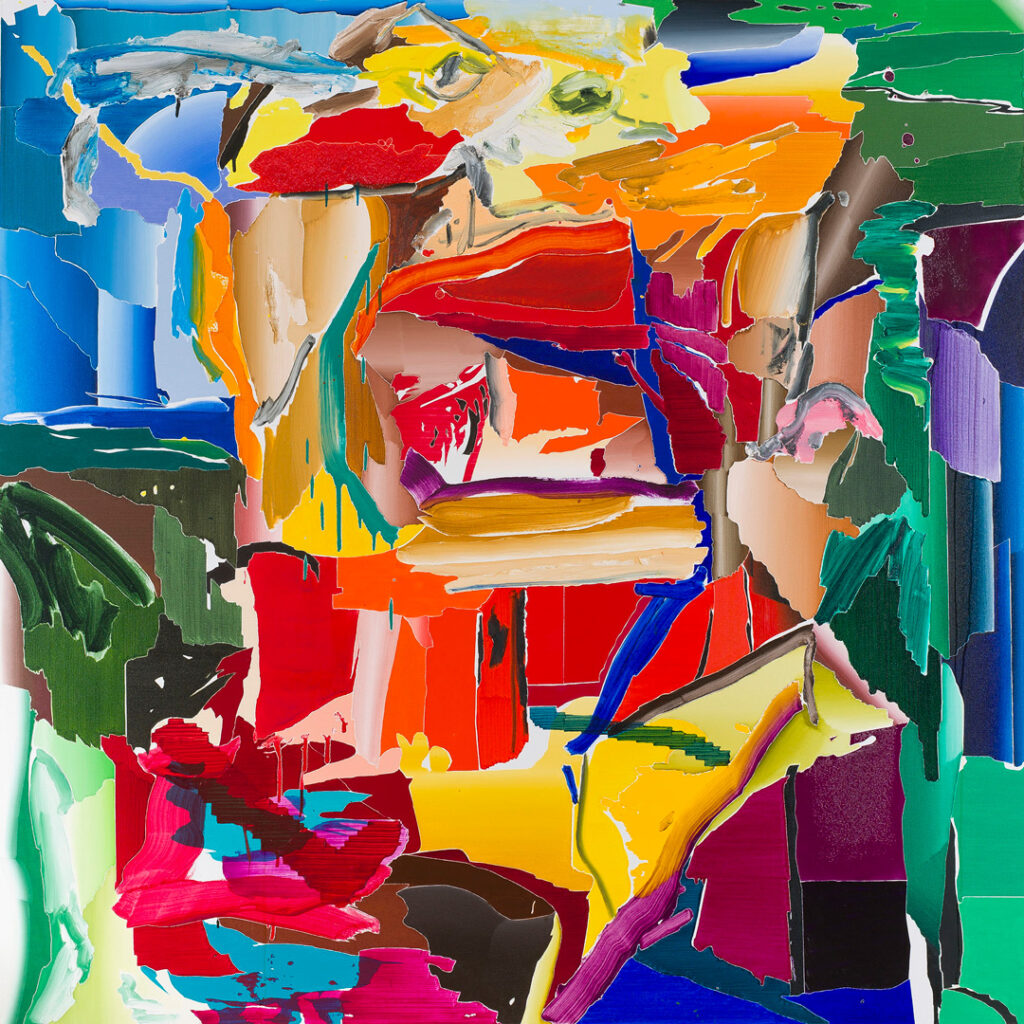
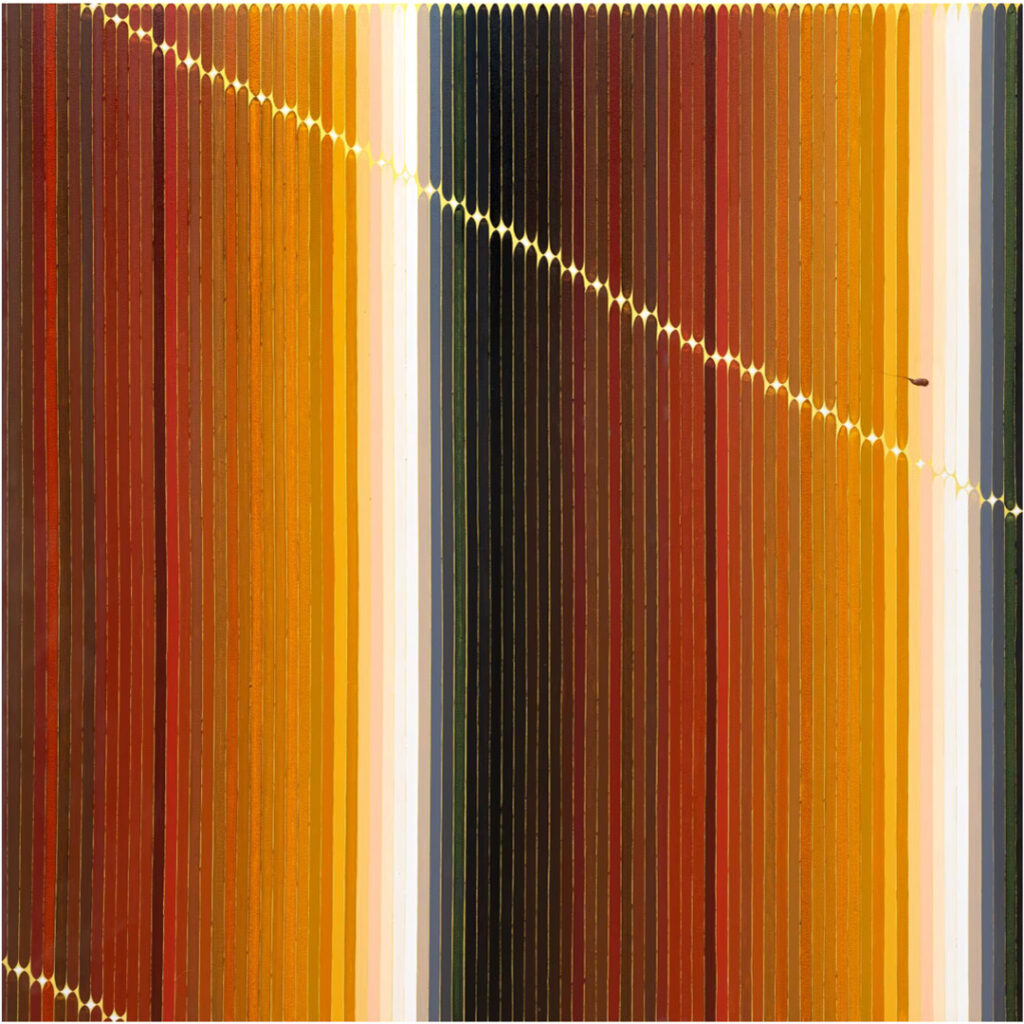
Seoul Kim, After De Kooning No.10, 2018, 168 oil colors on canvas, 172x172cm ©Seoul Kim

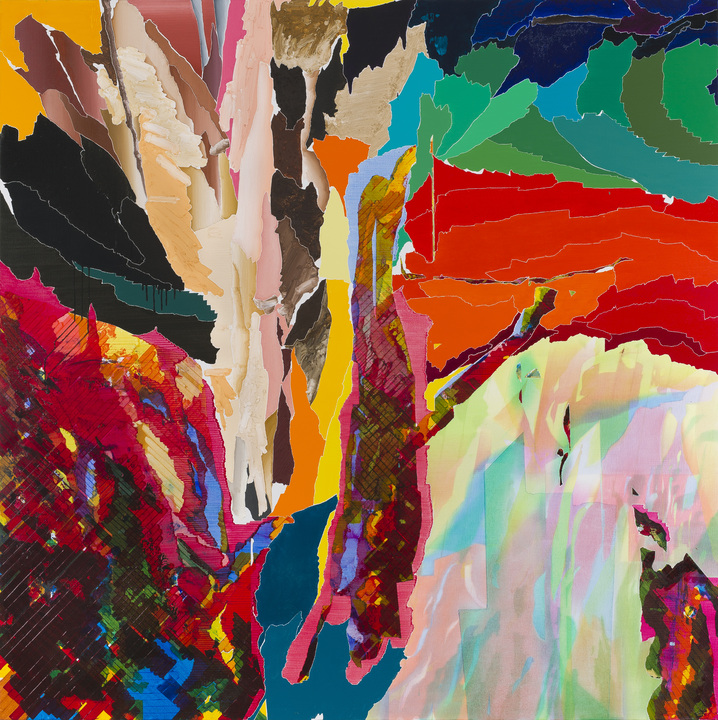
When approaching his works—composed of multiple colors without any specific figurative imagery—one notices narrow gaps of less than 1 millimeter left unpainted between adjacent color fields, appearing almost like contour lines. These are not accidental effects, but deliberate traces of the artist’s calculated movements. Such fissures demarcate and segment the pictorial space, articulating subtle divisions within the surface.

 
The brushwork likewise varies throughout the canvas: some areas are rendered in thin, transparent washes, while others are applied thickly with a matte finish; certain sections reveal gradations of color, and elsewhere pigments are layered repeatedly. Notably, the completed canvases are left unvarnished, allowing the tactile presence and material quality of the final layer of paint to remain vividly intact.


Seoul Kim, After De Kooning No.5, 2017, 168 oil colors on canvas, 172x172cm ©Seoul Kim

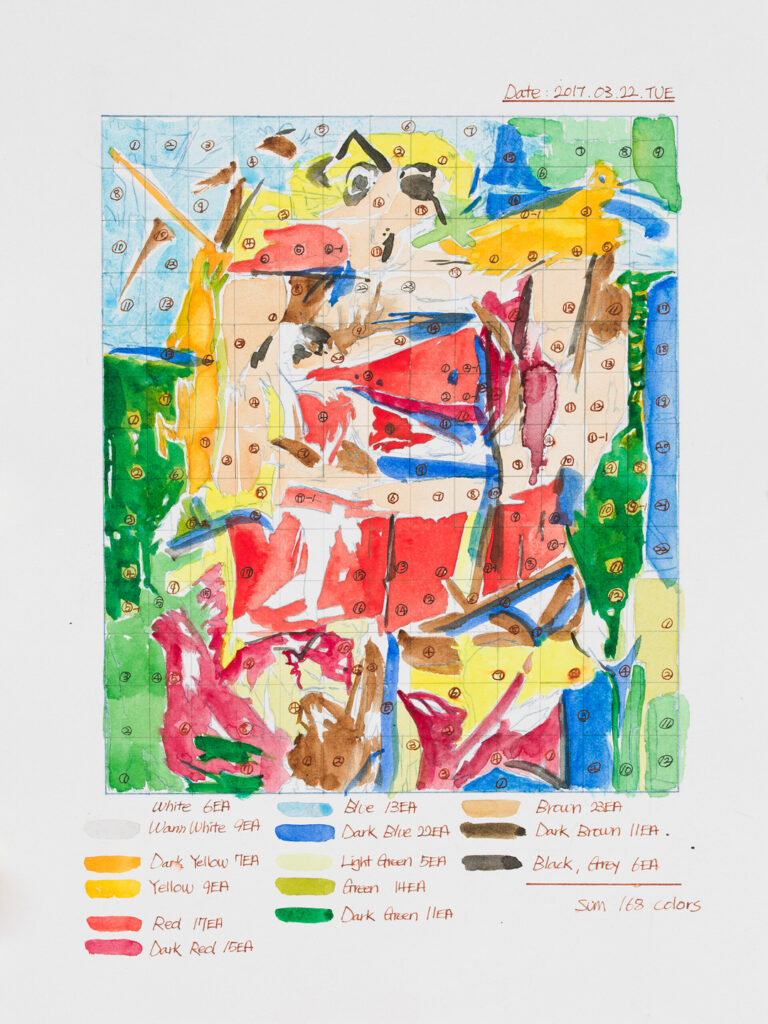
His canvases, which extend flatly without center or periphery, may at first appear to deploy color freely. Yet the rational control glimpsed in the narrow “gaps” is already at work from the very moment of color selection. For instance, the ‘After De Kooning’ series was produced using every oil paint color manufactured by the Dutch brand Old Holland.
 
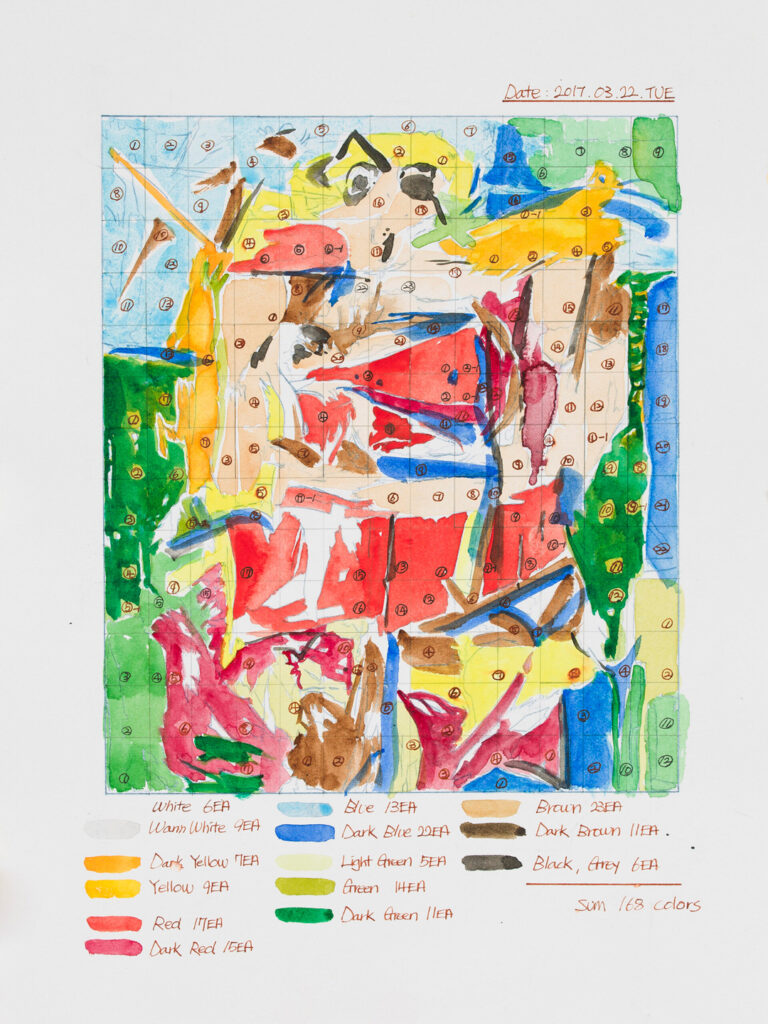
In creating these paintings, the artist established a specific set of conditions: “to use all 168 colors ‘democratically,’ without mixing them, applying similar amounts of each, and composing the surface with 168 segments.” Rather than orchestrating an artificial harmony according to learned conventions, Kim fulfilled the parameters he had set for himself, carrying out the process of production in strict adherence to these self-imposed rules.

Seoul Kim, After De Kooning No.5 color chart, 2017 ©Seoul Kim

Seoul Kim devoted approximately two years to understanding and categorizing the properties of paint by purchasing and testing every color produced by Old Holland. Beyond hue, saturation, and value, he discovered characteristics that can only be grasped through direct use, and applied each paint in ways that most clearly reveal its identity and inherent qualities.
 
For example, he regarded paints made with synthetic pigments as relatively transparent and dependent in character, and therefore applied them in multiple layers. He also believed that subtle differences in color become more pronounced when similar tones are placed adjacent to one another; accordingly, he sometimes grouped colors from the red spectrum together on one side of the canvas.
 
In this way, his work presents surfaces woven in the most analog manner using only a limited palette of 168 colors—offering a counterpoint to a contemporary condition saturated with countless images and videos.


Seoul Kim, Filbert Family No.9, 2020, Oil, Cotton dyde canvas (medium texture), 172x172cm ©Seoul Kim

In this way, Kim has continually reflected on the fundamental elements that constitute “painting,” establishing specific conditions based on their properties and pursuing endless variations within those self-defined frameworks.
 
If, in his first solo exhibition, he attempted an unprecedented translation of Abstract Expressionism alongside the history and material qualities of oil paint, then in his two solo exhibitions held in 2021 he stepped back from any particular figure or movement to focus instead on the very structure that forms the basis and origin of painting—the brush itself. There, he introduced the ‘Filbert Family’ series, centered on the filbert brush as both tool and conceptual motif.


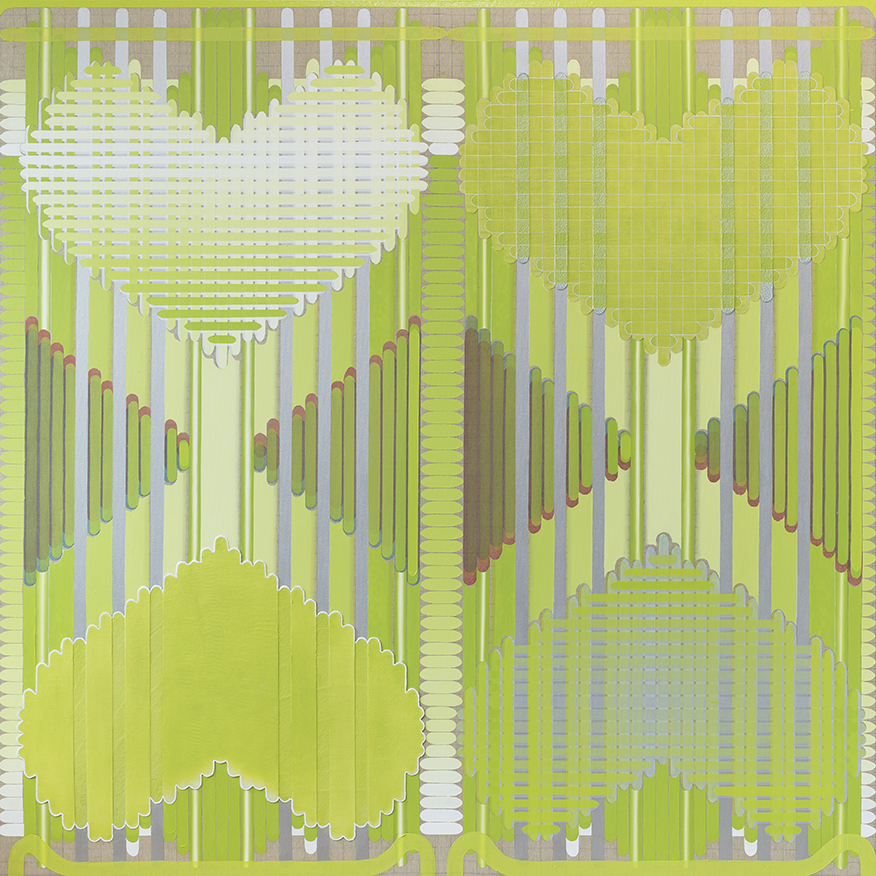
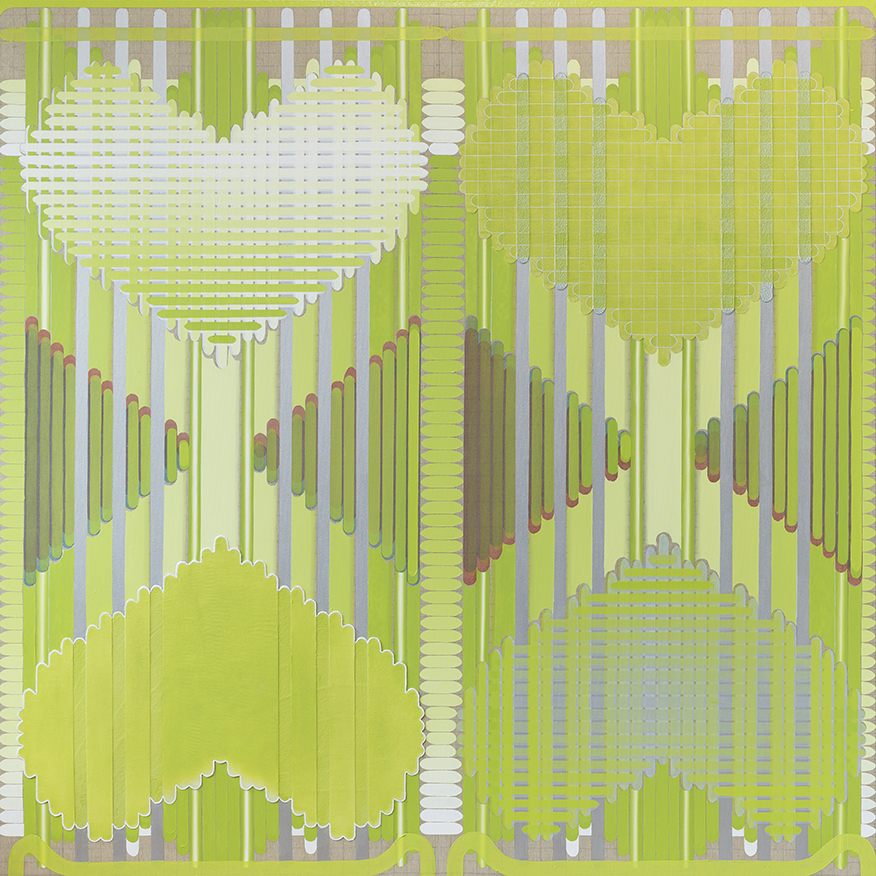
Seoul Kim, Filbert Family No.10, 2021, Iridescent acrylic, molding paste, oil on polyester, cotton dyde canvas (medium texture), 172x172cm ©Seoul Kim

The title of the series, ‘Filbert Family’, is derived from the Filbert brush, a specific type of paintbrush. Oval in shape, the filbert features a flat body with a rounded, slightly pointed tip. Combining the qualities of both round and flat brushes, it allows for a wide range of applications—from thin, smooth strokes to thick, expressive marks, and from curved lines to straight edges.


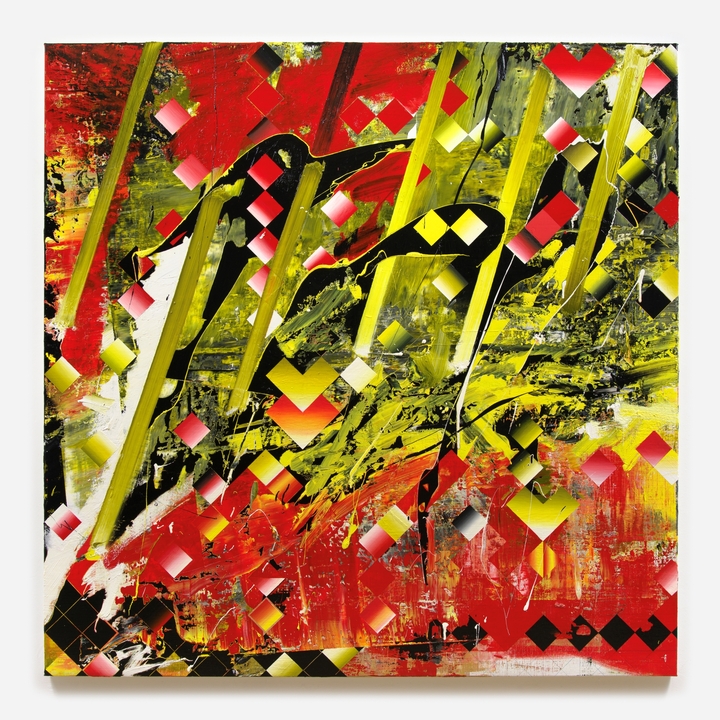
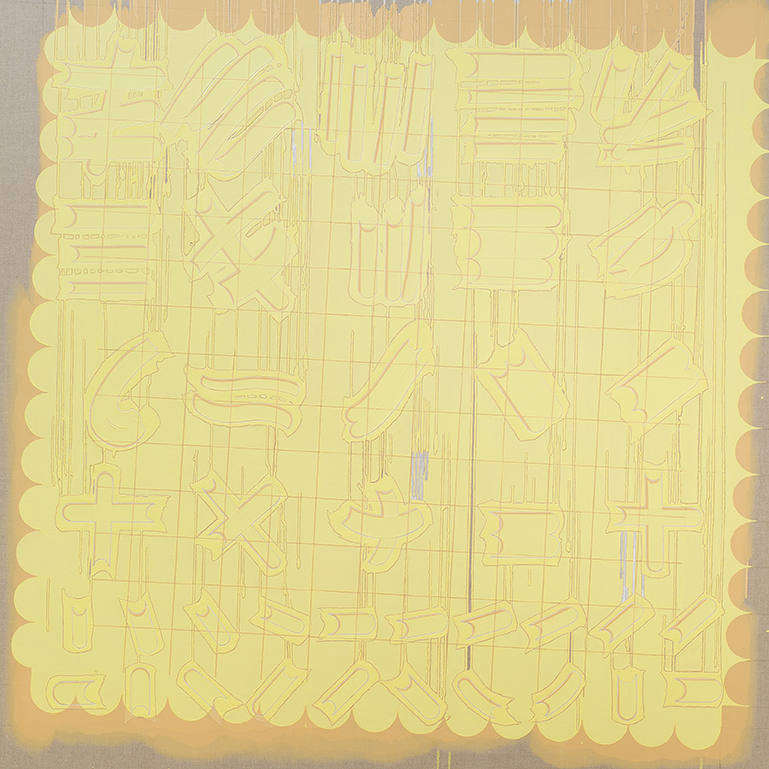
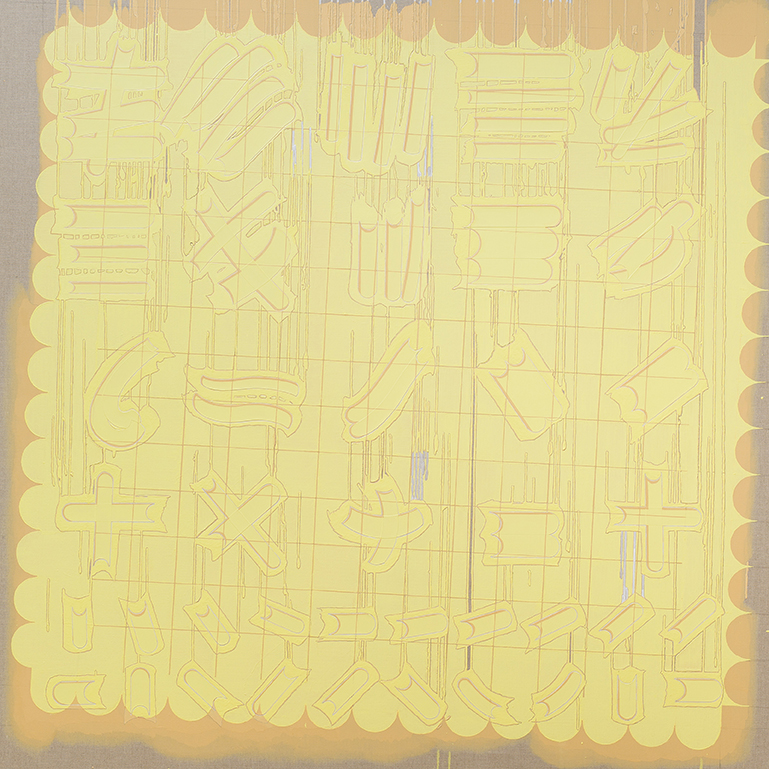
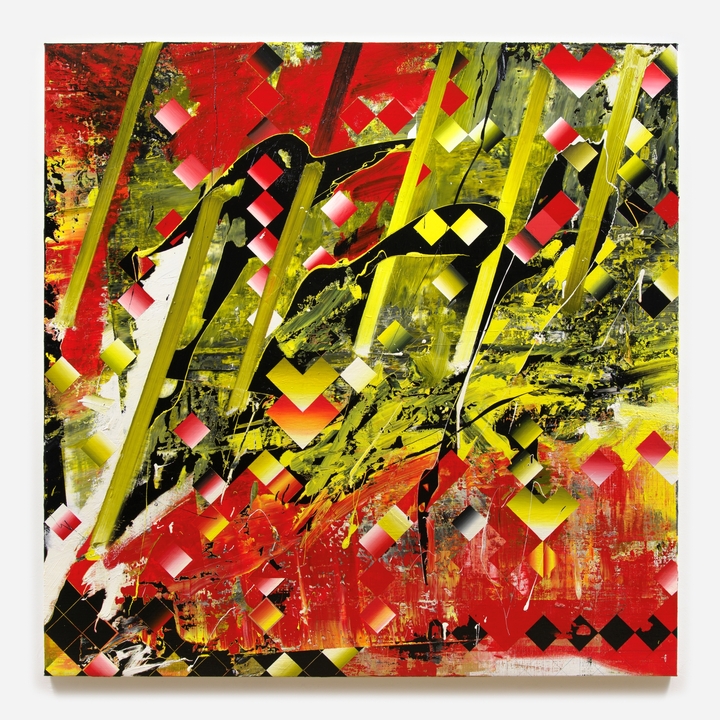
Seoul Kim, Filbert Family No.6, 2021, Stand oil, nickel titanium yellow on linen canvas (heavy texture), 172x172cm ©Seoul Kim

Using the filbert brush, Kim completed the ‘Filbert Family’ series. Prior to beginning the works, he approached the brush with the mindset of an archaeologist, acquiring and experimenting with twenty-five different filbert brushes produced by a single manufacturer. He then posited the filbert shape itself as a modular unit, extracting dozens of simple yet varied forms and patterns—such as diamonds, ovals, hearts, and grids—that could be generated from its distinctive contour.
 
In this sense, the ‘Filbert Family’ series is not about selecting a brush to depict a predetermined image. Rather, the forms that the brush is capable of producing are transferred directly onto the canvas. The question, therefore, shifts from “what” is being painted to “how” and “why” it is painted, foregrounding process and intention over representation.


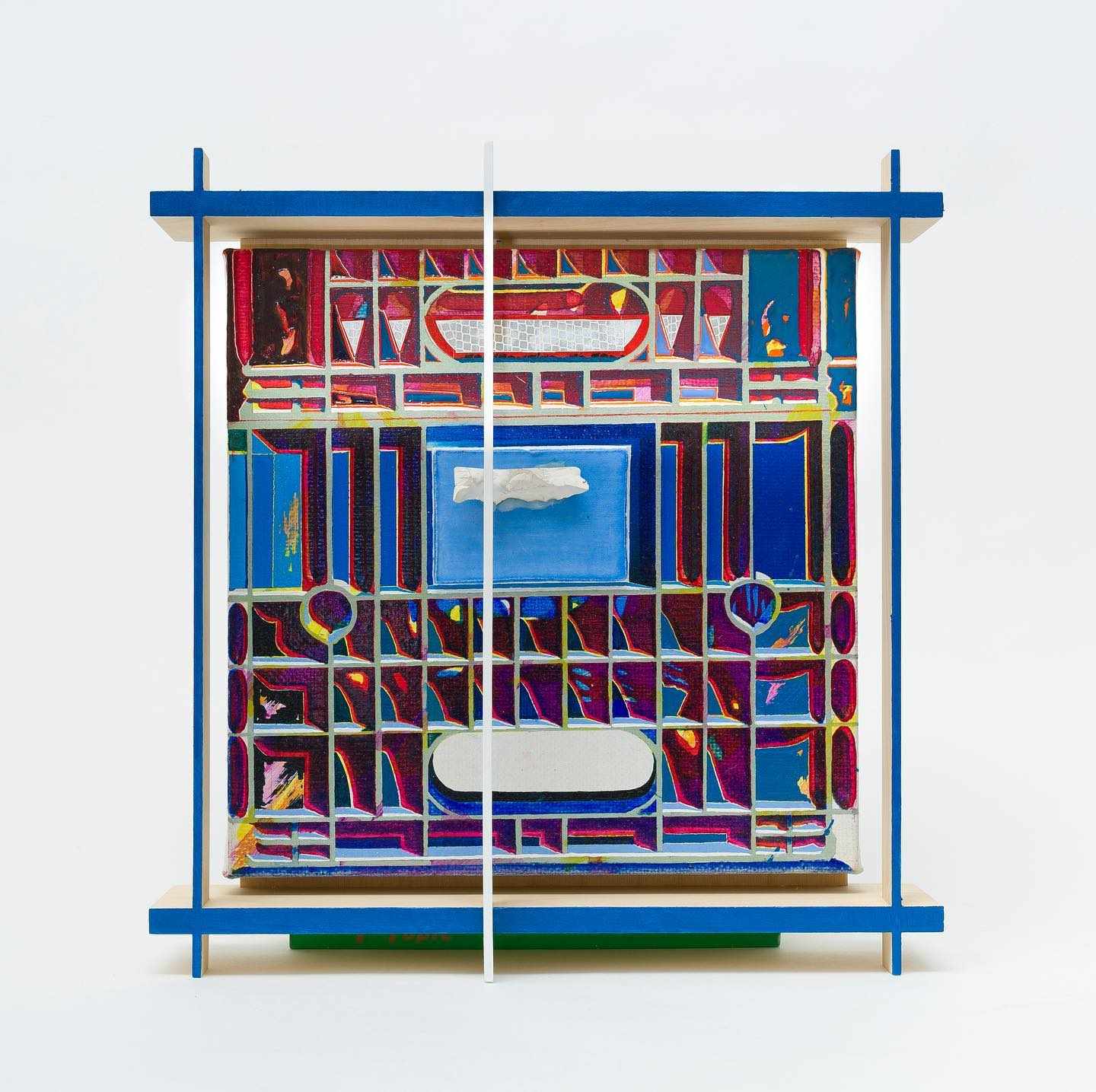
Seoul Kim, Filbert Family No.13 (small ver.), 2020, 3M HDR Sticker, Birch Board Wood, Oil on Jute Canvas(very rough texture), 39x39cm ©Seoul Kim

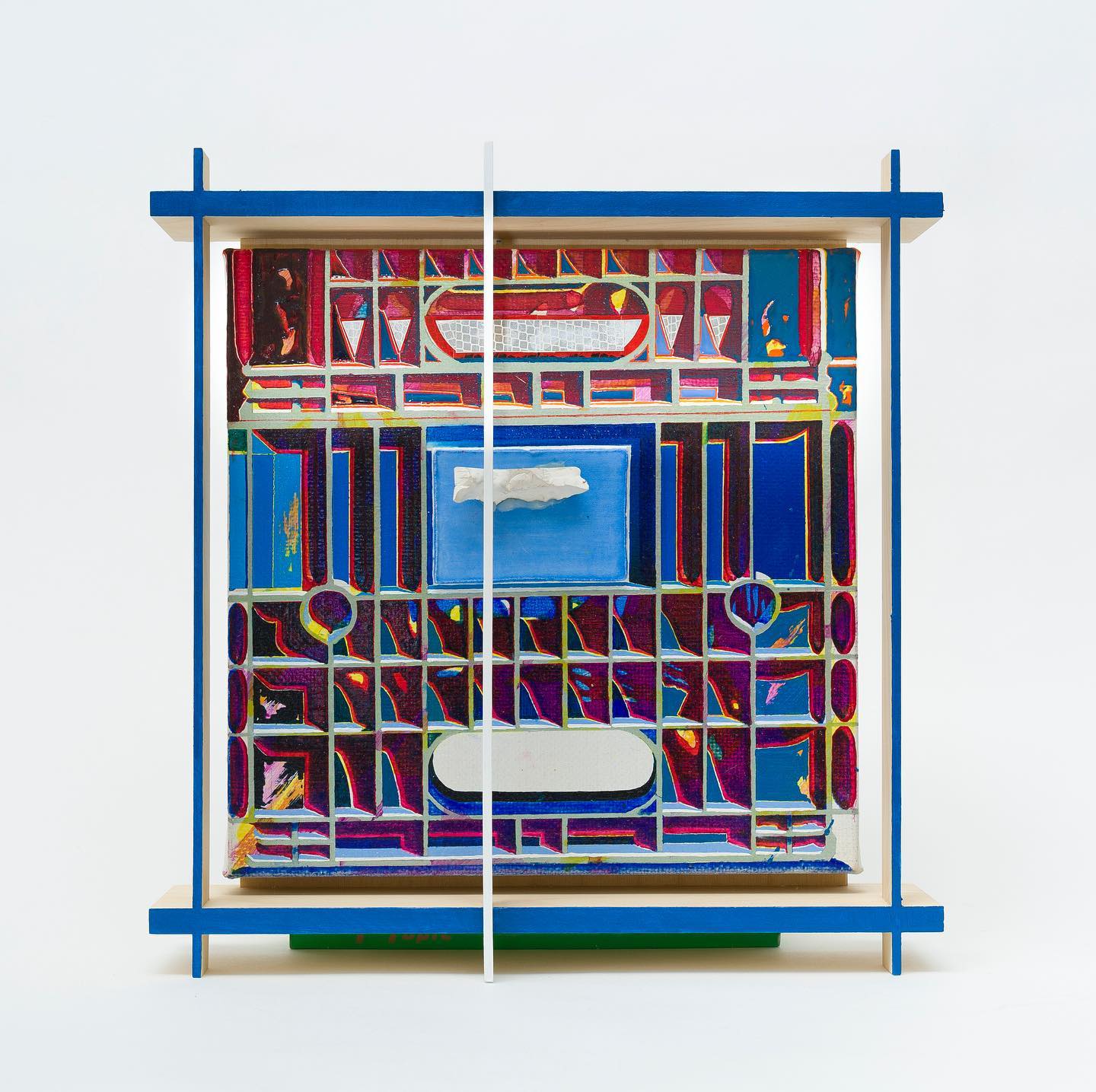
Moreover, the smaller canvases in the ‘Filbert Family’ series are presented with three-dimensional frames. In the solo exhibition 《Beautiful Mind》, held at Art Delight Gallery in 2021, the frames of the ‘Filbert Family’ works reflected the colors and forms of the internal composition. They repeated the structural logic of the painting and, at times, incorporated reflective surfaces that shifted the axis along the sides of the canvas.
 
Through these sculptural frames, the two-dimensional compositional principles of the painting are reoriented along a different axis and effectively extended into three dimensions.


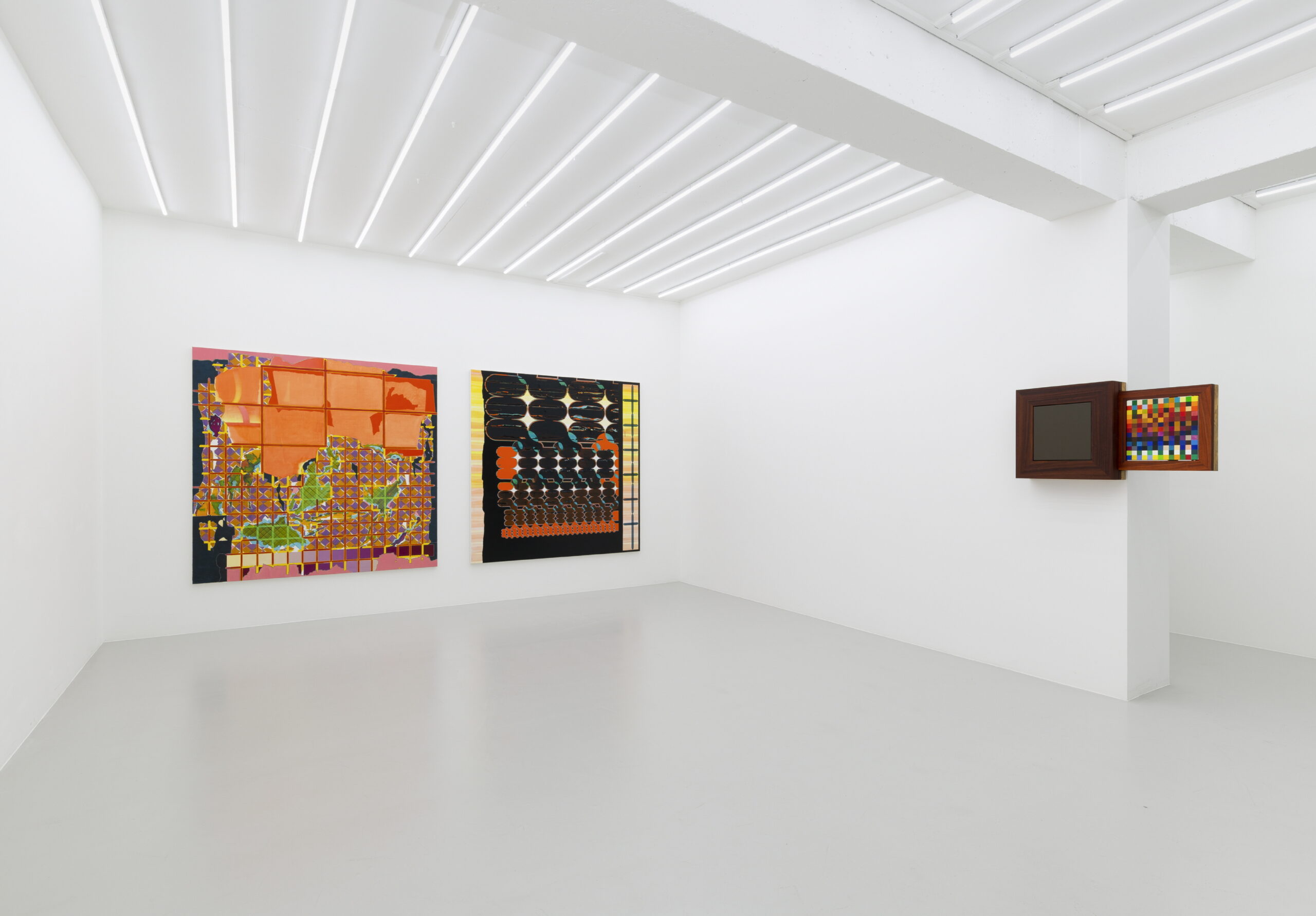
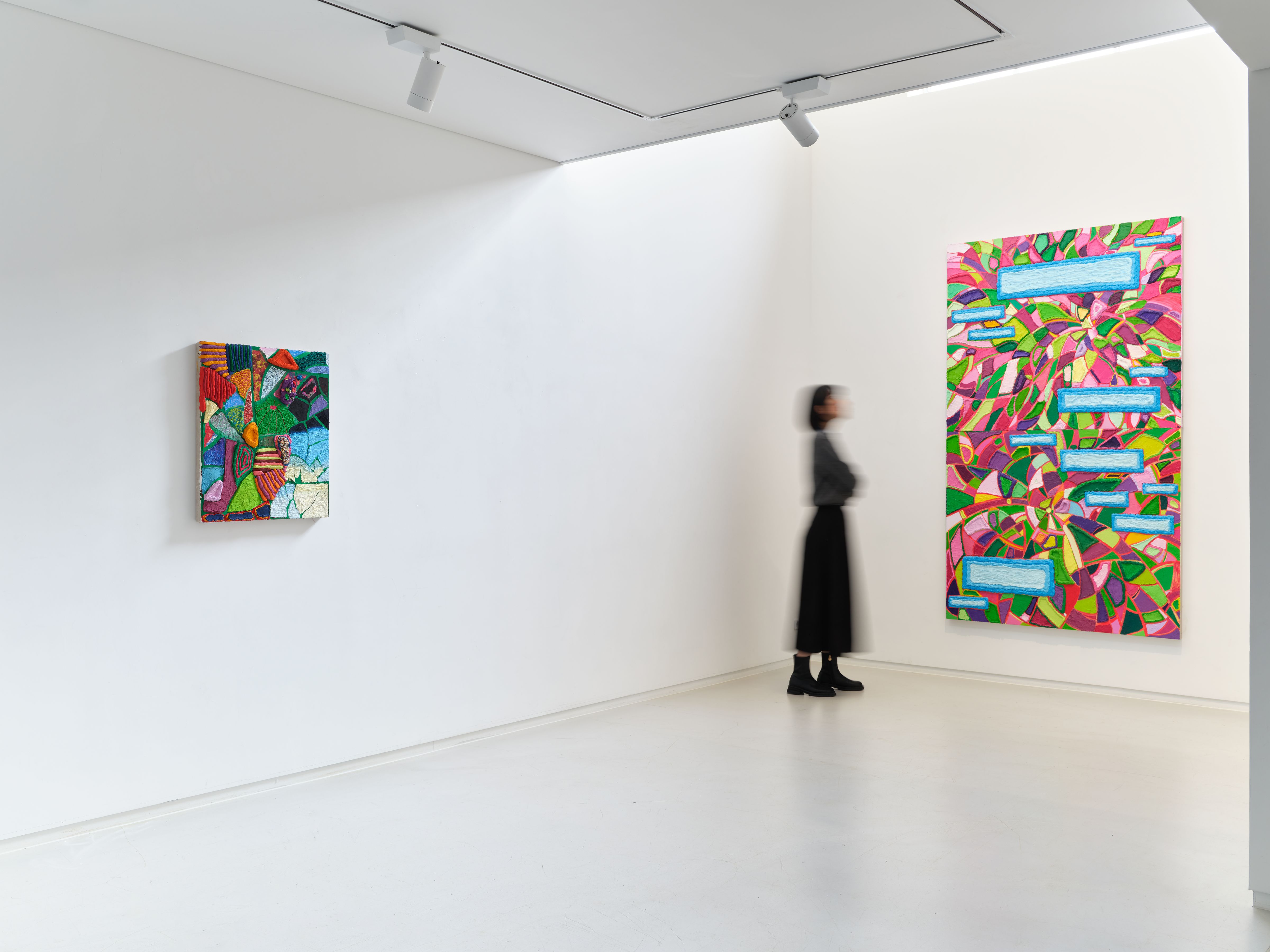
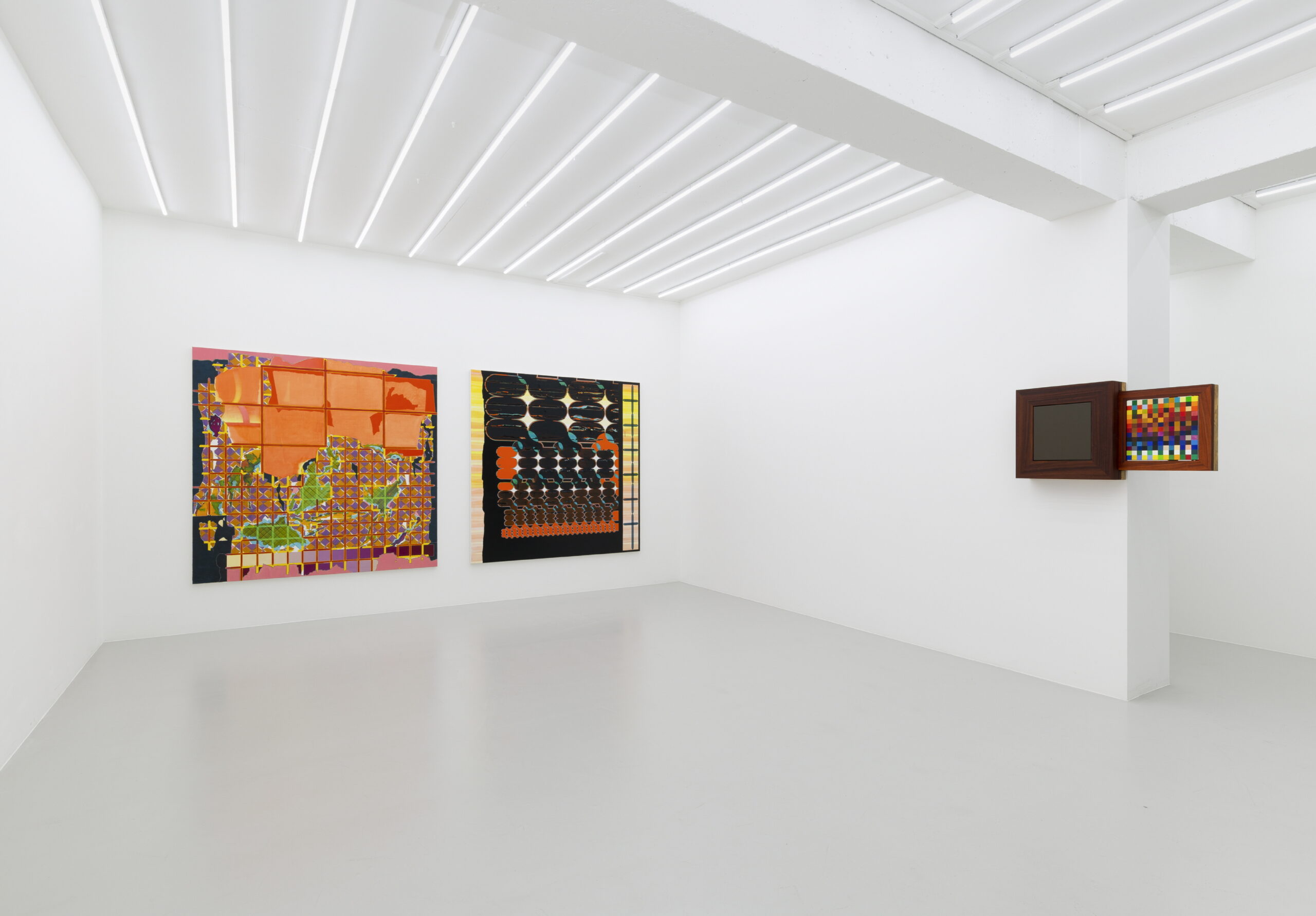
Installation view of 《Sonata for a Beautiful Soul》 (ThisWeekendRoom, 2021) ©ThisWeekendRoom

In the solo exhibition 《Sonata for a Beautiful Soul》, held at ThisWeekendRoom in 2021 as an extension of 《Beautiful Mind》, the frames of the ‘Filbert Family’ series likewise assumed unconventional forms.
 
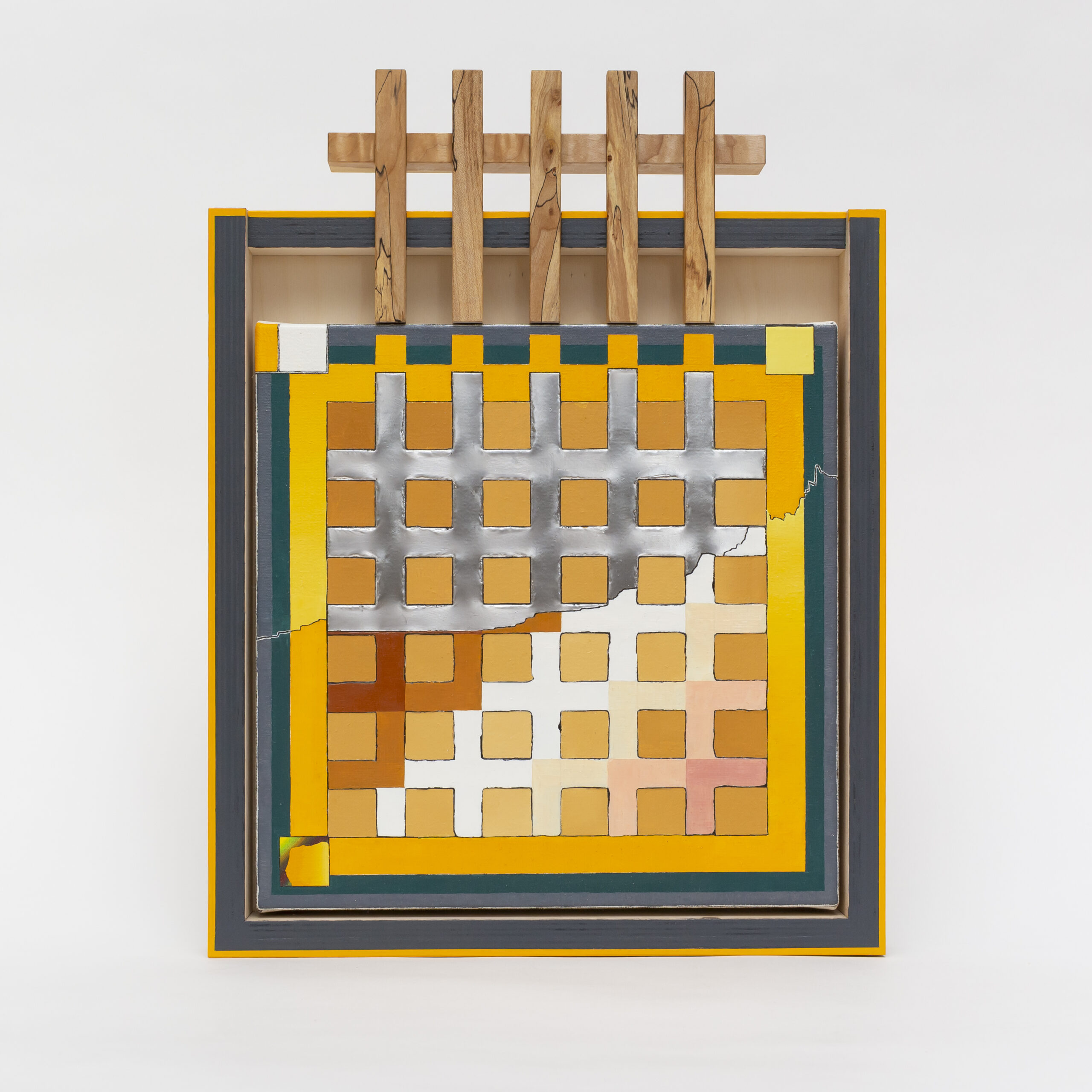
In some works—such as Filbert Family No.10, 11 Small Ver.—mirrors were installed inside the frame, allowing all four sides of the painting to be viewed simultaneously. In others—such as Filbert Family No.19 Small Ver.—the modular forms that appear within the painting were repeated and expanded in the very structure of the frame itself. Through these experiments, the frame was activated not merely as a boundary, but as an integral and generative component of the work.


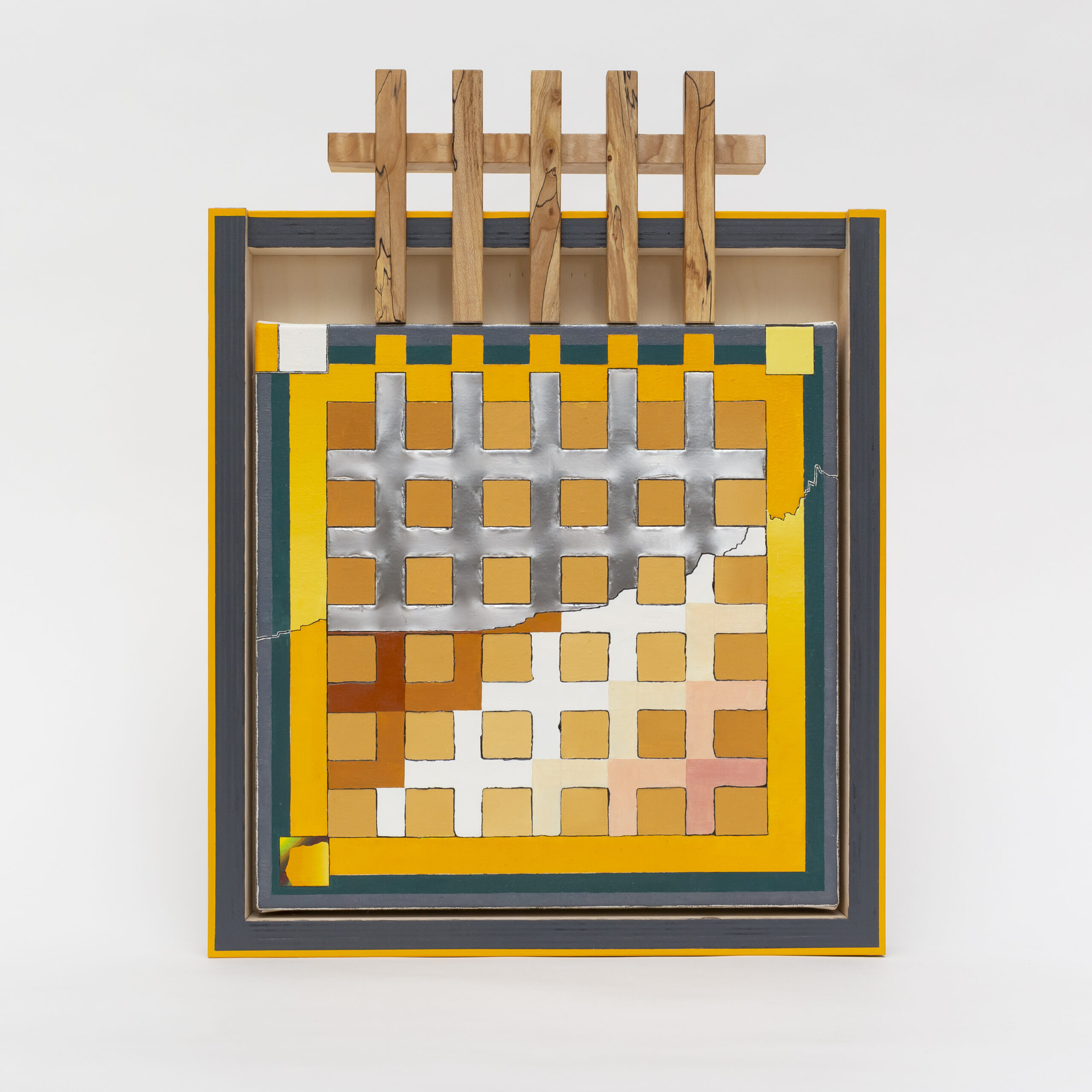
Seoul Kim, Filbert Family No.19 (small ver.), 2021, canadian hard maple wood, birch board wood, chrome, oil on cotton canvas (medium texture), 35 x 46 cm ©ThisWeekendRoom

Unlike conventional frames that exist primarily to protect a work, Seoul Kim’s frames function alongside the painting as structural components and are employed as an active sculptural language. After completing each painting, he conceives of the frame as a structure capable of further developing the internal formal logic of the work, and produces it accordingly.
 
As a result, the frame becomes a device that transforms the painting into something akin to a piece of furniture. Through the combination of various types of wood, distinctive forms, and reflective materials, it operates as an element that expands the grammar of painting itself.


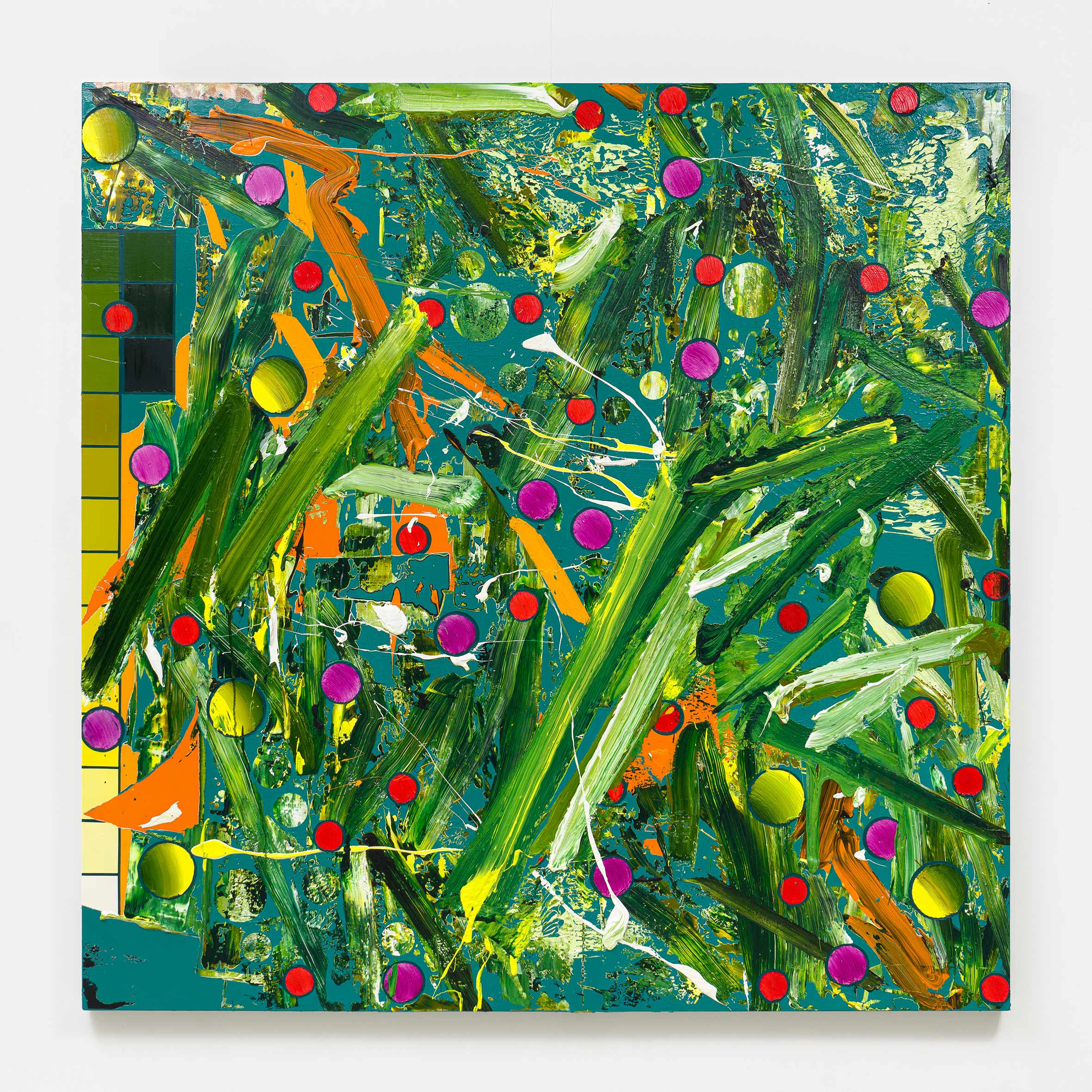
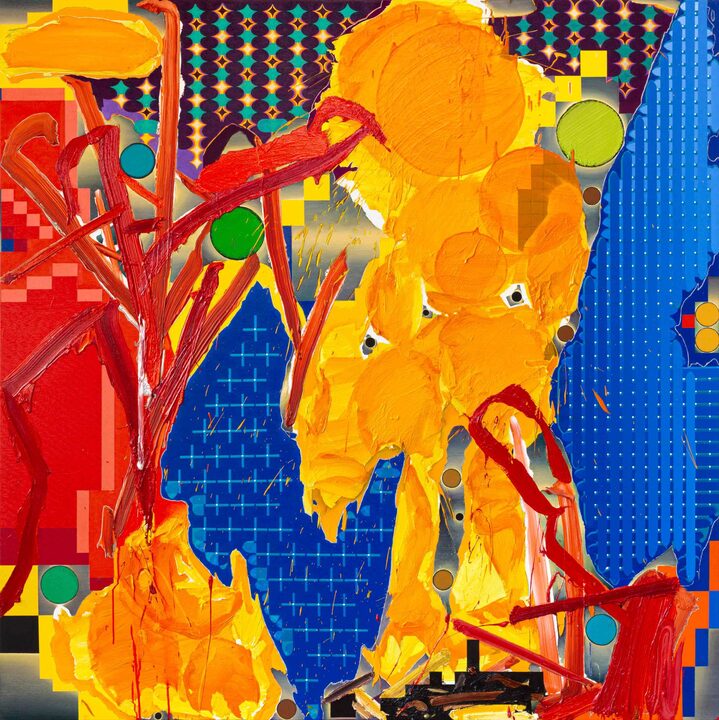
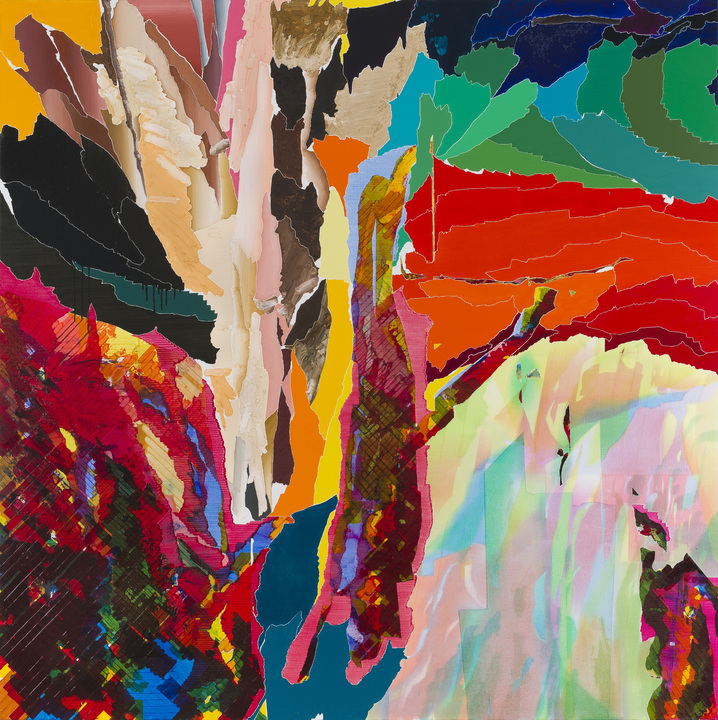
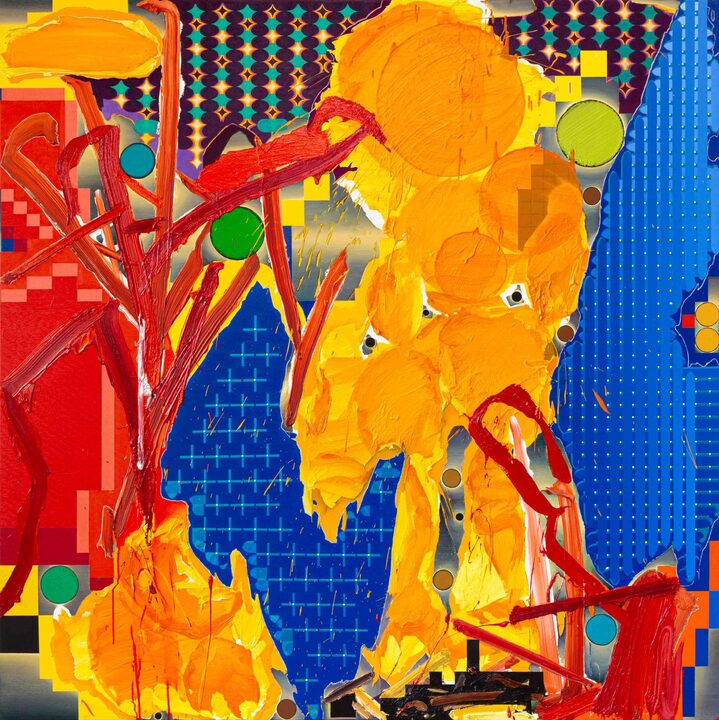
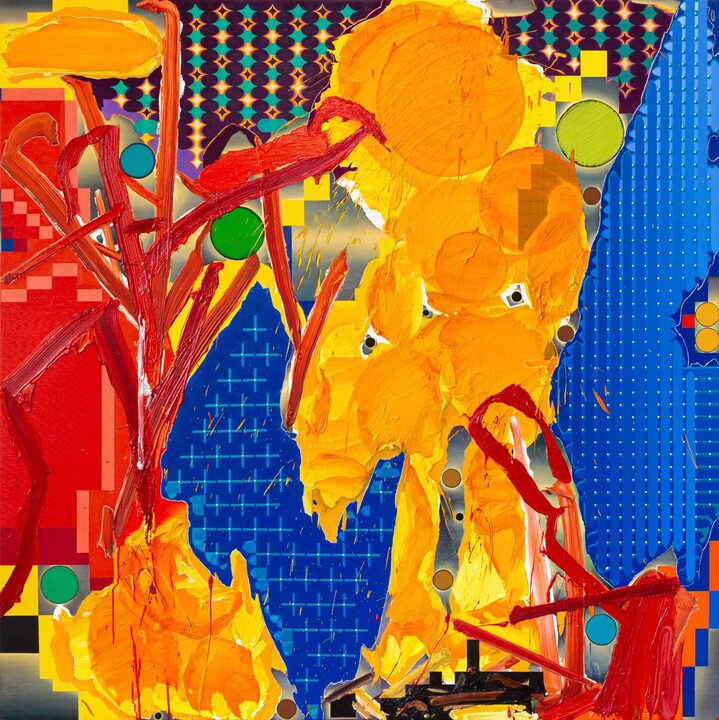
Seoul Kim, Scalar and Vector No.5, 2023, cold wax, stand oil, oil on polyester/cotton dyed canvas (medium texture), 172x172cm ©ThisWeekendRoom

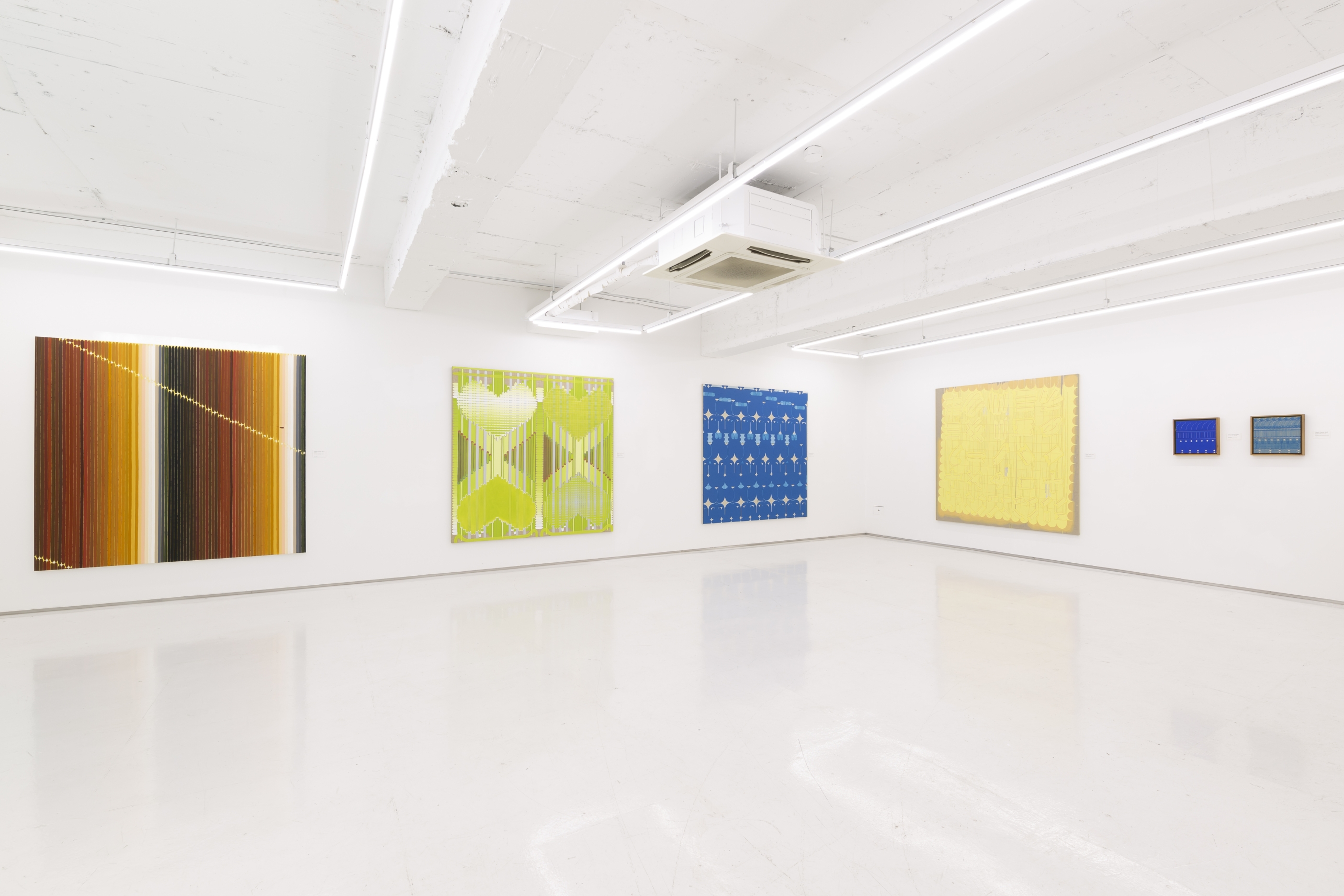
Meanwhile, the series ‘Scalar and Vector,’ developed since 2023, focuses on supplementing the relatively underexplored combinations of color in his previous two series from a more dynamic and psychological perspective.
 
This body of work sequentially documents the artist’s experiments with chromatic relationships and the dynamics of force considered in constructing the pictorial surface. The terms “scalar,” referring to a physical quantity, and “vector,” indicating its directionality, intuitively signal his investigation into the mass and movement of color.


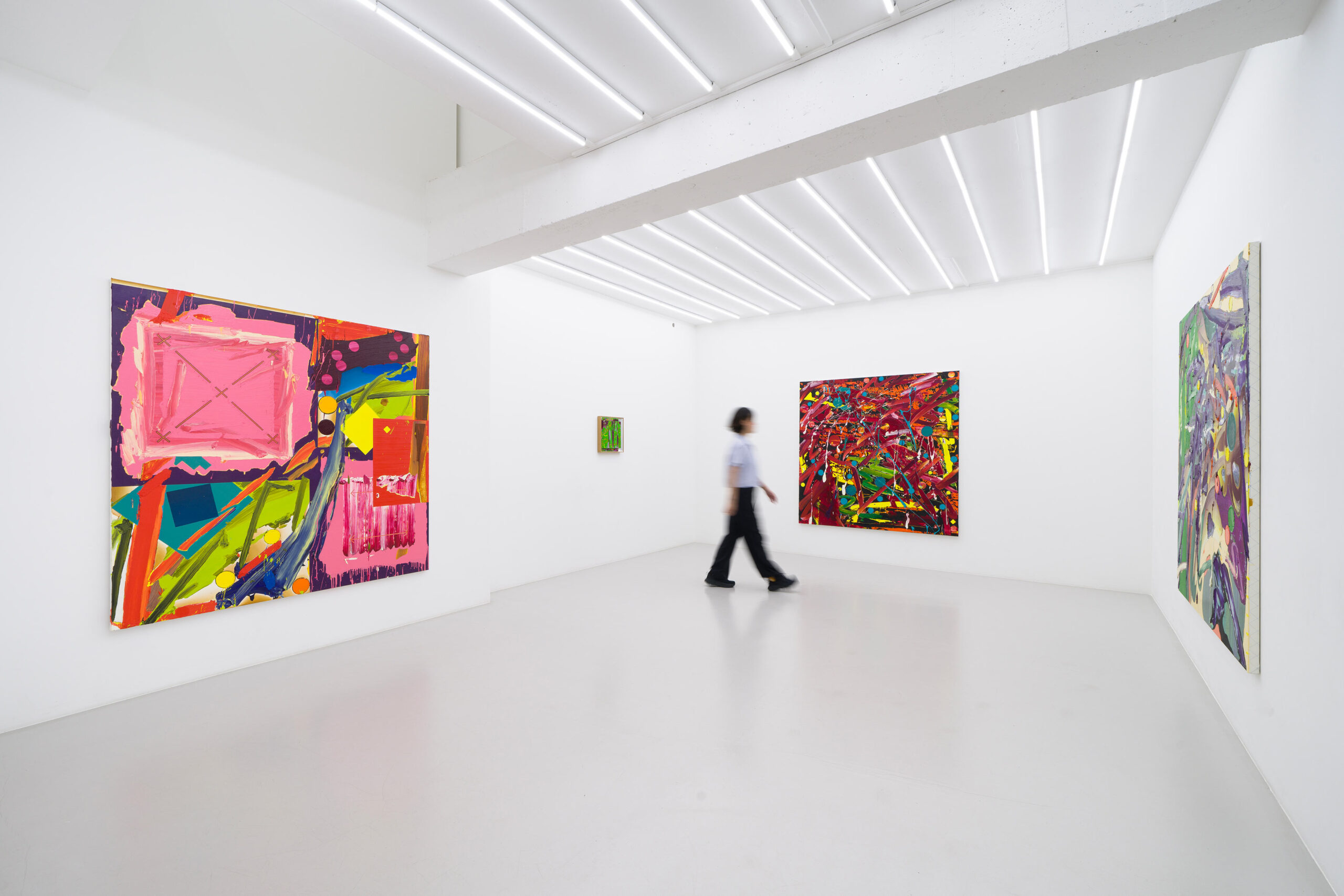
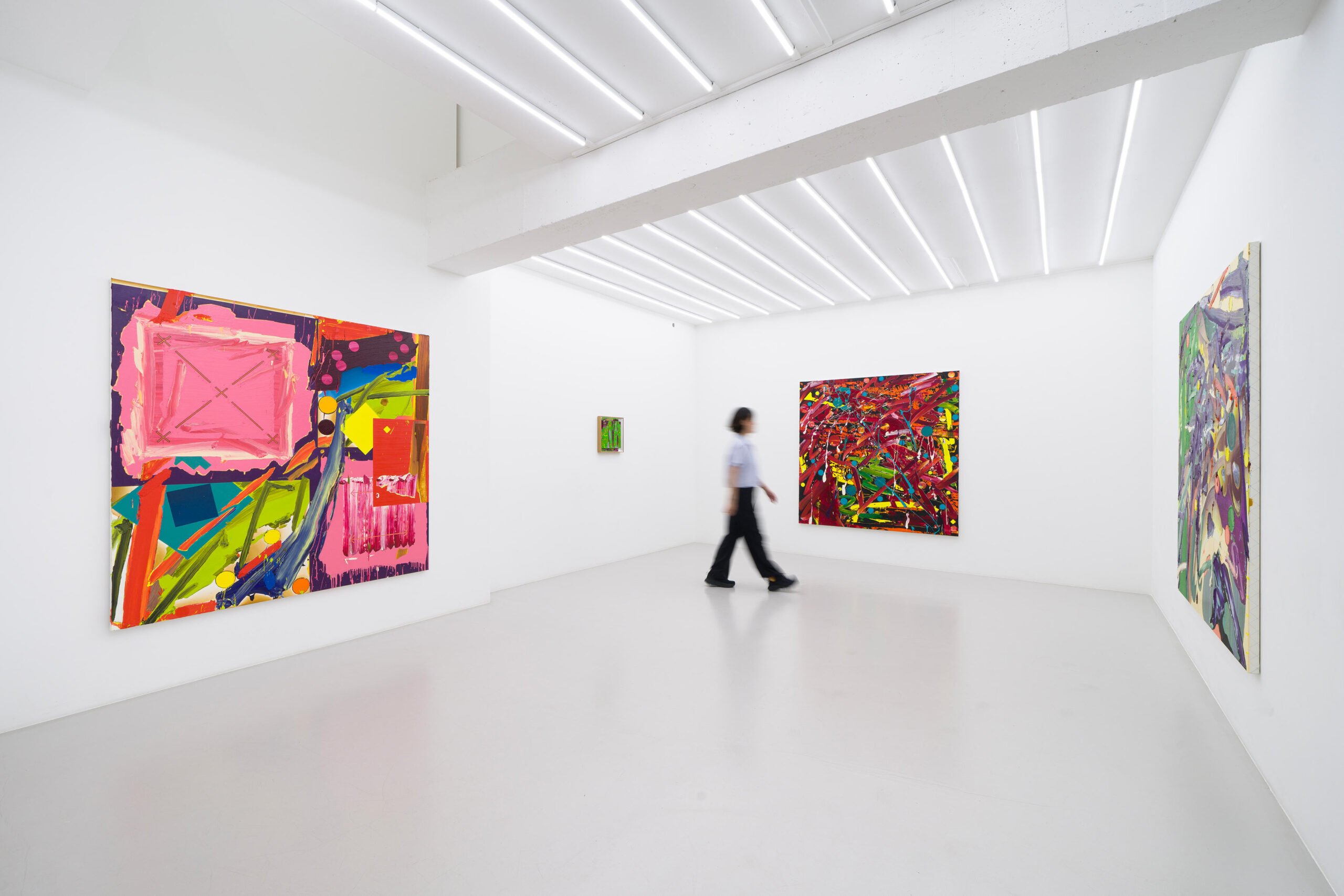
Installation view of 《Docking Waltz》 (ThisWeekendRoom, 2024) ©ThisWeekendRoom

The solo exhibition 《Docking Waltz》 (ThisWeekendRoom, 2024), conceived around the ‘Scalar and Vector’ series, examines the materialist perspective Kim maintains toward painting, while also addressing the intimate relationship between his artistic stance and the viewer’s physical and psychological experience.
 
For Kim, color is not primarily a sign that represents meaning, but rather one of many industrial pigments composed of various compounds—a variable whose appearance shifts according to conditions. This empirical understanding enables him to determine the area and direction each color occupies within the composition, directly informing the formal decisions he makes on the canvas.


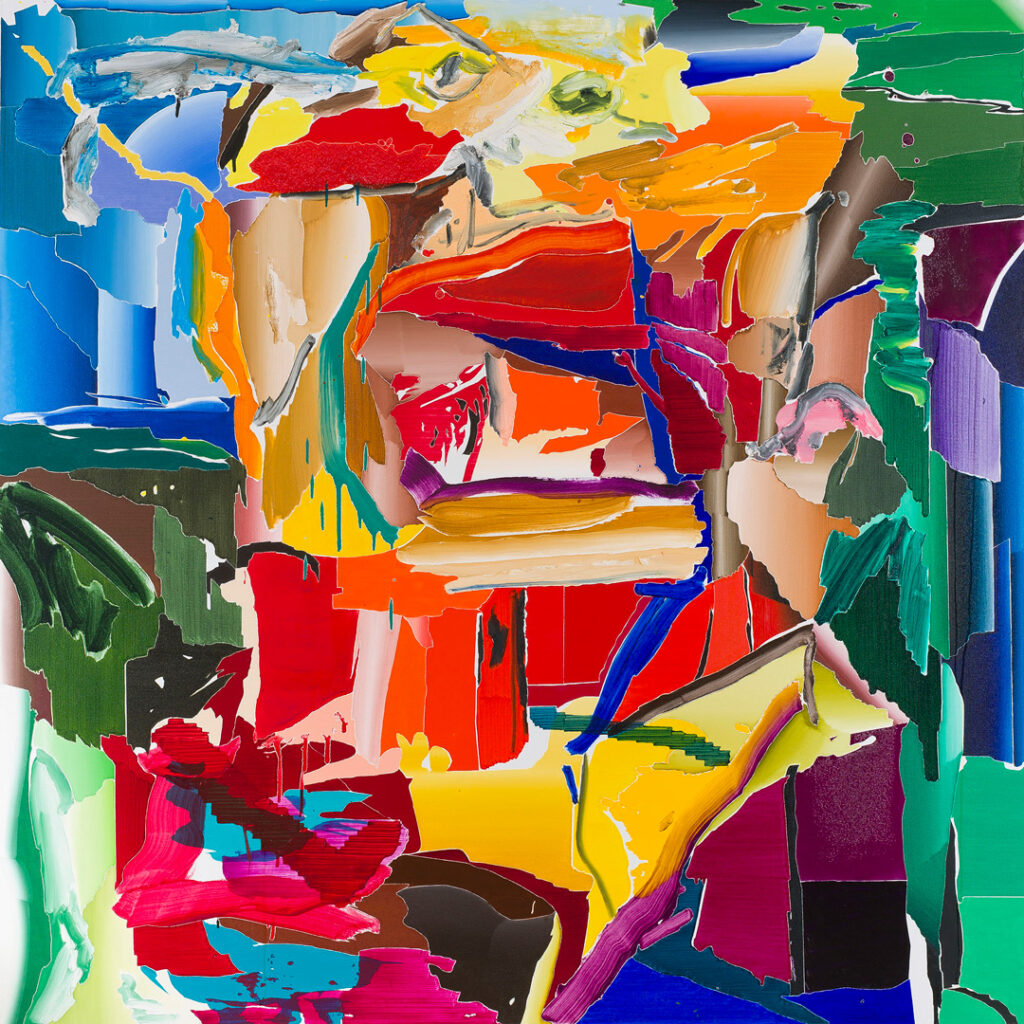
Seoul Kim, Scalar and Vector No.12, 2024, Iridescent acrylic, oil on clear sized linen canvas(extra fine texture), 172x172cm©ThisWeekendRoom

After conducting a thorough analysis of each material, he devotes himself to realizing his formal sensibility to its fullest extent, grounded solely in his understanding of their material properties. After applying a primary color over the grid lines drawn on the base, he instinctively knows how the next color will enter. In an intense process of scribbling, throwing, and pushing pigment, each hue docks sequentially within the canvas.
 
Wide planes, long straight or scattered short lines, and supporting circles emerge, gradually forming the skeleton of the painting. When the artist stops, each finished piece presents itself to us as an image brimming with its own state of force.


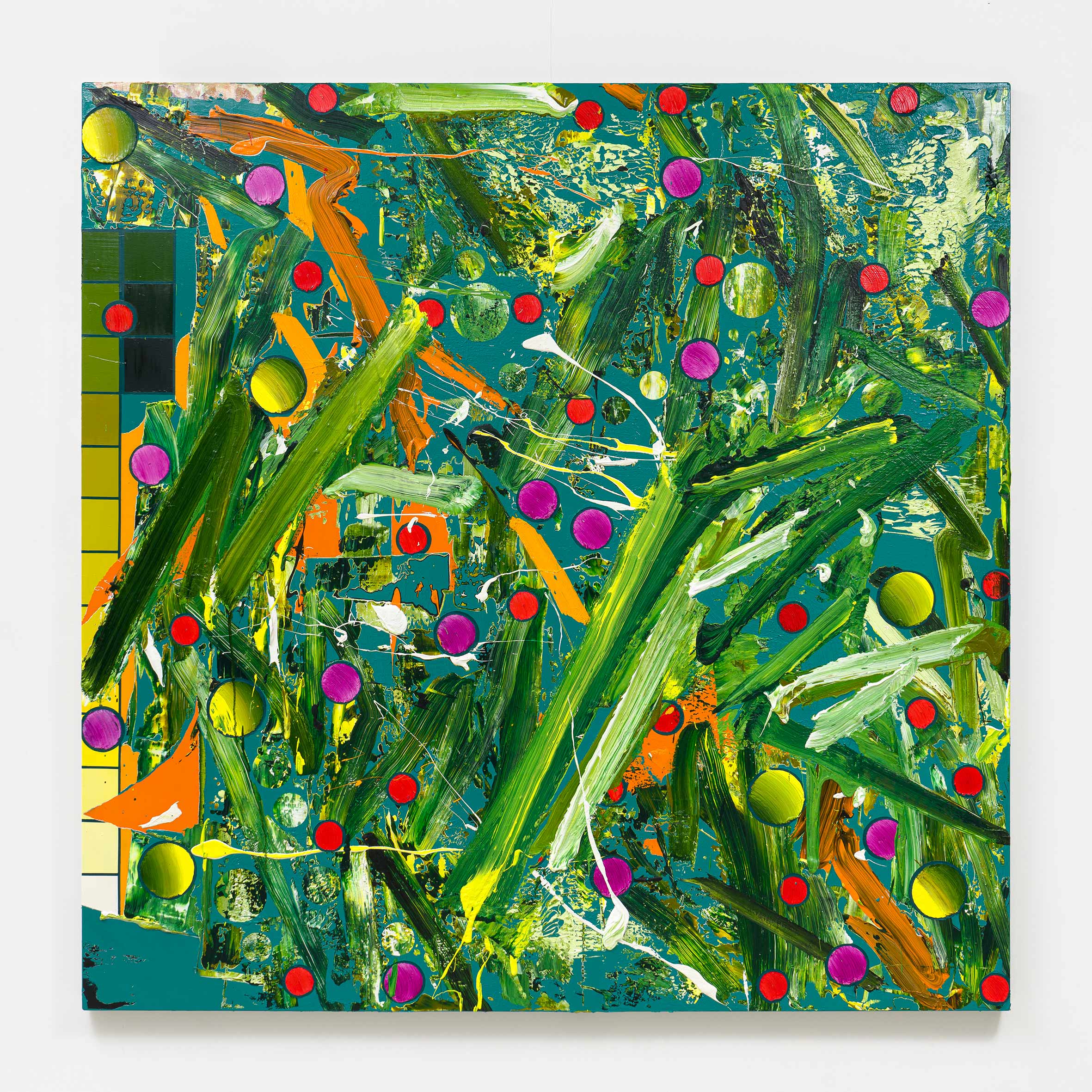
Seoul Kim, Scalar and Vector No.11, 2024, Oil on clear sized linen canvas(extra fine texture), 172x172cm©ThisWeekendRoom

At the moment a work is completed and revealed to the audience, the dense layers of contemplation embedded in the surface generate a pleasure that surpasses the bounds of rational judgment.
 
The viewer’s eye is drawn to the overwhelming textures of color, powerful brushstrokes, and geometric cues that either balance or disrupt the scene. Within these layers, we encounter variations of energy, expanding forward and contracting backwards.


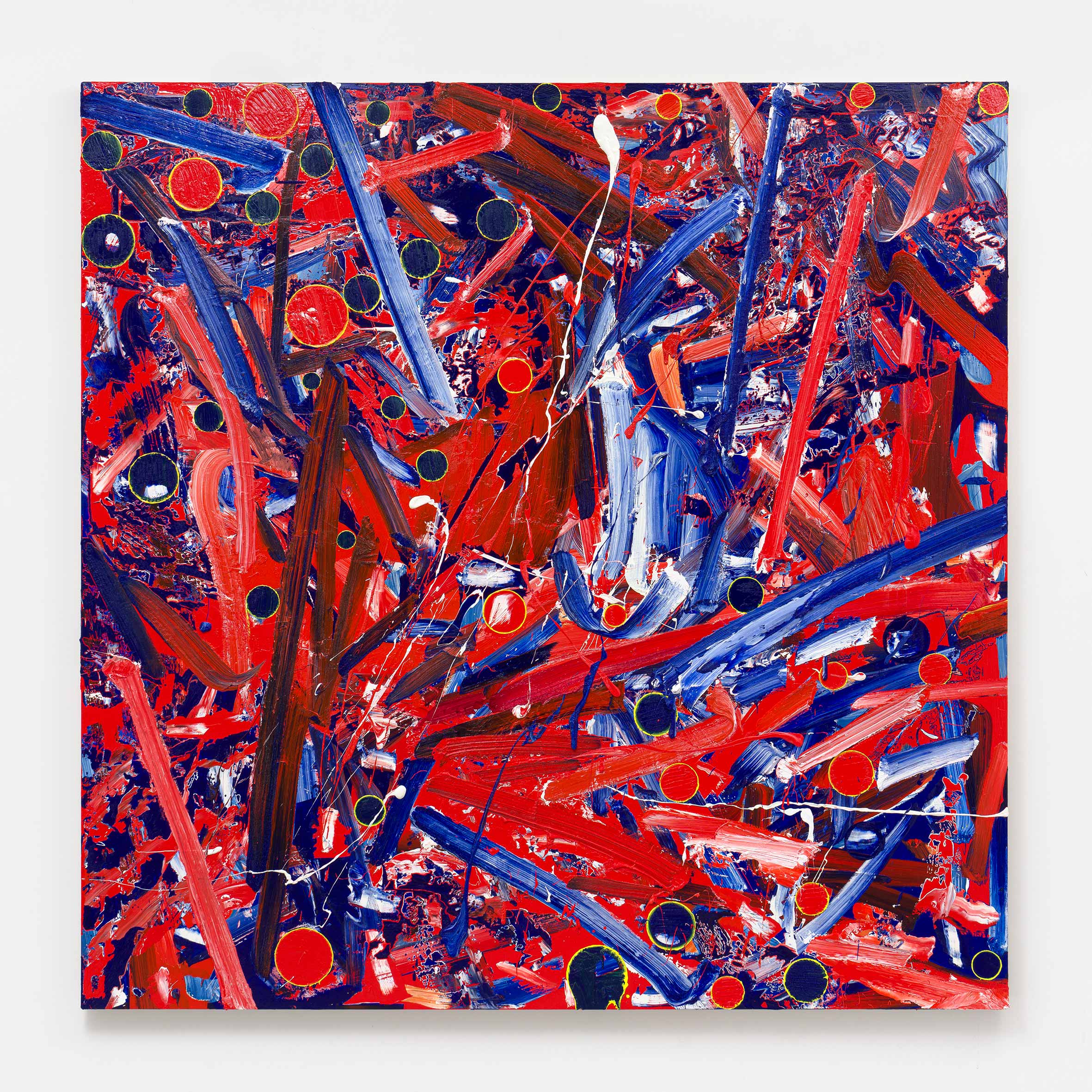
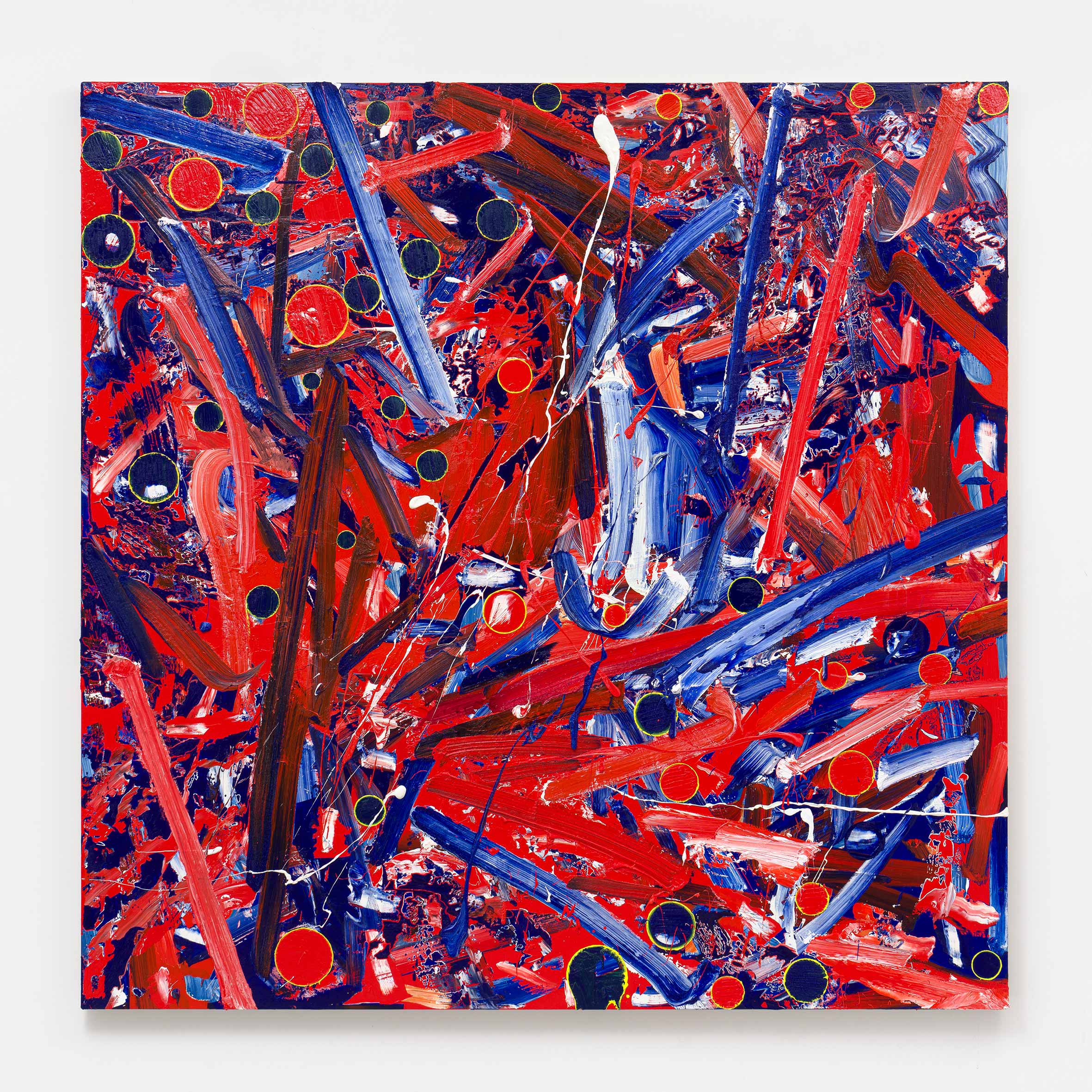
Seoul Kim, Scalar and Vector No.16, 2025, Stand oil, oil on oil primed jute canvas(very rough texture), 172x172cm ©ThisWeekendRoom

In this way, Seoul Kim has stripped away emotional rhetoric and peripheral narrative, devising a mode of painting in which the canvas, brush, and pigment can reveal their inherent properties without embellishment. By layering lines, planes, and symbols with architectural precision, he achieves a seamless balance on the surface.
 
His profound understanding and appropriation of material ultimately unfold as a chain of dancing colors. This experience leads viewers beyond rational comprehension, awakening unforeseen impressions and memories, and prompting reflection on the meanings of all entities formed through multidimensional matter.

 “Amid today’s overflow of images, I find myself questioning why humans still devote such strenuous effort to producing images by hand, and what distinguishes these painstakingly made images from others.”   (Seoul Kim, from an interview with Livart)


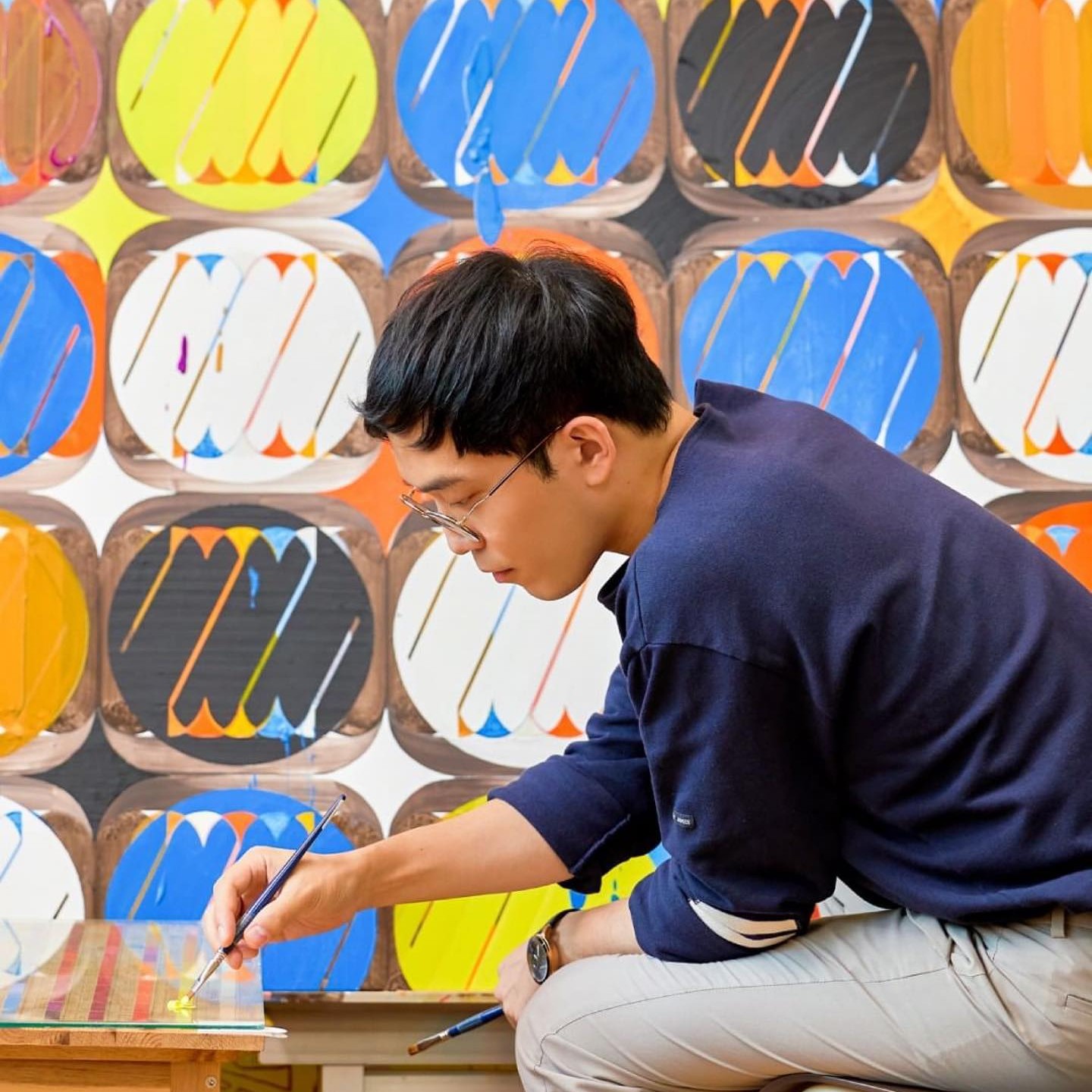
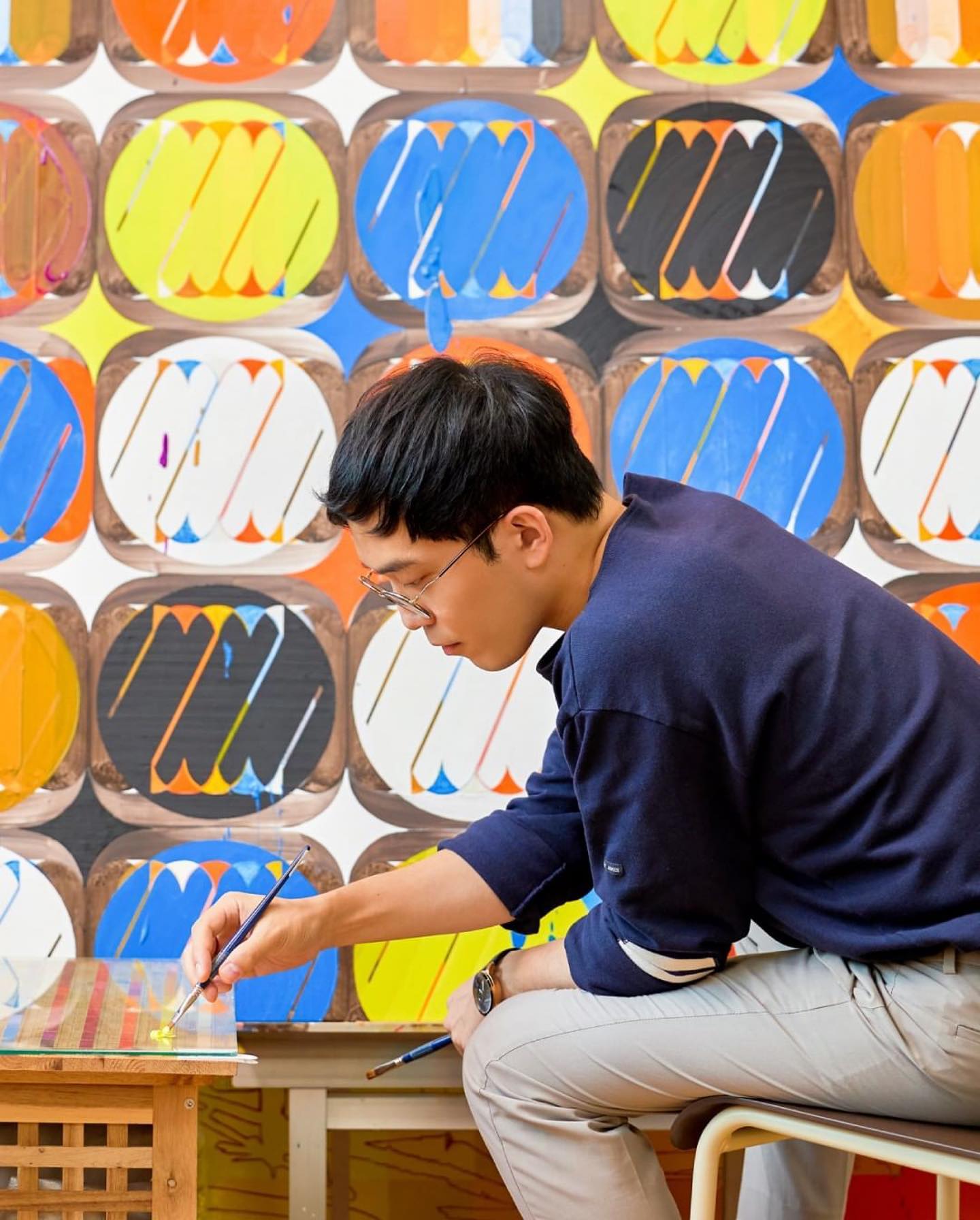
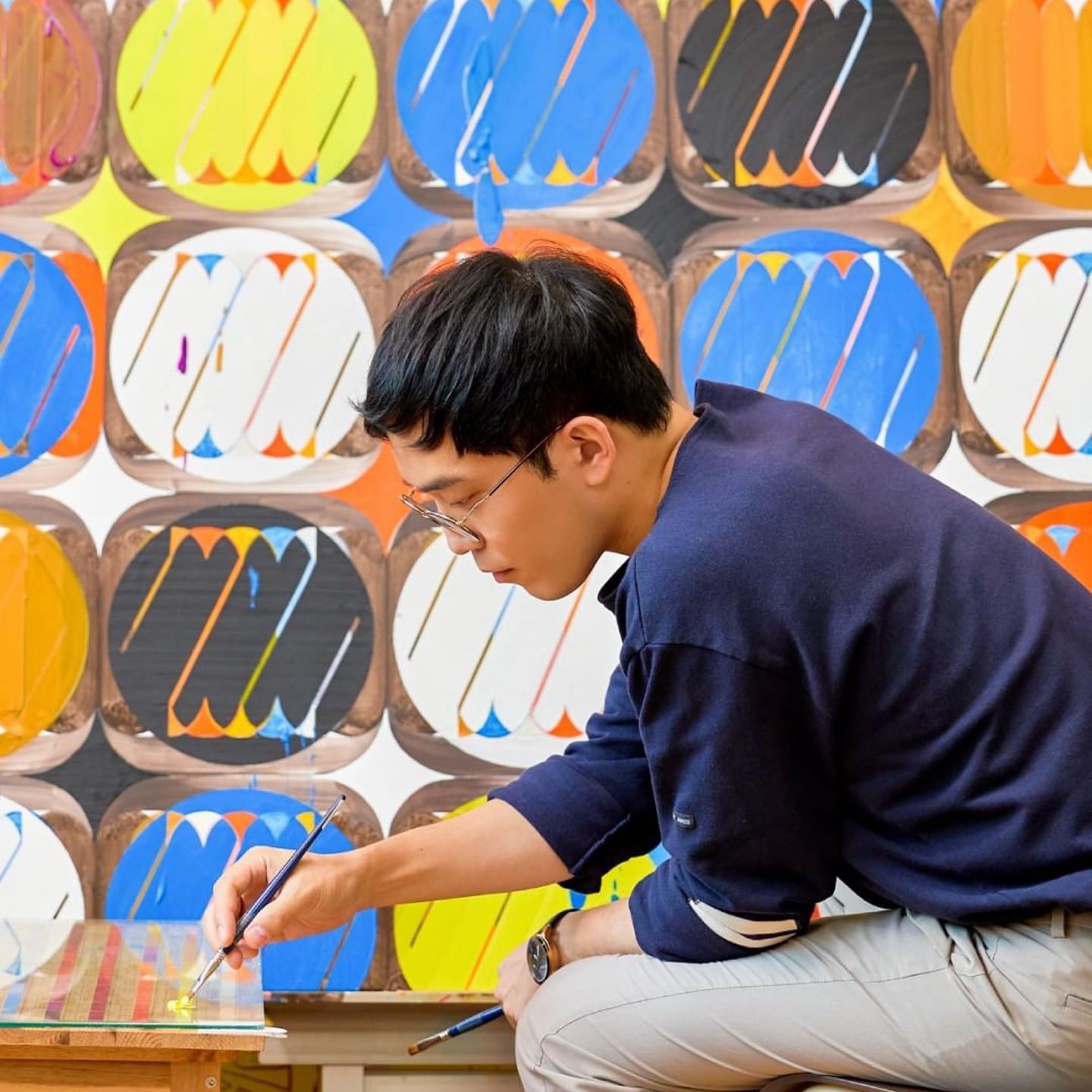
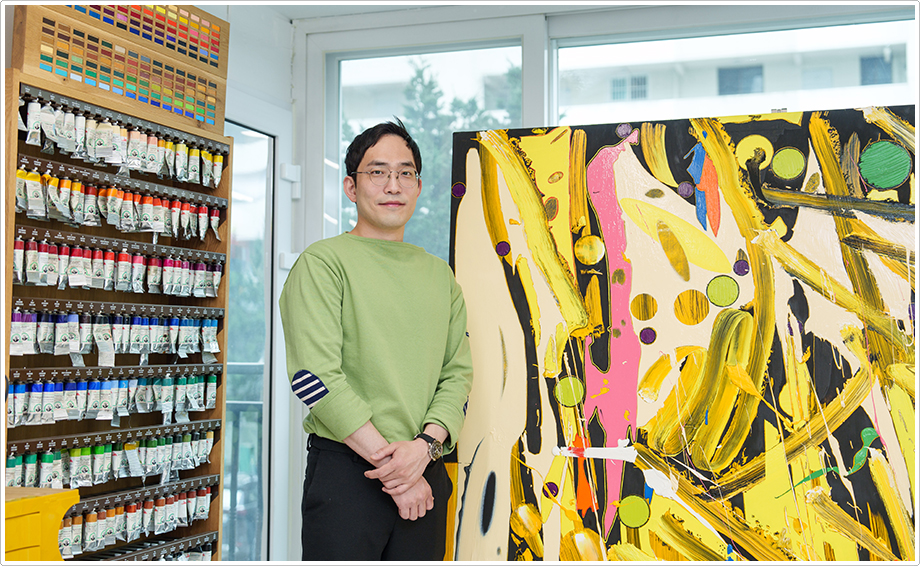
Artist Seoul Kim ©IBK Bank

Seoul Kim received his BFA in Painting from Kookmin University. His solo exhibitions include 《Docking Waltz》 (ThisWeekendRoom, Seoul, 2024); 《Sonata for a Beautiful Soul》 (ThisWeekendRoom, Seoul, 2021); 《Beautiful Mind》 (Art Delight Gallery, Seoul, 2021); and 《Uncolored》 (Art Delight Gallery, Seoul, 2019).
 
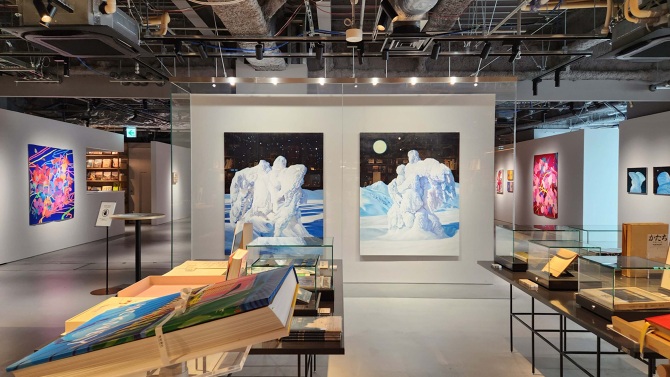
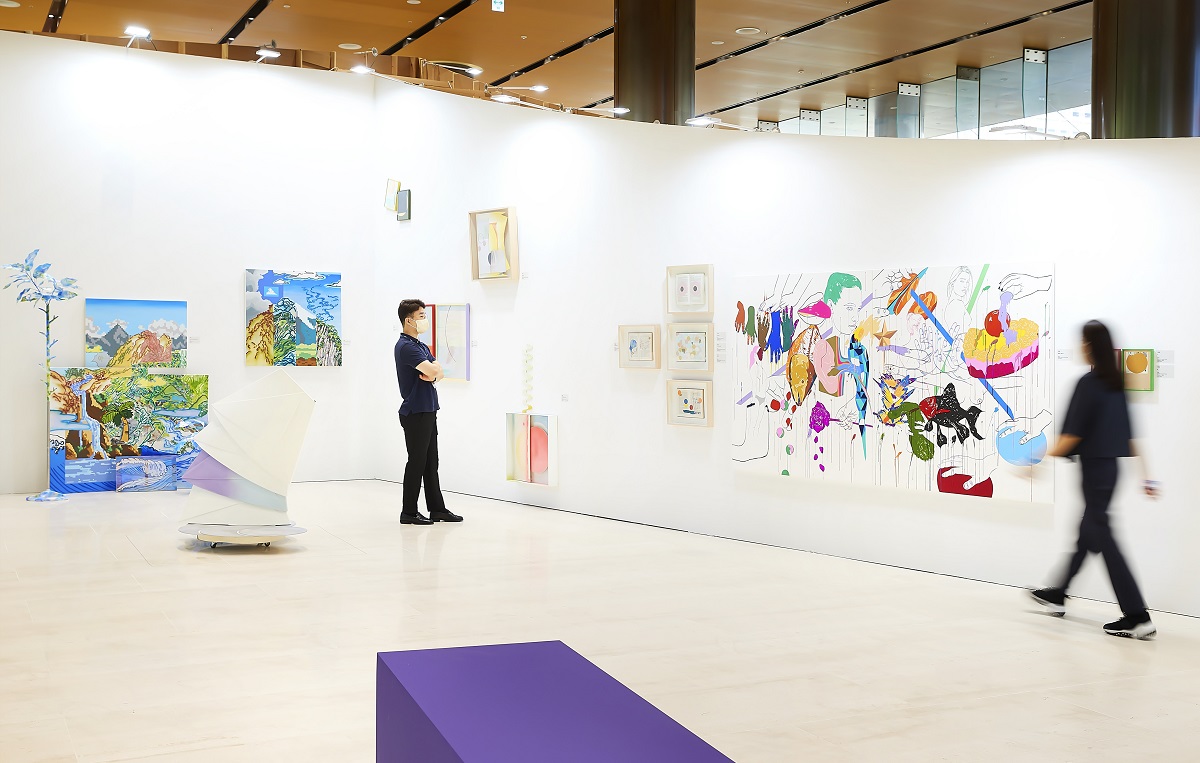
He has also participated in numerous group exhibitions, including 《Deep into Abstraction – On the Way》 (Seoul National University Museum of Art, Seoul, 2025); 《Bloom Vision》 (Kyoto Tsutaya Books, Kyoto, 2024); 《Transparent Window, Glass Table》 (KICHE, Seoul, 2023); 《Hand to Eye》 (BOL Gallery, Singapore, 2023); 《Layered》 (IBK Art Station, Seoul, 2022); and 《Perigee Winter Show 2021》 (Perigee Gallery, Seoul, 2021), among others.
 
Kim was the recipient of the 1st Keimyung Art Prize (2024), and his works are included in the collections of the Government Art Bank of MMCA Korea and the PARKSEOBO FOUNDATION.

References