

Wonjin Kim (b. 1988) continues her practice by focusing on how memories recorded over time undergo mutation and are consigned to oblivion. In an effort to view past moments from the perspective of the present, she fragments memories of the past, intermixes these pieces, and reassembles them on the surface one by one.
 
Through this process of constructing the picture plane as an act of rereading past memories, accumulated time is reconstructed, and as a result, a new flow emerges—rendering visible a chronicle of moments.


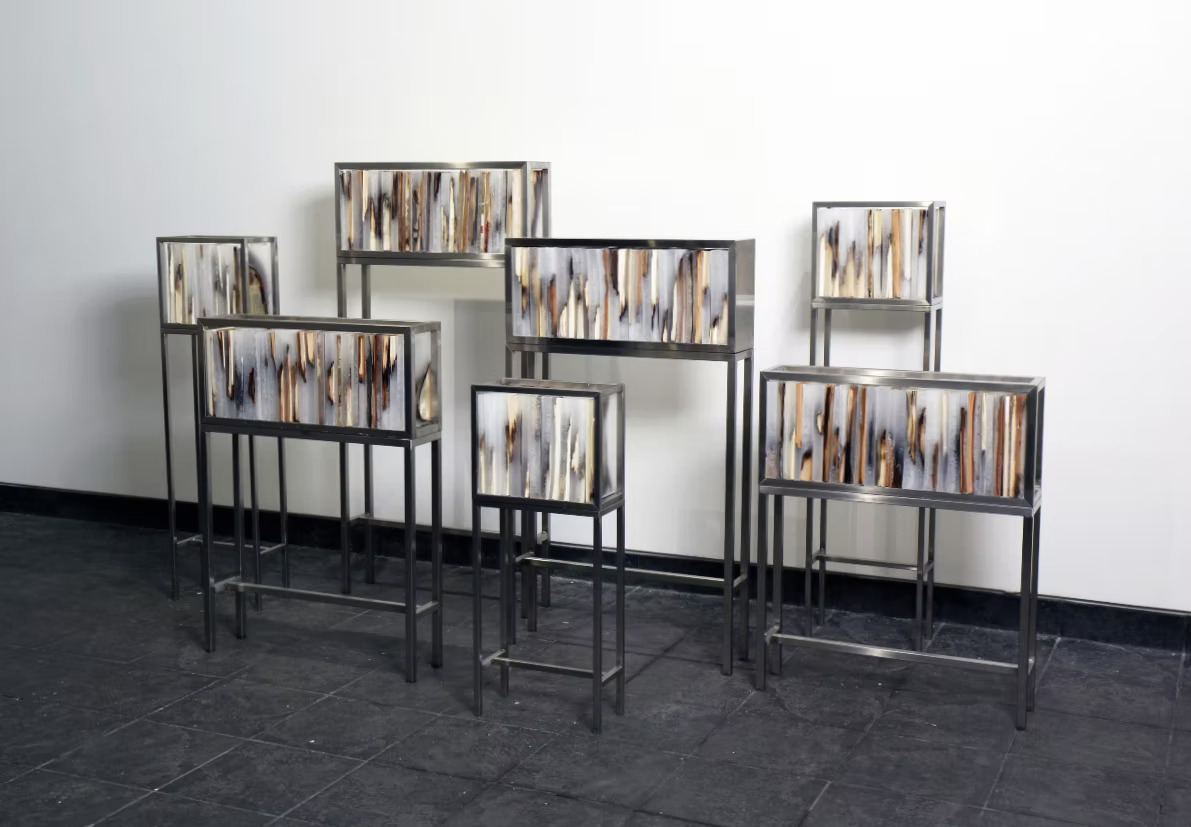
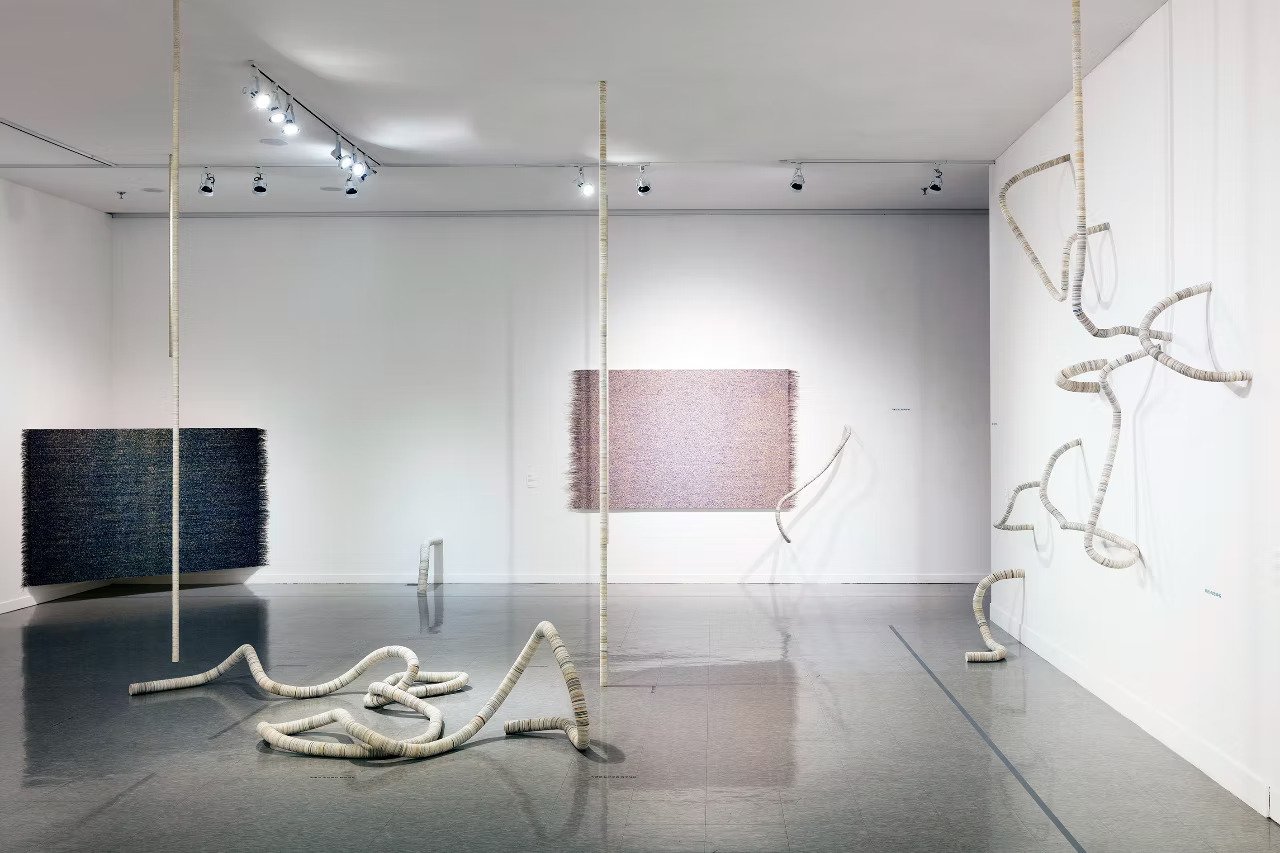
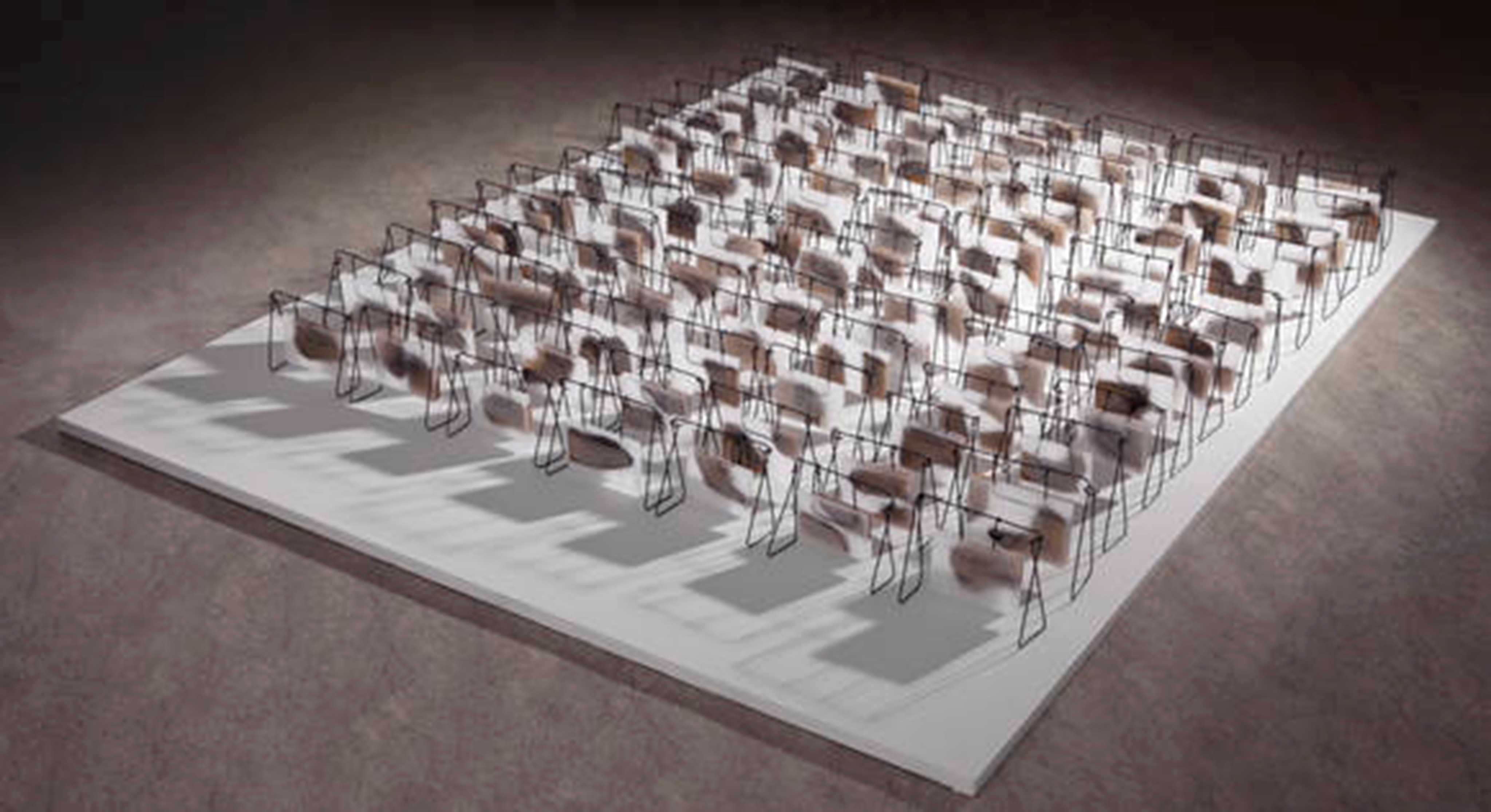
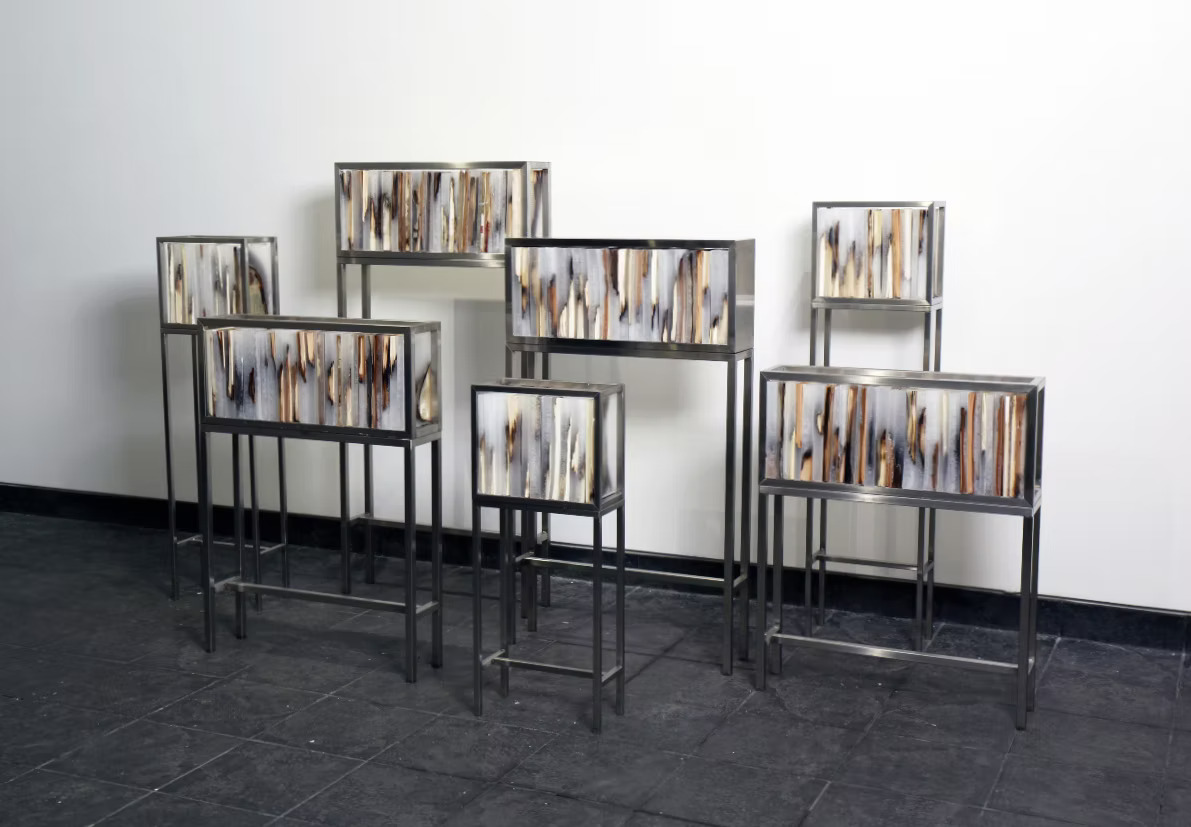
Wonjin Kim, Re-Constructed Time Shelves, 2013, Book, paraffin, steel, Dimensions variable ©Wonjin Kim

Wonjin Kim’s practice is structured around four chapters—'A Chronicle of the Moment,’ ‘Librarian,’ ‘The Chronicle between You and Me,’ and ‘Dancing in the Thin Air.’
 
In her early works, Kim used discarded books from libraries and recorded materials such as diaries as her primary media, or treated the very process of recording—things that cannot be recorded and are destined to disappear—as the work itself. At the time, she regarded herself as a “librarian of oblivion,” collecting acts of erasure and binding them together into what she described as “a lump with layers,” thereby linking different times. These accumulated processes ultimately became her library.
 
During this period, Kim believed that revealing the act of concealing records within space could demonstrate the nature of memory itself. She therefore pulverized all recorded texts so thoroughly that neither their content nor images could be seen.


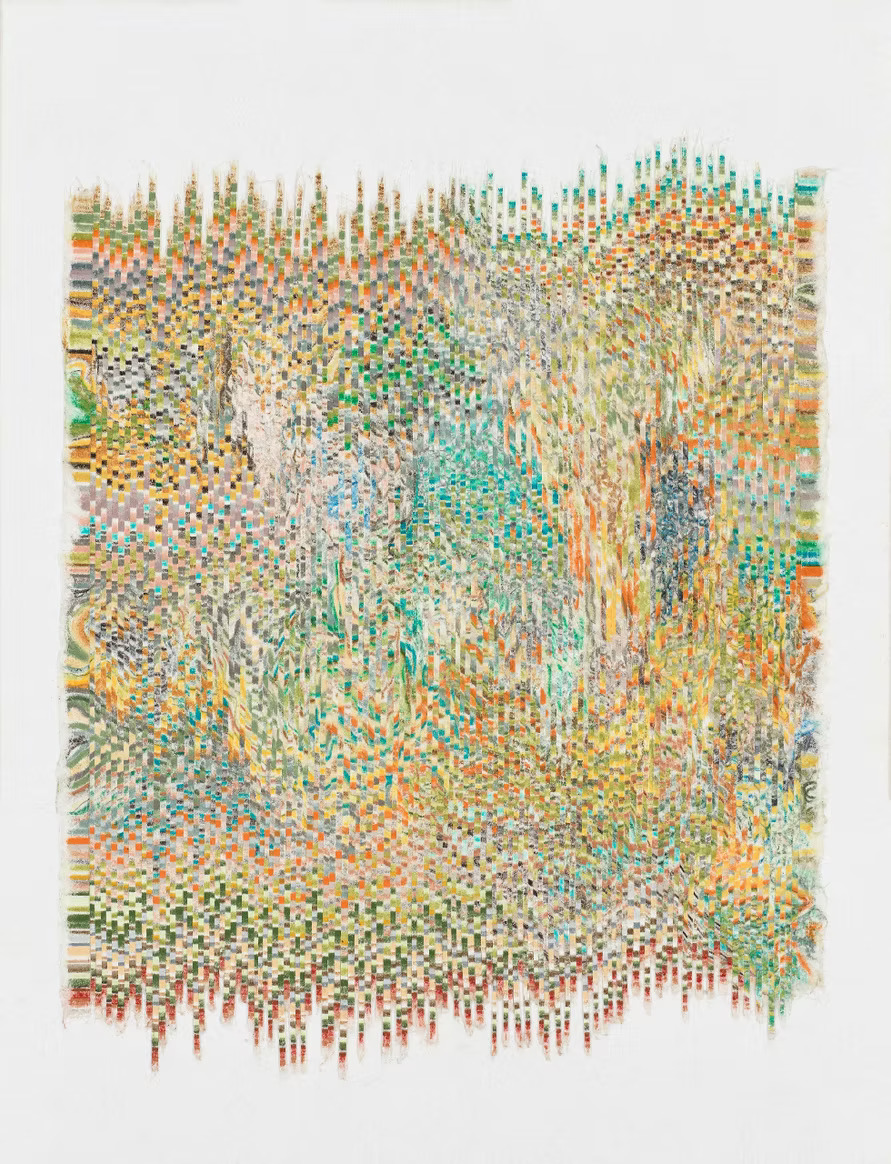
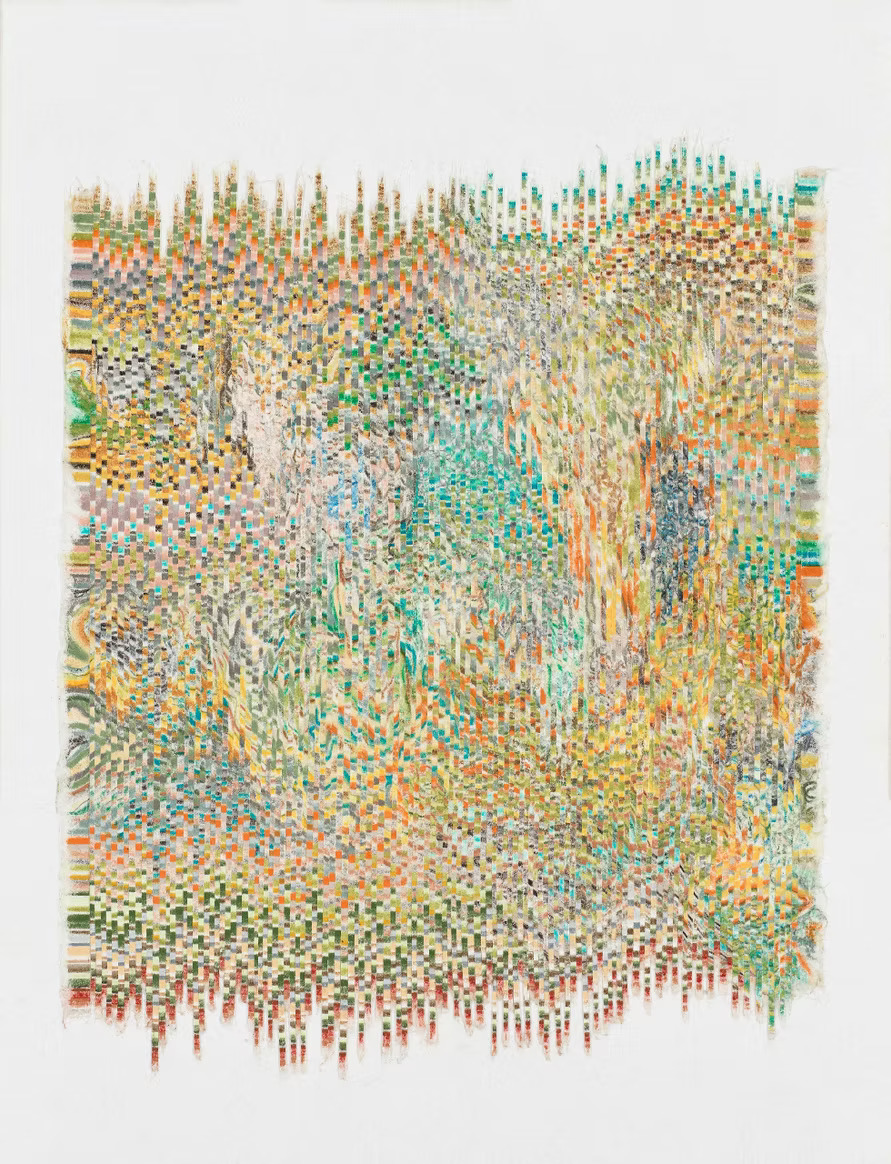
Wonjin Kim, A Chronicle of the Moment, 2018, Colored pencil on Korean paper, collage, 32x23cm ©Wonjin Kim

Meanwhile, the ‘A Chronicle of the Moment’ series, developed since 2016, reconstructs moments of memory by drawing long horizontal lines with colored pencils on paper, cutting the filled sheets into thin, elongated strips measuring 1 mm in width, and then reassembling them. Here, each line the artist draws signifies a single moment. As the act of drawing lines is repeated, moments of time accumulate in layers, and the paper itself becomes the past.
 
The process of cutting the paper vertically into long strips of varying heights and reattaching them serves as a metaphor for rereading and remembering the past from the perspective of the present. Just as memories of the past become fragmented and transformed over time, the surface reconstructed through this re-editing of the past (the paper) is reshaped into a form different from before, generating yet another new flow.


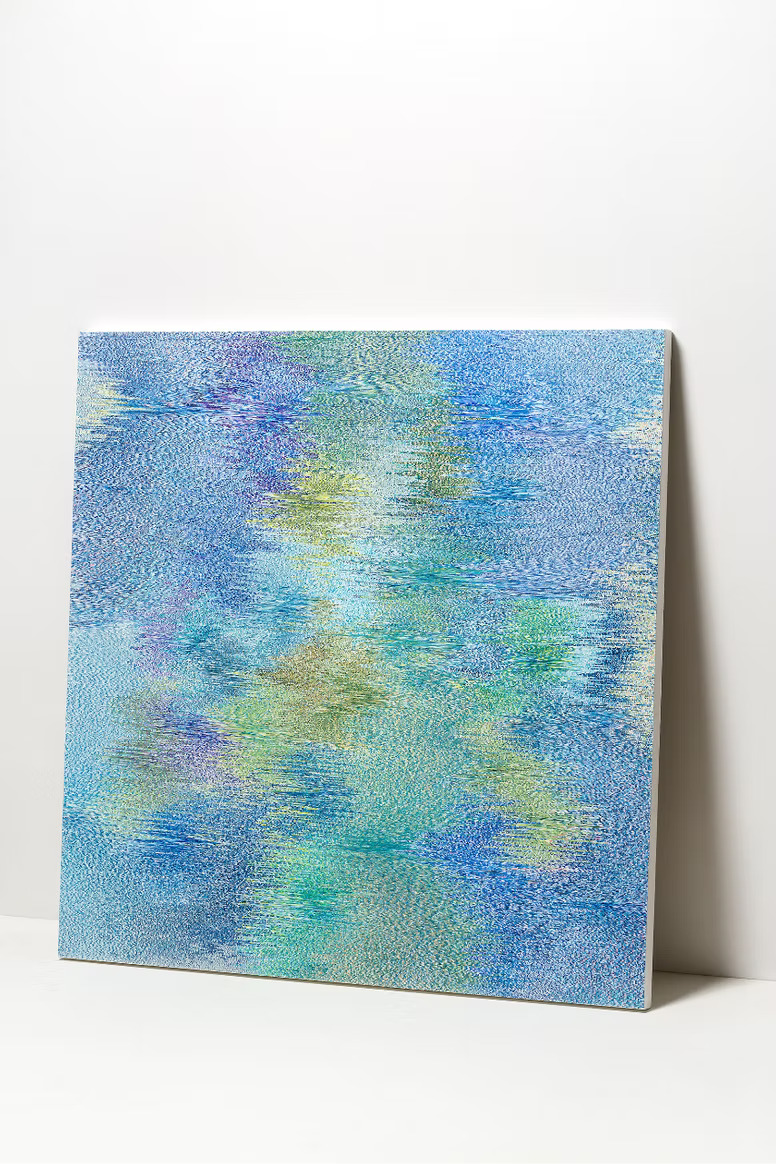
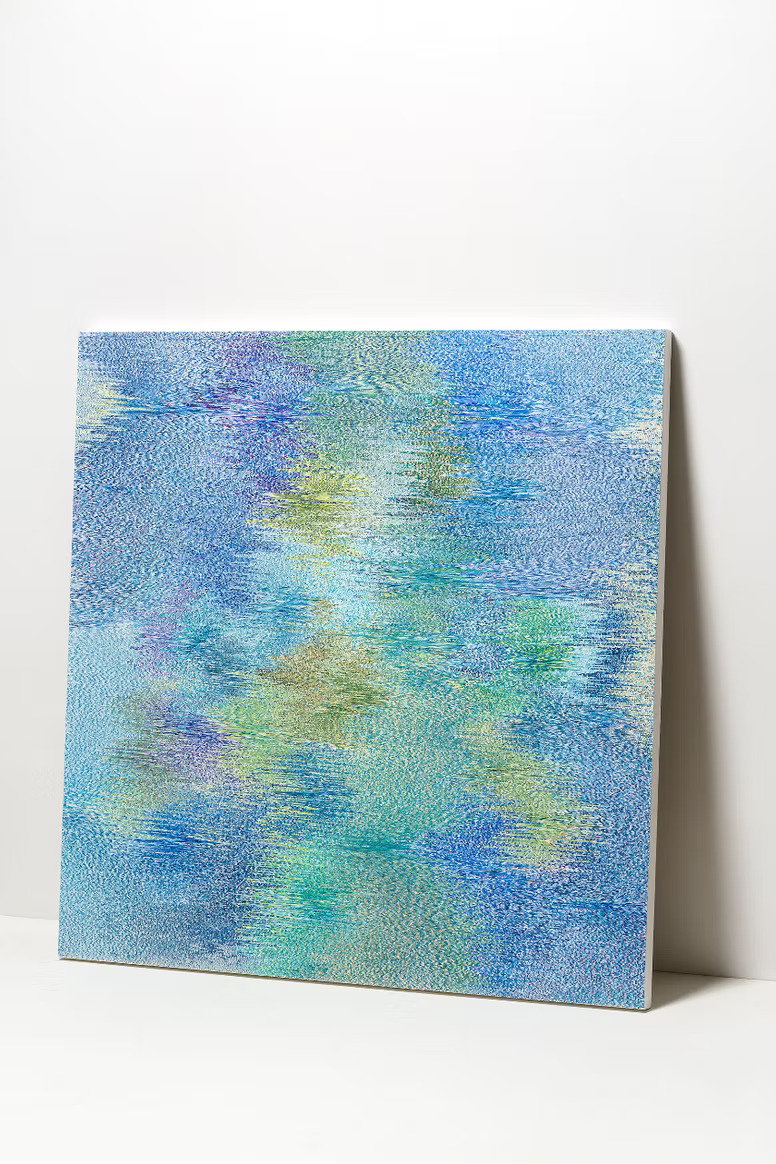
Wonjin Kim, Stratal Landscape, 2017, Colored pencil on Korean paper, collage, 97x97cm ©Wonjin Kim

Alongside this, another series developed in parallel, ‘Stratal Landscape,’ also follows a process in which landscapes are drawn on paper with dry materials, then cut vertically into 1 mm–wide strips and reassembled to form a new surface. This body of work reveals how fragments of moments captured in memory are transformed into a new display, showing that lost moments and remaining moments are constantly reconstructed within a repetitive flow.


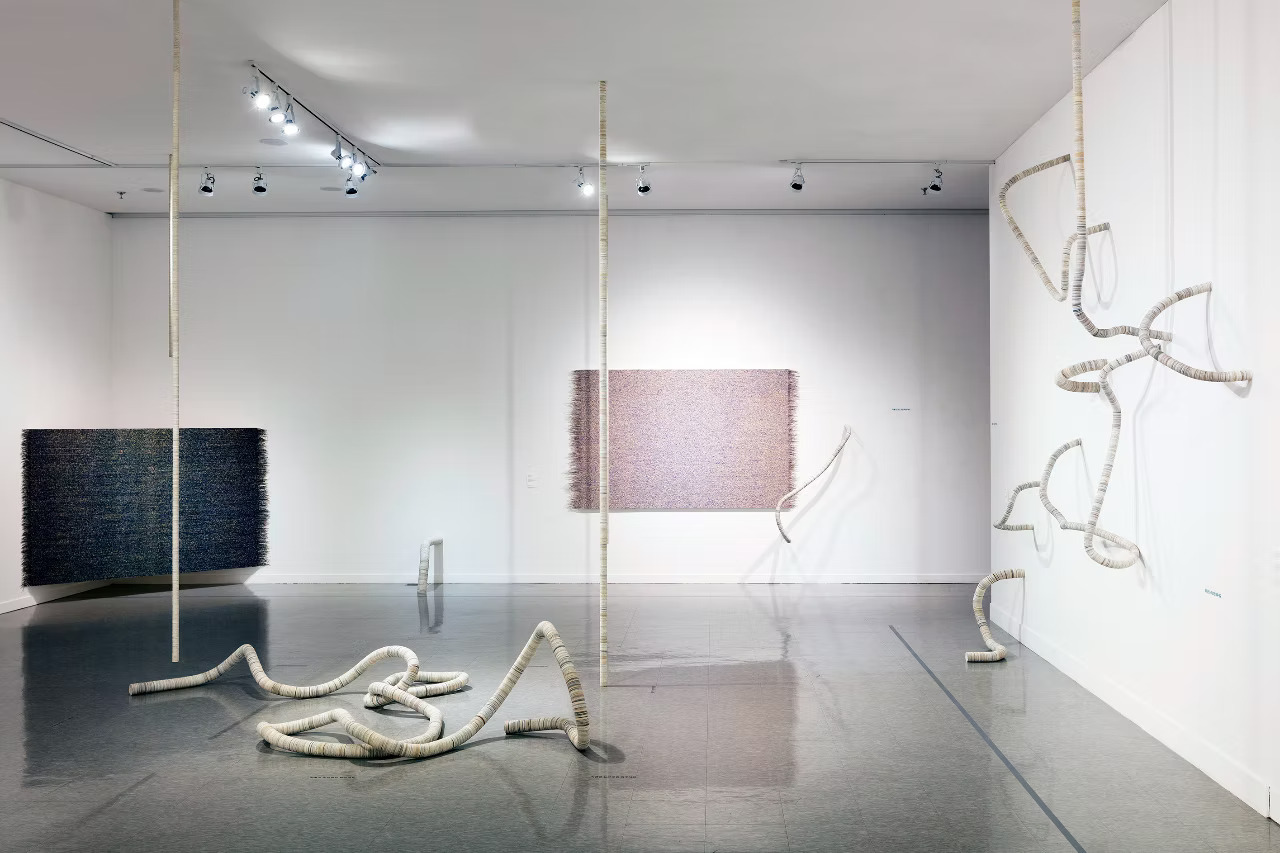
Wonjin Kim, The Land of the Glitches, 2019, Installation view of 《Scattered Thoughts, Combined Experiences》 (Danwon Museum, 2019) ©Wonjin Kim

Belonging to ‘Librarian,’ a body of work that follows the trajectory of her early practice, The Land of the Glitches (2019) is an installation created by stacking discarded books collected over the course of a year and then, with the idea of drilling into strata, cutting through the accumulated records into circular forms of varying sizes using a die cutter. In her two-dimensional works, sheets densely filled with records are once again covered with oil pastels and colored pencils, then cut into thin, elongated fragments and meticulously reassembled.
 
During the process of making this work, the artist happened to discover someone’s letter, which led her to become interested in stories that newly emerge from sites of loss where traces still remain. This encounter prompted her to move away from her early approach of concealing records as a way of dealing with memory, and instead to embrace the idea that the records she had tried to cover up were, in themselves, shining as incomplete chronicles.


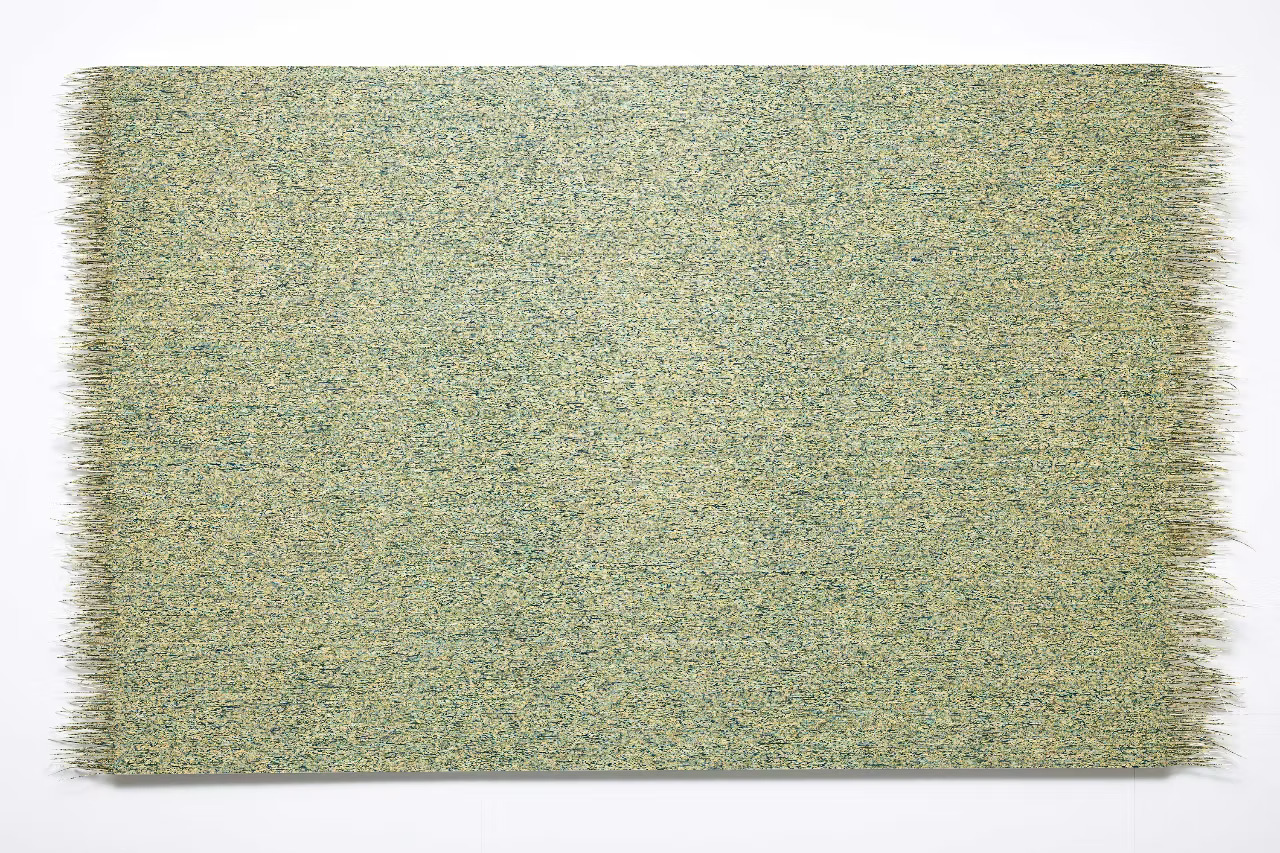
Wonjin Kim, The Land of the Glitches, 2019, Colored pencil, pencil, pen on paper, collage, 220x130cm ©Wonjin Kim

Through this process, The Land of the Glitches presents records that have been cut and fragmented into dot-like units, resembling scenes of errors encountered on a computer screen. The artist suggests that a “glitch” is not something that radically deviates from an established system, but rather a thoroughly natural phenomenon that arises from minute differences. In this sense, she expresses history—composed of the events that surround us—and the landscape of the contemporary moment as fragments formed by such small, incidental errors.
 
Through this perspective, Wonjin Kim likens incomplete and distorted records to memory itself, proposing that every moment is made up of an incomplete chronology. To experience is a process of reading through, and to remember is an act of rereading anew. In this regard, another person’s sentences become a means of encountering another’s memory, while published records stand as a metaphor for collective memory.


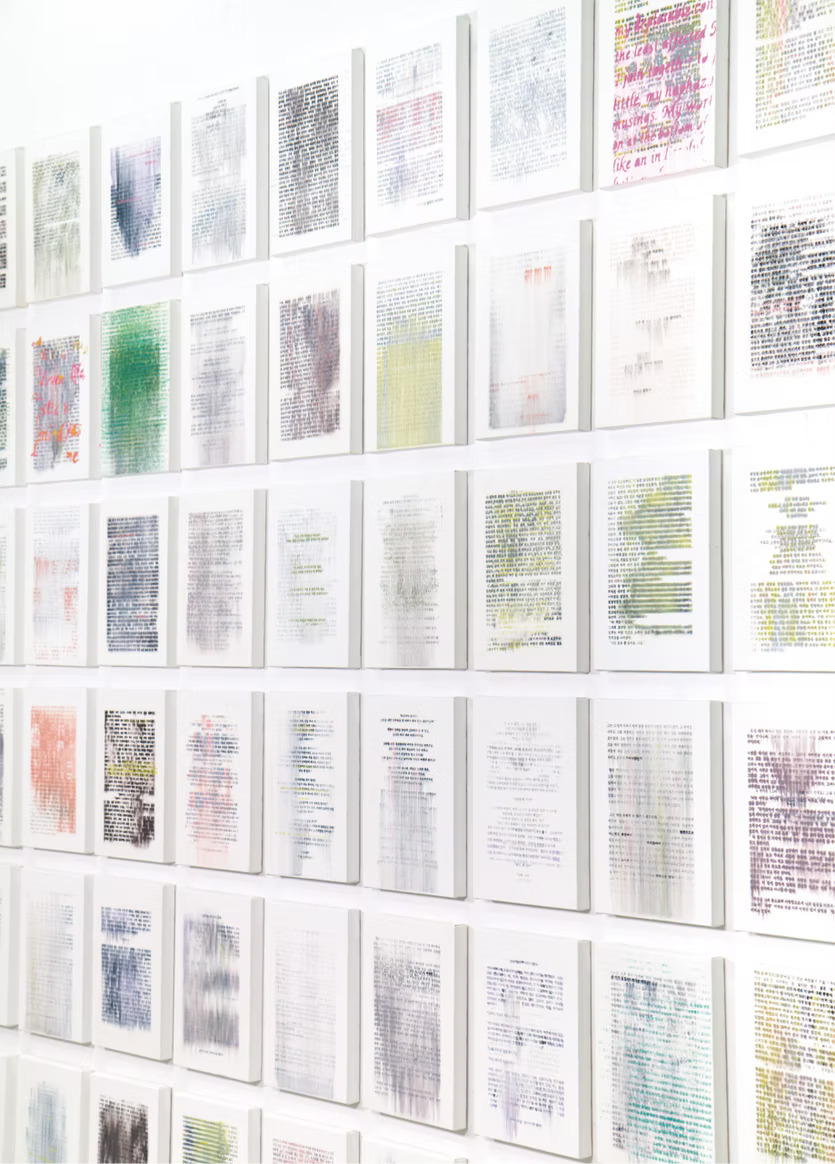
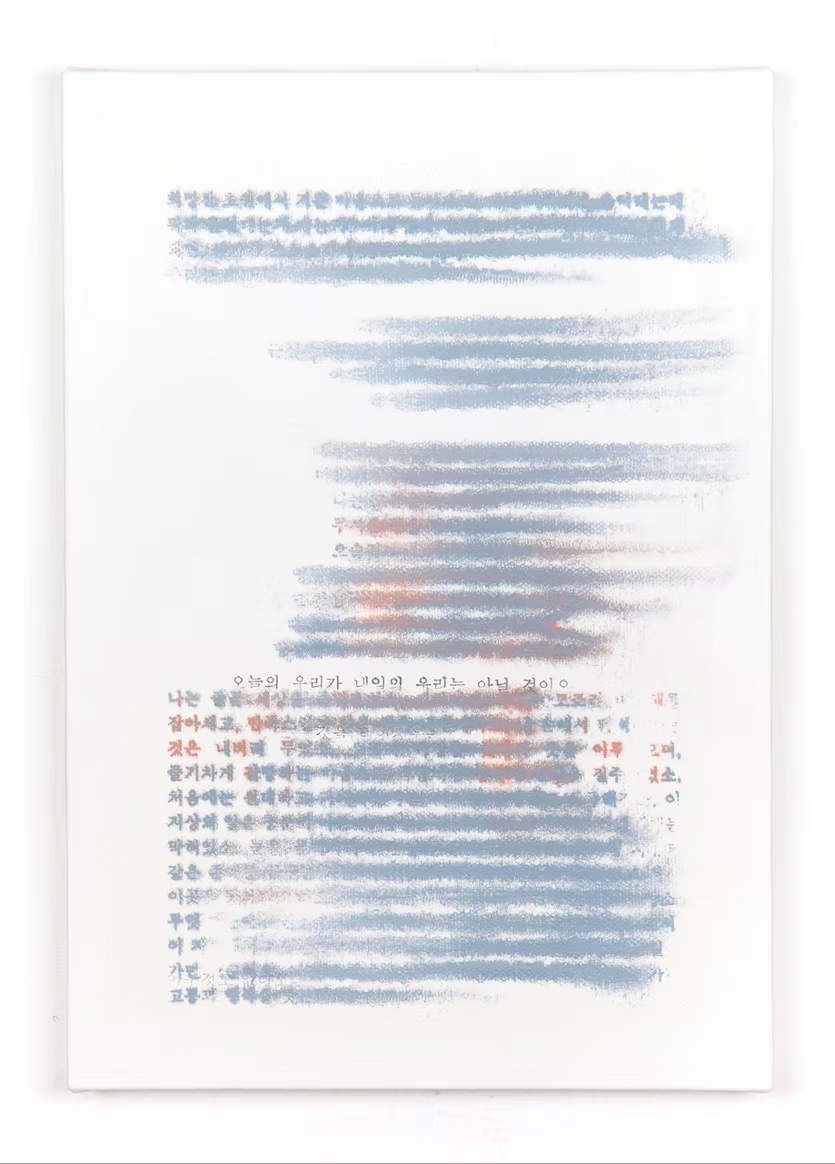
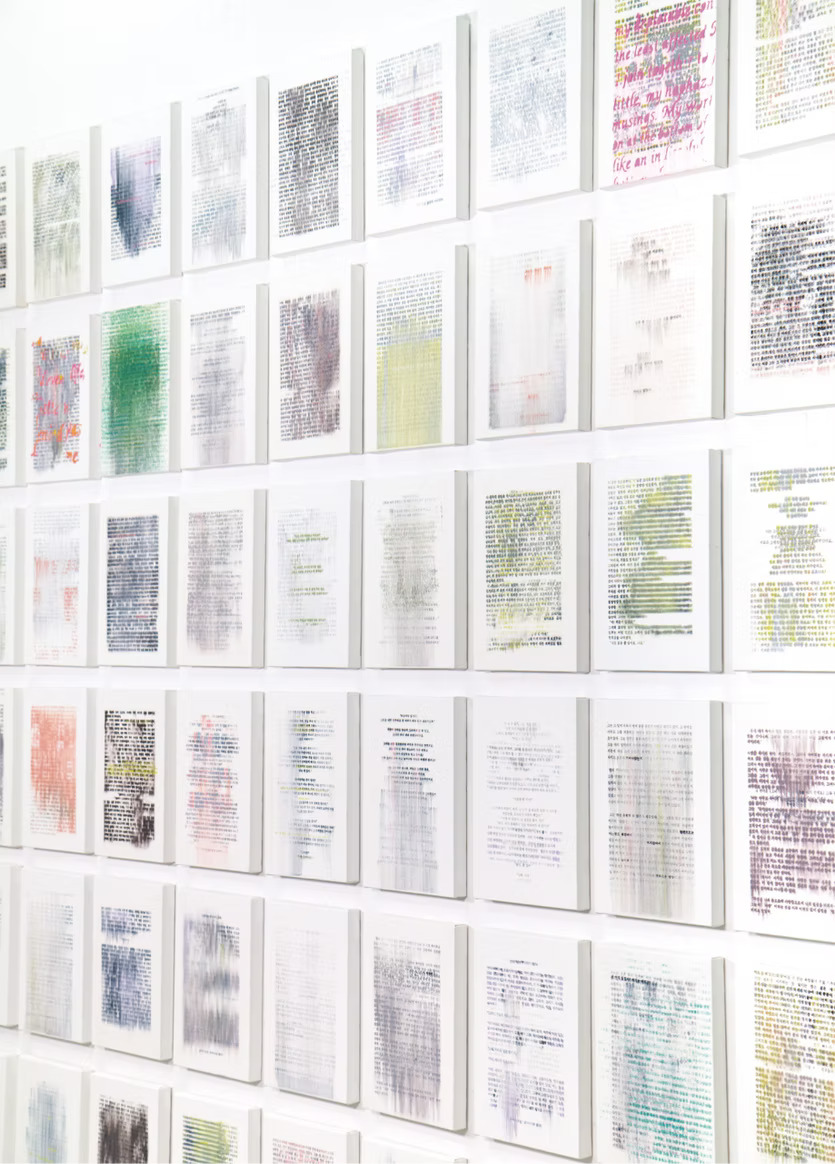
Wonjin Kim, W’s Story, 2020, Oil on canvas, 27.3x19cm (61 pages) ©Wonjin Kim

Whereas her earlier works focused on the outer surfaces of materials—much like the covers of books—this project marked a turning point through which Wonjin Kim began to approach the stories contained within books and the people connected to them. In the course of this shift, around 2020, she came to ask: “How do the stories that make us unfold?” This question led her to focus on the narrative structures of classic world literature, which many people encounter most frequently during childhood.
 
Because memories are often recorded and transmitted in the form of stories, the artist observed that narrative frameworks such as beginning–development–turn–conclusion or moral causality found in classic novels read during childhood exert a significant influence on how we later construct stories of our own. These reflections developed into the works Melting strata project and W’s Story (both 2020).


Wonjin Kim, W’s Story, 2020, Oil on canvas, 27.3x19cm (61 pages) ©Wonjin Kim

Prior to working on these two projects, Kim reread discarded classic novels. Even after time had passed, what lingered most vividly in her memory among their narrative arcs were the climactic scenes. In response, she began collecting these moments by typing out only the climaxes. The sentences gathered in this way came to her like stories of parting—narratives severed from earlier moments and unfolding into new chapters.
 
She then produced silkscreen prints of the pages containing these stories and combined them with records of separation excerpted from her own diaries. Next, she printed these pages of parting onto canvas using oil paint, and poured oil over the surface so that the oil-printed letters burst, melt, and spread—flowing down like tears in an instant.


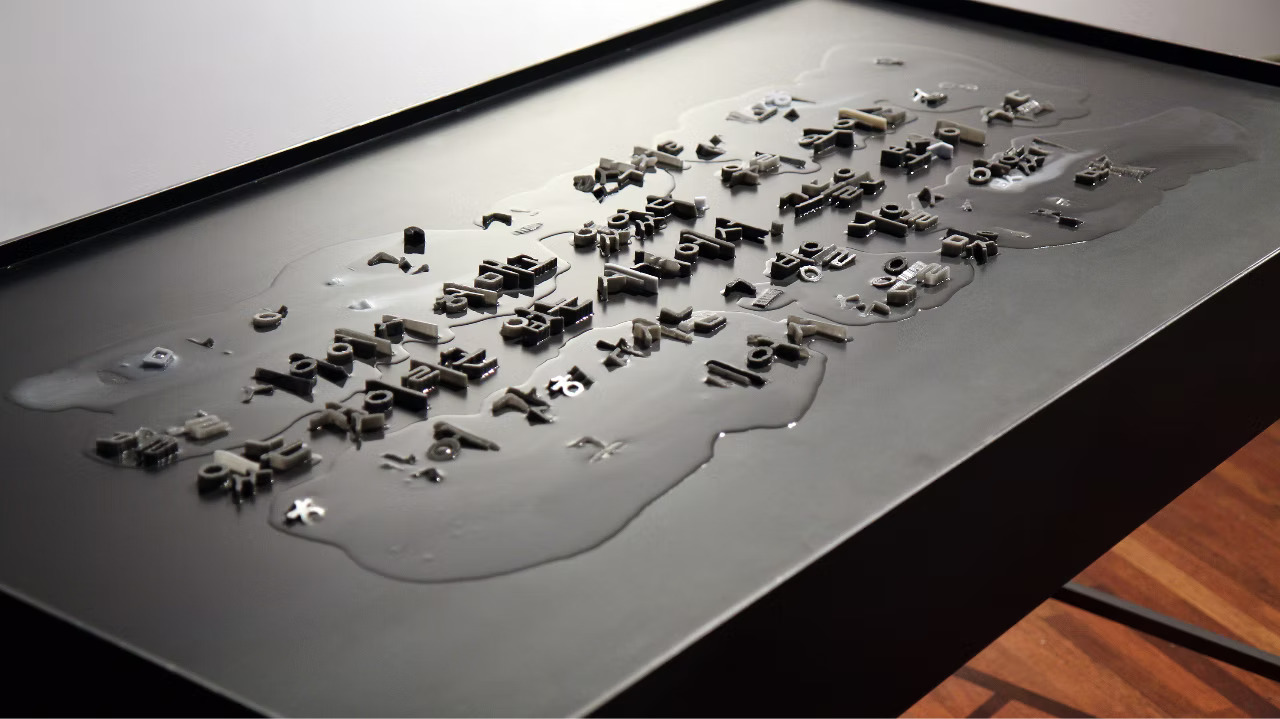
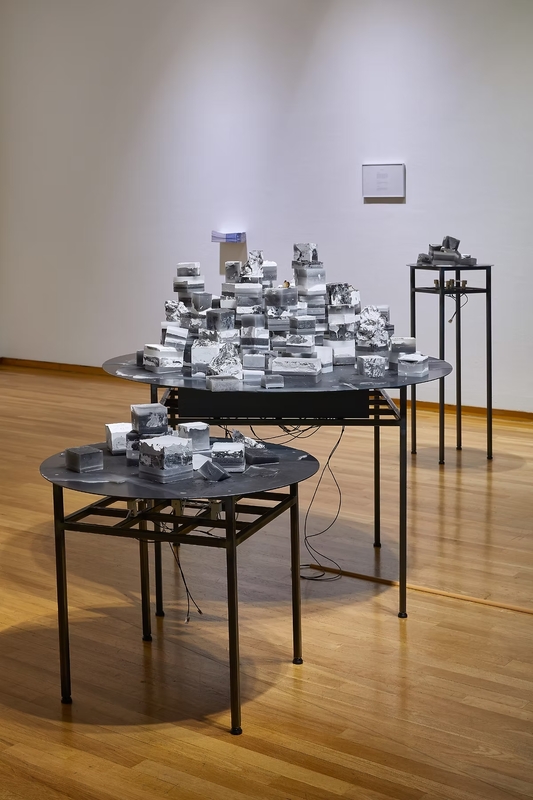
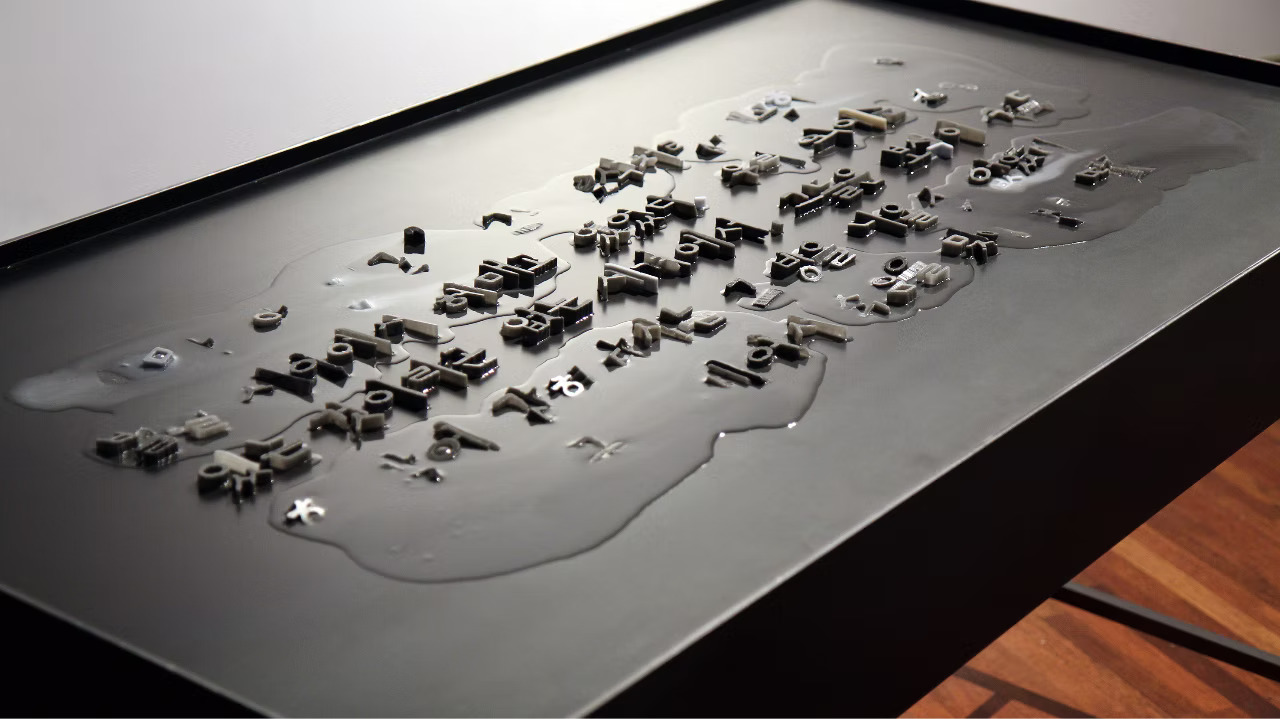
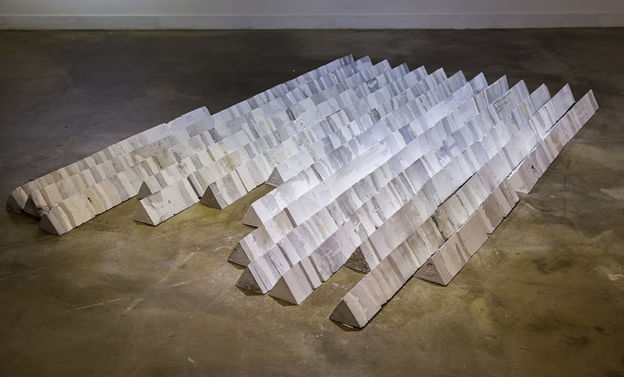
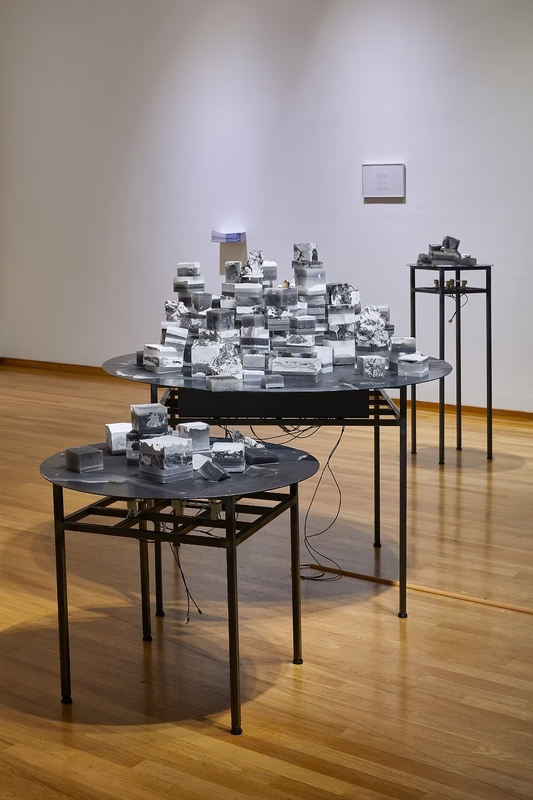
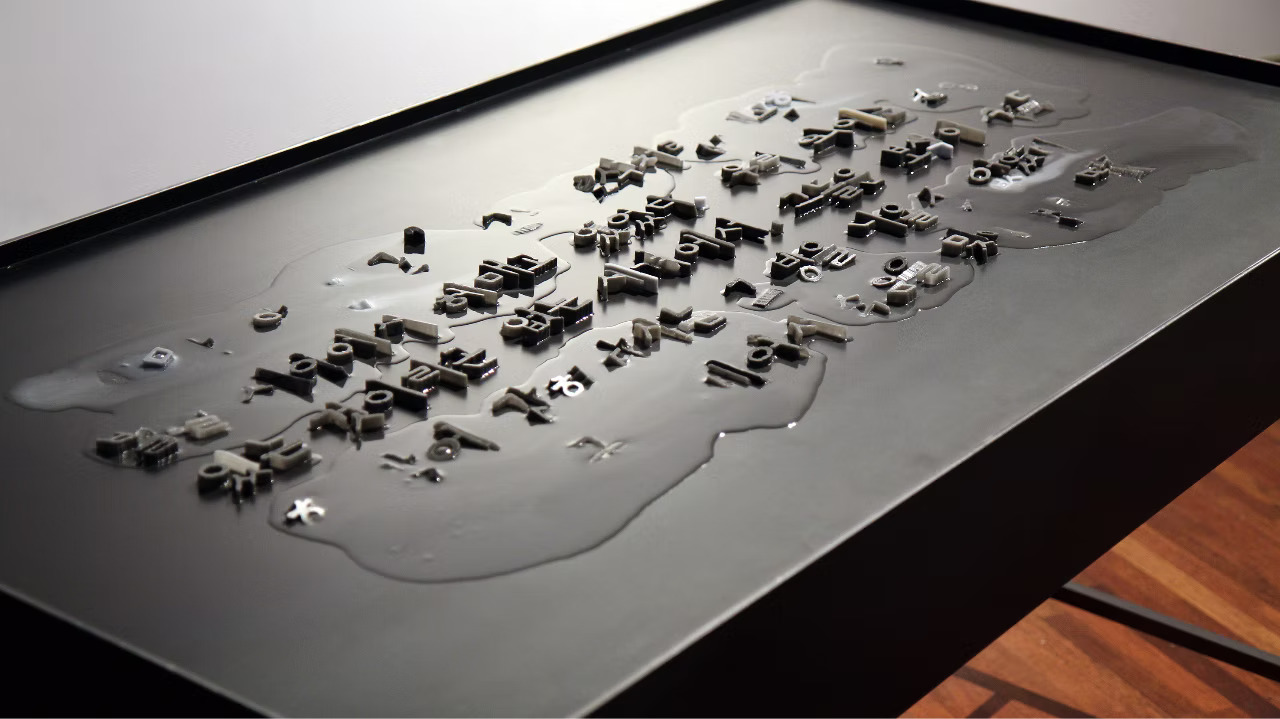
Wonjin Kim, Melting strata project – day 1, 2020, Wax, paraffin, ink, heating panel, 75x150x73cm ©Wonjin Kim

Through this repeated process of printing and melting scenes of separation, layers were built up to form W’s Story. The completed W’s Story subsequently became the material for the Melting Strata Project. In the Melting Strata Project, sentences extracted from W’s Story are cast in beeswax mixed with ink, and during the exhibition a new paragraph is melted each day for a fixed duration.
 
By repeating the act of melting one paragraph per day, the work accumulates time—constantly flowing yet invisible—into a physical form, leaving behind tangible traces of record.


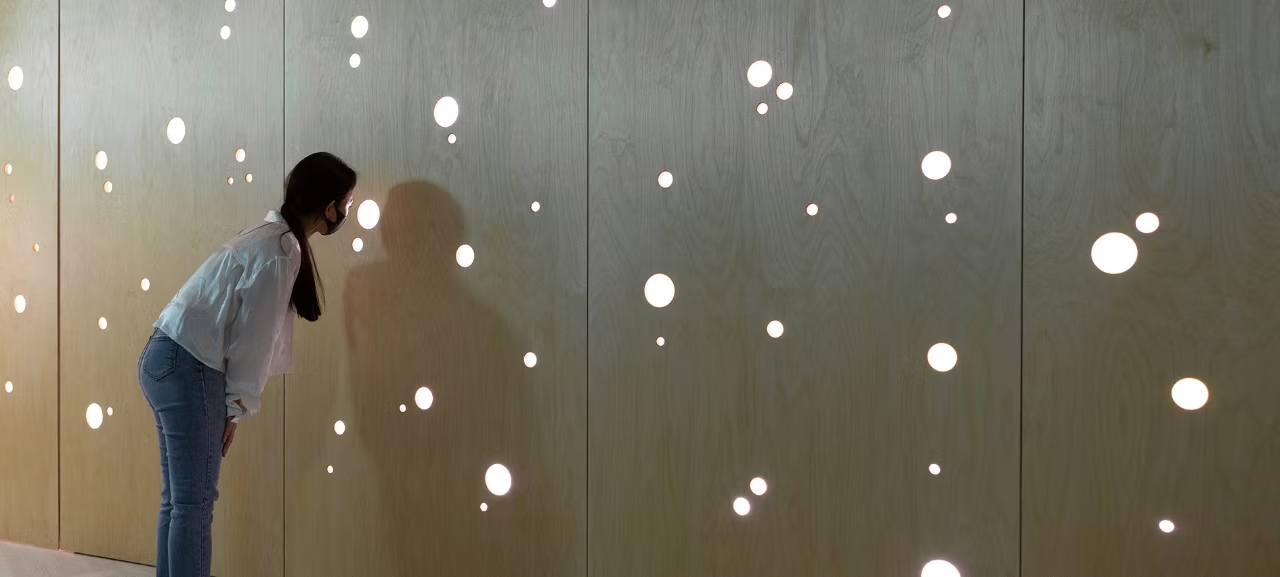
Installation view of 《The Confession Space》 (Seoul Arts Learning Center, 2021) ©Wonjin Kim

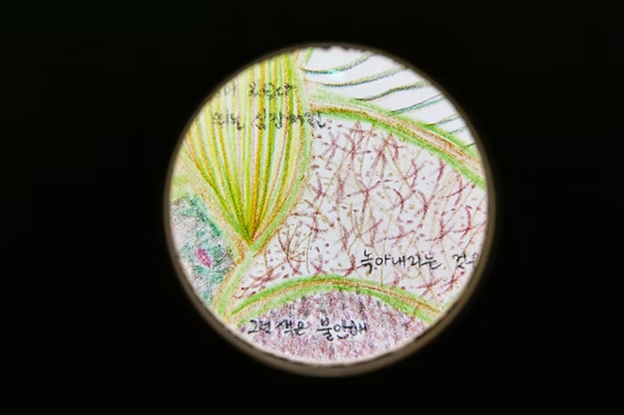
While these works drew on literary traces left behind by records that never coexisted in the same time and space, the participatory project Emotional Line (2020–2021) took a different approach, using the emotional records of 200 people as sketches. Involving participants from a wide range of age groups, the project consisted of drawings shaped as intimate acts of personal confession, each unique to the individual.
 
The private moments drawn during time spent facing oneself encounter the viewer through small lenses from which light quietly leaks. The act of lowering one’s head and peering into the interior of a perforated wall closely resembles a relational gesture—approaching and coming face to face with another person’s emotions.


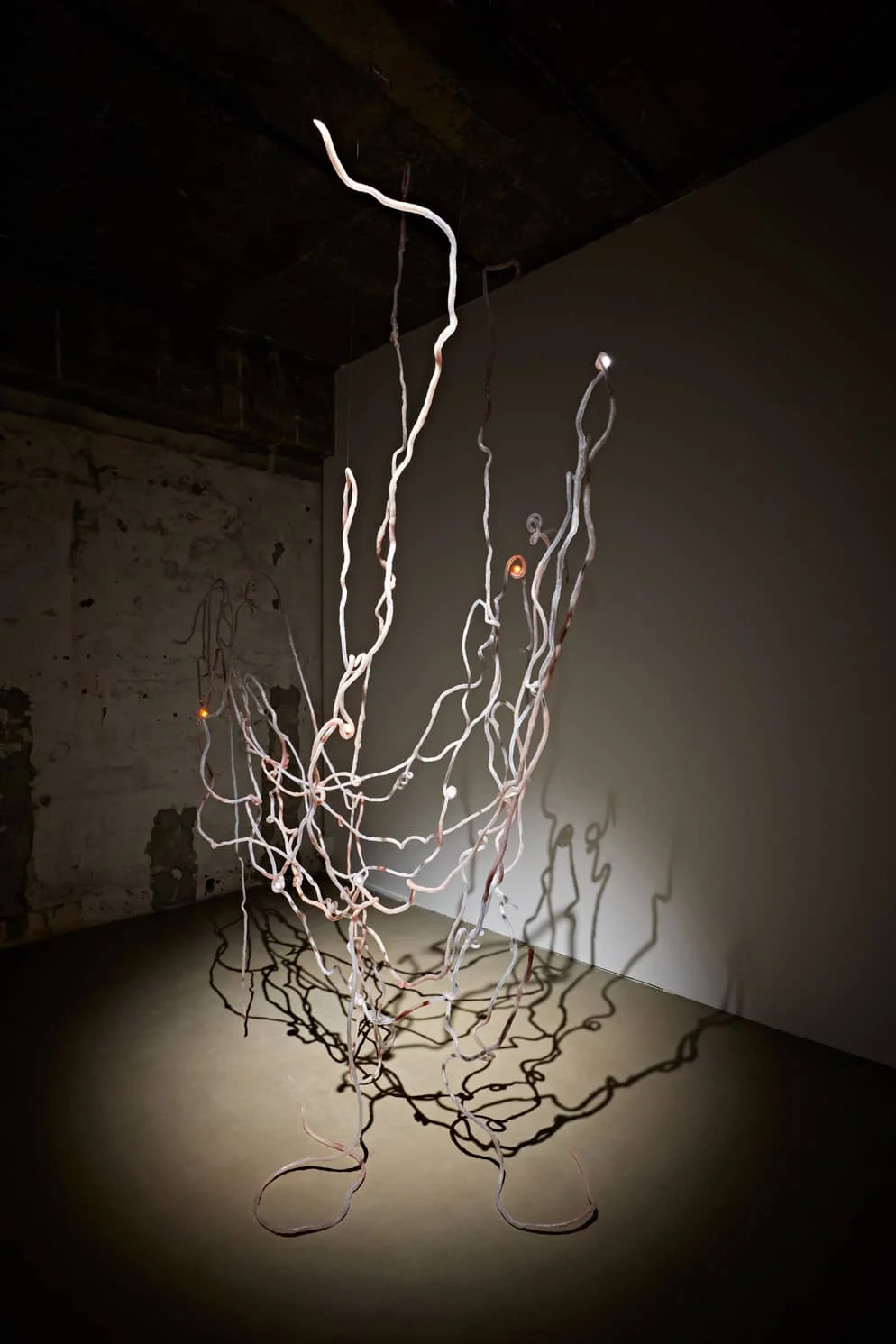
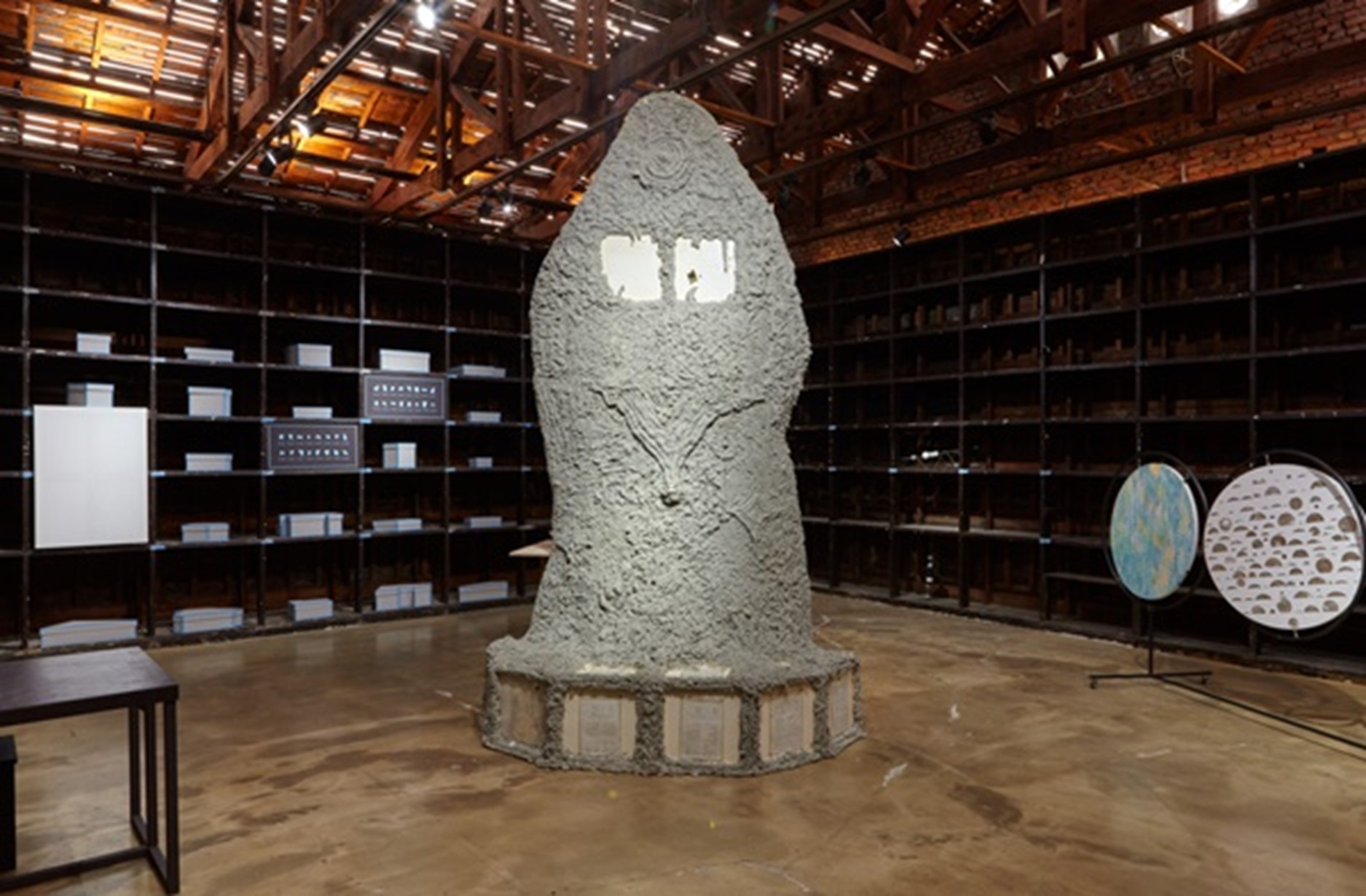
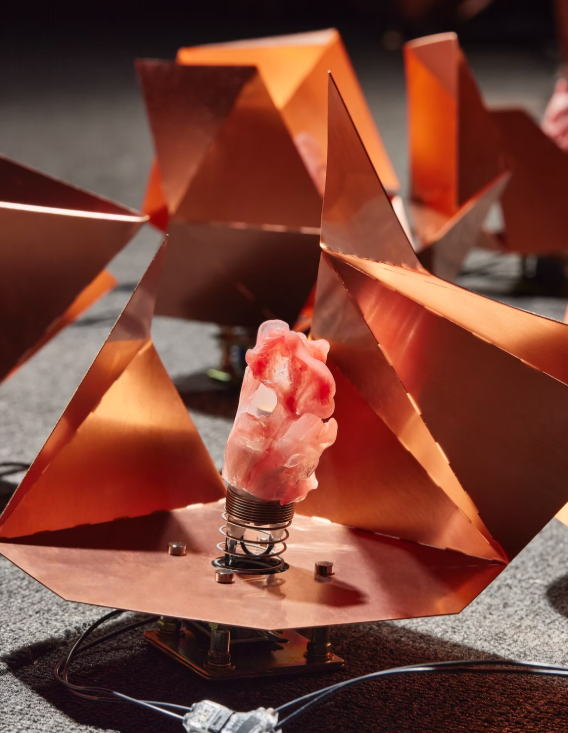
Wonjin Kim, The Chronicle between You and Me, 2021, Ash of reply from every life, ink, beeswax, paraffin, steel, heating bulb, Dimensions variable ©Wonjin Kim

Meanwhile, in the series ‘The Chronicle between You and Me’ (2021), Wonjin Kim sent letters to 190 people requesting a diary of a single day, and received replies recounting 156 individual days from 156 participants. Emotions that were once intense become language through the act of writing and sharing; over time, they are reread and crystallize into discrete fragments.
 
The artist subjected these returned records to fire, transforming their time, and gathered the ash that remained after their disappearance. By mixing it with wax and plaster, she solidified the material into sculptural forms, placing them within a new temporal register. These fragments, appearing as stains spilled through disappearance, subtly drift—at times drawing closer to others, at times receding away.


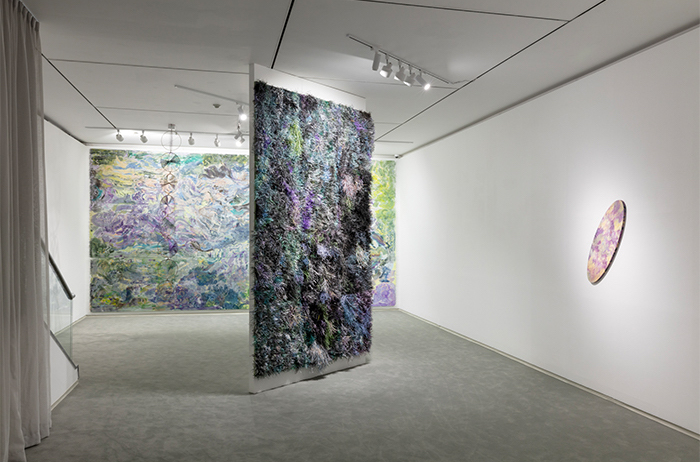
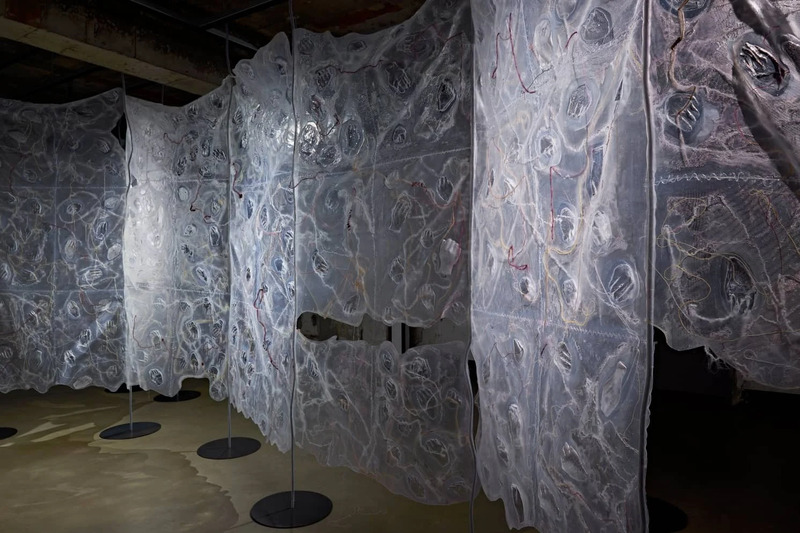
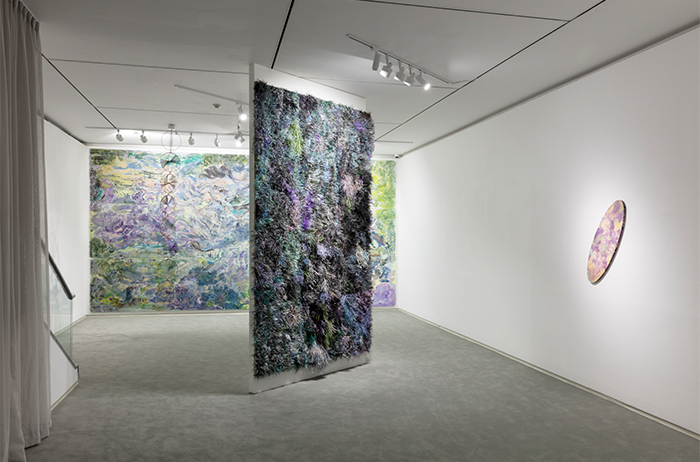
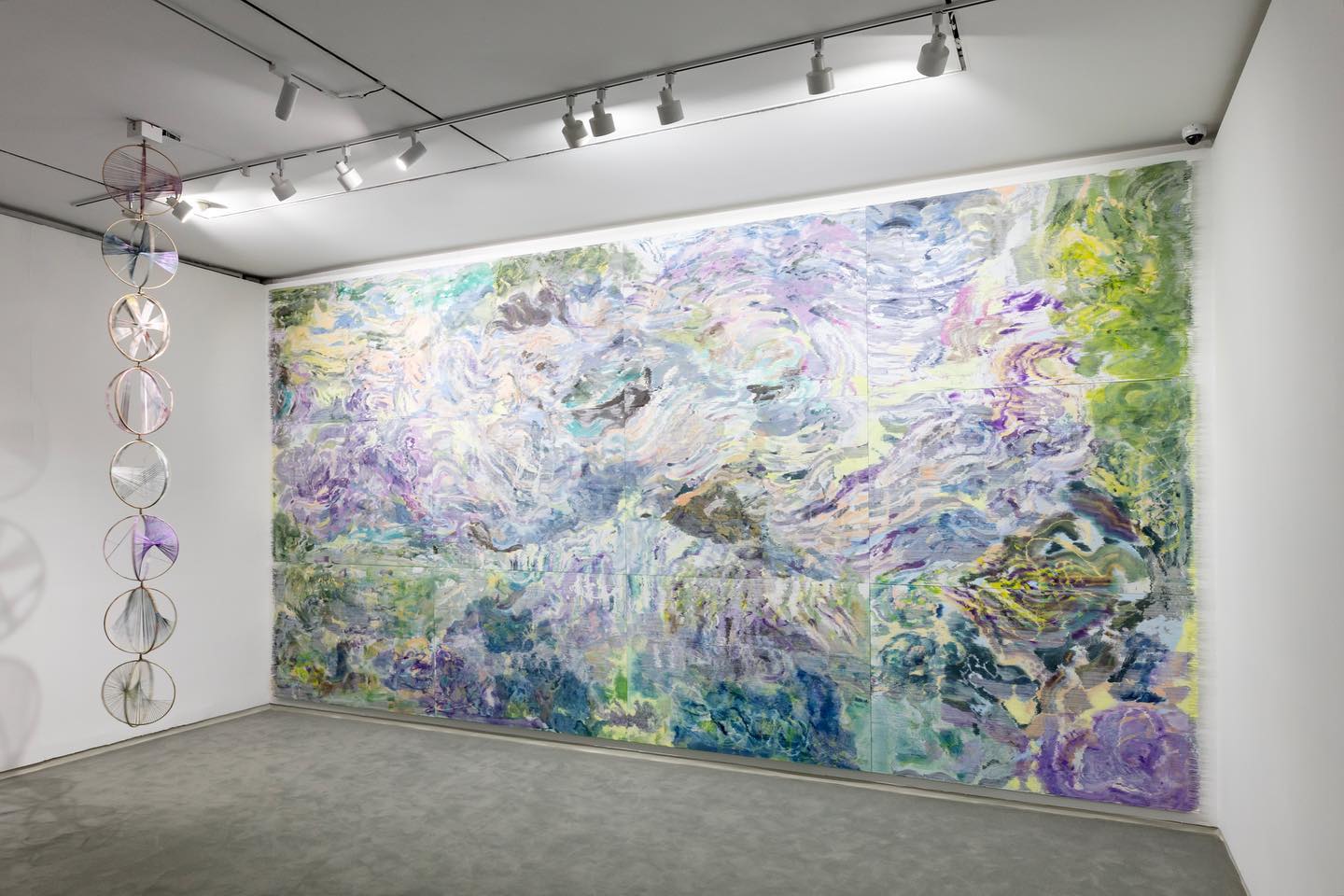
Installation view of 《Dancing in the Thin Air》 (Kumho Museum of Art, 2023) ©Kumho Museum of Art

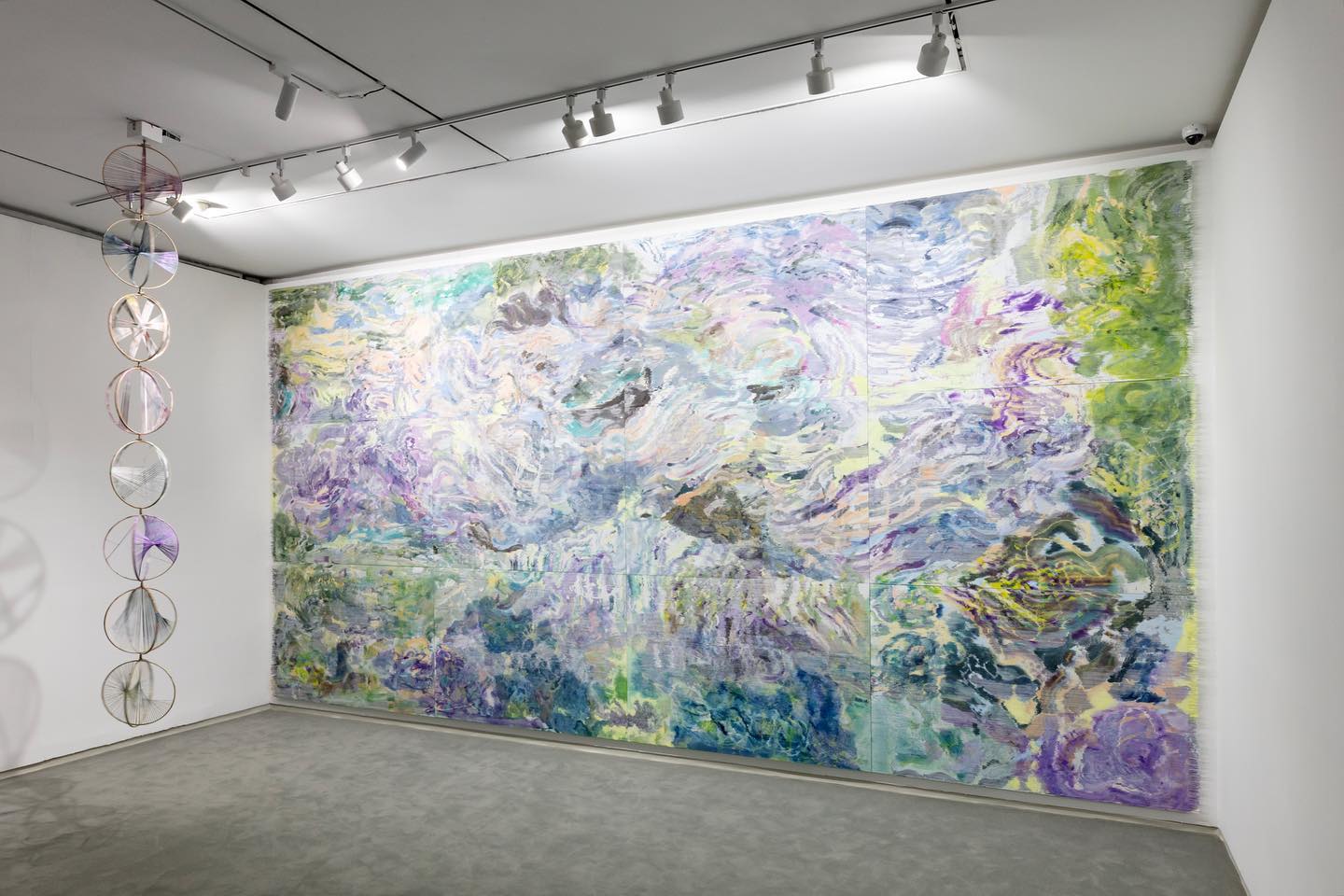
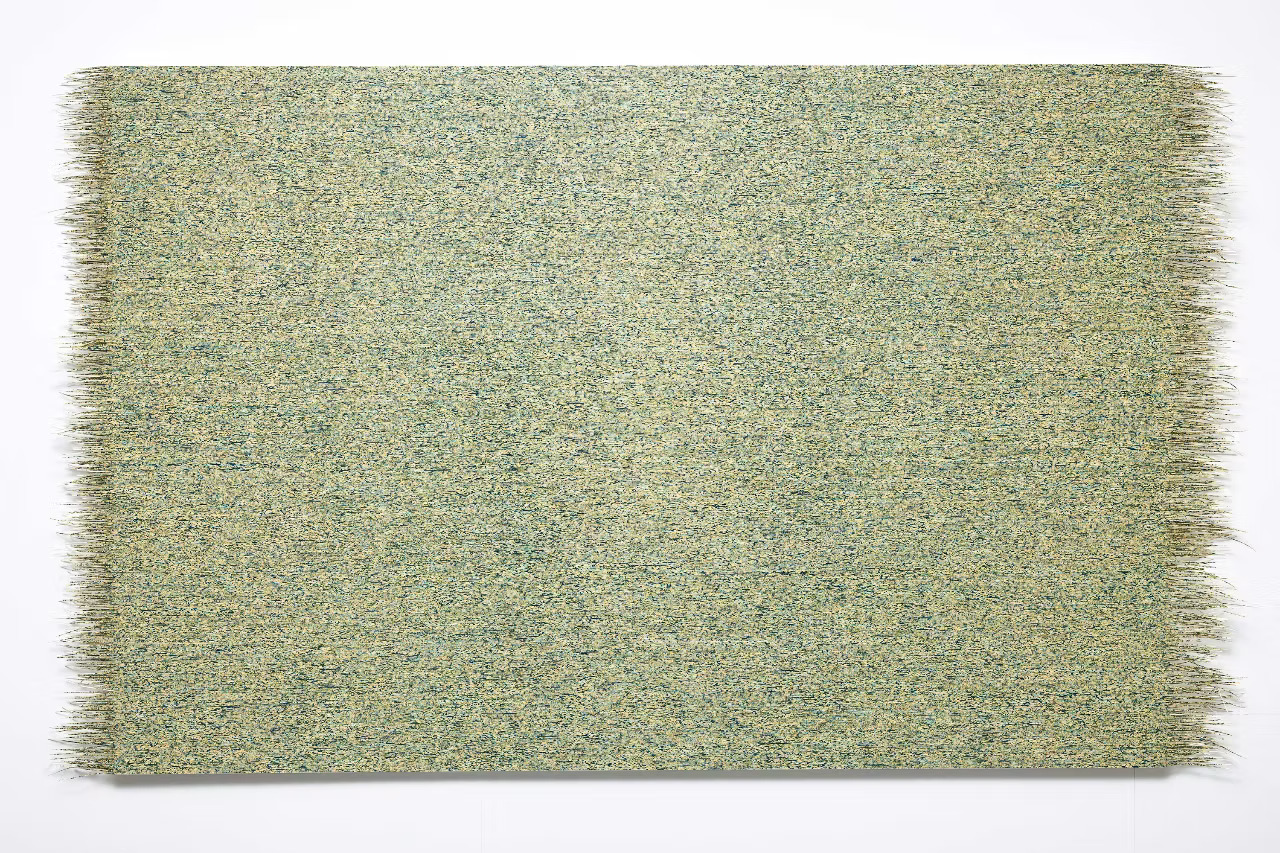
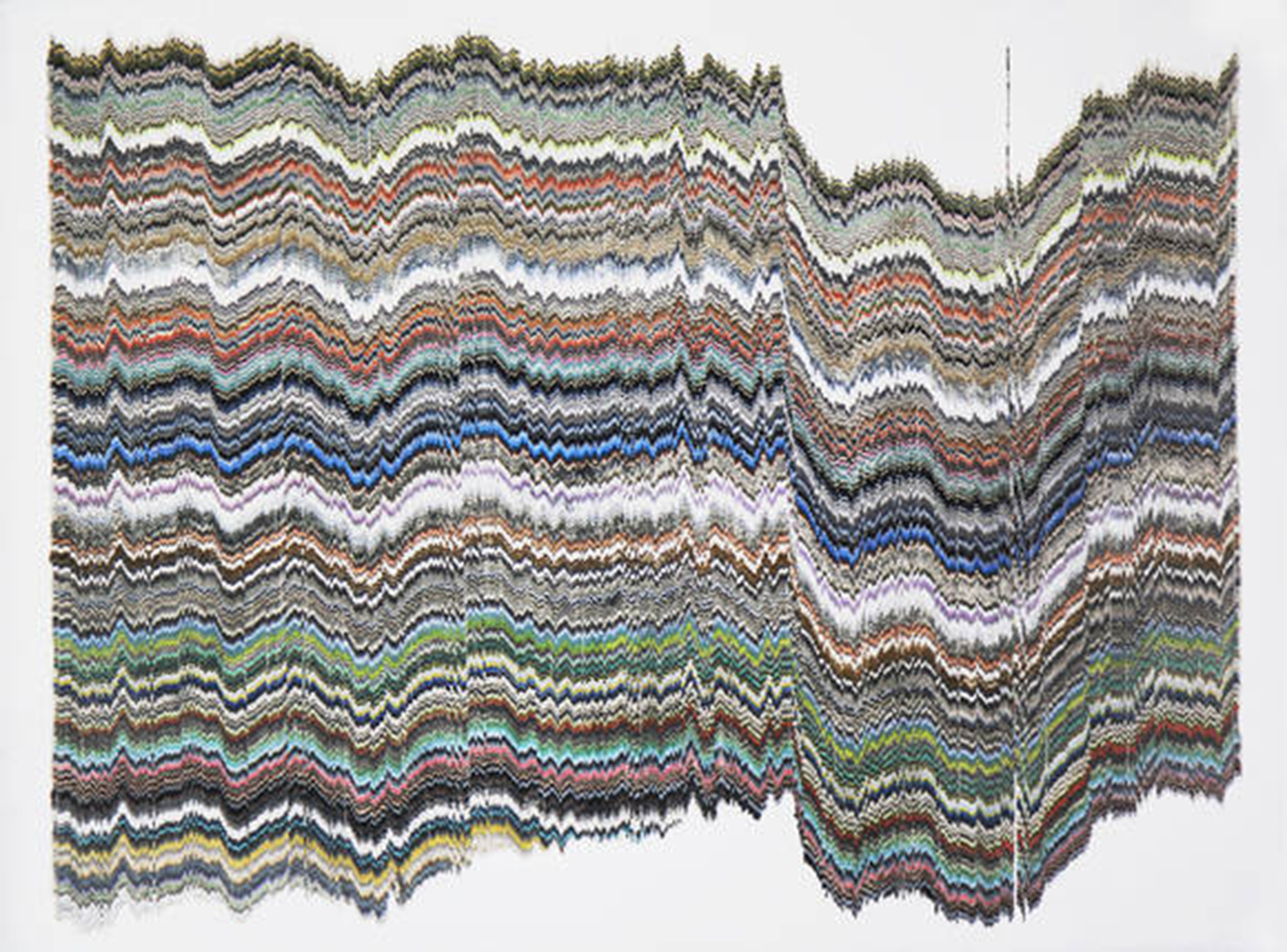
In her solo exhibition 《Dancing in the Thin Air》 (2023) at the Kumho Museum of Art, Kim presented the eponymous series ‘Dancing in the Thin Air,’ which visualizes her contemplation on the temporal limitation of memory and the material finitude of the media that embraces the memory.
 
For this series, Kim referenced fragments of objects that evoke past emotions, translating them into drawings that she then cut into thin strips and reassembled by alternately attaching their front and back sides. It creates a seemingly broken screen as if the restoration of memories has failed. Such repetitive and labor-intensive act indicates the property of time and materializes accumulated moments in an individual's history.


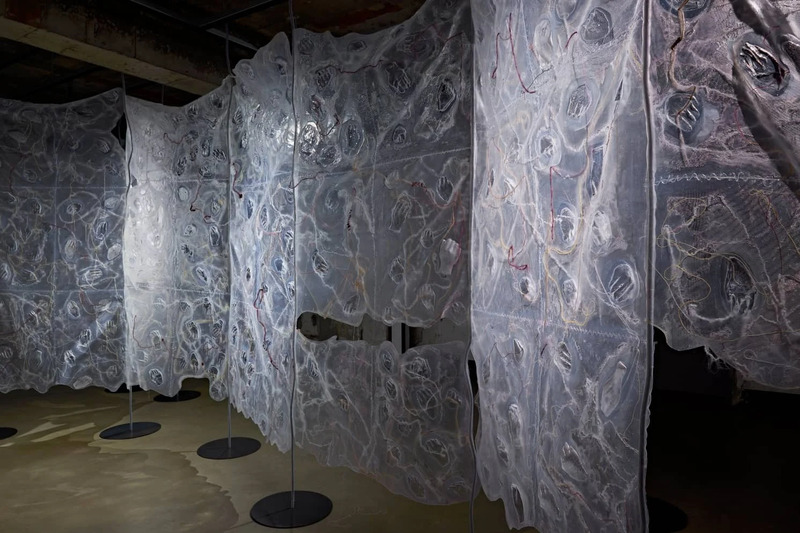
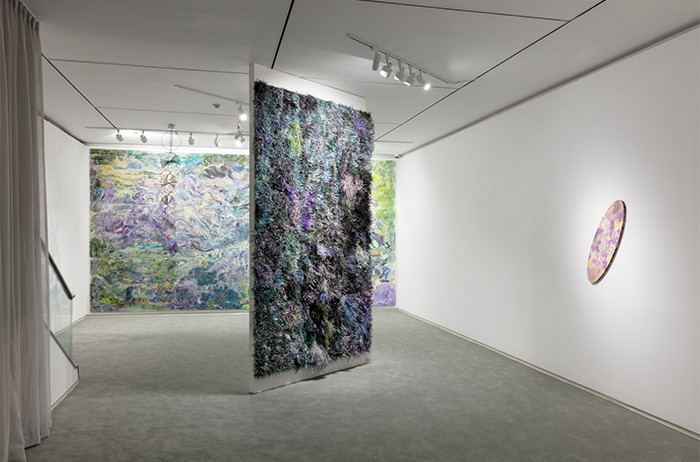
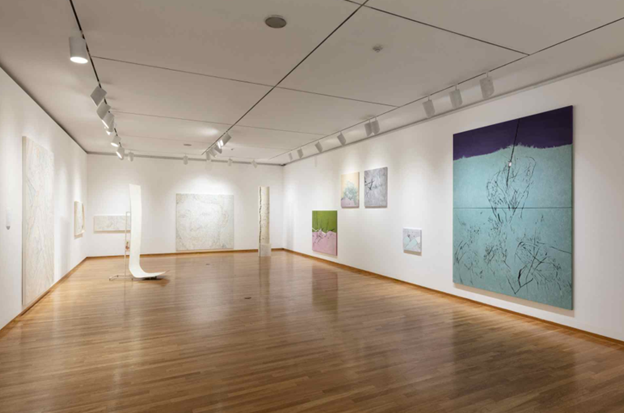
Installation view of 《still speaking through motion》 (Art Centre Art Moment, 2025) ©Art Centre Art Moment

Meanwhile, in her solo exhibition 《still speaking through motion》 (2025) at Art Centre Art Moment, Wonjin Kim addressed death not as an abstract notion but as a real event encountered through and inscribed upon the body, drawing from her firsthand experience of illness.
 
The sudden and life-threatening collapse of her physical condition compelled the artist to speak of death not as a concept, but as an embodied sensation. The works, which grasp moments in which the body was losing its capacity to respond and render them as physical surfaces, trace a narrative formed by the events she has recently endured—ranging from the discovery of illness, through the process of treatment, to its lingering aftereffects.


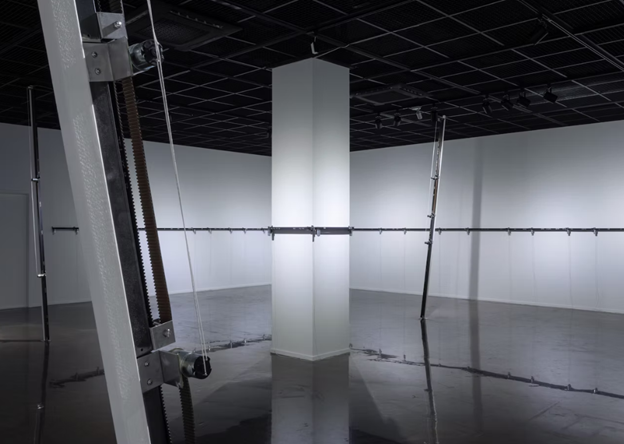
Installation view of 《still speaking through motion》 (Art Centre Art Moment, 2025) ©Art Centre Art Moment

The artist sought to trace her senses in an attempt to connect the time she had lived through in the past with the present. Yet pain cannot be fully articulated through language, and time, too, is always prone to becoming entangled and slipping away. It is precisely within this incompleteness—within the passage of a body that has endured an extreme experience and the absence of adequate language—that the artist returns to reflection.
 
While the exhibition 《still speaking through motion》 departs from the artist’s personal experience of illness and recovery, it ultimately expands into a broader question: within the limits of language and memory, how can we continue to carry on with life?


Wonjin Kim, Dancing in the Thin Air, 2023, Color on paper, 648.8x336.3cm ©Wonjin Kim

In this way, Wonjin Kim captures our shared “incomplete chronicle”—one that shifts and fades over time—through painting and installation. Her practice moves beyond the mere recording of moments, instead overlapping them with the fluid and changing landscapes of our inner lives, thereby connecting the “self” of the past, present, and future.
 
In other words, Kim’s work is both a way of engaging with time and an invitation to perceive our lives—situated at the very center of its dynamics—through a renewed sensibility. It offers fleeting moments in which the fragmented trajectories of individual lives and memories can, however temporarily, be brought into connection.

 “The sudden gaps that emerge within time appear as momentary errors occurring in memory. Within them, I create landscapes of error in which lost memories are newly filled in—spaces that operate in and of themselves within time.”    (Wonjin Kim, Artist’s Note)


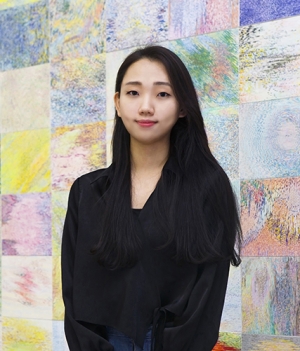
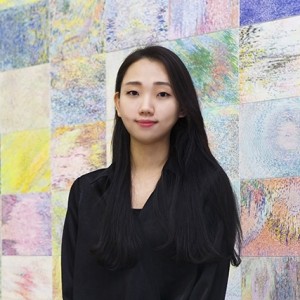
Artist Wonjin Kim ©Artist Residency TEMI

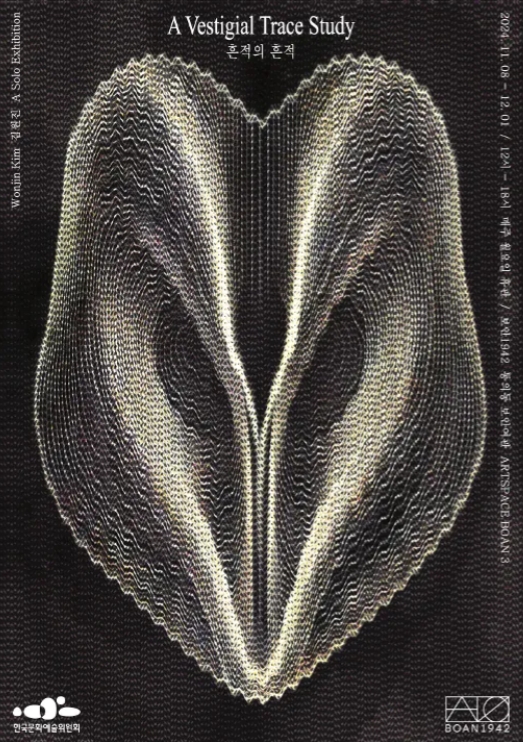
Wonjin Kim graduated from the Department of Fine Arts at Korea University and earned her MFA from the same institution. Her solo exhibitions include 《still speaking through motion》 (Art Centre Art Moment, Seoul, 2025), 《A Vestigial Trace Study》 (Artspace Boan, Seoul, 2024), 《Dancing in the Thin Air》 (Kumho Museum of Art, Seoul, 2023), and 《A Blank Confession》 (Artist Residency TEMI, Daejeon, 2022).
 
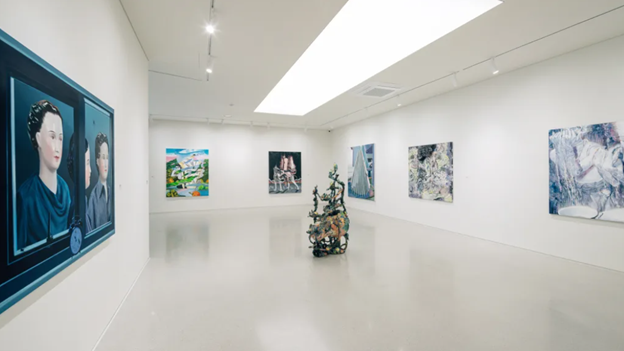
She has also participated in numerous group exhibitions, including 《amidst the living and the dead》 (Art Centre Art Moment, Seoul, 2024), 《Public Art New Hero 2024》 (K&L Museum, Gwacheon, 2024), 《This Is Not Just Local: Tactical Practices》 (Museum of Contemporary Art Busan, Busan, 2024), 《Tu m’》 (SeMA Storage, Seoul, 2022), 《Where All Places Are》 (Kumho Museum of Art, Seoul, 2021), 《Soorim Art Prize》 (Soorim Art Center, Seoul, 2020), among others.
 
Kim was selected as the 20th Kumho Young Artist and has participated in several domestic and international residency programs, including Cité internationale des arts (France, 2023), Artist Residency TEMI (2022), Kumho Art Studio (2020–2021), and Pier-2 Artist-in-Residence (Taiwan, 2018).

References