

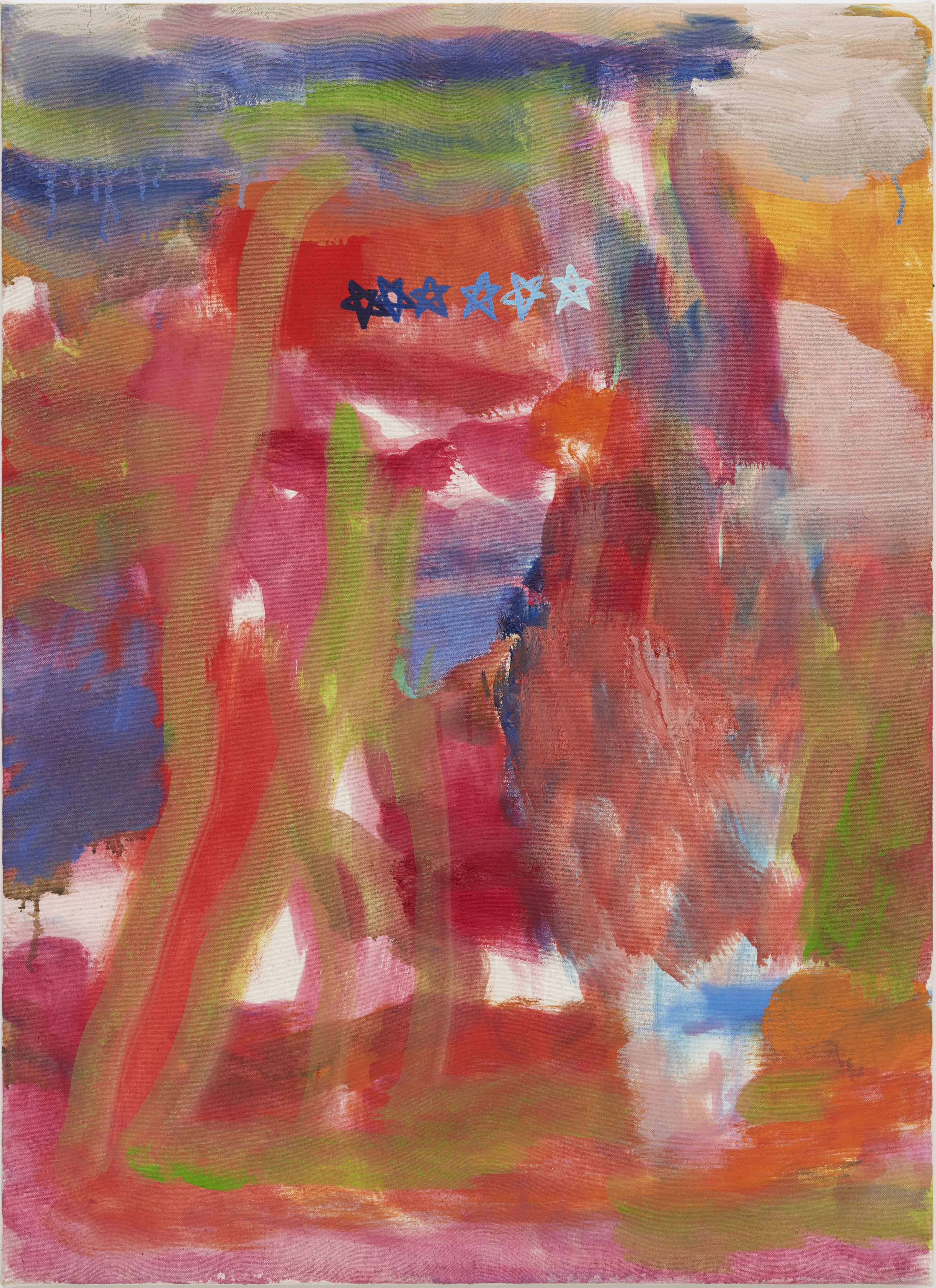
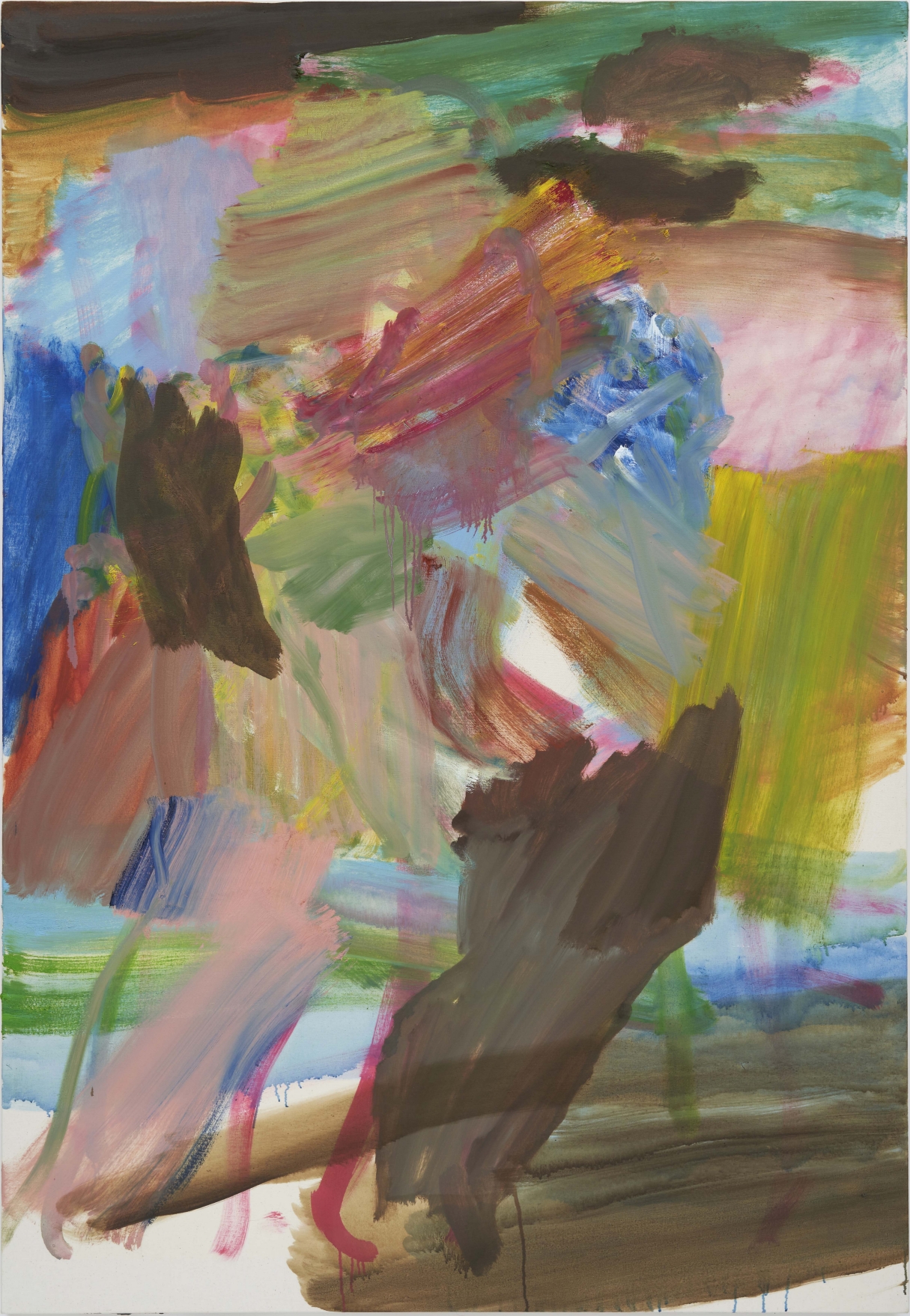
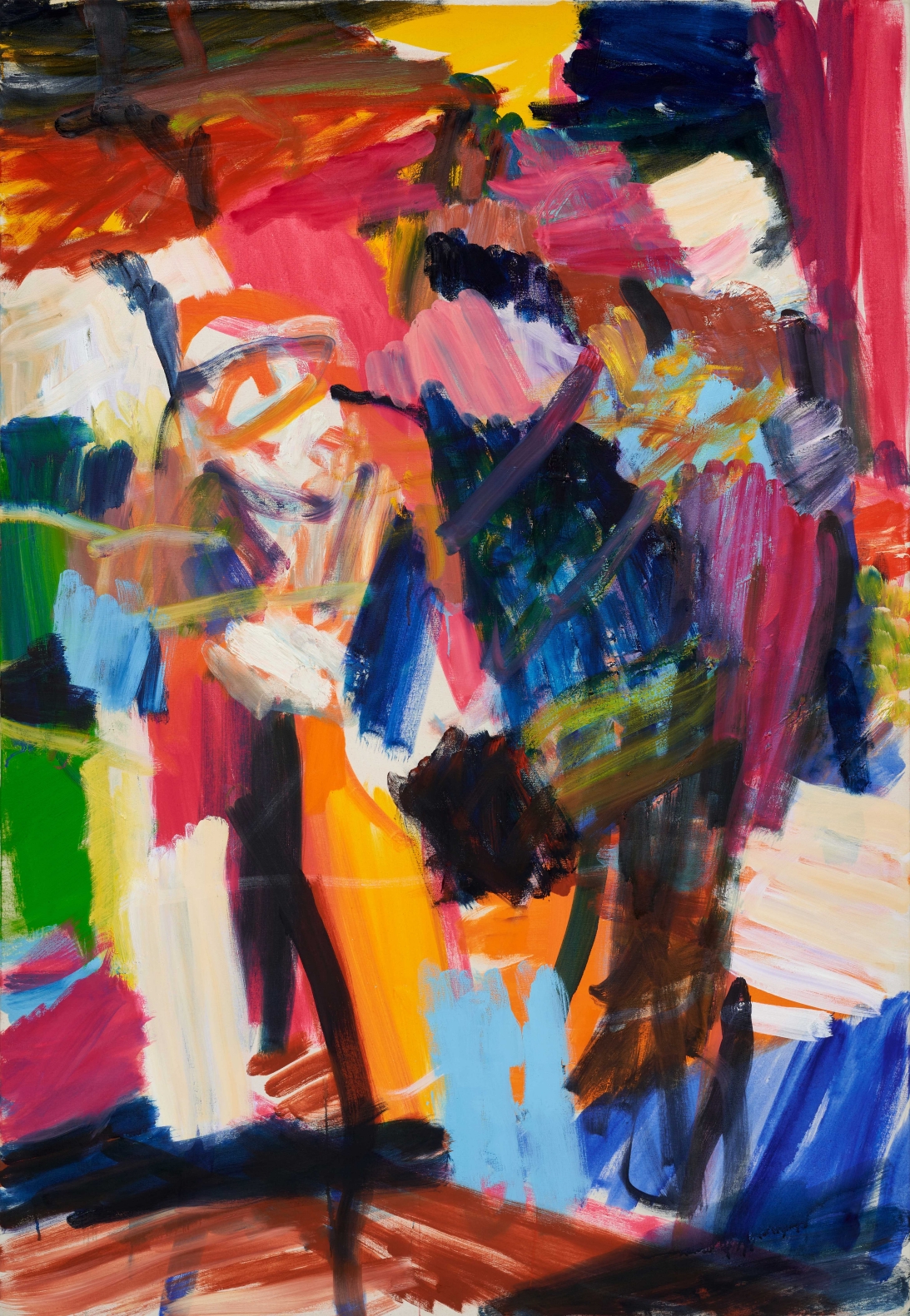
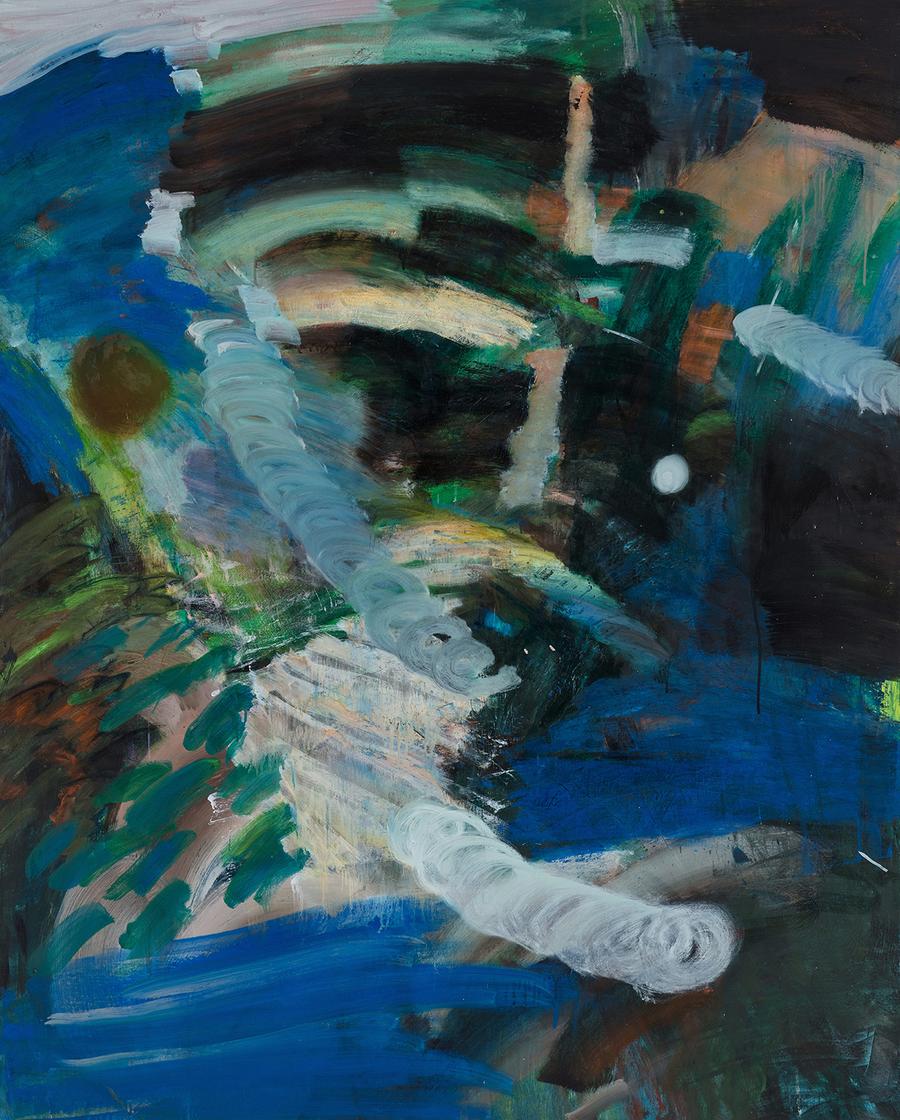
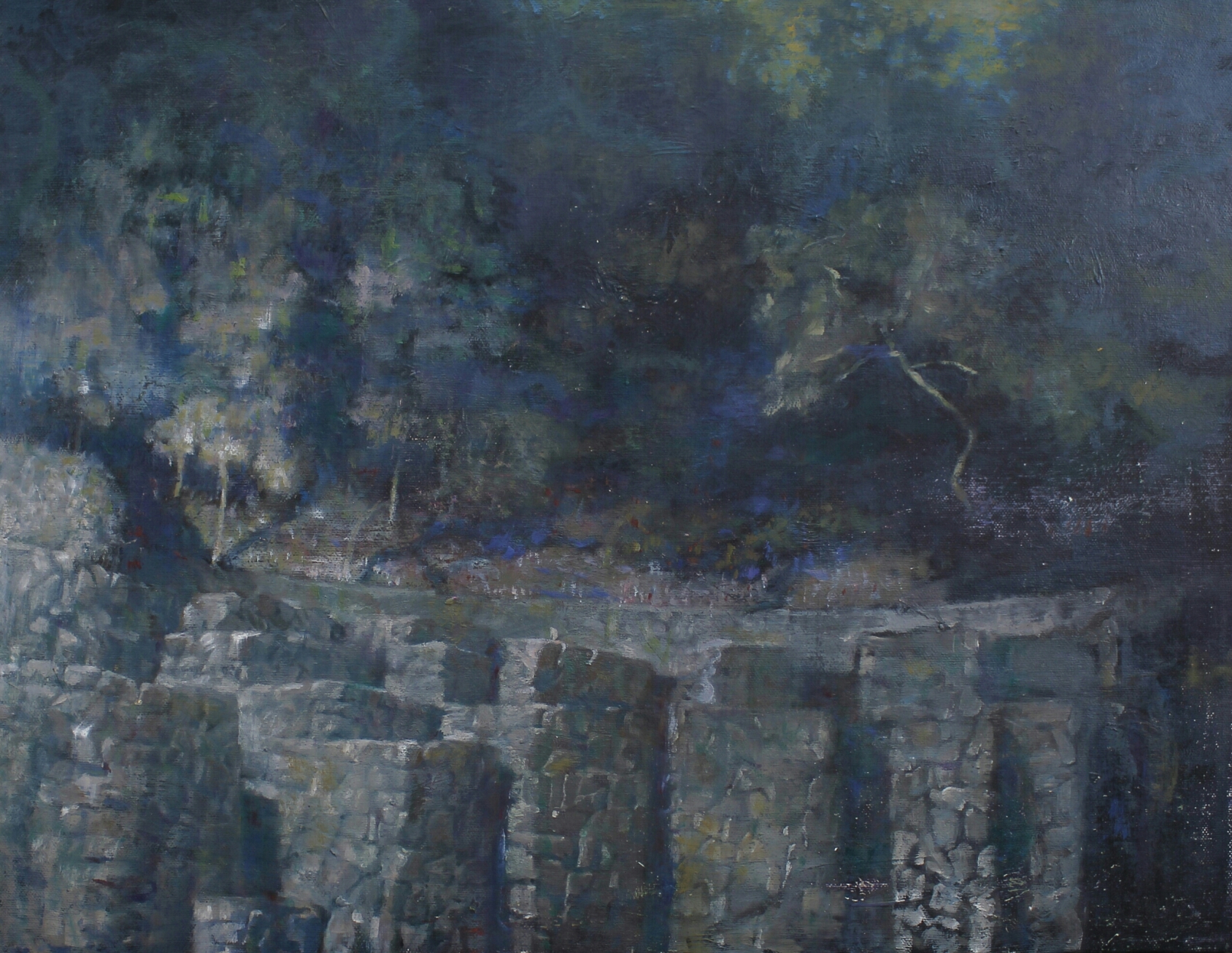
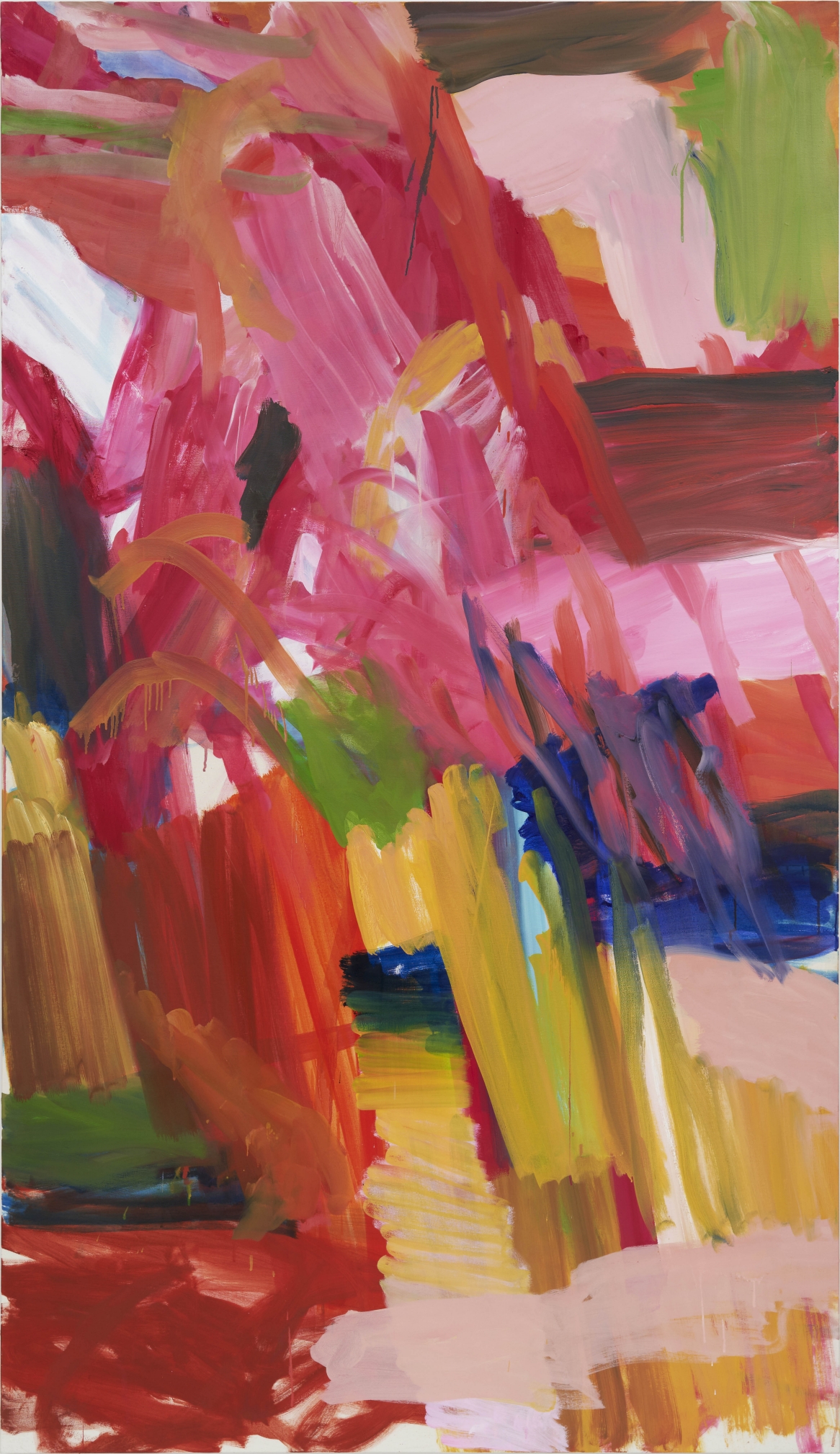
Hyundoo Jung (b. 1987) fills his canvases with abstract colors and lines that capture spontaneous bodily movement. His paintings are accumulations of time—records of the artist’s responses to the stimuli around him, translated into brushstrokes and paint.
 
Rather than starting from a specific subject or form, Jung’s practice unfolds by tracing the sensations, durations, and shifts generated by the body in the act of painting. Through this process, moments of change are condensed into individual images that continually intermingle and form new relationships, resulting in an open-ended mode of painting that invites ongoing reinterpretation.


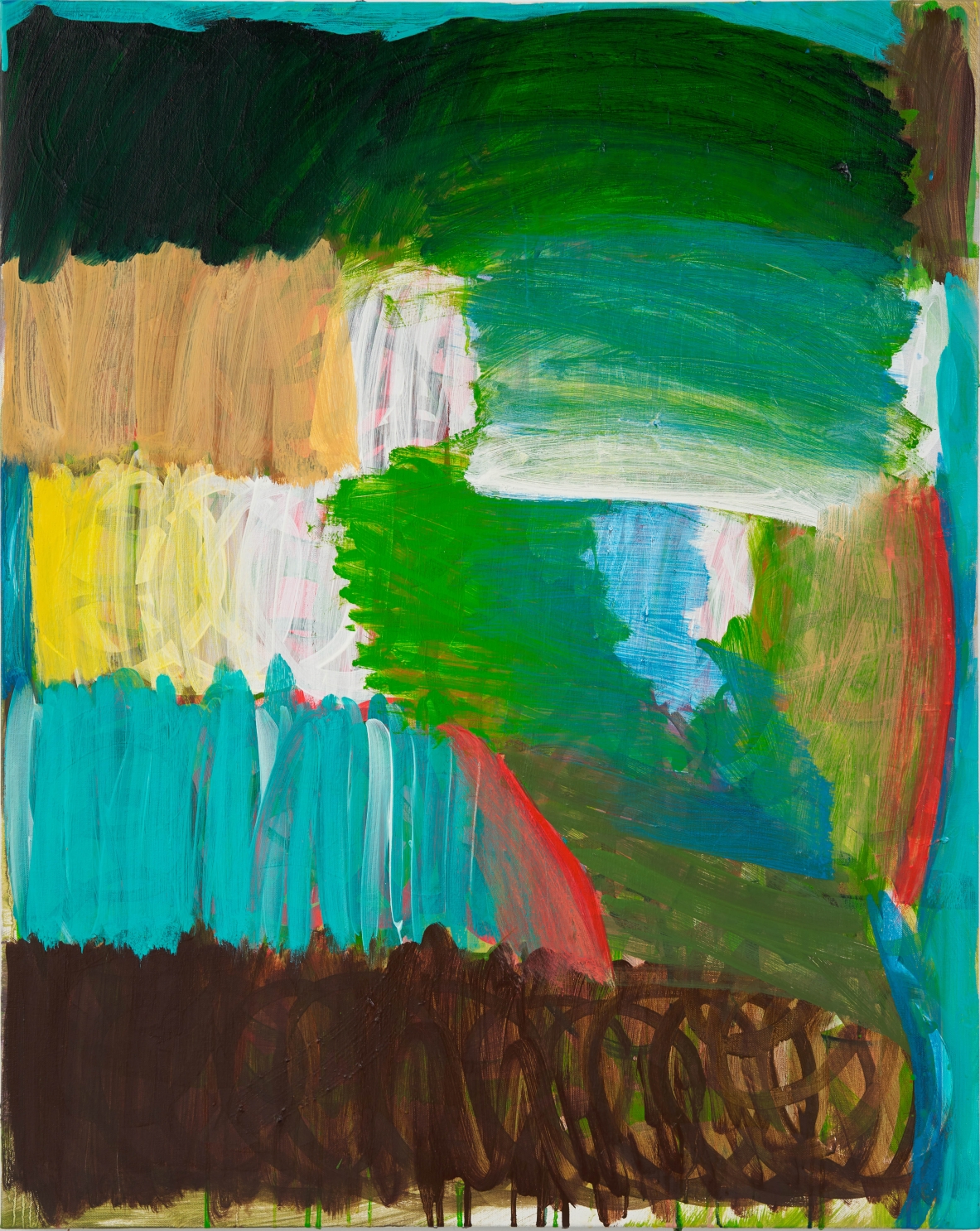
Hyundoo Jung, Run away, 2015, Dimensions variable ©Hyundoo Jung

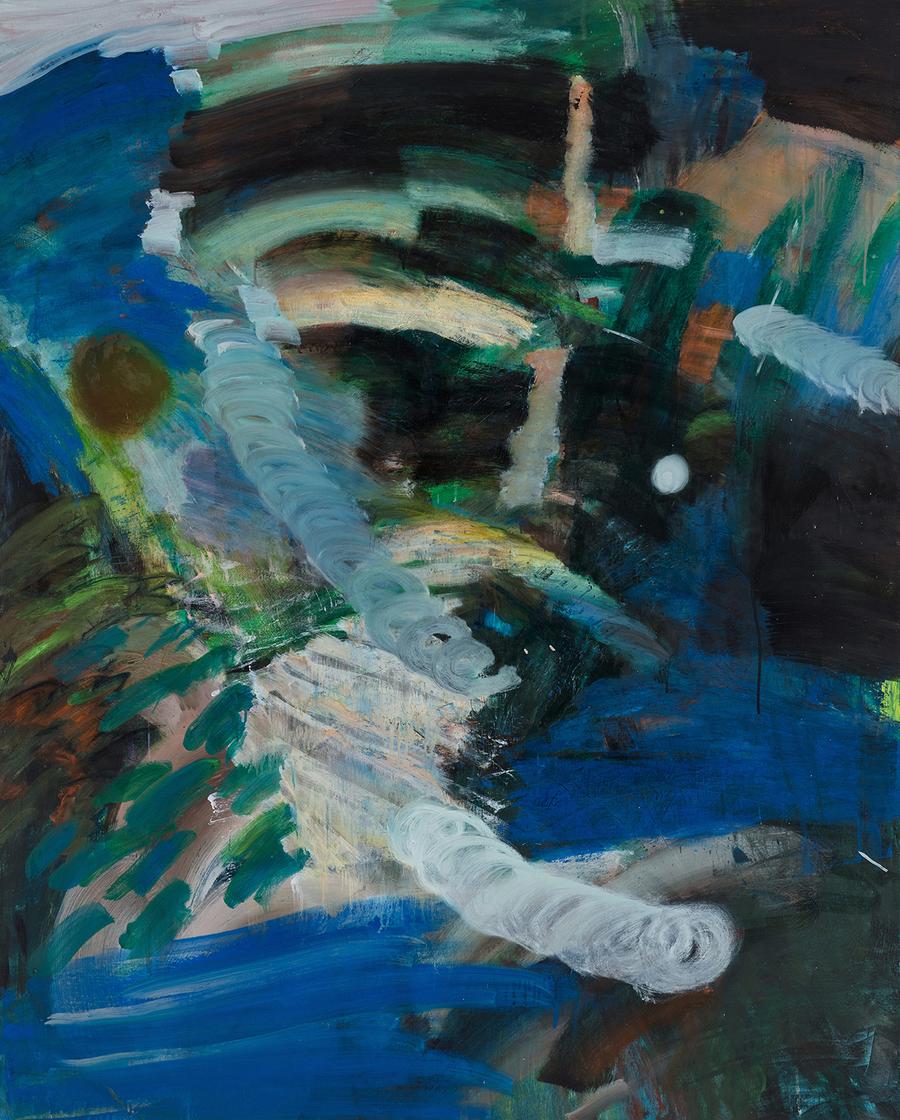
In his early practice, Hyundoo Jung translated the stimuli he absorbed through his body while observing natural landscapes into bodily movements expressed as brushstrokes. Stories found in nature—birds, wind, rustling leaves—became gestures of the artist, forming relationships both within and beyond the rectangular frame of the canvas.
 
Unlike the urban environment, where sensory capacities are often narrowly engaged, the forest offers a richness of sensation: the uneven contours of the ground, the temperature and humidity of the air against the skin, and more. These sensory inputs stimulate the body and trigger corresponding unconscious physical responses, which become integral to Jung’s painterly process.


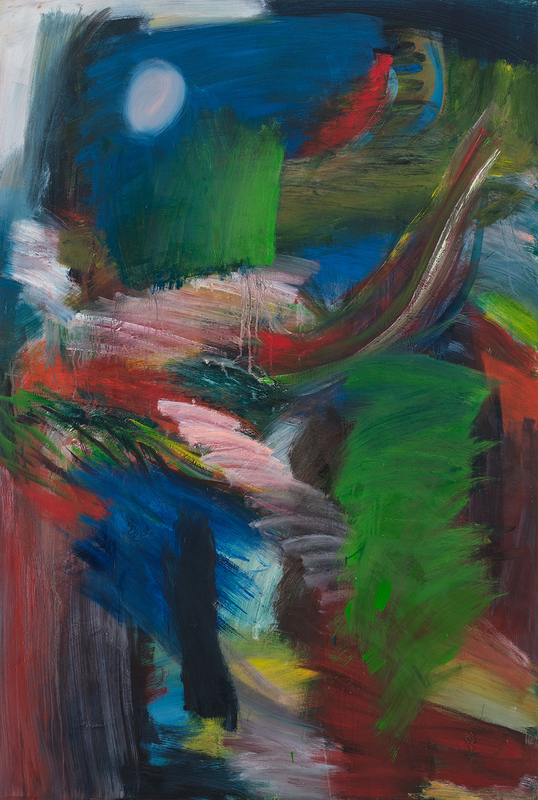
Hyundoo Jung, Face of the Sun and Moon, 2016, Oil on canvas, 163.8x130cm ©Hyundoo Jung

In this way, the forest—as a space that awakens the senses of the entire body—led Hyundoo Jung to seek ways of “narrowing the distance” between himself and what he paints. This was not achieved by pulling the subject closer into view, but by turning his attention inward, toward the sensations of his own body.
 
In other words, Jung came to pursue a way of composing the pictorial surface centered on the gesture of the brushstroke—one that is most immediate and directly connected to bodily sensation.


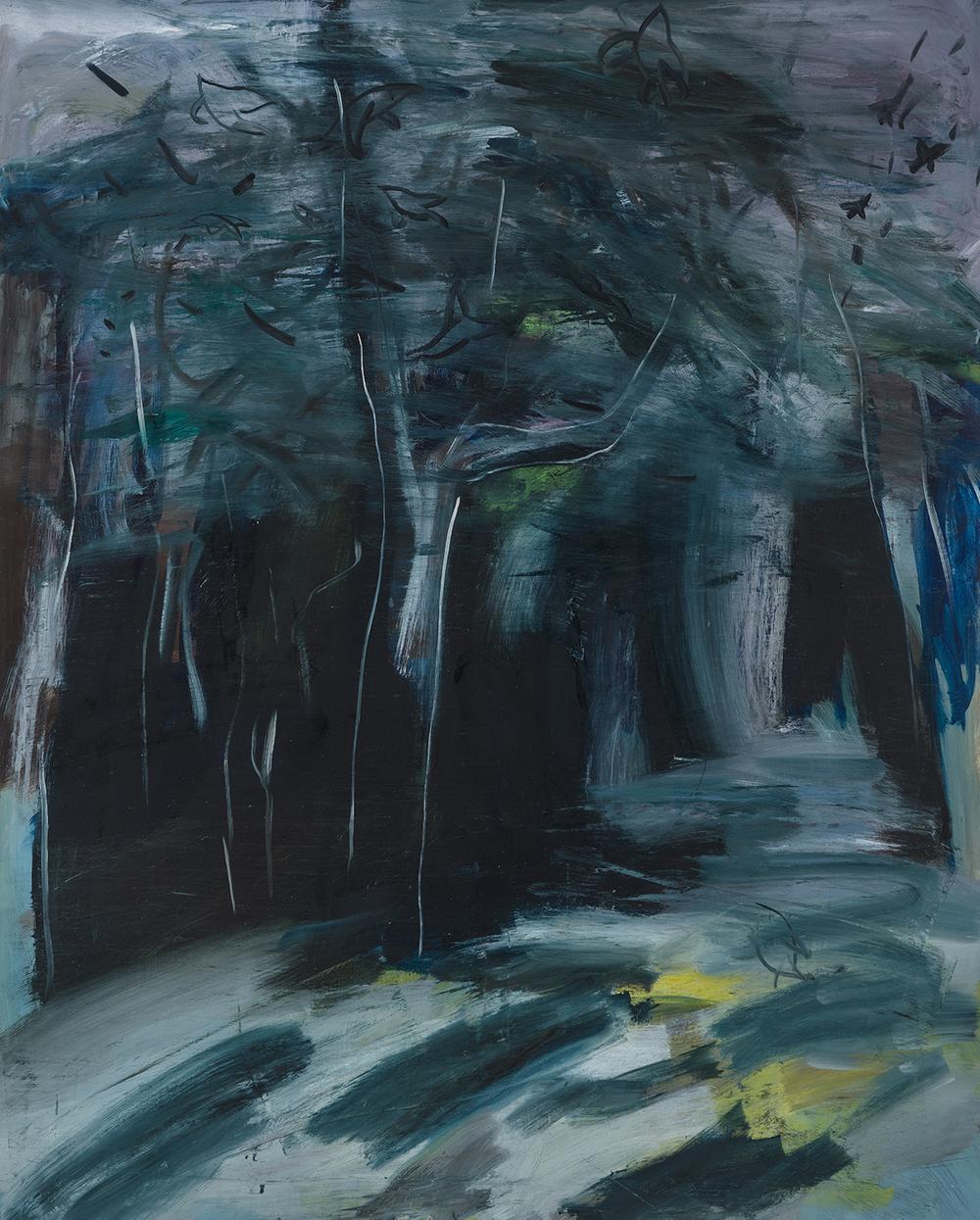
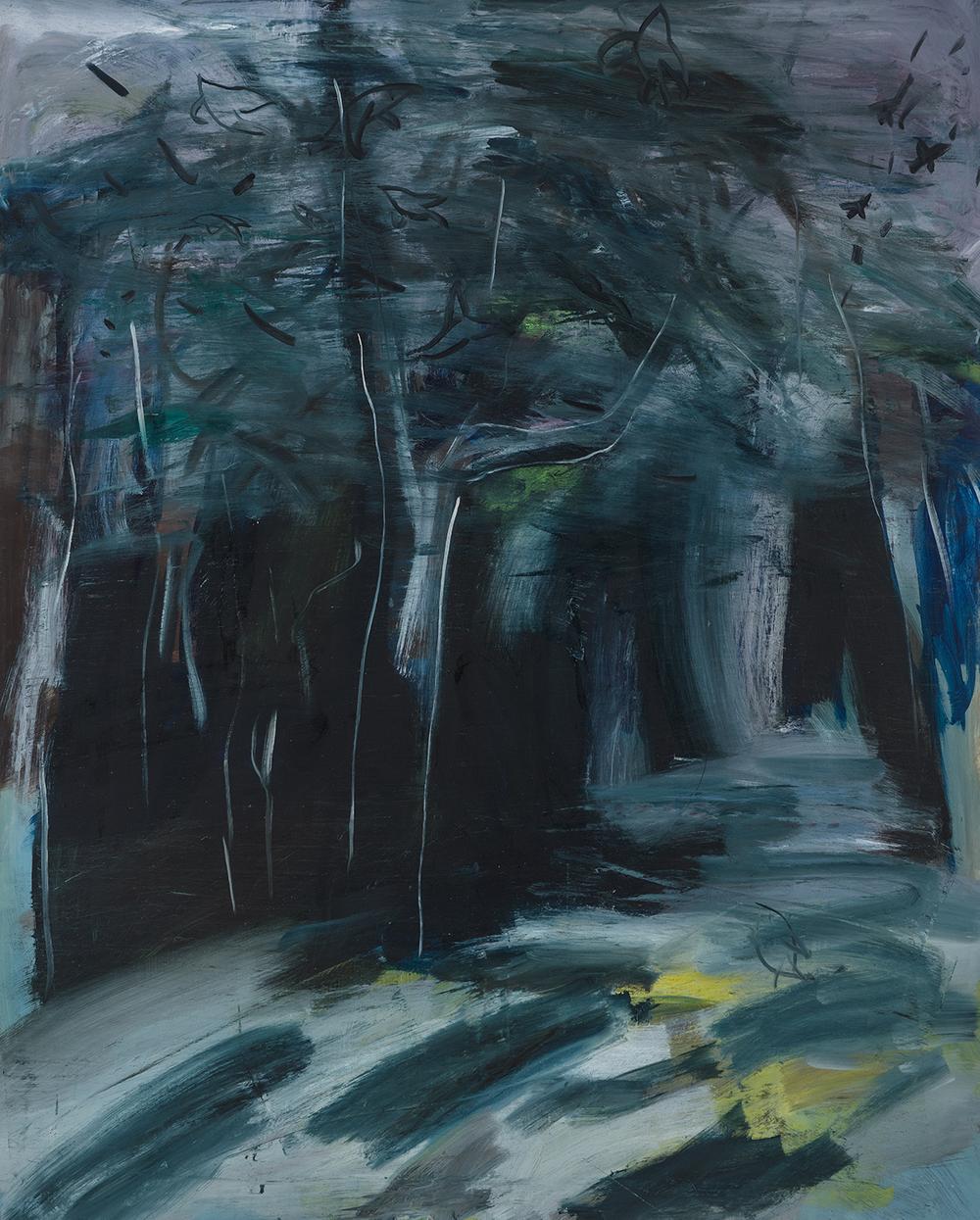
Hyundoo Jung, Bird Tree, 2016, Oil on canvas, 163.8x130cm ©Hyundoo Jung

In his landscape paintings from 2016, when he still maintained a certain visual distance from his subjects, forms such as birds, deer, and trees were depicted with relatively clear outlines. However, in works produced after he began painting through the language of the body, elements that explicitly point to objects or landscapes of the forest noticeably recede.


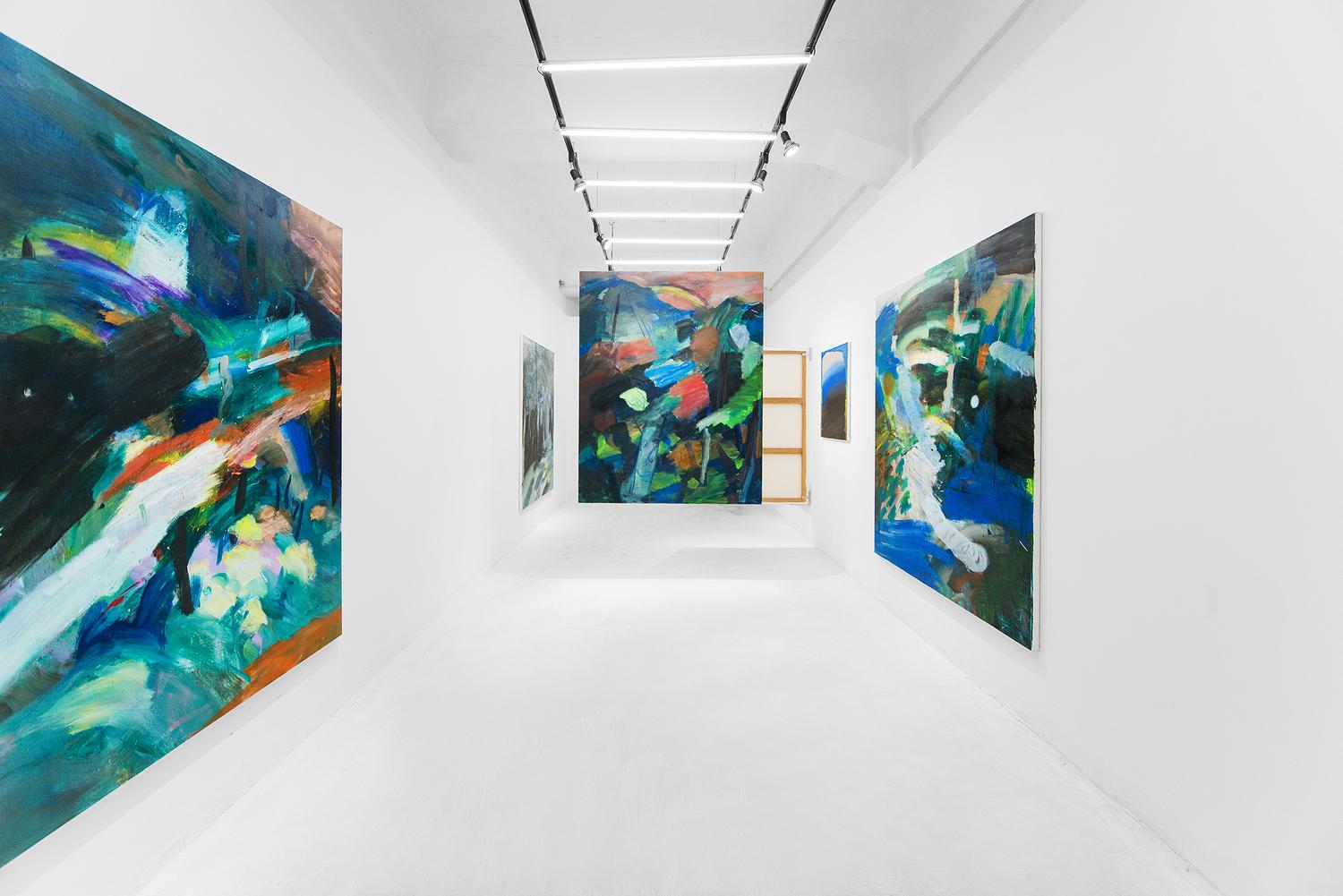
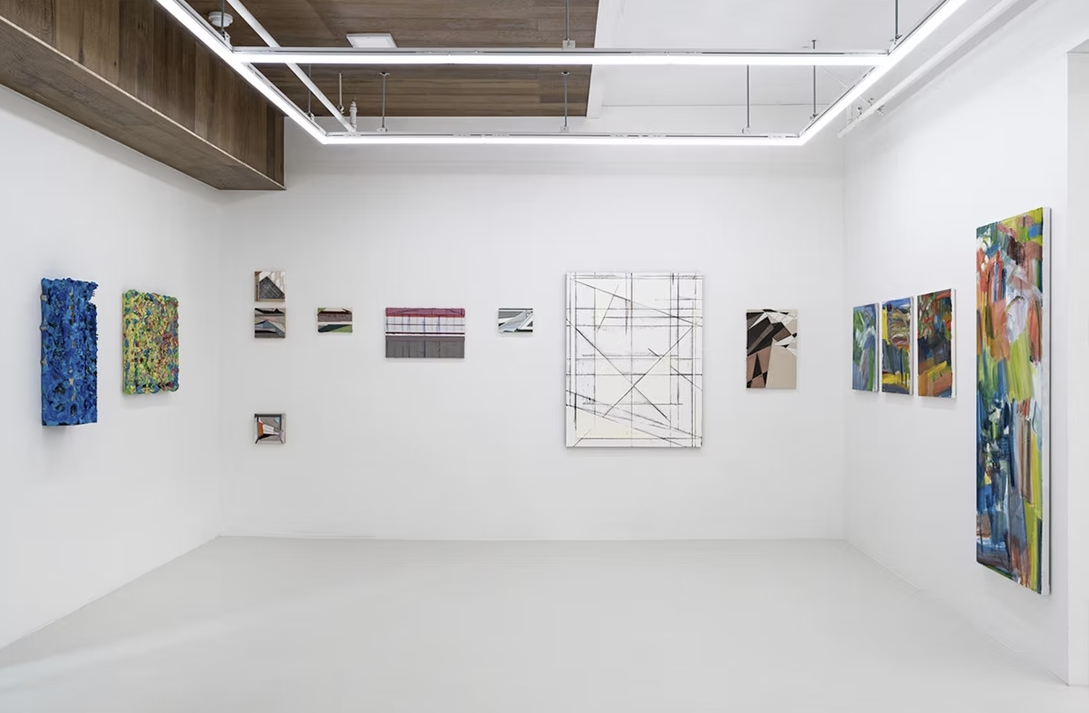
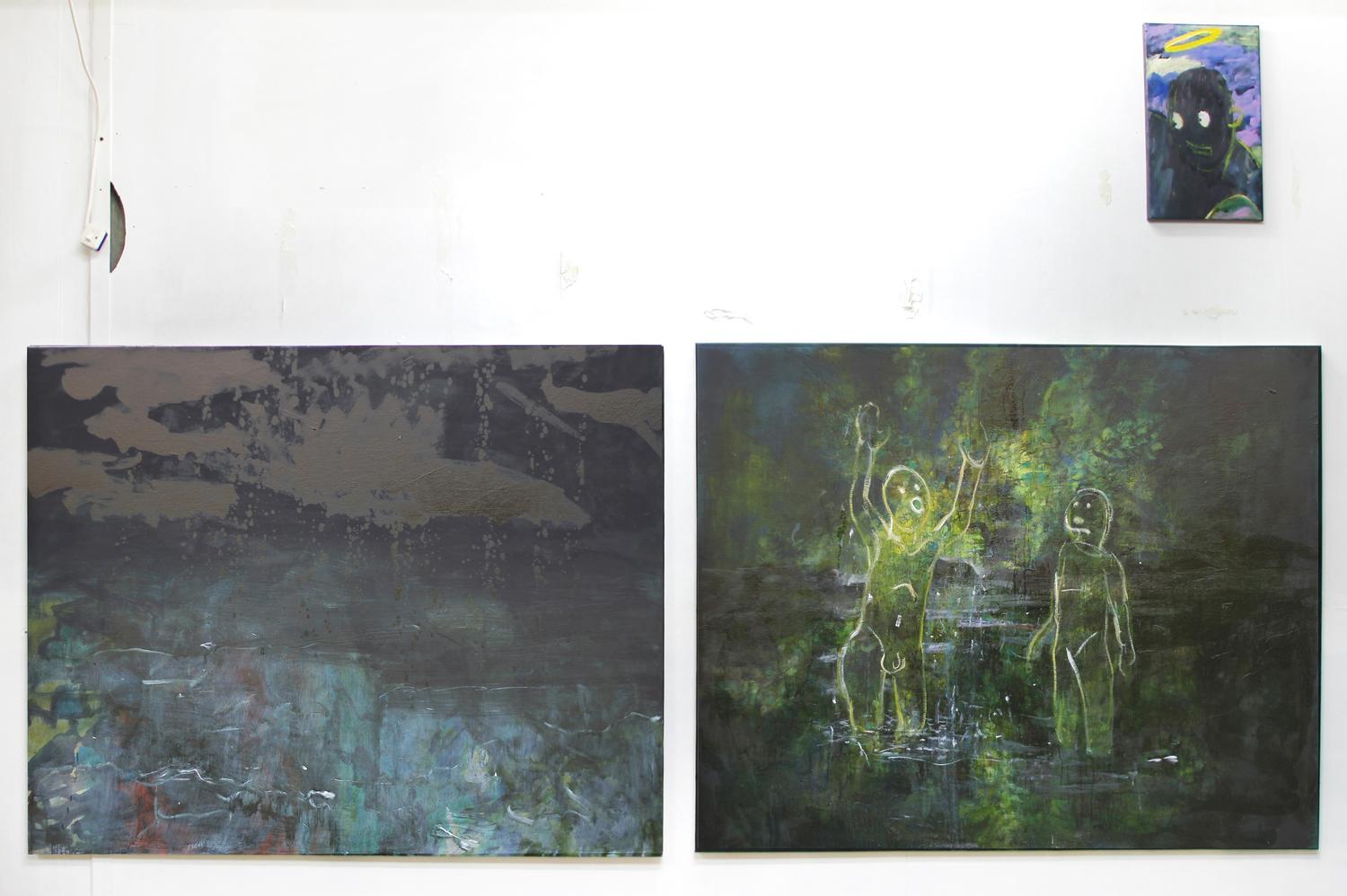
Installation view of 《The guy wears rainbow》 (Art Space Hyeong, 2017) ©Hyundoo Jung

At his first solo exhibition, 《The guy wears rainbow》, held in 2017 at Art Space Hyeong, Hyundoo Jung attempted to translate an imagined space existing in his mind onto the canvas through the physical act of painting.
 
The works in this exhibition began with the forest envisioned as a kind of daydream—a space that exists simultaneously as reality and as an otherworld. As the forest entered the artist’s inner world, the painting became another living being; and the more Jung concentrated on his interior, increasing the distance between himself and the external world, the more the painting came to resemble the artist himself.
 
Through this sequence in which the artist’s inner state is bound to the physical gesture of brushwork, the canvas gradually transforms—from the forest into the artist himself, that is, into a single human presence.


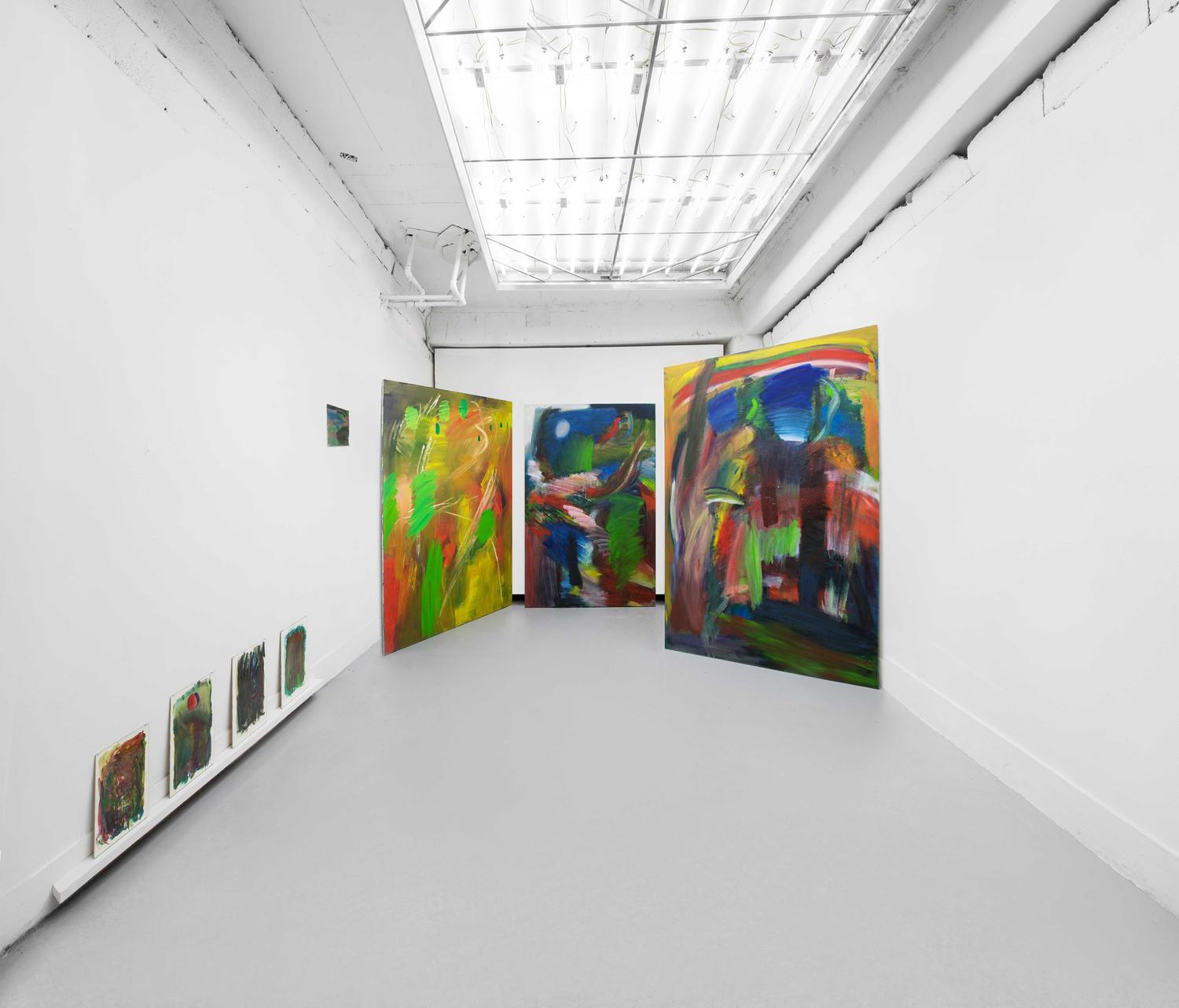
Installation view of 《A Paradoxical Talk》 (Weekend, 2018) ©Hyundoo Jung

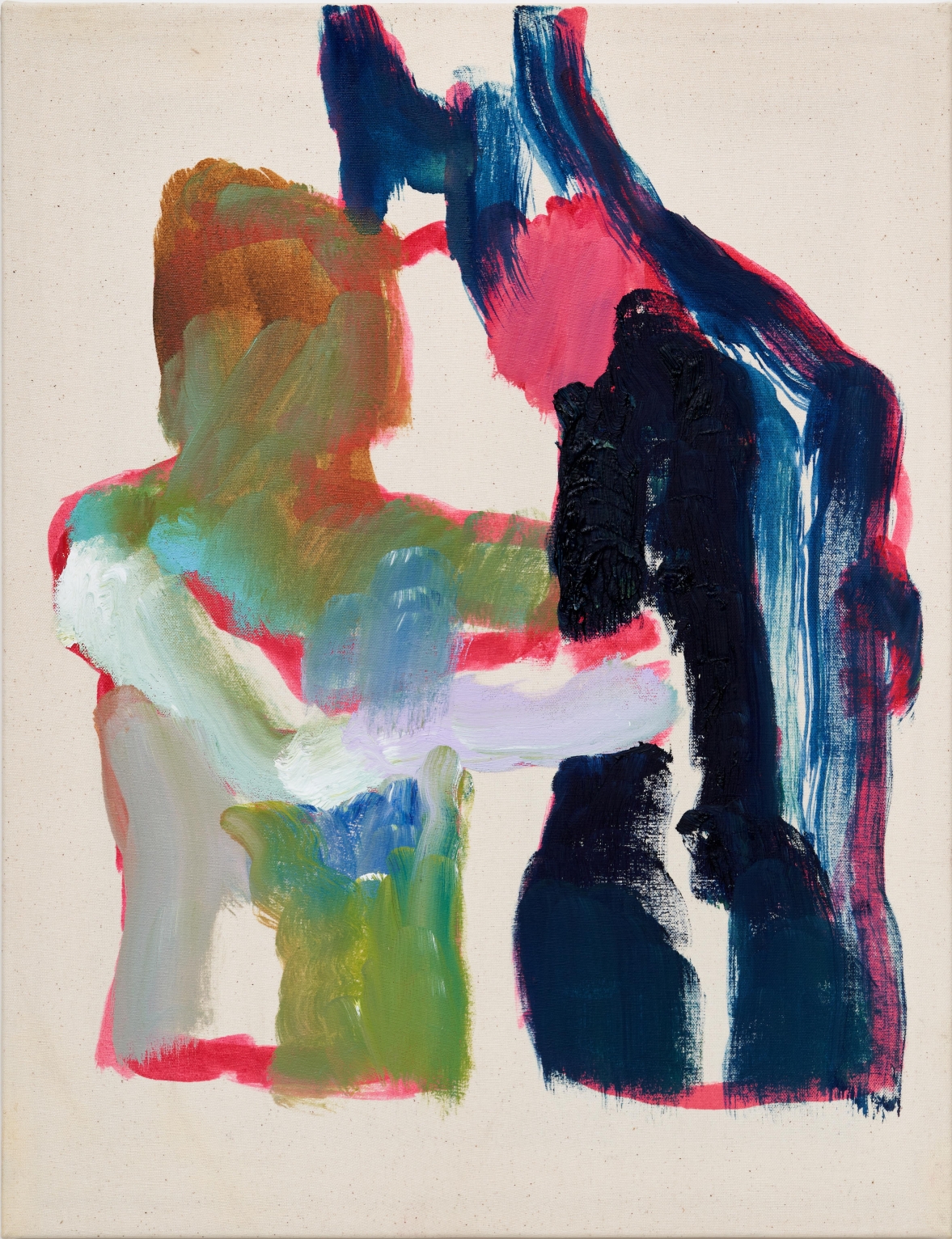
This sustained focus on bodily sensation eventually led Jung to bring the body itself to the foreground of his paintings. For instance, in Forest and Body_Mass (2017), a series of three paintings presented in his 2018 solo exhibition 《A Paradoxical Talk》 at Weekend, abstracted human figures begin to emerge within the pictorial field.
 
In these works, the figures’ faces and heads at times overlap with the sky or mountains, touch a rainbow, and become landscapes in themselves; the sun and moon, in turn, transform into the figures’ eyes. The bodies Jung depicts do not possess an independent “flesh” that distinguishes them from other parts of the canvas. Instead, they remain inseparable from the surrounding elements, dissolving into the painting as a whole.


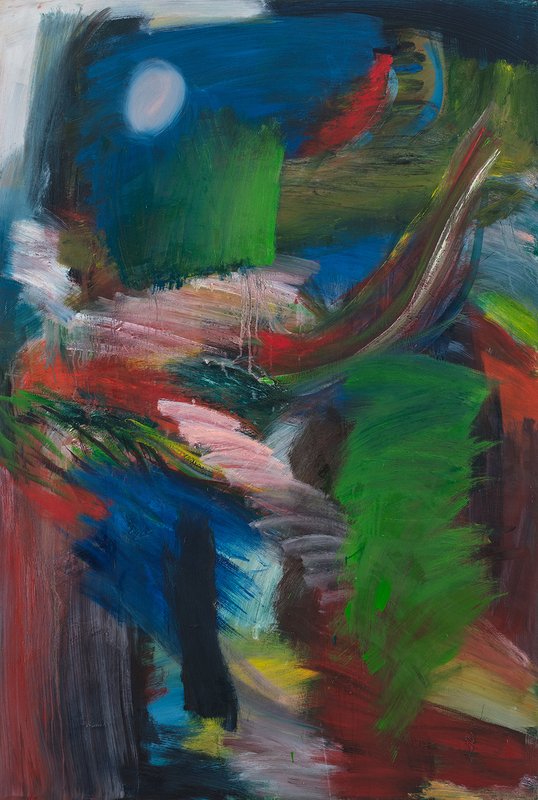
Hyundoo Jung, Forest and Body_Mass, 2017, Oil on canvas, 193.9x130cm ©Hyundoo Jung

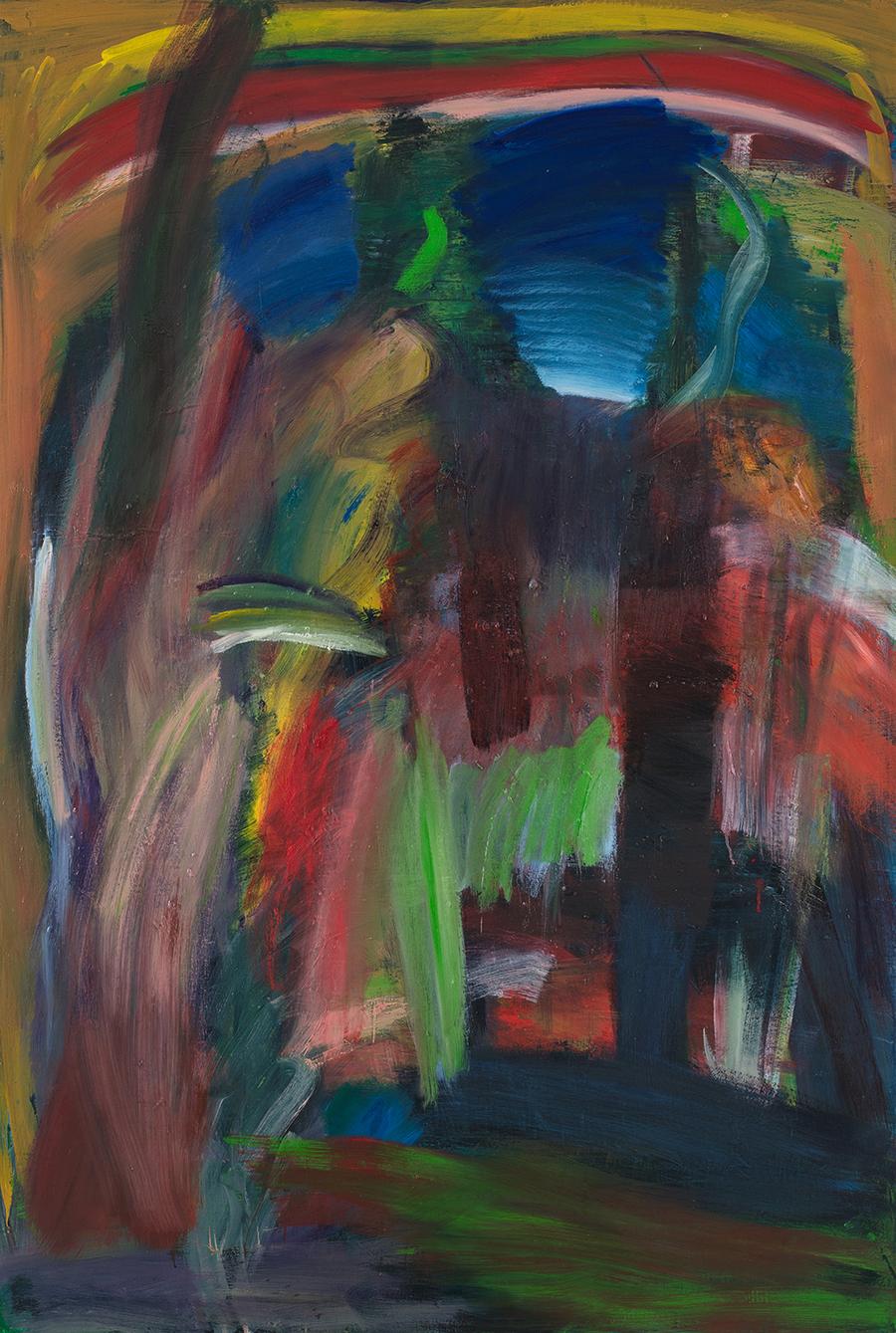
In this way, Jung’s brushwork, which blurs and disrupts the boundary between body and landscape, gives form to moments of unity between subject and object, as he absorbs and responds to the sensations offered by the forest, allowing his inner and outer worlds to merge.
 
The resulting images become a single body—a large mass in which no clear boundary exists between landscape and figure. Landscapes and figures drawn through the bodily language of communion with the forest overlap, intermingle, and exchange their forms and flesh, being reborn as a new body.
 
Through this process, Jung’s painting establishes a pictorial field independent of representational space, unfolding as a mass that moves between the “flesh of paint” and “conceptual flesh.”


Hyundoo Jung, Forest and Body_Mass, 2017, Oil on canvas, 193.9x130cm ©Hyundoo Jung

At a certain point, Jung began to feel that translating the forest’s peculiar emotions and sensations into a single, self-contained image had itself become a kind of constraint. A painting completed within one frame, he realized, struggled to move beyond what was immediately visible.
 
He also came to sense the limitations of attempting to draw out subjective emotions distilled from visual information through the process of objectively describing forms, or from the depicted scene itself.
 
In response, the artist began once again to erase images. Across multiple canvases, he layered and intermingled “images that arise in the mind—conceptual flesh,” covering over the visible “actual material—flesh,” in an effort to free himself from fixed images.


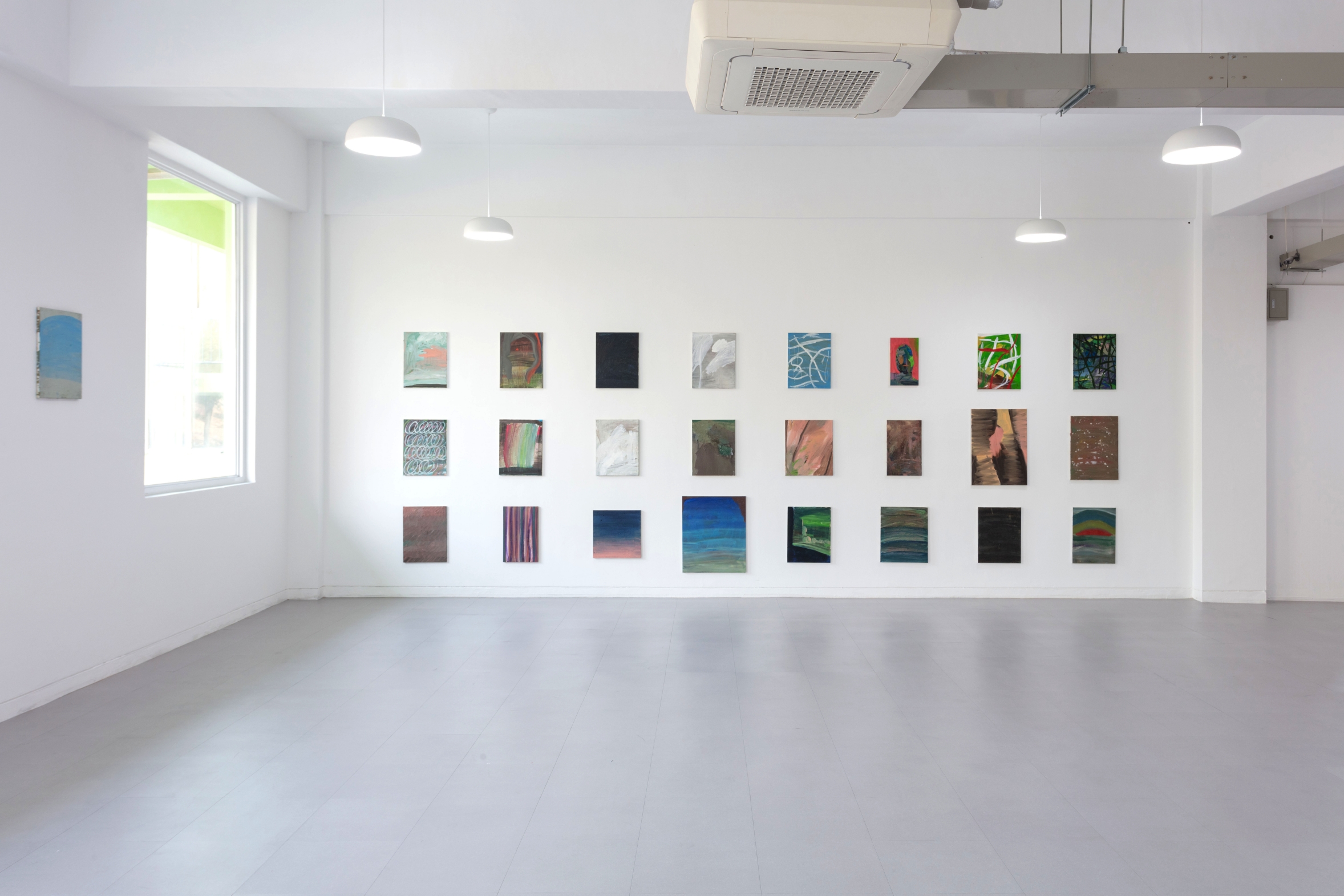
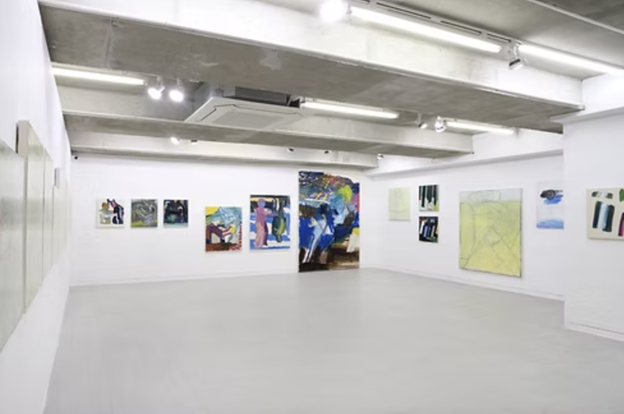
Installation view of 《The face throwers》 (Space Willing N Dealing, 2019) ©Hyundoo Jung

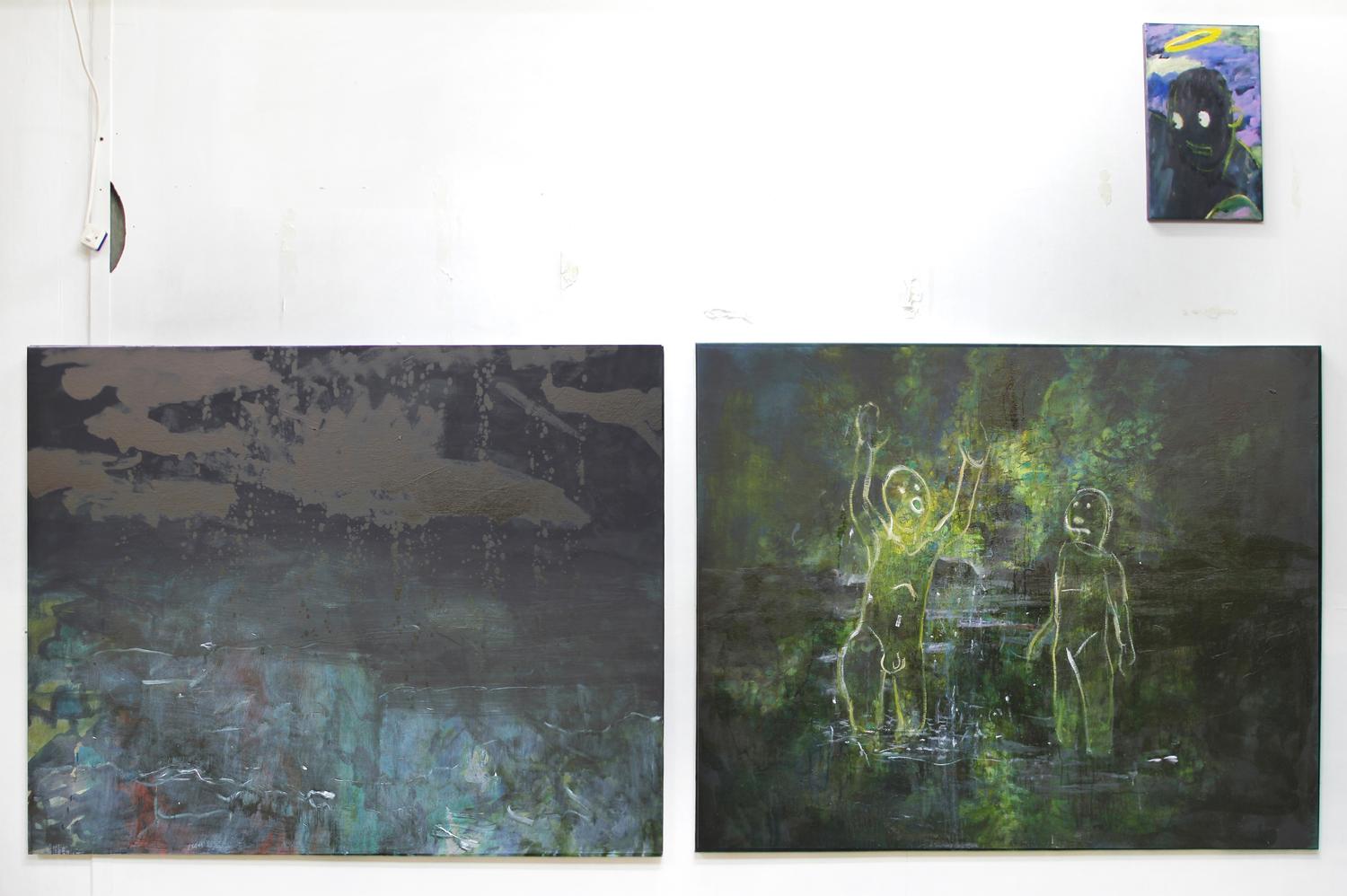
These concerns did not end within a single canvas but developed into the series ‘The face throwers,’ in which multiple paintings form relationships with one another. As he worked on the series, the artist imagined scenes in which figures within each painting exchange faces—either their own or those of others.
 
This anonymous act overlaps with the painter’s own process: searching for conceptual flesh within the brushstrokes laid upon the surface, then erasing and reapplying that conceptual flesh while moving between multiple canvases.
 
In other words, in ‘The face throwers,’ the “people” refer not only to the images contained within the paintings, but also to the one who paints, the one who looks, and any subject who performs an action through the painting itself.


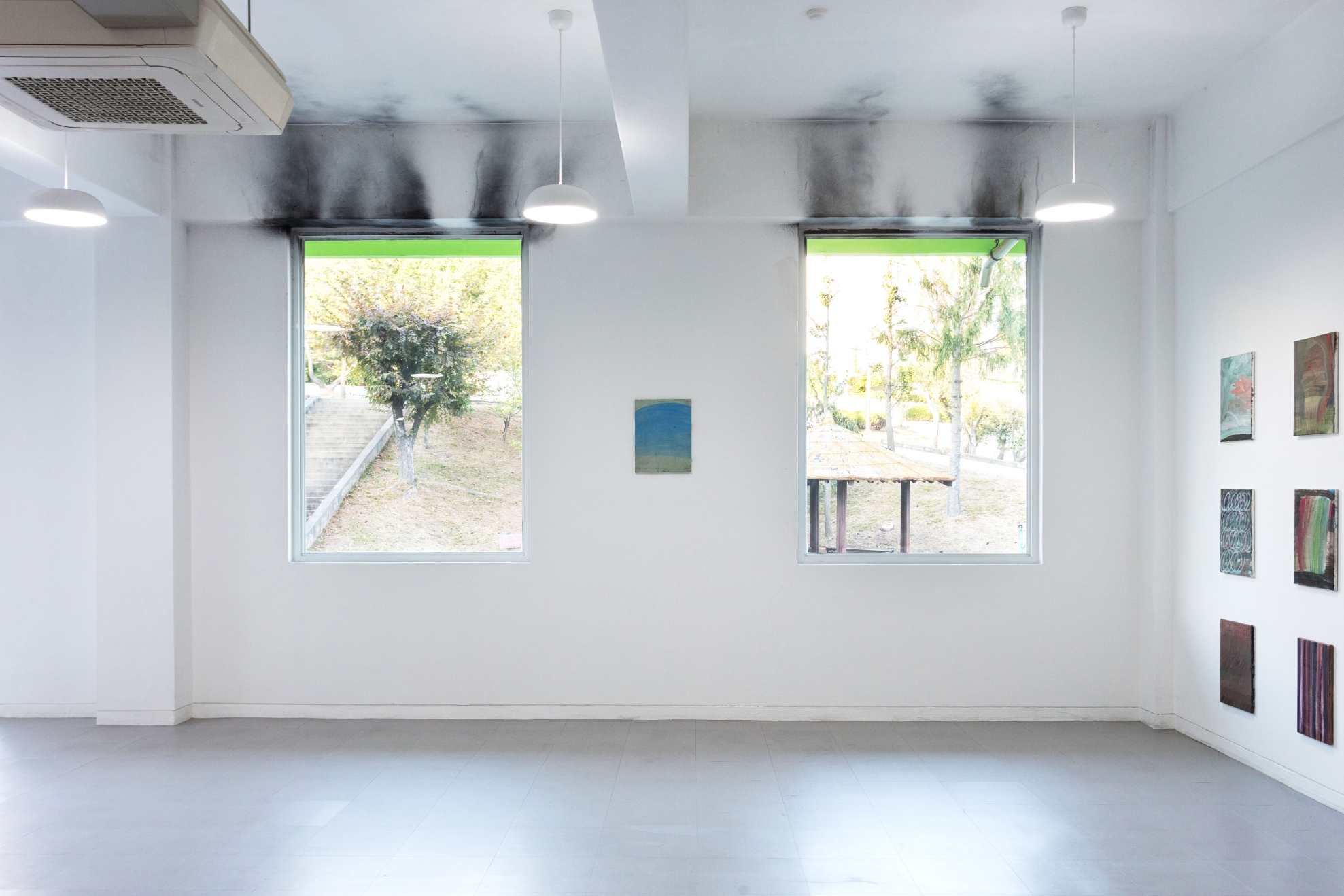
Installation view of 《The face throwers》 (Space Willing N Dealing, 2019) ©Hyundoo Jung

Furthermore, the series carries a sense of temporality. Even as the artist continues the series as a single body of work, his preferences and modes of expression subtly shift each time one painting is completed and he moves on to the next. At the same time, the repeated title links the multiple canvases together, creating points of continuity and divergence between earlier and later works.
 
In this way, ‘The face throwers’ unfolds by passing through and permeating the space between painting and painting—between one anonymous face and another—continually situating itself within the relationship between “seeing” and “being seen.”


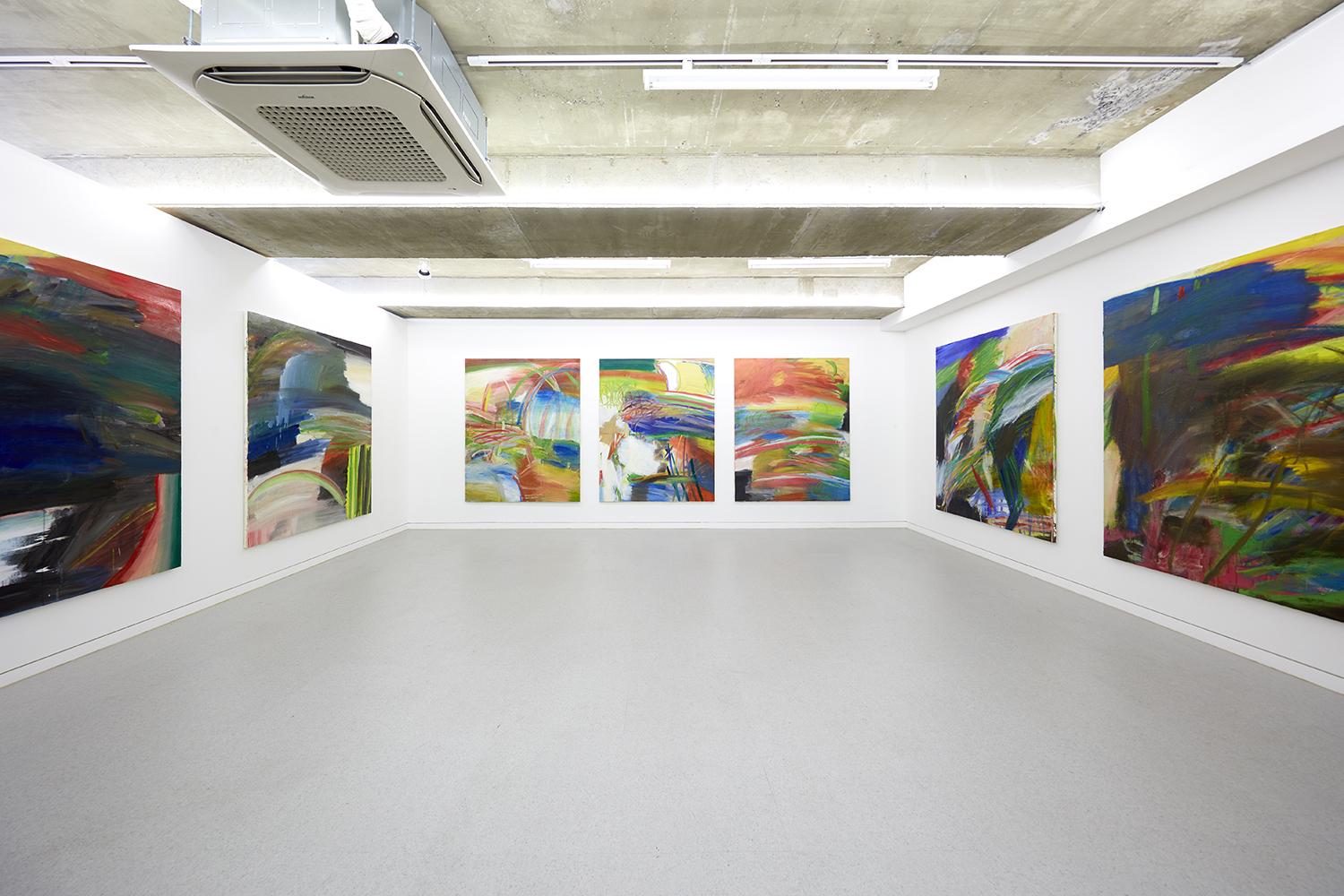
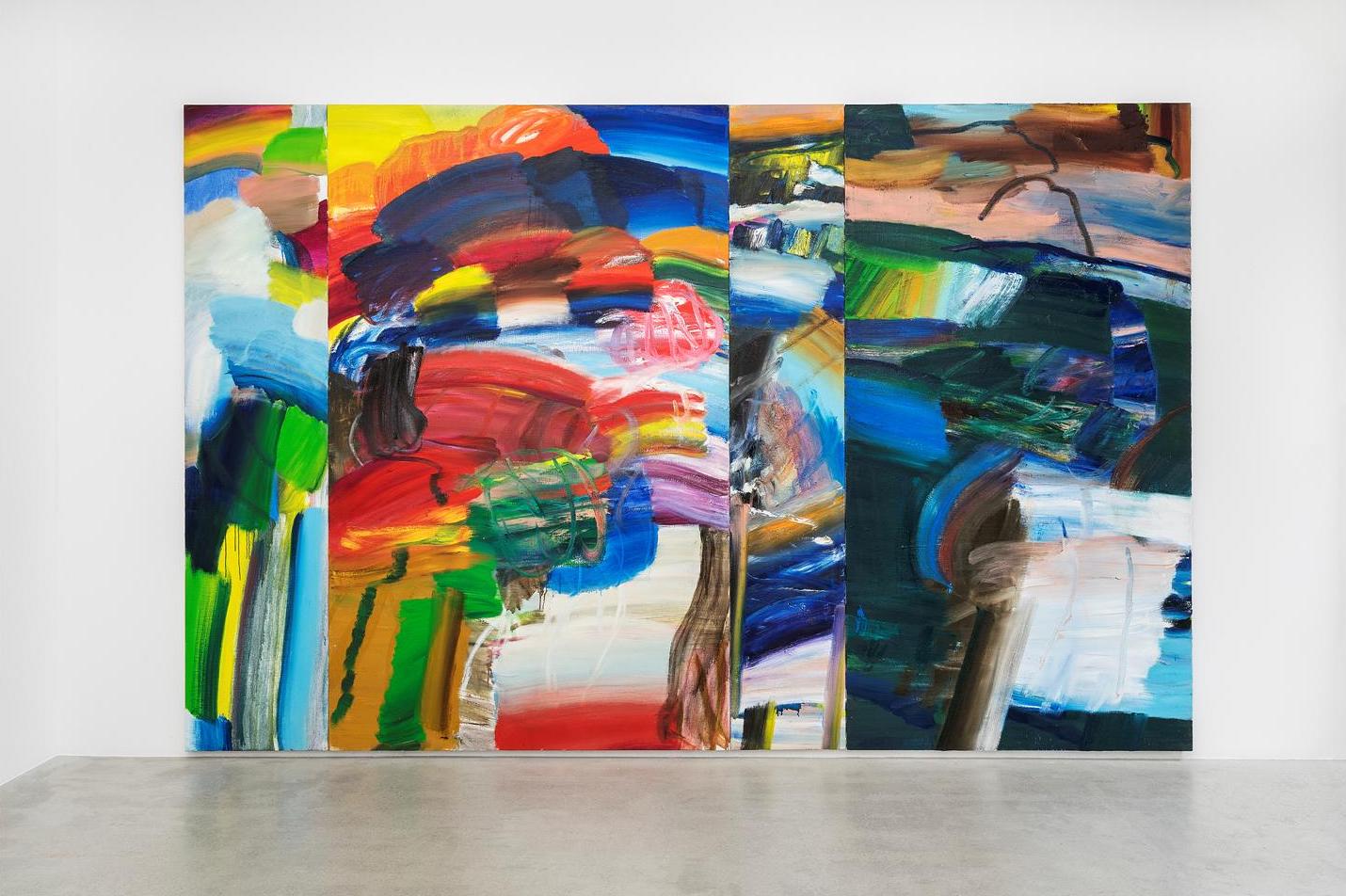
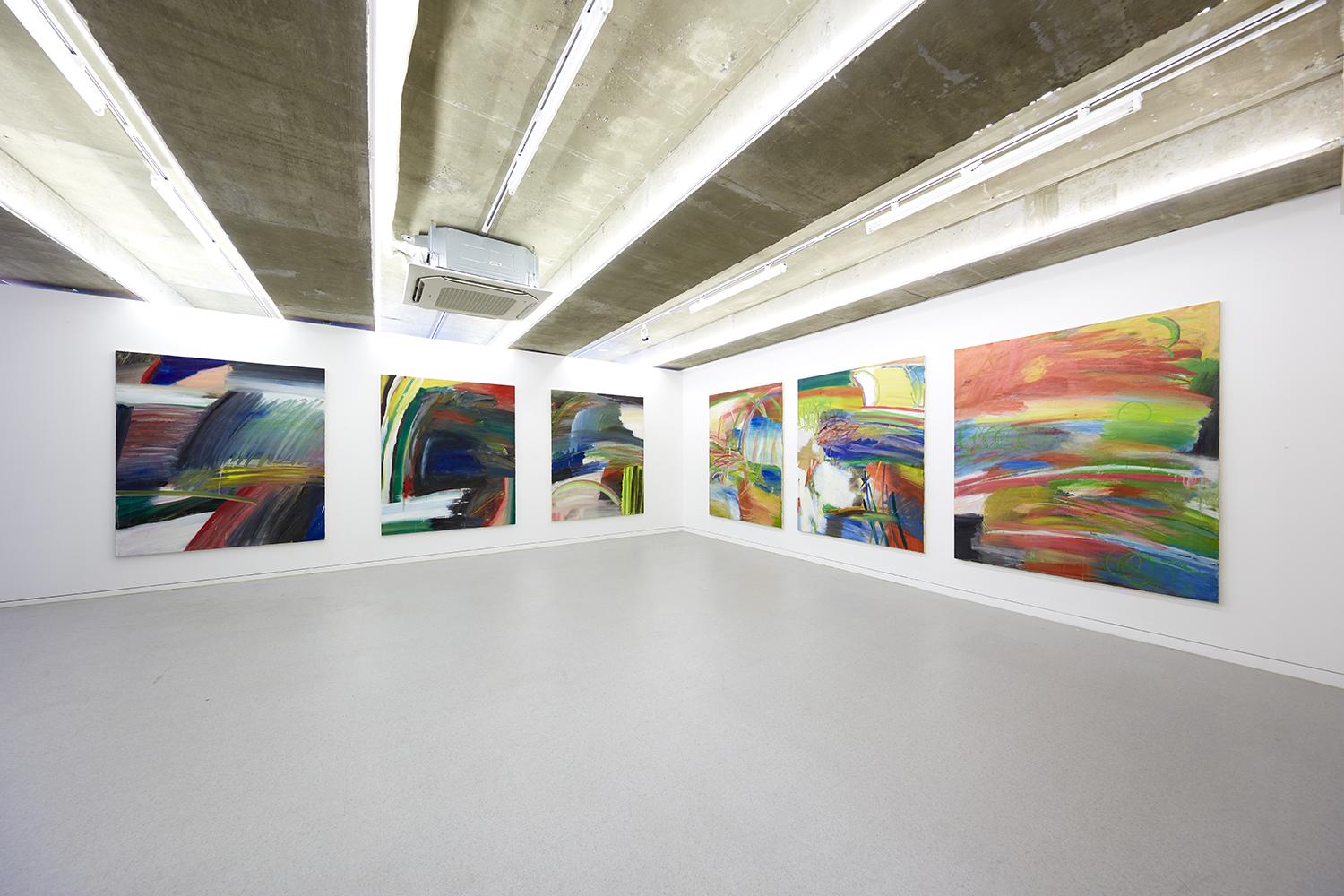
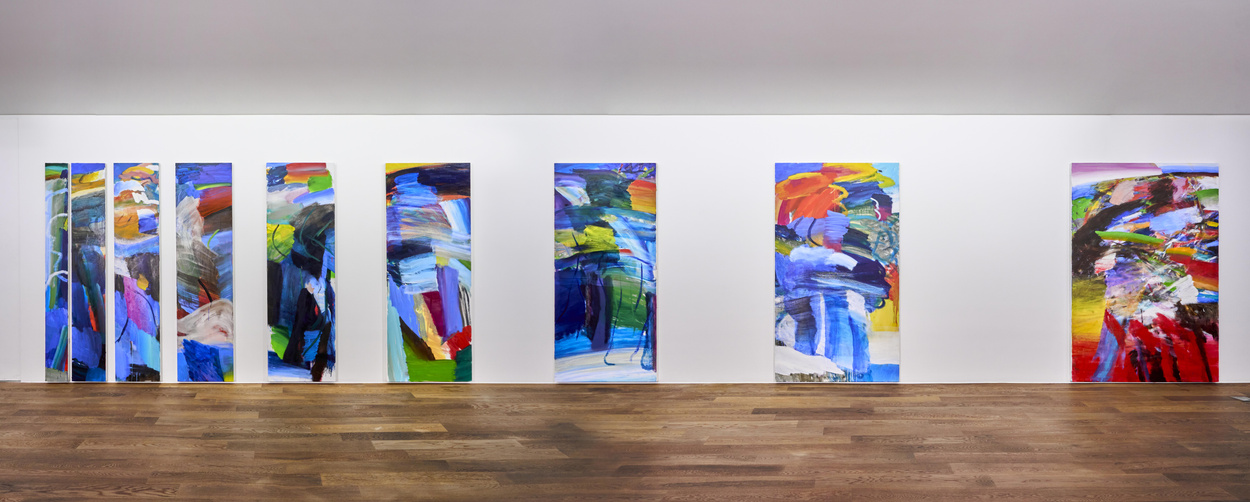
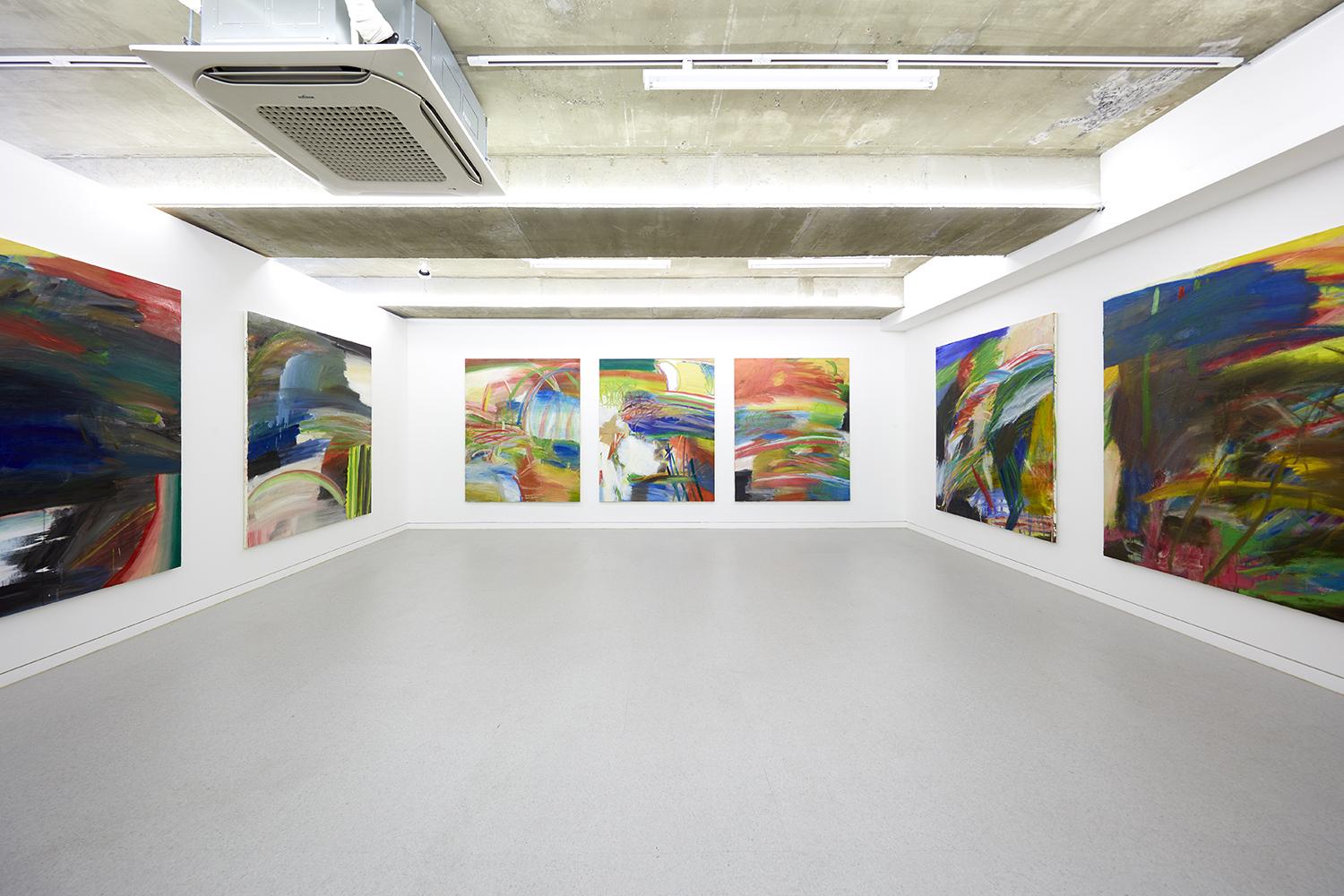
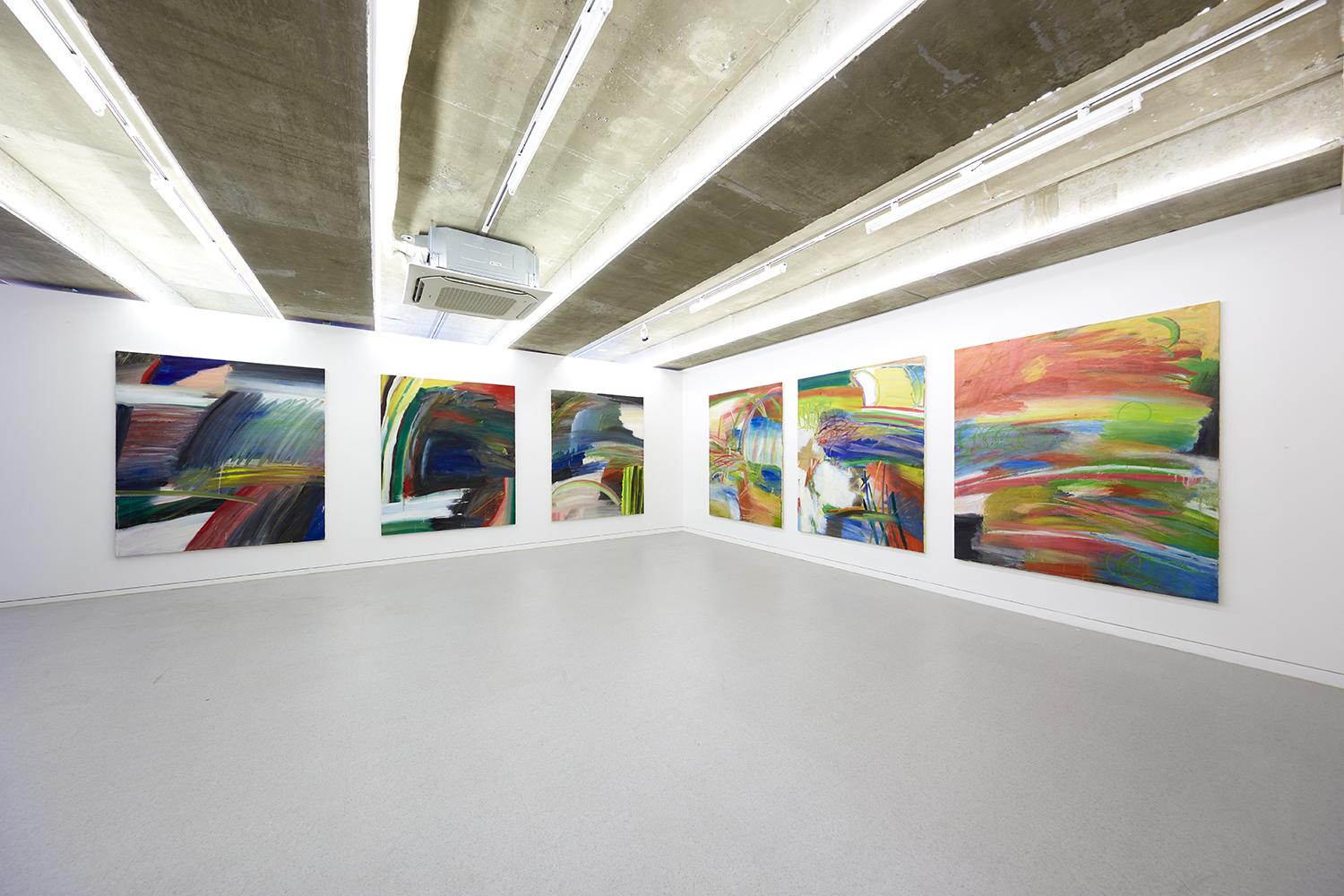
(from the left) 〈Gradually (서서히)〉, 〈Becoming a Cloud (구름이 되고)〉, 〈Our Bodies and the Body (우리의 몸과 신체)〉, 〈Where the Shadow Hidden (그림자가 숨은)〉, 2023, Installation view of 《Gradually, Shadow Legs Hidden》 (A-Lounge Contemporary, 2024) ©Hyundoo Jung

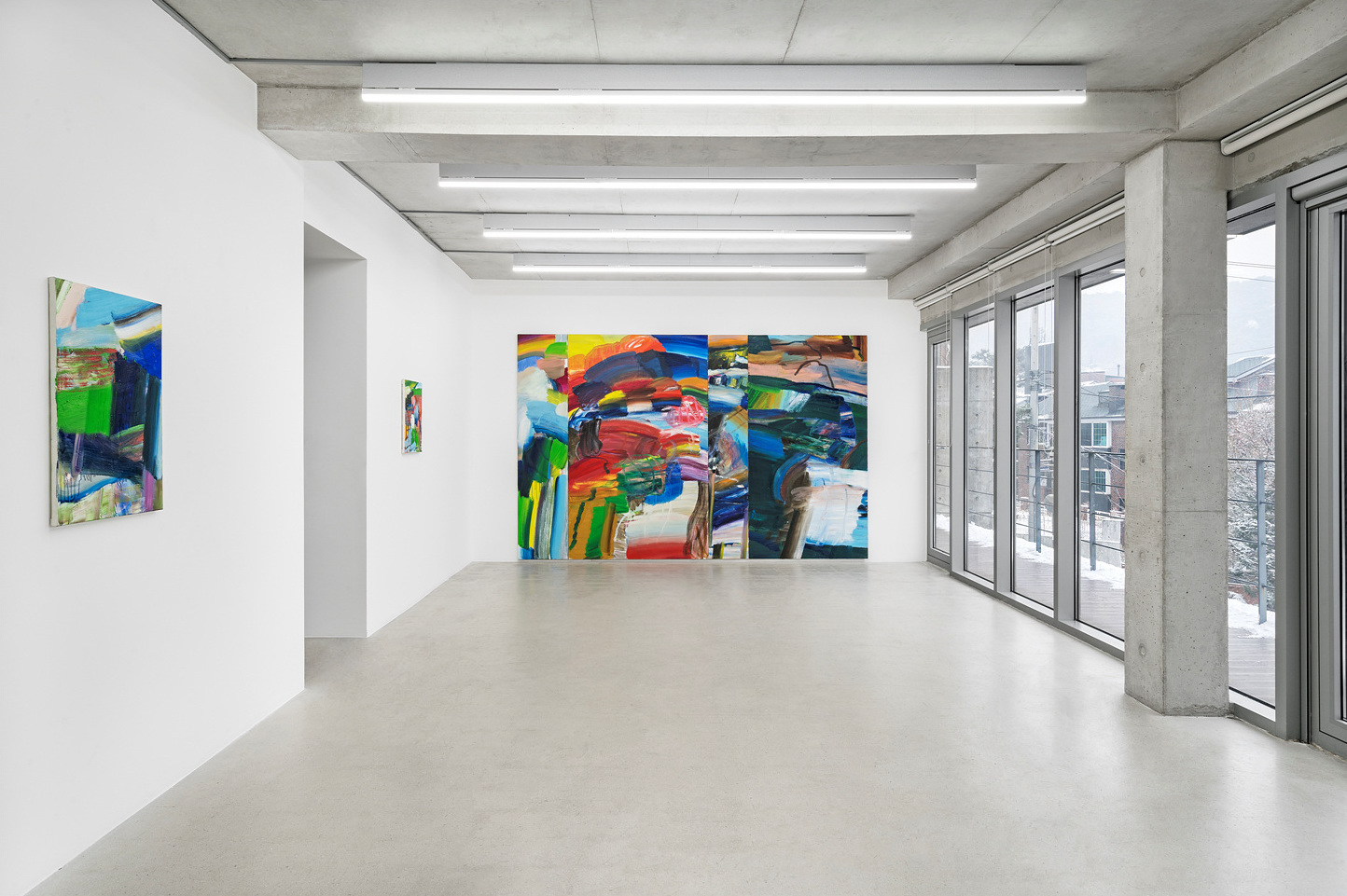
And in his 2024 solo exhibition 《Gradually, Shadow Legs Hidden》 at A-Lounge Contemporary, Hyundoo Jung sought to demonstrate the latent possibilities of images through the distances and gaps between paintings—between one surface and another.
 
The four paintings that comprised the exhibition (Gradually (서서히), Becoming a Cloud (구름이 되고), Our Bodies and the Body (우리의 몸과 신체), Where the Shadow Hidden (그림자가 숨은)) were installed side by side without any spacing, forming a single, expansive pictorial field.


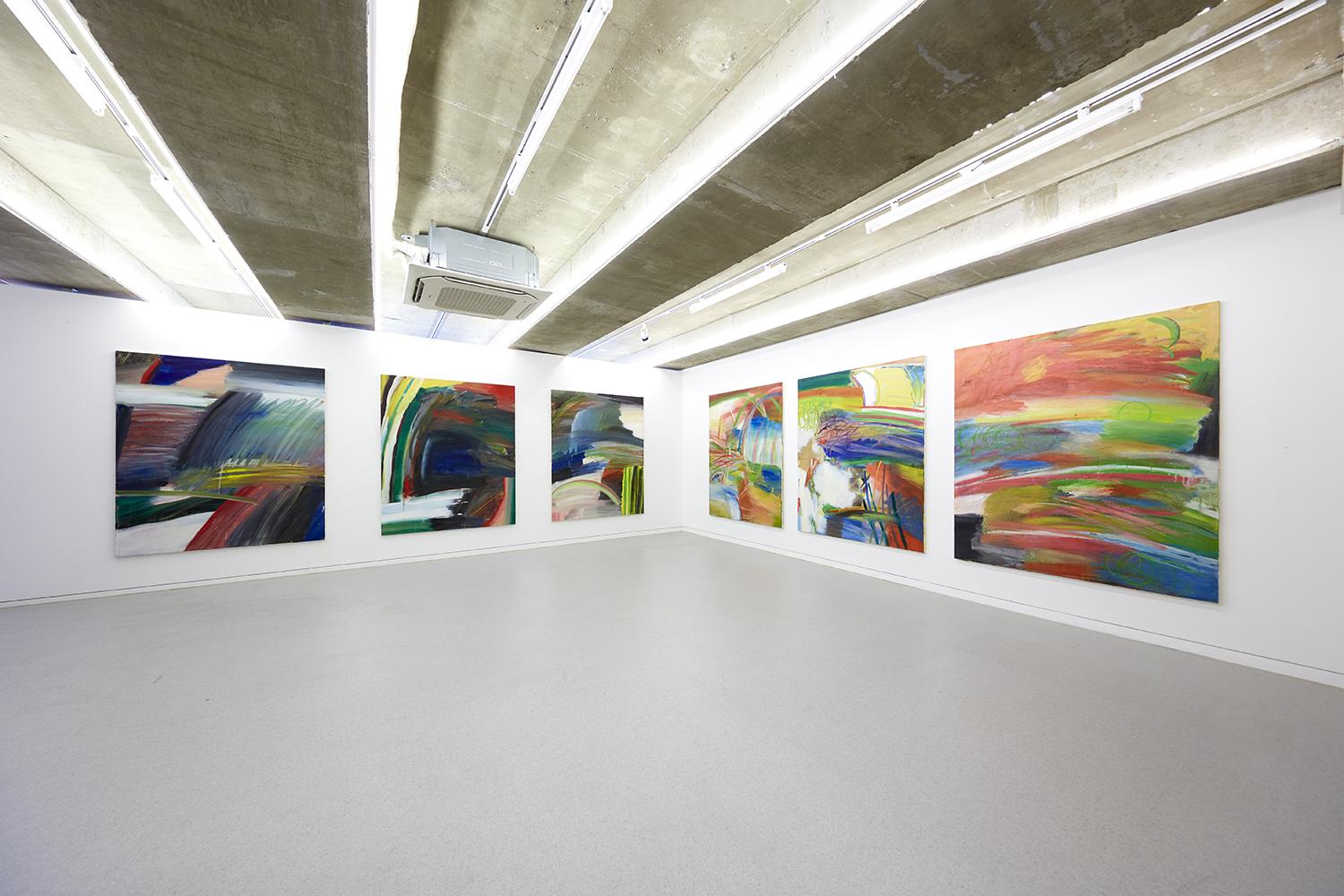
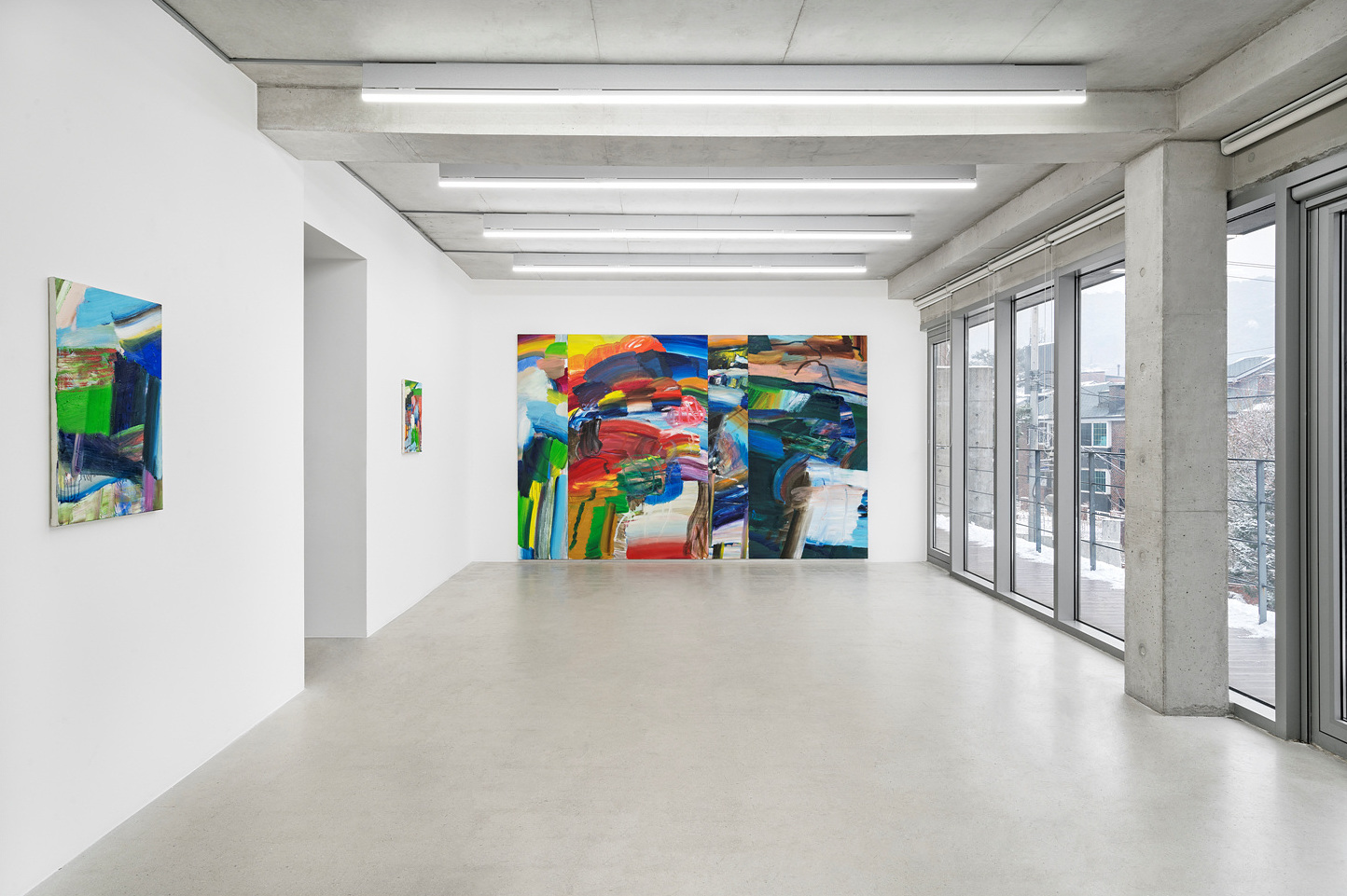
Installation view of 《Gradually, Shadow Legs Hidden》 (A-Lounge Contemporary, 2024) ©Hyundoo Jung

Four paintings—each bearing a different title, differing in scale, and arbitrarily brought together at a given moment—were joined seamlessly on the wall as if they formed a single work. In the exhibition text, critic Soyeon Ahn describes this temporary conjunction as follows: “By aligning brushstrokes made at different times in succession, unrelated events are chained together within a single ‘delayed narrative.’ This, in turn, blurs the clear temporal gaps between them and proposes a way of seeing (seeing/being seen) form itself.”


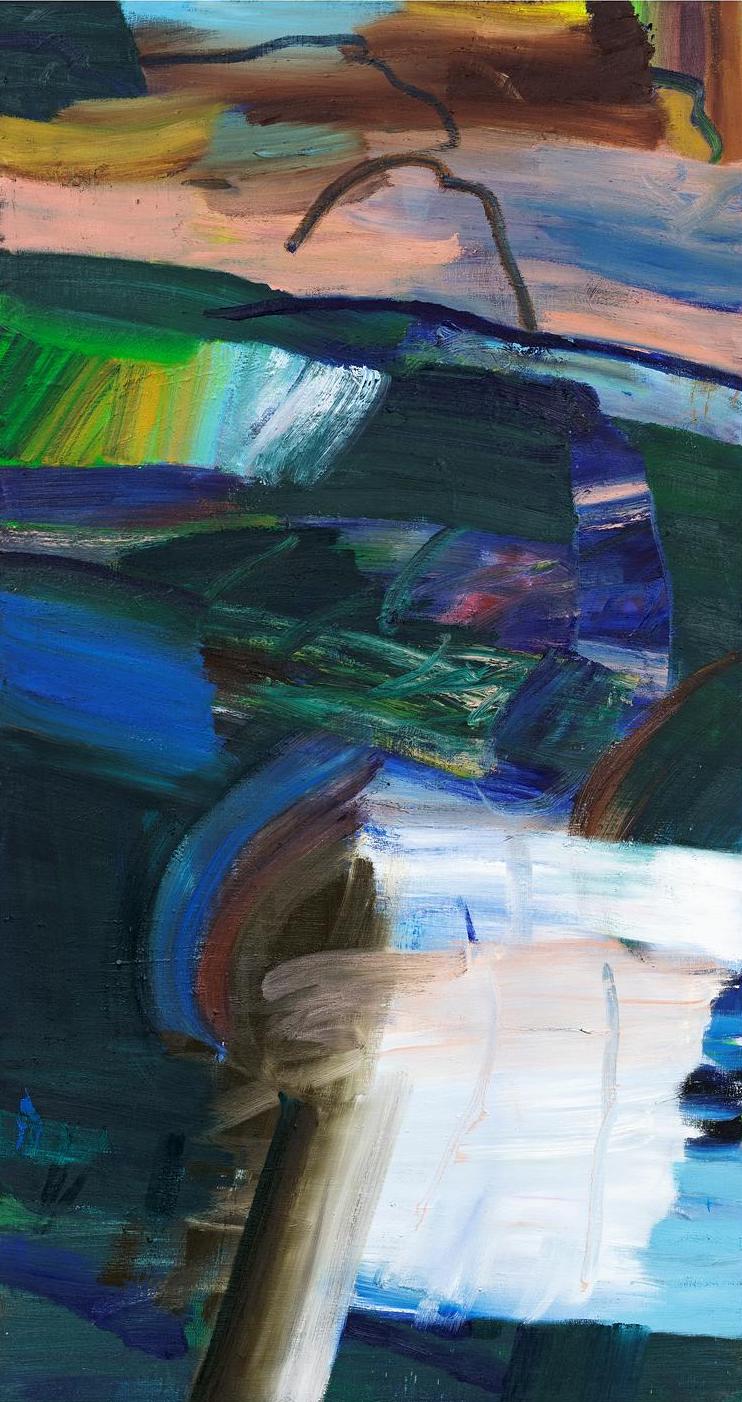
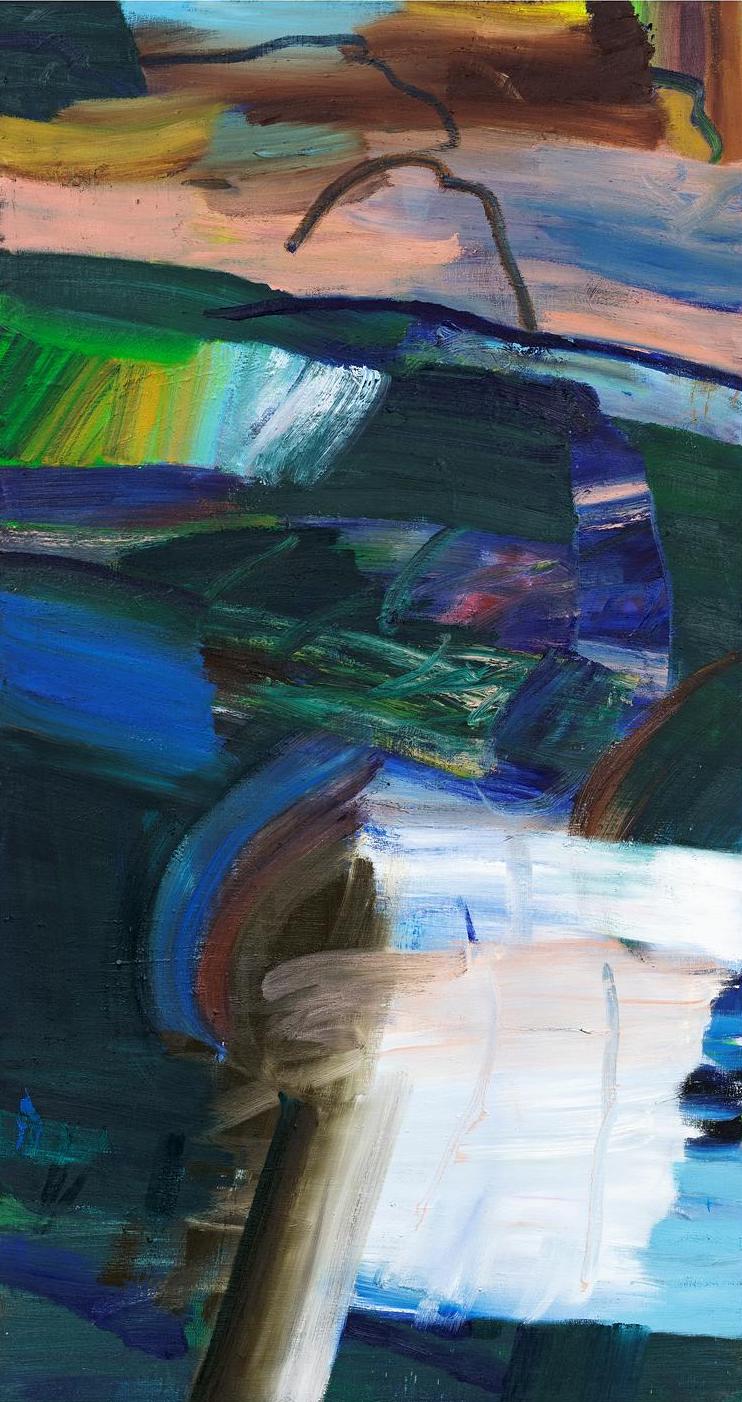
Hyundoo Jung, Where the Shadow Hidden (그림자가 숨은), 2023, Oil on linen, 225x120cm ©Hyundoo Jung

Moreover, the seemingly abrupt seams between each canvas, the brushstrokes that appear indifferent to order, and the overlapping colors and entangled or severed lines create folds—openings for imagination. These folds generate gaps that activate images of infinite, hidden or latent spacetime concealed in between.
 
In this way, Hyundoo Jung experiments with how painting can respond to shifting environments, transform itself, and enter into relationships with other paintings by temporarily assembling works through pure improvisation and chance, without predetermined plans or systems.


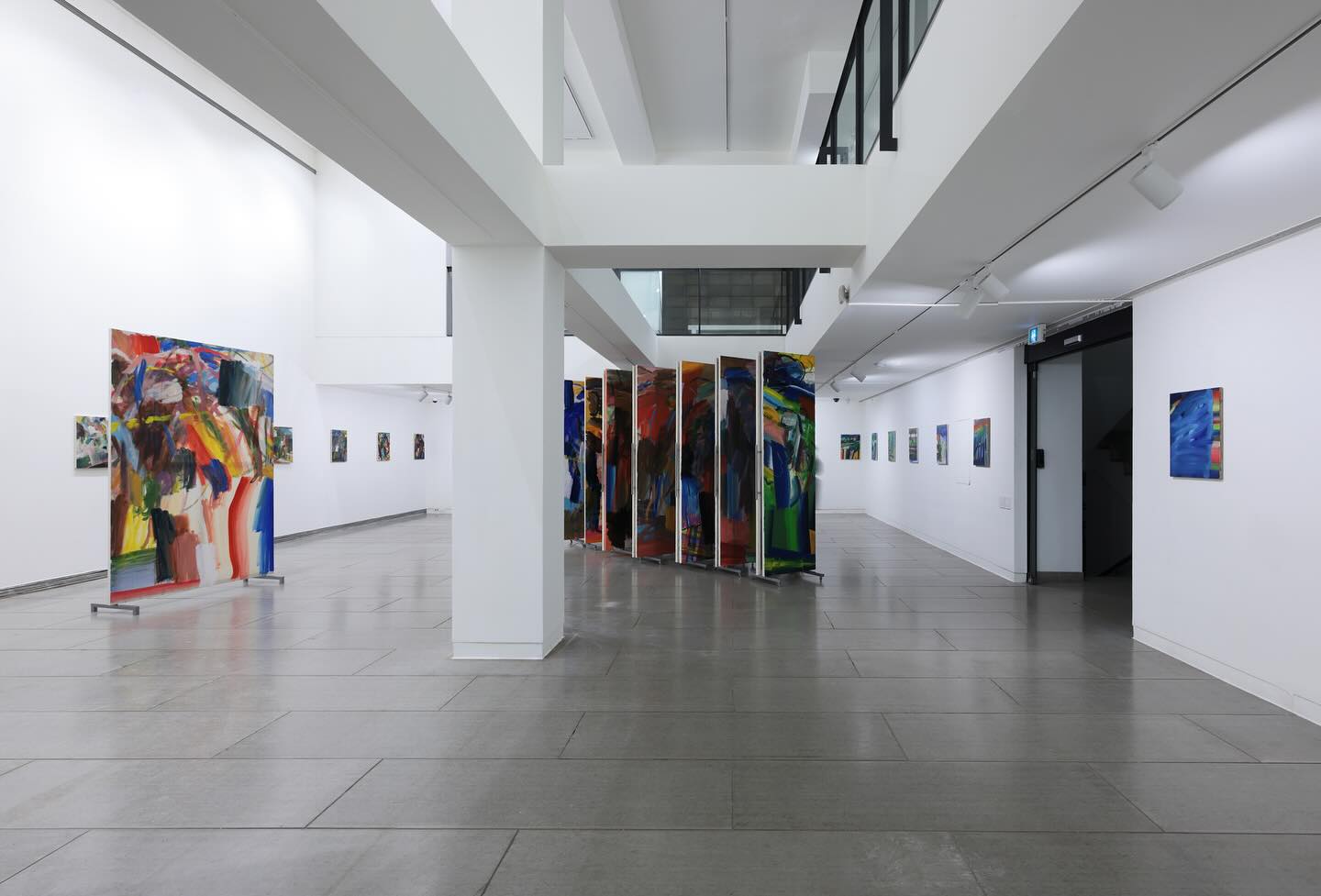
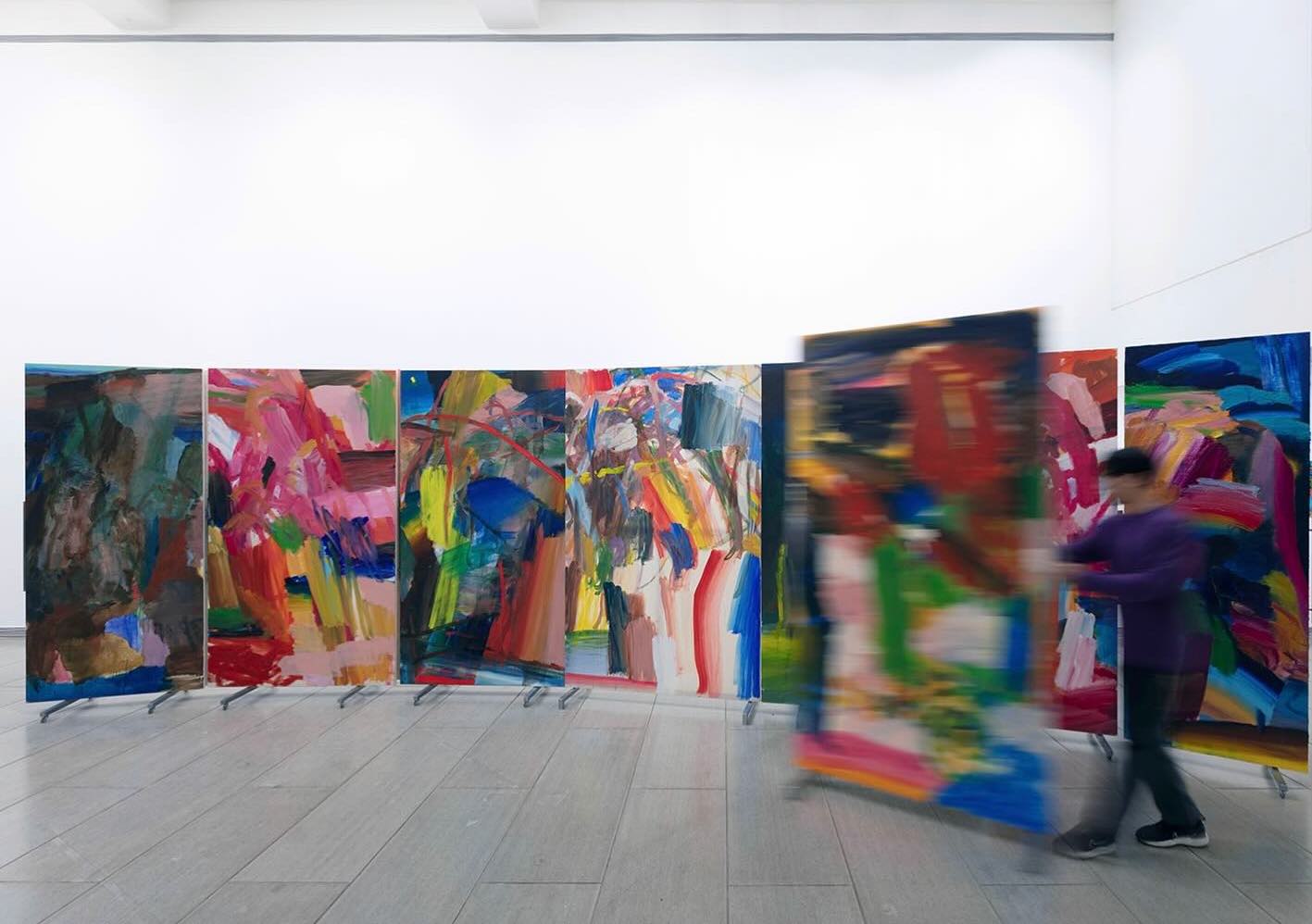
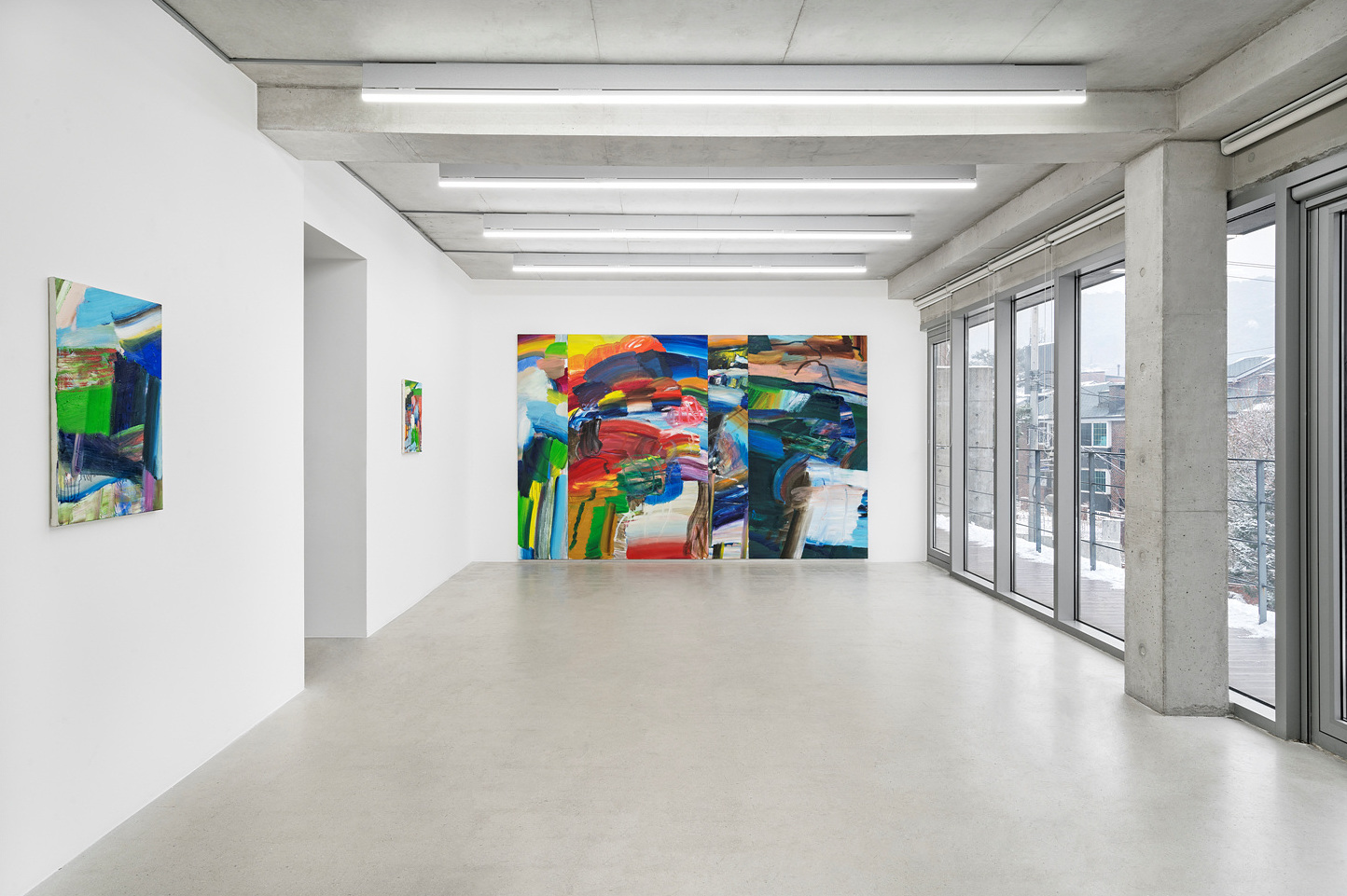
Installation view of 《Shuffle》 (Sungkok Art Museum, 2025) ©Hyundoo Jung

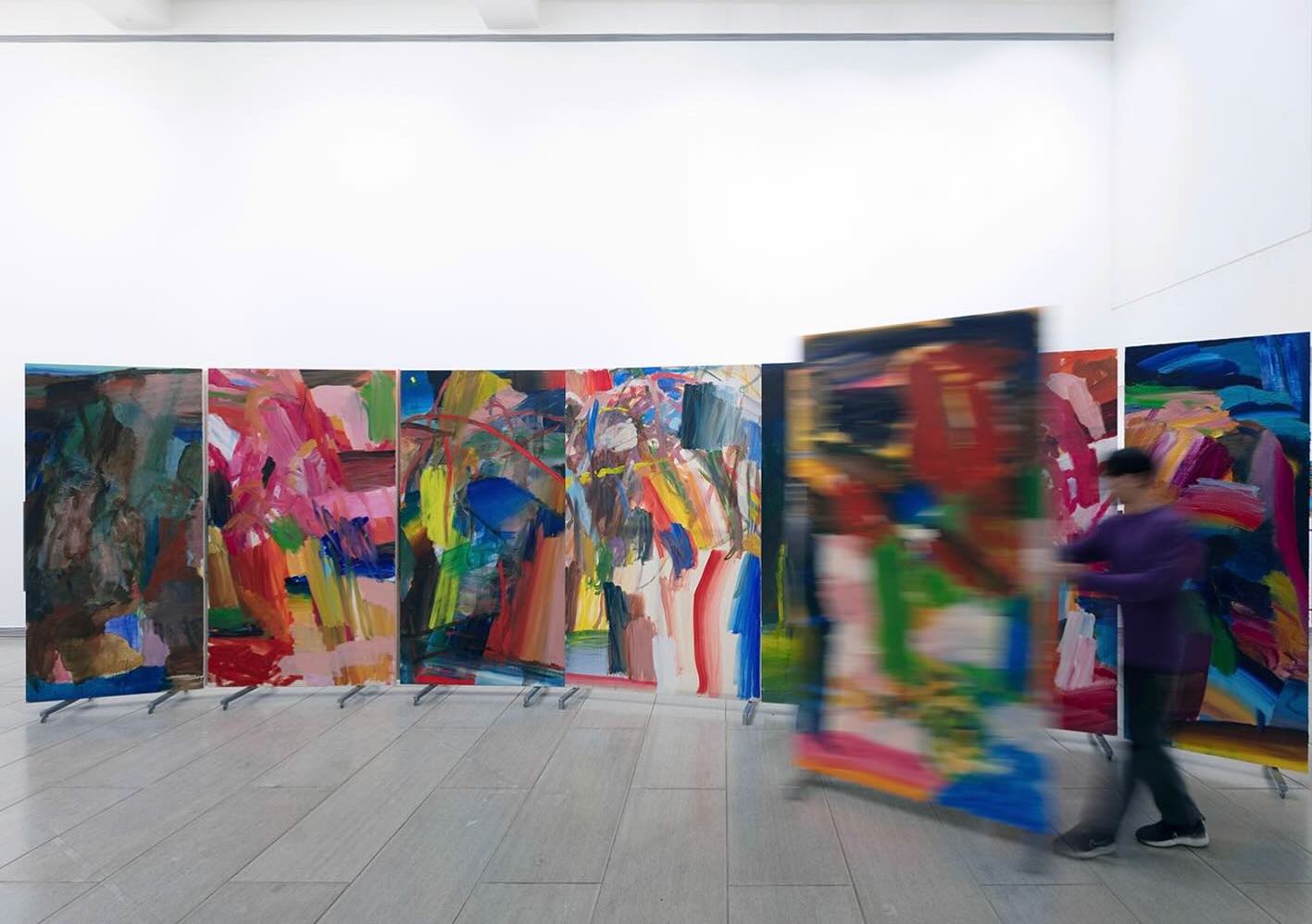
Furthermore, the solo exhibition 《Shuffle》 (2025) at Sungkok Art Museum foregrounded the modes of mixing that constitute Jung’s painting practice, formally revealing states of flux and suspension. The paintings mounted on wheeled structures and placed at the center of the gallery functioned as “objects” condensing different senses of time; within the exhibition space, they temporarily entered into relationships with one another, generating new interpretations and imaginaries.
 
Meanwhile, the paintings installed on the walls were arranged chronologically by year of production, allowing the artist’s earliest works to encounter his most recent ones. Through this configuration, the paintings intermingle with one another, enabling viewers to experience time not as linear progression but as a circular and multilayered temporality.
 
The exhibition title “Shuffle,” meaning “to mix randomly,” symbolizes a strategic process through which time, images, sensations, and traces of the body within painting are interwoven to produce new relationships and meanings.


Installation view of 《Shuffle》 (Sungkok Art Museum, 2025) ©Hyundoo Jung

Thus, Hyundoo Jung’s painting places greater emphasis on capturing the sensations, time, and bodily movements that emerge in the act of painting rather than on the finished result. The traces left by the brush are visible, yet their meanings remain fluid and continually shift.
 
Extending beyond the confined frame of the canvas, his practice seeks an open form of painting that escapes fixed meanings and exists in a constant state of transformation, inviting ongoing reinterpretation.

 “I want to engage with my thoughts and body, the images drawn from them, the processes through which these images accumulate and transform, and even the space-time beyond.”    (Hyundoo Jung, interview with A-Lounge Contemporary)


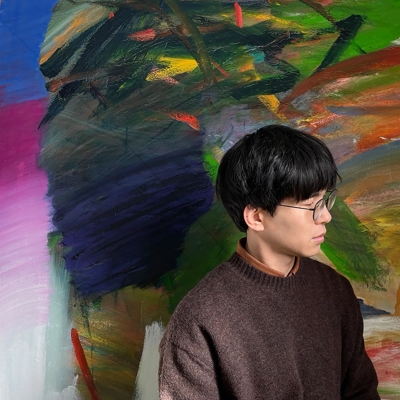
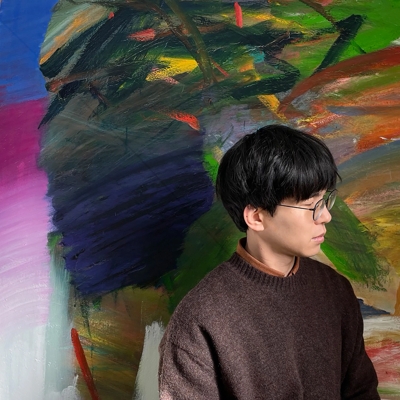
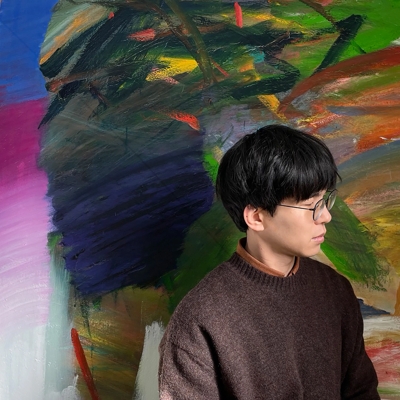
Artist Hyundoo Jung ©ARTUE

Hyndoo Jung received his BFA in Painting from Hongik University and his MFA in Fine Arts from Seoul National University of Science and Technology. His solo exhibitions include 《Shuffle》 (Sungkok Art Museum, Seoul, 2025), 《Gradually, Shadow Legs Hidden》 (A-Lounge Contemporary, Seoul, 2024), and 《The Face Throwers》 (Space Willing N Dealing, Seoul, 2019).
 
He has also participated in numerous group exhibitions, including 《Free Practice》 (Roy Gallery, Seoul, 2025), 《Dark Change》 (Space Willing N Dealing, Seoul, 2024), 《Discovery: 12 Contemporary Artists from Korea》 (Rockefeller Center, New York, USA, 2023), 《Cloud Matter》 (Art Space 3, Seoul, 2022), and 《This Is (Not) My (Your) Painting》 (Space Willing N Dealing, Seoul, 2022), among others.
 
Jung participated as a resident artist at the Gyeonggi Creation Center, Gyeonggi Cultural Foundation, in 2020.
References