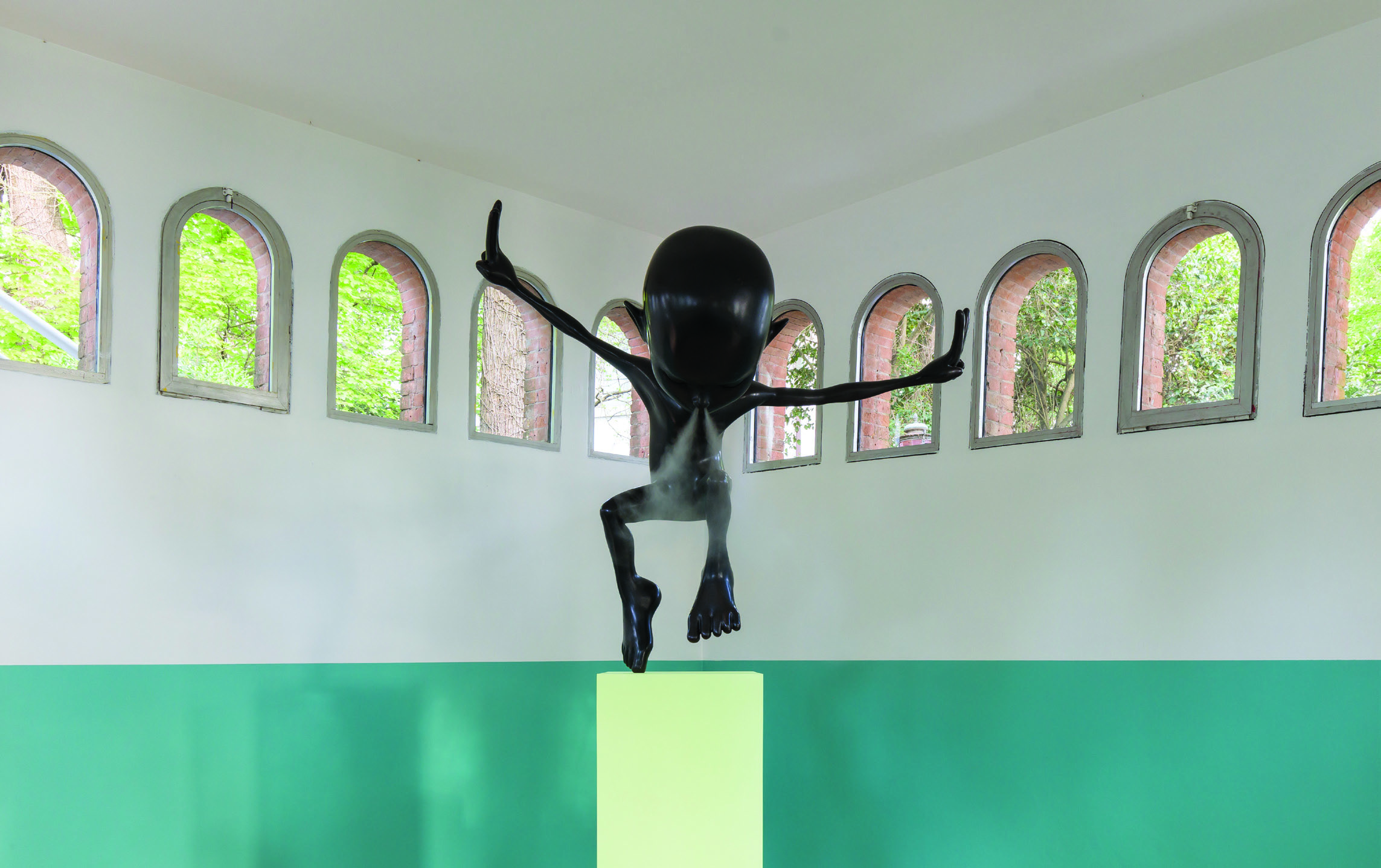
Smelling Life and Absence: Over 600 Korean Scent Memories
In
fact, I myself am one of the more than 600 participants in the open call. When
I received the request email from the two artistic directors, it had been less
than a year since my father passed away, and not even three months since my
mother died six months later. Around that time, I kept my father’s white
undershirt and my mother’s thin scarf on either side of my bed, pressing them
to my nose each night, inhaling their scent and weeping. By clinging to the
bodily traces and life smells embedded in their belongings, I believe I endured
the grief of the present.
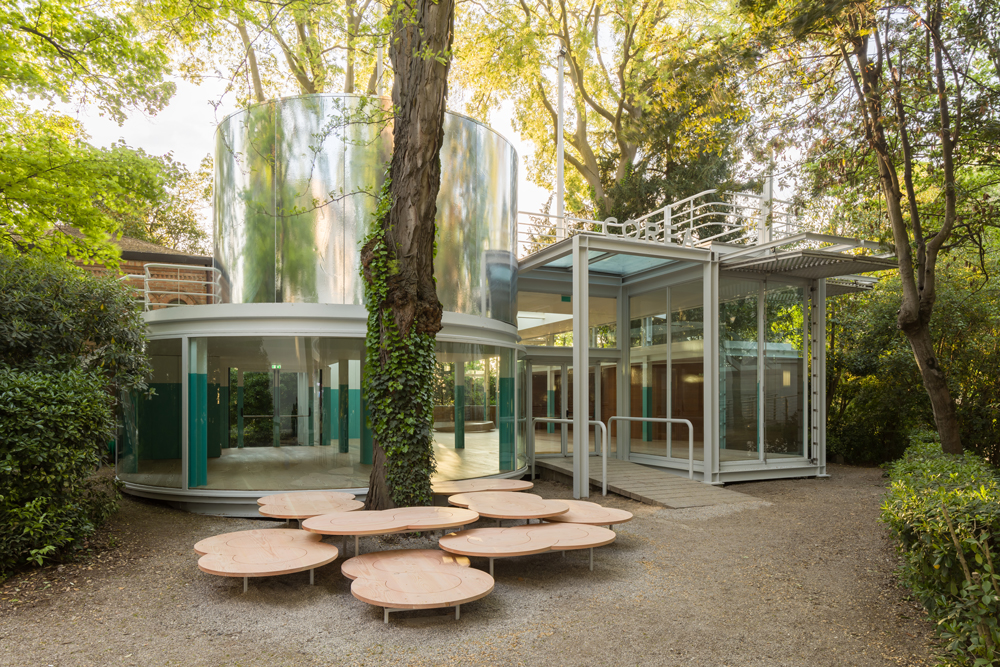
Thus, when I was asked to participate in Koo Jeong
A’s 《Odorama City》 by sharing
a scent/smell story, I felt grateful and even happy. How wonderful it would be
if my parents could be commemorated within an artwork. But more deeply, as
someone engaged in aesthetics and art criticism, I hoped—through the art of Koo
Jeong A, whom I have long acknowledged as possessing the clearest sculptural
language and the most abstract mode of thinking among contemporary Korean
artists—to sustain the impossible relationship between my parents’ absence and
my own presence. That is, my here-and-now of smelling life in the objects that
once enveloped their bodies.
Although
my story has grown long, what I wish to emphasize is the non-conceptual and
non-volitional impact of Koo Jeong A’s art, as well as the present time that
becomes possible through her works and installations. At first glance, the
hundreds of scent/smell memories might seem like a recollection of accumulated
past experiences. In reality, however, like all immaterial beings, they are
intermittent and present. Stimulated by a particular smell, we recall something
and then lose it; we laboriously distinguish between past, present, and future
tenses, yet we always find ourselves already situated in the sheer existence of
the present.
Tibetan Buddhism teaches that “pure and transparent awakening” is
neither a transcendent life beyond this world nor a realm of layered old
memories, but the moment of seeing oneself as one is.⁸ I believe that this is the
artistic potential Koo Jeong A was able to secure by embracing the scents of
present memories—filtered
through others’
experiences—as
a non-formal source of her work. Whether it is the future value of the artwork
projected by the artist’s intention or the past experiences evoked by the
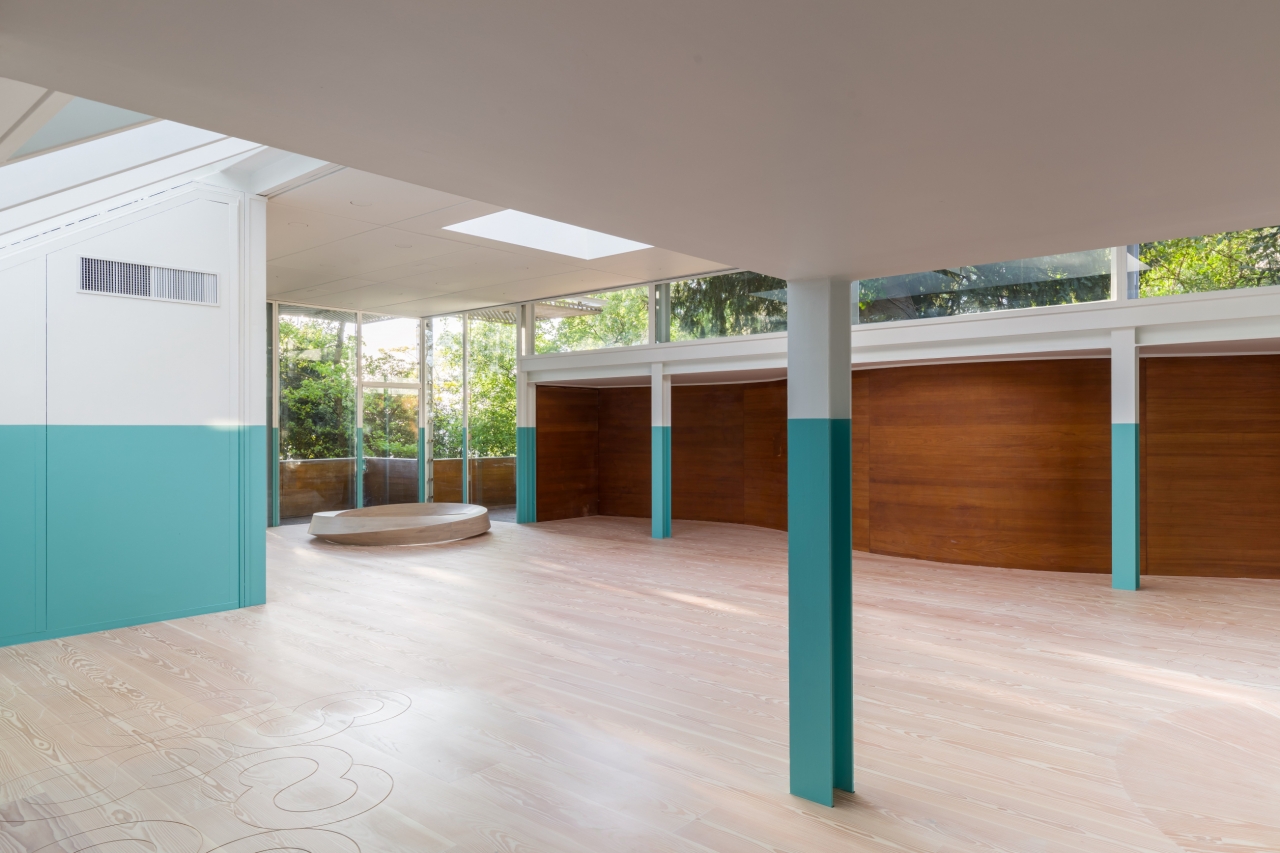
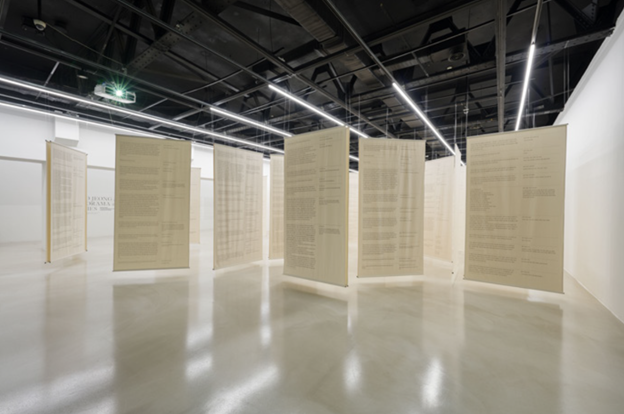
contributors’ memories, 《Odorama City》 becomes, for viewers, a set of spatiotemporal conditions for pure
and transparent awakening—reading the words on the banners and inhaling the
composed scents.
Early
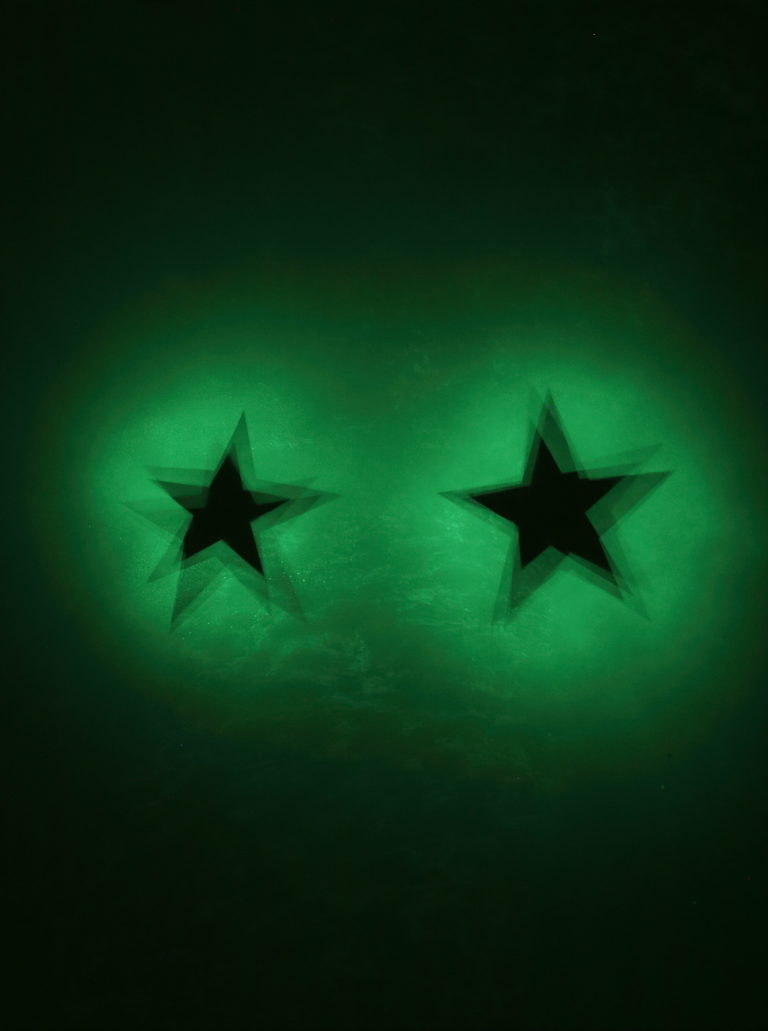
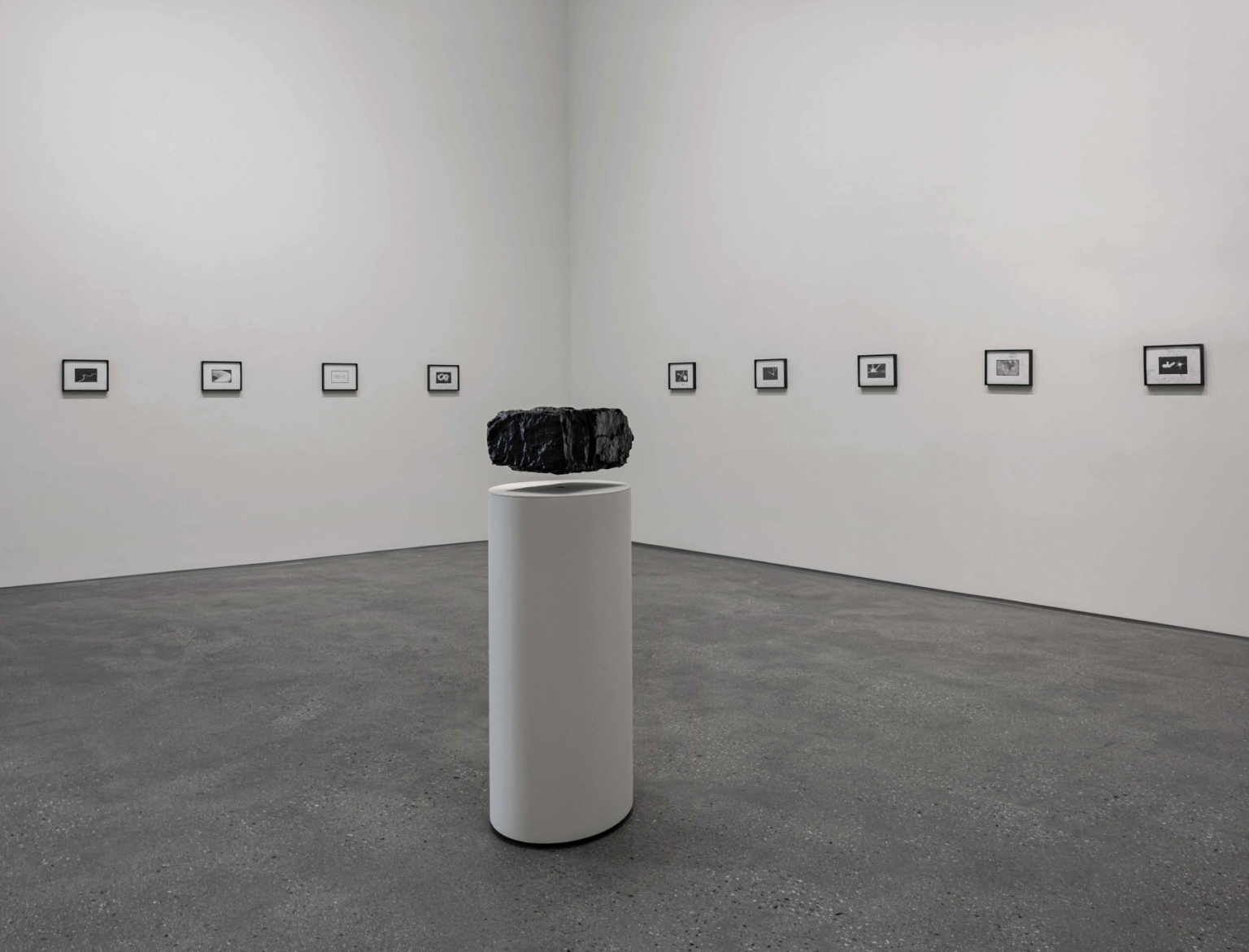
in her career, Koo Jeong A presented a work titled Wardrobe of a
Sweater, in which mothballs were installed inside a small wardrobe in
her Paris studio. Over the course of more than thirty years, she has varied and
deepened the theme of “scent” through installations such as block-shaped
chewing gum (strawberry, green tea, mint, lemon), an 80-centimeter-diameter
mothball installation, and diffusers installed on a disused platform of the
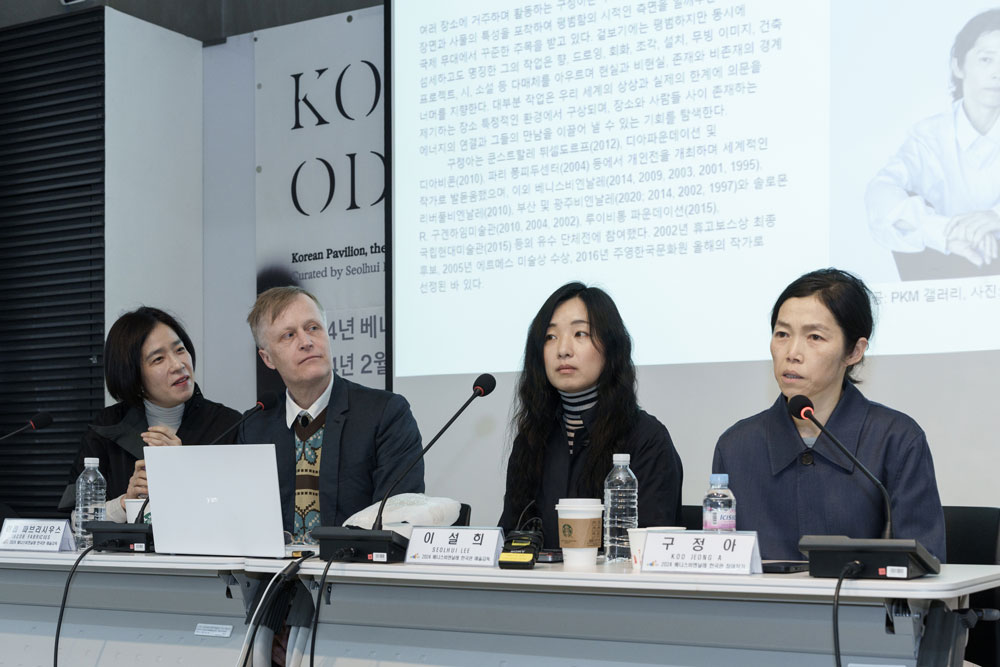
London Underground. The two artistic directors of the Korean Pavilion wrote
that “[Koo Jeong A’s] interest in exploring the essence of scent and the
process of inhaling and exhaling molecules connects to her themes of
immaterialism, weightlessness, infinity, and levitation.”⁹
In this light, I would like to
quote curator and architect Frank Boehm and describe Koo Jeong A as creating,
through the universal genre of “art,”
a cosmos that affirms “the
action of various forces and other immaterial effects.”¹⁰
Because these forces and effects are unique to each of the more than 600
stories, Koo Jeong A’s
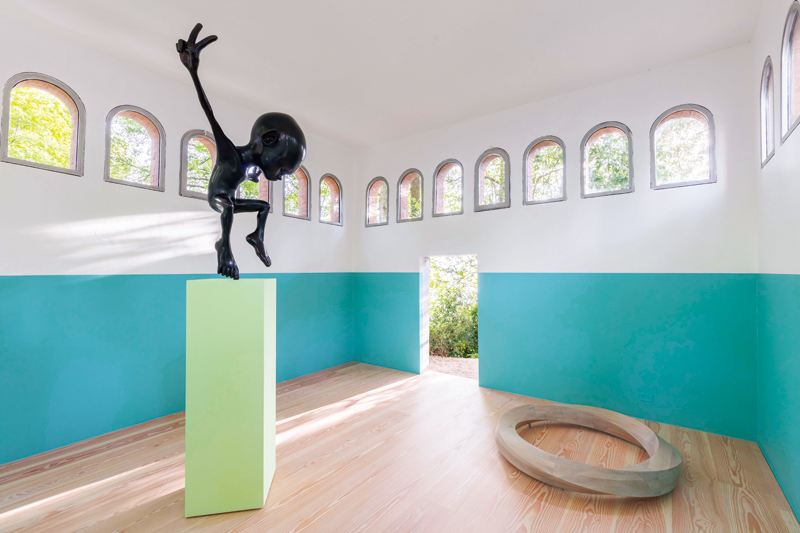
《Odorama City》 forms a
singular “cosmos of scent-memory.” Smells stored within someone’s inner self or
sensory memory are utterly unrepresentable and nearly impossible to share with
others. Yet they are as real as the fact of our existence itself—diverse in
proportion to the multiplicity of our beings, and capable of empathy insofar as
we live under the same spatiotemporal conditions. In this sense, Koo Jeong A
elevates others’ scent memories from the level of singularity to that of
universality. It is a procedure as delicate and respectful as it is abundant.
Finally,
I wish to remember someone else who cherished scent under different conditions.
That person is the late Taehui Kang, a respected art historian and critic in
the Korean art world. She passed away several years ago, and I understand that
she departed quietly and neatly, much like her character in life. The first
volume of the “Museum-in-a-Book” series, which she personally curated and
published by inviting artists, was devoted to “scent.” In the editor’s note
included at the end of Scent, published in 2009, she wrote her own story
of scent.
She recounted how she had long intended to revisit a beach on the
East Sea coast she had visited decades earlier, but never managed to find it;
later, upon traveling to the South Sea, she realized that the East Sea beach
was connected to her as a “scent.” In the book, she writes: “The fresh smell of
the sea that exists nowhere now (…) That smell—unrelated to fishiness and
difficult to describe precisely—touched the apex of memory through absence, and
in an instant I realized that my clumsy journey of memory had likewise ended in
confirming absence: a journey of seeking my own sea’s scent, one that
transcended the gap of time and space.”¹¹ Here, once again, we encounter a
subject of pure and transparent awakening.
Notes
1.
Padmasambhava, The Tibetan Book of the Dead, trans. Robert A. F. Thurman
(English), Jung Chang-young (Korean), Sigongsa, 2000, p. 97.
2.
Han Kang, “Han Kang’s Nobel Lecture, Nobel Prize in Literature Laureate 2024,”
Svenska Akademien, The Nobel Foundation, 2024, https://www.nobelprize.org/uploads/2024/12/han-lecture-korean.pdf3.
Biennial Foundation, https://www.biennialfoundation.org/network/biennialmap/ (January 14, 2025).
4.
Arts Council Korea, “List of Past Commissioners and Participating Artists of
the Korean Pavilion at the Venice Biennale,” https://www.arko.or.kr/biennale/content/643 (January 21, 2025).
5.
The Latin etymology of odor means “scent” or “smell,” while the
Ancient Greek etymology of drama means “action.”
6.
Seolhee Lee & Jacob Fabricius, “Preface,” Korean Pavilion, The 60th
International Art Exhibition – La Biennale di Venezia: Koo Jeong A – Odorama
City, Arts Council Korea, DISTANZ Verlag, 2024, p. 30.
7.
“Index of Scents,” ibid., pp. 478–486.
8.
Ibid.
9.
Seolhee Lee & Jacob Fabricius, “Preface,” ibid., p. 25.
10.
Frank Boehm, “Landscape in the Work of Koo Jeong A,” ibid., p. 105.
11.
Taehui Kang, “Editor’s Note: A Story of Scent,” in Scent, curated by
Taehui Kang, Sigongsa, 2009, no page number.