

Shinyoung Park (b. 1987) takes travel and movement into unfamiliar places as the point of departure for her practice, reconstructing the sociocultural characteristics encountered there as subjective records. She primarily examines the boundaries between humans and animals, civilization and nature, and reality and imagination, inviting viewers to reframe events unfolding beyond the time and space in which each of us stands.


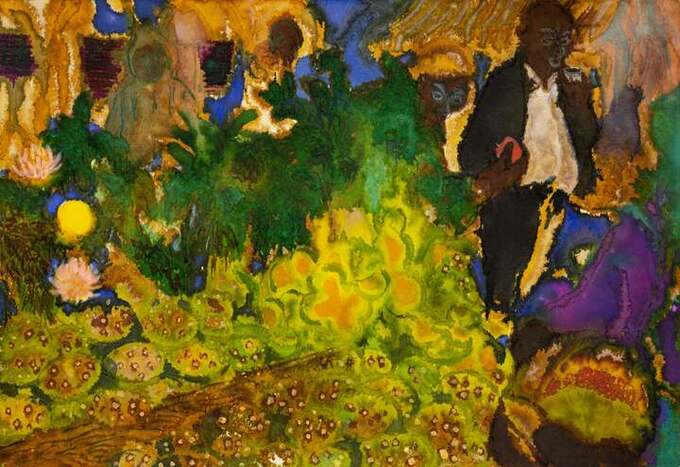
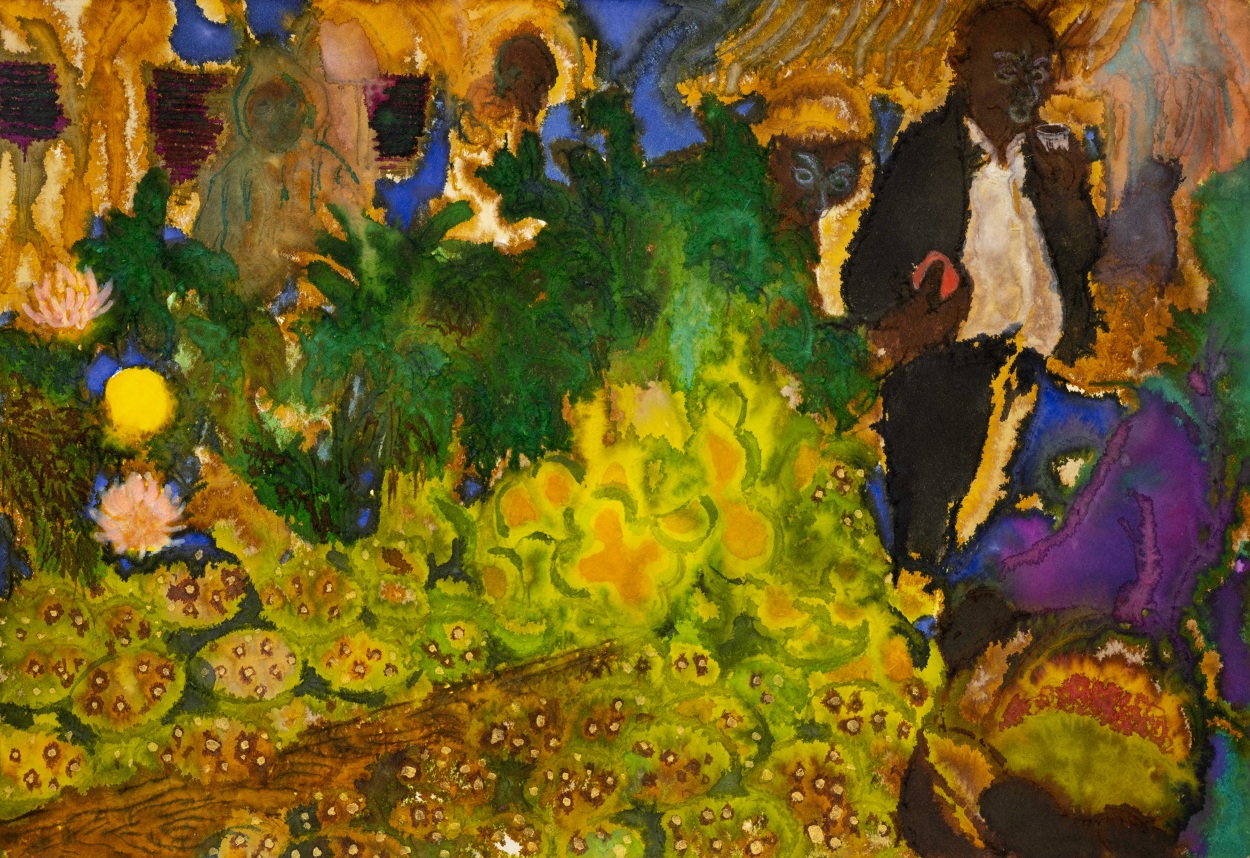
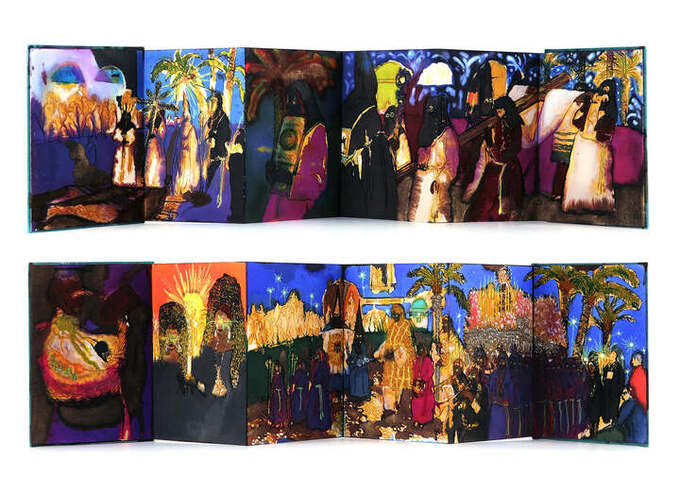
Shinyoung Park, Semana Santa, 2017, Highlighter, ink, watercolor and wine on paper, 24x93.5cm ©Shinyoung Park

Objects, figures, and landscapes discovered in foreign places—marked by distinctive colors and textures—are transformed by Shinyoung Park into prints, drawings, and three-dimensional works, recorded across a range of media such as paper, wood, and stained glass. These images evoke a dreamlike, tactile sensibility, guiding viewers toward the threshold between reality and the virtual, consciousness and the unconscious.


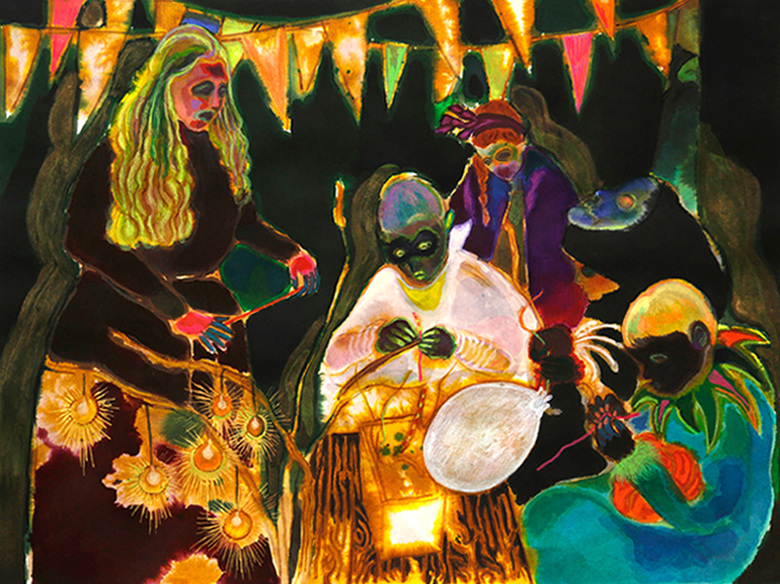
Shinyoung Park, Silent Vigilance, 2019, Highlighter, ink, watercolor and wine on paper, 20.5x29.5cm ©Shinyoung Park

Shinyoung Park’s practice is not confined to a specific medium, nor is it bound by the traditional materials or methods associated with any one medium. She often draws upon techniques that have received limited attention in canonical art history or that fall within the categories of industrial art or craft, as well as materials seldom used within each medium.
 
Through this approach, she is particularly interested in the synergies that emerge between such elements and the established conventions inherent to each medium.


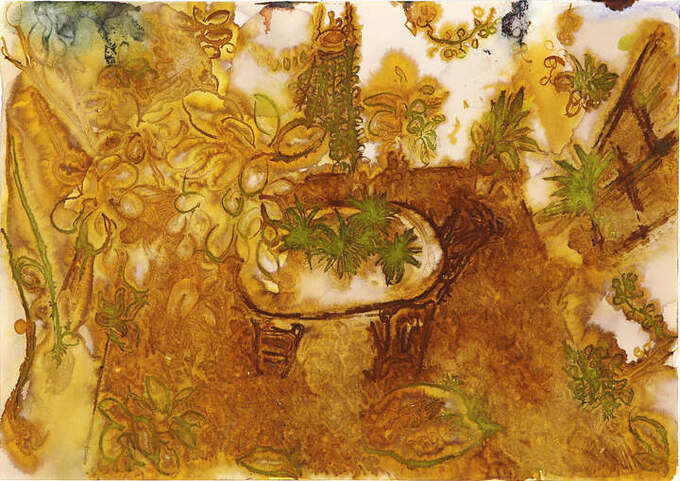
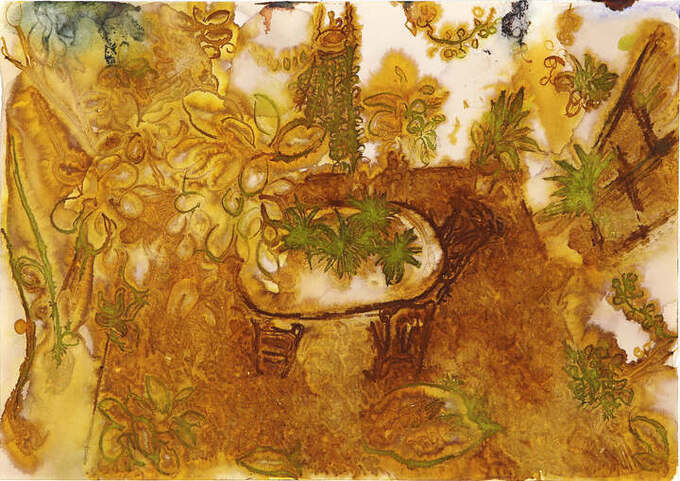
Shinyoung Park, At the Terrace, 2017, Ink and wine on paper, 20.4x28.9cm ©Shinyoung Park

This experimentation with materials and media is evident from the artist’s early ink drawing series. In her drawing practice, Shinyoung Park prepares the ground using wine instead of paint, leaving traces of ink on top as she draws.
 
Here, the artist incorporates the scent of wine, the stains produced by the bleeding of ink, and the tactile marks and textures created when a copper plate is scratched with a needle in intaglio printmaking. Through these sensorial elements, she synesthetically evokes unfamiliar and foreign landscapes.

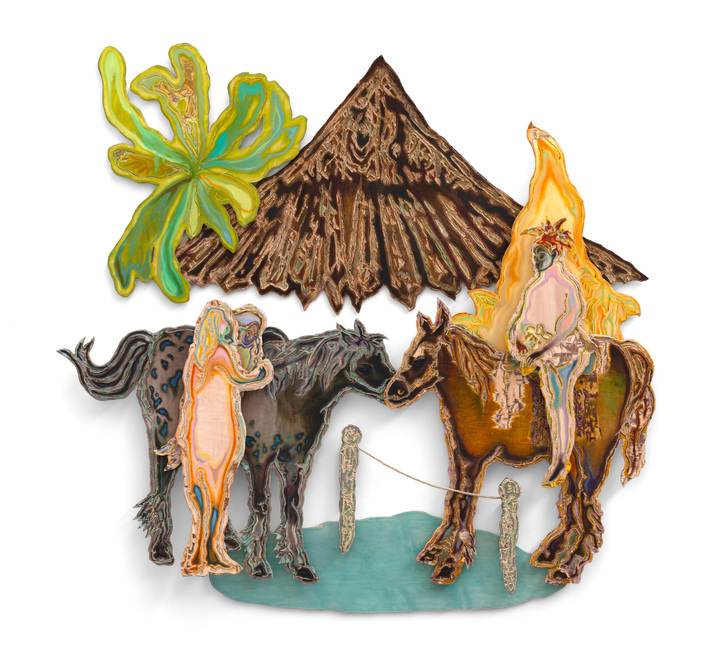
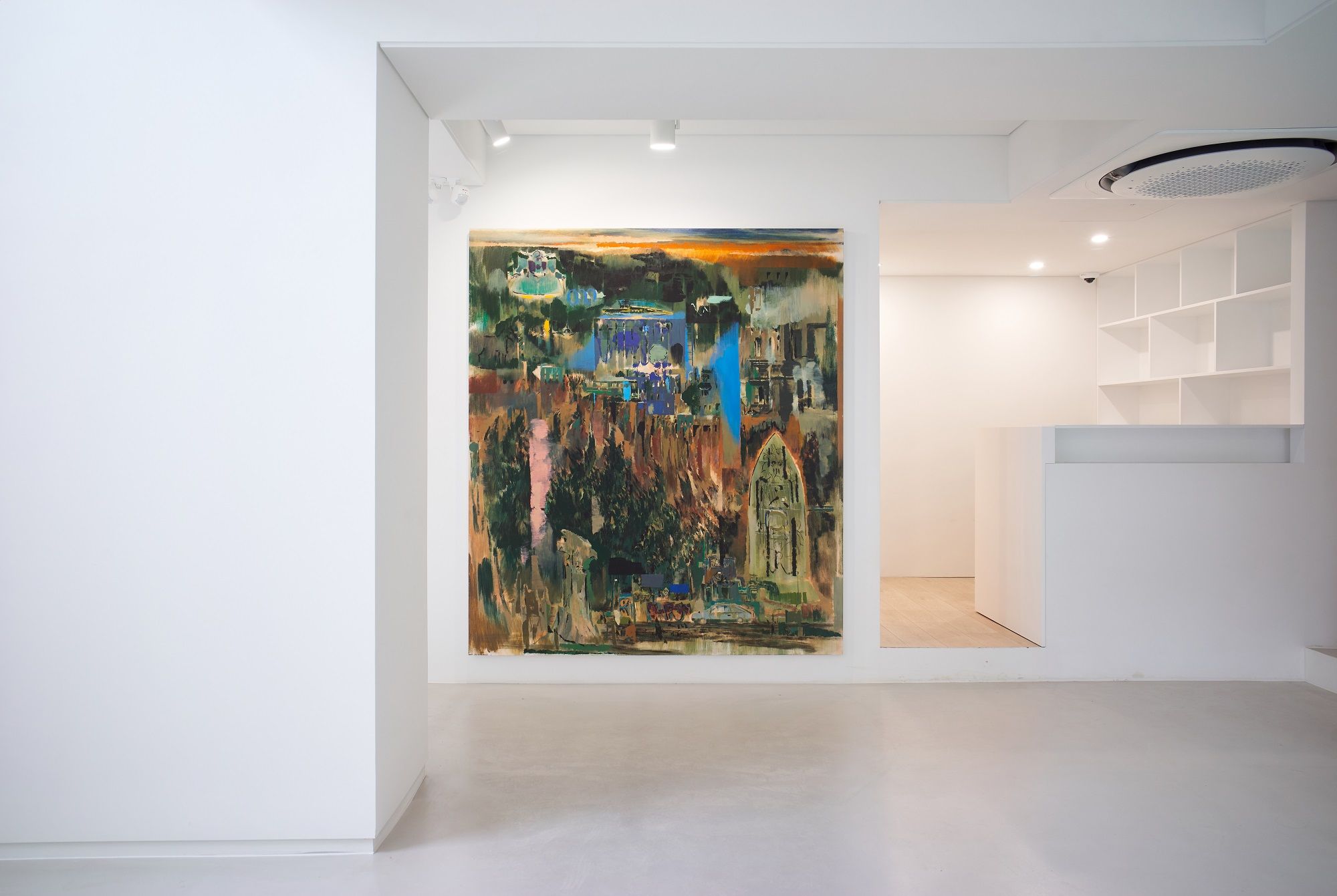
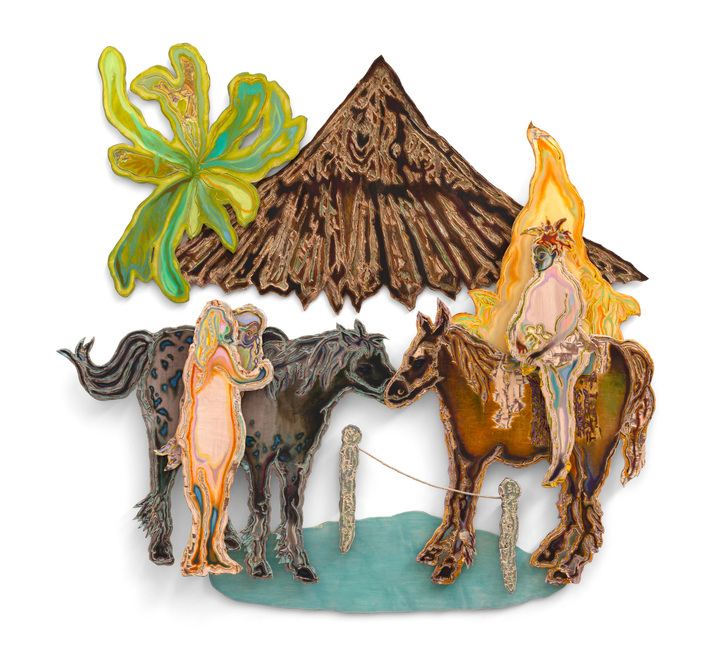
Shinyoung Park, You Cannot Know the Mind of Horses, 2018, Ink, screenprint, woodburning, woodcut and oil paint on Birchwood,185x192cm ©Shinyoung Park

In Shinyoung Park’s practice, images and materials thus exist in a deeply reciprocal relationship. The material properties and inherent allure of a medium may prompt the artist to envision an image, while at other times she conceives an image first and subsequently discovers the materials and media best suited to its realization.
 
For instance, You Cannot Know the Mind of Horses (2018) began with a single, very small drawing. In seeking the medium that could most effectively realize this image, Shinyoung Park started with a sugar-lift etching and went on to apply a range of techniques, including silkscreen, oil painting, wood burning, and engraving.
 
As a result, the work takes a form in which painting, printmaking, and sculpture dissolve their boundaries and merge into a unified whole.


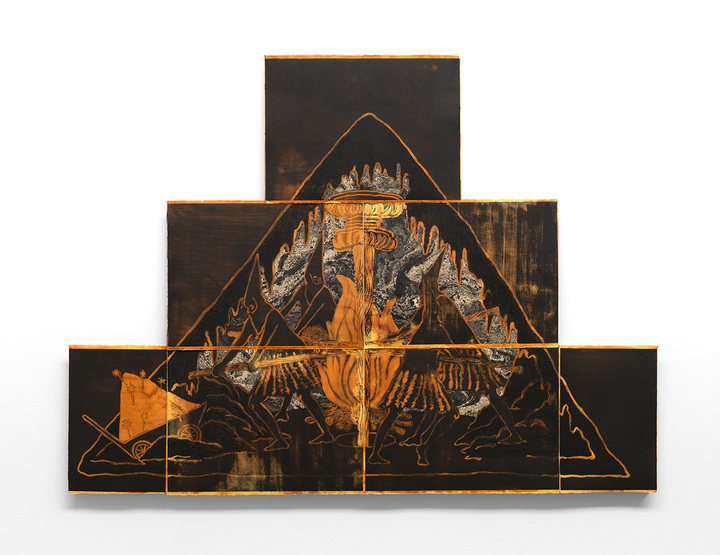
Shinyoung Park, The Roller of Endless Labour, 2018, etching on paper, 165x225cm ©Shinyoung Park

In this way, Shinyoung Park explores a wide range of working methods drawn from the heterogeneous environments and cultural contexts she has encountered across different regions, allowing multiple approaches to coexist within a single work and thereby fusing form with memories of disparate times and places.
 
Moreover, through the juxtaposition of works that may be perceived as heterogeneous in both content and form, she poses—and responds to—the question of how the juxtaposition of viewing itself can offer a distinctive artistic experience grounded in the transposition and interaction of the senses.


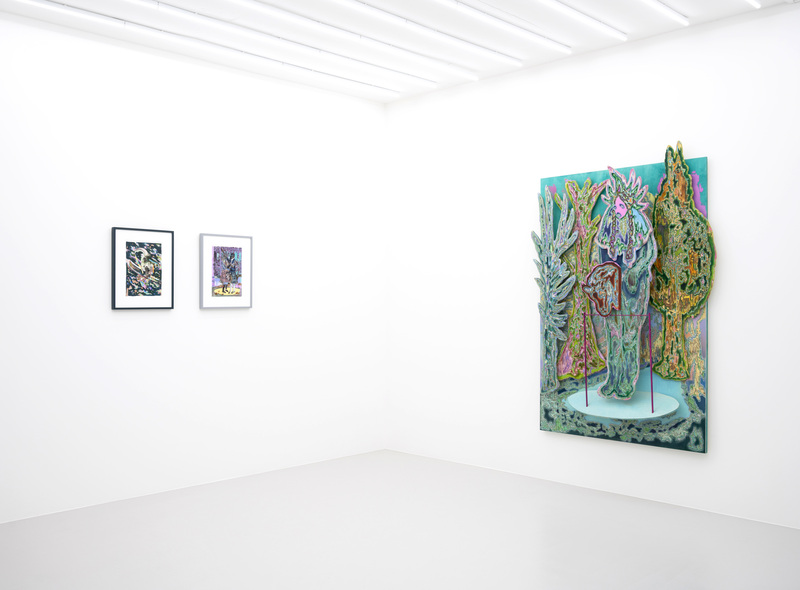
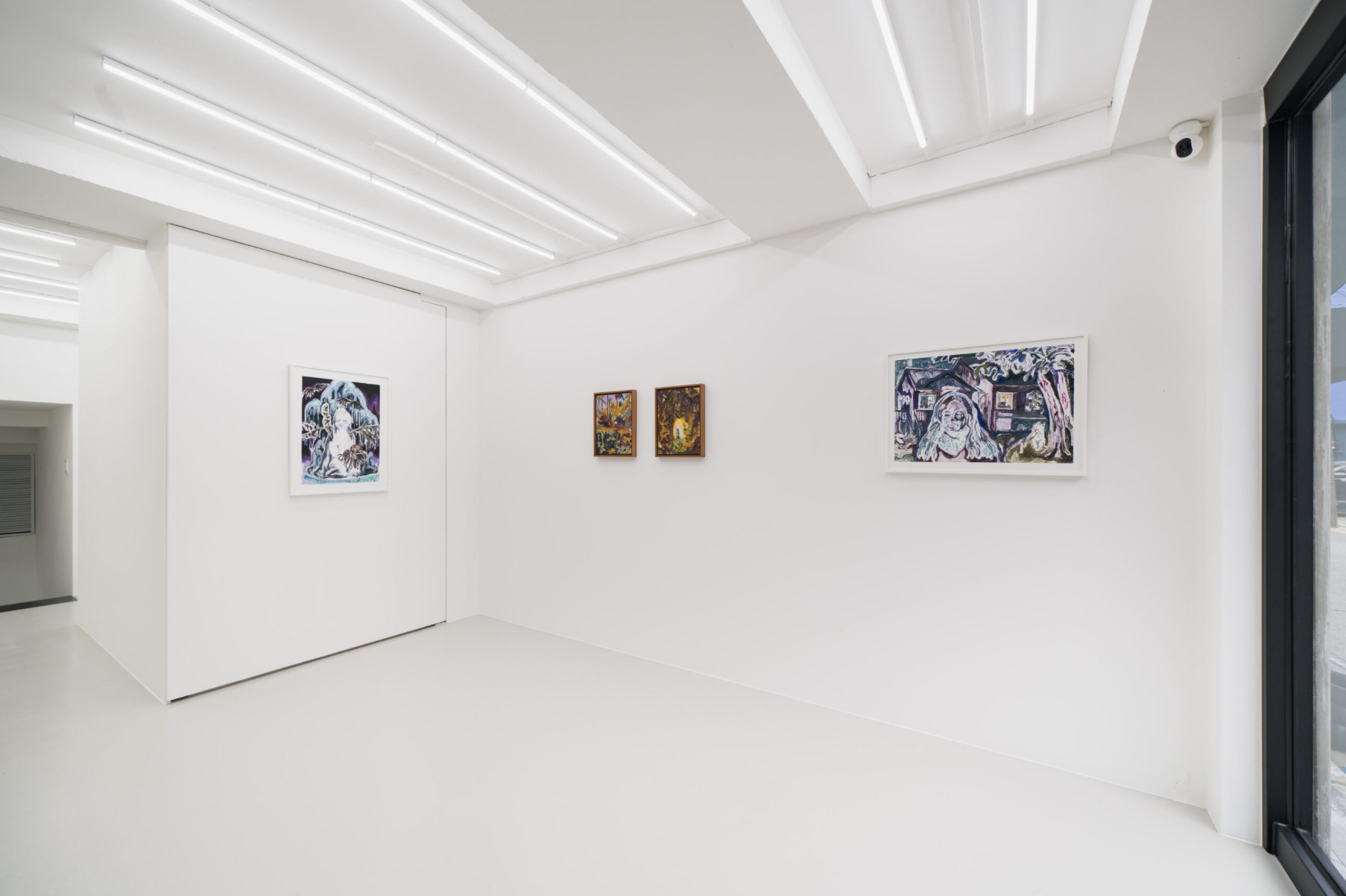
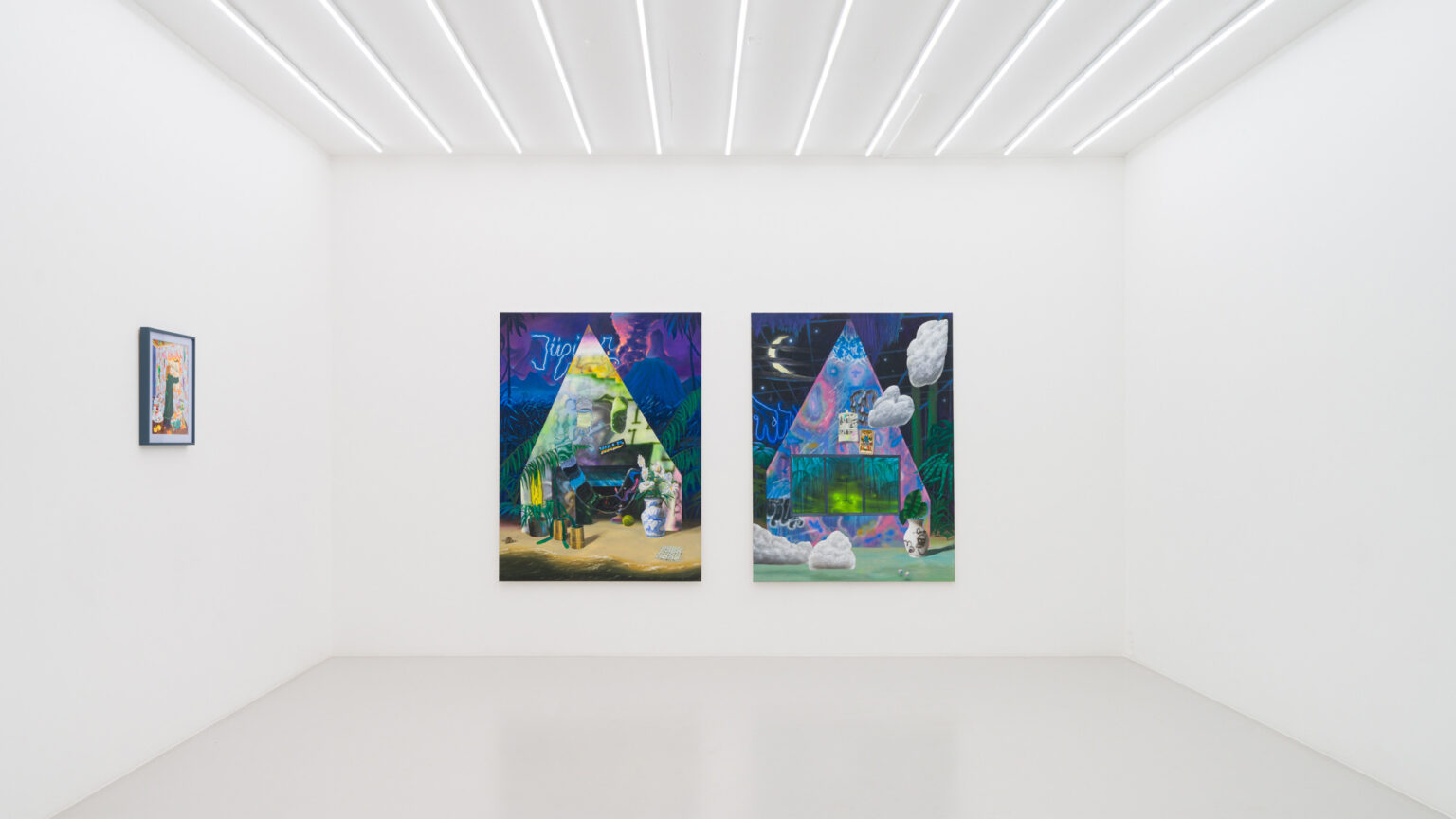
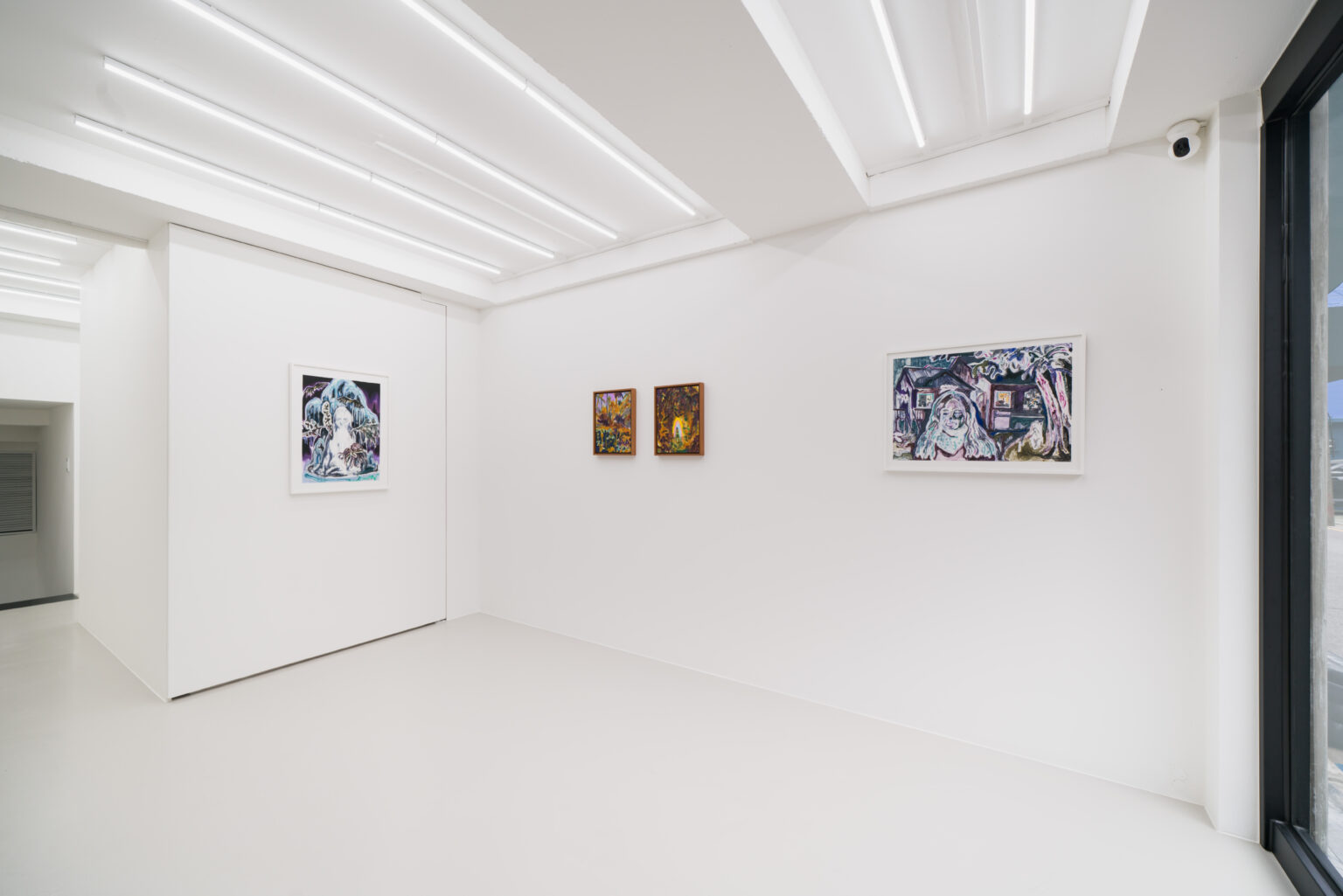
Installation view of 《Far in My Mirror》 (ThisWeekendRoom, 2021) ©ThisWeekendRoom

In the two-person exhibition 《Far in My Mirror》 (2021) at ThisWeekendRoom, Shinyoung Park articulated the experience of rediscovering herself within unfamiliar environments through a pre-linguistic mode of expression. Her works leave a dreamlike impression, as unfamiliar experiences in unfamiliar settings intertwine with the unfamiliar emotions they evoke, appearing as though they have emerged from within a dream.


Installation view of 《Far in My Mirror》 (ThisWeekendRoom, 2021) ©ThisWeekendRoom

In formal terms, Shinyoung Park’s sense of self does not appear directly within her works. Instead, through images constructed as a dialectic of collision and convergence between experience and emotion, she presents a journey at the threshold of consciousness and the unconscious—one through which the self before and after is understood anew.


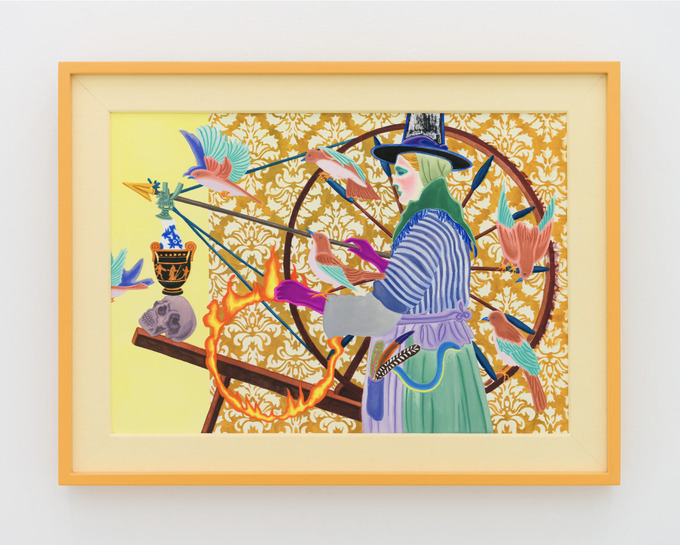
Shinyoung Park, Aiming for Eternity, 2024, Screenprint monotype on Legion stonehenge paper 245gsm, 35.2x47.2cm ©ThisWeekendRoom

Meanwhile, as physical movement became restricted due to the global outbreak of COVID-19, the artist witnessed shifts in environment through the movement of time and space mediated by online networks. From browsing vintage photos online to buying old objects, to witnessing environment changes through screens, Park feels curiosity, anxiety, fear, and nostalgia for what humans have built.
 
These changes in how she experiences the world soon influence the images she creates, evolving her work into landscapes woven with increasingly complex symbols.


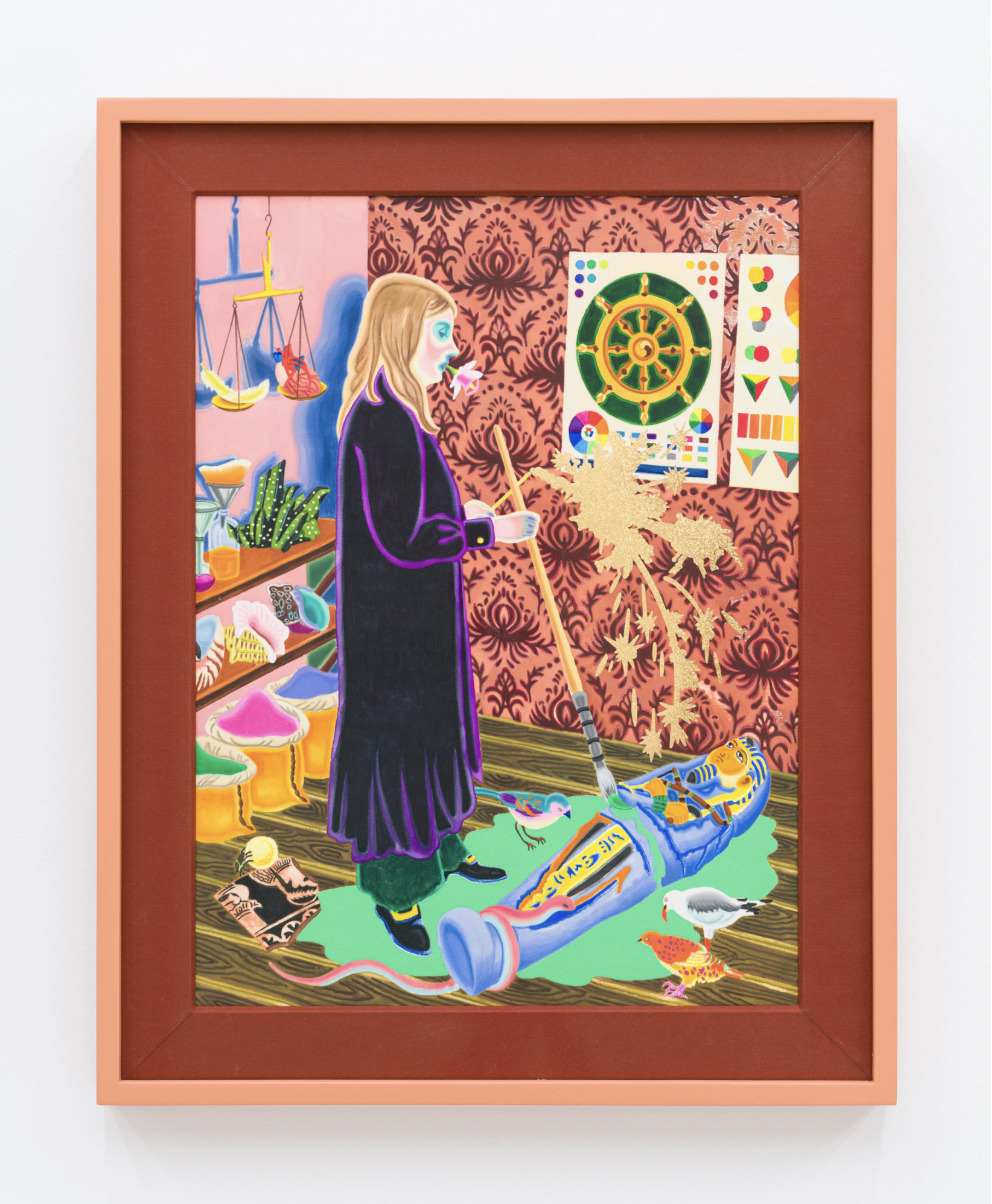
Shinyoung Park, Alchemy for Rebirth, 2024, Hologram foiling and screenprint monotype on Legion stonehenge paper 245gsm, 44.5x35cm ©ThisWeekendRoom

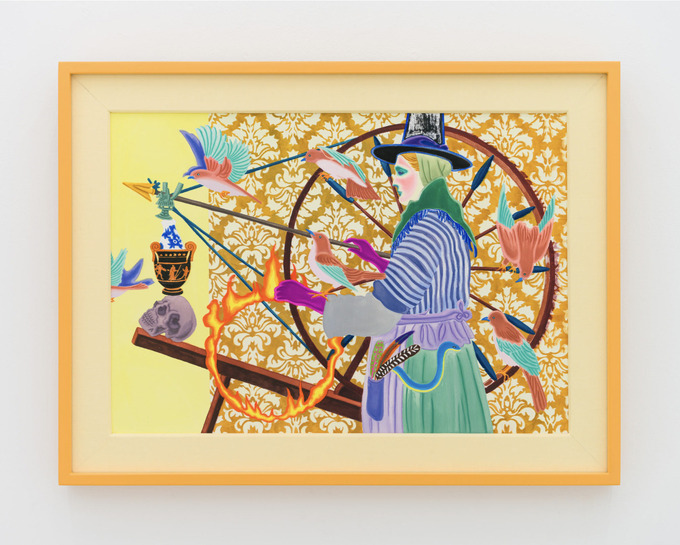
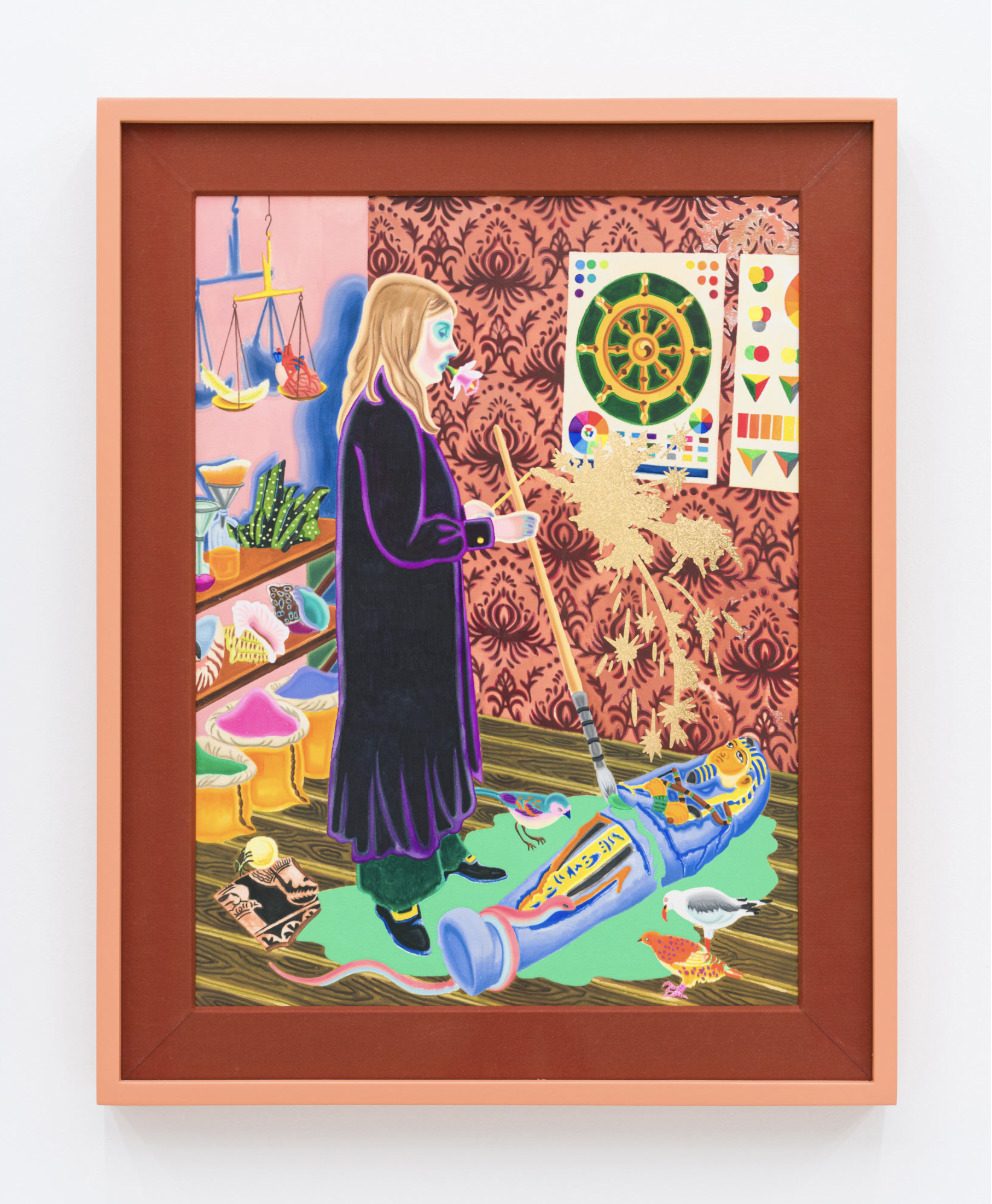
For instance, in the works presented in the group exhibition 《Oscillate Sequence》 (2024) at ThisWeekendRoom, the figures are each confronted with different situations. They hang fish—uncertain whether they are alive or dead—on the wall; write or draw before a cupboard filled with unhatched eggs; struggle to revive a season that may never return or a person who has already died; or prepare to release an arrow toward an eternal moment.
 
The various animals and insects that appear within these scenes function either as clues toward resolution or as iconographic mediators that project human desire and the crises it engenders.


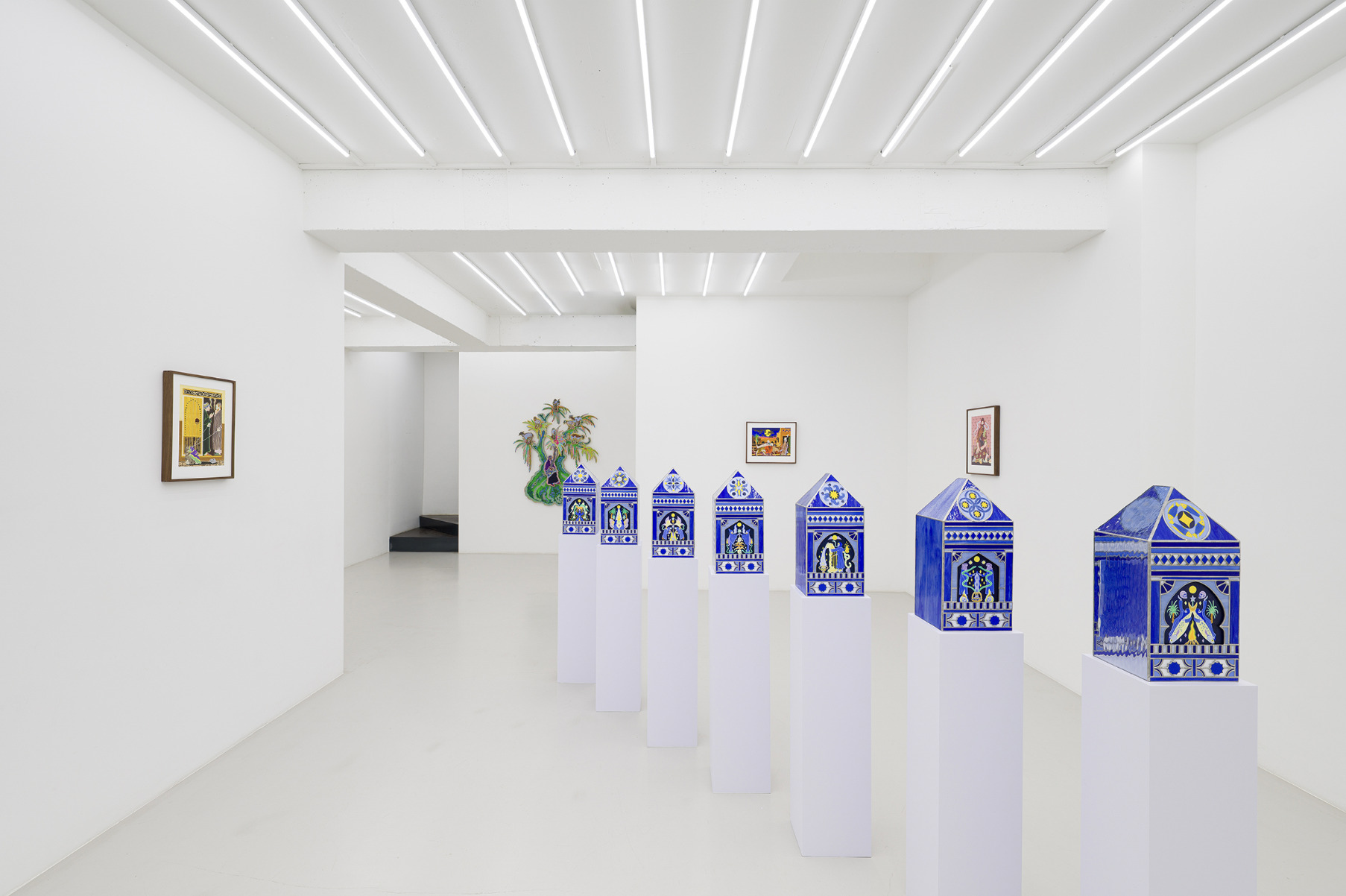
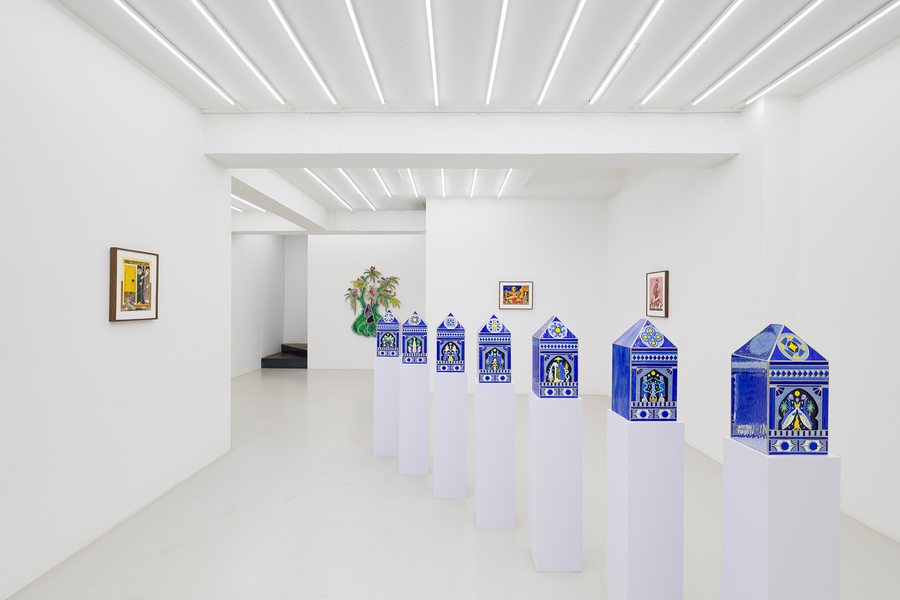
Installation view of 《Everything Returns to Desert》 (ThisWeekendRoom, 2025) ©ThisWeekendRoom

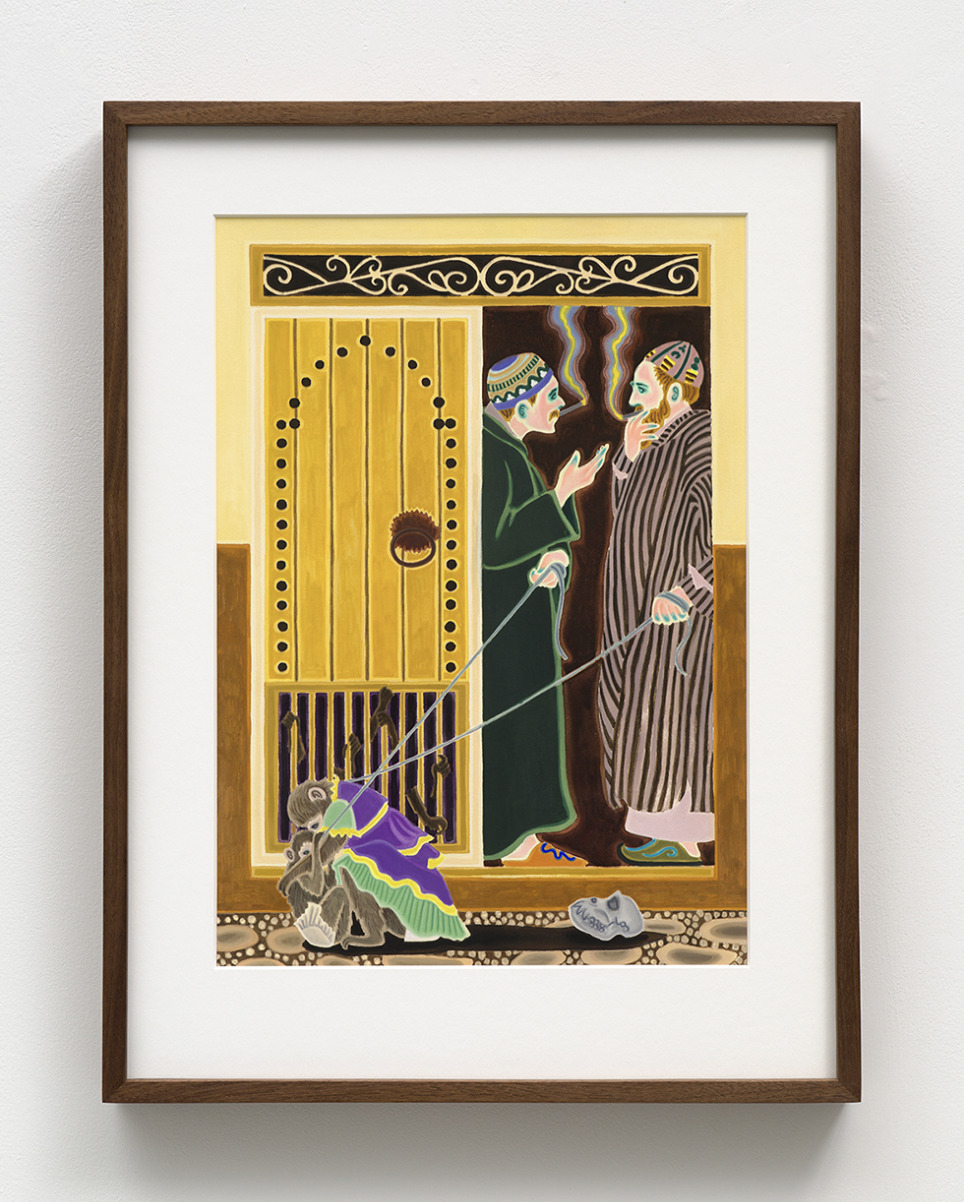
Meanwhile, in her 2025 solo exhibition 《Everything Returns to Desert》 at ThisWeekendRoom, Shinyoung Park examines the residual traces of memories and emotions from her past journey to Morocco—experiences she had been unable to fully process for several years. The traces filtered through this process of digestion are visualized according to her own formal principles, revealing how they operate in her present and future experience beyond mere recollection.
 
Morocco, with its vast geography spanning the Sahara Desert, the Atlas Mountains, and the Atlantic and Mediterranean coastlines, bears a unique identity shaped by the convergence of Arab, African, and European elements. It is also a region where traditional rituals and festivals remain vital, and where pastoralism and agriculture continue to form the foundation of daily life.


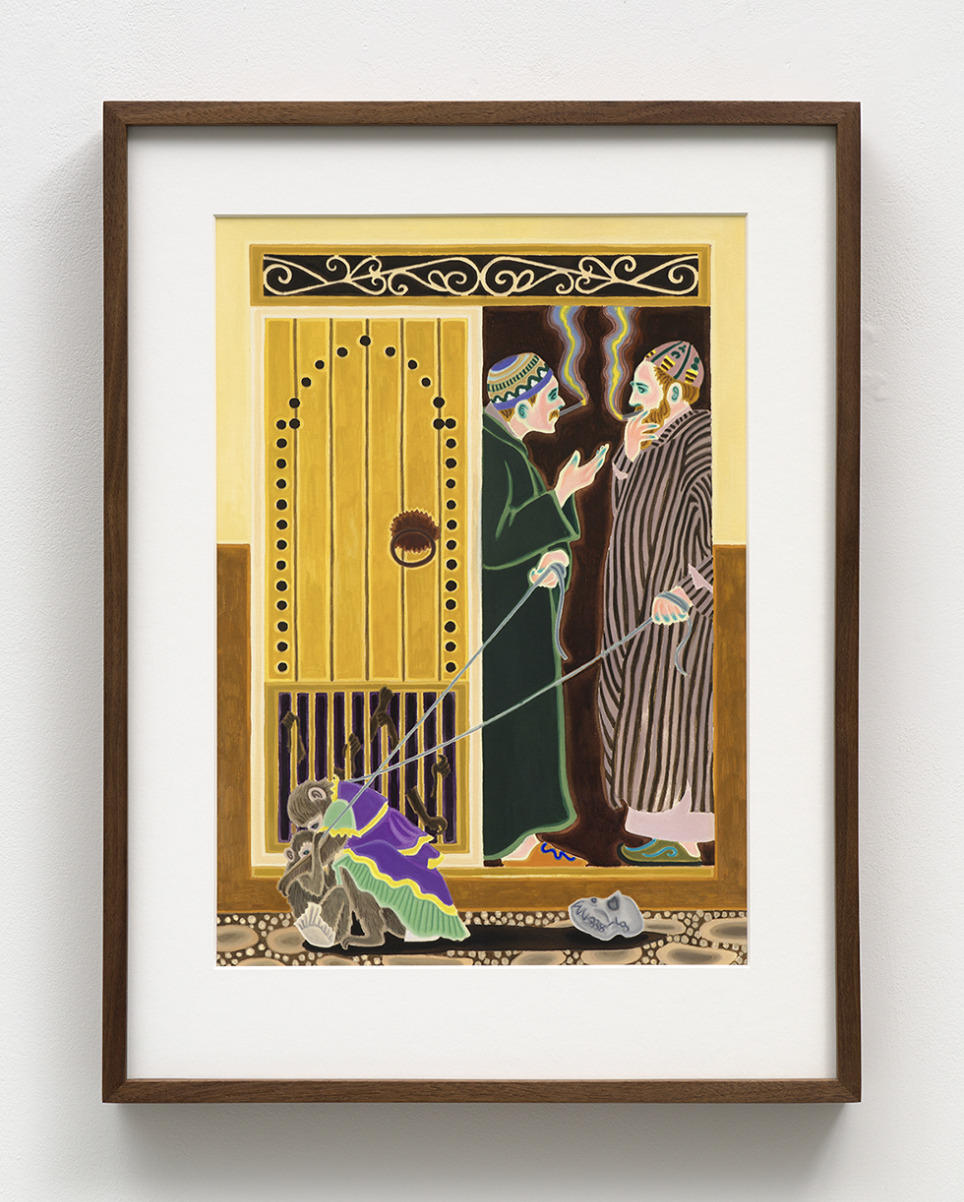
Shinyoung Park, An Embrace In Chains, 2025, Silkscreen monotype on paper, 34.5x24.7cm ©ThisWeekendRoom

There, the artist reflected on the ideological layers she had encountered in the past—or might confront in the future—alongside the laws of nature. As she walked upon the sands of the Sahara Desert, she contemplated the crises faced by individual beings caught within cycles of life and dissolution, as well as their modes of response, and began to incorporate these reflections into her work.
 
The cat with an eye infection, the monkey in a dress, the hawk and snake bound by rope, and the caged fennec fox are figures the artist encountered during her travels. They stirred memories of her childhood – seals in a zoo, or brightly dyed chicks sold near school gates.


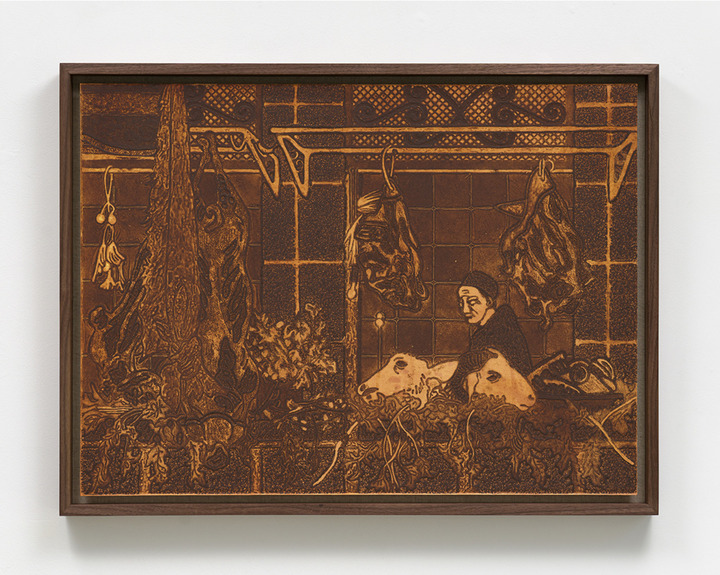
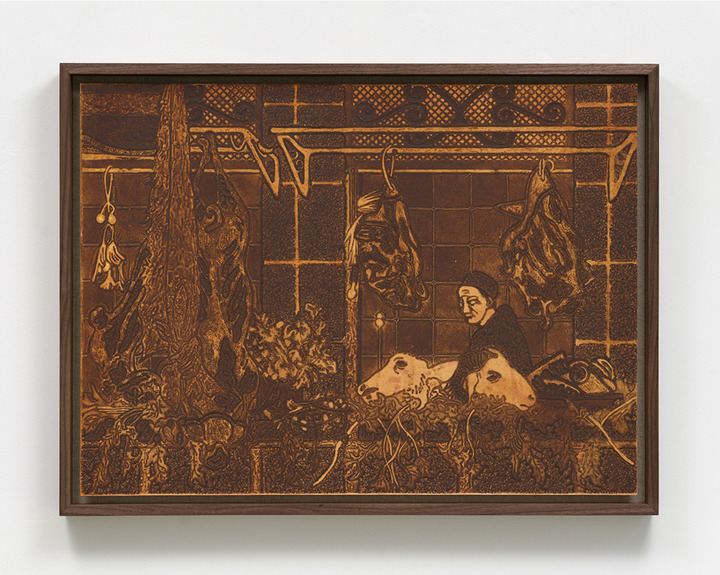
Shinyoung Park, Flesh and Breath, 2025, Ink and carborundum on paper, 55.9x75.8cm ©ThisWeekendRoom

These emotional disturbances did not easily dissipate but continued to connect with her personal memories. The images of humans and animals, sometimes in conflict and sometimes in harmony, are the results of a process in which memory’s sedimentary layers are retrieved and translated through the artist’s hand.
 
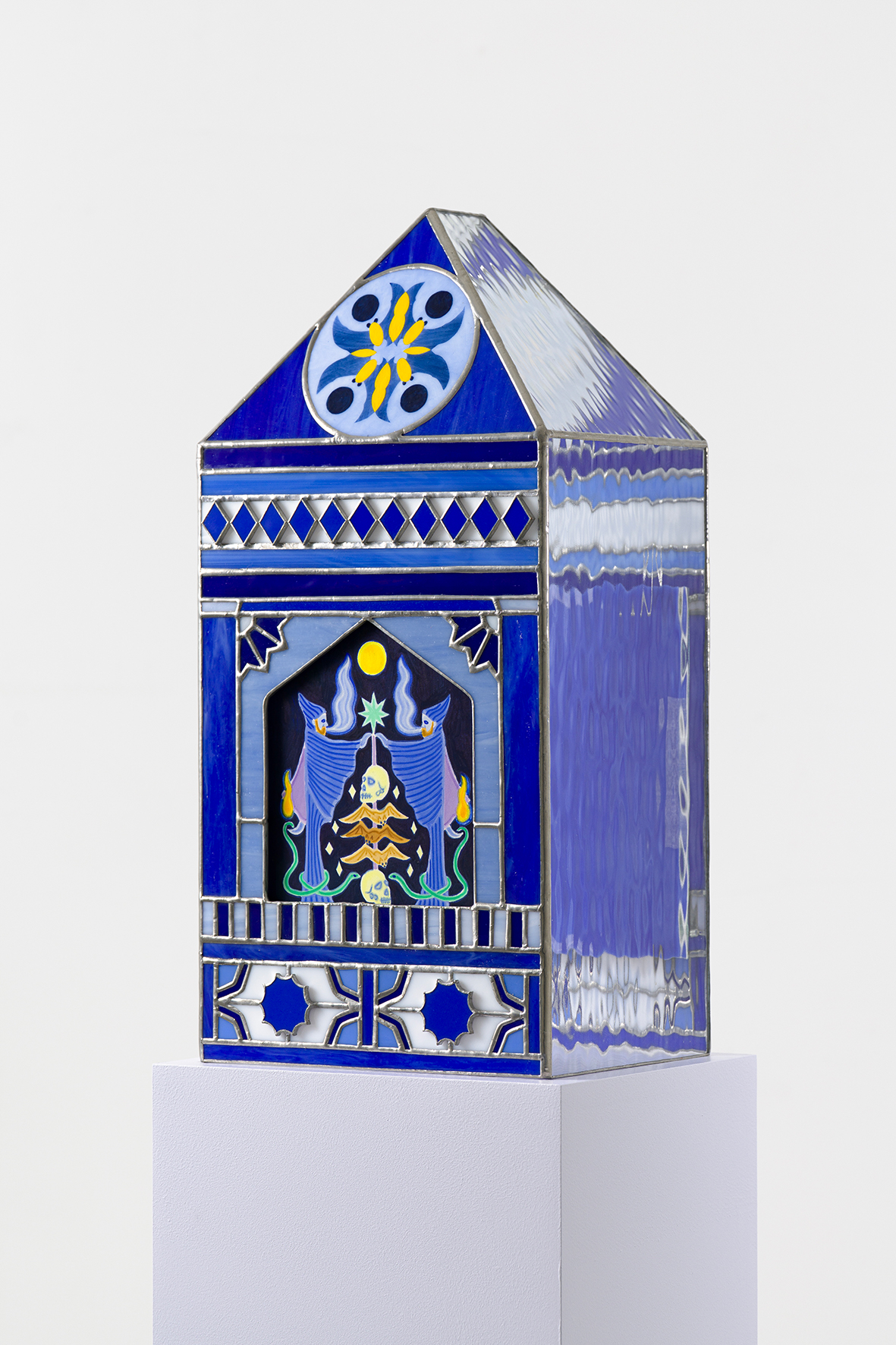
In addition, works such as the carborundum print (Toil of Light And Sand, Flesh and Breath), inspired by the colors of leather from the traditional tanneries in Fez, and the sculpture (The Shelters), modeled after the architectural forms of Chefchaouen, the “Blue City,” are reappeared in ways that closely resemble real images.


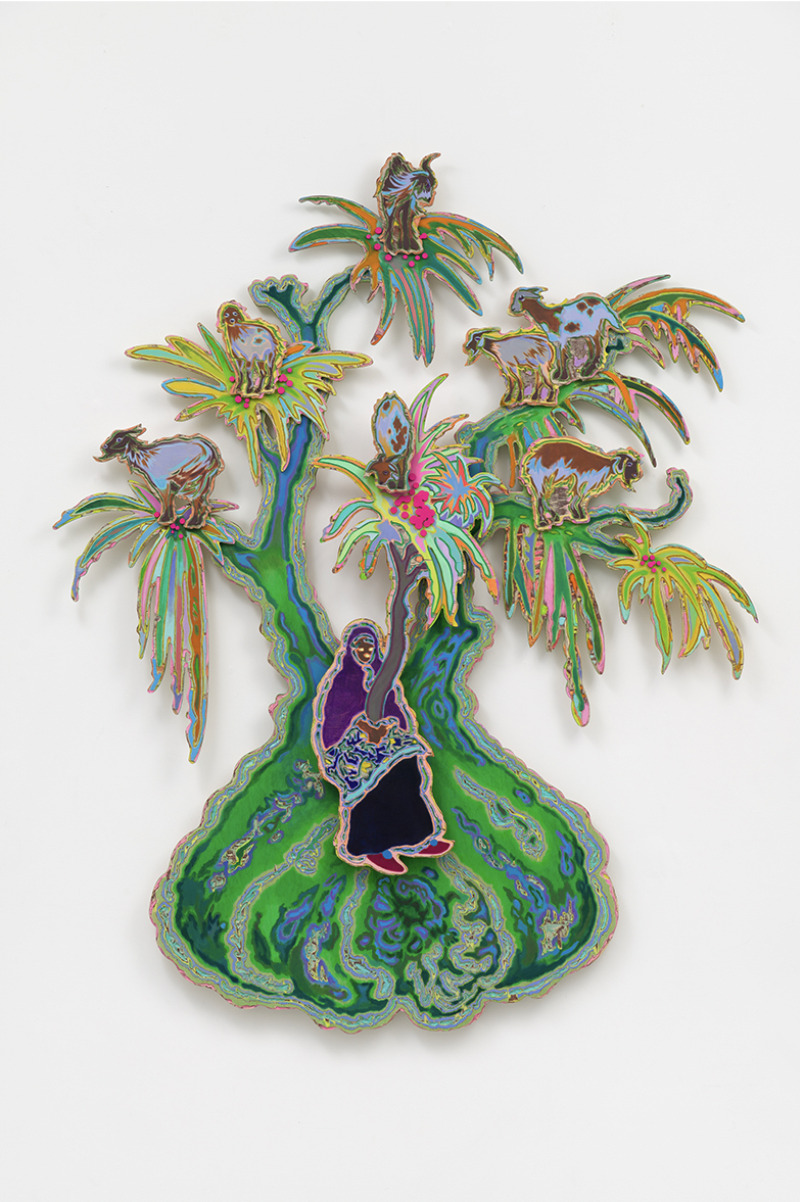
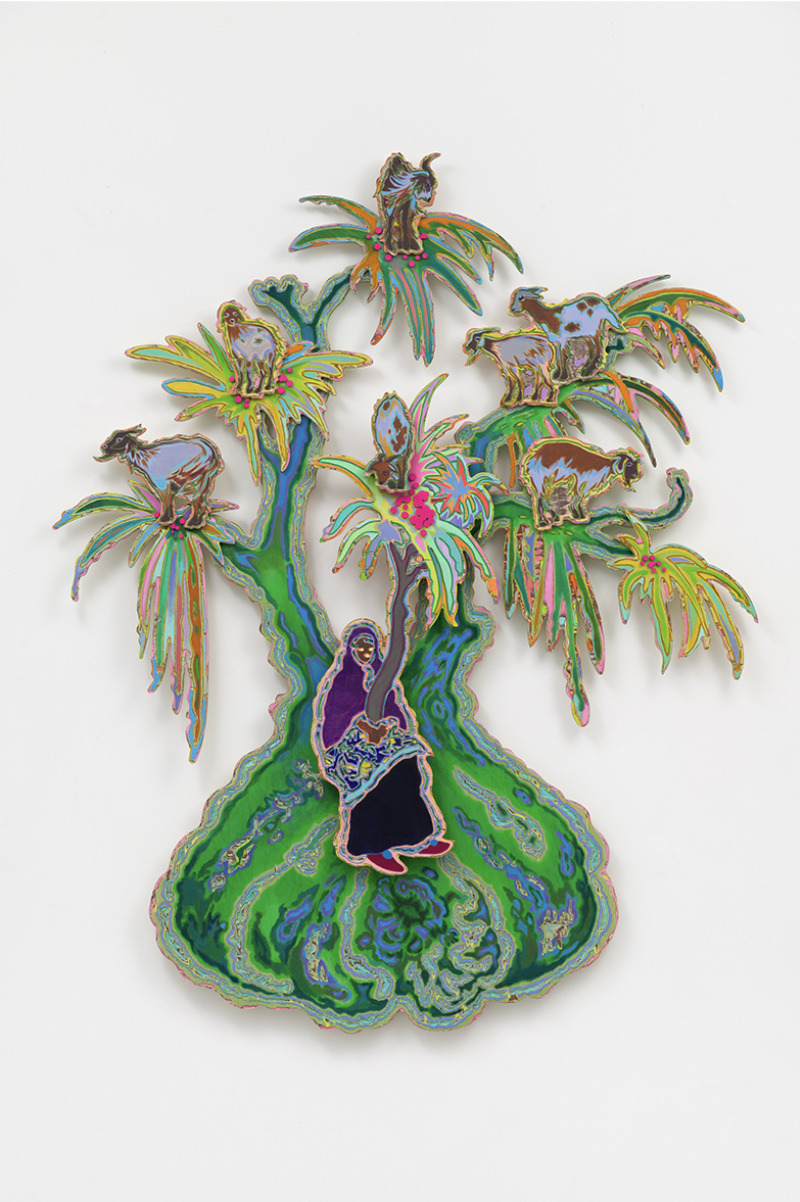
Shinyoung Park, A Traveler’s Fantasy, 2022, Ink, screenprint, woodburning, woodcut and oil paint on Birchwood, 146.5x116.7x7.5cm ©ThisWeekendRoom

Shinyoung Park’s practice, rather than serving as a simple act of memory or homage, translates what she observed in those places into symbolic forms that carry secretive narratives, summoning senses suppressed by modern civilization and instincts erased by natural-scientific explanations.
 
Moreover, by combining diverse media and materials, her works move beyond evoking synesthetic perception, fusing sensation with image to leave vivid afterimages in the viewer’s mind. In doing so, they invite us to reimagine the countless events unfolding beyond the time and space we currently inhabit.

 “I want to create images that do not merely linger briefly on the retina before disappearing, but that invade someone’s brain, remain there, and trigger chemical reactions.”     (Shinyoung Park, from an interview with ThisWeekendRoom)


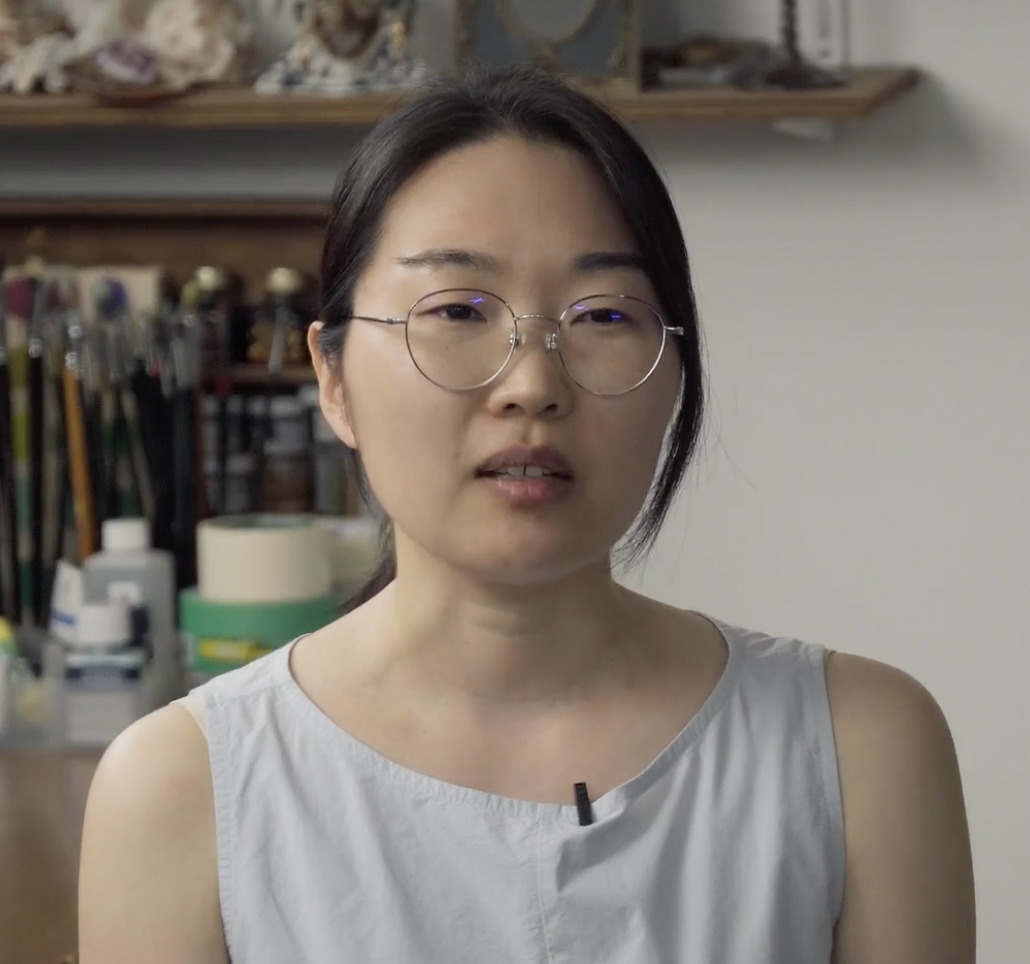
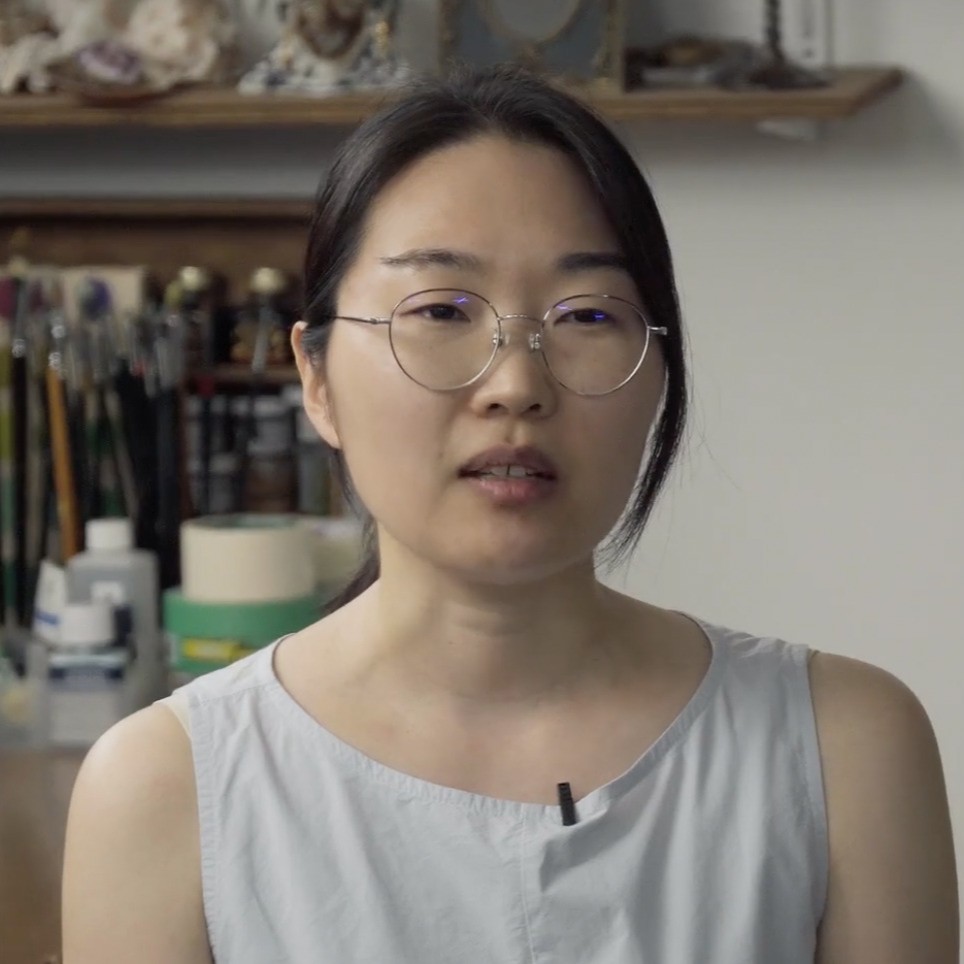
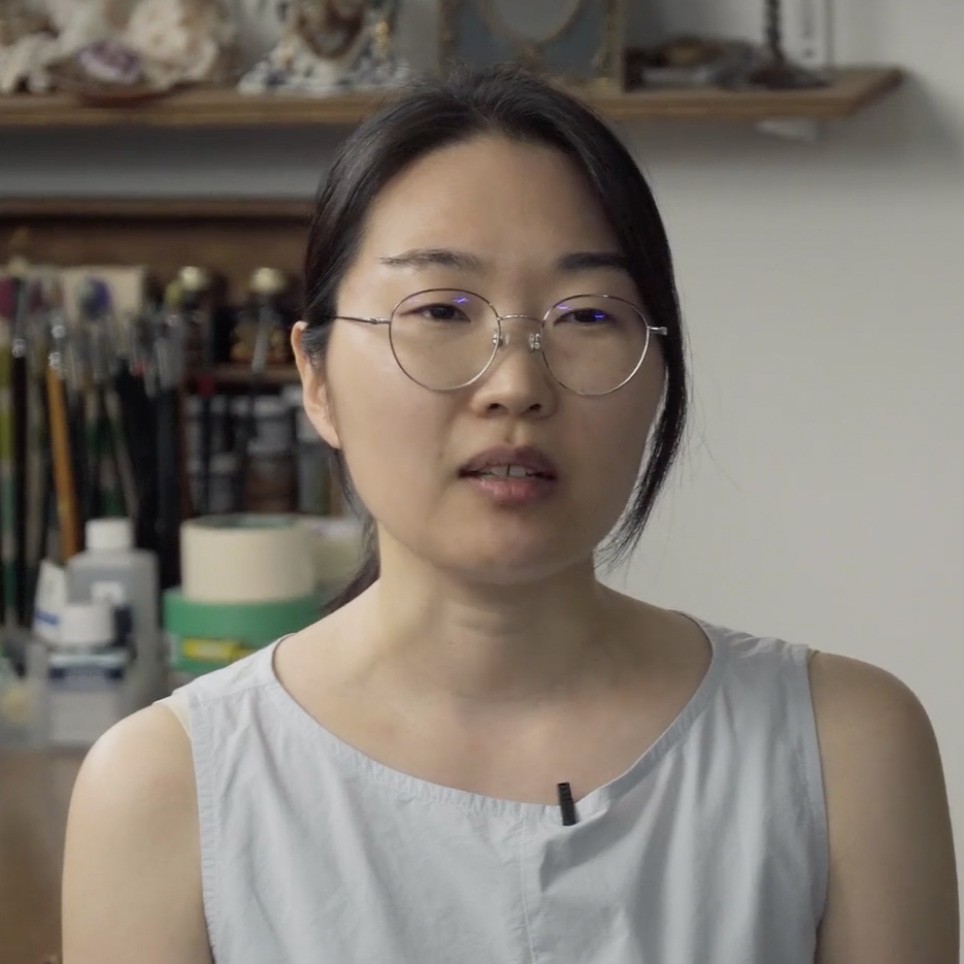
Artist Shinyoung Park ©ThisWeekendRoom

Shinyoung Park earned both her BFA and MFA in Painting from Seoul National University and received an MA in Printmaking from the Royal College of Art, London. Her solo exhibitions include 《Everything Returns to Desert》 (ThisWeekendRoom, Seoul, 2025), 《Under the Golden Sunlight》 (Center of Contemporary Art, Busan, 2020), and 《Skenes: Secluded Selves》 (Cyart Space, Seoul, 2014).
 
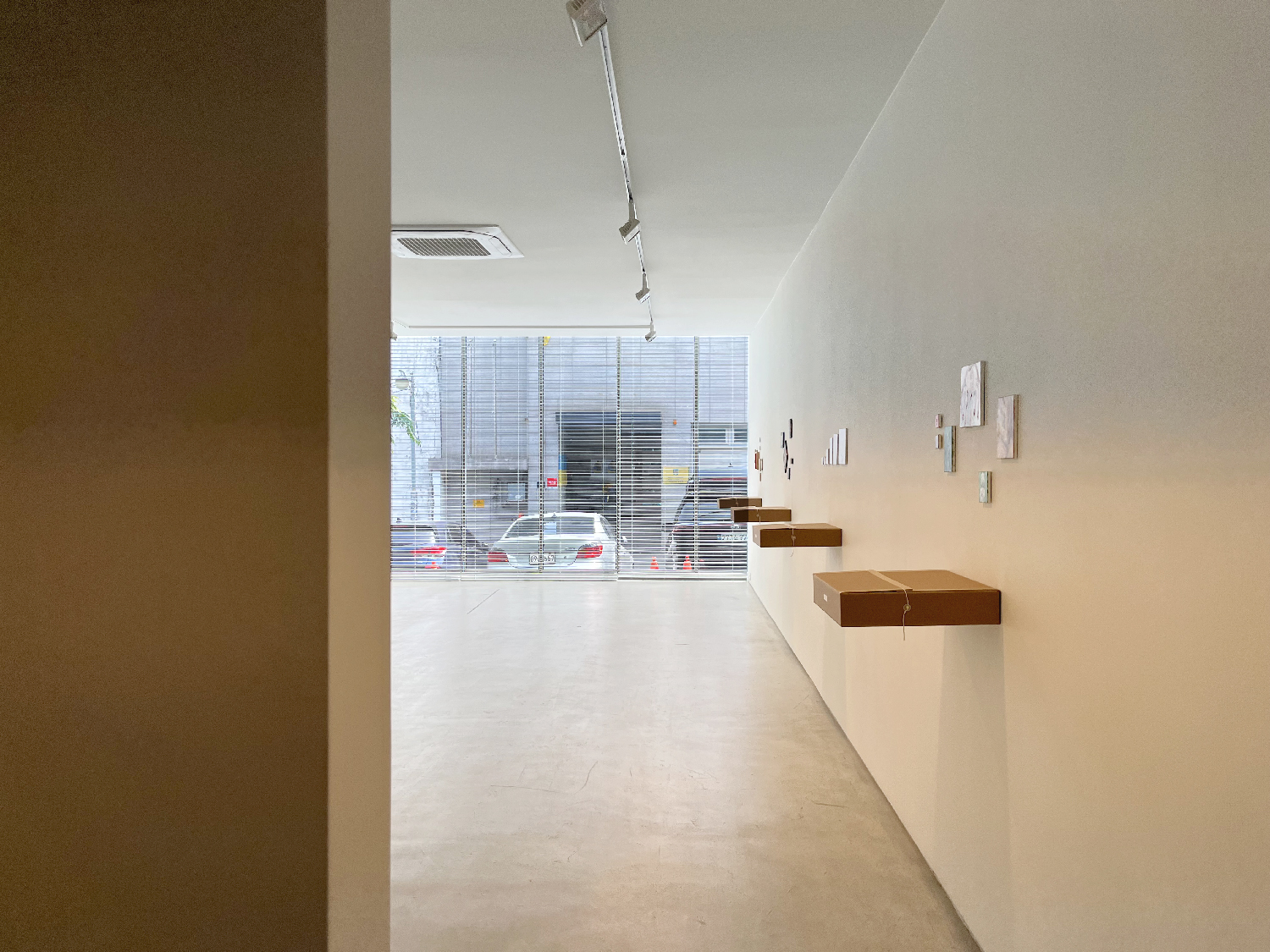
She has also participated in numerous group exhibitions, including 《UNBOXING PROJECT 2: Portable Gallery》 (New Spring Project, Seoul, 2023), 《Far in My Mirror》 (ThisWeekendRoom, Seoul, 2021), 《Re Collect》 (Seoul National University Museum of Art, Seoul, 2020), 《Sunny Art Prize》 (Sunny Art Centre, London, 2018), and 《Rage: The Odious Smell of Truth》 (Hockney Gallery, London, 2017).
 
Park received the ‘Augustus Martin Prize’ (UK, 2018), and her works are held in the collections of the Seoul National University Museum of Art and the Korea Institute for Advanced Study (KIAS).
References