

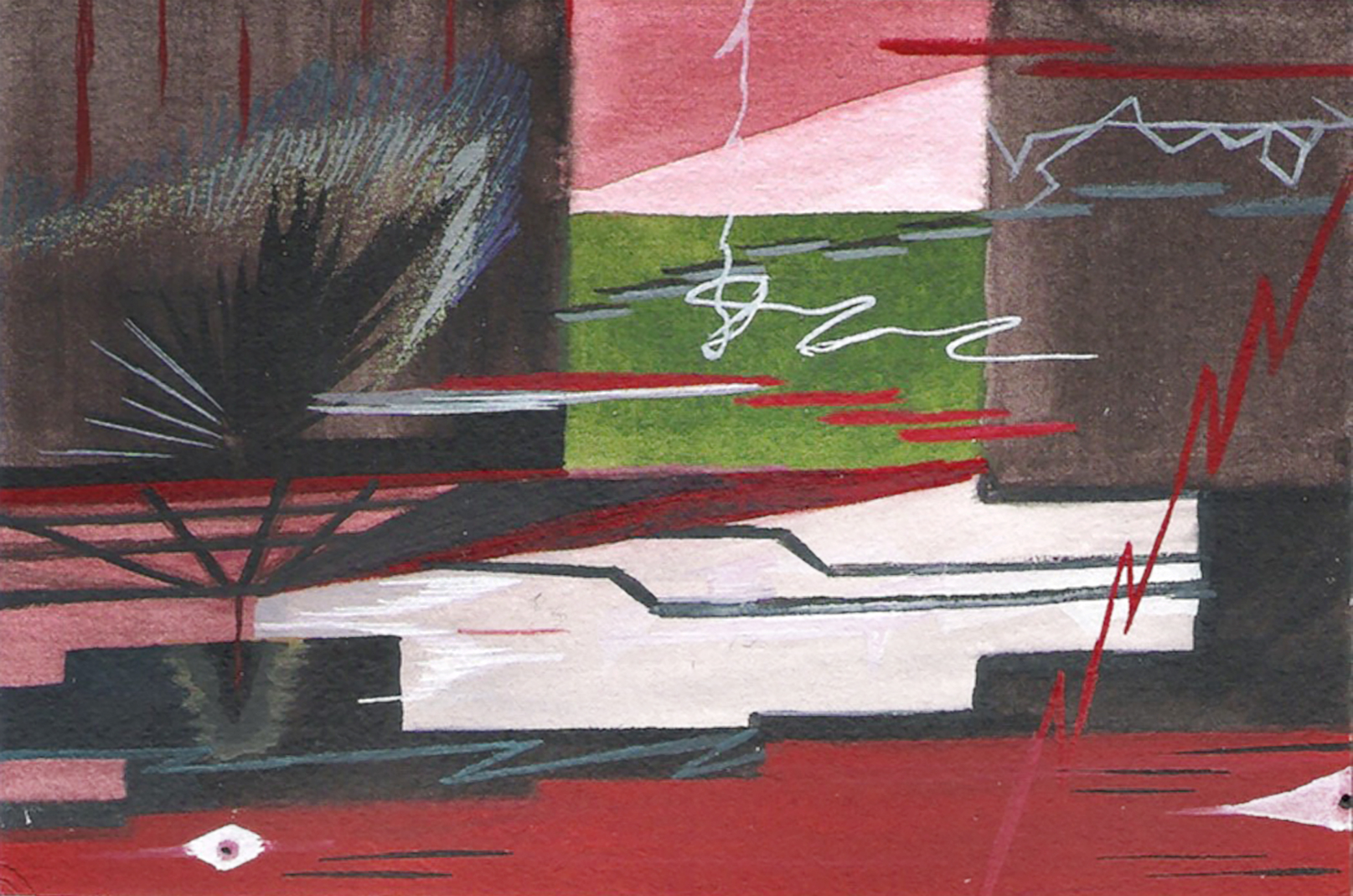
Park Junghae (b. 1989) explores various themes in her paintings and drawings, focusing on how to interpret intangible environmental factors such as light, water, and thermal energy, which exist in physical space and time and are perceived conceptually. At the same time, she imagines and documents the layered physical dimensions of space and time surrounding the work.


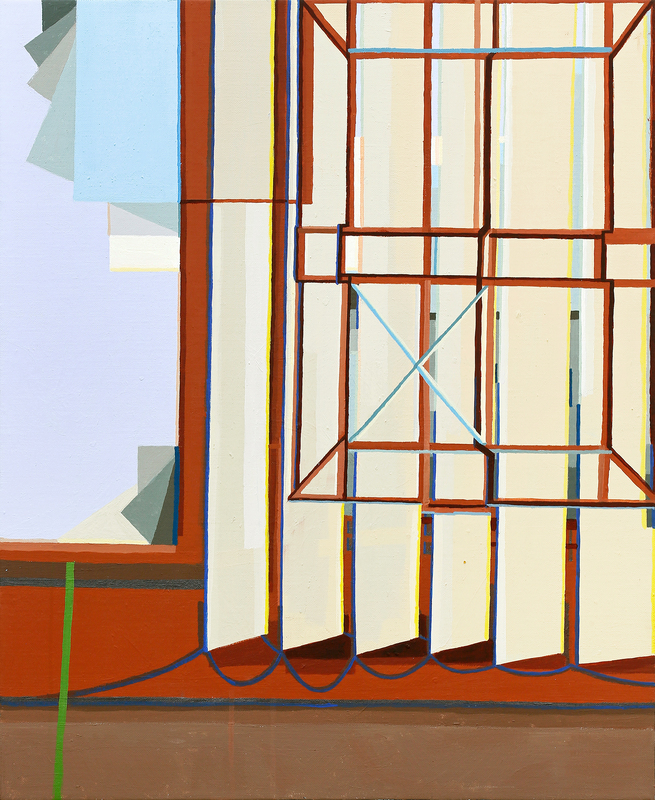
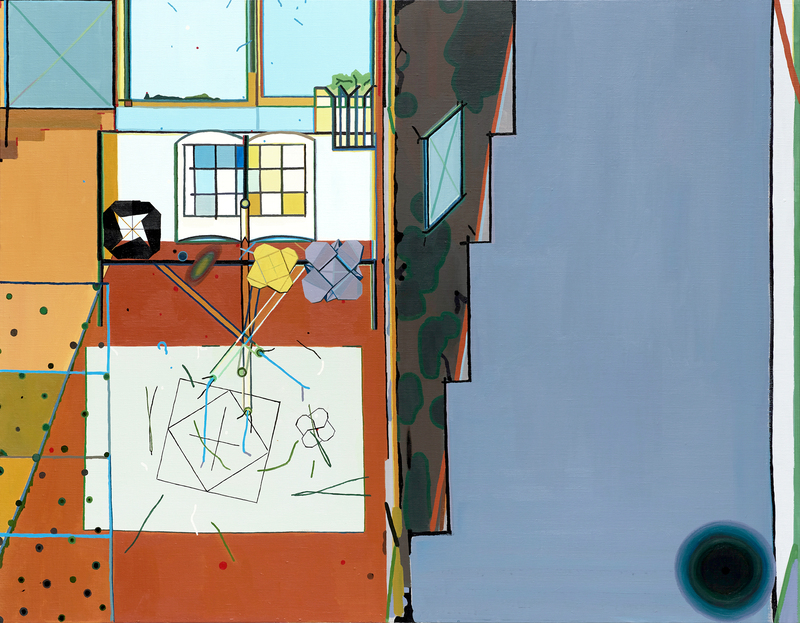
Park Junghae, Moment of Sufficient, 2015, Acrylic on canvas, 91x117cm ©Park Junghae

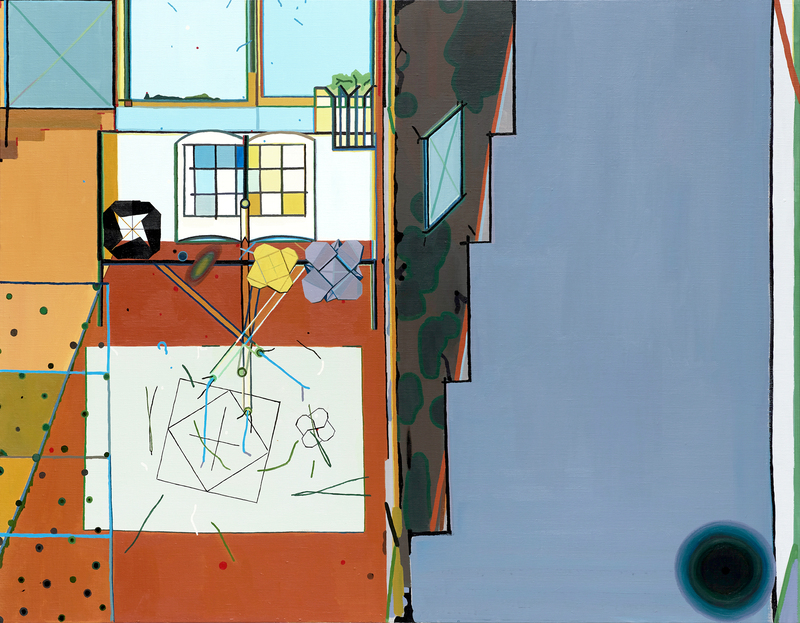
In her early works, Park Junghae regarded the studio not merely as a place of labor but as a mental heterotopia that mediates between the real and the virtual—a “garden” in which symbols take root and grow—and depicted her studio in painting. Through studio records accumulated since 2013 and the paintings and drawings derived from them, she expands the studio into a space of contemplation.


Park Junghae, Tomorrow, 2015, Acrylic on canvas, 53x65cm ©Park Junghae

In this context, painting and drawing become passages that lead beyond the boundaries of an artistic medium and into the realm of thought, simultaneously revealing both the visible and the invisible. The layered accumulation of materials on the surface, the entropy of materiality arising from cutting and layering, and the dynamics of objects and signs divide and expand the picture plane, referencing the order of the urban grid while exploring the metaphorical visual language generated by the studio itself.

Installation view of 《Dear. Drops》 (Archive Bomm, 2016) ©Park Junghae

In her first solo exhibition, 《Dear. Drops》 (Archive Bomm, 2016), Park Junghae experimented with shifting the agency of intention and chance in painting away from the artist and onto the paint itself. By observing the traces left by flowing paint, she discovered its materiality and imagined what kinds of landscapes might unfold if the paint were to become the subject of utterance.


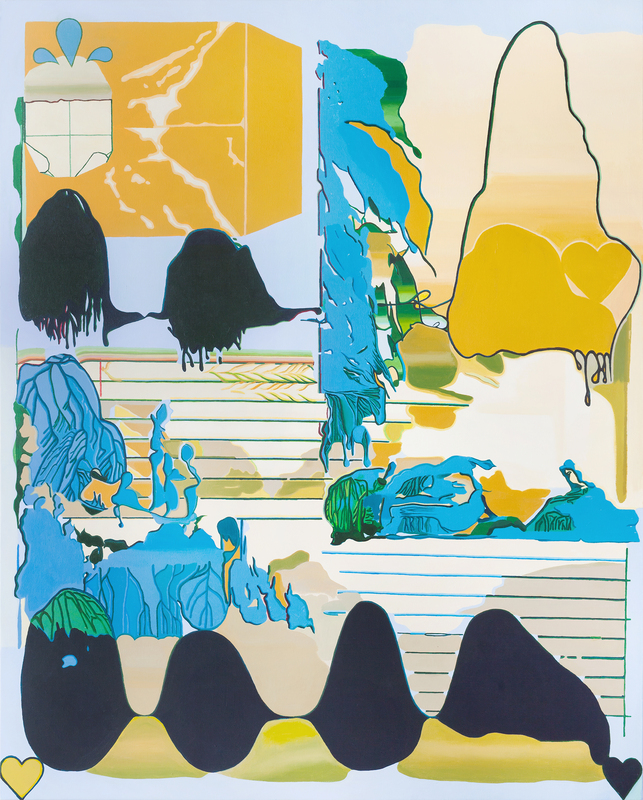
Park Junghae, Dear. Drops, 2016, Acrylic on linen(mounted on wood panel), 162.2x130.3cm ©Park Junghae

The resulting works retained traces generated through the interaction between the material properties of paint and physical laws. For instance, on vertically positioned canvases, the paint flowed downward, seeped into the fabric upon contact, and spread as it stained the surface.
 
Whereas in her earlier works elements such as dots, lines, planes, and colors were carefully calibrated so as not to interfere with one another, the paintings presented in this exhibition feature organic, curving flows of paint that traverse the canvas, making it difficult to discern their beginnings and ends.
 
In this way, rather than employing “dripping,” a technique in which paint is dispersed according to the artist’s intention, Park Junghae proposed the concept of “drops” as traces left by flowing water. Through this shift, she sought not only to move beyond the framework of abstraction and representation, but also to reconfigure the very frame of intention and chance.


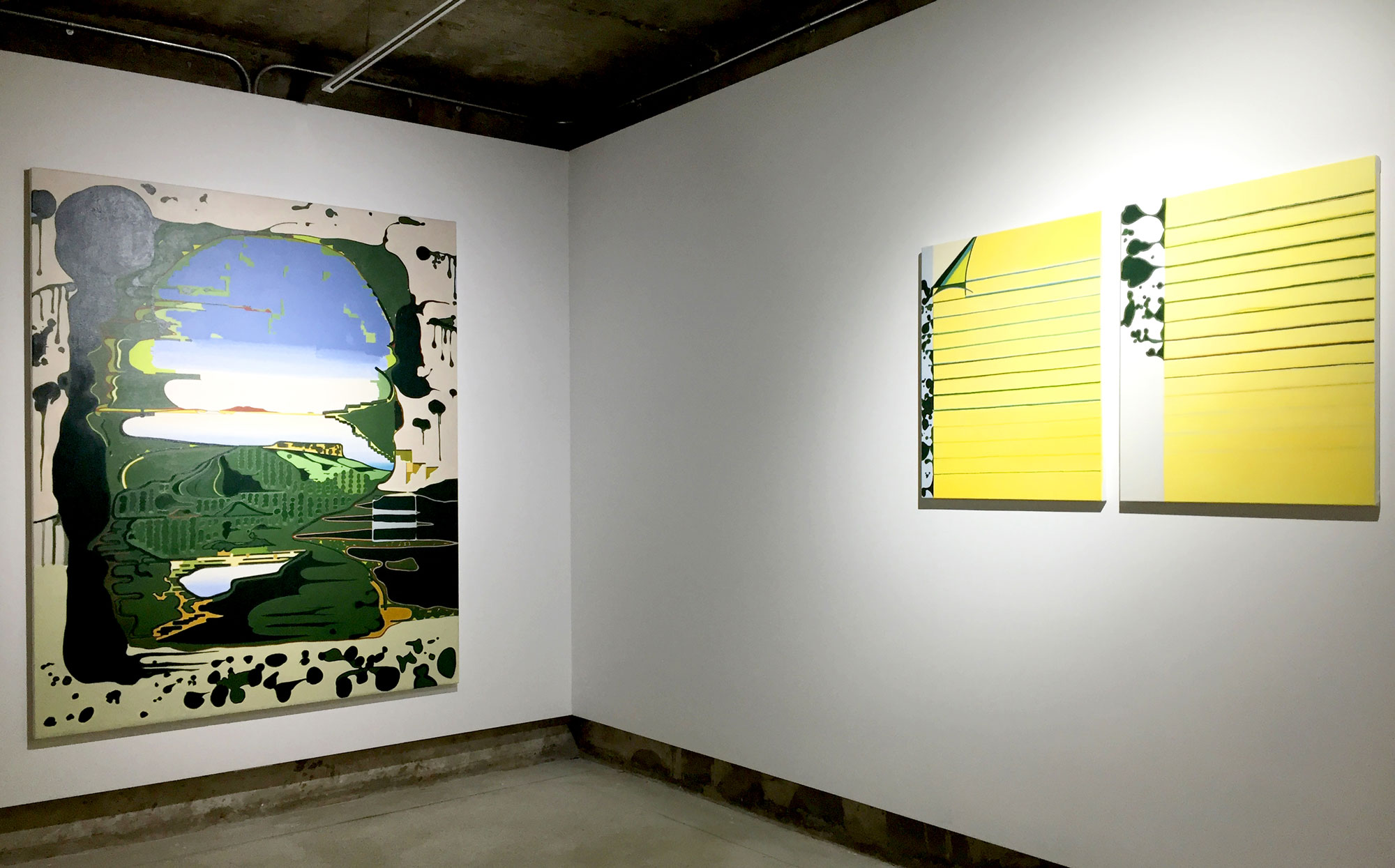
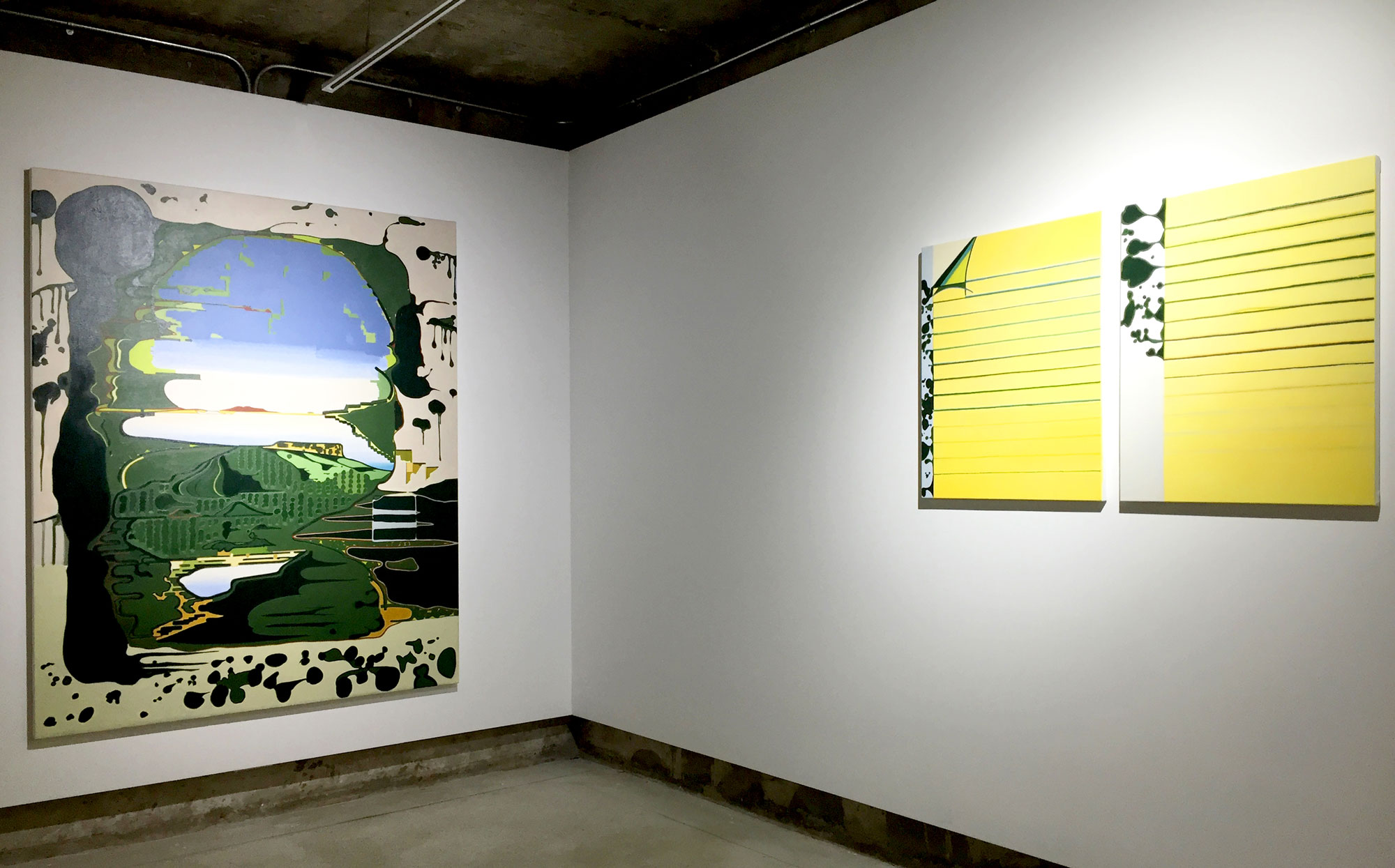
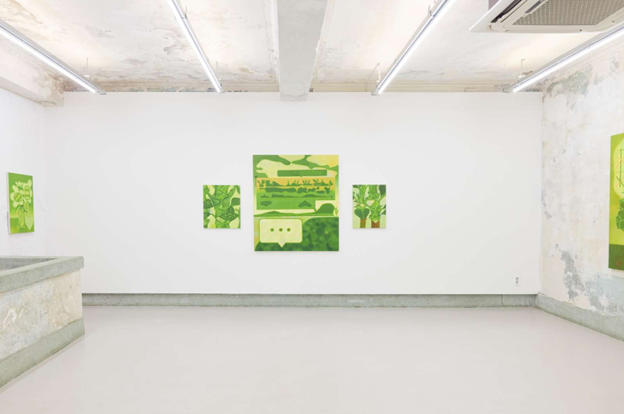
Installation view of 《Xagenexx》 (Onground2, 2017) ©Park Junghae

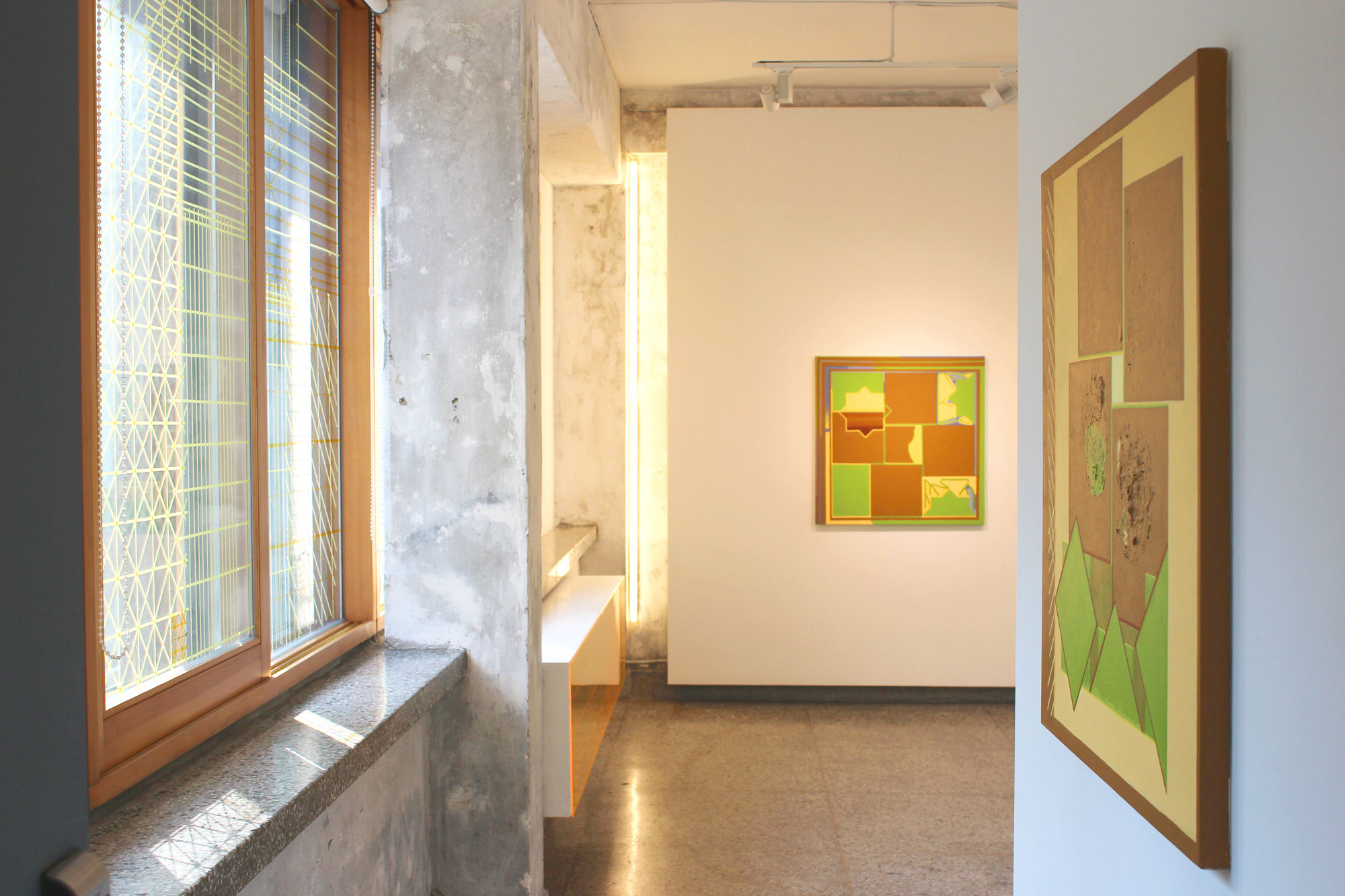
In the subsequent solo exhibition 《Xagenexx》 (Onground 2, 2017), Park Junghae explored the possibility of painting to “camouflage” the world, functioning as a kind of disguise. In observing natural elements, architectural structures, and everyday objects around her, she translated the colors, forms, and material qualities evoked in this process into the language of painting.
 
In this exhibition, Park followed rectangular objects and imagined images emerging between square frames. In an era in which all images are perceived within the rectangular frame of a screen, she reflected on painting as a medium that mediates between the virtual and the real through another rectangular frame—the canvas.


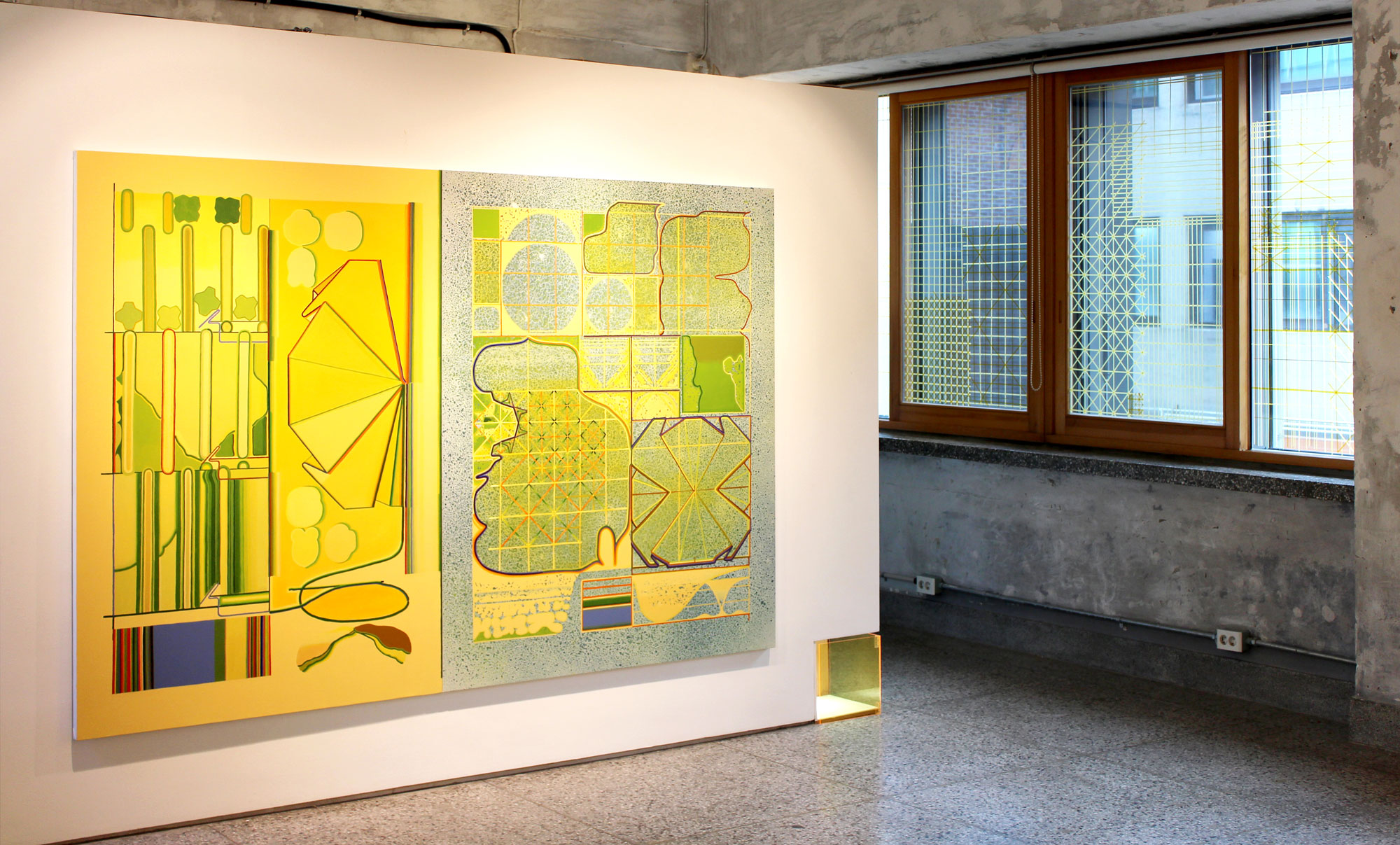
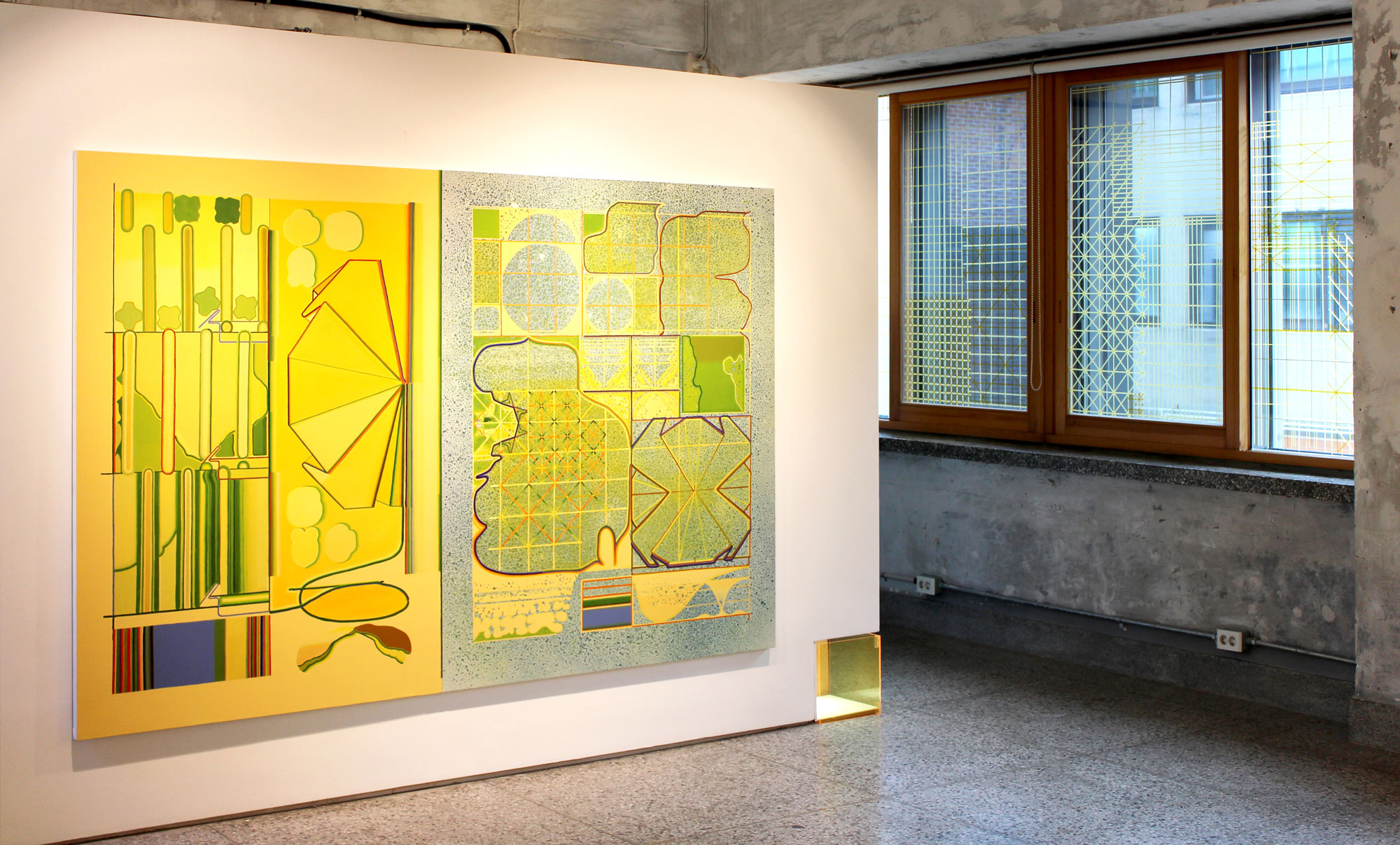
Installation view of 《Xagenexx》 (Onground2, 2017) ©Park Junghae

At this point, rediscovering formal elements of painting—such as color, form, and frame—was not a return to formalism, but rather an attempt to let painting permeate the surrounding reality and function as a metonymy of the world.
 
The yellow that filled the exhibition space did not remain merely a symbol or metaphor of light; instead, it revealed painting’s state of disguise as a kind of false light. Furthermore, natural light slid across the surface of the canvas, visualizing yellow as a camouflage of light itself.


Installation view of 《Mellow Melody》 (Whistle, 2021) ©Park Junghae

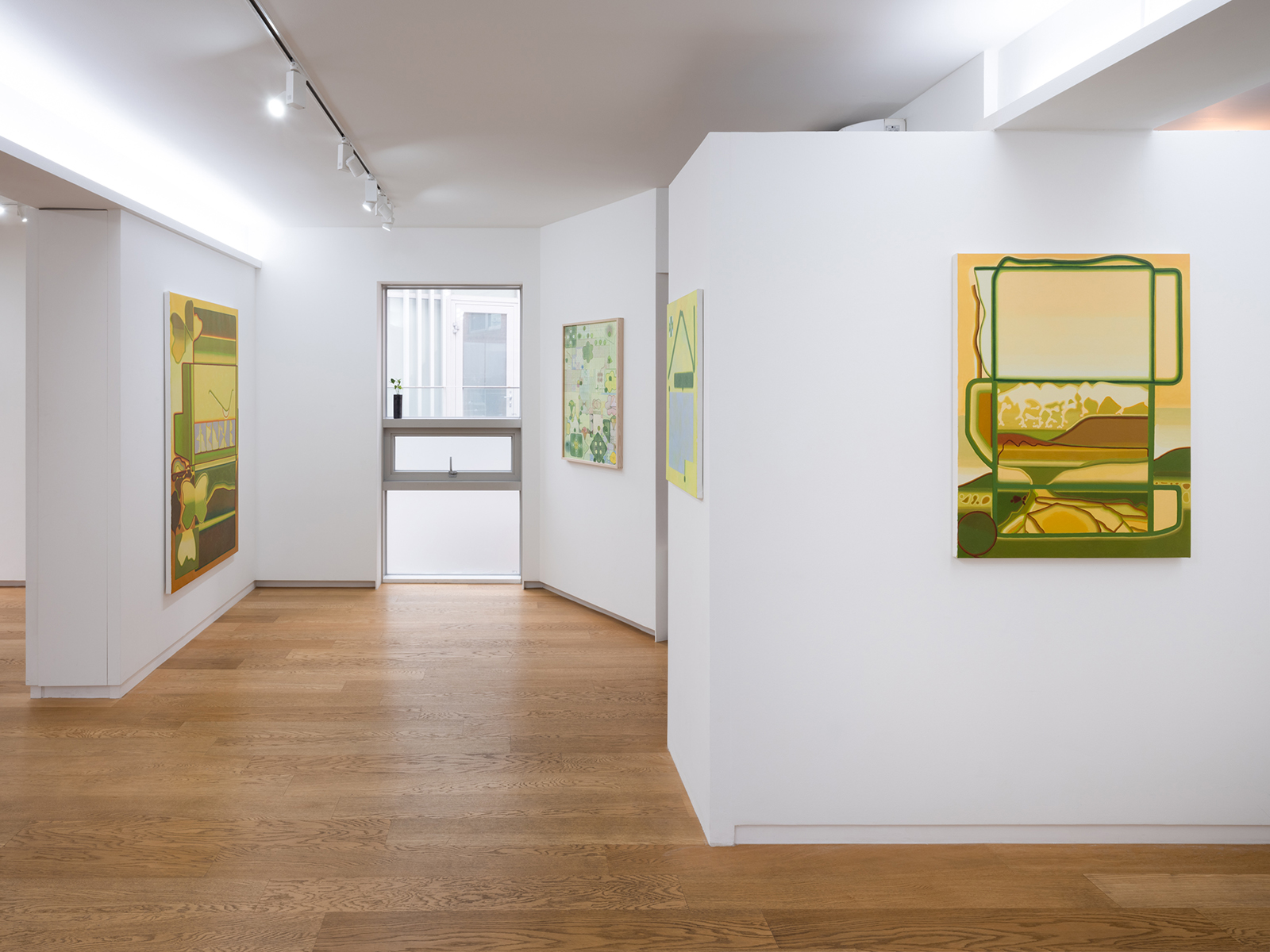
While the first solo exhibition explored painterly experimentation through the liquid materiality of paint, and the second addressed the connection between the virtual and the real through the materiality of light responding to space, Park Junghae’s third solo exhibition, 《Mellow Melody》 (Whistle, 2021), examined more specifically the changes in light associated with weather, linking them to evoked melodies and forms.
 
The work Micro Ground (2019), positioned at the entrance of the exhibition, speaks to memories of light—a theme running throughout the solo exhibition—and to the corporeality of light itself. In the painting, one can sense the artist’s intention to imagine the distance of an unseen landscape and to “see” and “perceive” it in another way, rendering it with meticulous care.


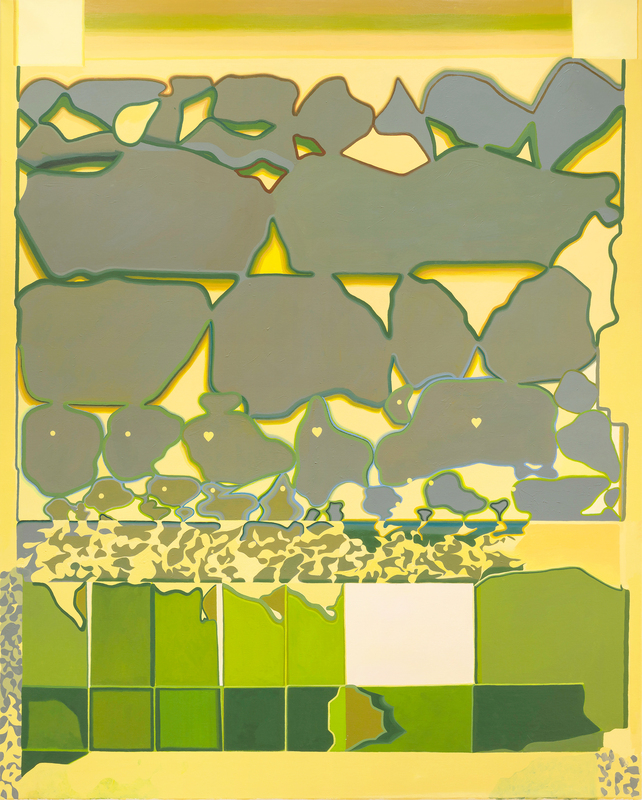
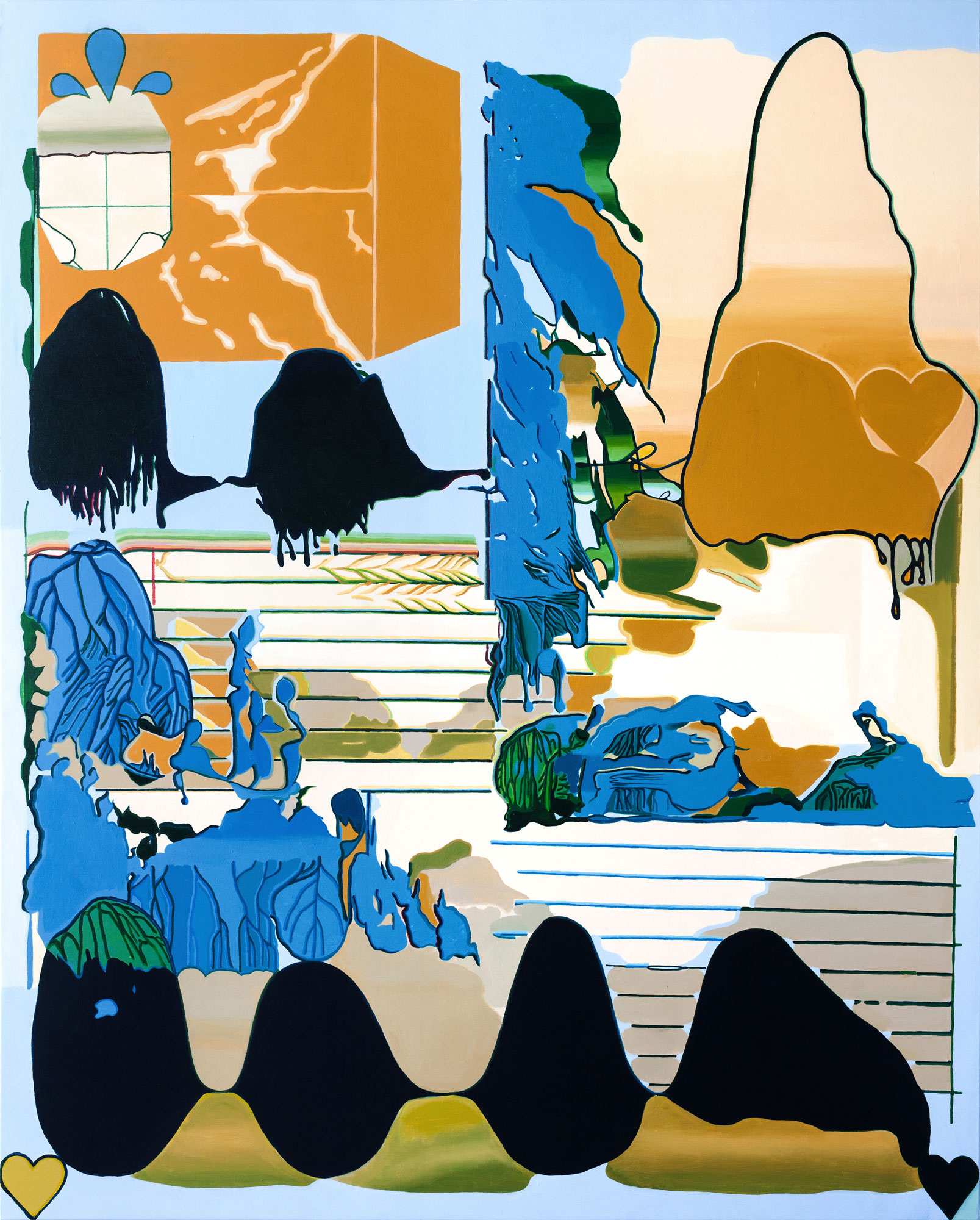
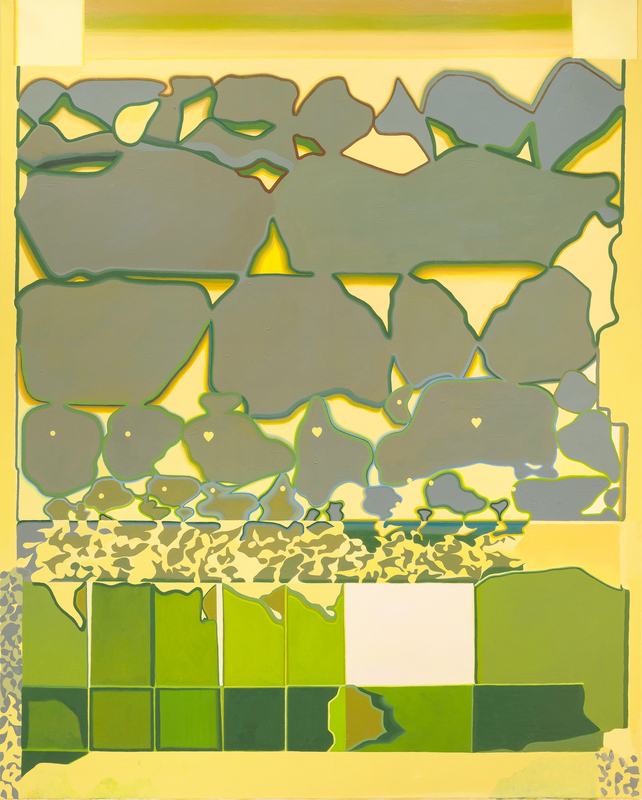
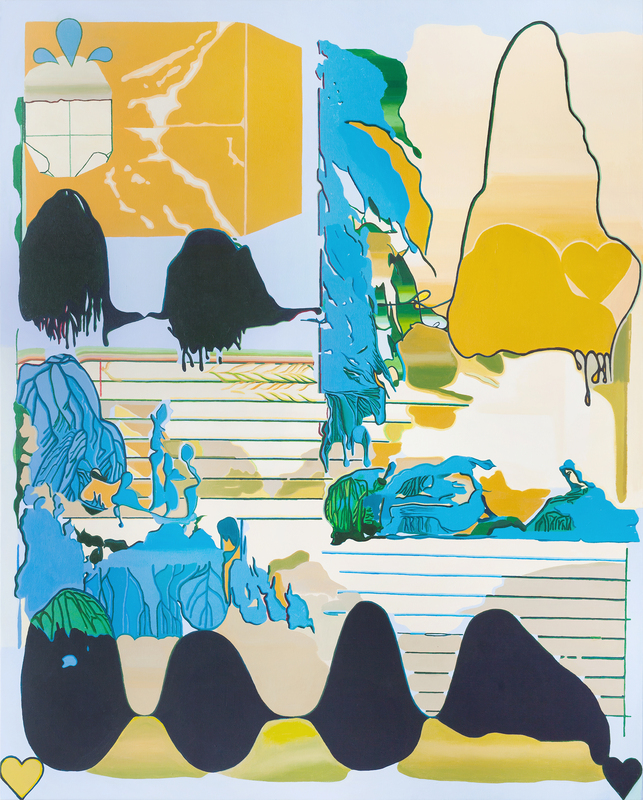
Park Junghae, Heavy Cloud, 2018-2019, Acrylic on linen(mounted on wood panel), 162.2x130.3cm ©Park Junghae

Meanwhile, Heavy Cloud (2018-2019) imagines the size of particles. The size and weight of a subject tend to fluctuate according to the point of view. A heavy cloud that sinks and the heart symbol’s lightness that jumps over it collide and reveal an emotional gap.
 
Also, TEETHh (2018) considers changing form and crevice as exposed to light, Flashback (2018) recalls the day during one night, and Distorting Time (2018) twists the laps of time. The artist weaves iconography with titles, leaving clues for our interpretation.


Installation view of 《Mellow Melody》 (Whistle, 2021) ©Park Junghae

In addition, objects made of paper often appear in Park’s work. A piece of paper placed in front of a surreal colored scape is a staged situation that shows light and story, a reminder that the work and the viewer are located together in reality.
 
Also, for the artist, it is a tool that induces three-dimensional imagination. It is an ideological material that sensually measures the distance of the object and strengthens the structure of the painting. Park also pays attention to the printed paper’s color, which speaks to her interest in “virtual reality.”


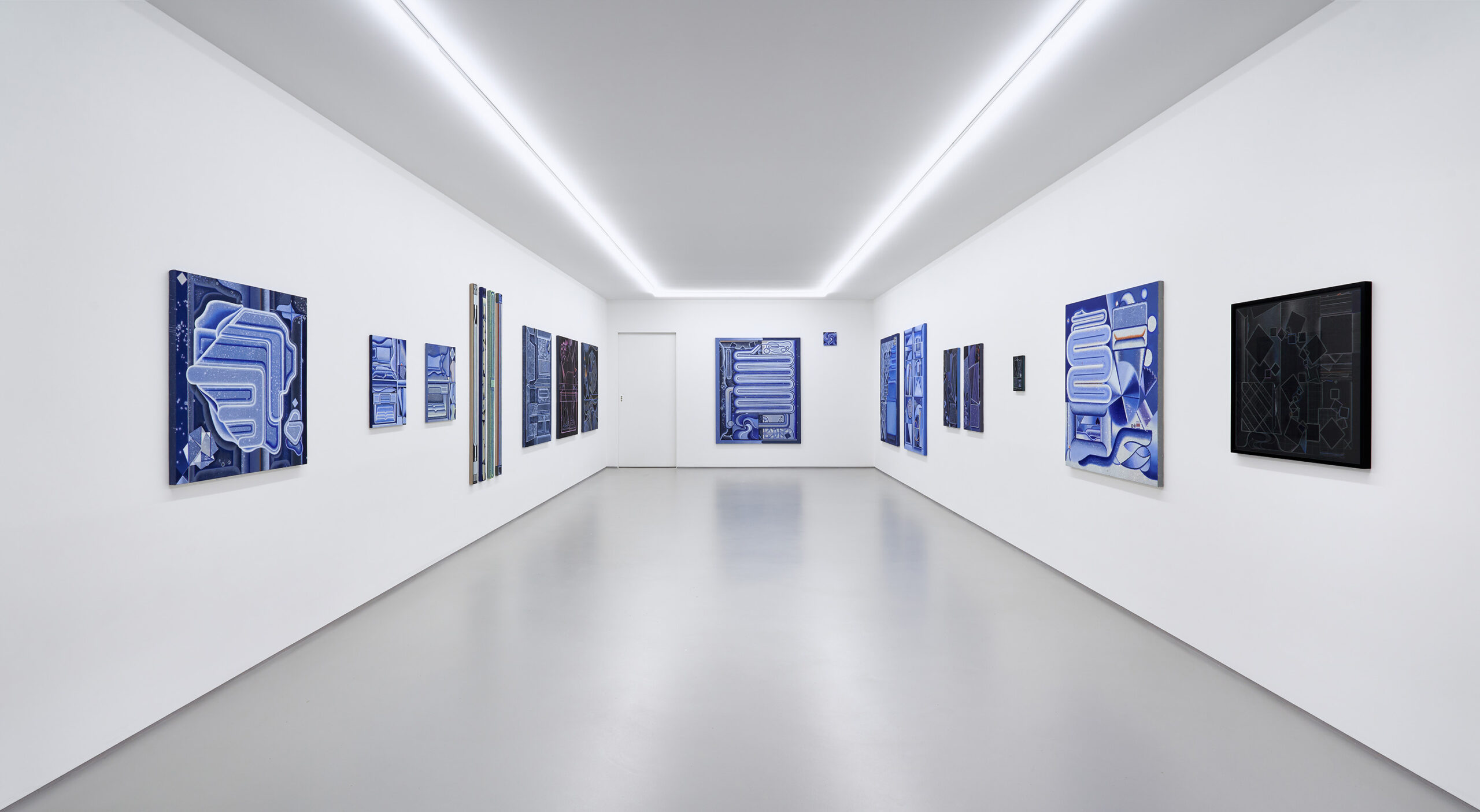
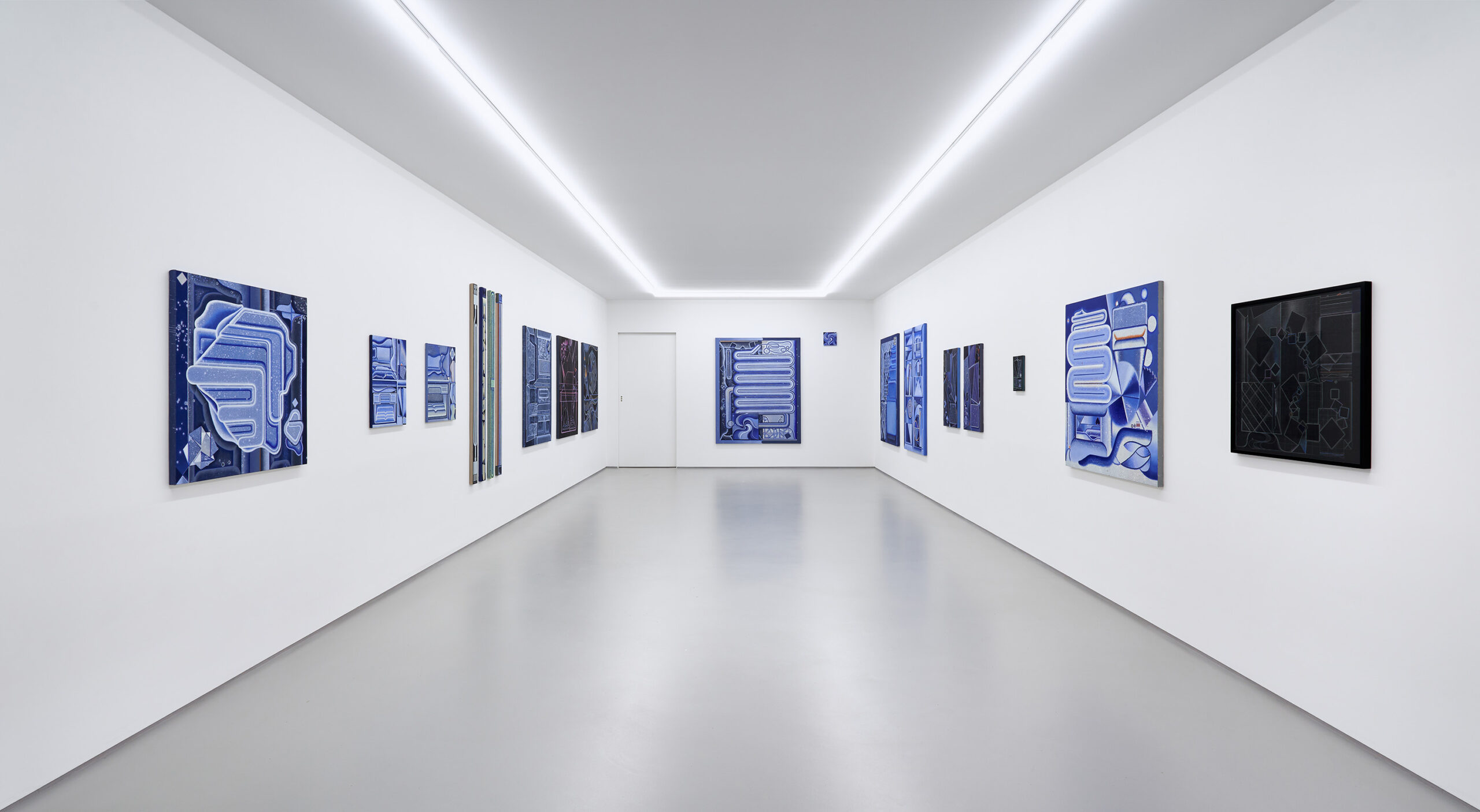
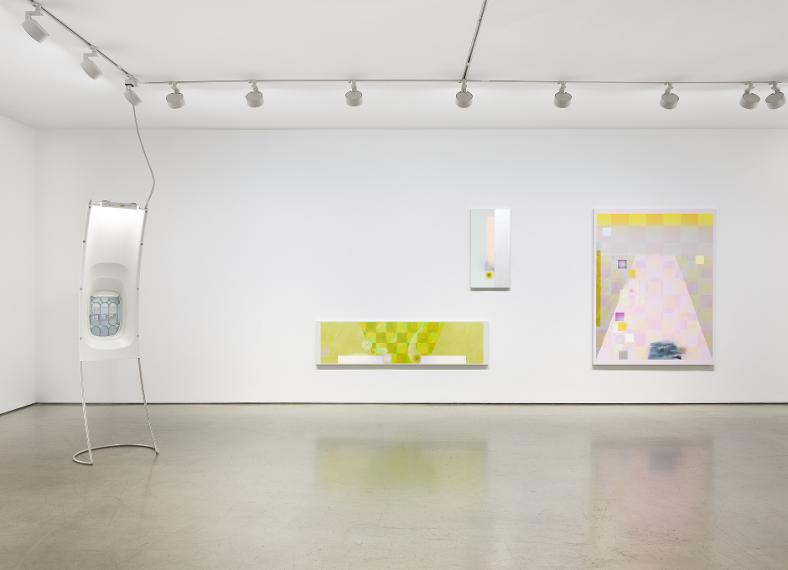
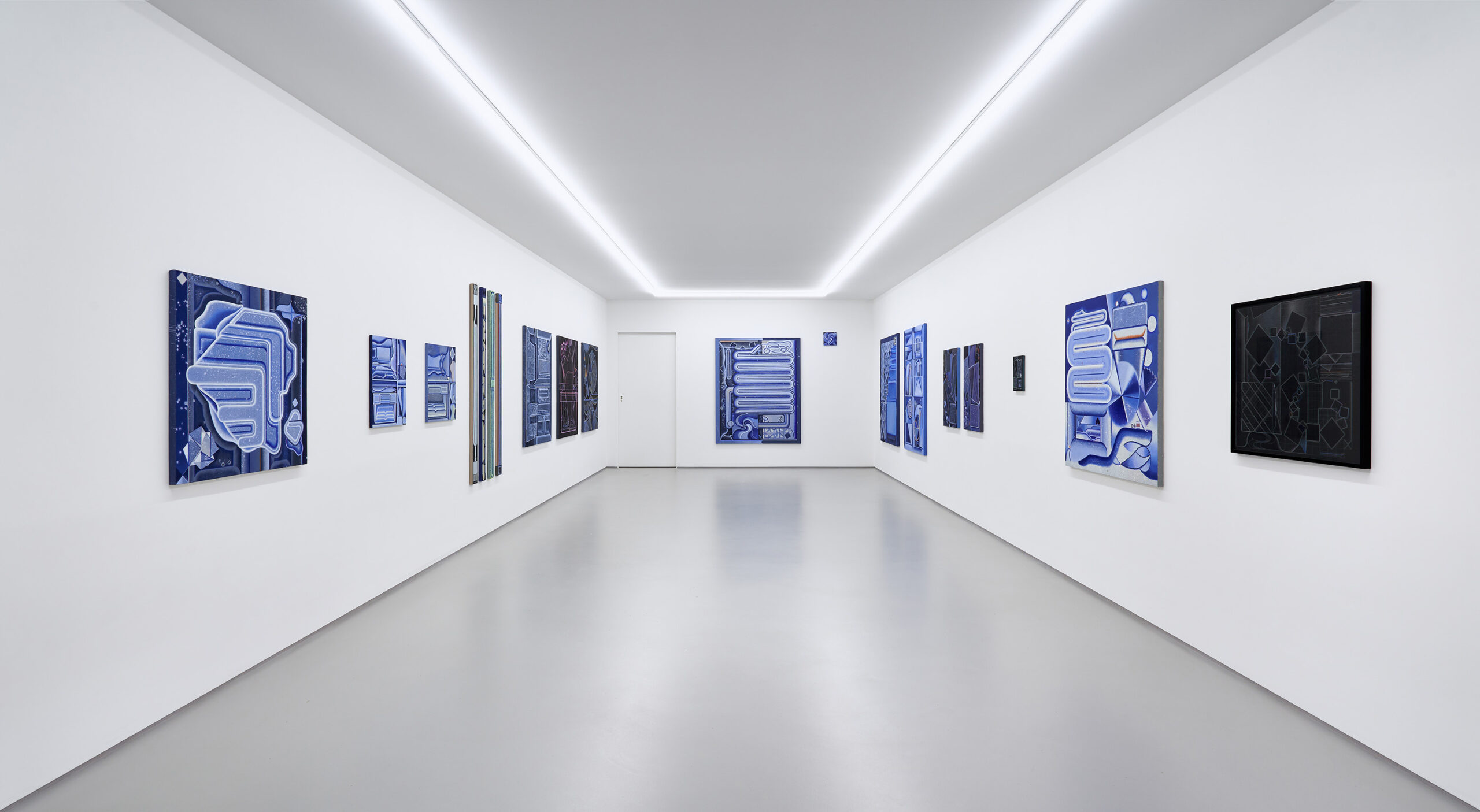
Installation view of 《Ancient Refrigerator》 (Cylinder Two, 2024) ©Park Junghae

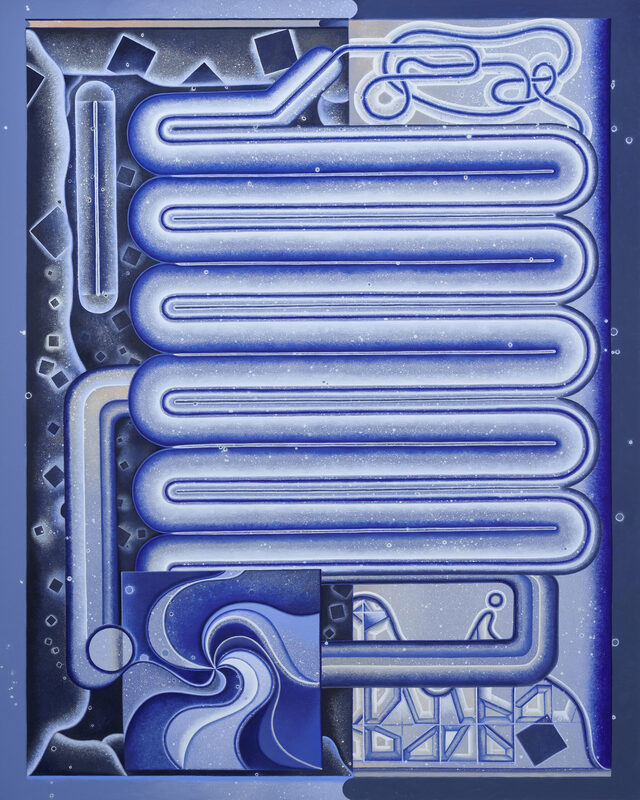
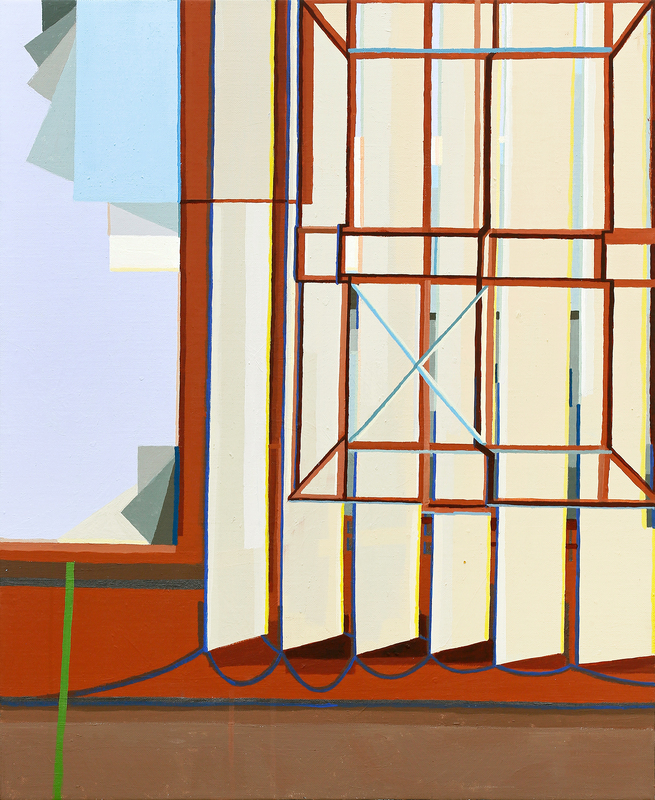
Meanwhile, in her solo exhibition 《Ancient Refrigerator》 (Cylinder Two, 2024), Park Junghae approached the dynamics of heat as a flow of energy and draws attention to the visual sense of temperature and the medium of painting as an ‘image-storage device’.


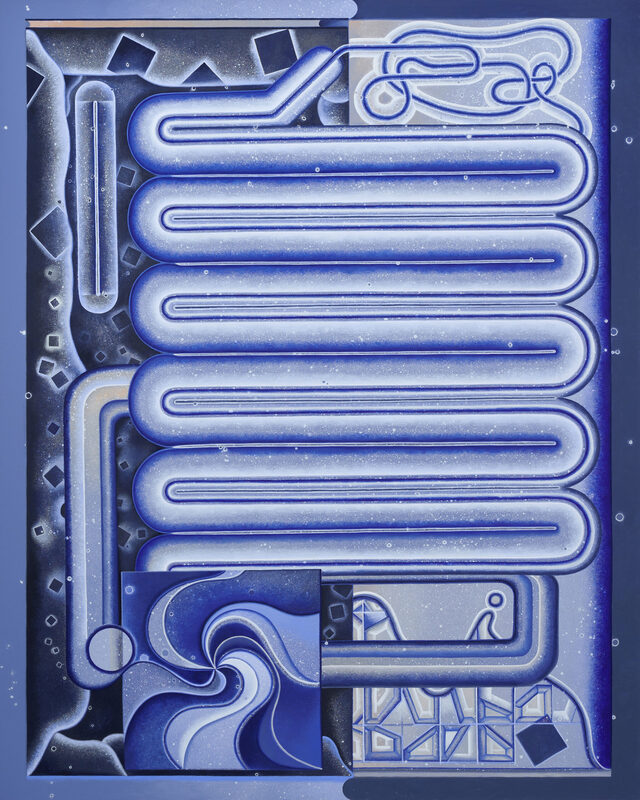
Park Junghae, Condenser, 2024, Acrylic on linen(mounted on wood panel), 160.2x130cm ©Park Junghae

The exhibition 《Ancient Refrigerator》 stems from the possibility that painting is functionally and aesthetically similar to refrigerators, in that humans store and control energy.
 
The exhibition comprises new, unpublished paintings and drawings from 2023 to the present. This series of works is three-dimensional imaginings at the boundary between figuration and abstraction—of the woven surfaces of canvas, paper, and aspects of digitally photographed spaces.
 
Unpredictable environmental conditions are incorporated into individual works, from tiny particles of paint scattered into the air by a sprayer, to lumps of paint fixed during the process of mixing paint on a paper plate, to perspectives on three-dimensionality that have arisen from the masses of colored paper experimented with as flat sculptures.


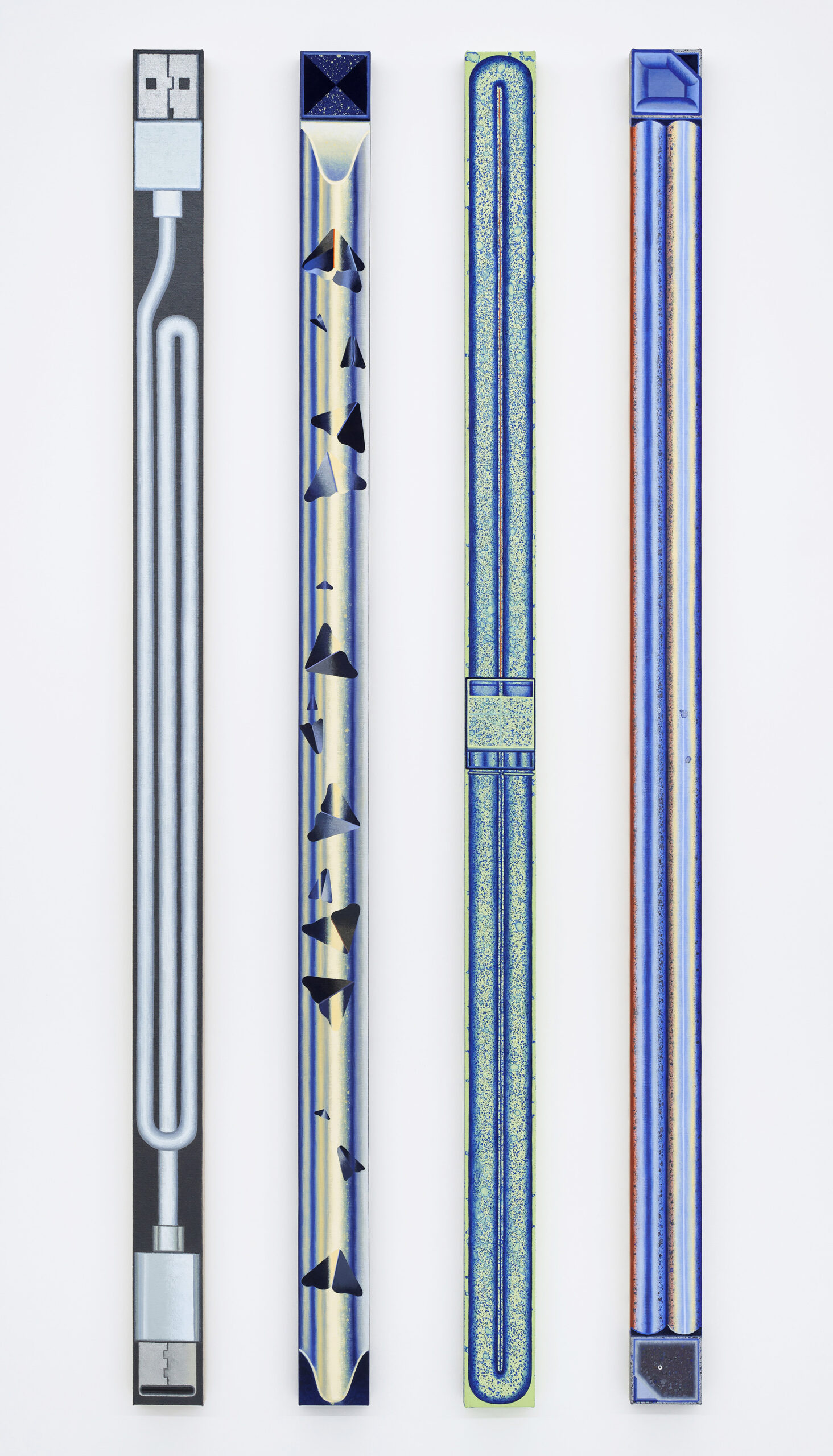
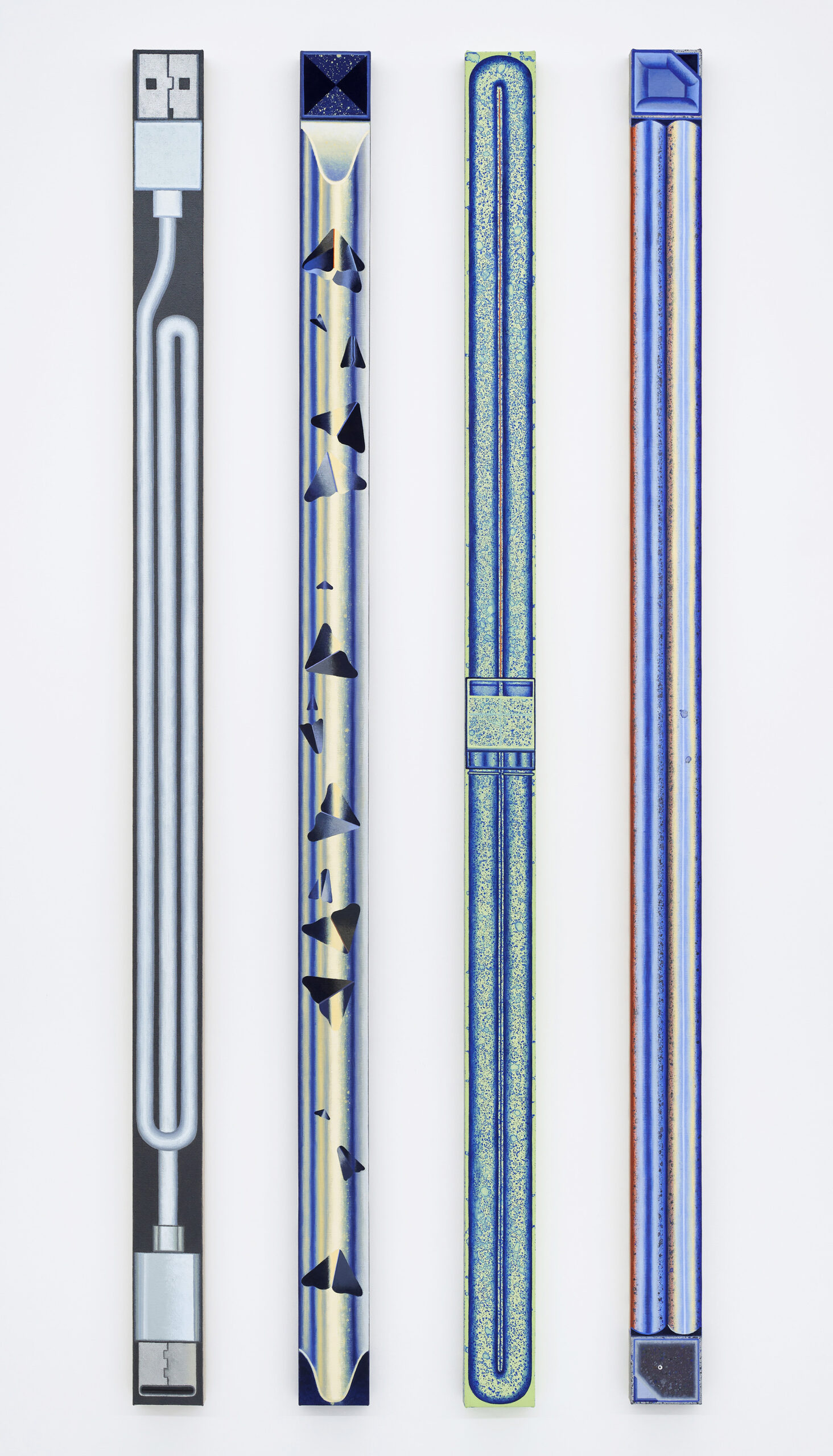
Park Junghae, Passage(OC)-Landing Strip(OC)-Neon Bar(OC)-Landing Strip(OC), 2024, Acrylic on canvas, 156x8cm ©Park Junghae

By viewing painting as a storage device that captures energy, Park’s canvases come alive with visual energy that forms its own cycle of circulation, much like thermal energy. Through the exhibition, the artist expressed the hope that “fragments of each viewer’s memories related to materiality might coolly melt into each work,” seeking to explore the interactions of visual energy that emerge between the artworks and their viewers.


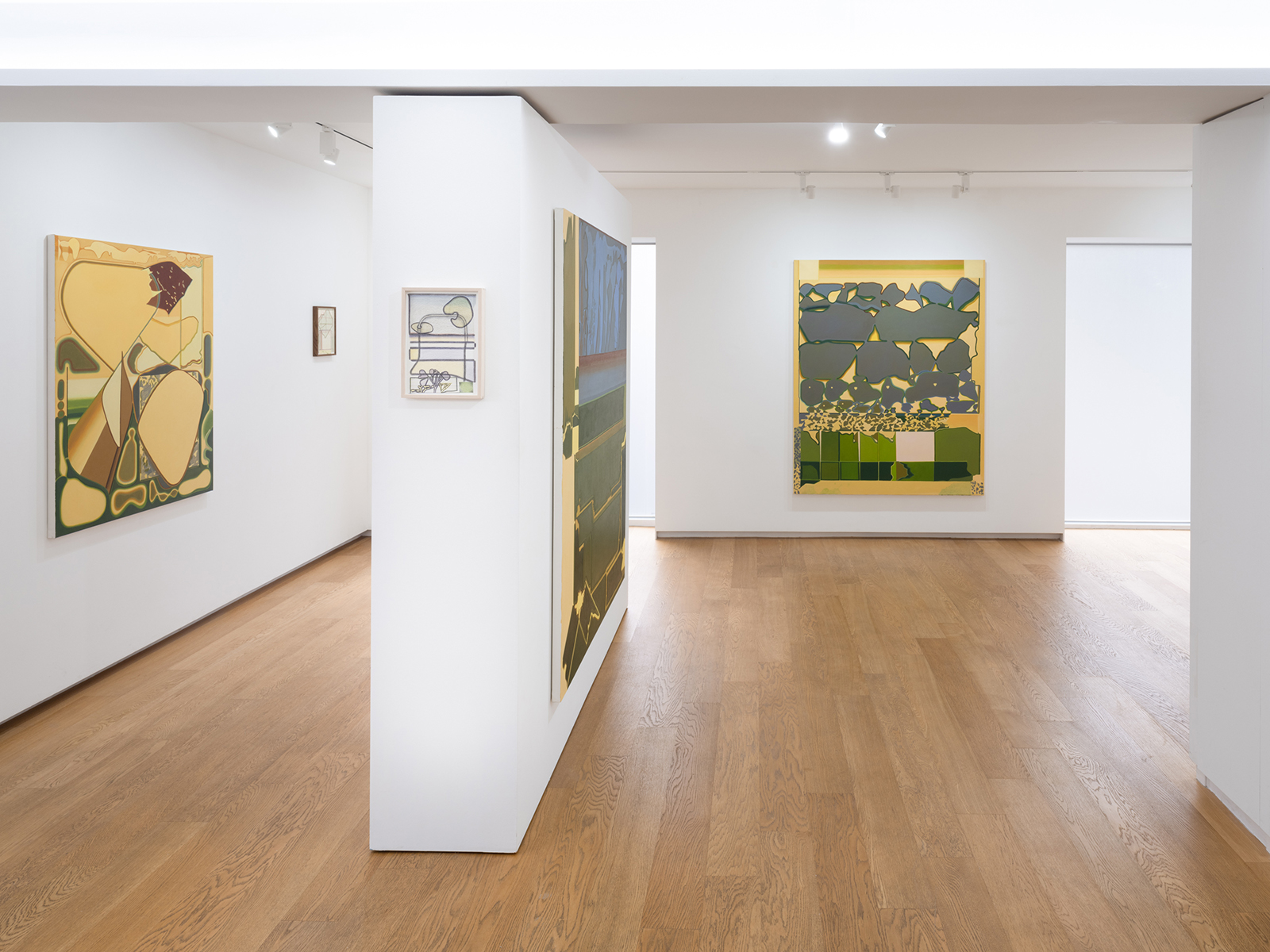
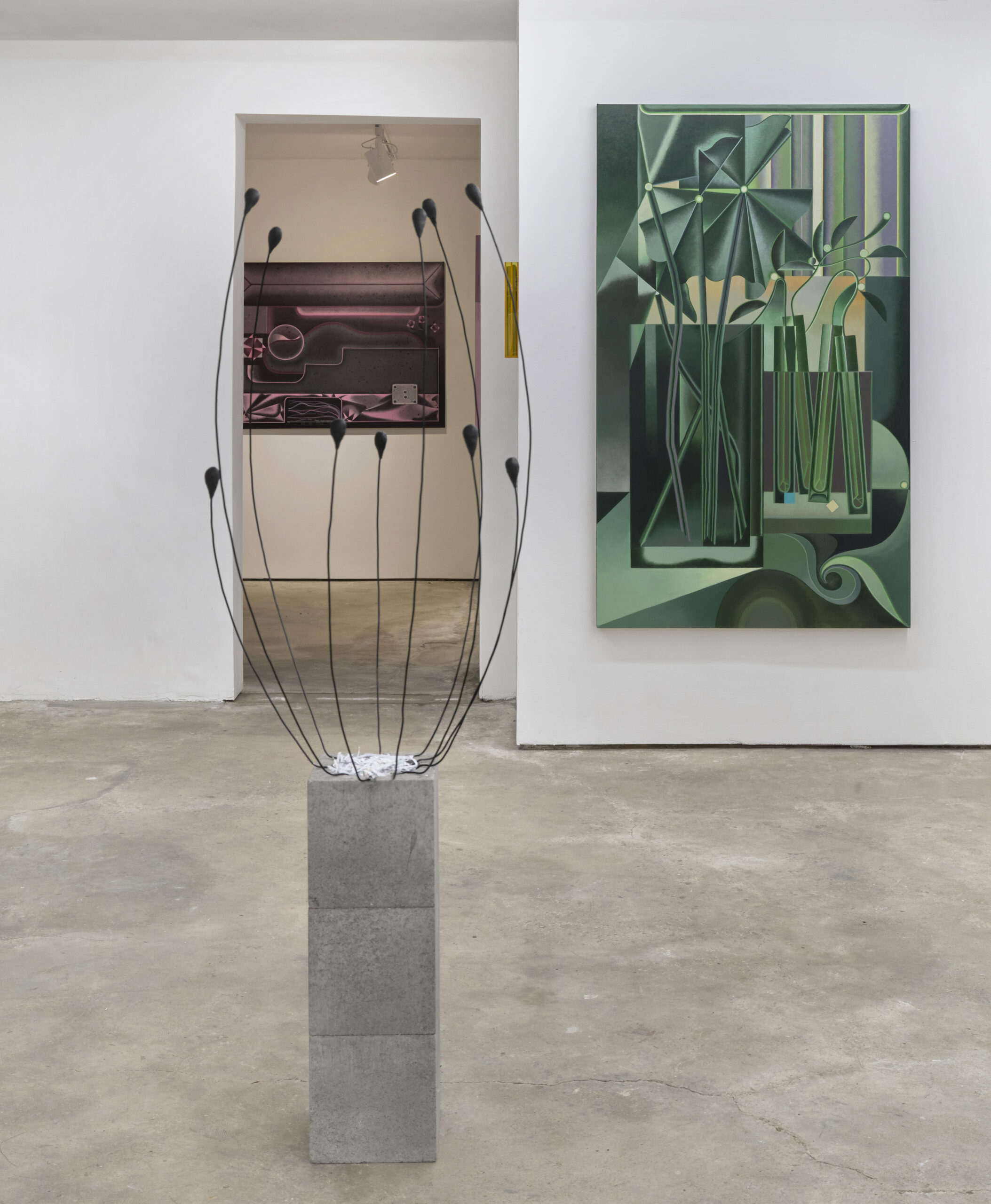
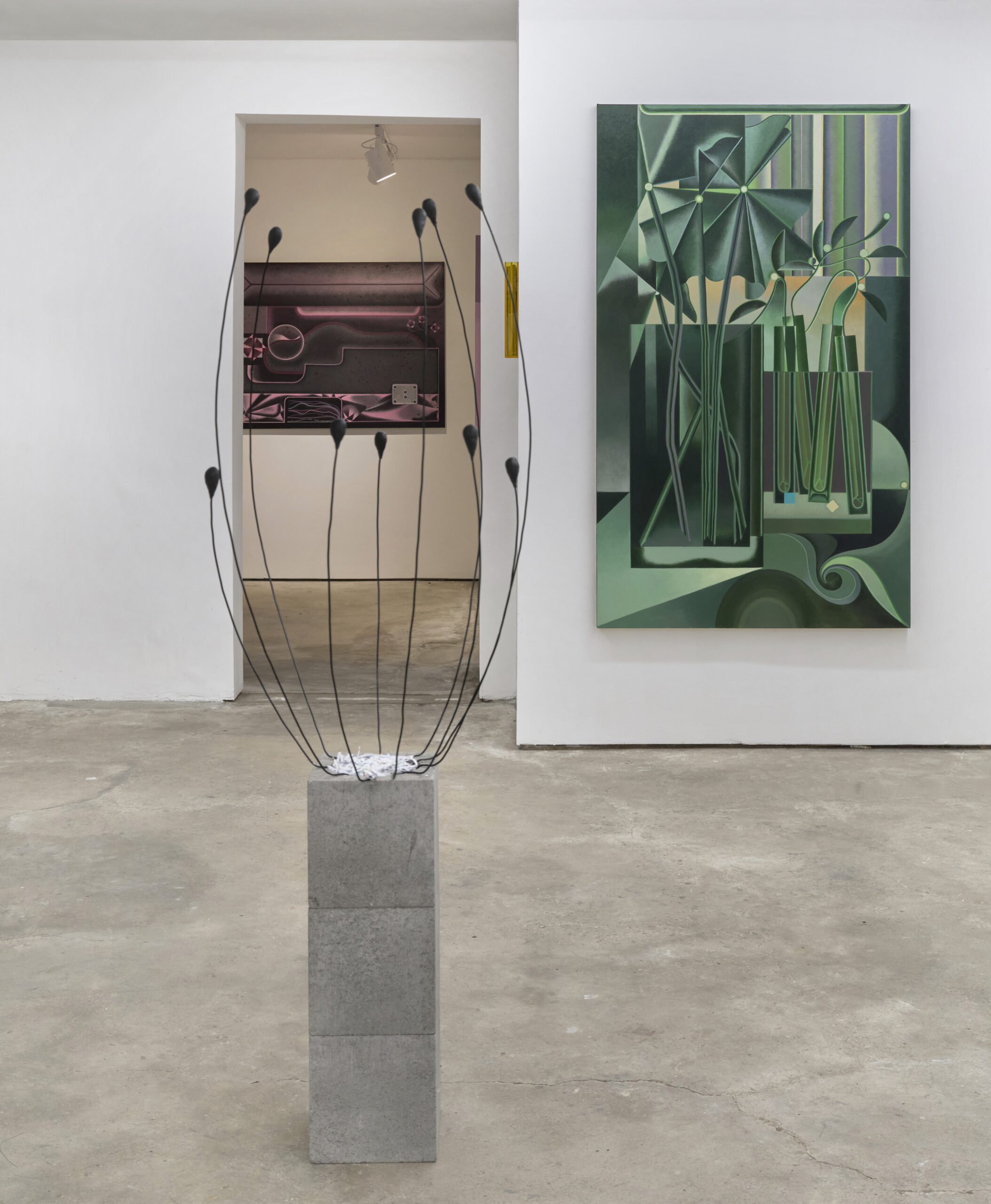
Installation view of 《Zettelkasten》 (SPACE ÆFTER, 2025) ©Park Junghae

The solo exhibition 《Zettelkasten》, held at SPACE ÆFTER in 2025, presented Park Junghae’s works as a catalyst, a list, and an index of Park’s temporal and spatial congregations. When time can be contained, space is generated; when space appears, time begins to move. These dynamics and motions of time and space are preserved in countless shapes and forms within Park’s paintings.
 
The exhibition title “Zettelkasten,” meaning “slip box” or “note box,” serves as a metaphor for the flow of time through endlessly varied iterations of the square—a fundamental spatial unit that underpins Park’s sculptural and pictorial language.
 
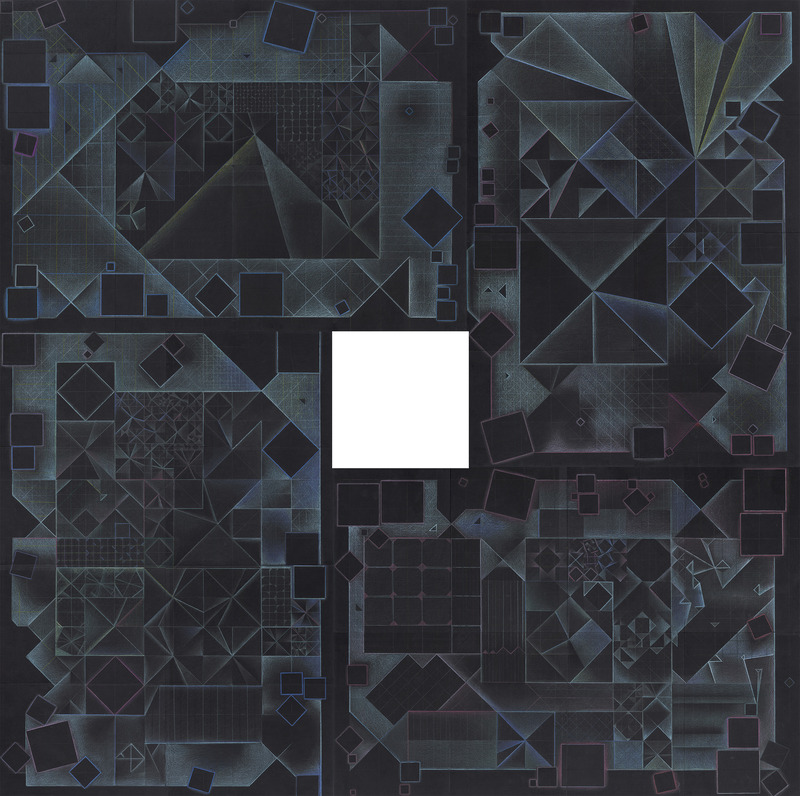
In the eponymous painting series ‘Zettelkasten’ (2025), the world formed in square grids is constituted on the surface of Park’s paintings, with her inherent frame of reference that desires to see the world through her own eye only. The square keeps on repeating generative variables, using the endpoint of each interval as a node of another fold.


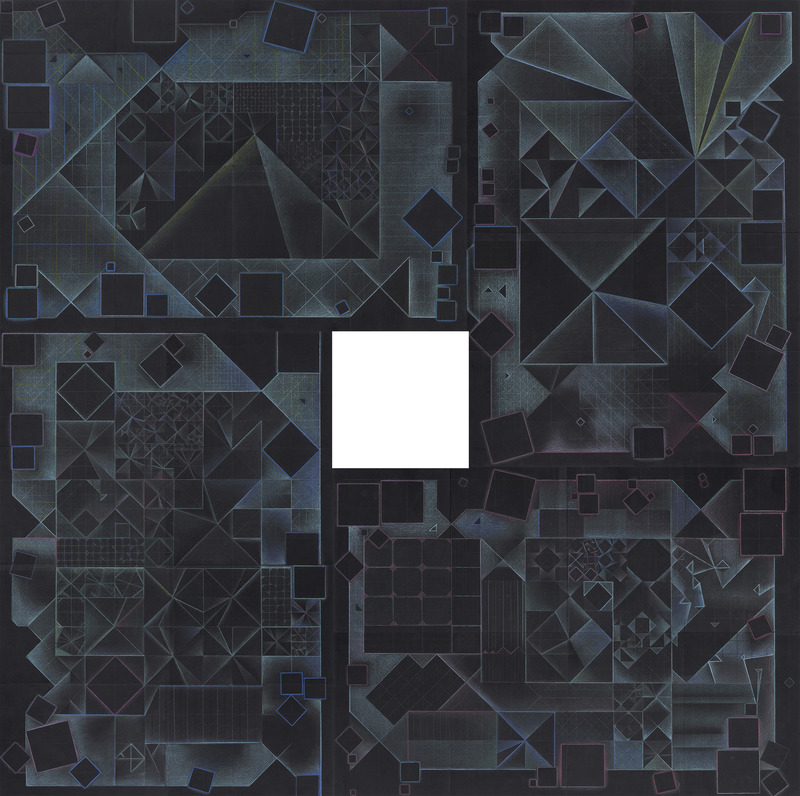
Park Junghae, Zettelkasten, 2025, Colored pencil on paper, 84.5x60.5cm (each 4 sheets) ©Park Junghae

Park, then, lands at the finality through persistent, figurative turns, folding the squares’ vertexes inwards. This transgressive intensity defines a location, and the locality is the ontological location of the self. Constituted by the locality and ontological existence, I converge many worlds into I, and they face the world revealing itself at another turn of its unfolding.
 
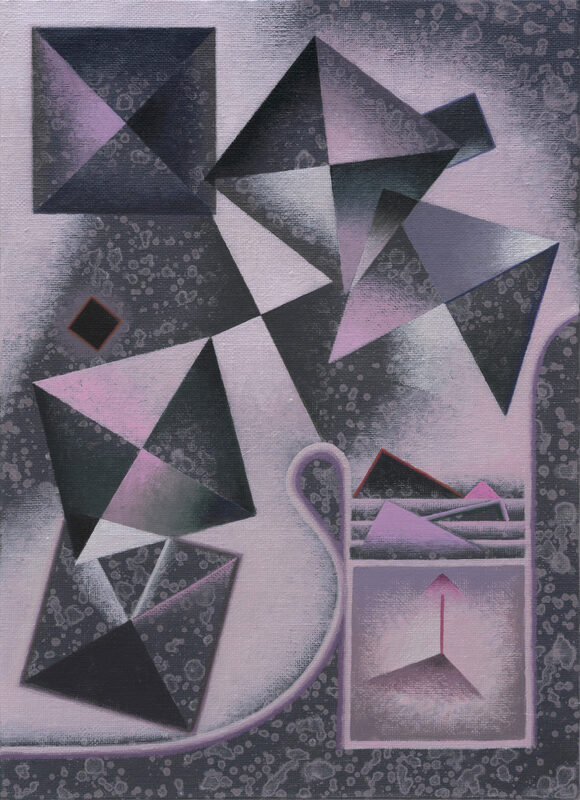
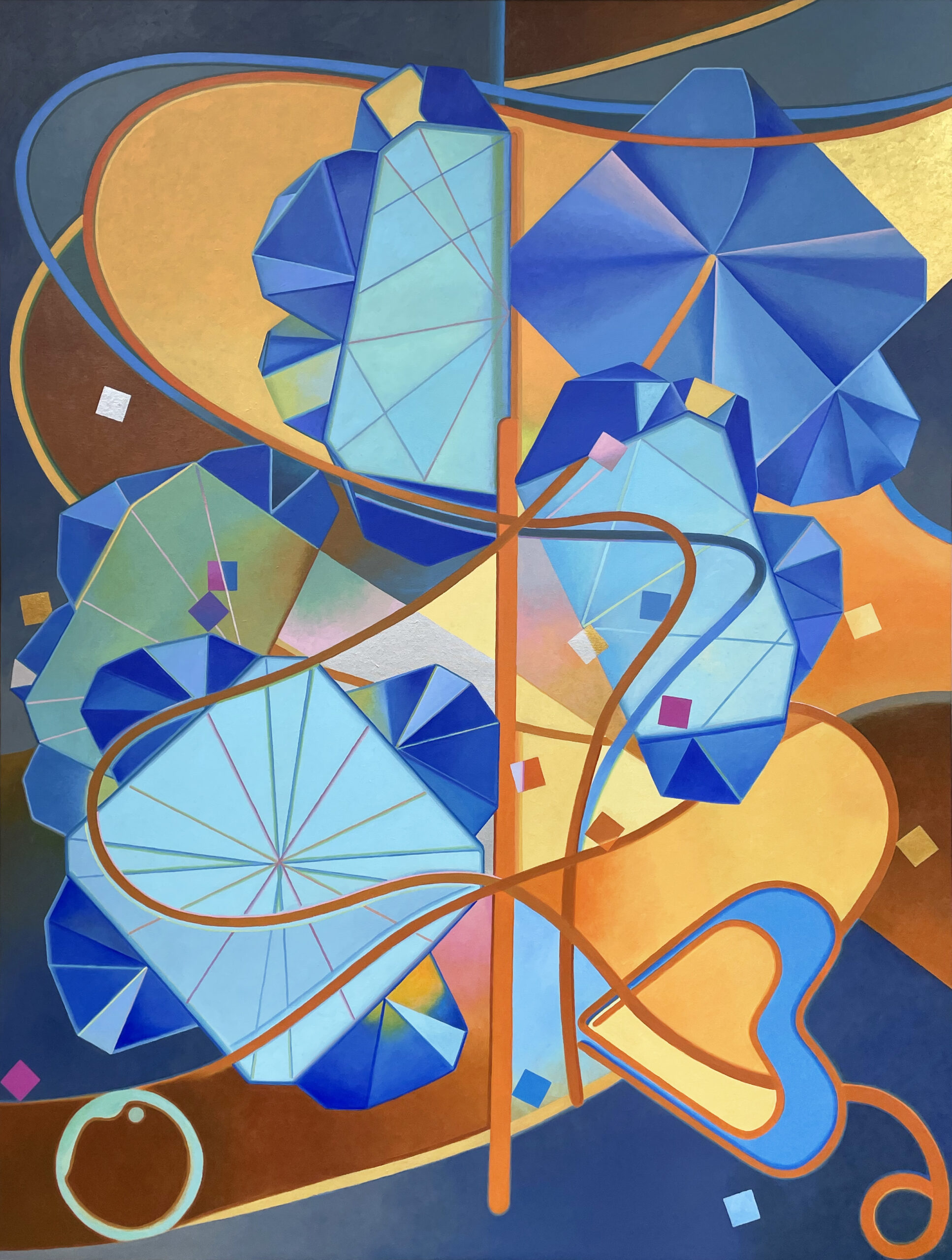
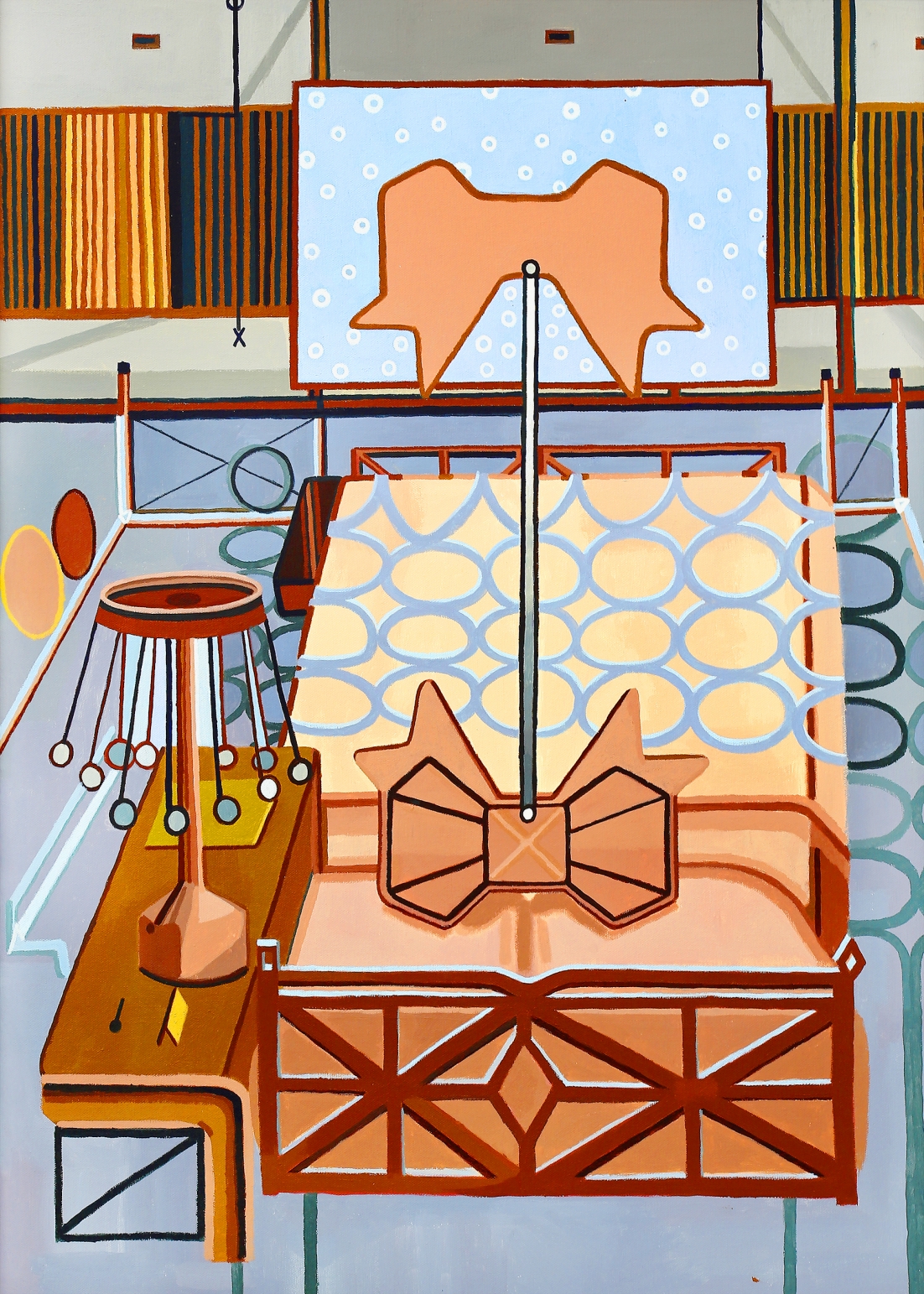
《Zettelkasten》 is a collection of memories assembled as a congregation of “tiny heads of hydrangea” and “figurative shapes of thoughts,” described by the artist. It also is a collection of the archived tactility folded in her hands. Like in her work, Clock Flower (2025), Blooming Hours (2025), Bouquet (2025), the extension of time signifies memories that are gathered into a handful of blossoms.


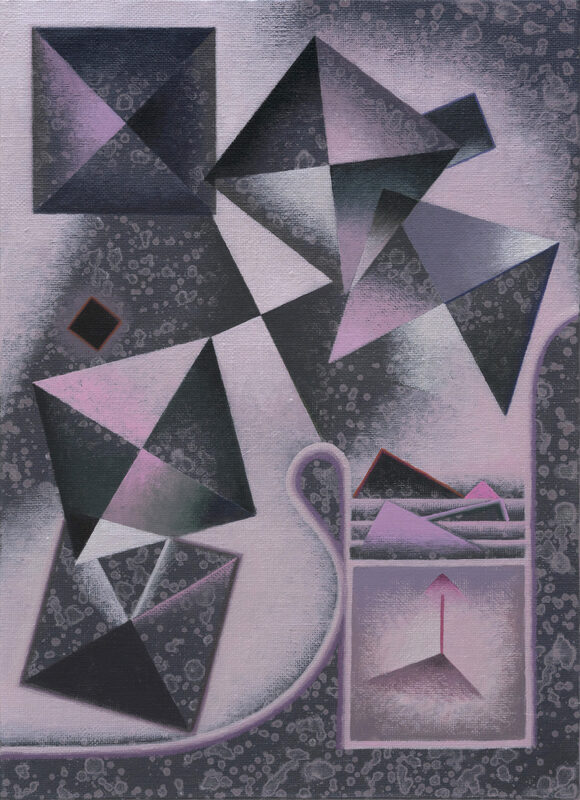
Park Junghae, Blooming Hours, 2025, Acrylic on canvas, 33x24cm ©Park Junghae

Everyday moments turn into objects that are piled up with one another in their respective arrangements. These individual objects are often sharp, attached with separate memos on them, or disassembled in different colors. The afterimages of the unclassifiable memories sometimes fill the transparent, foresquare box with shattered paper strips and replace the box with chaos.
 
This visual methodology manifests the notion of the absolute time and space that have entered the artist. It also signifies her semantic operation of memory contemplated through objects’ metonyms. Such fabrics woven and expanded through newly inserted semantics are transferred into the surface landscape of her paintings.
 
Likewise, Park’s pictorial space completes itself through the figuring which allude to the contemplation and perception on time, and finally transforms into a time that renews and coalesces all the trajectories of her practice.


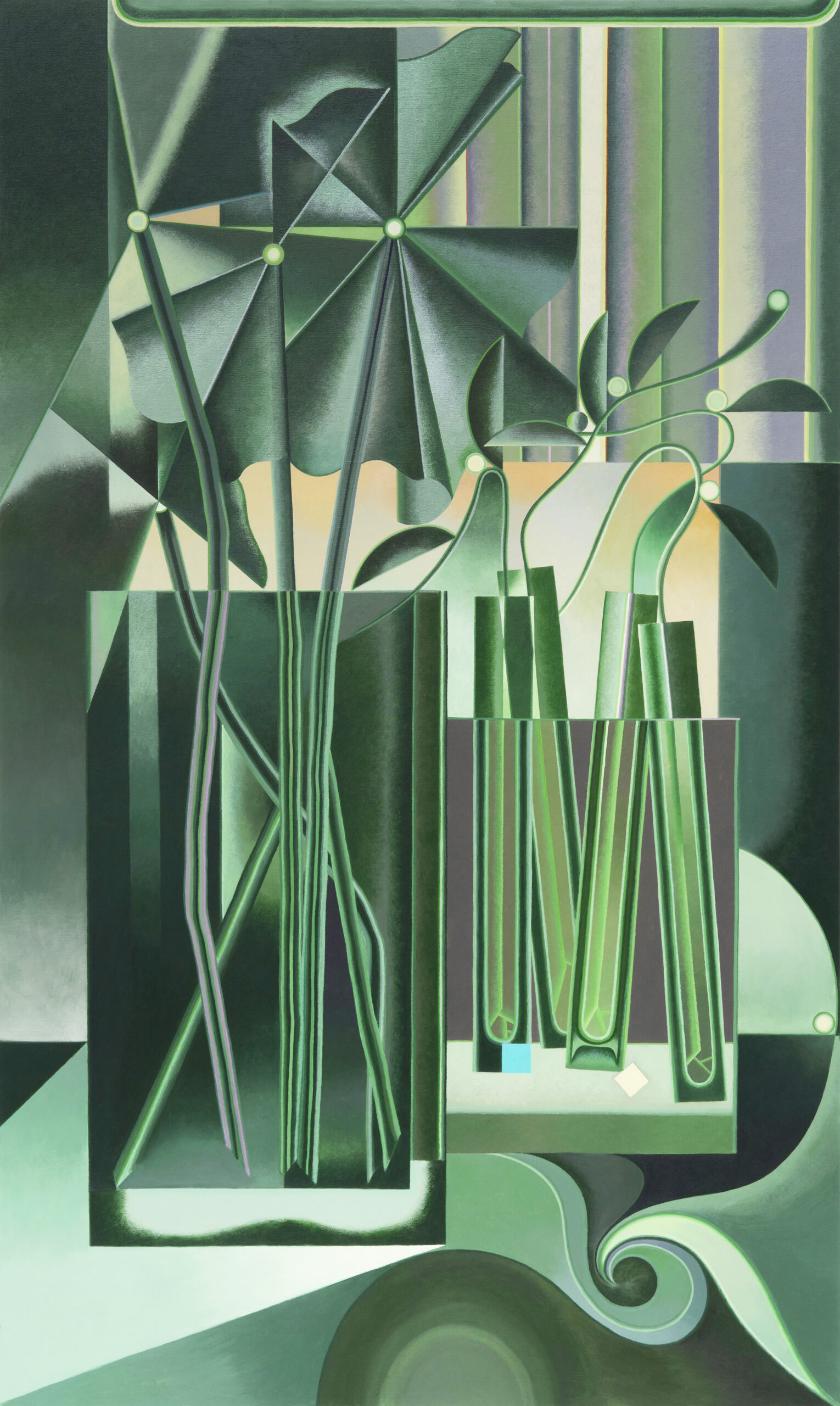
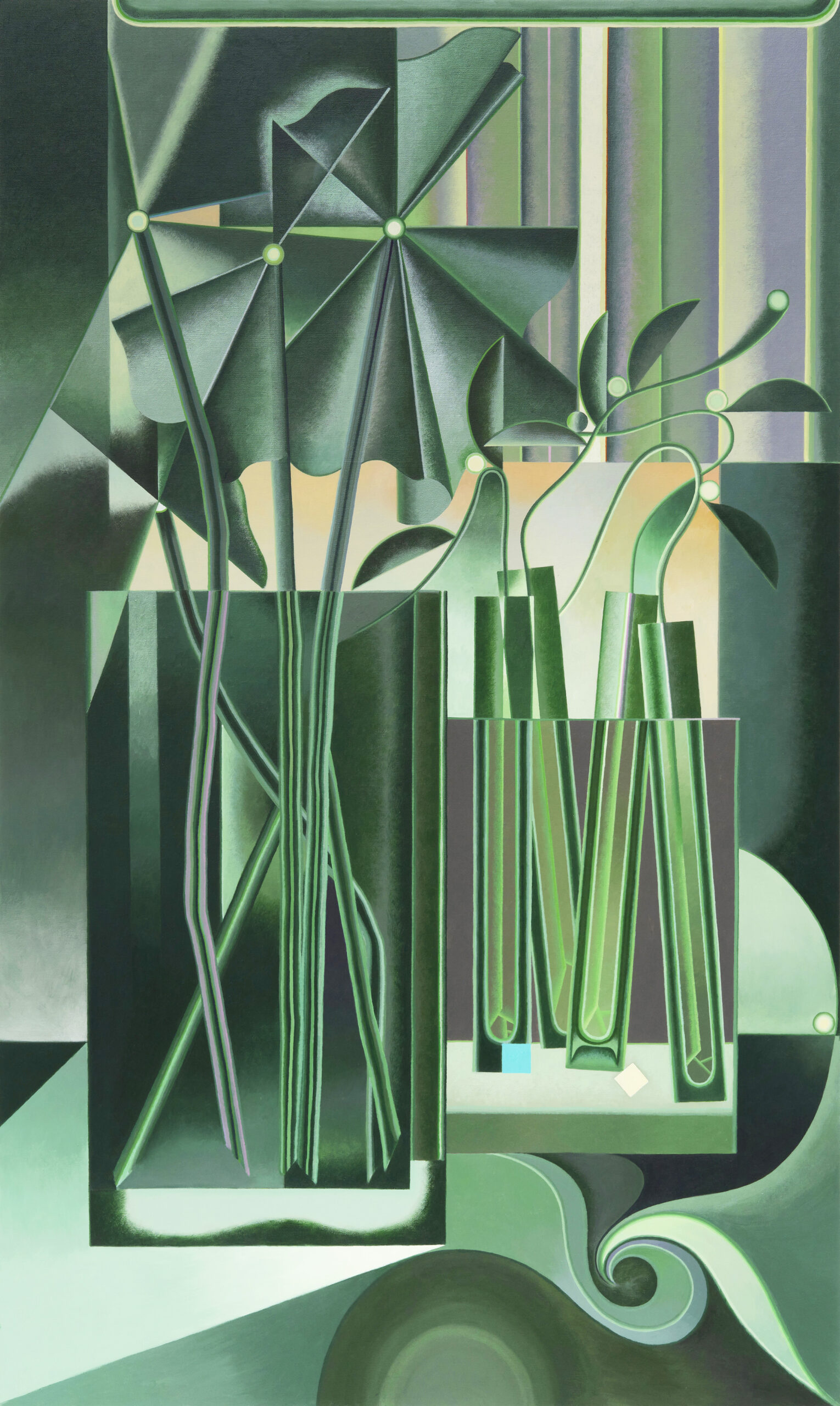
Park Junghae, Clock Flower, 2025, Acrylic on linen(mounted on wood panel), 162x97cm ©Park Junghae

In this way, Park Junghae speaks of the ever-changing world and the beings who stand within it by capturing and recording the various energies and physical laws that endlessly flow and circulate around us through the material medium of painting.
 
Furthermore, the energies layered within the pictorial surface interact once again with viewers through the act of looking, acquiring new forms of abstraction within each individual’s sensory experience.

 ”The interconnectedness to new temporalities occur in the shape of a mobius strip. In this imagination, I get to wonder if I can combine every single moment I see in the same way that a bunch of hydrangeas cluster by the window in the sun. One figurative shape of thoughts would be similar to those many individual flowers that are, in fact, derived from one stem, as connected together as one, while still remaining distinct branches.
 
If so, the actual head of the flower is not composed of one singular blossom; rather, it capitulates, spreads as an entity made of a congregation of many tiny florets disguised as one flower in light of its particular survival mechanism. This speaks to how my current state of mind itself lives as a reflection of my desires regarding collectivity and organizing.” 


(Park Junghae, Artist’s Note) 


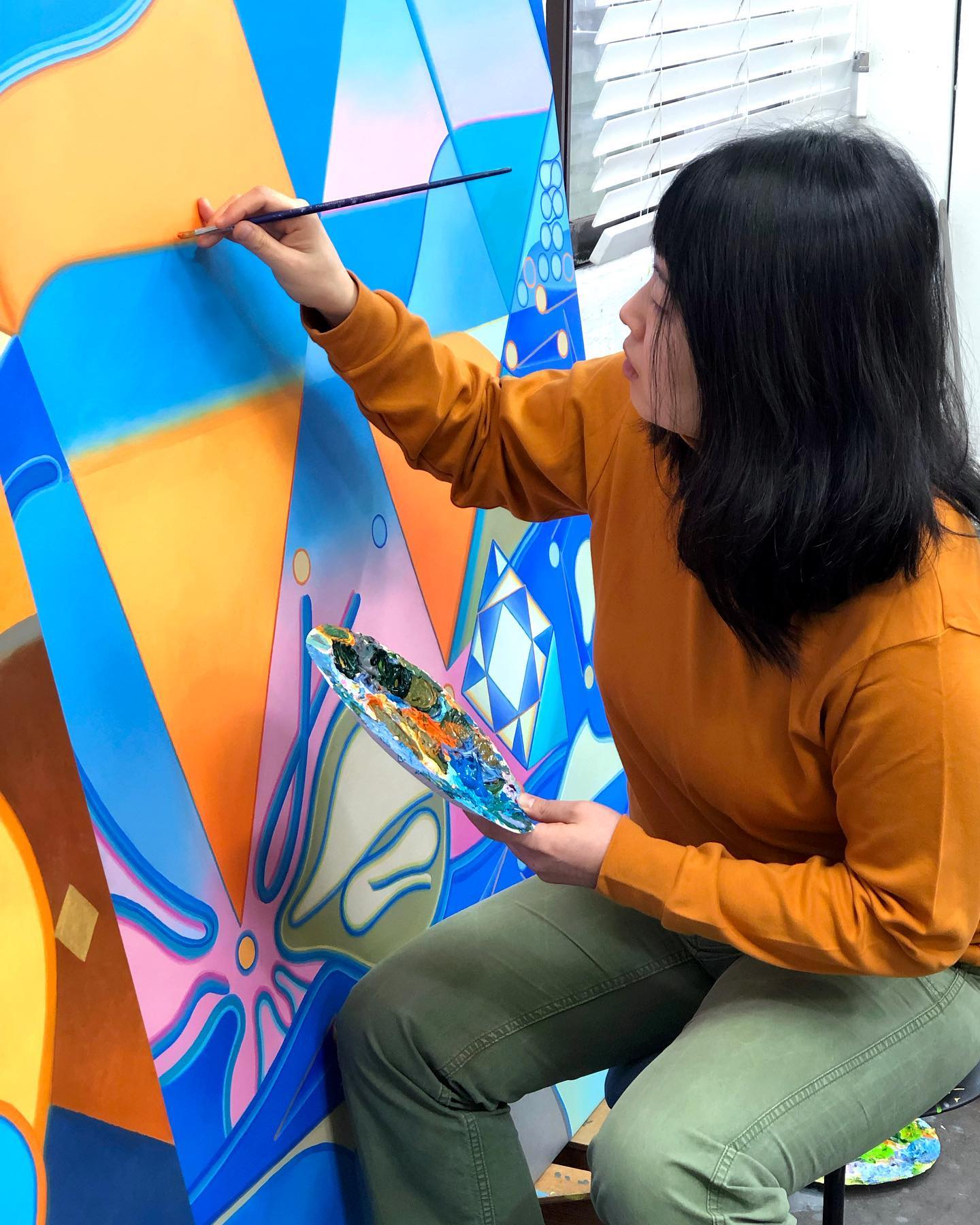
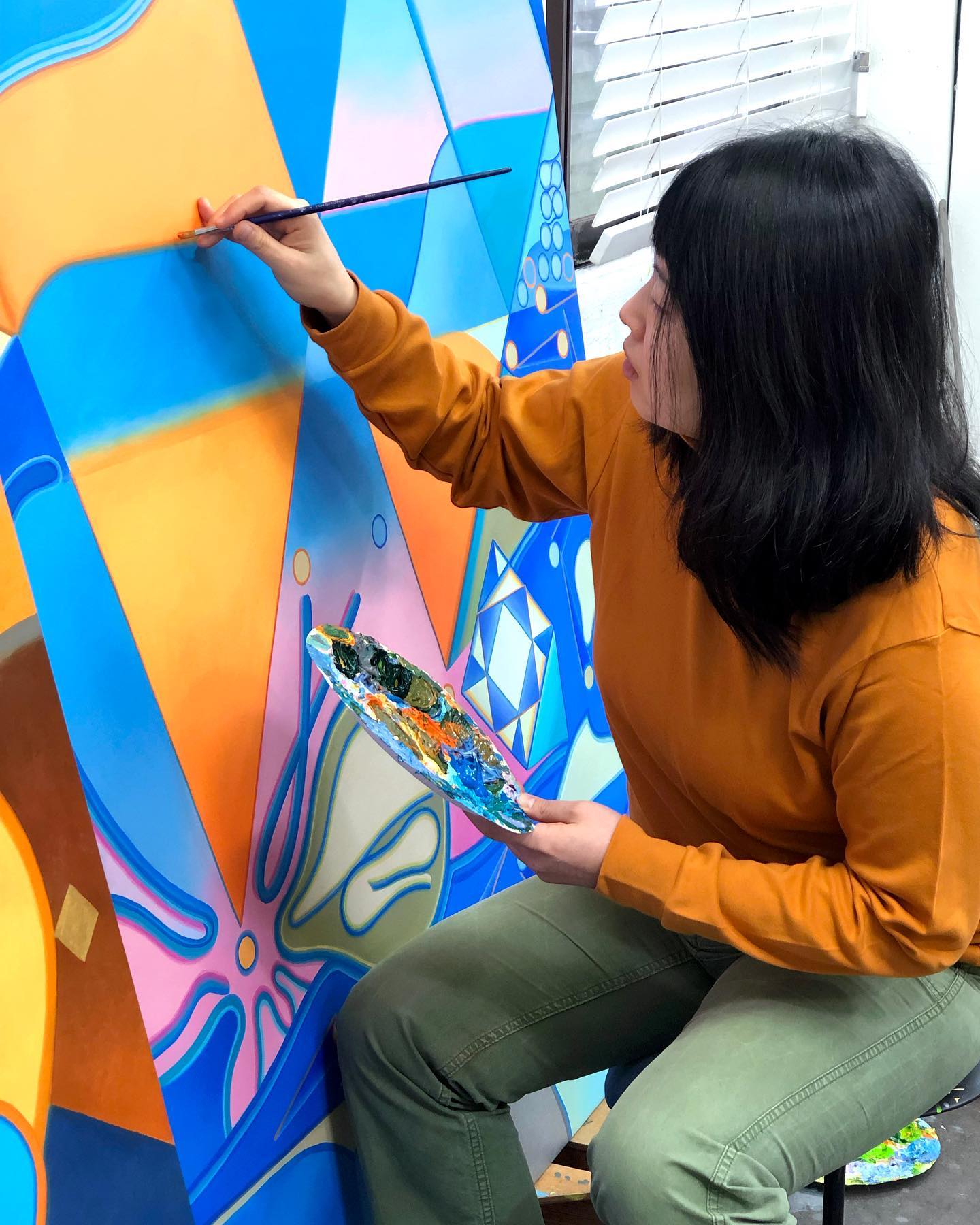
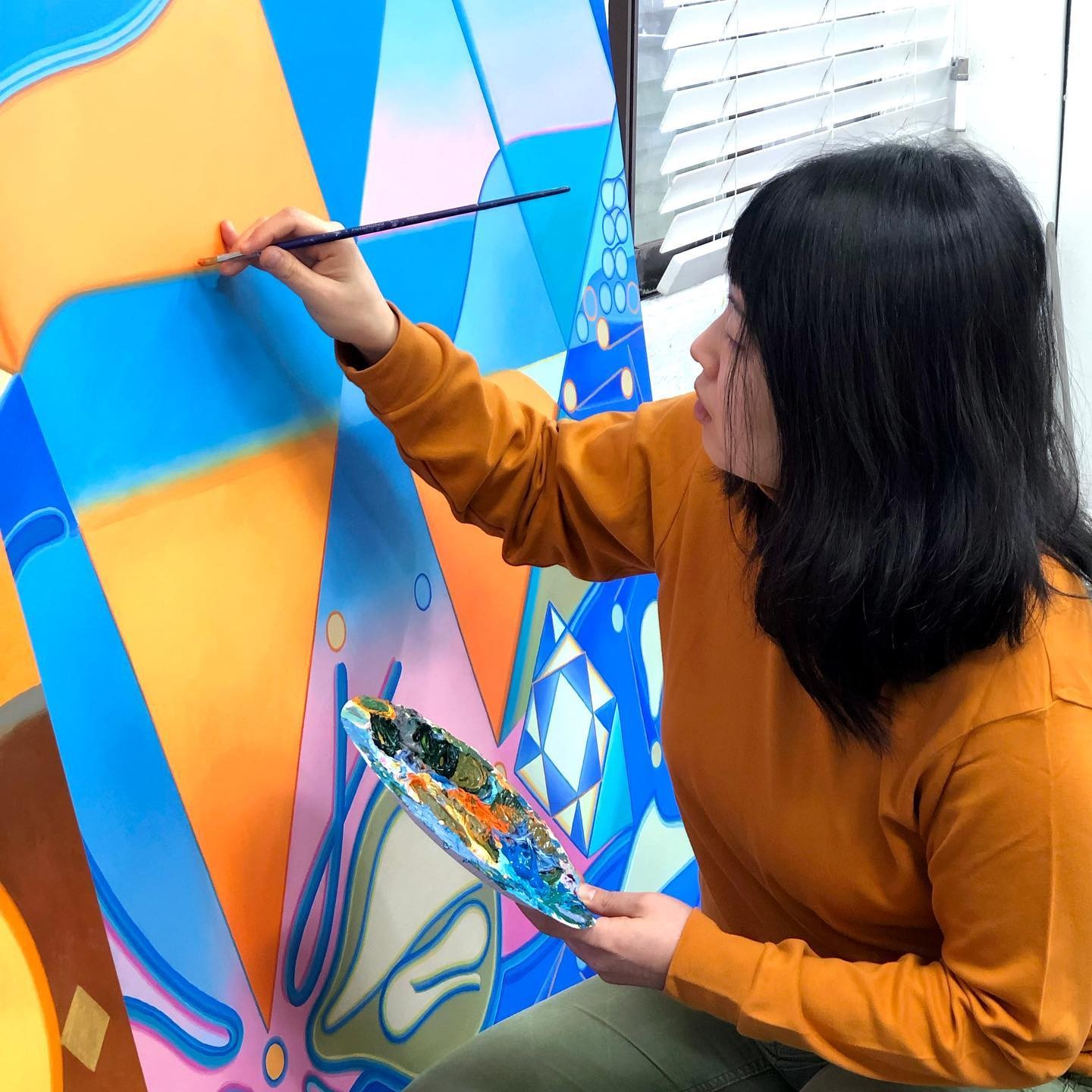
Artist Park Junghae ©BB&M

Park Junghae received her BFA in Painting from Hongik University. Her solo exhibitions include 《Zattelkasten》 (SPACE ÆFTER, Seoul, 2025), 《Ancient Refrigerator》 (Cylinder Two, Seoul, 2024), 《Jetlag》 (N/A, Seoul, 2024), 《Mellow Melody》 (Whistle, Seoul, 2021), and 《Xagenexx》 (Onground 2, Seoul, 2017).
 
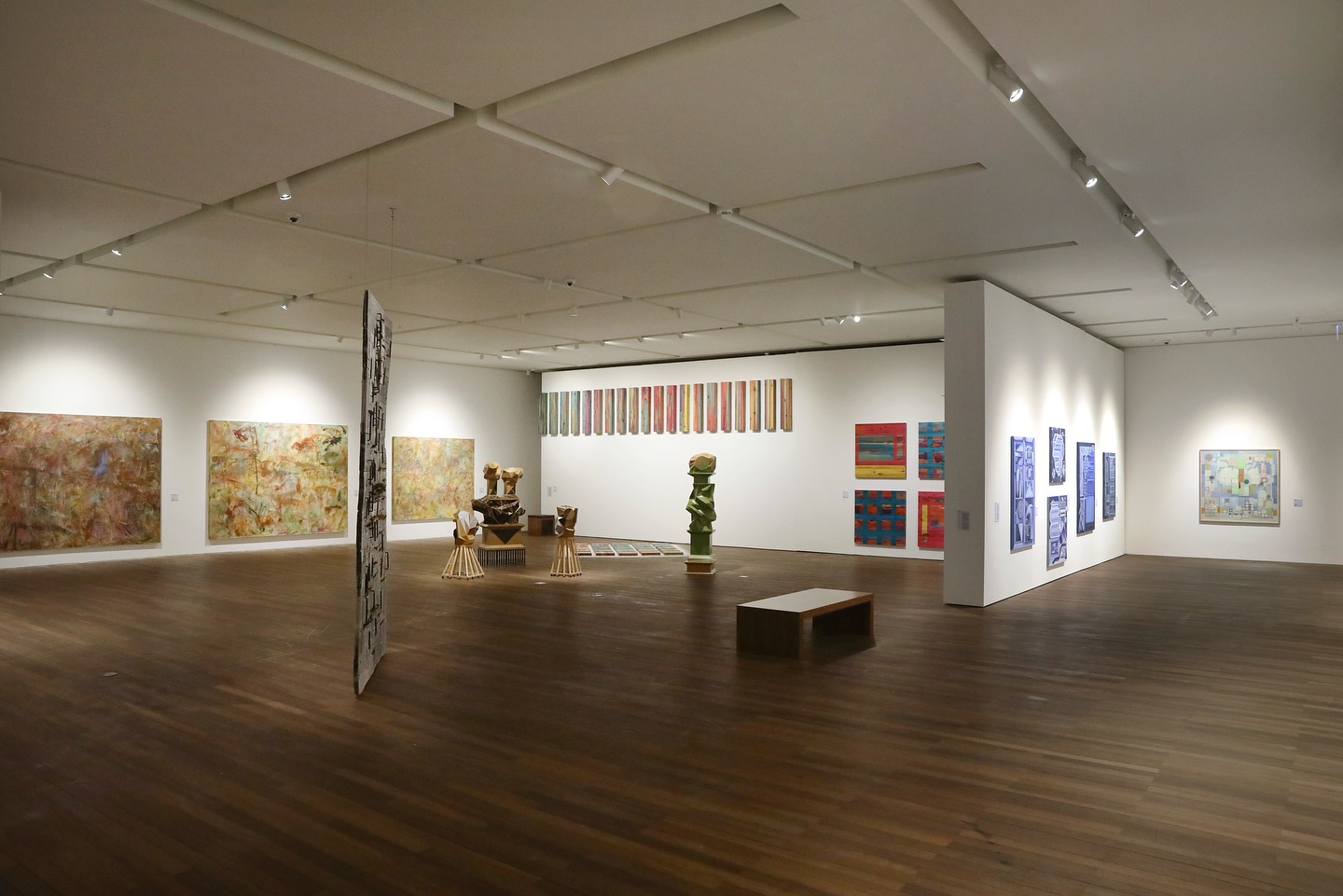
She has also participated in numerous group exhibitions, including 《In Situ》 (ARKO Art Center, Seoul, 2025), 《Contours of Zero》 (ZeroOne Space, New York, USA, 2025), 《Deep into Abstraction On the Way》 (Seoul National University Museum of Art, Seoul, 2025), 《Open Corridor》 (Interim, Seoul, 2024), 《SUNROOM》 (BB&M, Seoul, 2023), 《Back to Square one》 (SeMA Bunker, Seoul, 2022), 《DOOSAN Art Lab Exhibition 2021》 (DOOSAN Gallery, Seoul, 2021), and 《Layers and Spaces》 (MMCA, Gwacheon, 2017).
 
In 2025, Park participated in residency programs at the ARKO Art Studio and the SeMA Nanji Residency. Her works are included in the collections of the Government Art Bank of the National Museum of Modern and Contemporary Art, Korea (MMCA) and the Seoul Museum of Art.
References