"I
wanted to make fake photographs that are extremely meaningless because I was
really irritated by words and theories surrounding art. I wished my photographs
to be meaningless, empty, and completely nonsensical."-
Kang Hong-Goo, "Drama set/Fragment/Disguise"
All
artists wish to get out of art history and the art system and make something
new that is not tied to existing customs. Practically all possibilities may
have been explored by their predecessors, however, and at this point when the
end of art history is being debated, attempts to make a change may seem
meaningless. However desperately one tries, it is difficult to get out of a
system that has already been solidified, and any effort to make a difference
usually falls into the evil cycle of reinforcing that very system.
Nevertheless, artists keep trying because the world they live in, constantly
changing through advancements in science and technology and with evolutions of
society, encourages them to continue their journey. Now photography, a modern
invention, not only is a widely accepted artistic medium in its own right but
also occupies an important place in contemporary visual culture. Only a few
years have passed since digital photography has been introduced. In that short
span of time, it has assumed the role of the main producer of visual imagery of
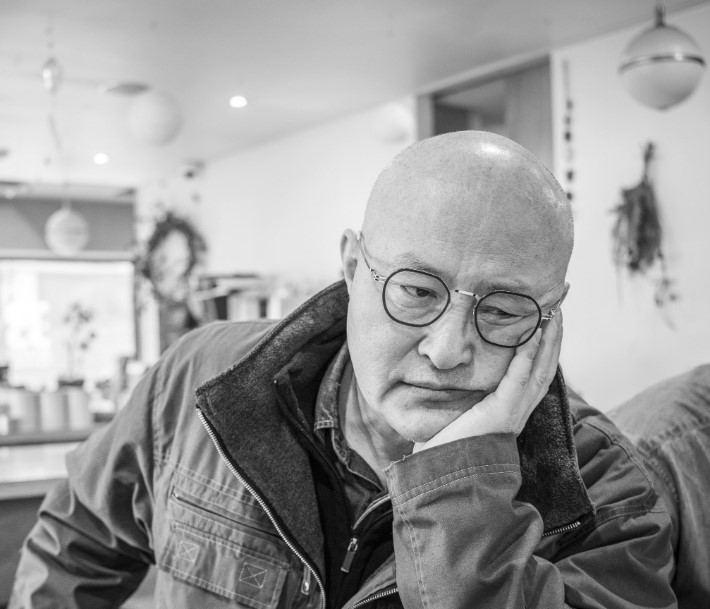
our era and has practically replaced our eye. Kang Hong-Goo has been making
digital photographs by manipulating popular cultural images with a scanner. His
art evinces that digital photography provides new opportunities for those
seeking a mode of expression that fits the time outside the art system.
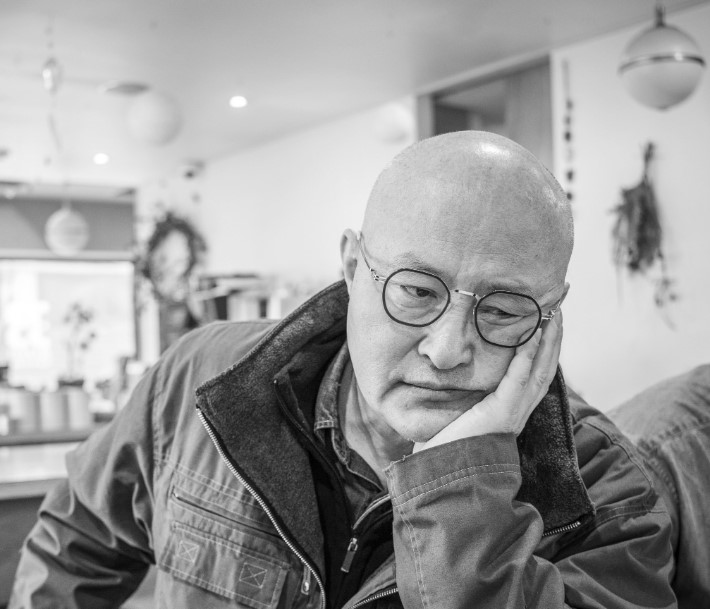
Kang
enrolled himself in an art school as an aspiring painter after having spent
several years as an elementary school teacher. He initially majored in painting
but soon began to explore a new direction in manipulated photography utilizing
advertisement images and film stills. Kang states that the experimentation was
in protest against the art system that is based on a standard composed by
great, unique works. Kang, who calls himself a second-rate artist, not a
top-rate genius artist, has been making preposterous and bizarre fake
photographs with images appropriated from the mass media.
He deems the use of
preexisting images more suitable than a handmade painting in expressing one's
inability to resolve the conflicts of everyday life. His preferred display
format-prints simply tacked up on a wall-emphasizes the easy and instant nature
of computer-generated photography. In Kang's photography, the particular
condition of the high-speed modernization of Korean society is combined with
his personal experience of it. His photographs have unfolded in a series that
explores "location, snobbery, fakery"-the title of his second solo
exhibition.
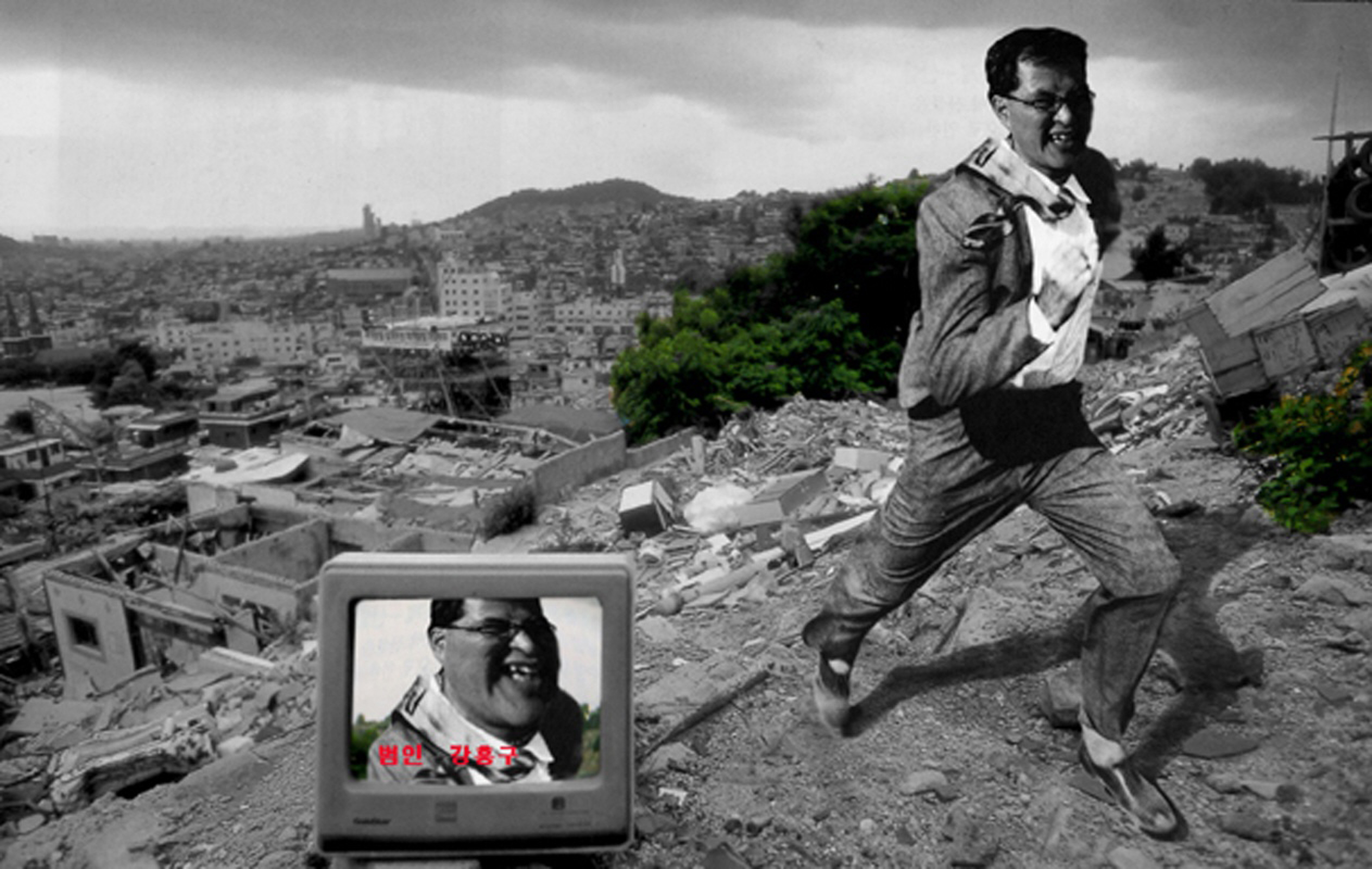
Kang's
early scanner-manipulated photography manifests the dis-eases and conflicts
lodged deeply in people's minds despite the economic prosperity that has
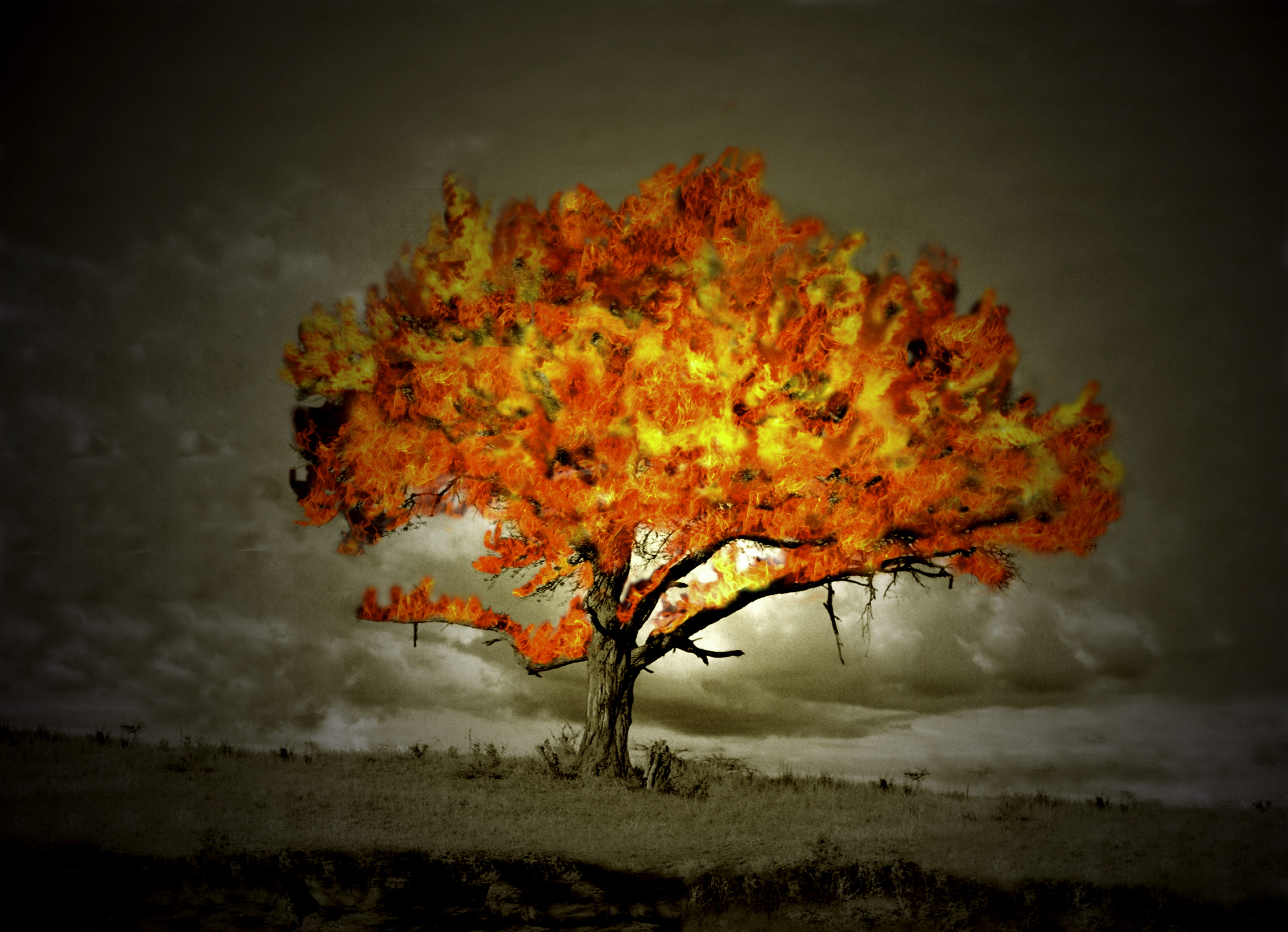
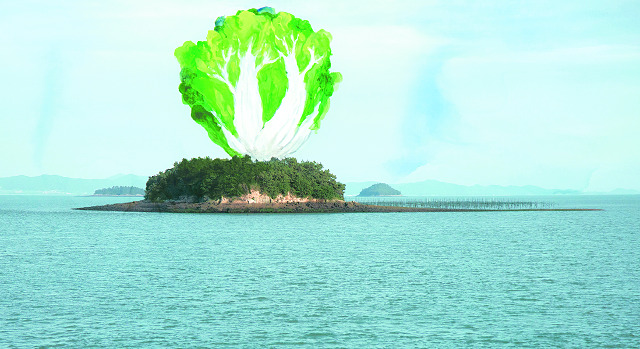
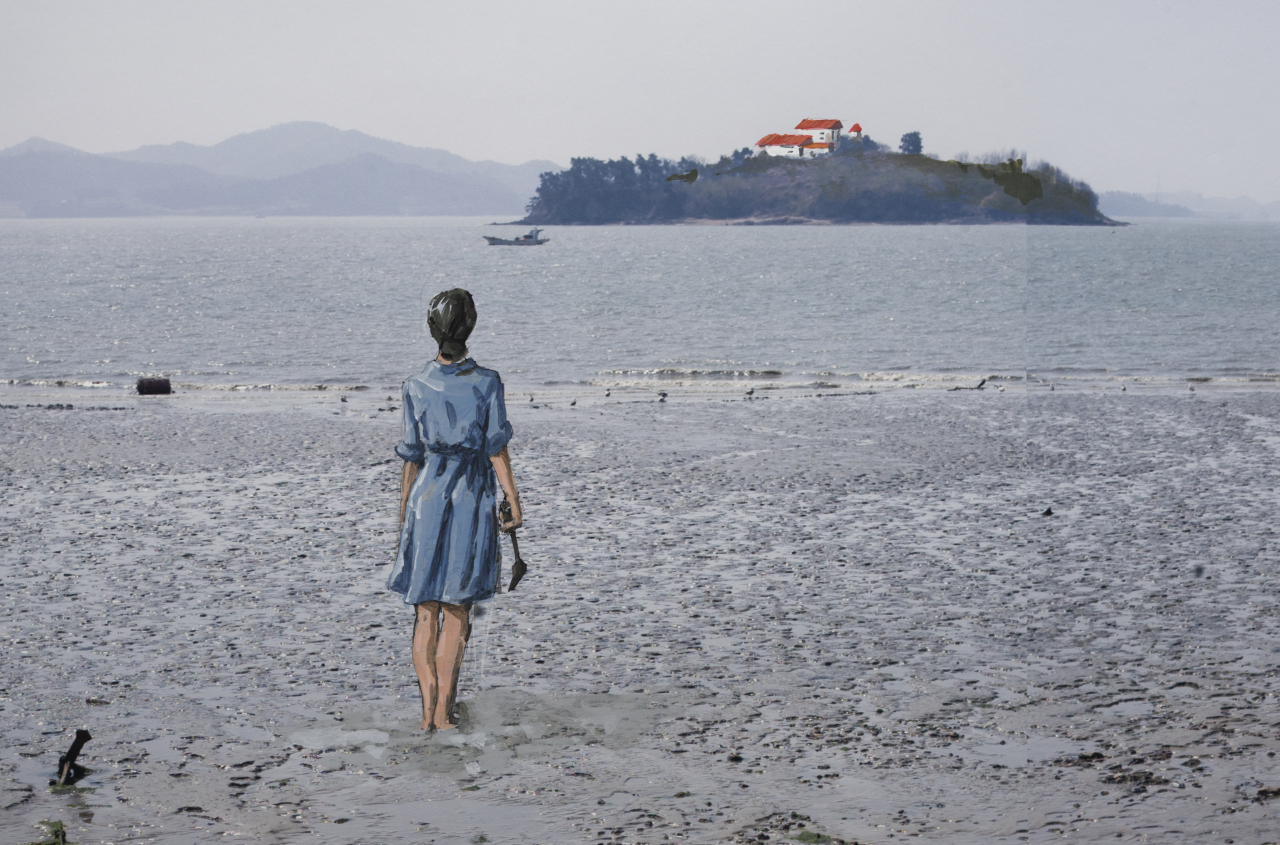
suddenly blossomed: surreal landscapes engulfed in fire (What Humans
Can Do for Trees), patriarchal homes haunted by monsters (Home
Sweet Home), and everyday scenes that reveal fears around the
condition of the country's division (Warphobia). In another
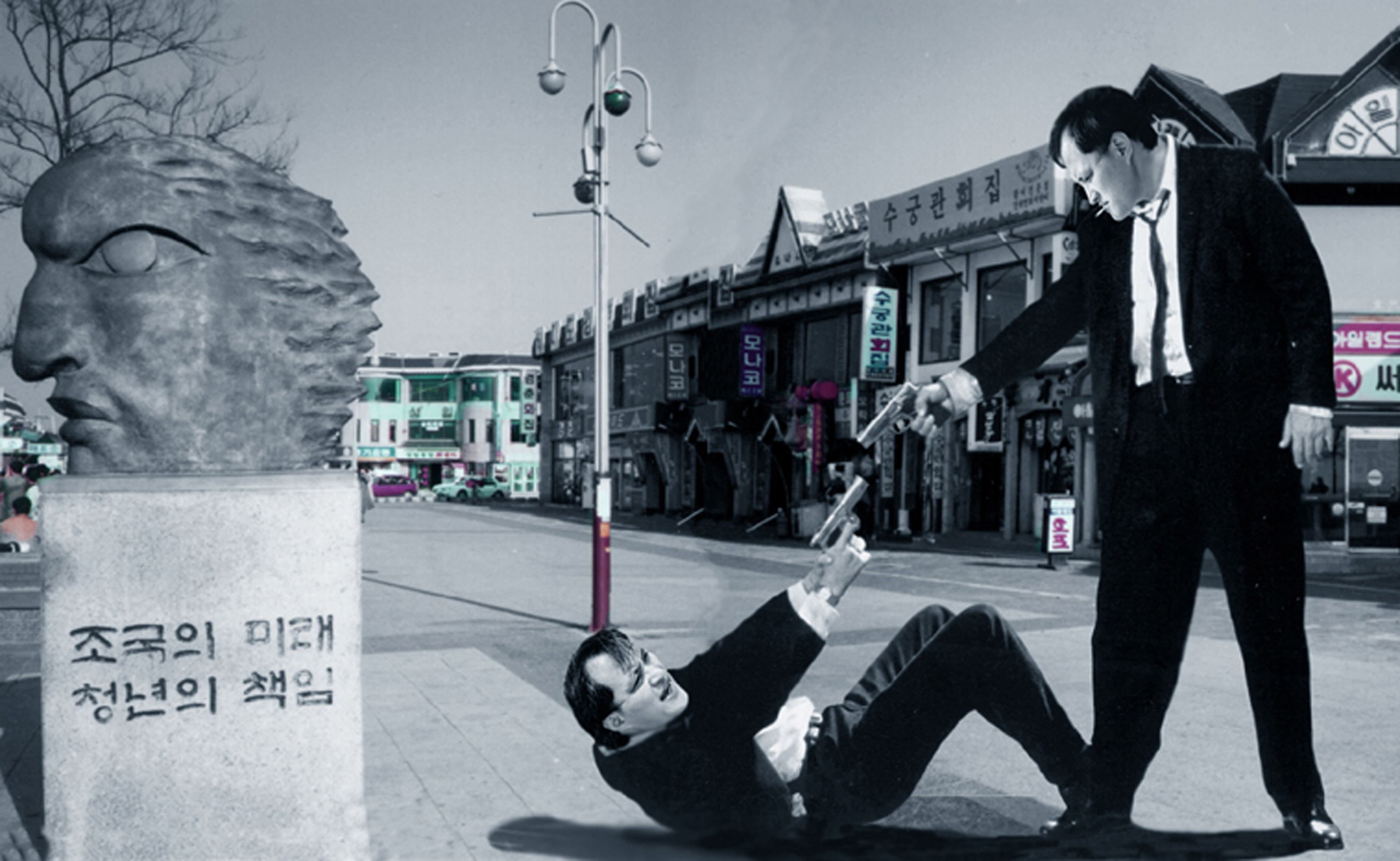
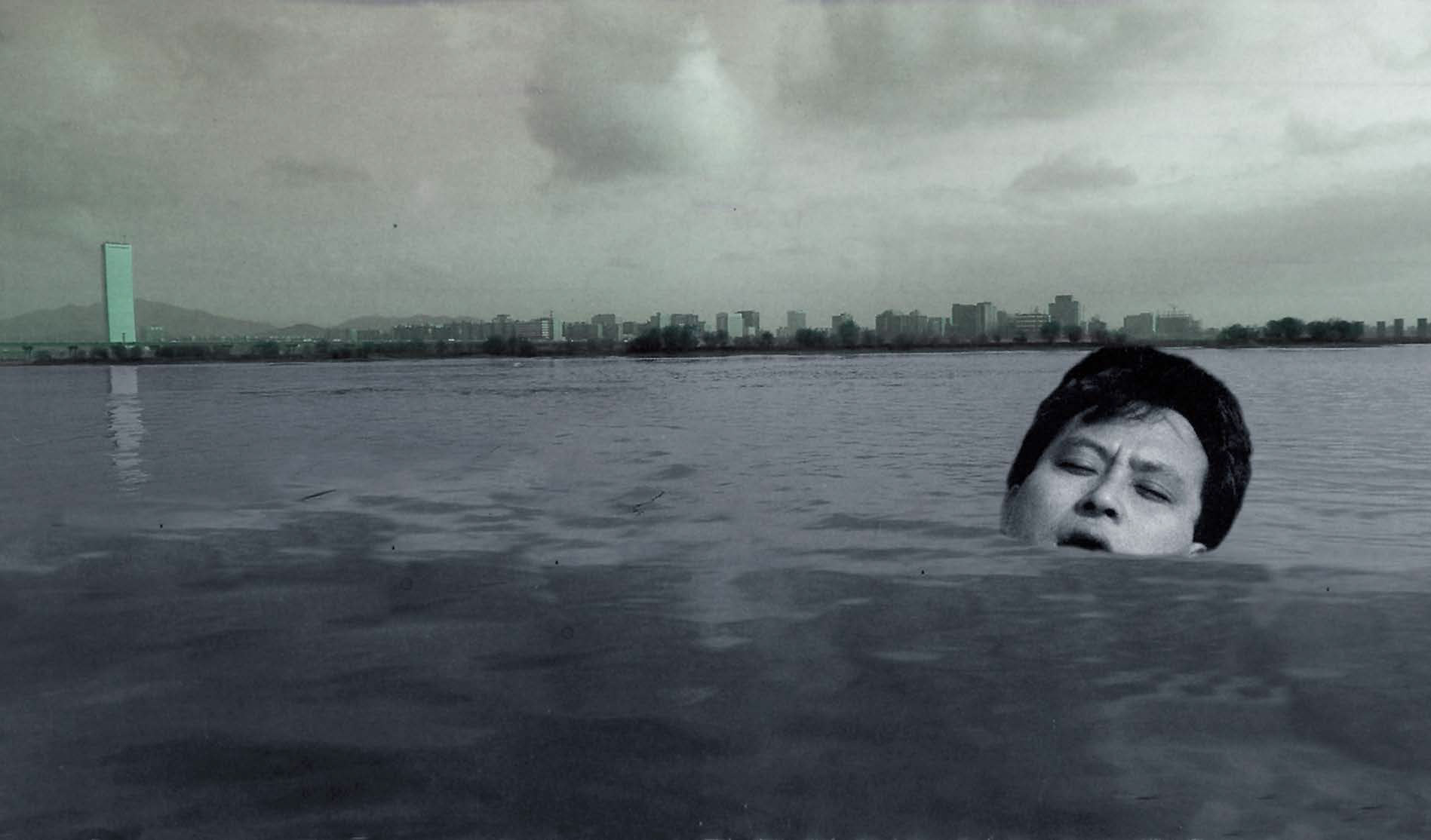
series of works, Kang casts himself as the protagonist in stills of fictional
films. As the main actor in movies of gratuitous violence and sex, the artist
creates dramas that mix narcissism and self-pity.
Art here is no longer a
serious and sublime medium but is made into a series of stock images one would
regularly see in cheap genre movies and commercial advertisements. In these
crudely manipulated photographic representations, the artist-the
director/actor-appearing in wonky guises turns despairs and disquietudes into a
comedy (Who Am I). These photographs, made with a deliberate
lack of refinement in order to divert the pressure to be creative, are
believable representations of our reality, which is far from refined and
polished in actuality. When Kang started using digital cameras, his
surrealistic montages gradually converged with the impressions of Korean
society the artist himself captured. This evolution arose from his belief that
the contradictions of reality are greater than the contradictions that he
creates.
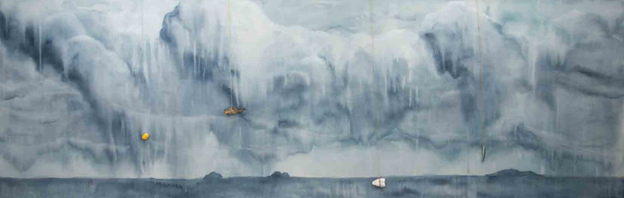
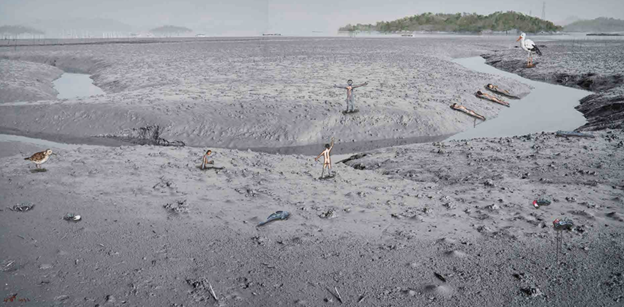
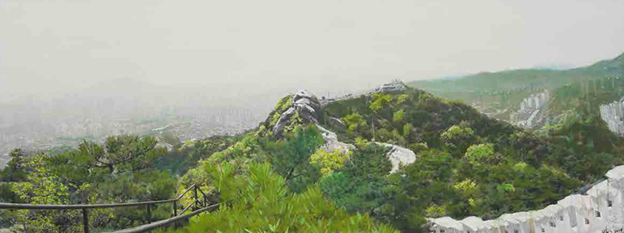
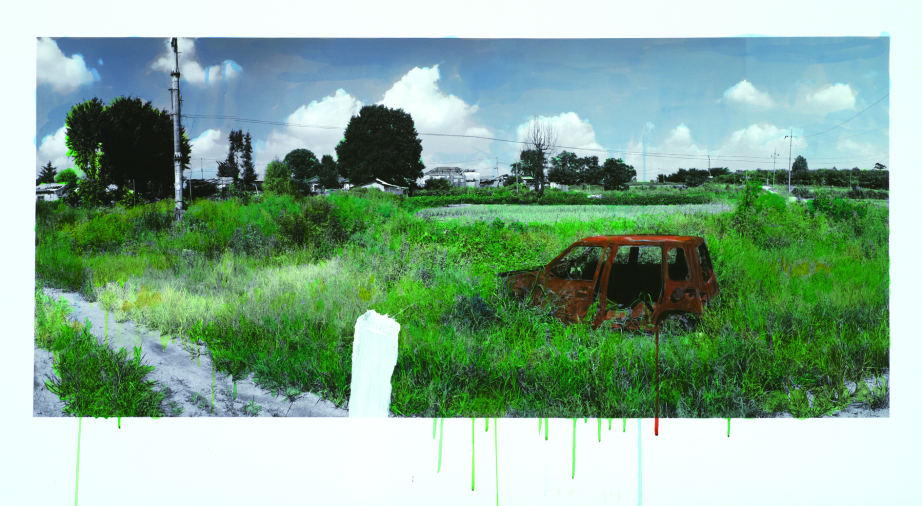
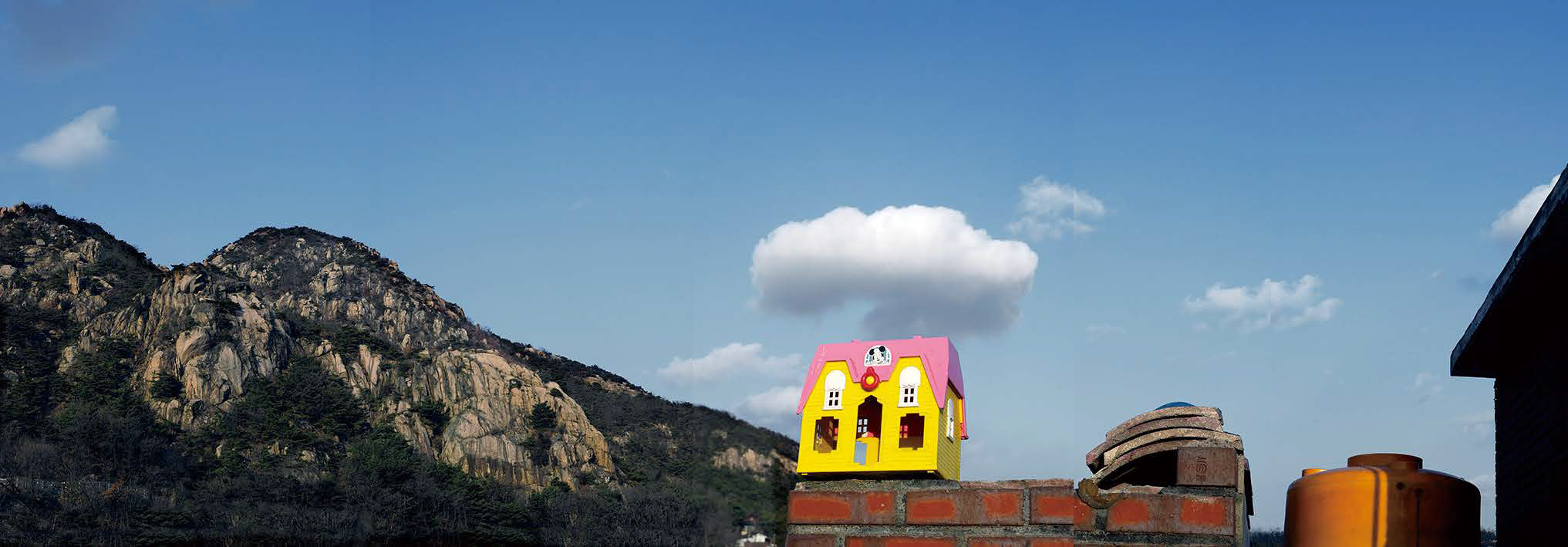
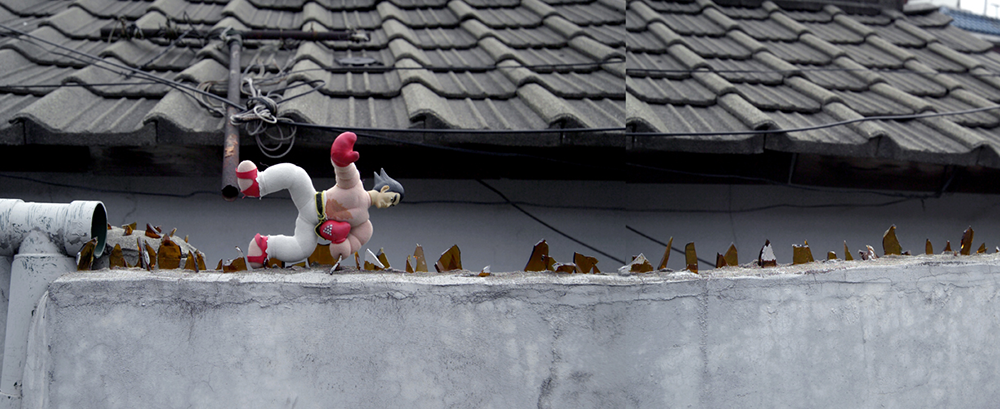
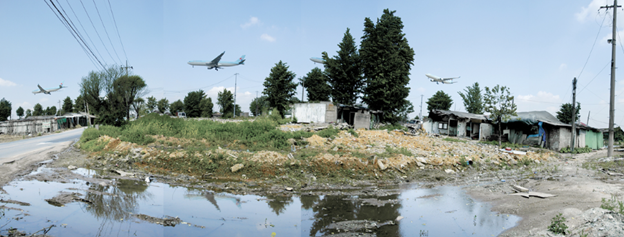
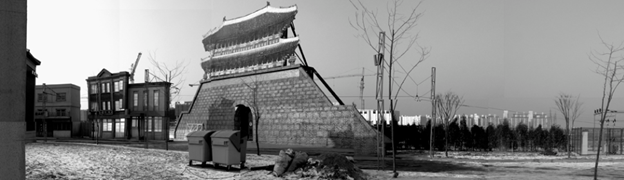
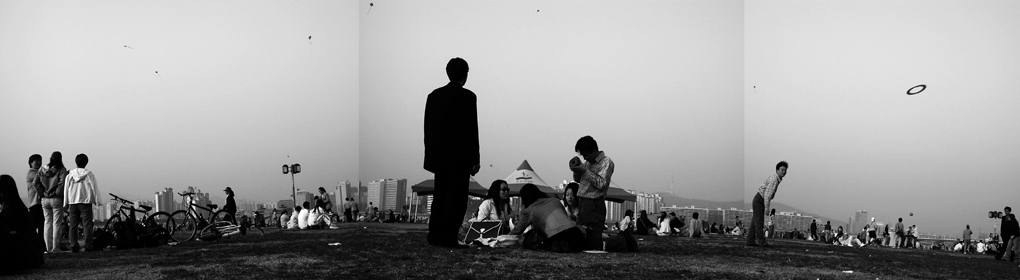
When
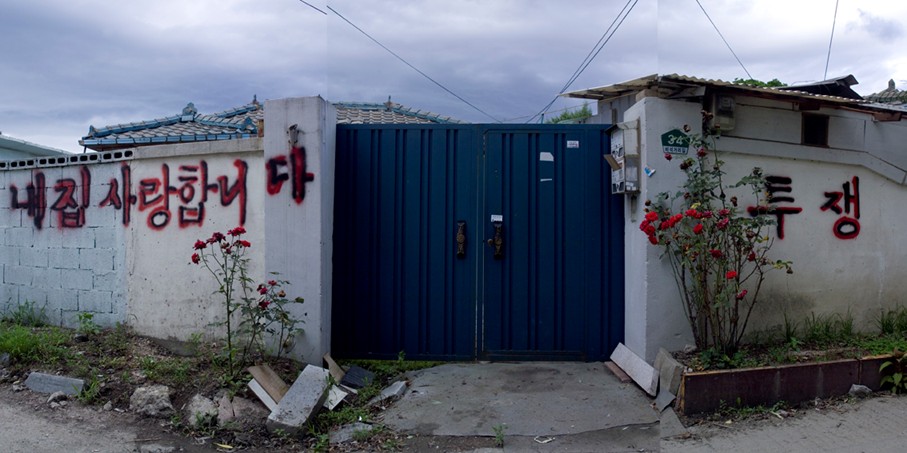
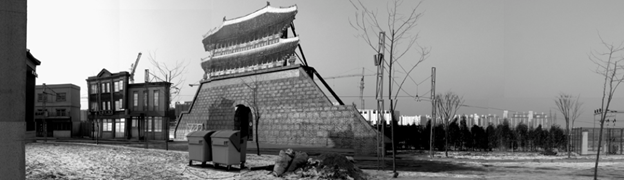
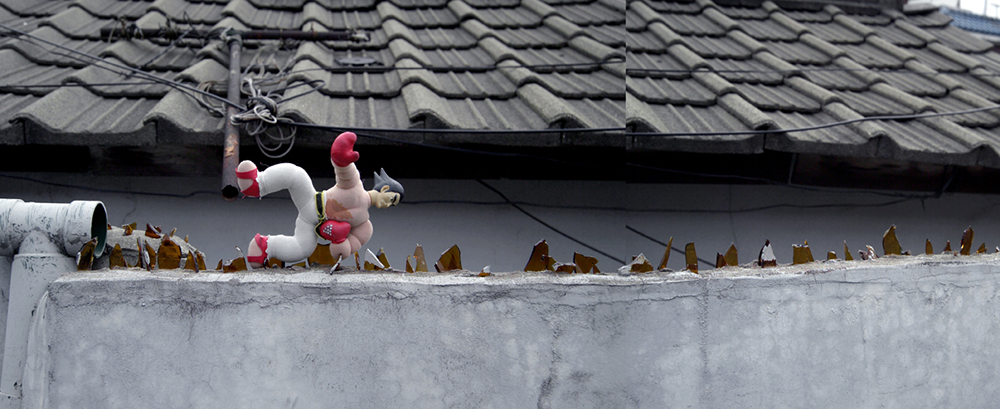
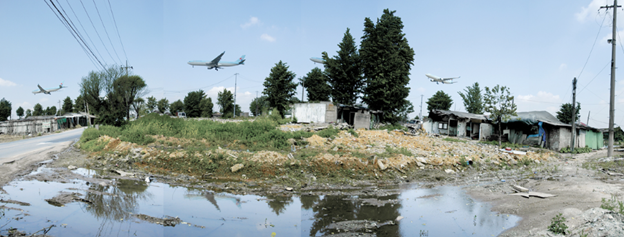
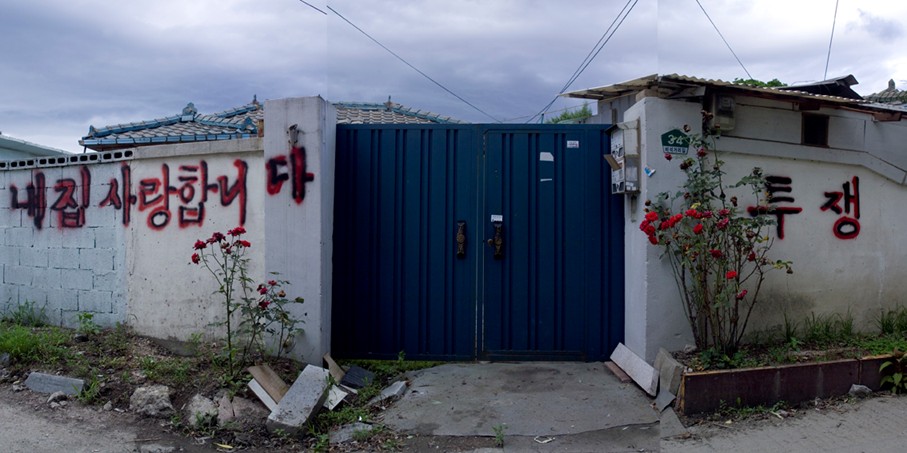
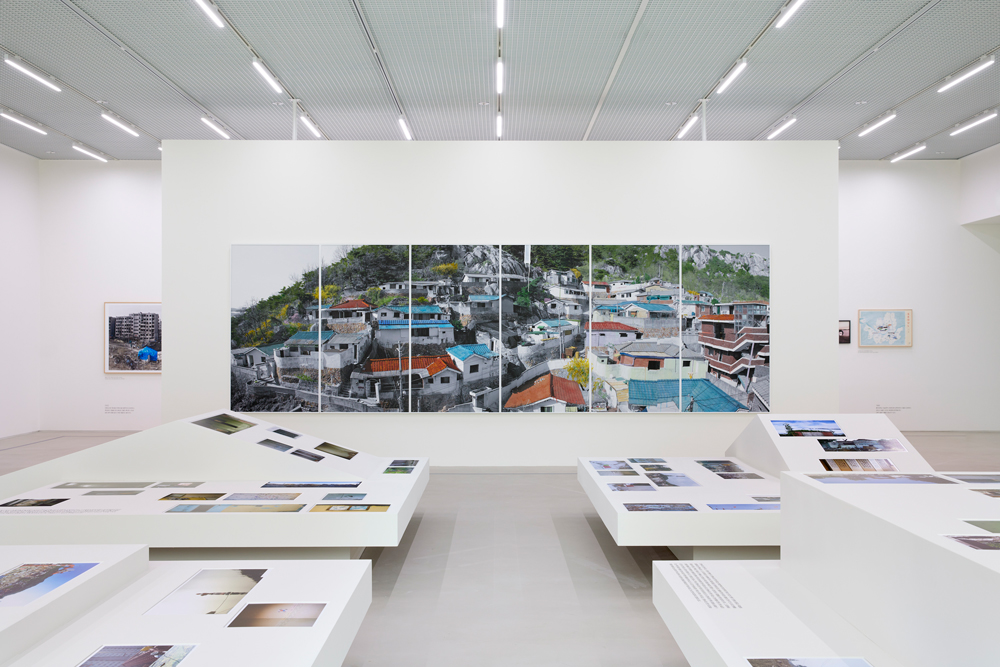
the digital camera first became available, its small memory forced Kang to make
long panoramic landscapes by suturing many individual shots. These landscapes
do not attempt to be faithful representation of the reality through an
expansive, level gaze, however. They are recombinations of twisted impressions
of a society put together piecemeal. As the artist has stated, Korea has
leapfrogged from its pre-modern era to an era of information society in less
than a generation, and consequently all kinds of contradictions that reflect
the times and spaces that have been bypassed in the process clearly remain.
Kang's digital landscapes do not limn a future society ruled by a humankind
that has evolved through advancements in science and technology. Instead, they
are landscapes that harbor remnants from a process of modernization driven by a
fascistic military culture and collective egotism. It is not straight
photographic representation but manipulated montages of fragments that can
better and more precisely capture a reality distorted and perverted by
capitalism and commercialism in the midst of a compressed growth.