Eunju Hong studied Fine Arts at the Korea National University of Arts and later attended the Academy of Fine Arts Munich as a DAAD master’s scholarship recipient. She currently lives and works in Korea and Germany.
Eunju Hong (b. 1993) views the process of
technological evolution as a reflection of human desire, focusing on the
fragility and violence inherent within it. Based on research into the history
of technological development, the artist employs performance, experimental
video, and installation to elevate the collisions between technology and
emotion, matter and memory into a form of poetic tension, attentively examining
the points where personal and social wounds overlap.

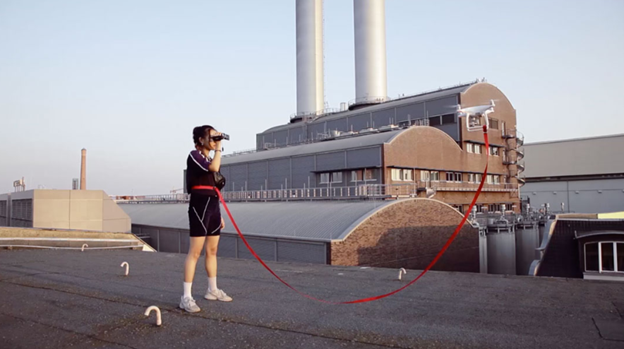
Medical technologies, optical devices, and
automated nonhuman agents—systems created by humans “to improve
life”—paradoxically expose the incompleteness of human existence. Eunju Hong
empathizes with these technological mechanisms and the emotions of loss,
oppression, and alienation they leave behind, reconfiguring them through
embodied memory and trauma.
Working across multiple media, her practice
rejects linear narrative structures, unfolding instead by assembling
fragmentary images and shards of incomplete emotions.

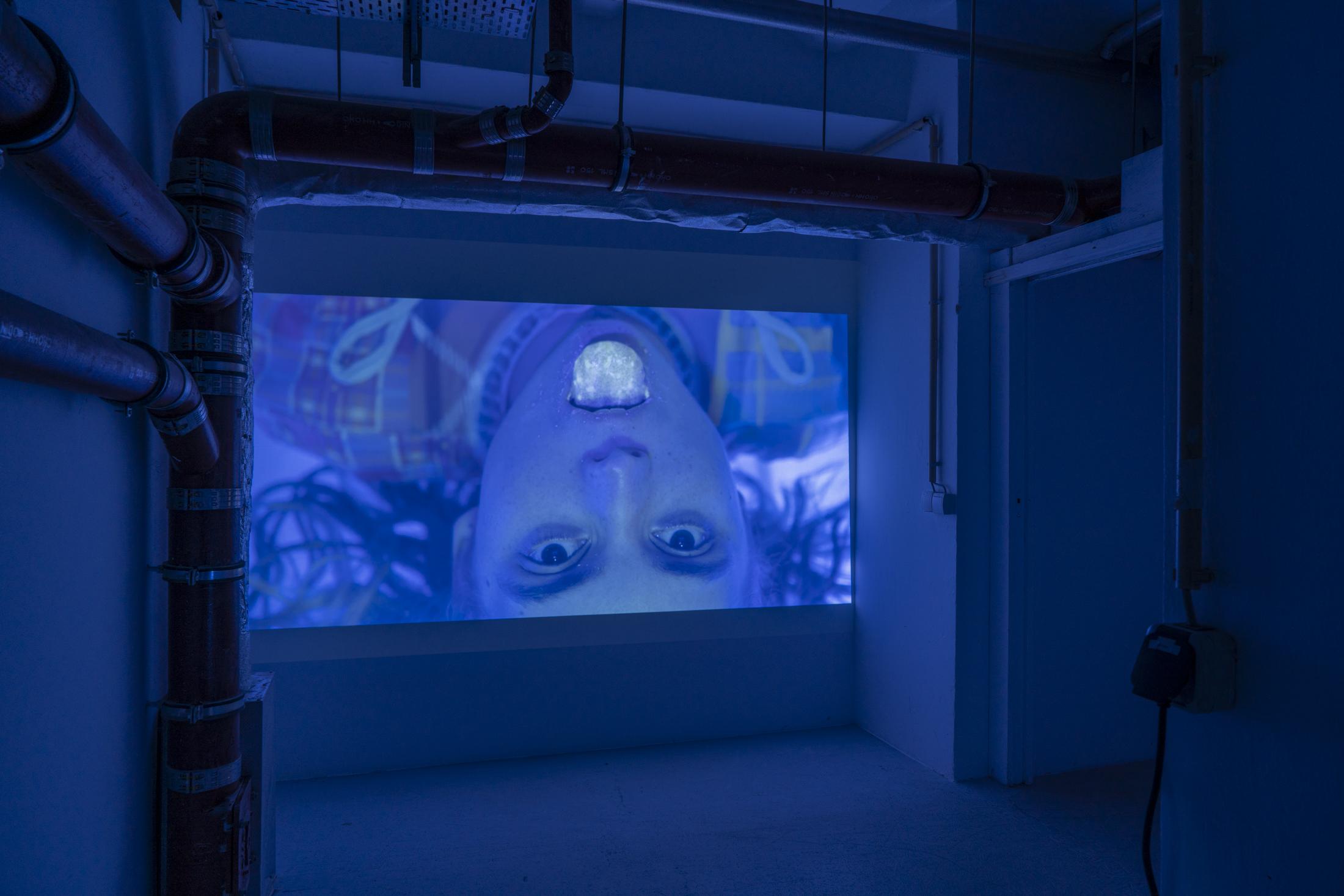
In her solo exhibition 《I want to mix my ashes with yours》
(Gallery175, 2022), Eunju Hong imagined a world in which the boundaries of all
kinds of bodies surrounding us—buildings, humans, machines, animals, and
more—become nonlinearly entangled and dissolved.
The exhibition title, “I want to mix my
ashes with yours,” is borrowed from a line in a classical Chinese poem written
by a newly married bride. However, rather than adhering to the poem’s original
theme of eternal love—loving one another until bones and flesh turn to ash and
merge—the exhibition reinterprets the phrase “mixing ashes” as a metaphor for
contemporary moments in which the boundaries between diverse entities and
subjects become blurred.

In the exhibition space, human language,
animal language, and machine language imitate or mock one another, dreaming of
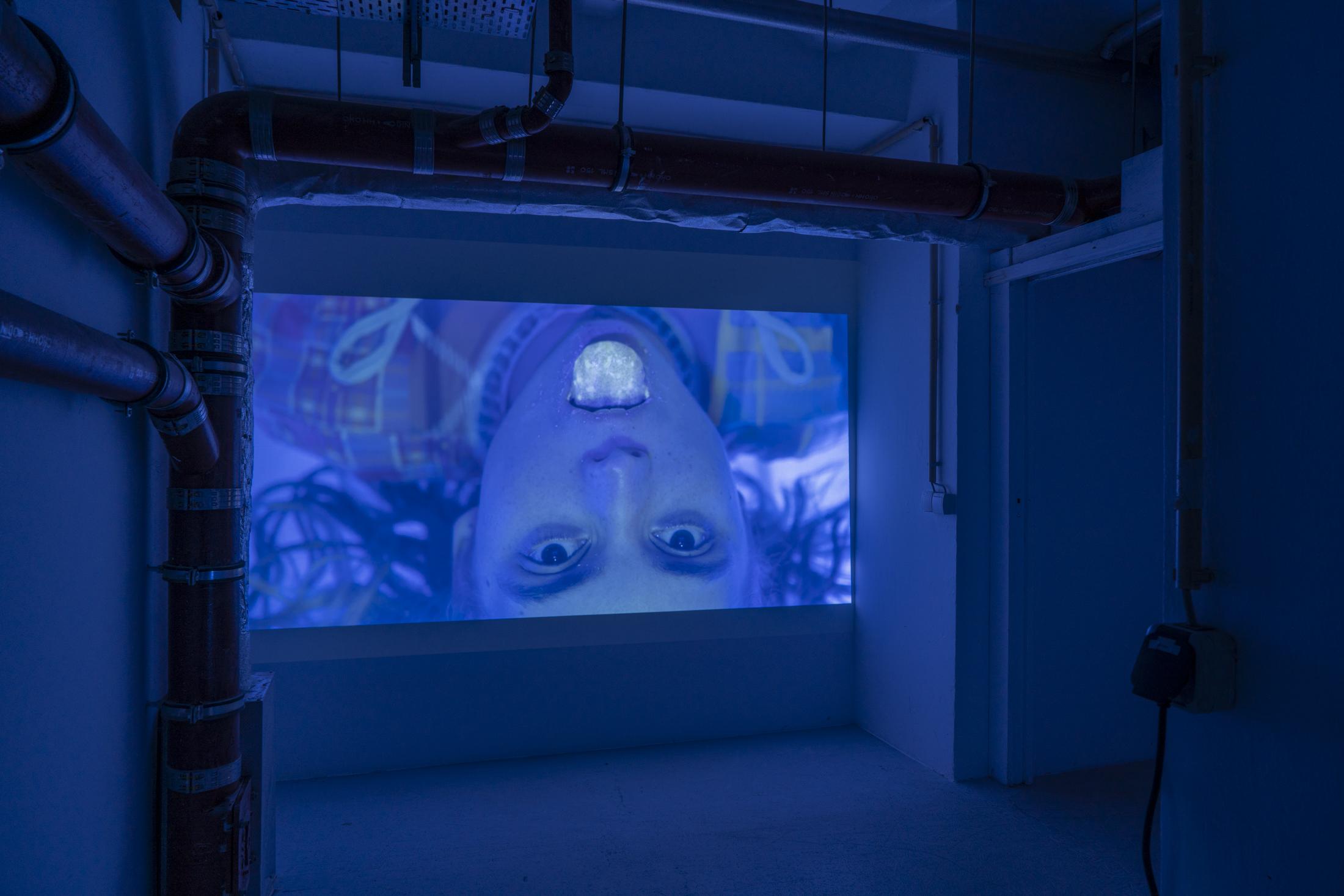
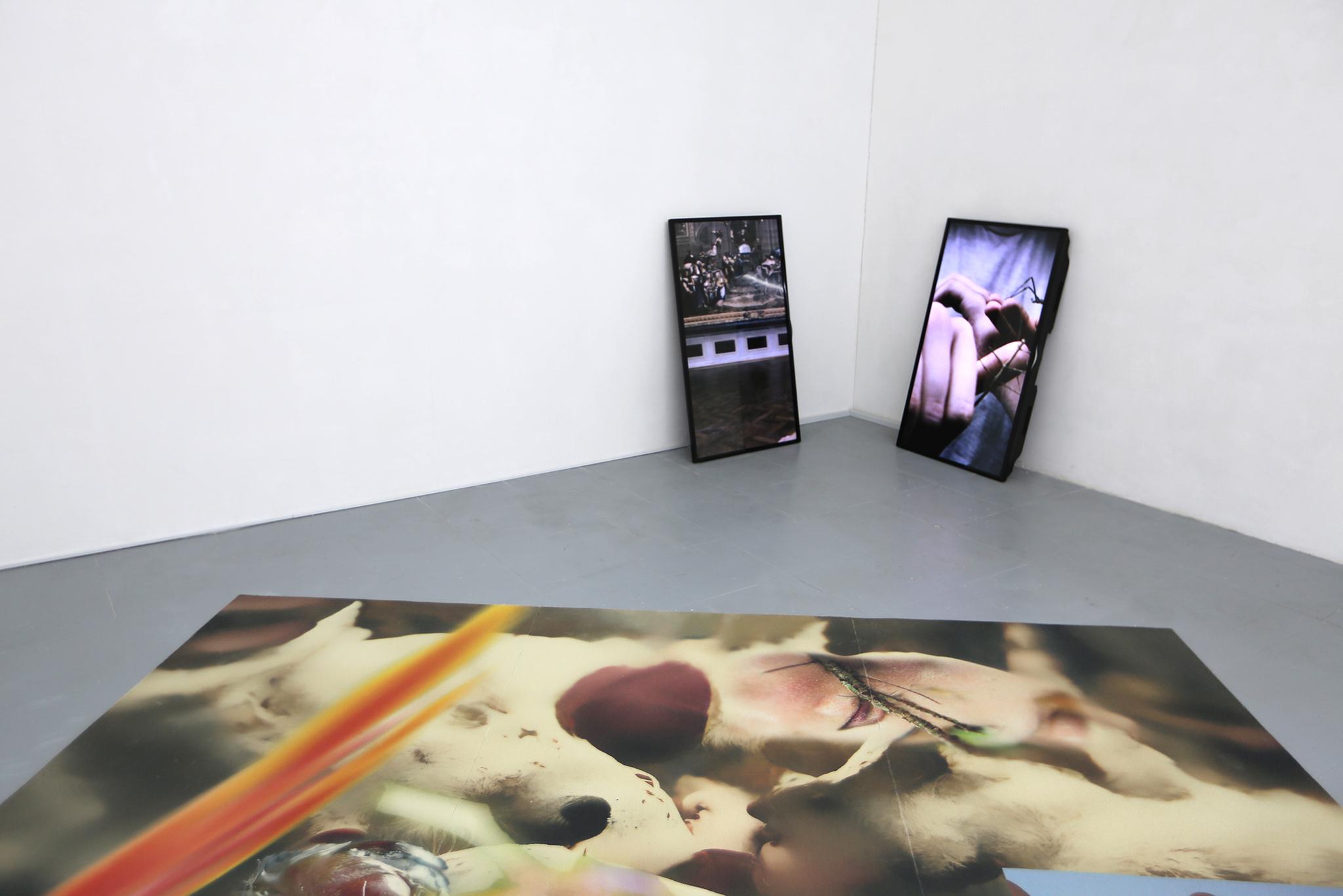
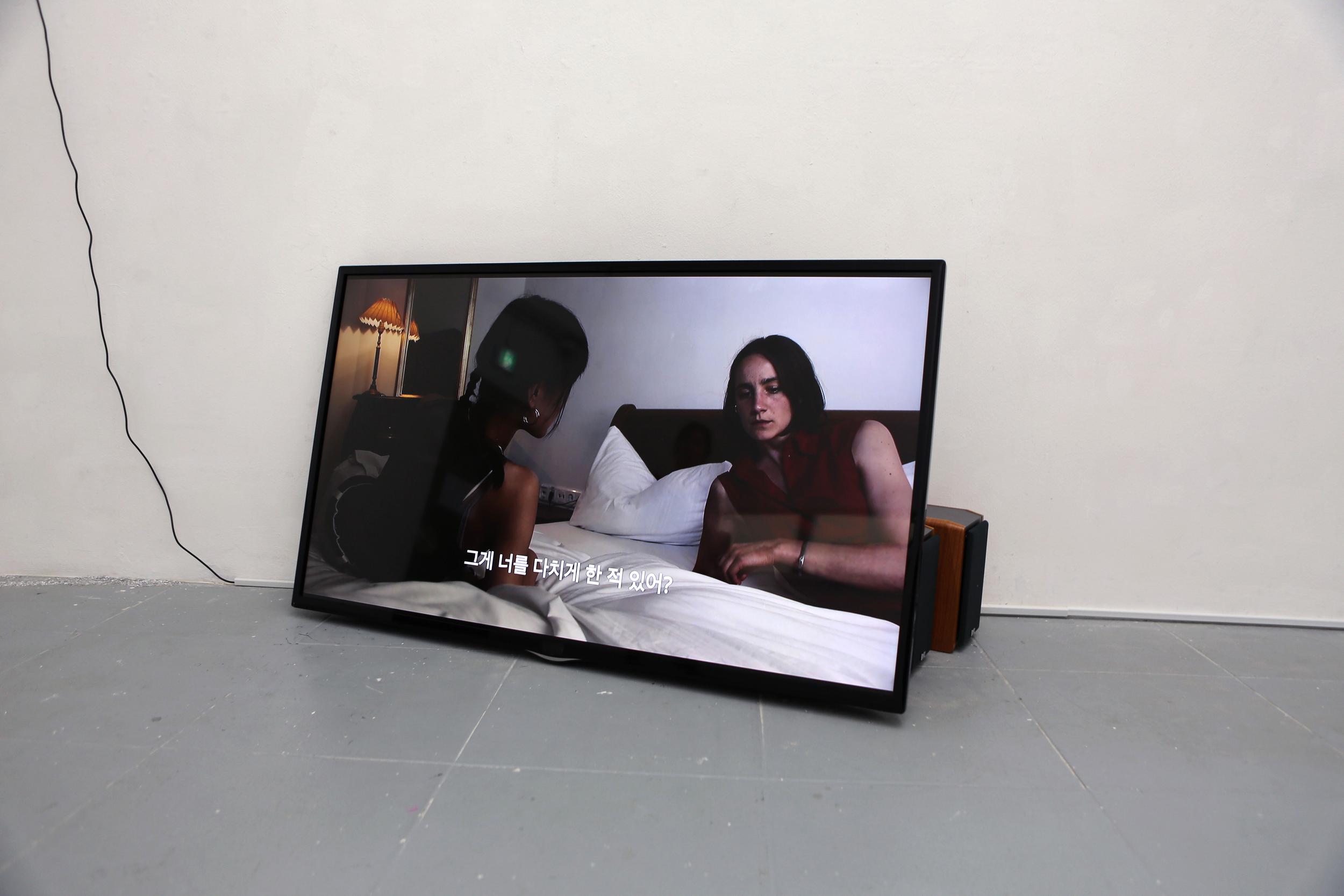
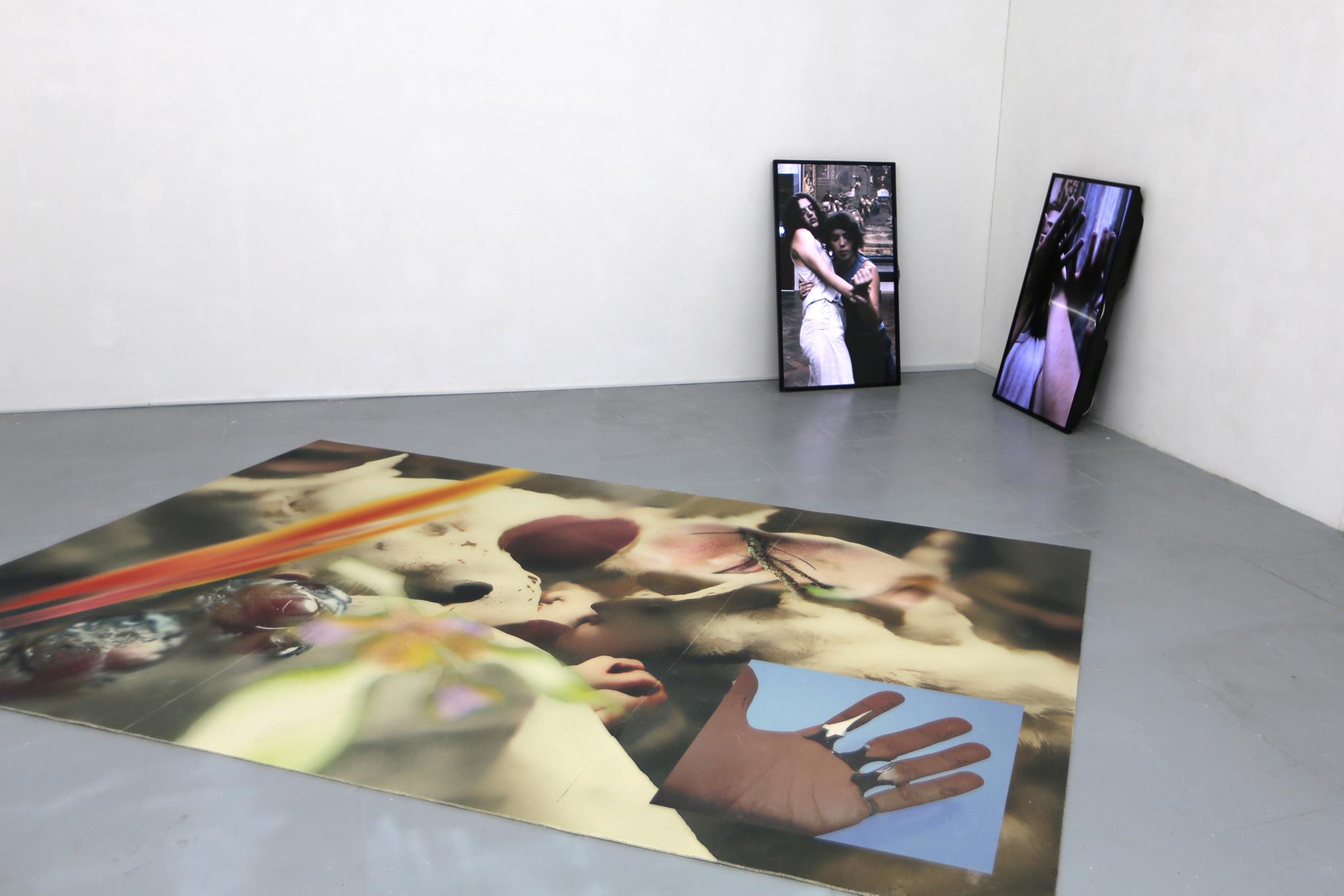
fractures within the world. The first video to greet viewers in the
three-channel video installation depicts a world in which humans are born as if
fruit were growing on trees.
The dialogues among the characters suggest
a non-linear kinship structure without a center or periphery. They reveal

themselves not as parents but as interchangeable guardians at any moment, and
the child raised by them is depicted as having not one but multiple navels.

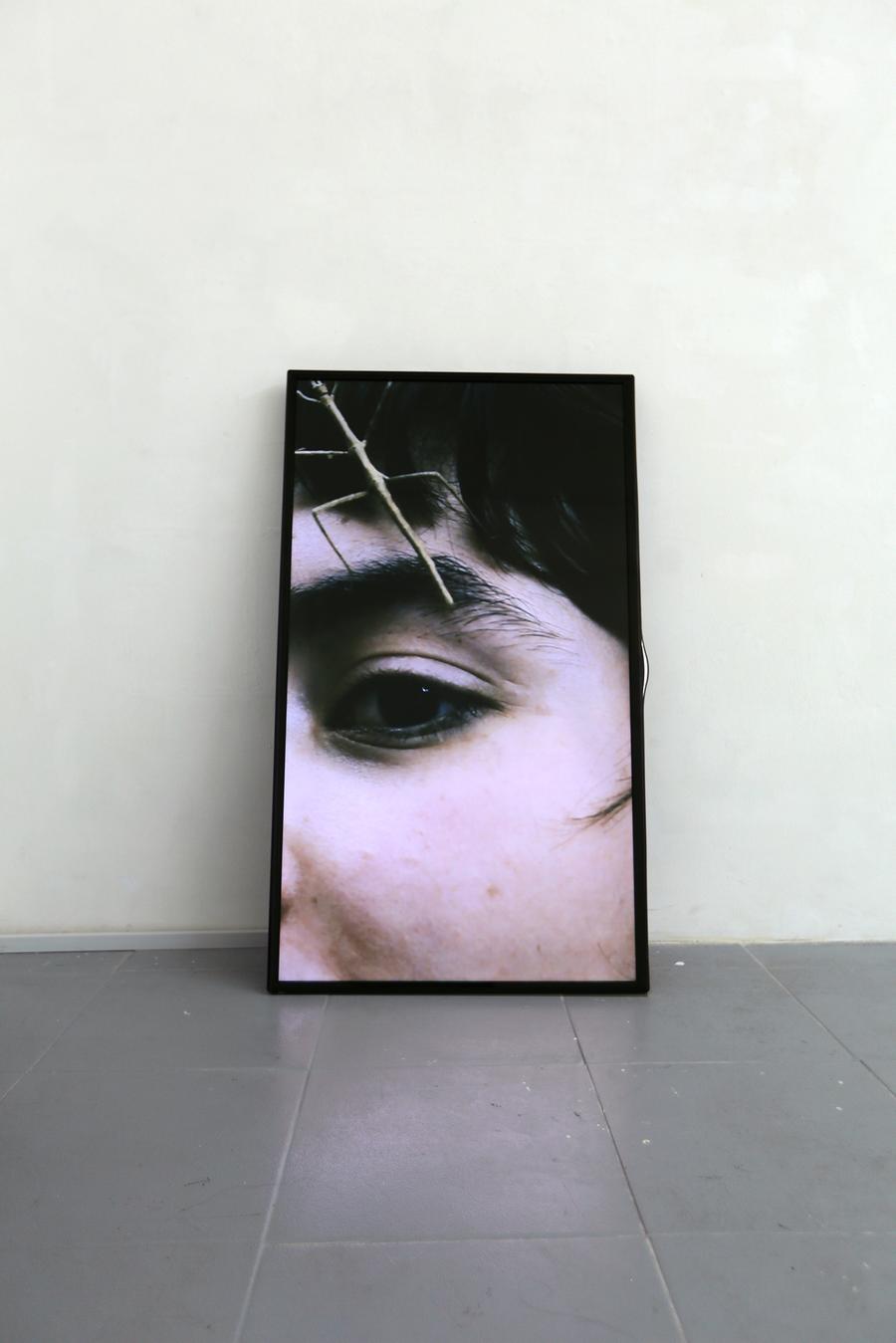
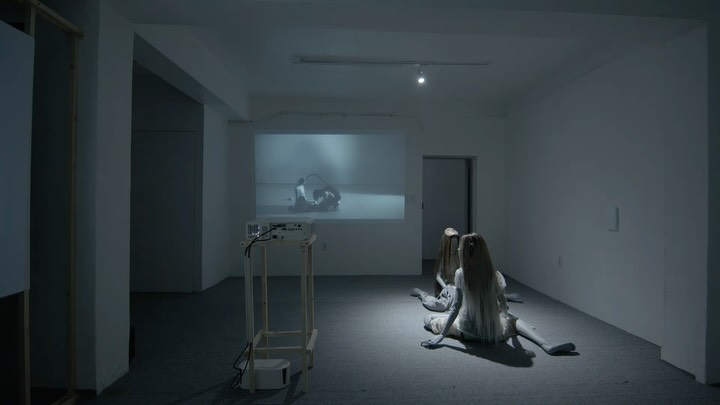
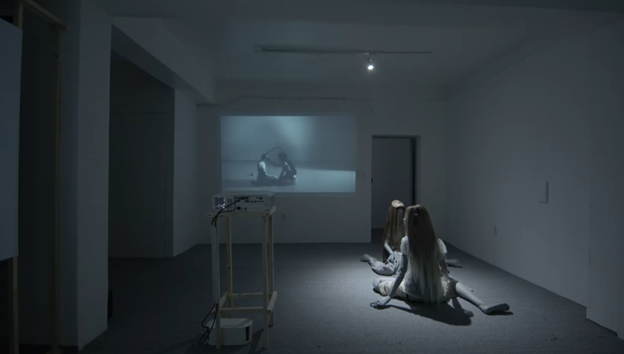
In the other two videos paired with the
first video, two dancers are dancing with a walking stick insect. The movement
of a stick insect is like a living branch, or like a newborn baby, or like a
clumsy machine. At the same time as stick insects hide themselves by mimicking
tree branches, females can reproduce asexually without males, and sometimes
they are eaten by birds while incubating eggs and reproduce through bird
droppings.
The stuttering movements of the walking
stick transcend the borders of another world, as it should be; Species
distinction, food chain and survival, reproduction and prosperity, sex,
extension and disconnection of individual bodies. The two dancers and the two
stick bugs delicately but crudely put their bodies against each other, trying
to balance each other’s weight as if they were playing tug-of-war.

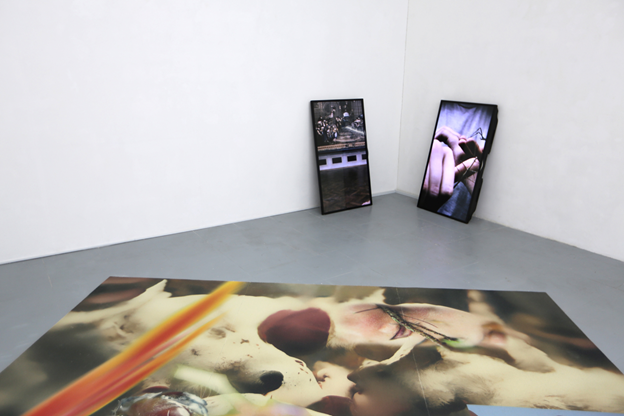
A large image that is difficult to perceive
is placed on the floor of the exhibition hall in front of the video. This image
is the result of a clever collaboration between artificial intelligence and the
artist’s consciousness. In the abstract of colors whose boundaries are
ambiguous and whose identity is unknown, more distinct shapes rise.
These are unnamed shapes that look roughly
similar to the nodes of insects, the hairs of mammals, the holes in the face,
and the shape of cell membranes. The only representational image is the image
of fingers with numbers written on it, which is a crucial clue about the
collaborative process.
This collage, created using a text-based
image generation algorithm, reveals the irony inherent in the operating
principle that artificial intelligence cannot help but reproduce the
superficial ‘characteristics’ contained in words, while corroding it at the
same time.

Finally, the bathtub placed at the entrance
of the exhibition contains something that evokes an uncanny skin, lying as if
the boundaries of bodily masses have completely collapsed. Beneath the bathtub,
powder is scattered as though left uncleaned after a party—resembling the noise
of a virtual world or ashes.
Through this series of works, the
exhibition invites us to open our ears beyond the familiar boundaries of acting
subjects and to take a first step toward the moment when those boundaries begin
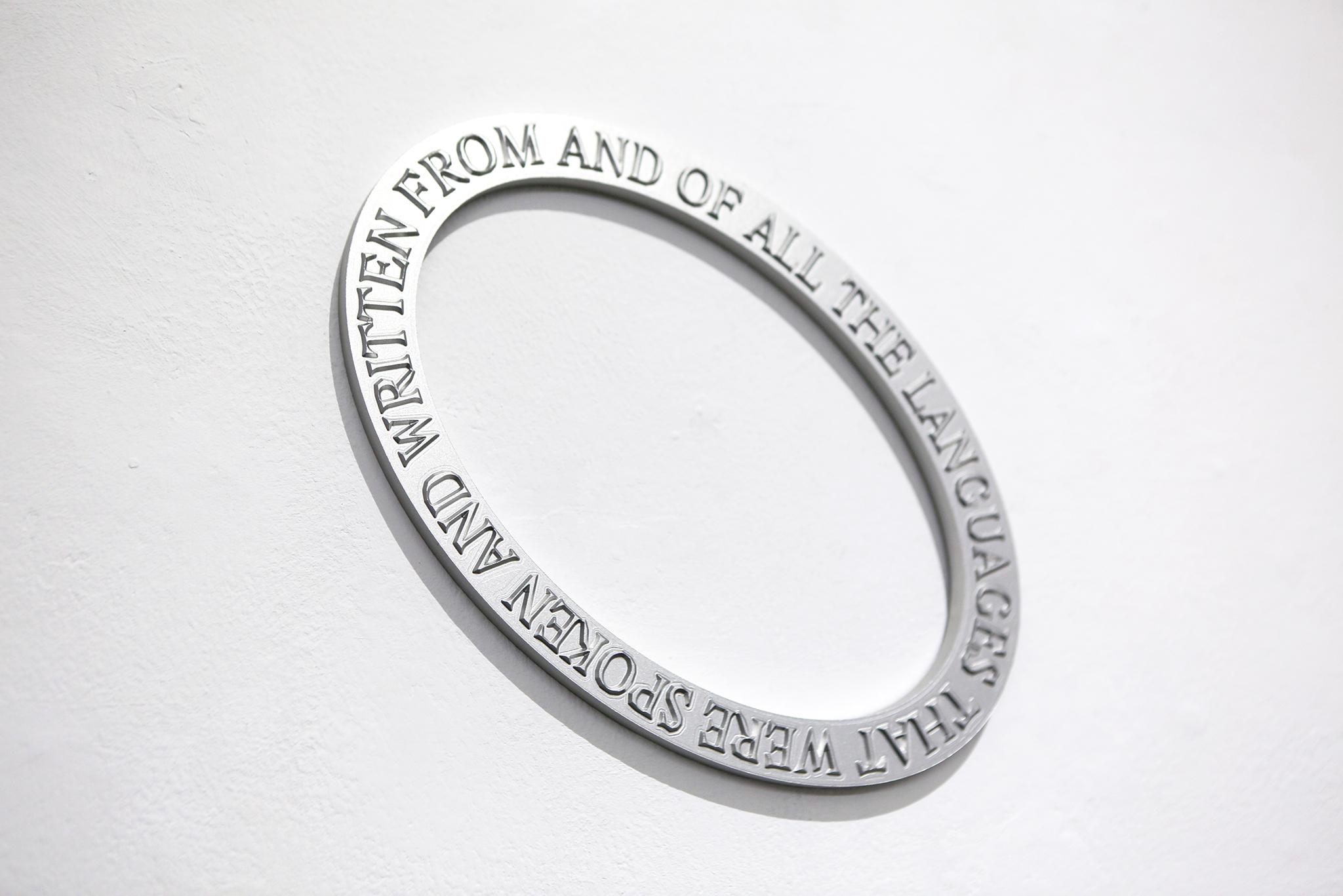
to dissolve. Appropriately, beside the entrance hangs an ellipsis bearing the
phrase “…From and of all the languages that were spoken and written…,” a
sentence whose beginning and end, like its meaning, remain indeterminate.

Meanwhile, in the video and installation
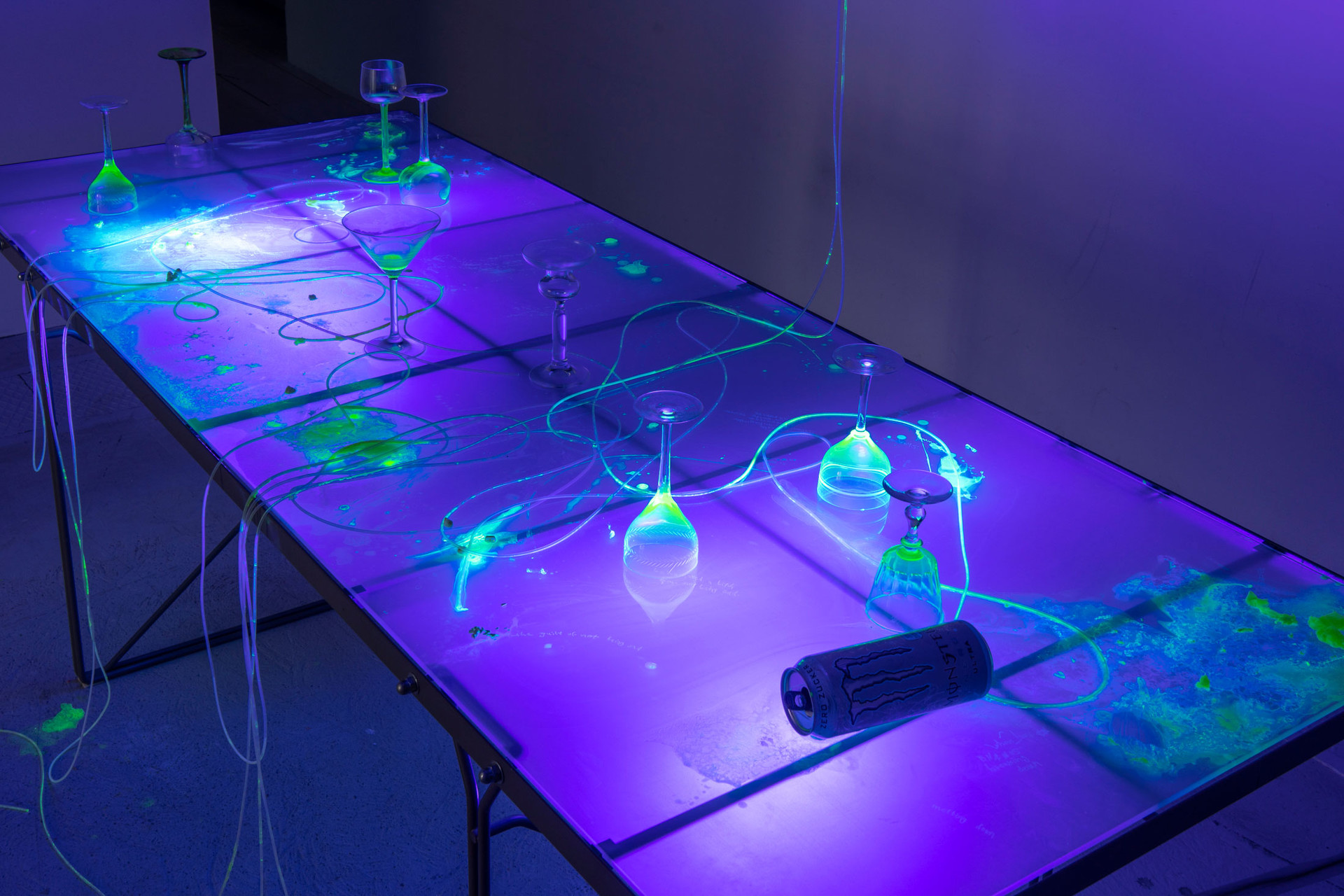
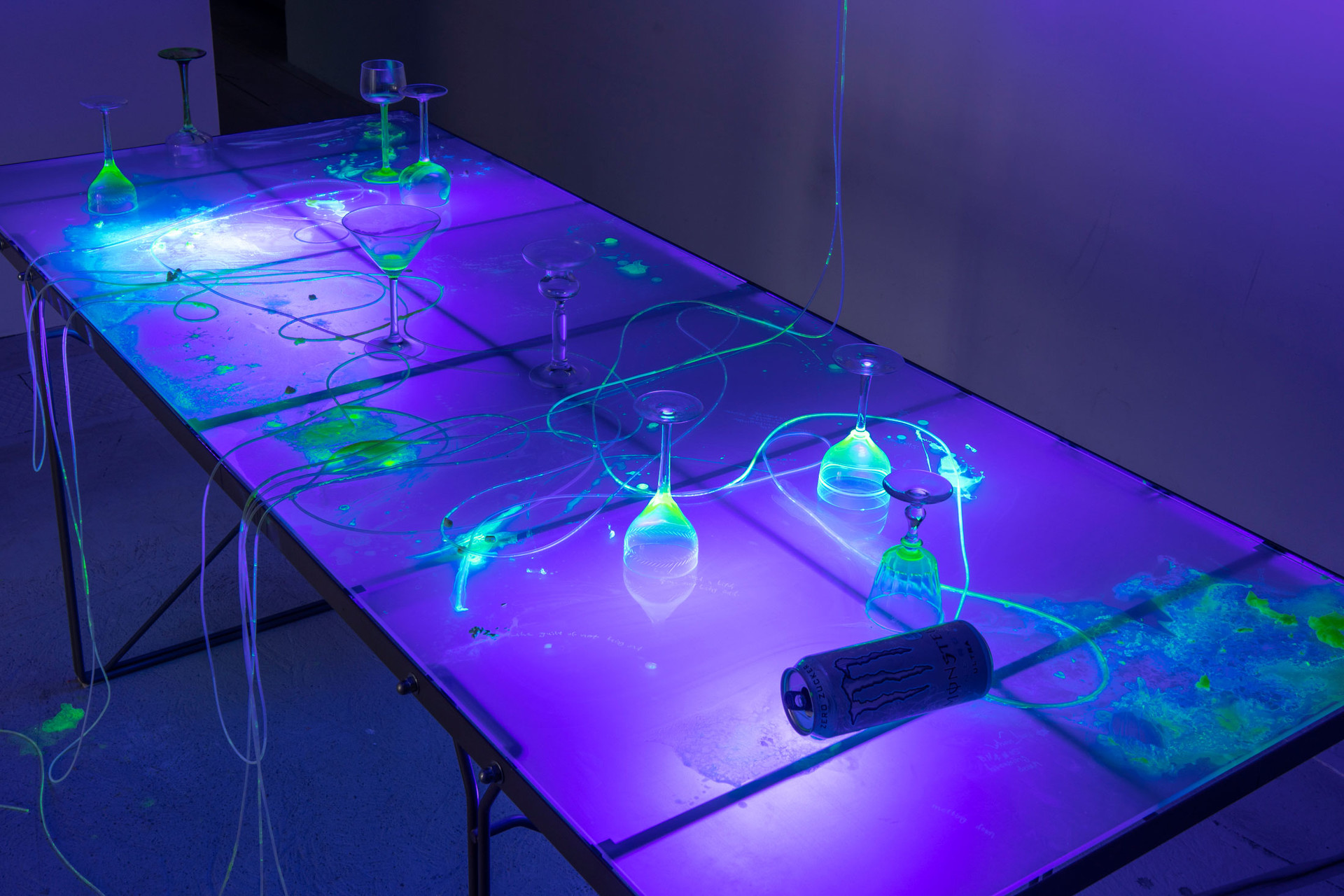
work Annagreen (2023), Eunju Hong addresses the shifting
meanings of materials over time and the memories that inhabit them. The work
centers on uranium glass, also known as “Depression glass.”
The Depression glass was popular glassware
during the Great Depression in the late 1920s. In the midst of an economic
crisis, its unique bright green color attracted housewives. The “Anna green”
glasses, named after the glassblower’s daughter, still attract collectors as it
glows under UV light.

Later, the US government banned the
production of uranium glass to save uranium for the Manhattan Project, a secret
atomic bomb project that took place during World War II. As science discovered
its power to radiate energy, it was used for the infamous atomic bombing of
Hiroshima, and gradually became an important source of energy in the 21st
century.
At the intersection of the desire for
glittery things, the secrets, and the espionage that traverse ideologies that
have caused thousands of victims, Annagreen visualizes the
layered histories and memories embedded within matter itself.

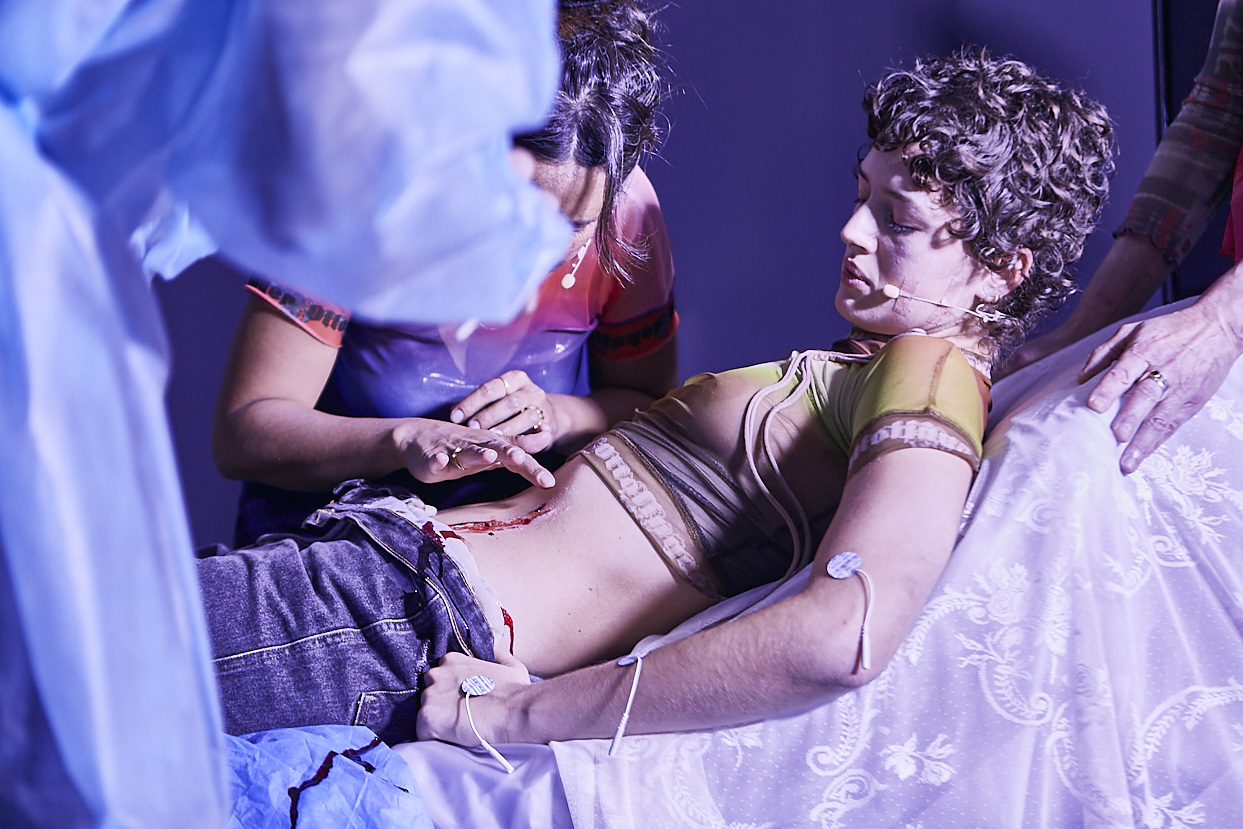
In the same year, Hong presented the
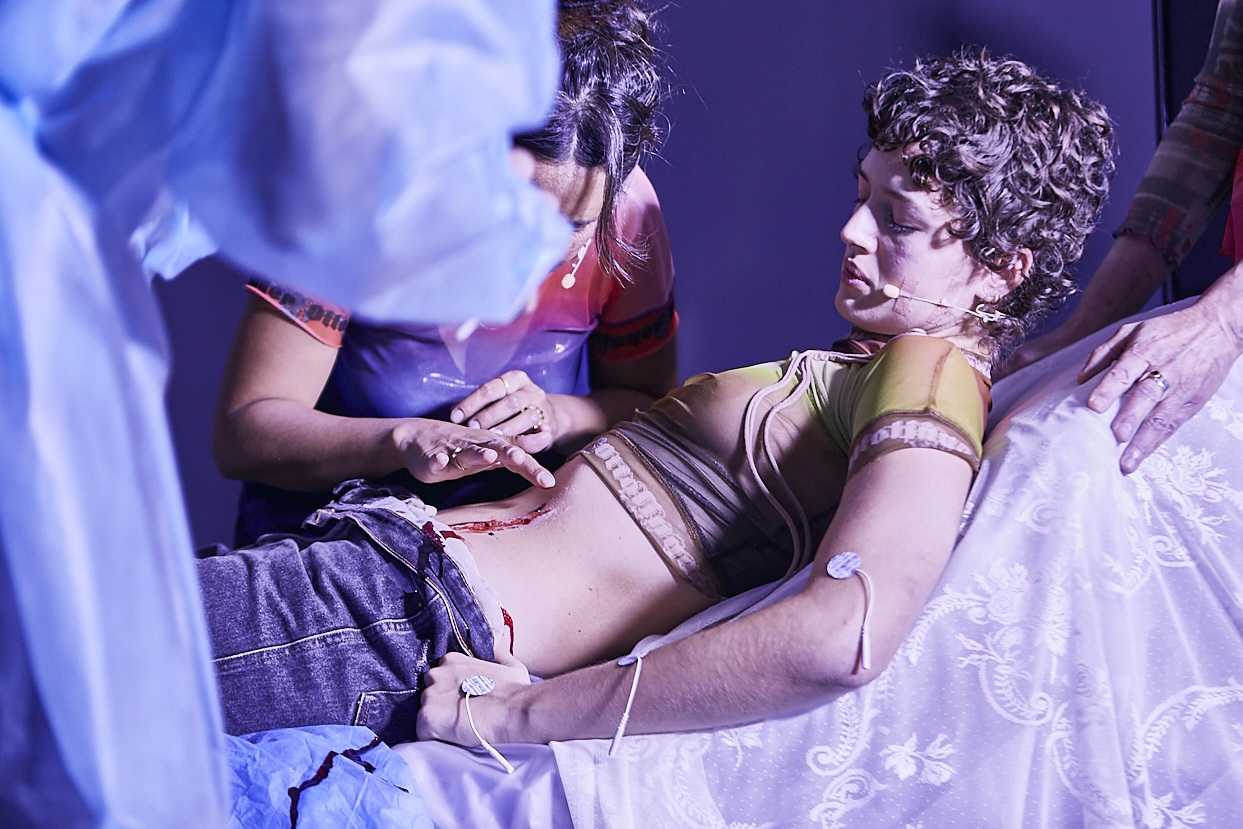
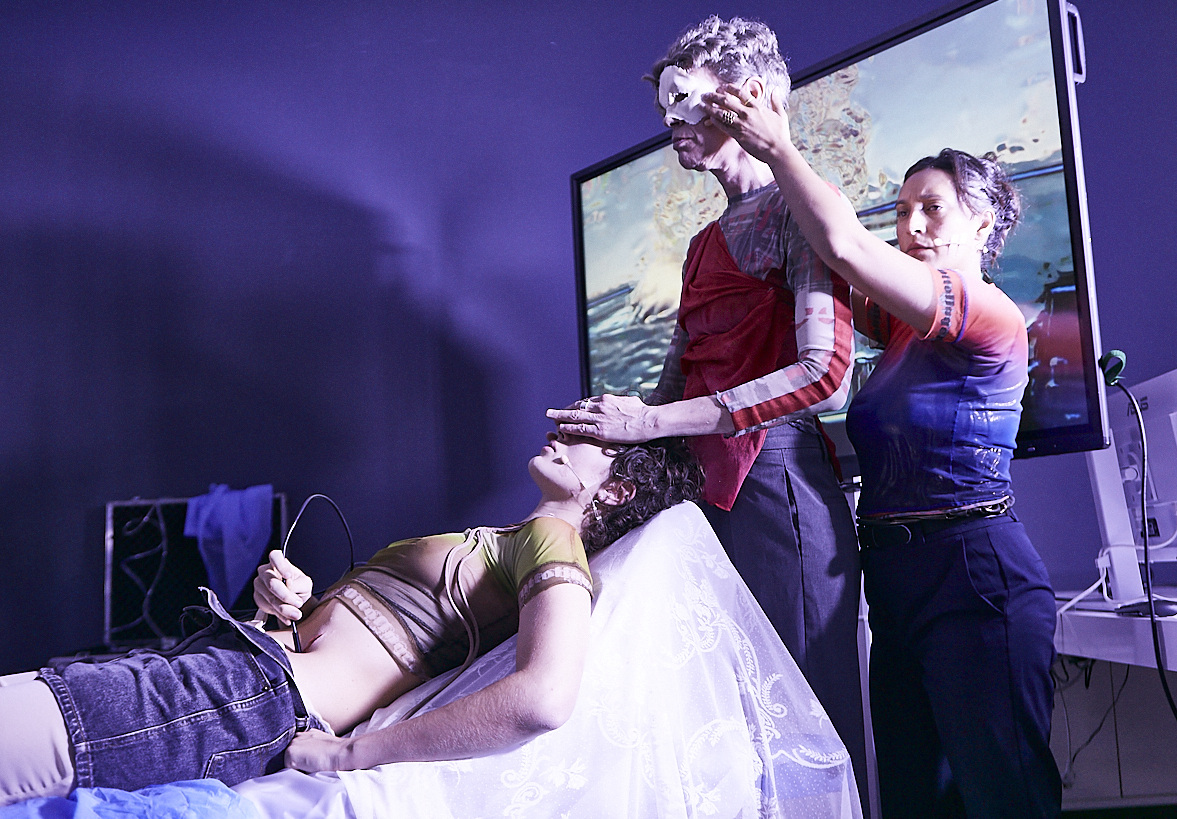
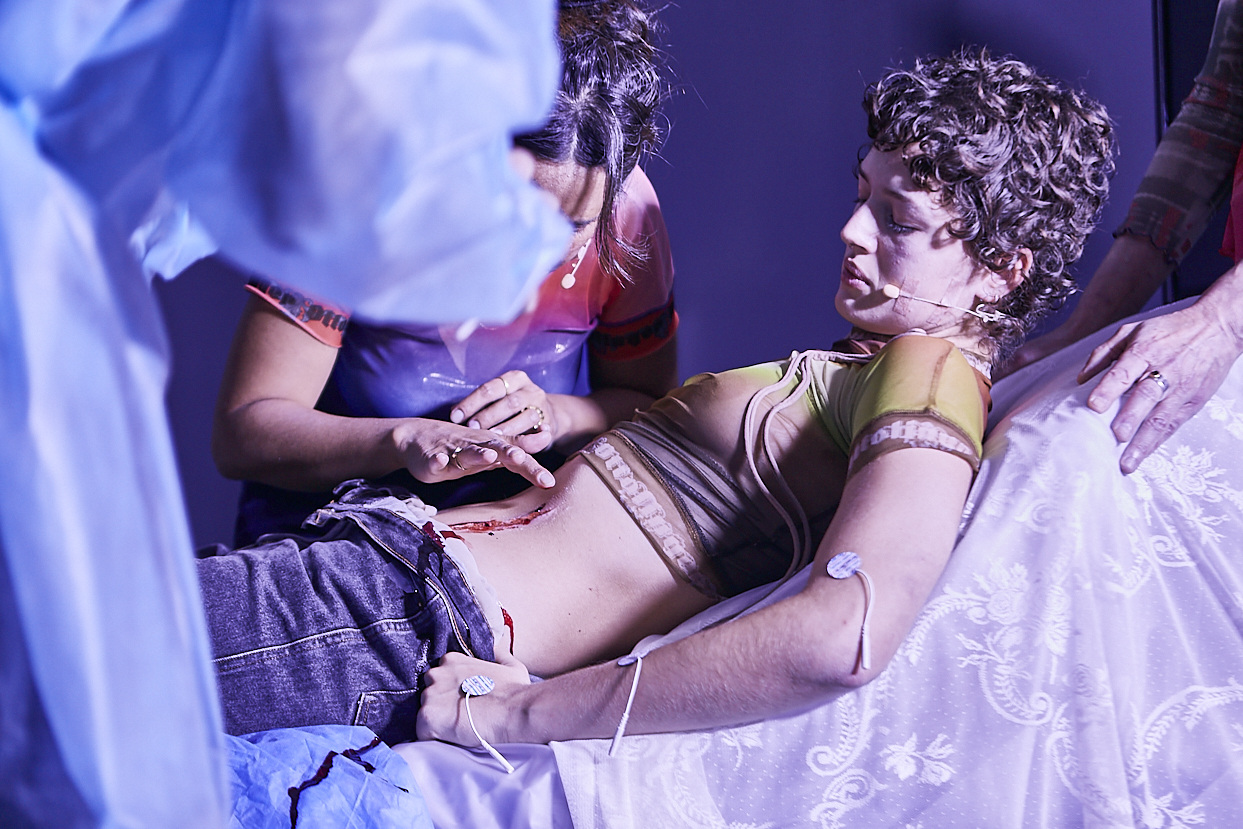
performance work Suture (2023), which is based on her
research into the history of Western medicine. The term “suture,” used in the
title, refers to the act of stitching wounds during a surgical procedure.
Looking at the history of Western medicine
from the 16th to the 18th century, surgeries were often performed in
amphitheaters. Beyond demonstrating surgical principles, these procedures
functioned as a form of spectacle, drawing members of the general public who
visited the theaters to witness them.
However, after the invention of anesthesia
and the subsequent realization that large crowds could transmit bacteria
through exposed wounds, operating rooms gradually took on the form of sealed,
sterile spaces, as they exist today.

The performance work
Suture (2023), presented in an insurance company office in
Munich, appropriates the format of the historical “operating theater” as a
performative structure to address trauma transmitted across generations. In a
narrow space filled with spectators, four performers read aloud one another’s
medical records and closely examine wounds created through special effects
makeup.
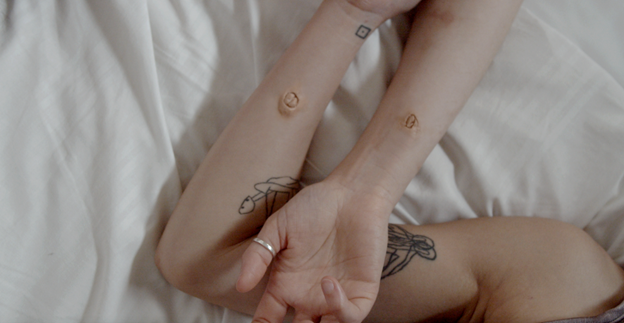
The performance concludes with an act of
“self-surgery,” in which the performer sutures their own wounds. Here, the
wounds on the body act as openings for the dead, open windows in the house of
'the body', ruptures, passages for excretion, and lenses through which we can
see a panoramic view of childhood memories.

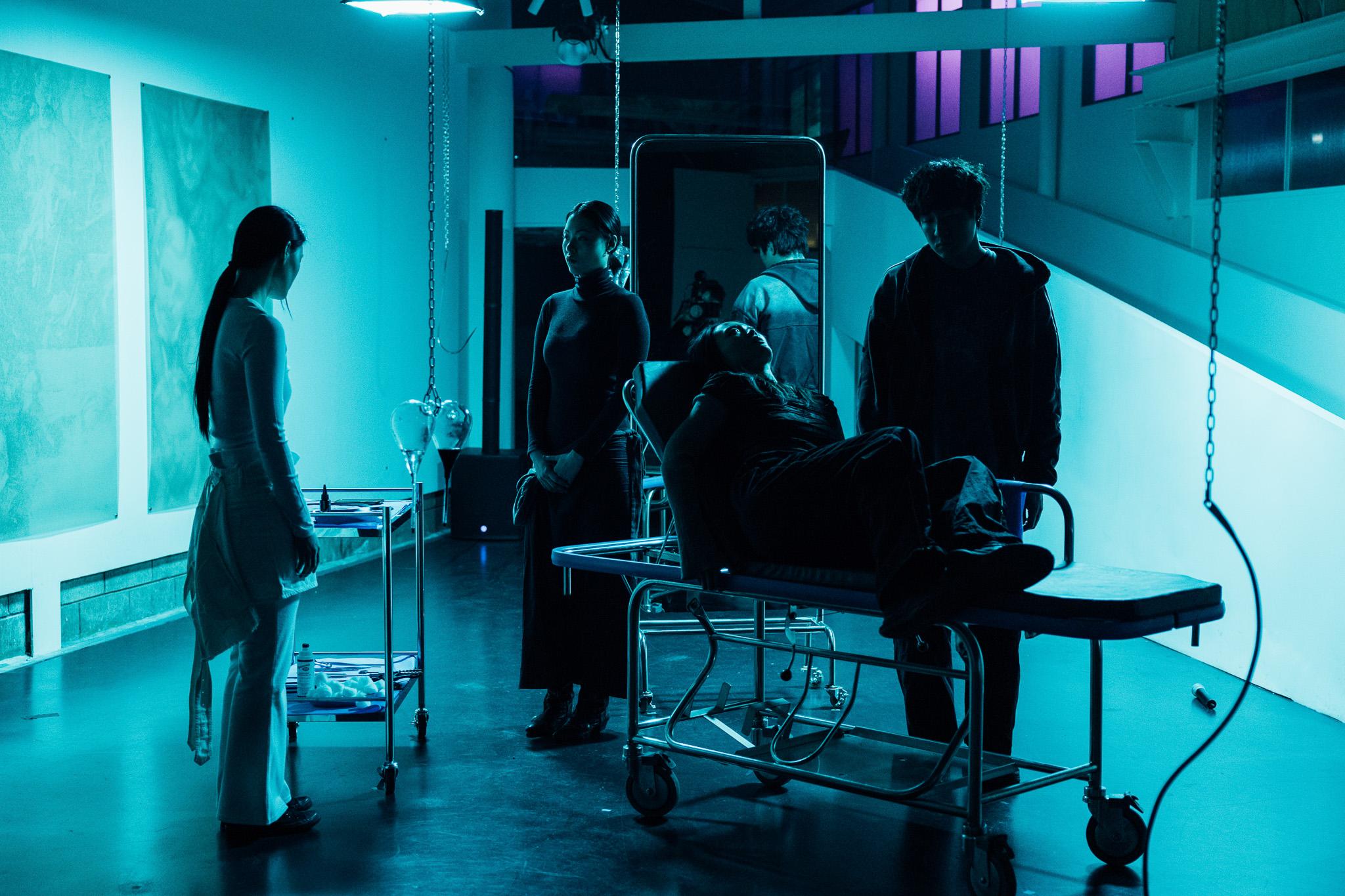
The following year, Eunju Hong presented
the solo exhibition 《Suture-rewired》 (Arcade Seoul, 2024), which extended this line of inquiry by
traversing three different strata—the operating theaters of medical history,
the sterile rooms of modern medicine, and the exhibition space—positioning
viewers alternately as witnesses, spectators, or participants in the solemn
procedures of contemporary medical systems.
The circular theater, the sterile room, and
the exhibition space are not merely physical sites, but landscapes composed of
power, gaze, relationships, and unsutured narratives. In the operating theater,
wounds were consumed as spectacle and objectified; through the development of
modern medicine, they were subsequently concealed and controlled within sterile
operating rooms.
In this exhibition, Hong sought to throw
open the doors of the sterile room and reopen the networks of wounds that had
been hidden within invisible domains. In the performance
Suture-rewired (2024), unfolded in a manner reminiscent of an
operating theater, the audience is no longer positioned as passive witnesses.
Instead, as they observe the act of suturing, they are compelled to question
where they themselves stand.

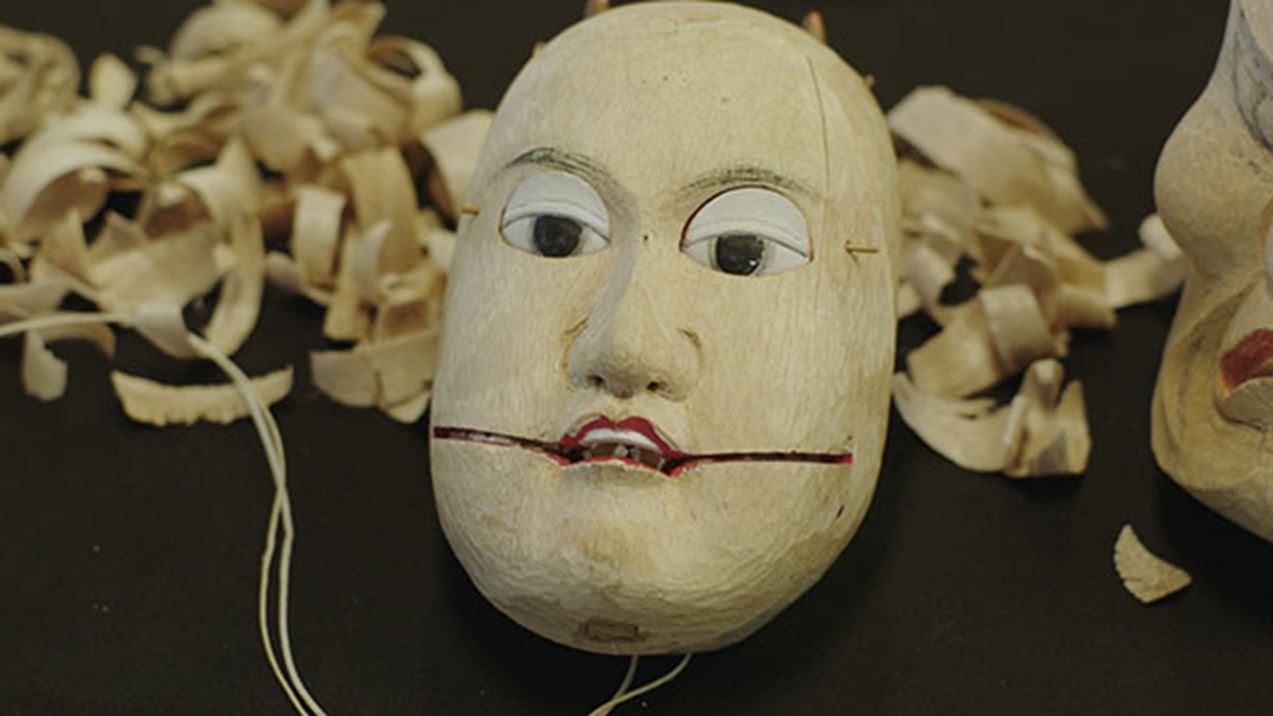
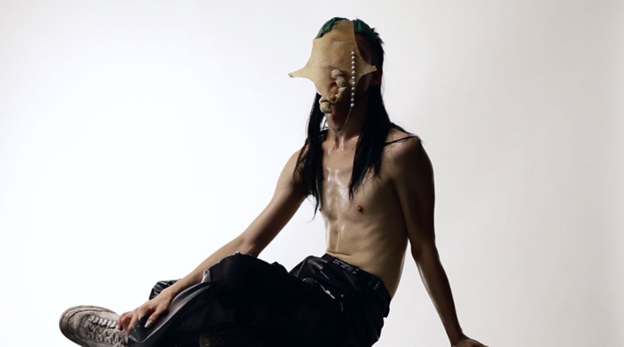
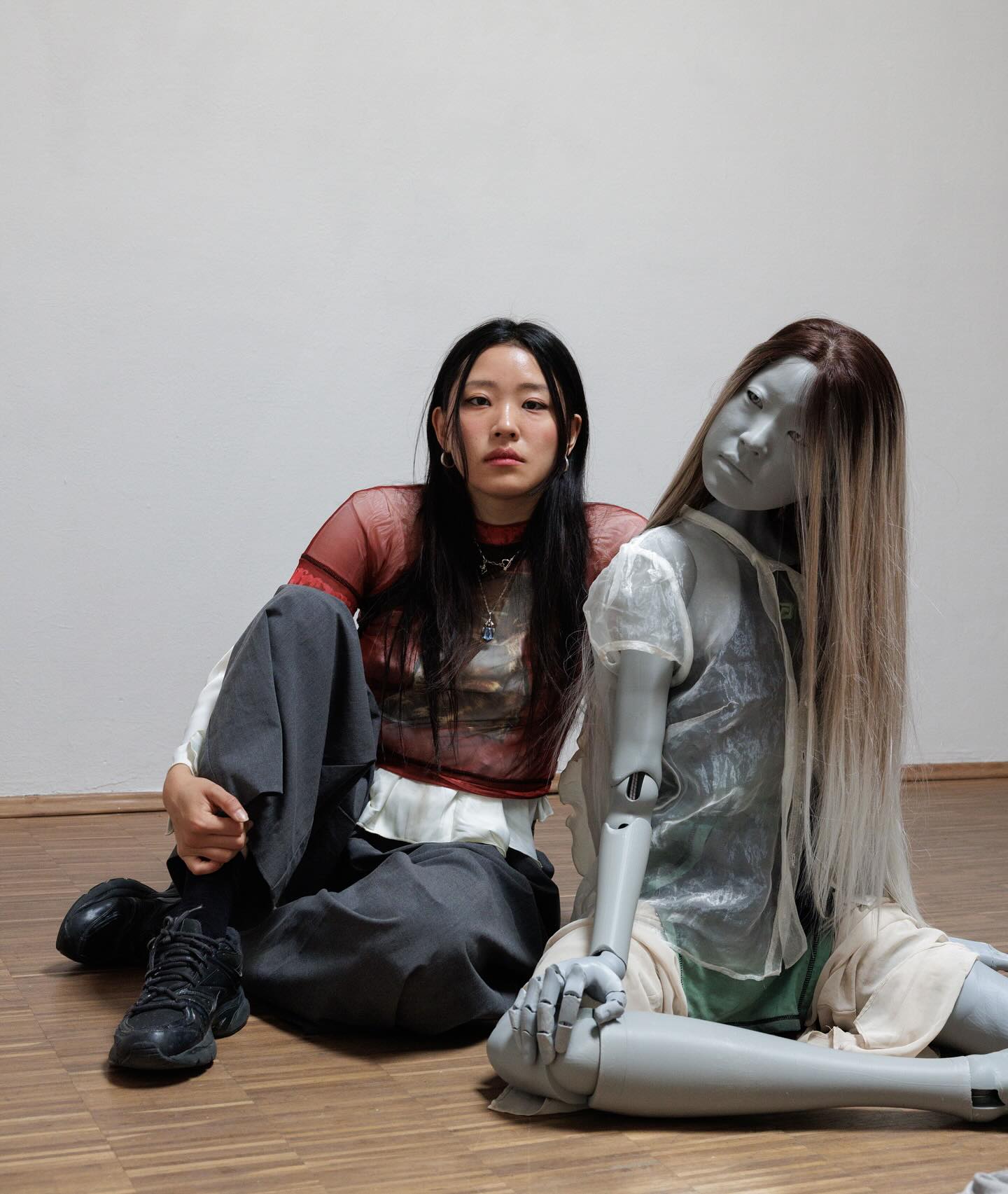
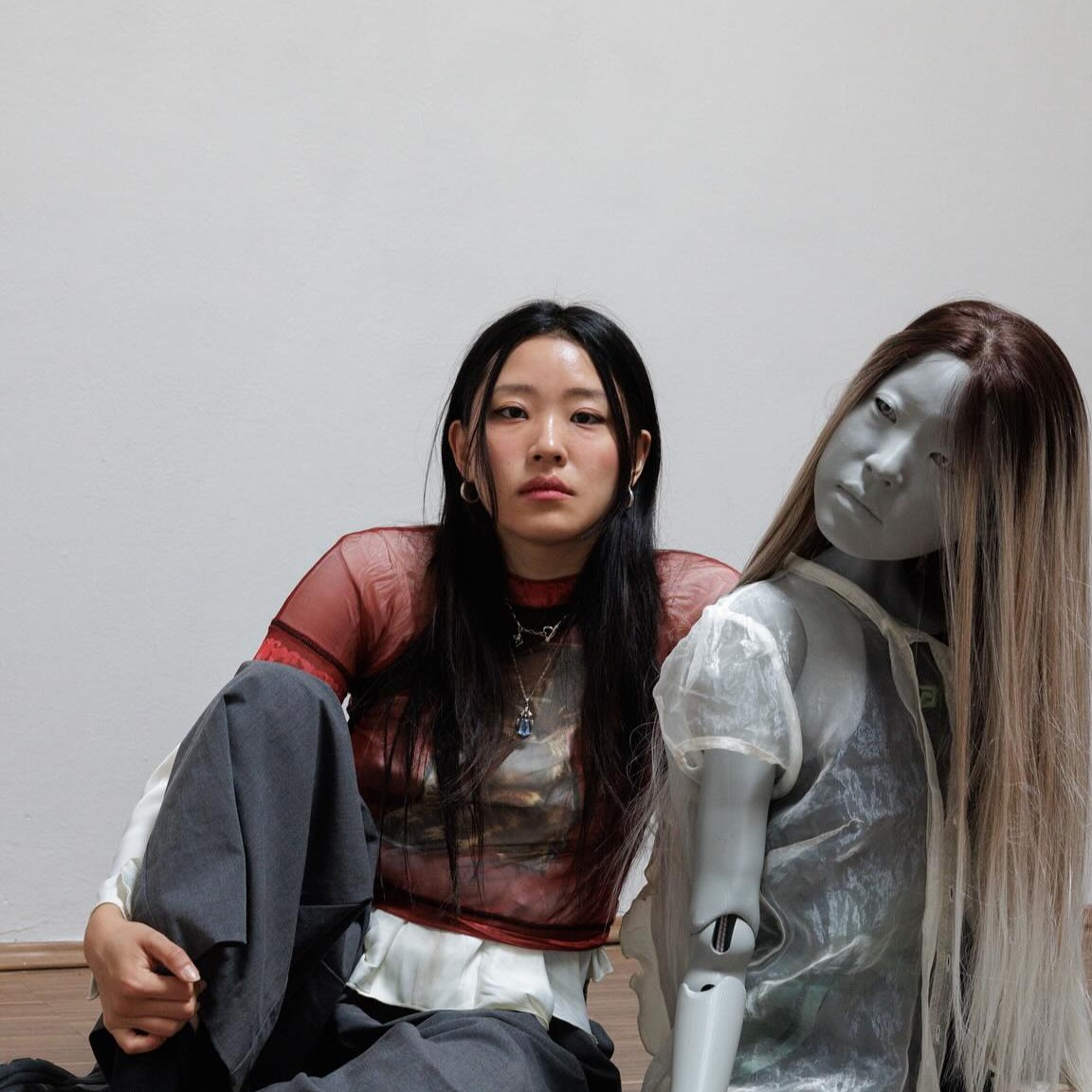
More recently, Hong has been developing
works informed by her interest in East Asian puppetry and traditional theater,
which she encountered during her residency at the Taipei Artist Village in
2024. Monsters, ghosts, and spiritual beings have long embodied human joy,
pain, and conflict, while puppet theater and masked performances have served as
passages through which the body transforms into “another being” and crosses
into a different world.
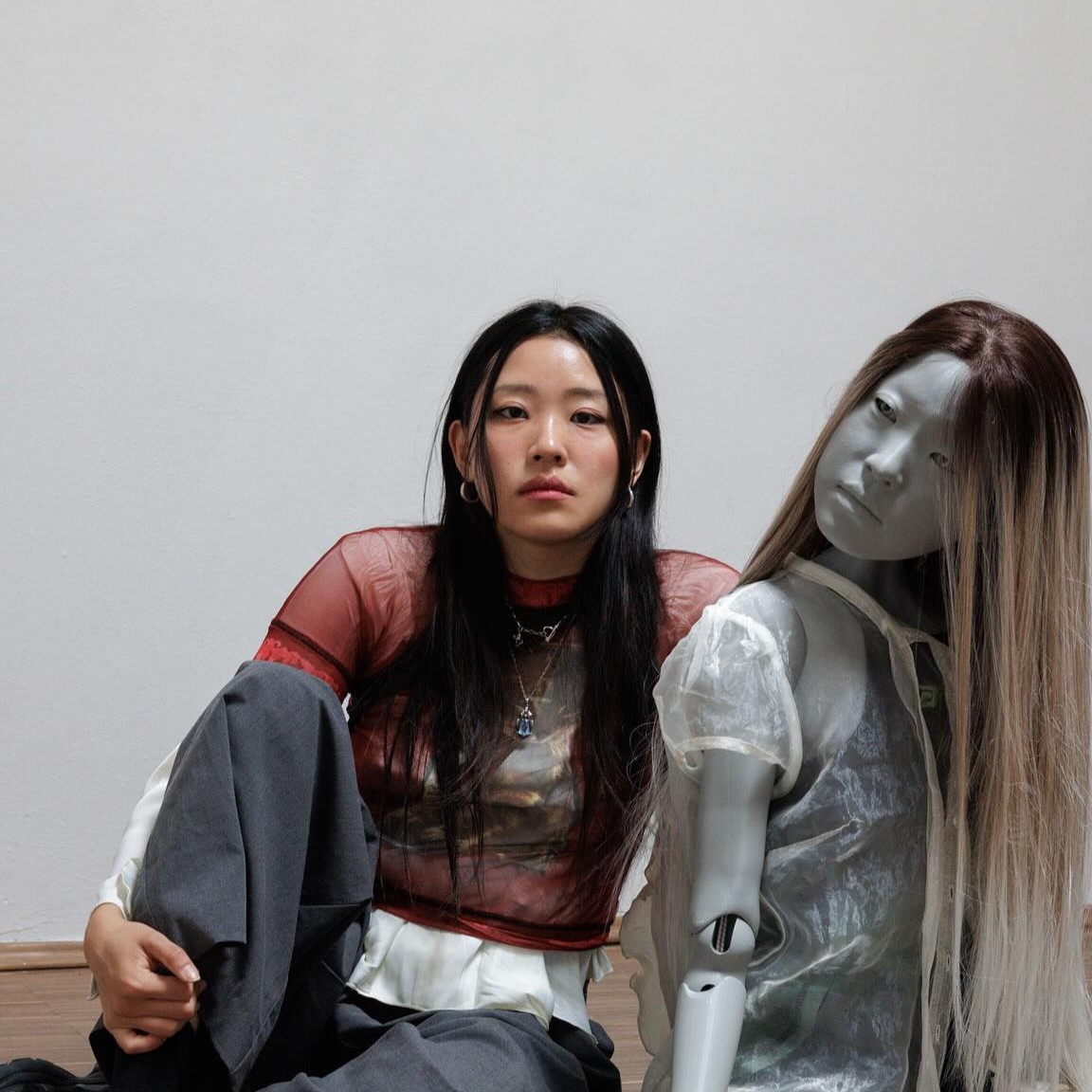
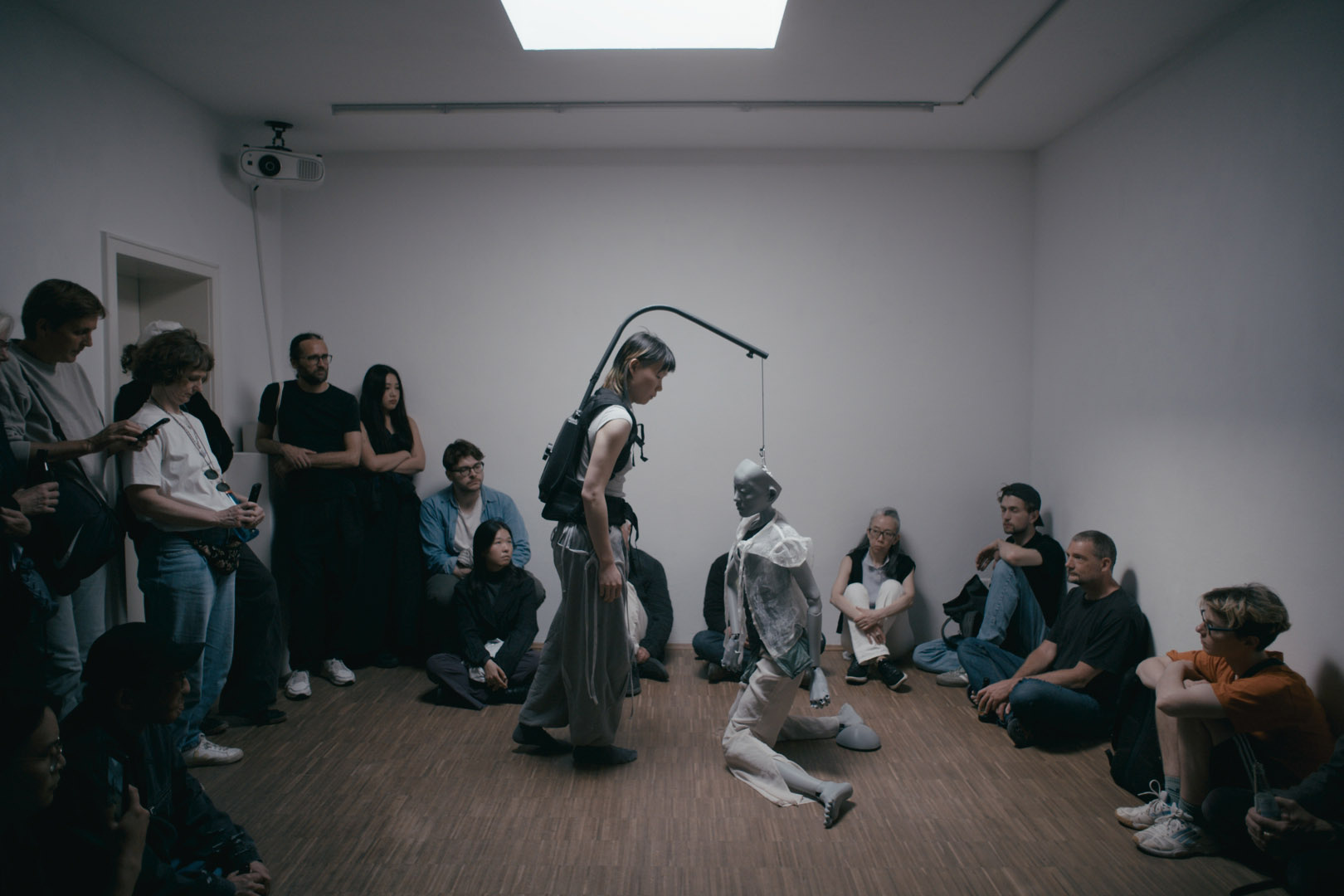
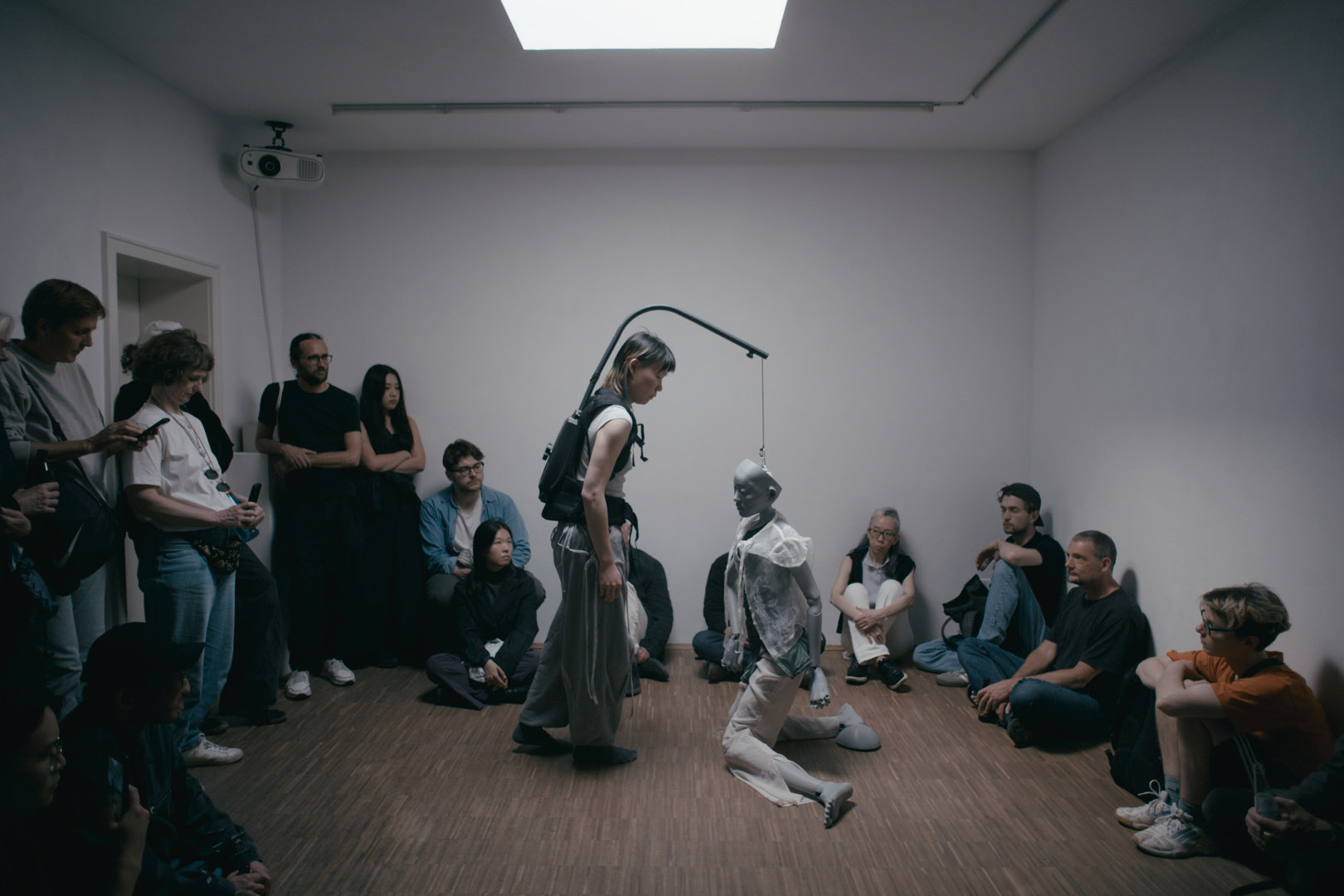
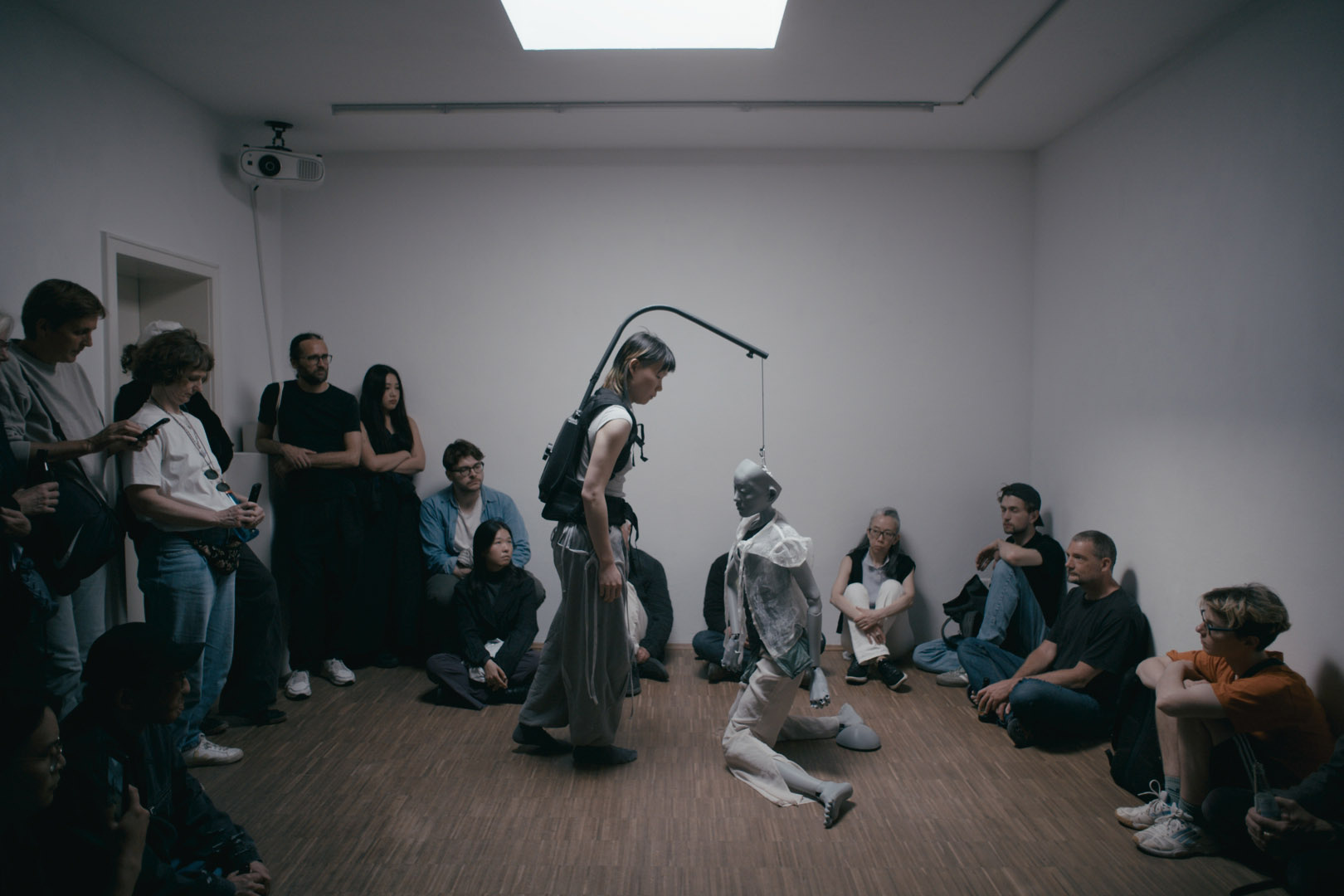
In 2025, based on this line of research,
Hong presented the performance She seemed devastated, when I was
weeping with Joy (2025) in Germany, a work that examines the act of
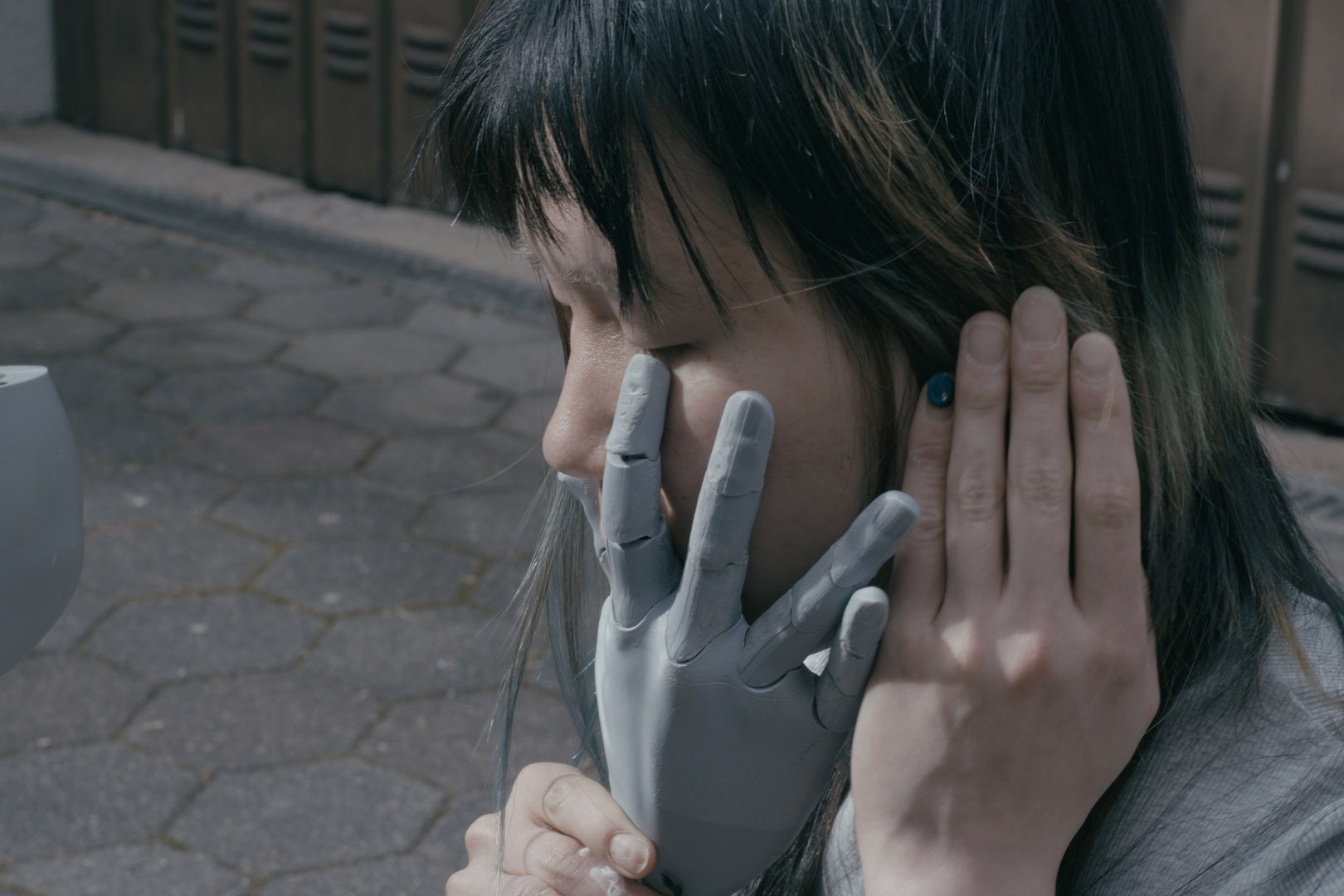
manipulating puppets and the representation of emotion. A puppet created from a
3D scan of the artist’s face moves in response to the performer’s gestures,
appearing as one of the agents through which intersections of emotion and
memory are explored.

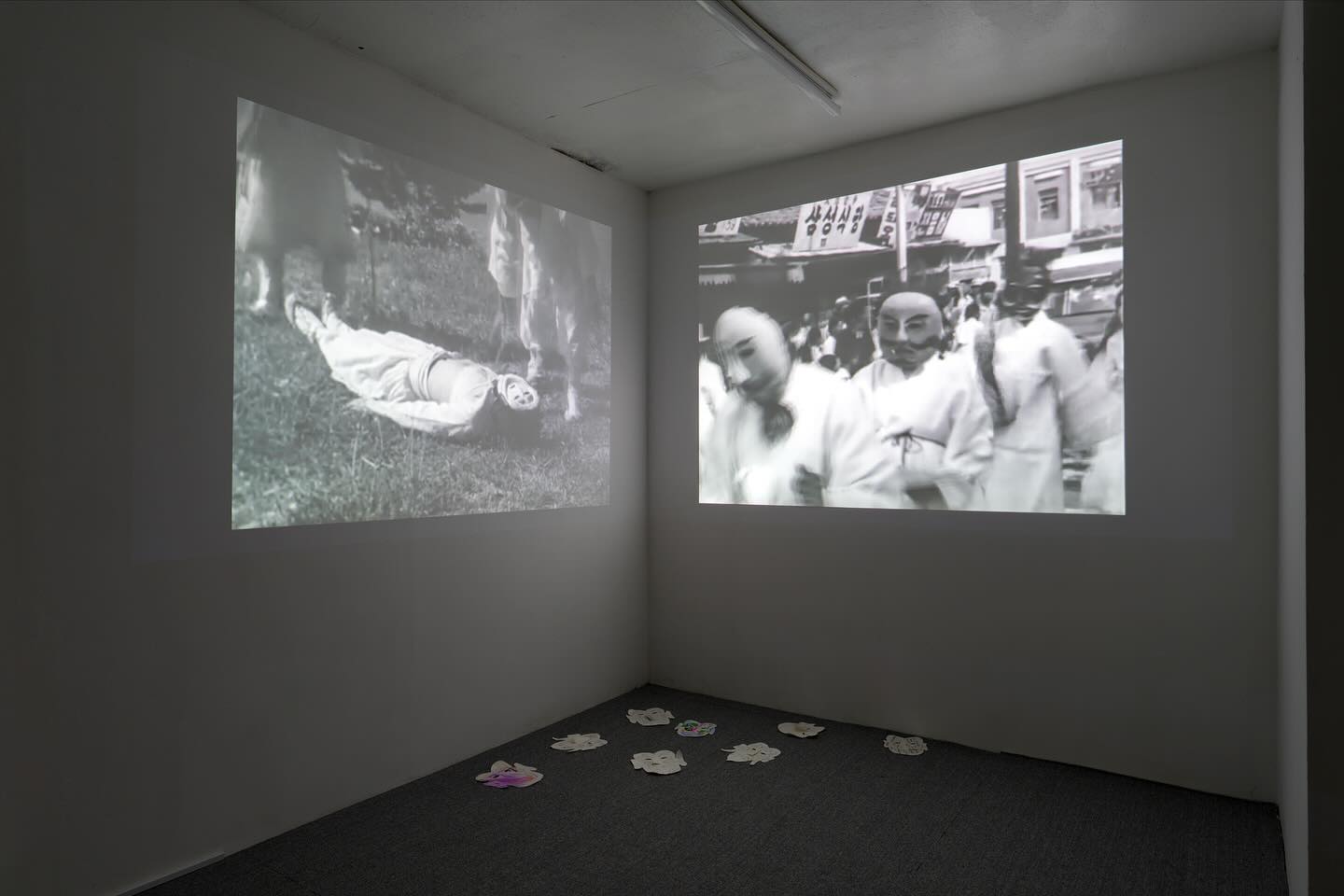
Subsequently, Eunju Hong’s exploration of
puppetry was further expanded in the context of Korean traditional theater
through her solo exhibition 《Shadow Play》 at Faction, Seoul. The exhibition originated from a critical
awareness of what she identified as the “absence of Korean traditional
theater,” a realization that emerged during her research into puppetry, and
traces the remnants of Korean traditional puppet theater that disappeared after
the Japanese colonial period.
Rather than attempting to simply reenact or
restore a forgotten tradition, the exhibition summons a sensory narrative onto
the stage in which bodies and objects mediate one another—much as invisible
beings such as monsters, ghosts, and spirits have long embodied human emotions
and conflicts over time.

To this end, the artist stages the
exhibition space like a theatrical set interwoven with puppets, video, sound,
and archival images, constructing scenes in which reality and unreality, the
present and the past, intersect. Within this shifting terrain—where the
boundaries between puppet and performer, character and actor continually
waver—the performances explore the crossings of emotion and memory,
reconfiguring a vanished tradition of theater through the sensibilities of the
present.

In this way, Eunju Hong’s practice—woven
from fragmentary images and incomplete shards of emotion—asks us to reconsider
the boundaries of “being human” not through logical comprehension, but through
intuitive confrontation. By unfolding the collisions between technology and
emotion, matter and memory as a form of poetic tension, her work brings to the
surface multilayered networks of relations that lie beneath or are concealed
within the present moment. In doing so, it prompts questions such as, “Where am
I positioned?” or “What is it that I am seeing?”
“Technology was invented to improve life,
yet at the same time it reveals human fragility and violence. I seek to create
a poetic tension that emerges from the collision between technology and
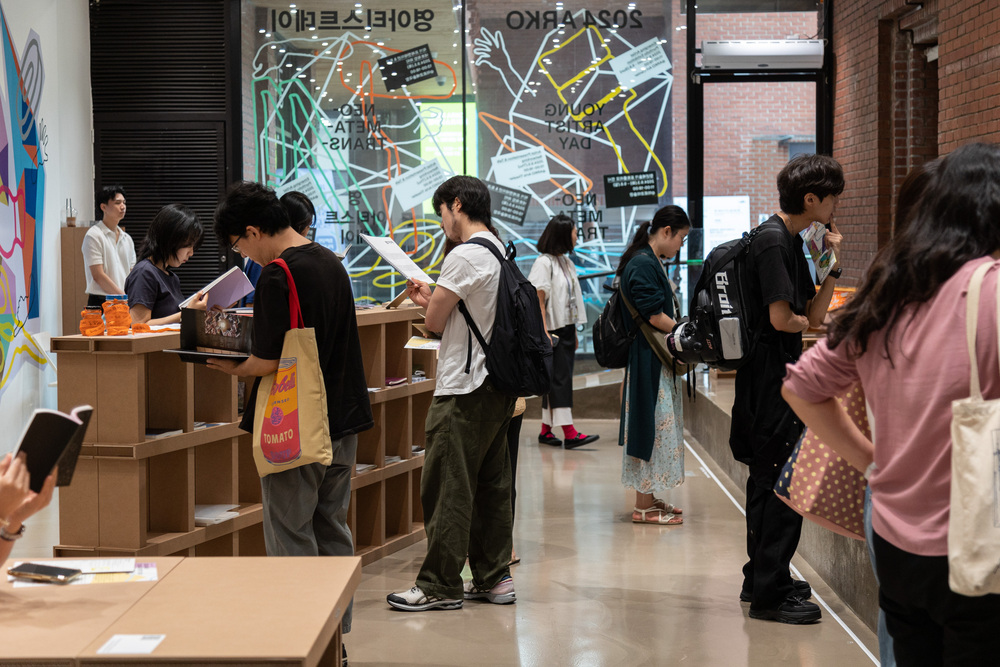
emotion, matter and memory.” (Eunju Hong, from the interview at 2025 ARKO DAY)

Eunju Hong studied Fine Arts at the Korea
National University of Arts and later attended the Academy of Fine Arts Munich
as a DAAD master’s scholarship recipient. Her solo exhibitions include 《Shadow Play》 (Faction, Seoul, 2025), 《She seemed devastated, when I was weeping with Joy: A story that
ends from the beginning》 (Apartment of Art, Munich,
Germany, 2025), 《Suture: Rewired》 (Arcade Seoul, Seoul, 2024), and 《Joy of
the Worm》 (Diplomausstellung,AdBK Munich, Germany,
2023).
She has also participated in numerous group
exhibitions, including 《Bayerischer Kunstförderpreis》
(Galerie der Künstler*innen, Munich, Germany, 2025), 《The 3rd Two》 (Galerie der Künstler*innen,
Munich, Germany, 2024), 《Sterling Darling》 (Kunstarkaden, Munich, Germany, 2023), 《LASSITUDE》 (Goethe-Institut, Paris, 2022), 《The Postmodern
Child》 (Busan Museum of Contemporary Art, Busan, 2022),
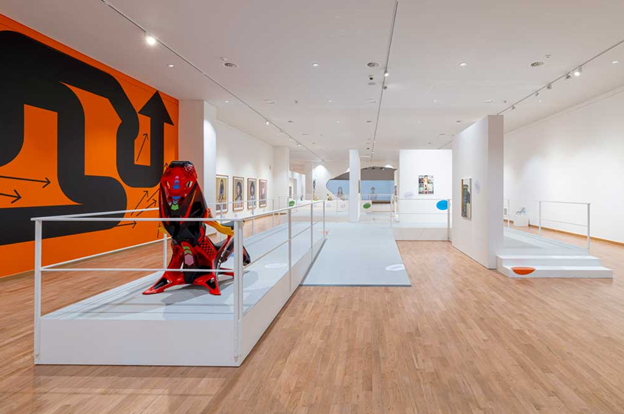
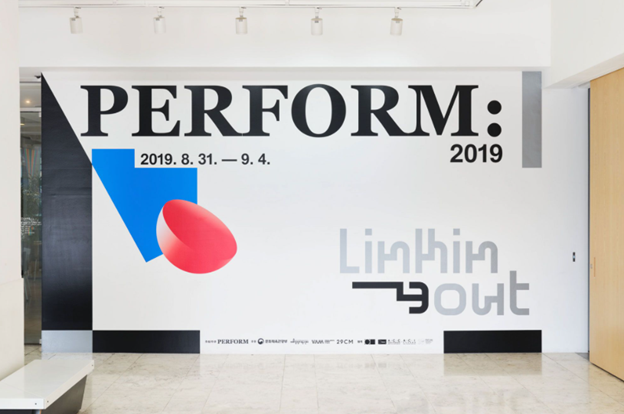
and 《PERFORM 2019》 (Ilmin
Museum of Art, Seoul; Asia Culture Center, Gwangju, 2019).
In 2024, Hong completed a residency at
Taipei Artist Village. She is the recipient of the ‘Media Art Prize’ from the Kunststiftung
Ingvild und Stephan Goetzand the ‘Bayerischer Kunstförderpreis - Bildende Kunst
(Bavarian arts and literary prize)’ awarded by the Bavarian State Ministry for
Science and Art.