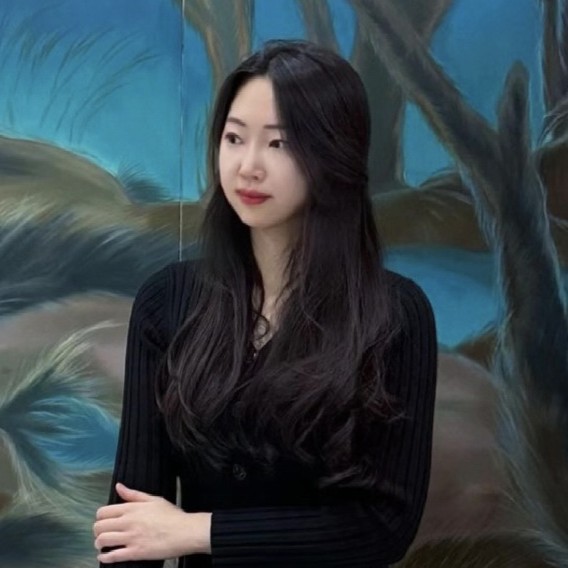
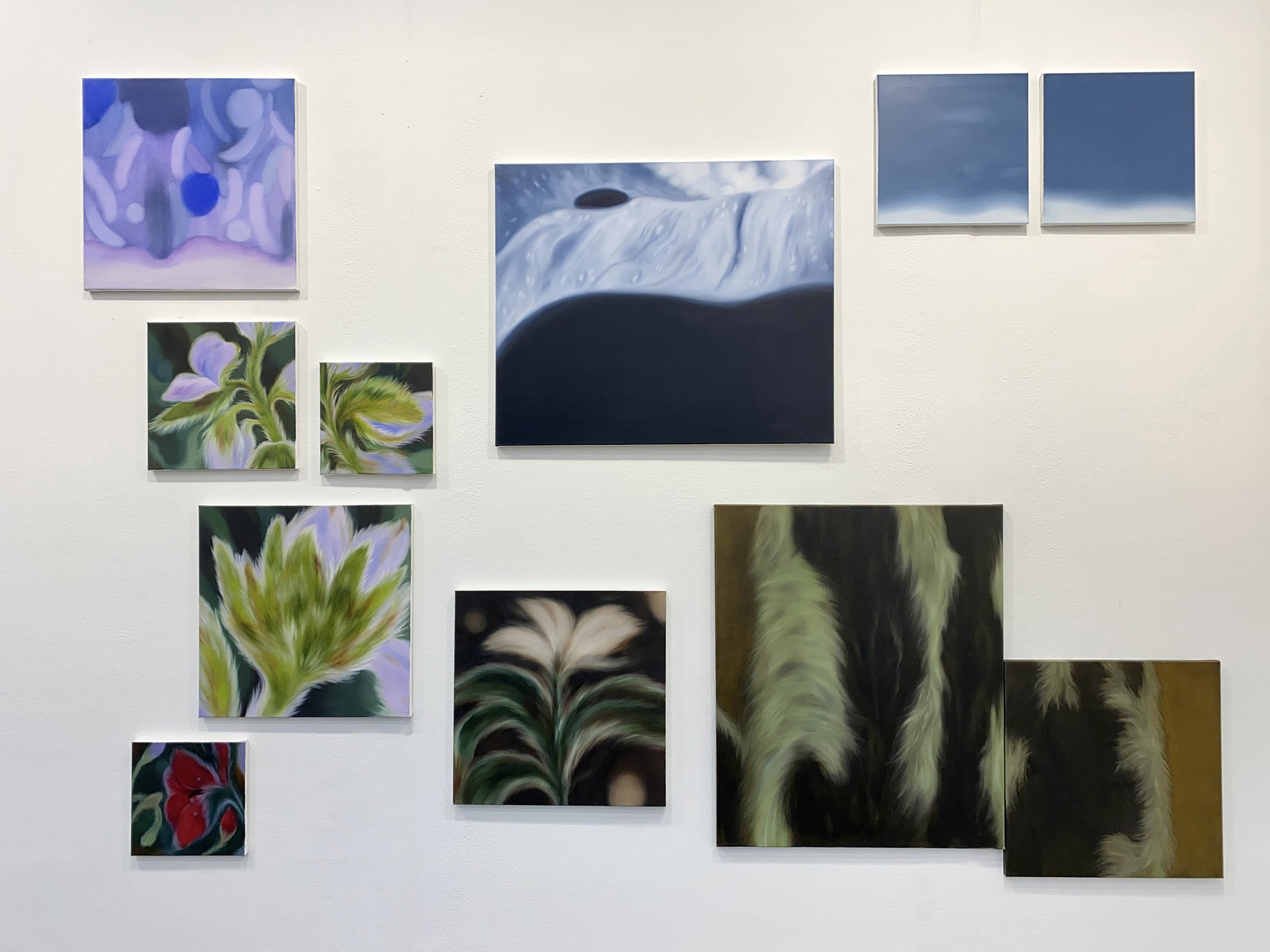
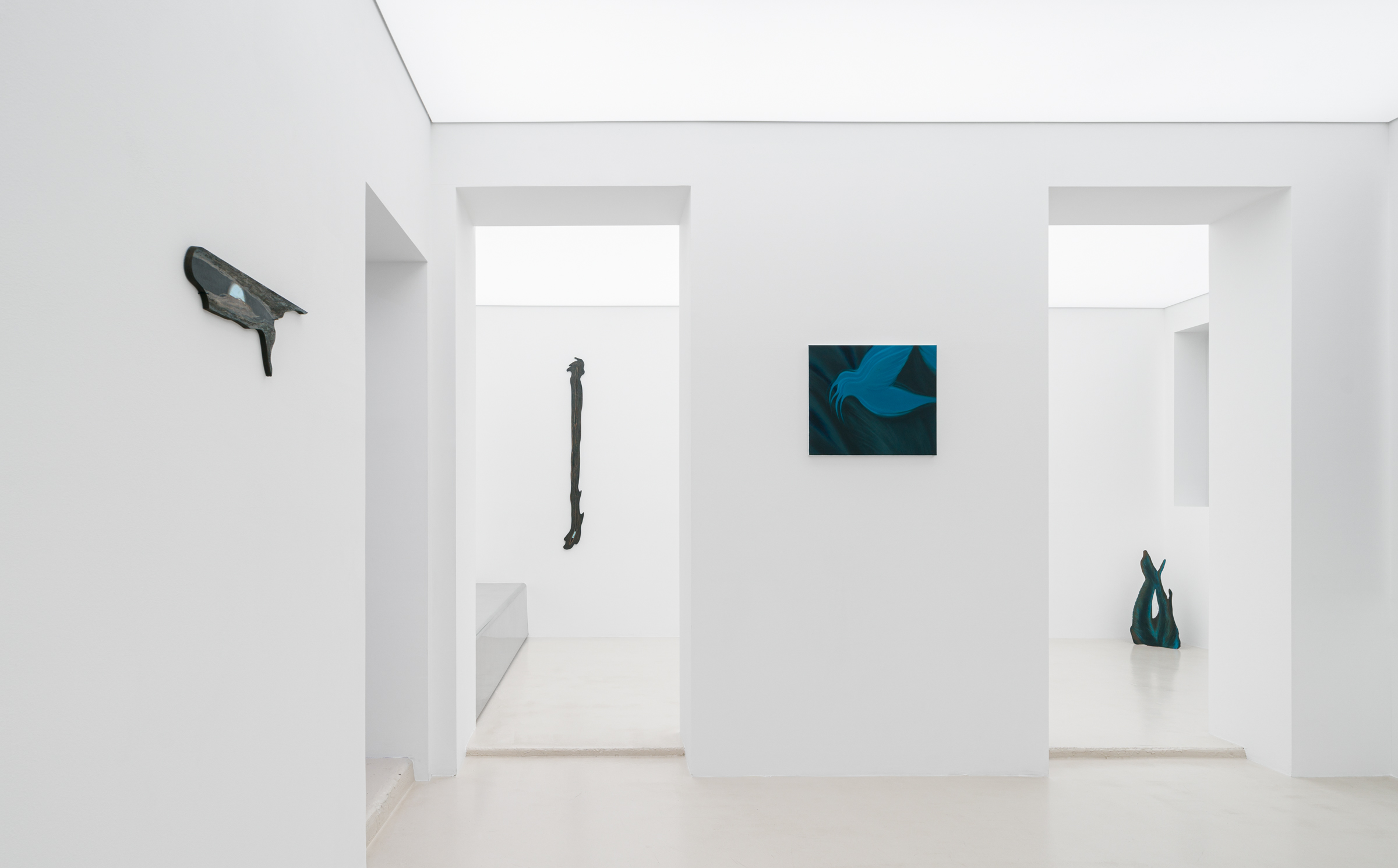
Installation view of 《BENEATH BRANCHES》 (WWNN, 2025) ©WWNN

On the Forest and the Sensory

* (…) She began writing words on the back pages of her diary. They had no purpose, no context—just fragments she found striking. Among them, the one she cherished most was “forest.” To her, the Korean word resembled the silhouette of an ancient tower. The consonant ㅍ formed the base, ㅅ the upper structure of the tower. She liked how, when pronouncing ㅅ–ㅜ–ㅍ, her lips closed first, then a slow, careful breath slipped out. Drawn to a word completed by the closure of lips and silence—a word whose pronunciation, meaning, and shape were all wrapped in stillness—she wrote it again and again. (Han Kang, Greek Lessons, Munhakdongne, 2011, p. 14.)

* In the Middle Ages, while men went off to their lord’s wars or the Crusades, rural women often spent months entirely alone in the forest, isolated in small huts. Consumed by a loneliness unimaginable to us now, they began speaking to trees, plants, and wild animals. In other words, they rediscovered a talent—perhaps reclaimed is more accurate—for communicating with nature, a capacity extending back to prehistoric times. People called these women witches, and they burned them. (Marguerite Duras, Michelle Porte, Les Lieux de Marguerite Duras, trans. Baek Sunhee, Musintree, 2023, pp. 13–15.)

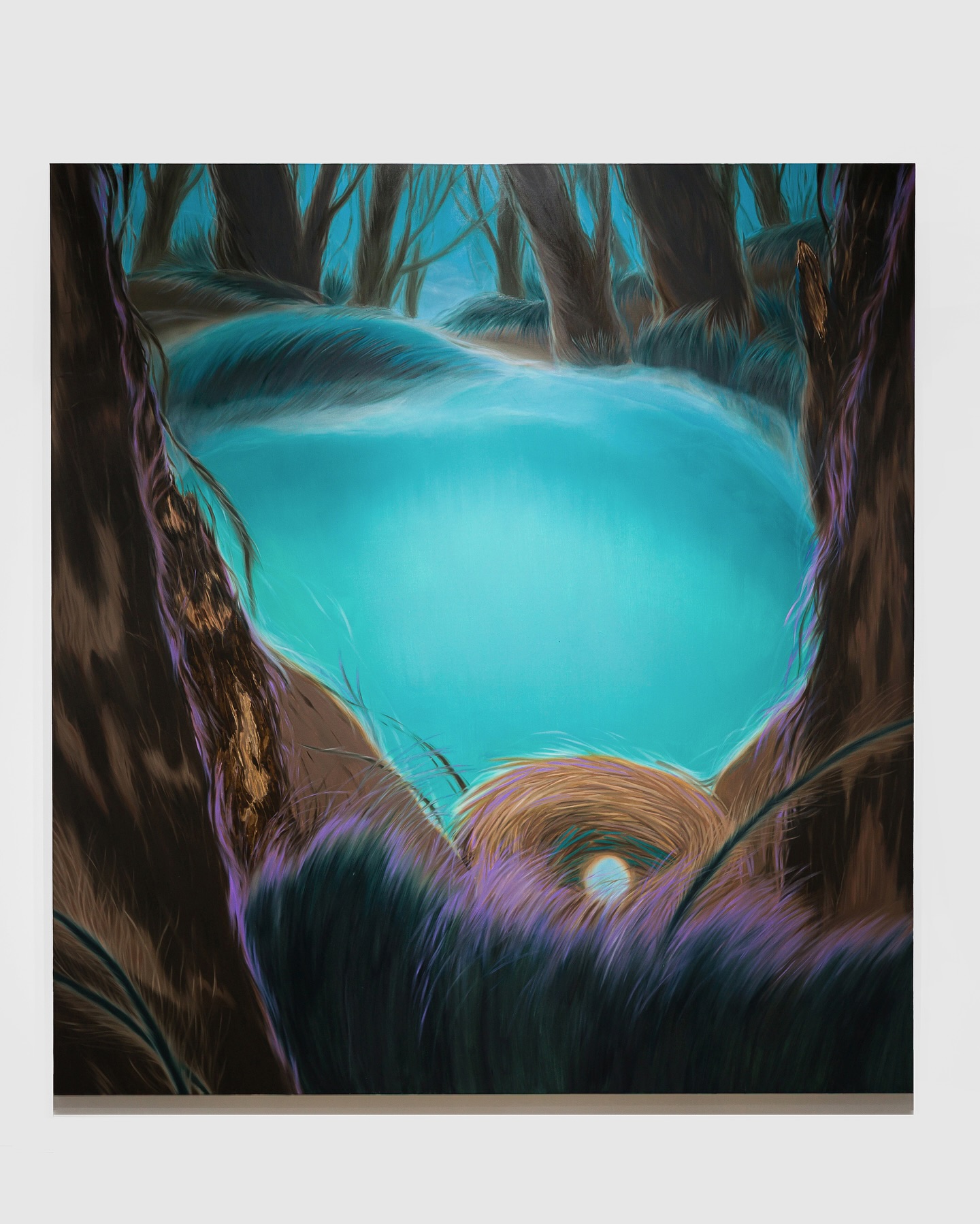
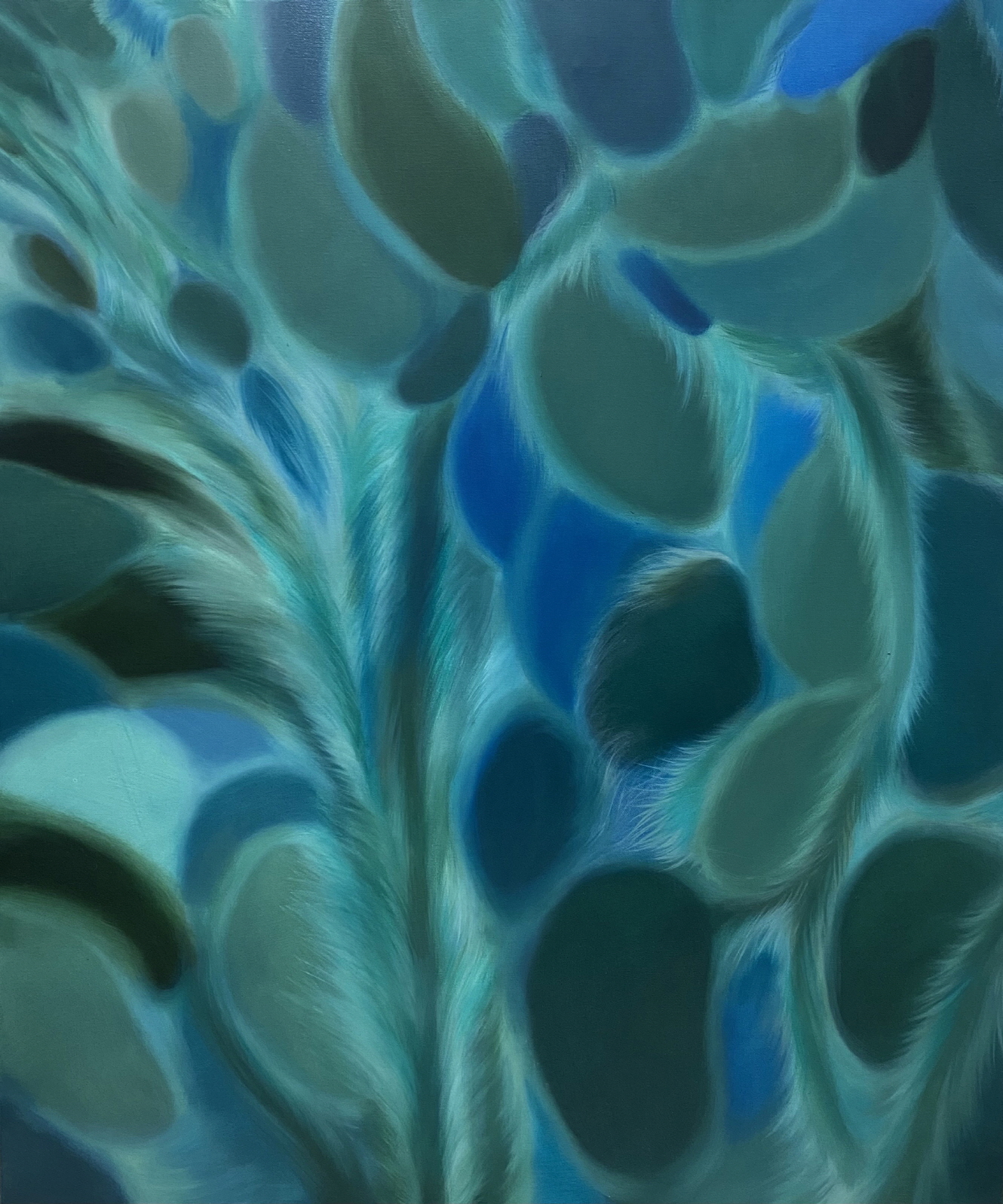
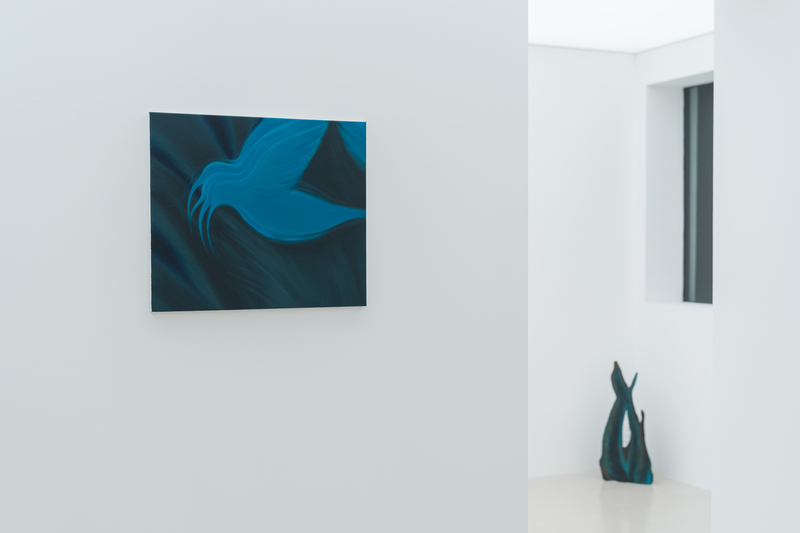
* Nesting in the Blue Darkness (2025) depicts the desolate hush of a lifeless forest. Like the mottled surface of an aged face, the season covering the woods in deep earth tones is winter. This painting, which appears to be entirely enveloped in a cool darkness, releases an uncanny texture—an outflow of pigment separated from its supposed referent—through waves of blue that pierce the visual boundary of the image. The arrangement of dried branches, bare trunks, and the overly packed layers of hay between them evokes the presence of something lying in ambush within the forest.

At a certain moment, the brown textures—appearing almost detached from the scene and spilling across the canvas—shift, as if by magic, into the crouched form of an animal flattened into the forest floor. Whether this form originates from the forest or from within the painting itself becomes impossible to distinguish.

Installation view of 《BENEATH BRANCHES》 (WWNN, 2025) ©WWNN

Greem Kim’s paintings reveal themselves to be acts of “drawing from observation,” grounded in the external landscapes she encounters. This seemingly simple act—drawing what is seen—introduces a fissure of magic into her perception and imagination, as though she becomes gradually aware of encountering another presence. Holding a brush dipped in brown pigment and approaching the white canvas, her accumulation of natural, unforced, flexible lines echoes the motions her body measured while walking through the forest.

The uncanny sensation of invisible webs brushing against her face as she moves through dense woods emerges in the supple, ambushing lines of her compositions. These lines mediate sensory ruptures—moments of noticing a ghostly presence, of a decentered subject, of a body lingering at the threshold of reality. Such nonlinear worlds, built from the tension and interconnection of these entities, surround her canvas.

* In another work, a nest discovered during her daily walks on the hill behind her home becomes a recurring motif. The nest, now one of the most frequently appearing subjects in Greem Kim’s recent paintings, condenses multiple perceptual and emotional experiences from her high-altitude treks. Her shift from depicting unfamiliar foreign landscapes to closely observing the small mountain behind her neighborhood began, perhaps, with the event of witnessing the natural environment surrounding her grandmother’s home in Tongyeong at a particular season. The sensory and emotional impact of her grandmother’s passing prompted Kim to reconsider the meaning of painting landscapes and seems to have initiated a profound transformation.

Between the fallen tree trunks—like a makeshift hut built beneath the roof of a dead tree—lies a bird’s nest, and at its deepest point sits a single egg. The scene is enigmatic. Along the right edge of the canvas, between the vertically painted tree trunks, appears the outline of a blue bird, and this blue expands outward to permeate the entire surface. The central blue area—whether ground, water, grass, or ice—remains indistinguishable.

It could be a smooth surface reflecting a shadow, or a darkness temporarily tinted by light; perhaps it is the same deep earth-colored darkness filling the forest. This chain of dual sensations—between shadow and light, terrain and void—unfolds into a forest that begins in wonder at nature yet transforms into a landscape of perceptual mutation, revealing the inevitability of painterly creation.

To me, the phrase “observer of the forest,” when filtered through Greem Kim’s paintings, resonates like Henri Lefebvre’s idea of the “rhythmanalyst.” It invites consideration of bodily sensation while walking in the forest, the “complex state of motion” between subject and object, and the cognitive shift that occurs when one becomes aware of such presences.

Lefebvre writes, “The rhythmanalyst does not need to leap from the inside of the observing body to the outside. Rather, he listens to and interlinks the rhythms within and beyond the body, using his own rhythm as a reference. Through this process, the external becomes internal, and the internal becomes external.” (Henri Lefebvre, Rhythmanalysis, trans. Jeong Kiheon, Galmuri, 2013, p. 91.)

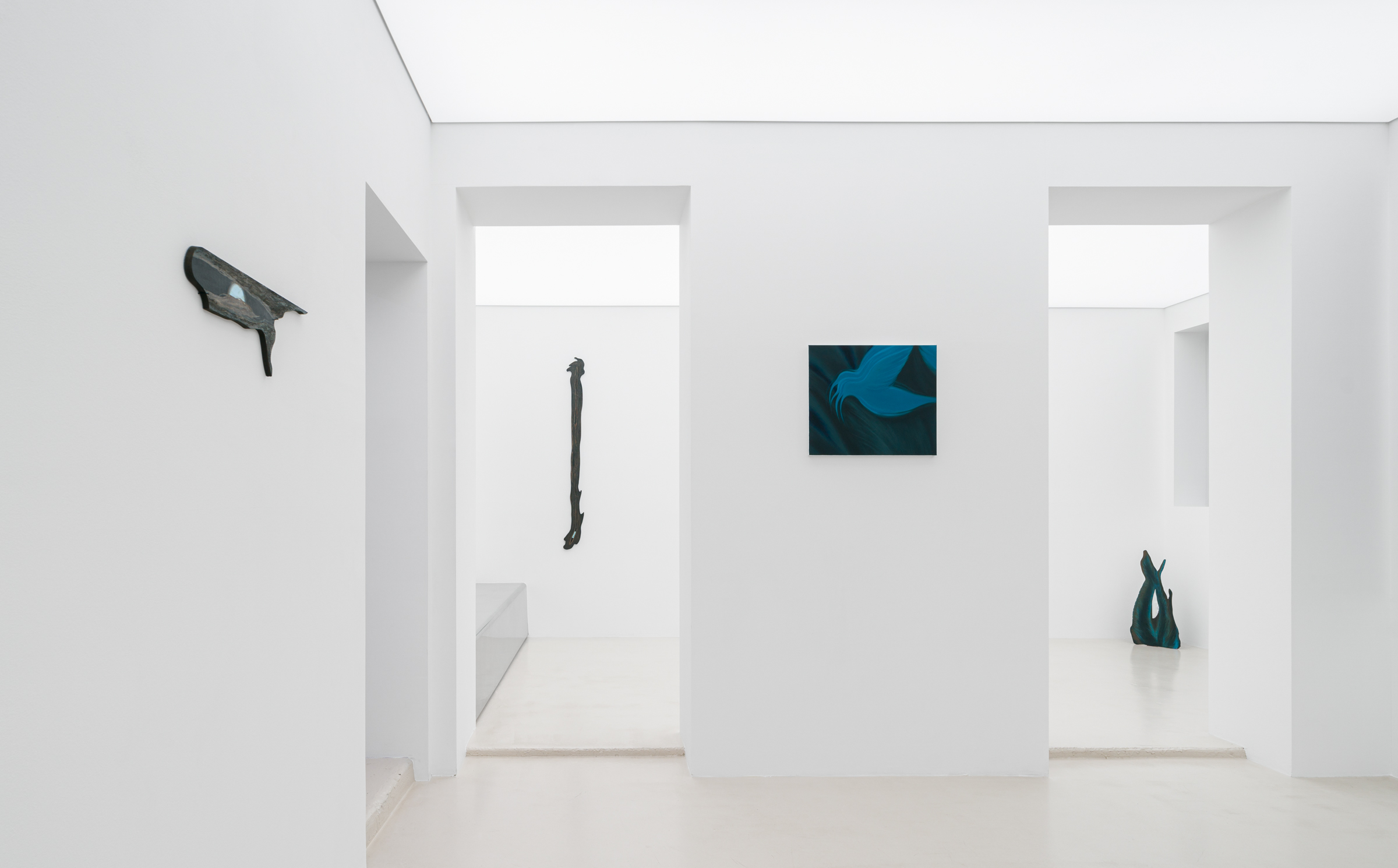
Installation view of 《BENEATH BRANCHES》 (WWNN, 2025) ©WWNN

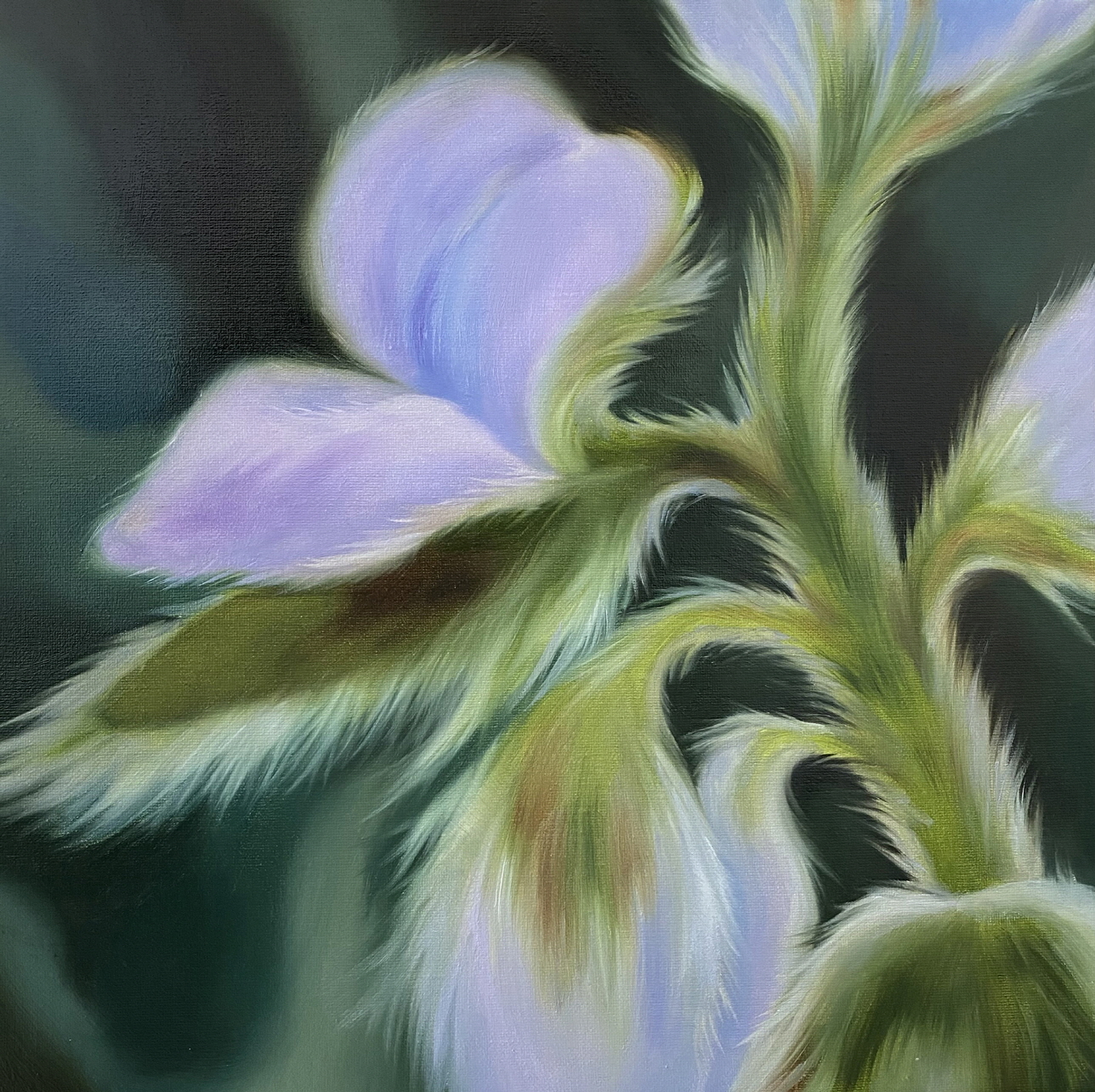
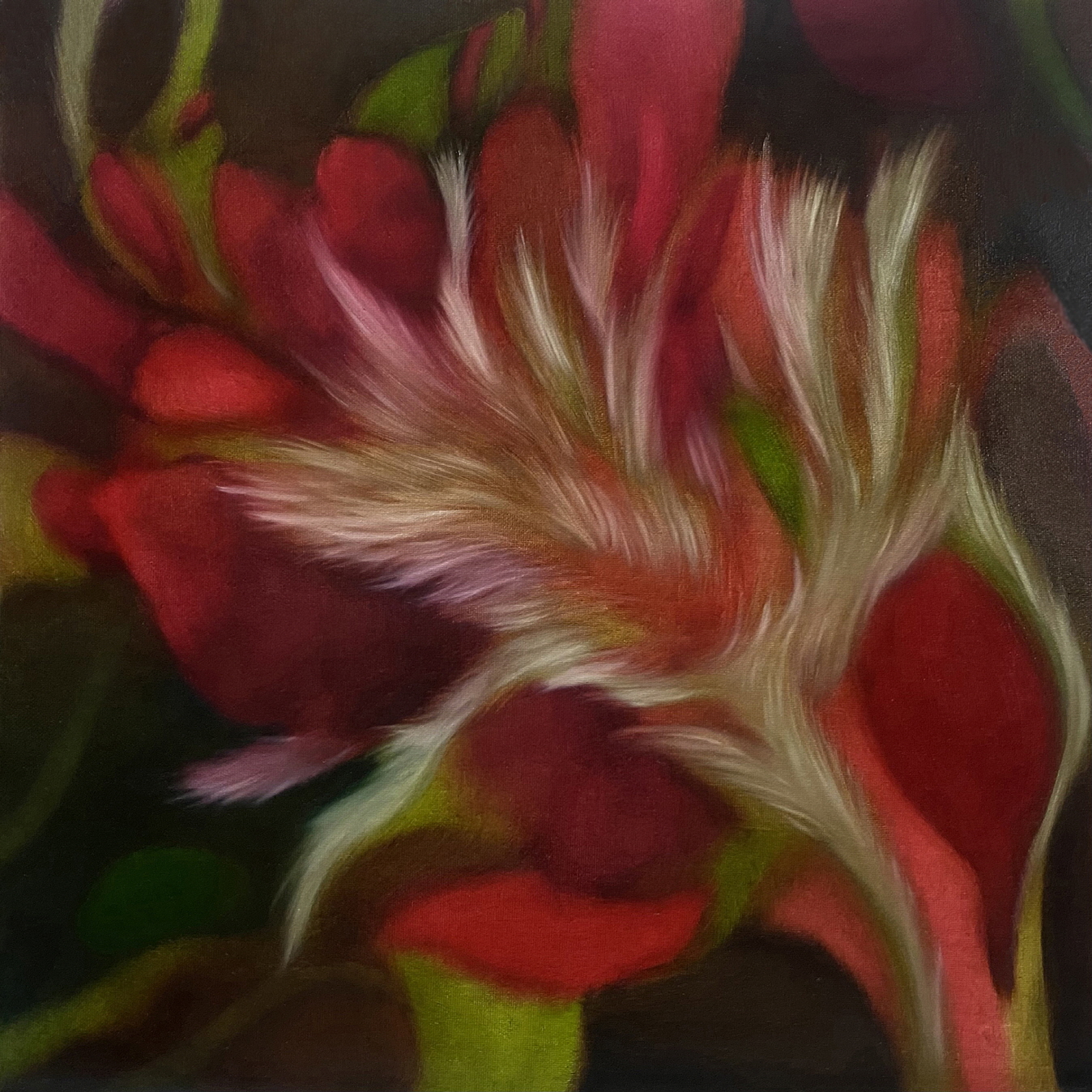
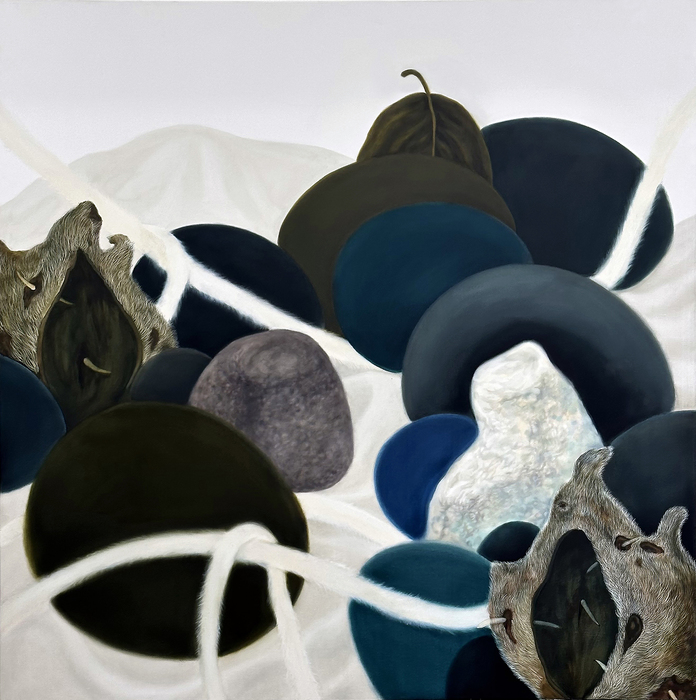
Let us return to the work. At some point, Kim became captivated by the strange tactile qualities of alpine plants—their fur-like softness—and began painting images where vegetal forms merged with animality. Until We Meet Again (2025) is one such example. Though it is a flower, every part of it—stamens, petals, stems, and leaves—is rendered with fine hair-like lines, as is the surrounding environment of grass, trees, earth, and sky. By translating the tactile sensations evoked by alpine flora into the act of painting, Kim generates surfaces woven densely with linear textures.

She soon turned toward the themes of “forest” and “nest,” exploring the sensory continuity shared by her repetitive, line-based drawing process (the body) and the landscape she depicts (the subject). The direct catalyst for this shift was the forest in Tongyeong permeated by her grandmother’s death—a place where Kim witnessed the earth-toned darkness akin to the death of an animal and sensed the presence of regeneration within it. The shadowy depths of the forest, the primordial state of undifferentiated life, and the mysterious blue luminosity that evokes the origins of all living things—these become the perceptual logic of her imagination.

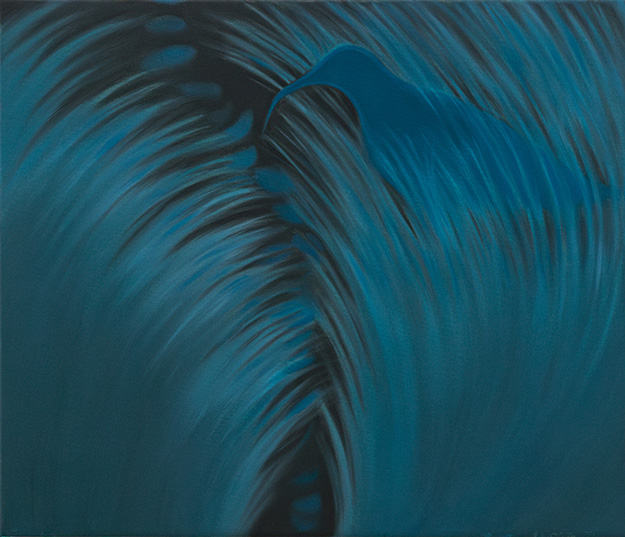
As seen in The Bird Crying That Night (2025), Kim’s interest in bowerbirds led her to bring birds directly into the forest of her paintings—the very creatures that had provided conceptual grounding for the sensorial density of her drawn lines. Beyond the bird’s abstract curves, she focuses on the creature’s behavior: its repeated opening and closing of wings, mimicking metamorphosis, and its gathering of discarded forest debris to build a nest. This “nest-building” mediates life and death, death and life. For Kim, the process becomes a perceptual entity that merges visual and tactile sensation—a moment in which nest-building and painting become indistinguishable acts.

Kim notes that she has been “interested in the relationship between humans and nonhumans, studying ways of understanding humanity through the modes of life expressed by nonhuman beings.” She further explains that she explores the “biosphere as a place where humans, plants, and minerals coexist without essential differences, mutually dependent, where organic and inorganic entities are blended.” Though the context differs, Cézanne’s approach to perception offers a parallel: his painting proposed a fluidity between subject, object, material, and sensation—not perception rooted solely in the human subject, but a “process in which the subject empties itself and becomes the object.” (Jun Youngbaek, Cézanne’s Apple, Hangil Art, 2008, p. 206.) The rhythmanalyst that Lefebvre describes likewise integrates with the rhythms of the world.

Where the Mountain Lives (2025) exemplifies Kim’s distinctive gaze upon the forest. From the forest’s edge, the observer’s view moves toward its depths—passing through the earth-toned darkness and the rough textures of dead trees toward a world of soft, pliable linear forms. These forms align with her brushwork, revealing a sensory transition that moves from the margins of the canvas toward its center. It resembles the body of an animal, or perhaps the silent signs rediscovered by medieval women who communed with the forest—those whom others called witches.

Traversing the extremes of macro (forest) and micro (nest), of the living (bird) and the dead (branches), of darkness (brown) and light (blue), Kim seems to seek a painterly gesture capable of overturning the binary roles of subject and object. Much like the novelist who wanted to pronounce the word “forest” aloud just to imagine the image it carried, Kim pursues a pre-linguistic form, a form before form.

The forest Greem Kim paints carries, in relation to such imagination, a kind of memory—specifically, a memory of the body, and of the maternal body. It recalls the womb as a primal space of isolation where life and death coexist, where inside and outside are continuously connected, and where darkness and light, vision and touch collapse into one field. Like weaving a textile, arranging the dead vegetal lines with care, she produces a nest through actions that require the same duration as a magical wingbeat—revealing the logic of sensation at the heart of her work.

Building a Different Kind of Nest (2025) naturally leads to the next work. In the empty darkness of the forest—where she gives form to painterly textures and volumes as sensory entities—Kim draws visual gaps onto the surface of dead trees. Her metaphor of nest-building, the repeated and seemingly indifferent act of laying down lines, expresses her faith in the sensory possibilities that such repetition can produce. To “see” a painting, then, is not enough; one must “sense” it. As returning to the forest would mean noticing the bird’s movement or the crouching animal hidden within its shadows, sensing a painting requires intimate entanglement between subject and object.

 
- Ahn So-yeon (Art Critic)

References