
Moonjung Hwang (b. 1990) has been exploring the subtle phenomena that occur in everyday life with her characteristically delicate perspective, focusing on the relationships among the multilayered elements that make up a city.
 
In particular, she defines the architectural structures, nature, and surrounding environments—elements of the city other than humans—as “non-human.” Through her research on these non-human entities, she investigates the spaces reflected in her work, examining the points of connection between the human and the non-human.


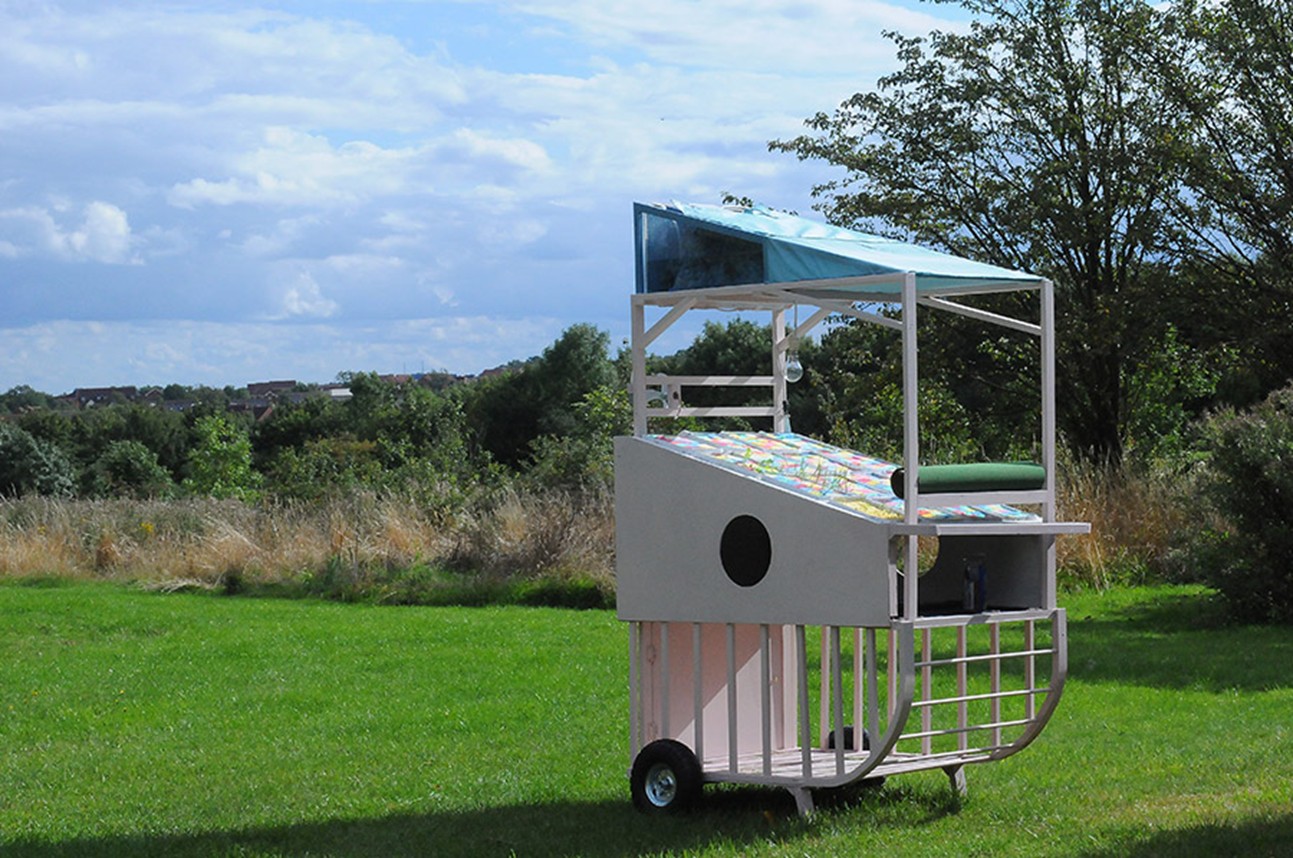
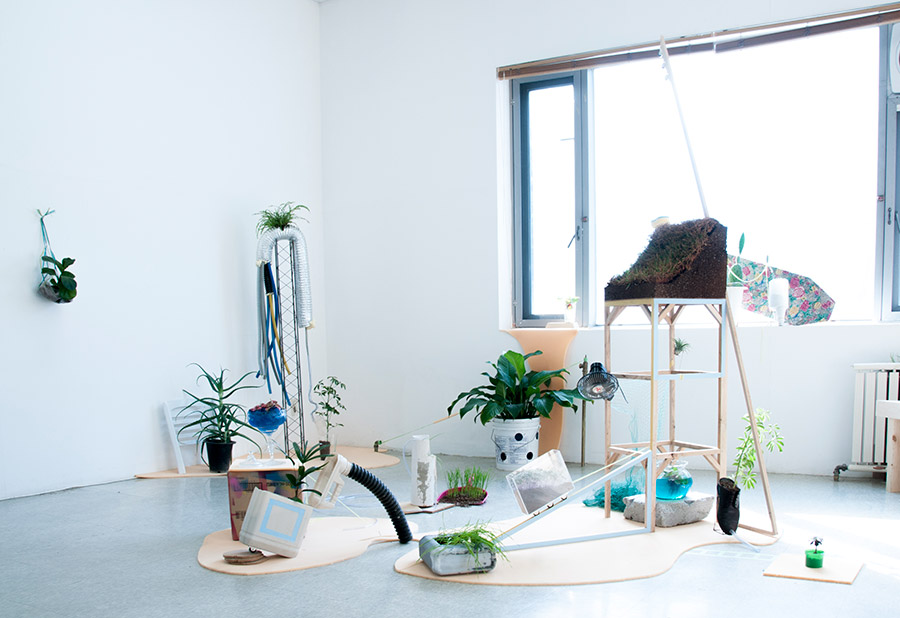
Moonjung Hwang, Recycled gardening, 2016, Objects, plants, tape, wood, Dimensions variable ©Moonjung Hwang

The artist’s interests stem from her childhood experiences of living on the outskirts of the city. She recalls having once admired the planned landscapes of downtown areas, yet finding herself more drawn to the unexpected irregularities and stories unfolding in peripheral spaces.
 
Having long observed the plants and animals inhabiting the city’s edges, the artist began focusing on the urban environment and the nonhuman after moving into the city in 2016.
 
For her, the city is a site where intriguing clashes occur between the old that strives to survive and the new that continuously pours in. In particular, she is captivated by the narratives created by the monstrous proliferation of buildings and the natural elements that slip into the gaps between them.


Moonjung Hwang, The way three trees live together, 2016, Wood, pine tree, soil, Dimensions variable ©Moonjung Hwang

Moonjung Hwang identifies the structures and orders formed by the diverse and multilayered relationships that make up a place, and visualizes them in the form of functions. Her practice primarily consists of projects that employ a variety of media, including material properties and compositions grounded in different narratives, as well as processes that reinterpret their subjects.
 
Among the many elements that constitute the city, Hwang has consistently been interested in the nonhuman. For example, in The Way Three Trees Live Together (2016), she presents the curious ways in which urban plants inhabit their environment, while in Feeding Fresh Food (2015), she operates a lift designed to deliver food to birds that have built their nests at high elevations.

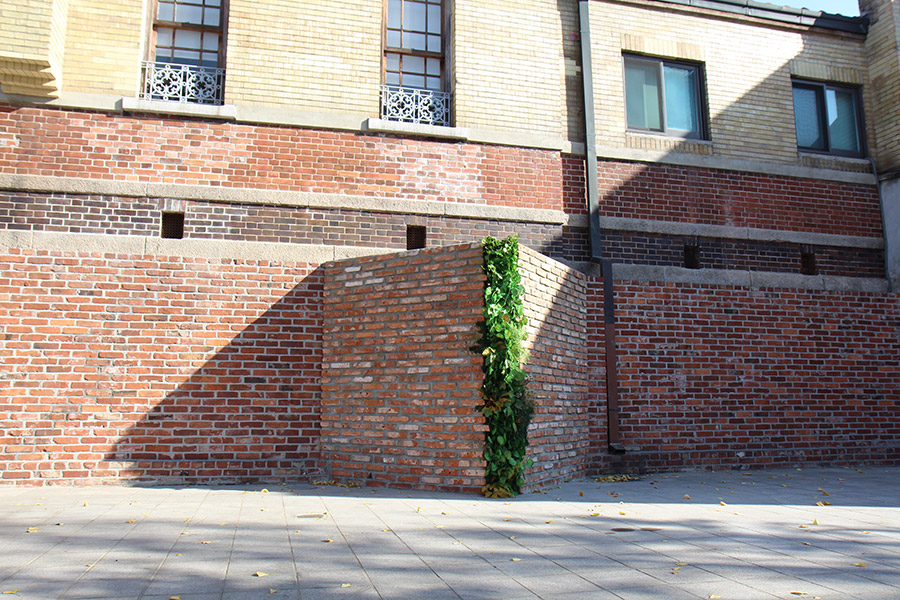
Moonjung Hwang, Beyond between Beyond_Hongyemun, 2017, Brick tiles, fake plants, cement, wood, paint, Dimensions variable ©Moonjung Hwang

Meanwhile, in her series ‘Beyond between Beyond’ (2014–), she produced stones from the city and the walls built from them. In this work, Hwang constructed an imaginary wall using bricks and cement, allowing a patchworked narrative of the city’s past to flow out from behind it.
 
Stones and walls—formed before humans and destined to outlast them—store and transmit the city’s historical unconscious. This body of work expands into archival installations across different regions, mediated through the records of each city, the artist’s own imagination, and a scripted narrator who recites these stories. In doing so, it traverses the space between the virtual and the real, making visible the lost collective memories and experiences that lie in between.

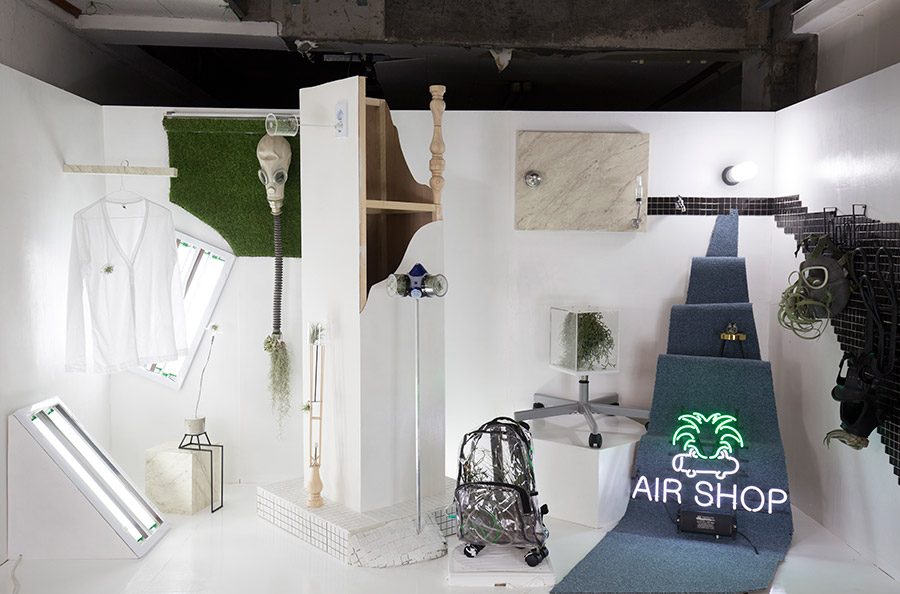
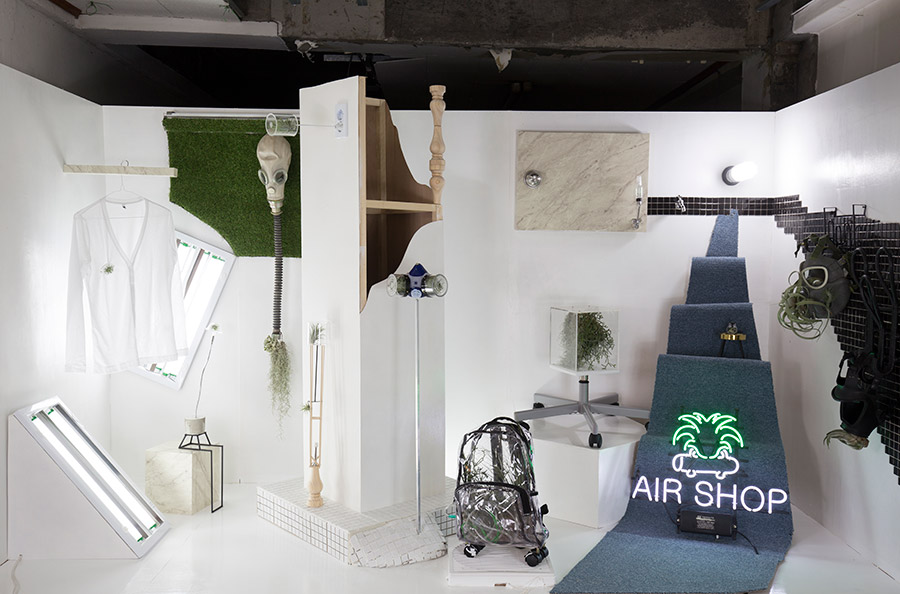
Moonjung Hwang, AIR SHOP: Plant Mask Series, 2017, Mixed media, 3050x1220x1900cm ©Moonjung Hwang

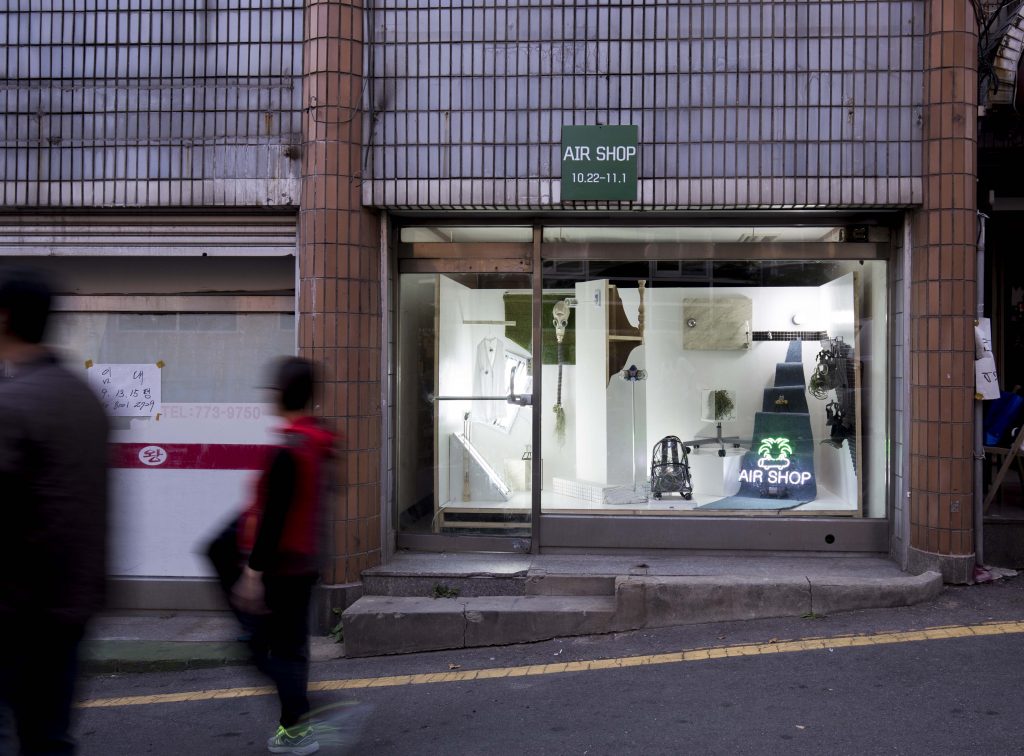
In AIR SHOP: Plant Mask Series (2017), Hwang also addressed the serious issue of urban air pollution by reflecting the absurd conditions of consumer society through video, installation, and performance. This reflects the artist’s contemplation of the present day, where, as air pollution has intensified, the buying and selling of oxygen—once dismissed as an unrealistic fantasy a decade ago—has become a reality, accompanied by a flood of various countermeasures.


Moonjung Hwang, AIR SHOP: Plant Mask Series, 2017, Mixed media, 3050x1220x1900cm ©Moonjung Hwang

The artist focused on how pollutants, which had long existed discreetly in the city, became increasingly visible as their severity grew, prompting a sense of crisis among people. She notes how the media amplifies this anxiety while the capitalist market responds by flooding society with related products.
 
Although AIR SHOP: Plant Mask Series appears to offer a solution, it is in fact presented as a device that reveals human psychological fear and the operational mechanisms of capitalist society, using air-purifying plants. The “plant masks” the artist created take the form of low-tech gas masks combined with air-purifying plants, unrelated to contemporary genetic engineering.
 
Within a space staged like a shop, these masks are promoted as groundbreaking products, accompanied by a video reminiscent of today’s home-shopping broadcasts designed to exaggerate and provoke consumer desire. In this way, the artist rearranges issues arising within individuals and society through a contemporary, rational, and economical lens, transforming them into works of a distinctive form.


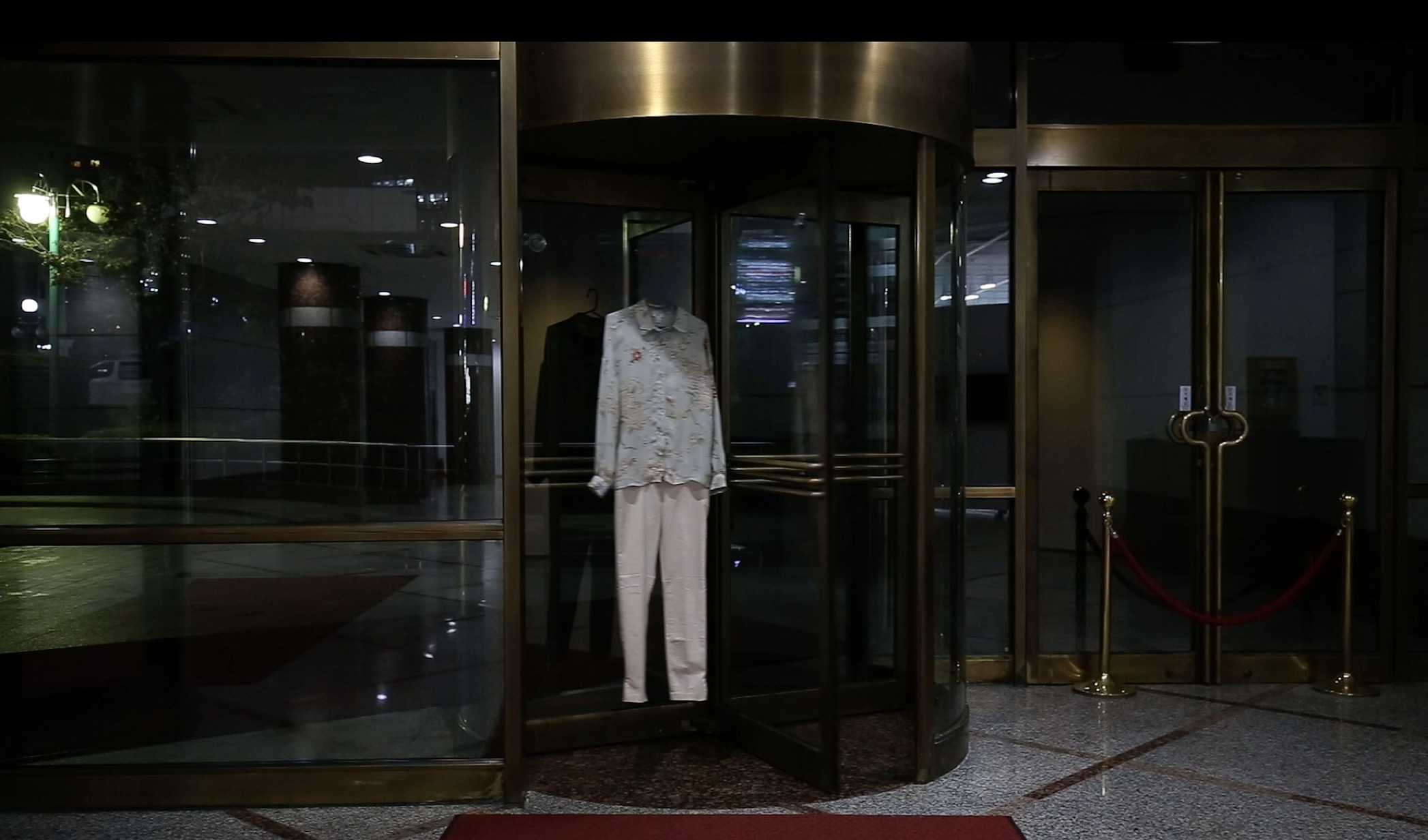
Moonjung Hwang, Non-Affection for the City_Track, 2018, Single-channel video ©SONGEUN

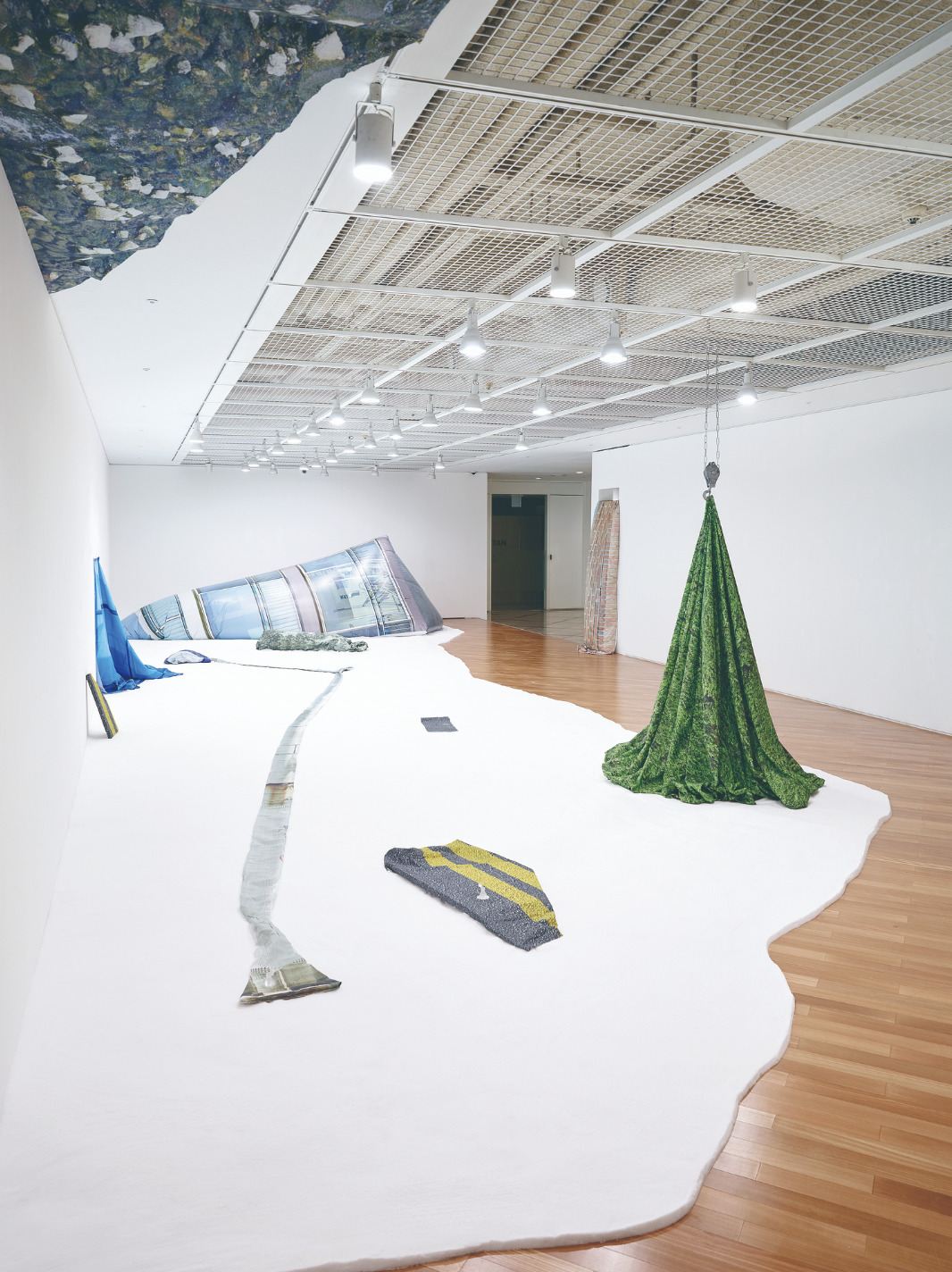
In her 2018 solo exhibition 《Non-Affection for the City》 at SONGEUN Art Cube, Moonjung Hwang attempted to encompass the narratives unfolding within the urban ecosystem throughout the entire exhibition space.
 
At the entrance, the work Non-Affection for the City_Track (2018) presented a video in which ordinary garments worn by contemporary office workers were caught on a revolving door and spun round and round. The repetitive rotation of the clothing overlaps with the mechanical routine of commuting that defines the lives of modern urban dwellers.


Installation view of 《Non-Affection for the City》 (SONGEUN Art Cube, 2018) ©SONGEUN

In addition, inside the exhibition space, materials commonly found in the city—glass used for building exteriors, boxwood shrubs typically seen in apartment complexes, small streams flowing through urban areas, and streetlights—were printed on banner fabric and installed throughout the space.
 
On one wall, a red brick wall was spread out, and in the farthest line of sight, an apartment building was placed at a slight angle—both made entirely of balloons. The balloons, which continuously expand and contract depending on the air contained within them, mirror the cycles of generation and disappearance that occur as various elements of the urban ecosystem interact with one another. In terms of materiality, they highlight the artist’s distinctively analog mode of expression and her keen observation of the urban landscape.


Installation view of 《Non-Affection for the City》 (SONGEUN Art Cube, 2018) ©SONGEUN

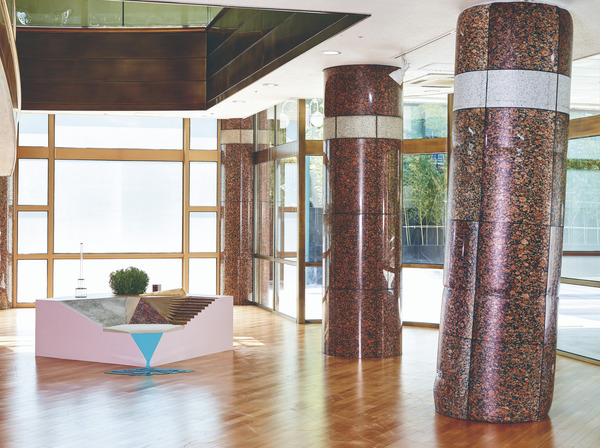
Meanwhile, Non-Affection for the City_Sampling (2018), a work that deals with the Samtan Building—the very building in which the SONGEUN Art Cube is located—extracts the architectural materials that make up the Samtan Building as a population and compresses them into a sculptural form. When viewed from above, the work appears flat, as though forming the floor and a planar surface; however, when viewed from the side, it takes on the appearance of a floor that has erupted upward, revealing its internal strata.
 
By turning the building’s often unnoticed materials—such as the wooden flooring of the exhibition space, the granite attached to the walls, the glass windows, the brass handrails, and even the boxwood used in landscaping—into sculptural elements and making them visibly prominent, the work amplifies the inherent characteristics of each component.


Installation view of 《Non-Affection for the City》 (SONGEUN Art Cube, 2018) ©SONGEUN

The beings that have remained in place for long periods are suddenly erased by new urban plans, only to be replaced shortly thereafter by new constructions. Yet these new elements, like their predecessors, are also destined to disappear someday. Such patterns of the city have become so familiar that we often fail to perceive change even as it recurs.
 
Moonjung Hwang’s ‘Non-Affection for the City’ quietly and continuously mirrors these urban cycles, prompting a renewed awareness of our surroundings and leaving traces of attachment to the forgotten cityscape.


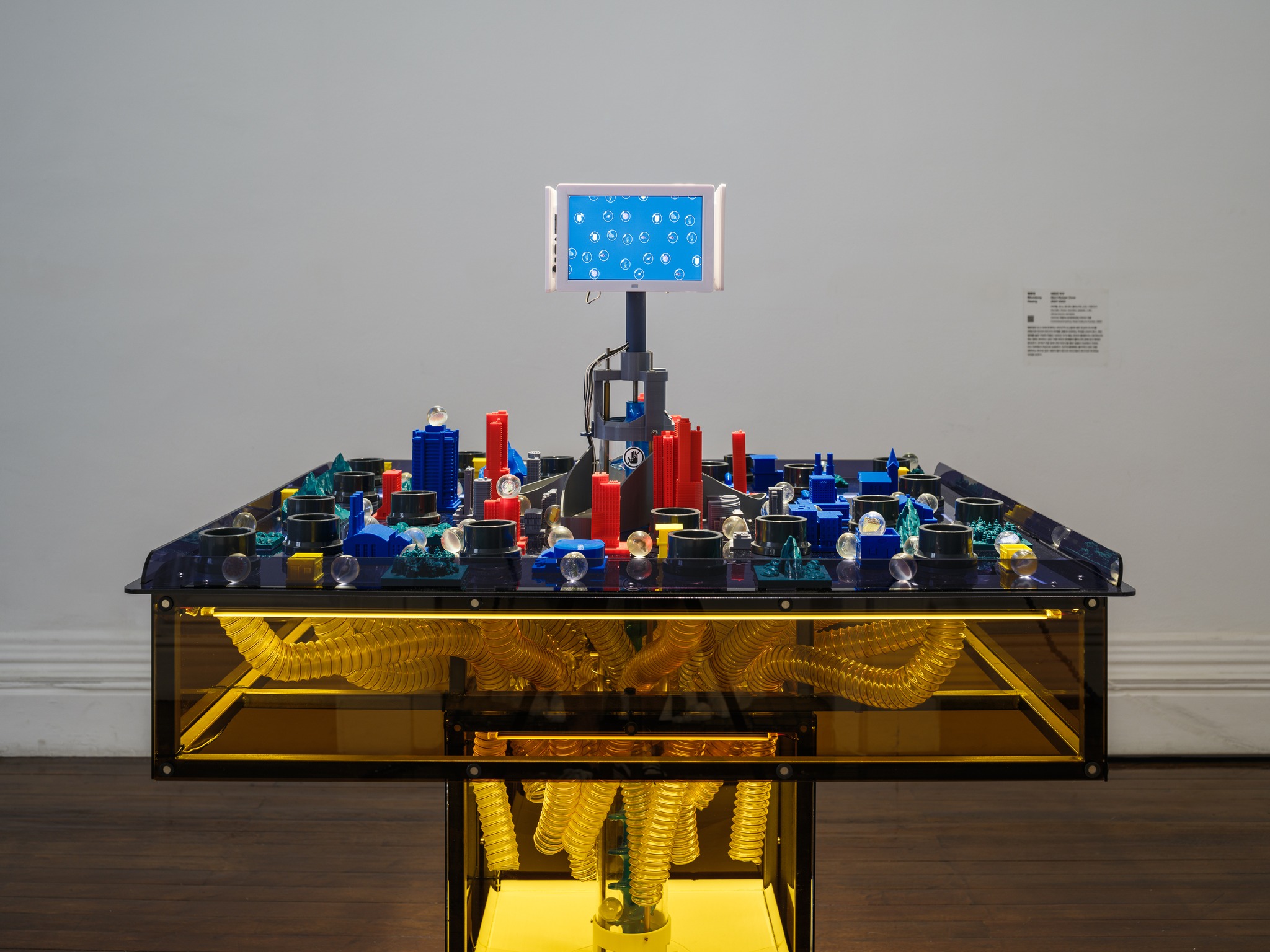
Moonjung Hwang, Non-human Zone, 2021-2023, Mixed media, Dimensions variable, Commissioned by National Asian Culture Center in 2021. ©Seoul Museum of Art

Subsequently, Moonjung Hwang revealed the countless “non-human” inhabitants of the city through her participatory work Non-human Zone (2021–2023), presented in the form of a board game.
 
She focused on the fact that while human-made urban systems attempt to eliminate non-humans—such as waste, cockroaches, mosquitoes, rats, weeds, and birds—these entities persist and reappear before human eyes because they often have longer lifespans or stronger reproductive capacities than humans.


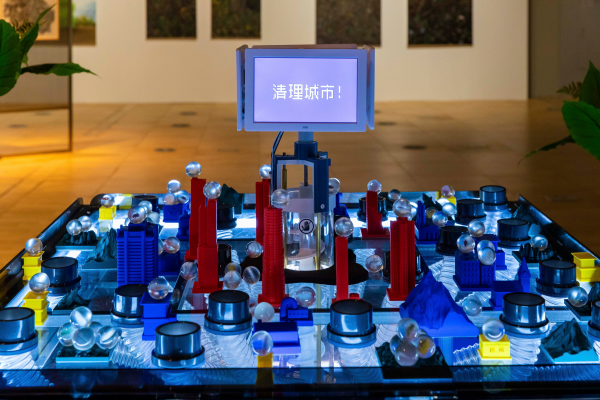
Moonjung Hwang, Non-human Zone, 2021-2023, Mixed media, Dimensions variable, Commissioned by National Asian Culture Center in 2021. ©ACC

In the resulting work Non-human Zone, viewers look down on a miniature city laid out on a game table and are given the directive to “clean the city thoroughly.” As they attempt to remove the non-human entities to an invisible underground world, the beings inevitably reemerge in the aboveground city. Through this process, participants come to recognize that these non-human inhabitants are forces with which humans must coexist.


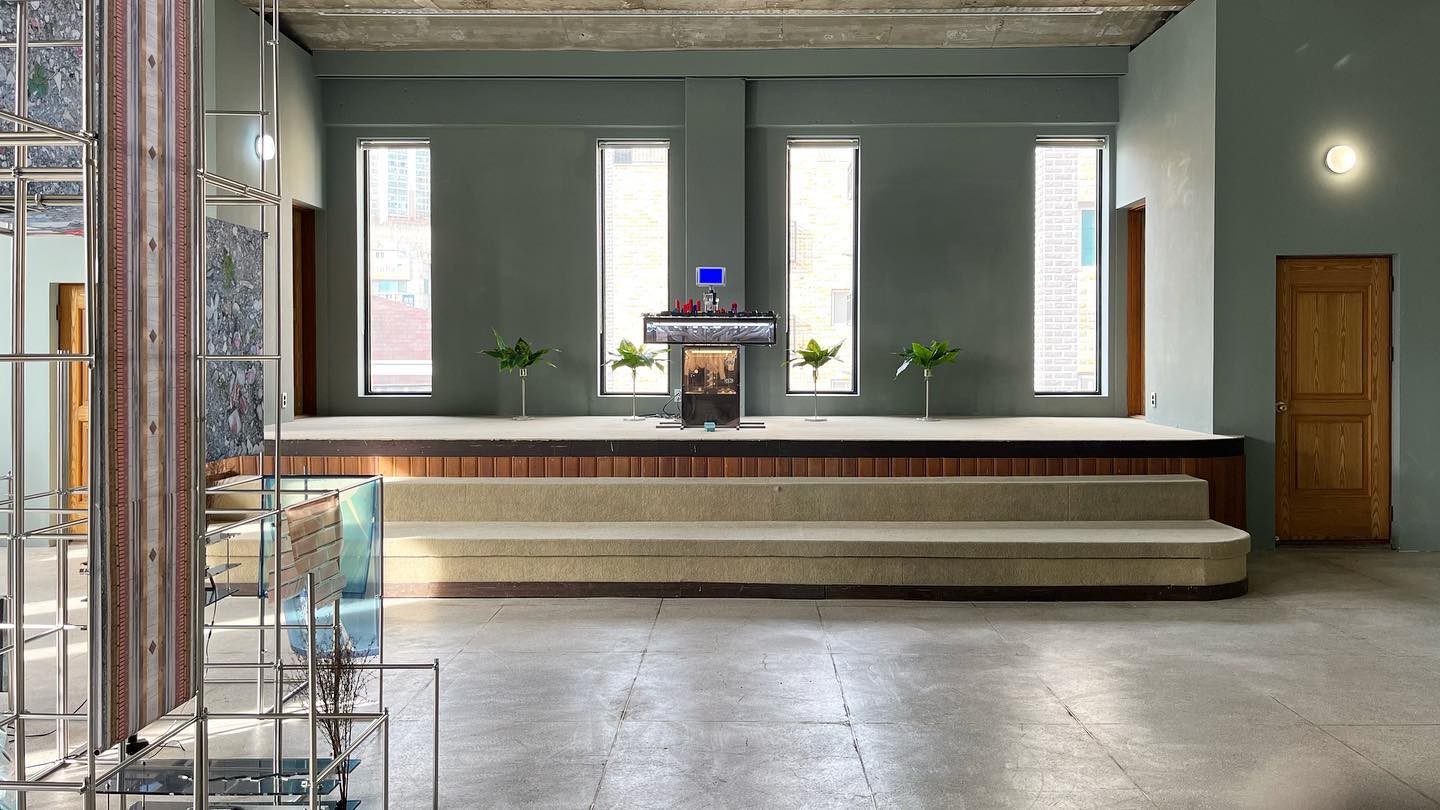
Installation view of 《Quasi-City Specimens》 (TINC, 2022) ©Moonjung Hwang

In her 2022 solo exhibition 《Quasi-City Specimens》 at TINC, Moonjung Hwang sought to reveal the hidden landscapes of the city by reversing the invisibility of its non-human inhabitants. The project was inspired by witnessing a sudden flood during heavy rainfall, when objects and elements that were meant to stay in place were swept away and displaced.
 
Hwang focused on the phenomenon in which entities, normally imperceptible and seemingly transparent beyond our perception, suddenly become vividly visible due to disruptions in the urban system. She began to capture these non-human presences that exist within our living environment but usually go unnoticed, and envisioned quasi-urban forms composed of them.


Installation view of 《Quasi-City Specimens》 (TINC, 2022) ©Moonjung Hwang

In this context, Hwang’s exhibition 《Quasi-City Specimens》 reconstructed non-human beings inhabiting both the interior and exterior of the city as quasi-specimens. The displaced non-human species outside the urban core, organisms left parasitic or dead in the periphery, and fragments of objects that have reverted from commodities to waste—all presented as “specimens” of the quasi-city—represent entities suppressed and concealed within the city’s entropic circuits.
 
Hwang sought to reject notions of “unhygienic” disgust, denial of non-human existence, and the anthropocentric worldview that has instrumentalized them, instead approaching these beings as biological entities. By observing the invisible qualities of these beings and recording them in the form of quasi-specimens, then connecting them as mechanical bodies, she highlights the possibilities of counter-lives led by non-human entities outside the structures of urban capital.


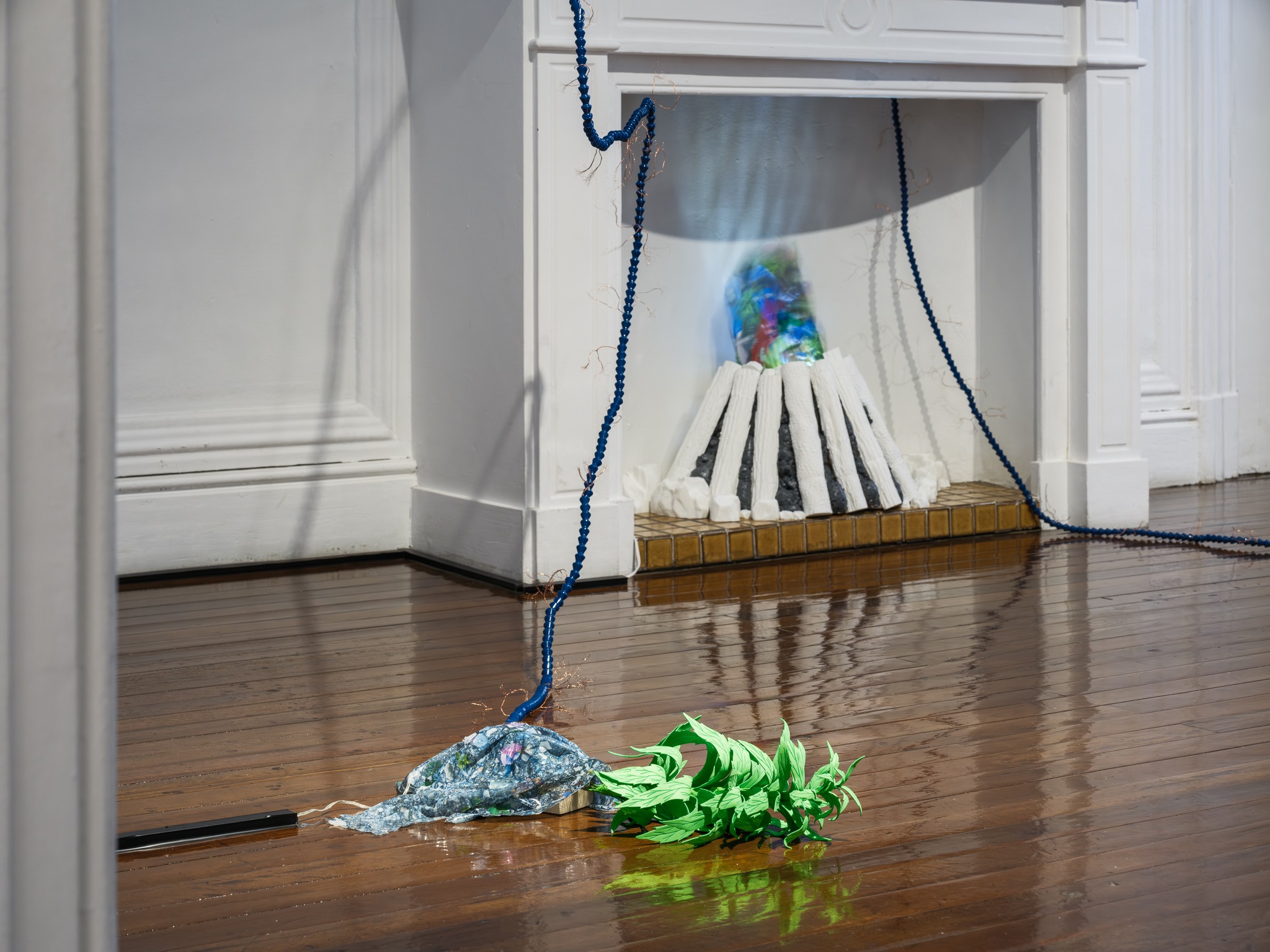
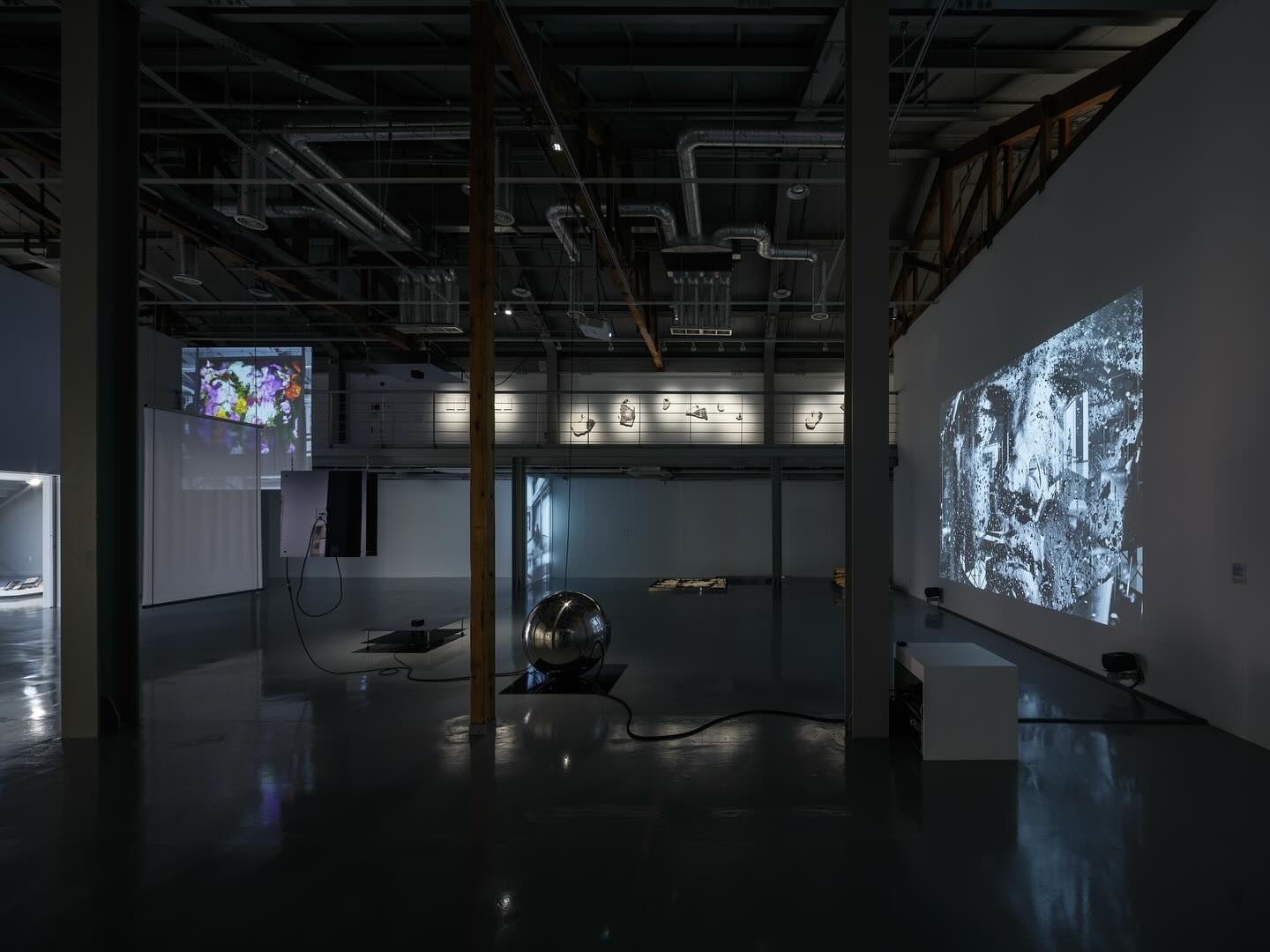
Installation view of 《AFTER FLOW》 (ONDREAM Society, 2023) ©Moonjung Hwang

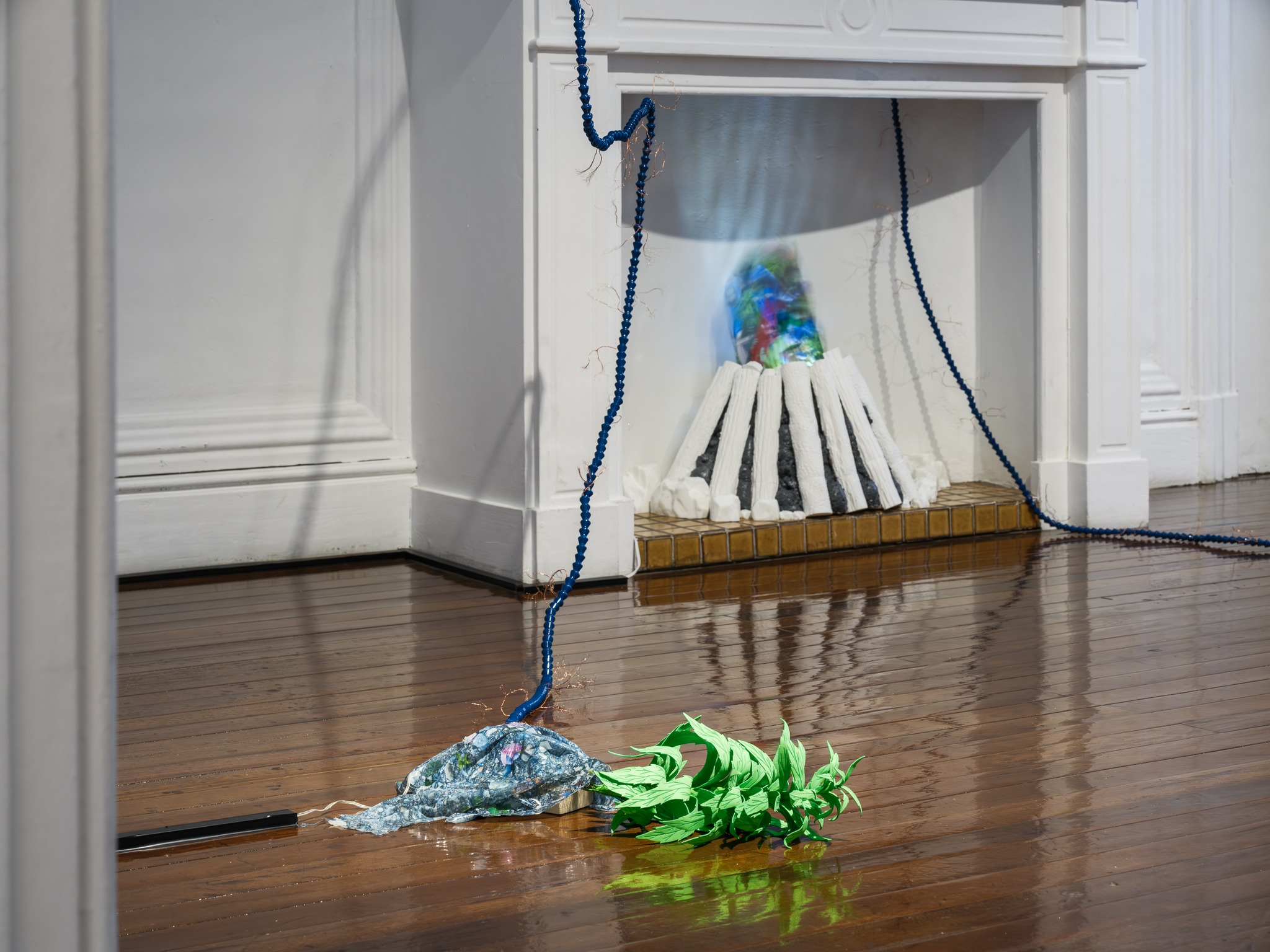
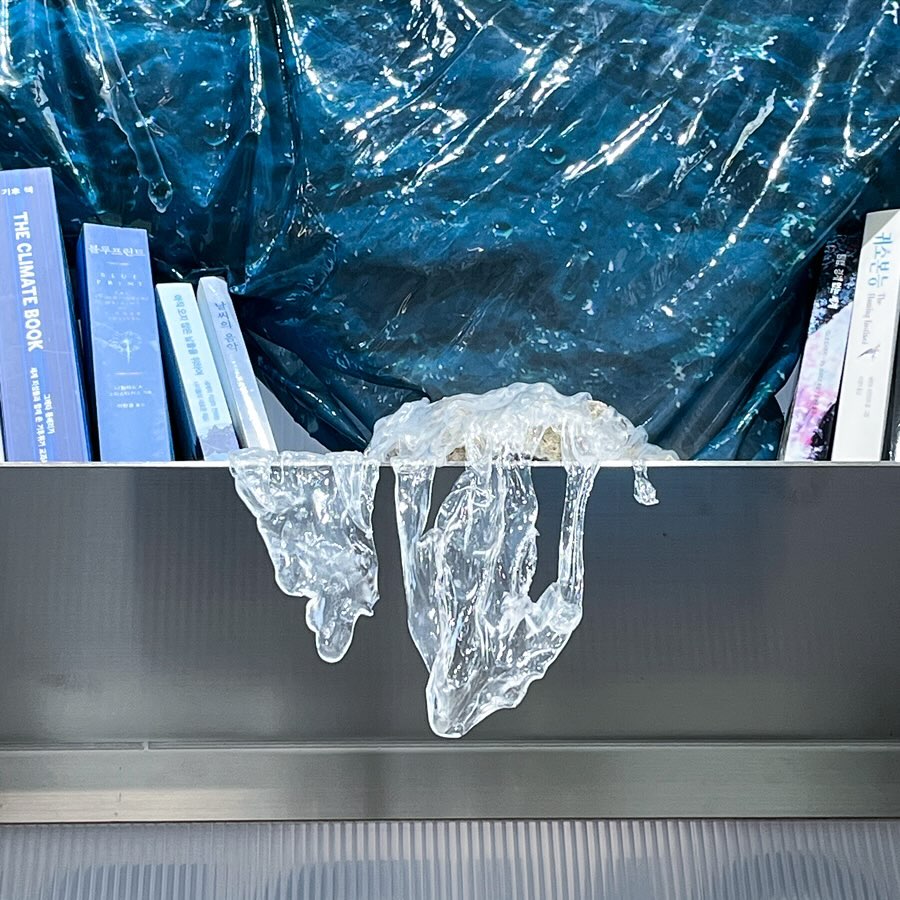
In a row, in her 2023 solo exhibition 《AFTER FLOW》 at ONDREAM Society, Moonjung Hwang explored the diverse phenomena arising from the interaction between water and non-human entities in the city, observed amid the frequent sudden downpours caused by the climate crisis.
 
Water continuously moves, exerting influence from subtly infiltrating private human spaces to creating fractures within urban systems. Through its circulation, it connects with non-human elements previously outside human awareness, forming new networks of relations.
 
Hwang focused on these unusual occurrences, where non-human beings, previously hidden in subterranean spaces, surge like floods, causing collisions between distinct entities that seemed impossible to ever come into contact with one another.


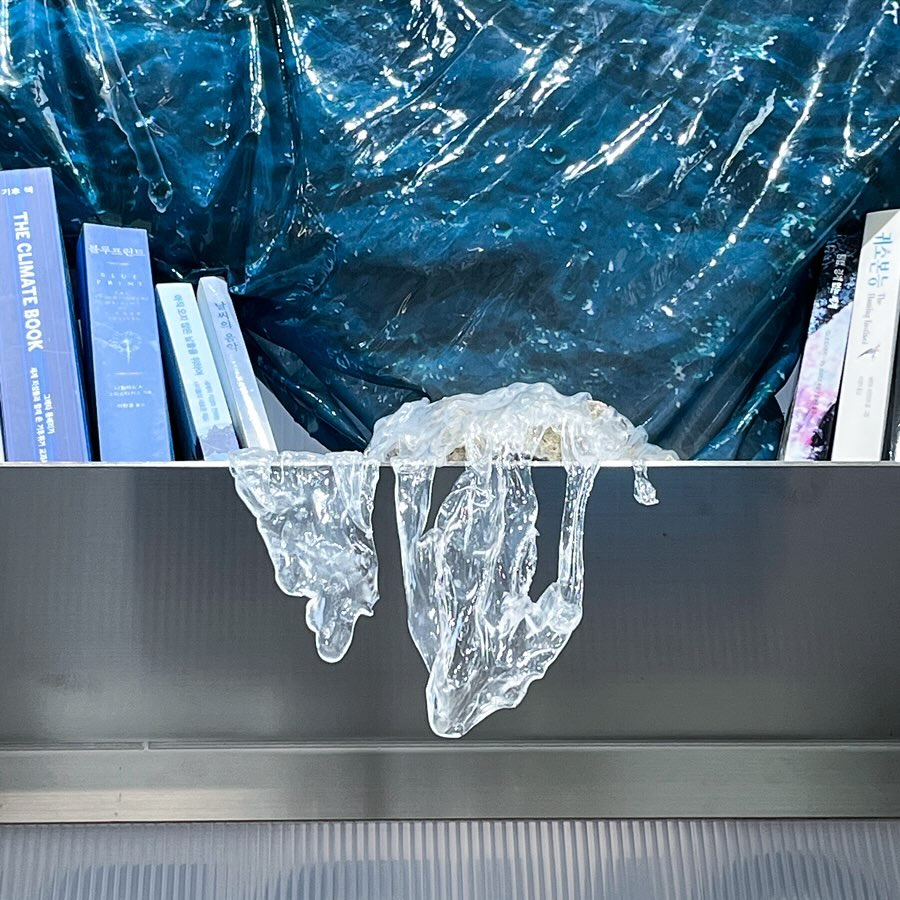
Moonjung Hwang, Aqua Bound, 2023, Fabric, stone, clay, Dimensions variable ©Moonjung Hwang

Within these phenomena, large volumes of water mix natural and artificial materials into a single mass, uproot plants from subterranean layers, and bring them to the surface. It also causes accumulated trash in sewers to backflow, dismantles concrete, and extracts the soil within, blurring the boundary between aboveground and underground spaces.
 
Meanwhile, smaller amounts of water infiltrate subtly, penetrating non-human bodies to alter their material properties or leave traces externally. For example, water vapor drifting through a space can come into contact with transparent entities like mold or glass, making them visible.


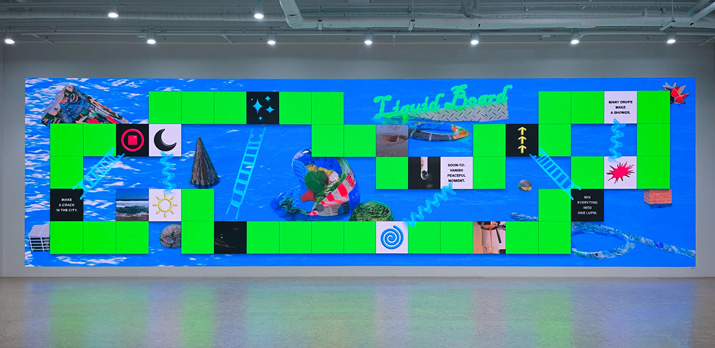
Moonjung Hwang, Liquid Board, 2023, Single-channle video, 4min 33sec. ©Moonjung Hwang

In this way, the non-human entities of the city, displaced by the force of water, are newly reconfigured as if transported to another dimension. The artist observes that within this reorganized world, they acquire new properties and integrate into an expanded network.
 
Accordingly, Moonjung Hwang combined the otherwise invisible entities that make up urban space with the flow of water, recreating this spectacular network within the exhibition space. Re-emerging as artworks, these non-human presences are freed from the constraints of being “ordered beings” under human systems and, conversely, gain the potential to transgress human boundaries, exerting strange and mysterious influences.


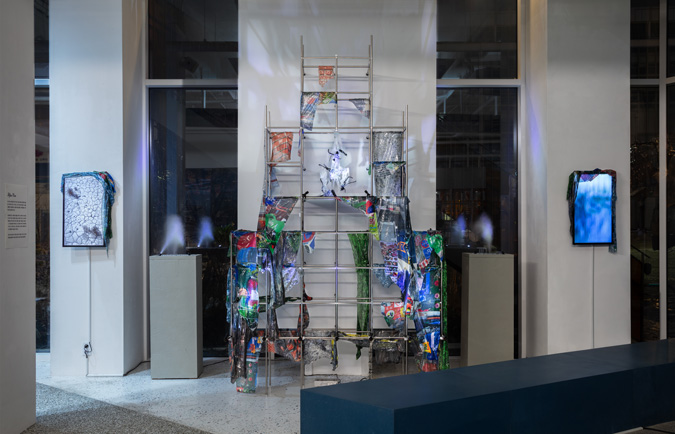
Moonjung Hwang, Those from Earth, 2024, Mixed media, Dimensions variable ©Seoul Museum of Art

In this way, Moonjung Hwang has continued to observe the urban system as a space of constant interaction between humans and non-humans, producing works that allow us to confront another reality beneath the city’s dazzling surface.
 
Her work captures the ways in which entities that exist in familiar places—yet lie outside our conscious perception—interact with us and form relationships in unseen ways. This evokes reflections on the coexistence of humans and non-humans, moving beyond a human-centered perspective.

 “I focus on the intriguing collisions that occur between the old, surviving elements of the city and the new, incoming ones—particularly the stories created by monstrous buildings and the natural elements interspersed among them.”     (Moonjung Hwang, Artist’s Note)


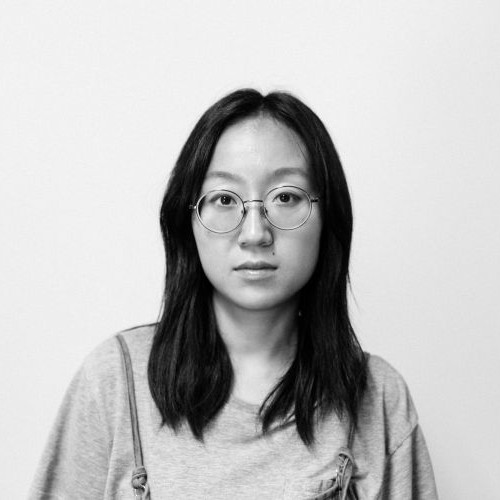
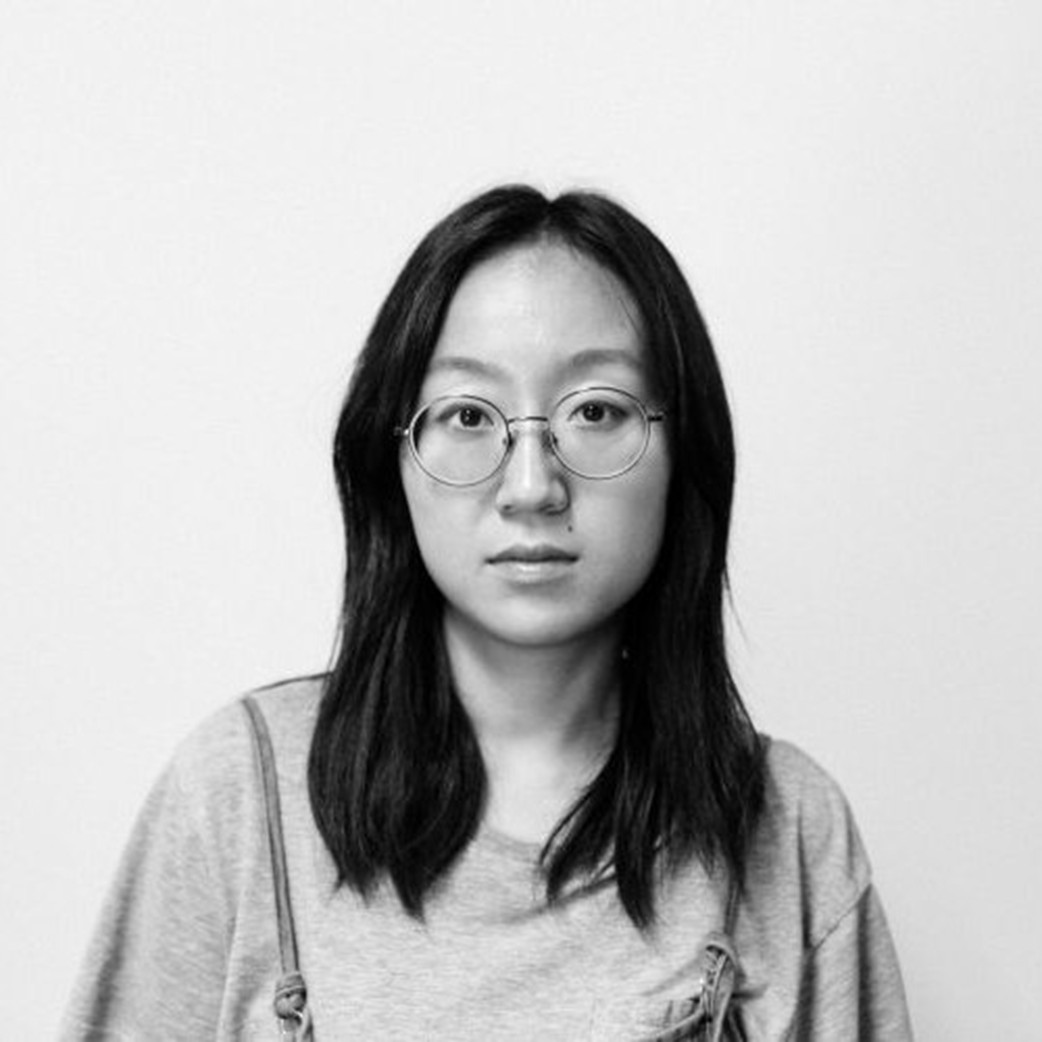
Artist Moonjung Hwang ©Incheon Art Platform

Moonjung Hwang graduated from Seoul National University, majoring in sculpture, before graduating from the Glasgow School of Art (MLitt Fine Art Practice). Her solo exhibitions include 《AFTER FLOW》 (ONDREAM Society, Seoul, 2023), 《Quasi-City Specimens》 (TINC, Seoul, 2022), and 《Non-affection for the city》 (SONGEUN Art Cube, Seoul, 2018).
 
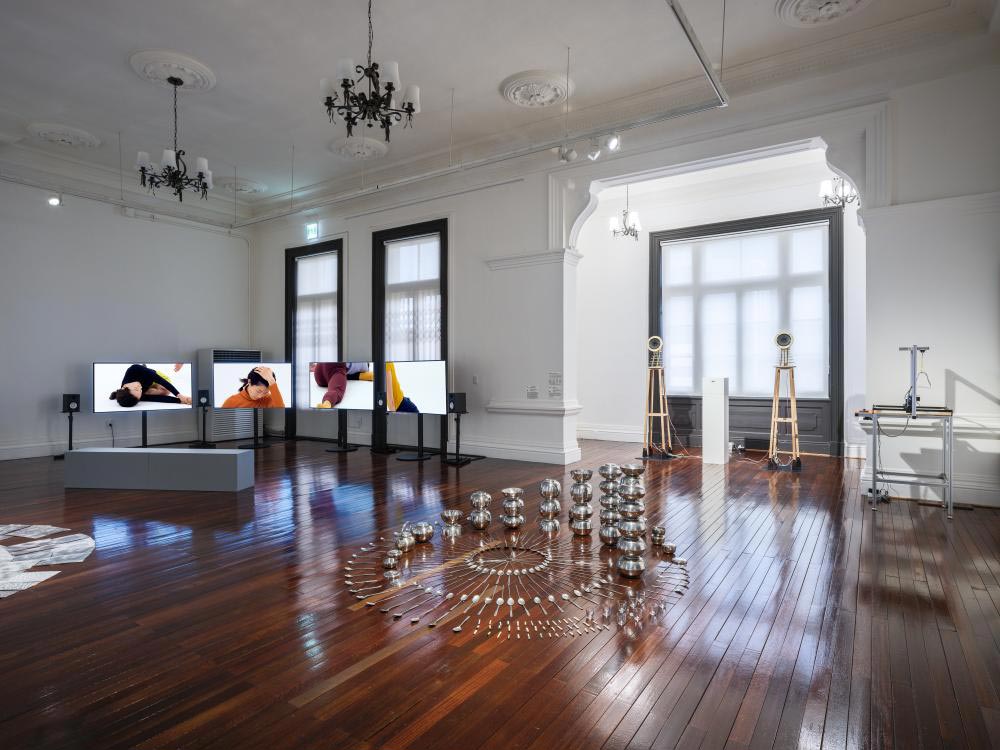
She has also participated in numerous group exhibitions, including 《The Act of Collaboration》 (Incheon Art Platform, Incheon, 2024-2025), 《Planet Nine》 (Nam-Seoul Museum of Art, Seoul, 2024), 《The 23rd SONGEUN Art Award Exhibition》 (SONGEUN, Seoul, 2023-2024), Daejeon Art and Science Biennale 2022 《Future of Cities》 (Daejeon Museum of Art, Daejeon, 2022), 《Blue Planet - Sea》 (Artspace Boan, Seoul, 2022), 《Posthuman Ensemble》 (National Asian Culture Center, Gwangju, 2021), and more.
 
Hwang has participated as a resident artist in several programs, including Incheon Art Platform (2017), MMCA Residency Goyang (2016), and Westbury Arts Center (2015).
References