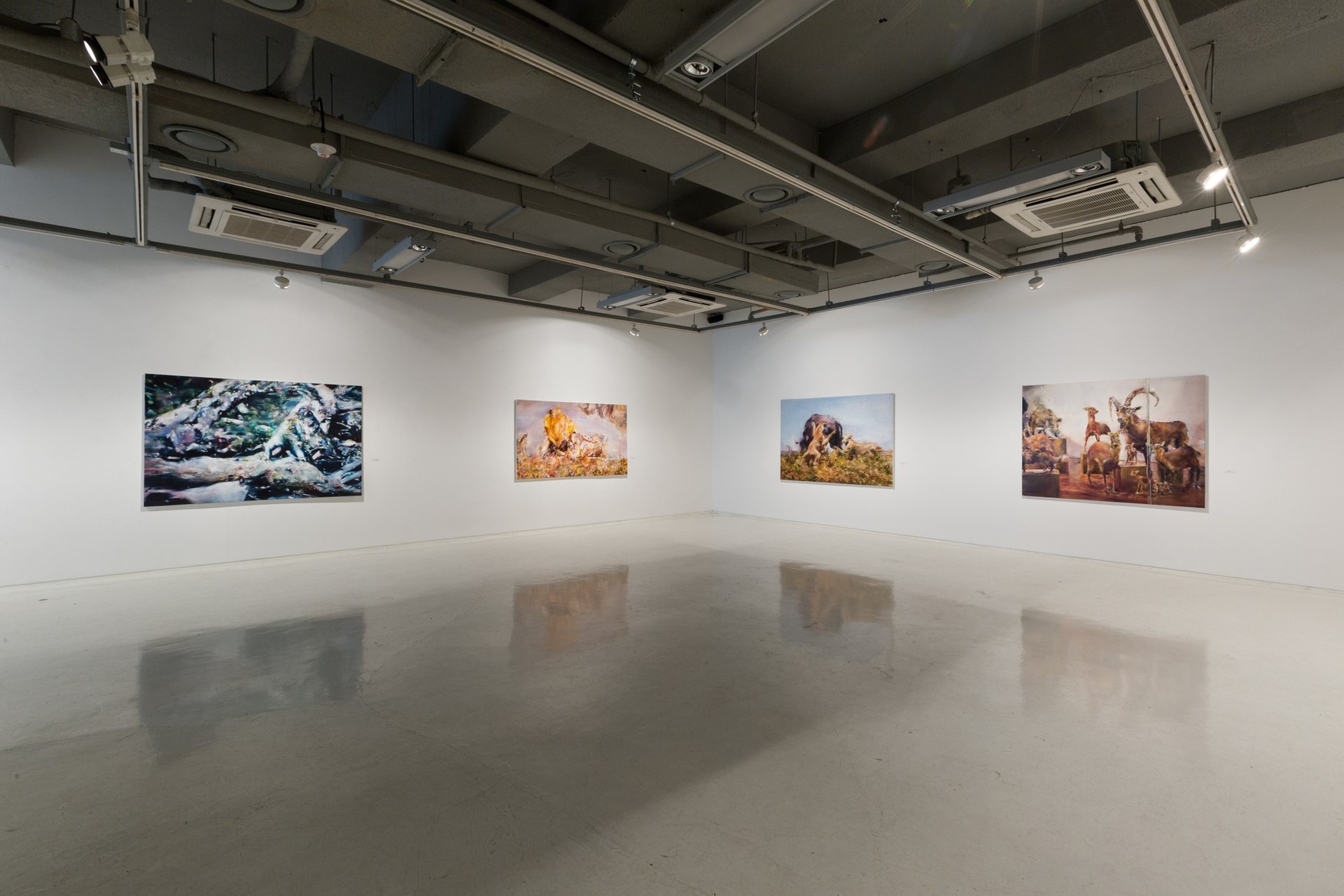

Heejae Lim (b. 1993) explores the concept of nature as an image mediated and processed through painting. In particular, she discovers within the act of specimen-making—the human attempt to touch and possess nature—the painter’s own desire and dilemma, which she investigates through her pictorial practice.


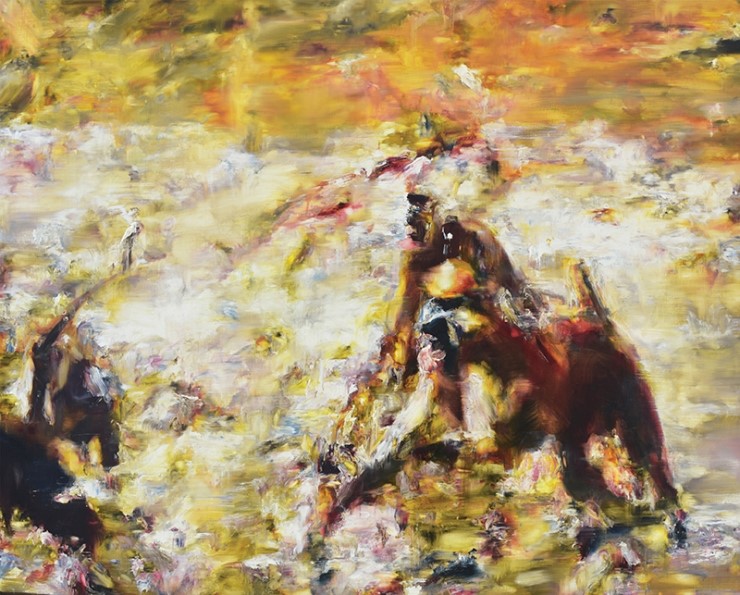
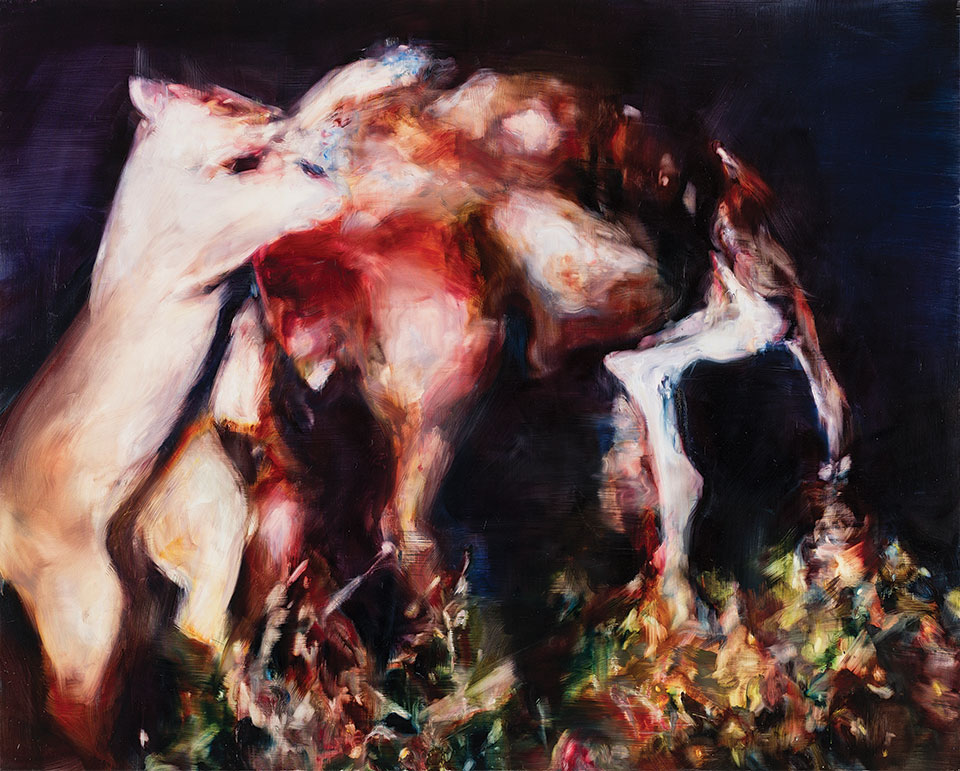
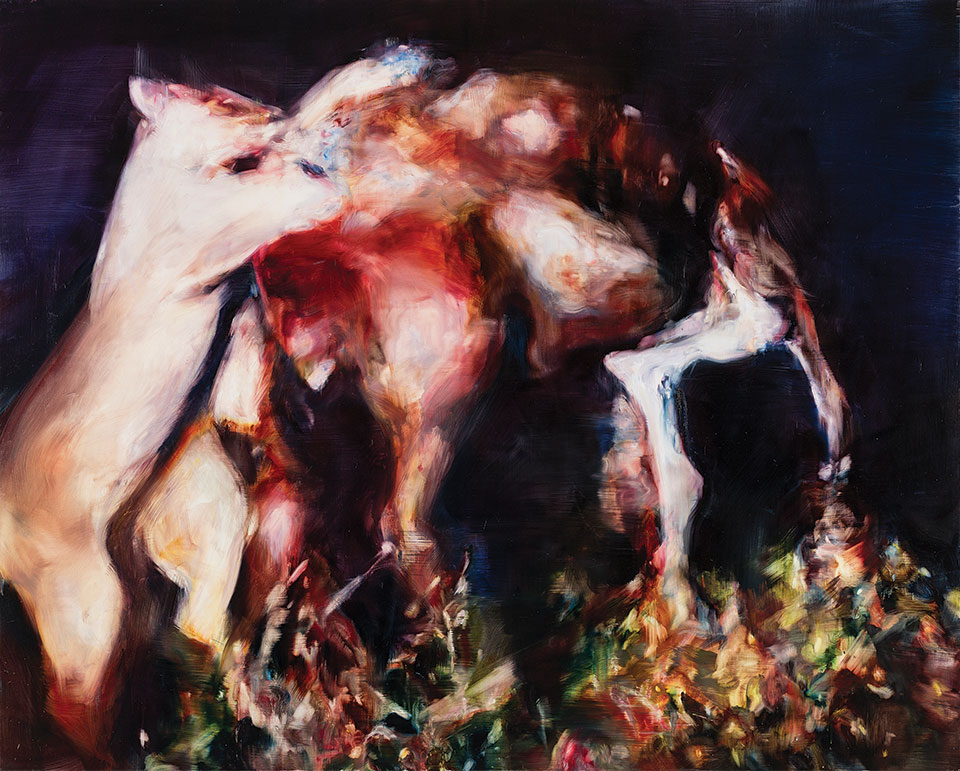
Heejae Lim, HLN004, 2016, Oil on canvas, 130.3x162.2cm ©Heejae Lim

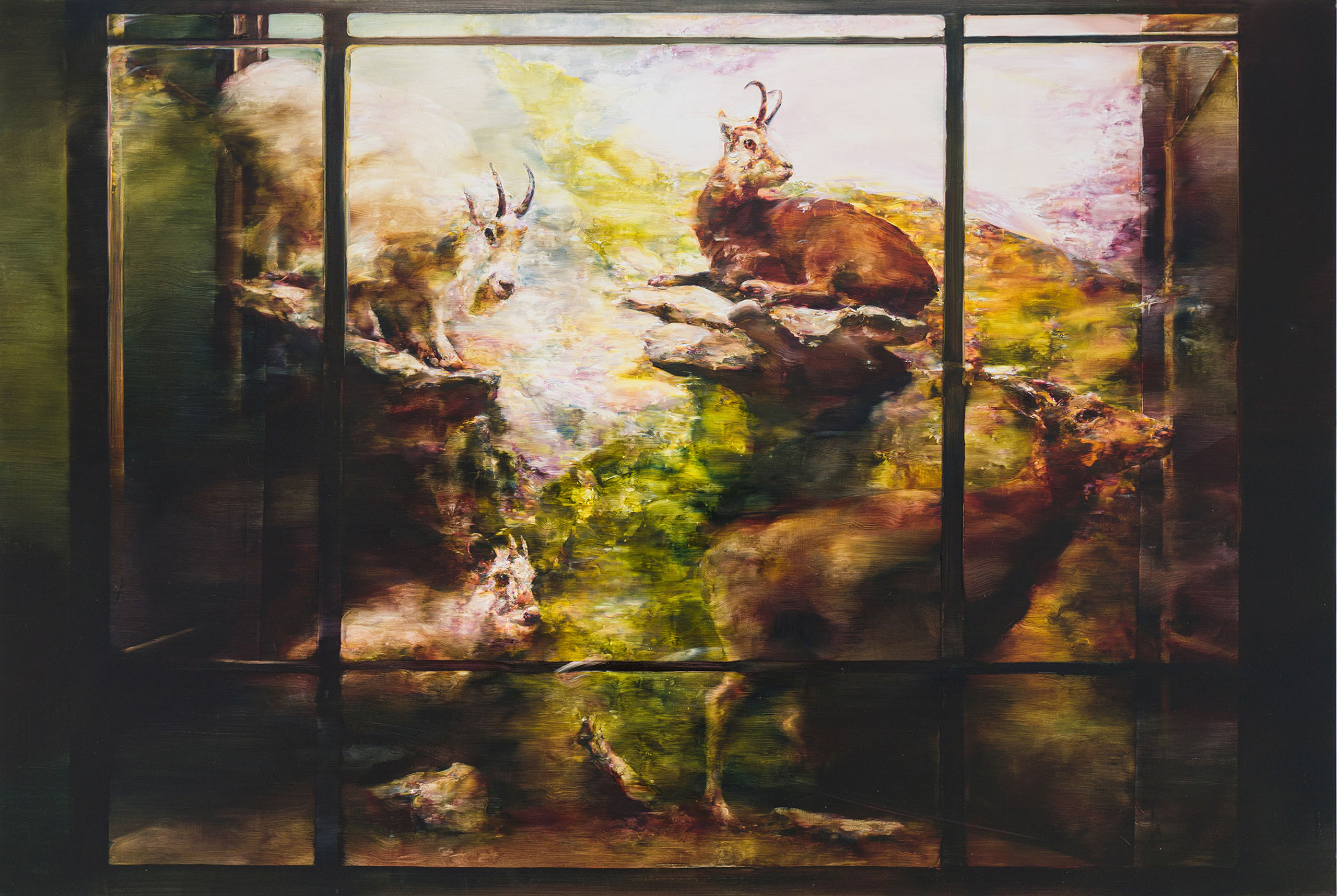
Lim has long been interested in the way taxidermied, represented, and immobilized life forms are separated from their spatial, temporal, and ecological contexts to be displayed behind glass. She recalls the erased time and space of these images of nature—fixed yet suggestive of movement—and connects this to contemporary desires for imperfect images and image ownership.
 
In translating these subjects into painting, Lim explores the points at which transformation and distortion occur as they are flattened onto the pictorial surface and mediated again through glass. In doing so, she seeks the paradoxical potential for both fluidity and expansion within the stillness of the image.


Installation view of 《Noli Me Tangere》 (Gallery DOS, 2017) ©Heejae Lim

Lim’s first solo exhibition, 《Noli Me Tangere》 (Gallery DOS, 2017), centered on the artificial world of nature as seen through glass barriers. In particular, she focused on scenes of survival depicted by animals in documentary footage.

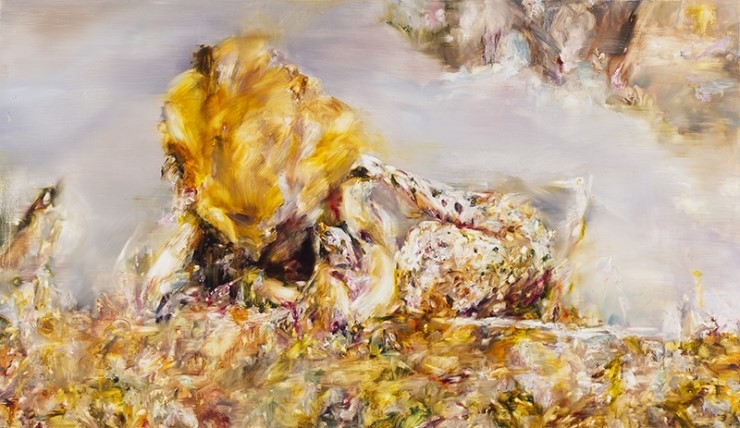
Heejae Lim, MNK001, 2017, Oil on canvas, 130.3x162.2cm ©Heejae Lim

Heejae Lim describes the scenes of survival unfolding beyond the glass screen of the television as “closer to a theatrical stage that has lost its sense of reality, despite the overwhelming sense of immersion within the frame.” She notes that while one might expect the nature depicted there to reveal its primal, authentic state, the images reflected beyond the surface are, in fact, artificial constructs shaped by human intervention.


Heejae Lim, HLN005, 2016, Oil on canvas, 112.1x193.9cm ©Heejae Lim

Lim focused on the visual devices designed to heighten immersion in the fabricated narratives of predator and prey—devices that make nature appear “more natural.” She began translating these mechanisms into the pictorial language of painting.
 
Unlike the processed frame of a television screen, she sees the canvas as “a safety net where the image can function not as mere bait or device, but as the impression itself.”


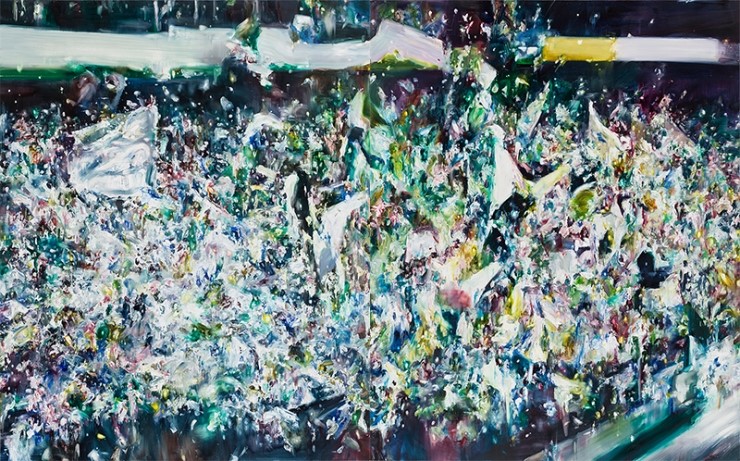
Heejae Lim, MOB003, 2016, Oil on canvas, 162.2x260.6cm (2pc) ©Heejae Lim

The artist reinterprets scenes of animal survival from documentaries on canvas, deliberately breaking apart and blurring their forms until their identities become indistinguishable. Through this process, the image approaches the viewer as a more potent impression rather than a clear depiction.
 
These impressions, meeting the physical medium of paint and canvas, exist in a state that neither functions nor absorbs—they simply confront the viewer. This encounter invites endless imagination, transforming what was once a fragment of a single narrative into a multiplicity of stories through the artist’s touch.


Heejae Lim, Two Story, 2019, Oil on canvas, 162.2x130.3cm ©Heejae Lim

In this way, Heejae Lim has explored the relationship between the flat surface of the canvas and the sense of vitality and motion produced by living beings, along with the impressions and sensations that arise from this interplay. The resulting paintings allow viewers to infer the nature of a scene while simultaneously perceiving, through reflected light on glass or subtly distorted perspectives, that the depicted landscape is in fact a fabricated one.


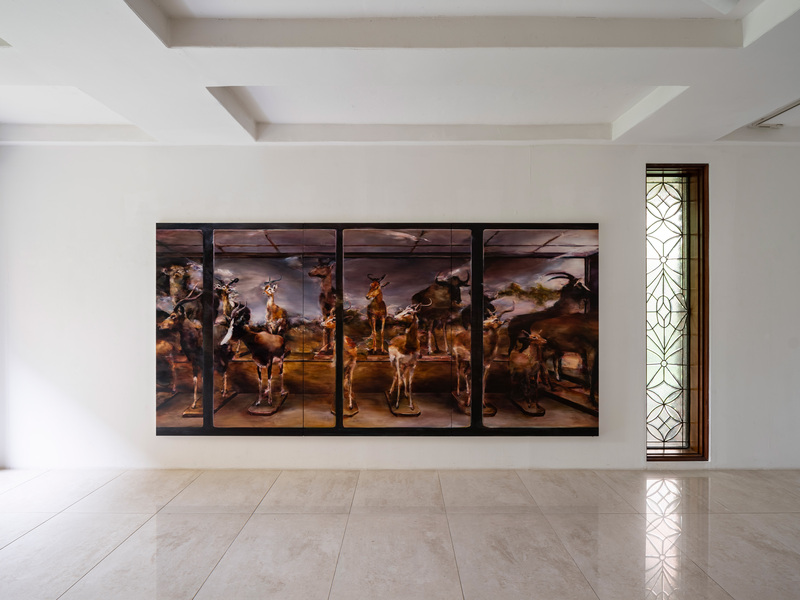
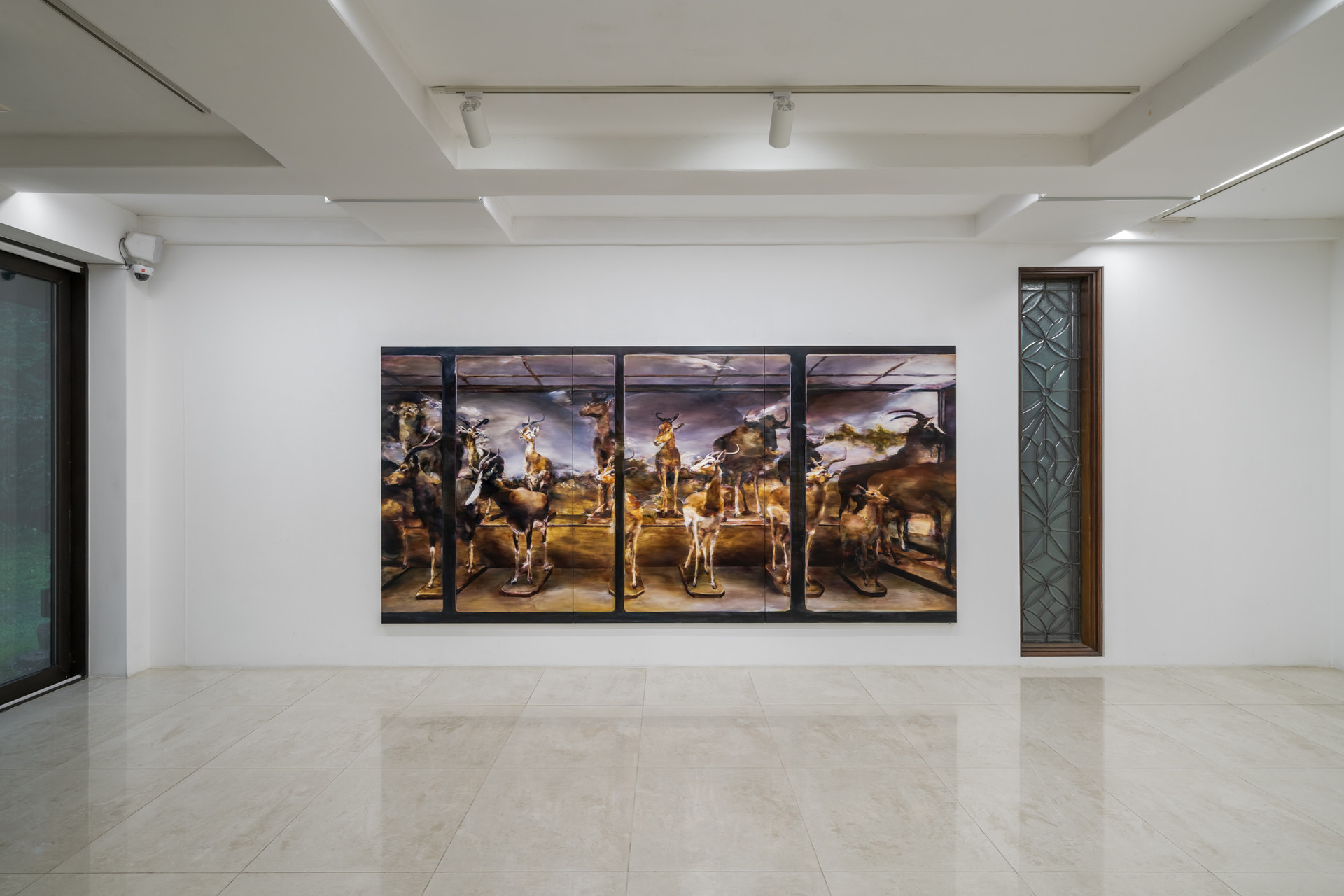
Heejae Lim, Stuffed Antelopes, 2022, Oil on canvas, 162.2x336.3cm, Installation view of 《Cabinet of Curiosity》 (LEE EUGEAN GALLERY, 2022) ©Heejae Lim

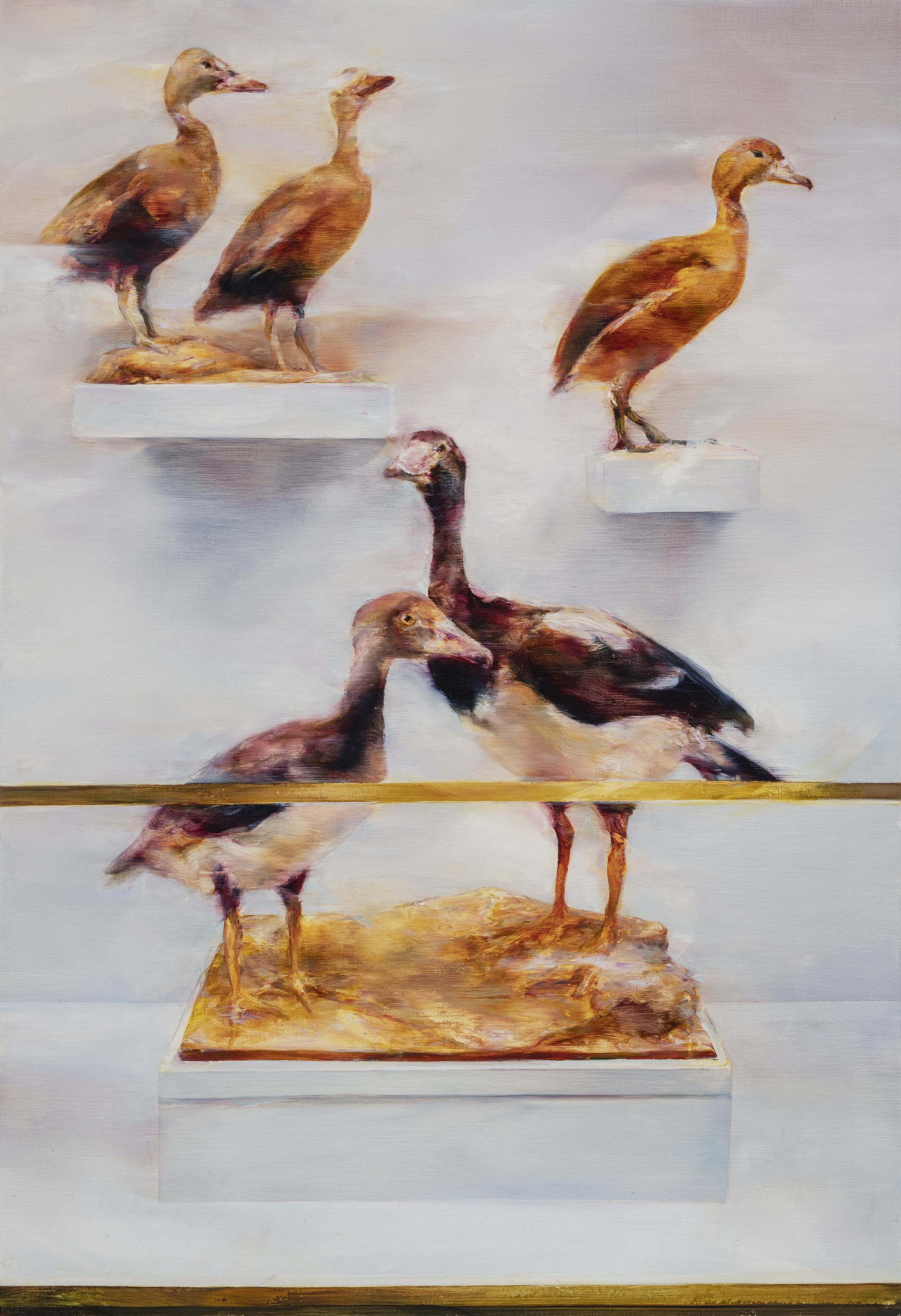
Furthermore, in her solo exhibition 《Cabinet of Curiosity》 (LEE EUGEAN GALLERY, 2022), centered on the themes of “taxidermy” and “representation,” Heejae Lim questioned where the human desire to touch and possess “aliveness” ultimately leads—and whether such longing can ever be fulfilled—through a series of paintings depicting animal specimens from natural history museums.
 
The exhibition’s title, “Cabinet of Curiosity,” refers to a room filled with peculiar and rare objects. Originating in the 16th century, such cabinets can be seen as spaces that embody humanity’s desire to collect and possess things of value, such as historical artifacts, artworks, and antiques.


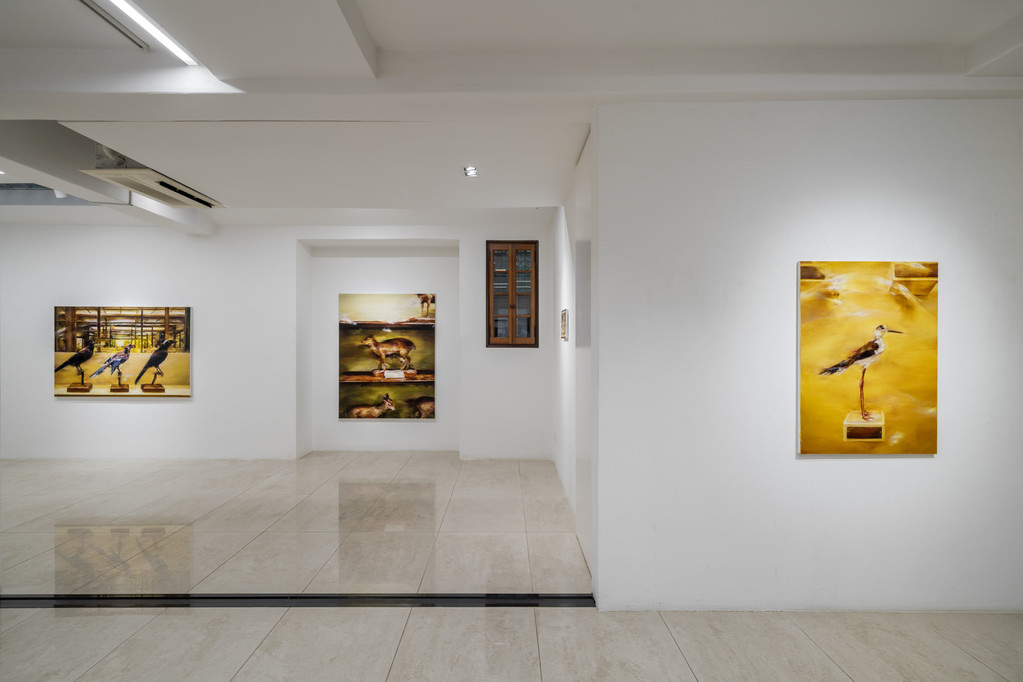
Installation view of 《Cabinet of Curiosity》 (LEE EUGEAN GALLERY, 2022) ©LEE EUGEAN GALLERY

The taxidermied animals displayed in museums are fixed in dynamic poses, actively imitating a fabricated version of nature. Between the viewer and the specimen stands a glass wall, and the viewer’s gaze first meets the surface of that glass rather than the subject itself.
 
Heejae Lim contemplated how to translate this glass surface, the space within the cabinet, and the specimens themselves onto the canvas.


Installation view of 《Cabinet of Curiosity》 (LEE EUGEAN GALLERY, 2022) ©LEE EUGEAN GALLERY

As viewers pass by the cabinets containing taxidermied animals, Lim sought to capture the reflections, refractions, and spatial compression that occur on the glass surface according to the movement of their gaze. To express this, she employed flowing brushstrokes that trace the viewer’s visual path. These drifting strokes create an illusion of horizontal expansion across the canvas, imbuing the image with an aquarium-like sense of motion.
 
The parabolic lines crossing the picture plane, along with the gaze of the taxidermied animals, function like arrows that guide the viewer’s eyes, dynamically transforming the composition.


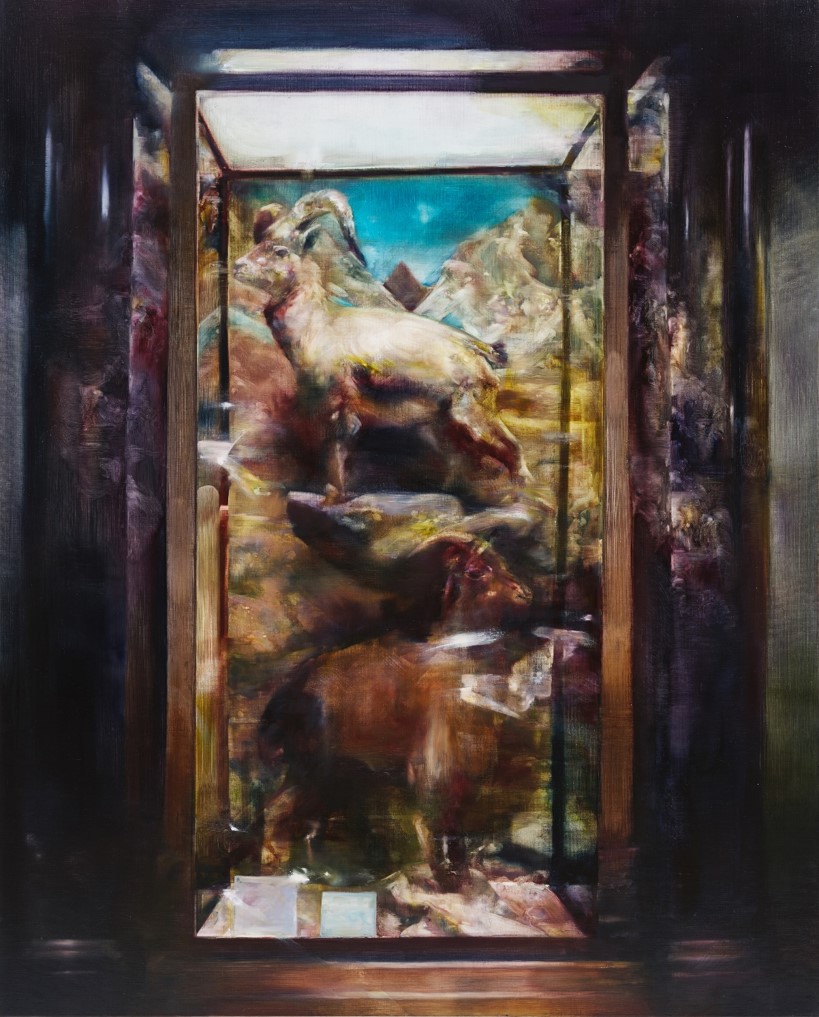
Heejae Lim, Stuffed Chamois and Wild Sheep, 2021, Oil on canvas, 130.3x193.9cm ©Heejae Lim

The process of completing her work resembles the weaving of a tapestry. Lim repeatedly applies and wipes away paint with cloth and her hands to create the woven texture, a gesture that constitutes a significant part of her practice.
 
The resulting woven surface conveys an impression born from the accidental convergence of otherwise unrelated elements: the taxidermied animals within the cabinet, the backgrounds depicting their habitats, the supports, and the reflections on the glass. Through the reproduction of this impression, Lim seeks to create her own unique ‘Cabinet of Curiosity.’


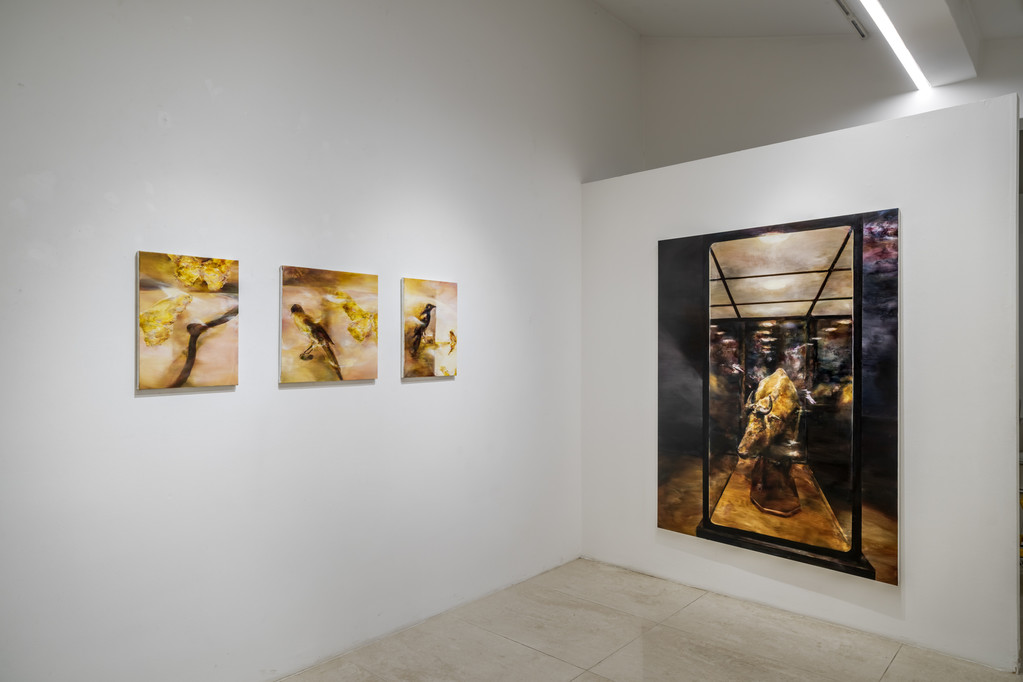
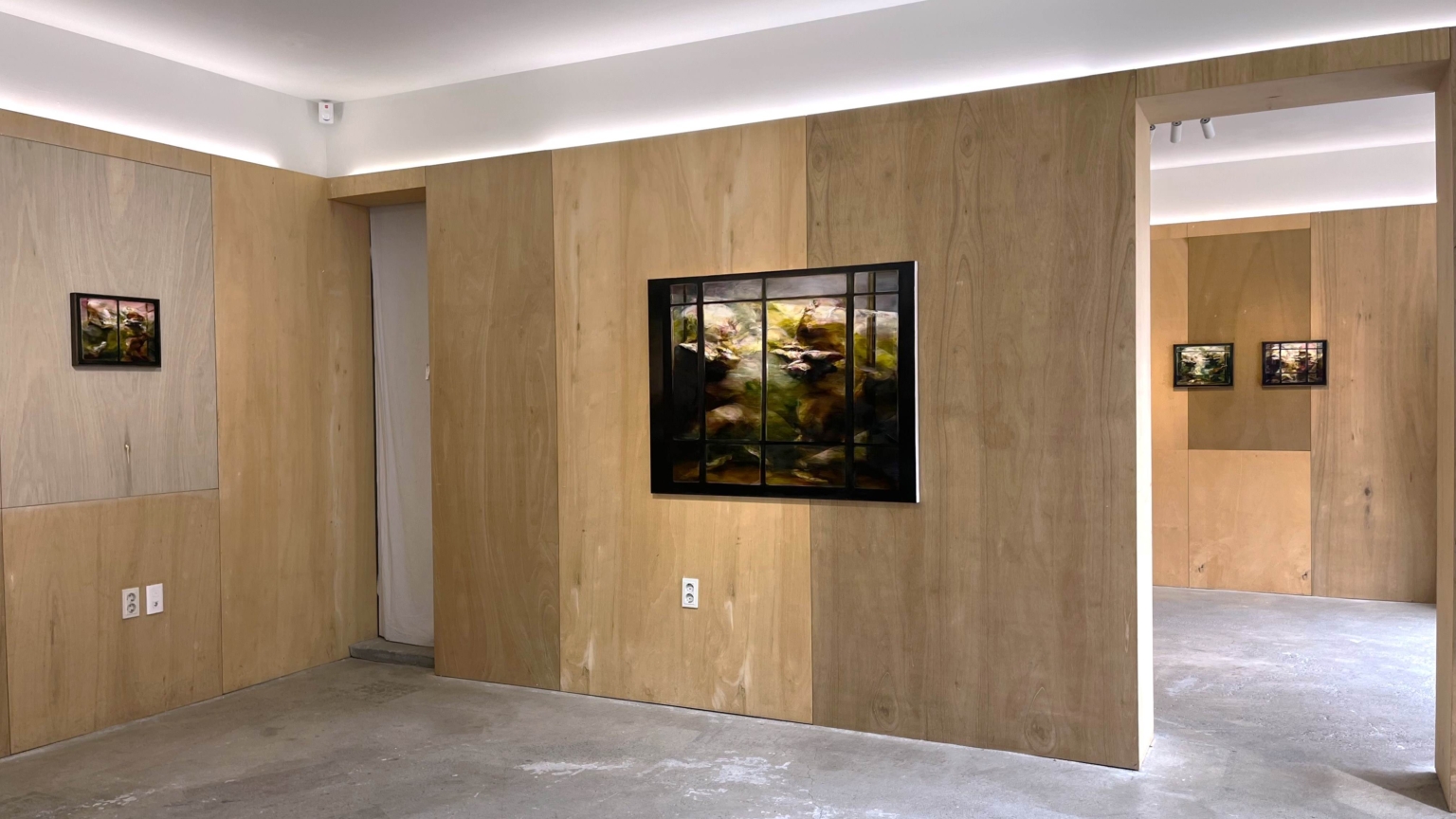
Installation view of 《Nesting》 (Onsu Gonggan, 2023) ©Heejae Lim

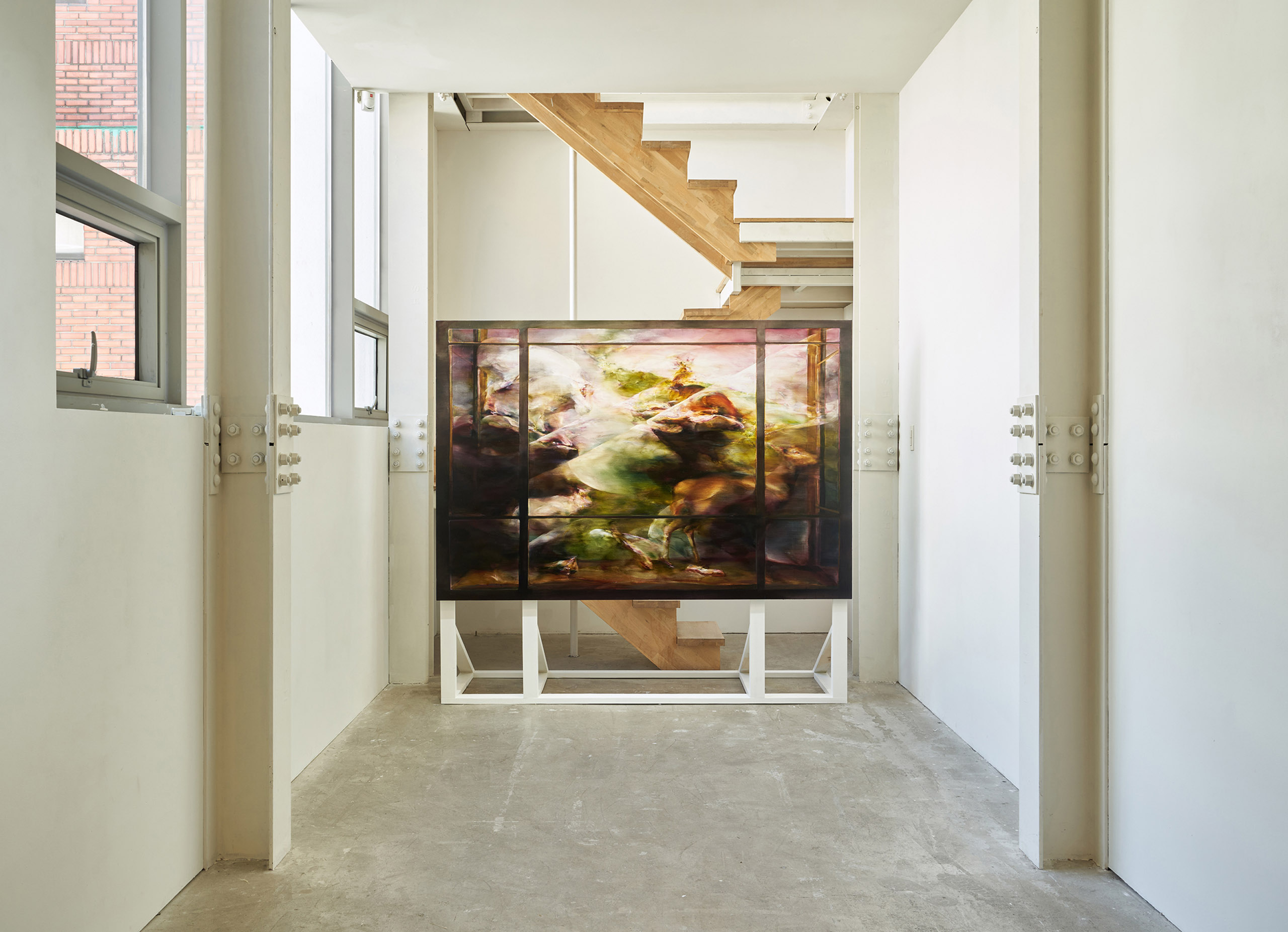
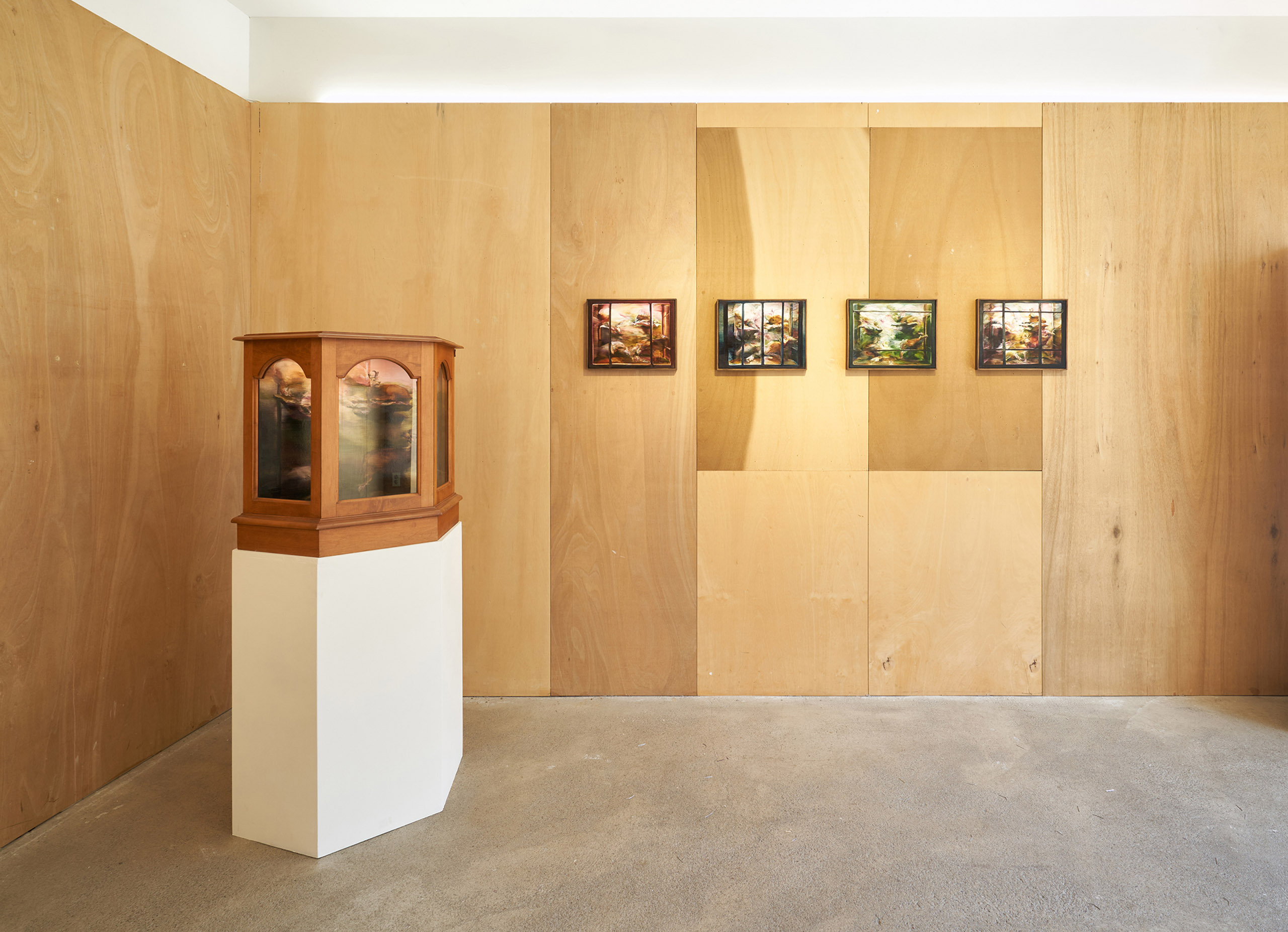
In the following year, her solo exhibition 《Nesting》, held at Onsu Gonggan, explored an expansion of the “frame” of glass or cabinets—previously confined within the canvas—beyond its borders.
 
Lim took her earlier painting Stuffed Chamois and Wild Sheep (2022) from 《Cabinet of Curiosity》 as a starting point to question and investigate the possibilities of the pictorial “frame.” Her painterly inquiry soon led her to pursue a form of re-/figuration, in which the shapes within the painting continuously transform, moving beyond a simple act of representation.


Installation view of 《Nesting》 (Onsu Gonggan, 2023) ©Heejae Lim

In 《Nesting》, this earlier work is presented as an image within a frame. In the painting, where the taxidermied chamois and wild sheep fill the entire canvas, Lim juxtaposes the display case’s frame to emphasize that these forms exist as images “meant to be seen.”
 
Art critic Soyeon Ahn notes in the exhibition preface that this approach “reiterates the fact that the subject of the painting is not an actual natural specimen, but rather an already fabricated image, rearranged within a shallow space.”


Installation view of 《The Vanishing Horizon Episode.02》 (WWNN, 2024) ©WWNN

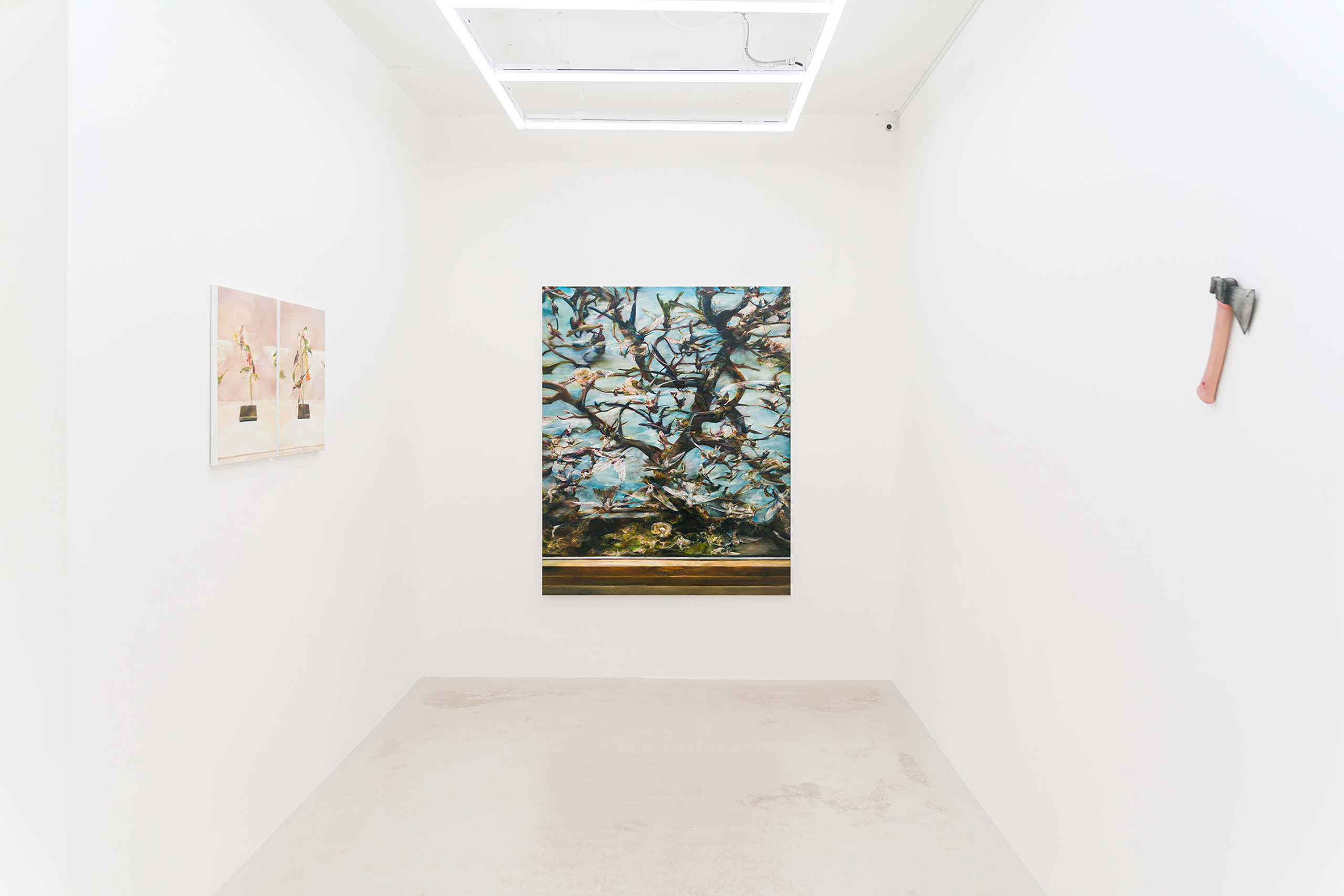
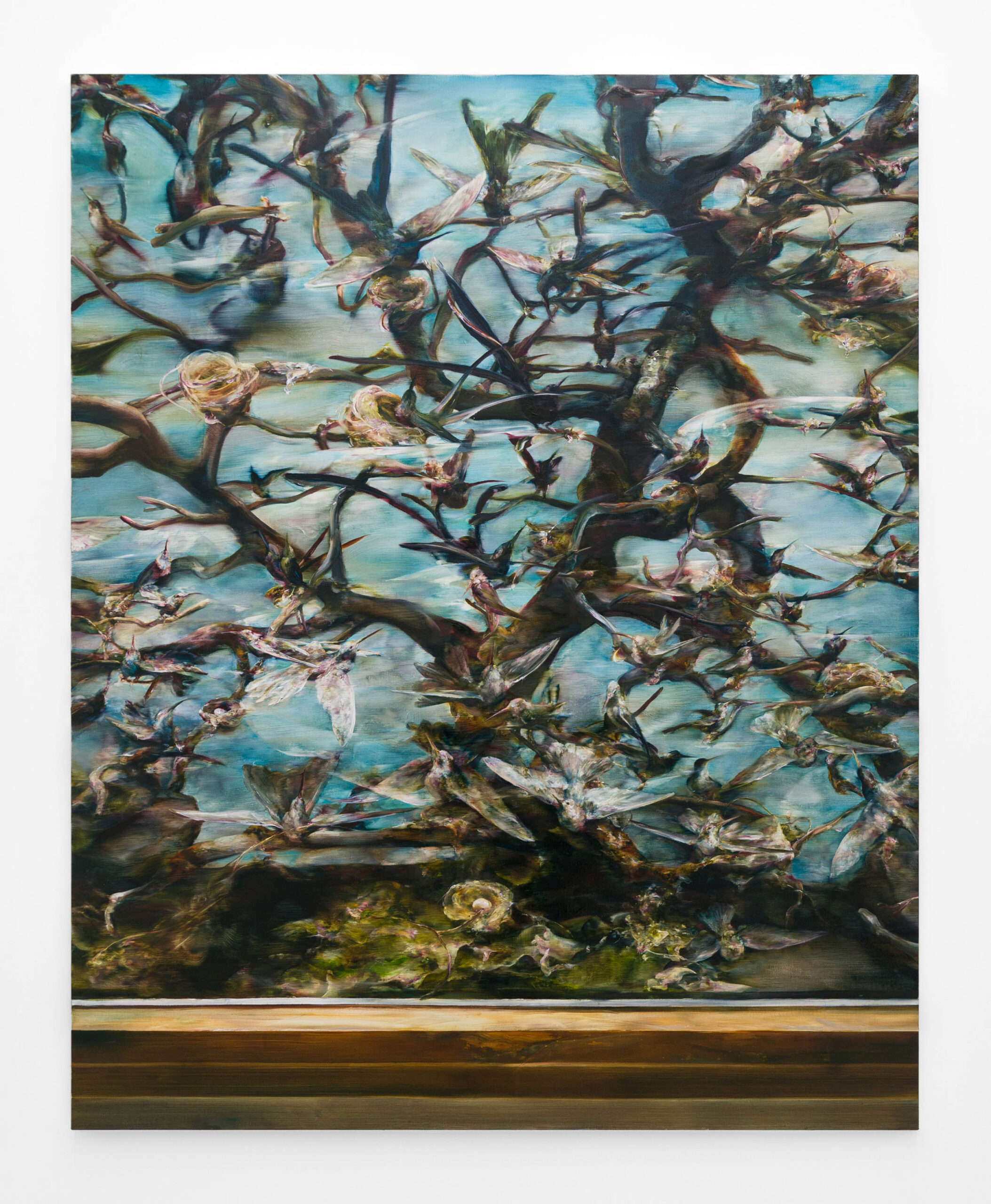
Building on her exploration of the pictorial frame, Lim began to delineate a kind of painterly space in which forms continue to transform under arbitrary conditions. This line of inquiry led to her work Tree of Stuffed Hummingbirds (2024), presented in the group exhibition 《The Vanishing Horizon Episode.02》 at WWNN.
 
In this piece, inspired by the exhibition theme of “fiction,” Lim actively employed tools of transformation, rendering even minor elements such as color in a more fantastical manner than in her previous works. This approach was influenced by Canadian novelist Margaret Atwood’s idea that “because it is fiction, it becomes closer to reality.”


Heejae Lim, Tree of Stuffed Humming birds, 2024, Oil on canvas, 162.2x130.3cm ©Heejae Lim

Accordingly, in this work, Lim sought to establish intricate relationships between elements—for instance, depicting a tree branch as taking the form of a snake’s head preying on the hummingbirds. Unlike her previous works, this painting features 56 hummingbirds and 7 nests, with numerous components densely interconnected within a web of individual relationships.
 
Rather than prioritizing any single element, Lim structured the composition so that all components could be perceived as distinct yet interconnected parts of a unified narrative.
 
According to the artist, while her earlier works displayed a broad, sweeping movement across the glass-like surface, in this piece “the simultaneous currents among the hummingbirds, branches, nests, and background—like waves converging in the sea—create a rippling effect that densely fills the pictorial space.”


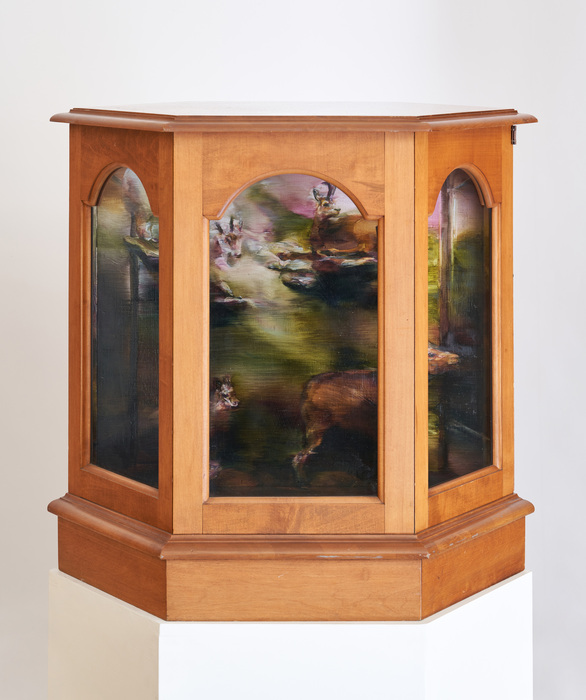
Heejae Lim, Faux SC&WS, 2023, Wood and glass cabinet, oil on panel, 57x65x62cm ©Heejae Lim

Thus, Lim continues to explore painting through the lens of human desire and the dilemma of representation revealed in the process of processing nature. She exposes how images of nature are reworked and presented through the visual language of painting, or, through the complex transformations mediated by the pictorial frame and glass, she revitalizes the lost vitality of taxidermied animals into layered images, revealing their contradictory possibilities.
 
More recently, she has begun reconfiguring earlier works to interpret painting according to flows of relationships. In doing so, her practice expands into an inquiry into the unique ecosystem of painting itself, exploring how unrelated specimens can be newly interwoven on the canvas through the brush as a mediating tool.

 “What I want to convey is that ‘the most elusive and alive thing is relationship.’”    (Heejae Lim, from the BE(ATTITUDE) interview)


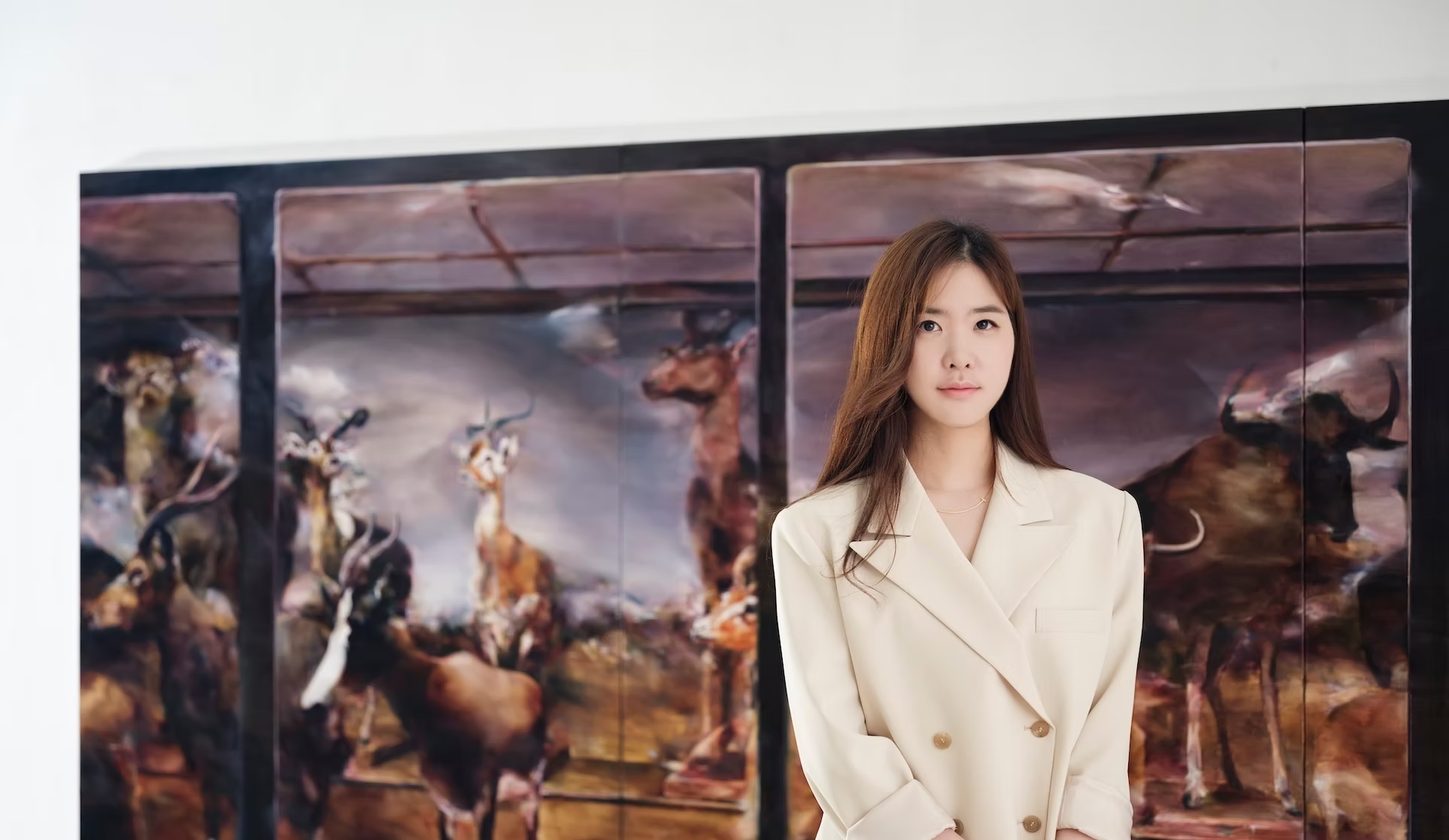
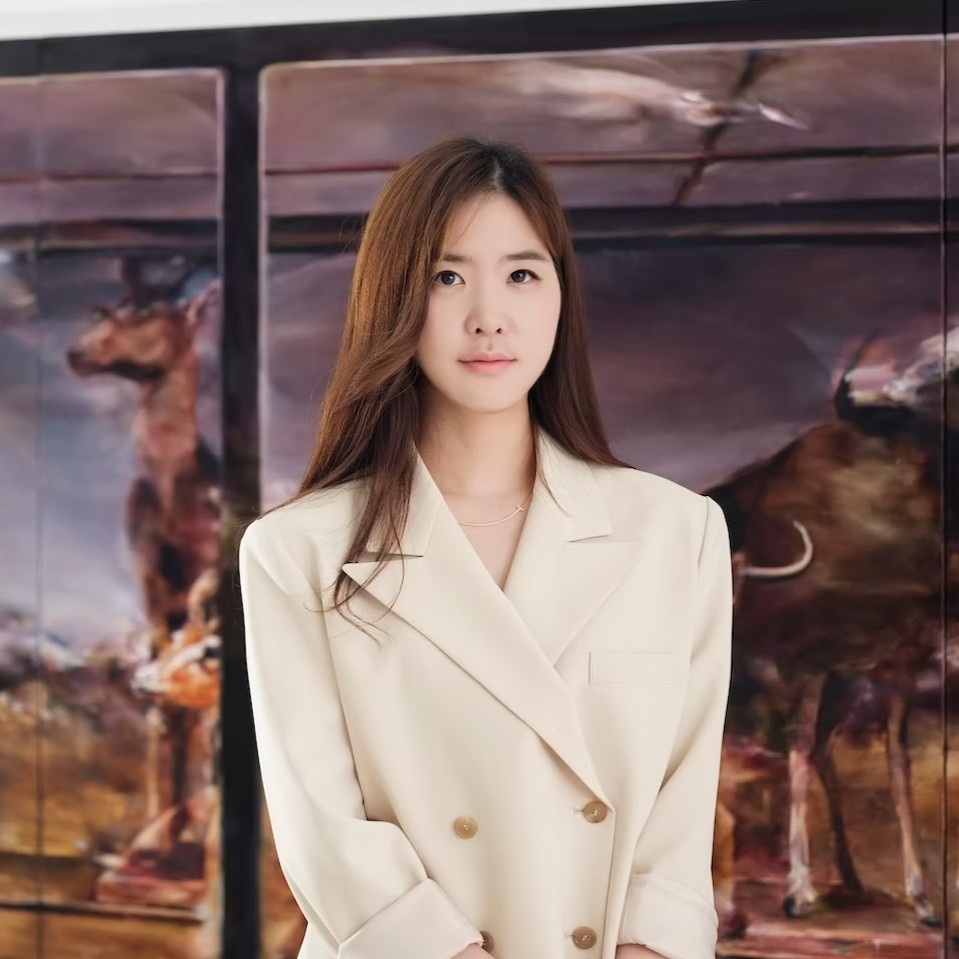
Artist Heejae Lim ©Chongkundang Yesuljisang

Heejae Lim graduated with a BFA in Fine Arts from the Korea National University of Arts and completed the MFA program at the same institution. Her solo exhibitions include 《Nesting》 (Onsu Gonggan, Seoul, 2023), 《Cabinet of Curiosity》 (LEE EUGEAN GALLERY, Seoul, 2022), 《Inflatable Paradise》 (Bambu Collection, Seoul, 2021), and 《Noli Me Tangere》 (Gallery DOS, Seoul, 2017).
 
She has also participated in numerous group exhibitions, including 《Amateur》 (Nook Gallery, Seoul, 2025), 《Perigee Winter Show 2024》 (Perigee Gallery, Seoul, 2024), 《The Vanishing Horizon: Episode.02》 (WWNN, Seoul, 2024), 《Arch of Experiences》 (Gallery In, Seoul, 2023), 《Expanded World》 (DrawingRoom, Seoul, 2020), and 《COCOON 2020》 (Space K, Gwacheon, 2020).
 
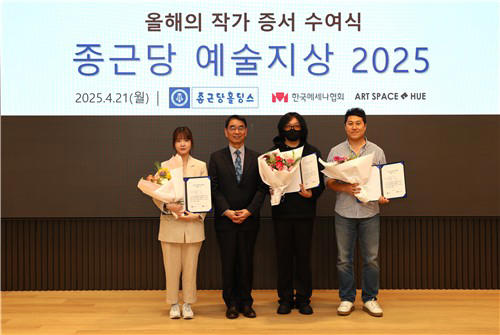
Heejae Lim was selected as one of the ‘Chongkundang Yesuljisang 2025’, and has participated as a resident artist at Suwon Art Studio PUREUNJIDAE CHANGJAK SAEMTEO (2025) and White Block Residency in Cheonan (2023–2025).
References