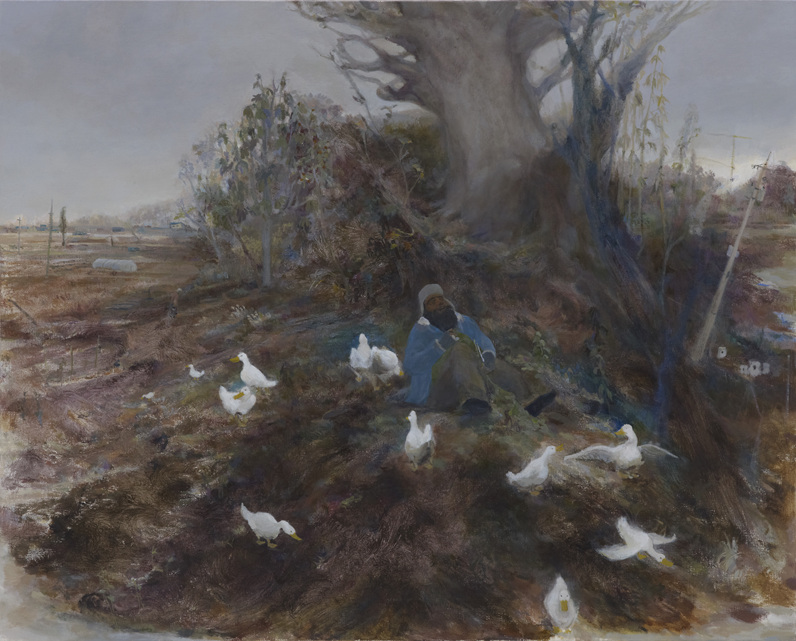
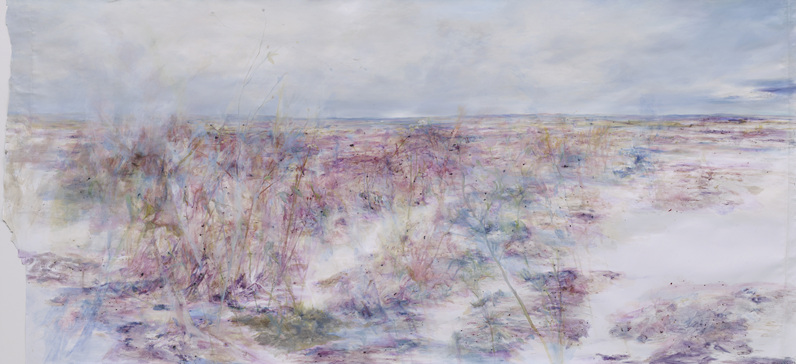
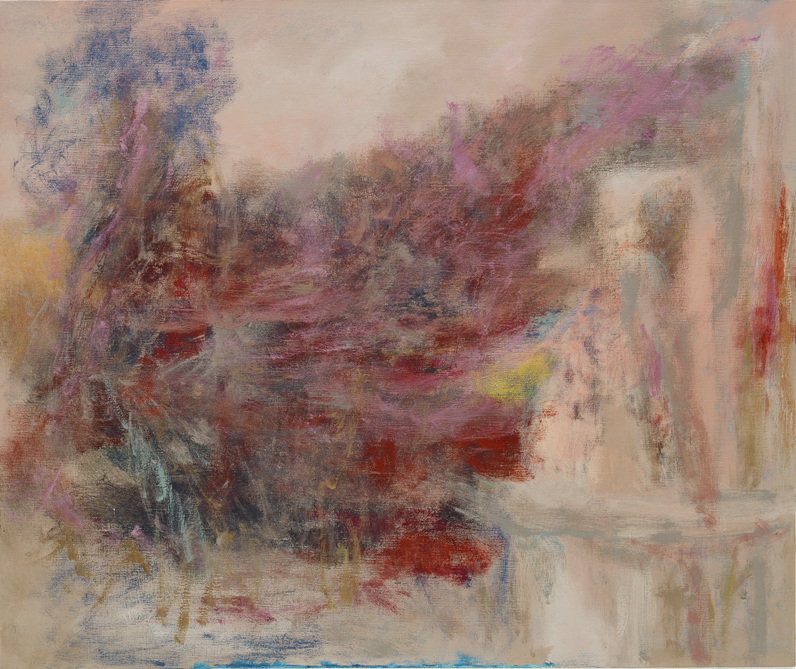
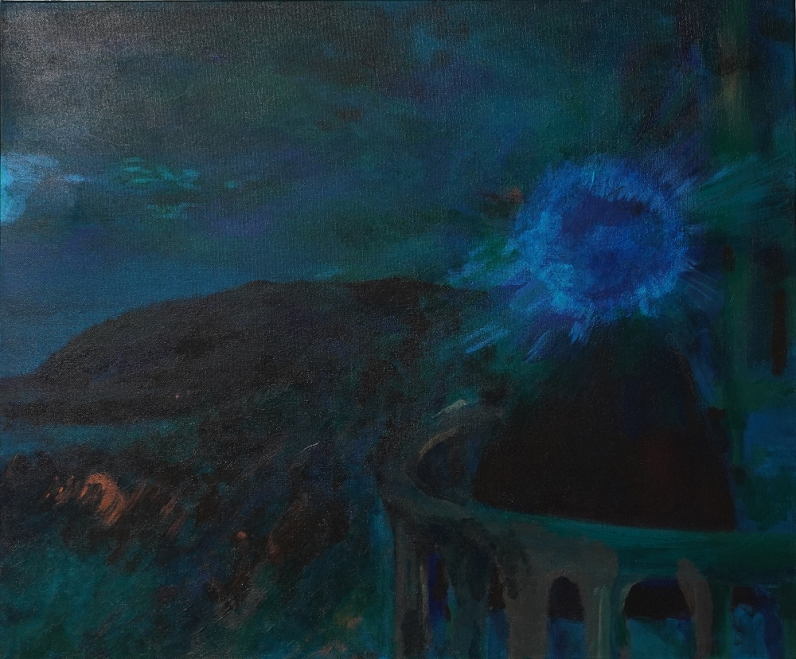
Painting
persisted through eras. The exhibition 《Twin Peaks》 focuses specifically on the time
period between the mid-2000s and the mid-2010s, an era that is rather close to
our current one, yet marked by a quite contrary character to ours. The
exhibition was conceived based on a certain degree of nostalgia as well as on a
lingering sense of hope. The nostalgia is grounded on the memory of witnessing
the art field in the years of the mid-2000s, while the hope indicates the
questions, whether we could discover any positive subjects in the mid-2010s as
we face again many uneasy conditions in the fields of art.
The
title of the exhibition derived from David Lynch’s eponymous film Twin
Peaks, a legendary example in American cult film tradition: the decision was
made to let the two timelines of the mid-2000s and the mid-2010s face each
other in parallel, at the same time seeking for an expression to deliver the
notion of twoness or of being alongside; finally, as a pun, it also reflects on
the meaning of a painting exhibition. Twin Peaks is also the name of two hills
in San Francisco, that are not very high, but high enough to offer a wide view
over the city’s nightscape. Two peaks, not too high. The reason why these hills
are called “Peaks” could be because they promise a broad range of overview
regardless of their moderate altitude. In this sense, among various methods and
perspectives to approach painting, this exhibition aims to climb over the peaks
of the timelines of the mid-2000s and the mid-2010, so to explore a possible
sight over the recent practices in painting.
Twin
peaks rising from the timelines – these could be grandly described to be the
topography of the times. Many would prefer highlighting the high and pointy
tops of the peaks, yet because memory and experience are destined to be
subjective, I would like to declare that the definition of the peaks are
firstly based on my subjective perspective on the timelines. At the same time,
18 participating artists were the ones who were present within my general scope
of movement during those years. I became acquainted with the works of some of
the artists during the time when I was a student, while some others I got to
learn since around 2006.
Furthermore, I met younger artists that actively
emerged after 2010 through various exhibitions that were held in the recent
two, three years, while I also noticed to have met some of them at their
graduation exhibitions as well. Regardless their slight differences in
time, 《Twin Peaks》 focuses on the timelines of the starting points of each artist’s
career, rather than their ages. The artists who started working between the mid
and the end of the 2000s, Eunkyung Choi, Joohee Han, Hoin Lee, Leeje, Sungsic
Moon, Jina Park, Mirae Park, Sejin Park and Jahyuk Yim are grouped as the first
peak of the timeline, while the ones who started after the 2010s, Kyungho Baek,
Byungkoo Jeon, Hana Kim, Hyunwoo Lee, Sejun Lee, Woosung Lee, Gwangsoo Park,
Junghae Park and Hyunseon Son are grouped as the second Peak.
A
brief memory of the first peak could be described as follows: in 2005, still at
their 20s, Sungsic Moon and Sejin Park participated to the group show of the
Korean Pavilion at the Venice Biennial; Eunkyung Choi won Songeun Art Prize in
2004 and the Mirror hanging at the entrance of the
basement floor in 《Twin Peaks》
exhibition is her work from 2003; Jina Park and Jahyuk Yim
emerged, nominated for Kumho Young Artist, Hermès Foundation Missulsang and Art
Spectrum among others during the mid and the end of the 2000s; Hoin Lee
participated to the group exhibition held after the Mongin Art Center’s
opening; Leeje, whose network with Art Space Pool was created after
participating in group shows held at Project Space Sarubia in 2001 and 2002,
runs currently Hapjungjigu, an off-space in Seoul; Joohee Han and Mirae Park
are the ones whose practice I’ve been following since my time as a student.
Among these nine artists – at least in the appearance of their development –
there are some who steadily survived in the field without much fluctuation
while others spent times of struggle due to personal and professional
circumstances. After those years, regardless of the differing degrees of
hardship, these artists are mingling with the new comers to create the current
scene.