

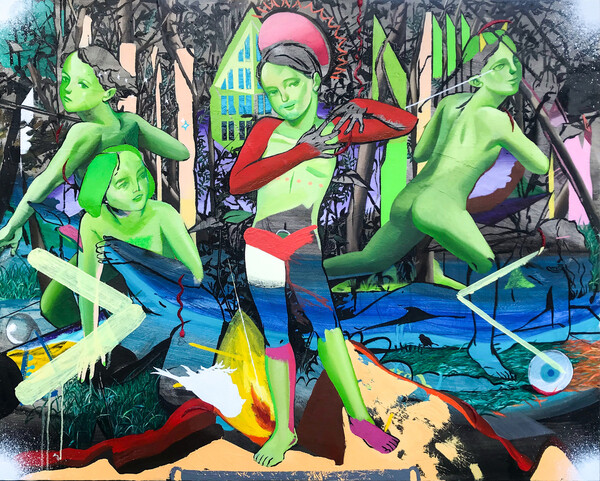
Soojung Jung (b. 1990) has been experimenting with her own distinctive language of figurative painting, rooted in her interest in the small and large events, narratives, and images that unfold around her. Her paintings, reminiscent of dreamlike scenes, present unfamiliar yet familiar moments that emerge from her imaginative interpretation of real-life events.


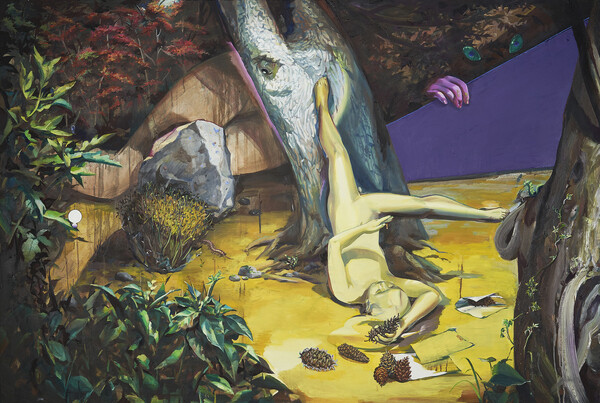
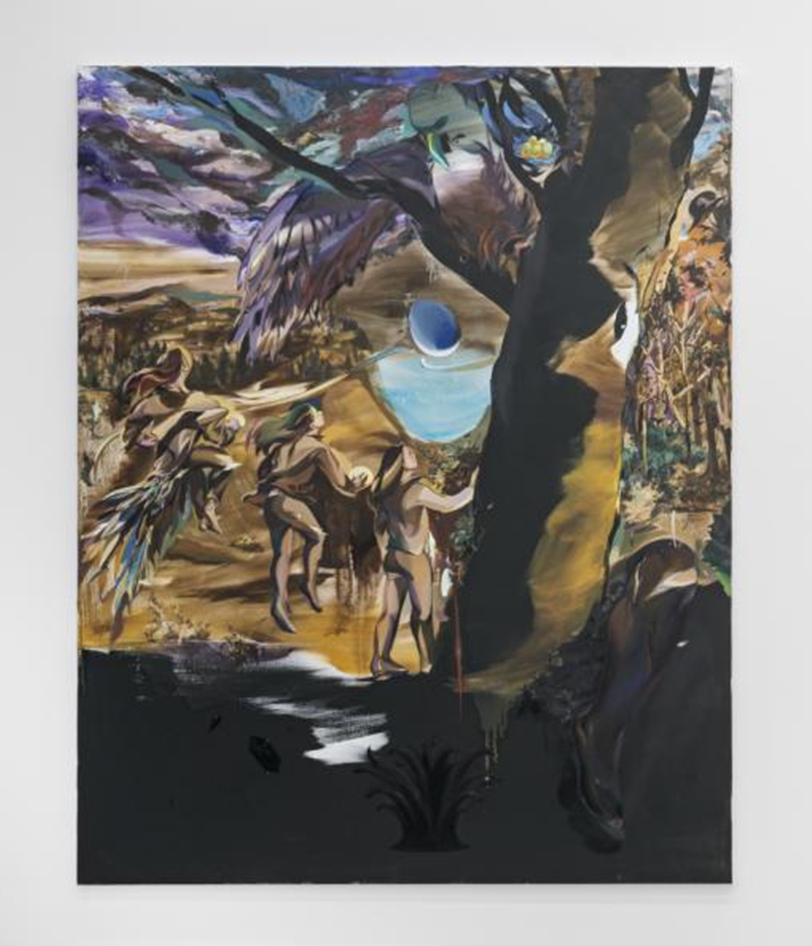
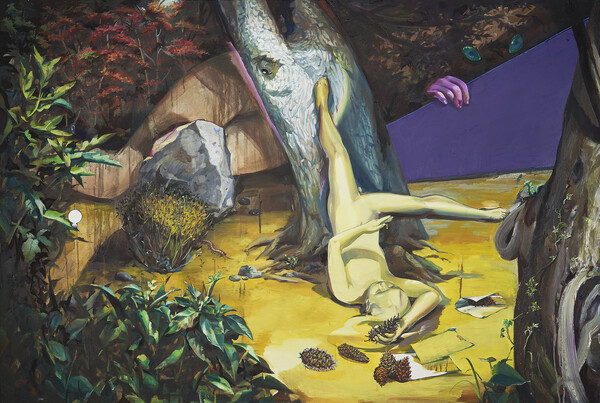
Soojung Jung, Protecting the forest in the east, 2018, Oil on canvas, 72.5x90.5cm ©Soojung Jung

Soojung Jung’s artistic world can be understood through three main axes. The first is her worldview on the relationship between nature and human civilization. Rooted in her experiences and philosophy, this worldview explores themes of coexistence between nature and humanity, the principles of the great outdoors that cannot be divided into good and evil, and the vitality and roles of small beings that together generate life force. 

The second concerns her reinterpretation of existing cultural icons and modes of expression into her own visual language, recontextualizing them in the present. Her interests range from classical painting to popular culture imagery such as film, animation, music videos, and advertising. She has studied the themes they convey, the meanings embedded in their forms, and the sensibilities revealed through poses and movements.


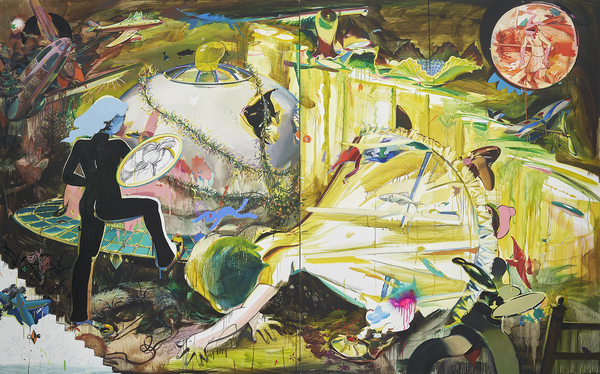
Soojung Jung, Sweat becomes the sea 1, 2019, Oil on canvas, 130.3x193.3cm ©Soojung Jung

Lastly, the third axis is the realization of an “imaginary world” that does not exist in reality, rendered as painterly scenes. Curator Kwon Hye-in has observed that this not only refers to a world that does not actually exist, but also signifies Jung’s intention to express her worldview—the first axis of her practice—not as a mere imitation of reality but through the language of painting. At the same time, it can also be read as a declaration to explore and reconstruct the artificial qualities of cultural icons and expressive modes—the second axis—in order to reclaim the purity of painting. 

These three axes that constitute Soojung Jung’s artistic world do not exist independently, but rather have been organically interconnected in each exhibition around a central theme.

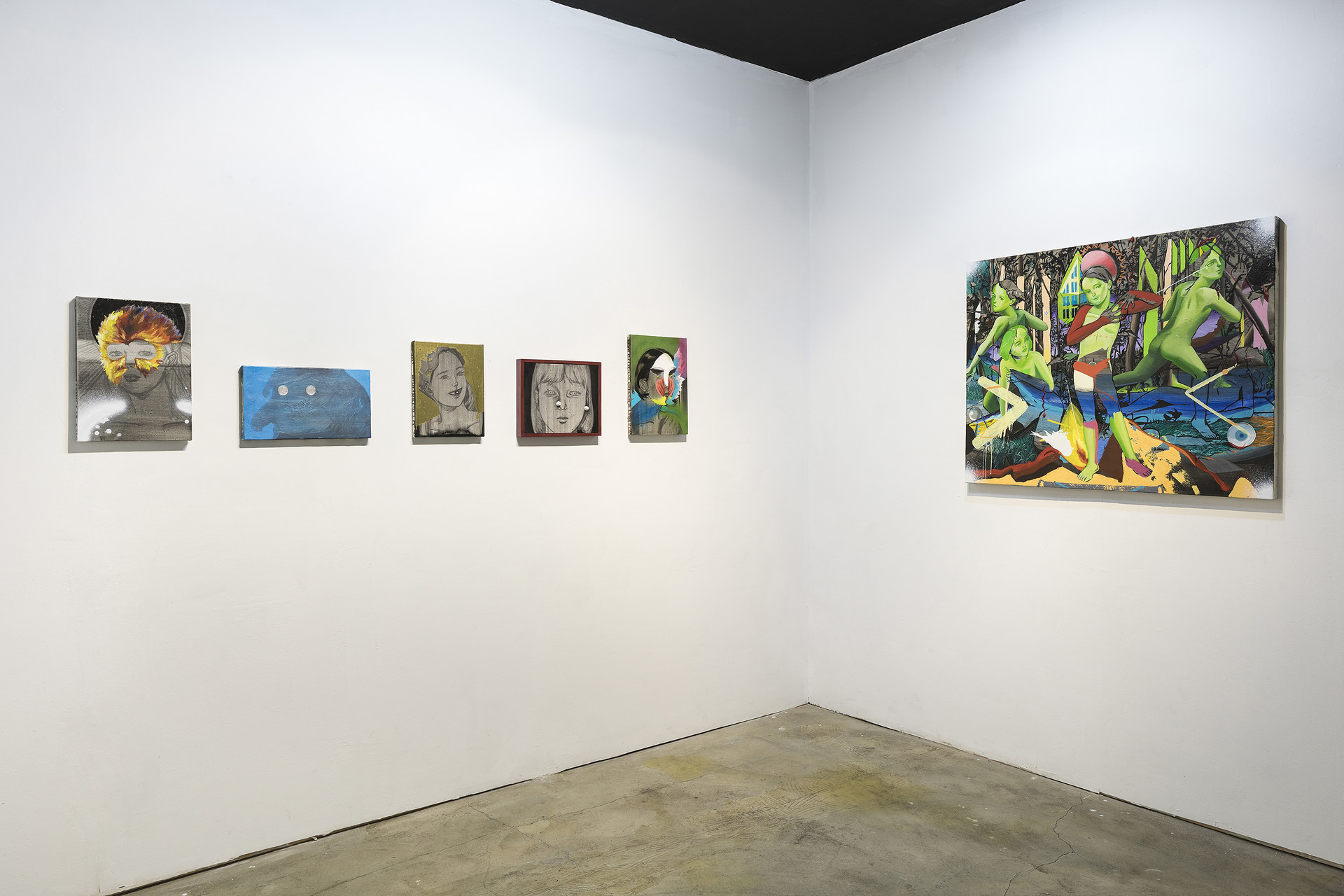
Installation view of 《Sweet Siren》 (Rainbowcube, 2018) ©Rainbowcube

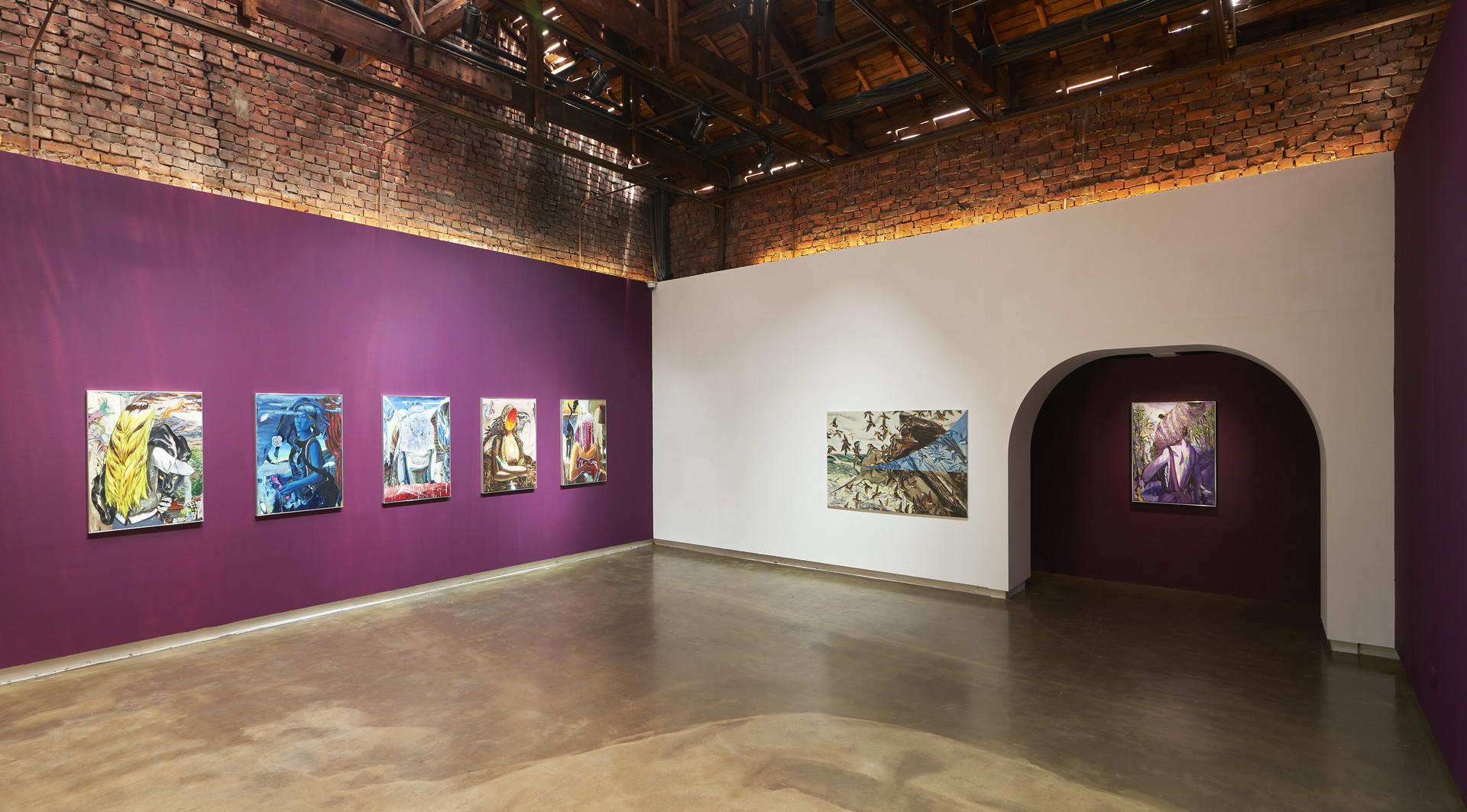
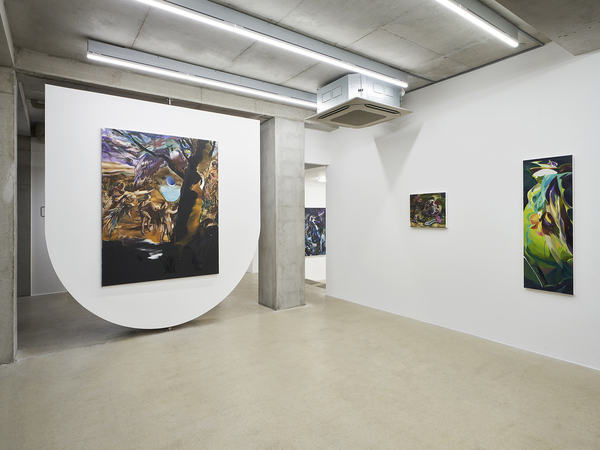
For instance, in her first solo exhibition 《Sweet Siren》 (Rainbowcube, 2018), she presented works that visualized the energy and life force of nature through mythical beings reminiscent of nymphs. The figures that appear in her paintings are not specific individuals but rather phenomena of force and tension, roaming within the pictorial nature as they control it and set events into motion. 

Like the nymphs of Greek mythology, they possess spiritual powers that render the narratives unexpectedly diverse and whimsical. The artist contemplated how to depict their interventions, substituting their traces with layers of paint and brushstrokes.

Installation view of 《Sweet Siren》 (Rainbowcube, 2018) ©Soojung Jung

Each canvas contained fragments of a long narrative that begins with the birth of the world imagined by the artist. Following this narrative structure, the viewer could perceive the beginning of life in images that resembled either cells or the cosmos; the emergence of meaningful living beings in abstract forms writhing to come into the world; the daily lives of human-like creatures that had thus grown; and finally, the mysterious world created by their gathering. 

The “imaginary world” explored in this series of paintings is depicted as a place that cannot be easily explained through the many dichotomies of reality—such as reality and illusion, good and evil, male and female, youth and old age, joy and sorrow.


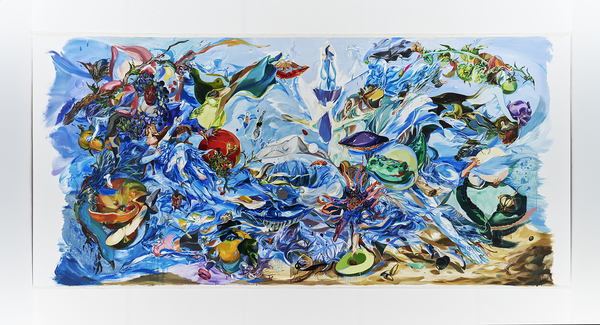
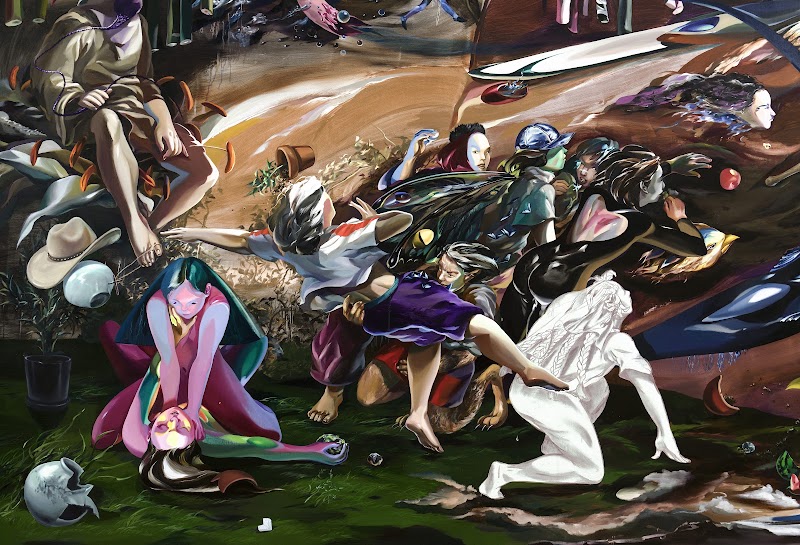
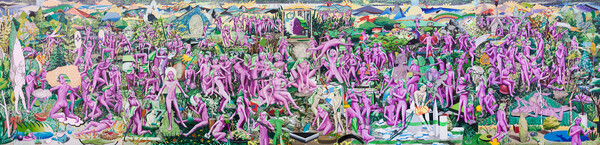
Soojung Jung, Giving answers to Bosch, 2018, Oil on canvas, 72.7x293cm ©Soojung Jung

One of the works that most vividly conveys the world Soojung Jung has created is Giving Answers to Bosch (2018), conceived as a response to Hieronymus Bosch’s The Garden of Earthly Delights. In this work, Jung portrays two extremes of humanity: on the one hand, the pursuit of truth through logic and science as a means of seeking solace; on the other, the creation of an immaterial god in whom one places absolute trust, thereby moving further away from truth. By weaving together the forms of Renaissance mythological painting with religious—or even heretical—elements, the artist prompts us to recognize that despite remarkable scientific progress, we continue to chase illusions. 

Just as Bosch’s painting does, the non-existent worlds of Jung are rendered flatly and indifferently, mirroring our own reality. She translates intangible forces—ambivalence, duality, invisible pulls and attractions—into tangible images.


Soojung Jung, No Graffiti Here, 2020, Oil on canvas, 162.2x260.6cm ©Soojung Jung

Subsequently, in her solo exhibition 《A Homing Fish》 (Gallery MEME, 2019), Jung unfolded within her imagined worlds beings that, like migratory fish, return to nature. The following year, in 《The Star of Villains》 at OCI Museum of Art, she explored through painting the roles, images, and life force of villainous characters from films. 

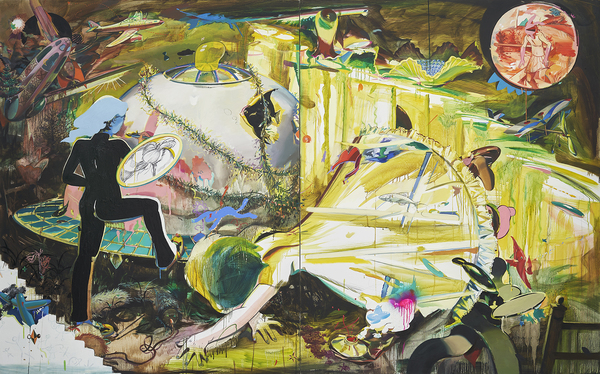
On her canvases, these villains are depicted in sci-fi scenes where the laws of time and space appear shattered, soaring upward in defiance of gravity. For instance, in No Graffiti Here (2020), one sees what appears to be a flying saucer either landing or crashing, a figure applying paint upon it, and another figure collapsed at his feet.


Soojung Jung, Fly, 2020, Oil on canvas, 162.2x260.6cm ©Soojung Jung

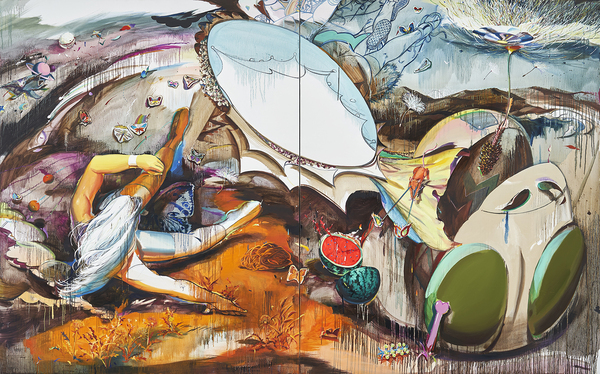
At this moment, what dominates the painting is not so much the sci-fi flying apparatus as the image of fast-moving projectiles, forces that strike, burst, crash, and shatter—clusters of energy in motion. A clear example can be found in Fly (2020), where a white, rounded object is hurled into the very center of the canvas. While it is impossible to determine exactly what this object is, its violent throw into the middle of the scene makes evident that every other element of the painting has been set into motion by its impact.


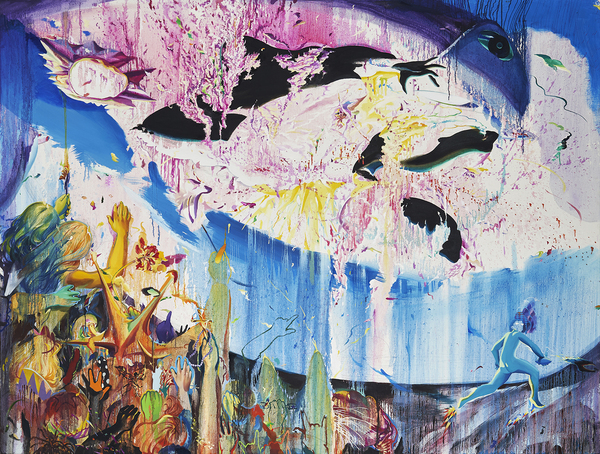
Soojung Jung, Our Starman, 2020, Oil on canvas, 193.3x259.1cm ©Soojung Jung

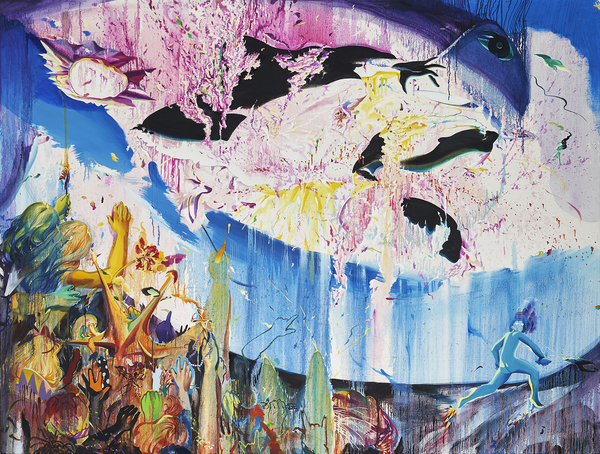
Our Starman (2020), which marks the climax of the exhibition and was in fact the very last work to be completed, suggests a new horizon encountered at the end of this journey. On the canvas, the artist’s alter egos, fragments of the world, and incarnations of new forces that emerged alongside the shattering of that world—all born from the collision between the artist and the world she created—are brought together in concentrated form.
 
Here, the circular disc expands to a scale that surpasses the canvas, appearing like a distorted horizon. The splatters of paint shooting in all directions and pouring down from above and below generate a warped spatiality charged with overflowing energy. 

Art critic Wonhwa Yoon has described Jung’s painterly experiment as “a process of destroying and rebuilding the world she has created, in order to discover the potential to expand it further.”

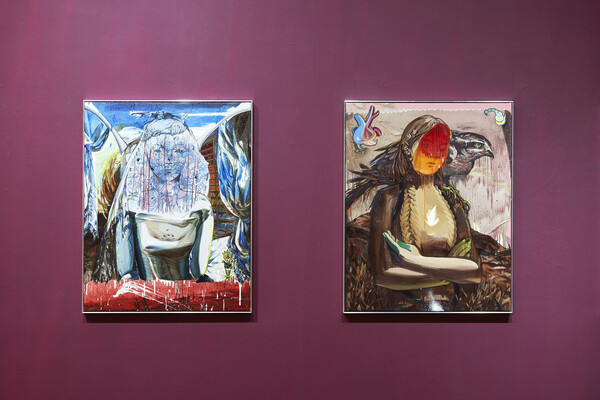
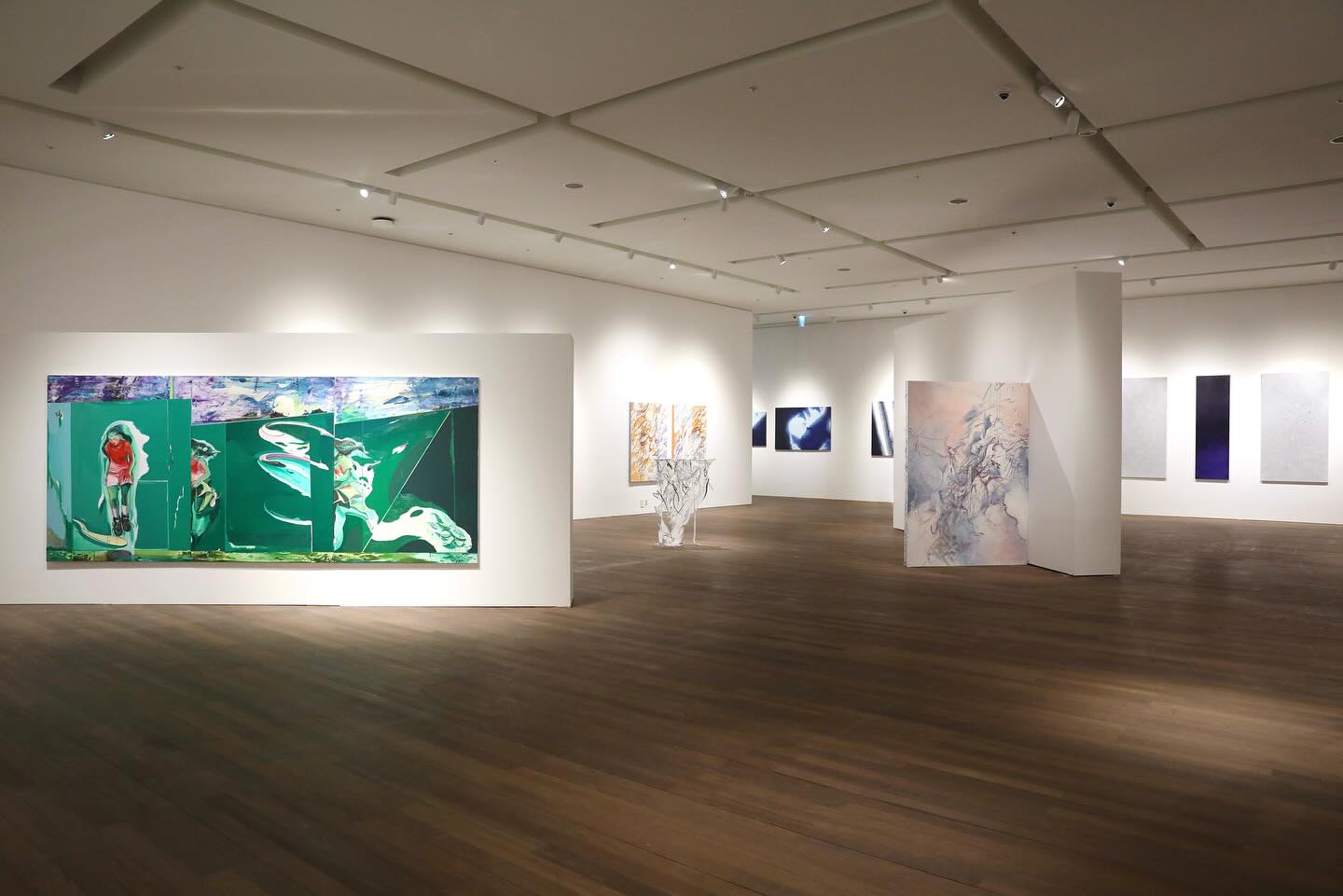
Installation view of 《Falconry》 (SeMA Storage, 2021) ©Soojung Jung

Meanwhile, in her 2021 solo exhibition 《Falconry》 at SeMA Storage, Jung primarily focused on women, birds, and animals. Inspired by falcons, the works on view revolved around themes such as birds, animals, flight, hovering, stillness, and coexistence. 

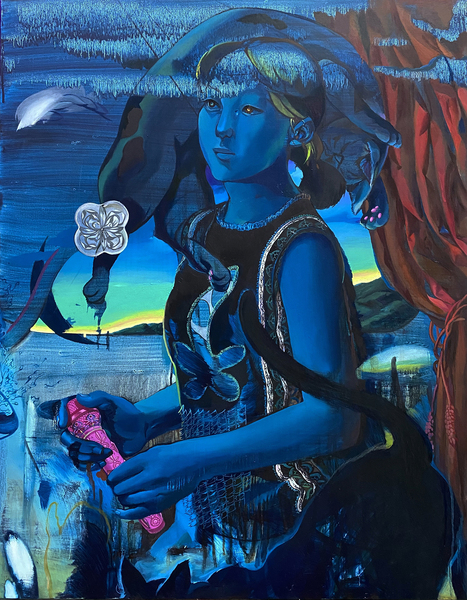
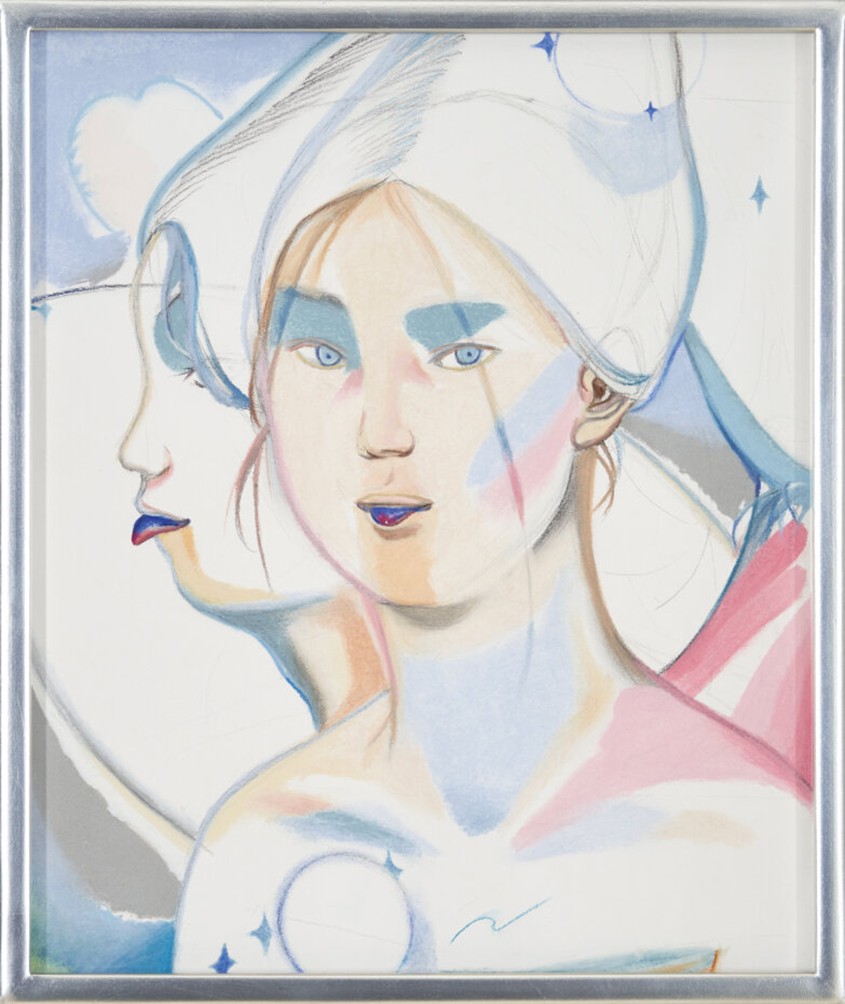
In her bird-centered works, the artist condensed or transformed the dynamic depictions of flying or hovering—traditionally visualized by existing media—into singular painterly scenes or formal elements. Meanwhile, the portrait series ‘Tronie’ (2021) was developed based on Jung’s interest in the 17th-century Dutch portrait genre known as “tronie.”


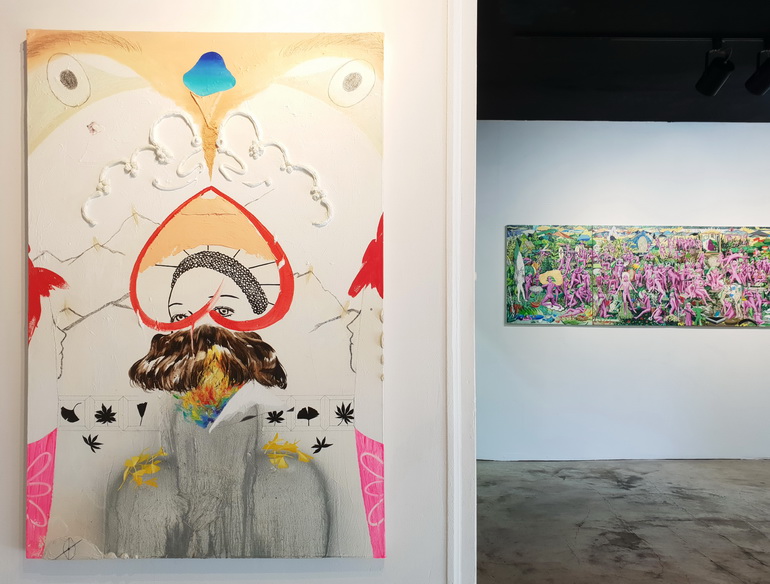
Soojung Jung, Tronie#2 Dawn of dreams, 2021, Oil on canvas, 91x72cm ©Soojung Jung

Unlike the formal portraits of aristocrats, the Tronie—a genre of Dutch portraiture focusing on lively expressions—evokes the sense of a selfie on social media while simultaneously creating imaginary figures rather than real individuals. Inspired by this, Jung uses the Tronie as a means to experiment with contemporary imagined portraiture.
 
Having consistently explored the portrayal of figures, the artist emphasizes nuance over concrete physical features, conveys the atmosphere connected to a pose through the face, and expresses emotion itself as a painterly element rather than relying on detailed or specific expressions. 

In this series as well, she presents multiple expressions of women wearing feathered garments—or half-human, half-bird figures—within a single canvas, and extends the visual narrative by incorporating animals alongside humans. These animals are not only emotionally synchronized with the women but also physically connected, perching on their shoulders or nestled in their arms.


Installation view of 《Falconry》 (SeMA Storage, 2021) ©Soojung Jung

In Soojung Jung’s figurative works, references extend beyond the Dutch Tronie genre to include visual motifs of women and animals from popular animations such as Nausicaä of the Valley of the Wind and Princess Mononoke.  

The depictions of women and animals in her paintings convey dynamic images of forward movement and resonate with the themes of the referenced animations. For example, her motifs suggest a delicate girl standing with animals against human civilization or emphasize the coexistence of humans and nature, reflecting the artist’s worldview through these borrowed iconographies.


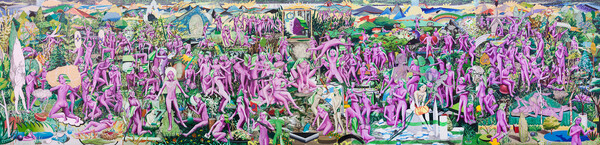
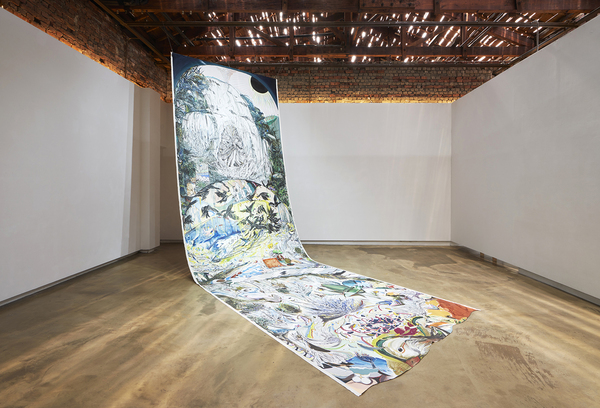
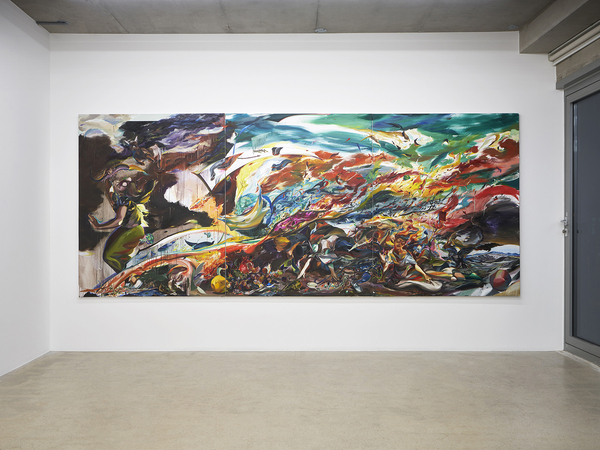
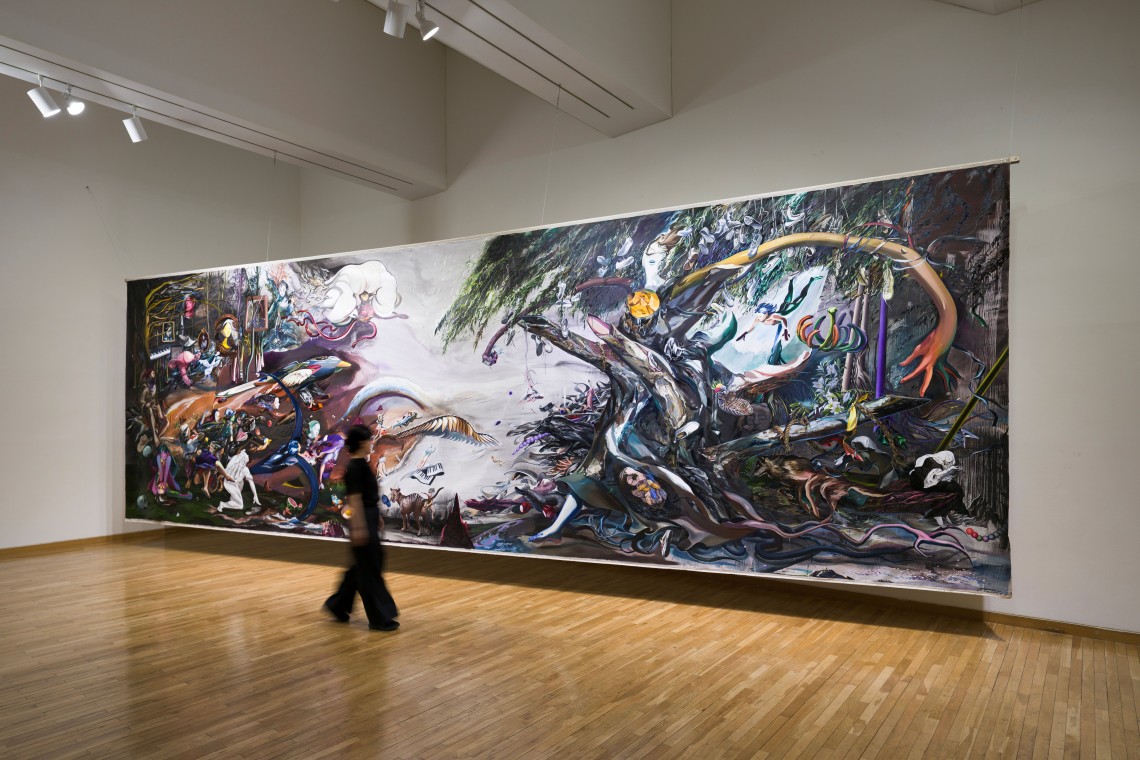
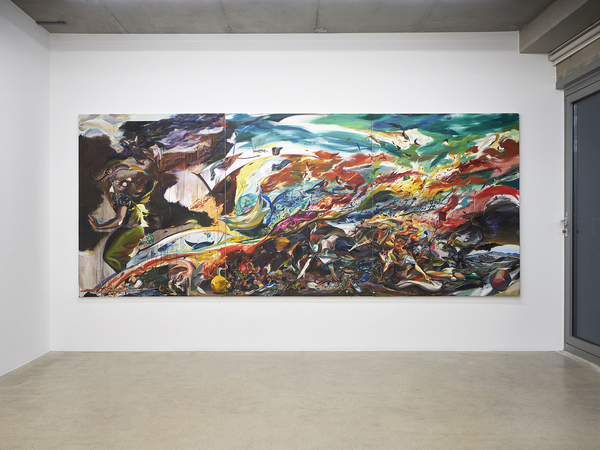
Soojung Jung, Mating, 2021, Oil and acrylic on canvas, 218x720cm ©Soojung Jung

The motifs of women, birds, and animals—central to conveying Jung’s worldview—are articulated even more distinctively and progressively in Mating (2021). This approximately 7-meter-long work depicts a cascade of a world beyond, spilling from color fields that evoke the classical form of a wall niche arch, populated with a variety of living creatures. 

Bursting with dynamism, the painting imagines a jubilant scene in which animals and birds celebrate moments of ecstasy, as suggested by its title. The depiction of these creatures goes beyond stereotypes and conventions, resonating playfully and strategically with the energy of a female-led music video. Through this, the work emphasizes the vitality and life force of nature in its most liberated, instinctive expression.


Soojung Jung, Voyage, 2023, Oil on canvas, 220x420cm ©Soojung Jung

In Voyage (2023), presented at the ‘Focus Asia’ section of Frieze Seoul, women appear freely floating in an imagined world. Women dressed in school uniforms, wedding gowns, and swimsuits resemble figures from our everyday life, yet they glide through water and air with ease in a liberated realm unlike reality. 

These women playfully interact with a variety of microscopic beings that compose the world—from luscious fruits to bizarrely shaped spores and plankton—evoking descendants of goddesses, fairies, or witches who have long lived alongside our imagination.


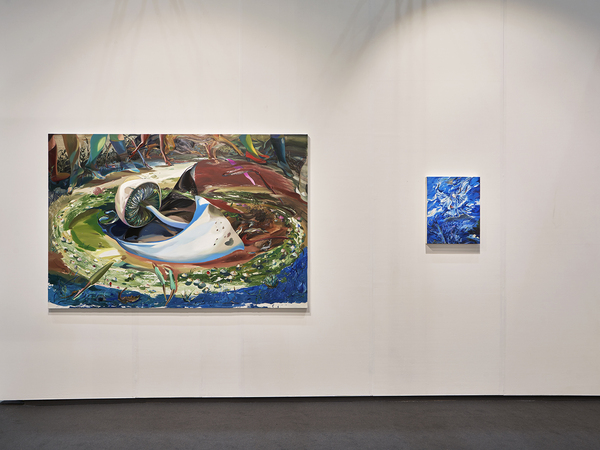
Soojung Jung, Installation view at 2023 Frieze Seoul ‘Focus Asia’ section ©Soojung Jung

Here, fungi such as mushrooms and mold, which reproduce by dispersing microscopic spores and proliferating infinitely, led the artist to the thought that “what moves this world are small, invisible organisms like fungi.” This idea soon found its way into her paintings. 

These scenes portray a diverse interplay of life—from microscopic organisms to fantastical super-beings—inviting viewers to imagine an idealized, alternative ecosystem unlike our reality.


Installation view of 《Black Bones, Heart and Gemstones》 (A-Lounge, 2023) ©Soojung Jung

In her 2023 solo exhibition 《Black Bones, Heart and Gemstones》 at A-Lounge, Jung focused on the figure of the “witch” to depict characters and situations entangled in anger, sorrow, resentment, tension, conflict, and jealousy. These narratives reflect both the stories of those historically victimized and the tales of those who rise above adversity and move forward.
 
Women accused of witchcraft and burned, along with the symbolic elements surrounding them, are twisted and re-woven into new narratives within her paintings. Jung sought to depict the true story behind the “witch,” whose image has been reduced in today’s capitalist market to a mere commodity, leaving only a superficial surface. 

By overturning, twisting, and transforming these superficially rendered witch motifs, she revitalizes them. Here, the witch becomes both a symbolic figure and a presence imbued with new meanings that cannot be interpreted through conventional associations of the motif.


Installation view of 《Black Bones, Heart and Gemstones》 (A-Lounge, 2023) ©Soojung Jung

The witches newly envisioned by Jung are portrayed as complex, multidimensional figures: at once victims and beings of strong energy and desire, immersed in grief yet burning with anger. Moreover, the layered scenes containing these figures invite viewers to reflect on the present era, presenting the works as “open paintings” that can be read from multiple perspectives.
 
Jung’s paintings, while grounded in various real-world references, go beyond merely borrowing conventional motifs. She weaves narratives with images imbued with new meanings and imaginative layers, exploring the potential of multifaceted, open-ended painting. 

The entanglement and coexistence of diverse beings in her works create a strange yet uncanny impression, while the pulsating energy among them reminds us of the vitality of all living beings sharing this world today.

 “I create scenes from my imagination and translate them into painting. I am interested in life and relationships shared within the vitality we experience in daily life and in nature full of life.”   (Soojung Jung, Artist’s Note)

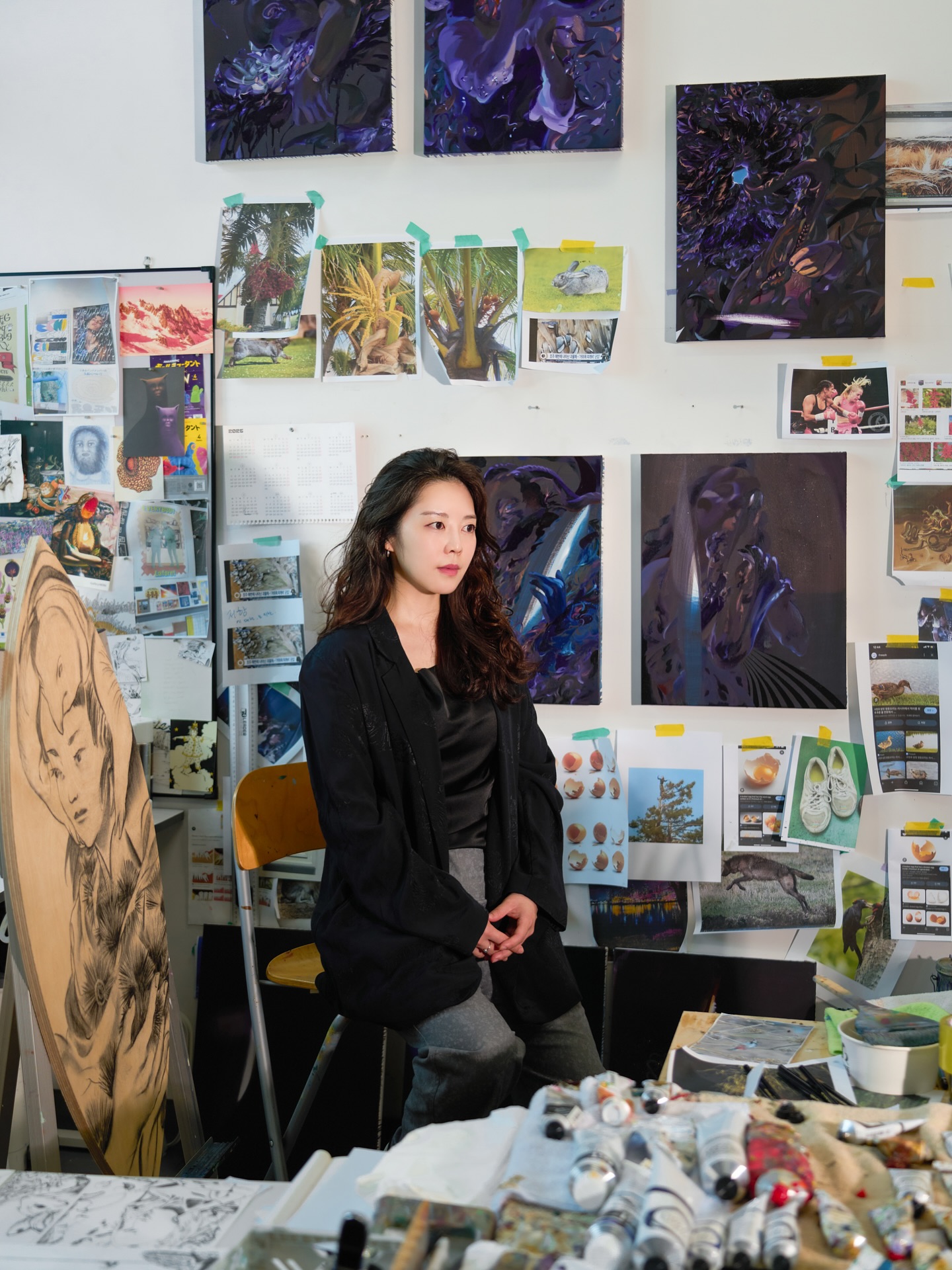
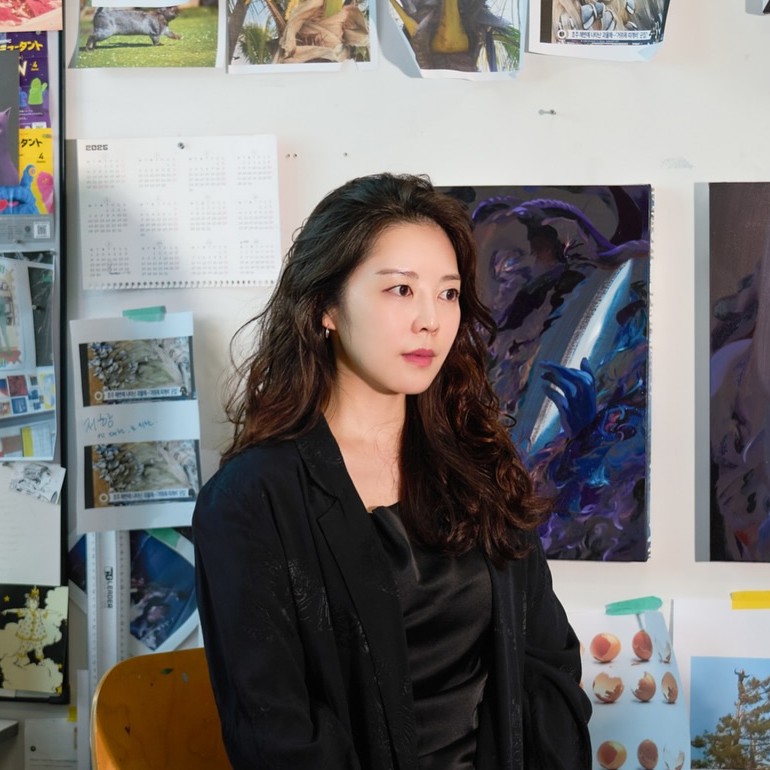
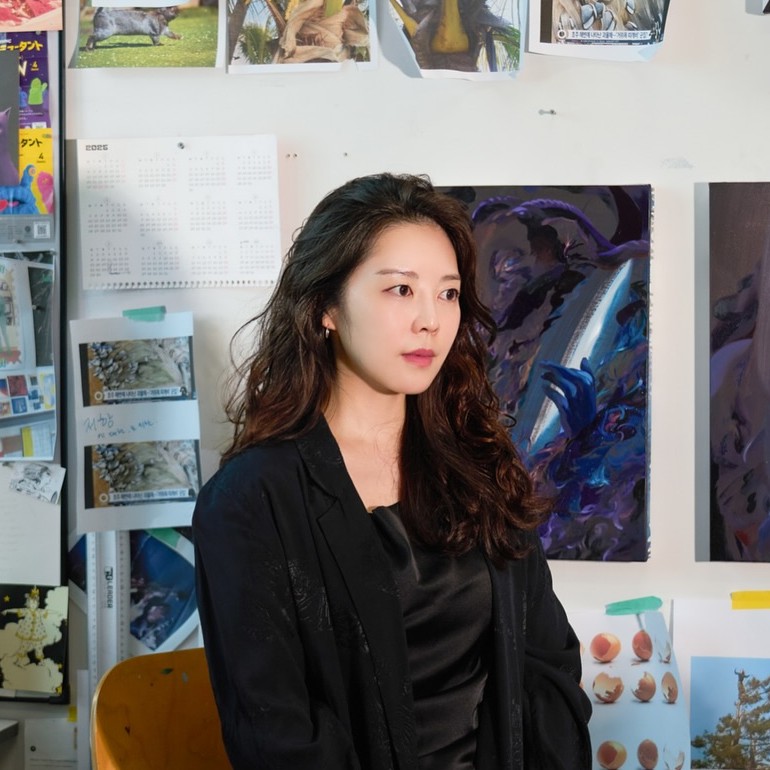
Artist Soojung Jung ©IAH

Soojung Jung studied painting at Gachon University and the Glasgow School of Art. Her solo exhibitions include 《Black Bones, Heart and Gemstones》 (A-Lounge, Seoul, 2023–2024), 《Falconry》 (SeMA Storage, Seoul, 2021), 《The Star of Villains》 (OCI Museum of Art, Seoul, 2020), 《A Homing Fish》 (Gallery MEME, Seoul, 2019), and 《Sweet Siren》 (Rainbowcube, Seoul, 2018).
 
She has also participated in numerous group exhibitions, including 《-DIRECTOR》 (KICHE, Seoul, 2024), 《Time Lapse》 (Pace Gallery, Seoul, 2024), 《UNBOXING PROJECT 2: Portable Gallery》 (New Spring Project, Seoul, 2023), 《Things we may not dare to see》 (Daejeon Museum of Art, Daejeon, 2023), 《Hysteria: Contemporary Realism Painting》 (Ilmin Museum of Art, Seoul, 2023), 《21st Century Paintings》 (HITE Collection, Seoul, 2021), and 《Name》 (Museumhead, Seoul, 2020). 

Jung presented a solo booth in the ‘Focus Asia’ section of Frieze Seoul 2023 and was selected as the 23rd Kumho Young Artist in 2025, with a solo exhibition planned at Kumho Museum of Art in 2026. Her works are included in the collections of OCI Museum of Art and BNK Busan Bank.
References