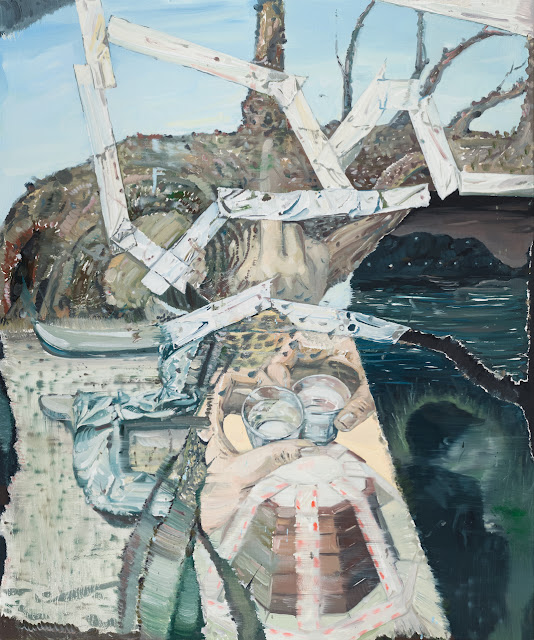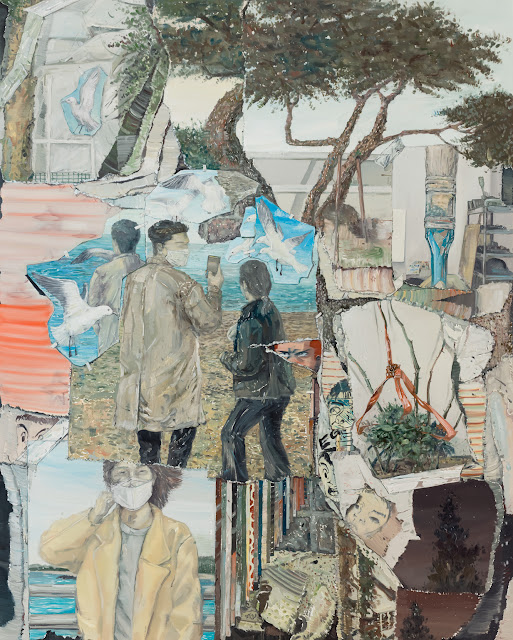


Jungin Kim (b. 1991) has been creating what he calls “open paintings,” in which seemingly unrelated fragments of memory are placed together on a single canvas, prompting viewers to lose their way within the work and imagine their own stories. These fragments of memory, akin to pixels, are regarded as individuals; through the process of grafting them onto the canvas, an image of “solidarity” emerges. 

In this way, the artist reflects on rapidly changing social phenomena and constructs provisional networks through assembled image fragments that resist being interpreted as a singular meaning.


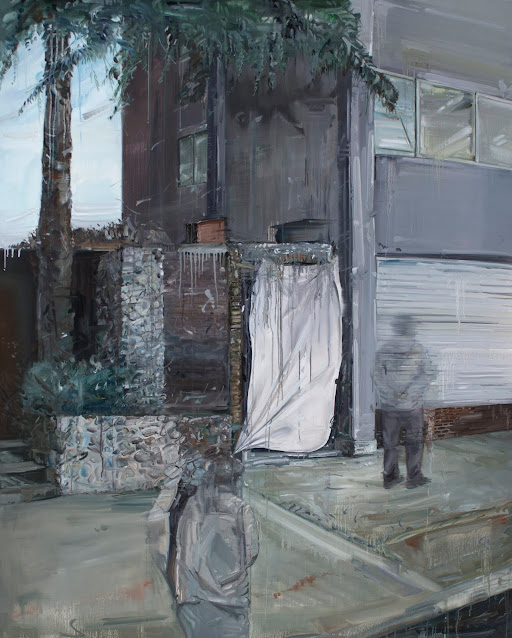
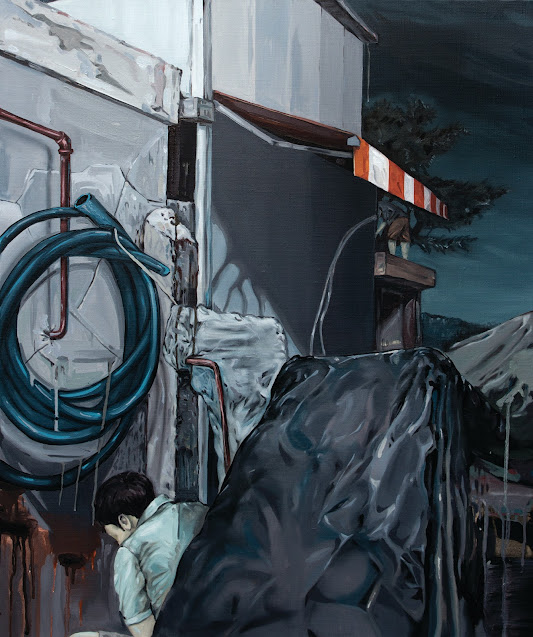
Jungin Kim, On-Site Atmosphere 1 (현장 분위기 1), 2017, Oil on canvas, 72.7x60.6cm ©Jungin Kim

Jungin Kim’s early practice began from a sense of disorientation toward the recurring cycles of transformation and replacement inherent in urban redevelopment. Since 2017, he has been painting the landscapes of neighborhoods under heavy construction. Within these bleak, desolate ruins of the city, he inserted figures. 

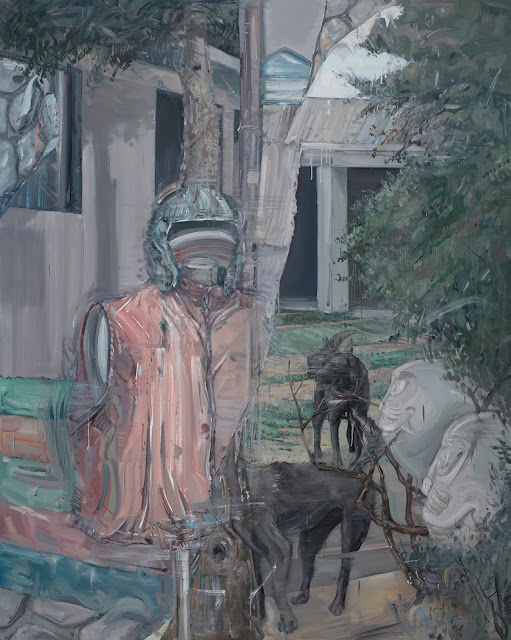
Yet these figures are deliberately stripped of individual expression: their faces are erased (Dull People, 2017), hidden (Negative Gaze, 2017), veiled in plastic (Two Men in the Wind, 2017), or blurred by the dynamism of motion (Breaking Boundaries, 2018). In contrast, the forms of non-human beings—such as dogs or roadside trees—are depicted with relative clarity.


Jungin Kim, Discoloring Space (탈색되는 공간), 2018, Oil on canvas, 162.2x130.3cm ©Jungin Kim

Judging from such expressions, the artist seems to draw himself closer to beings that have adapted their bodies to the environment over time, rather than to the individuals in the urban landscape. Curator Eunsoon Yoo interpreted his paintings by stating, “Rather than conveying the emotions of individual figures, he communicates his own feelings through the collective human image. Yet those emotions appear closer to doubt or distrust than to trust.”


Jungin Kim, Objects that depend on each other, 2019, Oil on canvas, 162.2x130.3cm ©Jungin Kim

Furthermore, in his works produced between 2018 and 2020, the relationship between humans and trees is shown to be reversed. As suggested by the word discolor in the titles Discoloring Space (2018) and Discoloring Man (2019), the landscapes on the canvas are rendered predominantly in gray tones, with the boundaries between background and figure remaining indistinct. 

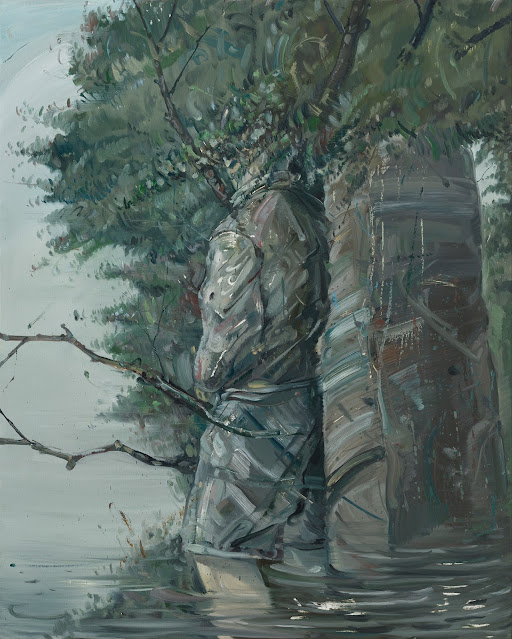
In addition, in paintings such as Jointed Figures (2019), Objects that depend on each other (2019), Trees and Men (2020), and Hidding Man (2020), trees and human figures overlap at the center of the canvas, appearing as fused forms where the distinction between the two has vanished.


Jungin Kim, Hiding Man, 2020, Oil on canvas, 90.9x72.7cm ©Jungin Kim

In this way, he deliberately weakens the history and presence of humans and the products of urban civilization by rendering them in near-monochrome tones or by blurring their forms. In contrast, peripheral beings such as trees are meticulously depicted, their presence accentuated through diverse colors and brushstrokes, thereby presenting non-human entities as more vibrant and vital than human figures.


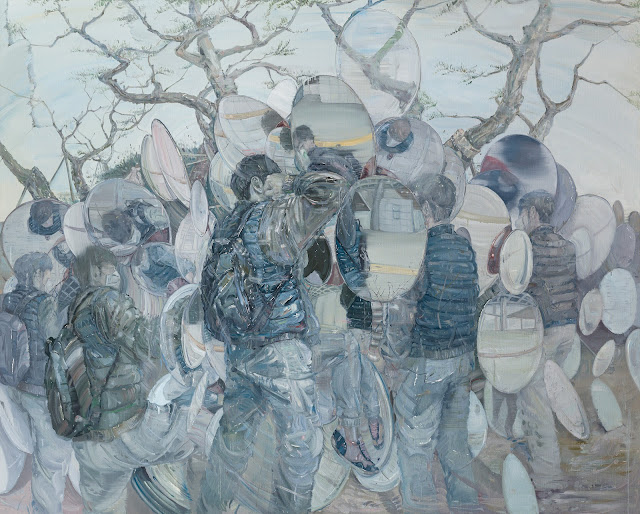
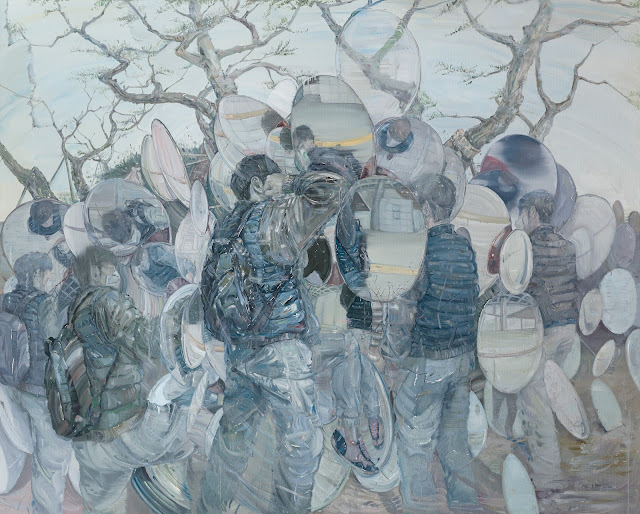
Jungin Kim, Path to a Tree, 2020, Oil on canvas, 181.1x227.3cm ©Jungin Kim

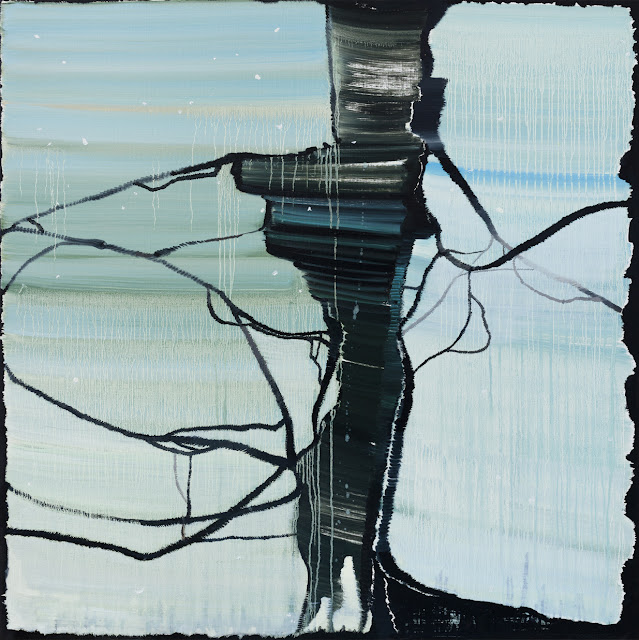
By 2020, fragmented combinations of forms began to take shape across Jungin Kim’s canvases. In his earlier works from this period, materials such as mirrors or glass served as devices to divide the pictorial space. For example, in Confusion by the Mirror (2020), multiple convex mirrors overlap, reflecting surrounding figures, trees, and landscapes, thereby disrupting spatial perception and evoking an unreal, almost surreal atmosphere.
 
Similarly, in Path to a Tree (2020), multiple mirrors gather surrounding images into a two-dimensional plane. Here, the mirrors become entangled with groups of human figures, appearing as a single mass. 

Through these distortions, reflections, and overlaps of mirrors, the artist poses the question: “Is the real world not already distorted? And can one truly distinguish between seeing something and experiencing it?”


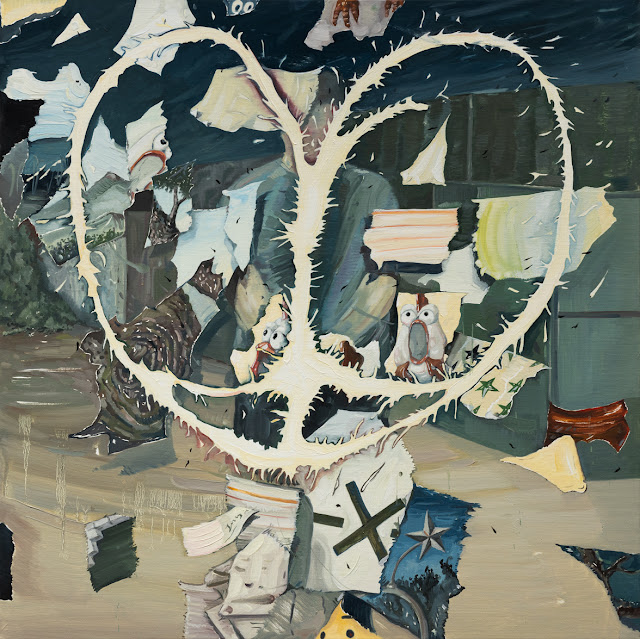
Jungin Kim, The inextinguishable flame, 2021, Oil on canvas, 72.7x60.6cm ©Jungin Kim

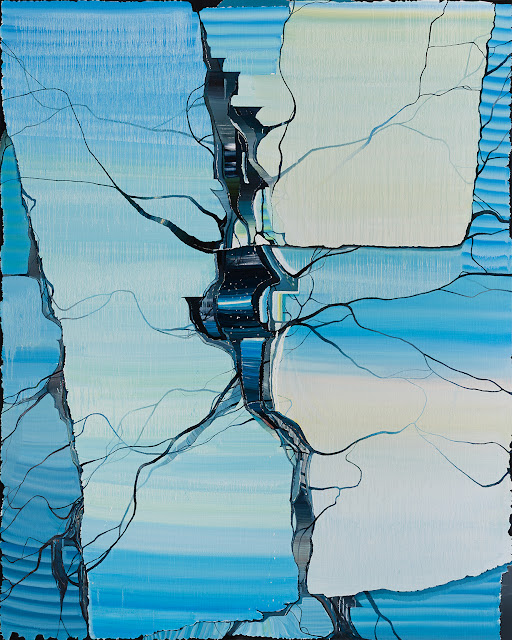
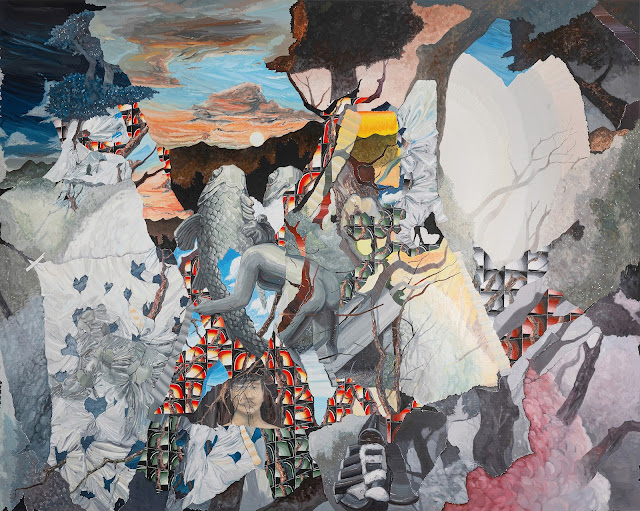
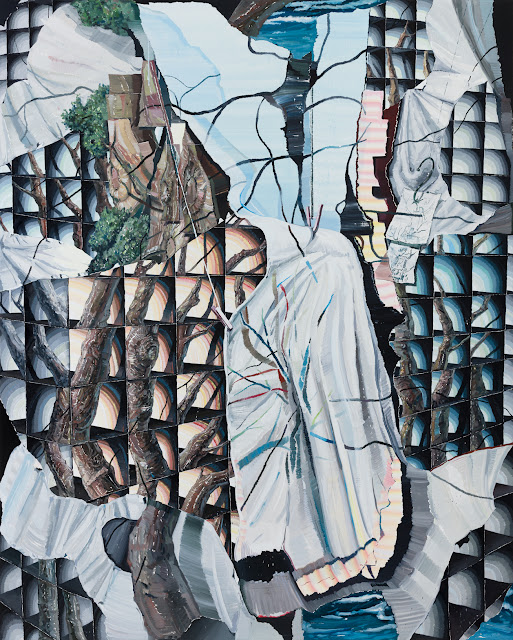
Meanwhile, starting in 2021, Kim began to assemble fragmented images on his canvases in a collage-like manner, constructing new relationships among them. These images, joined together as if torn pieces of paper were taped back together, consist of elements that had not occupied significant weight in the artist’s memory—things left in an ambiguous state, not even consumed as images. 

The memory fragments derived from trivial details make it difficult to grasp any original whole form and do not clearly suggest a specific context. Thus, each fragment holds no hierarchy of its own; rather, it exists only in relation to the other images with which it comes into contact.


Jungin Kim, Image Union, 2021, Oil on canvas, 162.2x130.3cm ©Jungin Kim

In this way, if Kim’s early works infused his paintings with the sense of instability and fluidity of liquid to reflect the anxieties of a rapidly changing era, then after 2020 his paintings began to draw upon “remnants whose expiration date has passed” or “abandoned objects” as individual image fragments. By connecting these fragments, he constructs a “solidarity of images” that resists the torrent of society.


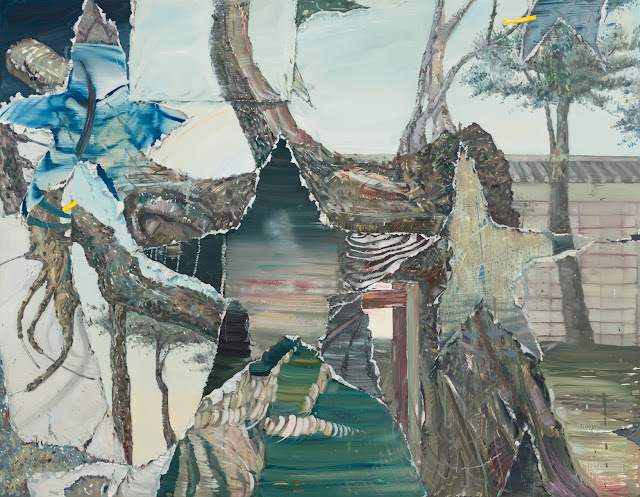
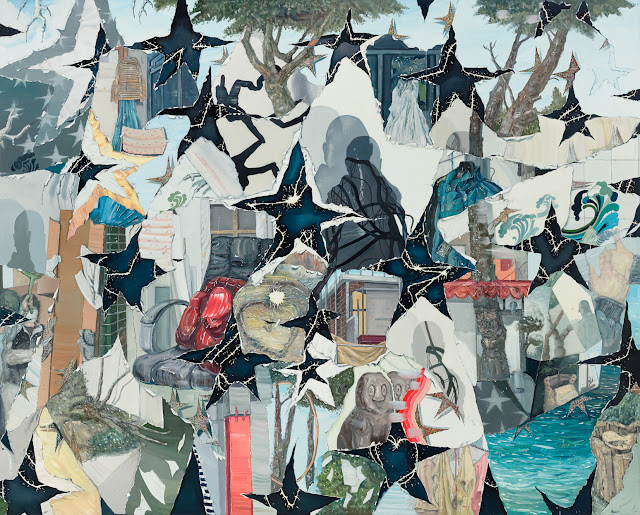
Jungin Kim, A Star Made of Debris, 2021, Oil on canvas, 91x116.8cm ©Jungin Kim

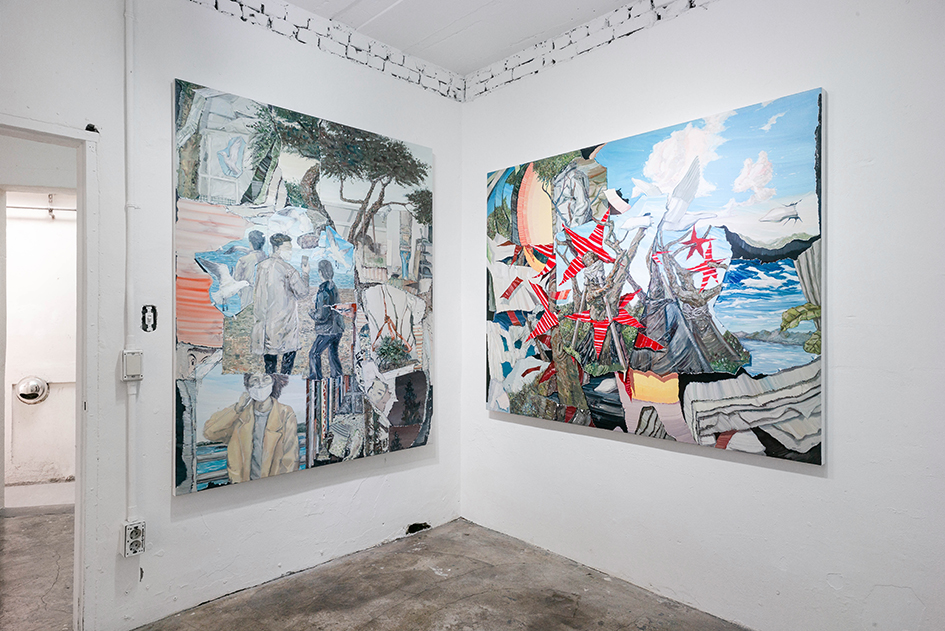
In his solo exhibition 《Image not able to be melted by harsh waves of change》 at the Leeungno Museum in 2022, Kim presented works that revealed a more deliberately constructed division of the pictorial plane. For instance, A Star Made of Debris (2021) depicts torn fragments of images overlapping and intersecting to form the shape of a star. 

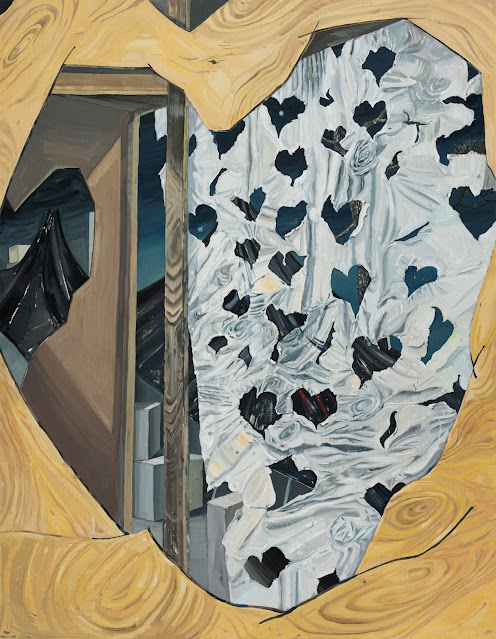
In his later works, motifs such as stars, hearts, and squares began to appear throughout the canvas. Rather than suggesting a fixed meaning or context in themselves, these motifs serve to disrupt the viewer’s gaze, which seeks representation, and instead open up gaps in meaning.


Jungin Kim, How I look at the scenery 1, 2022, Oil on canvas, 116.5x91cm ©Jungin Kim

For the artist, what matters more than the representation of an image is how individual fragments overlap and intersect to generate new relationships and meanings. The combinations of fragments, along with the empty signifiers inserted between them, compel viewers to linger longer before the canvas and to imagine their own diverse stories—stories that cannot be reduced to a single, unified narrative.


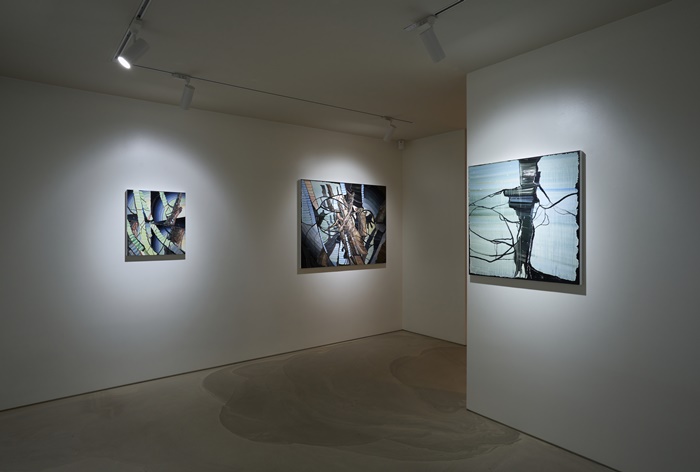
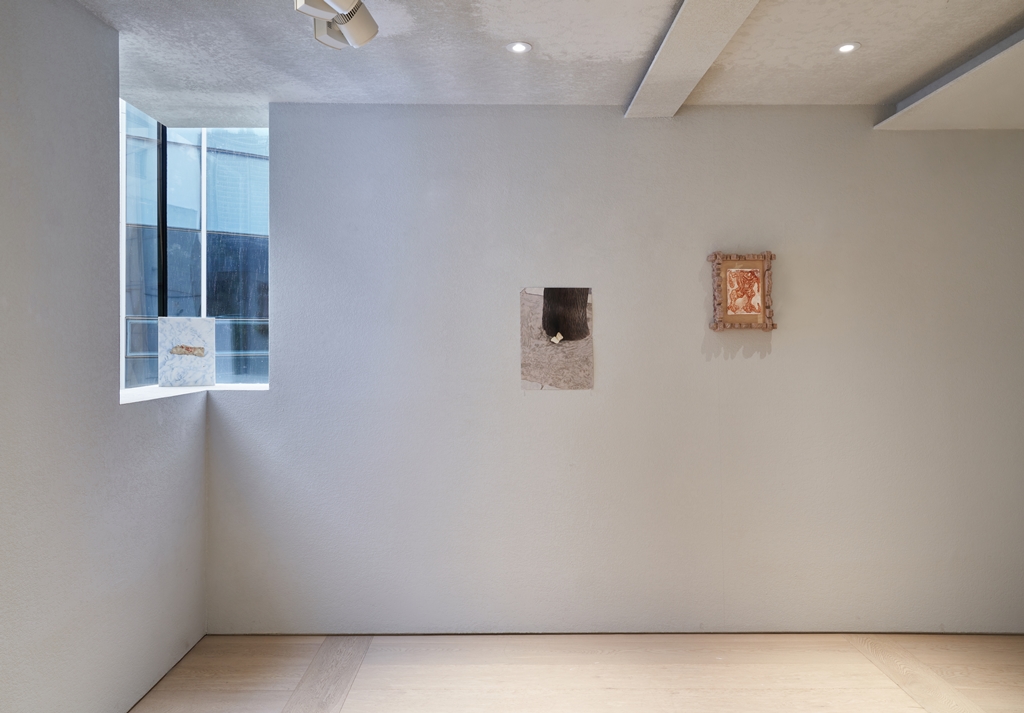
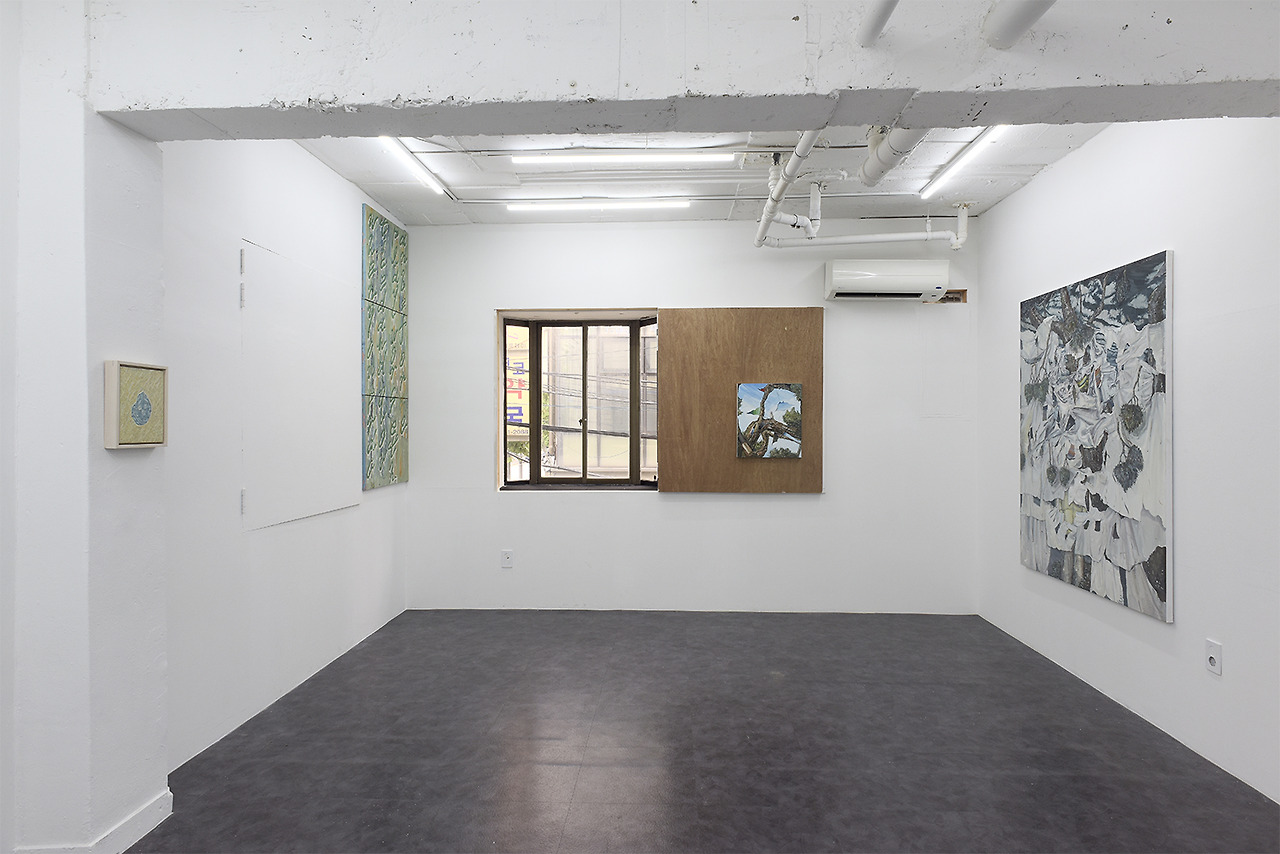
Installation view of 《Pixel Memory》 (Laheen Gallery, 2023) ©Laheen Gallery

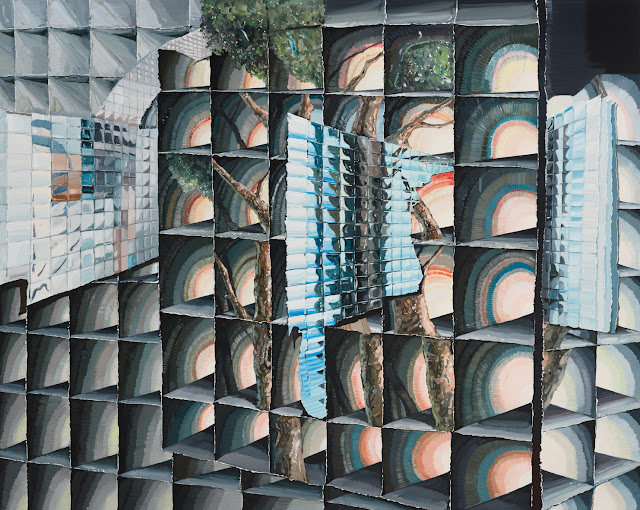
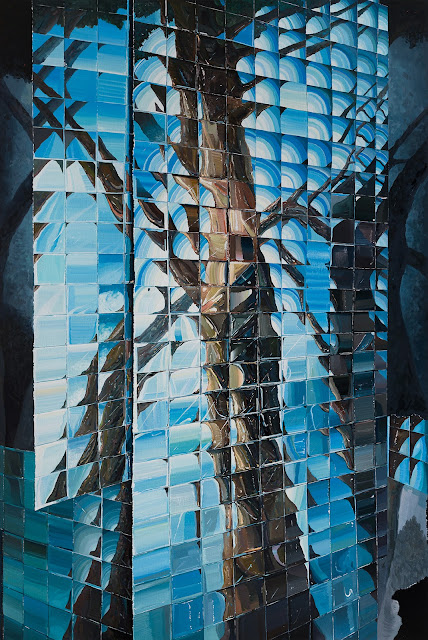
In his 2023 solo exhibition 《Pixel Memory》 at Laheen Gallery, the artist expressed geometric and three-dimensional forms by repeating fragmented pieces from his memories—trees, figures, gaps, fabrics, sketches—into a square “pixel” pattern. 

Whereas previously he had layered images flatly on a two-dimensional surface, 《Pixel Memory》 saw his multiple experiences accumulate in a more three-dimensional register, weaving images in which temporality is deconstructed.


Jungin Kim, Sum of memory slices 1, 2023, Oil on canvas, 72.7x90.9cm ©Jungin Kim

Jungin Kim segmented images as memories and assembled them into countless “pixels,” reconstructing lost visual recollections through painting. In doing so, he visualizes human forgetting and ultimately attempts to resist, through painting, the accelerating pace that facilitates such forgetting. 

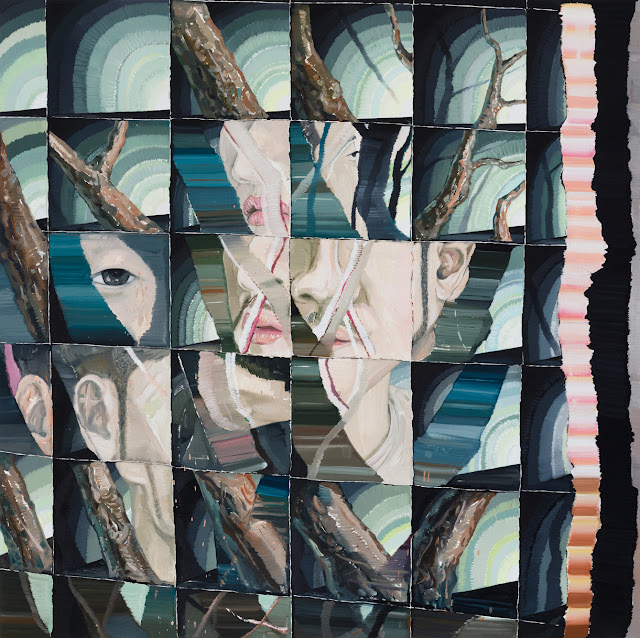
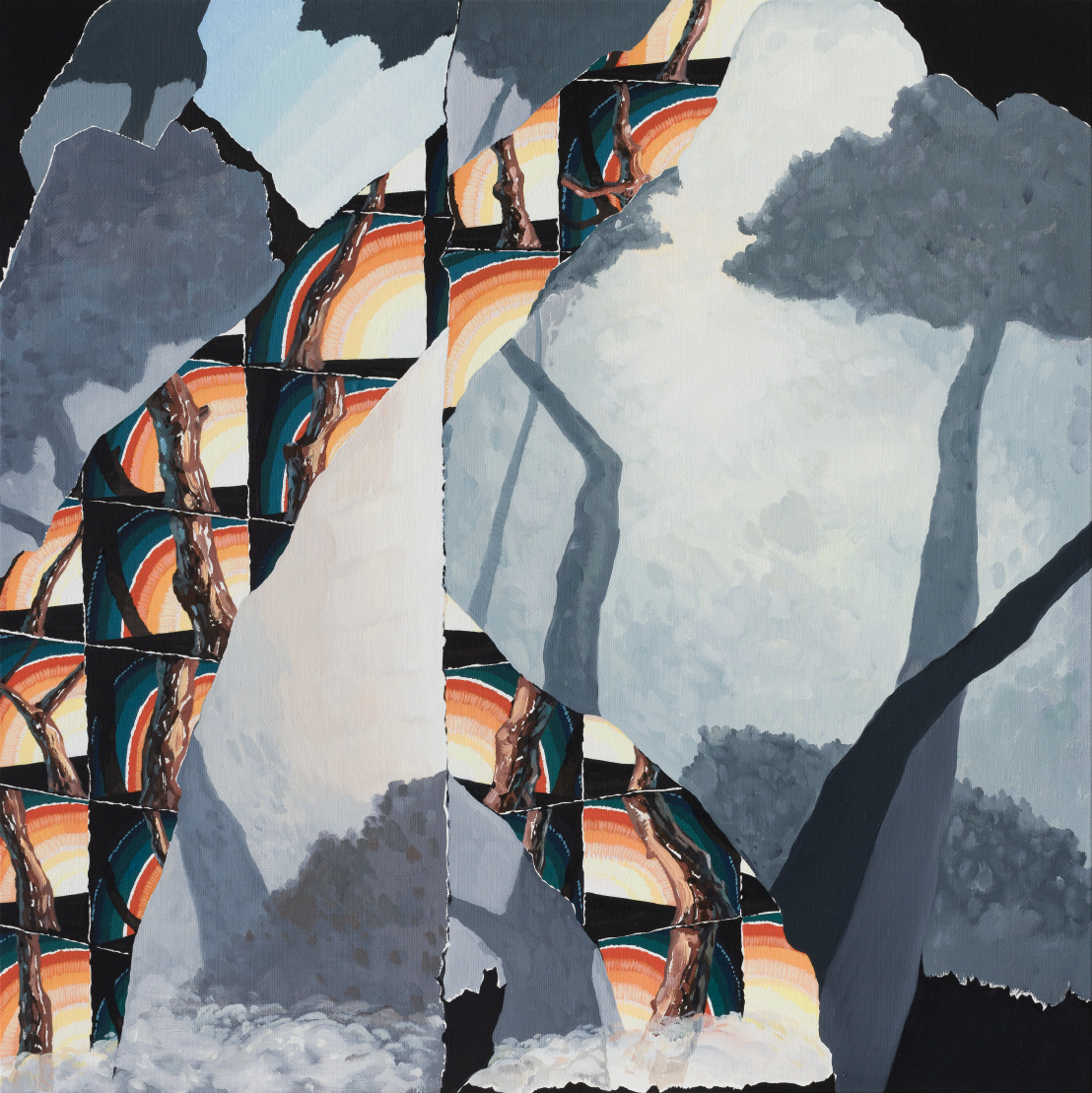
In the series ‘Memories Becoming Clearer’ (2023) and ‘Sum of Memory Slices’ (2023), the process of trees—which have repeatedly appeared in his work—being divided and recombined within rooms, like pixels, is depicted. The trees here serve as a metaphor for the artist’s lost memories. Meanwhile, elements that remain vividly in his memory are obsessively repeated, resulting in the deconstruction of the original form of the subject.


Jungin Kim, Memories becoming clearer 1, 2023, Oil on canvas, 72.7x72.7cm ©Jungin Kim

Through the repeated arrangement of cubic, square-shaped units, he concretizes a three-dimensional image; however, the resulting composition does not converge into a single, unified form but instead resembles a loosely connected chain. 

Kim overlays fragments of frozen moments or images that exist solely within his memory, detached from the linearity of time. In doing so, he disrupts the viewer’s attempt to imagine a complete image, making visible the incompleteness and nonlinearity of “memory-images.”


Jungin Kim, Rewind 1, 2025, Oil on canvas, 162.2x130.3cm ©Jungin Kim

In this way, Jungin Kim’s paintings can be read as a form of resistance against the invisible pressures—or power—that disrupt and homogenize society, the very forces underlying social change. The “image solidarity” that he constructs on canvas by gathering marginalized fragments from the peripheries of his life and memory conceals each piece’s specific time, space, content, and meaning, twisting them into forms that lack relational coherence and retain an inherent ambiguity. 

The ambiguity created through this entanglement functions as a strategy of resistance against power in his work. By leading viewers to lose themselves, wander, and seek meaning within the uncertainty, he experiments with possibilities for imagination, critical perspective, subjectivity, and the restoration of judgment through painting.

 “Visualizing not just fragmented images but images in solidarity reveals my consciousness and attitude in responding to a chaotic era.”   (Jungin Kim, Artist’s Note)


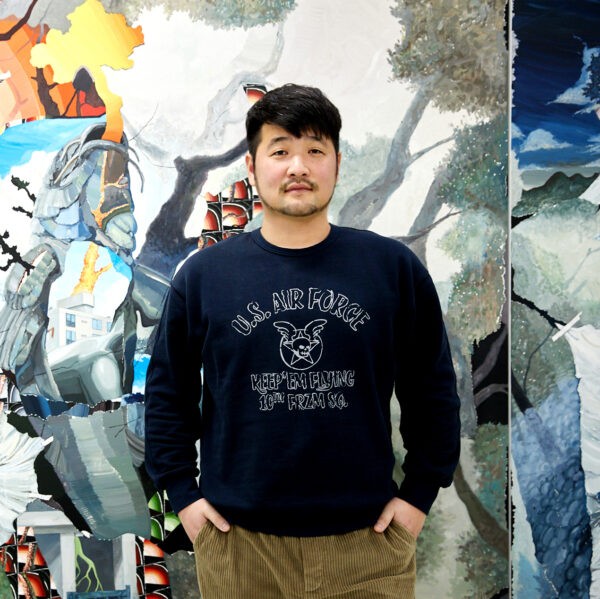
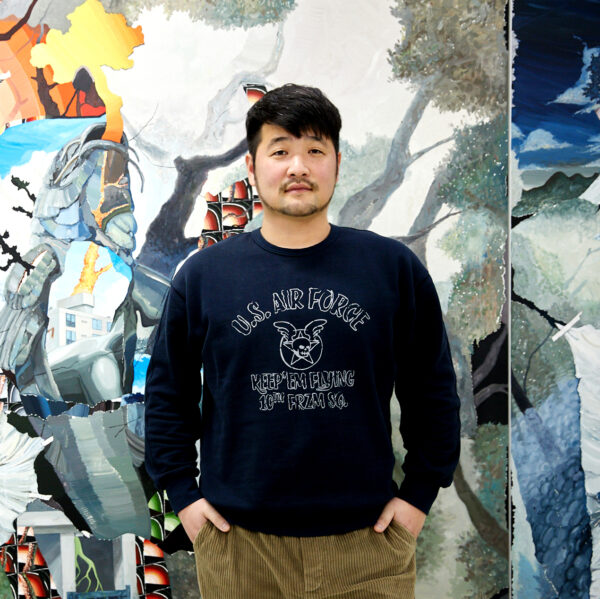
Artist Jungin Kim ©Kiaf SEOUL

Jungin Kim studied Western painting at Mokwon University and earned both his MFA and PhD in painting from the Graduate School of Fine Arts at Hongik University. His solo exhibitions include 《Pixel Memory》 (Laheen Gallery, Seoul, 2023), 《Image Union》 (SeMA Storage, Seoul, 2022), 《Record of Fragments》 (Sungkok Art Museum, Seoul, 2022), and 《Image not able to be melted by harsh waves of change》 (Leeungno Museum, Daejeon, 2021).
 
He has also participated in numerous group exhibitions, including 《Layers of Now》 (Space458, Seoul, 2025), 《Perigee Winter Show 2024》 (Perigee Gallery, Seoul, 2024), 《Mussolini Podcast》 (Amado Art Space, Seoul, 2024), 《Mono Mansion》 (Outhouse, Seoul, 2023), 《NANJI ACCESS with PACK : Mbps》 (Seoul Museum of Art, Seoul, 2022), and 《Edited Landscape》 (Gana Art Busan, Busan, 2022).  

Kim was selected for the SeMA Emerging Artists (2022) and Sungkok Art Museum (SAM) Open Call (2022), and he was a semi-finalist in the ‘2025 Kiaf HIGHLIGHTS’. His works are held in collections including the MMCA Art Bank, the Museum Department of Seoul City Hall, and more.
References