

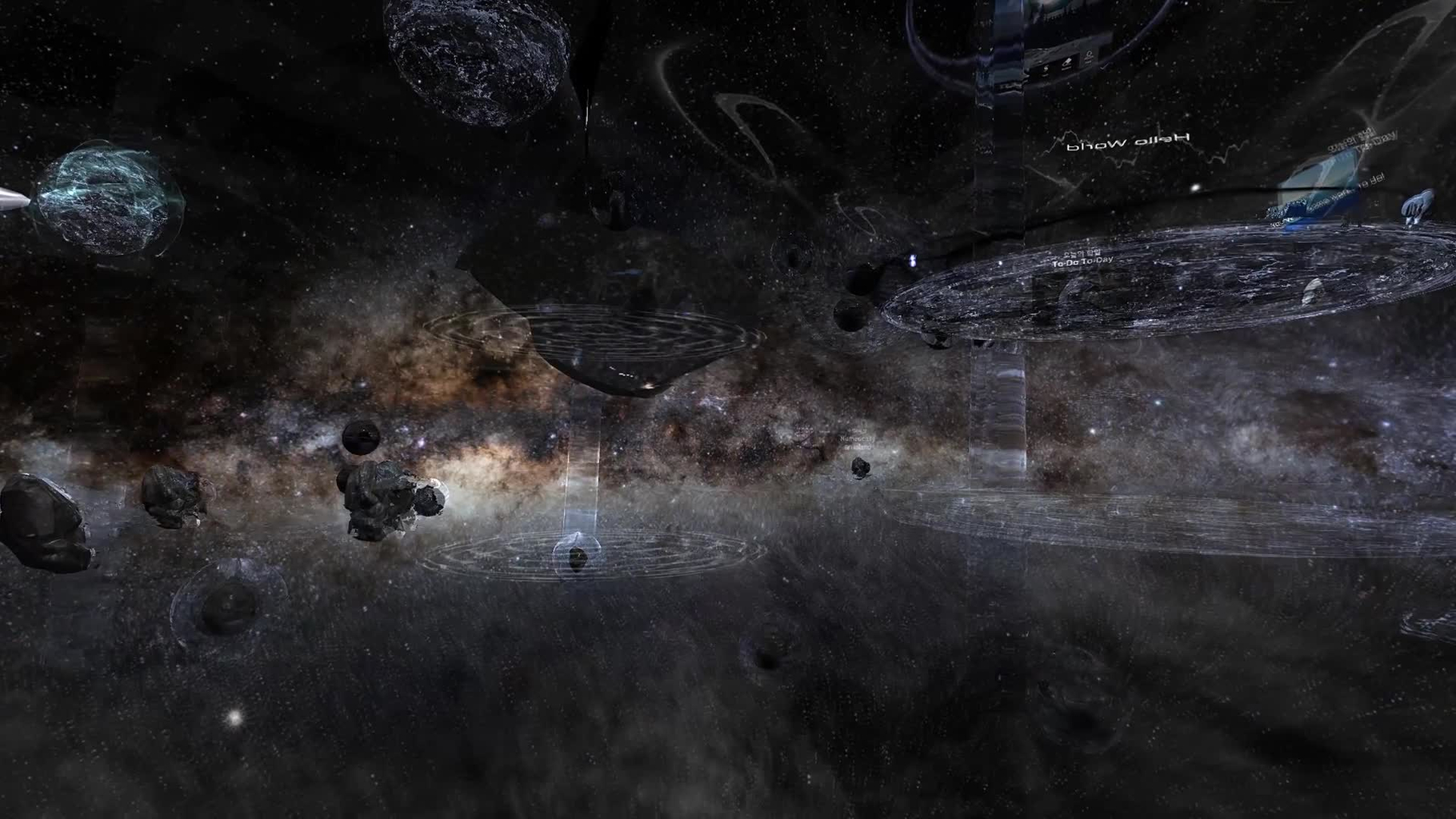
Inhwa Yeom (b. 1991) has been reconstructing the experiences of historical minorities through technology, devising ways to embrace the actions, reactions, and expressions of diverse beings. To this end, she has been developing an XR-based “3D Performative Apparatus–Environment,” leading audiences to experiences of “becoming other beings” through cognitive, psychological, and physical participation.


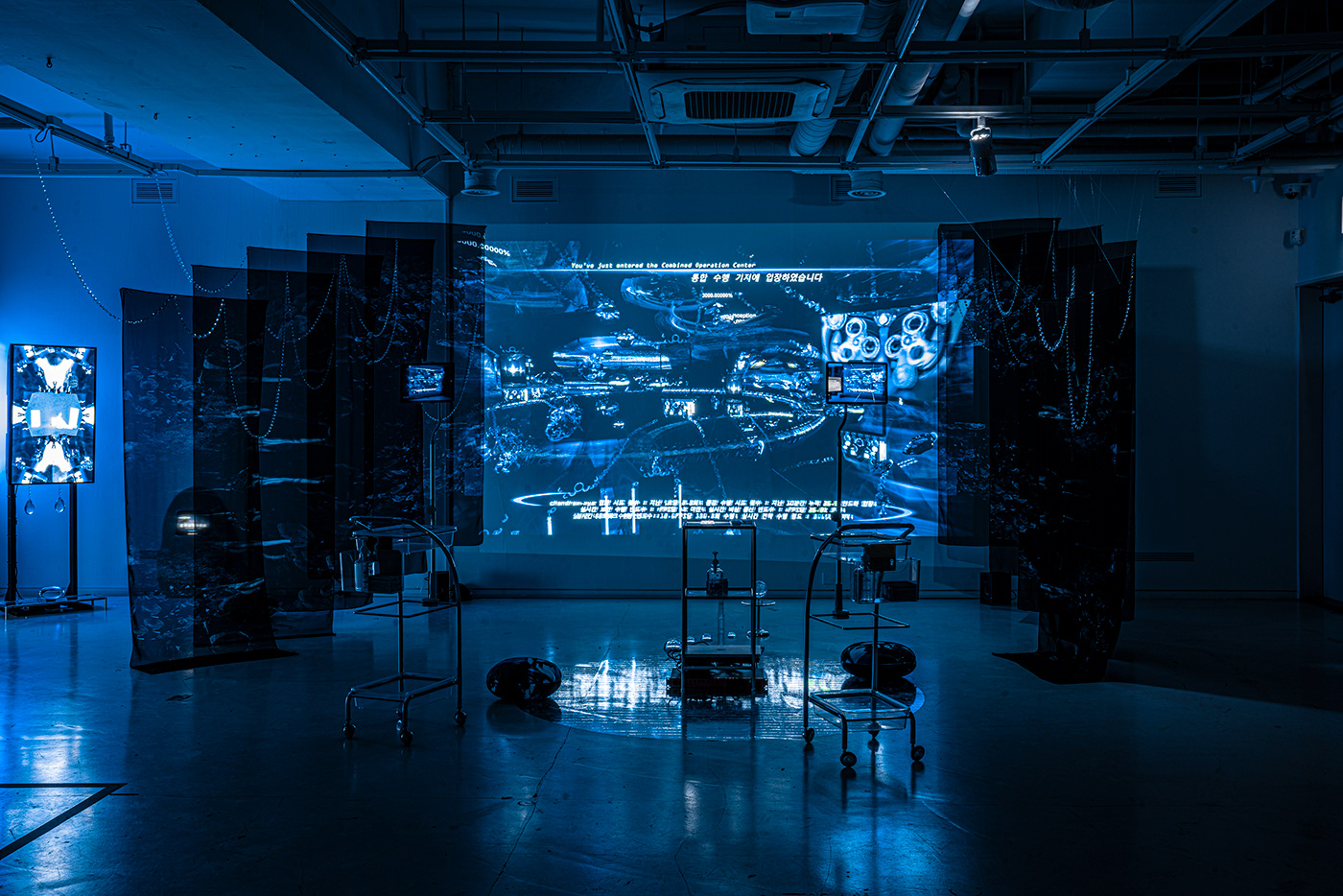
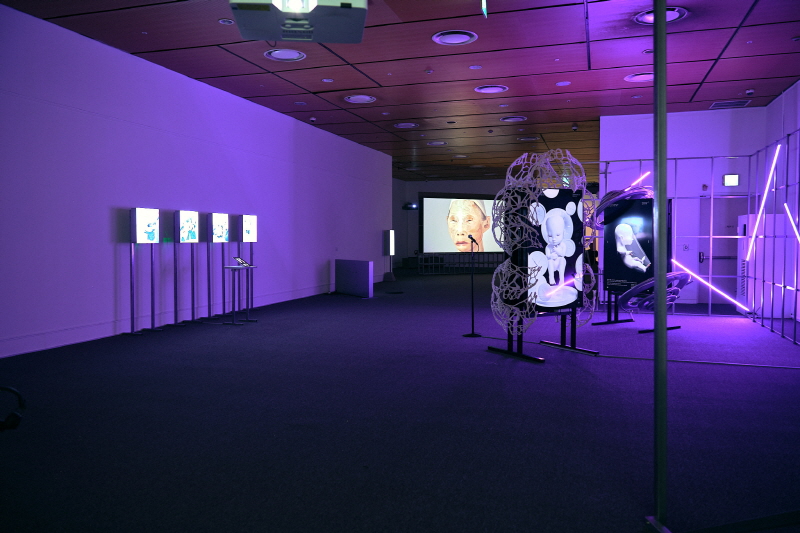
Inhwa Yeom, Chandra X, 2021-2022, 3D Performative Apparatus-Environment (PC-based VR, Mobile AR, Installation), Installation view of 《SIGGRAPH Asia 2022》 (Daegu EXCO, 2022) ©Inhwa Yeom

Inhwa Yeom’s central concept and medium, the “3D Performative Apparatus–Environment,” refers to an environment that brings together digital devices incorporating 3D graphics and interactive technologies as well as non-digital devices, presenting them like a stage for the audience. Within this staged environment, viewers take on the role of becoming beings other than themselves.
 
To construct such an environment, Yeom employs extended reality (XR) technologies in which virtual reality (VR) and augmented reality (AR) are interconnected and operated together. These apparatuses/environments possess an inherent performativity as technological systems, while also interweaving another layer of performativity through the participation of the audience.


Inhwa Yeom, Chandra X, 2021-2022, 3D Performative Apparatus-Environment (PC-based VR, Mobile AR, Installation), Installation view of 《Mameunsori (MMSR)》 (Artspace Boan, 2022) ©Inhwa Yeom

In other words, Yeom’s work operates on the basis of a relationship in which the audience/performer and the apparatus/environment influence one another according to each other’s presence and role. Within this network of mutual performativity, the artist enables viewers—who are at once both a stage and a co-performer with the apparatus/environment—to critically immerse themselves in the sensations, experiences, and thinking of beings other than themselves.
 
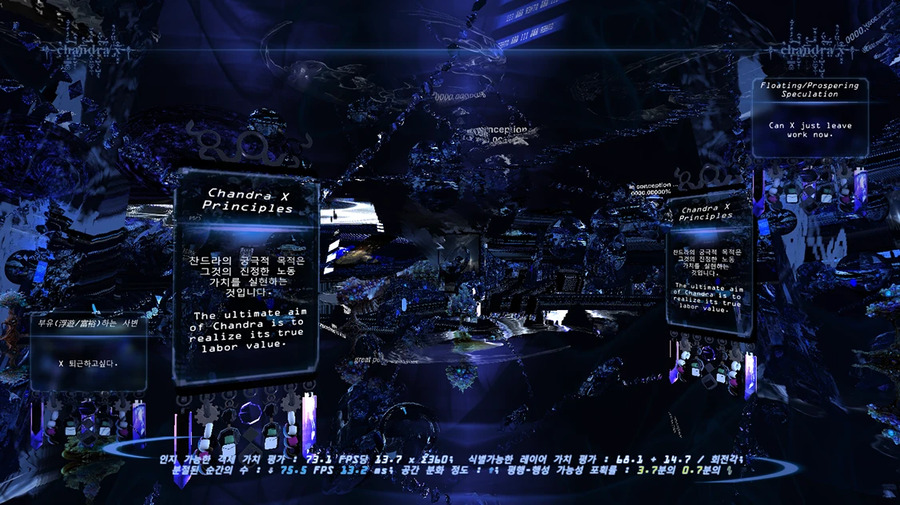
For example, Chandra X (2021), a 3D Performative Apparatus–Environment, allows multiple participants to traverse heterogeneous realities within a cross-device networked environment, connecting and intervening in each other’s experiences in real time while exchanging interactions and feedback on their performative actions.


Inhwa Yeom, Chandra X, 2021-2022, 3D Performative Apparatus-Environment (PC-based VR, Mobile AR, Installation) ©Inhwa Yeom

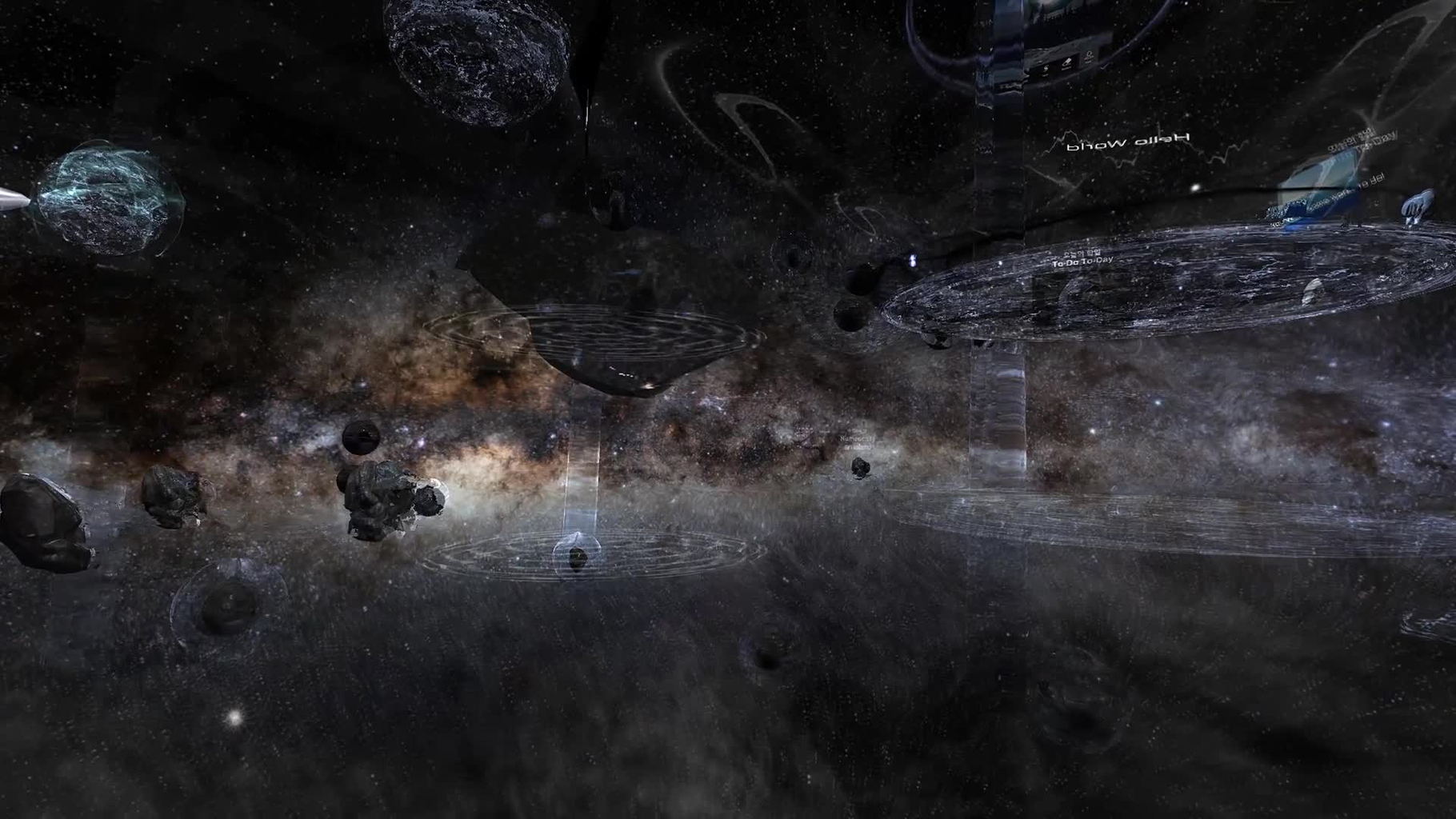
The title “Chandra” is a gender-neutral name borrowed from both Chandra, the Hindu lunar deity, and NASA’s Chandra X-ray Observatory. It refers to a character created by the artist. Within the interconnected VR/AR apparatus–environment, viewers take on the role of “Chandra,” traversing and modulating multiple interwoven layers of reality as if navigating through outer space.


Inhwa Yeom, Chandra’s Signal, 2021, 3D Performative Apparatus-Environment (PC-based VR, Installation) ©Inhwa Yeom

In Chandra’s Signal (2021), presented in the group exhibition 《Game & Art: Auguries of Fantasy》 at the Daejeon Museum of Art, Inhwa Yeom constructs a neo-feudal society based on a planet-scale computing system. Within this world appear workers who endlessly mine resources for energy, and a first-person-view gamer—called “Chandra”—who serves as an intermediary in the class hierarchy overseeing them. In the exhibition, visitors could directly operate a computer to run the program and play through the narrative of the work themselves.


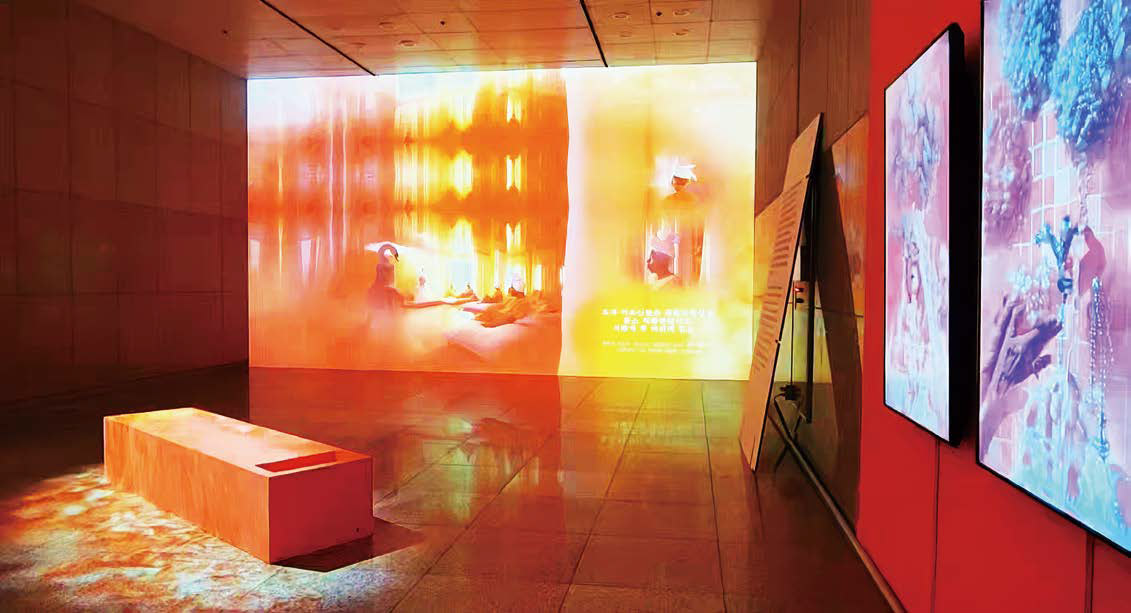
Inhwa Yeom, A.C.(After Chandra), 2025, HMD VR, video, crystal installation, 15min. ©ACC

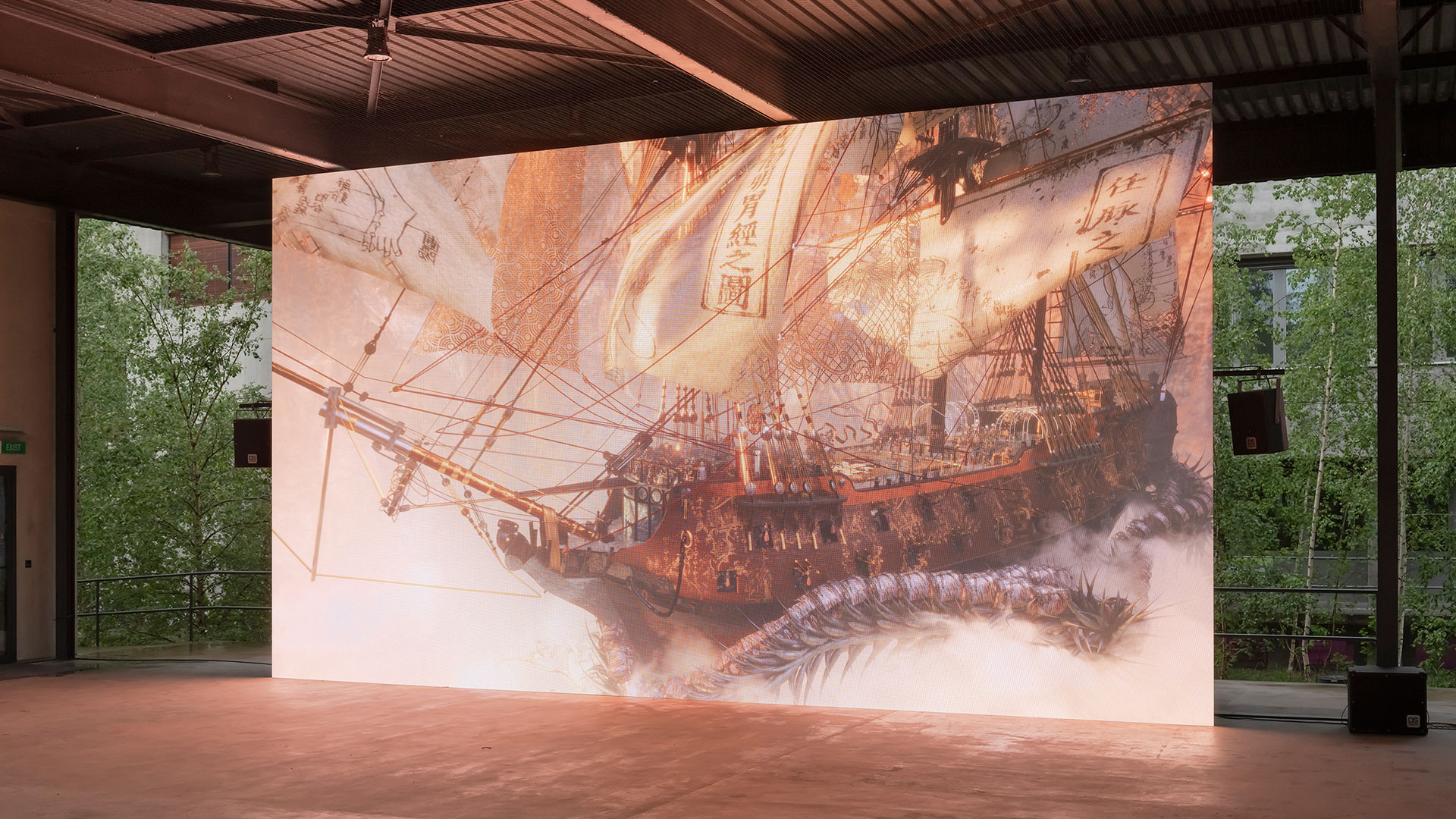
Most recently, Inhwa Yeom presented ‘Chandra Chronicles: In Neuroverse’ (2025), a 3D Performative Apparatus-Environment series that positions “Chandra” as a being managing a neural-network environment and expands Chandra’s chronicle into three spatiotemporal dimensions, which the audience can traverse through their own bodies and senses.
 
In this work, visitors become both performers and “Chandra,” mediating between the three dimensions—A.C. (After Chandra), B.C. (Before Chandra), and C.C. (Circa Chandra)—via multiple technological media that cross physical reality, augmented reality (AR), and virtual reality (VR).
 
Moving across these three dimensions through digital technology, the audience experiences everything from Chandra’s heightened perceptual state during her most dynamic period to her neural aging after retirement. Every action performed in each dimension is immediately transmitted throughout the Neuroverse, affecting the other dimensions.


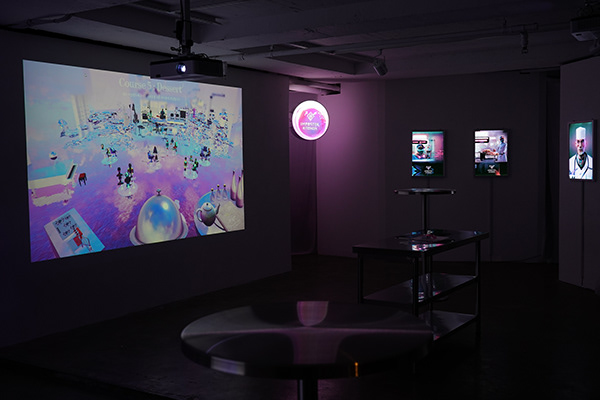
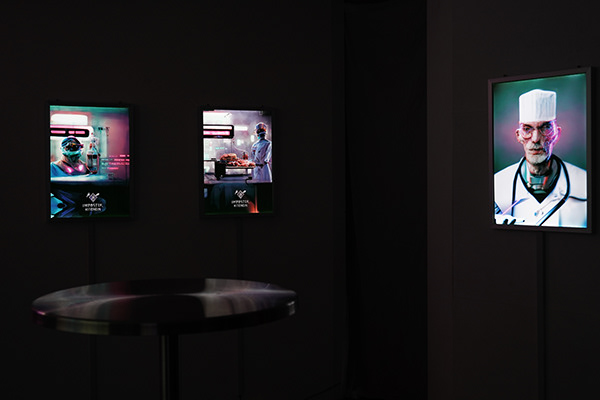
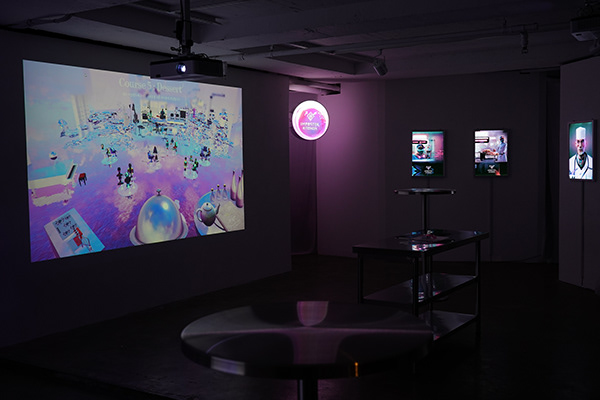
Installation view of 《Imposter Kitchen》 (Space:illi, 2022) ©Inhwa Yeom

In her solo exhibition 《Imposter Kitchen》 at Space:illi (2022), Yeom presented the eponymous work, a 3D Performative Apparatus-Environment that also addresses human aging. Imposter Kitchen speculates on the networks of interests and their diversity surrounding aging within the format of a fine-dining open kitchen restaurant.
 
At each table sit groups of patient caregivers, researchers and engineers, entrepreneurs and investors, and animal-rights activists, while in the kitchen a quasi-surgical process for steak aging is staged as a spectacle.


Installation view of 《Imposter Kitchen》 (Space:illi, 2022) ©Inhwa Yeom

In the work, visitors move back and forth between the kitchen and the tables, performing the role of serving courses of steak dishes prepared with different aging techniques. In the process, they can transfer or mediate one stakeholder’s “stake” to another party.
 
Through this performative participation, the work explores how, under the keyword of aging, seemingly conflicting interests can be reconnected and coexist, reflecting the dynamics of contemporary society.


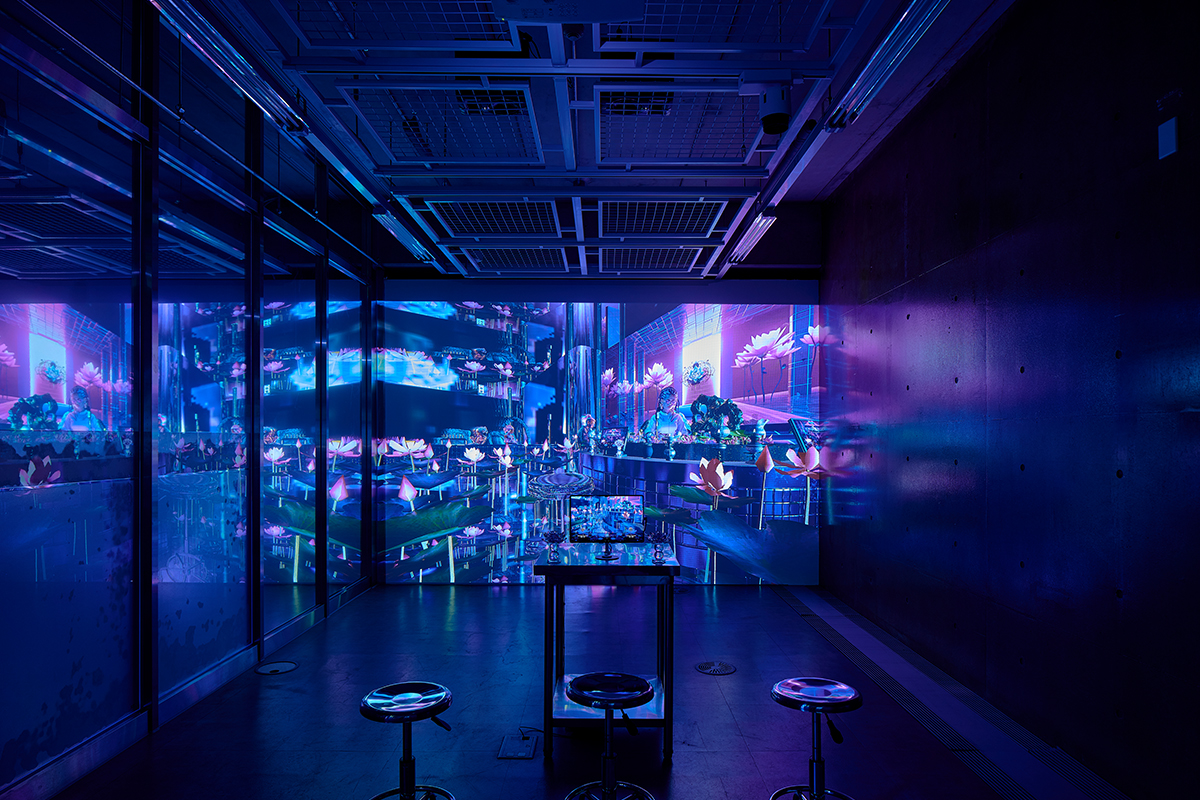
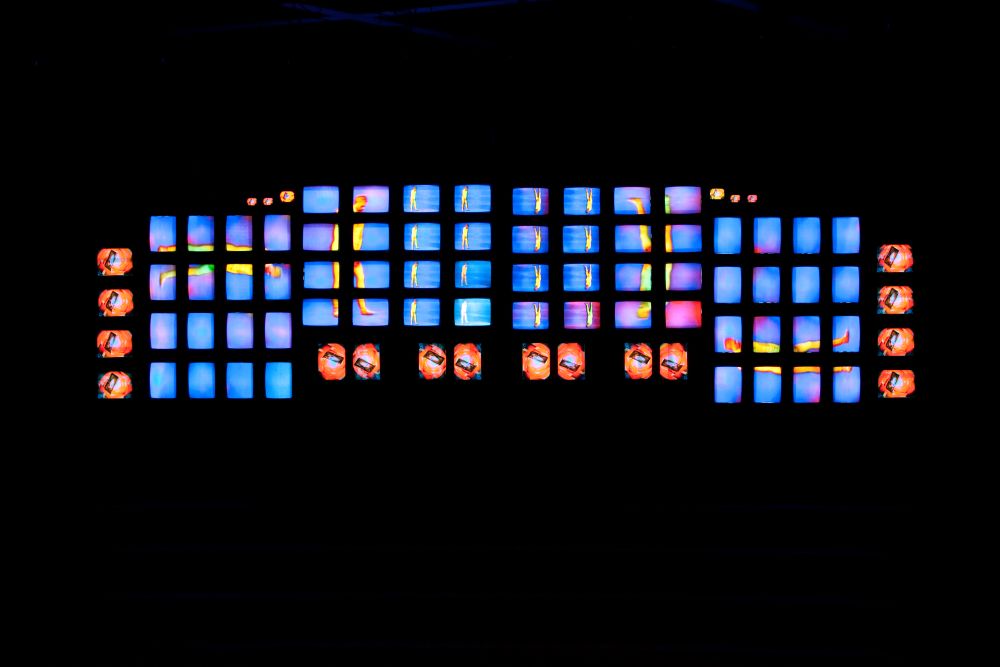
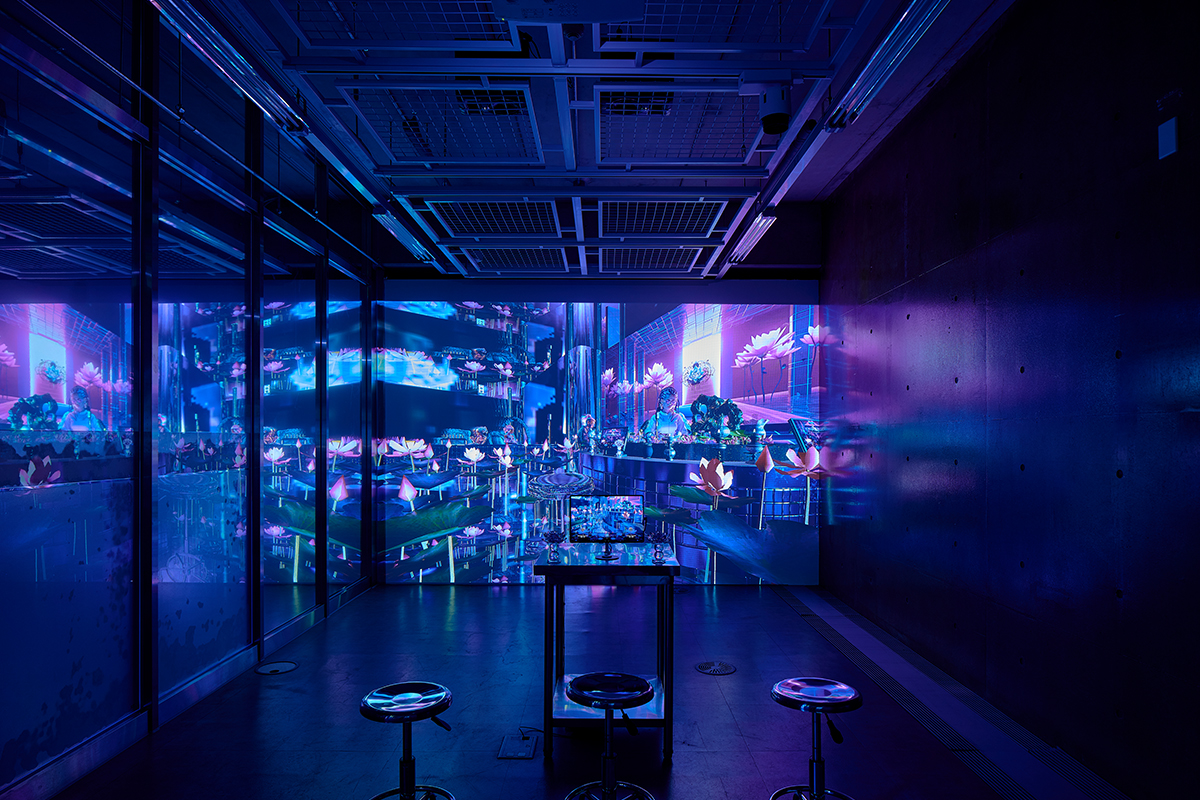
Inhwa Yeam, Innerveauty Spa, 2023, 3D Performative Apparatus-Environment (PC-based VR, Mobile AR, Installation), Installation view of 《Planetary Pulse》 (Aisa Culture Center, 2023) ©ACC

In 2023, Inhwa Yeom participated in the Residency Program at the Asia Culture Center (ACC) and created the 3D performative apparatus-environment Innerveauty Spa (2023), inspired by an interest in neurodiversity. The work begins with an approach that recognizes what has been considered mental dysfunction or disorder as simply a difference in neural types.
 
The spa welcomes clients with diverse neural profiles and offers various “neural care” services to nurture their inner beauty. Visitors assume the role of a spa attendant, moving throughout the spa management spaces depicted within the virtual reality setup to attend to clients. As each client shares their personal concerns and sensitivities, their voices flow together like a single song, inviting visitors to listen attentively and engage empathetically.


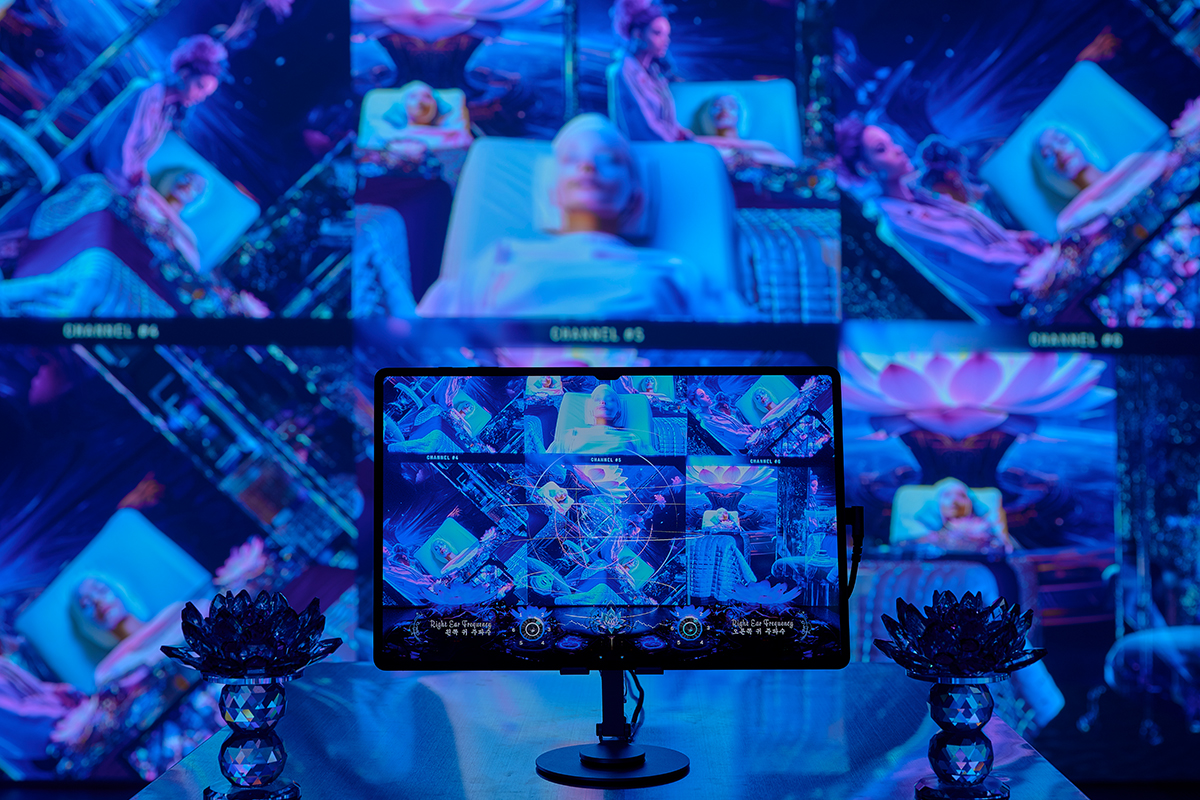
Inhwa Yeam, Innerveauty Spa, 2023, 3D Performative Apparatus-Environment (PC-based VR, Mobile AR, Installation), Installation view of 《Planetary Pulse》 (Aisa Culture Center, 2023) ©ACC

Additionally, visitors sit at tables and use the AR-based “beauty devices” featured in Innerveauty Spa to carry out client management protocols. The attendant’s primary responsibilities encompass actions such as “tuning frequencies,” “channeling,” and “resonating” with each client’s needs. In this process, the attendant also functions like an opera orchestra, providing accompaniment, harmonies, and ad-libs to the clients’ song-like voices.
 
Ultimately, through the spatiotemporal framework of Innerveauty Spa and the layered performativity it enables, Inhwa Yeom envisions a near future in which neurodiversity can be routinely sensed, appreciated, and embraced in everyday life.


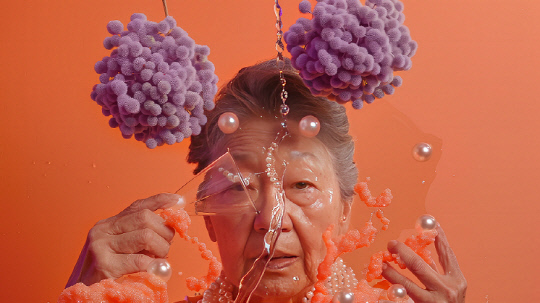
Inhwa Yeam, SAUNA LAB, 2023, 3D Performative Apparatus-Environment (multi-channel video, projector, TV monitor, chair) ©Inhwa Yeom

In the subsequent work SAUNA LAB (2024), Inhwa Yeom critically examines the concentration of scientific and technological capital within certain social class and imagines a future in which such resources are shared freely with those most vulnerable to the climate crisis.
 
SAUNA LAB, a citizen-participatory climate research institute established by repurposing scientific research facilities and hot spring amenities in Yuseong-gu, Daejeon, envisions a fictional community where elderly people and future generations collaboratively study climate change. In this context, Yeom reframes the term “climate-vulnerable groups” by designating the elderly as “climate crisis survivors,” repositioning them as active agents in addressing environmental challenges.


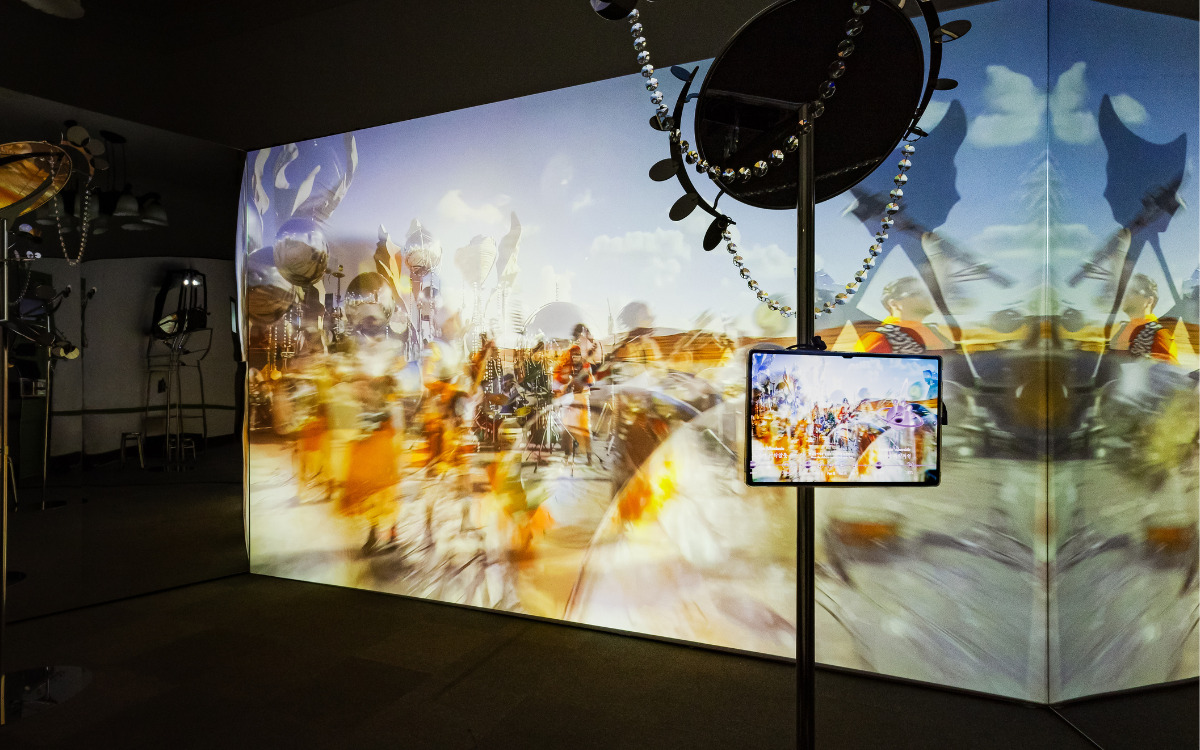
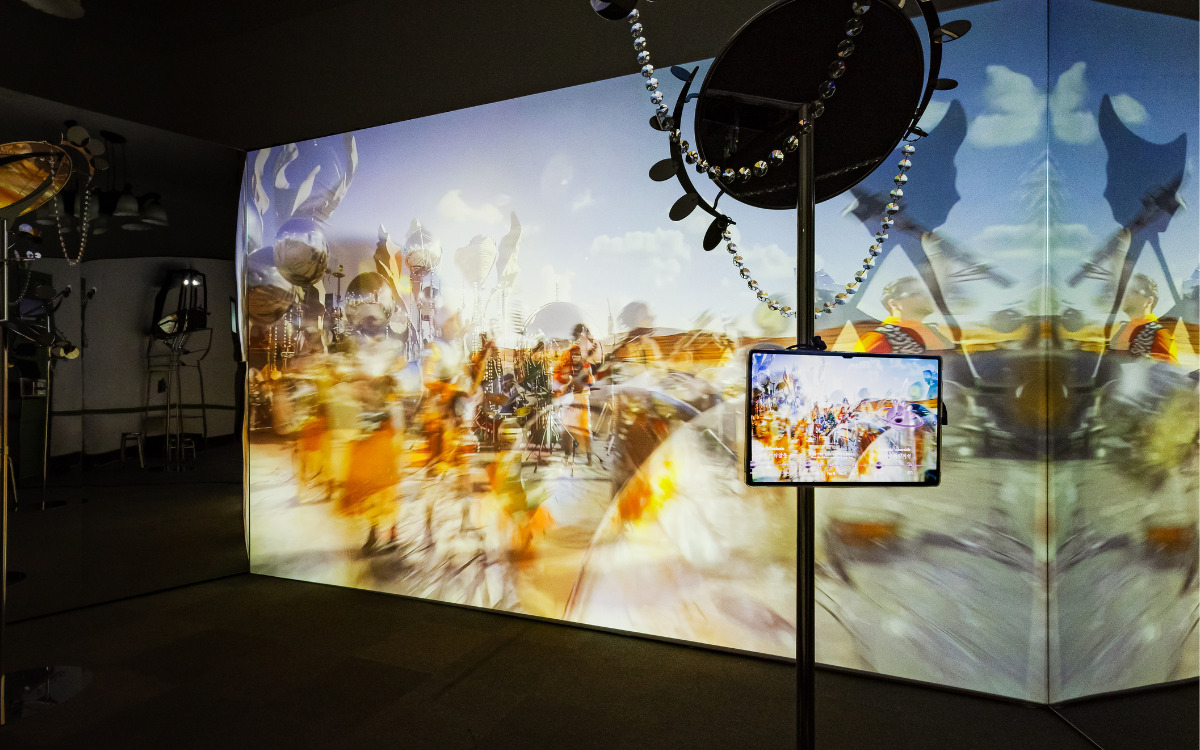
Inhwa Yeom, Solarsonic Band, 2024, 3D Performative Apparatus-Environment (PC-based VR, mobile AR, stainless steel, mirrored and crystallic apparatuses), Installation view of Unfold X 2024 《2084: Space Odyssey》 (Culture Station Seoul 284, 2024) ©Unfold X

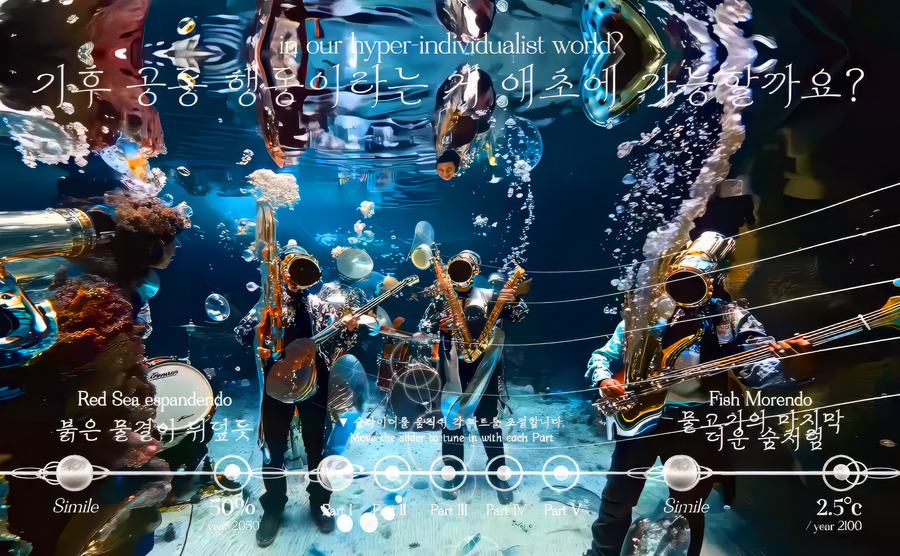
The artist’s engagement with the contemporary, global issue of the climate crisis continues in the XR-based, audience-participatory performance Solarsonic Band (2024). This performance by Inhwa Yeom is inspired by the hope of “continuing outdoor performances as long as the sun rises” in the era of climate crisis, aiming to lead the audience to collective climate action.
 
The audience is invited to step onto the “band lead” platform at the center of the stage. From there, they play sheet music from an augmented reality band stand and conduct a rehearsal for a tour performance dedicated to the five climate zones—atmosphere, hydrosphere, lithosphere, cryosphere, and biosphere—recreated in virtual reality. The sheet music is created based on actual climate data, and as the audience takes on the lead role and changes the performance in real-time, the climate crisis scenario changes accordingly.


Inhwa Yeom, Solarsonic Band, 2024, 3D Performative Apparatus-Environment (PC-based VR, mobile AR, stainless steel, mirrored and crystallic apparatuses) ©Inhwa Yeom

In this way, Inhwa Yeom explores diverse forms of corporeality and performativity through biotechnology, cloud computing, and nonhuman actors, investigating collaborative sensibilities between humans and nonhumans. Working at the intersections of technology, performance, and art, Yeom has developed 3D Performative Apparatus-Environments, creating stages that encompass the behaviors, responses, and expressions of various (non)humans and provide a platform for “minorities” historically marginalized within society.
 
These apparatus-environments, grounded in the audience’s cognitive, psychological, and bodily participation, become stages where the existence and narratives of those excluded from mainstream society can be sensorially transmitted and articulated to participants.

 “Through the 3D Performative Apparatus-Environment, I hope audiences can critically immerse themselves in the sensations, thoughts, and experiences of beings other than themselves, alongside a stage that is also a co-performing entity.”  (Inhwa Yeom, 2023 ACC Residency interview)


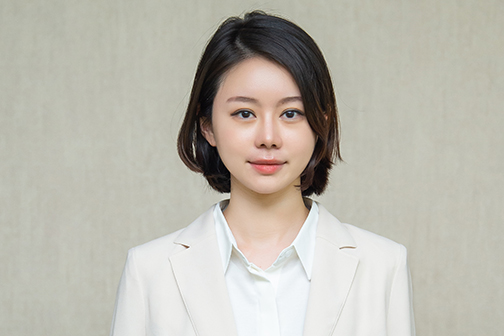
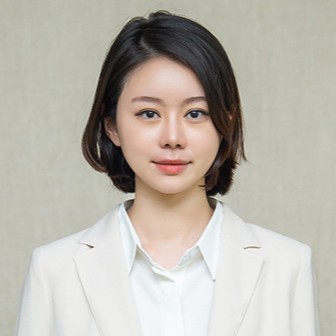
Artist Inhwa Yeom ©ACC

Yom Inhwa is a media artist and founder of biotech startup Biove, working across AI- and XR-based artmaking and research. Her solo exhibitions include 《Imposter Kitchen》 (Space:illi, Seoul, 2022-2023), 《Water on Fire》 (Gallery MeiLan, Seoul, 2022), and 《Chandra X》 (Online, 2021).
 
She has also participated in numerous group exhibitions, including 《The City of Nam June Paik: The Sea Fused with The Sun》 (Nam June Paik Art Center, Yongin, 2025), 《Whispering, Plating Myth》 (Taiwan Contemporary Culture Lab (C-LAB), Taipei, 2024), Unfold X 2024 《2084: Space Odyssey》 (Culture Station Seoul 284, Seoul, 2024), 《NEXT CODE: The Record of Six Promising Journeys》 (Daejeon Museum of Art, Daejeon, 2024), and 《Planetary Pulse》 (Asia Culture Center, Gwangju, 2024).
 
Yeom has received awards at the 6th VH Award (2024), organized by the Hyundai Art Lab & Hyundai Motor Company, and at the Media Artist Award, organized by LG Arts Center & LG Electronics. Yeom has also participated in residency programs at the Taiwan Contemporary Culture Lab (Taipei, 2024) and the Asia Culture Center (Gwangju, 2023).

References