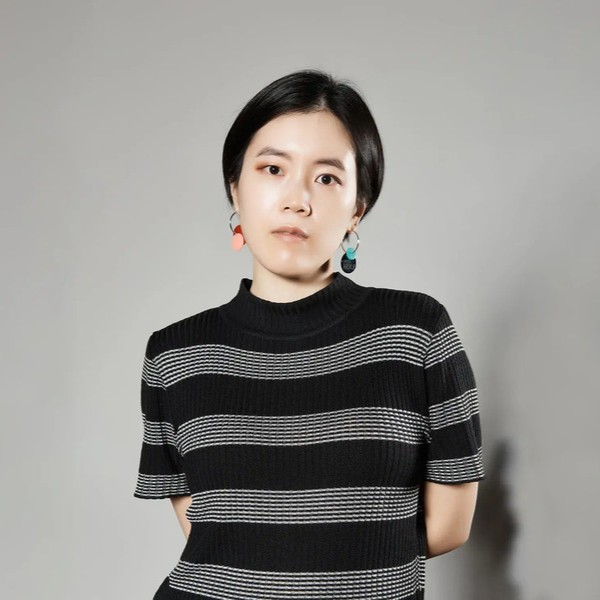



Yun Choi received B.F.A. and M.F.A. from Korea National University of Arts. She currently lives and works in Seoul.
Yun Choi (b. 1989) works across video,
installation, sculpture, and ceramics to weave together the social climates and
byproducts generated by Korean modernity. Her practice particularly focuses on
the uncanny remnants of popular culture and the temporalities of geopolitics
within Korean society, exploring the collective emotions and afterimages
embedded within them.
Building on this, by collecting,
processing, and editing the fragmentary images circulating in Korean society,
Choi presents ever-transforming mutant media and objects. Through these, she
amplifies and expands the multilayered contexts and phenomena inherent in such
imagery.

Yun Choi’s work draws on elements that are
ubiquitous in everyday life yet somehow suspicious or uncanny: the flashy
advertisements of mobile carriers, the hit songs of K-pop idols, mannequins
dressed in hanbok bowing on the street, or the kitschy wallpapers and stickers
often found in studio apartments.
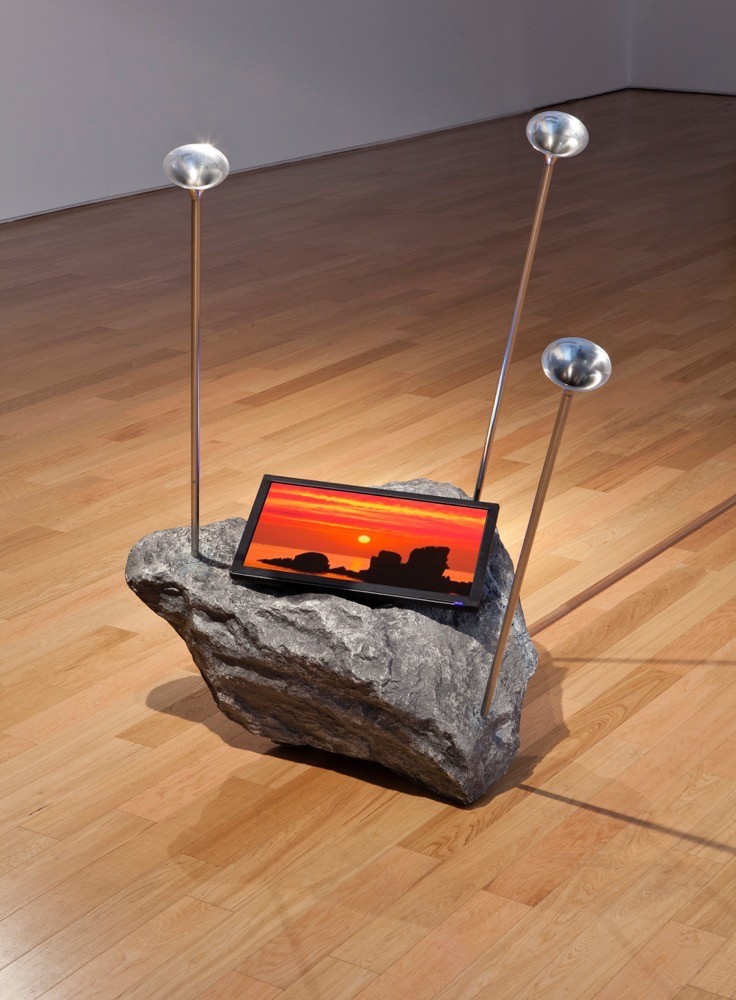
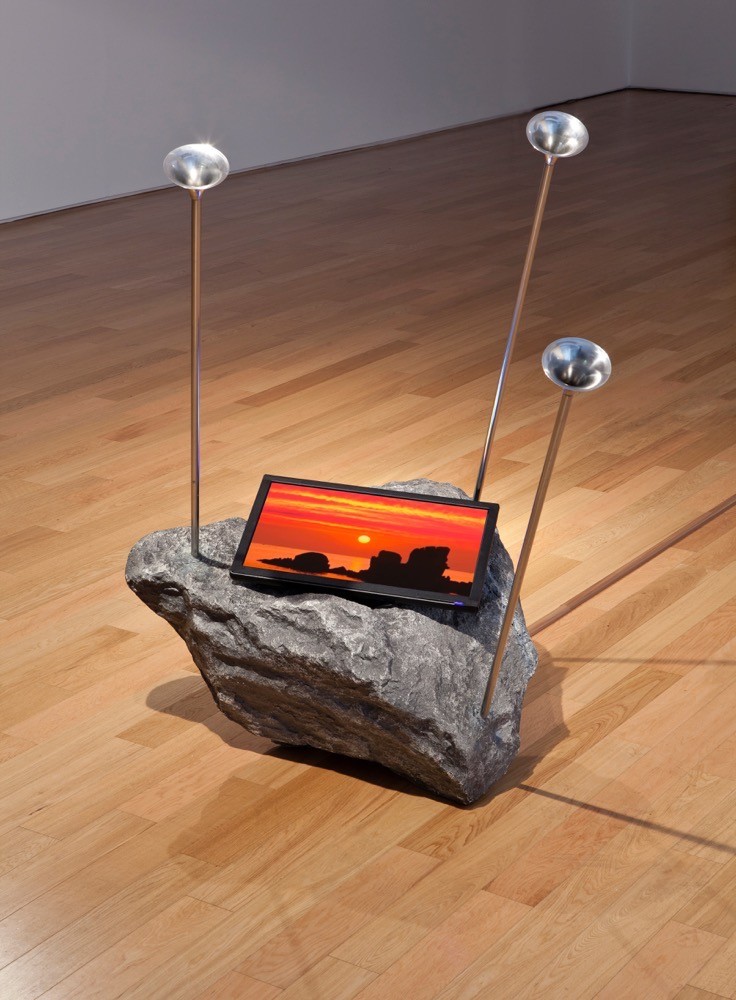
For example, Kookmin
Manifesto (2012–2014) consists of sound and calendar images created
by transforming the lyrics of K-pop songs that topped the domestic charts each
month from January to December 2011 into the form of oratory speeches. Stripped
of their music, the lyrics—now delivered as speeches—resonate over landscape
photographs corresponding to each month. For example, in January, IU's 'Good
Day' Lyrics with 31 sheets of landscape photography appear.

Yun Choi was struck by news that, at the
time, the South Korean government had installed eleven large loudspeakers near
the border to blast K-pop songs repeatedly toward North Korea. At the same
time, the very same K-pop hits of the month were being endlessly replayed
across most of Seoul’s streets.
Popular songs, consumed ubiquitously across
the nation, move people’s hearts and shape collective psychology through their
dazzling melodies and the underlying lyrics. In step with this, K-pop has also
come to function domestically and internationally as a tool representing
“Korea.”
By translating these K-pop lyrics into the
rhetoric of oratory and pairing them with the imagery of calendars—objects hung
on walls and looked at daily—Choi commemorates them as a kind of contemporary
national manifesto (“Kookmin manifestro”).

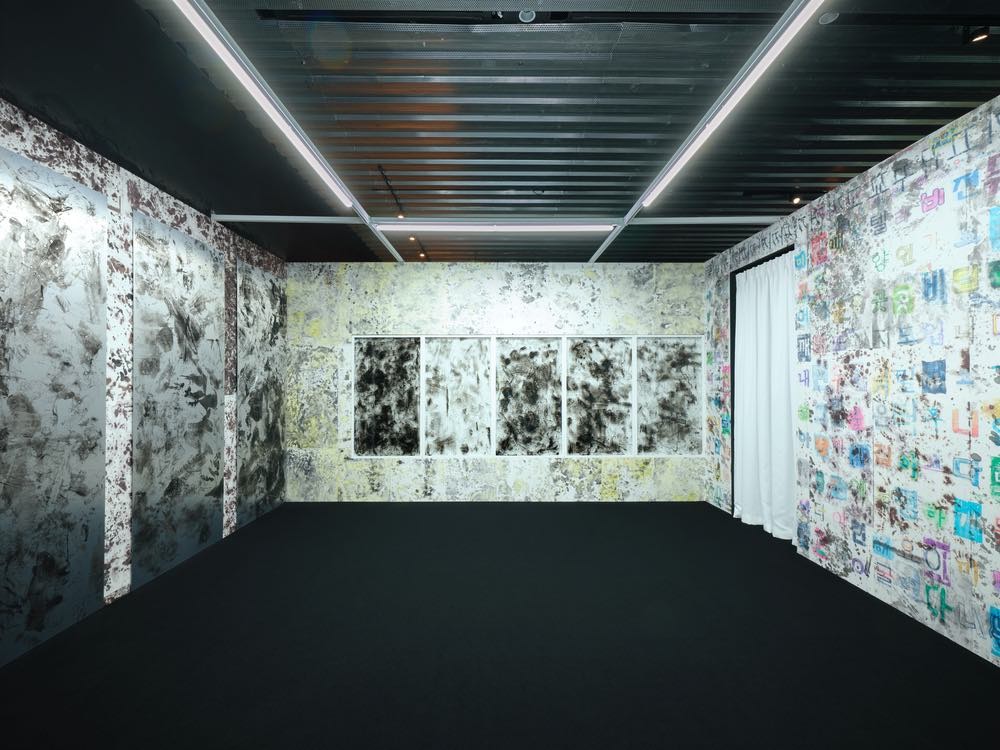
Alongside this, Yun Choi has frequently
incorporated decorative vinyl sheets—commonly seen in everyday settings such as
streets or ordinary homes—into her work. Featuring brightly colored images of
nature such as red roses, clouds, grass, and stars, these sheets were once
ubiquitous across Korea but have gradually disappeared over time.
At the time, the artist took particular
interest in “point stickers,” a popular form of sheet design that allowed users
to peel off individual elements and arrange them into new compositions. These
stickers could even be found in unexpected places such as Seoul’s subway
stations. Through these artificial images of nature, people decorated buildings
with flowers and trees as if tending their own front gardens.

These stickers were accompanied by the
phrase: “Peel off each shape and connect them one by one, and your space will
transform into a livelier, brighter place.” By placing them in the exhibition
space, Yun Choi invited both herself and the audience to create their own
flowers, thereby transforming the gallery into a “lively and bright space.”
Choi’s consistent interest lies mainly in
the things that have been deemed banal which include (public) beautification
projects, interior decorations, avocational photography, and Hallyu (the Korean
wave). Although these images seem to come from the past or the future, but they
are in fact contemporary by-products. They are easily spotted in our daily life
but at the same time are invisible if you don’t pay attention, accordingly it
produces a sensation of alienation somehow.
Choi calls these images ‘media cache.’ The
artist has captured, relocated, and rearranged them to delve into how images
are originally employed and what the mentality and belief of individual and
group users embedded in them.
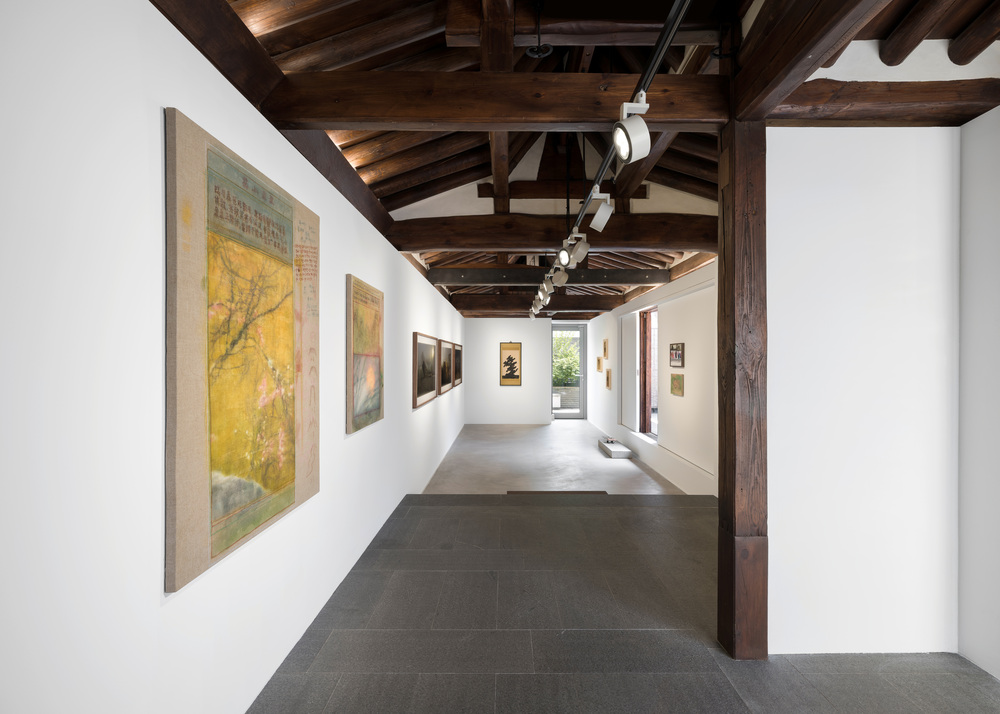
Installation view
of 《Hanaco, Yunyunchoi, Choi Yun Solo Exhibition》 (Art Sonje Center, 2017) ©Yun ChoiYun Choi’s 2017 solo exhibition 《Hanaco, Yunyunchoi, Choi Yun Solo Exhibition》 at Art Sonje Center reflected the artist’s inquiry into the ways
cache-images operate. The exhibition unfolded around three figures: “Hanaco,”
“Yunyunchoi,” and “Choi Yun.”
“Yunyunchoi,” also the name of the artist’s
website, took charge of producing and activating images. Much like uploading
files to a website, she processed and edited fragments of her work, scattering
them throughout the exhibition space in a state always ready to be attached to
one another.

‘Hanaco’ is an anonymous character who is
‘not called by the real name’ and has appeared in Choi’s works since 2015. In Hanaco
and Mr. Kimchi etc. Playback (2016–), a single playlist which holds
together various videos, a character, possibly Hanaco, keeps crossing over time
and space as well as acting recklessly and beyond comprehension.
In various public spaces, such as museums or city
streets, acts of refusal to stand upright—crawling, spinning in circles while
taking photographs, or otherwise disorienting spatial orientation—produce
fissures by creating dissonance with the sleek, rigid appearance of the world
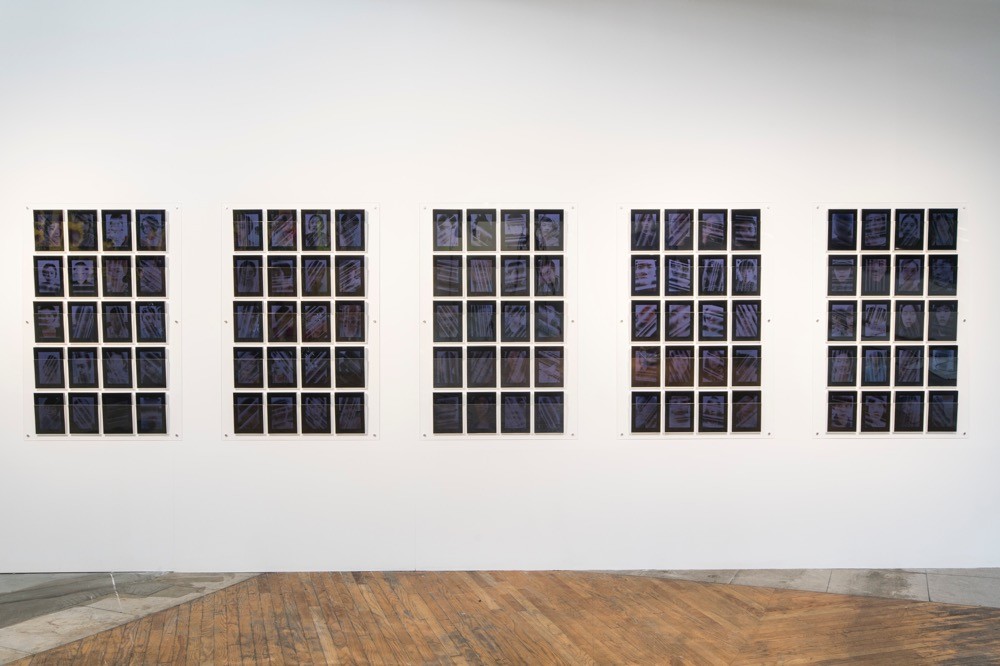
Yun Choi,
Hanaco 100, 2017, Acrylic flyer stands, acrylic planks,
prints on coated paper(100 pages each), 120x80x3 cm each. Installation view of 《Hanaco,
Yunyunchoi, Choi Yun Solo Exhibition》 (Art Sonje
Center, 2017) ©Yun ChoiSuch impromptu actions of Hanaco are
divided, transformed, and unfolded beyond the walls of the white cube,
multiplied into numerous Hanacos and tools. ‘Hanaco,’ a faceless body from the
video, is realized in various images of the reality from the encounter with
‘Yunyunchoi’ in the gallery space. The objects from the video are laid out
under the title of Performance Tool and Media Cache (2017);
the existing Hanaco 50 (2015) is amplified into 100
characters each with 100 printed sheets displayed on the wall.

Choi does not stop there but adds several
elements in the gallery space. Shoddy objects that never made it to the scenes
of Hanaco and Mr. Kimchi etc. Playback such as a Pikachu
doll and food models are transformed and arranged here and there as the ‘media
cache’ of the show. Around them cache of the cache that is left behind as
residue of data despite countless attempts of elimination, like cache files
sticks and functions as the insignificant decoration of SS series
(2009–2017) that mimics online videos.
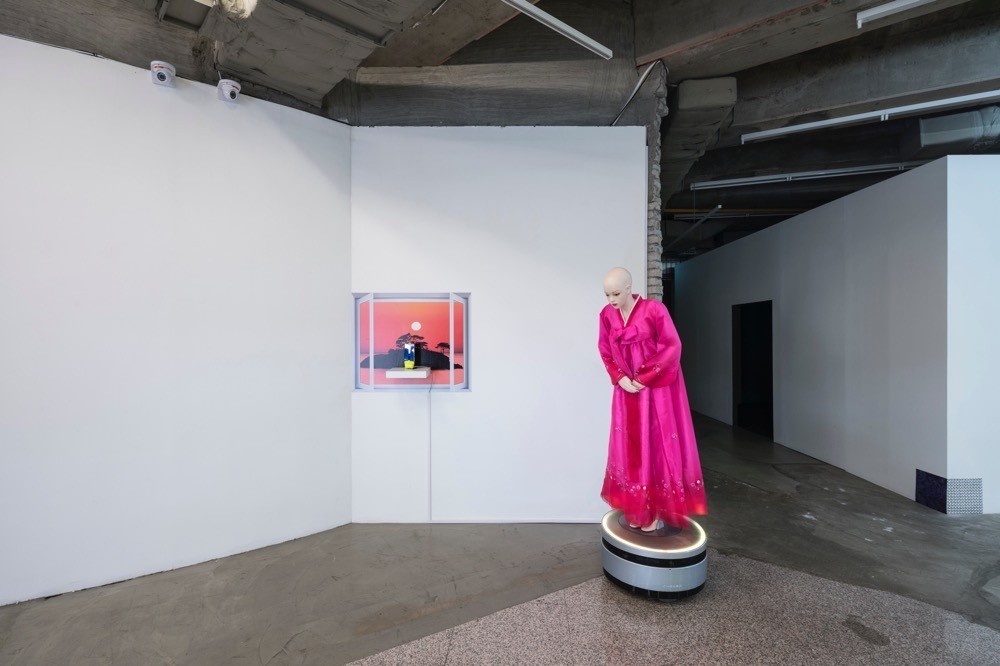
Likewise, a greeting robot that awakes a
vague déjà-vu—hi-bot (2017)—is standing by the entrance to
promote the speed of communication. Window Picture Frame
(2017) and Sunflower Wallpaper (2017), as images of complete
products often used as interior accessories, are attached on the walls.

In this exhibition, Yun Choi invokes
“Yunyunchoi” to join “Hanaco” in presenting the various “caches” that permeate
everyday life—things taken for granted, concealed, or forgotten. Within her
work, these caches are endlessly repeated, intersected, and expanded, prompting
the imagination of multiple realities connected to them.

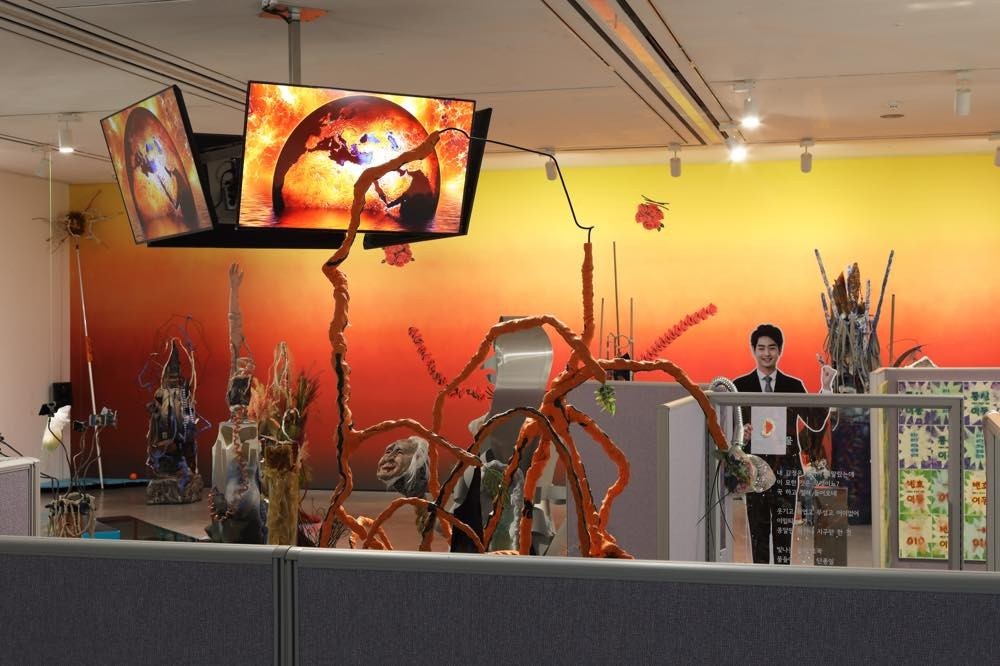
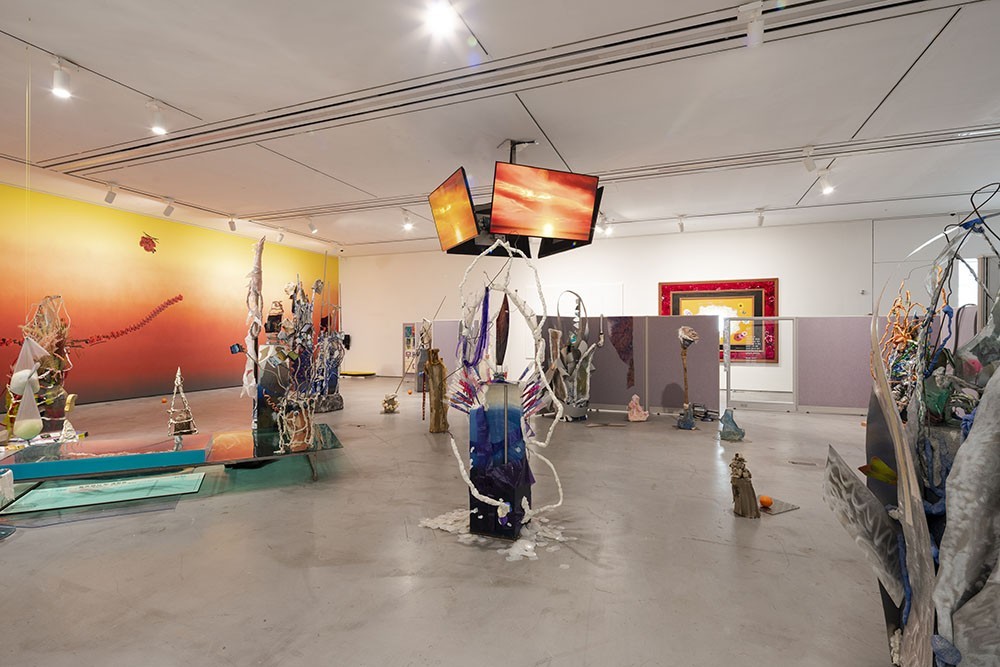
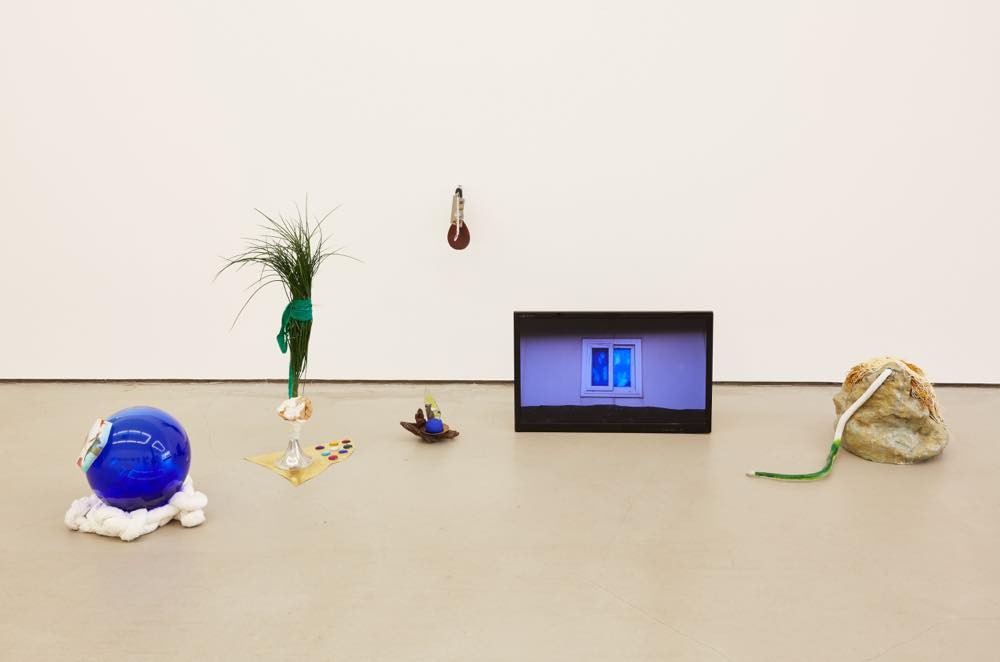
In her 2020 solo exhibition 《Where the Heart Goes》 at DOOSAN Gallery, Yun
Choi explored collective attitudes and emotions toward things perceived as
distinctly “Korean.” The exhibition comprised works referencing office
partitions, subway screen-door poetry, altered character sculptures, typical
interiors of Korean old houses, and public noticeboards, alongside various
industrial materials. These elements were combined with bodies in which human
and animal or plant forms were entangled, creating a landscape of chaotic
intermingling.
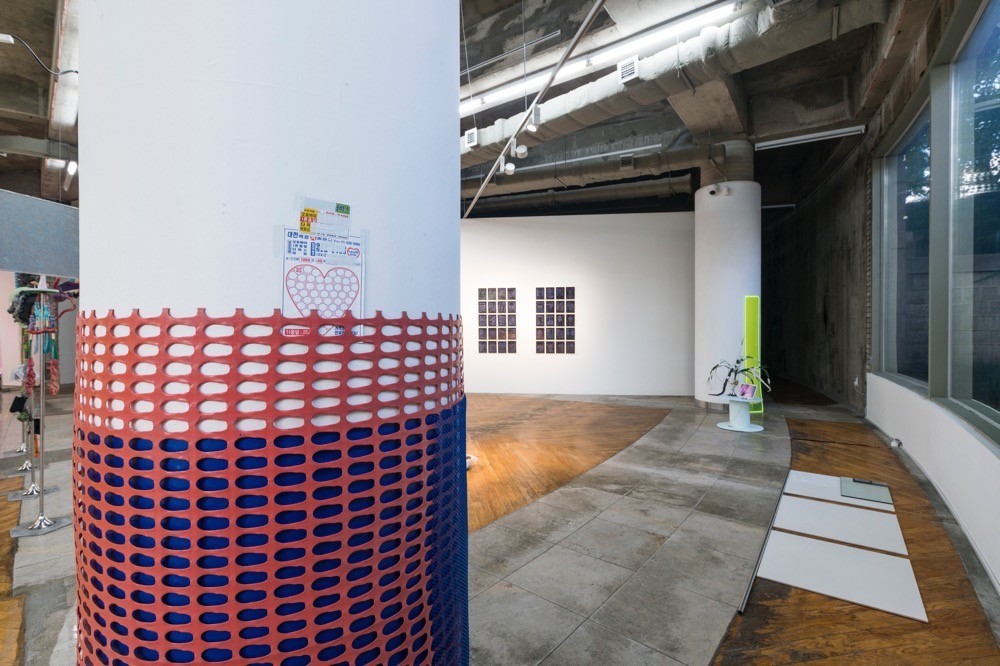
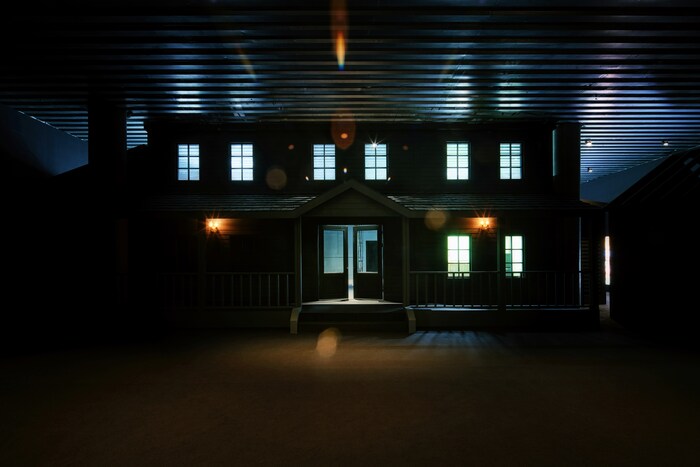
Installation view
of 《Where the Heart Goes》 (DOOSAN Gallery, 2020)
©Yun Choi. Photo: Baufoto/ Hong CheolkiThese elements were organized in the
exhibition into zones of “posting” and “updating.” The “posting” section drew
on various types of visual materials that, over time, have appeared or been
attached in public spaces, living environments, or online communities. Through
these items, displayed to be seen by many, the artist captured how visual power
becomes internalized and decorative in everyday life.
Between the walls of these posted
materials, small fragments detached from Yun Choi’s works had “updated”
themselves, growing into human-sized “vertebrates” that occupied the space.

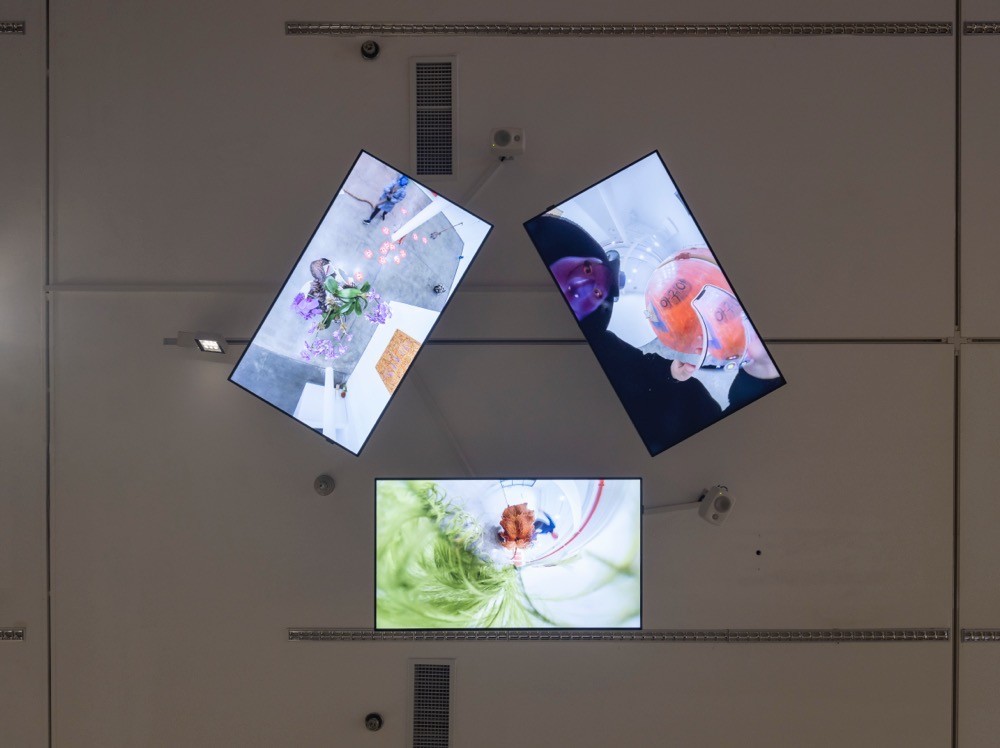
Also, endlessly repeated in the center of
the exhibition space are the video work NoticeRevelationLaunchClock
(2020), which omnidirectionally sends out infinite digital images, and the
sound work Horror Eros Vulgar Spell (2020).
The work expresses the fatigue of
constantly presenting and reinventing oneself in rapidly changing Korean
society by simultaneously playing music that induces sleep and music that
prevents it. The loosely partitioned space both restricts and guides the viewer’s
sightlines and movement, drawing them into the circular paths of the heart.

The work Where the Heart
Goes (2021), produced the following year, depicts a scene in which
several grandmothers wander through an empty exhibition space after the
exhibition has ended. These “grandmothers” are actually young people in elderly
disguises, representing an image that is at once a grandmother and not a
grandmother—a grotesque manifestation of the concept of “grandmother,”
independent of authenticity.
In this context, the “grandmother” can be
seen as a personification of the caches left behind in a society accelerated to
the point where things quickly become outdated. Through these figures, Yun Choi
asks where our hearts are directed in a world that constantly demands we revise
and present ourselves anew.

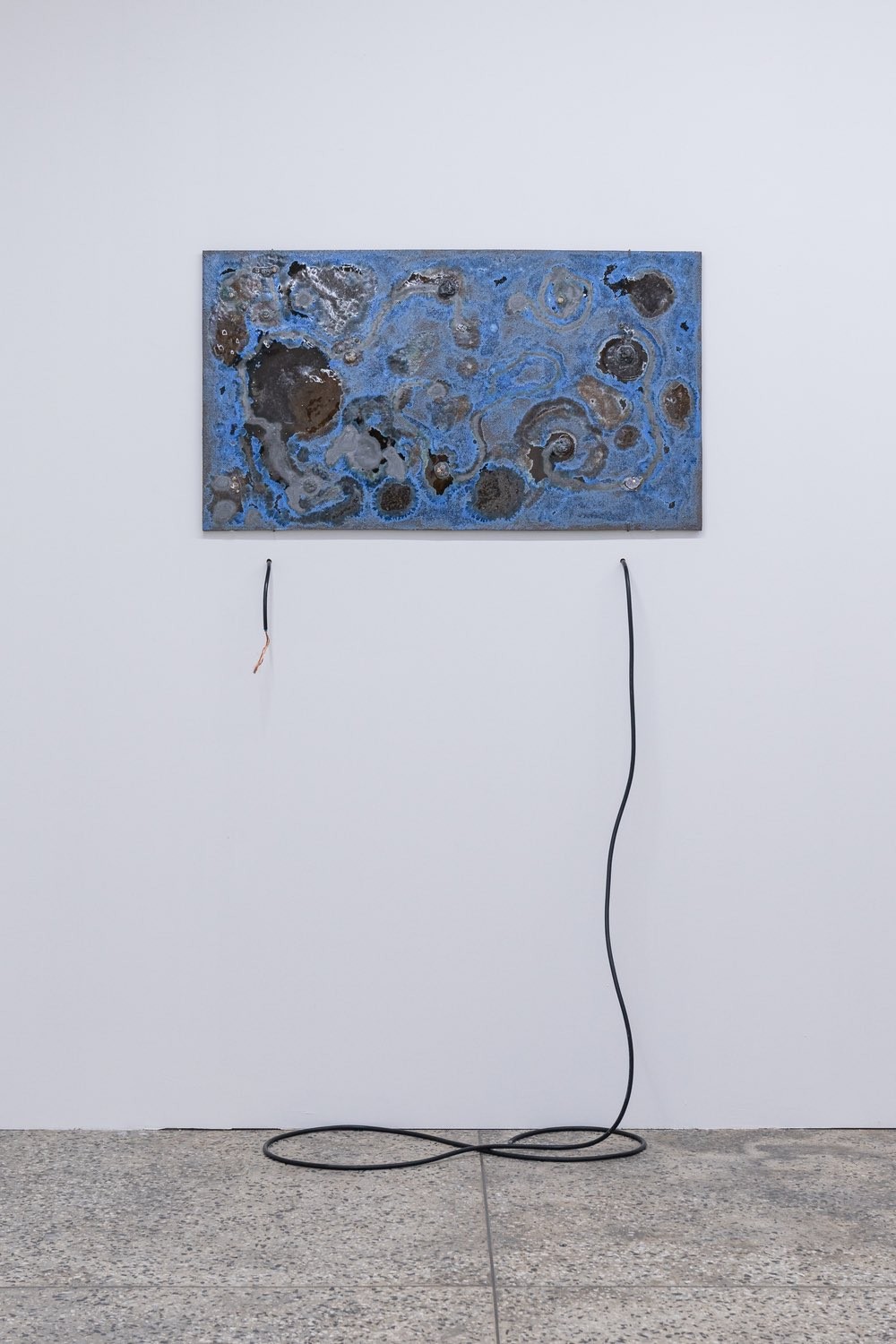
Meanwhile, Choi’s recent work SamsungTVGalaxy46”
(Background Music: Bitcoin and Blackhole) (2024) is derived from
Samsung Electronics, which has continuously released products under the name
‘Galaxy’ with the name ‘Samsung’ meaning ‘three stars.’ The six panels are
essentially 46 inch televisions cast baked with a bit of coin, copper wires,
various metals, and metal oxides in black soil.
When zinc oxide, quartz and all other
materials meet, crystals form fluidly and grow during the ‘soaking hour,’ a
period where a certain temperature remains still. These paired panels were set
to different soaking times, each embodying a distinct temporal essence.
In contemporary society, people are
engrossed in ‘screen time,’ staring at countless displays rather than gazing at
the starry night to measure time. Choi approaches moving images with the time
of the deep underground and the universe, far removed from the earth's surface,
by imagining the minerals sending signals behind television screens.

(Background Music: Bitcoin and
Blackhole) paired with SamsungTVGalaxy46”, ), is
streamed online during the exhibition period. The audience, receiving data with
a series of delayed times and various noises, decides which world to connect to
through a period of immersion.
The oxidised wires and melted coins
embedded in the fake television, SamsungTVGalaxy46” (Background Music:
Bitcoin and Black Hole), resemble a shamanistic object akin to a
bronze mirror, positioned opposite to fetishism. It attempts to capture the
vastness that eludes grasp, presenting distant information in darkness rather
than light.

In the rapidly changing landscape of Korean
society, things once longed for or admired quickly become trivial, outdated,
and almost laughable. These remnants accumulate in society as “cache,” at times
evoking both amusement and fear. Yun Choi collects and weaves these lingering,
fragile, and shabby caches to peer into the inner workings of contemporary
minds.
“Caches are what remain after production
and consumption. They are difficult to discard, reemerge even when thrown away,
and gradually accumulate, becoming troublesome. Over time, the distinction
between what is the cache and what is not grows increasingly blurred. I believe
the strangely mutated contemporary landscapes I explore are formed by such
caches of emotion accumulating in people’s minds.” (Yun Choi, interview in 《Young Korean Artist 2021》, MMCA)

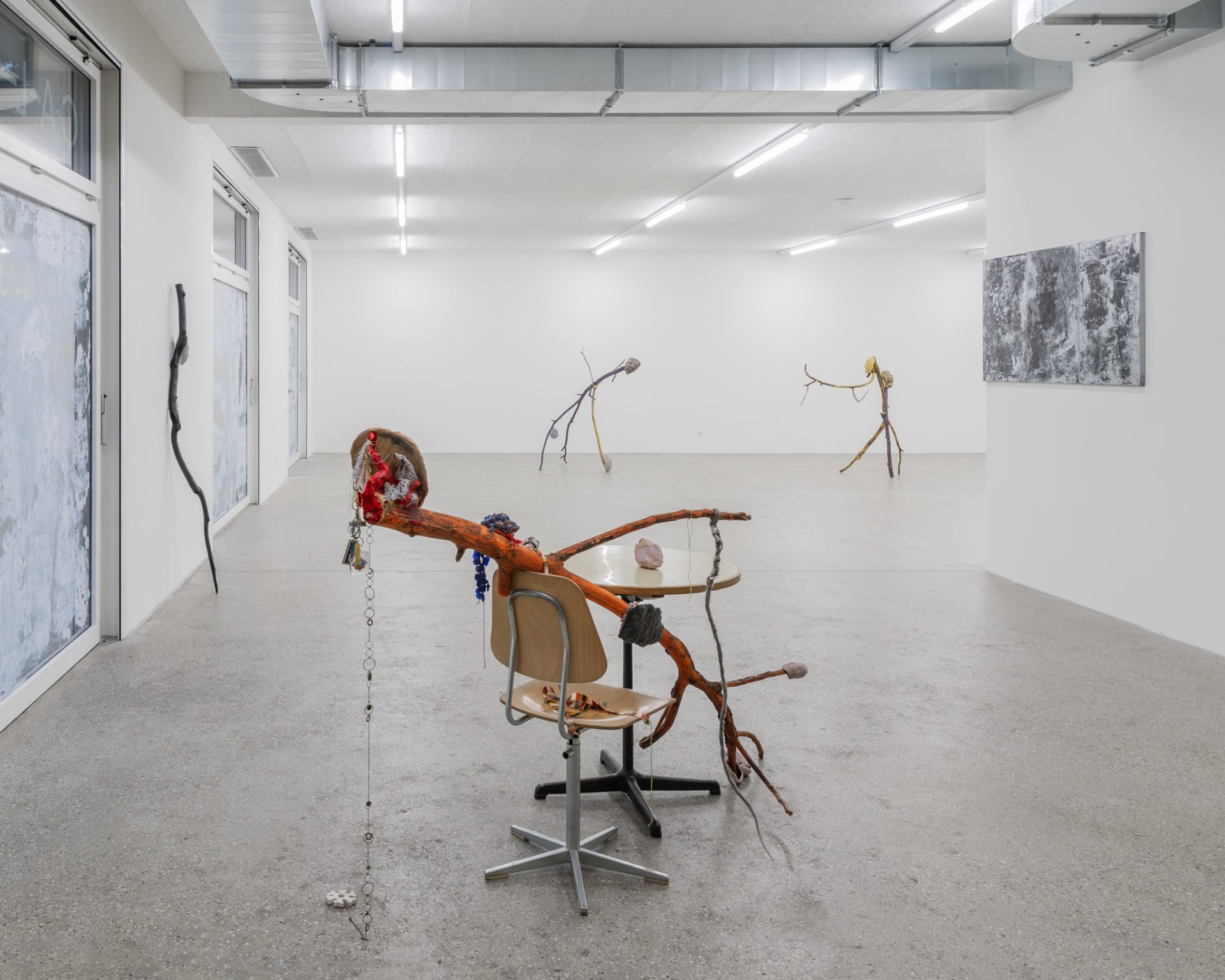
Yun Choi received B.F.A. and M.F.A. from
Korea National University of Arts. Her solo exhibitions include 《The Lounge》 (CALM - Centre d’Art La Meute,
Lausanne, Switzerland, 2023), 《Running at the Speed of
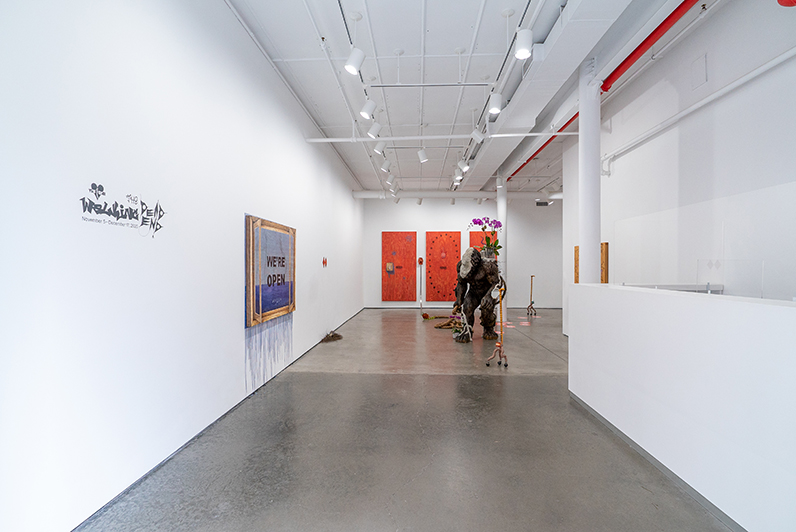
Light, the Body Becomes a Turtle》 (LUX, London, 2022), 《Walking the Dead End》 (DOOSAN Gallery New
York, New York, 2020), 《Where The Heart Goes》 (DOOSAN Gallery, Seoul, 2020), and 《Hanaco,
Yunyunchoi, Choi Yun Solo Exhibition》 (Art Sonje
Center, Seoul, 2017).
She has also participated in numerous
exhibitions, including 《A Faraway Today》 (Kukje Gallery, Seoul, 2025), 《2024 Art
Spectrum: Dream Screen》 (Leeum Museum of Art, Seoul,
2024), Busan Biennale 2024 《Seeing in the Dark》 (Busan Modern and Contemporary History Museum, Busan, 2024), 12th
Seoul Mediacity Biennale 《THIS TOO, IS A MAP》 (Seoul Museum of Art, Seoul, 2023), 《Funky-Functions》
(Daegu Art Museum, Daegu, 2022), and 《Young
Korean Artists 2021》 (MMCA, Gwacheon, 2021).
Yun Choi has participated as an
artist-in-residence at the European Ceramic Workcentre (EKWC) (Oisterwijk,
Netherland, 2023), the Rijksakademie van Beeldende Kunsten (Amsterdam,
Netherlands, 2021–2023), Seoul Art Space Geumcheon (Seoul, 2021), and DOOSAN
Residency New York (New York, USA, 2020). Her works are held in the collections
of the Seoul Museum of Art, the Seo-Seoul Museum of Art, and the Museum of
Contemporary Art Busan.