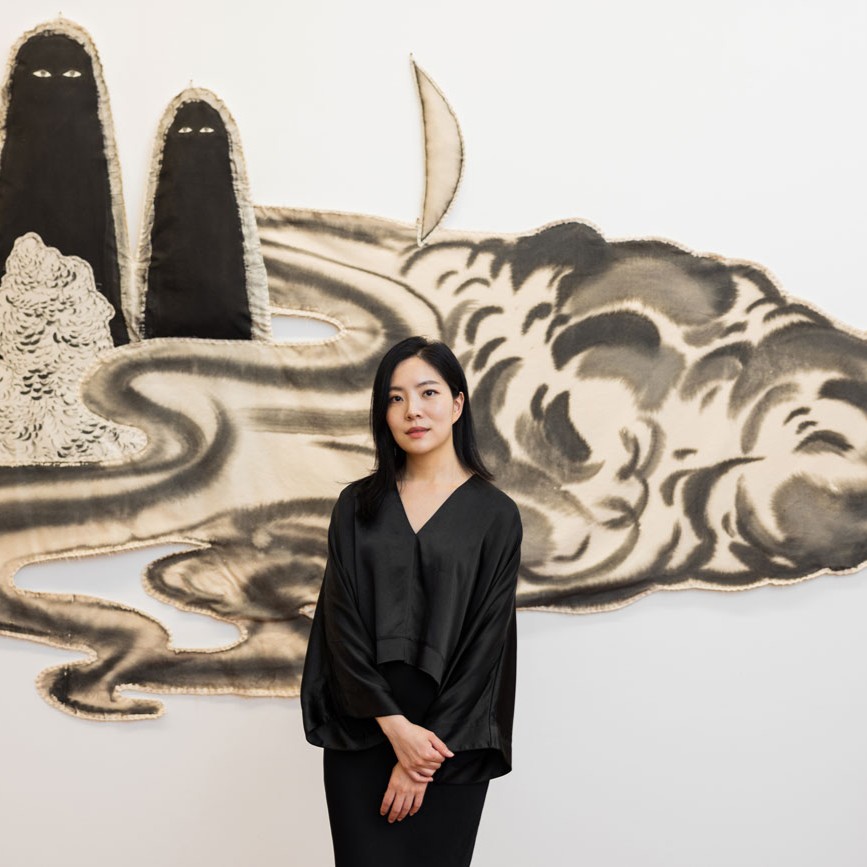
Sang A
Han’s early works take as their seed the coexistence of anxiety and
anticipation rooted in autobiographical experience. In her solo exhibition 《Unfamiliar Space》 (Weekend, 2018), the event
of pregnancy summoned complex affects that could not be reduced to a single
emotion, and the scenes—such as the series Unfamiliar
Space (2018)—were arranged as “unfamiliar” narratives where
ominous imaginings and romantic perspectives intersected. During this period,
fragments of nature (sky, water, fire), body parts, and loose geometries
intertwined, opening a passage through which private narratives could be
translated into universal affects.
In her
mid-career, the wave-like nature of life events became structurally developed.
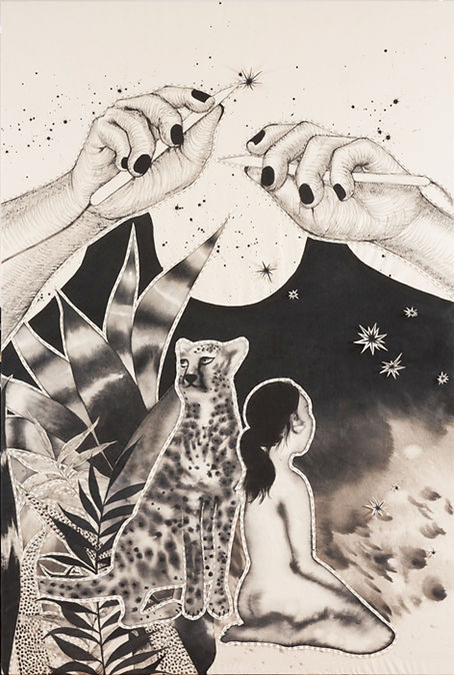
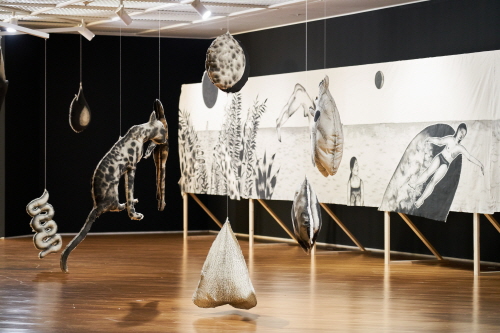
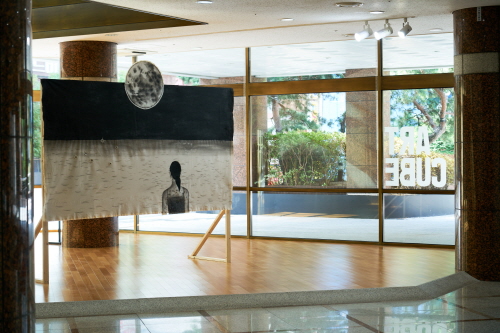
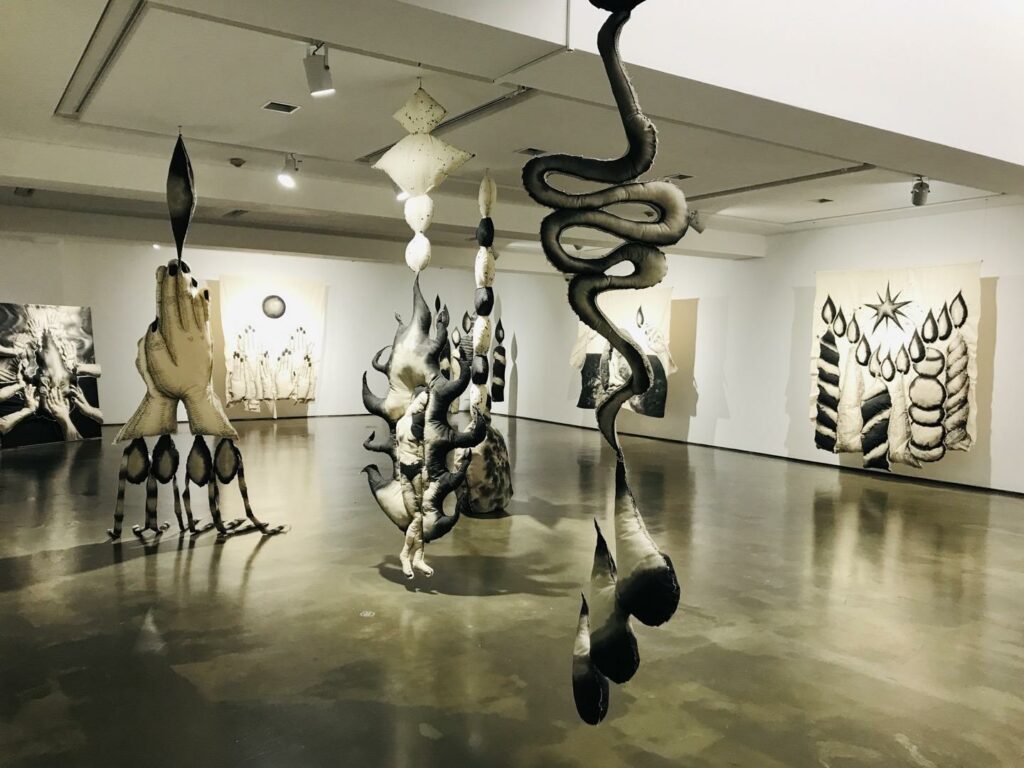
In her solo exhibition 《Unfamiliar Wave》 (SONGEUN ARTCUBE, 2019), works such as Unfamiliar
Wave 1 (2019) and Unfamiliar
Wave (2019) reorganized the events of marriage, childbirth, and
child-rearing into metaphorical maps of personal history by combining them with
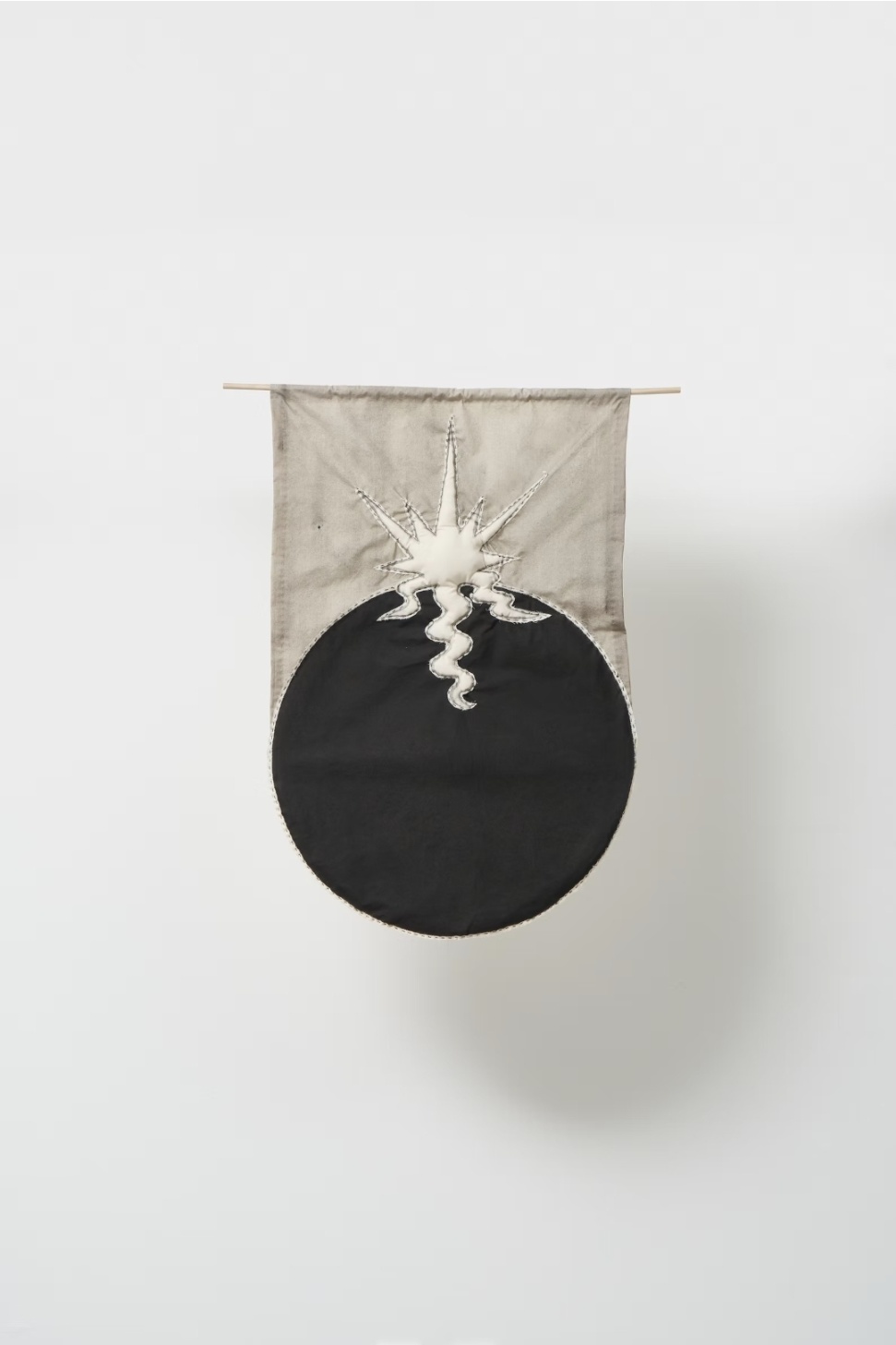
mythological and religious symbols (the sun, moon, stars, praying hands,
flames). Narrative time was presented not as linear but as a cyclical (wave-like)
model, with the exhibition path itself inducing repetition and renewal.
During the
pandemic, Han foregrounded the coexistence of motherhood and otherness. The
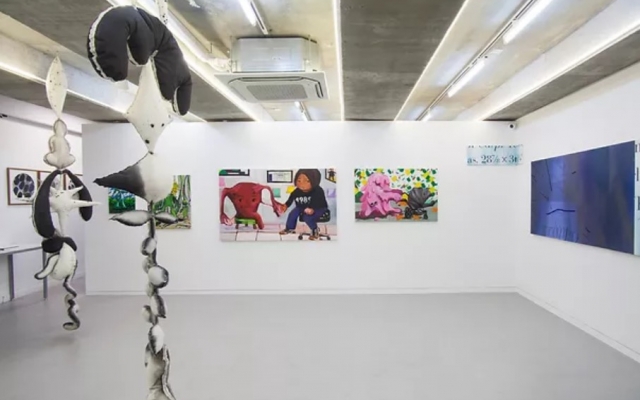
solo exhibitions 《Pointed Mind》 (OCI Museum of Art, 2022) and 《Pointed
Warmth》 (BYFOUNDRY, 2022) staged the ambivalent
coexistence of “sharpness (critical gaze)” and “warmth (the affect of care)”
within the same scenes, employing devices of prayer and invocation—pagodas,
scrolls, hangings—as engines of narrative.
Most
recently, her work has expanded toward the interpenetration of motherhood, the
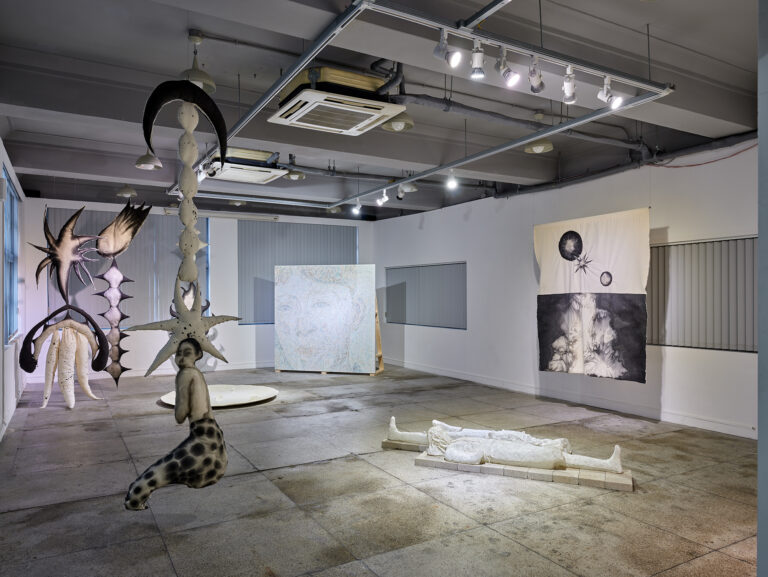
body, and the environment, mediated by Julia Kristeva’s theory of the body. In 《Black Flame》 (Galleria Fumagalli, 2024), the
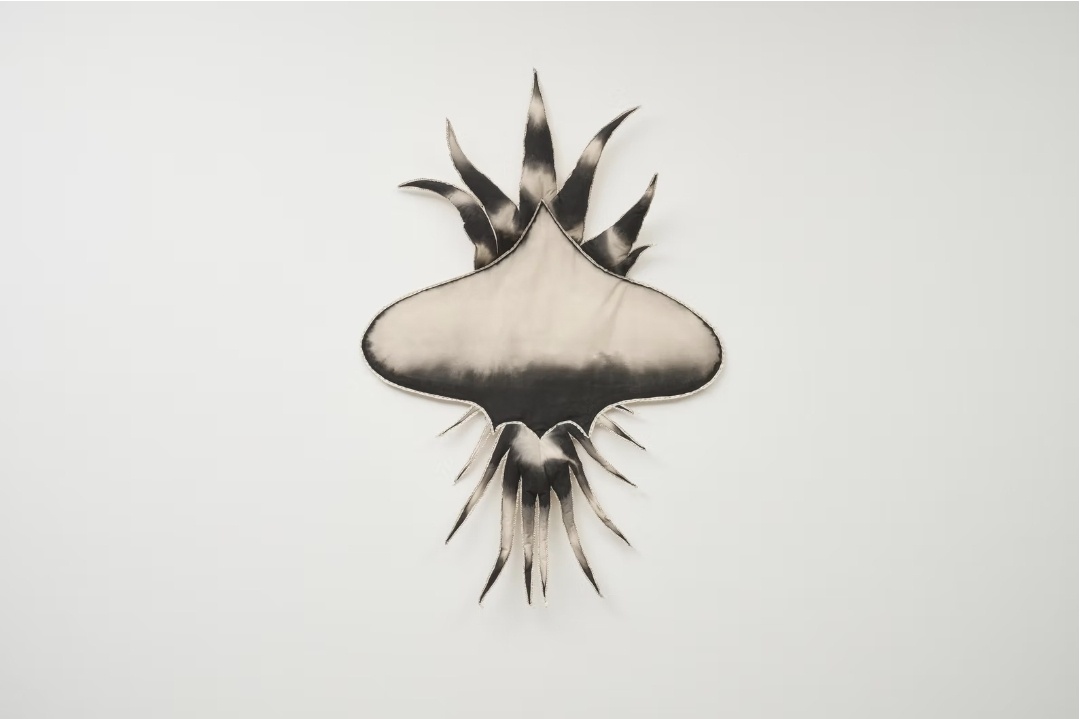
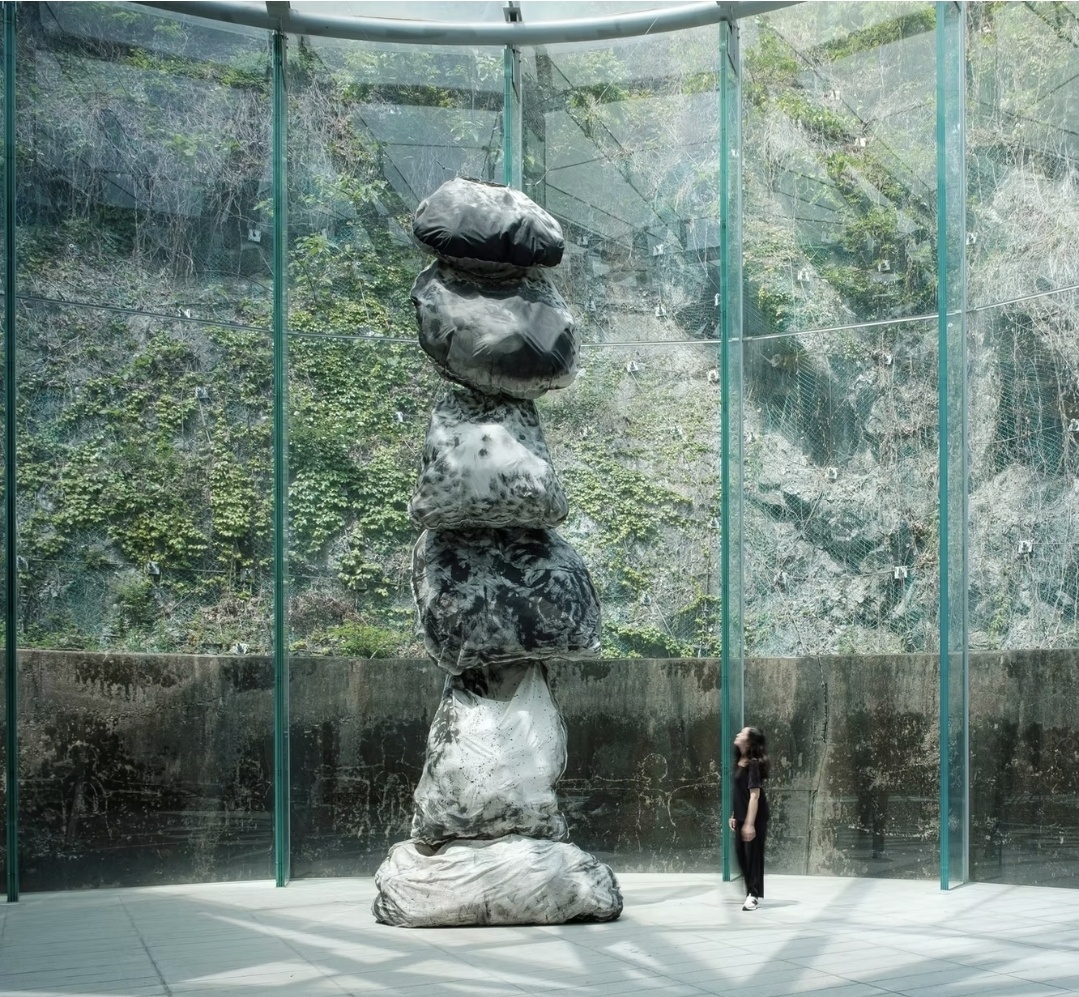
‘Void Pagoda’ (2021–) and Black Figurine 2 (2024)
combined flowers, flesh, and legs to invoke both the warmth, strangeness, and
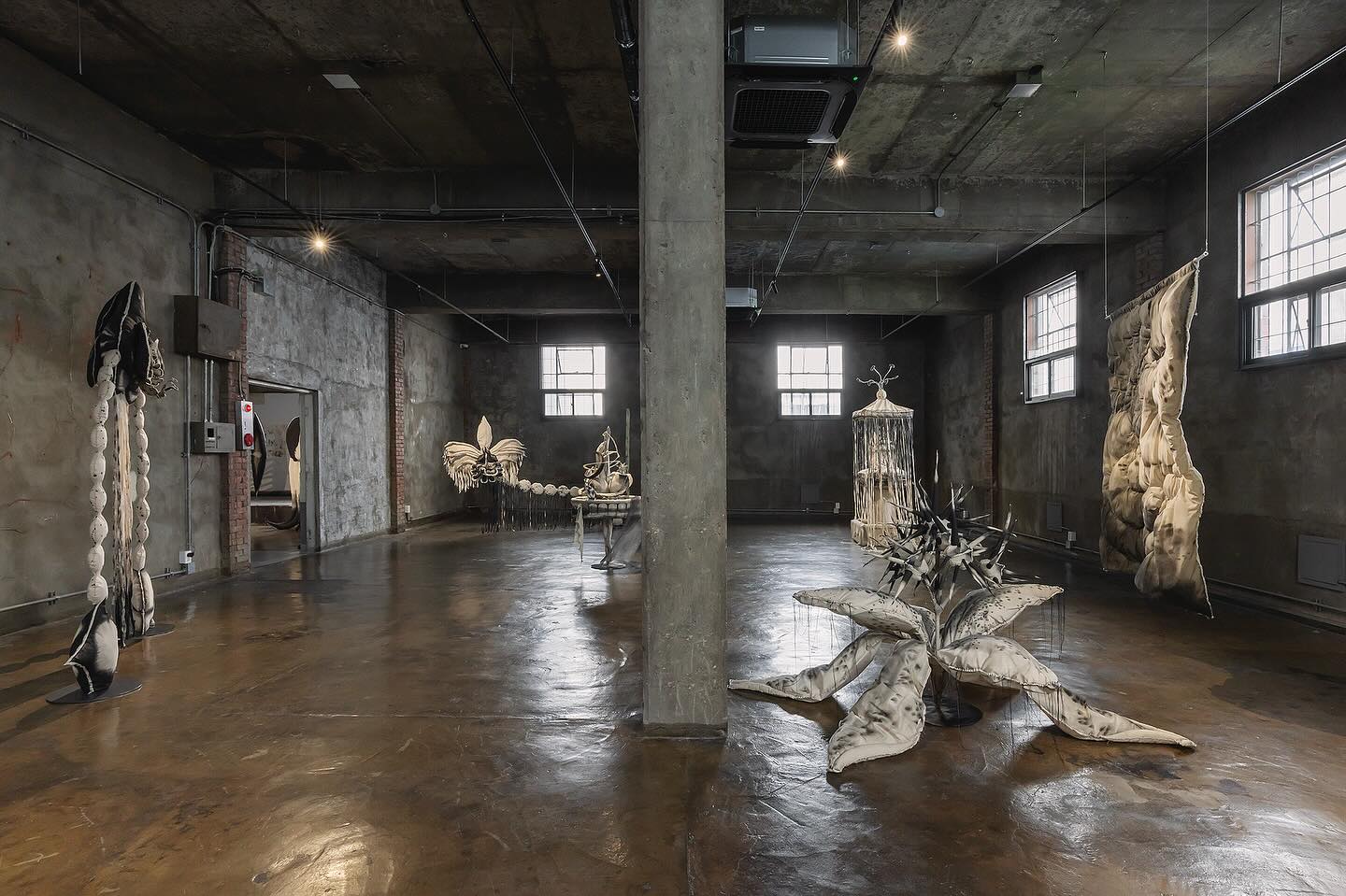
dread of motherhood. Her latest solo exhibition 《Flesh
& Flash》 (The WilloW, 2025) presupposes synthetic
yet unstable bodies, experimenting with the concept of provisional
subjects—hybrids of human and nonhuman—that appear and vanish like flashes.