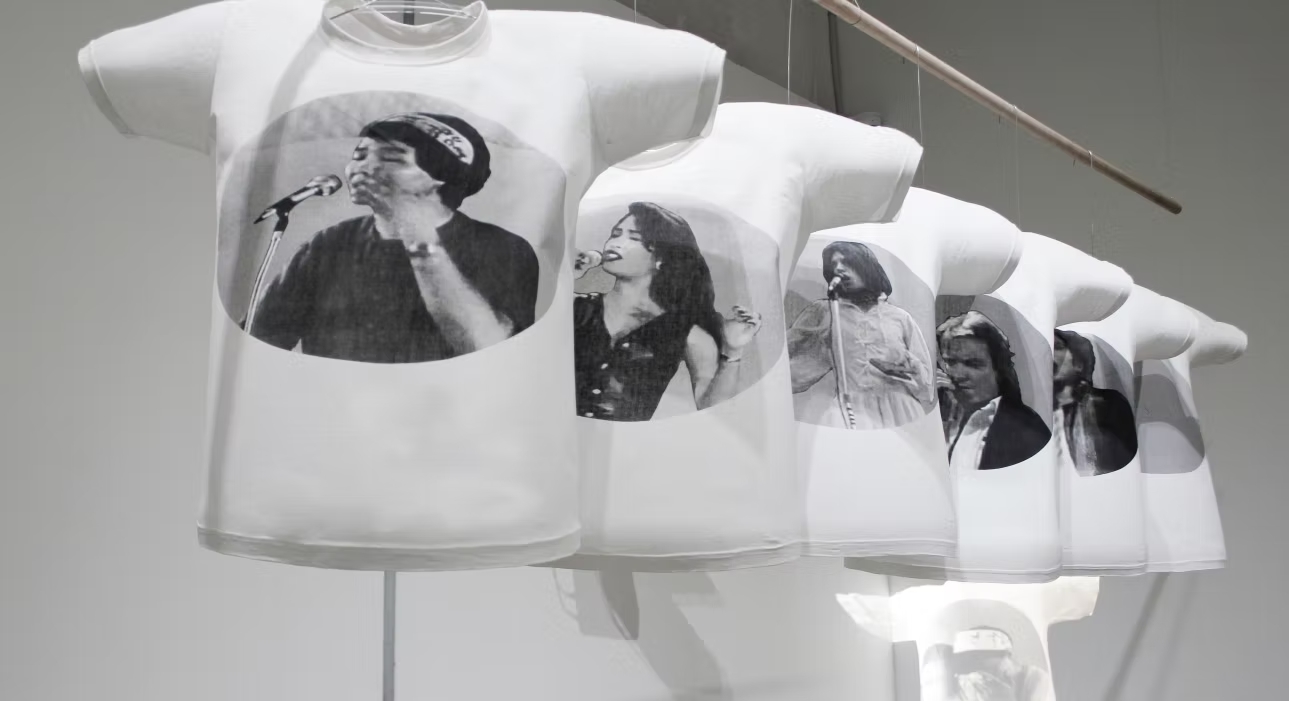
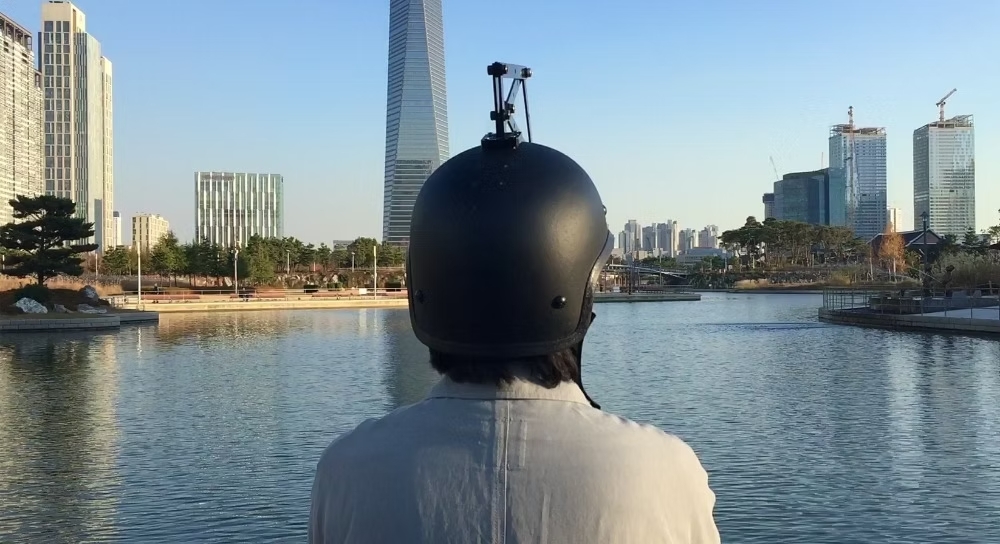
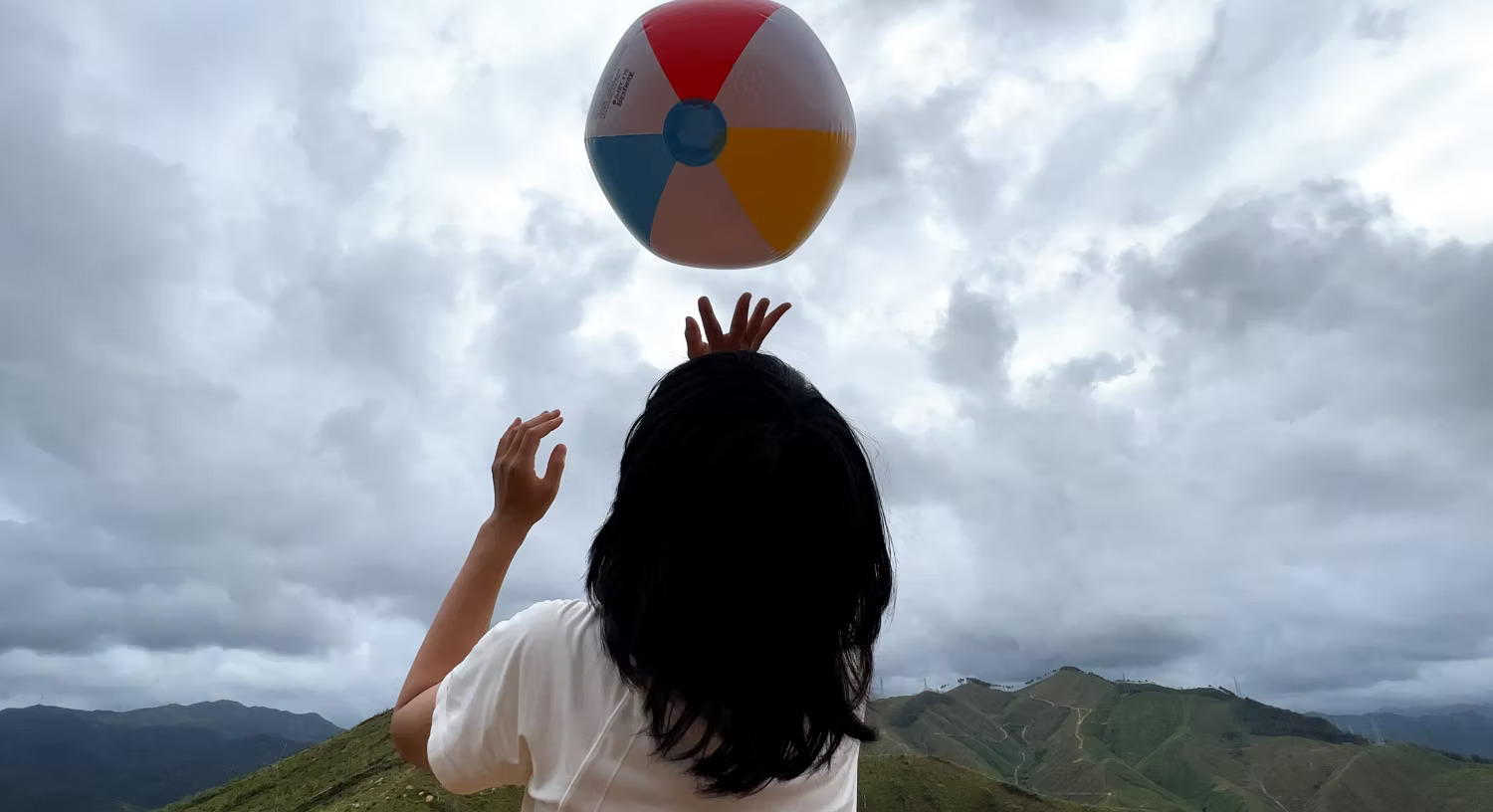
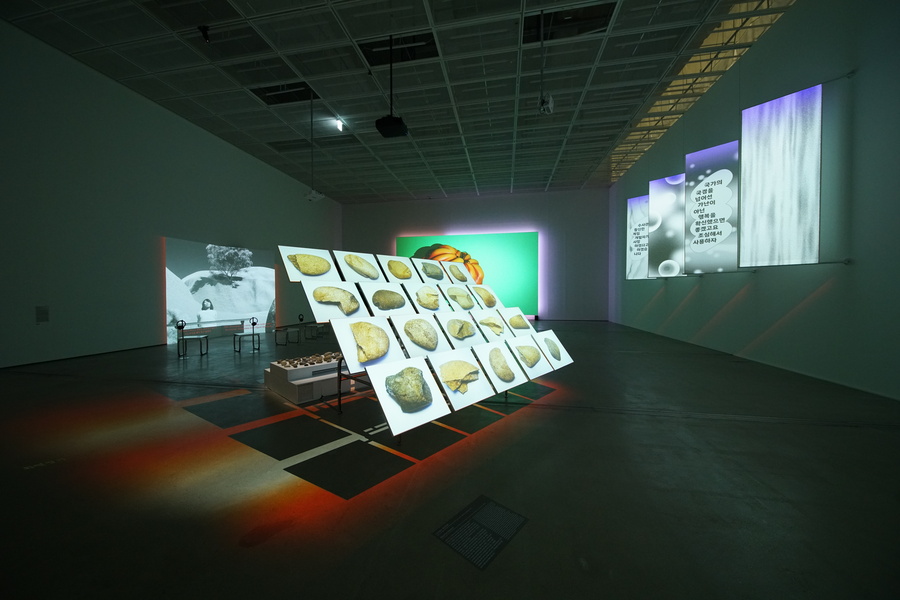
《Popular Creatures》 is an exhibition that
interweaves the site of disaster, represented by a “burned mountain,” with the
predictive nature of artificial intelligence, treating the theme as a fable of
the machine.
The
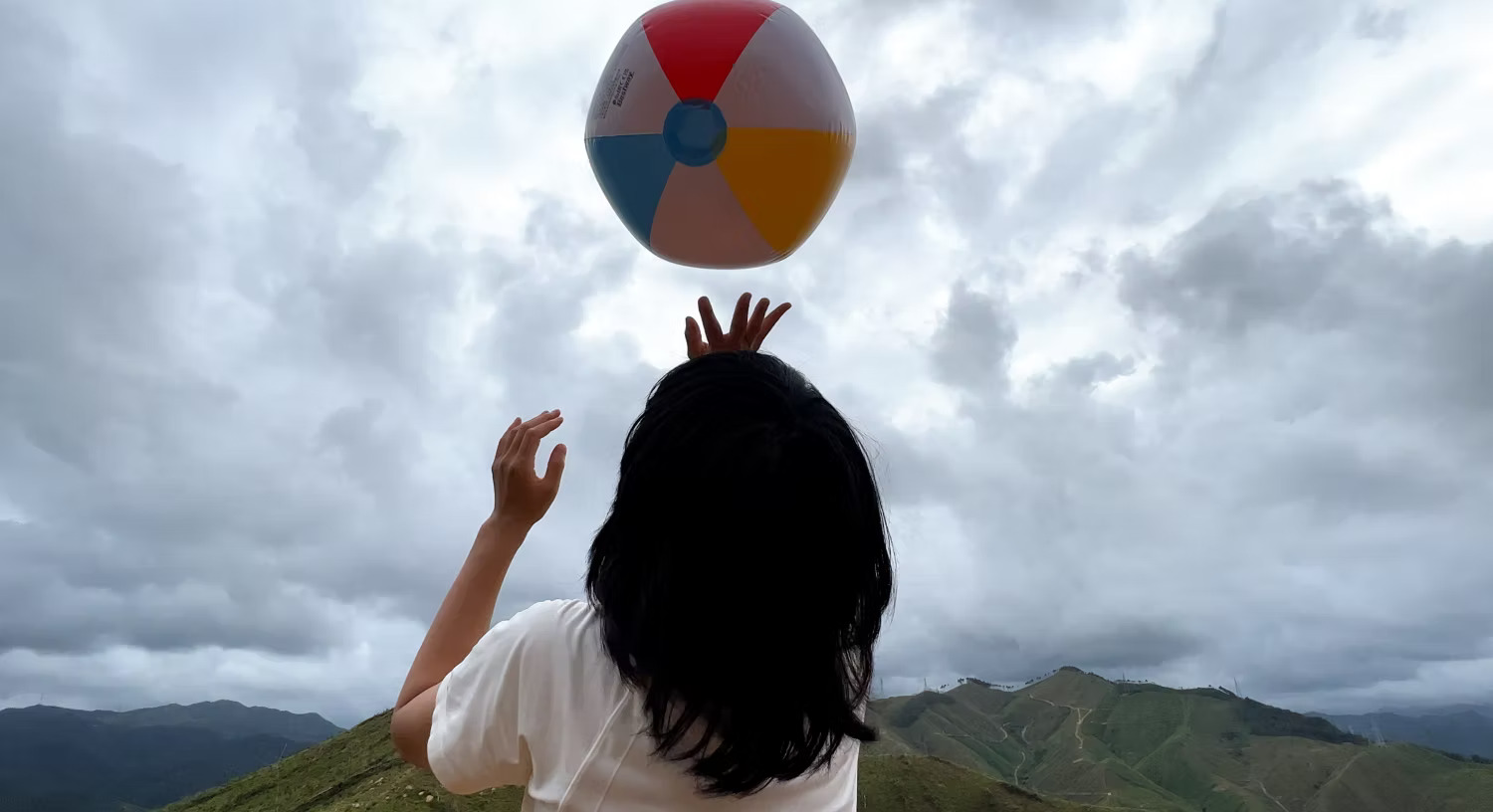
foundation of the exhibition is the video 〈Ecology for the Non-futures〉, which presents
the present moment—where disaster and the advancement of predictive
technologies overlap—through the tense of the “non-future.” Traversing the
myriad paths revealed by the burned mountain, the artists construct a narrative
that interlaces endangered species who have lost their habitats to wildfires,
generative AI and datasets, trail camera animal portraits, and the stories of
taxidermied animals through a mixture of fables, documentary footage, and
machine learning experiments.
In
the process, the reality of disaster is developed like a photographic print,
passing through the statistical latent space of generative neural networks and
appearing like light on film. During the course of machine learning, the
artists encounter entities with “the eyes of domestic animals”—figures that do
not exist in the dataset—facing the anthropocentric culture and new forms of
coloniality inherited by AI.
The
speculative/predictive nature of AI is treated humorously throughout the
exhibition. For instance, through a ritual reminiscent of spodomancy—a form of
divination that interprets ashes—generative AI inscribes meaningless language
like an oracle onto burned trees. These trees, which become shells suspended
between actual disaster and potential prediction, ironically stand as oracles
of the non-future, resembling excavated remains.
Experiments
in machine learning frequently fail in this work. These failed, ghost-like
entities—generated without any causal logic of time—are ironically given
temporal context by describing them as beings that appeared “around the time
when magnolia flowers bloom.” Furthermore, they are hunted and commemorated not
as boastful trophies, but rather as memorials for vanishing originals or for
things that now only exist as remnants in our perception.
In
their previous work Ecosystem(2020), the artists analyzed
pareidolic perception in machine vision. In this exhibition, they feed those
results back into contemporary large-scale generative AI as prompts, outputting
romantic poetry for the summer, continuing the ironic joke: “This summer will
be delightful.” Because computer vision recognizes objects based on edges,
patterns, and colors, it often misinterprets subjects as superficial shapes or
incorrectly connects them into bizarre ecosystems. For example, zebra patterns
are perceived by machine vision as part of a strange ecosystem that spans from
wild zebras to objects in human culture (sofas, blankets, swimsuits, cowboy
boots, pillows, flags, skirts, etc.), revealing the landscape of “ordinary nature”
that surrounds us.
In
this present moment, where the boundary between virtual visuality and reality
is increasingly blurred and intersected, this exhibition employs generative
neural networks, datasets, and computer vision as technologies of critical
ecological observation. Expanding the tradition of fables—where animals are
used to satirize humans—into fables of the machine, the exhibition asks:
through “predictions without a future,” what kind of time are we shaping?