In
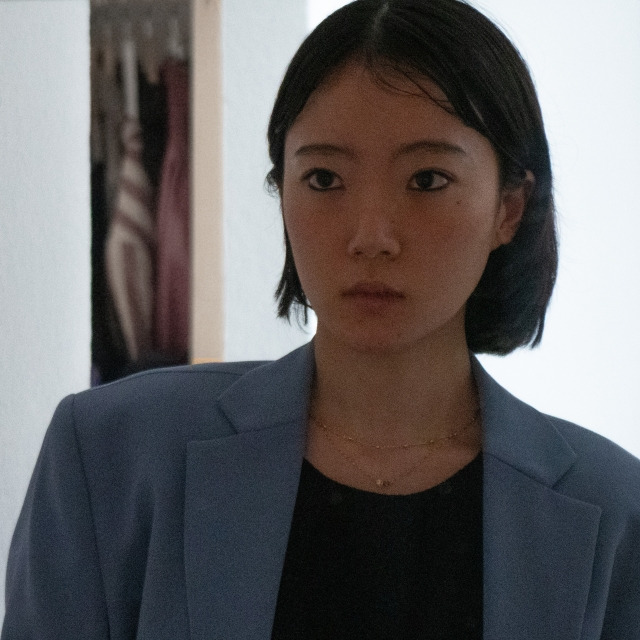
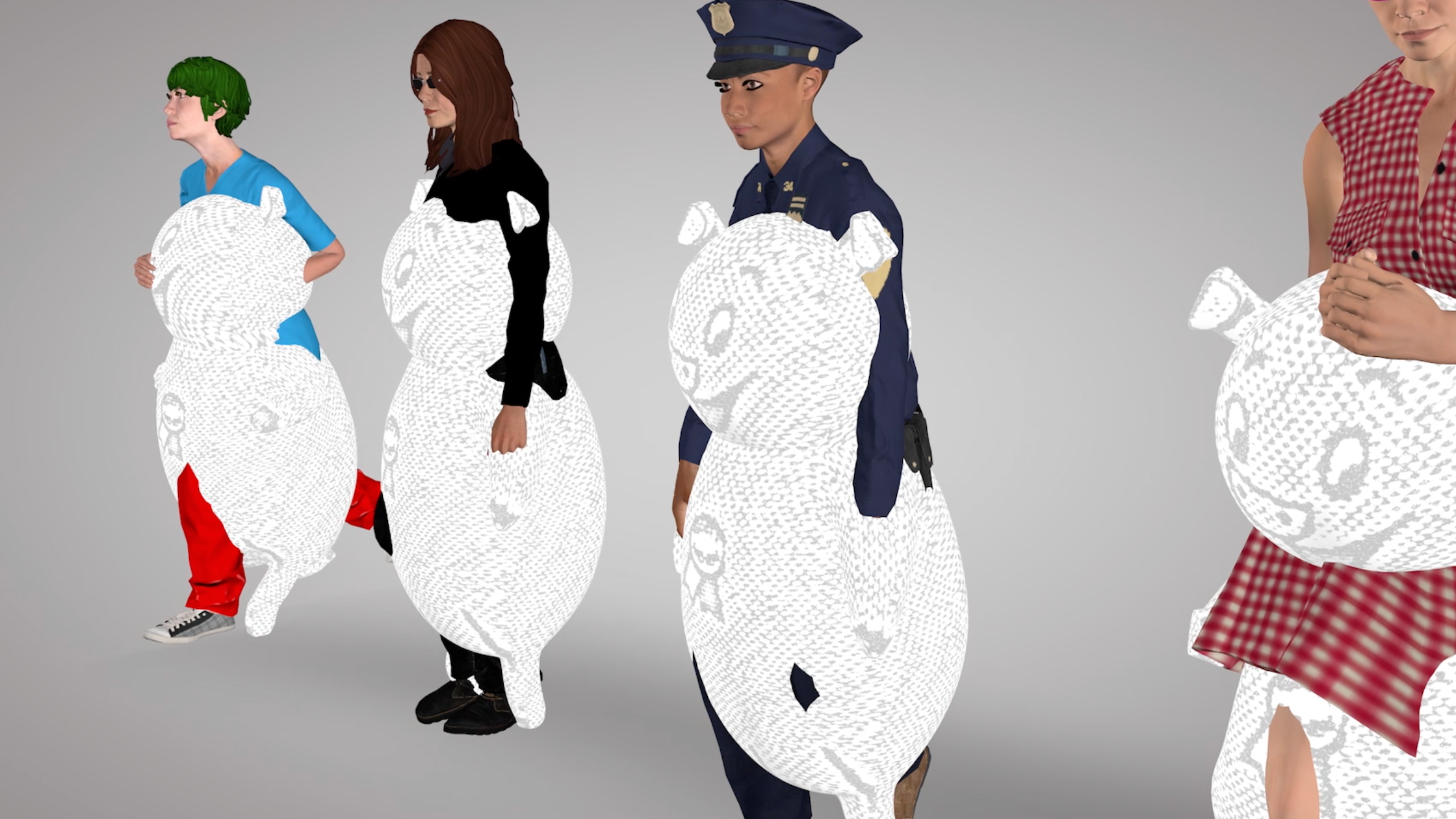
the film Missing (2024), which was made especially for the exhibition, Mooni Perry
engages in a reflective relationship with ideas of belonging in order to become
aware of a transformational moment that only arises from an external
perspective. Missing
contrasts a “longing
for the West”,
which is partly accompanied by a distorted, idealised notion of liberal
democracy and individual freedom, with a longing for the East. In response to
questions of authenticity and originality, which, in the context of hegemonic
historiography and the culture of memory, have become a weapon in the battle
for interpretive sovereignty, the film reacts with a snapshot that precisely
does not assume ‘true’ or ‘false’ narratives. Rather, the cinematic narrative
is itself an acknowledgement that the world is also viewed differently by
others and that an actual truth only manifests itself in the concurrence of
multiple perspectives.
The
title of the exhibition refers to a system of coordinates that the artist
mentally superimposes on the map: the x-axis ranging from west to east – from
Lake Baikal in present-day Russia, a region closely associated with shamanism,
to Heavenly Lake in the Changbai Mountains on the border between China and
North Korea; the y-axis travelling from north to south – from Manchuria, a
region that extends across the present-day borders of China, Russia and
Mongolia, to the Kailong Temple in Tainan, Taiwan. The temporal qualifier
‘present-day’ is essential in this respect, as these historical and cultural
landscapes have experienced a multitude of occupations and reinterpretations
during previous centuries, which have also resulted in the irretrievable loss
of East Asian cosmology and cultural techniques.
In
her research, Mooni Perry is particularly interested in the question of what
the idea of ‘East
Asia’ means
today, particularly in view of a history characterised by numerous ruptures,
and to what extent cultural, historical and philosophical traditions connect
China, Japan, North and South Korea, and Taiwan. There is an object in the
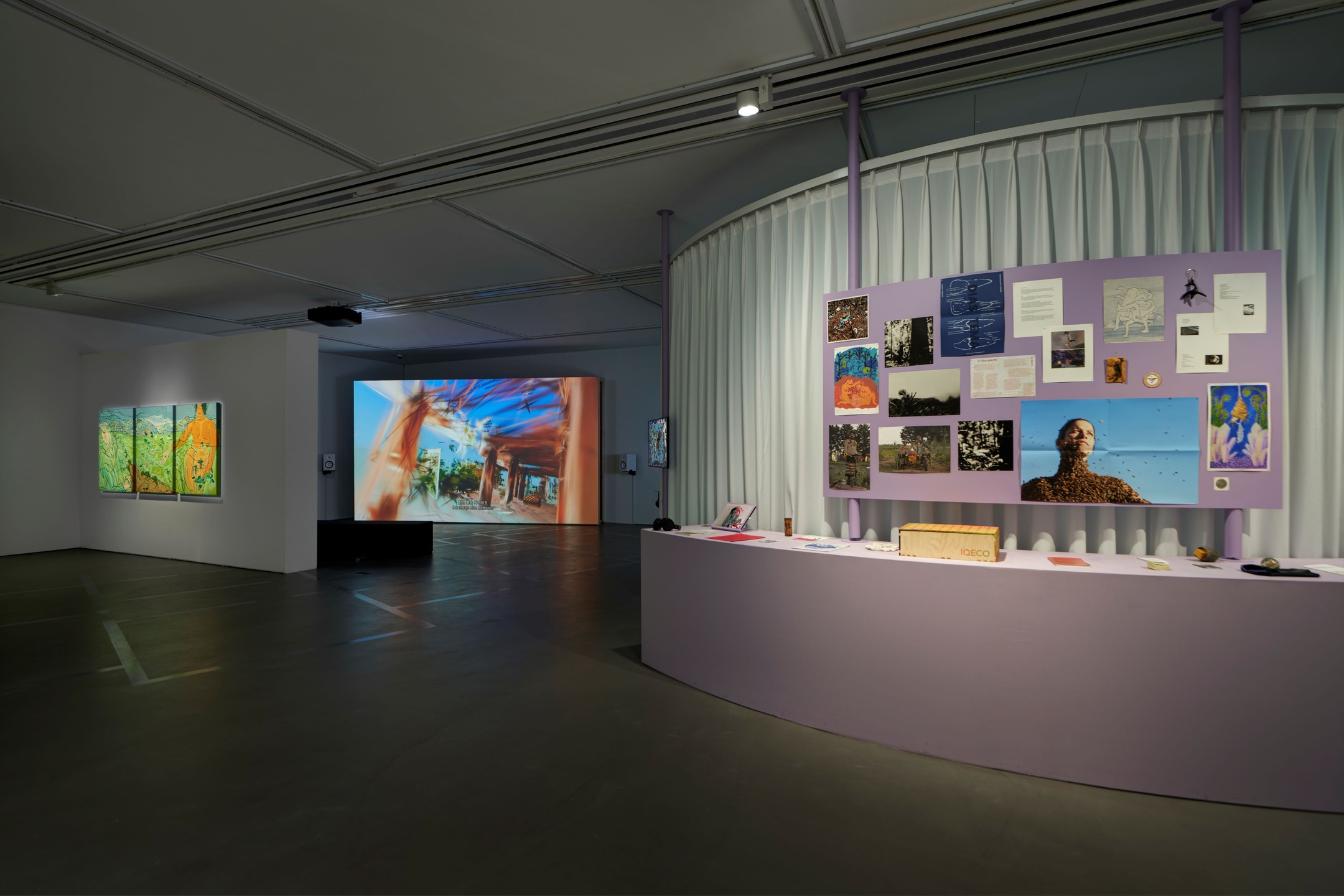
foyer of the Kunstverein that is also mentioned in the film: the
elaborately-decorated paper house on a wooden stool houses seven deities on
three floors. The Kailong Temple, located in Tainan, is dedicated to them. On 7
July, according to the lunar calendar, a rite of passage, i.e. a kind of
coming-of-age ceremony, is celebrated there: mothers accompany their (almost)
sixteen-year-old adolescents to the temple to receive a blessing for their
impending adulthood.
The
paper houses are then burnt, releasing the hope of being supported in the
future, which settles in the soot on the walls of the temple. The paper house is also
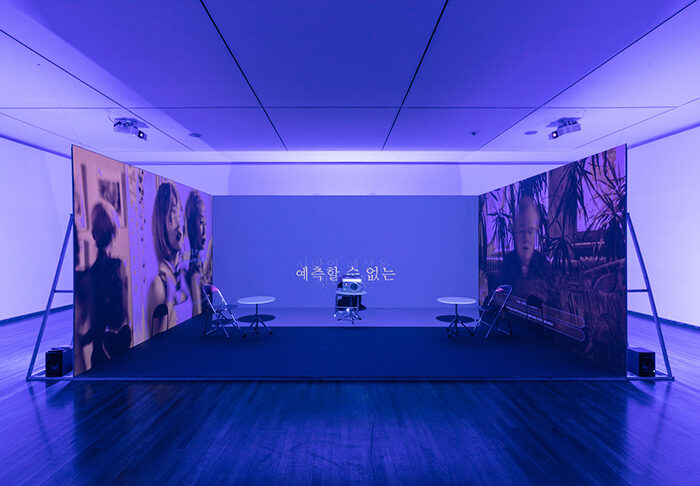
accompanied by a speculative narrative thread: already visible from the outside
through the glass façade, one can make out
larger-than-life figures on the wall. They represent members of the Asian
Feminist Studio for Art and Research, which Mooni Perry founded together with
Hanwen Zhang in 2020. This platform developed into a multivoiced network,
connecting people worldwide through weekly online meetings, in which ideas are
exchanged on the issues formulated there and also joint projects implemented,
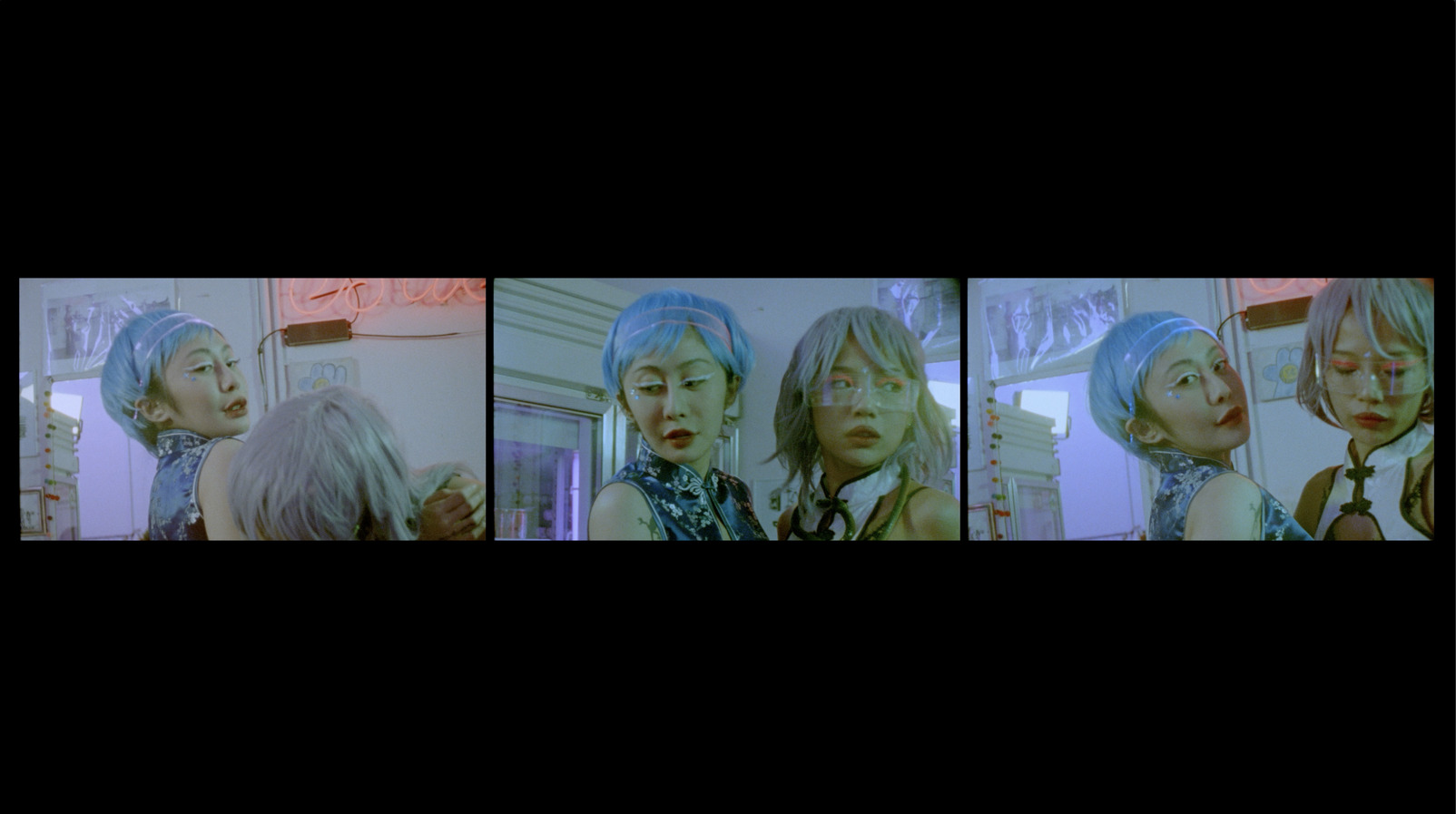
such as this exhibition at the Kunstverein. The make-up and clothing of the
invented characters are based on the so-called ‘Ba-Zi’ of the members, which
means the ‘four pillars of fate’ in East Asian astrology.
When
Mooni Perry speaks of a “puzzle” when reflecting on concepts of
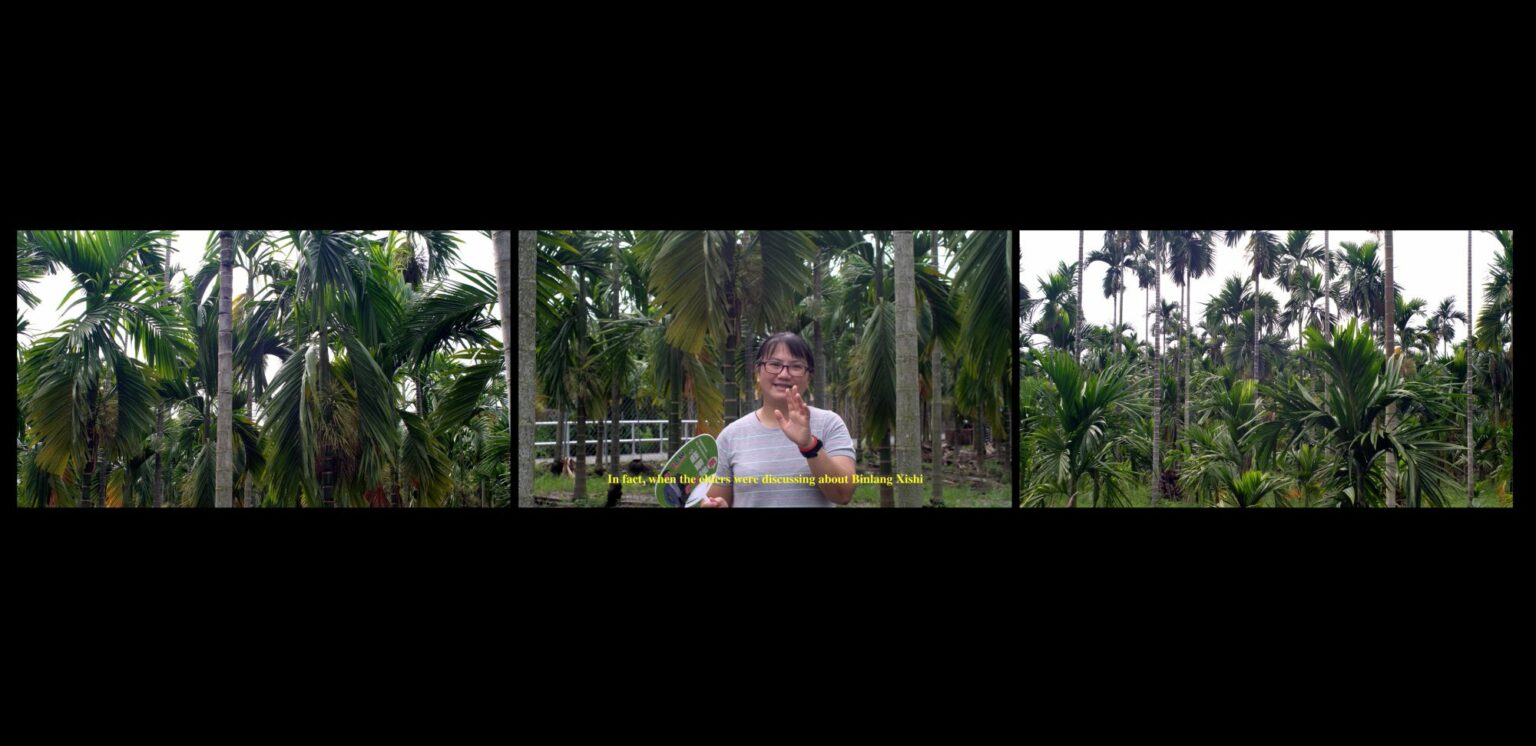
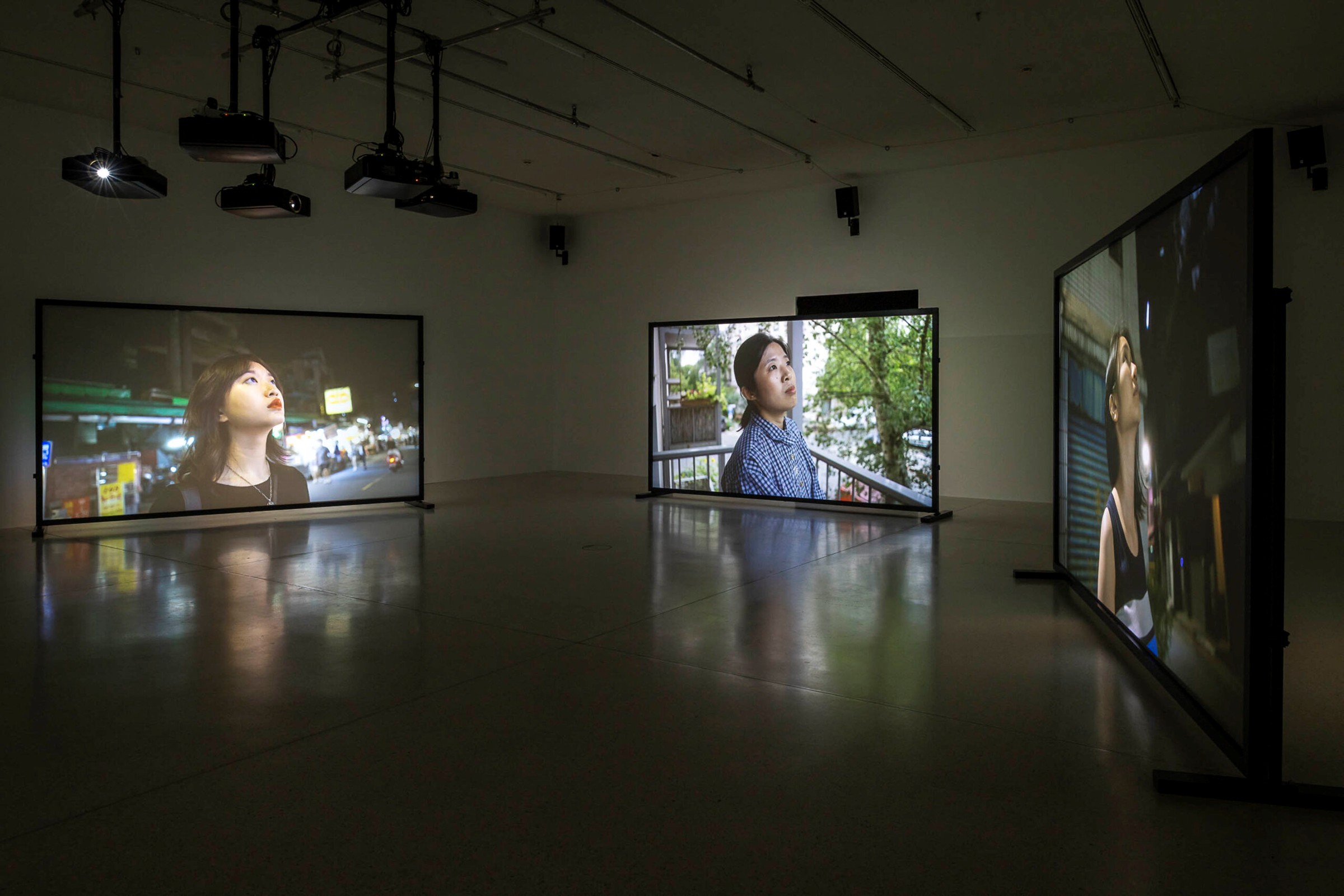
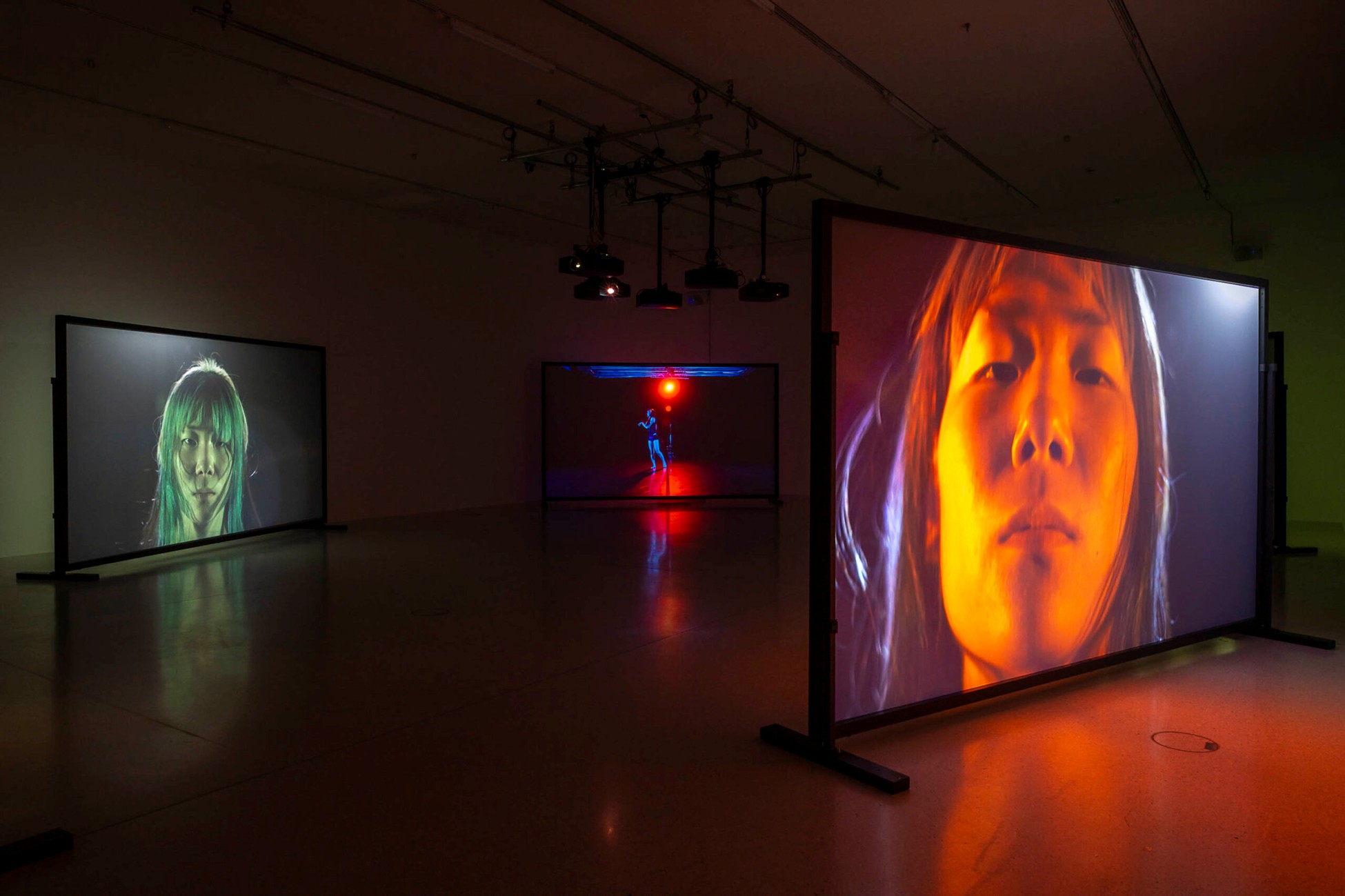
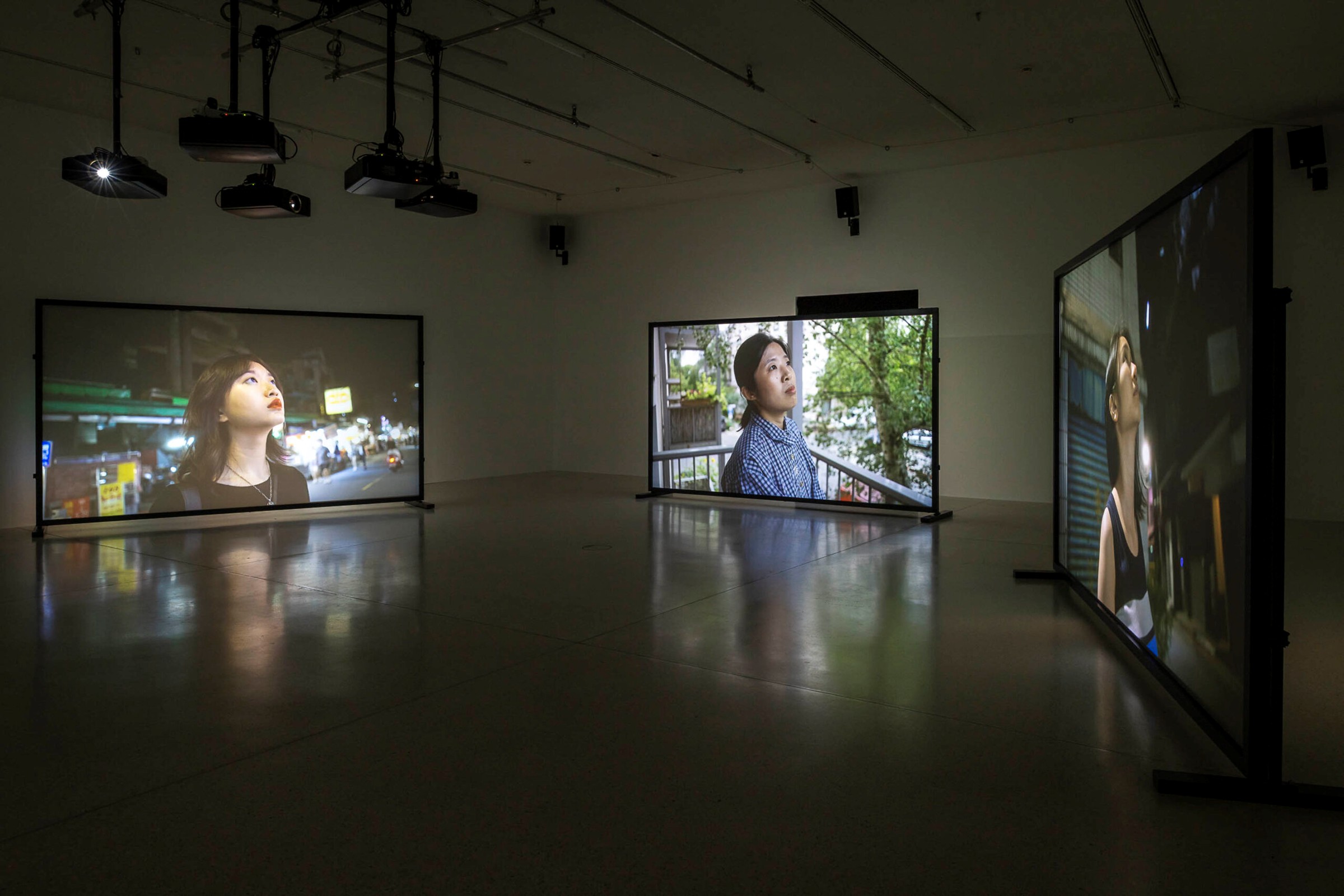
identity, this seems to be formally translated in the film Missing by the division into five
projection channels. The individual images, chapters or sequences sometimes
appear to be cobbled together in a disparate fashion, and yet the narrative
strategies and the juxtaposition of images in particular generate a world of
their own, albeit a singular one: individual scenes are dissected, so to speak,
when they are multiplied and shown from different perspectives. Connections
between different biographies and geographies are forged when five people
simultaneously look up at the sky in awe. Attention is drawn to a particular
dialogue when only one or two projections coincide. An individual life is
placed in a larger historico-political narrative when one of the protagonists
is seen on a bed in a hotel room whilst writing, with footage of the Chinese
border in Xiamen and the Taiwanese border in Kinmen placed next to her.
Missing
thus accompanies the viewer into a multitude of interstitial spaces that firmly
reject the opposing logical binaries of private/public, real/fictional,
outside/inside, religious/atheistic and, in particular, profit/loss, instead
allowing for unforeseeable correlations and contexts. This is also illustrated
by the improvised mode of direction, which, although a script and certain roles
were provided, ultimately gave the actors freedom to interpret and develop them
individually.
What
at first seems to be fragmented and far-flung coalesces in the final scene of
the film once more. The search for orientation sketched out in Missing, be it with the help of
an oracle, a fortune teller or prayers for love in a Chongqing temple, is
temporarily resolved in the get-together of AFSAR members in a Berlin
apartment, who celebrate their reunion over a meal. “You’re going to find what
you’ve lost,” was the message at the Guandu Temple. When asked whether a loss
also holds the potential for a new beginning and unexpected connections, Mooni
Perry seems to have come up with a possible answer here: “creating by losing.”