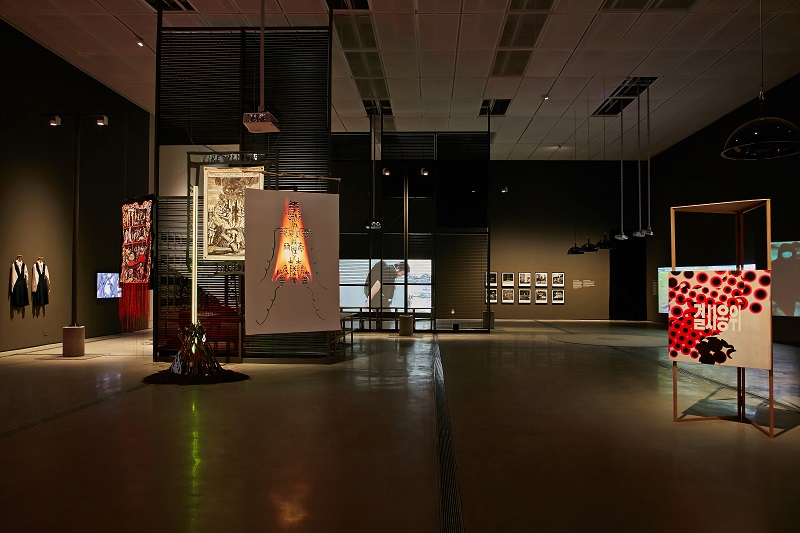
Hkason (b. 1988) has been presenting multilayered relationships—extending from the human body to objects and space—through the format of stage-like settings, focusing on the materiality of skin that covers the body and the clothing that overlays it, as well as the act of wearing. The physical act of putting on and draping, which emerges from his sustained inquiry into the relationship between body and object, shifts into a relationship between body and space, achieving a gradual expansion.
 
Furthermore, He looks for moments where the properties of materials and surfaces change beyond the simple act of putting on or covering, and aims for flexible ambivalence in the mediums, fastenings, and actions that facilitate this transformation.


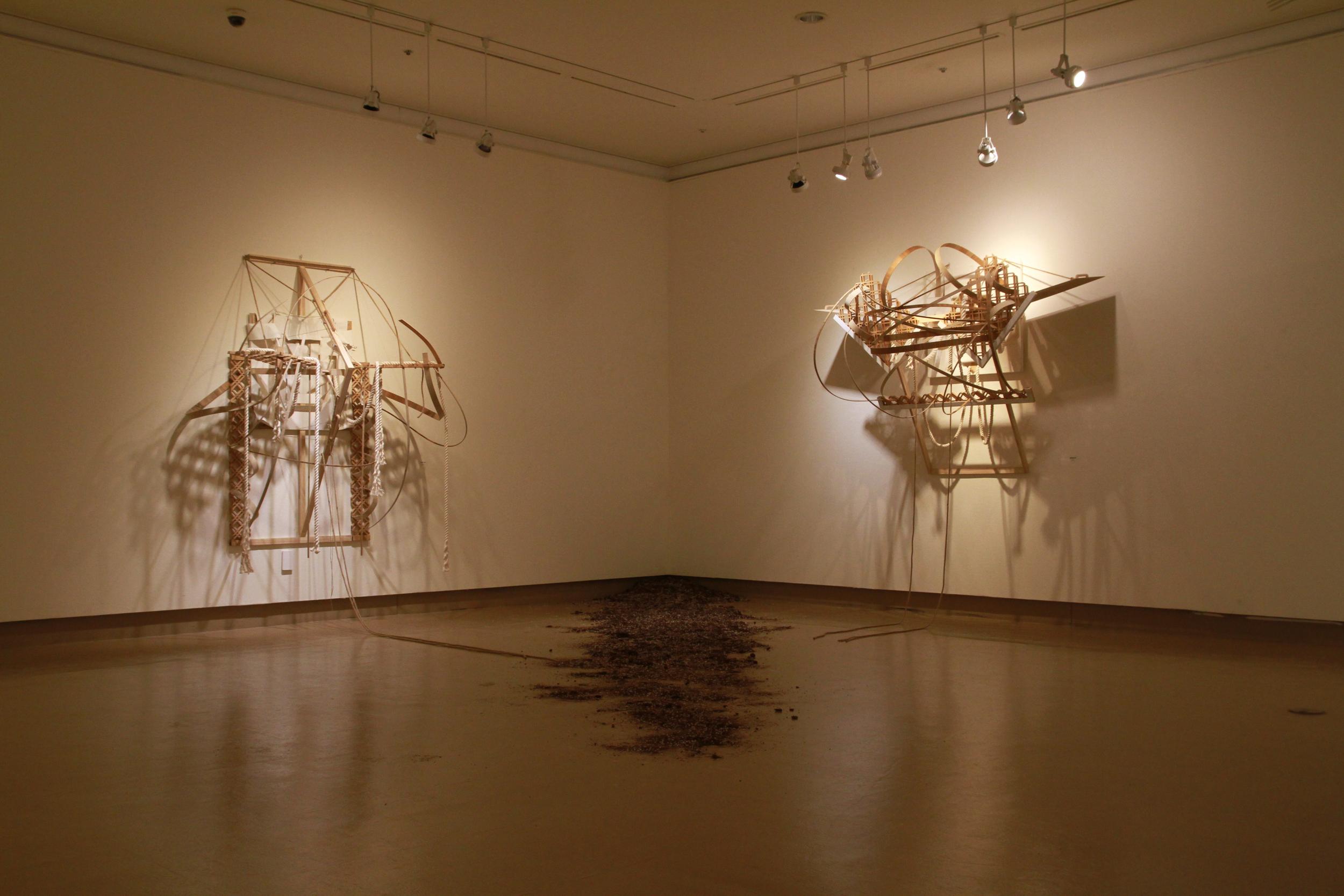
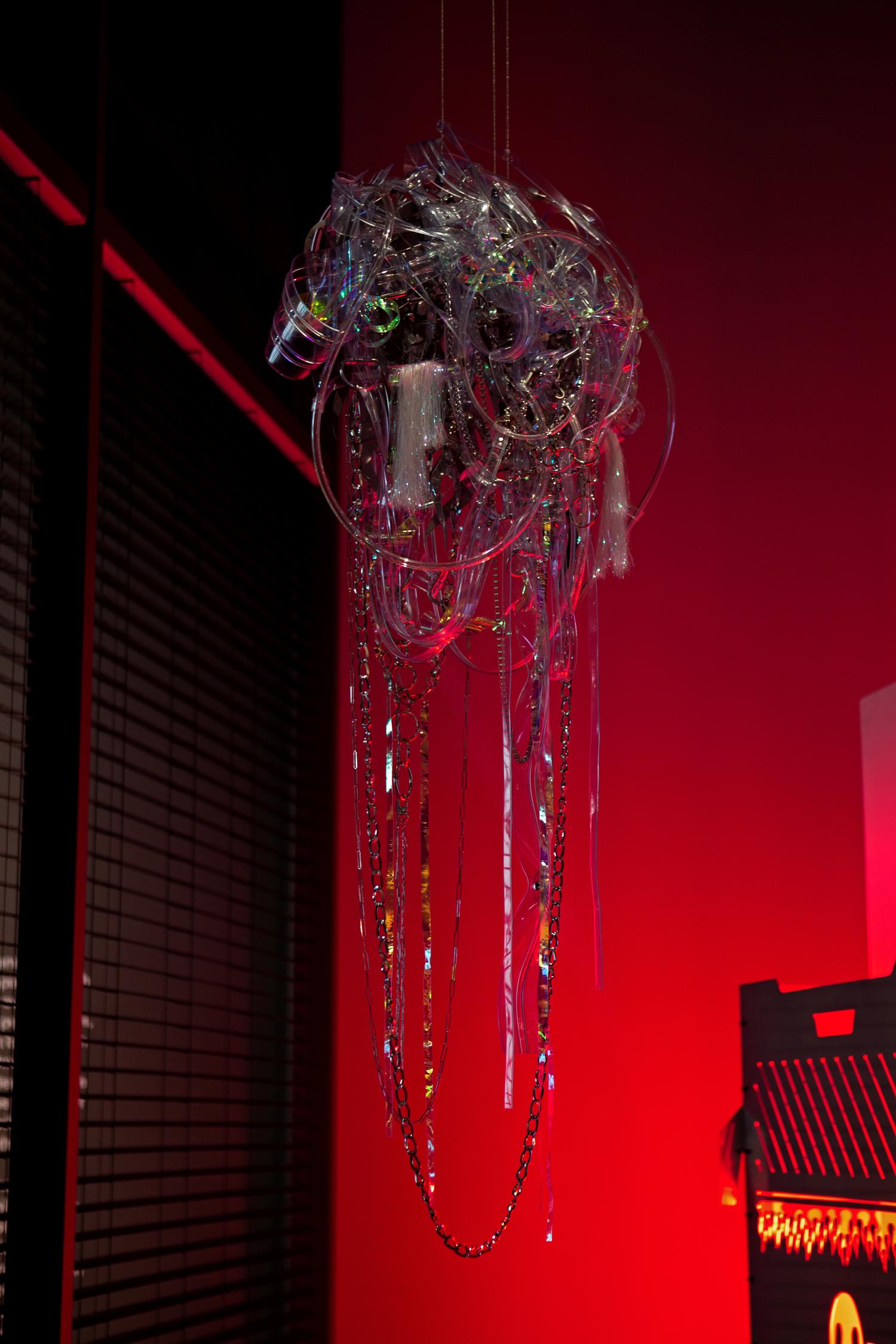
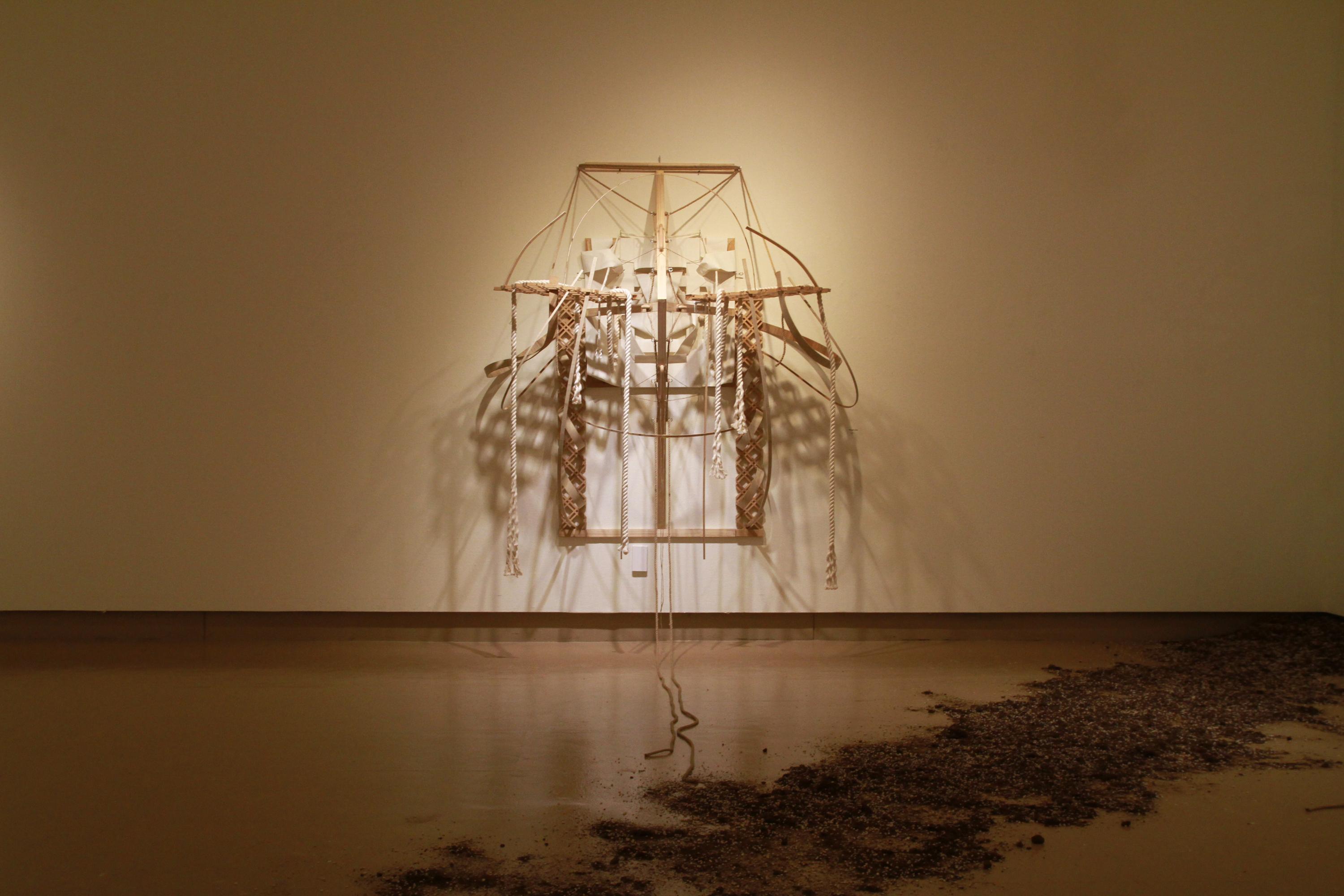
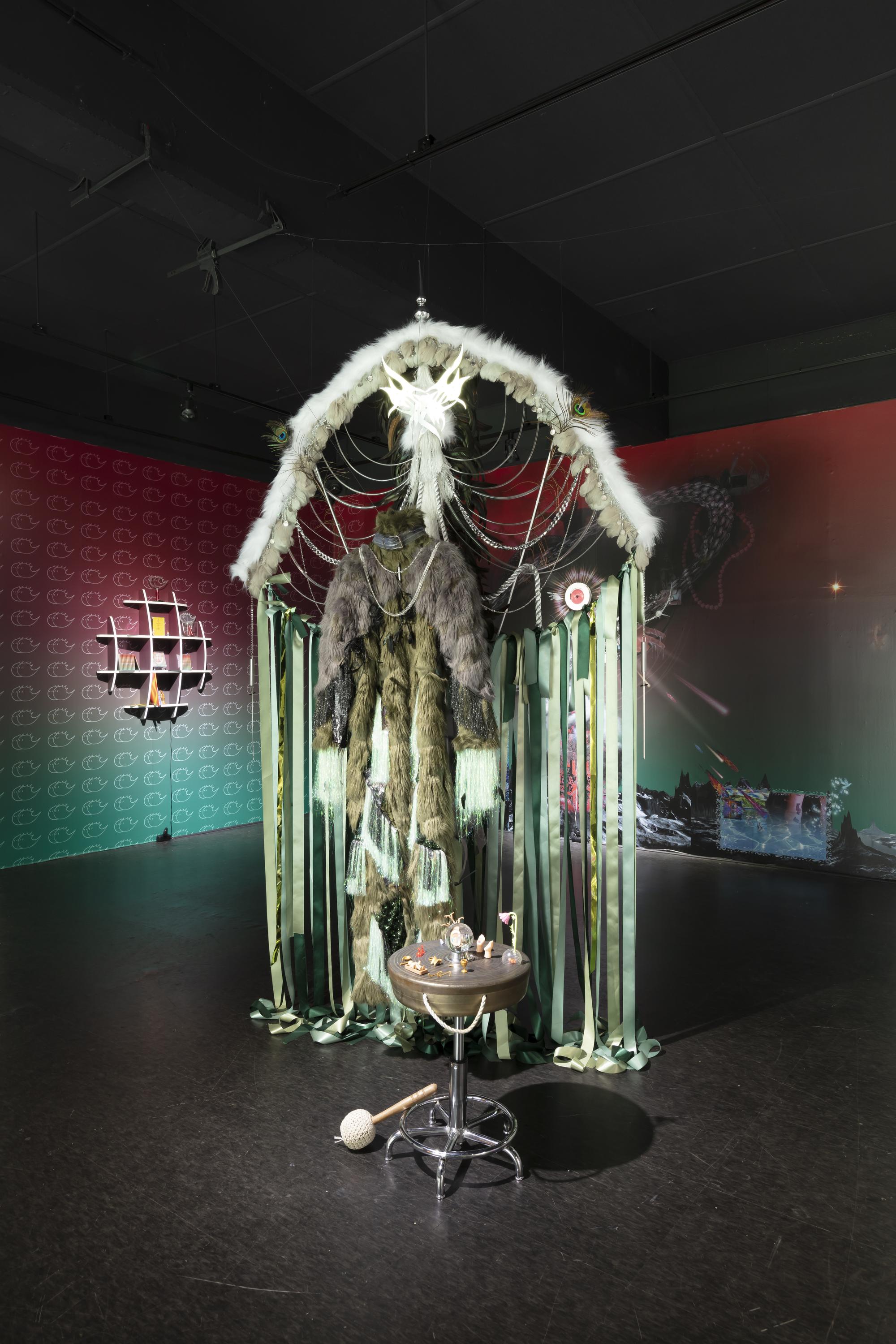
Hkason, Overman exuviates 1, 2021, Mixed media, Dimensions variable ©Hkason

According to the artist’s note, having studied painting in the United States, film and media art in Germany, and fashion in Belgium, Hkason began to take an interest in the evolution and expansion of the human body, inspired by Laozi’s concept of wu wei (無爲; non-action) and Henri Bergson’s theories of repetition and duration.
 
This background laid the foundation for the artist’s practice, leading to transboundary and transmedia works that move beyond the conventional functions and attributes of materials to create something entirely new. For instance, his 2021 work Overman exuviates 1 combines the lattice window of a hanok with various other materials, rendering a bizarre form in which heterogeneous worlds converge and collide.


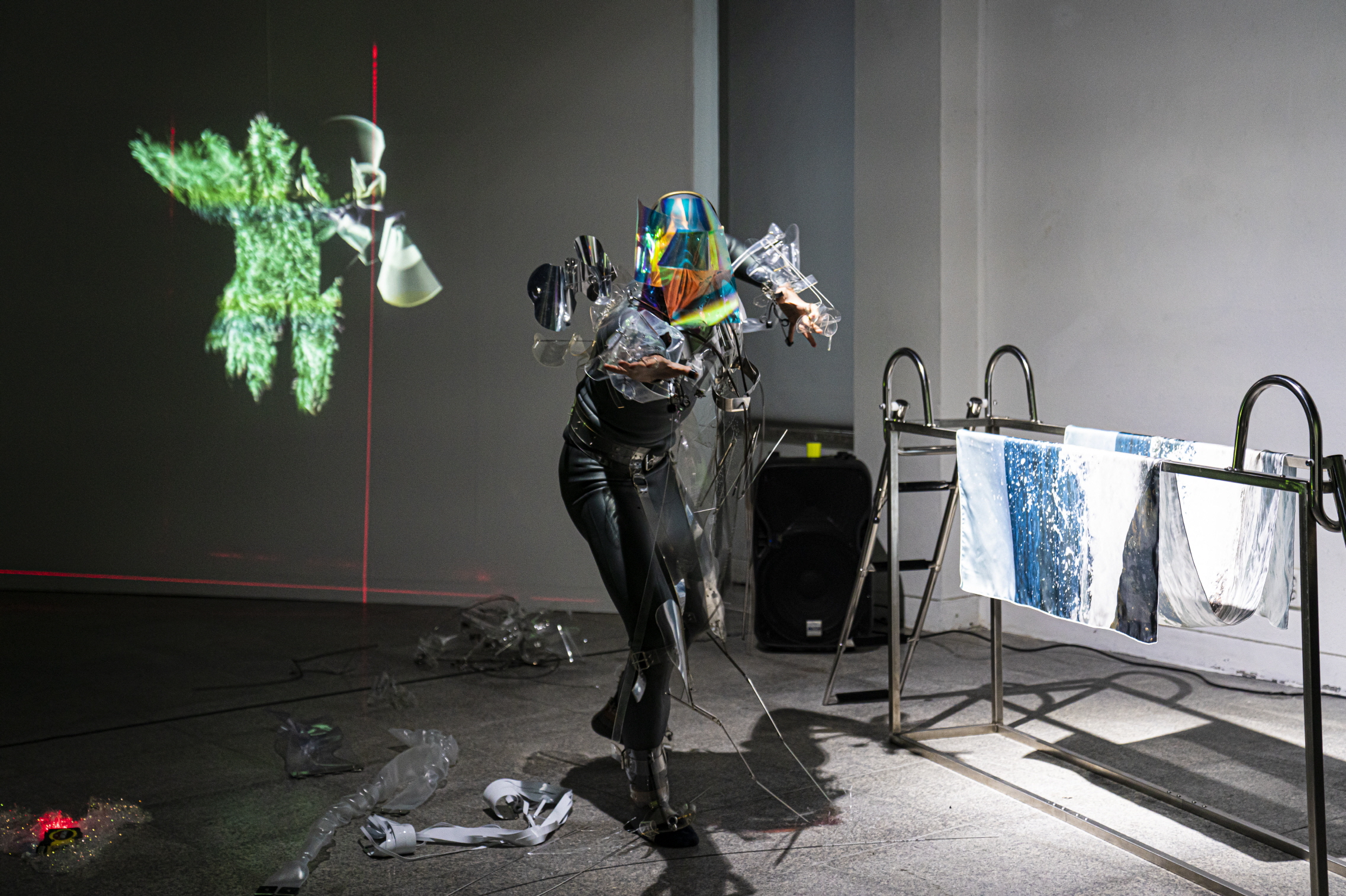
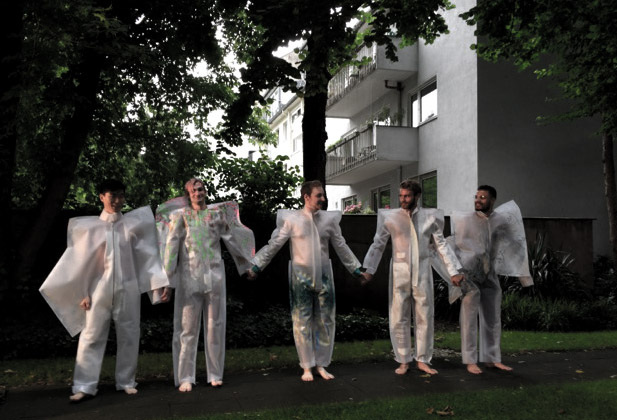
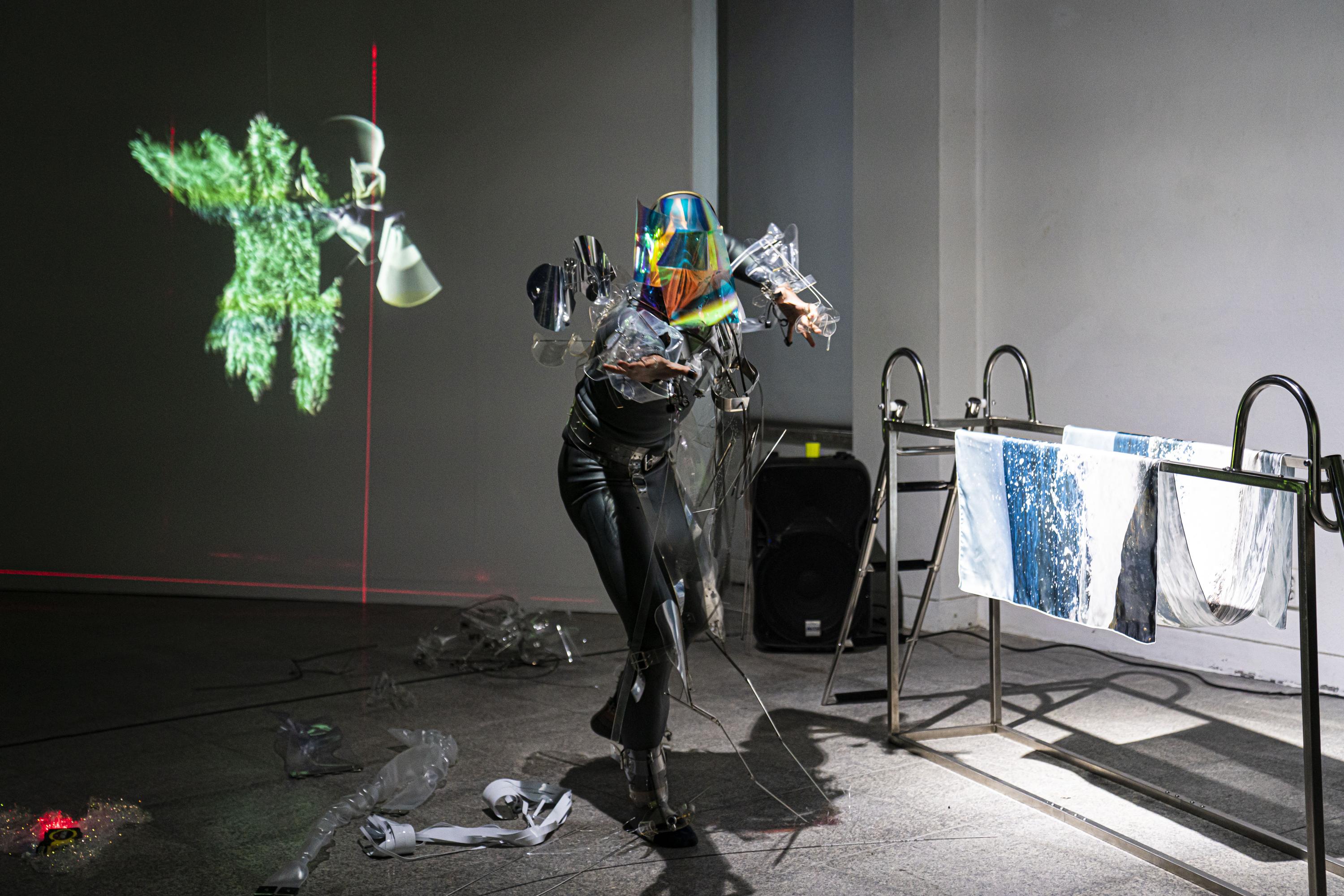
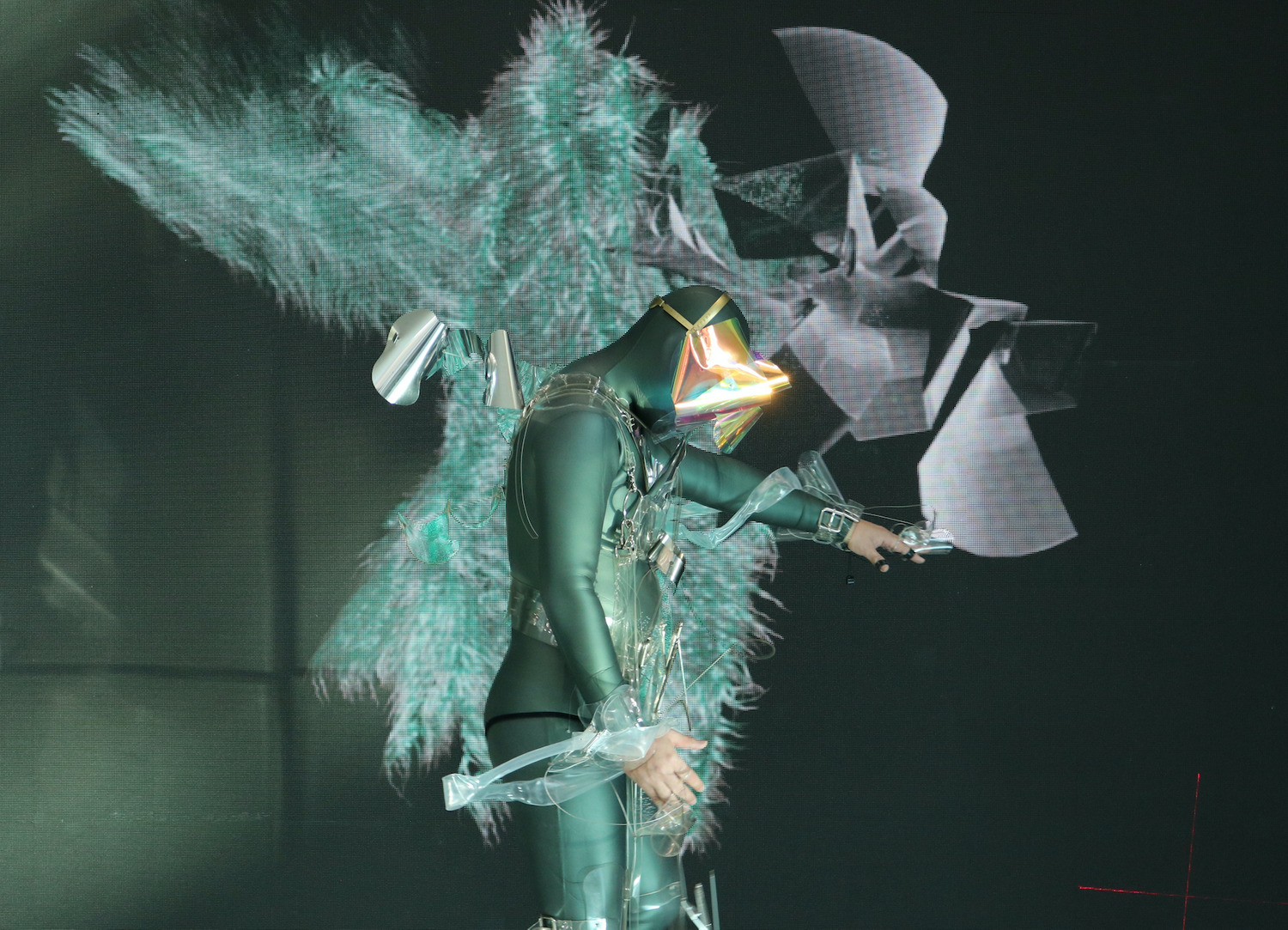
Hkason, The in between Gesture, 2022, PVC, neoprene wetsuit, metal wire, hologram film, and other mixed materials, Performance (approx. 25min), video (approx. 3min, loop) ©Hkason

In this way, the artist not only dismantles and recombines materials with different roles and spatiotemporal contexts into a third form that resists definition, but also goes beyond presenting these as completed works in the exhibition space. By placing them on the body of the audience or performer, he once again traverses and expands the boundaries of media.
 
For example, the performance The in between Gesture (2022), carried out by wearing sculptural objects designed to be donned, explored the body and mind challenging their physical limitations through posture correction and the act of molting.


Hkason, The in between Gesture, 2022, PVC, neoprene wetsuit, metal wire, hologram film, and other mixed materials, Performance (approx. 25min), video (approx. 3min, loop) ©Hkason

The performer wears the sculpture, tunes its sounds, and extends the radius of wear through gestures. The sculpture detaches and reattaches itself from the surface of the body in a repetitive motion, while the performer’s gestures redirect and twist the natural flow of force, striving for the body’s continuous optimization.
 
Through wearable sculptures, Hkason has devised ways in which human movement is transferred into sculptural movement. Within his work, the body is presented as a device that renews and transcends its own boundaries, revealing the fantasy of a “post-body” or a “dehumanized body.”


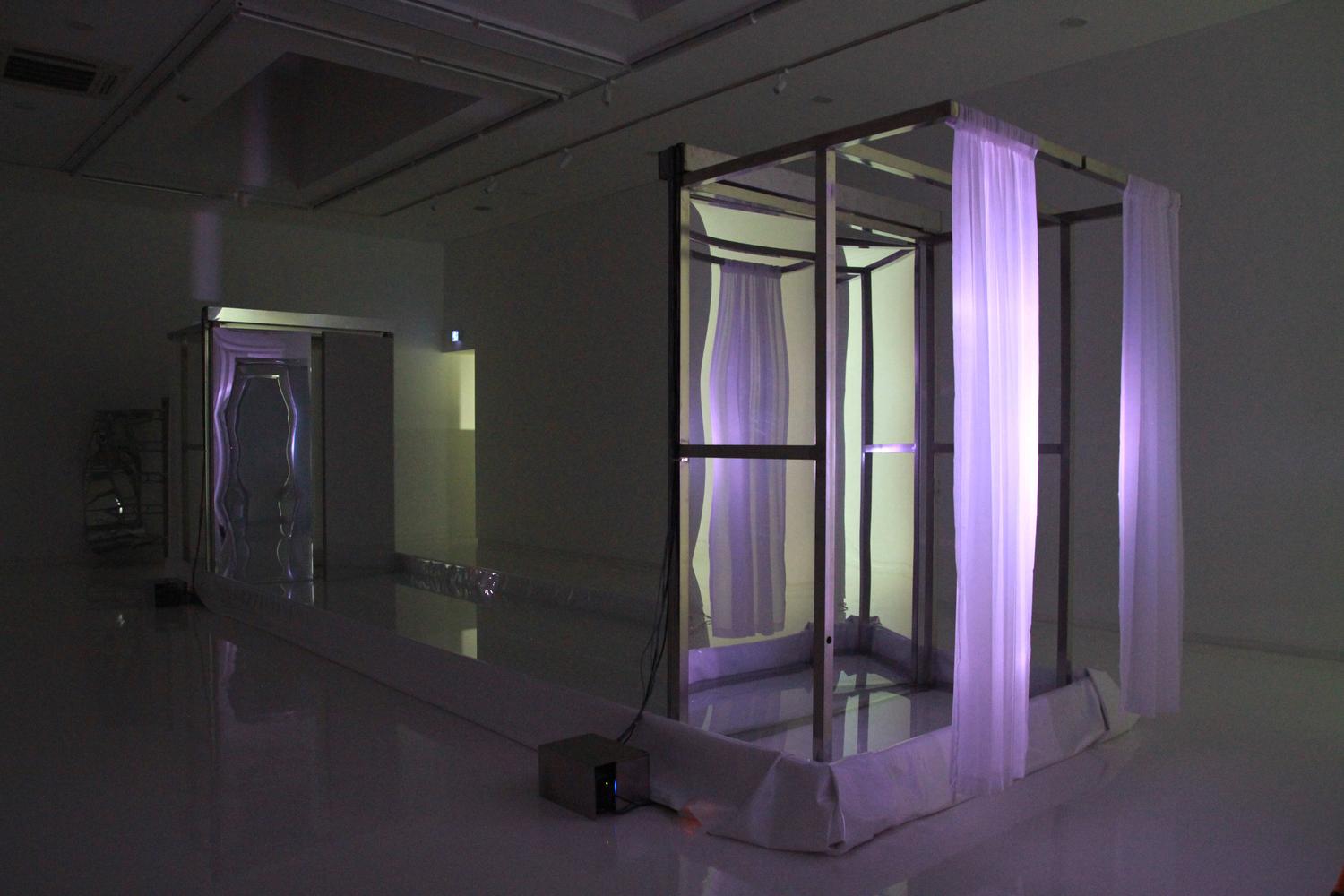
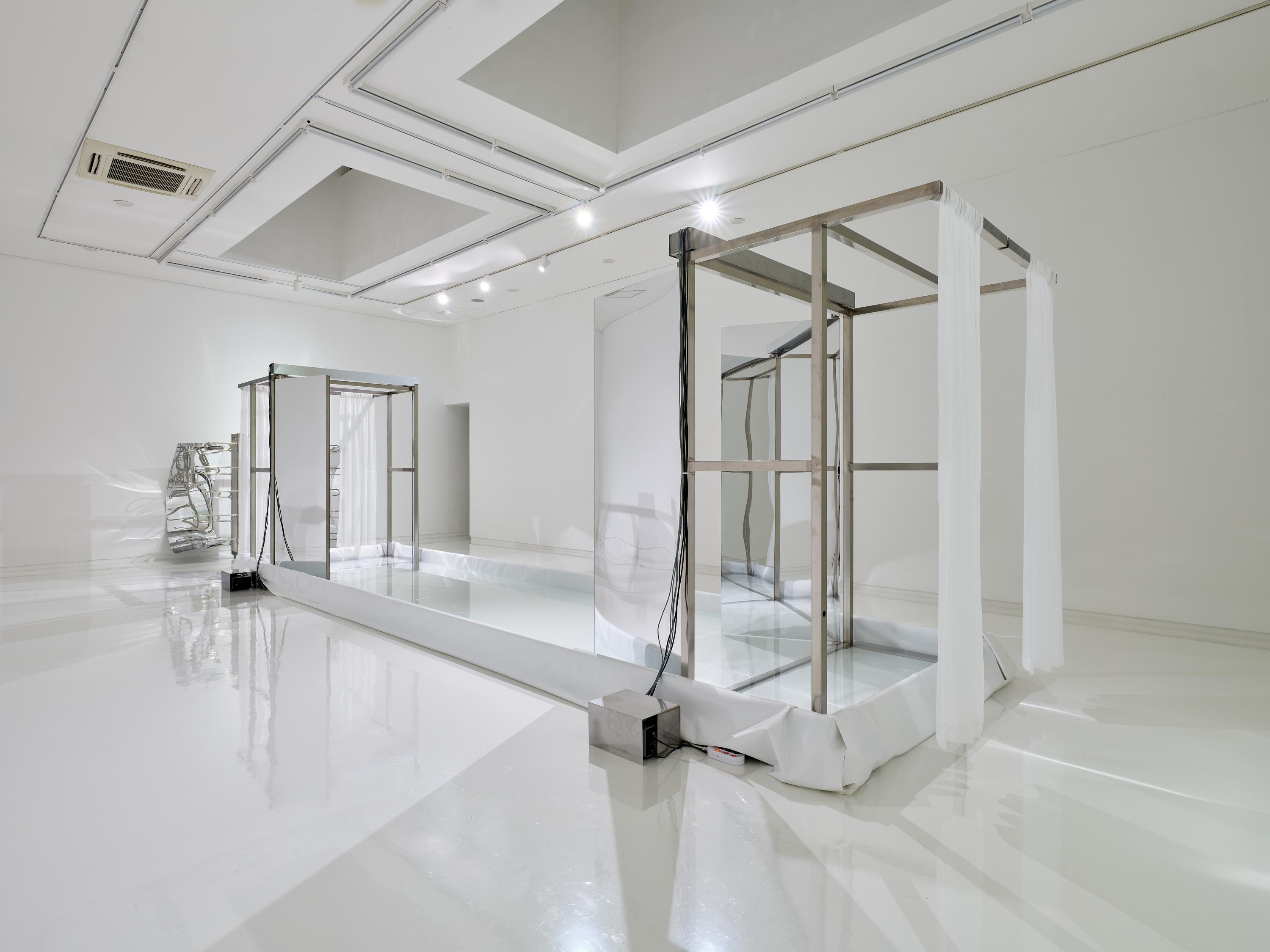
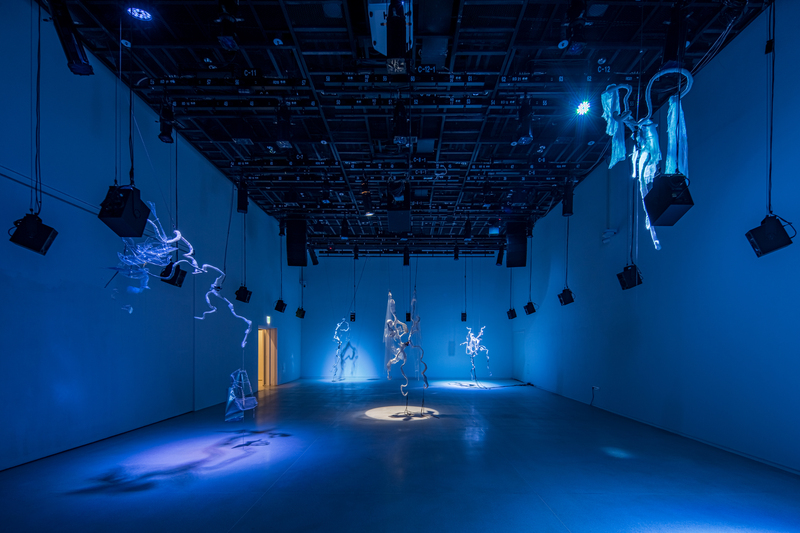
Installation view of 《Gametophyte》 (Cheongju Art Studio, 2023) ©Hkason

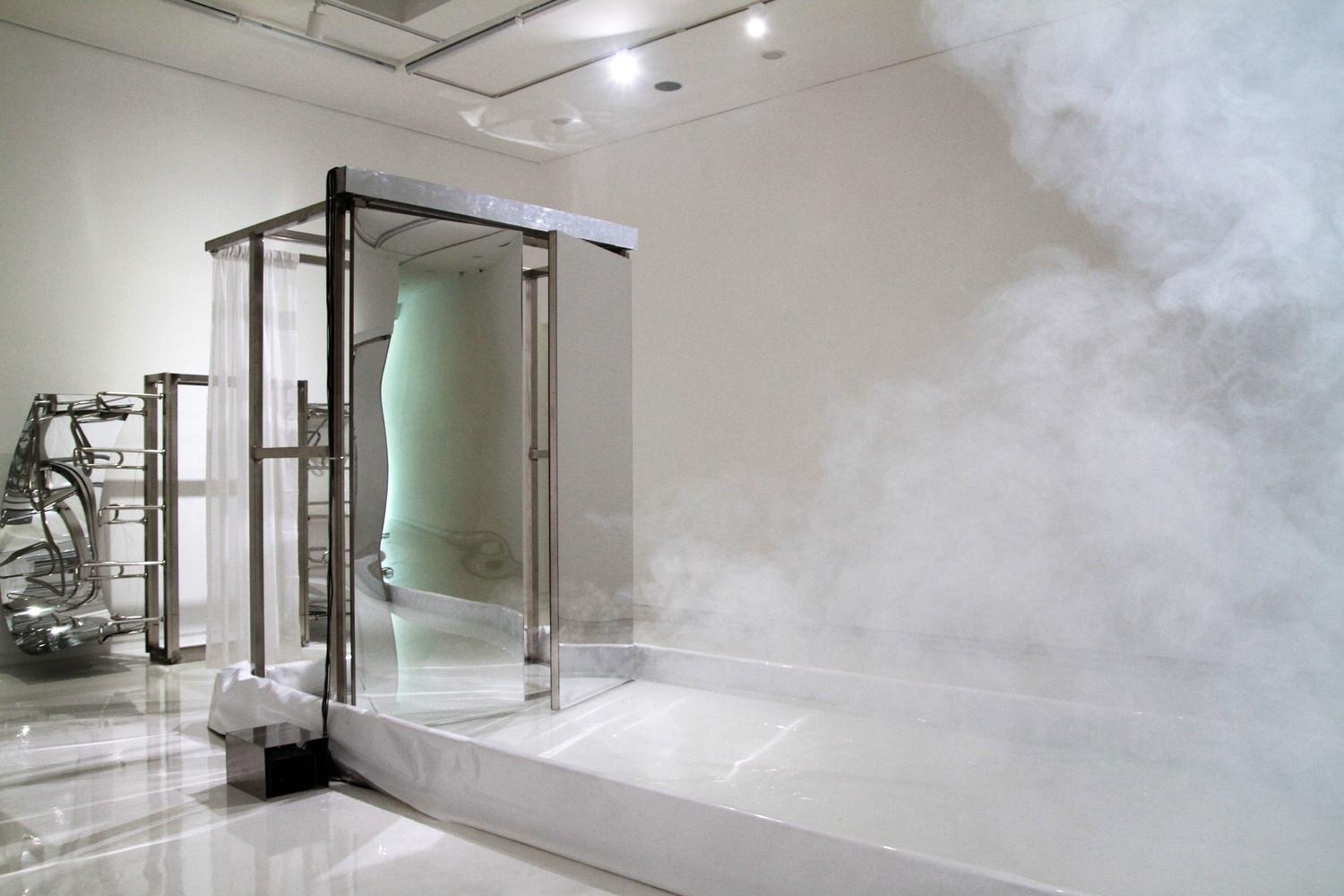
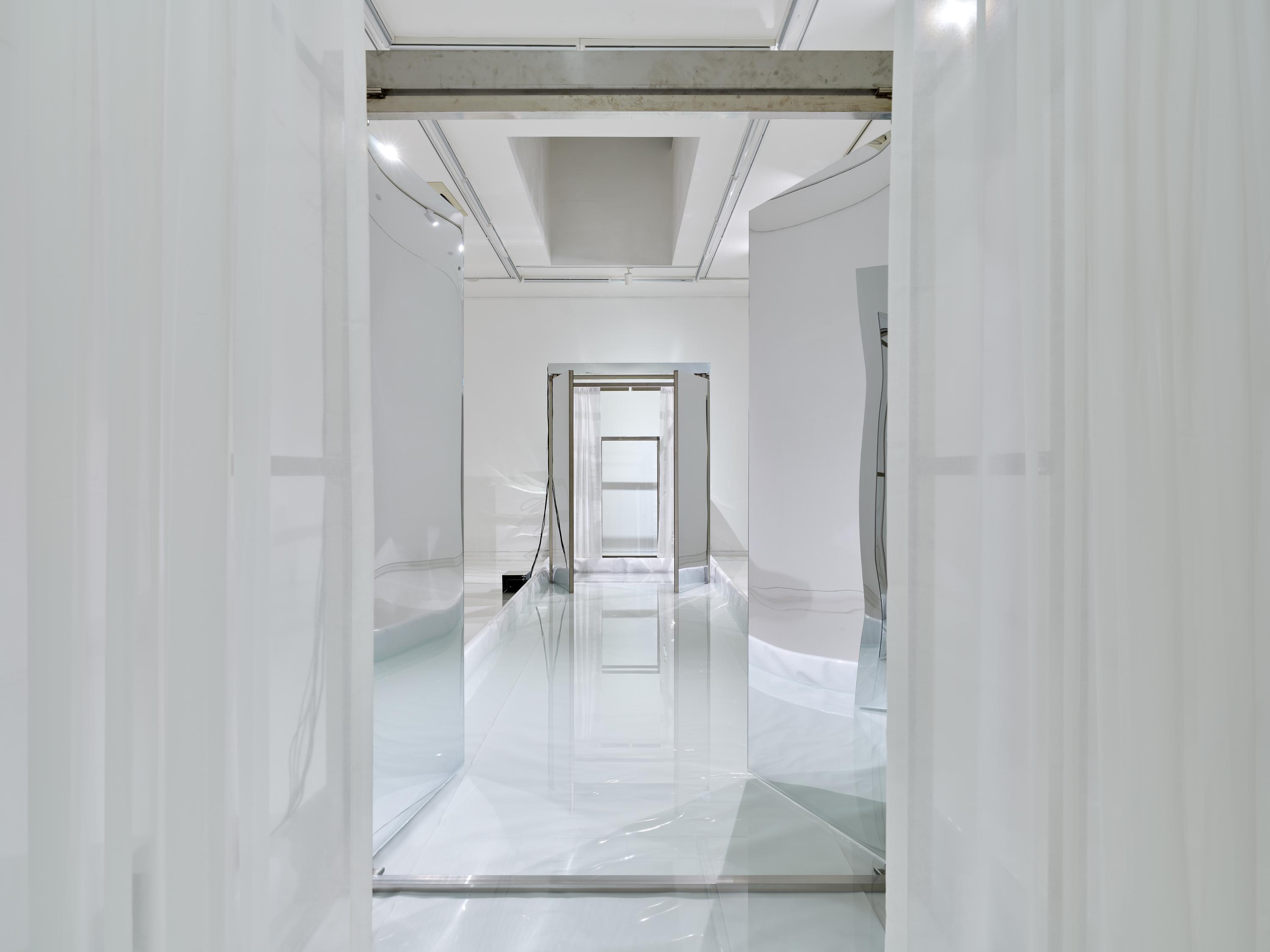
Meanwhile, in his 2023 solo exhibition 《Gametophyte》 at the Cheongju Art Studio, Hkason presented scenes in which the sculptures themselves appeared as both performer and stage, enacting kinetic performances. In this exhibition, his works expanded beyond the human body into space, creating theatrical stagings on stage through uncanny combinations of immaterial elements—such as light, smoke, and wind—with material installations.

Installation view of 《Gametophyte》 (Cheongju Art Studio, 2023) ©Hkason

The artist used the projection of mirrors and the blocking of doors to both conceal and reveal the continuity and transience of an ever-flowing space, while translating waves of water, the texture of light, and the dispersal of fog into a performance of climax, tension, and emergence.
 
The work unfolds as a 30-minute performance structured around intersecting phases of introduction, build-up, climax, and subsidence. Two doors, their lower parts submerged in water, generate constant ripples within the tank. The movements of the massive stainless-steel doors, with their mirror-like gleaming surfaces, intertwine with the fog filling the exhibition hall and the shifting presence of the audience, stirring the entire space.


Installation view of 《Gametophyte》 (Cheongju Art Studio, 2023) ©Hkason

The facing installations, which triggered a performance in dialogue with one another, revealed a duality of balance and harmony on the one hand, and collision on the other. As the inherent functionality of the components diminished, the gaps between disparate materials aligned, giving rise to unexpected combinations.
 
Such work demonstrates how, when the fluid movements of the human body are transposed into the mechanical motions of sculpture and naturalness is transformed into artifice, artificial movement can nonetheless unfold with dramatic and performative power.

Hkason, Crip Body, 2024, Mixed media, Dimensions variable ©ACC

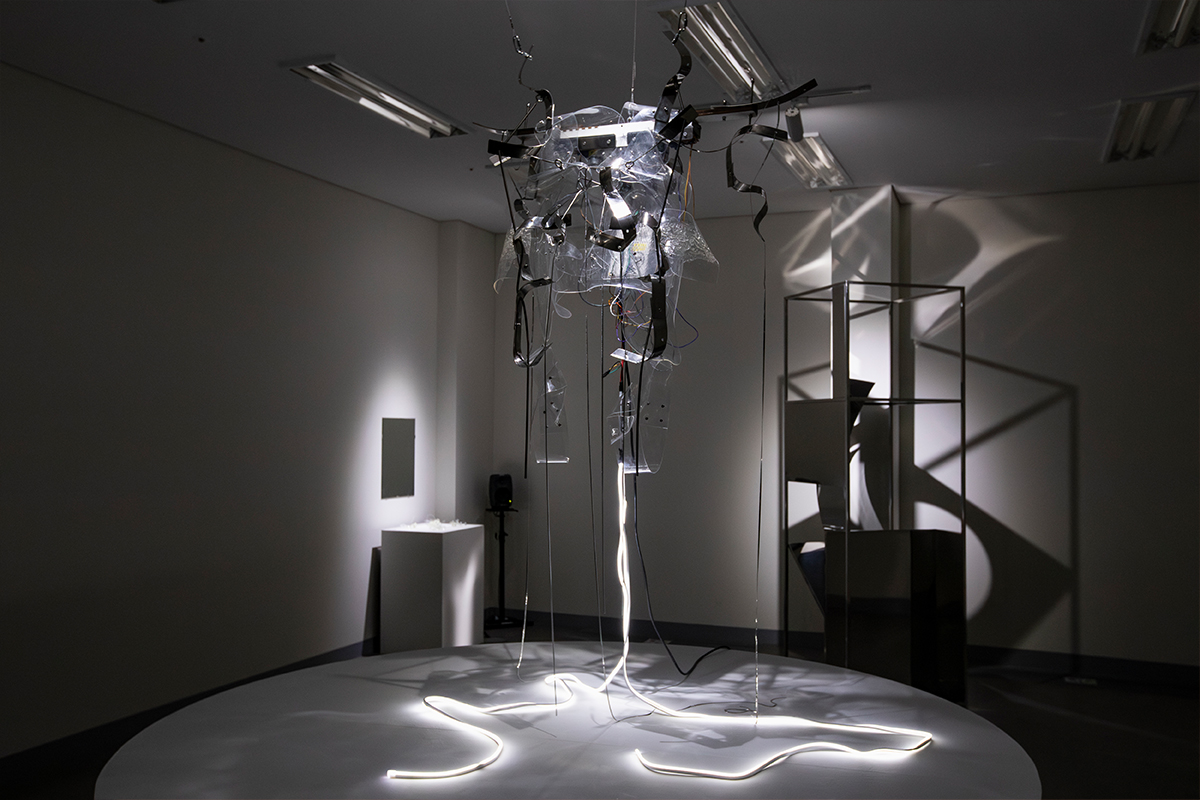
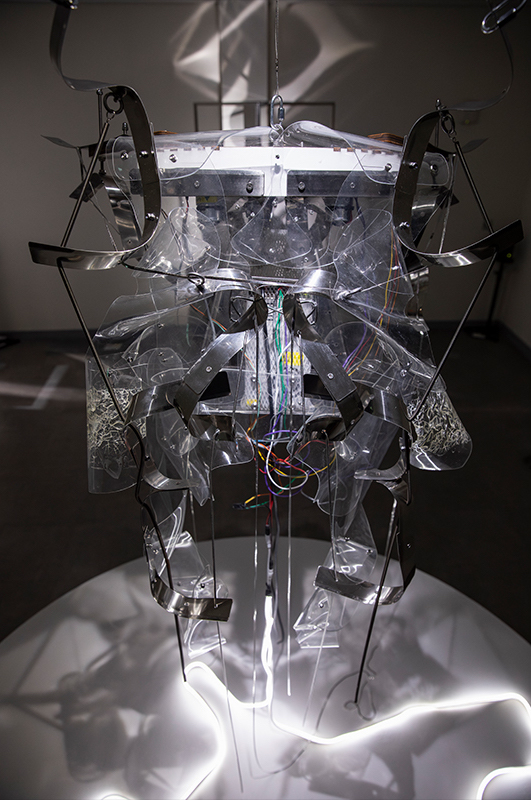
Since then, Hkason has continued to explore the relationship between the human body and space through playful interpretations of mechanical movement. For example, his 2024 work Crip Body investigates “crip space”—a place where disability and minority status are embraced and celebrated, offering a sense of communal belonging without the need to explain or justify one’s existence—through the body, the closest home of the mind. The work reimagines the convergence of body and space in the form of a wearable robot.
 
The wearable robot incorporates multiple layers of artificial joints to generate new gestures. These gestures are grounded in the body’s regenerative capacity, its instinct for return, and the enhanced adaptability and resilience that emerge when machine and body are conjoined.


Hkason, Crip Body, 2024, Mixed media, Dimensions variable ©ACC

In addition, the reflective structures mounted on the body–robot exoskeleton fold inward and unfold outward in response to mechanical movements, evoking the sense of the body and space merging and generating new points of contact.
 
In this way, the work presents the body as producing wearable spaces that shift according to situation and location, continuously reconstructing itself. This newly generated outer shell becomes not only a new skin surrounding the body but also a space in its own right—emerging as a monumental bodily mask.


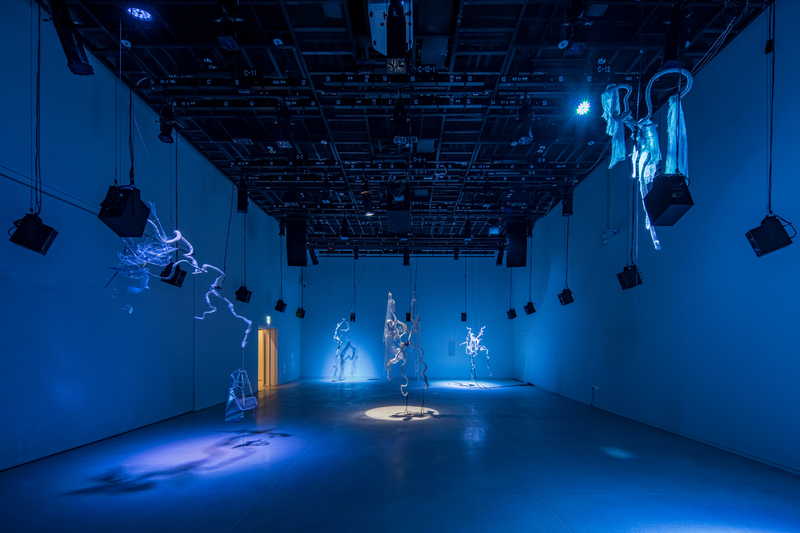
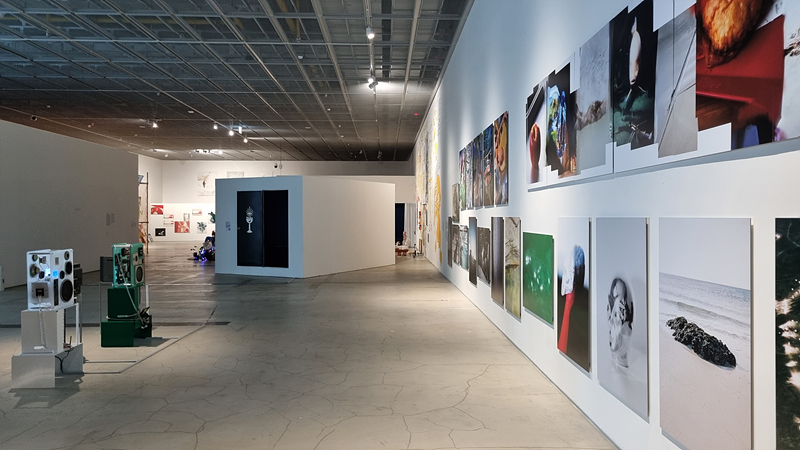
Installation view of 《Mirror and Cloak》 (Platform-L, 2024) ©Platform-L

Furthermore, in his 2024 solo exhibition 《Mirror and Cloak》 at Platform-L, Hkason presented a body of work that began with the question: “How might a mechanical body, entrusted with presence, update the human body’s agile yet composed, subtle yet monumental physical movements?”


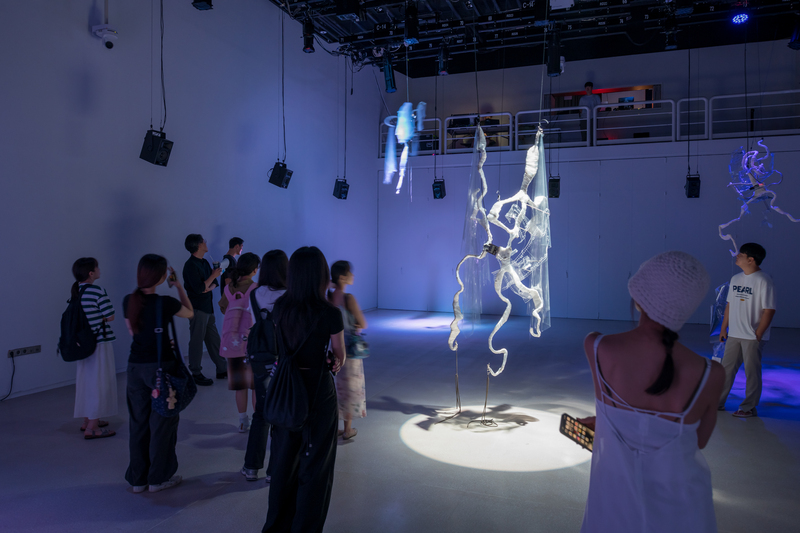
Installation view of 《Mirror and Cloak》 (Platform-L, 2024) ©Platform-L

The performer, a fused and connected body, attempted to destroy boundaries formed within a space sensed by sound and light through drawing patterns, making turns, and striking poses. The movements that wrapped the body and space reflected the physical sense of the body while subverting the relationship between the body and space by wrapping the physical space.
 
Just as buildings resembled the organic vitality and form of the body, space and body endlessly mimicked and reflected each other like mirrors and merged into one like a cloak wrapping the body.

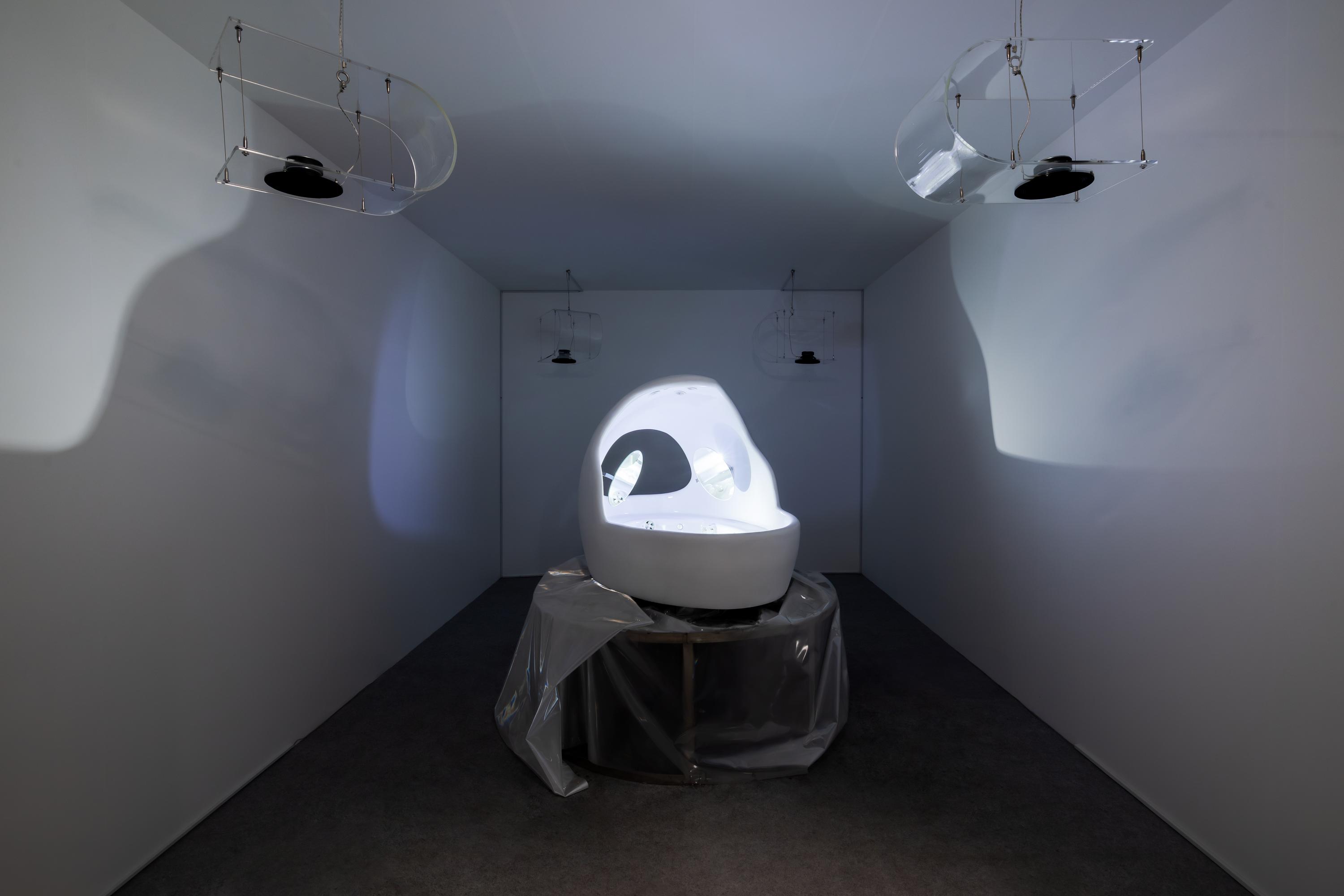
Hkason, Floating Bodily Particles, 2024, Metal, resin, motor, mirror, LED lights, water, PVC, FRP, 130x150x150cm, approx. 15min. ©Hkason

Meanwhile, the work Floating Bodily Particles (2024), presented at the Seoul Arts & Tech Festival 《Unfold X 2024》, explores the boundaries of human senses through wearable technology and a floating capsule.
 
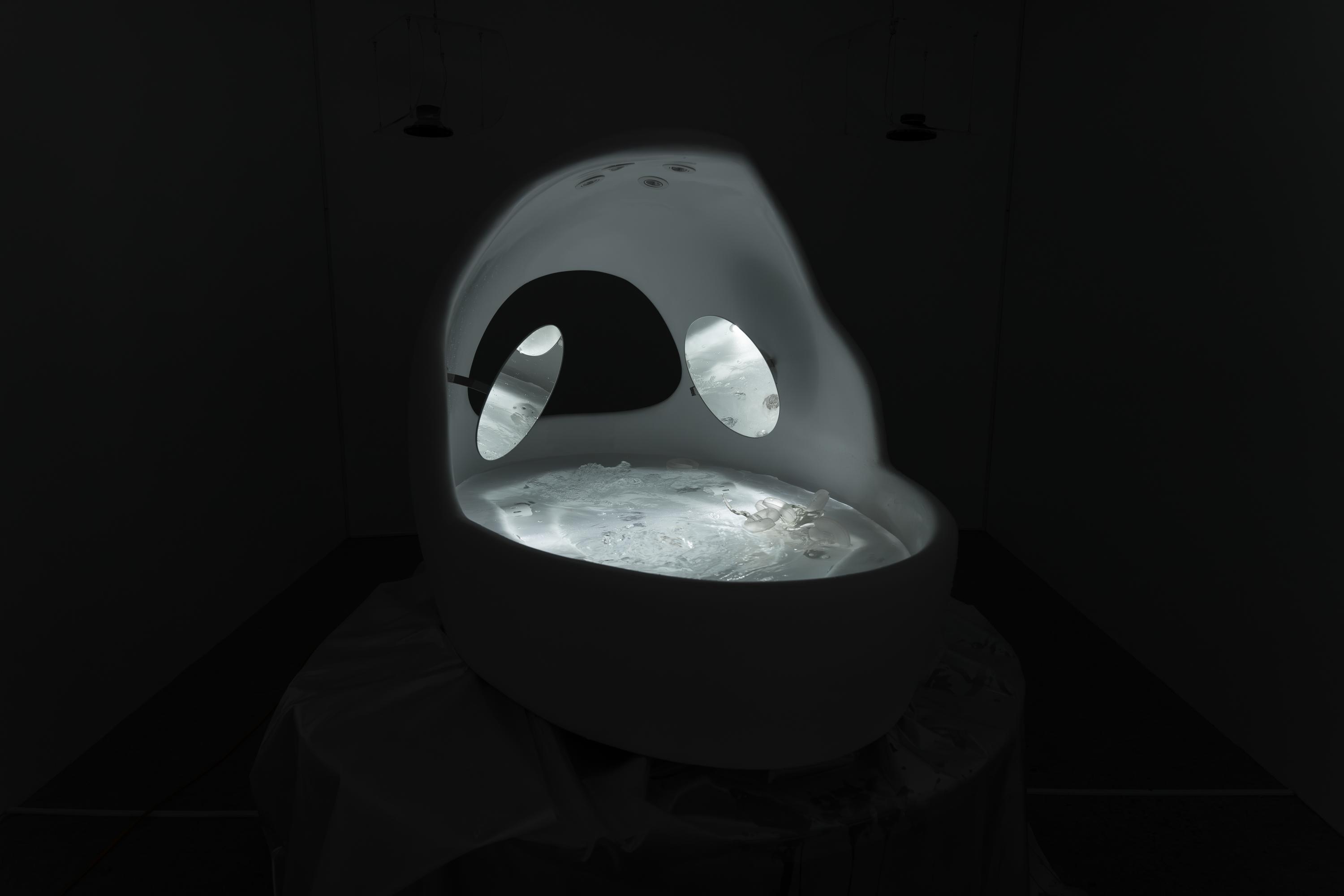
Inside the floating capsule, the body hovers in a weightless state on water maintained at skin temperature (37°C). Suspended on the water, the body escapes physical forces such as gravity and is liberated from all sensory input, including touch, sight, and hearing. Composed of more than half water, the human body in contact with water experiences a dissolution of the boundary between its interior and exterior.


Hkason, Floating Bodily Particles, 2024, Metal, resin, motor, mirror, LED lights, water, PVC, FRP, 130x150x150cm, approx. 15min. ©Hkason

Over the course of evolution, the body has left traces of missing organs in the body. These missing parts, called “vestigial organs,” are hidden in various parts of the body. The floating capsule starts by questioning what sensations and movements these organs would have if they were alive.
 
Hkason explores new bodily movements and spatial experiences by using floating capsule, which liberates the body from conventional physical sensations and forces, thereby resetting and resynchronizing the body’s structure and senses.


Hkason, Floating Bodily Particles, 2024, Metal, resin, motor, mirror, LED lights, water, PVC, FRP, 130x150x150cm, approx. 15min. ©Hkason

Hkason’s work reveals the fluid relationship between space, technology, and the human body. The artist investigates how the human body and space have evolved and transformed alongside technology, translating moments of dissonance and convergence into sculptural forms of movement. In doing so, the work prompts reflection on—and a renewed awareness of—the boundaries that increasingly merge with and expand into our surrounding environment.

 “I am generally interested in the ‘variability of the body’ and in forms of space that can change along with the body. The future seems to carry elements of fear for humans, and it makes me think about whether it is possible to respond to it.”     (Hkason, from the ACC Creators 《Talk The User Manual for a Better Future》)

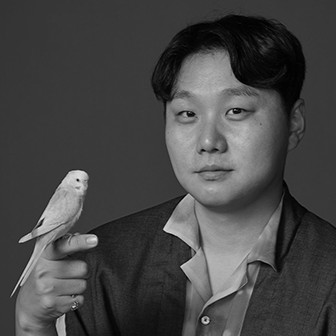
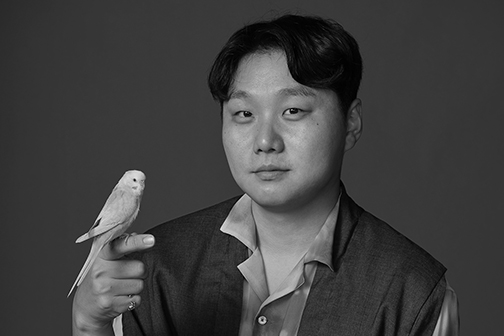
Artist Hkason ©ACC

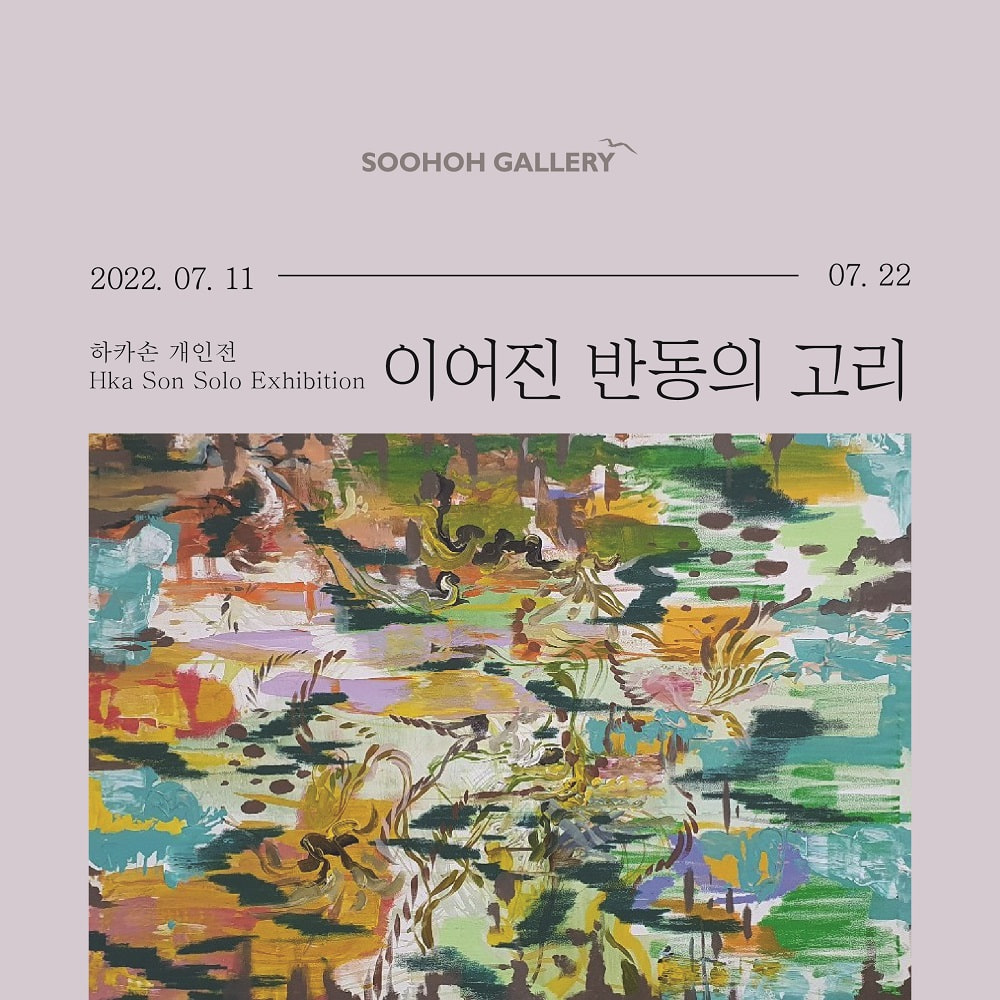
Hkason studied fashion at the Royal Academy of Fine Arts in Antwerp, Belgium, and holds a degree in media arts from the Academy of Media Arts Cologne, Germany. His recent solo exhibitions include 《Mirror and Cloak》 (Platform-L, Seoul, 2024), 《Gametophyte》 (Cheongju Art Studio, Cheongju, 2023), and 《이어진 반동의 고리》(Soohoh Gallery, Seongnam, 2022).
 
He has also participated in numerous group exhibitions, including 《Poetic Forensic》 (Sewoon Hall, Seoul, 2025), Seoul Arts & Tech Festival 《Unfold X 2024》 (Culture Station Seoul 284, Seoul, 2024), 《LAB Coming Day》 (Arts Korea Lab, Seoul, 2023), 《Science Meets Art》 (Busan National Science Center, Busan, 2022), 《RTA 2022: Evolution》 (Post Territory Ujeongguk, Seoul, 2022), and 《Semi Art Community Project: Boogie Woogie Art Museum》 (Ulsan Art Museum, Ulsan, 2022).
 
Hkason has served as an artist-in-residence in programs such as the 2024 ACC Creators Residency, the 17th Cheongju Art Studio Residency, among others.

References