Lee
Gapchul is a fortunate photographer. He is one of the rare artists whose work
is deeply understood by a wide audience. When his photography began opening
toward a singular world in the 1980s, he was already sharing a poor yet
passionate life with fellow artists in a dark room in Seongnam, and his work
was never ignored by critics.
Rejecting
convention, automation, and ideological rigidity, he continuously questioned
photography itself, searching in all directions. In this sense, his photography
was an experiment—and that experiment was the work itself. This is why he is
often called “a photographer’s photographer.”
From
the beginning until now, Lee has consistently used Tri-X film. With its high
sensitivity and fine grain, it was well suited to capturing the vivid gestures
and breath of people on this land.
Those who witnessed 《Conflict and Reaction》 (Kumho Museum of Art,
2002)—created with animal-like responsiveness, moving “three times more” than
others—described it as a shock. It received praise such as “hair-raising” (Park
Young-taek), “a masterful incision into Korean han” (Kim Yong-taek), “an approach
to the deep unconscious of Koreans” (Yuk Myung-sim), and “captured with
extraordinary sensitivity and speed” (Kang Woon-gu).
The
images he produces—where no precise form is clearly visible and rough
black-and-white tones collapse and rise again within the frame alongside
radical compositions—overturn conventional expectations that photography must
faithfully represent its subject. These were images unseen in Korean
photography until then, revealing photography not as a mere tool for producing
evidence, records, memorials, or art objects, but as an active genre inherently
endowed with infinite potential for transformation.
The conceptual shell of
photography as something that depends on and imitates its object has long since
been stripped away. As a result, Lee was described as an ascetic of
photography, a Zen monk engaging in kōan
dialogue through the camera, and a medium who soothes the Korean emotion of han through images. Within his photographs resonated a
peculiar sound—like a wind chime—that encompassed space, people, their
situations, and the totality of relations between them.
Figures never appear
whole; they emerge abruptly, unexpectedly, heightening tension and compelling
repeated viewing. At a time when landscape photography largely derived
aesthetic value from recording surface appearances alone, this strange aura
inevitably drew attention. His work came to be recognized as photography that
deeply embodies Korean sensibility, elevating him as a leading figure of the
next generation of Korean photographers.
The
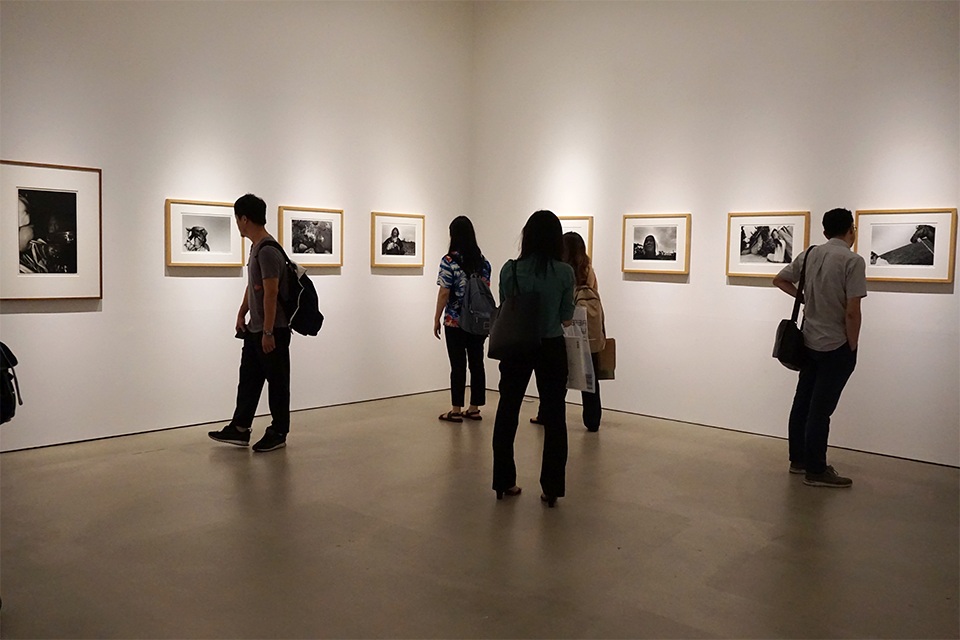
two solo exhibitions—《Conflict and
Reaction》 (Kumho Museum of Art, 2002) and 《Lee Gapchul Photography》 (Hanmi Museum of
Photography, 2002)—marked the brilliant flowering of his career. If these
exhibitions compiled works produced over more than a decade since the early
1990s, documenting local rituals, shamanistic rites, and folk ceremonies across
provincial regions, then the 2007 exhibition 《Energy》 (Hanmi Museum of Photography), held after another five-year
interval, presents a striking shift. Unlike his earlier works, in which people
appeared in most images, these photographs feature landscapes alone.
《Energy》 reaffirms Lee as an awakened
intellect who sharply distinguishes between lived reality and the reality of
landscape, while still knowing how to allow them to communicate with warmth.
His transparent consciousness becomes a site where crises inherent in life—embedded
within the grace of nature—are confessed and reflected upon.
The position of
“photographer as medium” seen in ‘Conflict and Reaction’ takes a more
abstract leap here: Lee becomes an agent who stirs countless winds to connect
the ground he stands upon with the sky above, enabling two worlds to call to
and respond to one another. This is possible because he embraces nature as it
is and loves and contains all living things, possessing an expansive surface of
compassion. One can sense this simply by looking at the enormous scale of his
prints.
The forests, trees, flowers, and waters depicted in 《Energy》 are the sources of life and the
principles of the universe. Though he constantly longs to leap, fly, and
transcend, what he ultimately seeks is life itself. Thus, Lee repeatedly
departs from the site of life only to return lightly once more. The hollow yet
resonant spaces that frequently appear in his photographs are spaces of
ceaseless motion—like the wind—and spaces prepared so that viewers may easily
enter and depart.
It is said that he spent more than half of each month
traveling to create these spaces; for Lee, seventy percent of life was
photography, and of that, eighty percent was time spent on the road, with the
remainder in the darkroom. Working selflessly according to what his own nature
loved, he arrived at a state of mu-nyeom (no-mind). Playing so
joyfully that work and play became indistinguishable, he found himself having
practiced photography for over thirty years.
Between
You and Me: Land of Others
“Photography
became more difficult the more I did it. The moment I felt I understood it even
a little, it became all the more overwhelming and painful. That is because the
era I live in, this reality itself, is that way. What is ‘life,’ and what is
the ‘reality of an era’? … Aren’t we all wanderers who have lost our way,
coming and going on ‘someone else’s land’?”
These
words appear in Lee Gapchul’s first photobook Land of Others,
of which only a single copy remains in the artist’s possession. The year 1988
was a special one—not only for Lee but for Korean society as a whole. Values
and orientations once taken as self-evident in Korean photography began to
collapse, while new technologies flooded in on the level of photographic
hardware.
Following the aggressive developmental policies of the Park Chung-hee
regime in the 1960s and 1970s and the economic push under Chun Doo-hwan in the
1980s, the collapse of the Soviet bloc and the reorganization of a
U.S.-centered global order, and the hosting of the 1988 Seoul Olympics, Korea
emerged from the periphery toward a liminal position near the center. Hybrid
times—neither center nor margin—began. It is no coincidence that questions of
“identity” surfaced as major aesthetic and social issues in the art world
around this time.
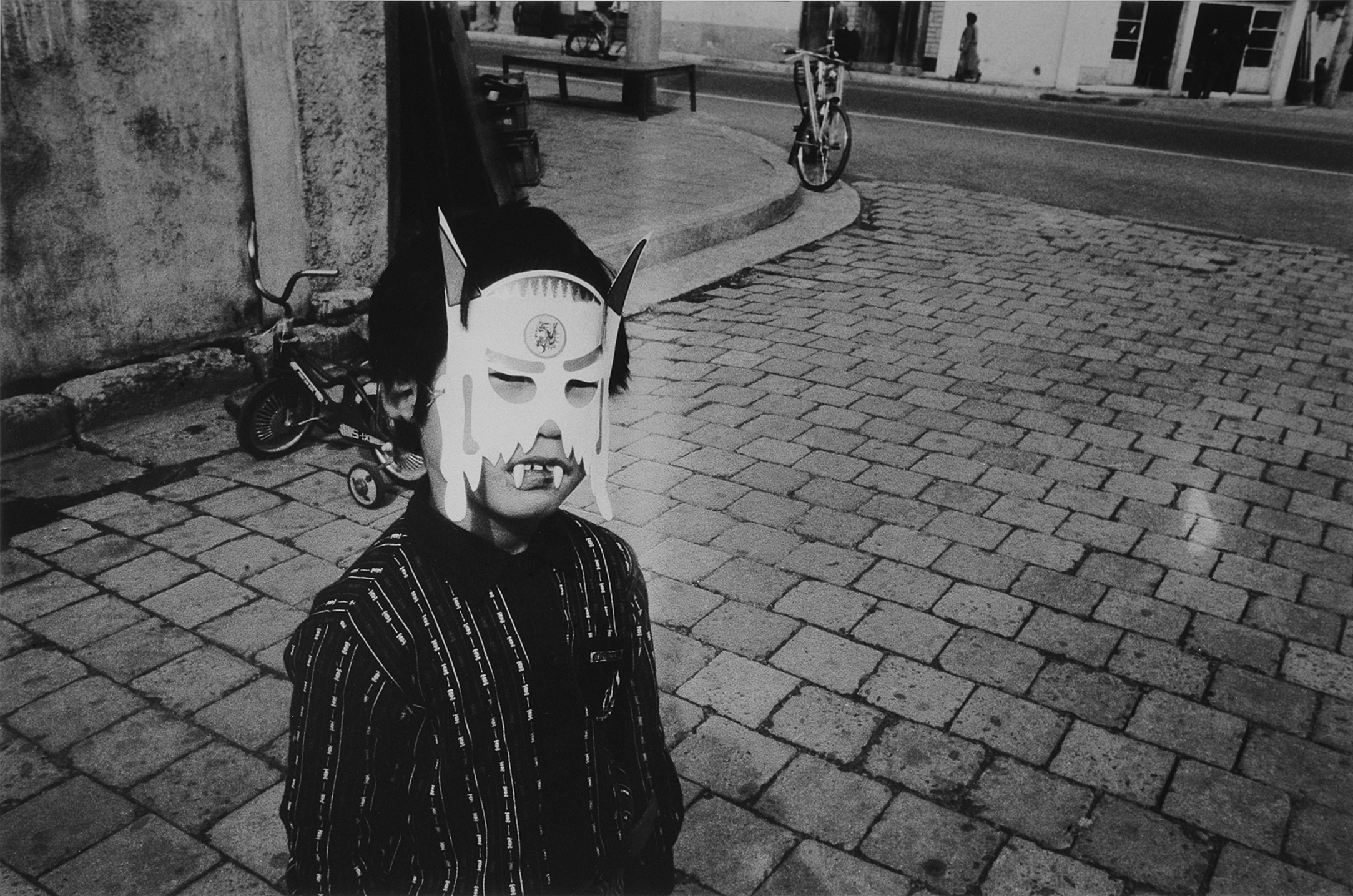
Lee,
who spent his twenties in the 1980s, persistently explored the people of that
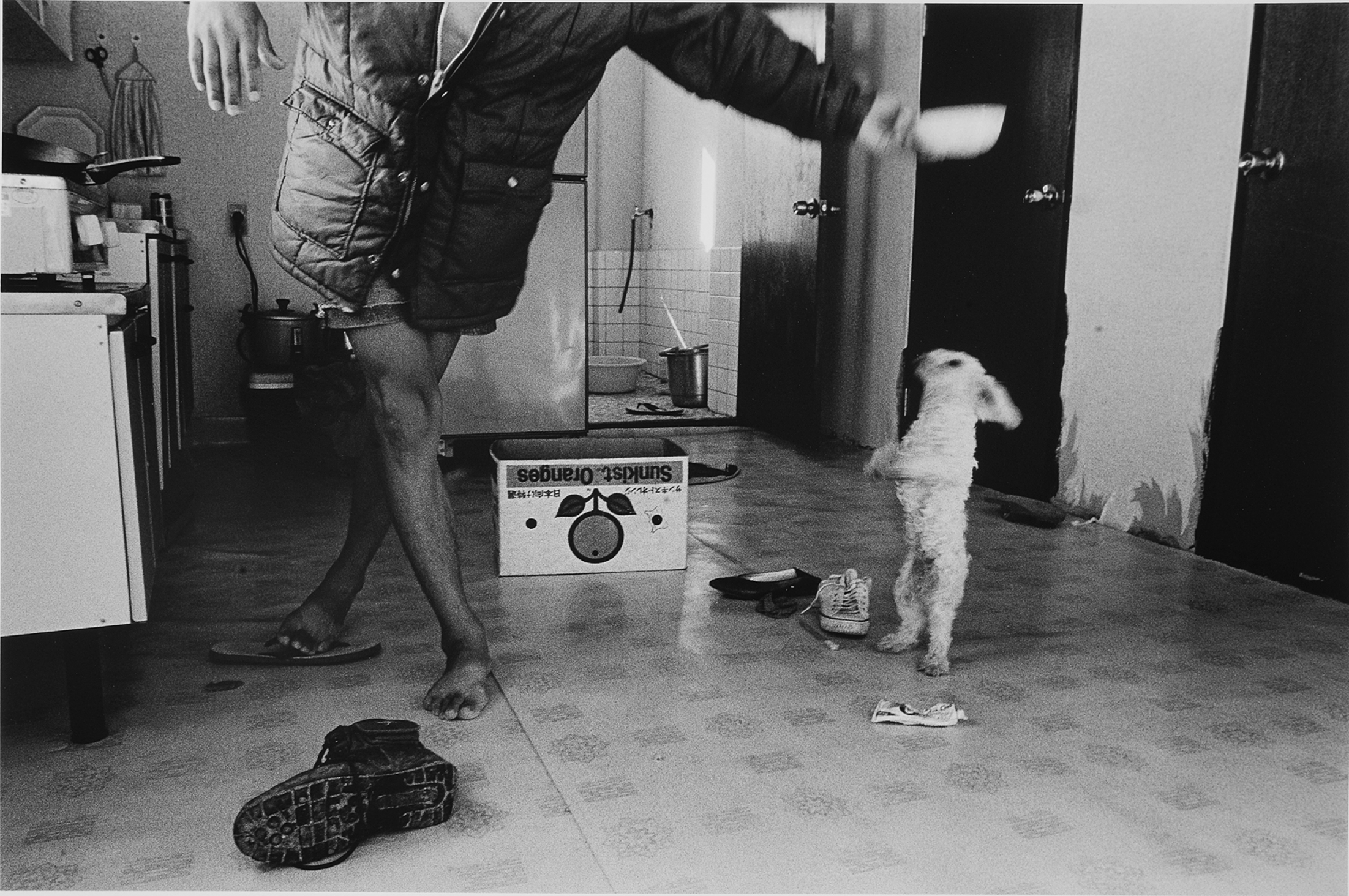
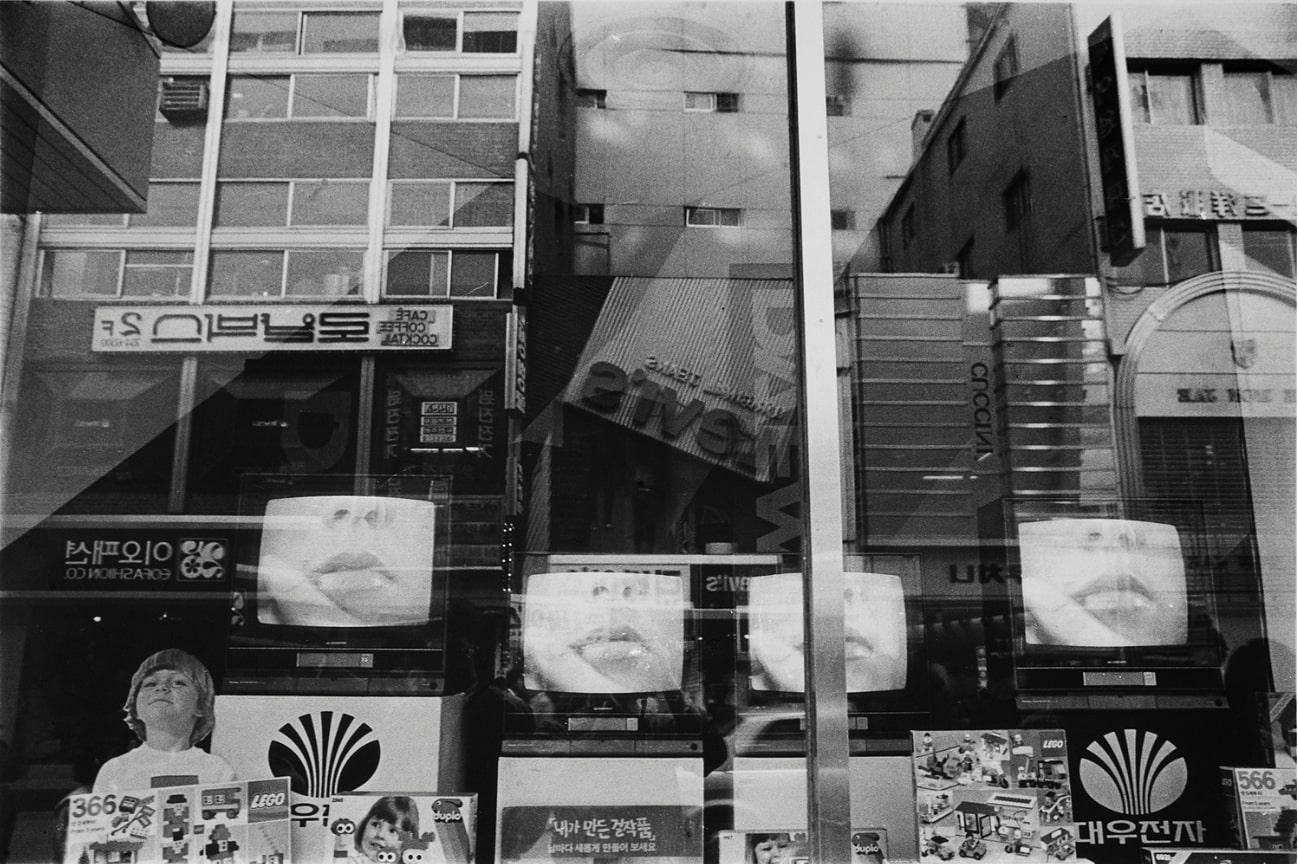
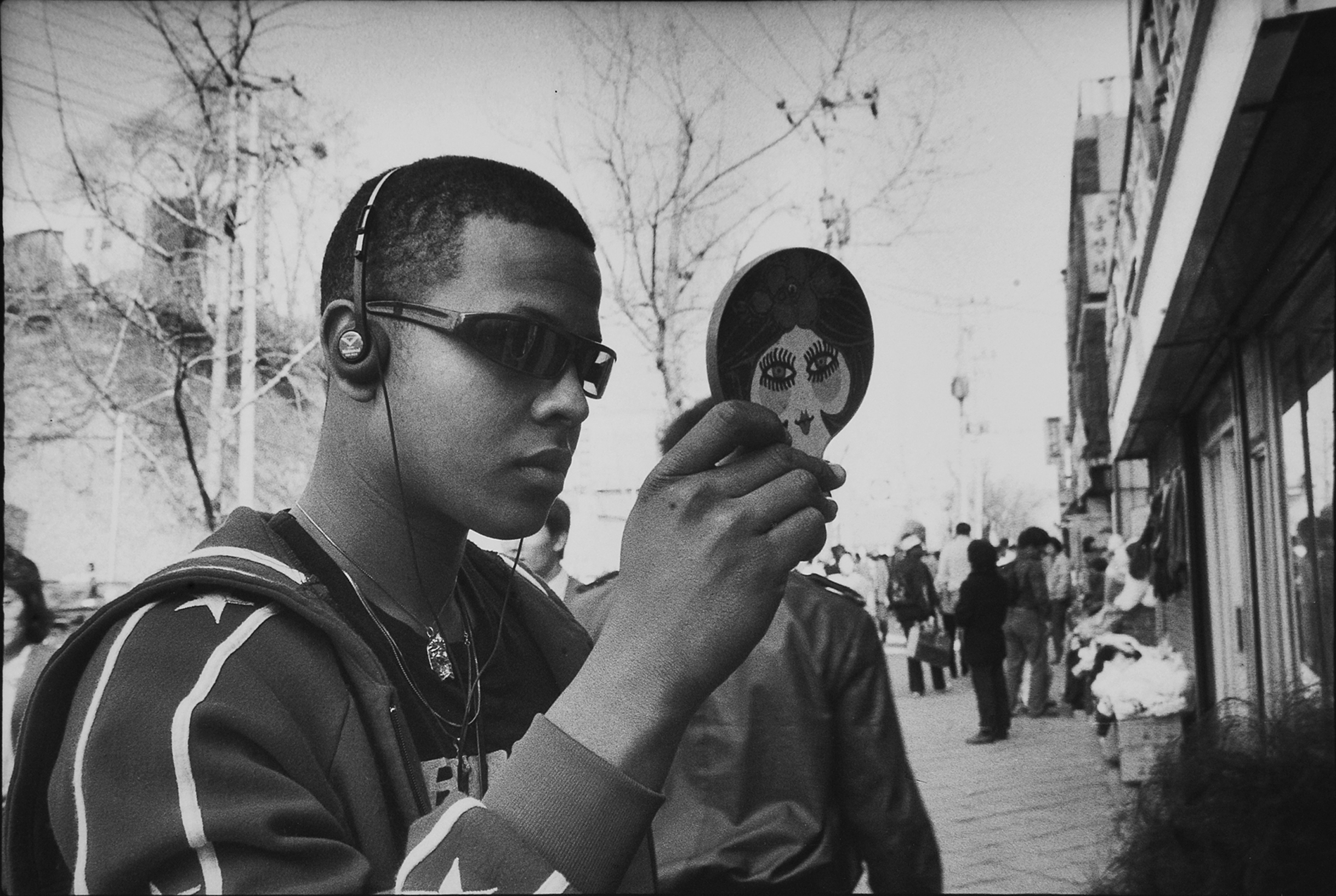
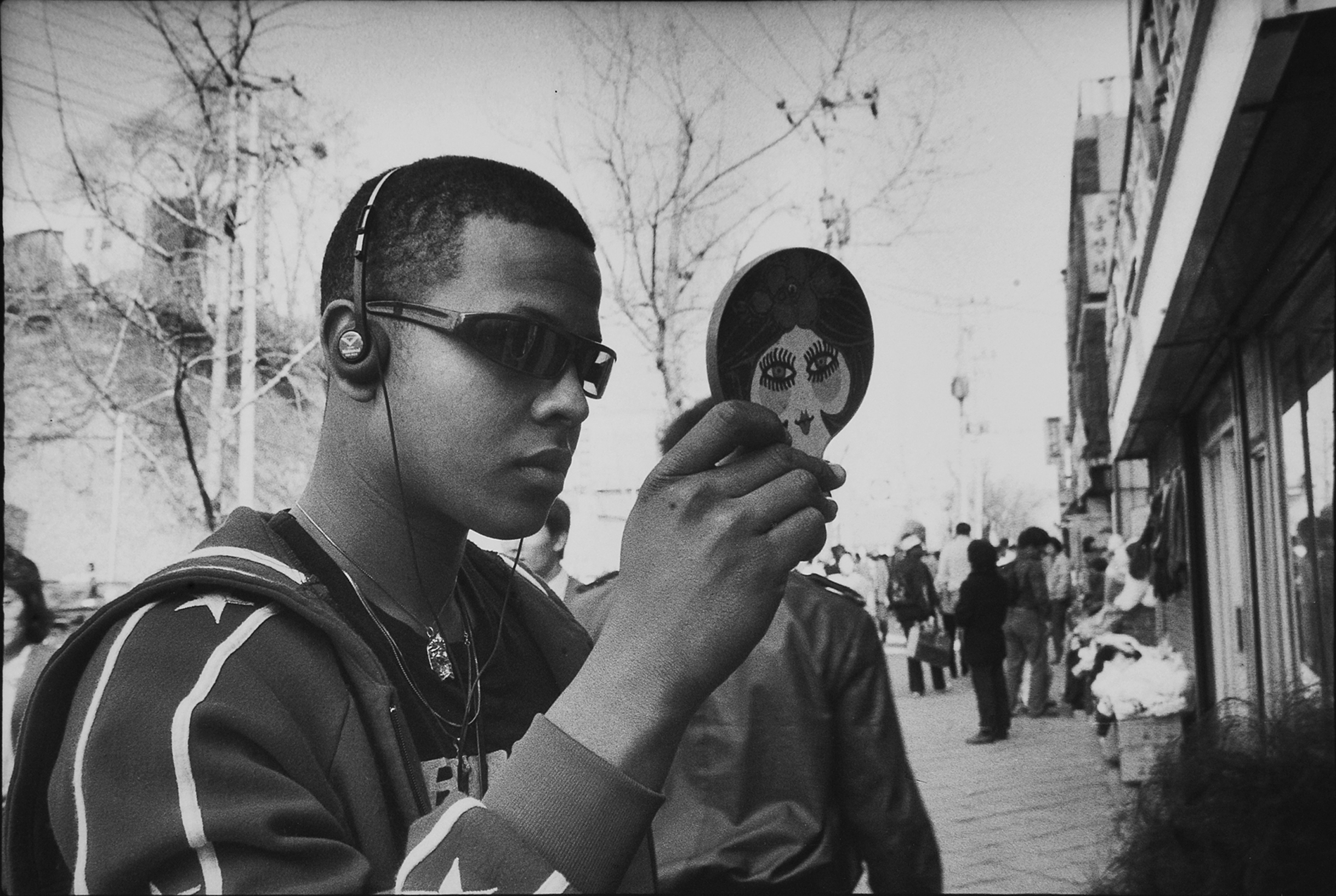
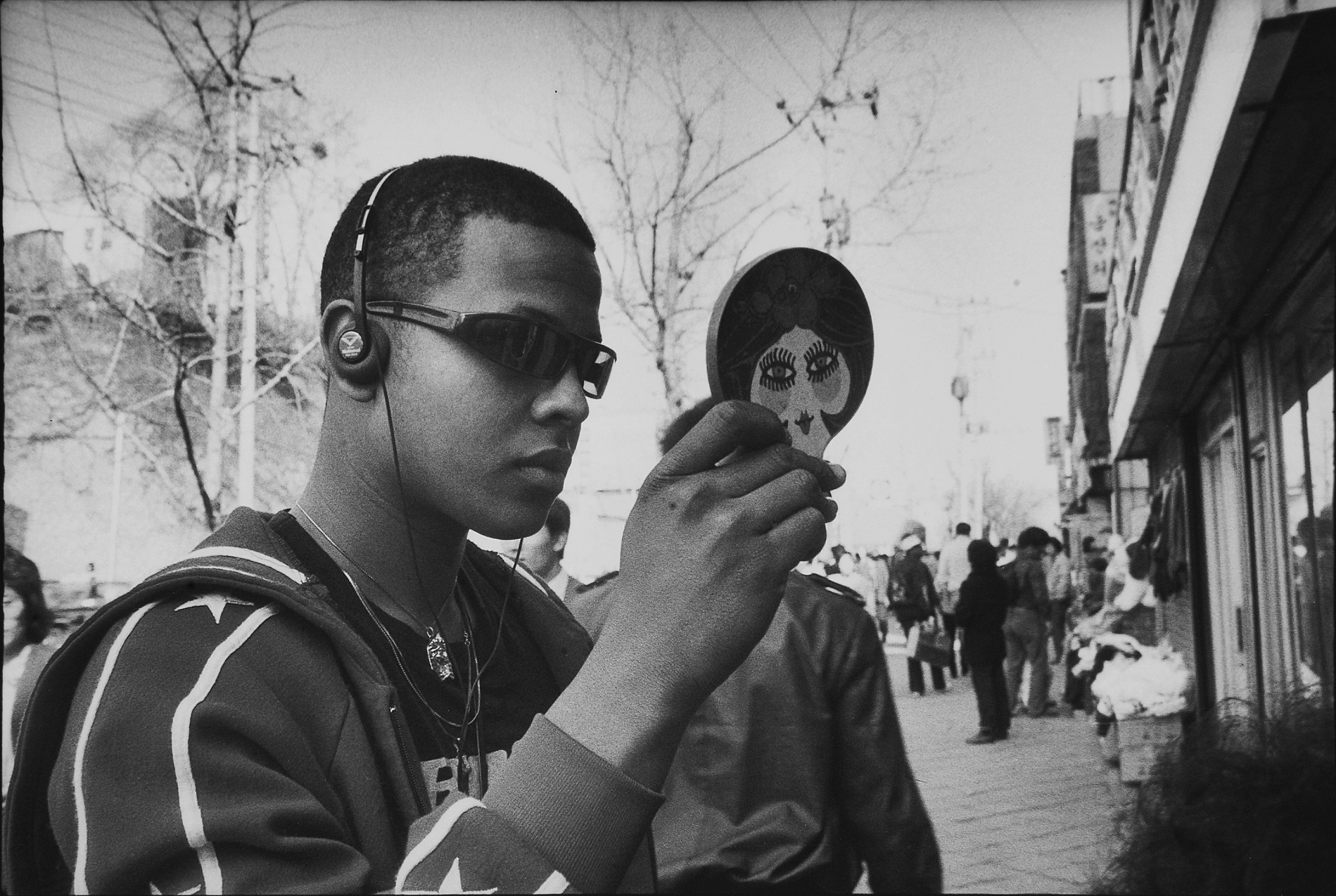
era as his subject. Yankees on the Street, Images
of the City, and Land of Others are
works through which Lee, living in the 1980s, delved deeply into fundamental
and essential questions of life alongside the concrete realities of “here and
now.”
At the same time, these works carry a meta-level reflection on
photography, the photographer, and the photographic image itself. Consequently,
his early photographs are highly symbolic, acquiring depth proportional to
their symbolism. Armed with the intensity of unfamiliar forms and imaginative
vision, Lee probed the tension between self and world.
This
exploration of identity deepens and becomes more refined from Yankees
on the Street to Land of Others.
In Land of Others, a narrative unfolds through
compelling images that depict how individuals bearing inner wounds overcome
them and reclaim their sense of self. The concept of identity inevitably raises
questions about the relationship between what it denotes and what it
represents. Whether personal or collective, conceptual or material,
investigating identity requires first examining how it has been constructed.
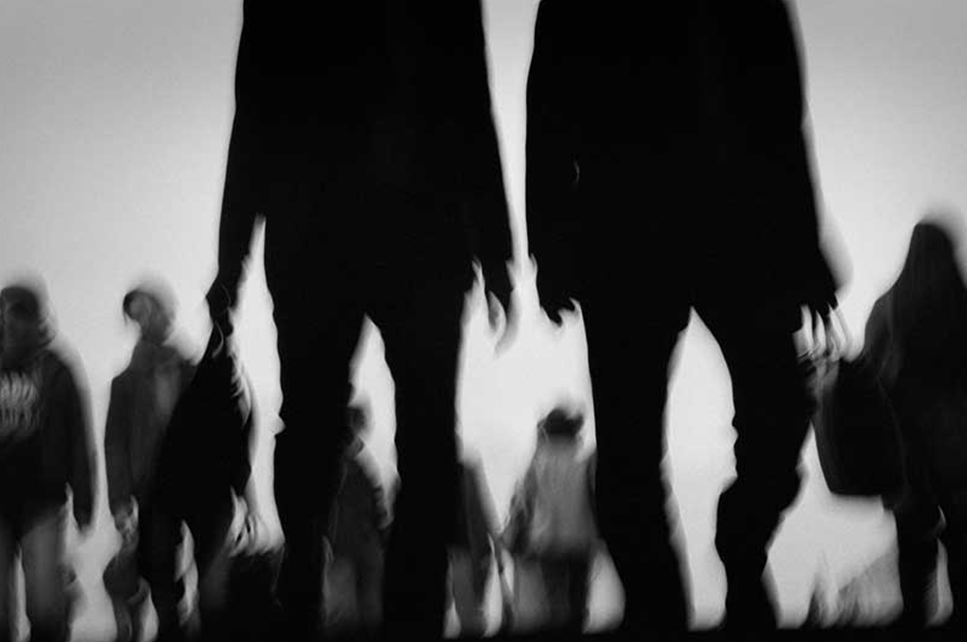
Lee’s remark—“Photography becomes difficult and overwhelming because this era
itself is that way”—appears in Land of Others through
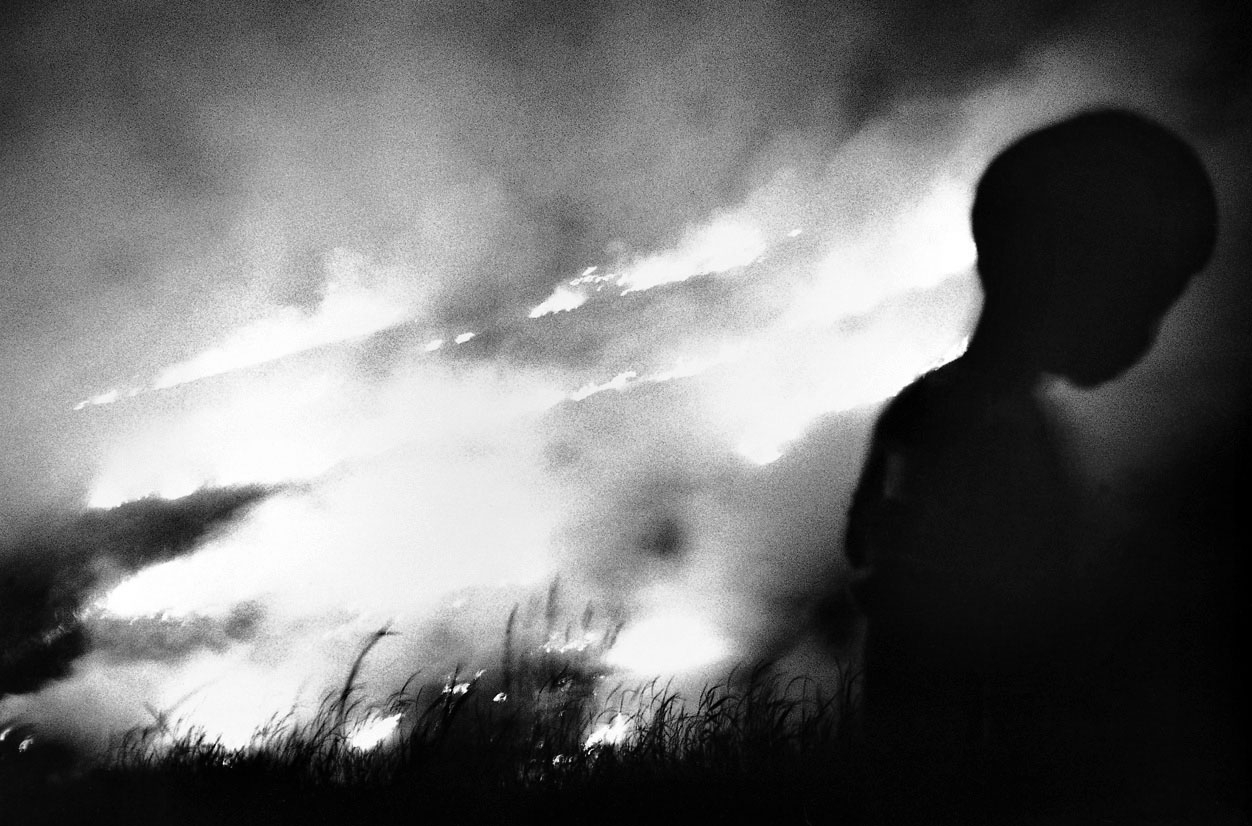
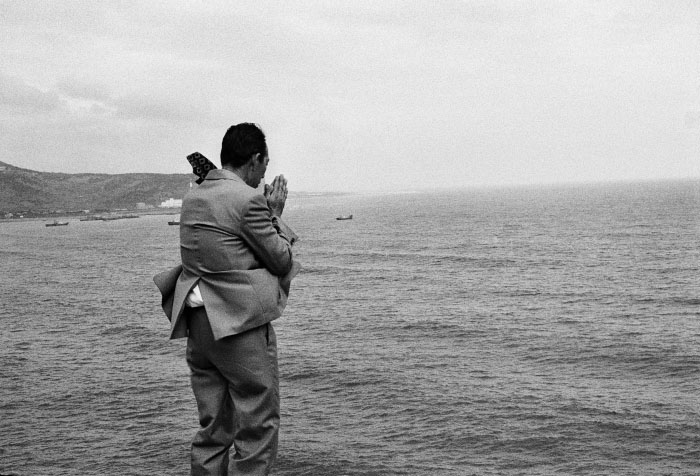
anonymous figures seen from behind, through shadows and silhouettes, faintly
revealed. The “others” Lee encountered emerge as incomprehensible, trembling
images at a distance. Thus, the photographer’s position—as an outsider even to
them—becomes crucial. His position mirrors that of the viewer, who encounters
their own unfamiliar core through the photographic other, continually asked who
they are and what they cannot endure. Ultimately, however, we—clinging to
incomprehensible situations and identities—are all incomplete beings, appearing
even to the photographer as unknowable.
Lee
laid down dark, thick expanses of solitude and loneliness as a method of
questioning that disrupts the trajectory of everyday life. Recognizing these
expanses as gaps of solitude and absence will help in reading Lee’s later
photography. Land of Others occupies an
exceptional position in the history of Korean contemporary photography, as a
major work that persistently examines subjects encountered on unfamiliar ground
and uniquely embodies them through a deconstructive photographic language. The series
was produced over two years, shooting approximately twenty rolls of film per
month, and is organized into 500 rolls of film along with work prints made on
now-discontinued Apollo photographic paper.
Photographic
Abstraction: Conflict and Reaction
Conflict
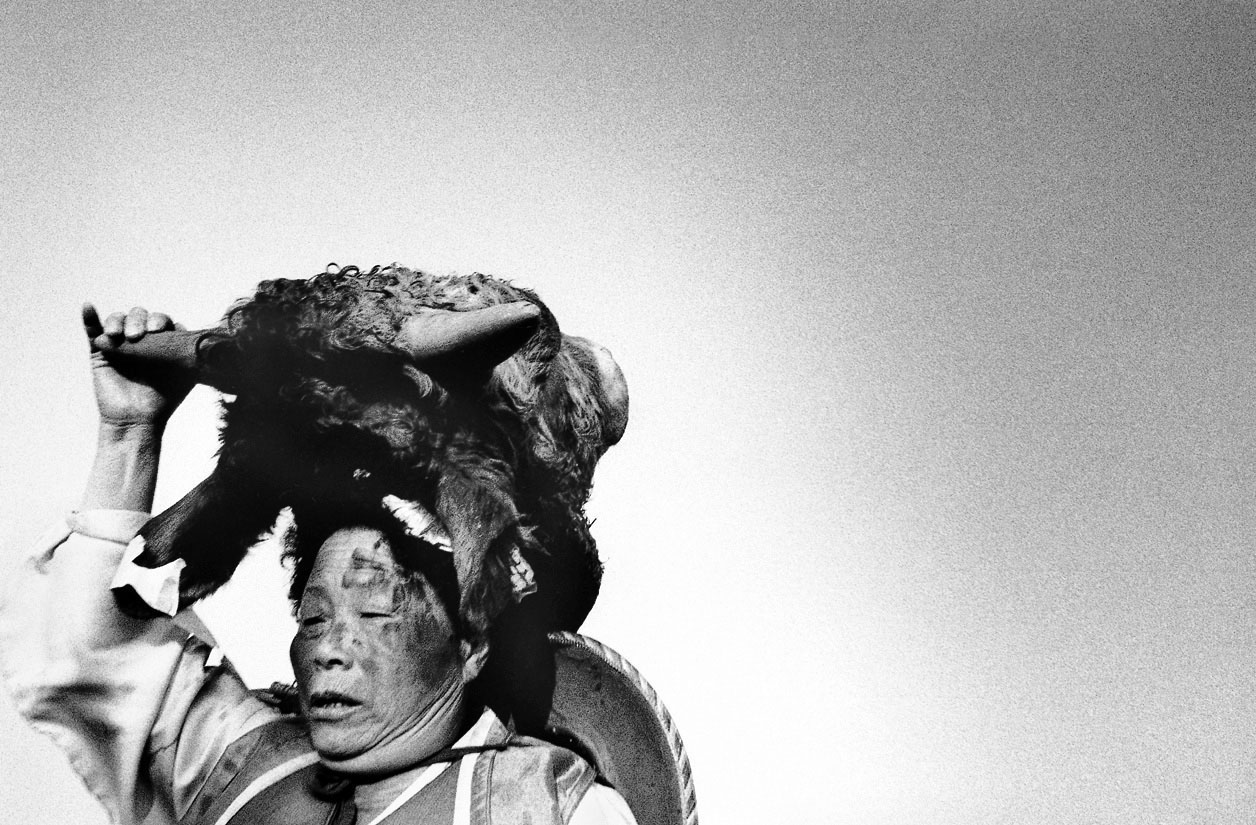
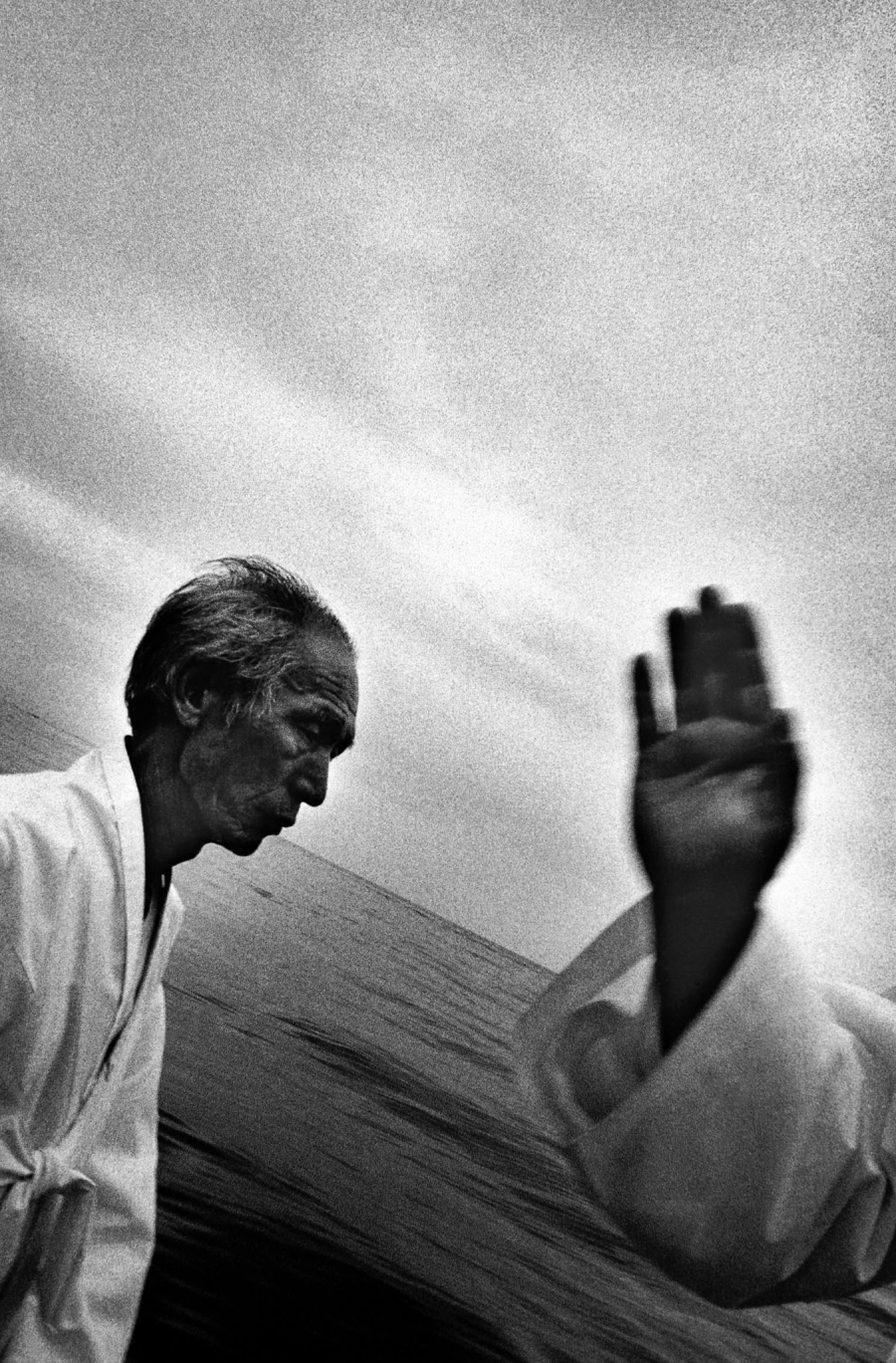
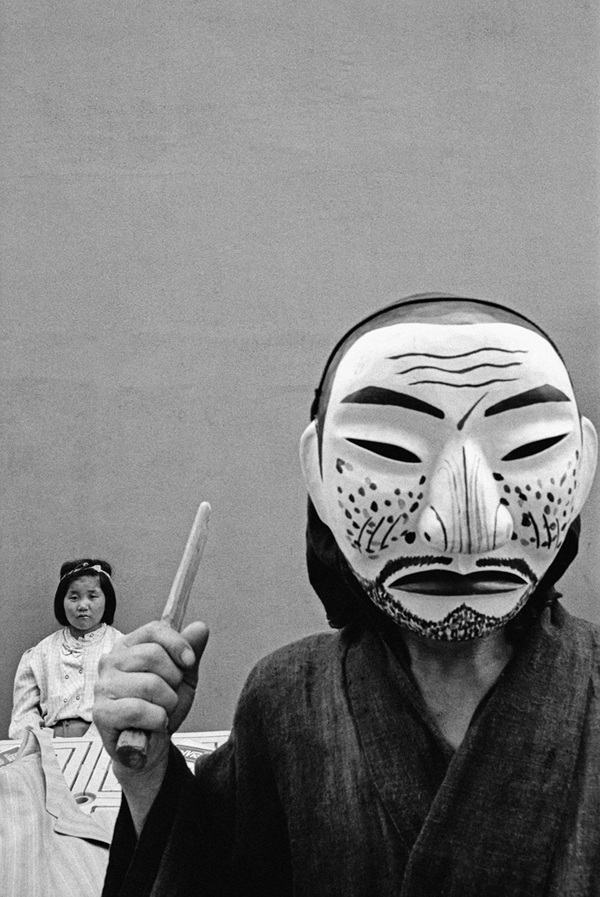
and Reaction comprises works produced over eleven years, from
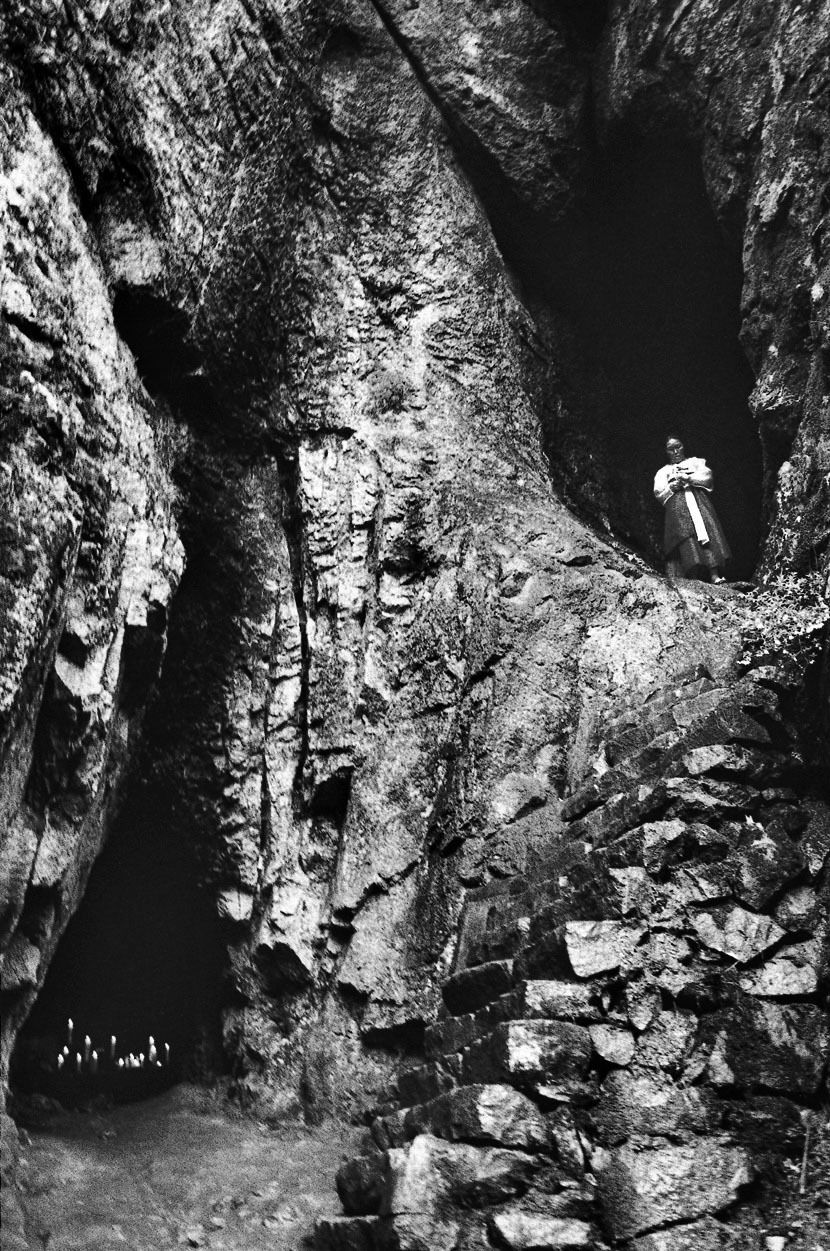
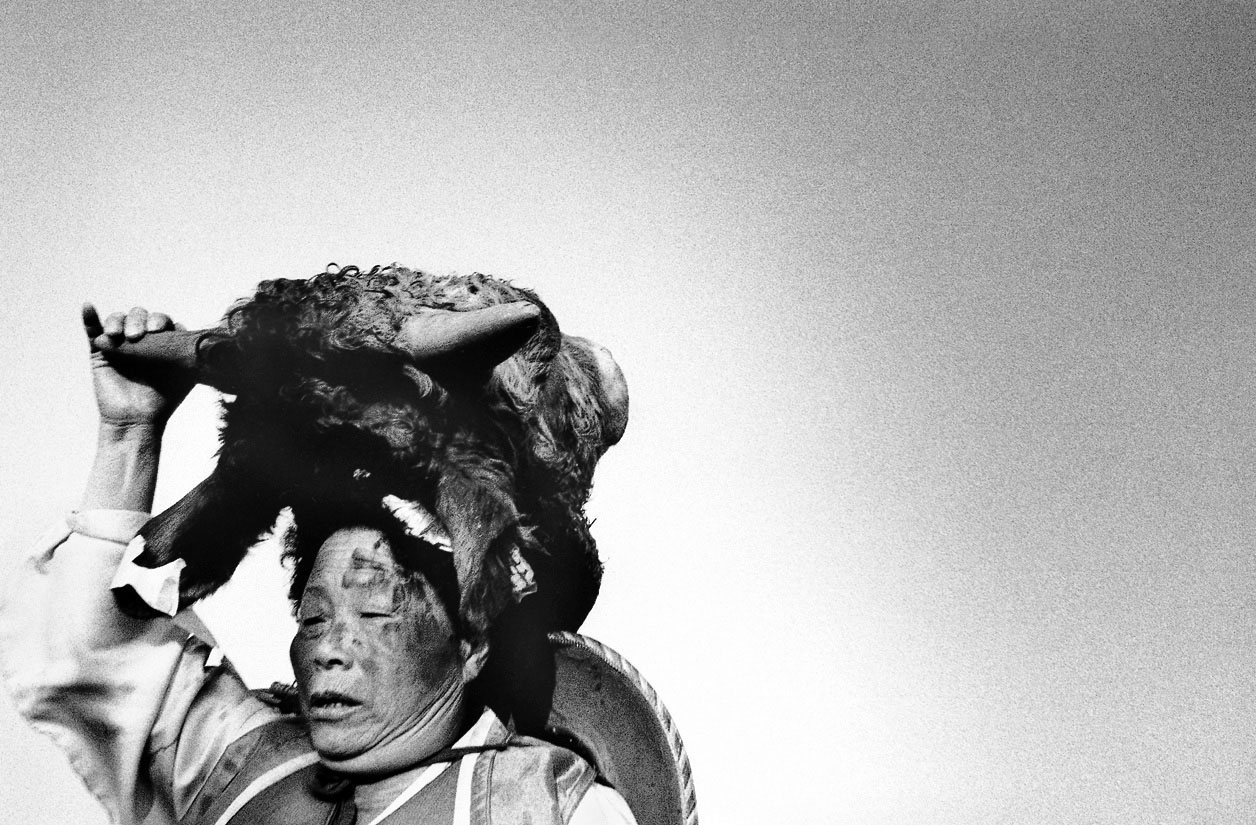
1990 to 2001, documenting ancestral rites, shamanistic rituals (including
fishing rites and the Wido Dragon King ritual), seasonal customs, folk games,
Buddhist ceremonies, and rural life. Andong, Namwon, Jindo, Gyeongju, Hadong,
Ganghwa—without drawing rigid boundaries, Lee captured the vast terrain of
uniquely Korean han across the land. Published alongside the
exhibition, the photobook Conflict and Reaction became
a monumental work, unfolding subtle energies between wounds and scars, this
world and the next, nature and mystery, abundance and peace, past and present,
present and future.
Many
still remember the taut tension that enveloped the Korean photography scene
when ‘Conflict and Reaction’ was first exhibited. “Shock” was the
only word that seemed adequate. Poet Kim Yong-taek remarked that Lee’s
photographs feel like “being struck on the back of the head,” while also
describing them as possessing a spell that “makes the world unfamiliar
again—makes us see it anew.” Christian Caujolle, director of the Paris-based
agency and gallery VU, to which Lee later belonged, praised the works as photographs
in which “Korean sensibility is expressed in a distinctive and liberated
manner.”
Although
these photographs construct narratives through minimal textual
information—titles that objectively indicate place and time—their strength lies
in revealing the artist’s subjective vision, emphasizing the dynamism of what
appears still. Text assumes photography’s evidentiary role, while the images
themselves expose meanings that are heterogeneous and dynamically in formation.
Documentary photography’s inevitable obligation to record can restrict creative
possibility, but the essence of photography lies beyond direct representation,
approaching abstraction and symbolism. This is why Lee ceases to “tell stories”
and instead leaves meaning to the viewer, allowing things to be “revealed.”
Rather than cutting and assembling time to generate dramatic meaning, he
reveals pure time itself. For Lee, “waiting” is more apt than “capturing.”
One
defining characteristic of Lee’s photography is its ability to bind together
things that appear distant and heterogeneous. He erases differences between
objects and perceptions, forging connections beyond and beneath opposition. As
a result, he lingers longer before the wounded, fragile, struggling, and
pitiable than before the healthy and bright. Becoming wind himself, freely
crossing boundaries, he nevertheless cannot pass by decay, pain, or loneliness.
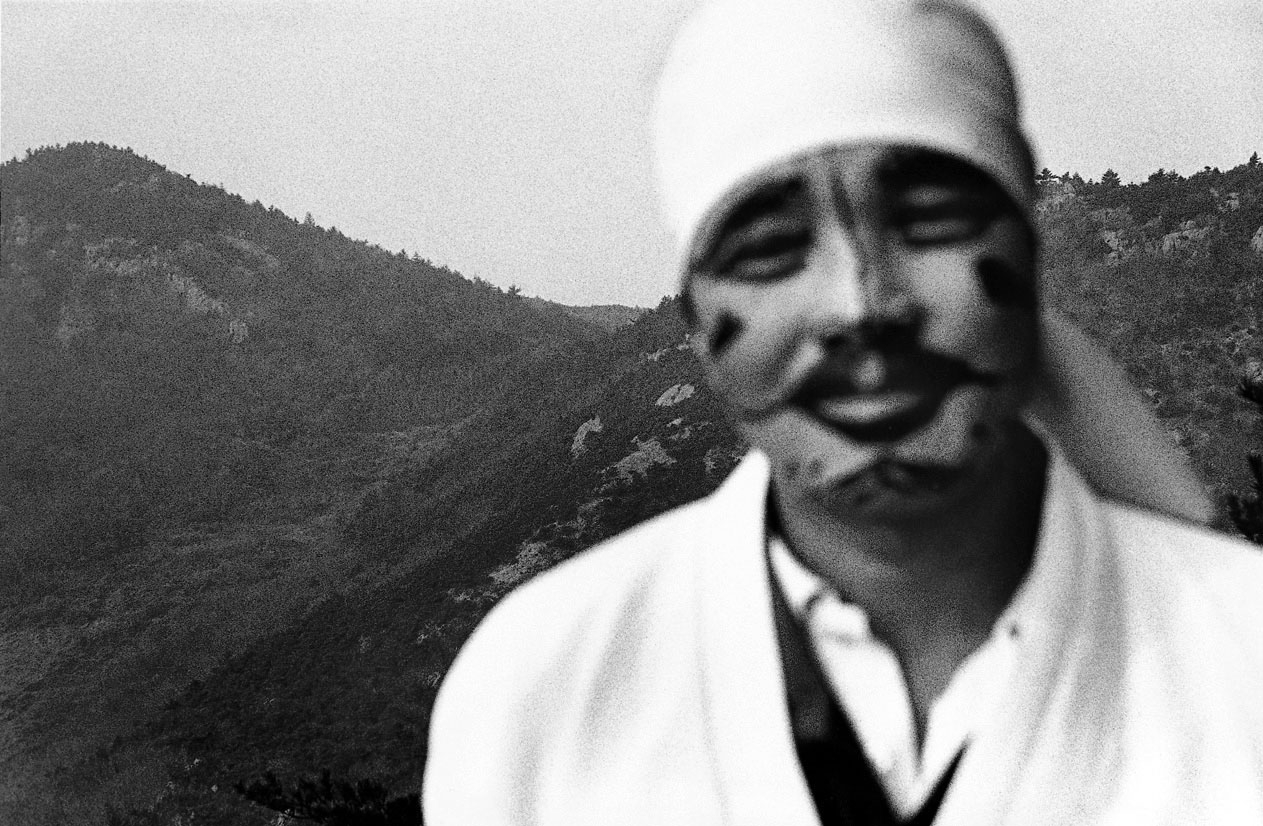
This is evident in works such as A Child in White Clothing at a
Fishing Rite (Anmyeon, 1992) or Two Old Men in the
Forest (Namhae, 1994), where figures who seem to have traversed
both this world and the next appear uncertain and anxious. Compassion for
living beings becomes a condition for seeing both the depths and distances of
life, a source of imagination that pierces surface and underside alike. This
aligns with hwagwang dongjin—the coexistence of light and dust—akin to
Wonhyo’s philosophy of reconciliation.
Photography
is not the essence of things but the reflected image of things touched by
light. Where there is light, there is shadow; thus, all oppositions exist only
because “I” and “you” exist together. Lee’s photographs therefore require no
analytical justification; they form concrete masses of imagery. Their core lies
in an imagination that binds opposites—vertical and horizontal, essence and
phenomenon, life and death. This imagination becomes possible only when one
opens oneself fully, filled with boundless compassion and love for the world.
Thus, viewers are left defenseless, infected by the photographer’s
imagination—which Lee himself calls the unconscious—and this imagination
constitutes the trajectory of his work.
Lee’s
photographs demand repeated viewing—sometimes singly, sometimes as a whole.
Only then do the spaces of silence and absence he selects become visible, and
one can sense how images collide, resonate, and converse within sequences to
generate new meanings. Photography grants the living confirmation of both
“presence” and “absence.” To overcome absence, people photograph, speak, and
perform rituals of consolation. The photographer recalls moments etched in
memory back into the here and now.
The empty spaces in Lee’s photographs are
spaces of memory—spaces of the dead, spaces without time. As a medium, the
photographer summons vanished spirits, restores relationships between the
living and the dead, and generates the “frame”—the boundary between living and
disappearing. For Lee, the frame is not merely a device of selection and
exclusion but a site for the emergence of punctum, where inside and
outside connect seamlessly.
Revisit
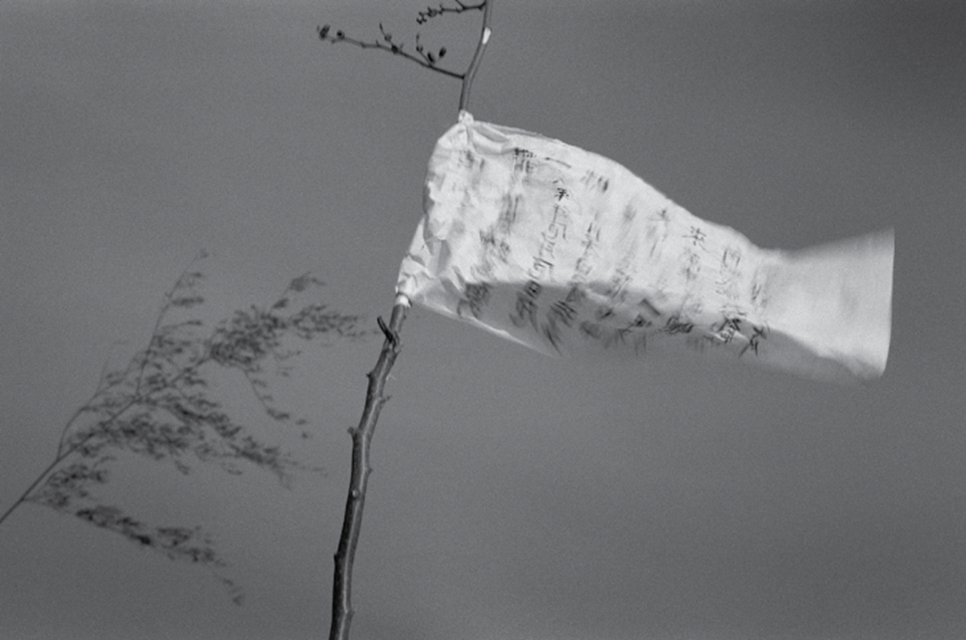
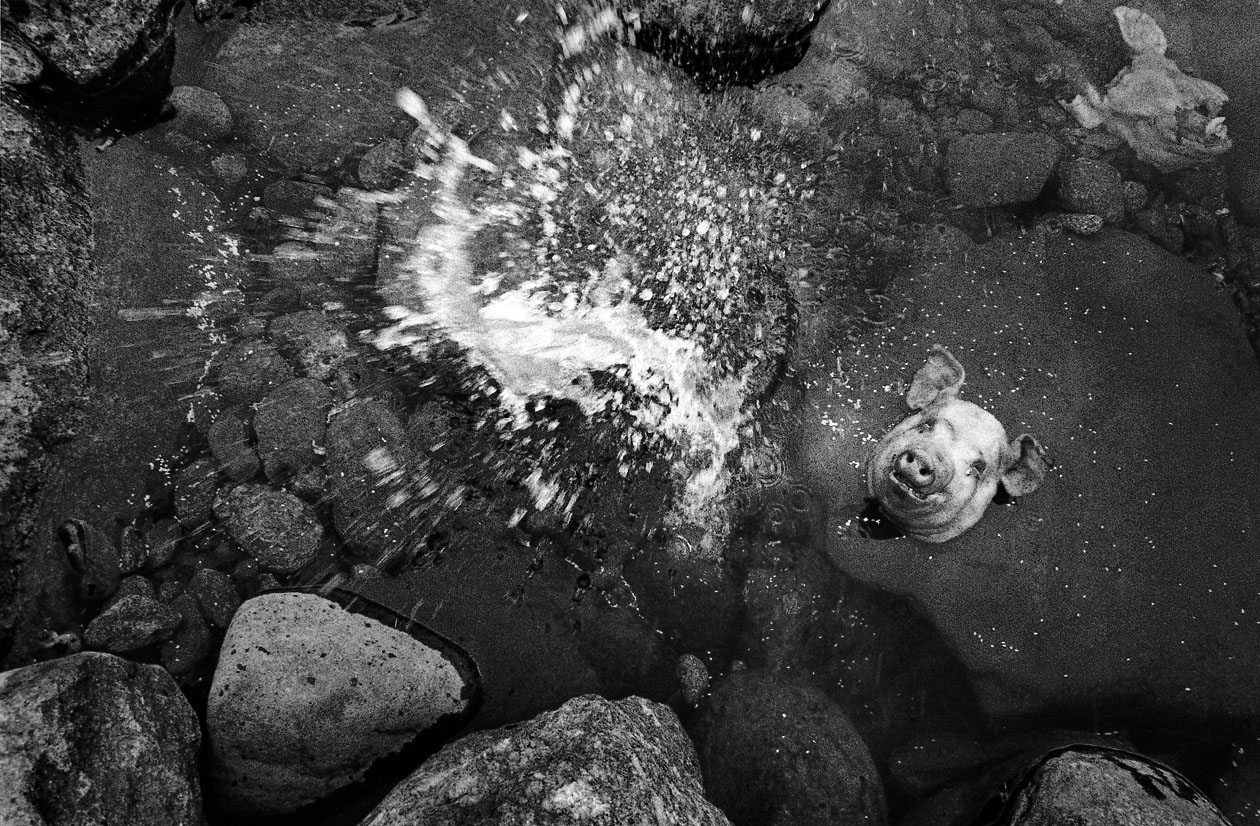
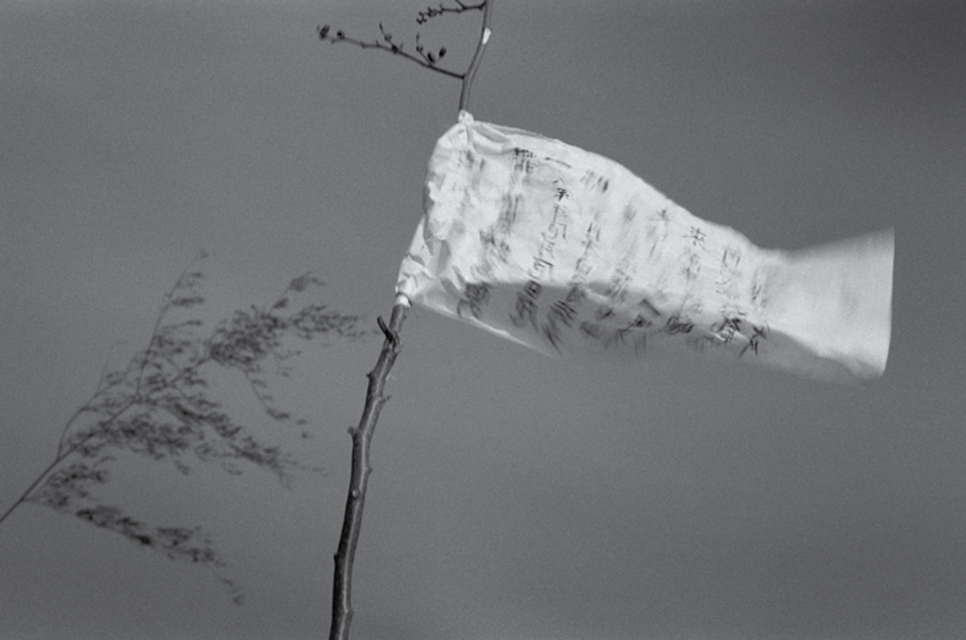
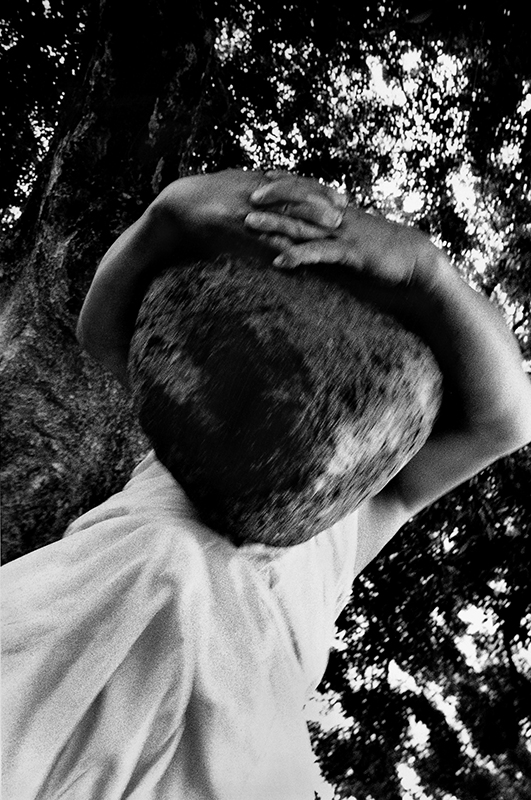
the stillness that breathes within his constantly moving images. Birds take
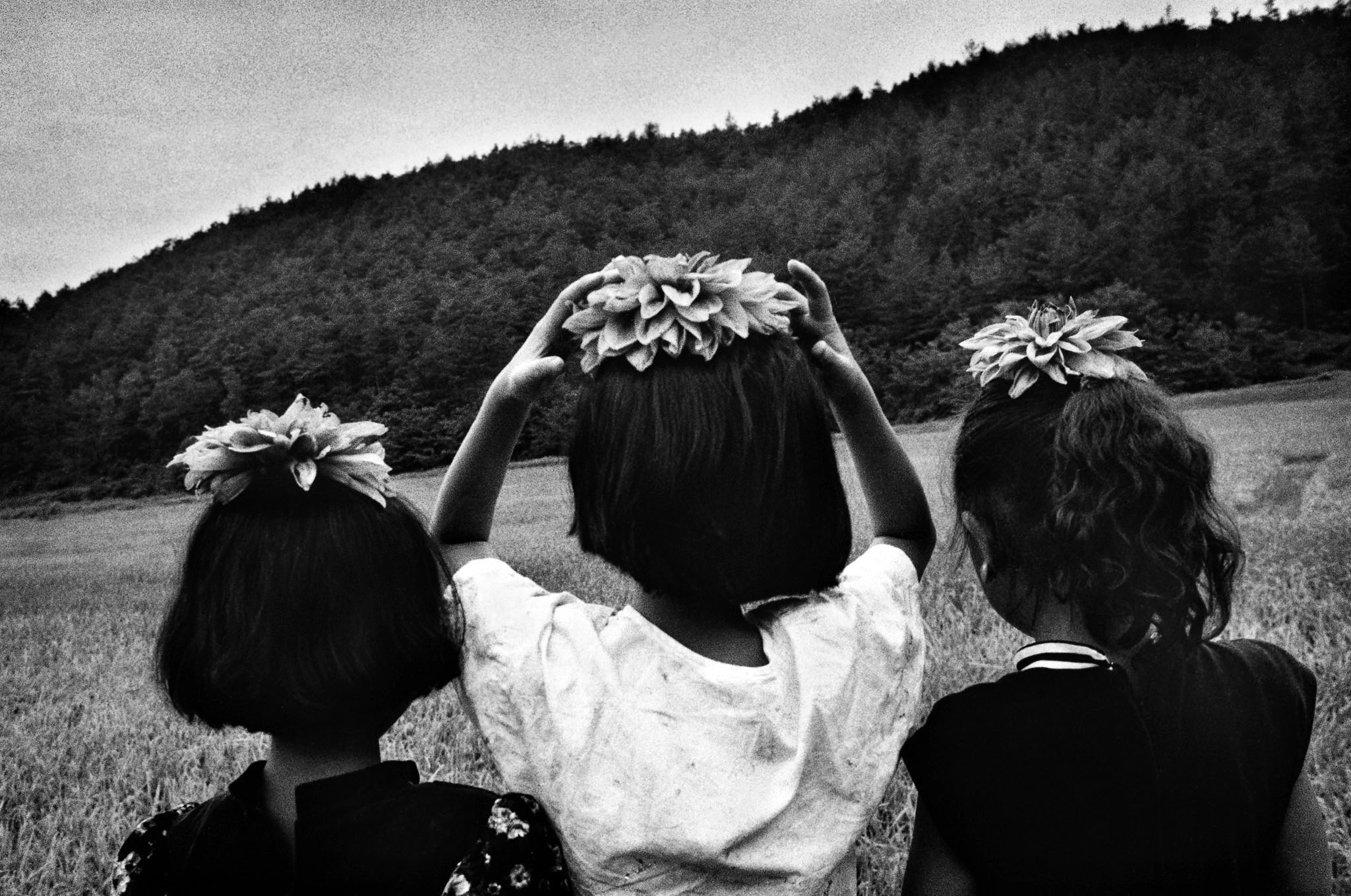
flight, people sway, flags flutter, clouds and birds skim mountains. Children
seen from behind gaze at crooked mountains with flowers on their heads; along
the ridge of Geumsan in Namhae, a child weeps. As if foreseeing the later
tragedy of the Taean coast, a shaman descends a hill drenched in animal blood
(red rendered as black in monochrome).
Two old men confront one another in a
forest. The empty spaces recurring throughout these images are filled with
dense absence. After repeated cycles of improvisation, deviation, dissolution,
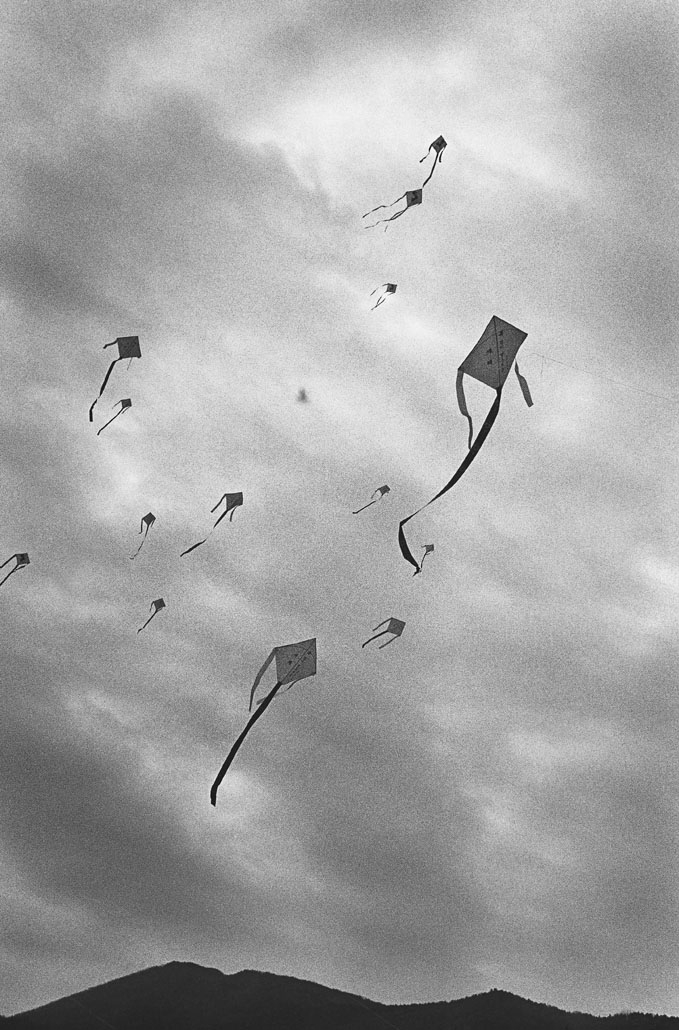
and recomposition, the final page of Conflict and Reaction shows
kites vanishing stubbornly toward a single vanishing point, carried by the
wind.
Viewers imagine piercing a hole in their hearts through which that wind
passes. And just when it seems finished, the next page reveals an old man
passing through a low doorway. As Jung Jaesuk observed, it is the trembling
“reaction” unconsciously shown by people in moments of “collision” that gives
Lee the force to press the shutter.
Moments
of life embedded in concrete experience and their sensory mysteries can never
be expressed through conventional forms. In ‘Conflict and Reaction’, Lee
dismantles long-preserved photographic conventions, boldly experimenting with a
new grammar of photography. This may be the indispensable condition that
photography has required to sustain itself as a modern medium—its fundamental
force. Through photographers capable of capturing the world’s rich actuality,
photography has acquired the value not of fact, but of imagination and
abstraction.
A
Love Letter to the Landscape: Energy
I
once asked the artist about the exhibition title ‘Energy’. My objection
was that the title felt too direct—perhaps because it echoed titles long
familiar from salon photography, provoking a contrarian resistance. His
response was simple. “Isn’t photography like poetry? I don’t think with my
head—I just photograph moments that I feel. To fully savor moments of life:
photography grants us that power.”
If
Lee Gapchul once interpreted reality, the Lee of today interprets landscape.
His talent—and what makes the photographs in Energy exceptional—lies
in extracting and refining deeply intimate moments from subjects we have long
looked at absentmindedly, as if they were loving one another. To distill the
essence of landscape, Lee approached swiftly, observed slowly, and photographed
with a slow shutter. What emerges is the “time” of the landscape itself.
Between the front and rear shutters, physical changes of time—how people, love,
and mountains alter as time flows—linger and settle. In this way, while Lee
presses the shutter, the viewer’s emotions also grow denser. He captures the
wind moving in the spaces between shutters, between things. As this happens,
the artist’s inner energy gradually warms; the landscape itself ignites the
photographer. Perhaps that is why he called it gi.
Lee’s
landscapes do not aim to reveal total outlines or meticulous details. Instead,
they concentrate on expressing a dynamic atmosphere that is both bold and
delicate. This is because he sought not to fix a specific moment of landscape,
but to reveal the continuous movement and flow of scenery and objects as they
change moment by moment under light. Whereas Alfred Stieglitz pursued a state
of transcendence by quietly contemplating the world and seeking equivalence,
Lee opens his entire body to breathe with the landscape, stepping closer
through a telephoto lens to reach the world’s hidden truth. This differs from
his earlier work, which primarily used a 28mm wide-angle lens. He said it was
to show only the essence—because only then could the energy of the landscape be
conveyed.
As
Lee himself has said, “Traveling across this land, breathing in the scent of
the earth and receiving its energy is both joyful and heart-aching.” His
landscapes are thus clear lyricism, finely attuned to the artist. Even within
the same location, they reveal entirely different atmospheres depending on time
and environmental change. If wind blows in a photograph, then it truly was a
windy day, and one can hear the sound of that wind’s movement. In
particular, 2004, Hapcheon expresses a state of
profound immersion in landscape.
Likewise, the dusk, trees, and birds perched
atop branches in 2004, Jangsu cohere into the
totality of landscape, each subject fully inhabiting its own individuality—like
winter trees loosely spaced, each facing its own sky, whose interstitial
tensions gather into a collective choreography.
The
“photographic moment” in Lee’s work is never something that can be routinized;
the fullness of the present he experiences within landscape passes in an
instant. With quiet restraint, he offers viewers cherry blossoms trembling
brightly in sunlight in 2004, Hadong, and flowing water
in 2005, Sancheong, creating symbols of landscape
imbued with a liberated innocence freed from pain and anguish. What, then, does
it mean to take photographs? Lee’s work unexpectedly poses this fundamental
question.
When
the question shifts to whether a photographer can create nature—or is doomed to
merely imitate it—the answer becomes relatively clear. Much landscape
photography has operated under the belief that photographers can “make” nature,
or has unconsciously followed that logic. Since Ansel Adams, it has been
axiomatic that beautiful nature and photographs of it inherently acquire
aesthetic value.
Against a climate that produces landscape photographs with
superficial splendor and unreflective arrogance, Lee’s landscapes offer a
response. His photographs allow us to encounter landscape through subtle
tremors. That is why the sound of wind passing through bamboo groves in 2004,
Damyang feels all the more poignant.
Mother!
Lately,
I have been photographing the landscapes of our country—not simply beautiful
scenes, but landscapes that chill my heart. The faint landscapes of my
ancestors’ youth, of my parents’ youth, and of my own childhood.
When pale pink azaleas bloom on the low mountain behind my home in spring; when
the green oak forest shaken by summer rain regains its color; when lonely
whispers of reeds are heard in autumn fields; when sleet drifts through deep
mountains in winter—nothing could be more beautiful.
The sound of a stream, the
call of a cuckoo from the back hill, even clouds reflected in rice paddies at
dusk—all arrive as heart-achingly beautiful landscapes. They were even more
precious because my mother’s image was always reflected within them. As another
day ends, the moon has risen over this plateau. My mother’s name was Wol-im (月任). Seeing her face, once like white wild roses, emerge within the
moon, I quietly recite this poem.
Deep
into the black night, Mother comes alone,
Her white ankles hurrying toward me.
Each night, the dream I see is the dream of my white mother,
A trembling dream beyond the mountain ridge.
(Lee Gapchul, from “To My Ever-Missed Mother”)
As
I carefully examined Lee Gapchul’s photobook Energy, I
experienced unexpected wonder and subtle emotion. Lee never tries to explain.
And indeed, how could a photographer explain the countless complex and delicate
phenomena of nature? He does not analyze his subjects; perhaps he leaves that
task to the viewer. His photographs speak to no one in particular—they simply
show the world as it is, and the movements between things. To those who can
read that movement, Lee becomes a truly wondrous photographer.
Unoccupied:
Emptiness Is Form
Lee
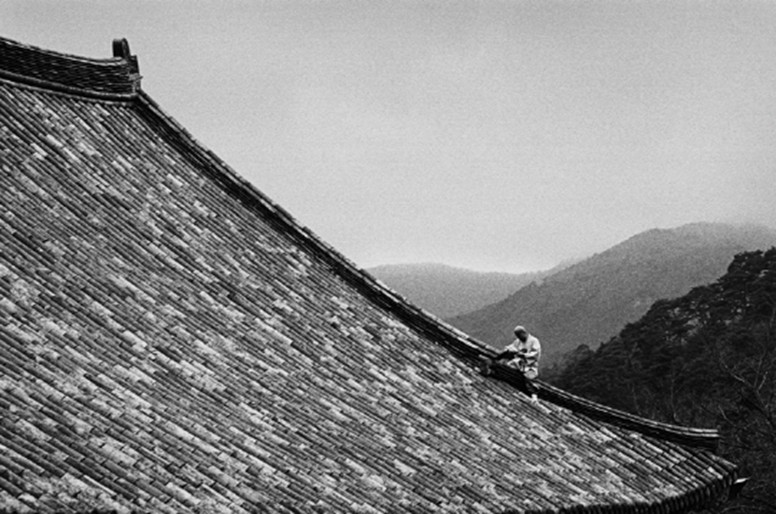
is said to conduct Zen dialogue with his camera. Though not a Buddhist, he
loves mountain temples and mountains, and listens to Buddhist chants he does
not fully understand while driving. His guiding question has now shifted
toward emptiness is form (空卽是色). The path of the mind that moves from possession to being is best
expressed through the Buddhist thought of form is emptiness, emptiness is
form.
Humanity, enslaved by possession, fails to participate in the productive
site of being and drifts into vain fantasy. Photography, in particular, has
long been narrated from the standpoint of possession—shooting, capturing,
framing, displaying, overcoming death, simulation, fixing. Such discourses
resist Buddhist interpretation. Emptiness, as Wonhyo wrote, is neither
attainable nor unattainable.
Photography, conceived as something that
“contains” reality, has stood at the center of possessive desire resisting
death. Can Lee articulate emptiness is form through photography? Even
the desire to express may itself be desire. Should one then stop taking
photographs?
Lee’s
answer is again simple: emptiness is form is not a dead void, but a
state of mind from which something endlessly wells up. Perhaps this ontological
desire to act for others through photography is what Lee means
by emptiness is form.
The
photographic spaces Lee creates are “illusory” spaces that once existed. They
draw out the substance of memories that may have vanished, allowing ephemeral
things to touch eternity. To view his photographs, one must let go of the self
to avoid missing the flow of rapturous landscape—because his images are filled
with subjects for whom “even a fleeting glance recalls countless past
connections, dissolving accumulated karma in tears.” These are things alive
now, yet destined to disappear. All of us are such beings.
To
those who doubt whether the beauty or power of his photographs bears any
relation to reality—who dismiss them as private confessions or image-play—his
work says nothing. It simply shows the world and the movements between things.
Thus, to those who can read that movement, Lee Gapchul reveals himself as a
truly extraordinary photographer.
What
will a photographer with a cosmic mind show us next? Will the calm of
self-benefit quietly transform into altruistic offering? That original vitality
already exists in Lee. He is not filled with himself; he is free and spacious.
Marcel called such a state “being unoccupied”—empty, yet always ready to
respond to a call, ready to be sensitized.