Atta
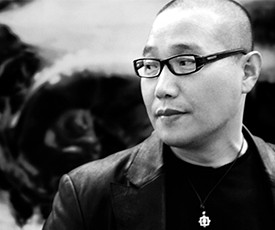
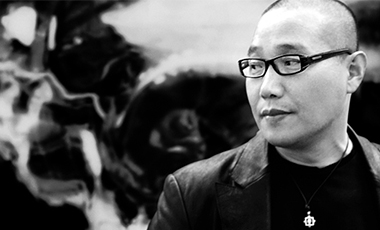
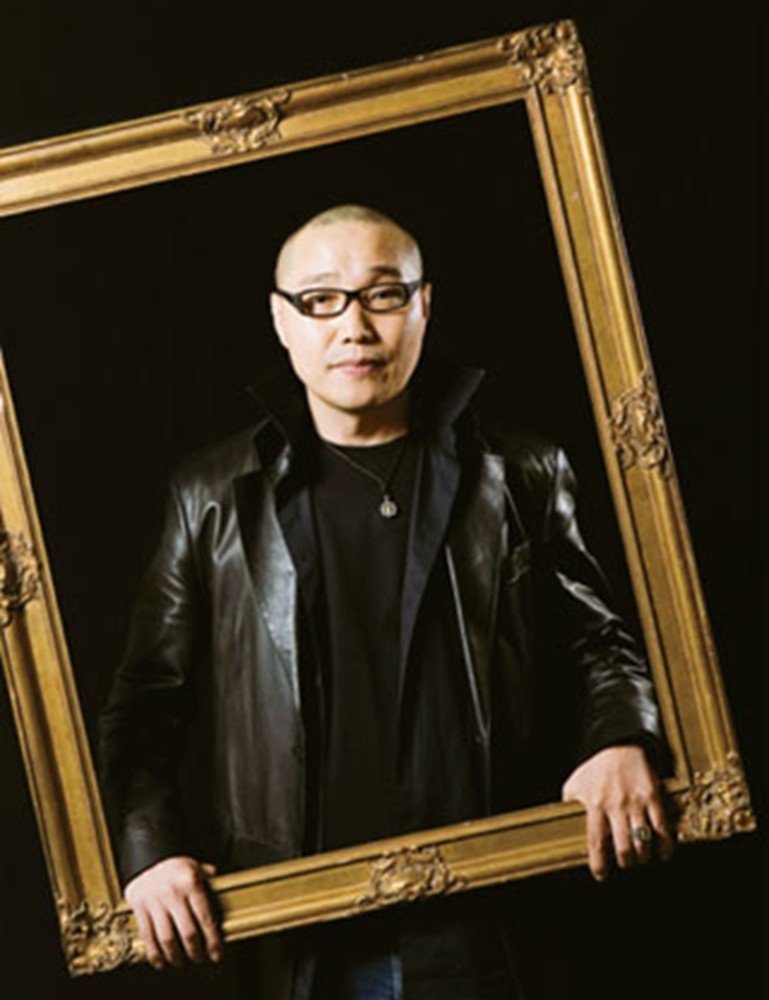
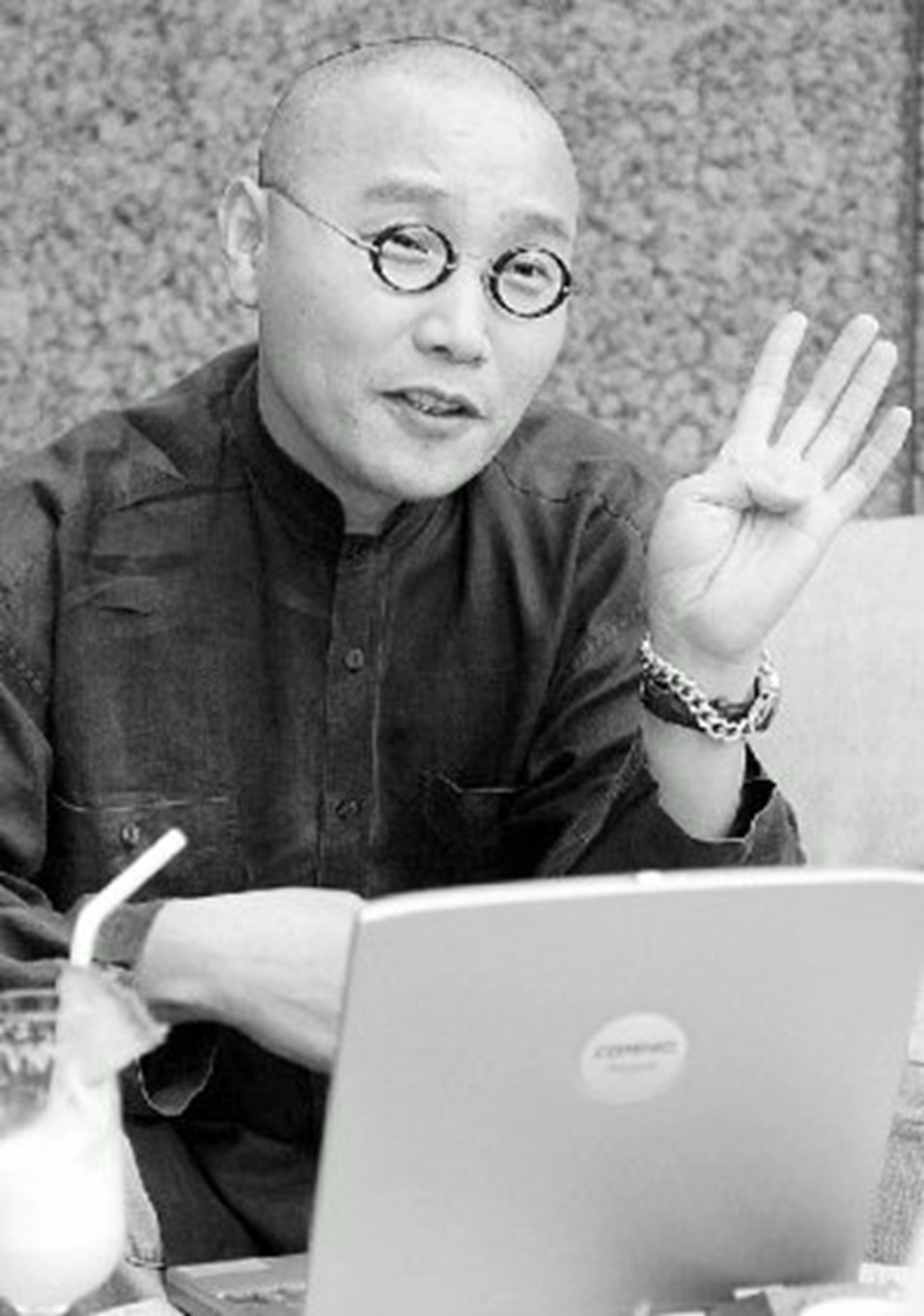
Kim (b. 1956, Geoje) is an artist who has worked as a photographer since 1985.
He is a self-taught photographer who did not receive formal training in
photography or fine art. Deeply interested in Eastern philosophies including
Buddhist doctrines as well as Western philosophy, he has continuously pursued
philosophical inquiry into existence, being, and the principles governing all
things through his artistic practice. Because he independently explored
photography as a medium rather than following an established academic path, Kim
was able to develop his own distinct sensibility and perspective, forging a
path uniquely his own rather than following one already laid out.
The
name “Atta” is a name he gave to himself. It is composed of the
character A (我), meaning
“self,” and Ta (他), meaning “other.”
Together, the name conveys the idea that the self and all existing beings are
one. In Buddhism, the concept that “two are not different” is known
as non-duality (不二), and his name closely
resonates with this Buddhist mode of thought. It originates from the
realization that the self and all others are never truly separate, but are
inevitably connected and exist in relation to one another. As reflected in the
name he chose for himself, Atta Kim is an artist who persistently and
rigorously contemplates the nature of existence.
Driven
by ontological inquiry, Atta Kim developed a series of projects that unfolded
as follows. His early works began with black-and-white documentary portrait
photography, undertaken with the determination to “see the human spirit
directly.” He personally stayed for extended periods in psychiatric hospitals,
interacting with patients and photographing them, resulting in the
black-and-white portrait series 'Mental Patients'(1985–1986). He also produced
'Father'(1986–1990), a series in which he photographed his own father to
explore his roots and intergenerational continuity, as well as 'Human Cultural
Heritage'(1989–1990), a body of black-and-white portraits created through
extended periods spent with individuals designated as holders of Korea’s
National Intangible Cultural Heritage, capturing their philosophies and
spiritual worlds.
From
the early 1990s onward, Atta Kim moved away from documentary photography and
began experimenting with staged photography to articulate his own artistic
philosophy. This trajectory began with 'Deconstruction'(1991–1995) and
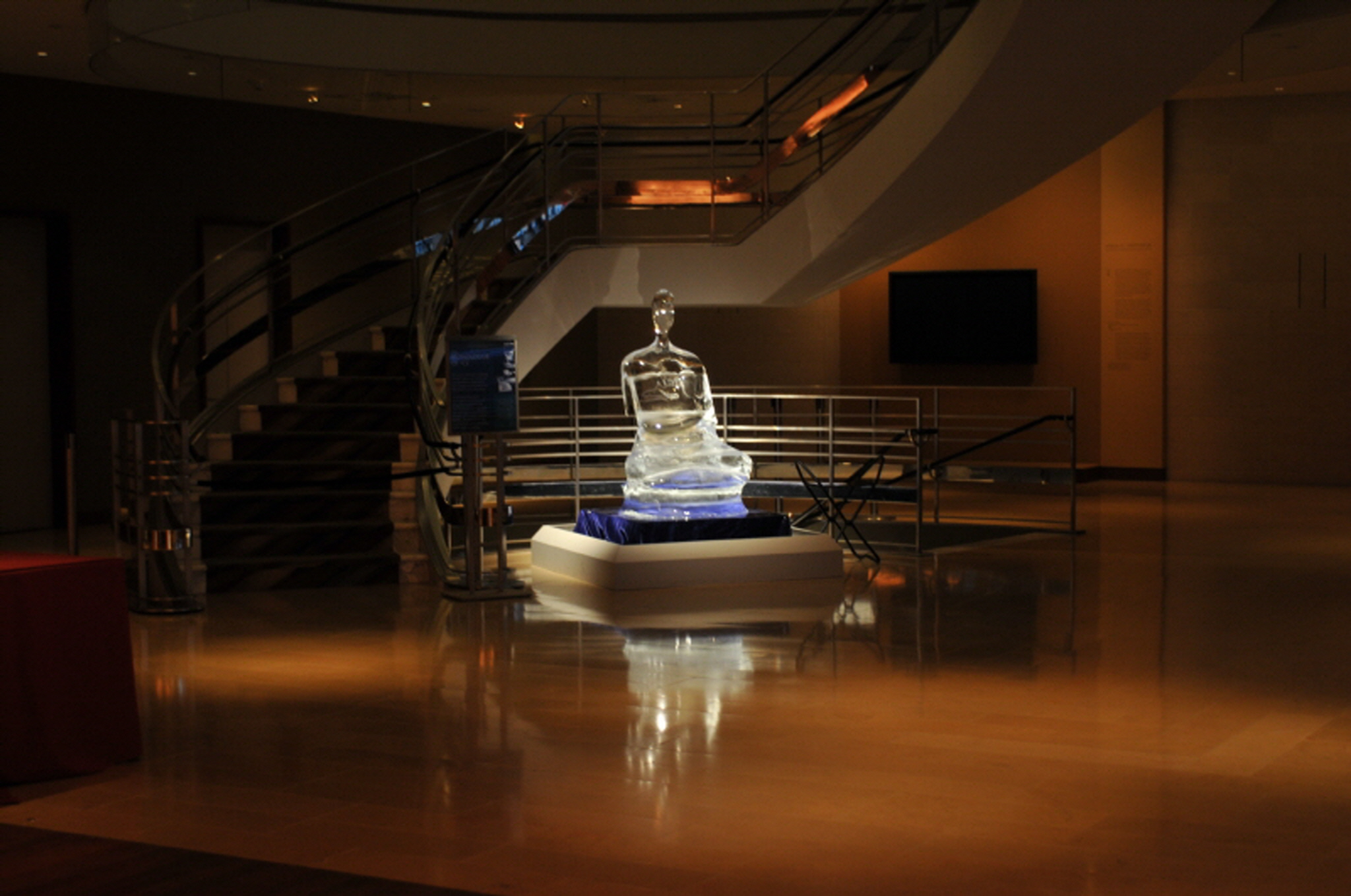
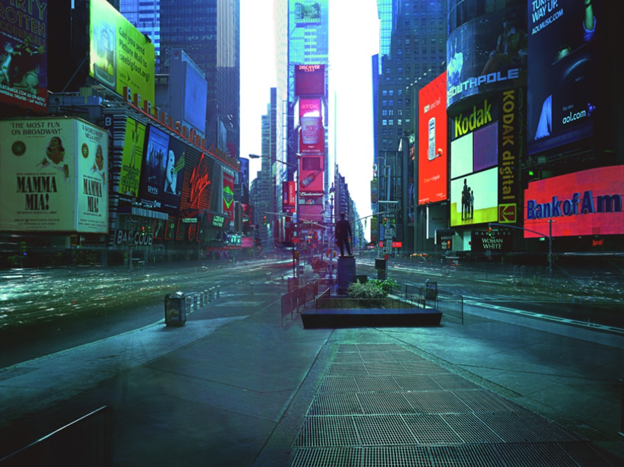
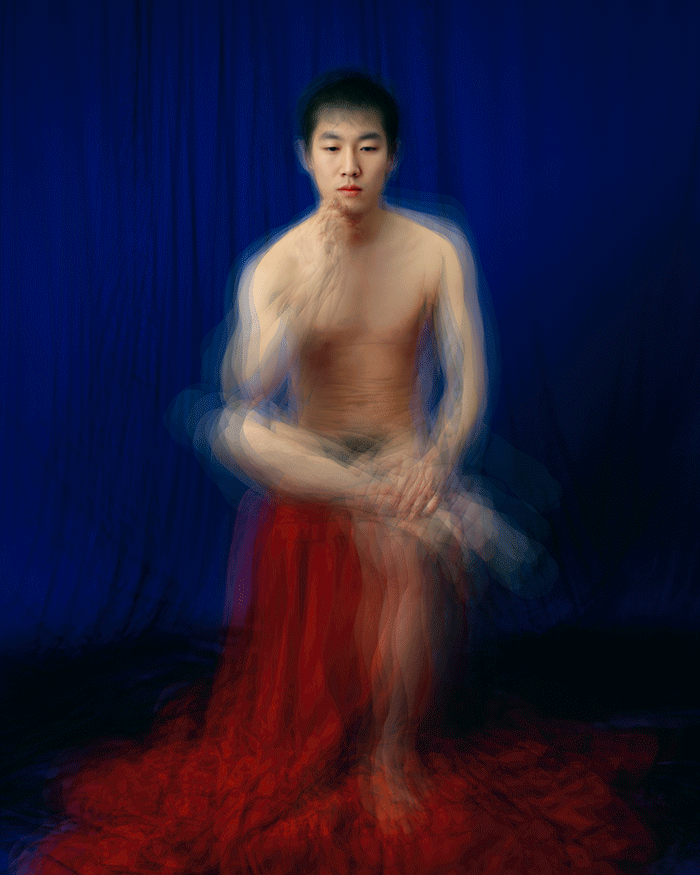
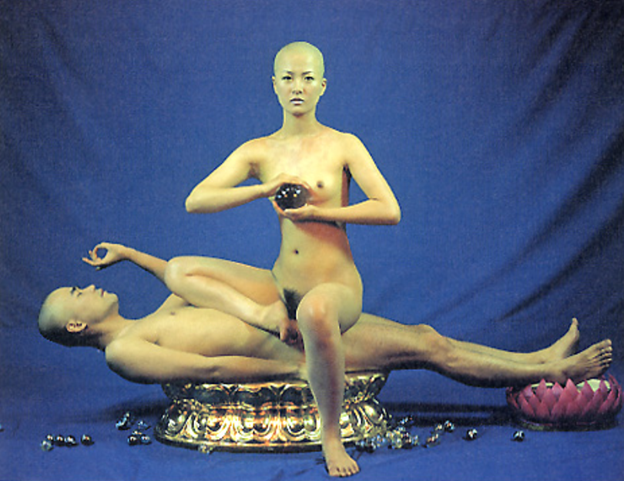
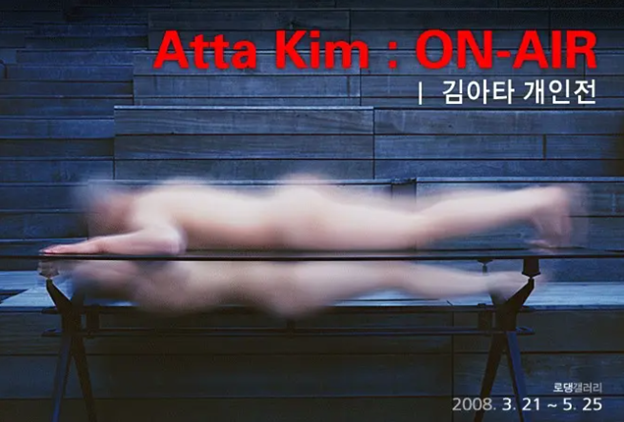
continued into 'Museum Project'(1995–2002). In the early 2000s, he developed
works under 'ON-AIR Project'(2002–2009), employing multiple exposure and
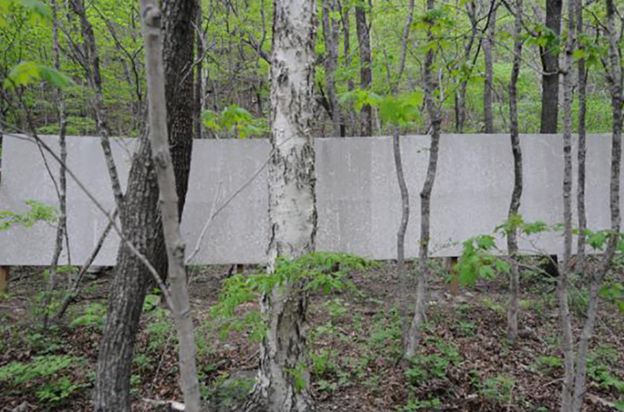
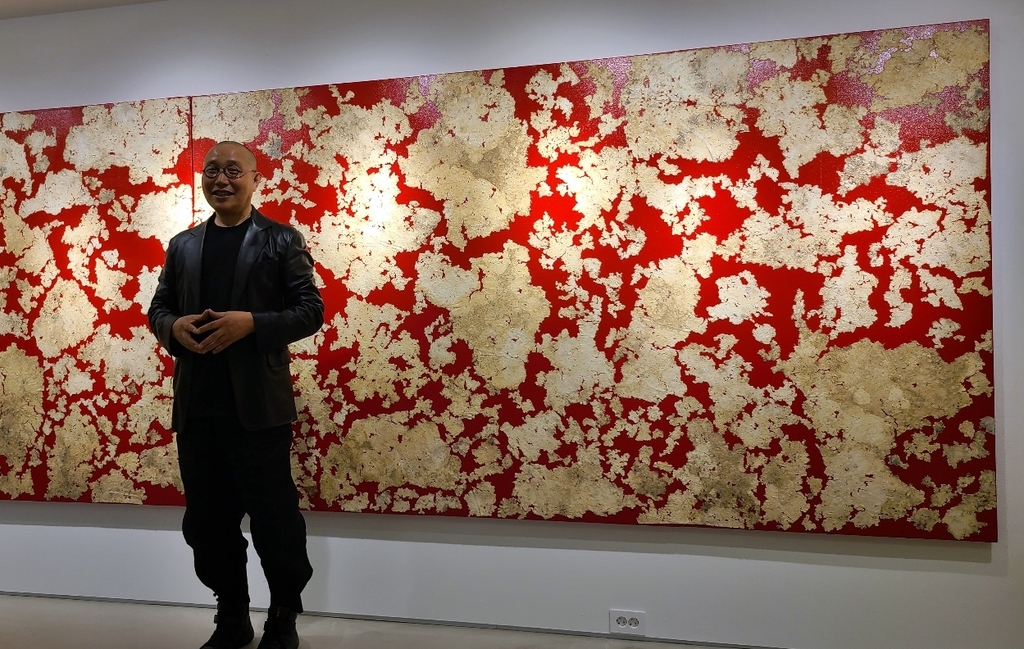
digital layering techniques. Subsequently, he moved beyond photography
altogether with 'Drawing of Nature'(2009), in which empty canvases were placed
in specific locations for more than two years to collect traces of
environmental change. Across all of these series, the recurring themes are
presence and absence, disappearance and generation—philosophical concerns that
Atta Kim has consistently pursued.
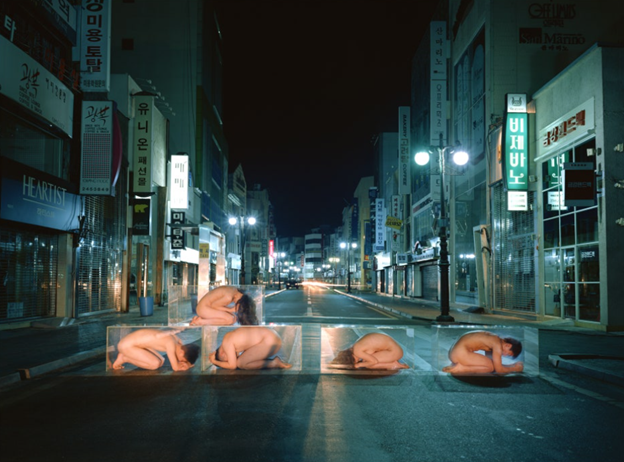
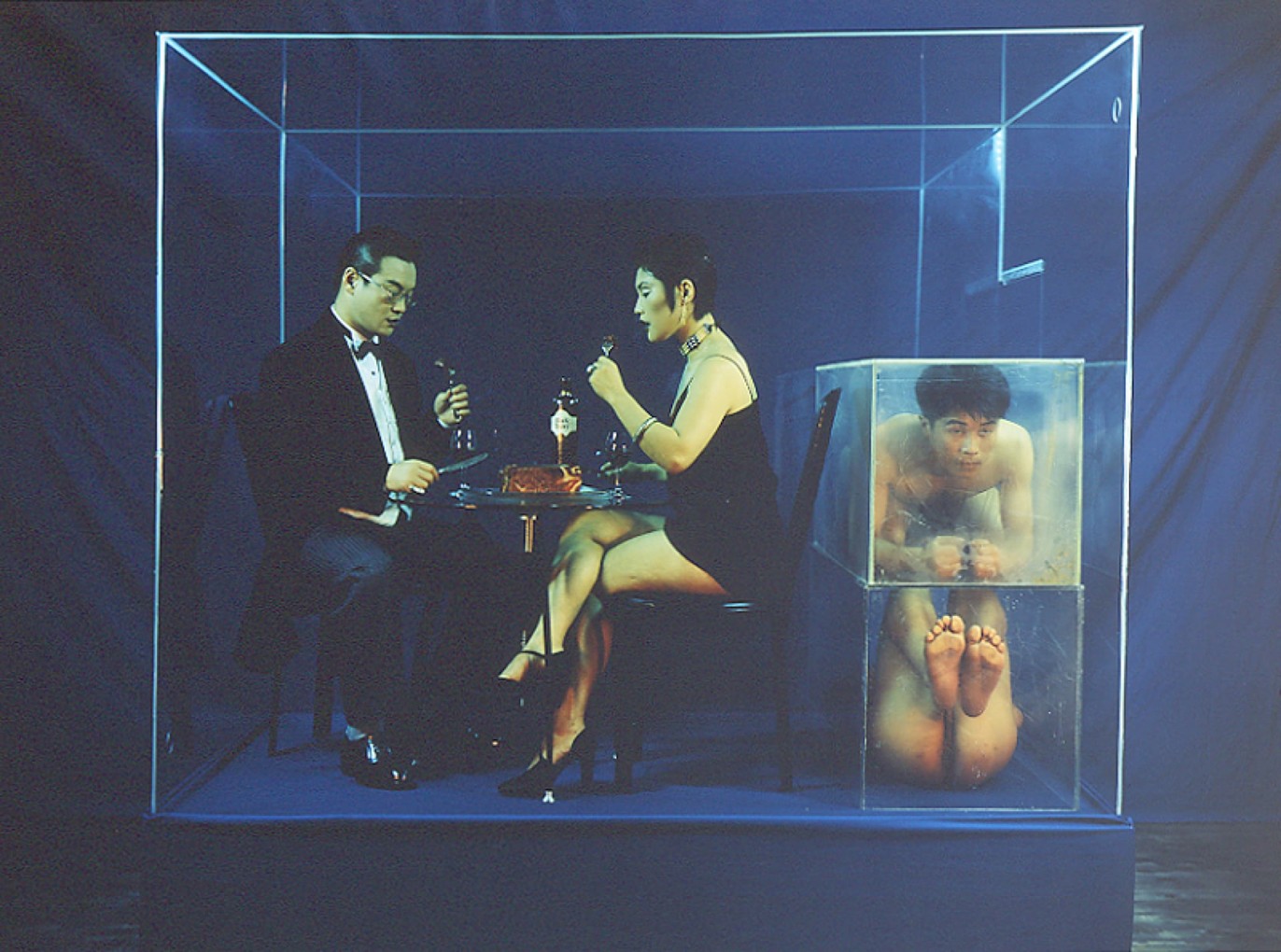
The
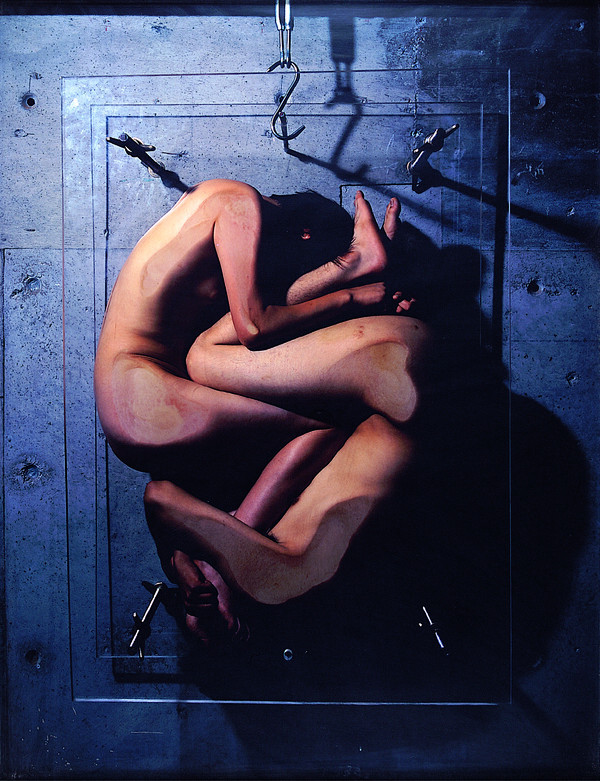
work 'Museum Project No. 026'(1999), held in the collection of Gyeongnam Art
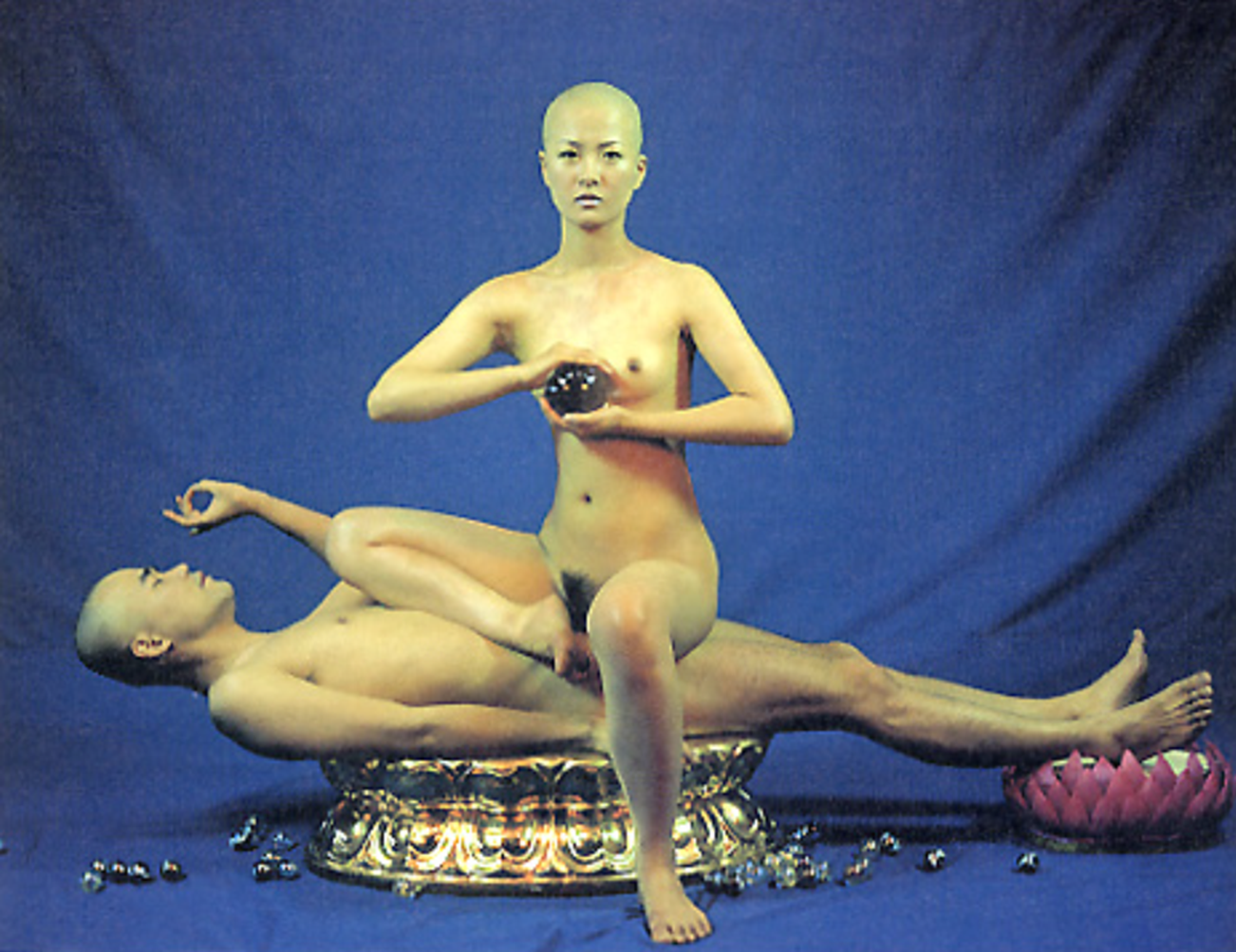
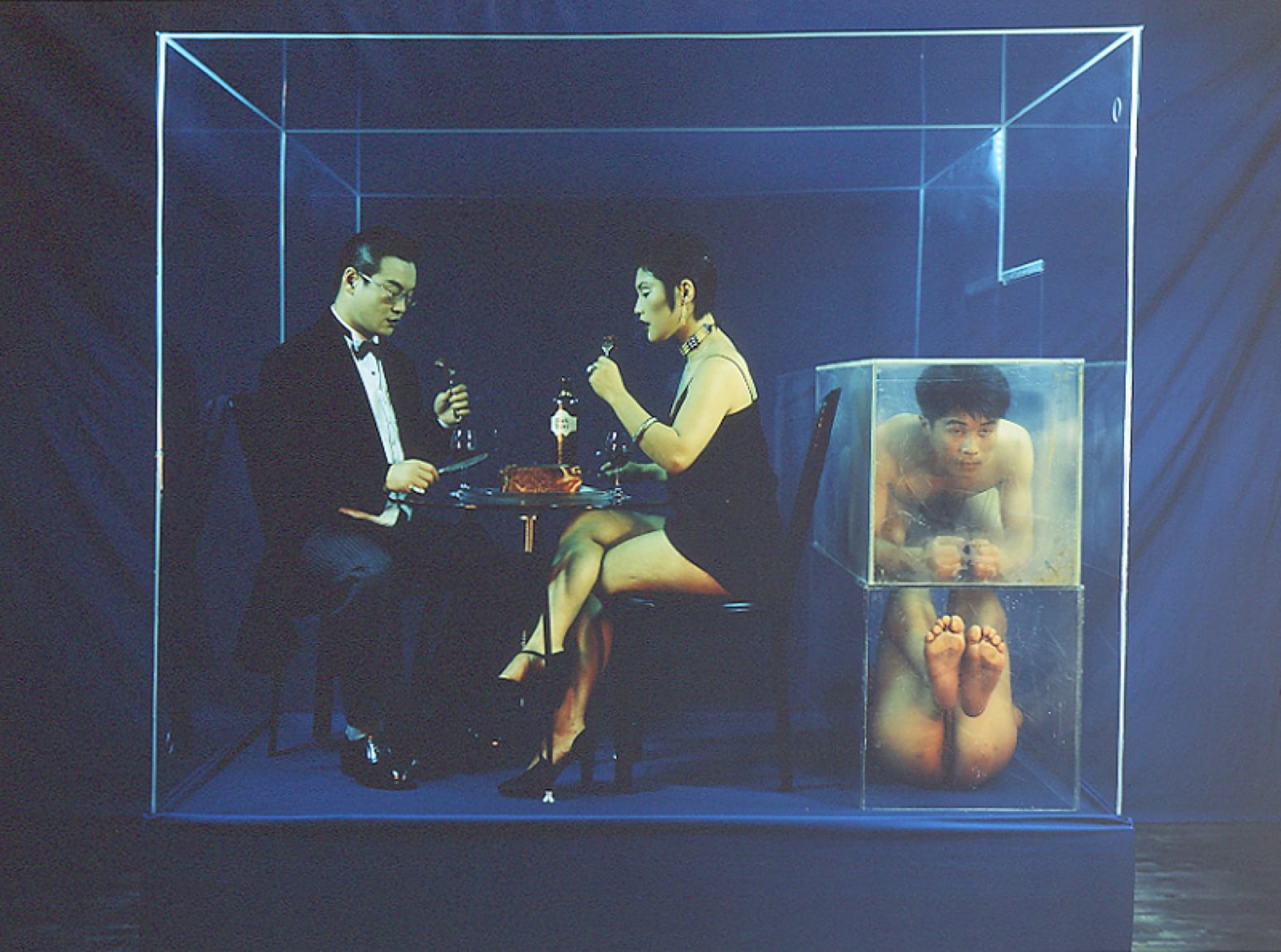
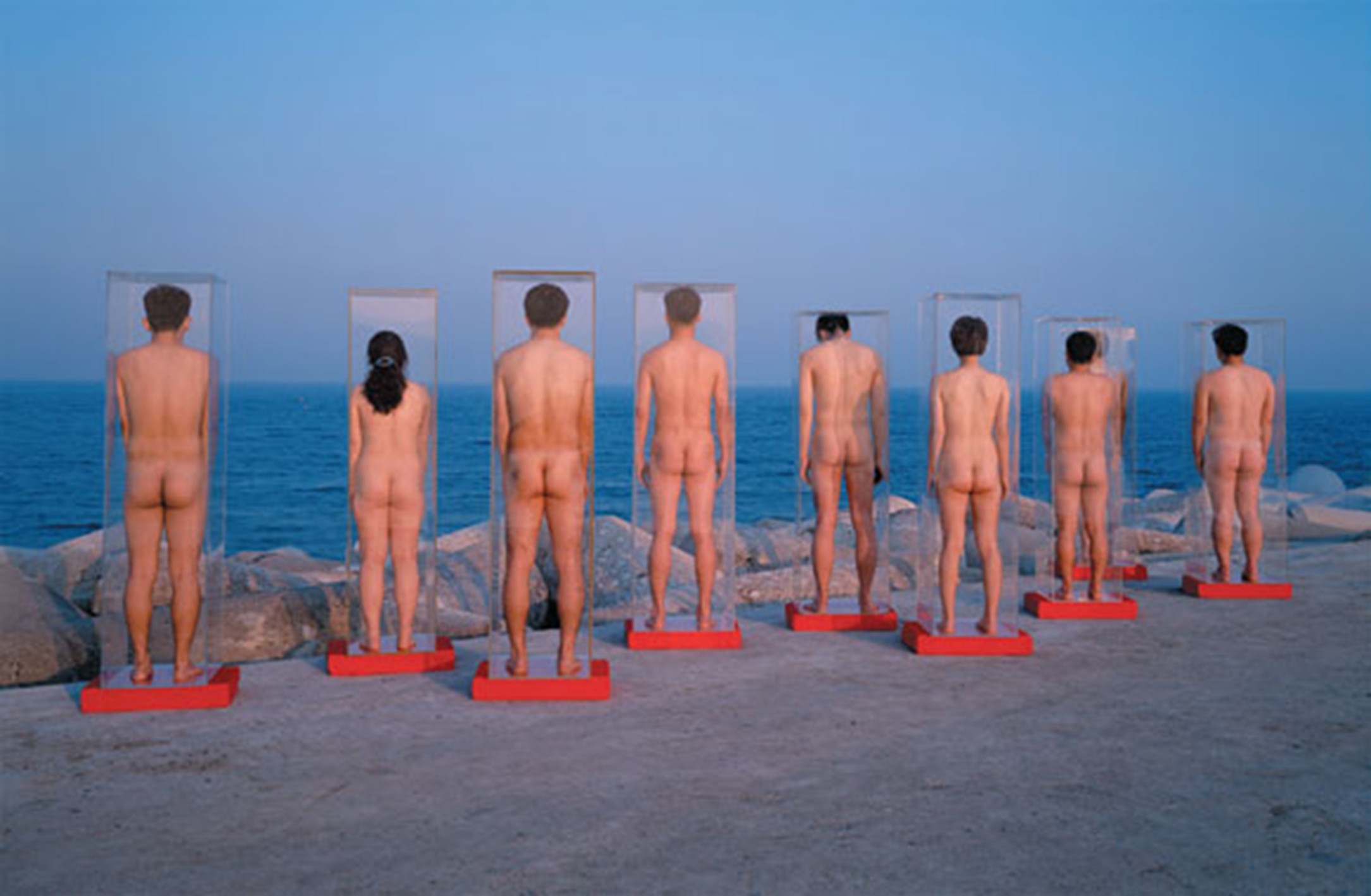
Museum, is one of the museum’s first donated acquisitions. 'Museum Project',
carried out between 1995 and 2001, is a representative body of work that
encapsulates Atta Kim’s artistic universe. The project brought him
international recognition when it was introduced in March 2000 at a Korean
representative group exhibition during the Houston FotoFest in the United
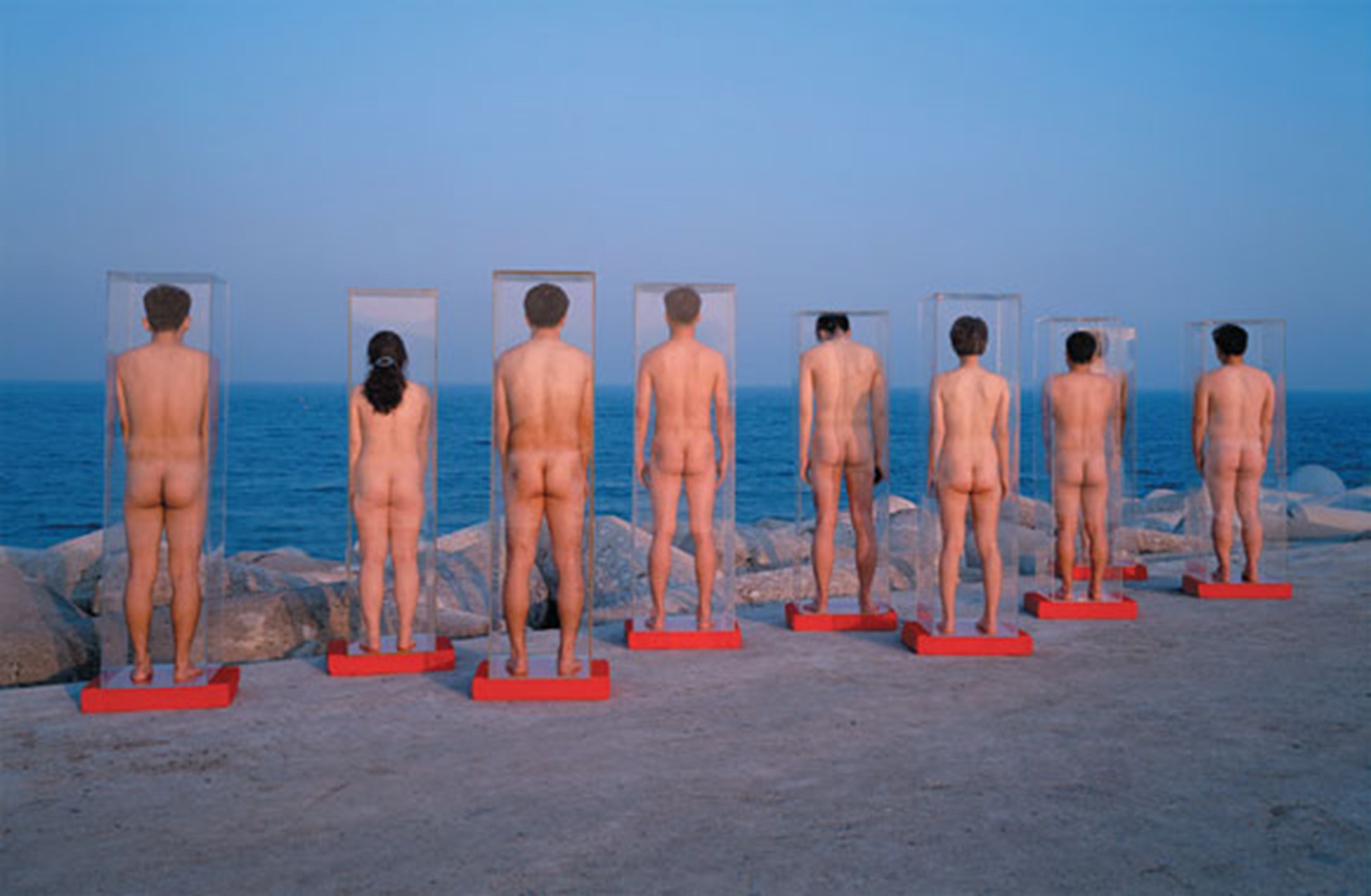
States. The work depicts two naked figures crouched between transparent acrylic
panels, suspended on hooks like cuts of meat in a butcher’s shop.
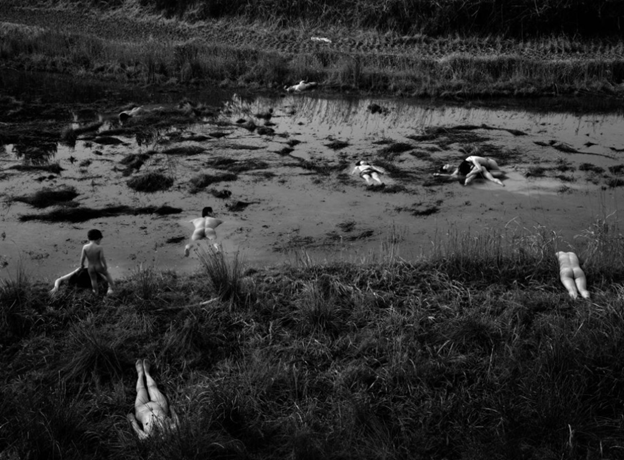
Within
'Museum Project', the works are subdivided by period into thematic categories
such as Field, People, Holocaust, War, Suicide, and Nirvana. This particular
work belongs to the Holocaust phase. Through these works, Atta Kim places
primal human sexuality, violence, and ideology inside acrylic boxes. Through
'Museum Project', he appears to immerse himself in an exploration of the human
instinct for creation and destruction, and of human existence itself. By
presenting real, naked human bodies as objects displayed within a museum
setting, he powerfully asserts human dignity and the intrinsic value of all
human beings.
As
the title 'Museum Project' suggests, the artist has described this project as
his “private museum.” He regards existing museums as institutions that embody
social ideology and as part of the established art system. By questioning who
assigns value and meaning, and by resisting claims of universality and
absoluteness, he constructs his own private museum as a form of
counter-inquiry. In this sense, the work confronts not only institutionalized
art but also the broader civilization founded on rationalism. Through his work,
Atta Kim conveys the philosophy that “all beings are great” and that “all
things are valuable simply by existing.” The staged scenes, in which figures
are enclosed within boxes, treat every human being as an artifact worthy of
eternal preservation within a museum.
Through
the figures confined within transparent boxes in 'Museum Project', Atta Kim
paradoxically asserts that “when humans are preserved inside glass boxes, they
regain the freedom they had lost.” In his book The Aesthetics of
a Butcher, he reveals that the period during which he prepared this
project was one of the most difficult and darkest times in his life. At the
time, his radical photographs were met with harsh criticism from the Korean art
world. Nevertheless, rather than compromising with mainstream trends, he
persistently continued experimenting with photography that embodied his own
philosophy and mode of thought.
Perhaps
'Museum Project' can be understood as a work that contains the artist’s inner
reflection and process of healing, shaped by exhaustion from neglect,
rejection, and discrimination imposed by others and by society. It functions
both as a form of self-healing from wounds inflicted by humanity and as a
powerful declaration to all other wounded individuals, affirming that we are
all beings worthy of respect. Through his work, Atta Kim invites us once again
to contemplate human dignity, existence, and being.
References
1)
Atta Kim, The Aesthetics of a Butcher, Black Mountain,
January 25, 2019.
2)
Kim Bokgi, Korean Art Walk: All That Exists Will Disappear, Atta Kim, Naver
Cast, 2012.
3)
Seoul Museum of Art Collection Information
(sema.seoul.go.kr/kr/knowledge_research/collection/landing).
4)
Interview with Atta Kim, Anniversary Special Dialogue, Changwon MBC, June 27,
2011.
5)
Atta Kim, Atta Kim’s Artistic Philosophy, https://www.youtube.com/watch?v=5D50pWzaQpo&t=12s