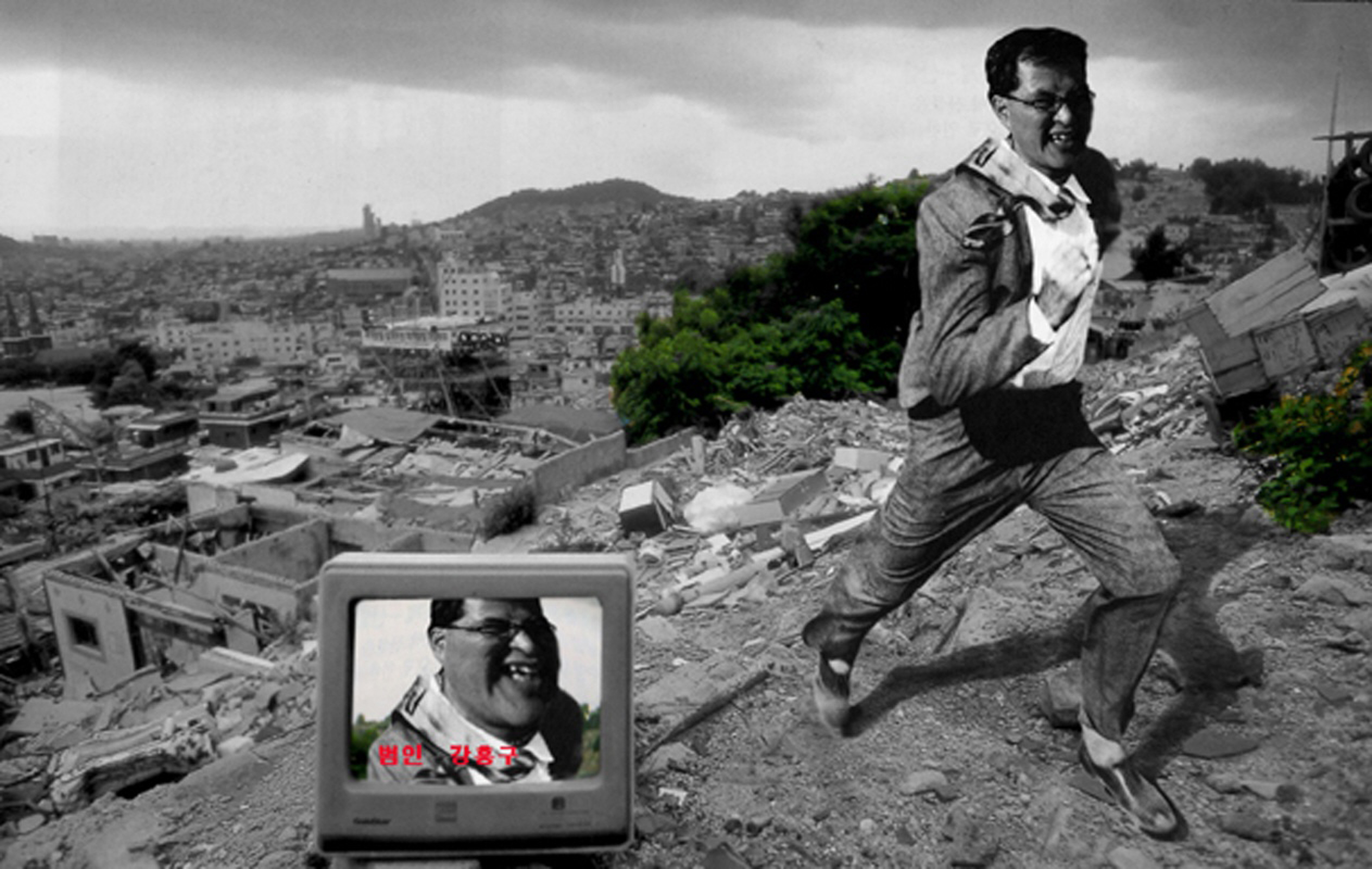
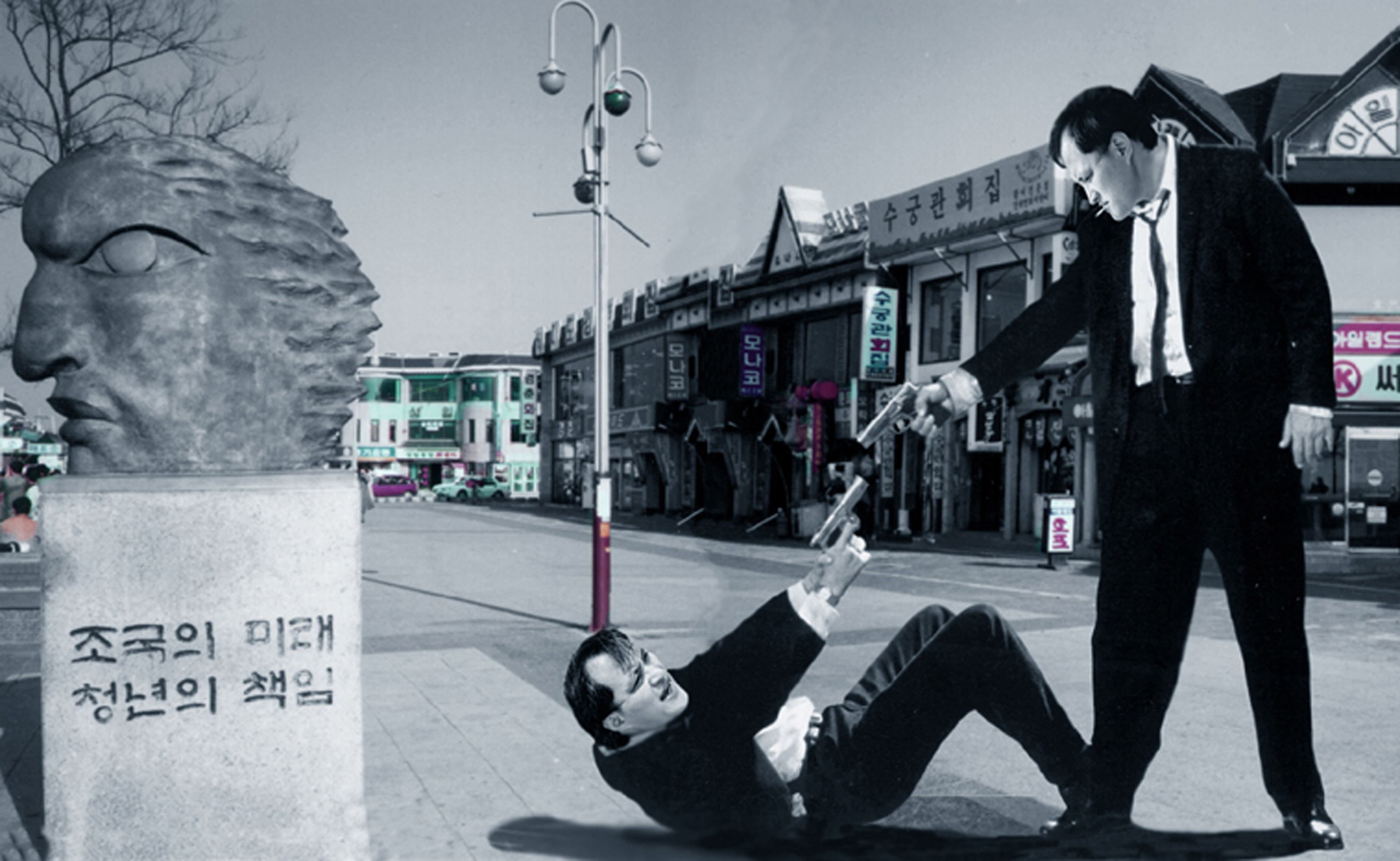
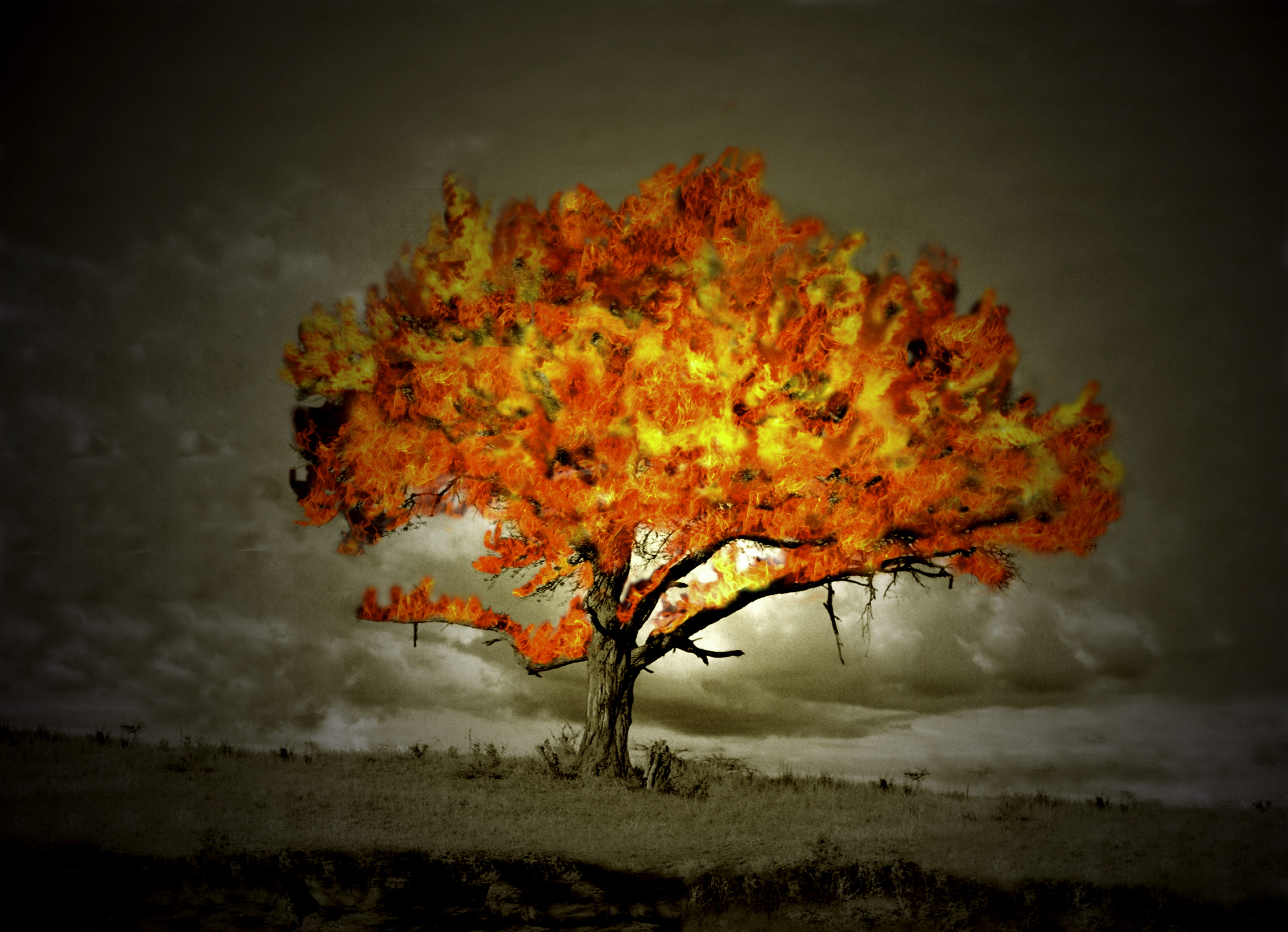
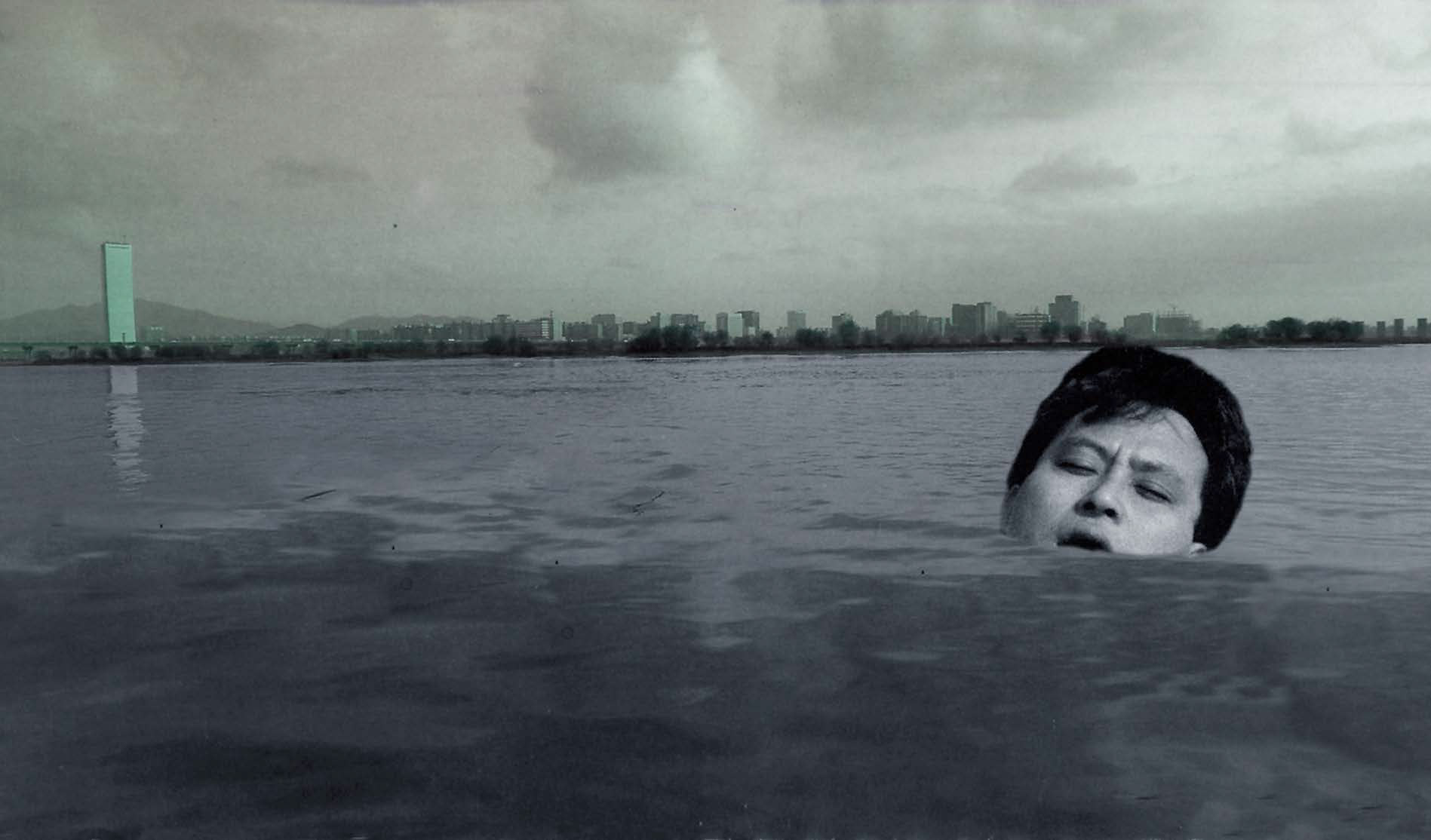
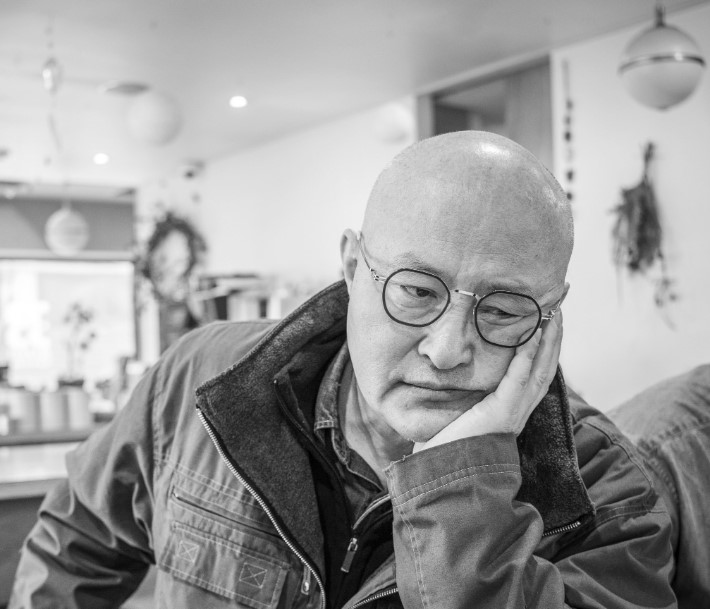
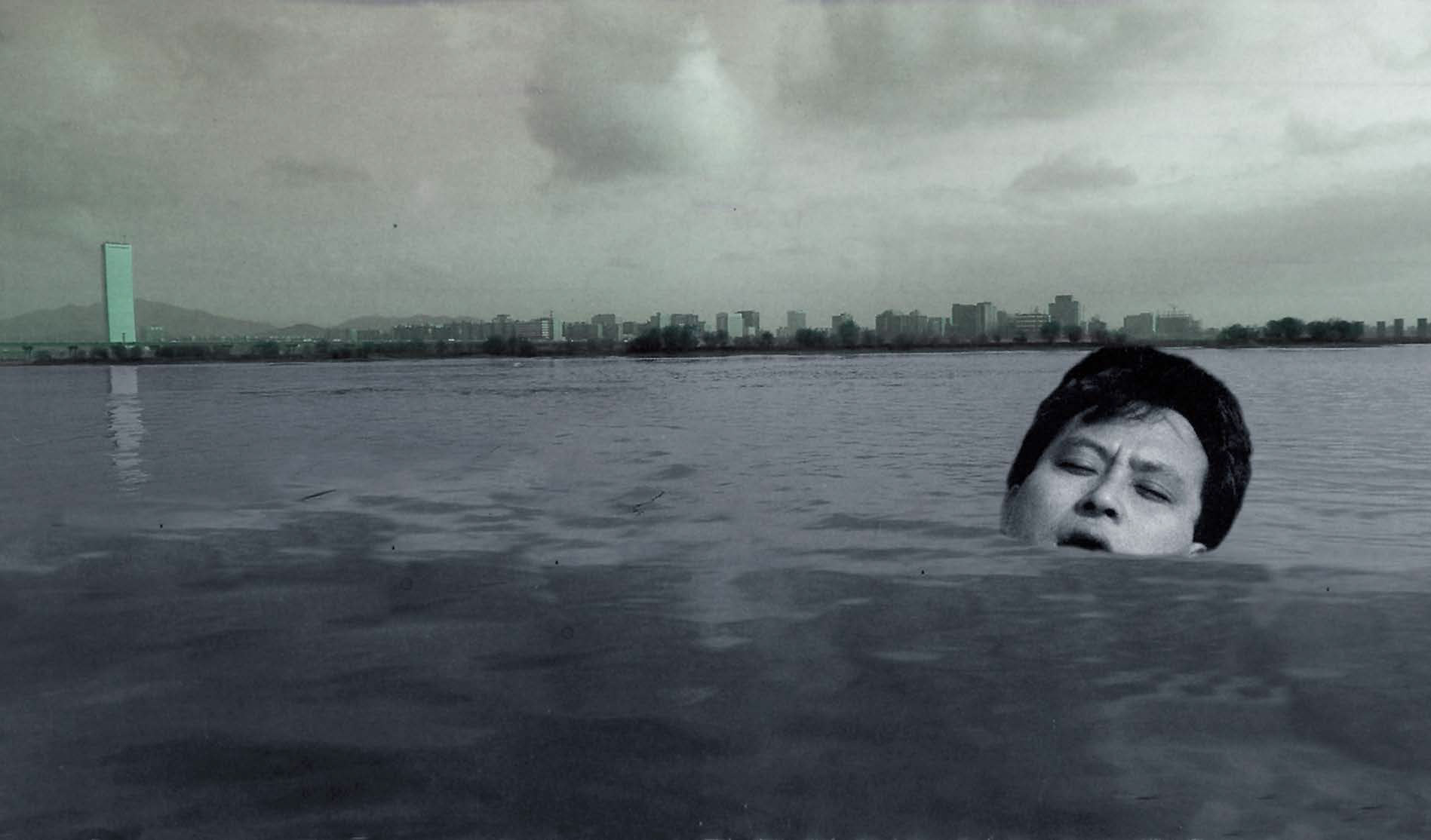
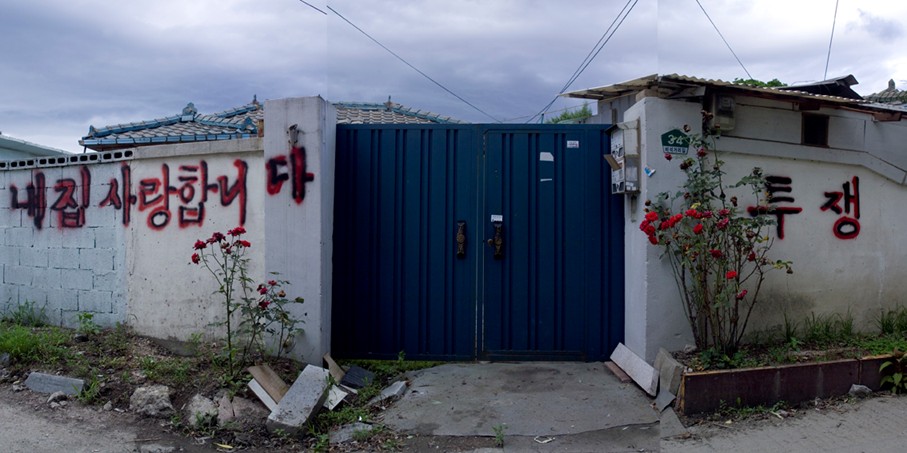
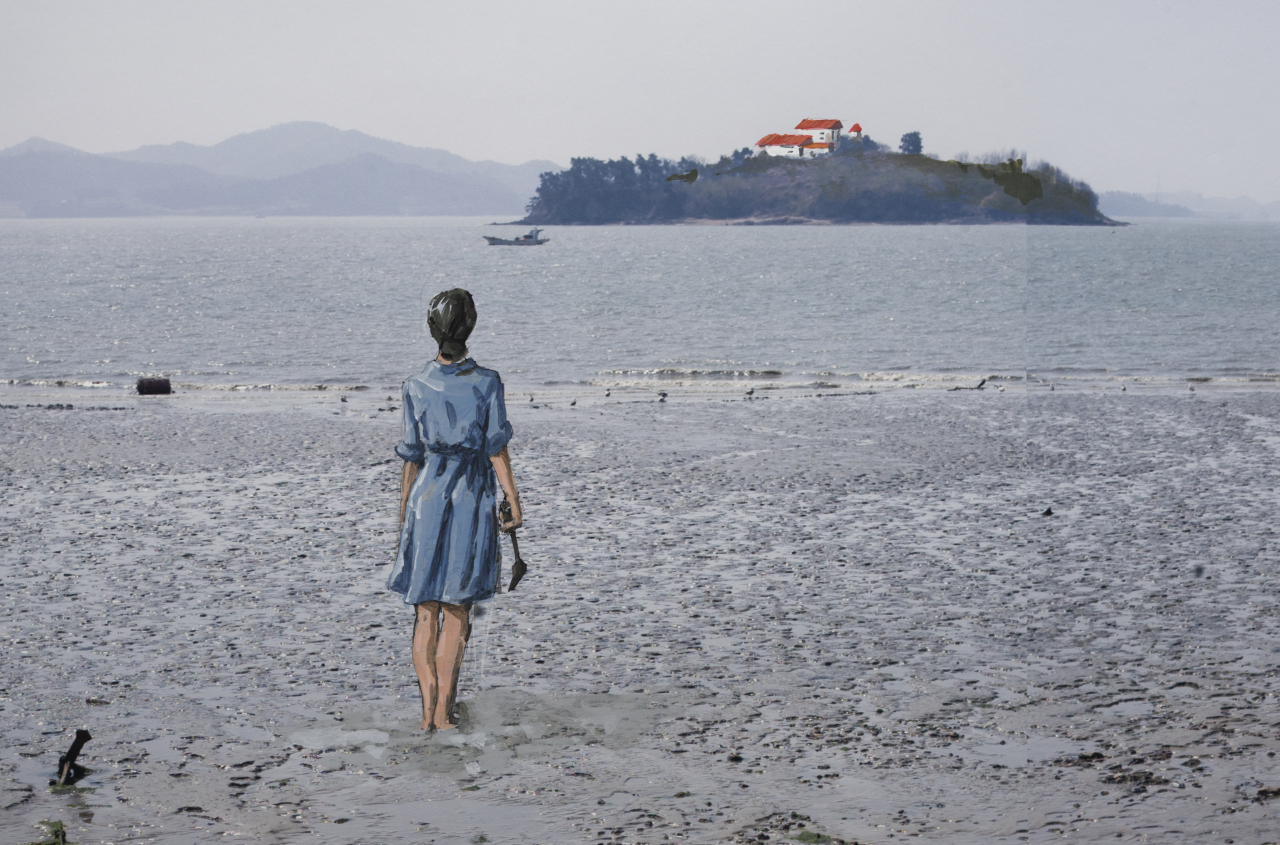
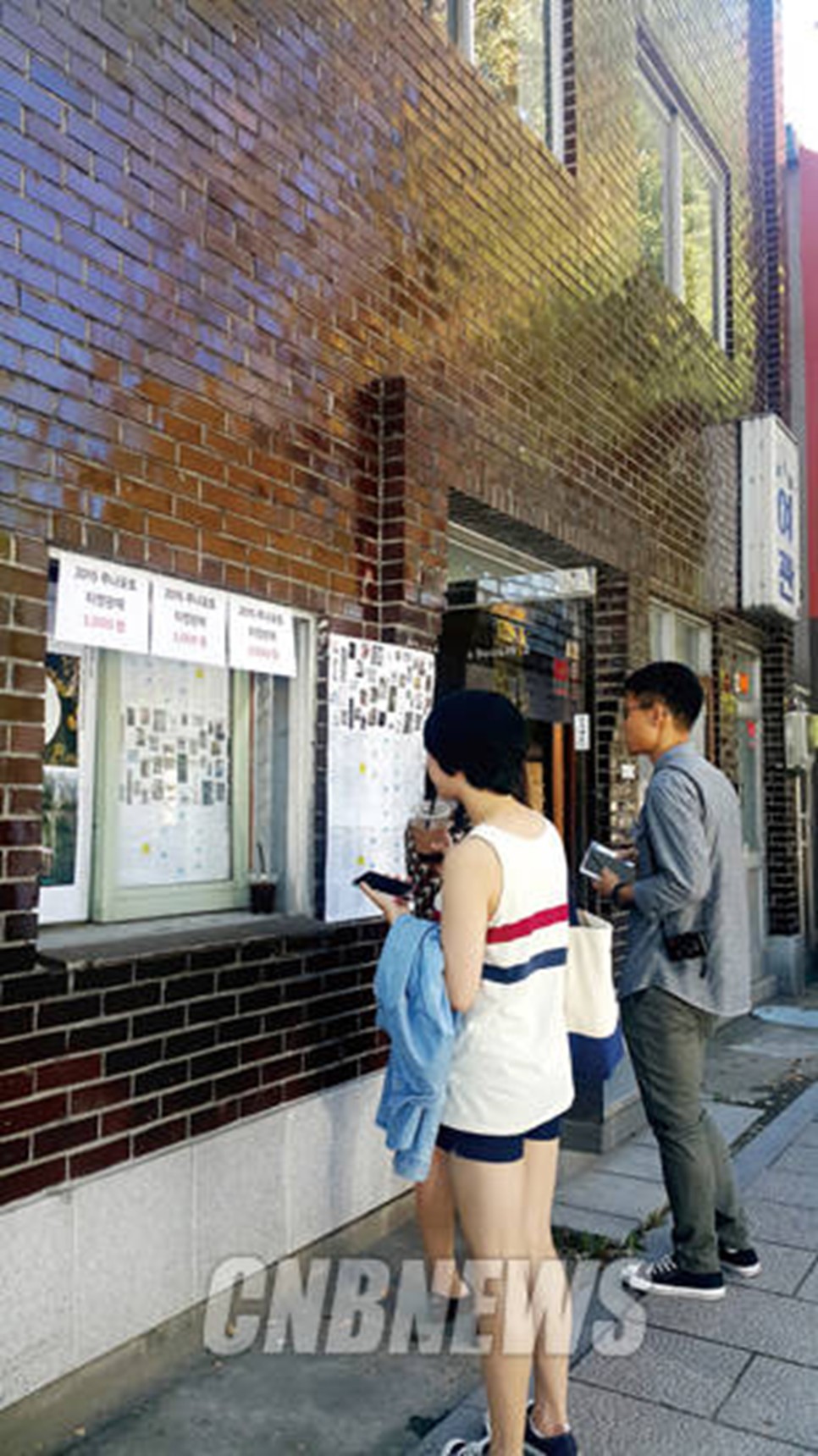
Kang Hong-Goo, Who Am I 16, 1996-1998, C-print, Dimensions variable © Kang Hong-Goo

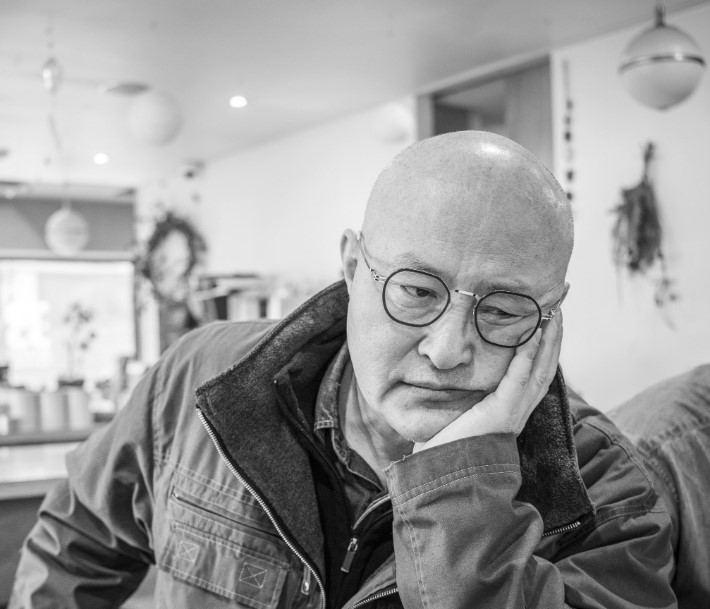
Since the early 1990s, when the era of digital photography began to blossom, Korean photography has undergone rapid changes throughout the 2000s in its modes of production, editing, distribution, creation, and exhibition. At a time when theoretical approaches and academic discourse on contemporary Korean photography were still insufficient, Kang Hong-Goo’s photographic experiments provided crucial points of departure for reflecting on the characteristics of the photographic medium and the new possibilities of digital photography.

His attempt to dismantle the formal aesthetics long upheld by the photographic field—namely the dichotomies of “pure/non-pure” or “straight/made”—and to expand photography as image, along with his imagination and practice rooted in subculture (popular culture, or what Kang himself has defined as the position of a B-grade artist), opened up a new phase of realistic (documentary) photography that approaches truth.

Even within a rapidly changing media environment, Kang Hong-Goo demonstrated vitality in developing new photographic languages and creative compositions, generating a joyful kairos. As a first-generation digital photographer, he symbolically and persuasively presents the realities of Korean society through diverse photographic techniques and transformations. His so-called Kang Hong-Goo–style allegorical montages—connecting and reconstructing frames divided through Photoshop, applying or letting paint drip onto photographs, drawing objects that were not photographed, or producing images whose status as photography or painting (taken or drawn) cannot be clearly determined—have been continuously produced, creating reverberations within the photographic field.

Kang Hong-Goo’s artistic practice can be broadly divided into five periods by year. From 1992, when he first purchased a computer, to 1998, before digital cameras came into widespread use, he conducted a wide range of media experiments. During this period, he primarily employed photomontage and photocollage techniques, producing images by scanning and compositing photographs from magazines or commercial postcards, or by photographing with a film camera, printing the images, and reconstructing them through a scanner. He also used a “hand-held scanner” to secure digital data.Major works from this period include Self-Portrait (1992), Who Am I (1998), and Fugitive (1996), which pursue the identity of the artist/individual through constant self-surveillance and doubt regarding one’s position as both an artistic creator and an everyday person.

In Happy Our Home (1997), Kang examines the realities of the family by portraying unhappiness and exposing contradictions within the family system and domestic life. The series War Phobia (1998) vividly reveals the artist’s latent fear—an anxiety naturally internalized after the Korean War. These early works were brought together in his second solo exhibition, 《Position · Snob · Fake》(Kumho Museum of Art, 1999). In this exhibition, Kang Hong-Goo formally declared himself a “B-grade artist,” drawing public attention.

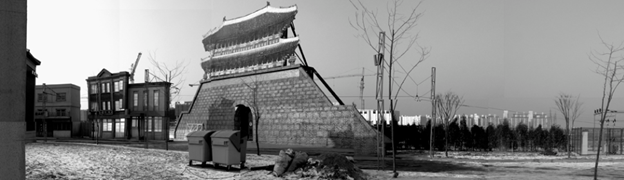
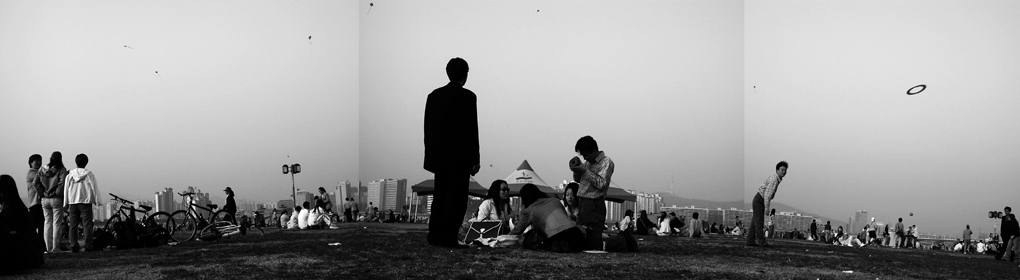
The second period begins after 1998, when Kang started using digital cameras and produced his distinctive digital landscape series. Formally, this period is divided into black-and-white panoramas and color panoramas. The black-and-white panoramic series includes Greenbelt(1999–2000), Hangang Public Park(2001), Sea(2002), Busan(2002), Drama Set(2002), and Fish with Landscape(2002). These works depict ordinary landscapes encountered during Kang’s walks, yet they unfold uncanny scenes of subtle dissonance and distortion characteristic of our time.

The photographs of the greenbelt—development-restricted zones on the outskirts of Seoul—are irony itself. As Kang himself has noted, the greenbelt in his photographs is by no means “green.” Under the fervor of development, traces of disorder, pollution, decay, and deterioration are hidden within the black-and-white images. 

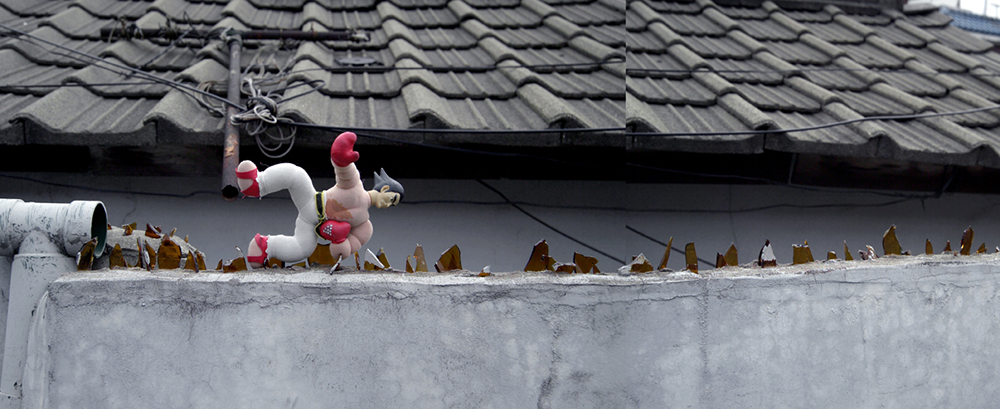
Hangang Public ParkSea, and Busan share a certain affinity in both content and form, resembling scenes from a Hong Sang-soo–style film that seem to unfold in real life. Sudden, unexpected, and bizarre elements appear openly and without disguise. In Fish with Landscape, an unfamiliar, alien-like other roams freely as if it were in its natural habitat. The sudden appearance of a fish transforms the photograph into a dream, a film, or a fantasy. This series subsequently leads to object-based photographic works such as Mickey’s House and Trainee.

Drama Set reflects on the nature of floating images—images that are loosely set up, manipulated, and endlessly replicated in order to be seen—by using actual filming sets. If an image is something that appears real despite lacking substance, Drama Set is a meticulously staged work that reveals the ephemerality of images.


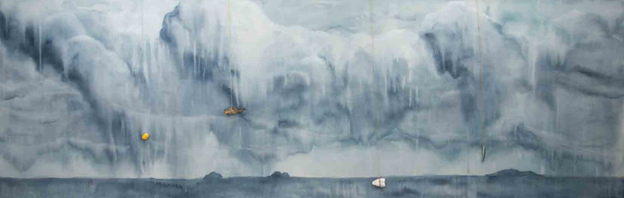
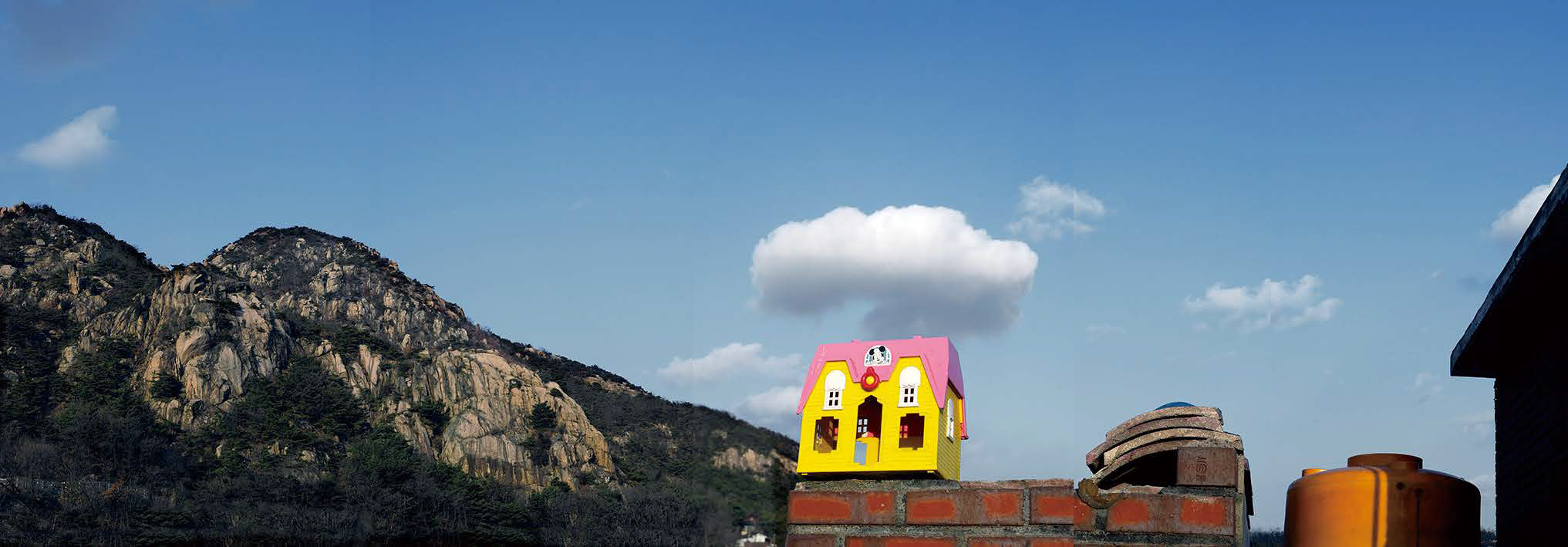
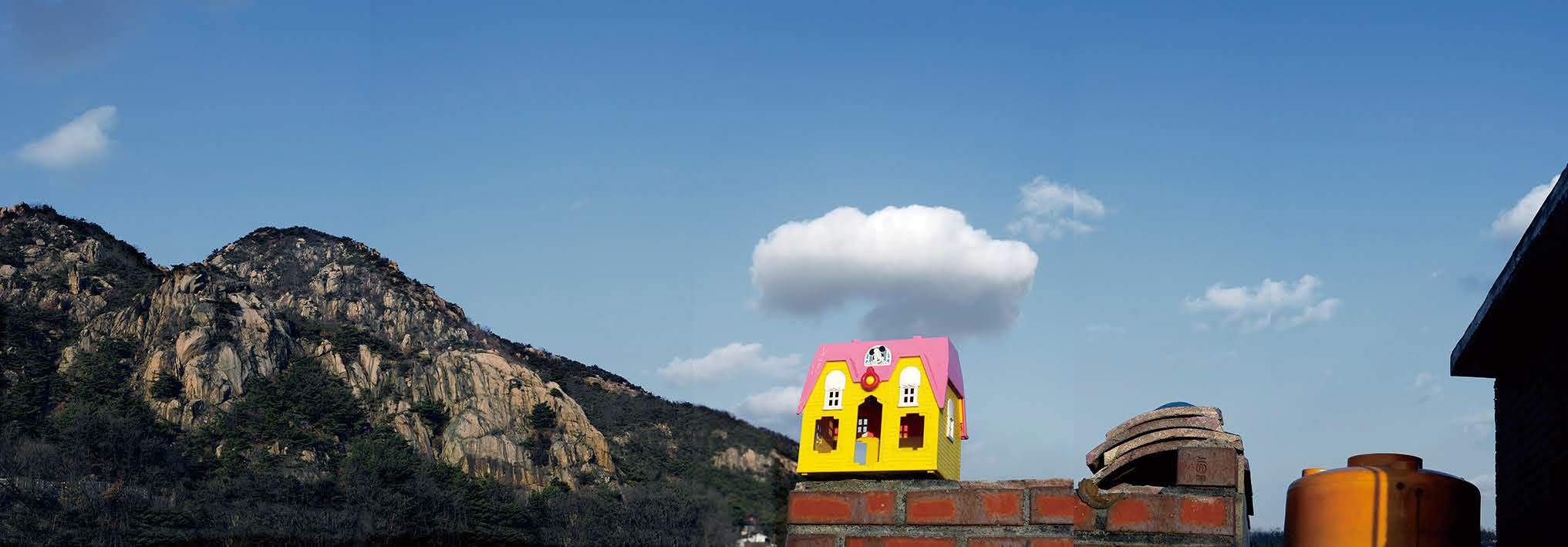
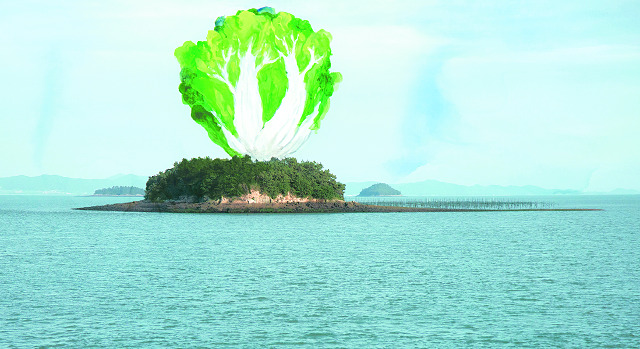
Kang Hong-Goo, Mickey House-Clouds, 2005-2006, 디지털 프린트, 100 × 240 cm © Kang Hong-Goo

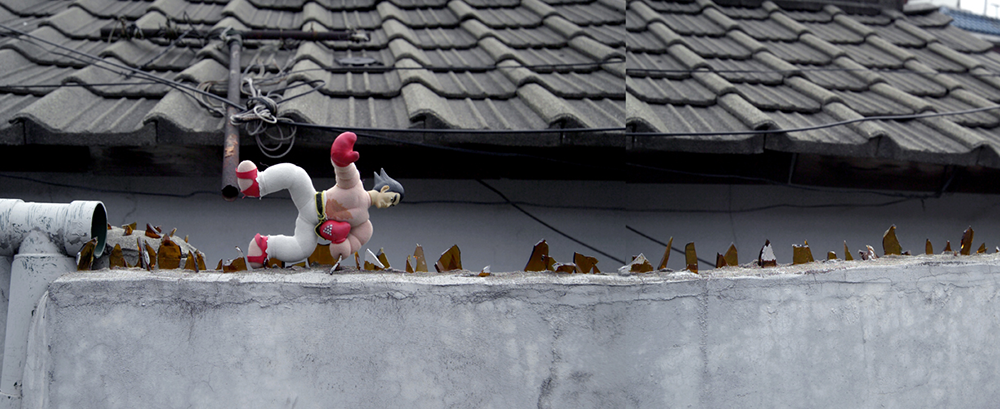
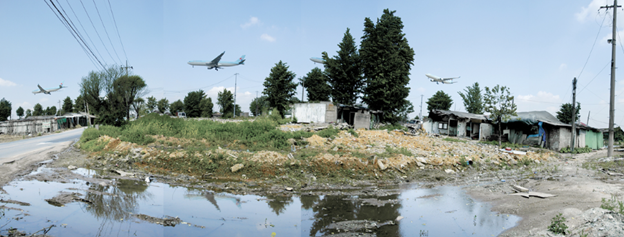
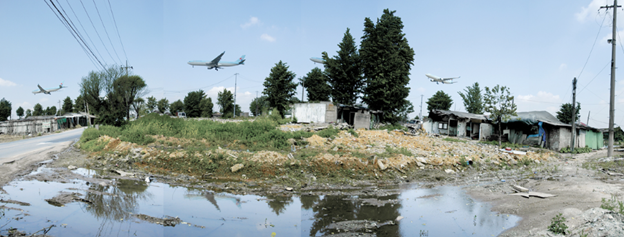
The third period follows the black-and-white panoramas and marks the production of color panoramic series. Works such as Landscape of Osoe-ri (2004), which depicts the uncanny scenery of Osoe-ri, a village located right next to Gimpo Airport; Trainee (2005–2006), which tells the story of a warrior—a small gesture of resistance—who stands in for both the artist’s alter ego wandering redevelopment zones and those who endure war-like daily lives behind the curtain of compressed growth; and Mickey’s House (2005–2006), which unfolds the hollow dream of a “happy our (my) home” desired by children who left without their toy houses and residents who were forced to leave their village, were released in succession.

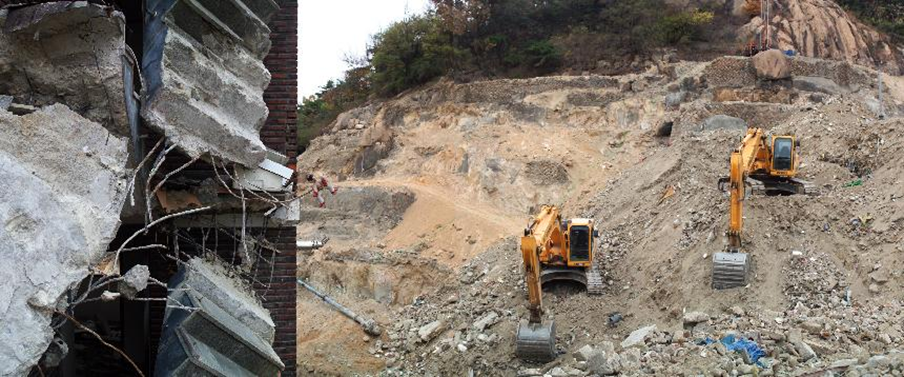
The representative work Vanish Away—Eunpyeong New Town (2009) is an ongoing project that began in the summer of 2001, the year the artist moved to Bulgwang-dong, and continues through the present in 2024. “At the time I took these photographs, my intention was simply to record them first, or to trace the points of contact and transformation between rural and urban areas. (…) But in the end, these photographs inevitably took on the character of accidental, unintended documentary records of the new town.”¹

Kang Hong-Goo’s photographic practice is largely grounded in indexicality based on reality, and although this was not his original intention, record-keeping forms its foundation. This may explain why his urban series—from Eunpyeong New Town to Cheongju and Busan—gain increasing photographic power over time. Works with particularly strong documentary qualities include House of Human Beings—Proxemics Busan (2013) and Cheongju—City of Seven Villages (2016). These series, infused with Kang’s profound gaze upon aging urban spaces where rapid change and silent stagnation coexist, prompt renewed reflection on the notions of “house” and “city” in our time.

While Kang’s early works focused on creating photographic images and conveying messages, the 2000s saw him concentrate on the characteristics of the photographic medium while continuously addressing phenomena occurring in urban redevelopment processes. Since 2010, his work has entered a period of “photo-painting,” moving tensely between photography and fine art.

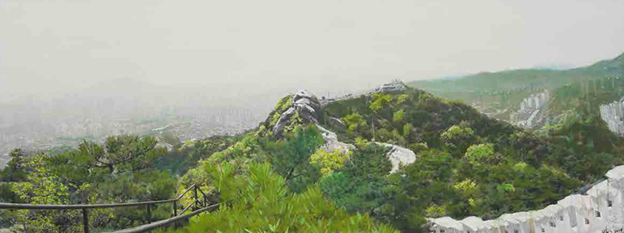
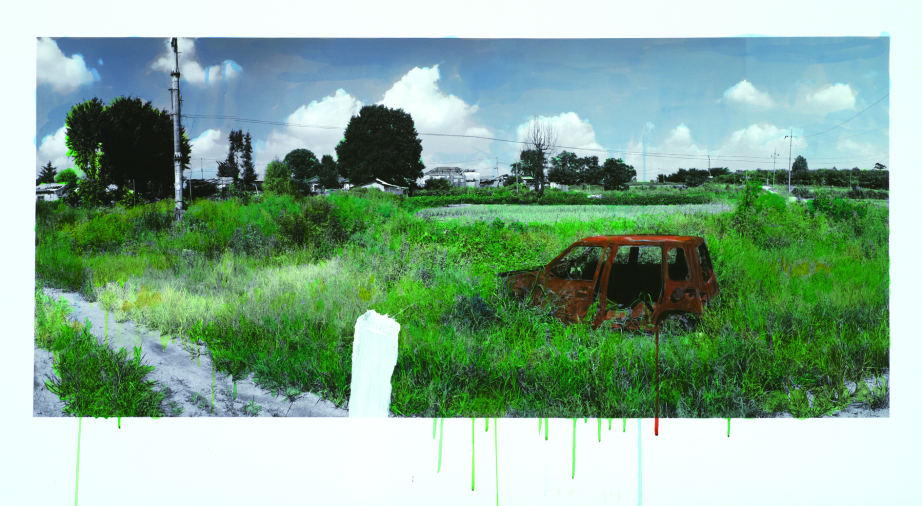
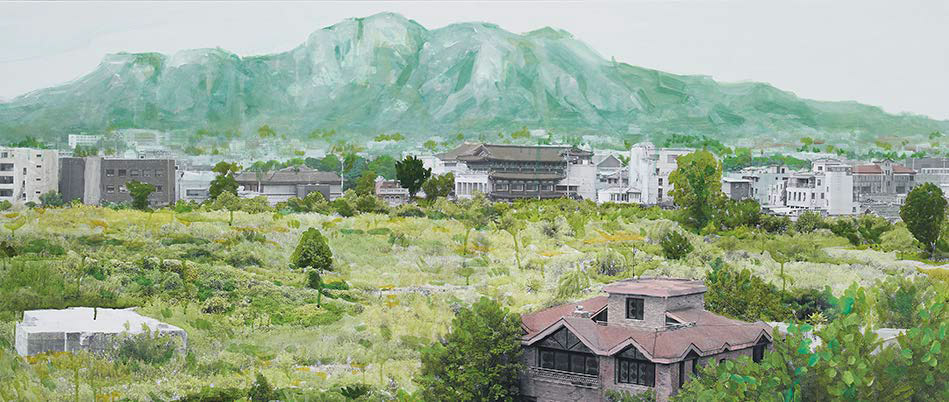
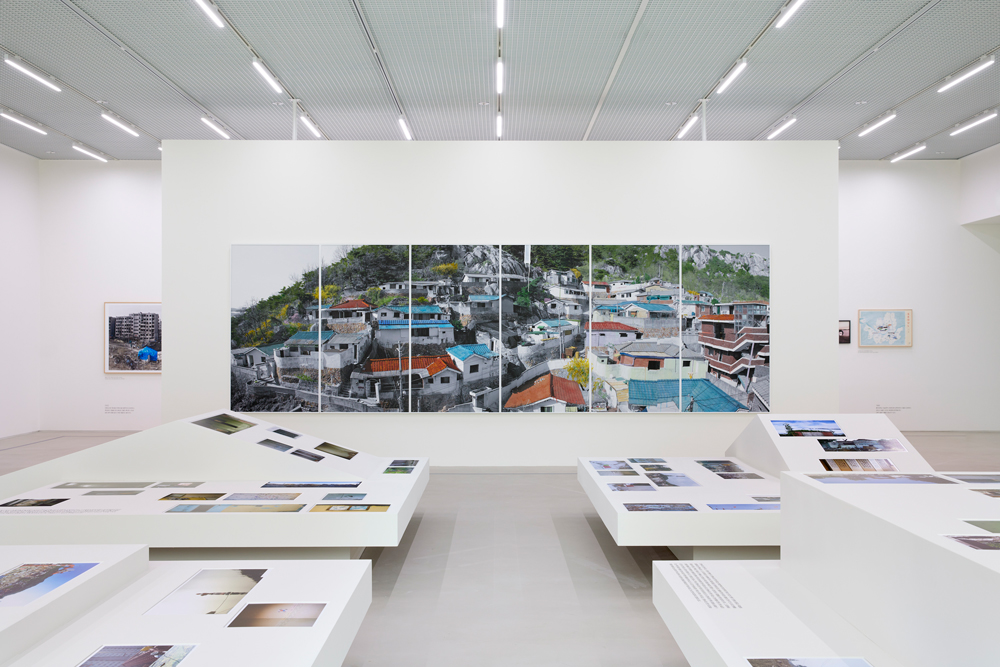
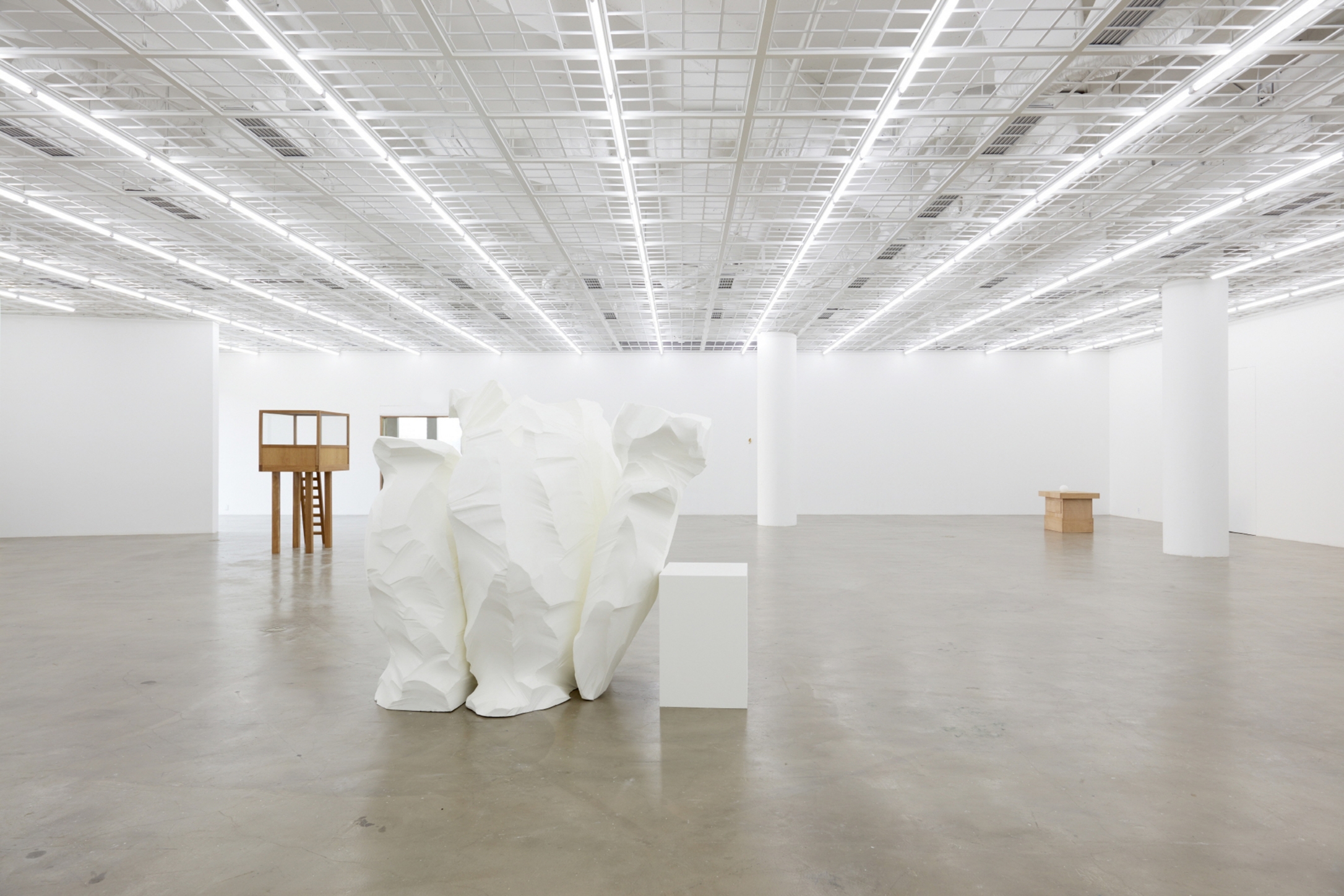
Works from this period include The House (2010), Study of Green (2012), Seoul Mountain Scenery (2013), Underprint (2016), Mist and Frost (2017), Study of Green 2 (2020), and the ongoing series The Sea of Sinan (2005–). During this phase, photography, painting, and object installation become interwoven. By printing photographs and applying acrylic paint, Kang combines photography’s documentary nature with his imagination, encouraging viewers to look beyond the paint toward the photographic world (reality) beneath.

The Study of Green series, composed of countless layered gradations of green, questions the implications of green itself. “In contemporary society, ‘green’ is a subject of high research value. As the symbiotic relationship among green, capital, and power becomes more solidified, Kang Hong-Goo’s ‘Study of Green’ will grow ever more relentless. It has become a ‘green’ painting that seeks to reveal reality amid the powerlessness and impossibility of photographic representation.”²


Kang Hong-Goo, Study of Green–Seoul–Vacant Lot–Songhyeon-dong 1, 2019, acrylic on print, 90 × 200 cm © Kang Hong-Goo

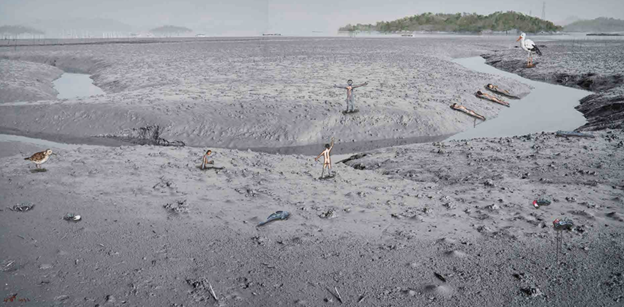
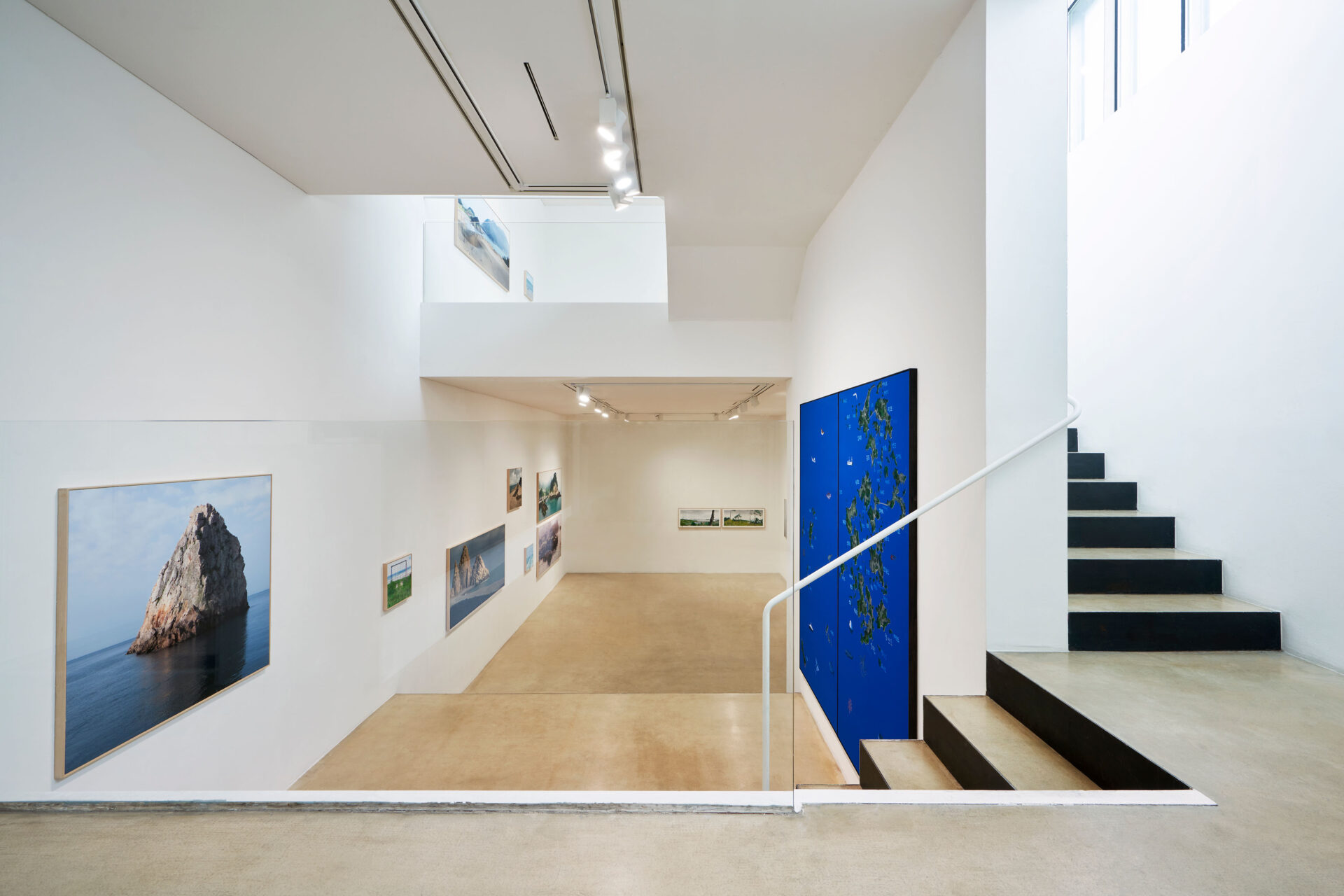
Finally, there is the ongoing series The Sea of Sinan, which has continued from 2005 to the present. Kang Hong-Goo presented this series in three exhibitions across 2022 and 2023. In the third exhibition, 《Uninhabited Island and Inhabited Island—The Sea of Sinan II》 (Savina Museum of Contemporary Art, 2023), he densely and abundantly captures a fully matured photographic realm.

The sea surrounding the islands of Sinan, along with wind, tidal flats, waves, people, animals, and plants, comes vividly alive in Kang’s photographs together with the artist himself. The landscapes of the place where he was born and raised are directly translated into his work, and the exhibition generates deep empathy through his penetrating insight into photographic language and subject matter, combined with a warm elegiac tone.

The innocence of his childhood merges with photographic imagination to open up the present world, while the islands he revisits as an adult are newly awakened through the artist’s vision. The meeting of two temporalities is also the shared fate of the islands and the artist—much like the difference between “uninhabited island” and “inhabited island,” distinguished by only a single letter, both must continue to exist alongside disappearance.

Up to this point, we have traced Kang Hong-Goo’s thirty-year artistic practice from “Eouido,” where he was born, to “Eunpyeong New Town,” which serves as both the center of his work and his current place of residence, examining it by period and theme. Wearing slippers and carrying a digital camera, Kang photographs redevelopment sites and scenes of change in neighborhoods both near and far. This is the best that Kang Hong-Goo, the walker, can do in the face of indiscriminate development.

From “Osoe-ri” to “Eunpyeong New Town,” his deeply resonant landscape series constitutes an uncompromising resistance to universalized development practices that homogenize and erase cultural differences. Using photography—a medium born from the blessings of bourgeois modernity—Kang photographs everything that can be photographed, then weaves tens of thousands of images to disrupt the ecosystem of images. The limitations of photography, which merely presents smooth surfaces of a world where nature and capital are naturally entangled, drift within Kang’s photo-image world through crooked brushstrokes and ambiguous, unfinished-looking photo-paintings.³

Ultimately, one may wonder whether Kang Hong-Goo seeks to restore a healthy network connecting people, city, and nature through the lightness of photographic images. From Eouido to Eunpyeong New Town, the world the artist has pursued may well be a wish for the present moment to be renewed in health—much like the tidal flats, the rich ecological repository of his childhood.
 
¹ Kang Hong-Goo, artist’s note, Memory of Eunpyeong New Town, exhibition catalogue, Eunpyeong History & Hanok Museum, 2021, p.203.
² Choi Yeonha, Seoul Art Guide, June 2020.
³ Choi Yeonha, The Power of Korean Photography – Essays by Choi Yeonha, Monthly Art Publishing, 2020, pp.19–20.

References