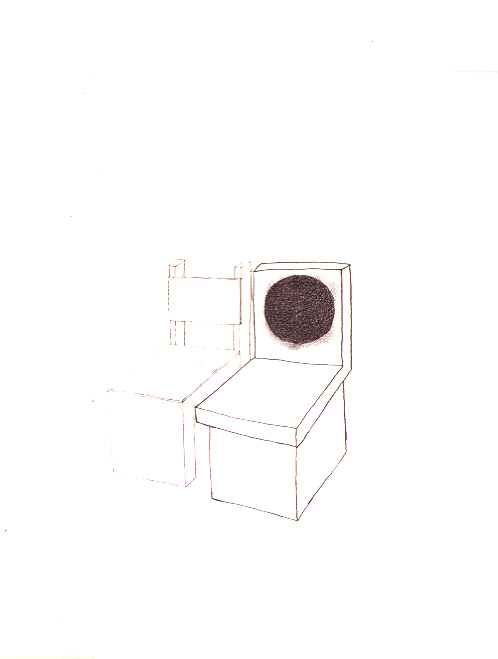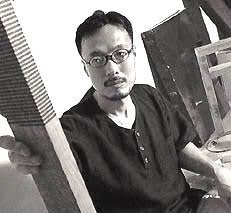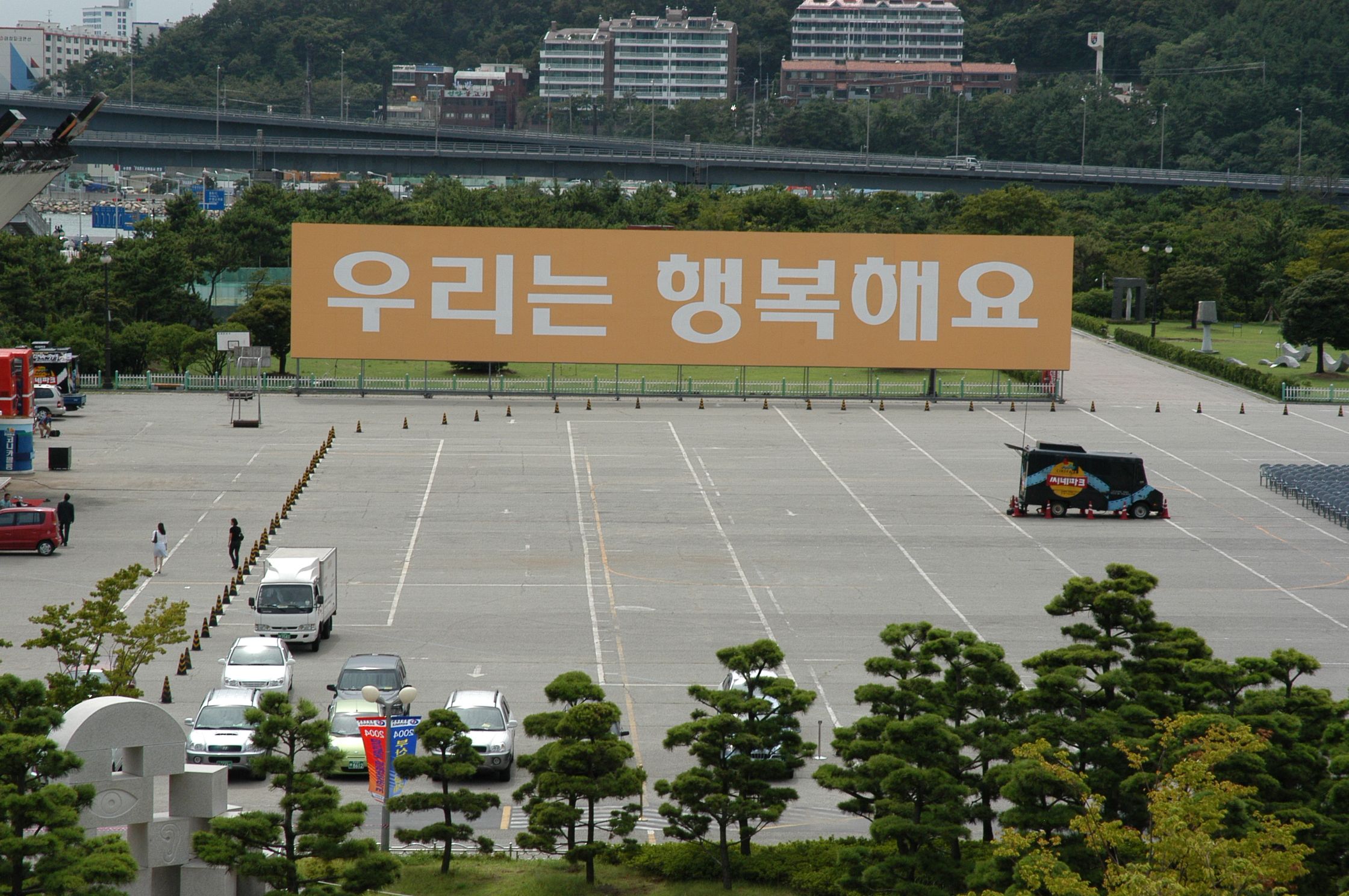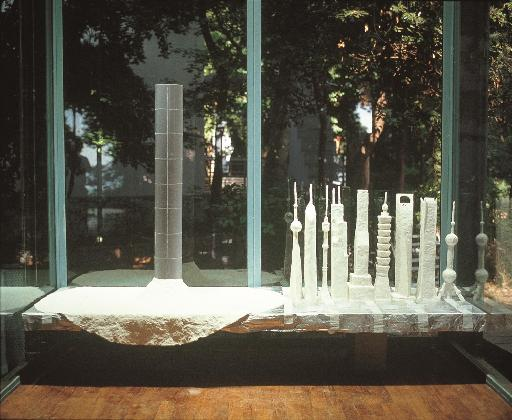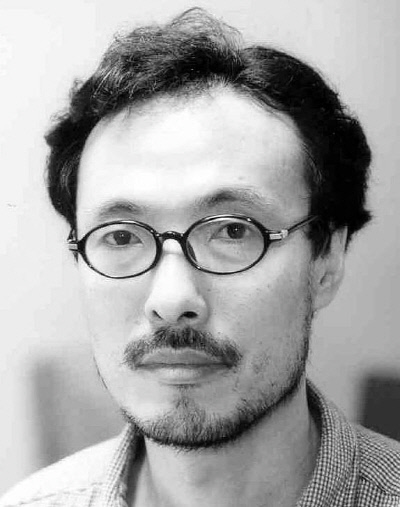
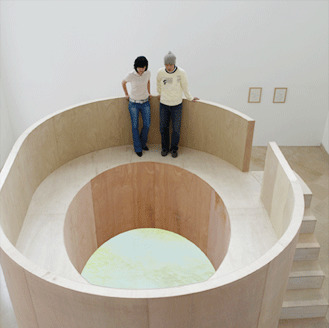
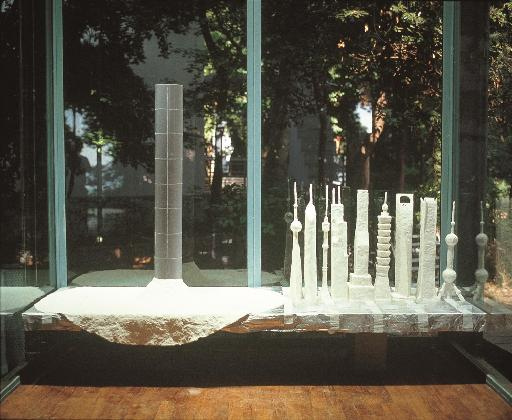
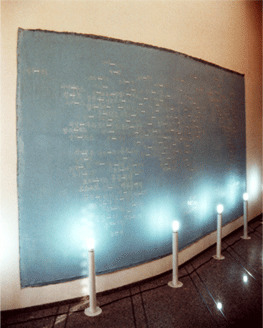
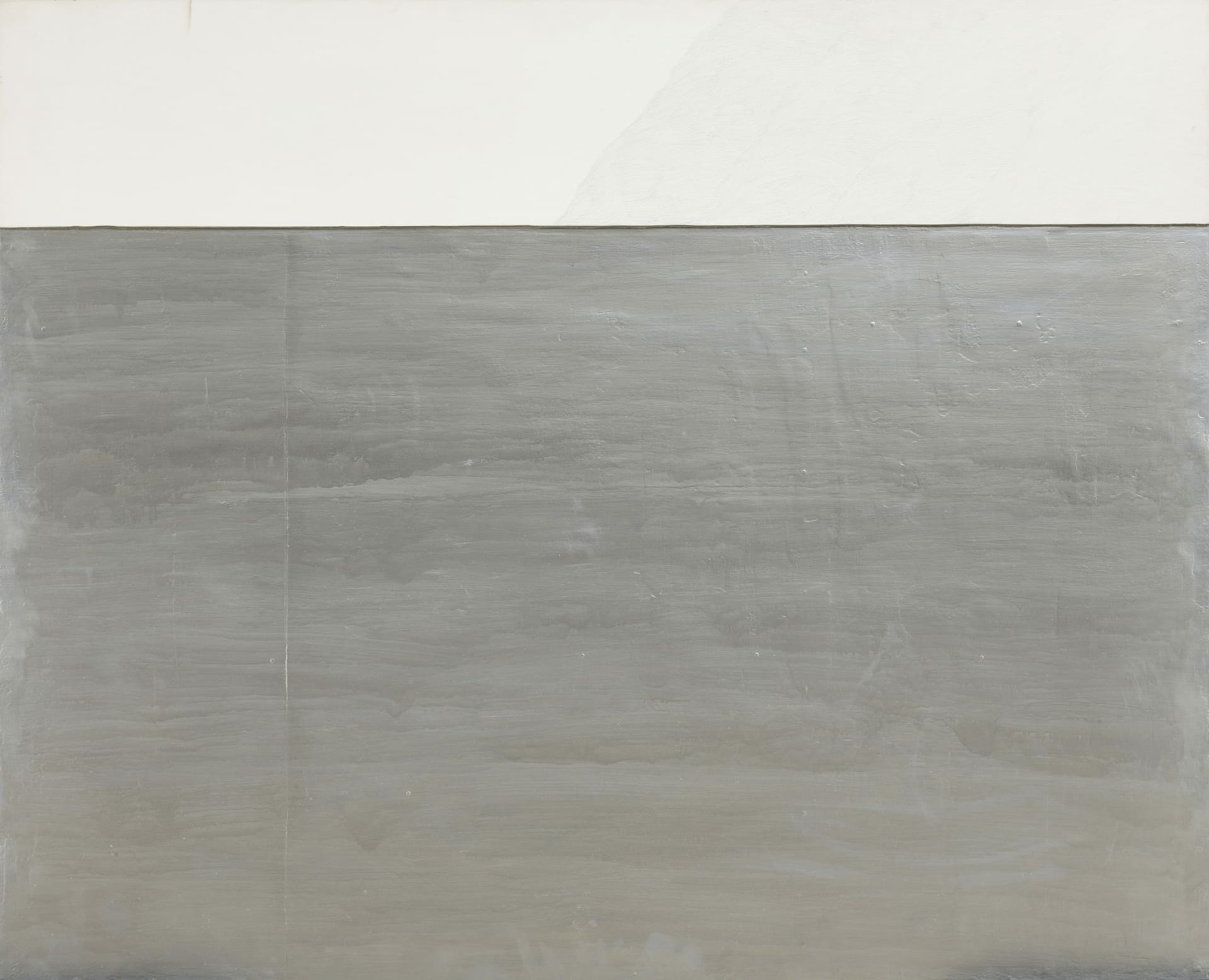
The mid-1990s marked a moment when subtle signs emerged indicating that the trajectory of Korean contemporary art itself was shifting onto a path different from before. Artists such as Bahc Yiso, Kim Beom, and Song Hyunsook, whom I encountered in 1995, were positioned at the very core of this transition. Subsequently, encountering the markedly conceptual practices of younger artists—including Hong Myungseop, Kim Yongmin, Lee Okryeon, Ahn Kyuchul, as well as Jung Kwangho, Bae Junseong, Han Soo-jung, Heo Guyoung, Kim Dongyu, and Hwang Hyesun—made it clear that this was a form of art distinct from the habitual, interior-oriented, or excessively solemn art that had previously prevailed.

What emerged was a conception of art that was qualitatively different from before, sharing a tendency to exclude—or treat as secondary—traditional artistic conventions such as formal composition, excessive reverence for materials, the display of artisanal skill, and an obsessive fixation on individual touch. In this view, conventional painting amounted to little more than illustrations emphasizing material and process, while sculpture remained bound to large-scale, materially hybrid craft objects. Consequently, a shared diagnosis took hold: that Western modernist art, when introduced into Korea, was ultimately being selectively imported and absorbed into the sensibilities and traditions of craft, thereby shaping a new configuration of Korean contemporary art history.

Embedded within this perspective was a strong critical stance against the dominant sensorial absolutism and visual hedonism of Korean art—a fashion of art production that generated works devoid of thinking processes. Thus, it became crucial that these practices began not from formal elements but from the statements the artists sought to articulate. In this sense, they represented a serious reflection on and critique of existing Korean art. It would not be an exaggeration to say that the efforts to reassess both the art of the 1970s–80s and its counter-formations, while properly engaging Western modernism and postmodernism, originated with the artists mentioned above. At the center of this movement, Bahc Yiso undeniably stands out.
 
It is particularly significant that when Bahc Yiso, disillusioned with Korean art at the time, went to New York in search of the ‘avant-garde at its source,’ the problem he encountered was above all one of identity—as a Korean artist—a matter that was at once deeply ‘conceptual’ and profoundly ‘modern.’ He once confessed that during his time in New York he became something of a master on the issue of identity, suggesting both the depth of his struggle and the fact that it would become a lifelong thematic concern. What mattered to him, therefore, was the relationship of importation and translation—standing between Korea and the West, involuntarily and deliberately absorbing cultures grounded in different origins. Underlying this was a skepticism toward ghettoized traditions and toward the very possibility of genuine cultural exchange.


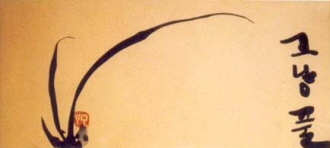
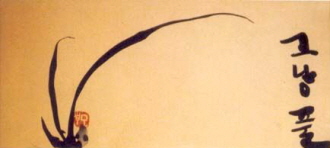
Bahc Yiso, Simply Weeds, 1987, India Ink on paper, 25 x 85 cm © Bahc Yiso

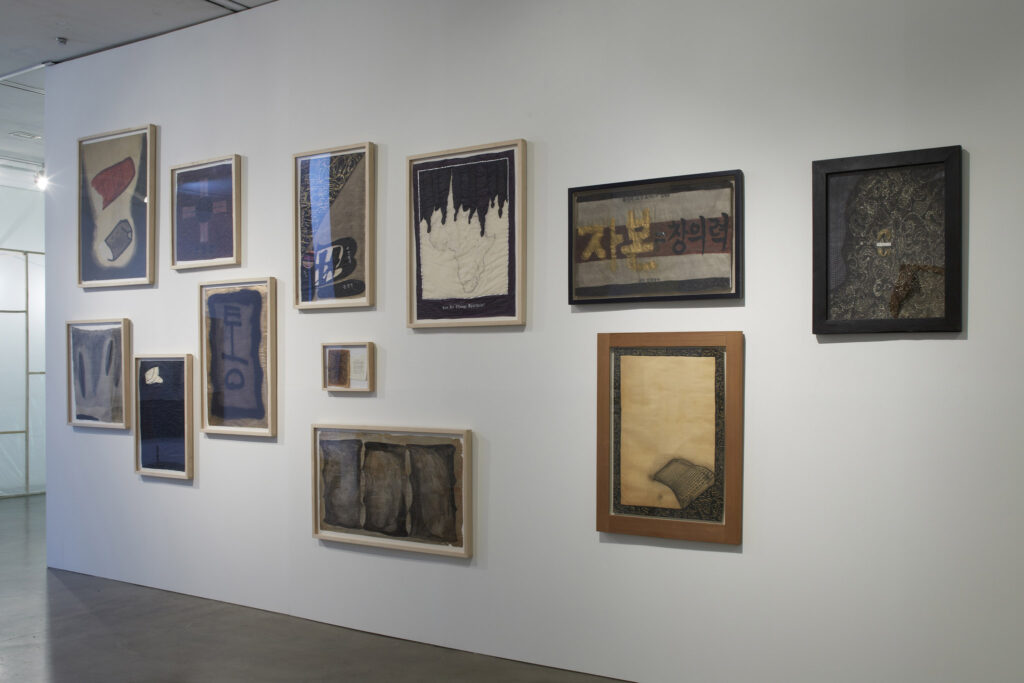
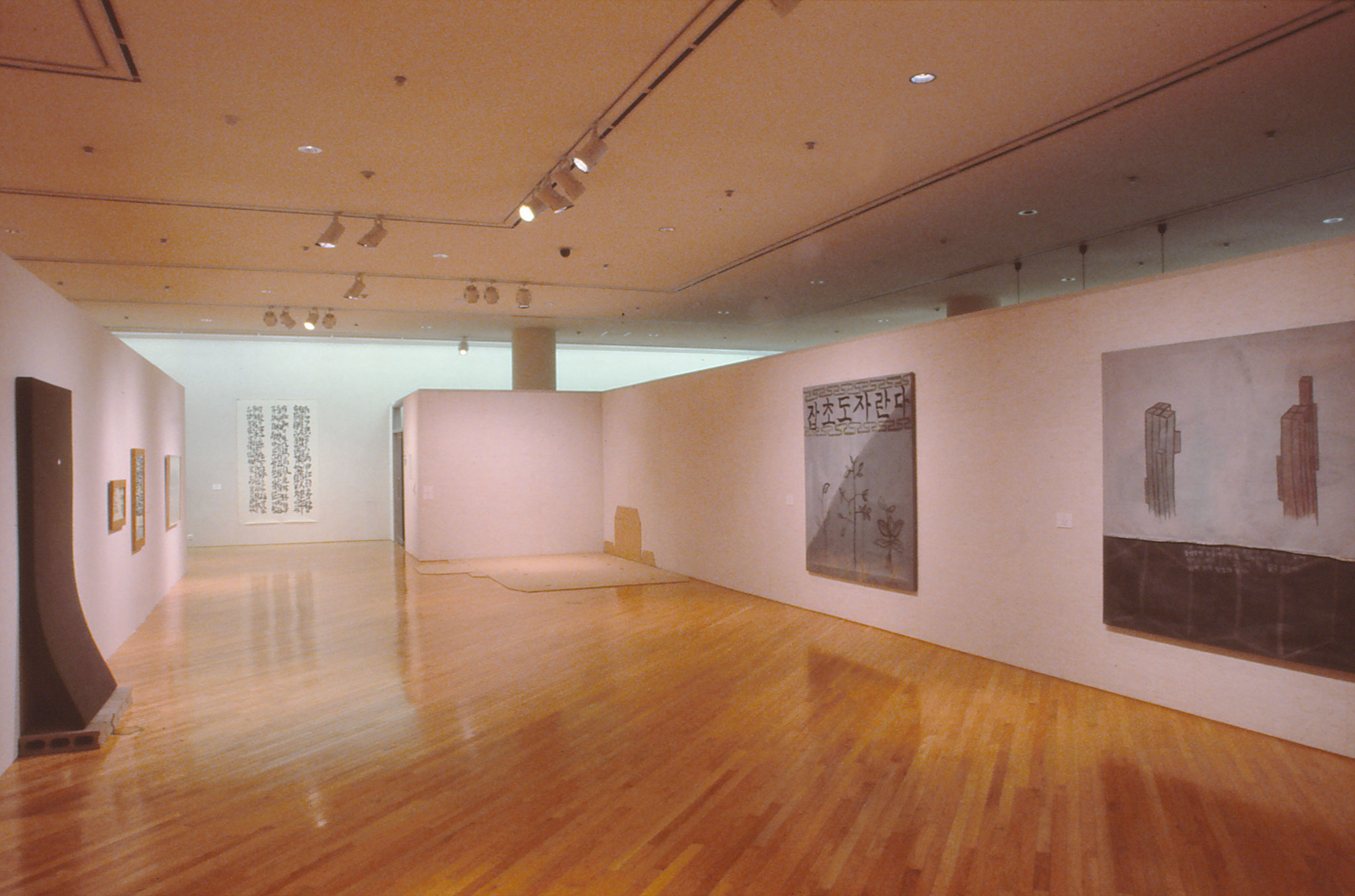
Bahc Yiso’s Simply Weeds (1987) is an intensely cynical work. It gestures toward mocking and violating all practices that merely imitate and replicate the traditional literati motifs of the Four Gracious Plants. In other words, the orchids painted today have become a taxidermied tradition. This deliberately clumsy, chaotic ink drawing on yellowed paper parodies the humanistic imagination that assigns ‘names’ and symbolic meanings to nature and objects. It constitutes a critical commentary on excessive self-consciousness toward tradition and on the side effects of reverse Orientalism—the exaggeration of regional or traditional elements for international attention.

In particular, the work reveals the artist’s struggle with identity within the context of artistic tradition. Tradition weighs on him only as a dark, abstract burden. The substance of tradition he can connect to has evaporated into abstraction, leaving only a shell: the shell of calligraphic tradition as ‘foolish calligraphy,’ and the unknowable weight and residue of ink. This is not tradition—it is a false tradition, a non-tradition. It is merely weeds. The ink lines momentarily resemble an orchid painting symbolizing Confucian virtue, but the artist scrawls the words ‘just weeds’ awkwardly over the image. A cold joke.
 
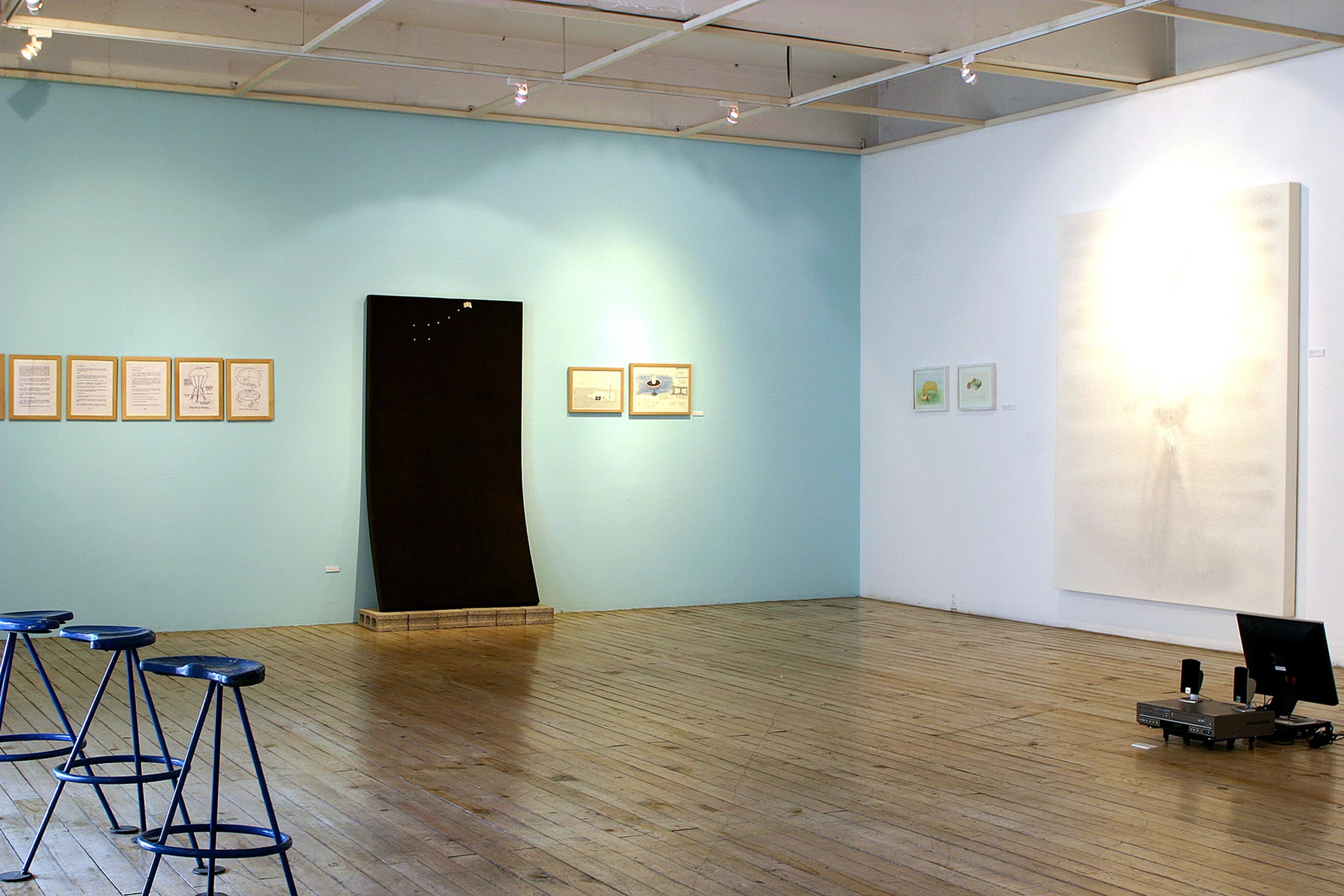
Above all, his work reveals a ‘conceptual’ orientation combined with the ‘diagrammatic’ precision intrinsic to modernism, demonstrating a ‘functionalist exactitude’ and a highly cognitive, informational quality. Yet unlike conceptual art understood as a linguistic reduction of art, his conceptual practice approaches art as something ‘with thought embedded in it.’ His works are refined products of aesthetic and intellectual games. He begins from conceptual blueprints formed by language and thought, then clothes these ideas in material and form.

His work inhabits the intersection’where thought departs from an object, and where the conventional properties of materials meet the artist’s associations, interpretations, or opinions.’ In this sense, he was a fundamentally principled modernist. Recalling modernism as “a mental attitude that explores the possibility and conditions of autonomous subjectivity through critical reflection on historical reality,” and as “an attitude that constantly redefines its relationship to tradition,” the roots of his concerns are unmistakably modernist.
 
Accordingly, the question ‘what kind of person is a professional artist?’—posed prior to making any work—became central to his practice. He is a unique artist walking a tightrope between humanism and post-humanism, extracting meaning effects through cynicism, nihilism, and distance. His work is grounded in a skeptical critique of the artist’s identity itself; even the figure of the painter appears to him as something nearly impossible. Producing work became a way of constructing his own existential meaning. That his fundamental question was not “what is painting?” but “who is the artist?” is crucial. What mattered to him was not form, but the mental state art strives to achieve—the human spirit rather than the artwork as commodity.
 
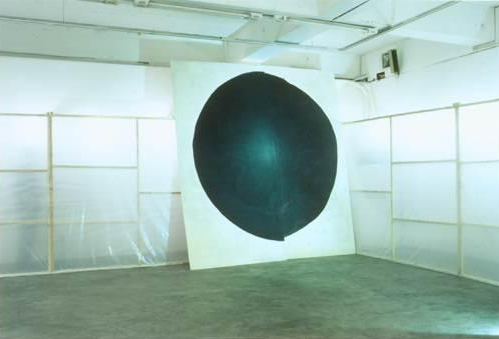
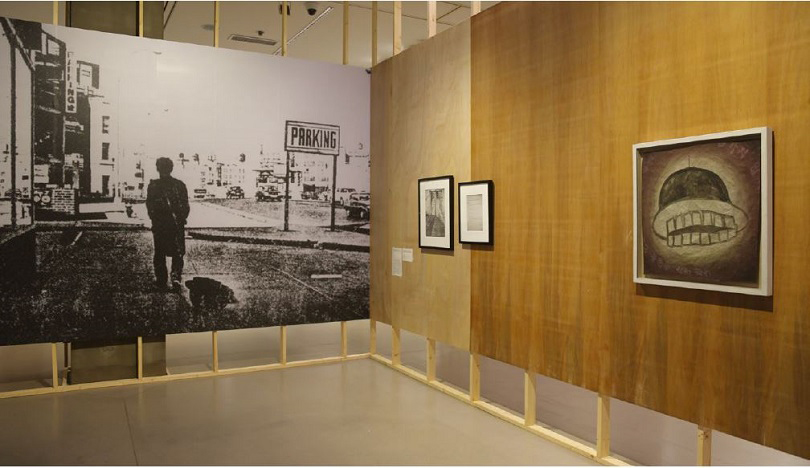
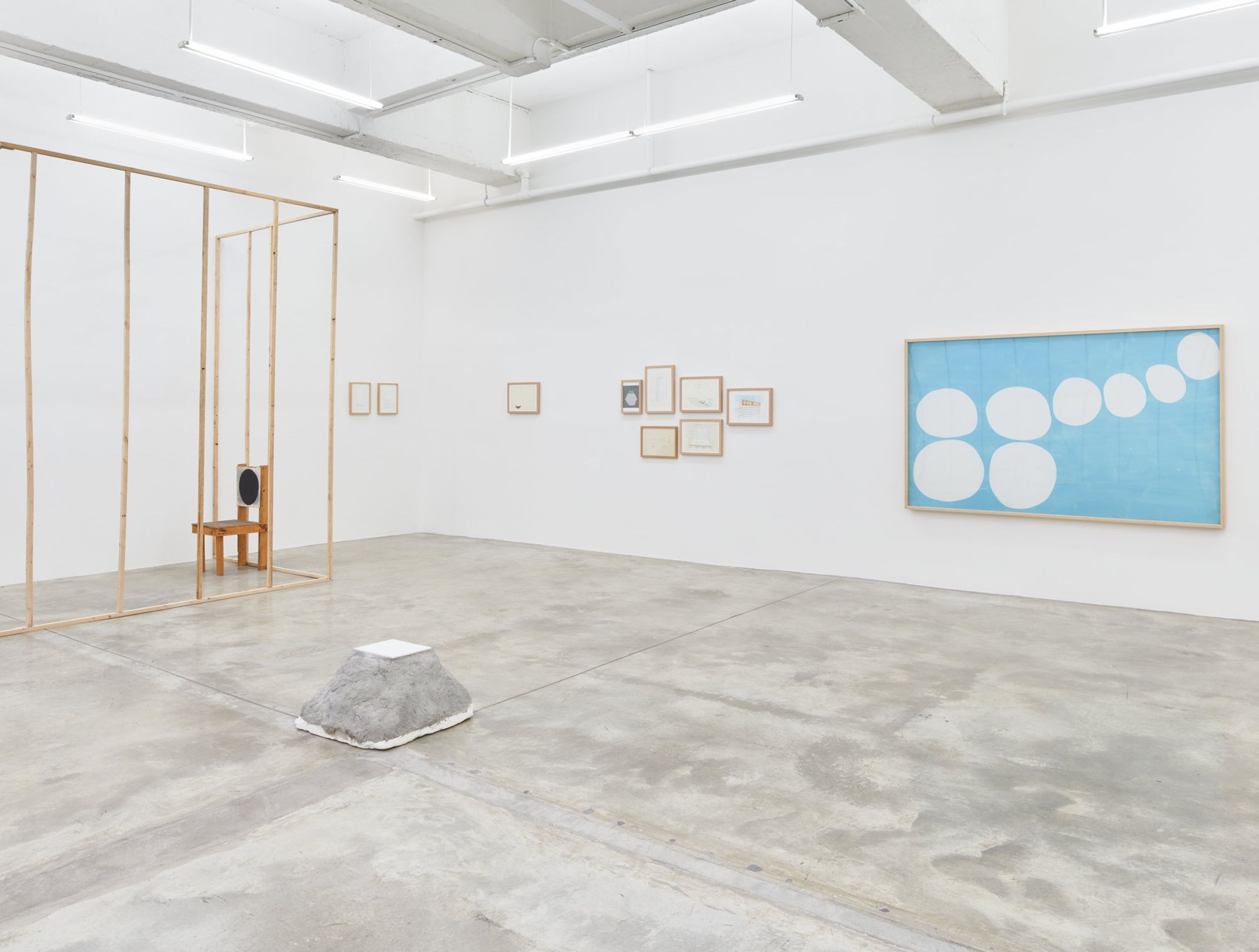
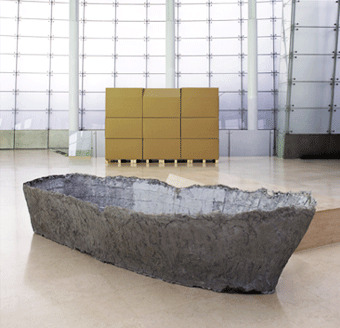
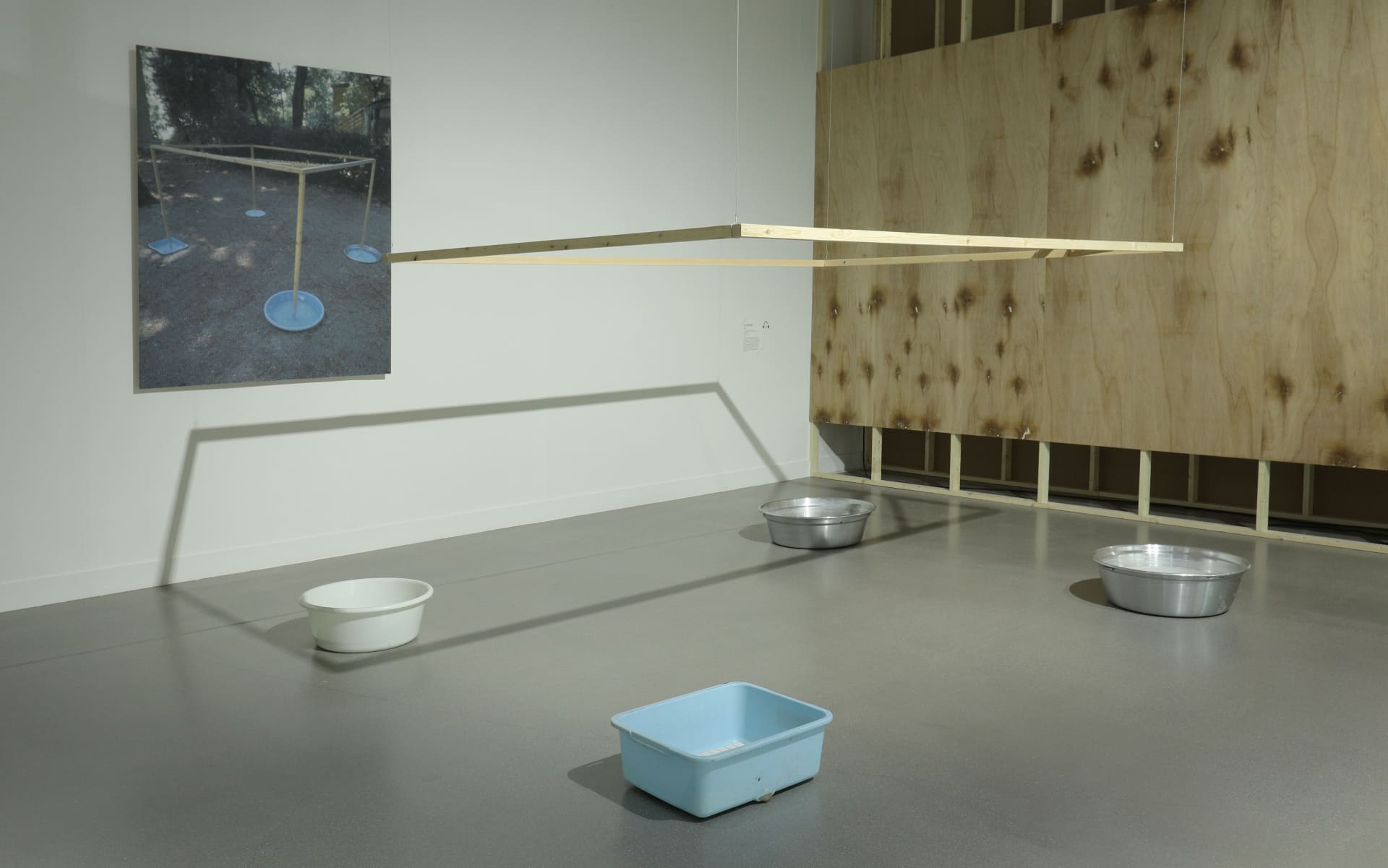
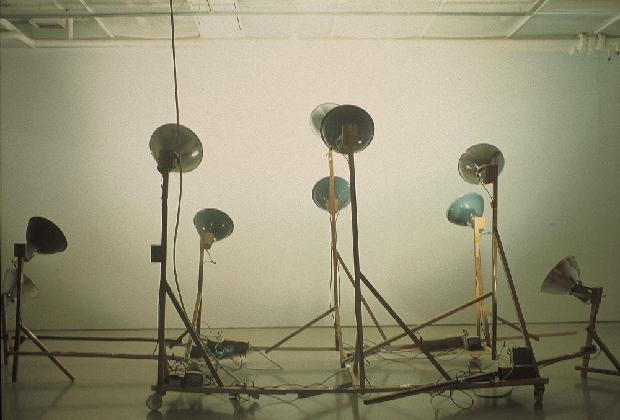
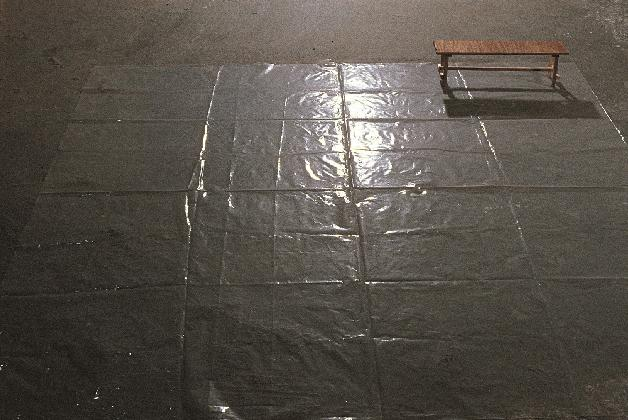
This perspective also informs his choice of materials: lumber, vinyl, concrete, rebar, linoleum, Styrofoam, boxes, sponges, glass bottles—discarded materials from construction sites. Cheap, crude, and rarely chosen for art, these materials oppose the conventions binding art to permanence, monumentality, and capital. They embody the belief that artworks, like all things, should weather and disappear over time. These impoverished materials acquire metaphorical meaning as responses to Korea’s perpetually provisional, under-construction cultural condition, posing the question: where are we going?
 
For Bahc, the desire to ‘produce something’—whether in high art or economic development—is ultimately wasteful and futile. He deeply doubts all claims of civilizational superiority. His arrival at “impermanence” seems an extension of relentless self-reflection against cultural dominance.
 
Statements such as “a self-therapeutic escape from the emptiness of life,” “all meaningful productions await the moment they become waste,” or “after everything ends, our lives may amount to only a moment,” reveal a profound nihilism and Buddhist sensibility underpinning his thought.
 
“A good artwork is like a Buddhist monk’s enlightenment… maintaining and renewing it is harder than achieving it.” (artist’s note)
 
Like Zen meditation—quiet, sustained contemplation—Bahc’s notebooks record an unbroken process of inquiry from the moment of making to the brink of death. His worldview rejects fixed conventions and seeks renewed perception, akin to Buddhist awakening. His modernist nihilism is the cold passion of the solitary seeker discovering new values in objects. In this sense, Bahc Yiso lived like a Zen monk, asking how to live and work within a void, pursuing discipline and restraint.
 
Monastic renunciation, neither affirmation nor negation, maintains distance from life. Buddha did not seek to create paradise. Perhaps art, too, resides somewhere in between—detached yet grounded. Perhaps Bahc Yiso’s work did as well.

References