The Youngest Exhibition Today
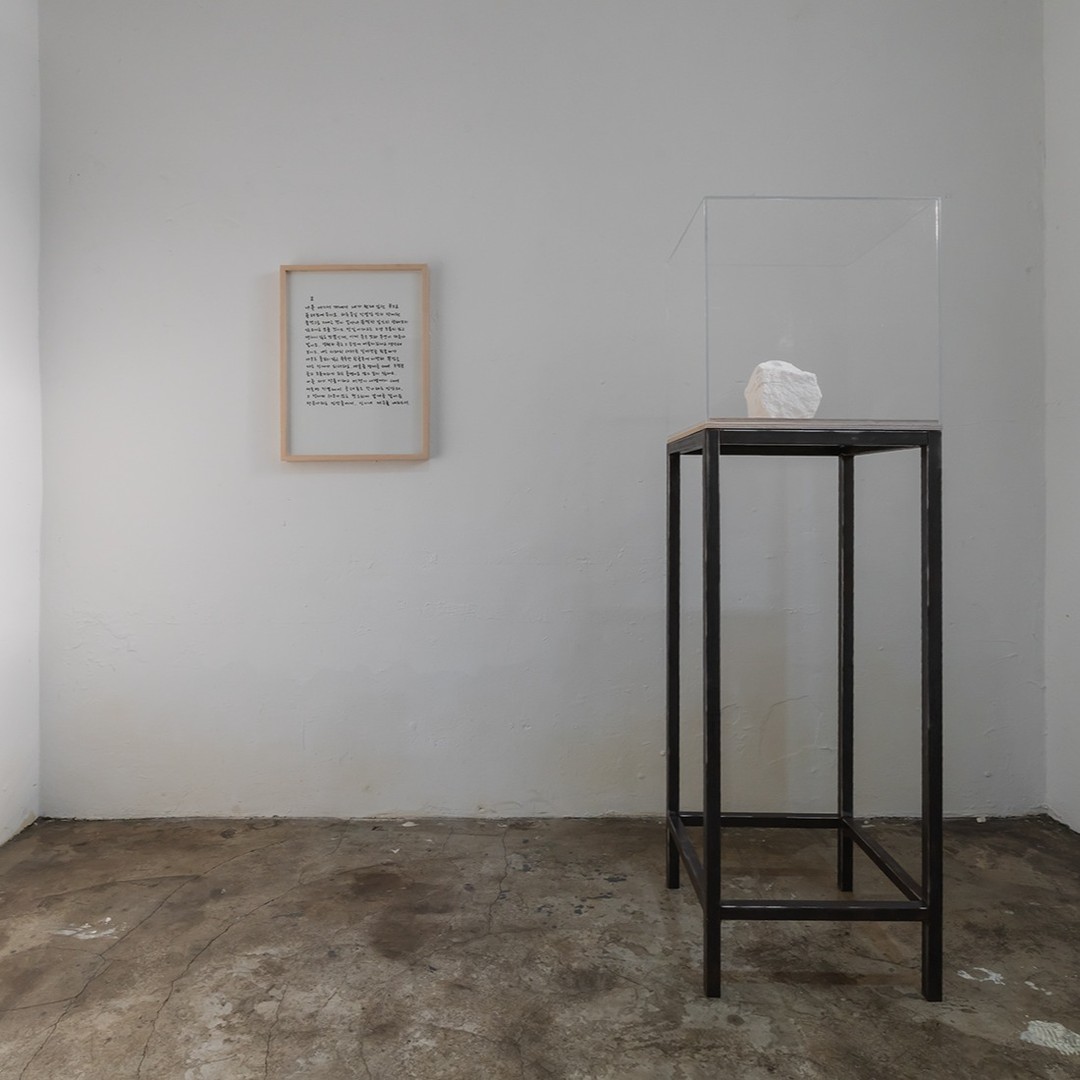
Snow will, “inevitably,” melt and disappear. Precisely for this reason,
the artist declares—in a notice affixed beneath the pedestal—that he will not
exhibit a marble sculpture representing snow. This notice itself becomes the
work. By the nature of mirrors, whatever appears on their surface is fleeting
and singular. Yet the artist constructs a mirror that rotates continuously by
motor, staging a counter-reflexive situation in which not only the reflected
subject but the artwork itself enters a state of perpetual “idling.”
On a
single rotating platform, everything is bound to turn together in a shared
destiny: here, the artist sets two identical chairs in motion, one rotating
clockwise, the other counterclockwise, repeating their opposing movements.
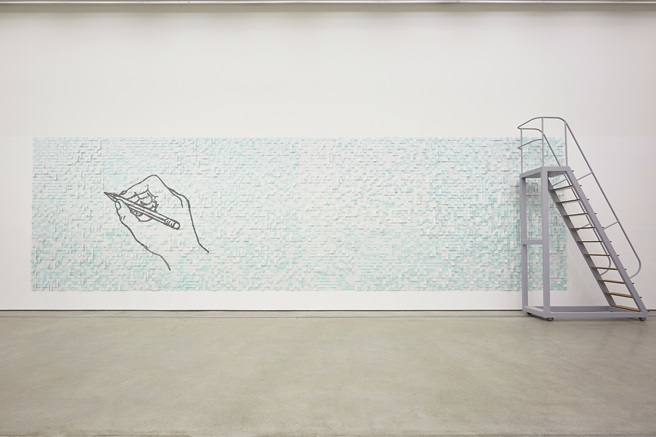
Sunlight leaking through a small hole in the wall into a darkened room shifts
and vanishes moment by moment. The artist, however, meticulously traces each
fleeting imprint of light, circling it to leave an artificial record on the
wall.
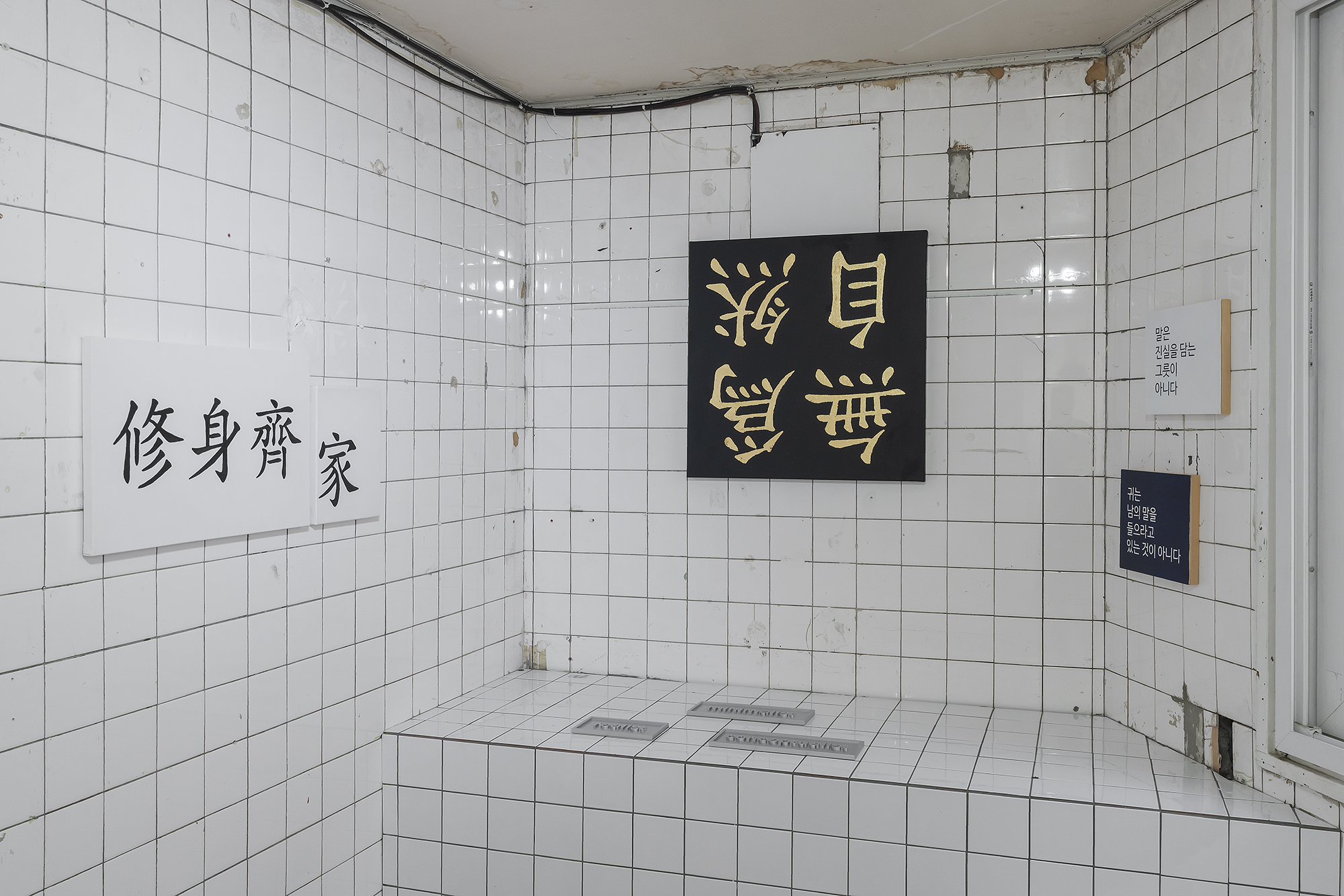
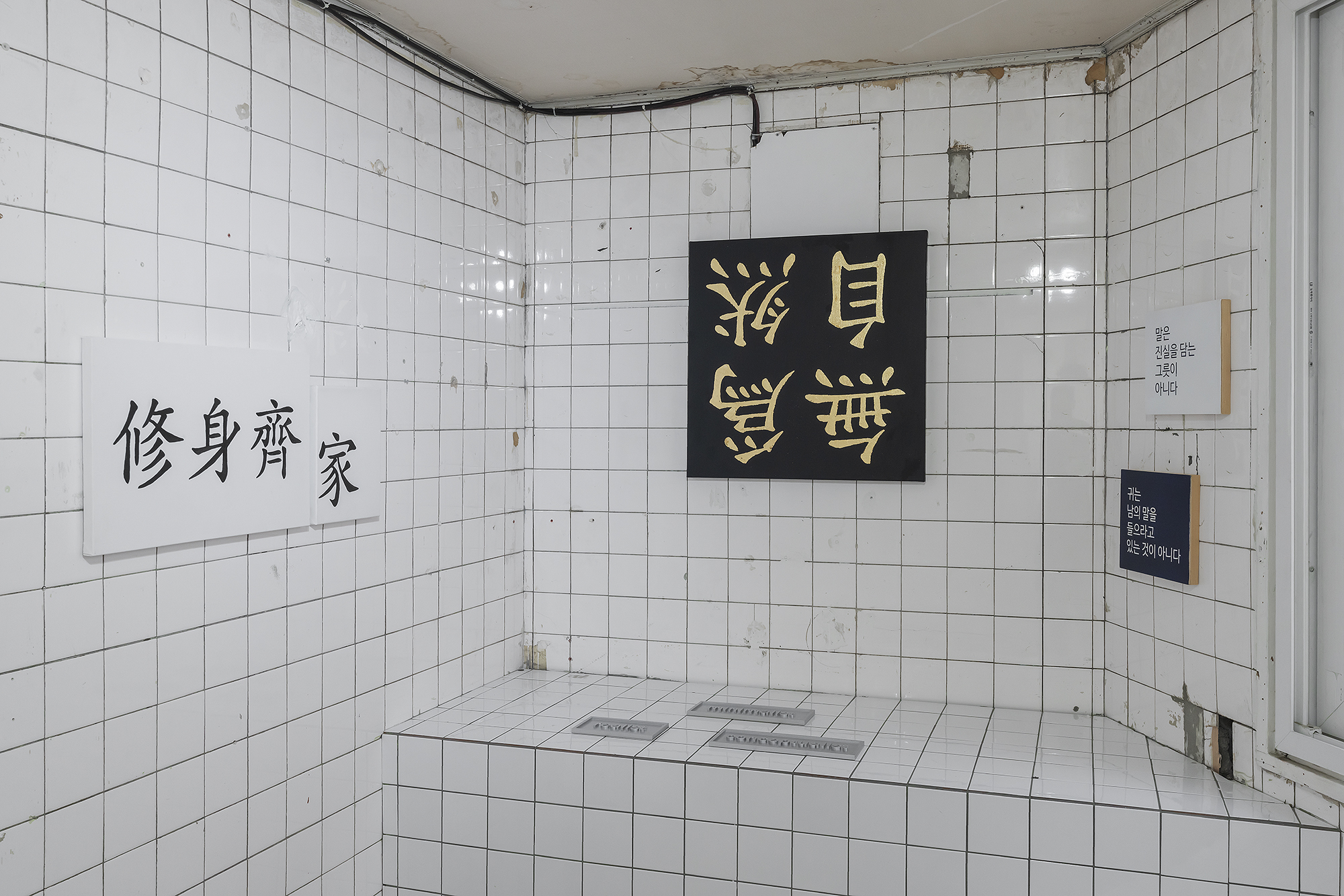
Phrases long circulated and revered—such as “修身齊家
(self-cultivation and regulation of the family)” or “無爲自然
(effortless action in accordance with nature)”—carry a certain weight and aura
of authenticity. The artist knows, however, how such maxims have been
fragmented into hollow signifiers of spirit, misused as aesthetic masks to
serve private interests. Accordingly, he disassembles these four-character
idioms or ostentatiously gilds them in gold leaf.
In the works presented at Ahn Kyuchul’s solo
exhibition 《Ahn
Kyuchul Multiplied》 at Amado Art Space, such acts of “countering” or
“resisting” what is ordinarily taken for granted—both in terms of reality
perception and physical order—operate in mutual relation. In logical terms,
this relation corresponds to paradox: as in the etymological structure of
“para-doxa,” meaning “beyond common opinion,” the two coexist, with the latter
intervening in the former.
I would argue that this paradoxical relation—this
resistance or intervention enacted to exceed the self-evident—constitutes the working
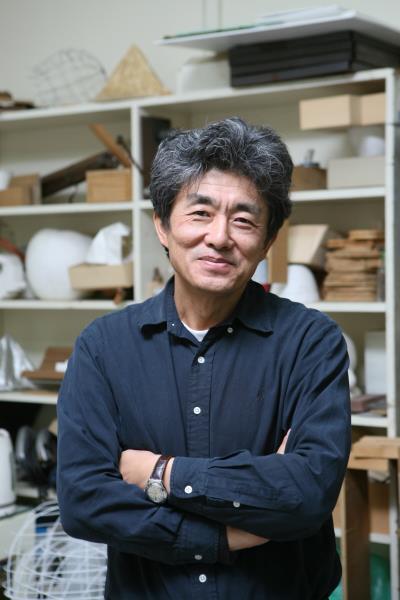
method Ahn Kyuchul has sustained for over forty years, having described his own
artistic practice as “a question posed to the paradoxes of the world.” I
further wish to suggest that this paradox functions as a kind of “thorn in the
mind,” enabling this mature artist, now having reached the age of “following
one’s heart” (從心), to remain young through logical tension and
heterogeneous modes of expression even in his most recent solo exhibition. By
this I mean that a critical consciousness of the world persistently unsettles
the artist, denying him complacency and prodding him toward something better.
It is in this sense that my opening reflections,
written through the mediation of his works, seek to demonstrate how such
tension and heterogeneity in 《Ahn Kyuchul Multiplied》 emerge
through interference among humanistic contexts and artistic conditions.
Realist, Idealist
In short, Ahn Kyuchul’s paradoxical practice of art—responding to the
paradoxes of the world with paradox—entails a humanistic dimension in that it
produces critical thought through form. At the same time, it preserves the
genre-specificity of art by visualizing paradoxical logic through sculptural
means. He takes the mechanisms of physical reality and given conditions, along
with general modes of perception, and identifies their internal limits or
contradictions, revealing something other than what is already there.
On one
level, this entails creating sculptures, drawings, texts, paintings, videos,
and installations that outwardly embody the tension of paradox between these
two registers. On another level, it involves ensuring that such formally
realized works are read not merely as irony, but as the language of paradox
that—however impossibly—provokes truth.
Ahn Kyuchul, who has devoted himself to writing as much as to visual
art, appears acutely aware of this dimension of his practice. According to him,
objects possess the dual function of intervention and reading, compelling the
artist to work through them:
“Our surrounding objects have at least two distinct functions. One is
their function as tools through which we intervene in the world, and the other
is their function as texts through which we read the world.”
The “world” to which Ahn refers here is somewhat abstract. Elsewhere,
however, he has stated that while his art in the early 1980s belonged to
Minjung Art and sought to “three-dimensionally represent a given situation,”
his studies in Germany from 1987 over seven and a half years shifted his focus
toward “everyday objects and language created by people.” By newly transforming
and assembling such everyday materials, he explains, he went on to create “new
texts” that define his later artistic world.
Taken together, this suggests that Ahn Kyuchul may be regarded as a
realist insofar as he reads the world through given objects. Yet because he
intervenes in the preexisting world constituted by those objects—using the very
same objects—he cannot be dismissed as a passive realist or merely a
“thoughtful observer of the world.” Moreover, given his explicit declaration
that “I oppose art that settles for typical and predictable reactions and
solutions,” he is, at the very least, a resistant realist. Indeed, we might
need to remove him altogether from the category of realism. For although he
distances himself from aesthetic representation and describes his own work as
comparatively “secular,” he nonetheless articulates an ideal state of the
artist and the artwork as follows:
“I dream of a state in which a single work, the trajectory of a single
soul, naturally emits such light—like moonlight that unsettles a person’s heart
and keeps them awake at night.”
This passage recalls Georg Lukács’s opening sentence in The
Theory of the Novel, which speaks of an era when people could gaze at
the starry sky and read from it the map of the path they had to follow. Lukács
posited ancient Greece as a “completed culture” of [the West], meaningful not
only as a lost past but also as a utopian goal. I suspect that Lukács’s
aesthetics may well inhabit Ahn Kyuchul’s thinking on art, insofar as it
encompasses both critique of reality and longing for an ideal society. This
becomes evident when Ahn defines his work as a “question addressed to the
paradoxes of the world,” while simultaneously defining art as “a question about
utopia—about a place that is not ‘here and now.’”
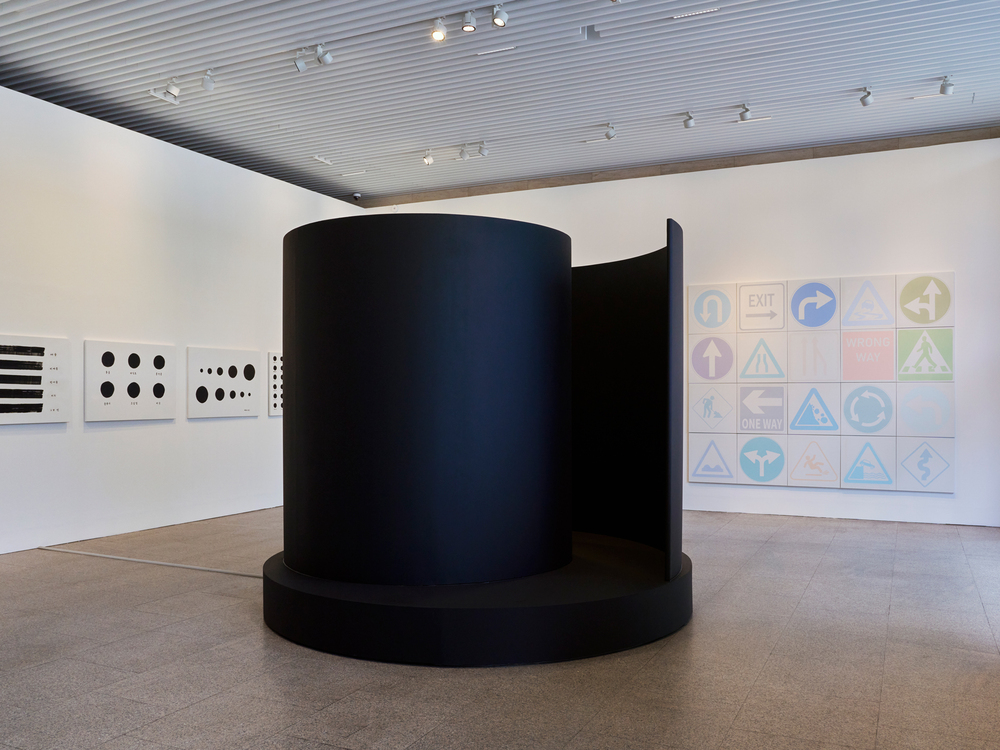
Such complexity is further evident in works like Spiral
Wall (2024), shown in his solo exhibition at Space ISU, where a black
spiral corridor endlessly rotates atop a circular platform, preventing the
walker from ever reaching an end, accompanied by the text “an unattainable
utopia.”
Is Ahn Kyuchul, then, an idealist? Excluding the pejorative sense of
“idealist” or “conceptualist” often applied to him during the mid-1990s, when
he returned from Germany as an unknown young sculptor, I would argue that he is
indeed an idealist—one who begins from reality and works toward a better world.
His artistic practice is oriented toward utopia as an impossible goal, one that
can only be pursued endlessly. In this sense, he repeatedly poses questions
toward utopia in its ambivalent etymology, as coined by Sir Thomas More: both
“no place” (ou-topos) and “good place” (eu-topos).
N Ahn Kyuchuls Cultivating an Aesthetics of Existence
Regarding Rotating Mirror (2024), Ahn Kyuchul wrote
that it mirrors “my former position of believing that the artist should be a
mirror reflecting the world.” Having worked incessantly through “reflection and
self-reproach,” he realized that “the world does not change that way.” Thus,
declaring that “as the world turns, I too turn,” he created a work in which a
small, 55-centimeter-diameter mirror rotates endlessly by motor. At first
glance, this may appear as a cynical form of conceptual art, combining nihilism
and anti-aestheticism—a reading the artist himself may have invited. Yet
precisely because he confesses such intentions and inner thoughts through both
work and writing, it would be reductive to define Ahn Kyuchul as a cold
conceptual artist.
Here, I draw attention to humanities scholar Lee Chan-woong’s analysis
of MMCA Hyundai Motor Series 2015: Ahn Kyuchul – The Invisible Country
of Love, in which he distinguishes Ahn’s work not as Joseph
Kosuth–style “dictionary conceptualism,” but as “poetic conceptual art” that
transforms everyday objects into poetic ones. Lee compellingly argues that Ahn
employs irony as an “essential rhetoric,” detaching objects from their
utilitarian function and turning them into signs that collectively form a poetic
world within the exhibition. While I agree that Ahn’s practice transforms the
existing world through questioning, reassembling it into new “texts” or
“unattainable utopias,” I differ on whether his rhetoric is limited to irony or
confined to a “poetic tradition of conceptual art.”
In Ahn Kyuchul’s writings and artworks, rhetoric exceeds the mere
presentation of contradiction and instead induces a form of awakening. In this
sense, paradox—encompassing irony—offers a more fitting framework. Particularly
important is the fact that Ahn has consistently remained wary of conventional
formal beauty, while meticulously articulating, almost obsessively, both his
critique of the world and his self-reflective, self-reproachful confessions as
a critic within it.
For these reasons, I believe that, whether consciously
or intuitively, Ahn Kyuchul’s practice has oriented itself toward an
ontological aesthetics and ethics. It is telling that this orientation emerges
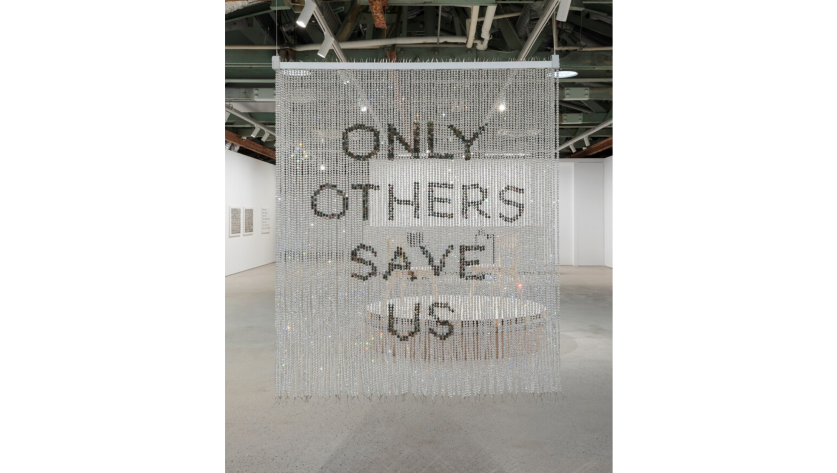
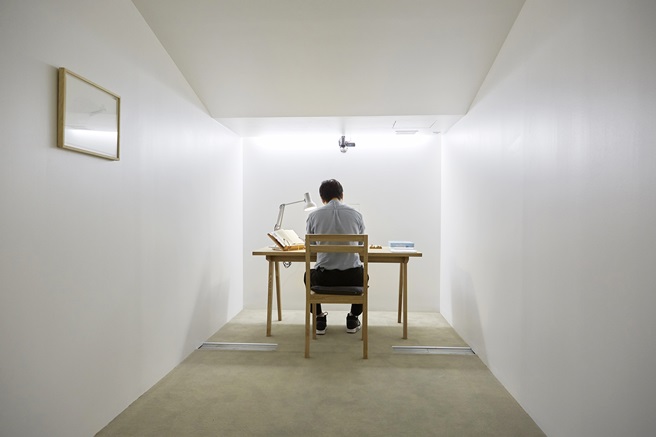
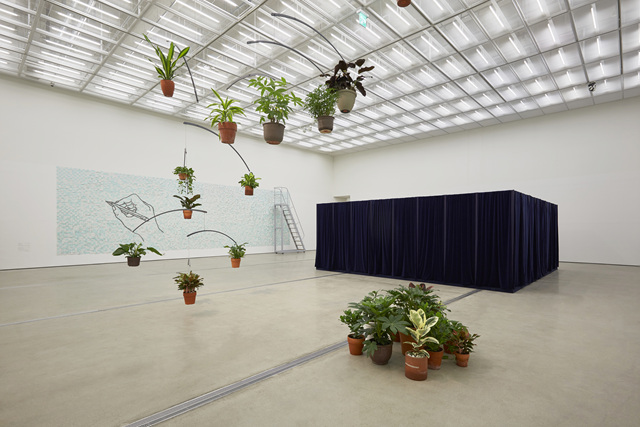
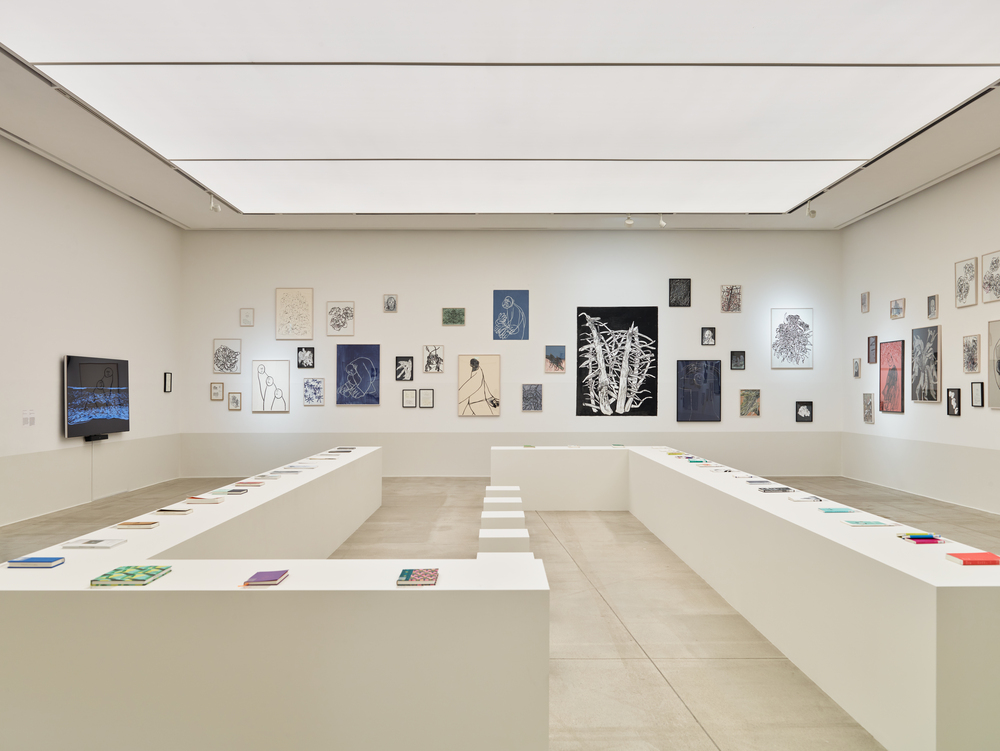
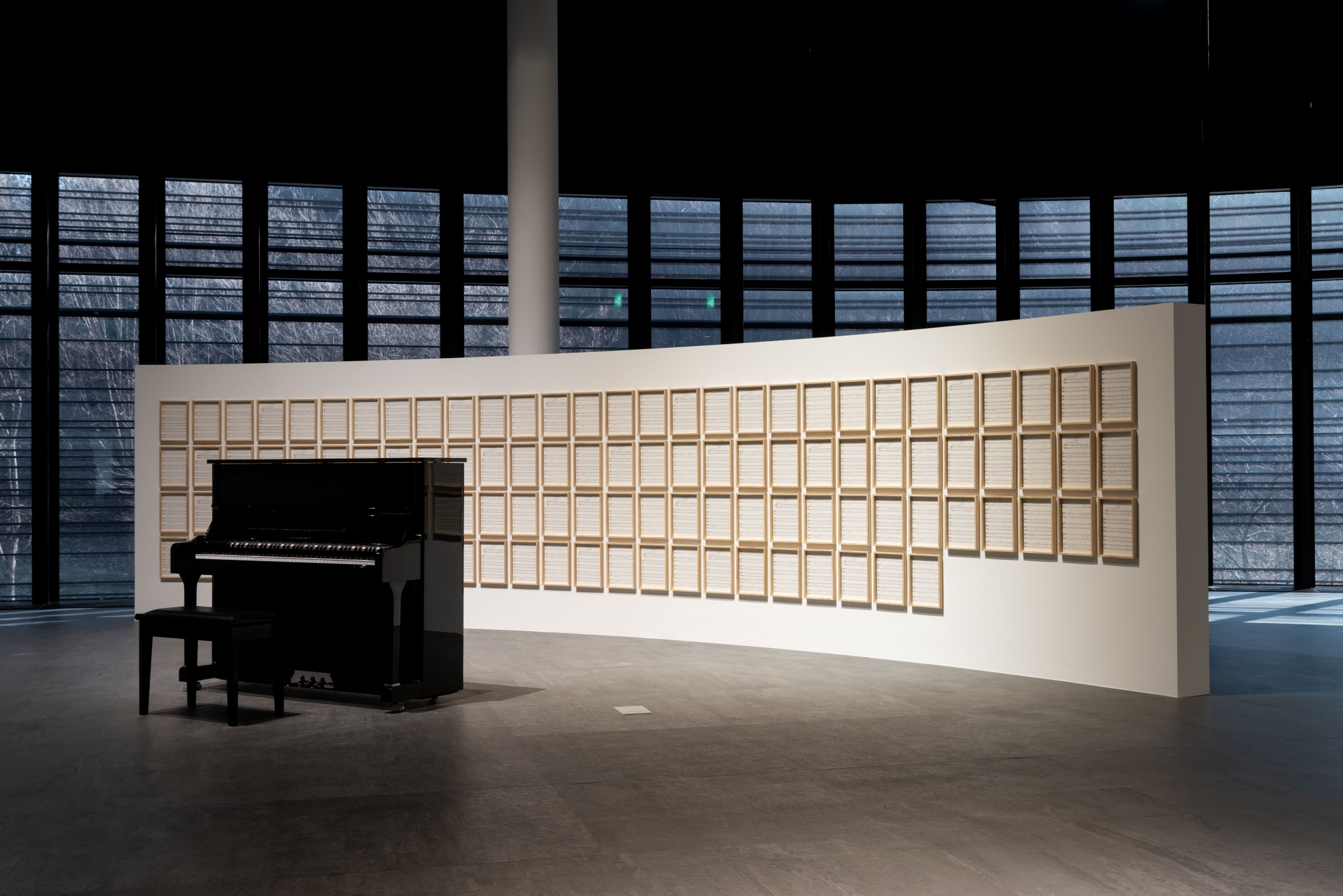
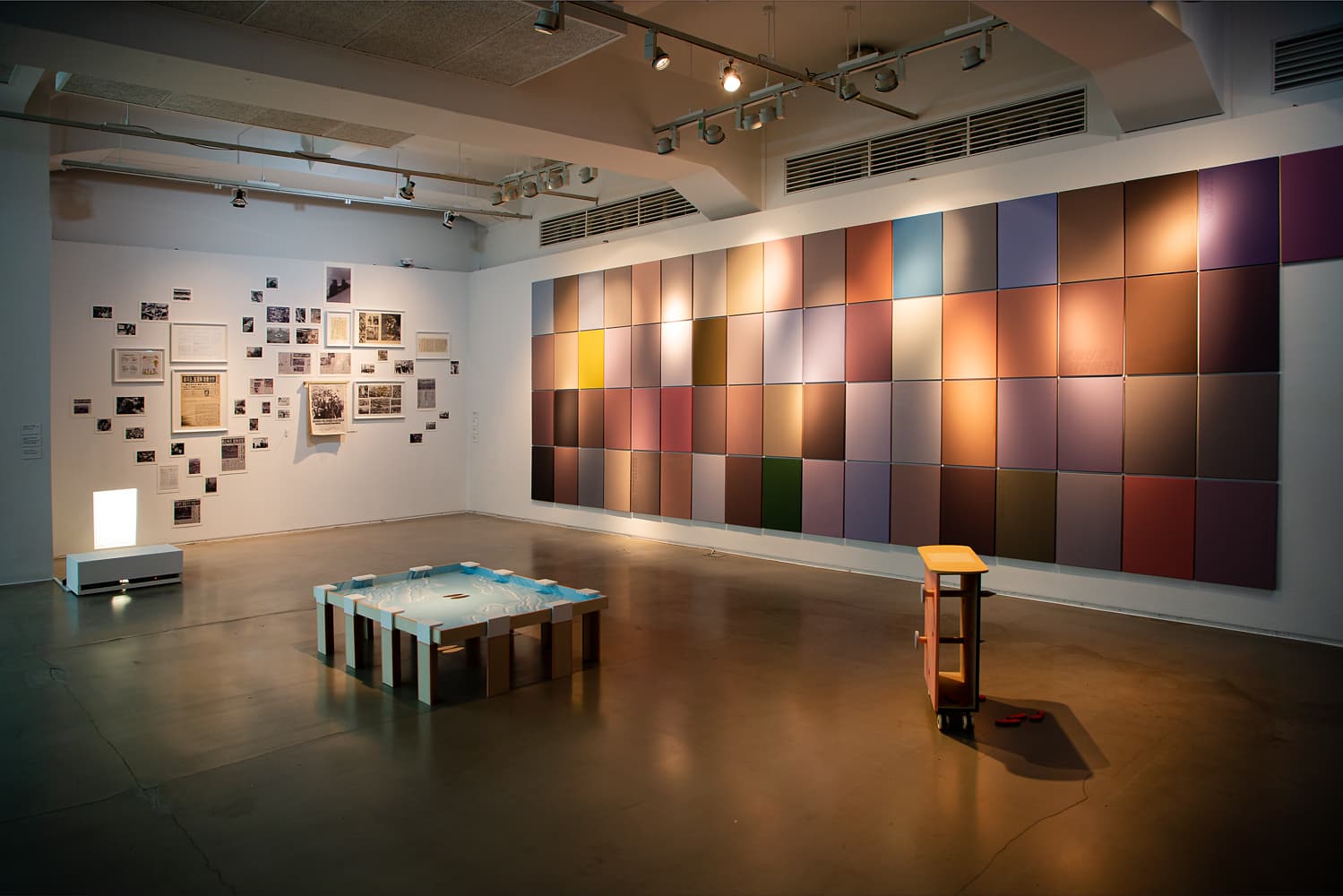
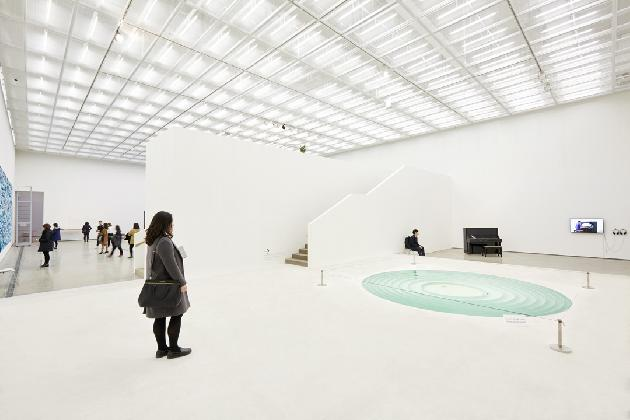
through 《Ahn
Kyuchul Multiplied》, a solo exhibition at Amado Art Space—an alternative
venue modest in scale and institutional authority. The works are dispersed
across twelve rooms and the rooftop, reflecting the spatial conditions of the
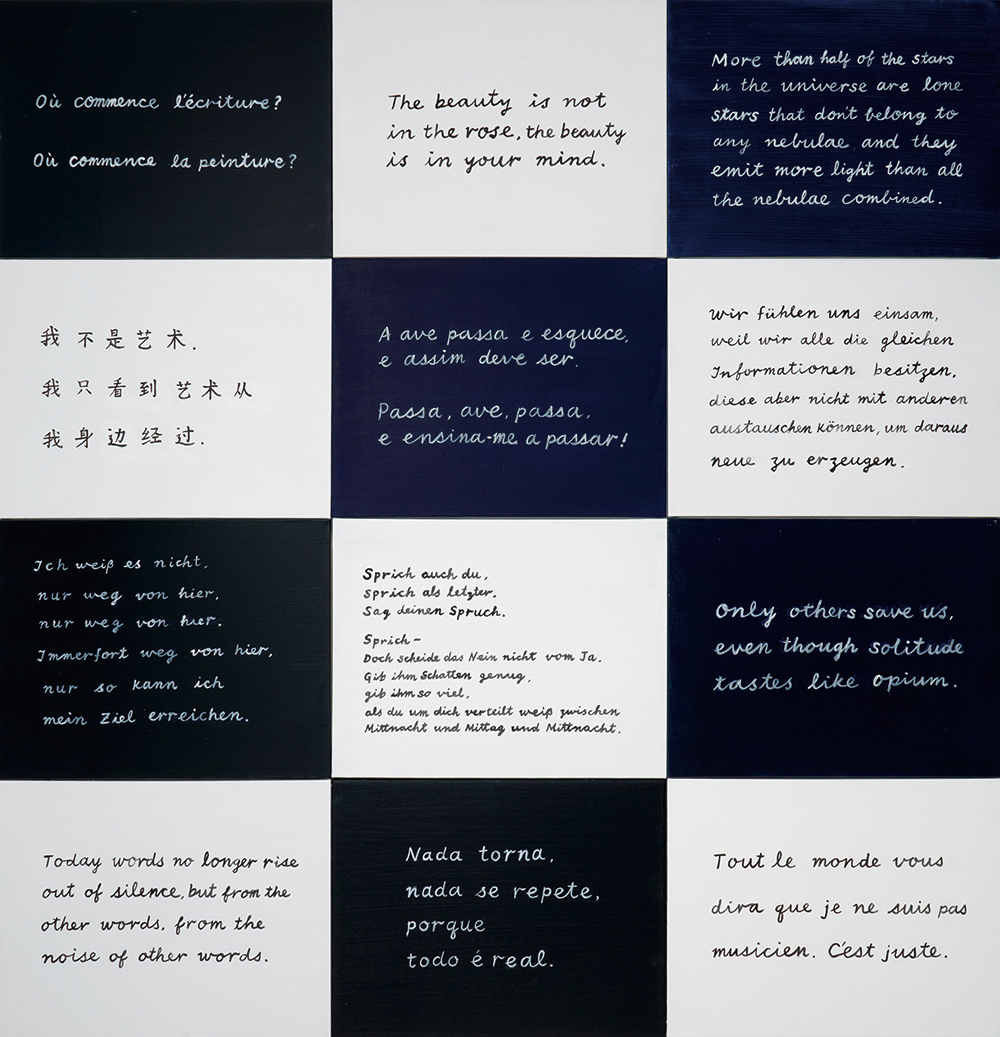
venue. One artist divided into twelve. Here, the number “12” signifies not
merely an integer n, but the aesthetic fragmentation of contemporary art and
the artist’s multiple identities.
Accordingly, 12 Ahn
Kyuchuls lacks exhibition-engineered coherence or adherence to a
singular aesthetic value.
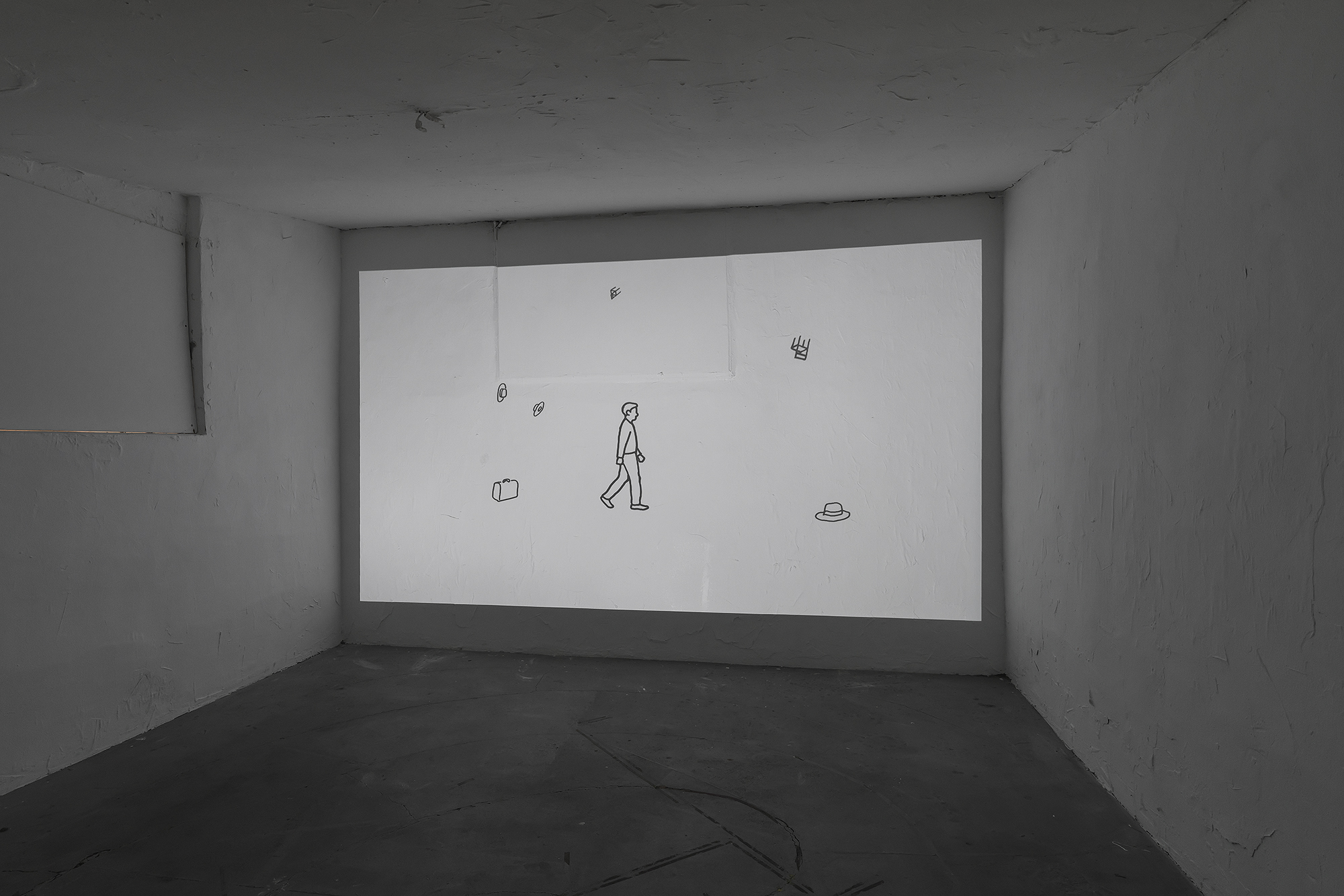
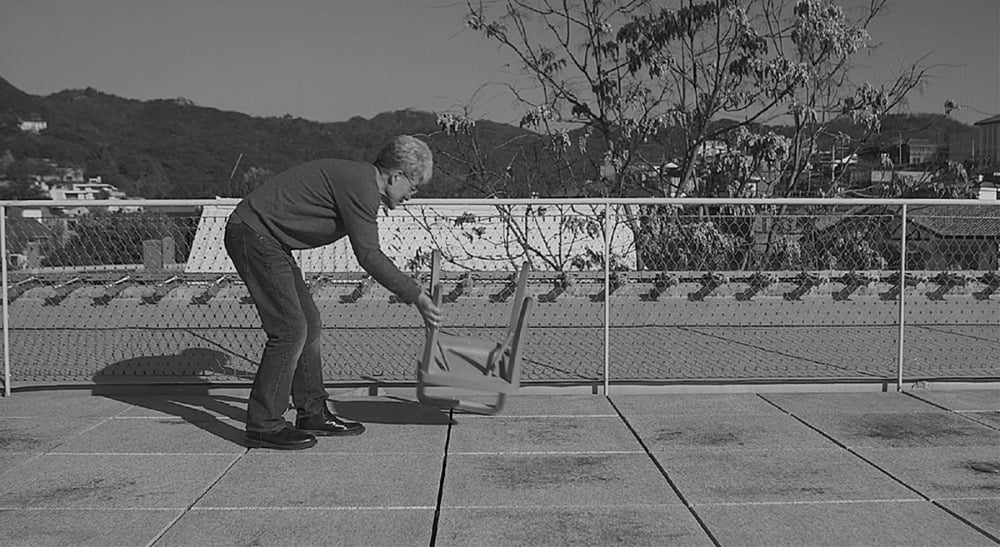
Ahn’s first animation, Walking Man (2024), and the
single-channel video Falling Chair – Homage to Pina (2024),
in which the artist performs himself, are projected not onto pristine cinema
screens but onto the rough, aged walls of an alternative space. The rooftop
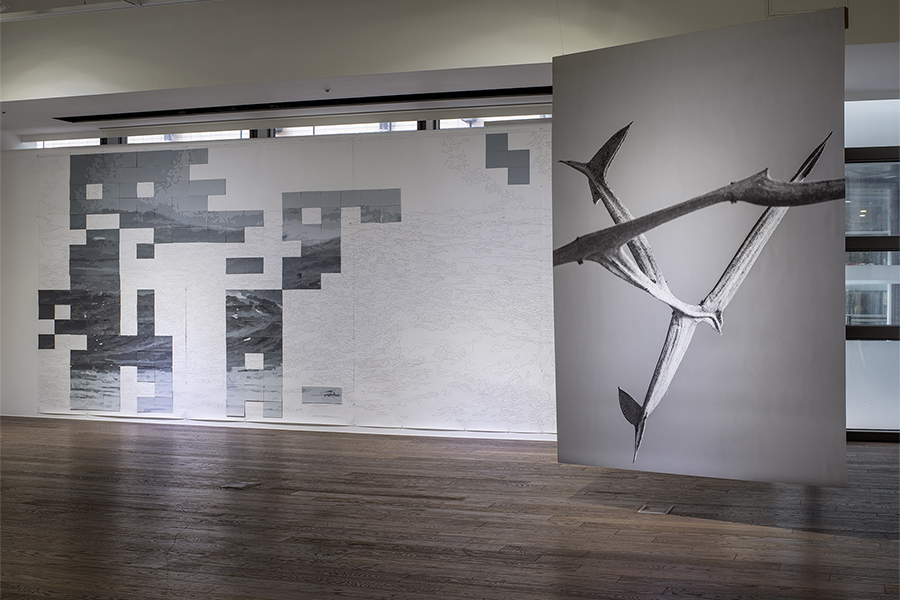
installation Three Ways to Remember Snow stands exposed
throughout the exhibition to harsh external conditions. Yet these qualities do
not diminish the exhibition.
On the contrary, they lend greater sincerity to
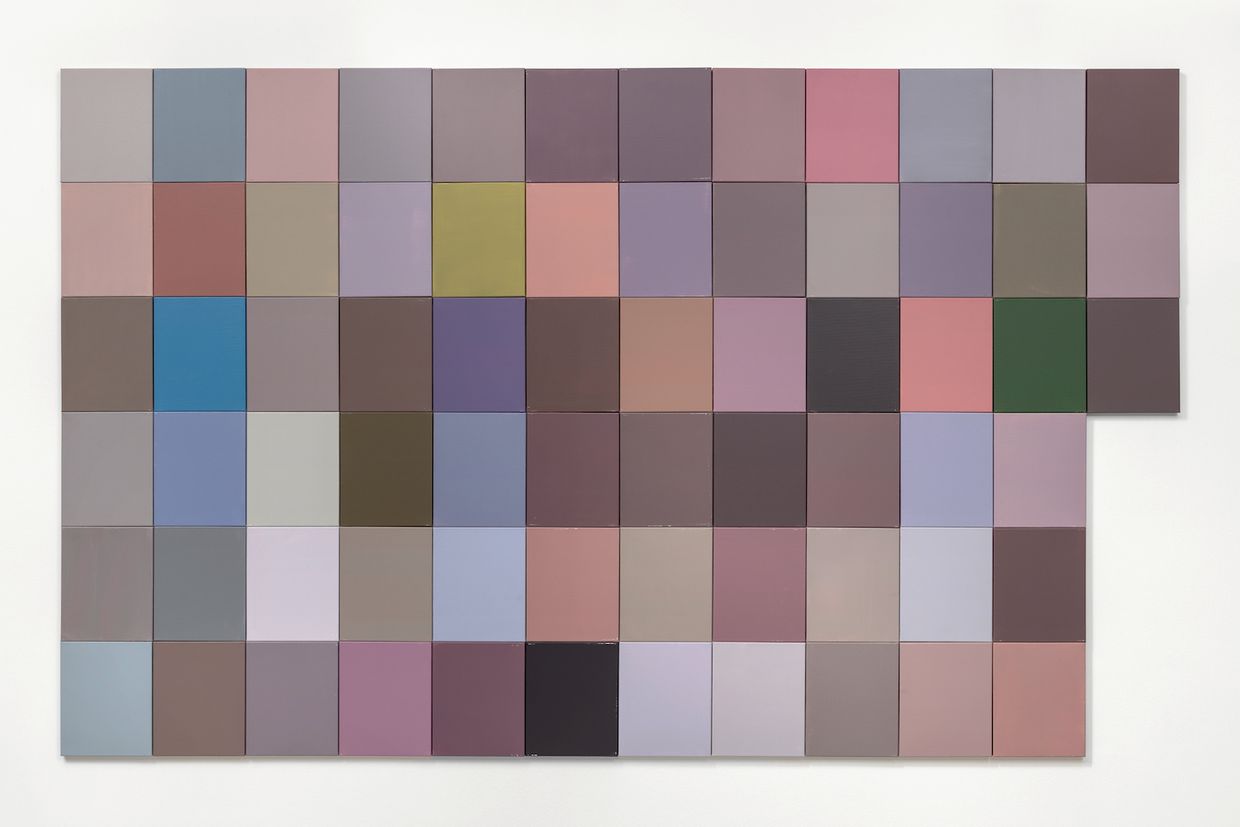
the themes explored across other works—paintings that meta-critique idealist
aesthetics and monochrome abstraction, sculptures that question art
institutions, and installations grounded in poetry that evoke moral action,
ethical awareness, and consolation.
In this way, each room allows viewers to see, hear, and read the forms
and contents Ahn Kyuchul has pursued, without reservation, as “Multiplied Ahn
Kyuchul” addressing the world.
Michel Foucault investigated the totality of practices that constitute
Western society, describing them as a long-standing continuum of “technologies
of being,” an “aesthetics of existence,” and “techniques of the self.”
According to Foucault, people have historically engaged in voluntary and
reflective practices to establish their own rules of conduct, to transform
themselves, and to elevate their lives to an ontological plane imbued with
aesthetic value.
While Foucault’s archaeological method addressed vastly
different scales, I would venture that the most fundamental impulse behind Ahn
Kyuchul’s lifelong artistic practice and writing resonates with the aesthetics
and ethics of existence that Foucault articulated. It is a matrix of practice
through which one continually reflects on oneself, questions the world, and
shapes matter and thought in pursuit of a better place—so that one’s own life
may be worthy of value. The artistic subject formed therein is not free, but it
embodies a performativity that does not cease.