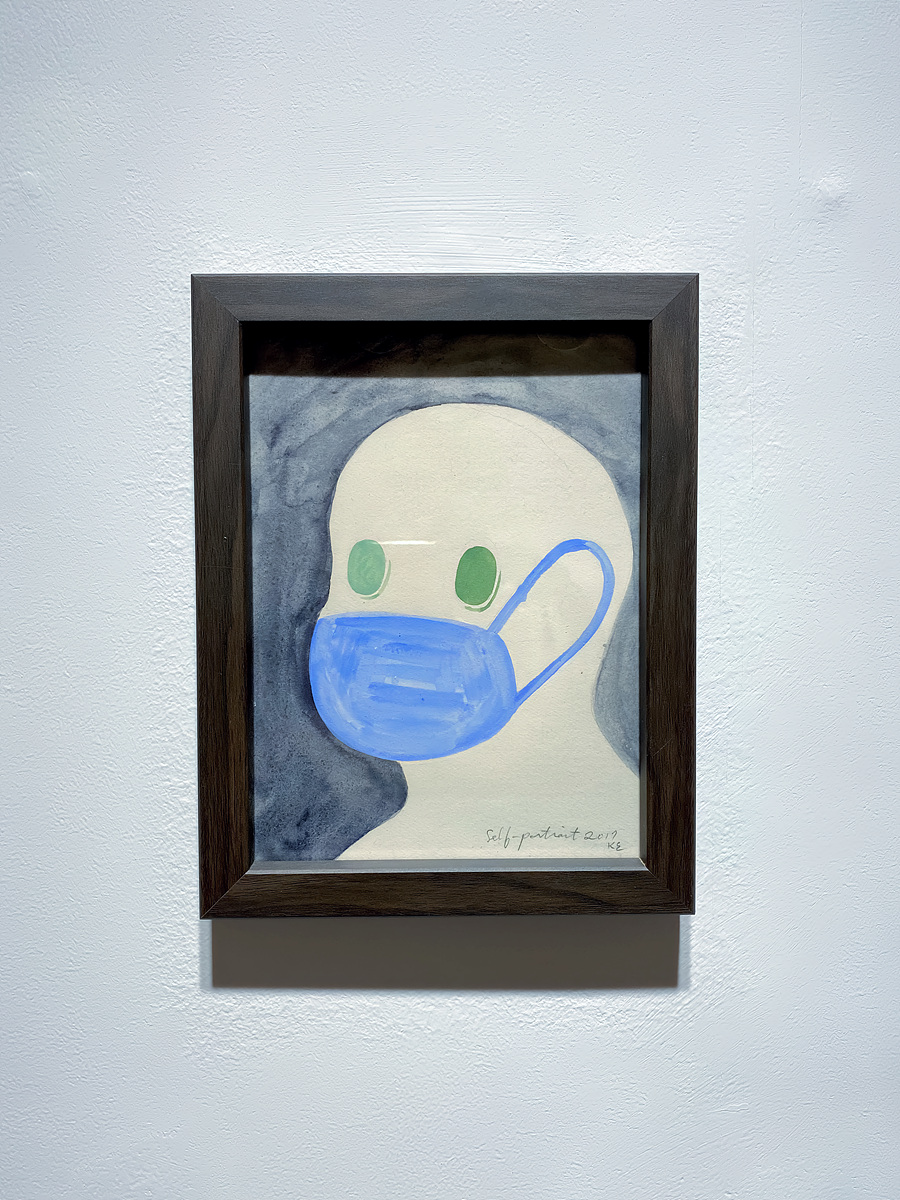
For about a decade, Kim Eull continually worked on his two series
Self-Portrait and Blood Map, both of which focused on the theme of identity.
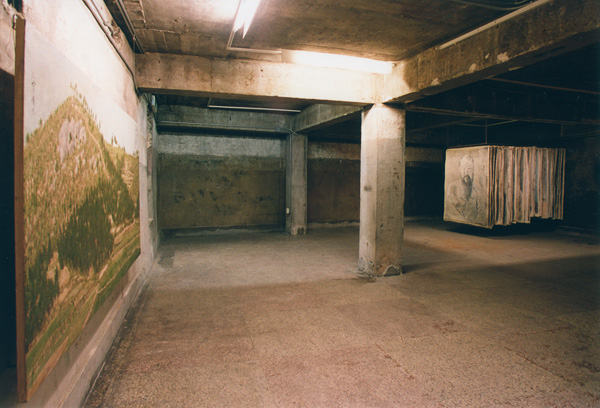
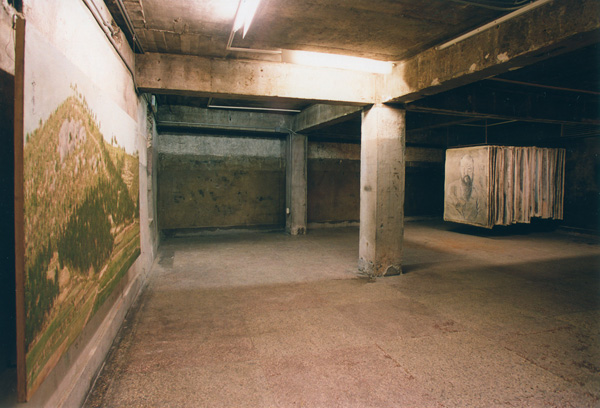
Both of these series were essentially concluded in 2002, as Kim held a solo
exhibition in Project Space SARUBIA. Given the history of that gallery as a
stage for the unconventional works of experimental young artists, it was a
pleasant surprise to find the artist in high spirits, having sporadically
filled the space with landscapes and portraits. In the Blood Map series, Kim
traced his family tree backward, moving beyond his previous efforts of
self-exploration, which were more like mirror reflections of himself and the
world surrounded him. But whether the topic is his family burial grounds in his
hometown, or memories of his ancestors in pale black-and-white photographs,
Kim’s ultimate interest is himself, and no one else.
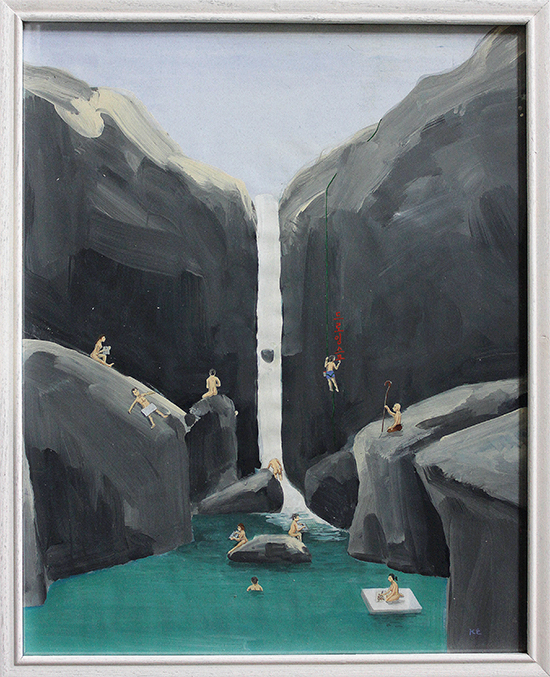
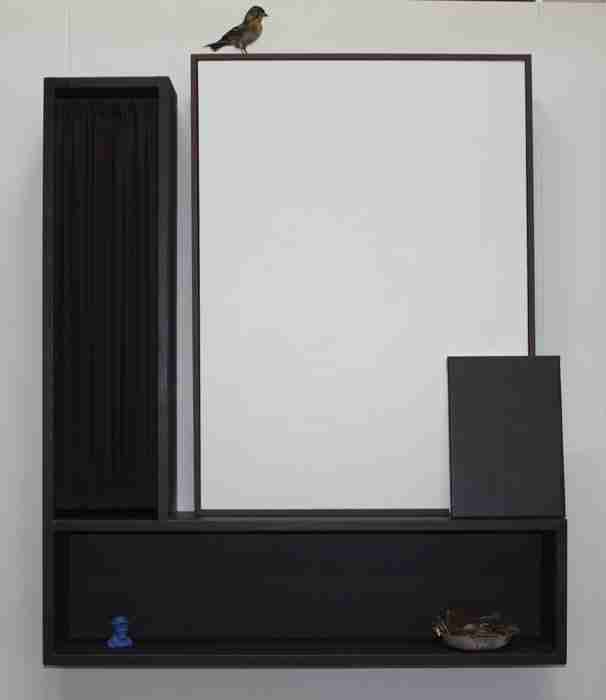
Kim’s faded paintings are like artifacts excavated from the field after
an intense battle, such that the pain of open wounds seeps through the canvas.
Everyone who sees the works is struck by their unflinching sincerity, which
resonates so deeply that viewers may find it difficult to look at them for too
long. Kim’s heavy theme has been a double-edged sword, allowing him to delve
deeper into his internal self but preventing him from advancing further into
the artistic world. Like a monk practicing self-flagellation, he never deviates
from his difficult yet determined path. For this exhibition, he also behaved
like a historian, intensively researching his family’s genealogy, rummaging
through public records, visiting his family burial grounds, and even measuring
the land owned by his family.
At the time, many viewers were curious to see whether Kim would
obstinately continue to pursue his preferred theme or find a new subject to
explore. Little did they know that he had already embarked in a completely new
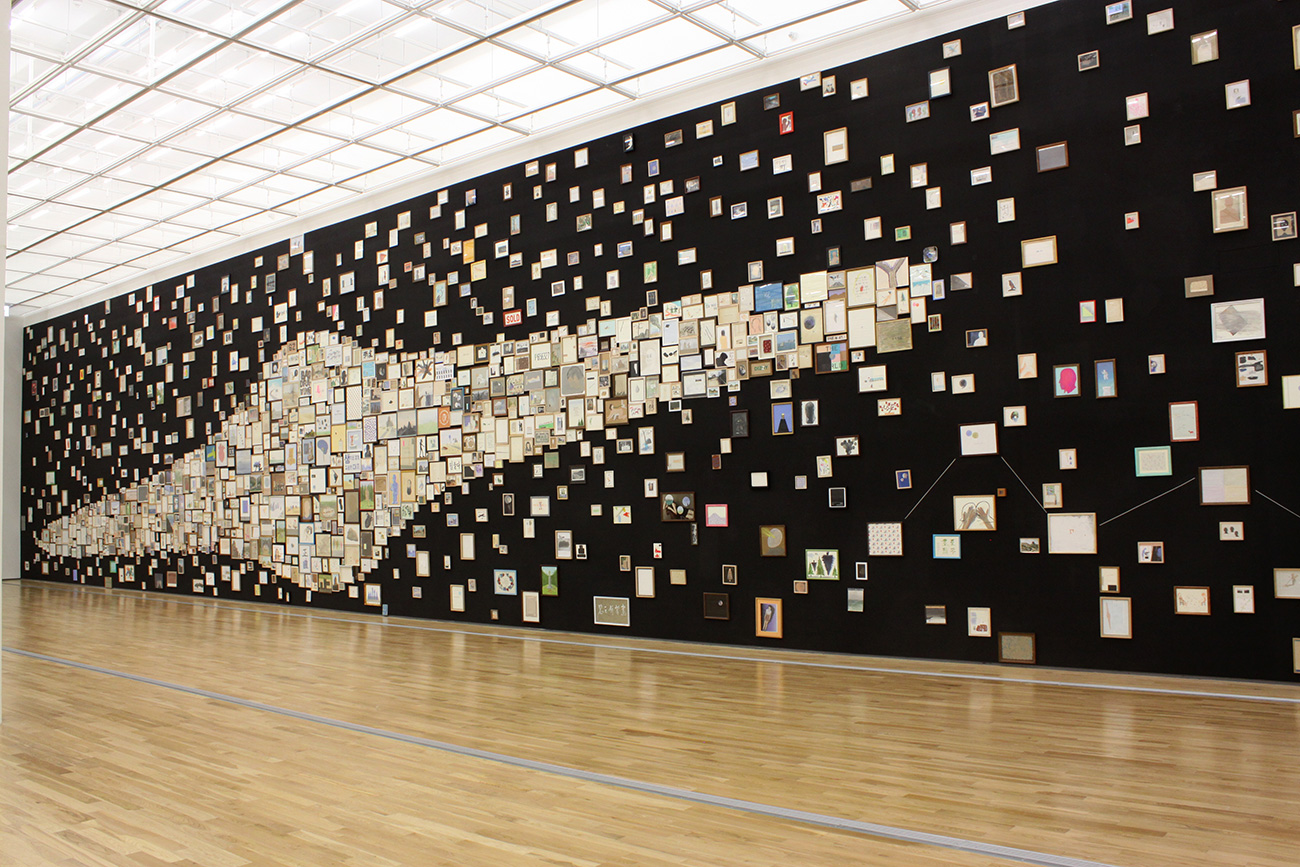
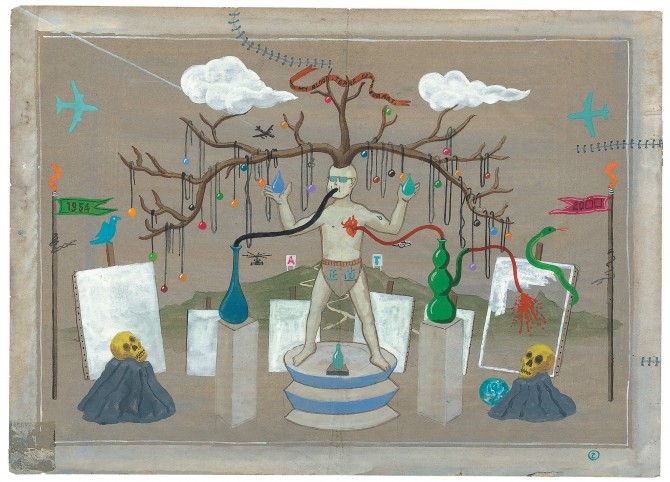
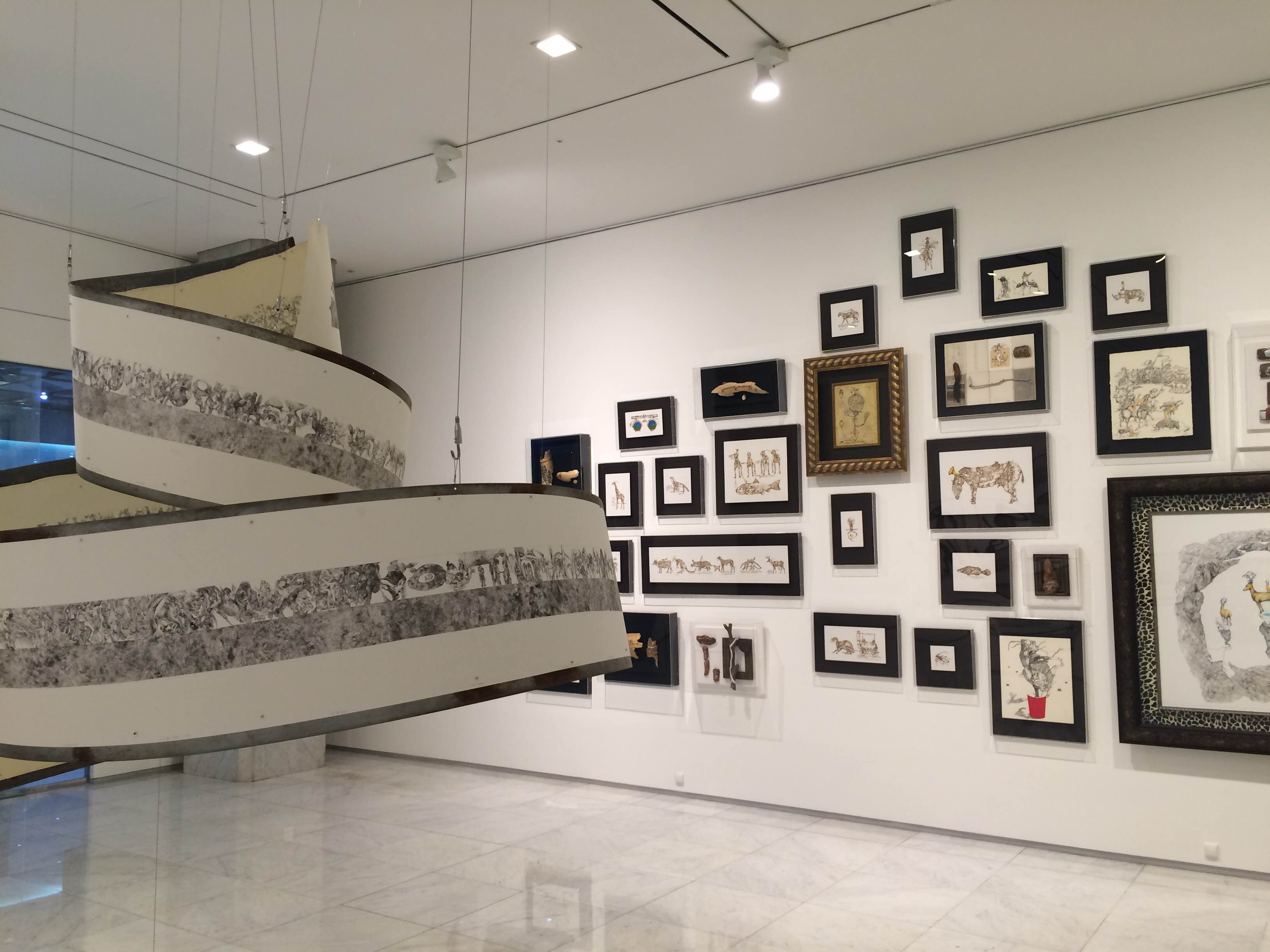
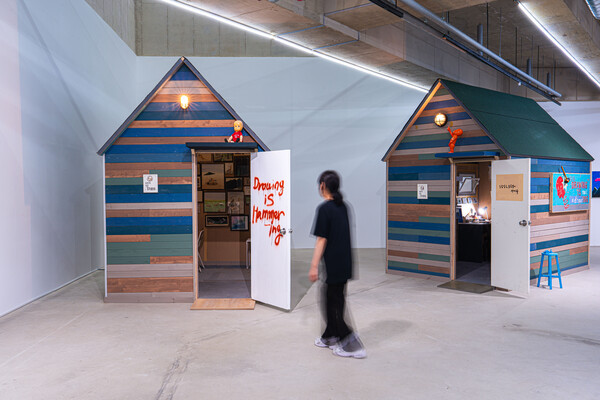
direction with an ambitious drawing project. Starting in 2001, Kim made 2,000
drawings over a six-year period (1,000 drawings in each three-year span).
Exhausted by the solemn and personal nature of his previous theme, he began the
new drawing project with a light heart, opening the door to a new world. By
translating his incessant thoughts into impromptu drawings, he cleared his
mind, and fresh ideas rushed to fill the space. These new thoughts came pouring
out before he could find a theme in which to shape and contain them. The
resultant works may be rough and unpolished, but they are “drawings” in the
truest sense, representing his attempt to “draw out” the inner contents of his
mind.
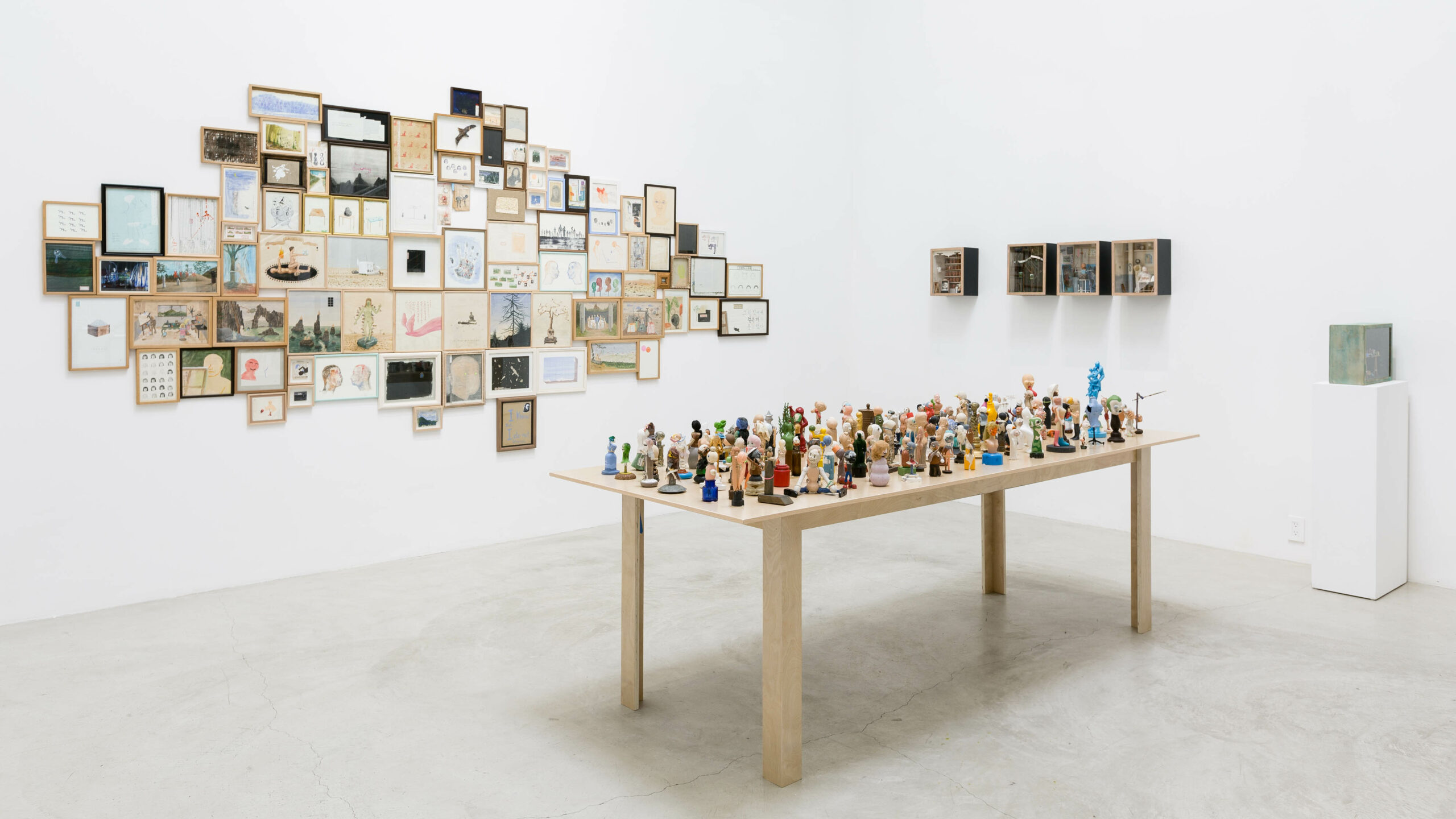
In 2003, Kim exhibited drawings from the first half of his project. The
sheer number of drawings—about 1,000—was impressive, but even more overwhelming
was the abundance of ideas in each drawing. As if the levee had broken, viewers
were immersed in a veritable deluge of images and ideas. Anything that caught
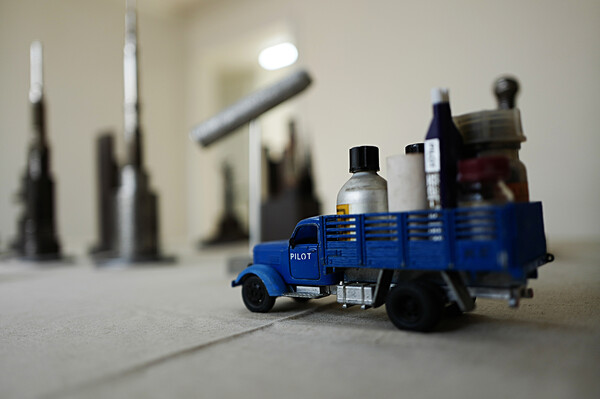
his eyes and his grasp became fodder for his drawings: the logo from a coaster
in a café, bathroom graffiti, an old doll from a secondhand store, a diagram
from a math book, etc. These diverse motifs were pulled through the filter of
Kim Eull, thus becoming Miscellaneous Drawings, as he called them.
People who were familiar with Kim’s Blood Map series may have initially
been confounded by the Miscellaneous Drawings series, which seemed to lack an
overlying theme. But this can perhaps be expected with such an enormous number
of impulsive works. Although some of the motifs were repeated, each drawing
primarily existed as an independent presence, not unlike the disparate thoughts
that make up our flow of consciousness. When asked why he had not pursued a
connecting theme, Kim acknowledged that the weighty theme of his previous work
had almost suffocated him.
But as the drawings accumulated, he felt the
pressure begin to dissipate, lightening his hands and his spirit and thus
enabling him to make even more drawings. He has now been making the drawings
for a total of about ten years. From the moment he gets out of bed, he does not
plan what to draw, instead flowing freely through each day like water, without
feeling distressed or restless. Maybe he was able to reach this state only
after purging himself by taking his previous theme to the extreme. In this way,
Kim’s task of making 1,000 drawings in three years is like a Buddhist who vows
to make the “3,000 bows to Buddha.”
Amazingly, despite his incessant experimentation and varied expressions,
Kim’s drawing series does not yield confusion. The lack of a coherent theme is
simply an interpretation that arose in retrospect after the exhibition. In
fact, no matter how varied his subject or method, all of Kim’s works—whether
drawing, painting, object, or installation—are indeed united by a single,
constant theme: Kim Eull. Like balloons of all shapes, sizes, and colors that
are linked by fine thread to the balloon seller, the artist himself provides
the ballast for the works, even if his presence is inconspicuous. As Kim said,
his works are his “attempts to take full account of the world that is woven
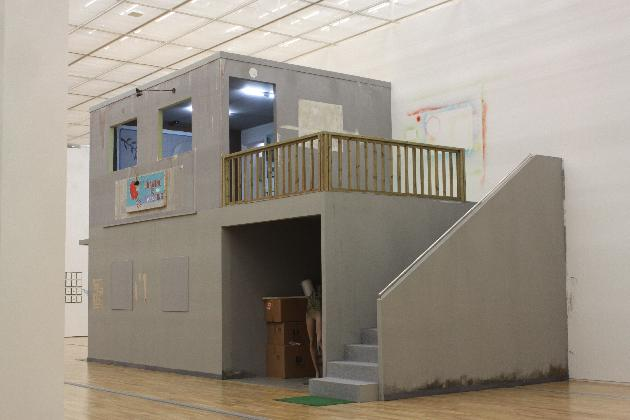
around me.” As such, Kim’s entire oeuvre may be viewed as a massive, sprawling
self-portrait of the artist, who remains invisible yet present at the center.