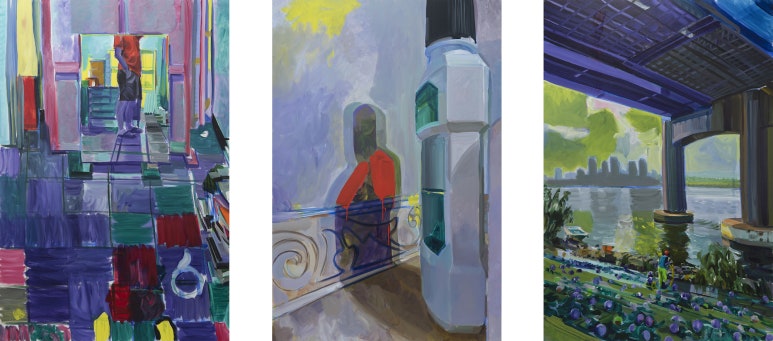
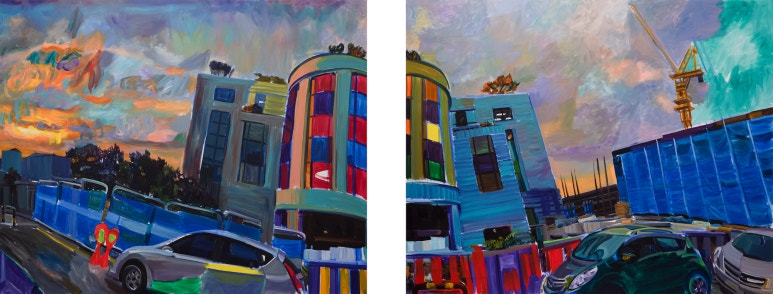
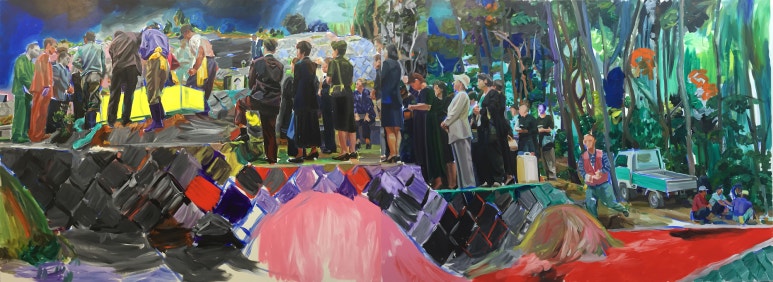
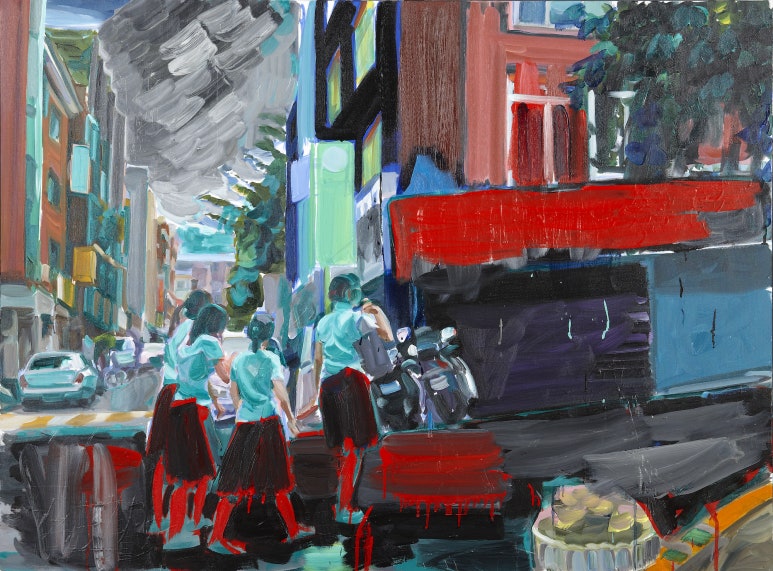
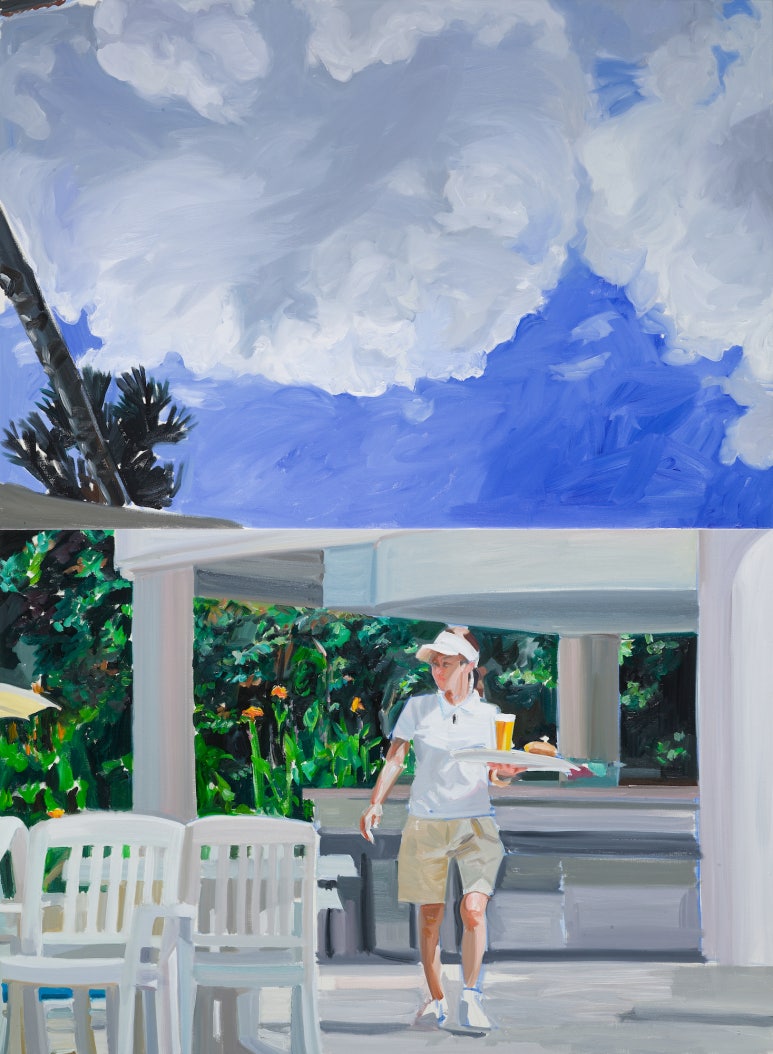
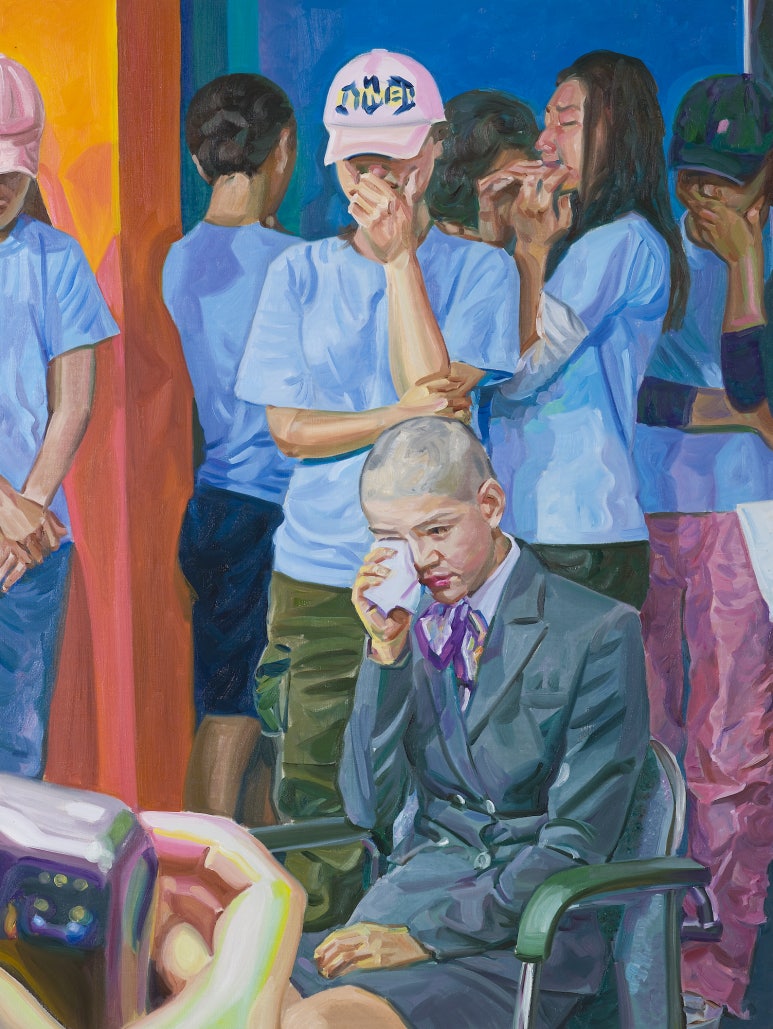
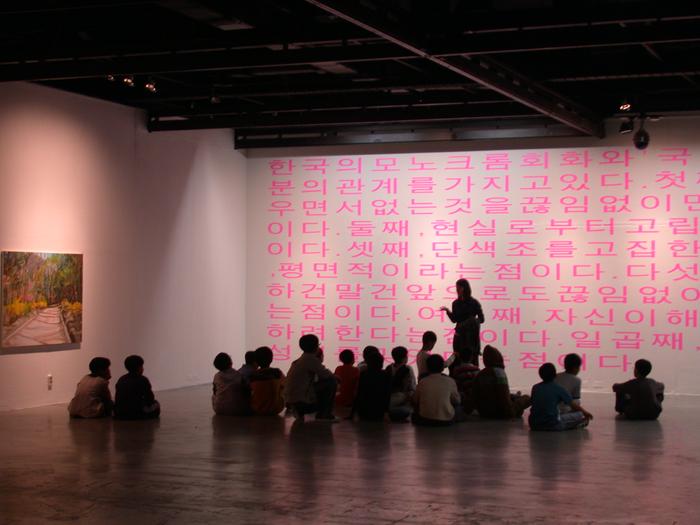
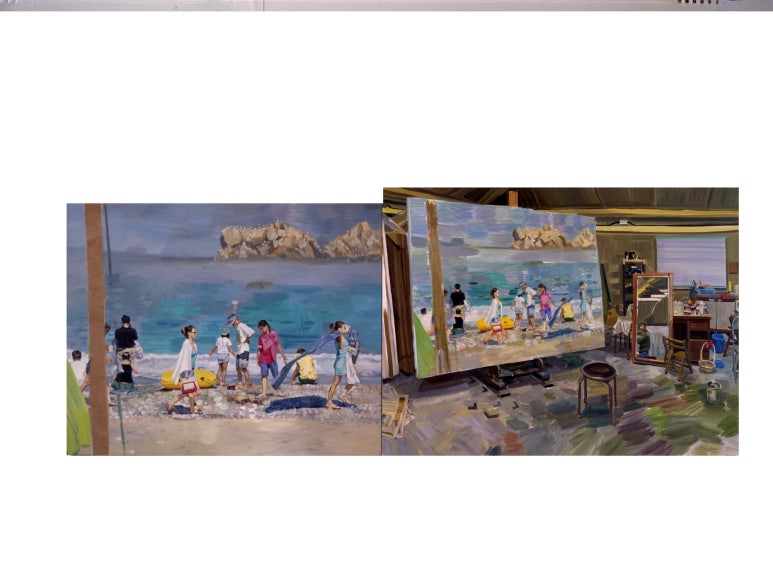
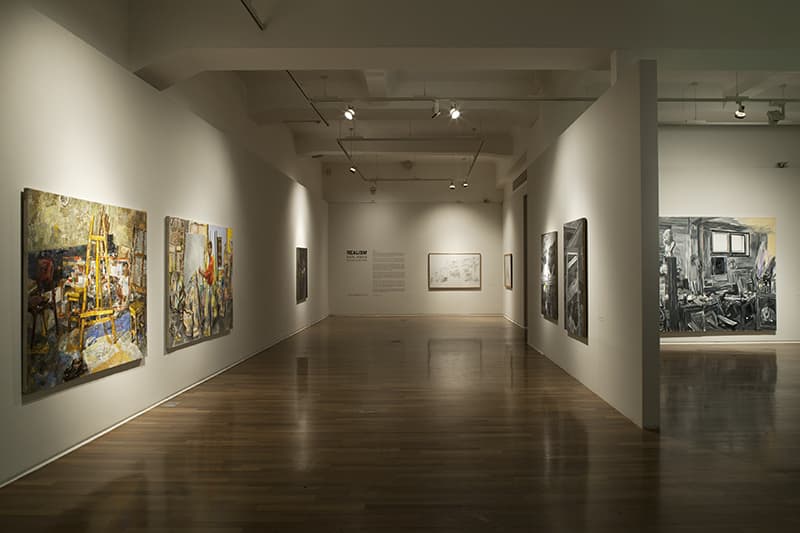
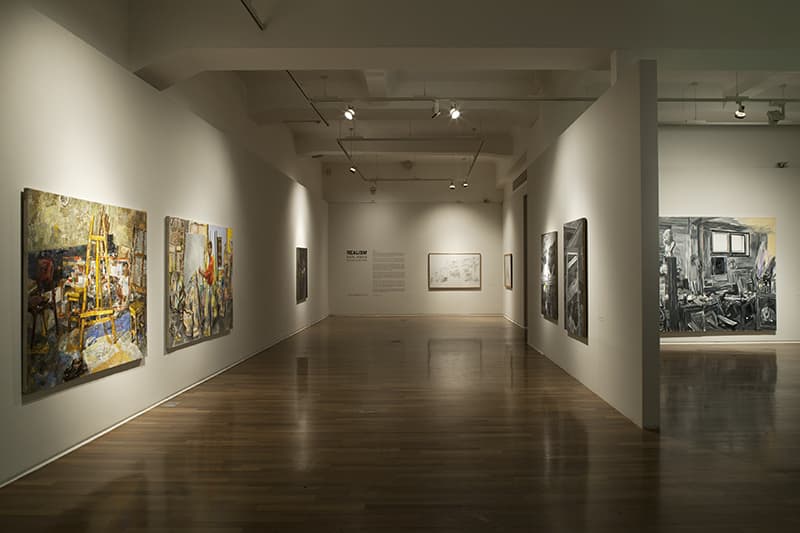
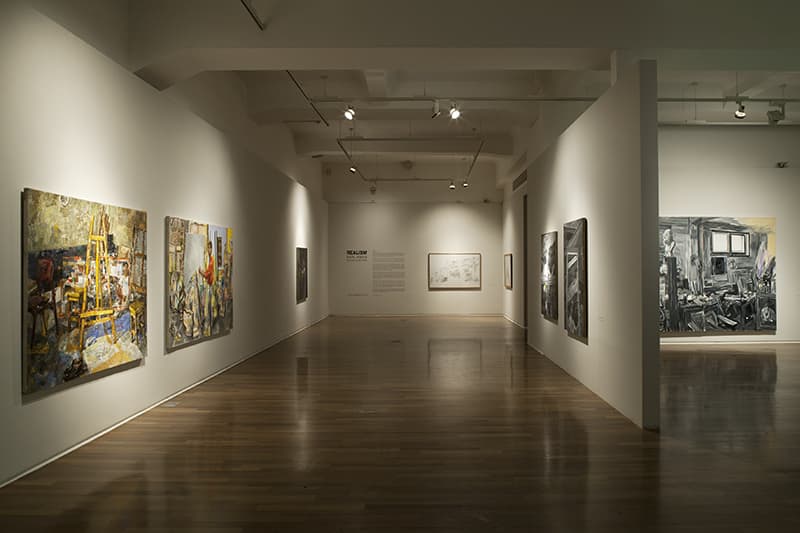
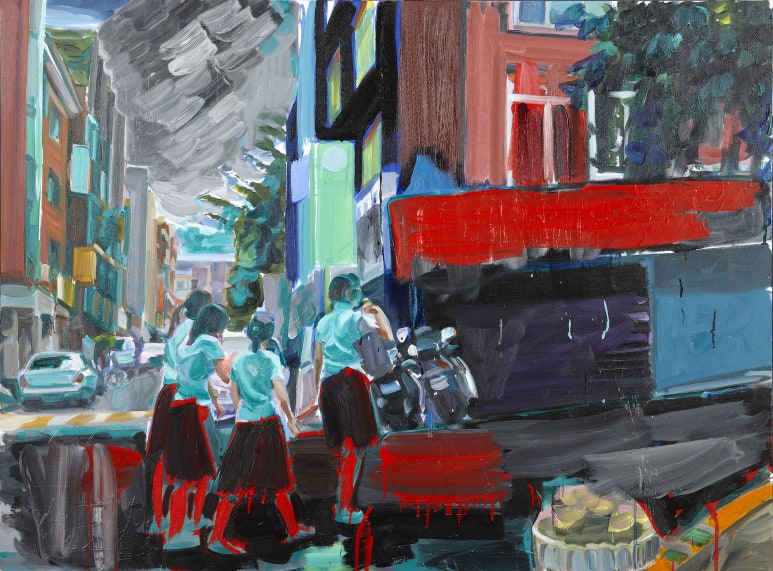
I stood at the center of the U-shaped space on the second floor of Ilmin
Museum of Art. On the right wall hung Bukahyundong 1 and
A Girl; on the facing wall were Prelude,
Bukahyundong 2, Bukahyundong 3; and on
the left wall, Mother and Son and Our
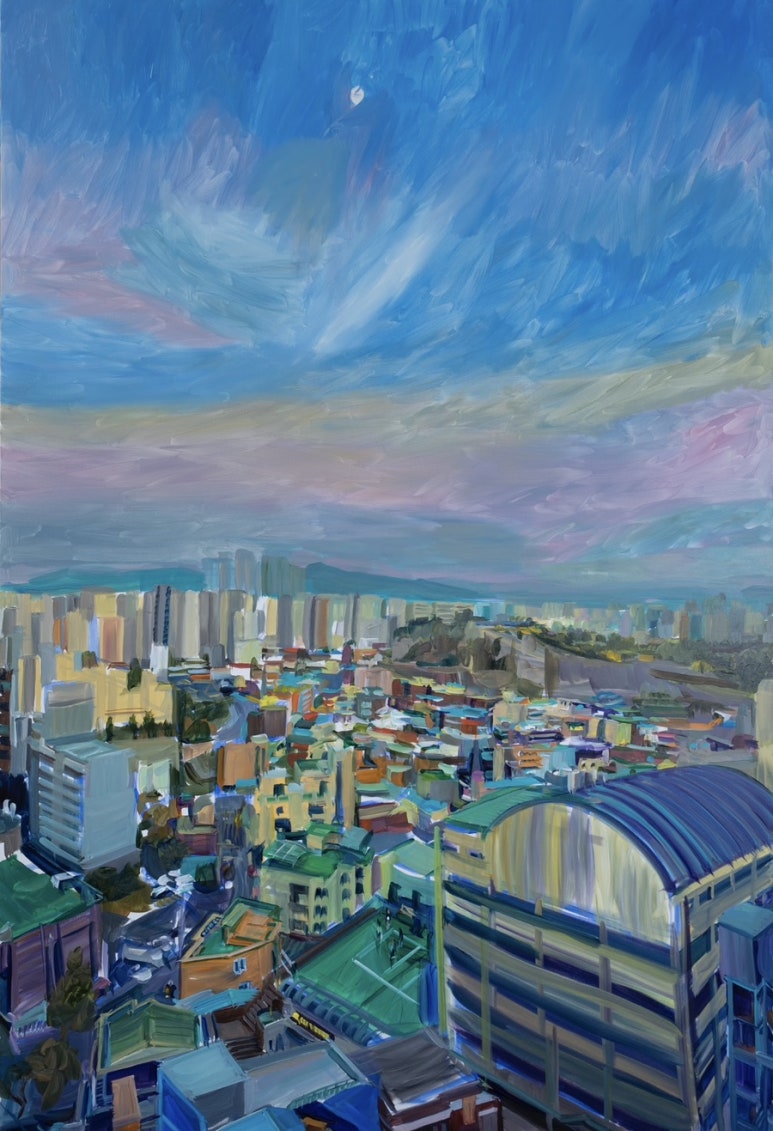
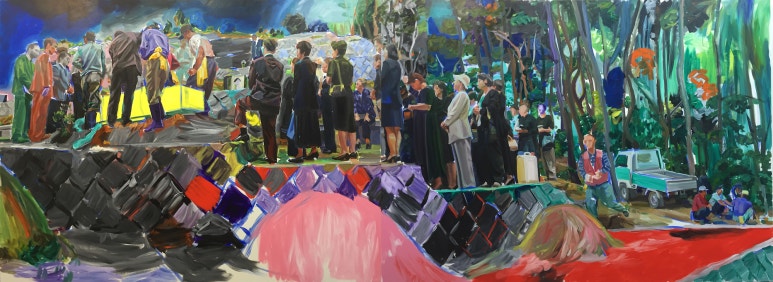
Town. The gestalt of streets, buildings, buses, and figures—appearing
and disappearing in repetition—approaches as an irregular, embodied experience
of reality. It is the illusion that I have entered the painting, or that the
painting has become reality. It is the kind of scene that brushes across the
cornea without being fixed in focus: passing scenery, passing time, unconscious
experience, moments in which my inner present and external reality cross and
interleave without boundaries.
Like Cézanne’s landscapes and still lifes,
composed in pursuit of the dual truth of change and essence, Choi Gene Uk’s
paintings, too, construct a subject that trembles between what is seen and what
is unseen, and make it a reality. His surfaces contain countless violations of
time and space, countless clashes of color. Yet what is astonishingly real is
that our way of relating to the world is precisely like this, and my way of
recognizing myself is like this as well. In short, this is a phenomenological
experience that encompasses both objects and consciousness, and is held within
my body. Certainty about the visible world draws near to the world only when it
begins to doubt that certainty. Choi Gene Uk’s realism moves continually farther
away from certainty about the world, while remaining in ceaseless exchange with
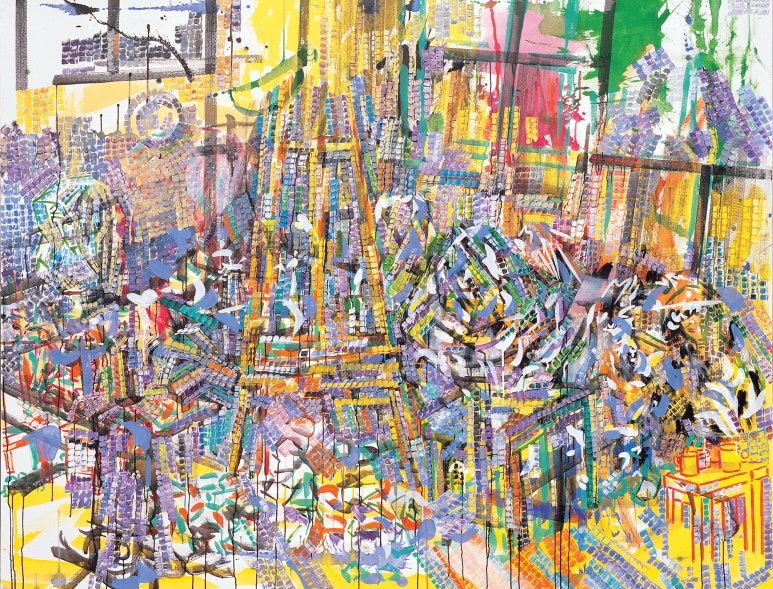
another kind of certainty. His studio paintings and self-portraits from the
1990s reduce fact to the realm of direct experience, yet show that this is a
reality possessed and gripped by the painter’s sensibility. He calls this
“emotional realism.”
If painting is an aesthetic elucidation of the world, then this world is
too wide for me to interpret with certainty. Too vast. … I do not care whether
my paintings are called realism or whether they cannot be, but I believe my
paintings are more real than those of any realist. … I call my realism
mysterious realism, or mysteriously scientific realism, or emotional realism,
because it is a ‘realness’ that can be inevitably felt through the senses. (“If
You Ask What My Painting Is,” July 8, 1990)
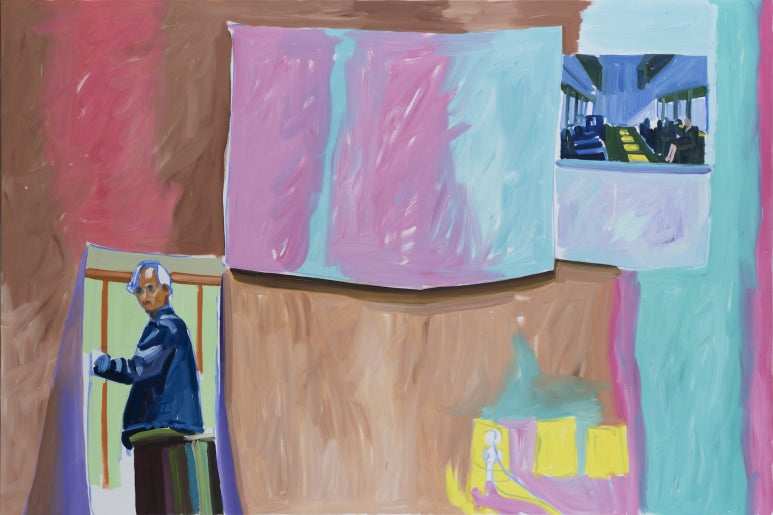
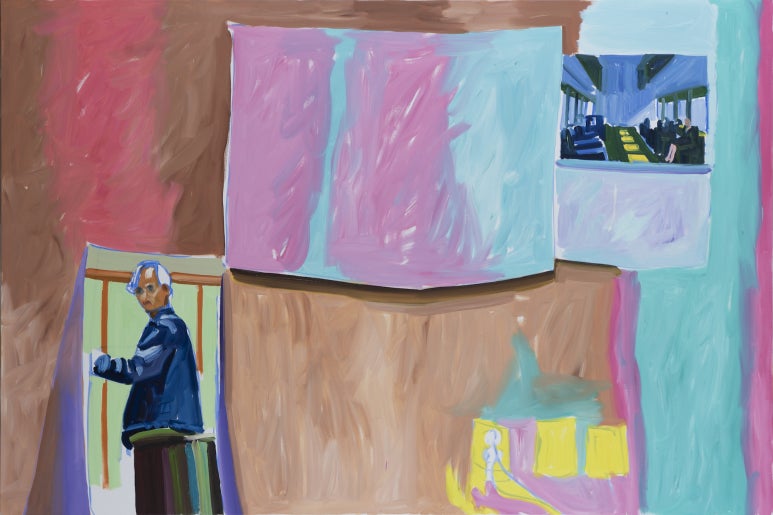
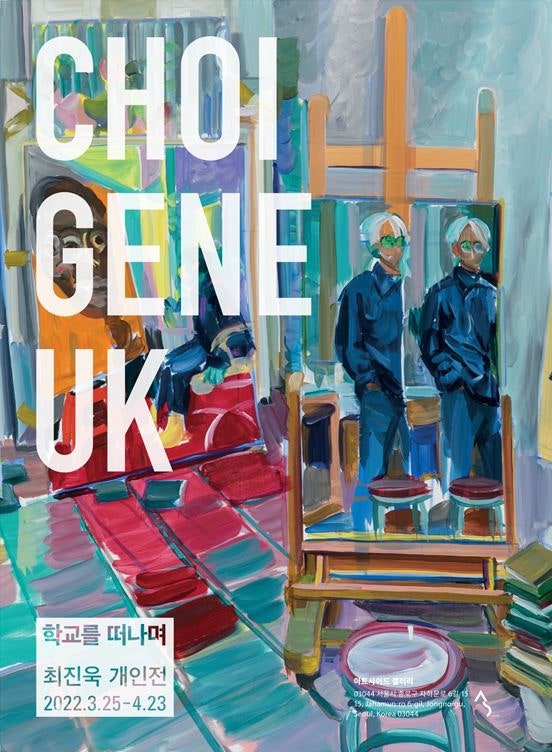
In two black-and-white self-portraits painted in 1992, the painter in
the mirror looks at us. Borrowing the mirror, the painter signals his
presence—his being-there—within the painted space. The painter who stood before
the mirror was there; he is in the painting; and the viewer standing before the
painting sees the world the painter saw. A somewhat intricate relationship
forms among the painter, the painting, and the viewer, revolving around layers
of reality. We each weave our own world from realities that are incidentally
projected onto a screen like a mirror. In this sense, Choi Gene Uk’s emotional
realism does not deal with the temporary suspension of a universal reality; it
deals with the way reality exists within us. It relates to an unceasing exchange
discovered between the micro-world of individual experience and the structure
of the vast world. In this process, familiar objects suddenly become strange,
and the universal aspect of an object rises into symbolic metaphor.
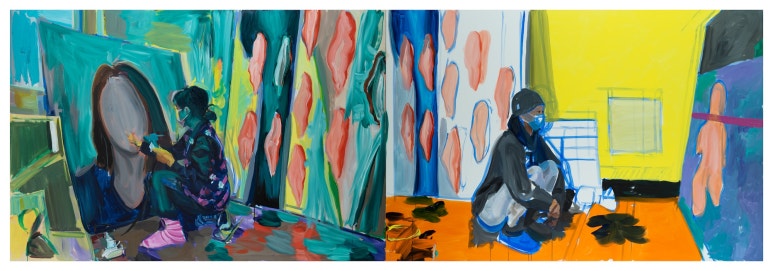
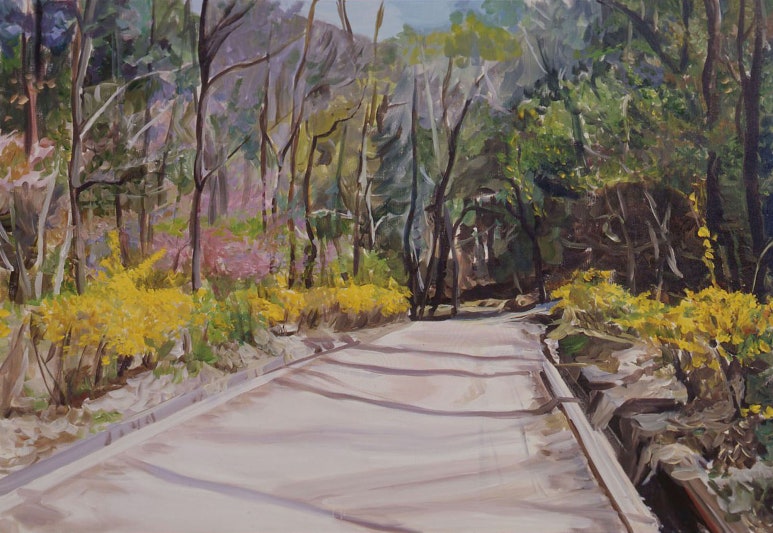
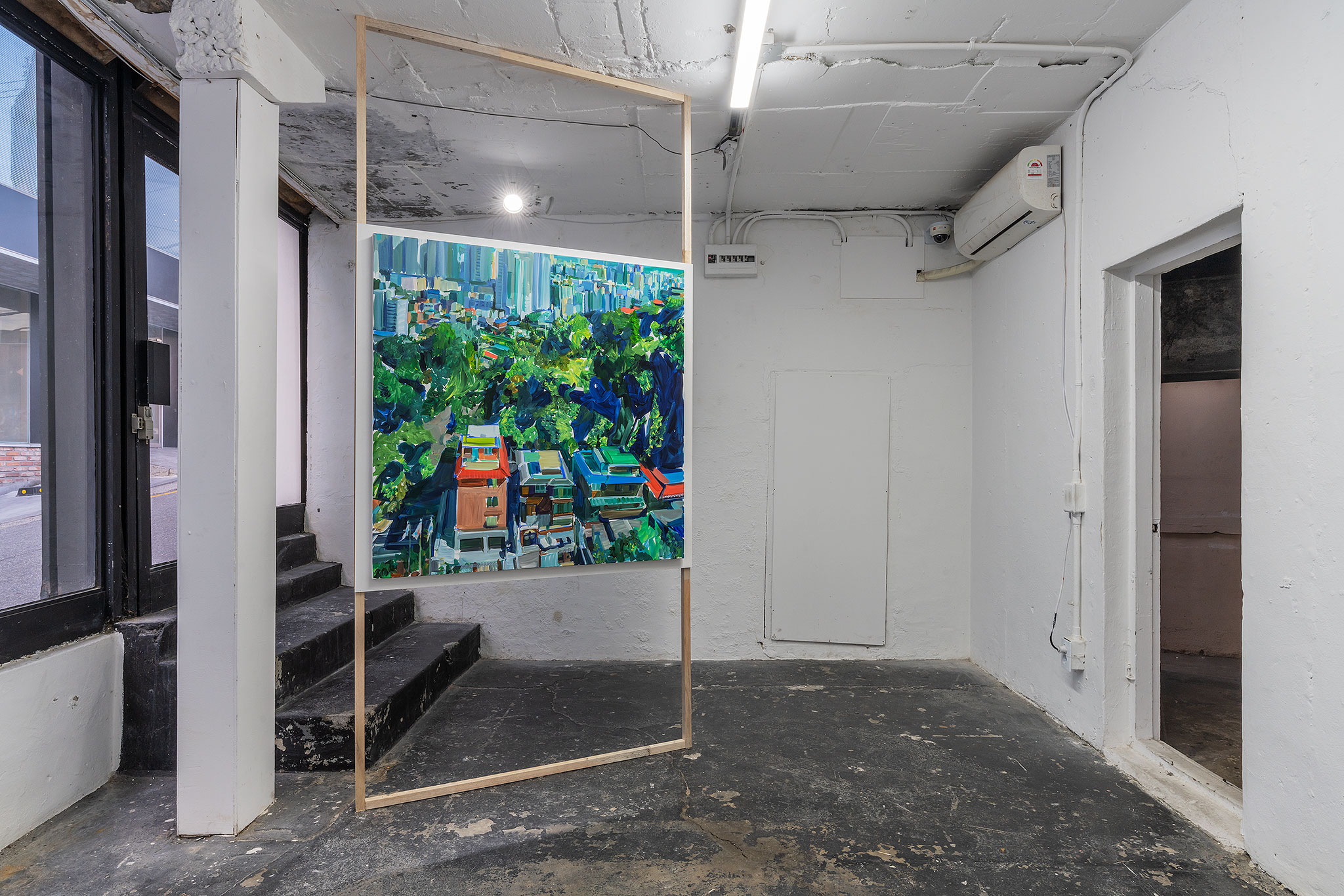
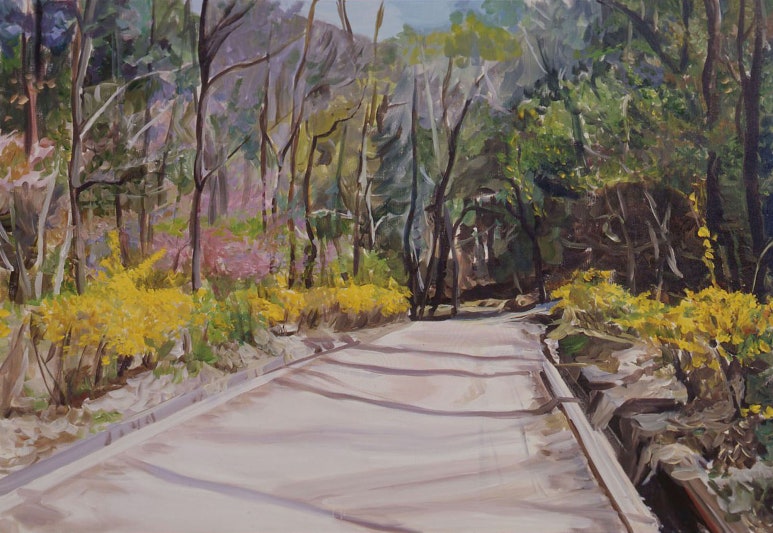
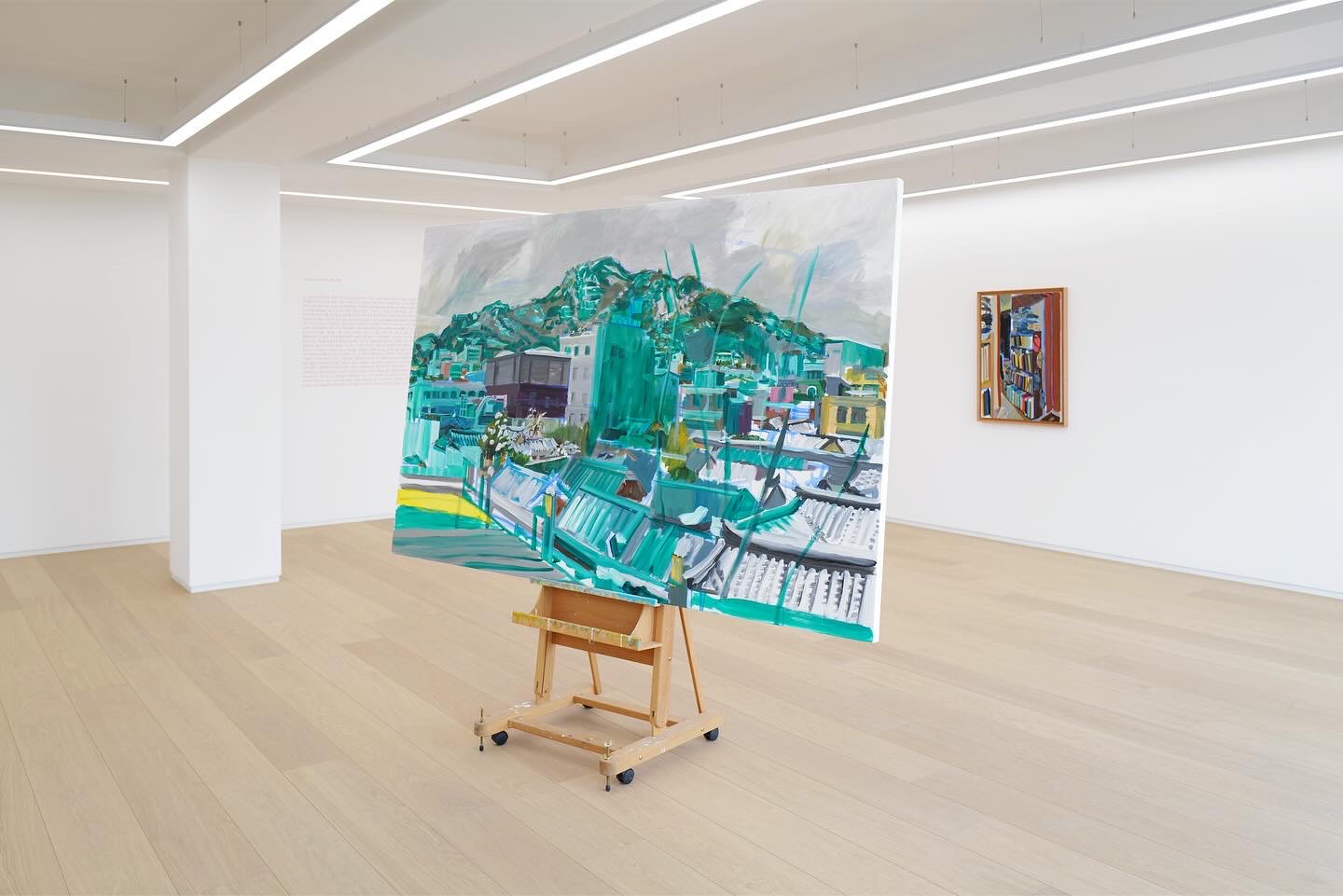
Choi Gene Uk’s landscapes presuppose the projection of
self-consciousness through which the painter receives the external world. They
are constructed spaces made by folding and unfolding the gaze in layers, and
combinations of force and motion—touching, applying, and pressing the brush.
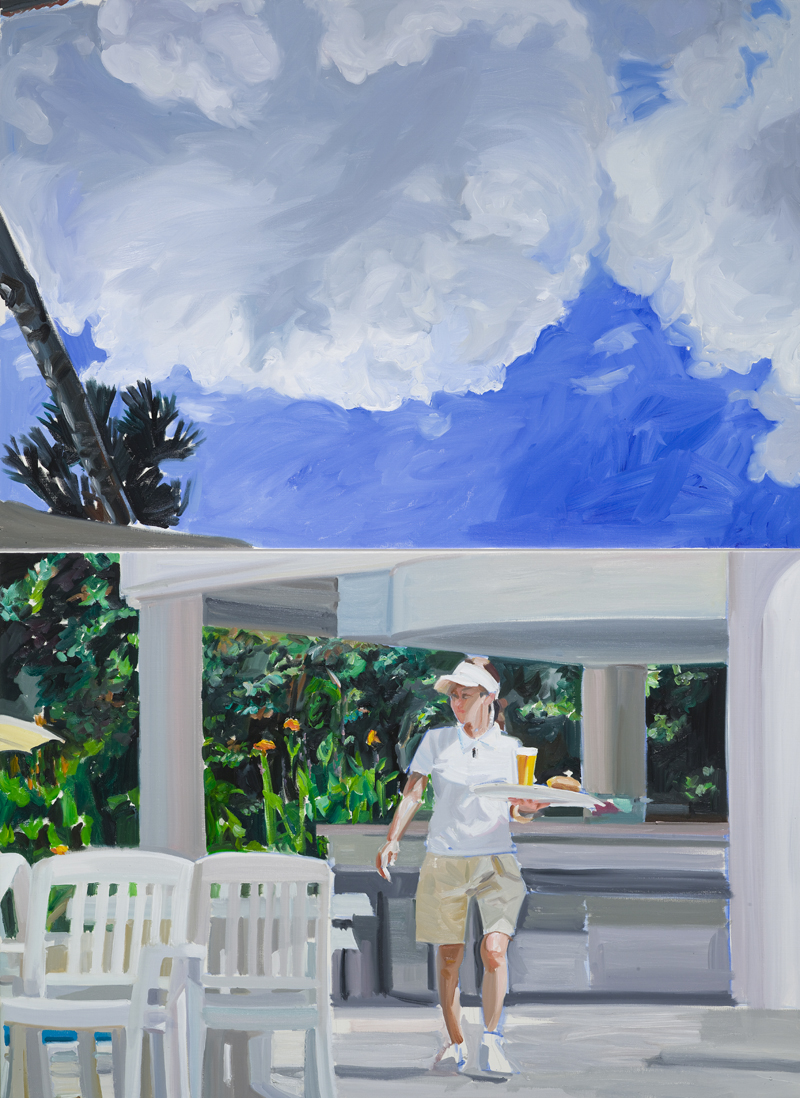
His method of photographing first and then painting breaks down the
simultaneity of real space, creating an unfamiliarity that comes from
re-editing and re-arranging.
The 1991 work Returning from School
2 overlays multiple images atop an everyday scene; such contrasts
become matters of causality, joy and sorrow, narrative, and the structure of
the picture produces crossings of different times. What we discover through
this is the tension produced by the collision of signifiers, and it is here
that the formal dimension of emotional realism shifts into a historical
context. The construction of the image, the selection of scenes, and the
correspondences among pictorial elements mediate meaning, bringing his
paintings to an emotionally grounded facticity.
This calls to mind a state in which the realism–modernism debate between
Lukács and Brecht has arrived at a kind of convergence. Lukács argued that the
realist is connected to both the individual’s experience and historical
totality, and presents social facts through everyday details. Brecht, by
contrast, maintained that such details require abstraction from individuals’
perspectives, and that through this one can grope toward ‘totality’; he
explained that this totality emerges in the process by which images are
constructed and reconstructed. In other words, the tension between modernism
and realism becomes possible through quotation and metonymy between whole and
part; in Choi Gene Uk’s case, this appears as the coexistence of painting’s
expressive function and the period-specificity of meaning.