1.
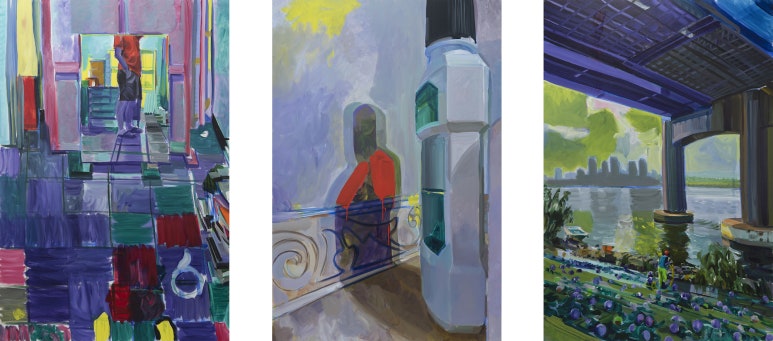
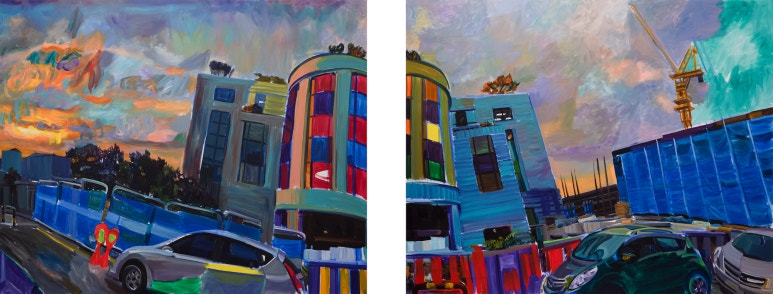
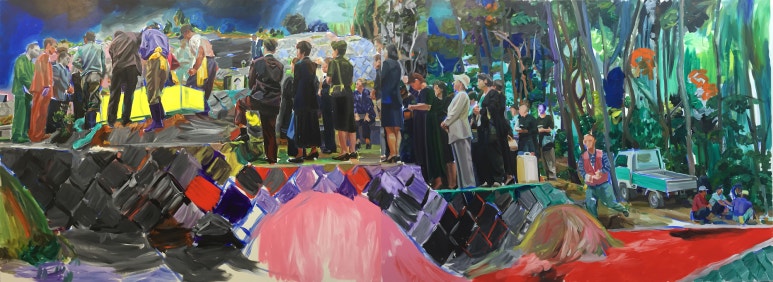
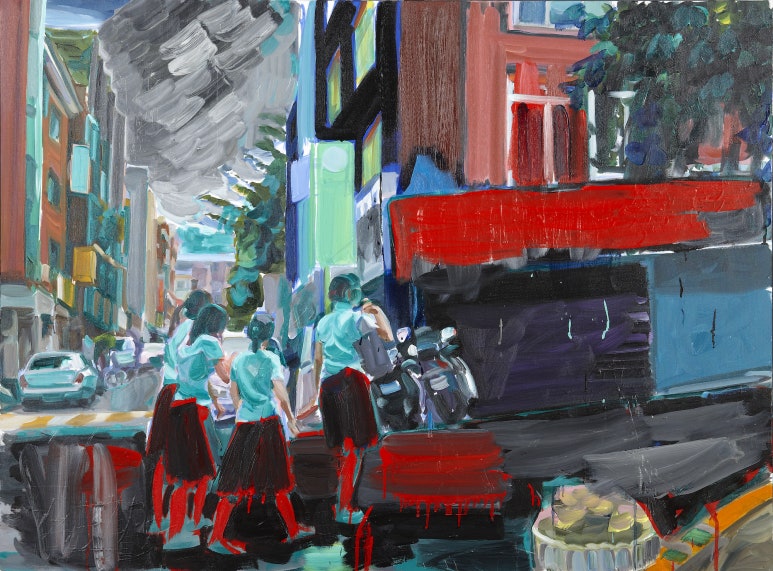
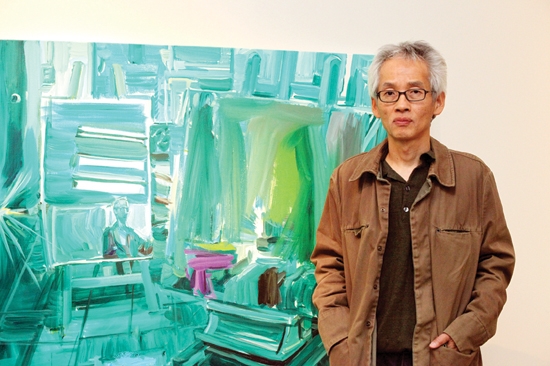
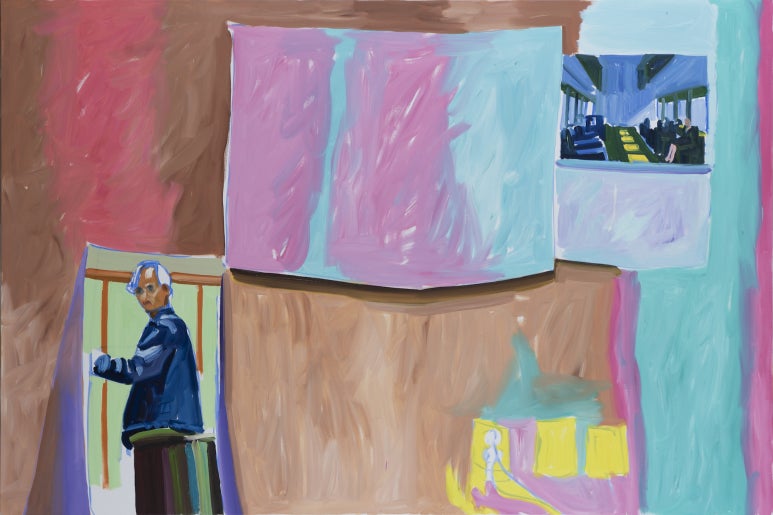
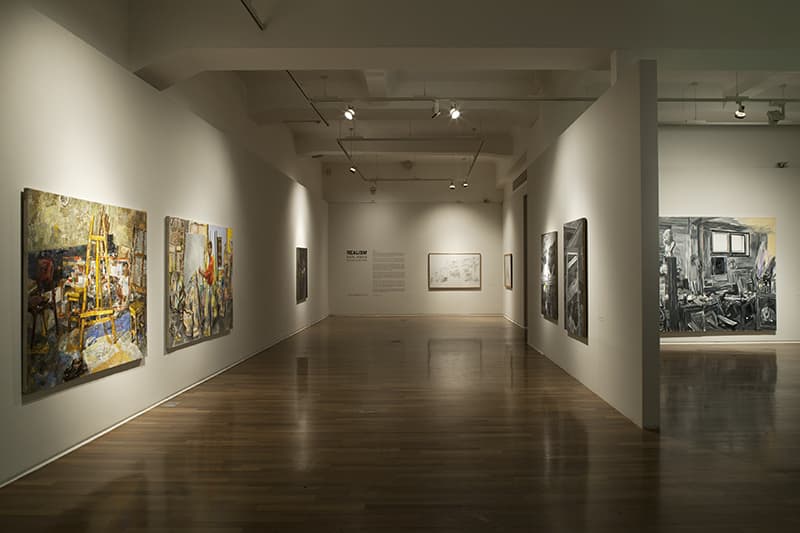
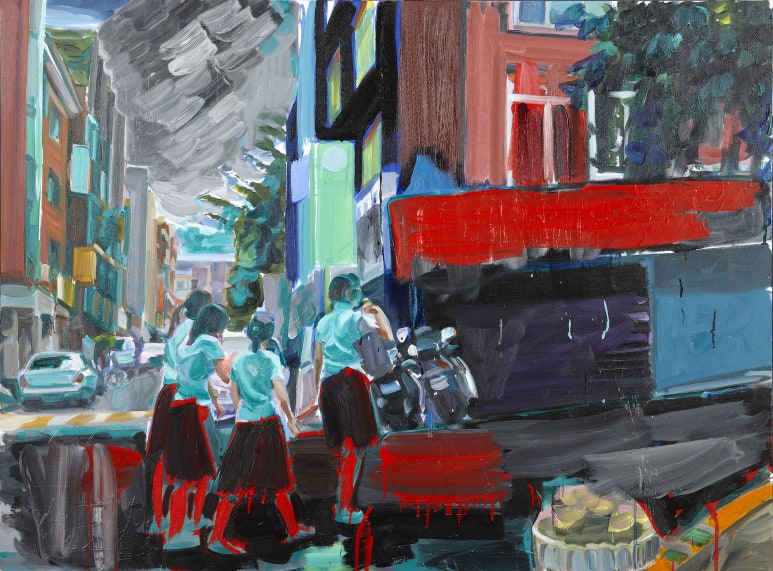
There are many paintings by Choi Gene Uk titled ‘In Class.’ These works
were made during the period from after 1984—when he returned from roughly three
years in the United States—up to 1990, when he began to paint a series titled
Beginning of the Painting. Yet in fact, in a certain sense,
all of the works from this period—and even the works from his time in the
United States before that—can be considered paintings ‘in class.’ In other
words, rather than belonging to the category of finished works (regardless of
the level of finish) with a completed system of self-expression and meaning,
these paintings are strongly characterized as ‘in-progress’ works, closer to
training in methods of revealing and expressing their subjects.
Having
inevitably grown too accustomed to looking at so-called ‘finished works,’ I
still remember feeling quite flustered whenever these paintings were hung in
exhibition spaces. (Of course, any painting is, in one sense, ‘in progress,’
and in another sense a ‘finished work’—regardless of whether it is good or bad.
In any case, what I wish to emphasize here is that Choi’s paintings from this
period clearly and consciously disclose the signs of a process of training and
lessons oriented toward a certain kind of completion.)
In fact, anyone with even a small amount of prior knowledge about his
work will know that he is an exceptionally skilled technician—rare to
encounter. As one fellow painter put it, he possesses a virtuosity that makes
it seem as though he could ‘paint anything in his own way.’ Given such
capability, it is difficult not to wonder why he so persistently avoided fully
‘finished’ paintings, or why he hesitated to approach them straightforwardly.
Still, it is true that even these ‘in-progress’ works allowed viewers to feel
anticipation and pleasure. Perhaps it was a kind of potential. Within his
paintings, elements that might unravel stubborn knots would intermittently
reveal themselves. So what, then, was it that required him to undergo such a
long ‘course’ of lessons? Or, what was it that he sought to gain through those
lessons?
2.
Let us pose a question: what kind of pleasure or insight does a ‘good’
painting give us? Of course, no single answer can be offered easily. As an
image, a painting stimulates the visual associations that have accumulated
through life and sunk into our memories—through countless formal elements such
as line and color, composition, brushwork, and so on. Following the directions
suggested by these elements, we ourselves combine and reconstruct such
associations, eventually arriving at a response.
The responses produced by a painting can take many forms. They may
remain on the level of simple sensory pleasure in response to formal elements,
or they may provide the joy of discovery stemming from familiarity with the
represented image. They may also generate emotion in relation to the story the
painting offers. But in the case of a ‘good’ painting, what is carried over
into our consciousness after our initial response and after we have left the
work behind is more than our memory of the event depicted, or our memory of the
forms, colors, or spaces the artist has previously used and arranged. I believe
it is, at the most fundamental level, the artist’s ‘way of seeing’ the world.
The forms he uses and the events we can recognize are merely means for conveying
this ‘way of seeing.’
This ‘way of seeing’ is the source of the pleasure that a good painting
can provide. That pleasure begins by reaching into the roots of our senses and
then spreads outward through an awakening. And this awakening is one in which
we confirm—often with surprise—the power that already resides within us. That
is, as a ‘way of seeing’ expands us through its sameness and difference in
relation to our own ‘way of seeing,’ we come to realize our own potential. For
this reason, it does not remain limited to an awakening that merely returns to
a ‘way of seeing’ itself. To see the world implies a certain relationship with
the world, and that relationship includes action. Ultimately, an artist’s ‘way
of seeing’ releases the as-yet unverified potential within us, stirring in us a
desire for new actions, or new modes of action.
3.
In this context, I think that Choi Gene Uk’s work to date can be
understood as the most orthodox and thorough process of effort toward making
his own ‘way of seeing’ visible. At the same time, his emphasis on lessons or
‘being in class’ seems to have been a natural result of his conscious and
unconscious ways of responding to the difficulties and procedures demanded by
that process.
Then how did he begin in order to create his own ‘way of seeing’? As is
well known, by conventional classification he is a figurative artist. He begins
his paintings from direct encounters with the subjects he faces. And from that
point, he desires a ‘way of seeing’ of his own.
Let each of us look around at our surroundings. If we are in a room, we
will likely find ourselves surrounded by a desk, a bed or TV, a ceiling,
windows, floor, and walls. Observe them carefully; look at them. They will
probably feel different from when we previously passed them by as though their
presence were self-evident. First, it may be as if we have never seen them at
all—each thing losing its original meaning (desk, bed, and so on) and
approaching us purely as things in themselves, as material sensations of color,
line, texture, planes, and mass, much like Sartre’s nausea before the sight of
trees.
If that feeling does not appeal to us, we might instead try to
experience them more through the body. In that case, while they may lose their
usual familiarity and direct meaning, they may nonetheless be felt as
continuous in their own way, or even more richly. Perhaps we might detect
condensed emotions and feelings toward those objects—from their colors, or from
the space in which they are placed separately and together—formed through long
acquaintance. Or, as we move repeatedly within the room, we might sense, from
memories of relationships formed at close or far distances, from this direction
or that, from looking down or looking up, the posture and attitude with which
we have faced those things.
Or, in an entirely different way, we might feel them according to
memories of times when sweet music filled the room, or when we stayed there in
pain after confronting something terribly difficult. Even then, they approach
us differently from the everyday image of the room—like a pair of shoes we do
not look at unless there is a problem.
I think the second mode of vision was what Choi Gene Uk focused on.
Among the countless ways of encountering the world of objects, he attended to
precisely this point. He believed such encounters to be richer than any
ordinary encounter. His aspiration to create ‘images that are deeper than
reality, fresher than the most present moment, and never lose their quality
even as time passes’ arises from this understanding. He decided to visualize
this very mode of encounter itself.
“Abstract painting has dominated the art world for nearly a century. It
opened a path for artists to express themselves freely. But art audiences begin
to want to see more than that—more than merely aesthetic qualities. And the
artist as well, as a genuine member of the audience, wants to see more.”
It is difficult here to argue for the validity of that conviction. Doing
so would require a more philosophical discussion connected to fundamental
problems of modern art. What I wish to confirm, however, is that he believed
this figurative realism could deliver richer communication than any other
formal method, and that through it one could see more.
4.
Between confirming the goal of one’s painting and concretely visualizing
it in a rich way lies a deep chasm. The simpler—and the more fundamental—the
goal, the more severe this rupture tends to be. It seems that Choi paid
attention first to the new expressive potential in the second mode of
perception described above.
In the case of figurative painting in Korea, there were scarcely any
examples that could offer concrete help with this problem. To him, such
paintings likely appeared, on one hand, absorbed in surface impressions, or, on
the other, as compromises unable to escape the framework of traditional ways of
seeing. Accordingly, he began an inquiry into how to express a realism that
would allow one to ‘see more.’ The kind of image he had in mind was “more
piercing, more stimulating, more modern, freer yet also real.” Following
Bacon’s example, the remedies he discovered were things like precision,
fluidity, simplicity, gesture, and accidental events.
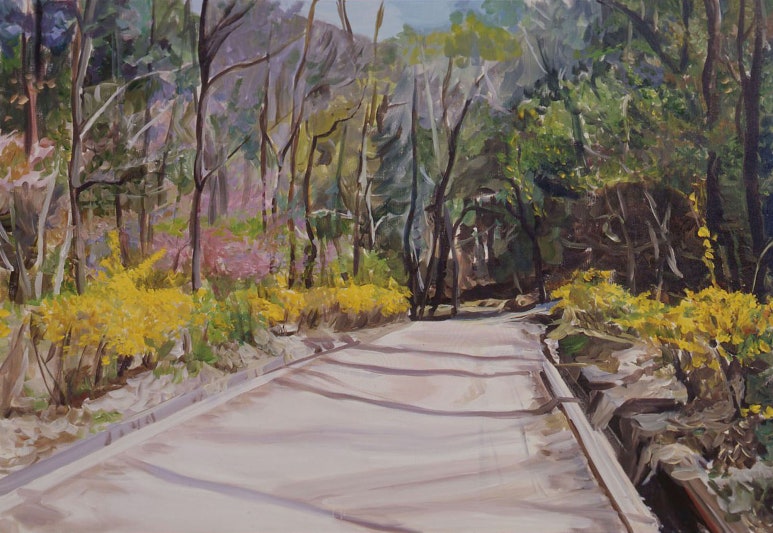
He continued long training to master these remedies. The bicycle series
and the still-life series are representative products of such attempts. These
series are grounded in direct observation, which he regarded as crucial. Here
he does not yet consider the realm of meaning in the subject at all. The
subjects he paints approach pure visual reality—though not so pure as to
exclude every interpretive element implied by the phrase ‘piercing,
stimulating, modern, freer yet also real.’ Still, in these works, the painting
subject (the artist) not only lacks a ‘meaningful feeling’ toward the subject
but deliberately excludes such feeling.
But training is only training. What he aimed at was not really this. To
‘see more,’ one needs an encounter between subjects and the subjectivity that
lives among them and feels them. ‘Images that are deeper than reality, fresher
than the most present moment, and never lose their quality even as time passes’
necessarily require a ‘way of seeing’ in which the living artist intervenes.
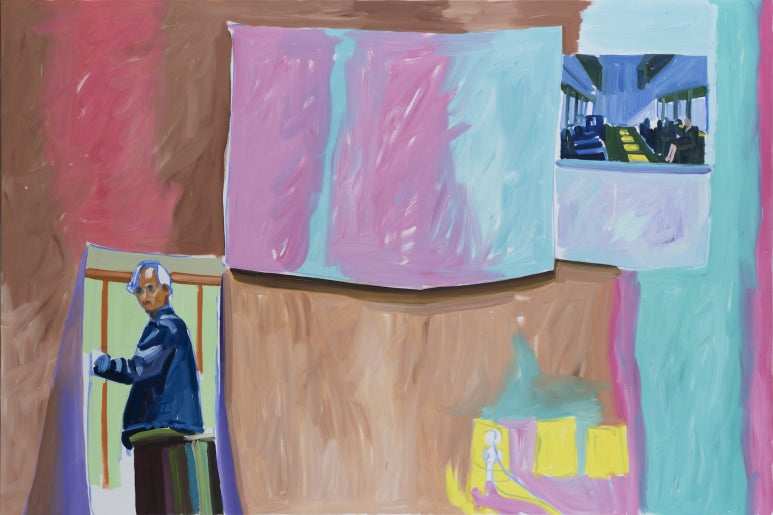
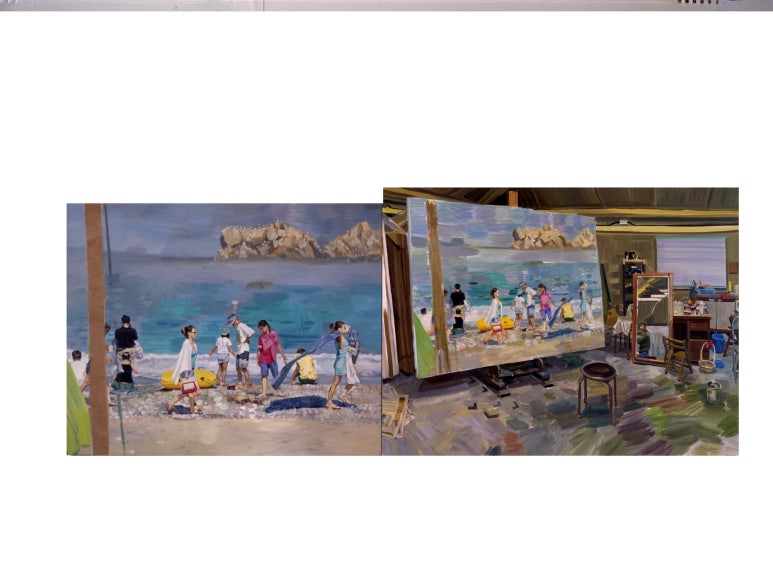
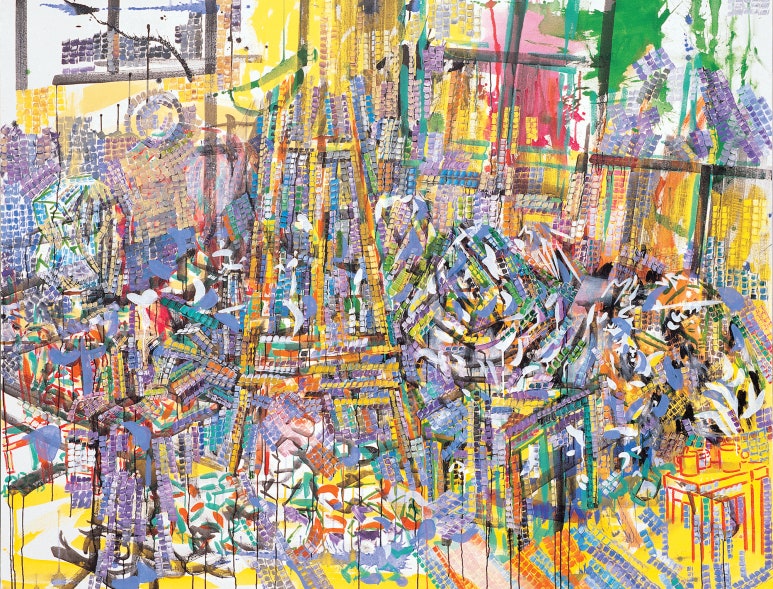
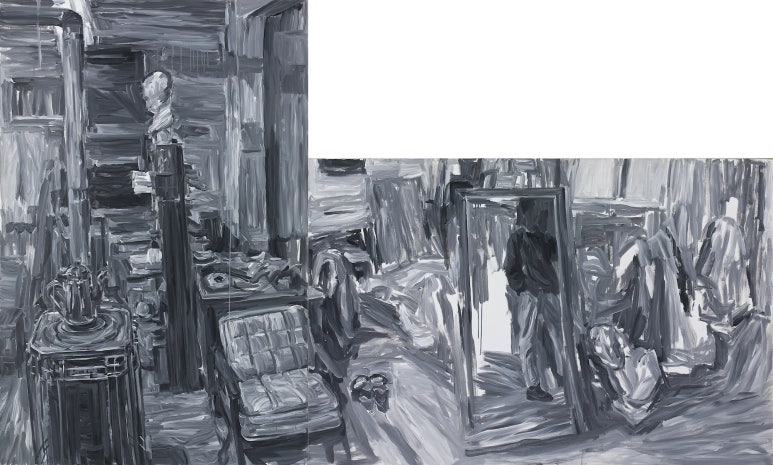
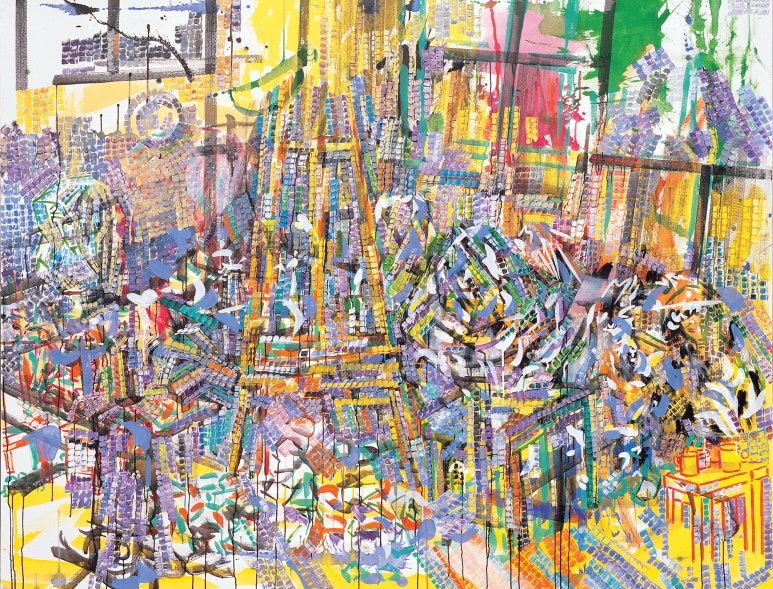
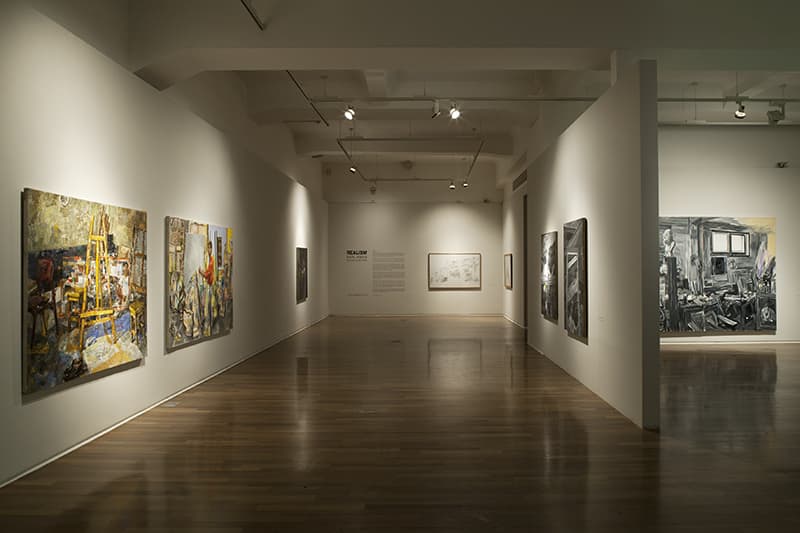
At this point, Choi seems to have undergone long confusion. For about
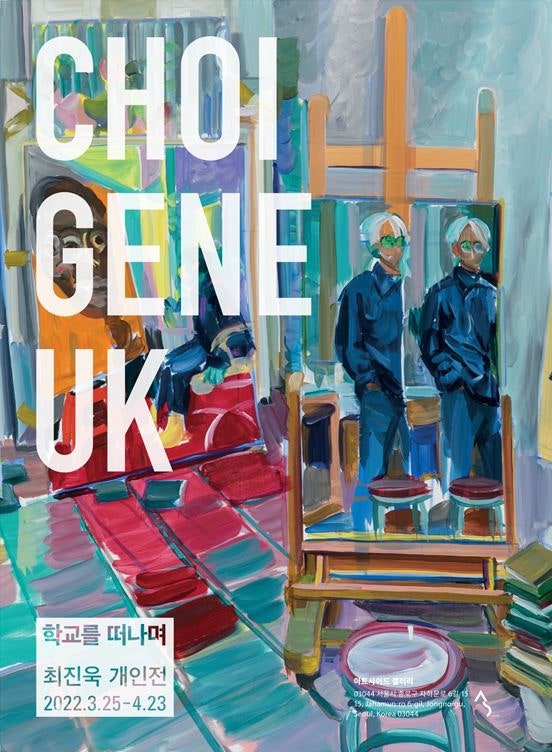
five years from 1986 to 1990, he painted his studio interior. And he tried to
endow those studio paintings with ‘meaningful feeling.’ Or rather, perhaps he
was not fully conscious that what he was doing was precisely the act of
endowing them with ‘meaningful feeling.’ In my view, the paintings from this
period—at least those made before the 1990 gray-toned ‘Beginning of the
Painting’ series—show an ongoing collision between two forces and an inability
to find balance, contrary to his desire to reveal himself through a direct
feeling for the subject. This may have been the result of a habit formed during
his training period: the habit of first revealing the subject as pure visual
reality. In other words, given his position of demanding a language thoroughly
digested according to his original intention rather than an artificial
language, only attempts that, in his words, ‘hit a wall’ were possible—and
indeed, that is what happened.