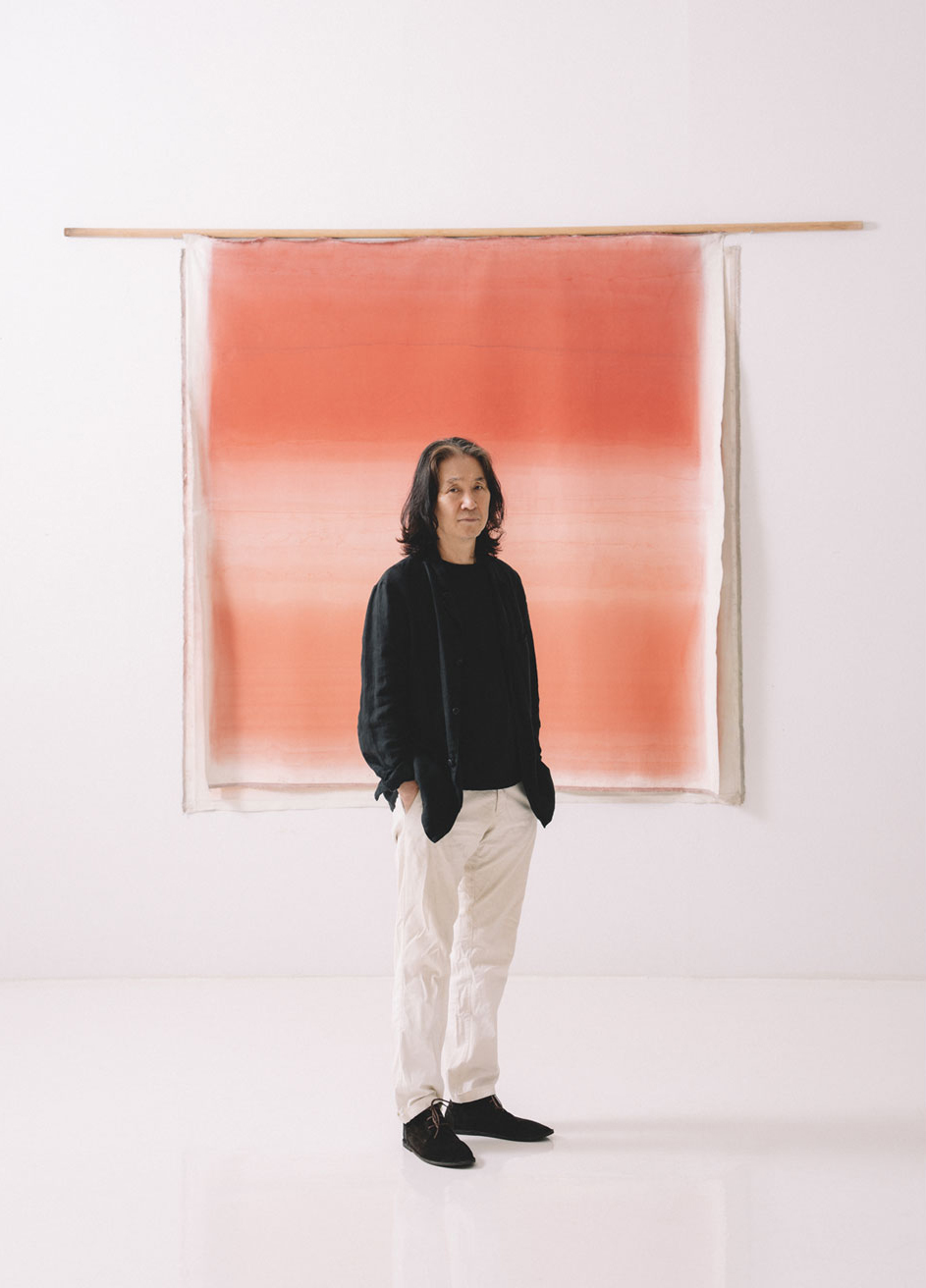
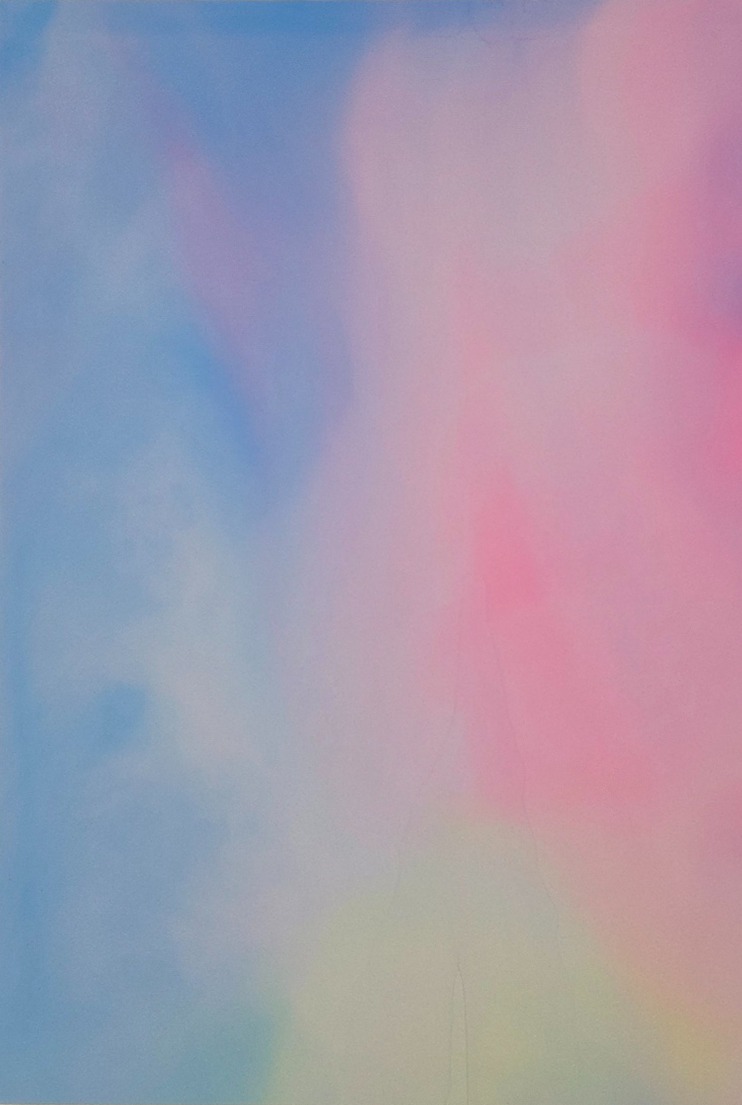
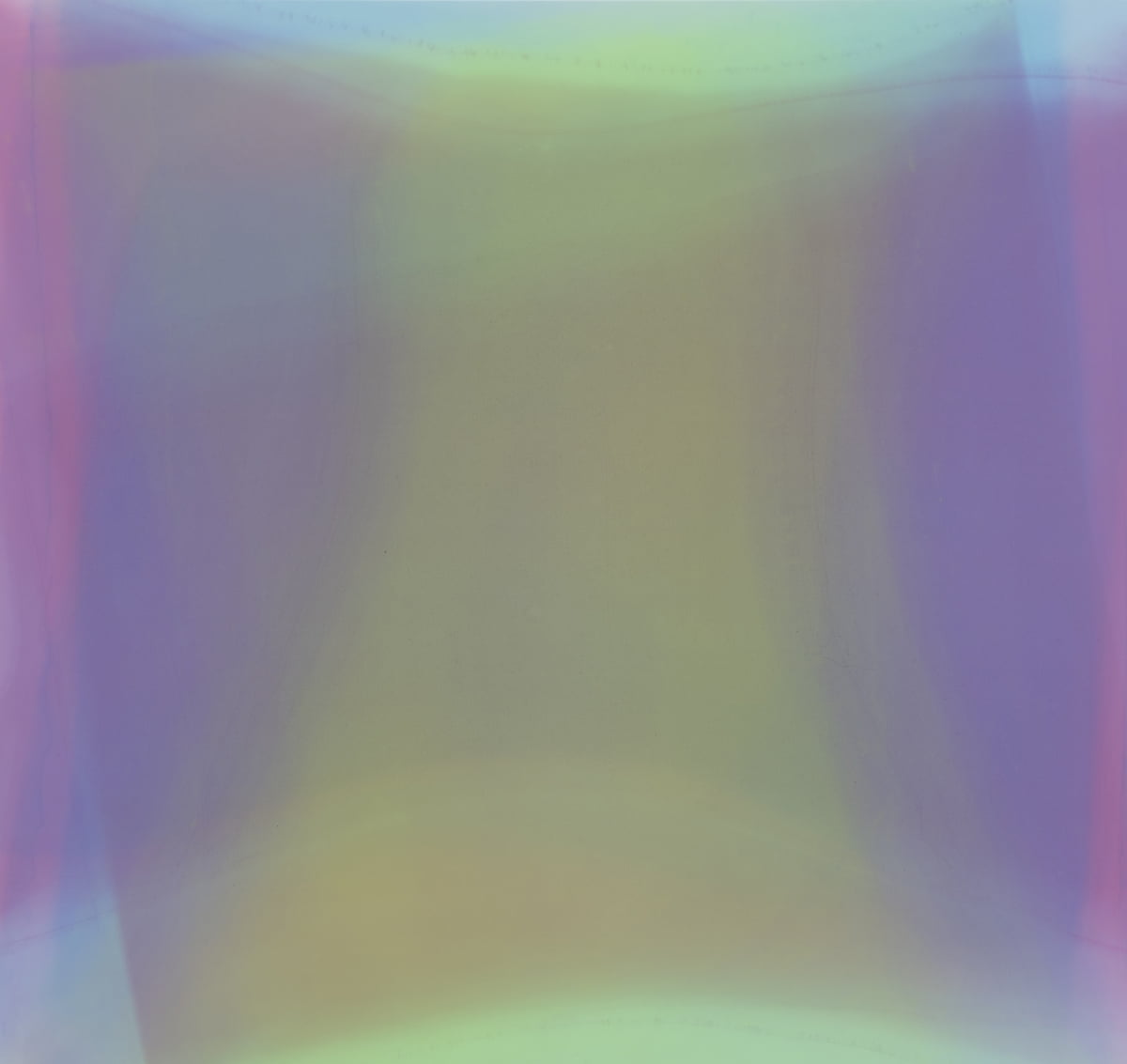
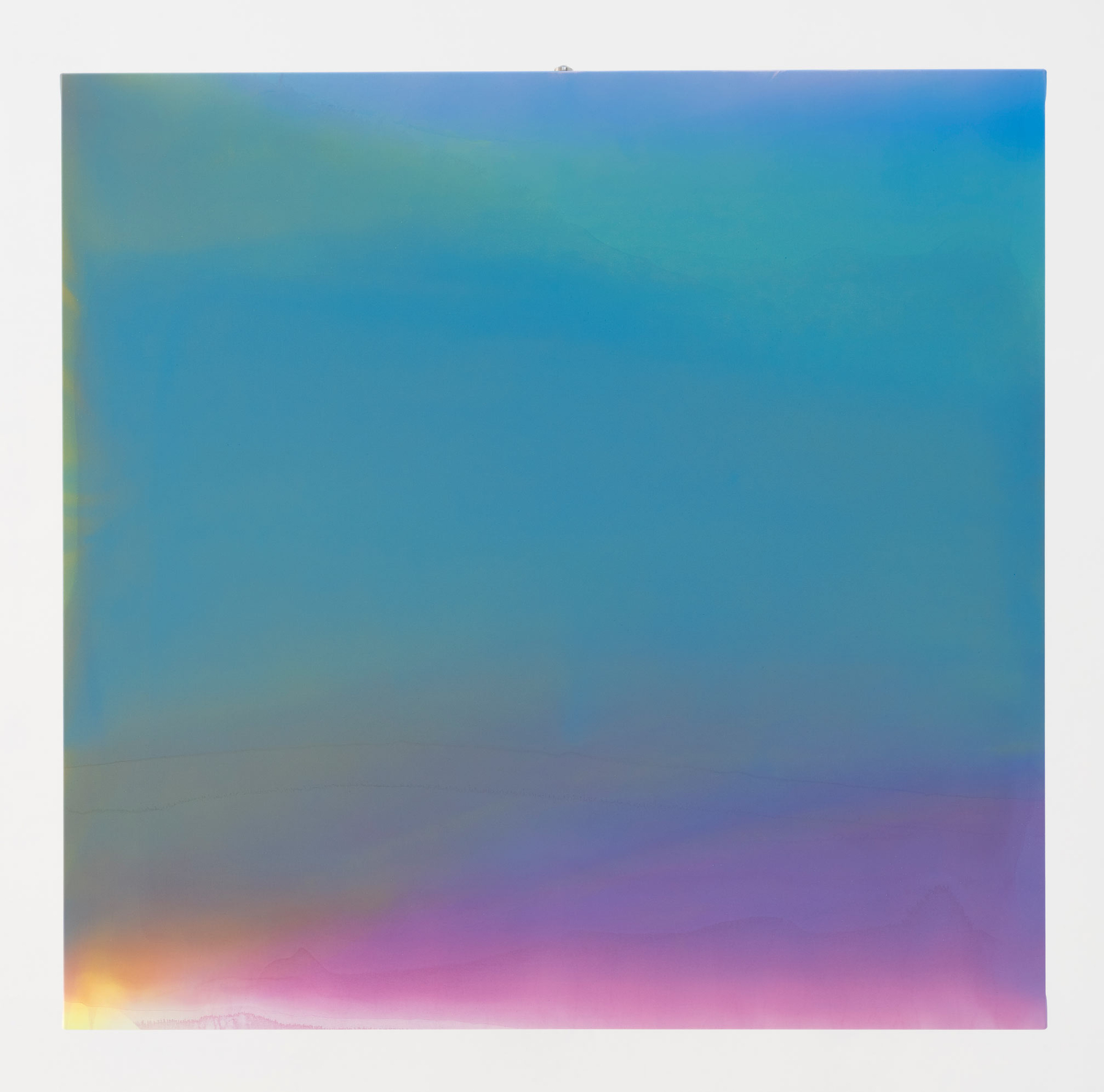
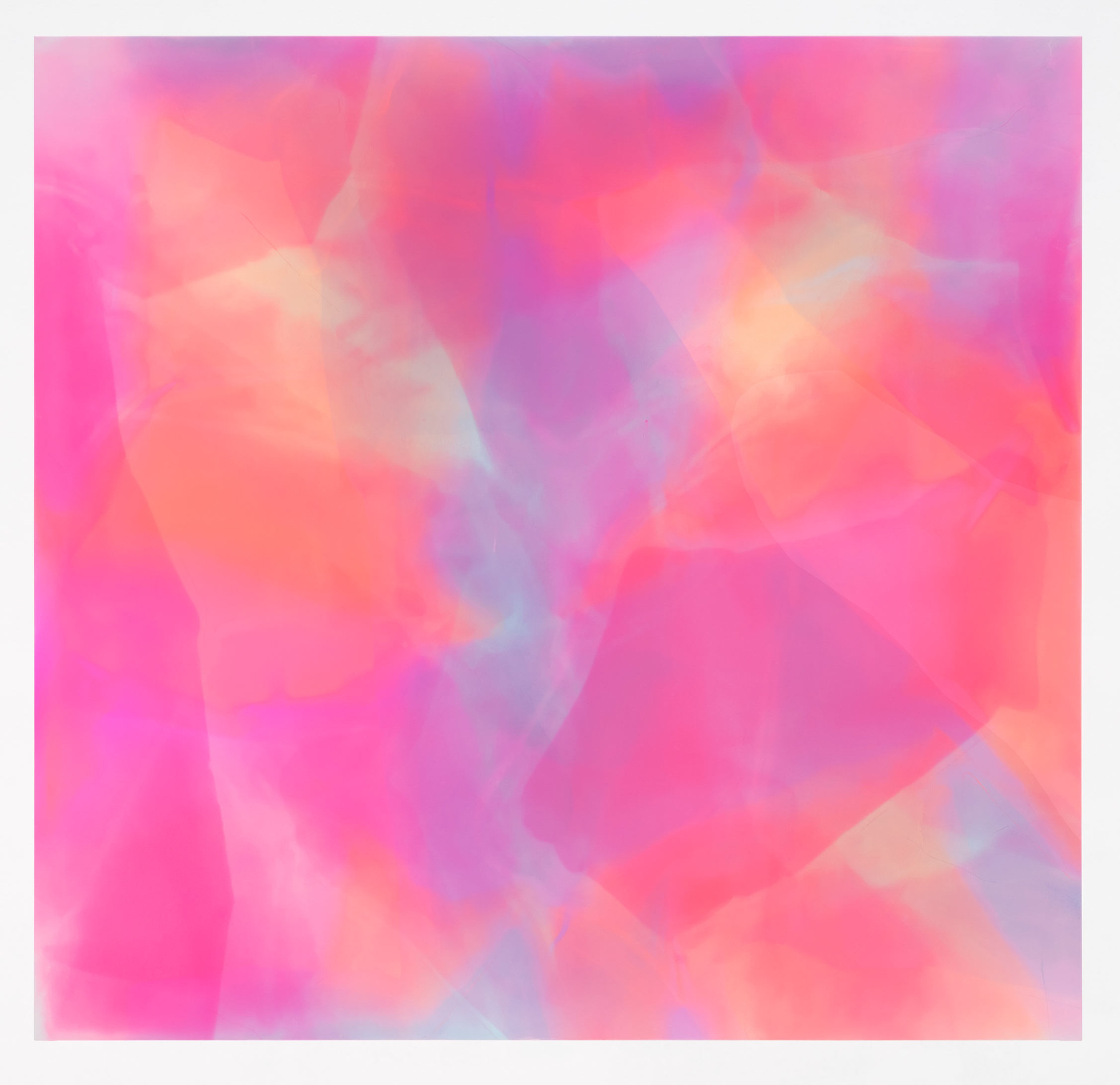
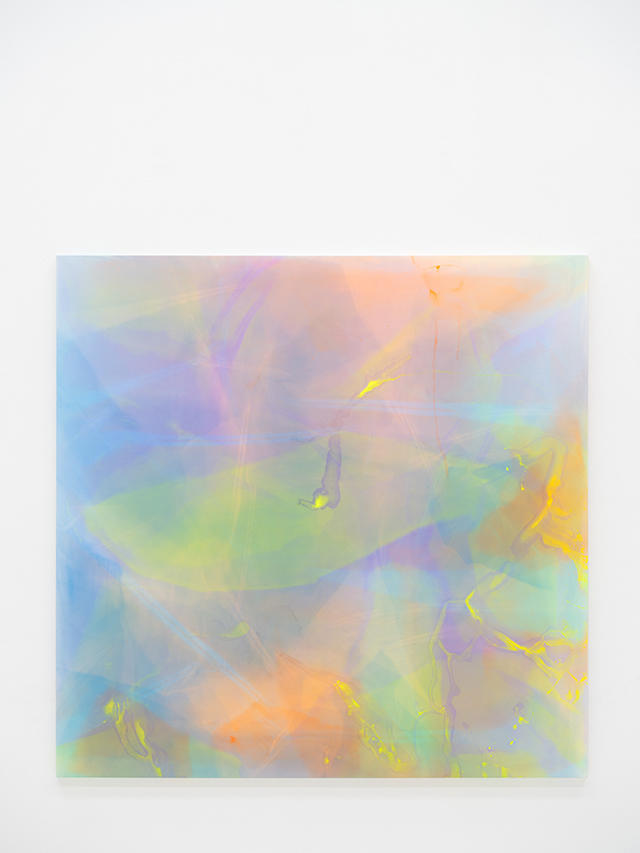
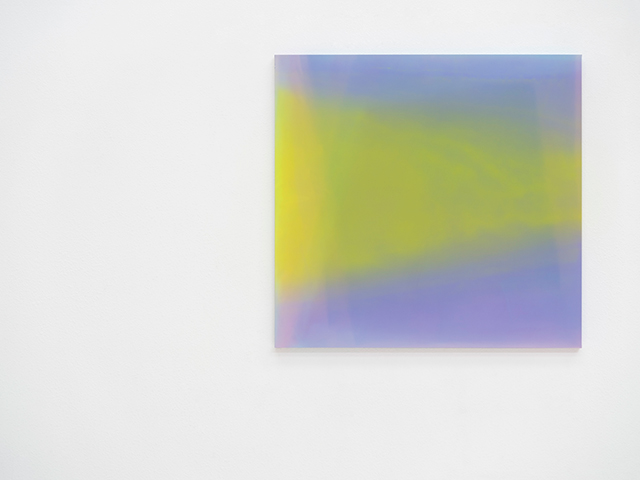
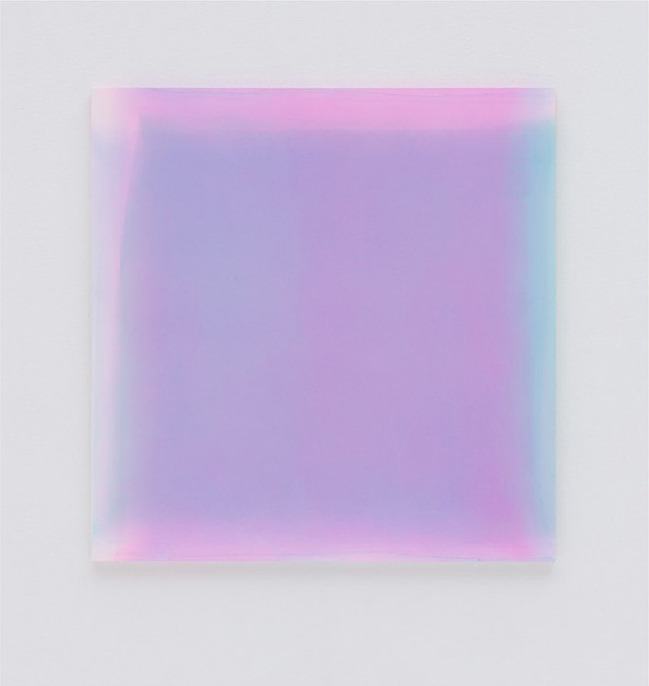
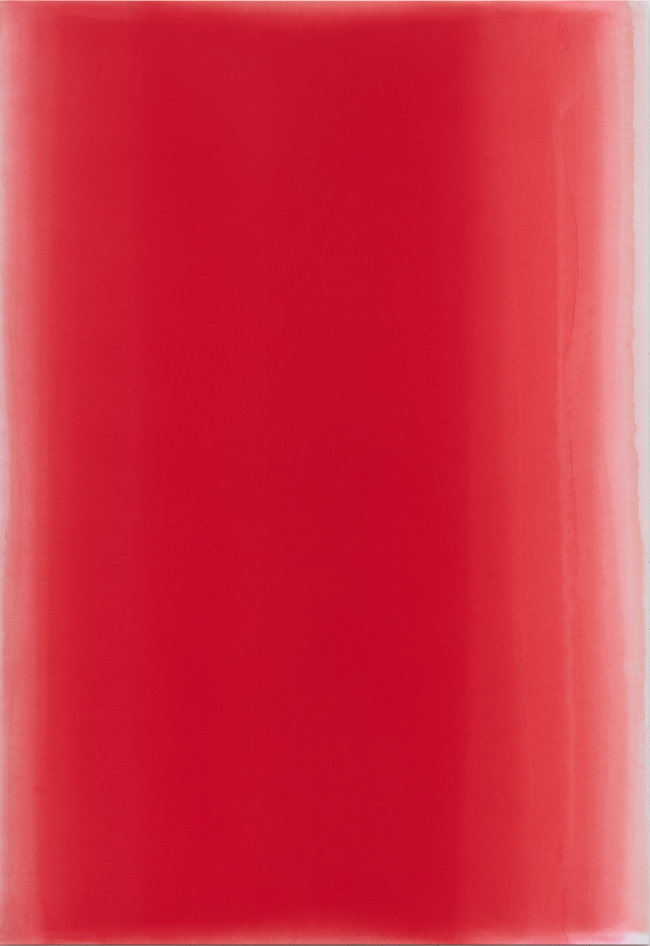
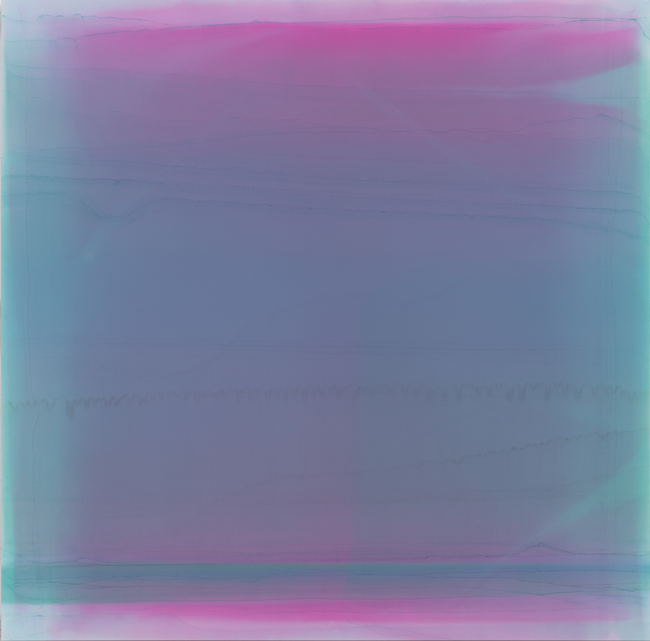
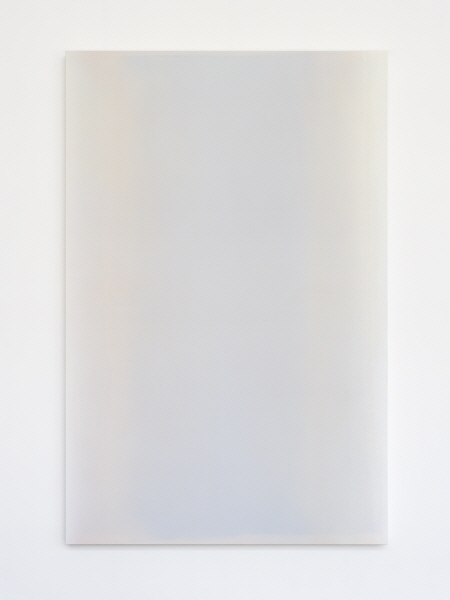
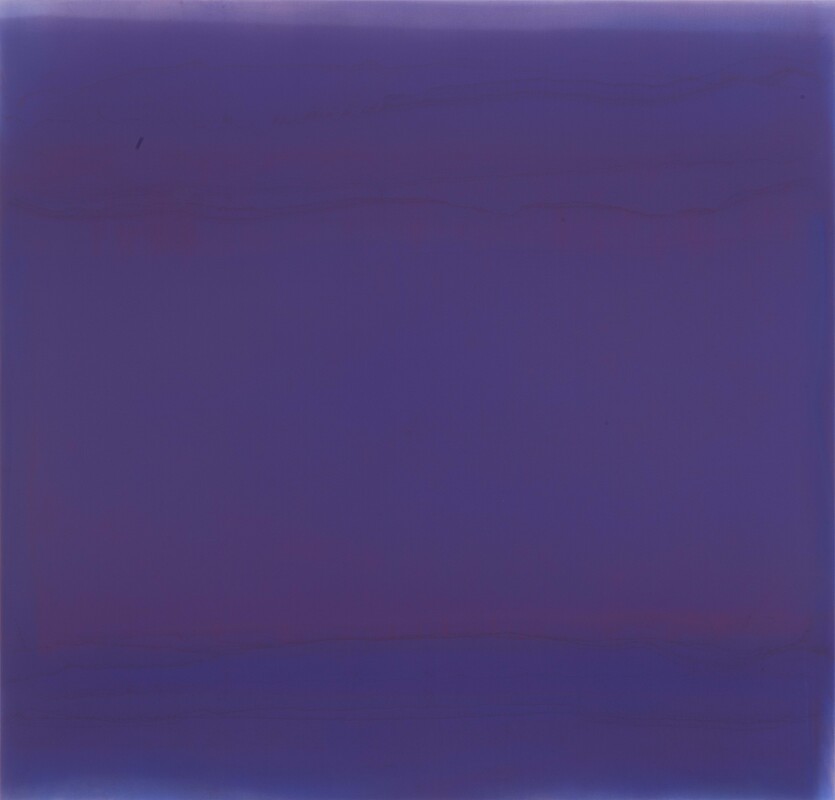
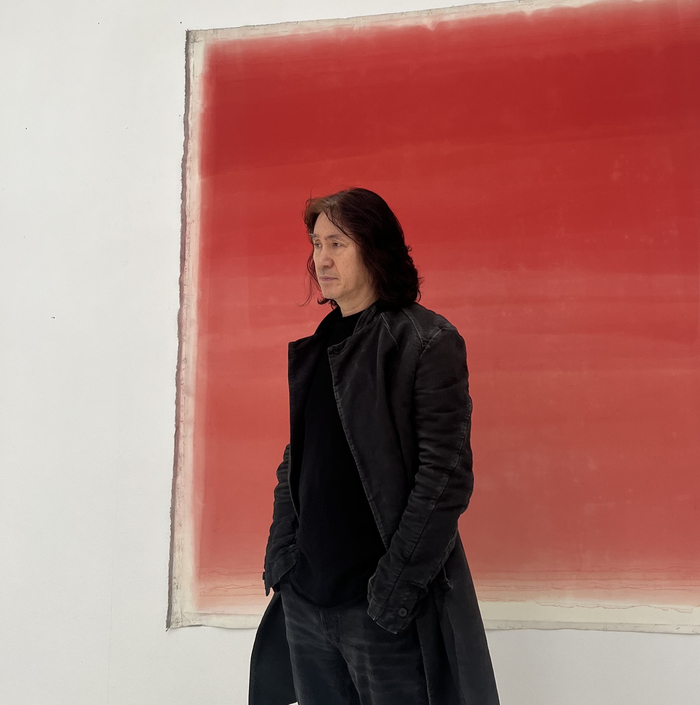
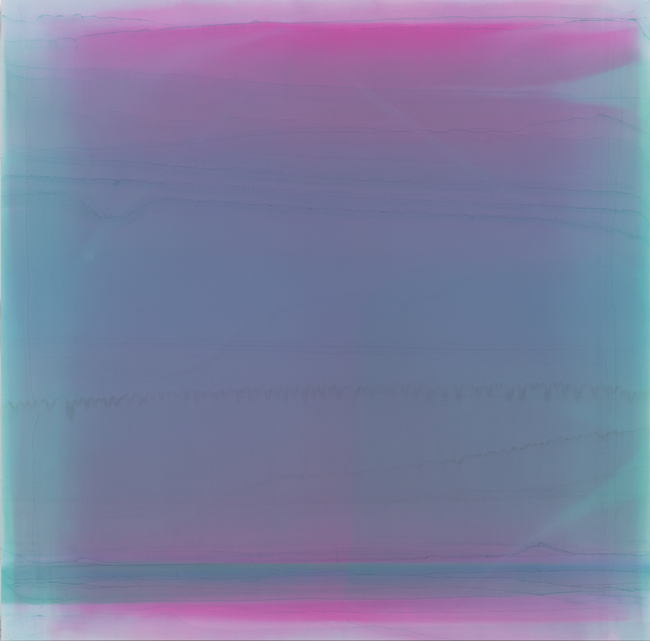
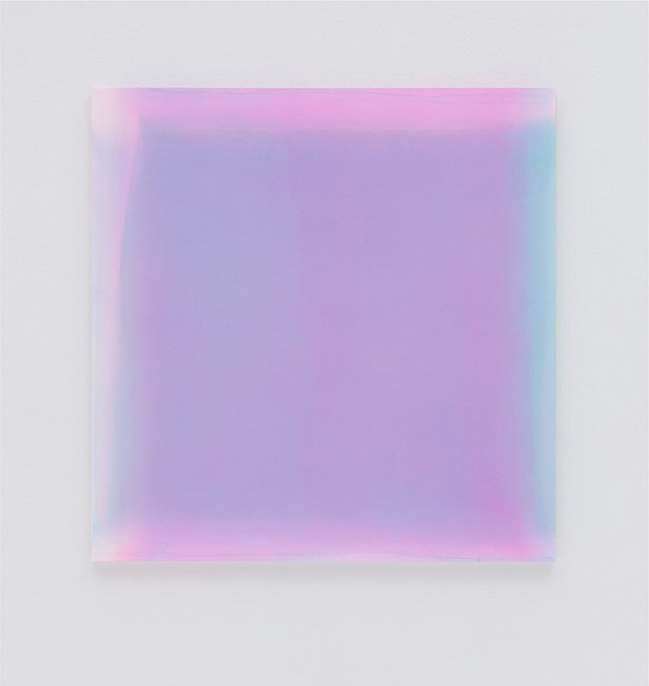
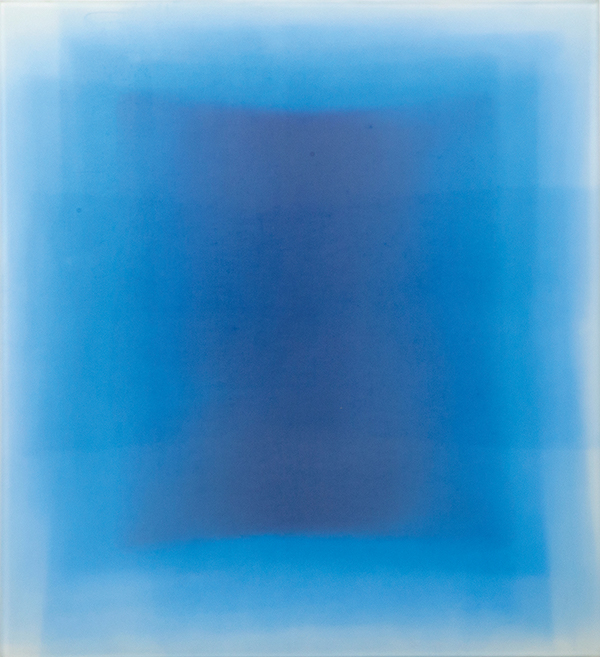
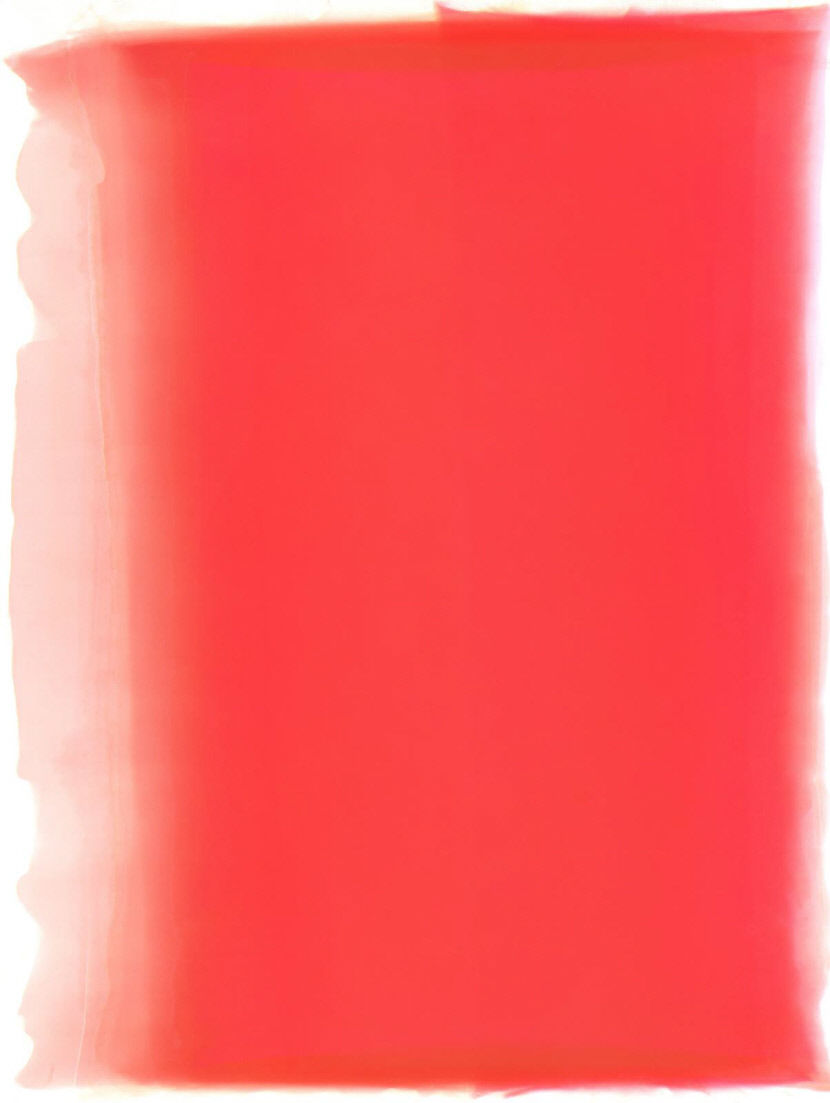
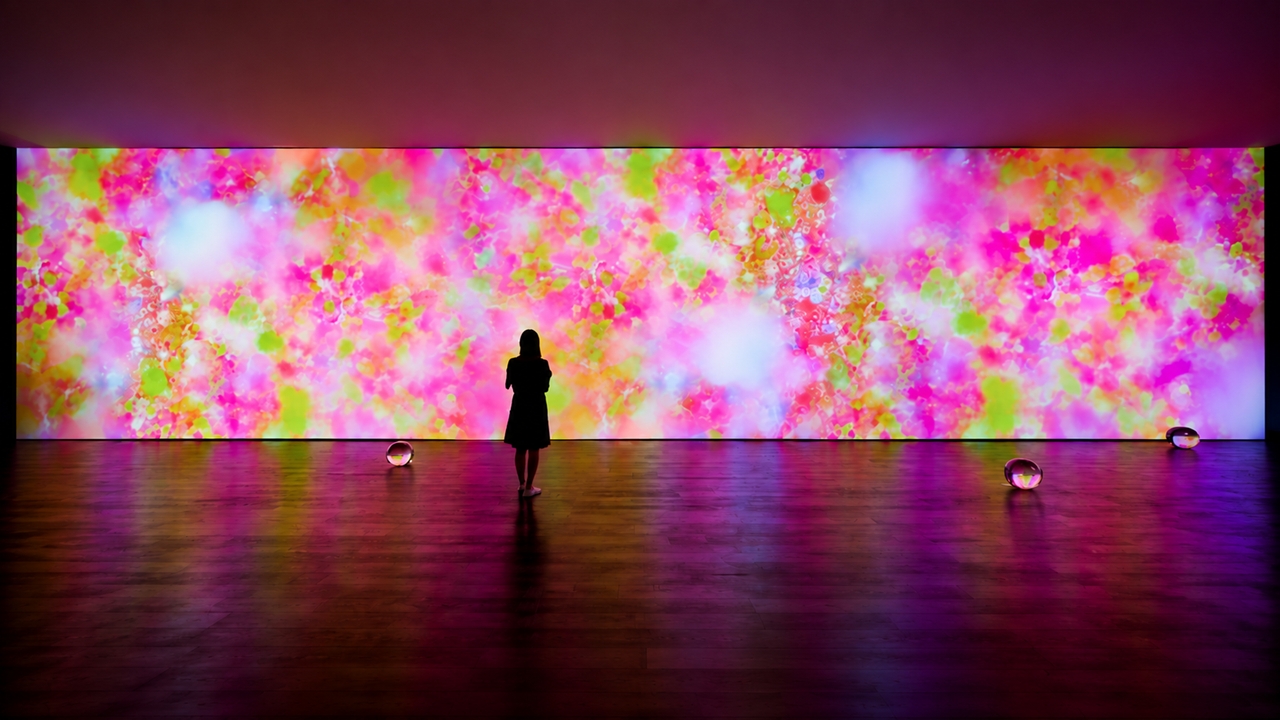
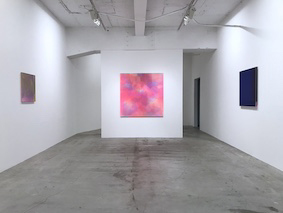
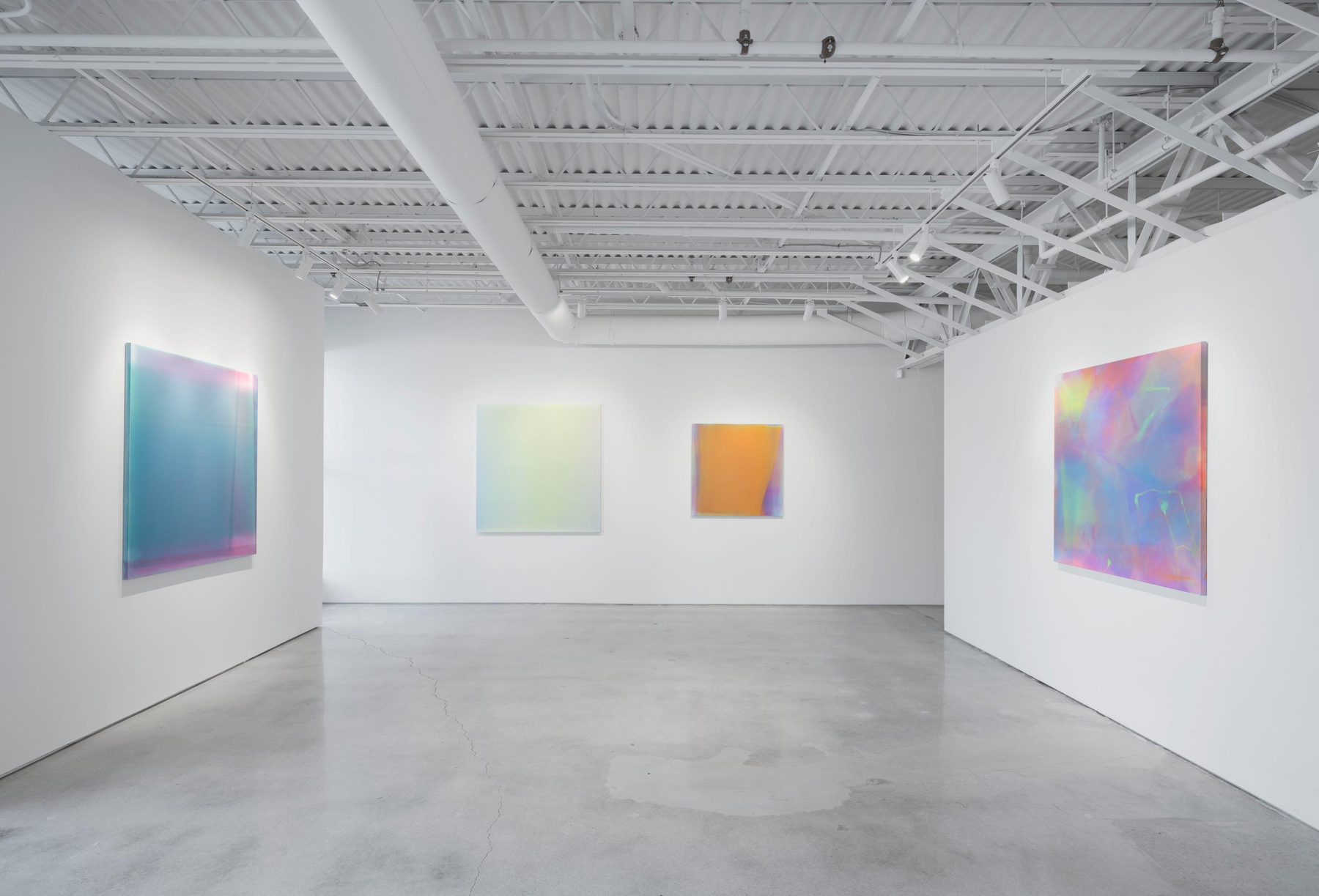
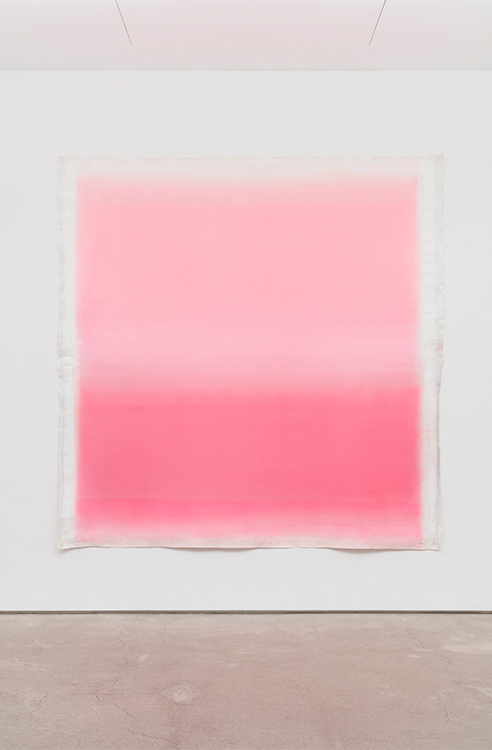
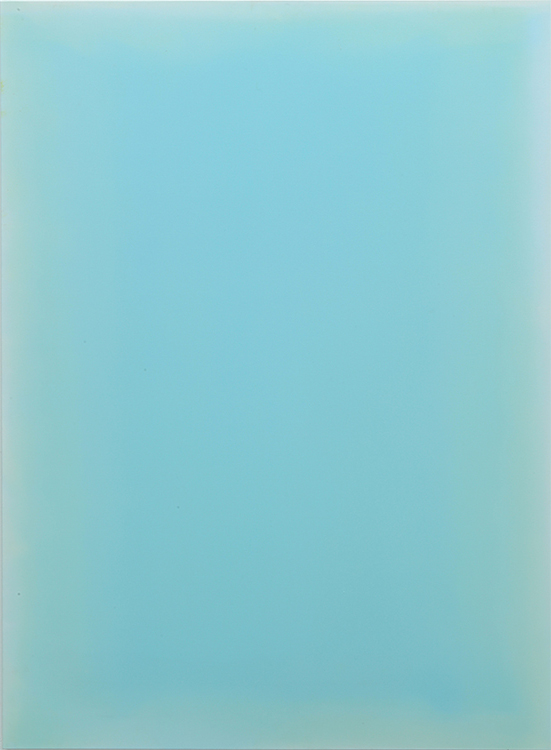
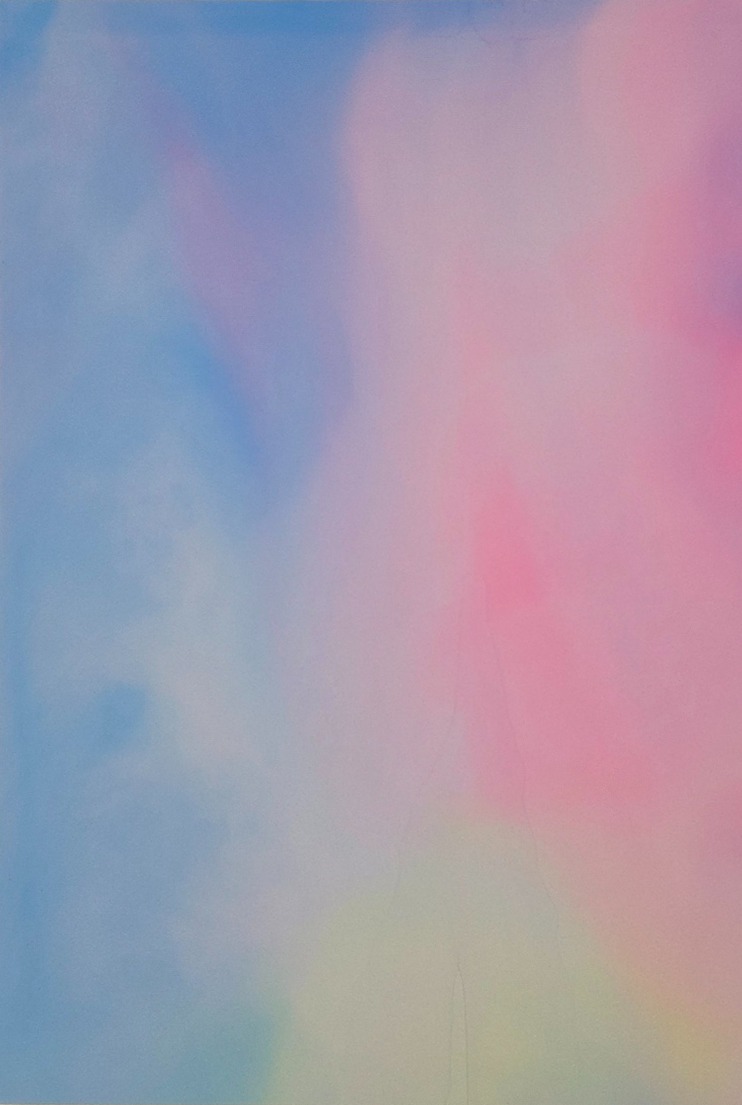
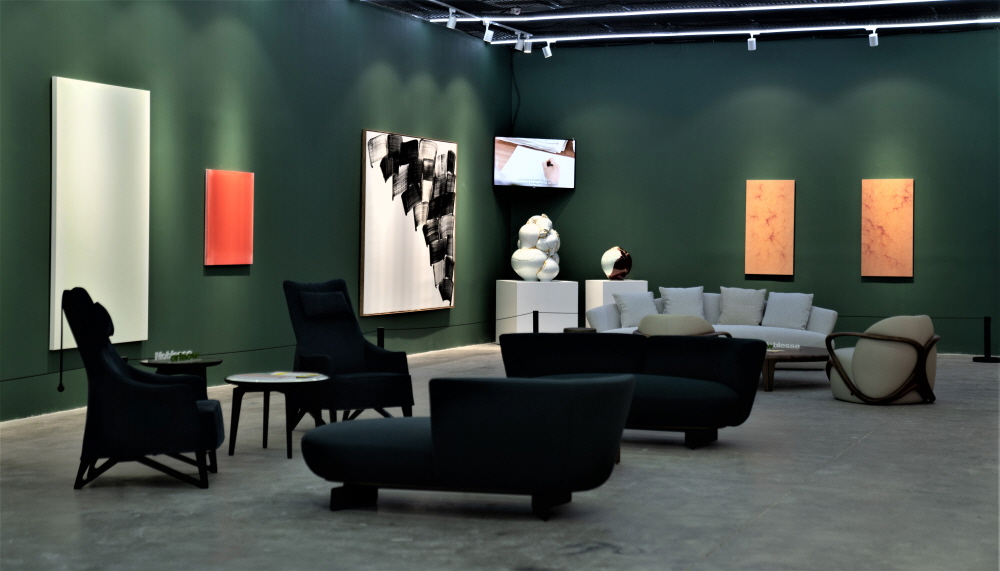
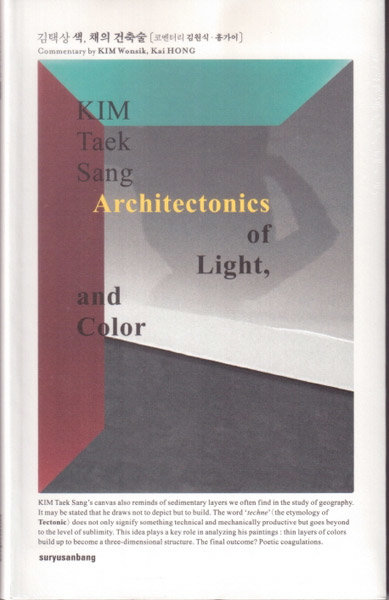
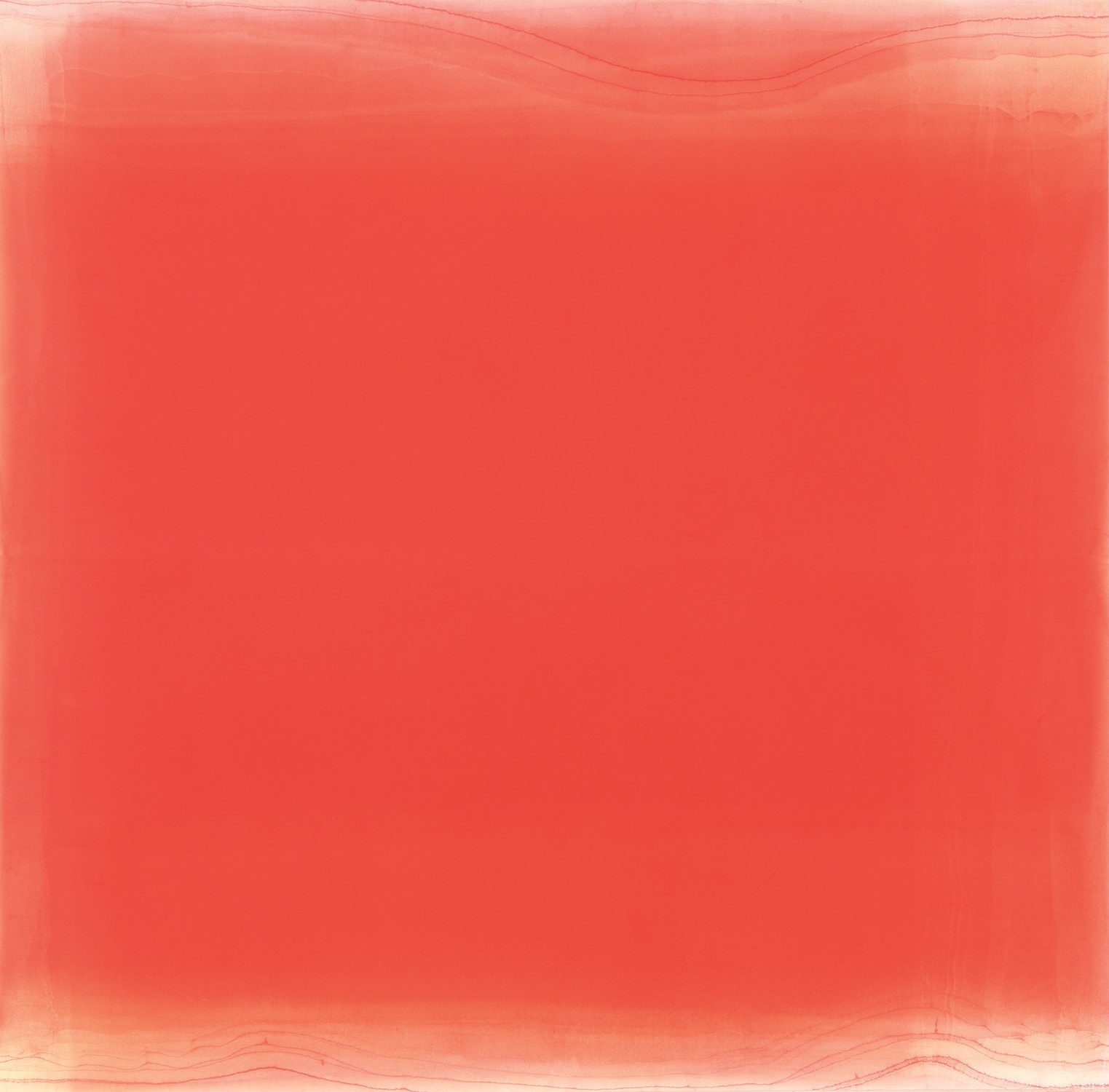
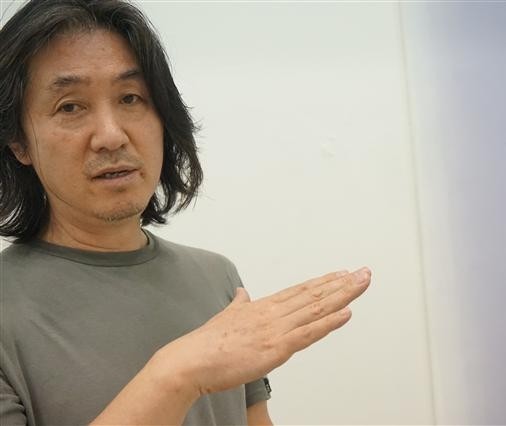
Kim Taek Sang creates his works through time, wind, and light. They are paintings of “breathing light,” formed through the repeated processes of sedimentation and drying of pigment diluted in water. Their hues emerge from the harmonious coexistence—hwayeobudong (和而不同)—of gravity and atmospheric phenomena over time.
His method intuitively combines ink painting, which produces gentle luminosity through diffusion, with color painting, which builds soft tonalities through layered washes of diluted pigment. These water-like, lucid colors lead viewers toward a pure aesthetic experience that transcends meanings and concepts imposed by human interpretation. Recently gaining international attention, including a solo exhibition in Tokyo (Taguchi Fine Art, Nov. 26–Dec. 24, 2016), this text presents Kim Taek Sang’s reflections on painting.
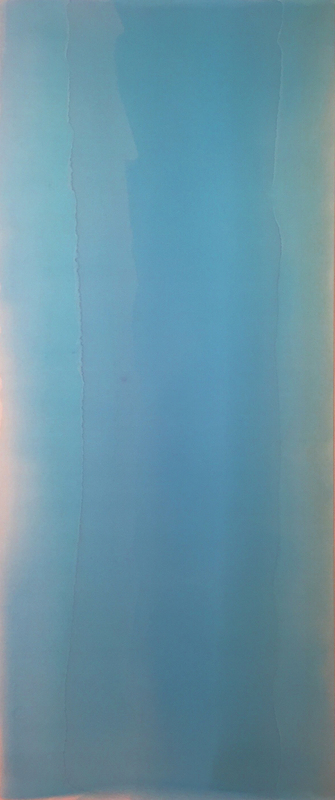
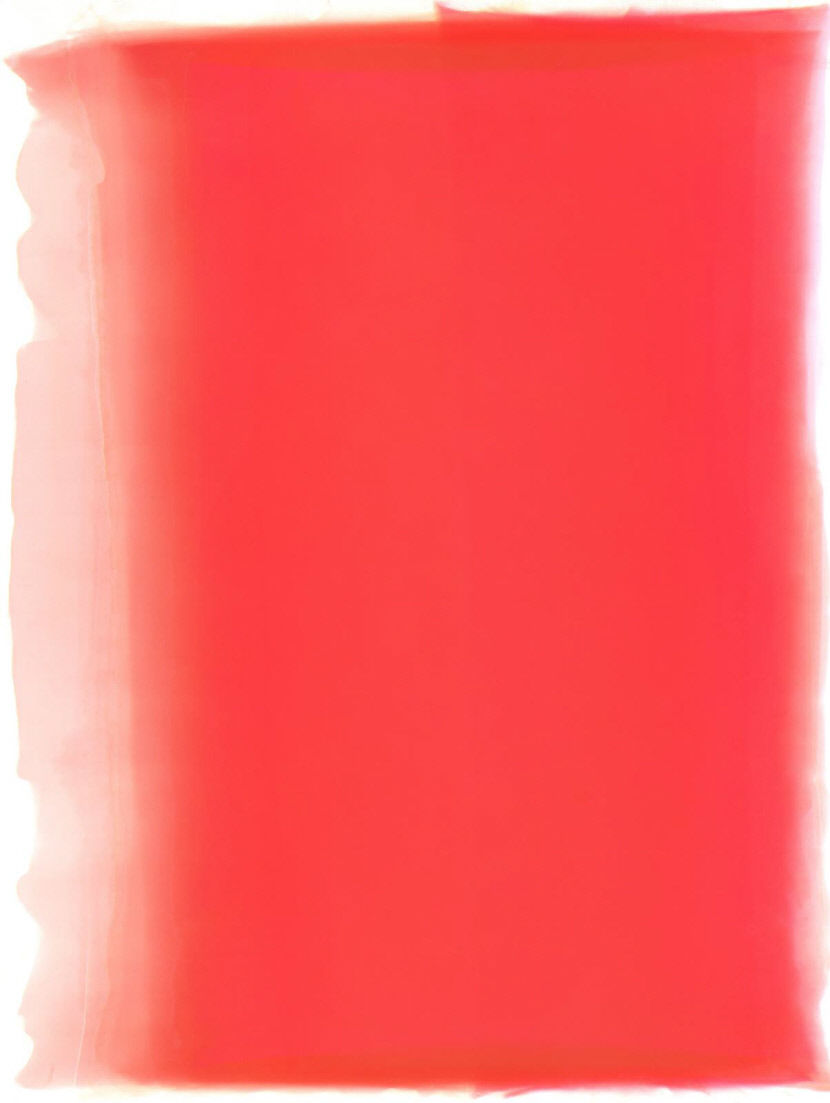
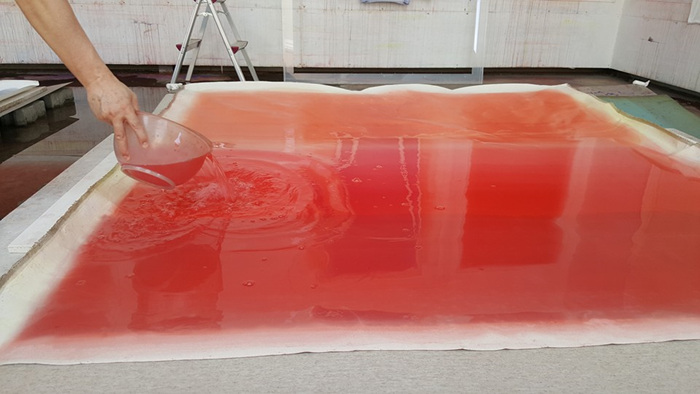
Kim Taek Sang’s works resemble skin, where colors imbued with a water-like clarity gather in quiet stillness. He repeatedly allows water mixed with minute amounts of pigment to settle on the canvas, drying the surface after the pigment particles suspended in the water have precipitated. His medium is not merely diluted paint. Natural elements that intervene in the processes of sedimentation and drying—gravity, the amount and intensity of sunlight, wind, humidity, and drying time—become the medium and produce a single tone.
The compositional relationships among these elements change naturally each time according to season and weather. Unrepeatable conditions, impossible to fully predict or analyze, are invited into the studio and leave traces in the act of artistic creation. The colors visible on the canvas are formed by layers of tones nearly akin to water, differing only slightly from one another; yet they are astonishingly thin and subtle. Upon close inspection, one finds traces and lines of water paths formed naturally without manual control, irregular tonal variations rather than mechanical ones, minute embedded dots, or natural blemishes resembling the grain of silk. These elements quietly merge and settle together.
Kim Taek Sang’s works are achieved through an original method that combines the sensibility of ink painting with the techniques of color painting. He intuitively unites the essence of ink painting—where ink or pigment permeates the fibers of hanji (Korean paper), producing diffusion effects and gentle luminosity through surface reflection, refraction within the paper fibers, and absorption of ink particles—with the characteristics of color painting, in which thin pigments are repeatedly applied to produce refined and soft tonalities.
This is a remarkable artistic achievement that contemporarily fuses two techniques traditionally interpreted in art history as opposing in nature. The coexistence and tension between ink painting, which values the dynamism and fluidity of the single stroke (ilpilhwijI) and its abstract qualities, and color painting, grounded in meticulous, deliberate craftsmanship through repeated application of color, has long persisted as a natural discourse within Korean art history. It has even been argued that only ink painting represents Korea’s true tradition, and furthermore there has implicitly existed a tendency to regard the abstract qualities of ink painting as superior to the descriptive nature of color painting.
However, through artistic synthesis, Kim Taek Sang enables both the abstract qualities produced by natural traces and the refined craftsmanship required to build elegant layers of color through prolonged time and delicate intervention to coexist within a single artwork. Thus, while his works retain the sensuous qualities of color painting, they lack the opacity that might arise from simple layering. As diluted pigments are absorbed layer upon layer, light passes through minute irregular gaps and produces diffuse reflection, resulting in a gentle radiance.
A Structure Corresponding to Light: Beyond Color as Concept
Kim Taek Sang’s distinctive method of expression did not originate from inspiration drawn from the tradition of East Asian painting. The starting point of his ‘Breathing Light’ series was an accidental encounter with the waters of the Yellowstone National Park caldera, whose deep clarity struck him profoundly. At first he believed that such clarity and depth corresponded to the color blue and therefore worked in blue tones. During this process, however, he arrived at an important realization: the “clarity and depth” he sought did not have to be identical with the color blue, and the association between blue water and pure depth was merely conceptual understanding.
Ultimately, he had to free himself from concepts tied to specific colors. By departing from “concept,” he came to understand a more essential aspect of what he wished to realize. He came to grasp through long practice that color arises from light, and that the sensation of color changes according to how its relationship with light is formed.
When light strikes a surface and is reflected rather than absorbed, we perceive that reflected light as color. For example, the amount of light reflected from a leaf differs greatly depending on whether it is dawn or dusk, sunny or cloudy. Yet the human eye disregards these variations and perceives the leaf as always green. We rely on this constancy to recognize and judge the world. This is not a matter of right or wrong; it is an evolved cognitive function. Without abstract concepts, humans would struggle to identify objects across changing conditions. Color is a representative example of this mechanism. Even if the concept of color sacrifices subtle differences in reflected light, it remains a stable framework for perceiving a constantly changing world.
Impressionist painters resisted this “color constancy.” Monet immediately captured the transient reflected light on leaves under sunlight rather than relying on conceptual stability. Cézanne famously exclaimed, “What an eye,” yet this can also be understood as a matter of will — resisting the physiological tendency of human vision.
In a broad sense, Kim Taek Sang also discovered the hidden relationship between light and color, but he approached light itself more closely. For him, light makes color “breathe,” and breathing color metaphorically implies vitality. As suggested by the title Breathing Light, light is the alchemist and the artwork its vessel. Where Monet multiplied his investigation by painting different appearances of light repeatedly, Kim condenses it into a single structure: layering colors of extremely slight luminance differences so that they transform according to light conditions.
Thus his paintings possess a thousand faces. In warm daylight they seem to emit a floating greenish light like sunlight filtering through forest leaves; at dusk they veil themselves in a hazy glow. He creates within the work a structure that converses with light, allowing the painting to respond naturally to changing illumination — restoring the subtle differences of reflected light that the concept of color would otherwise erase.