


Solo Exhibitions (Brief)
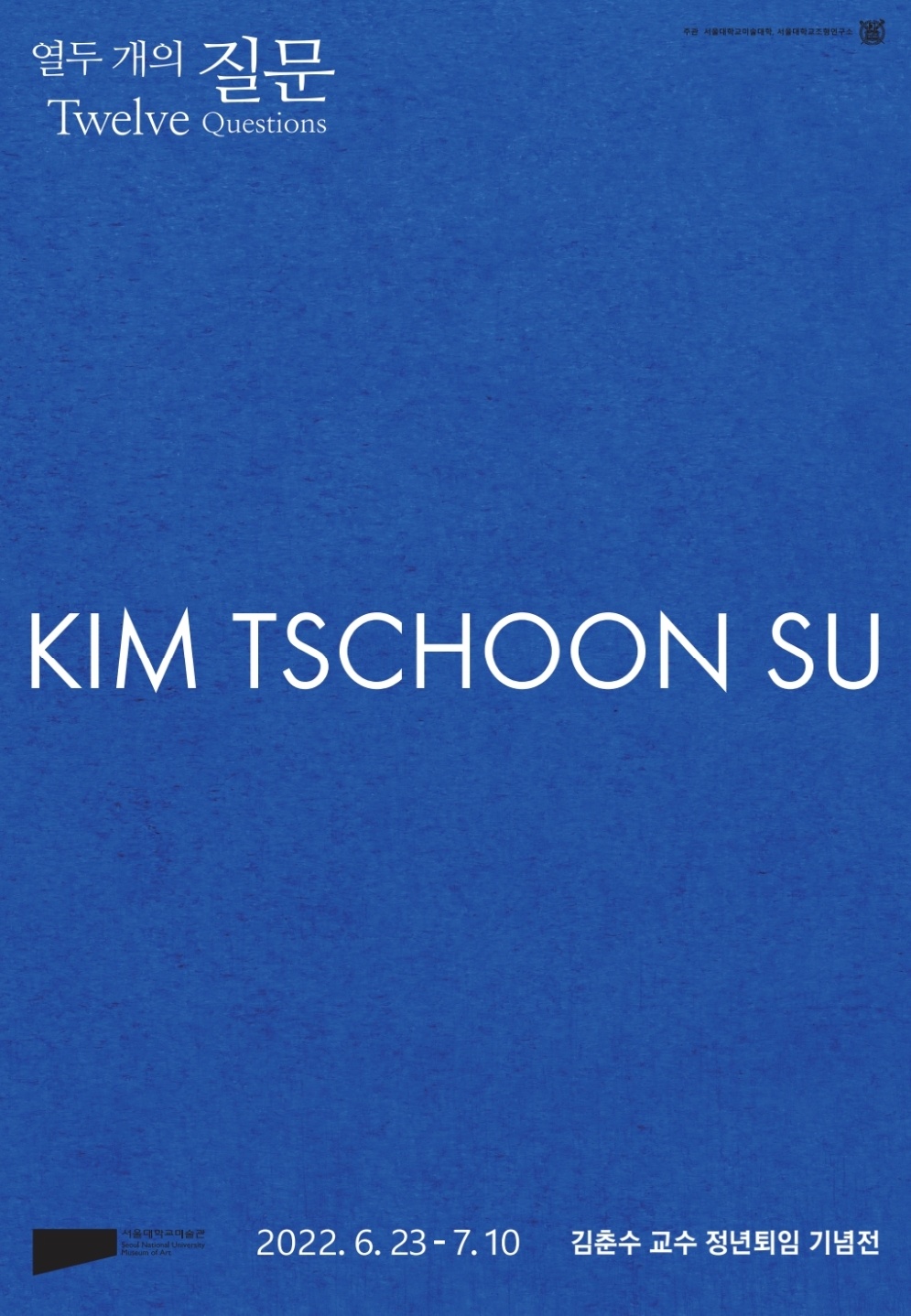
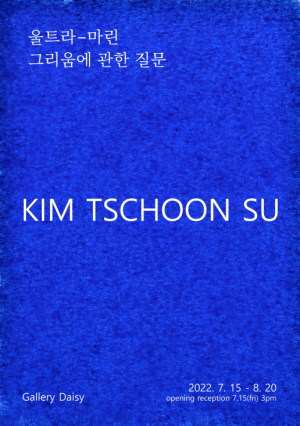
Kim Tschoon Su has held solo exhibitions
at major institutions including the Seoul National University Museum of Art
(Seoul, 2022) and the Total Museum of Contemporary Art (Seoul, 1994).
Internationally, he has presented solo exhibitions at the Korean Cultural
Center in Spain (Madrid, 2020), Galerie Son (Berlin, 2009, 2015), and LA
Artcore (Los Angeles, 1986, 1991), among other venues.
Group Exhibitions (Brief)
He has participated in group exhibitions
at major Korean institutions including the National Museum of Contemporary Art
(Gwacheon, 2000, 1999, 1997, 2012), the Seoul Museum of Art (Seoul, 2004), the
Daejeon Museum of Art (Daejeon, 2018), the Whanki Museum (Seoul, 1994, 2014),
and the Jeju Museum of Art (Jeju, 2015). Internationally, he has exhibited at
the Aichi Prefectural Museum of Art (Nagoya, 1995), Centro Cultural Recoleta
(Buenos Aires, 2015), Christie’s Hong Kong (Hong Kong, 2019), the Vietnam National
Museum of Fine Arts (Hanoi, 2019), and the Korean Cultural Center Hong Kong
(Hong Kong, 2024), continuing to expand his international presence.
Awards (Selected)
Kim Tschoon Su received the Total Grand
Prix from the Total Museum of Contemporary Art (1993) and was selected as a
participating artist for the 23rd São Paulo Biennial (1996). In 2006, he was
recognized as a Distinguished Artist by the National Academy of Arts, Republic
of Korea.
Residencies (Selected)
He participated in the 10th Triangle
Artists’ Workshop (Pine Plains, New York, 1991), conducted research at the
University of Alcalá (Alcalá de Henares, Spain, 2003), and took part in the
Berlin Residency Program at Galerie Son (Berlin, 2015).
Collections (Selected)
His works are held in the collections of
major Korean institutions, including the National Museum of Contemporary Art
(Gwacheon), the Seoul Museum of Art (Seoul), the Daejeon Museum of Art
(Daejeon), the Total Museum of Contemporary Art (Seoul), the Sungkok Art Museum
(Seoul), the Clayarch Gimhae Museum (Gimhae), the Gidang Museum of Art
(Seogwipo), the Suwon I Park Museum of Art (Suwon), the Whanki Museum (Seoul),
and the Ewha Womans University Museum (Seoul), and are also included in the
collections of the Samsung Museum of Art (Seoul), the Hansol Cultural
Foundation (Seoul), and the Embassy of the Republic of Korea in Berlin, as well
as major institutional and corporate collections such as Seoul National
University Hospital and its affiliated institutions.