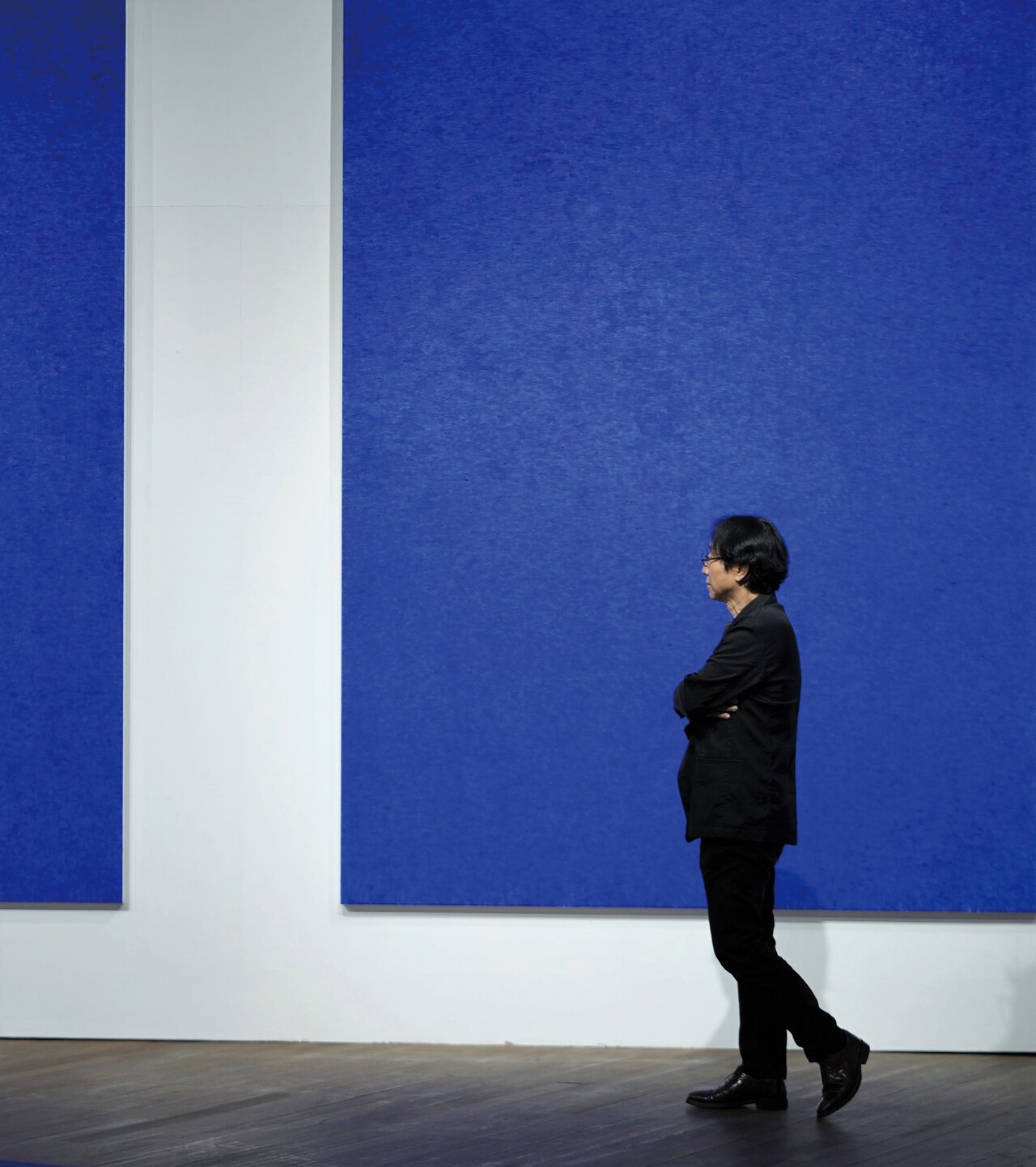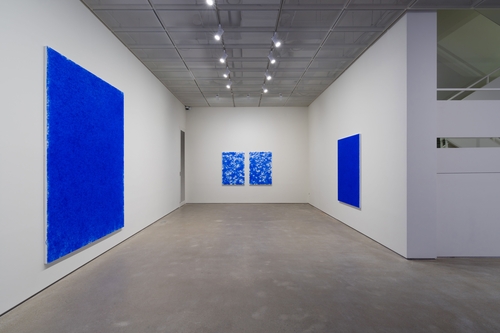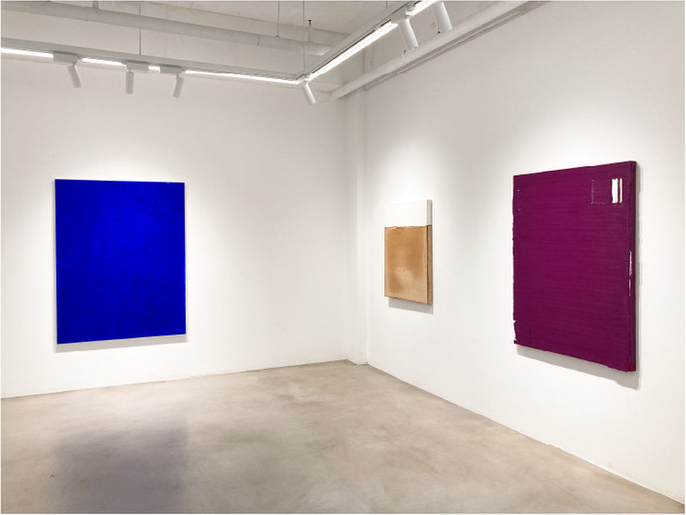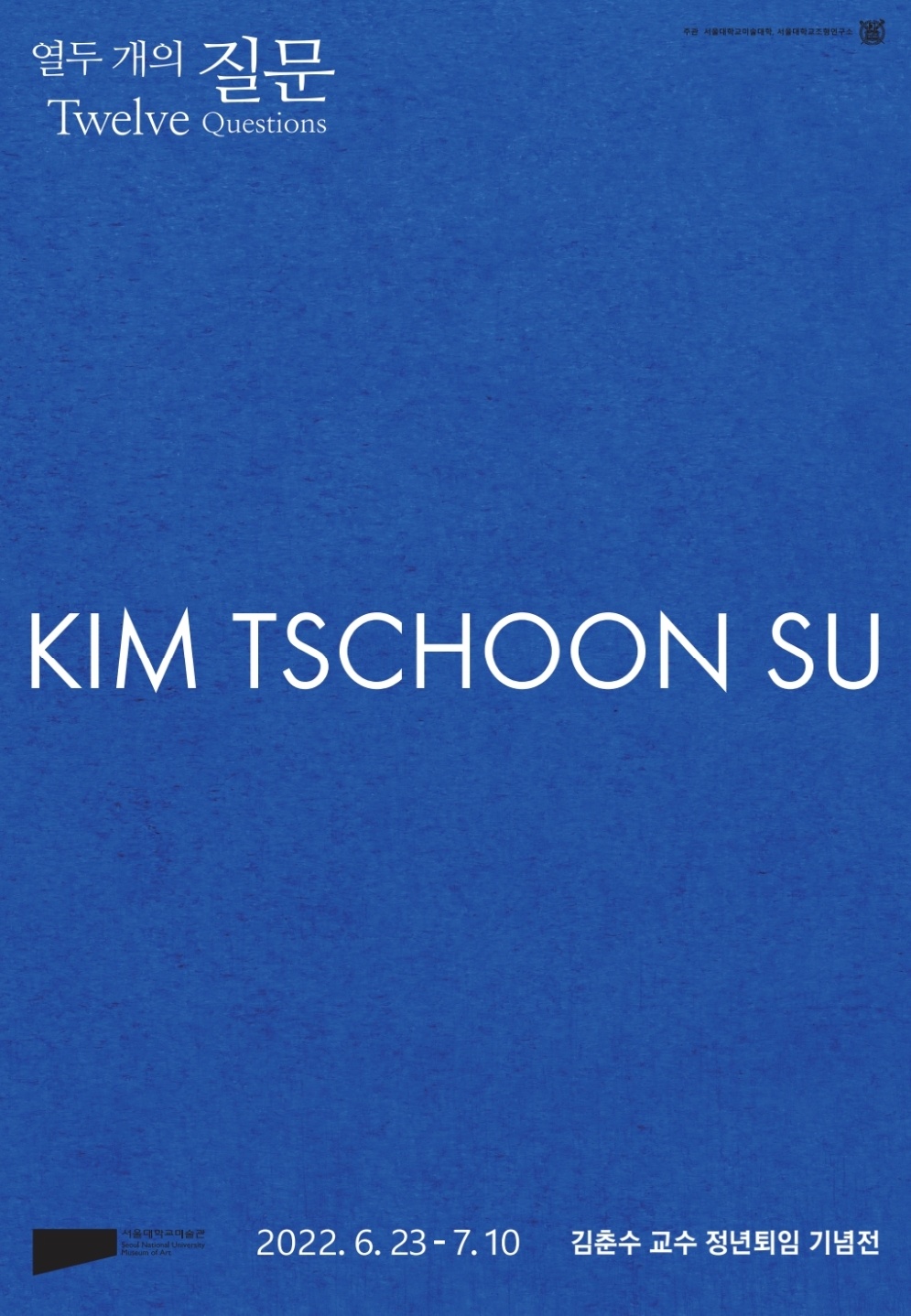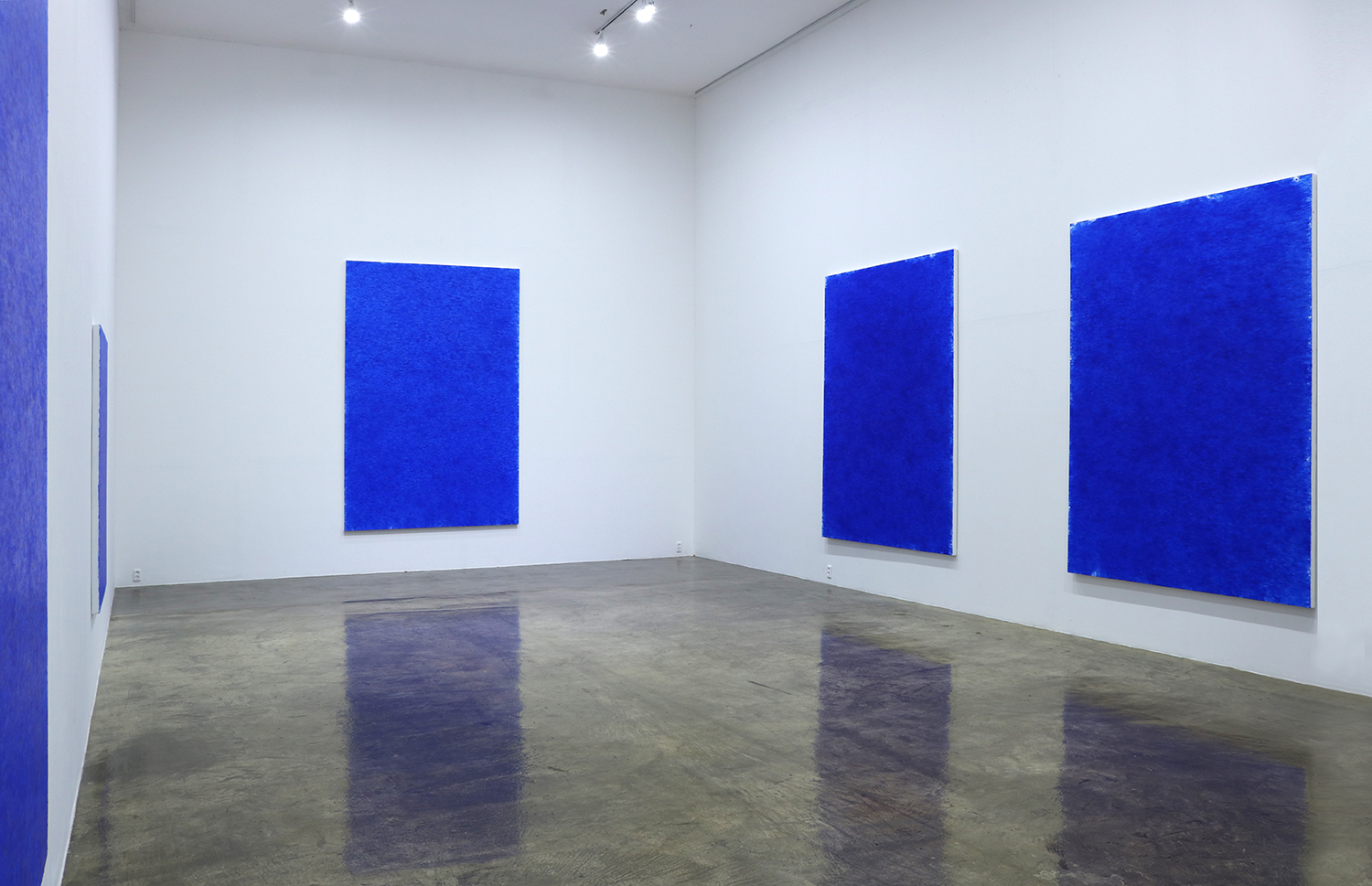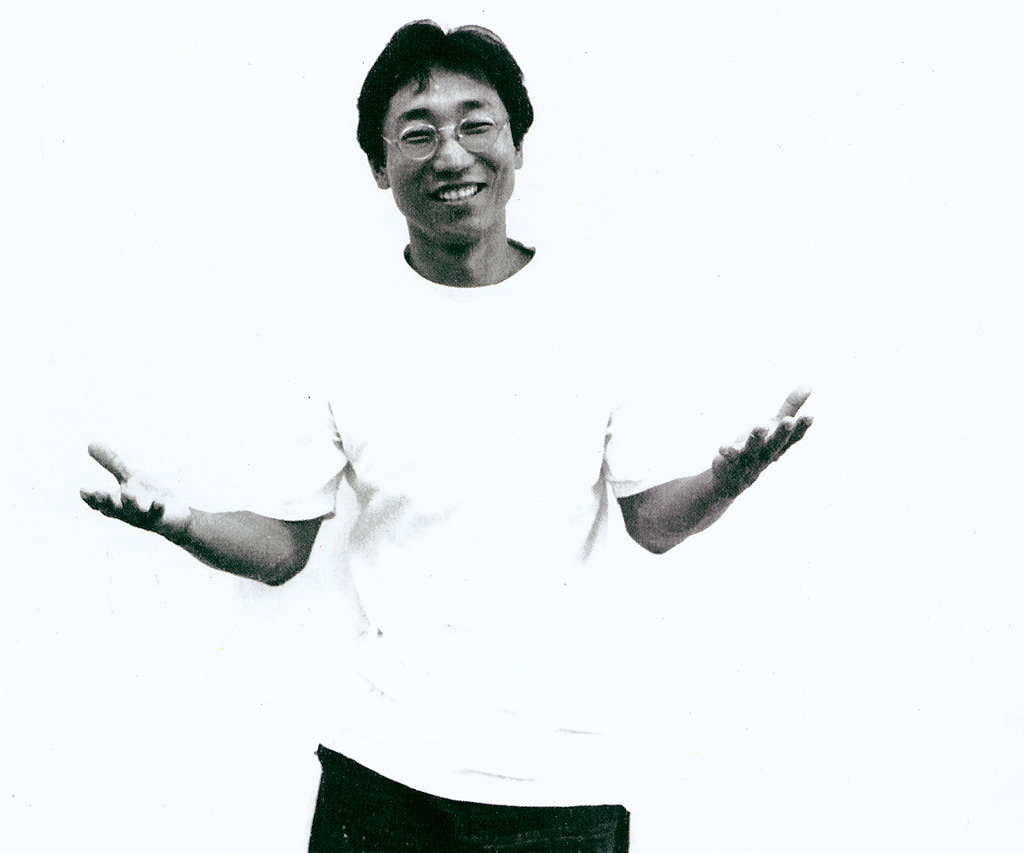

The Artist © Kim Tschoon Su

The artistic trajectory of painter Kim Tschoon Su is a relentless pursuit of painting’s fundamental essence, centered on a single chromatic axis—blue. His practice dismantles the language of representation and poses profound philosophical questions in search of a state of pure presence. Grounded in his academic formation at Seoul National University and through his studies in the United States, this artistic philosophy crystallized around the essential question: “What is painting?”

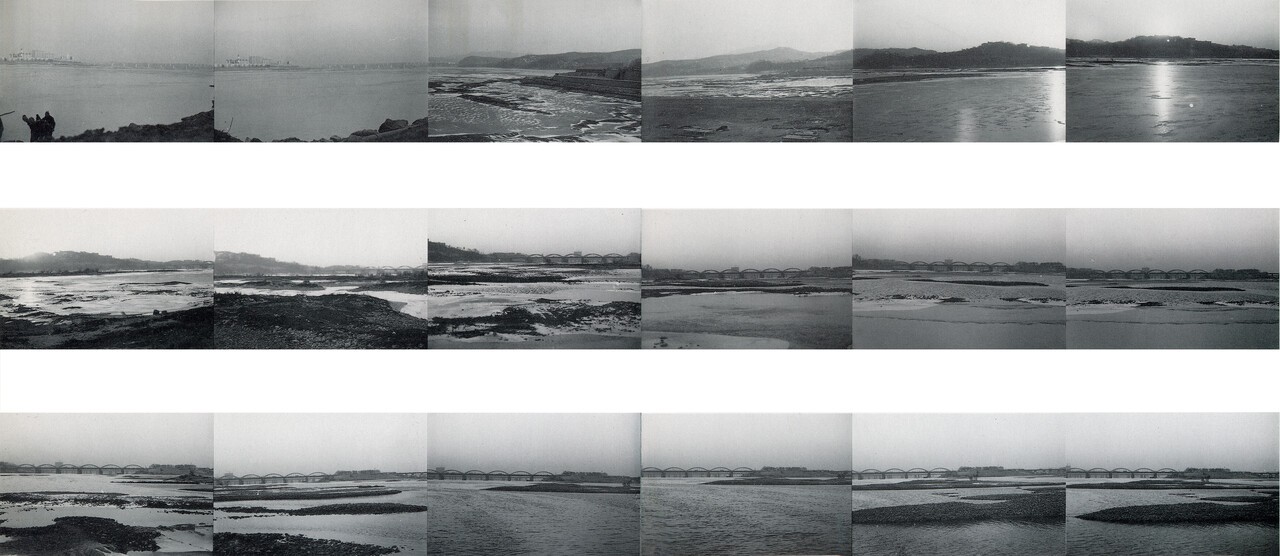
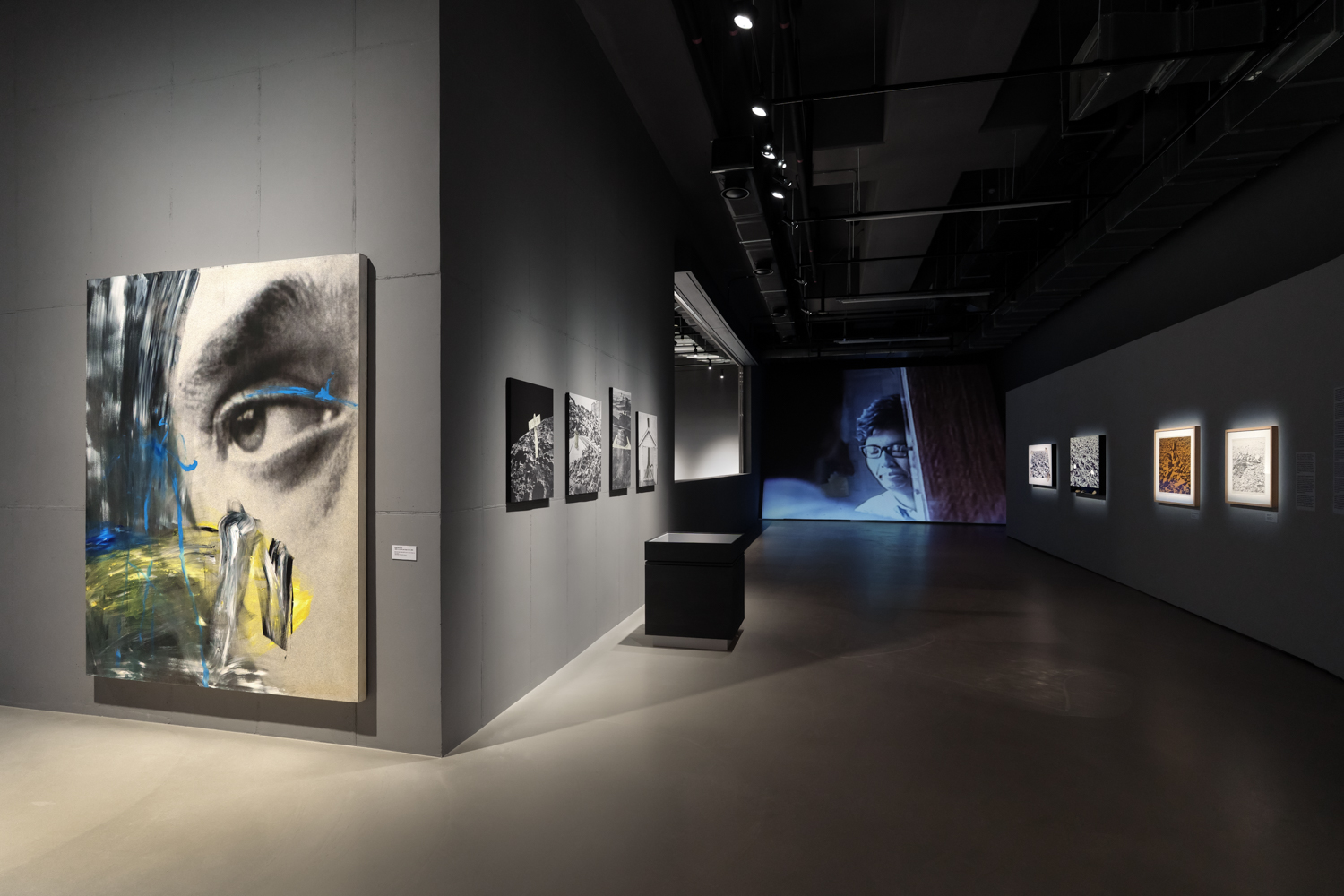
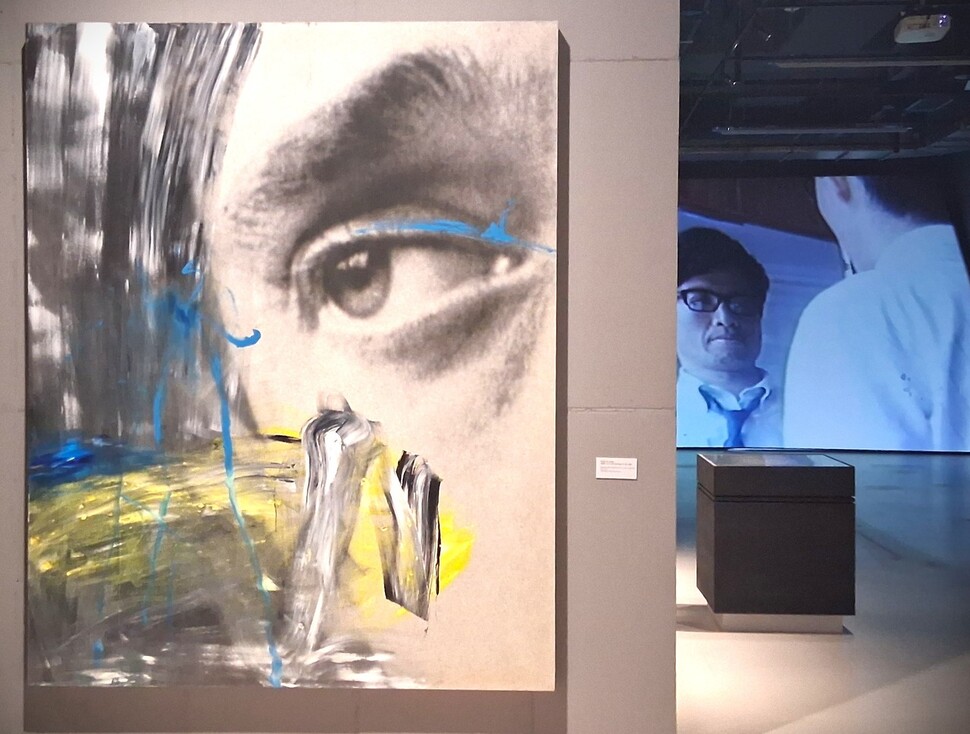
During his university years, Kim resonated deeply with Jasper Johns’s lucid logic of flatness, internalizing it as a foundational premise of painting. Yet this engagement also led him paradoxically toward territories that cannot be grasped through logic alone. In the 1980s, through photographic works that raised early questions about representation, he began to interrogate the gap between image and reality. Subsequently, he returned to blue monochrome painting, declaring color itself as the origin of being.

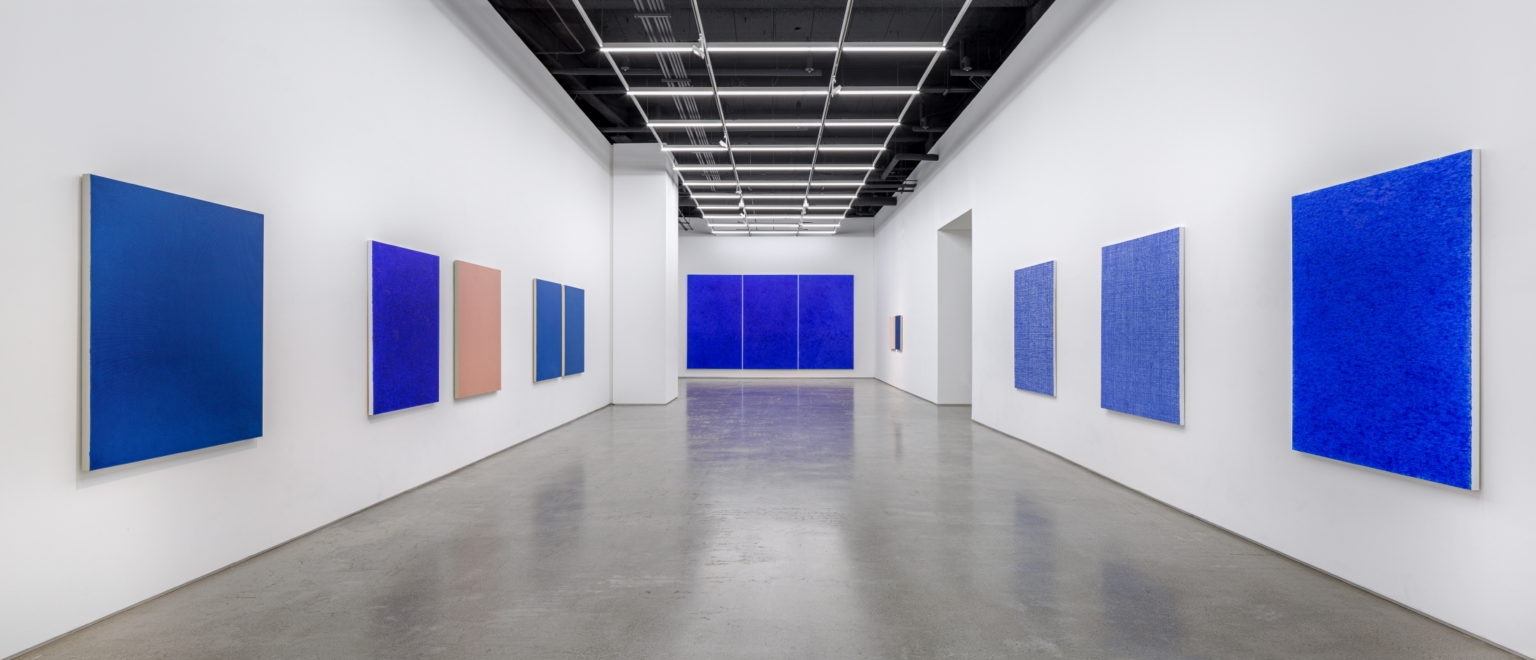
Persistently employing blue pigment as his primary medium, he pushed its materiality and symbolism to their limits. His sustained commitment to monochromy gained international recognition, most notably with his selection as the representative artist for the Korean Pavilion at the 23rd São Paulo Biennale in 1996, solidifying the aesthetic legitimacy of his practice.


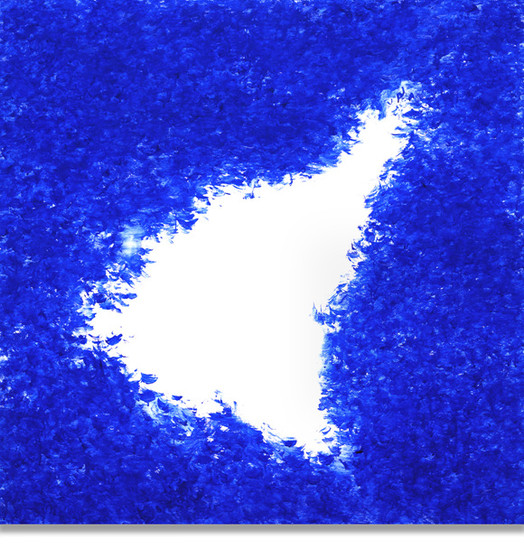
Kim Tschoon Su, Drawing a Triangle, 1980 © Kim Tschoon Su

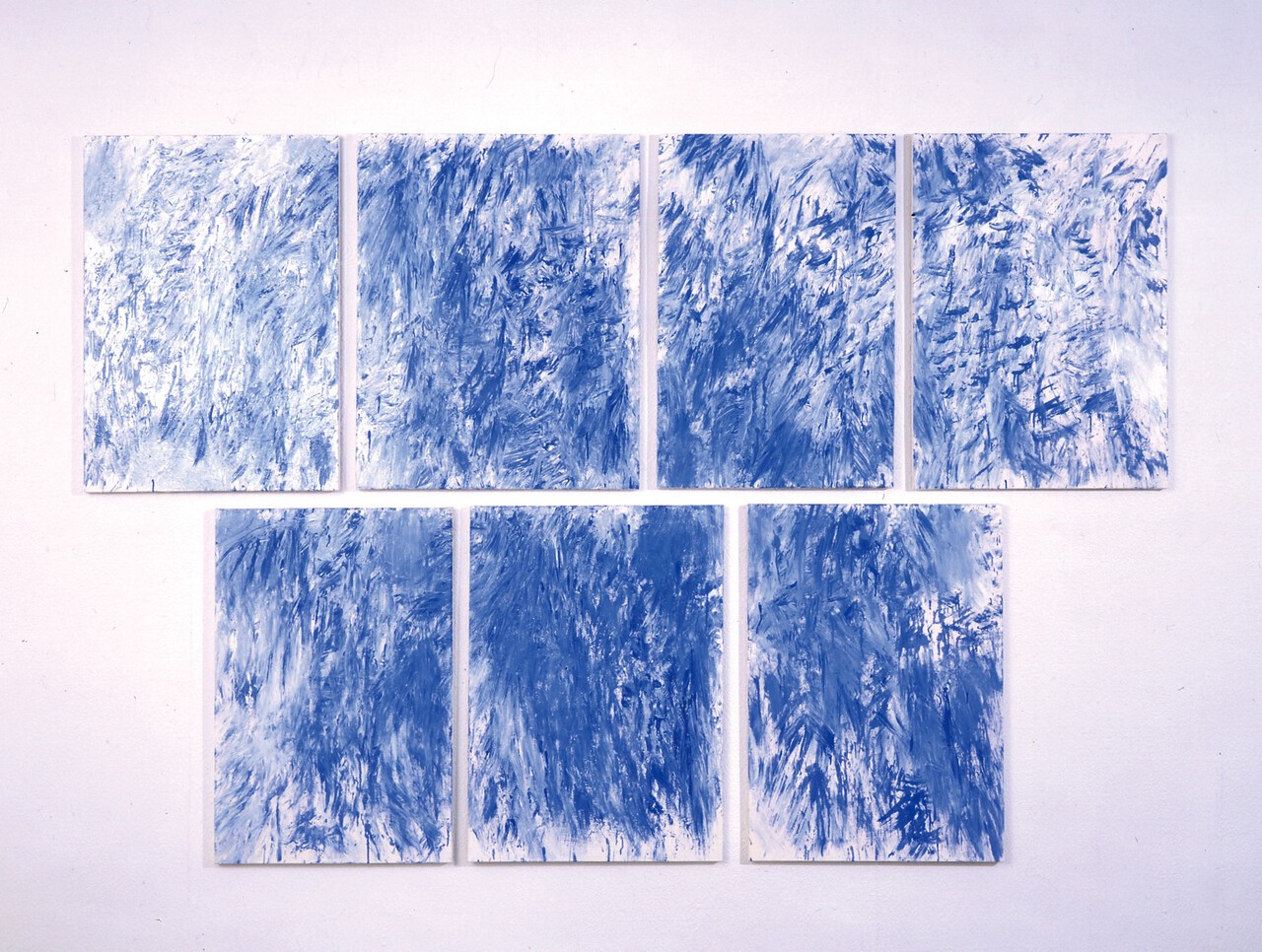
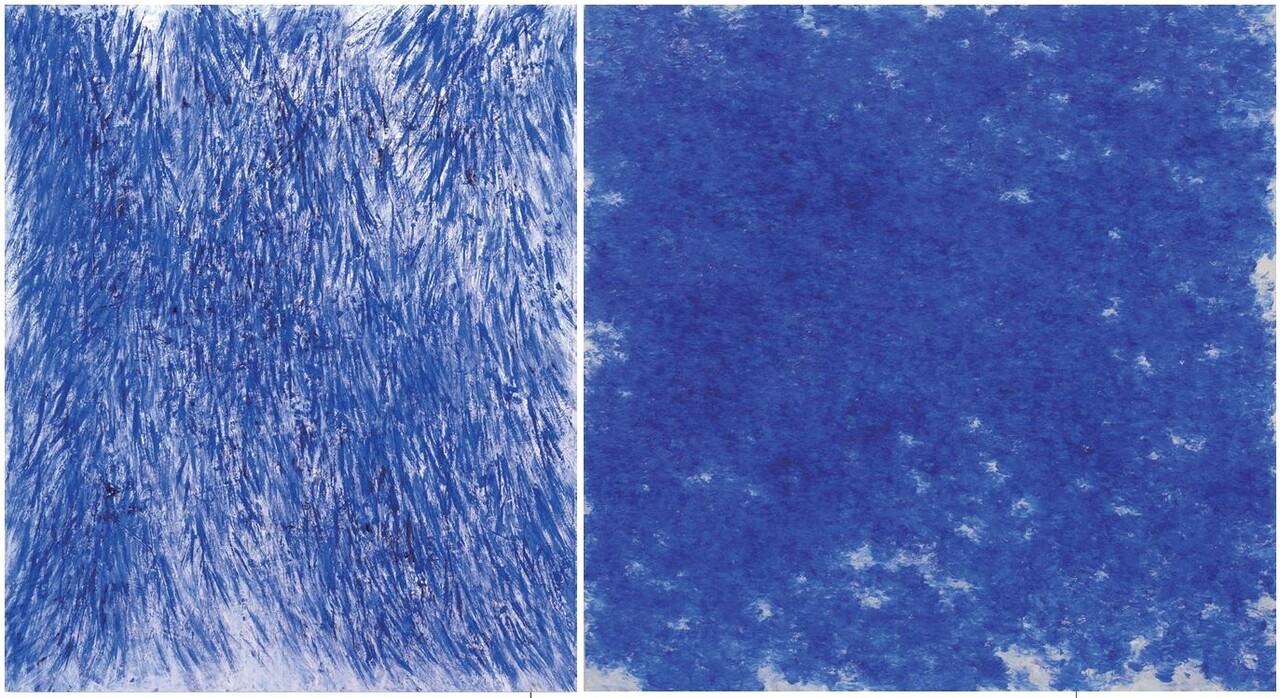
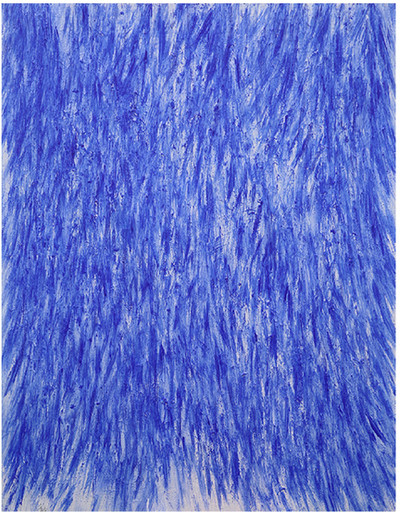
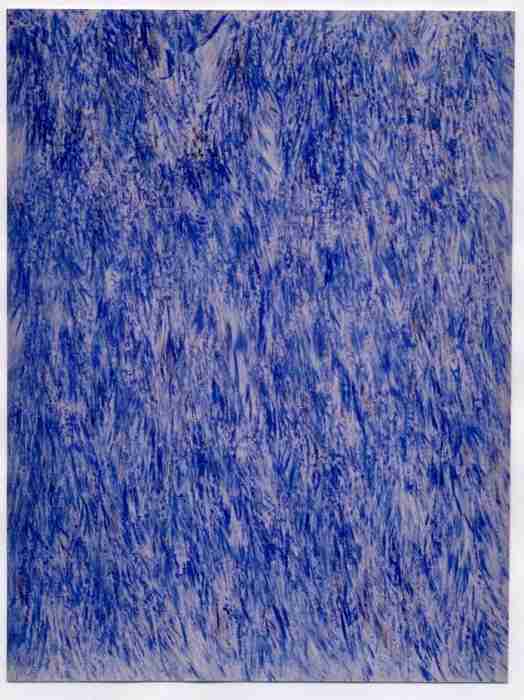
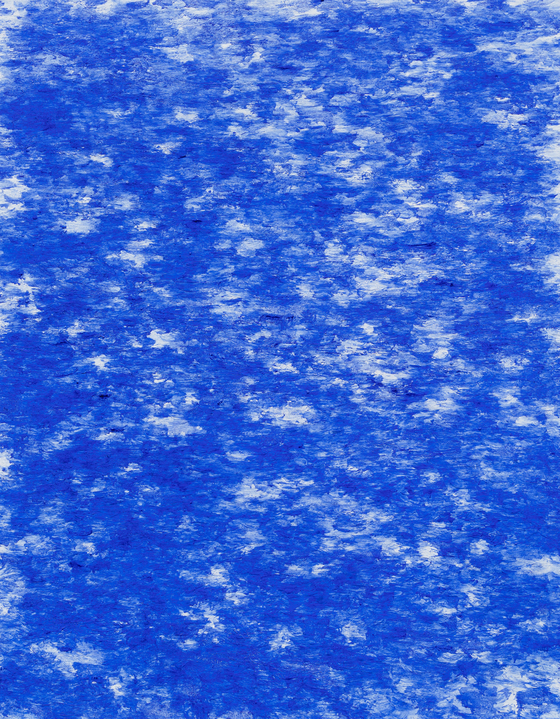
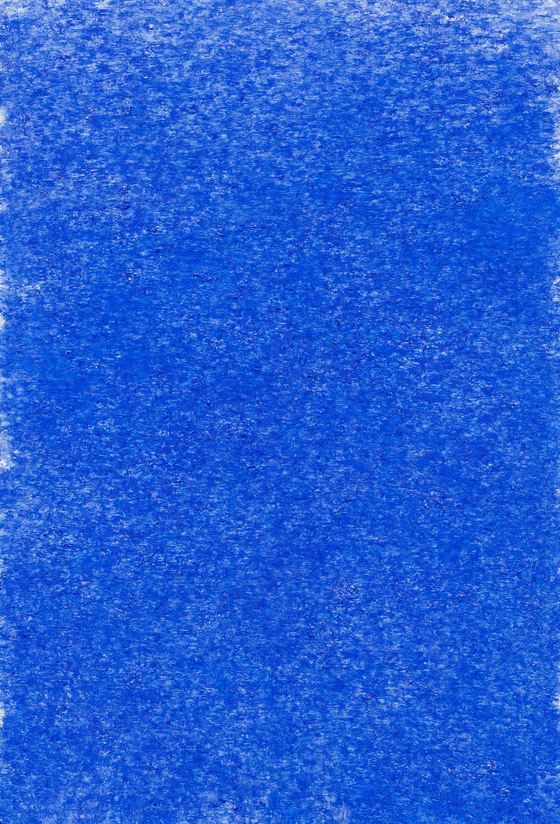
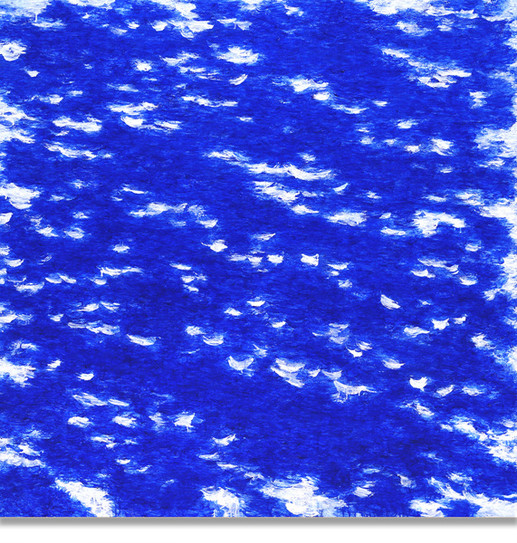
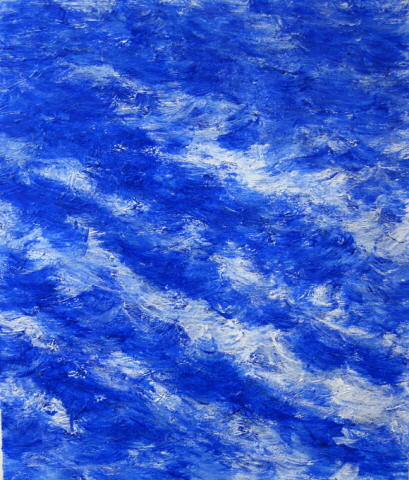
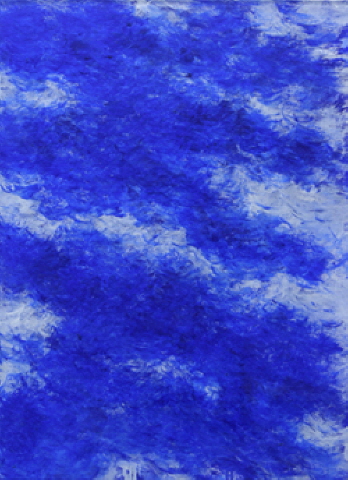
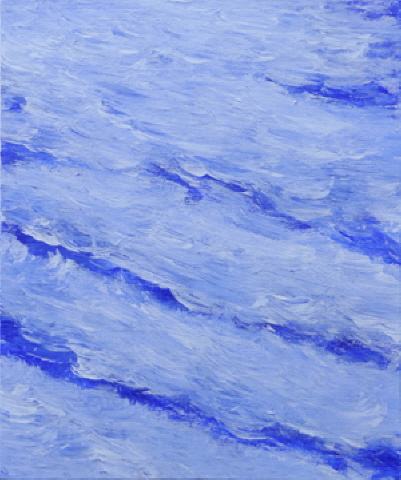
Kim Tschoon Su’s formal singularity is most distinctly revealed in the act—initiated in the 1990 ‘Strange Tongue’ series—of replacing the brush with the hand, that is, finger painting. Conceptualizing the brush as a “descriptive language” and the hand as a “primordial sound,” he chose this shift out of a fundamental resistance to the subjective self-consciousness that emerged in brushwork. Sustained for more than thirty-five years since 1990, this corporeal act constitutes a practice of corporeality.

His method of layering thin vinyl gloves signifies a durational process in which the artist’s time and labor accumulate in density. Through this repetitive action, subtle differences arise within form, generating a new sense of painterly immediacy. His commitment to blue pigment, utilizing its high transparency, reflects an aesthetic attempt to embrace the logic of flatness while simultaneously probing pictorial depth.

Thirty-Five Years of Devotion to Finger Painting Since 1990

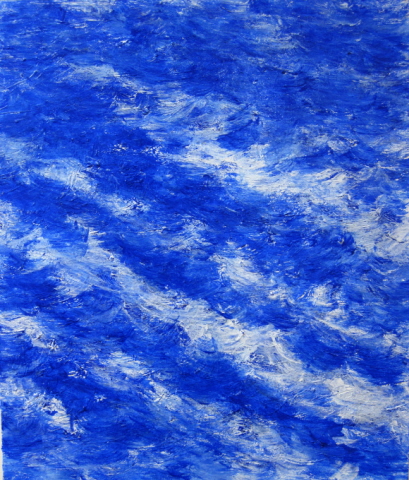
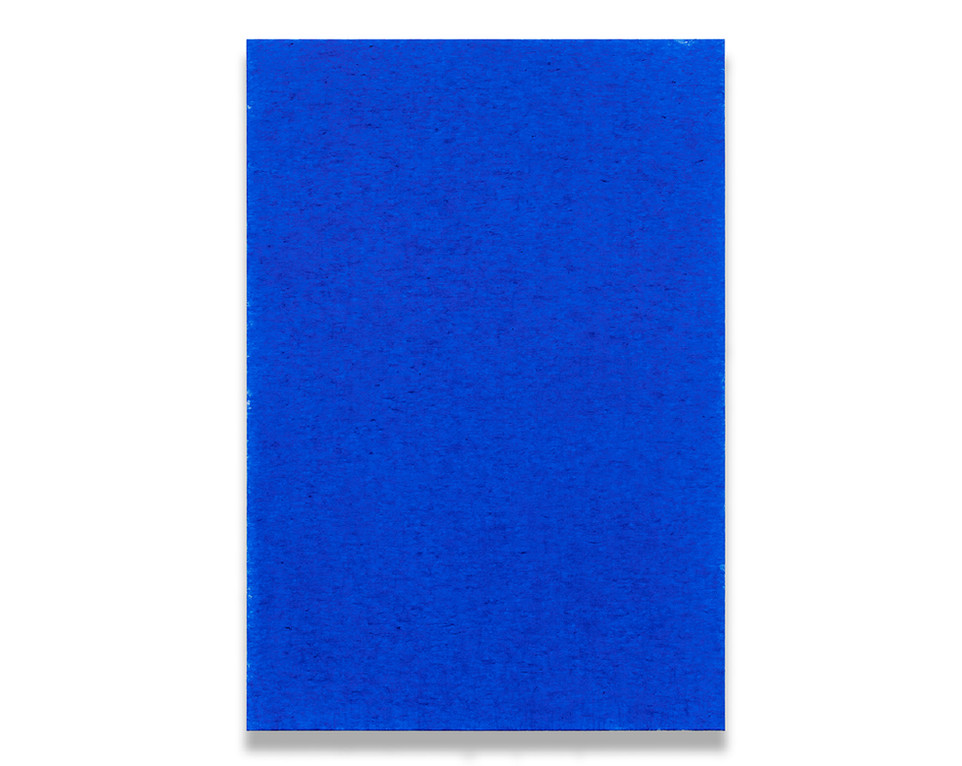
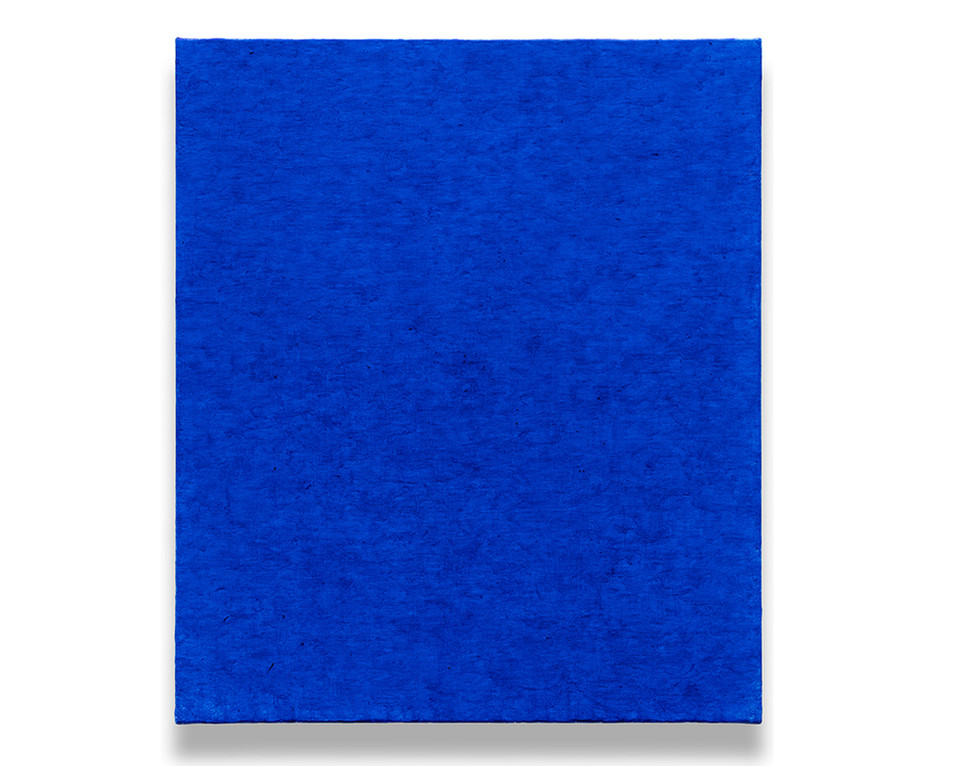
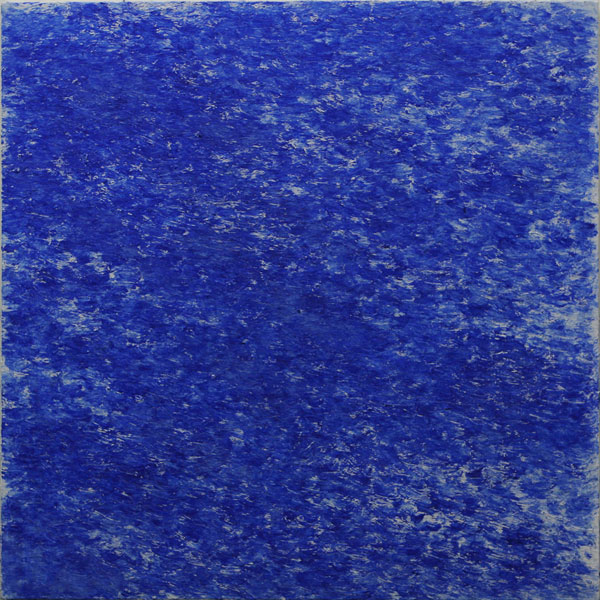
The Strange Tongue series addresses the problem of image and reality, positing that figuration and representation in painting ultimately constitute illusion. Through blue and tactile gestures, the artist subtly guides viewers toward an evocation of the “sea,” yet he emphasizes that the essence of the work lies in posing the question, “Is what you see real?” Representative works such as Sweet Slips-3 (1993) and White and Blue (2000s) deploy such strategies of feigned imagery to challenge the viewer’s interpretation.

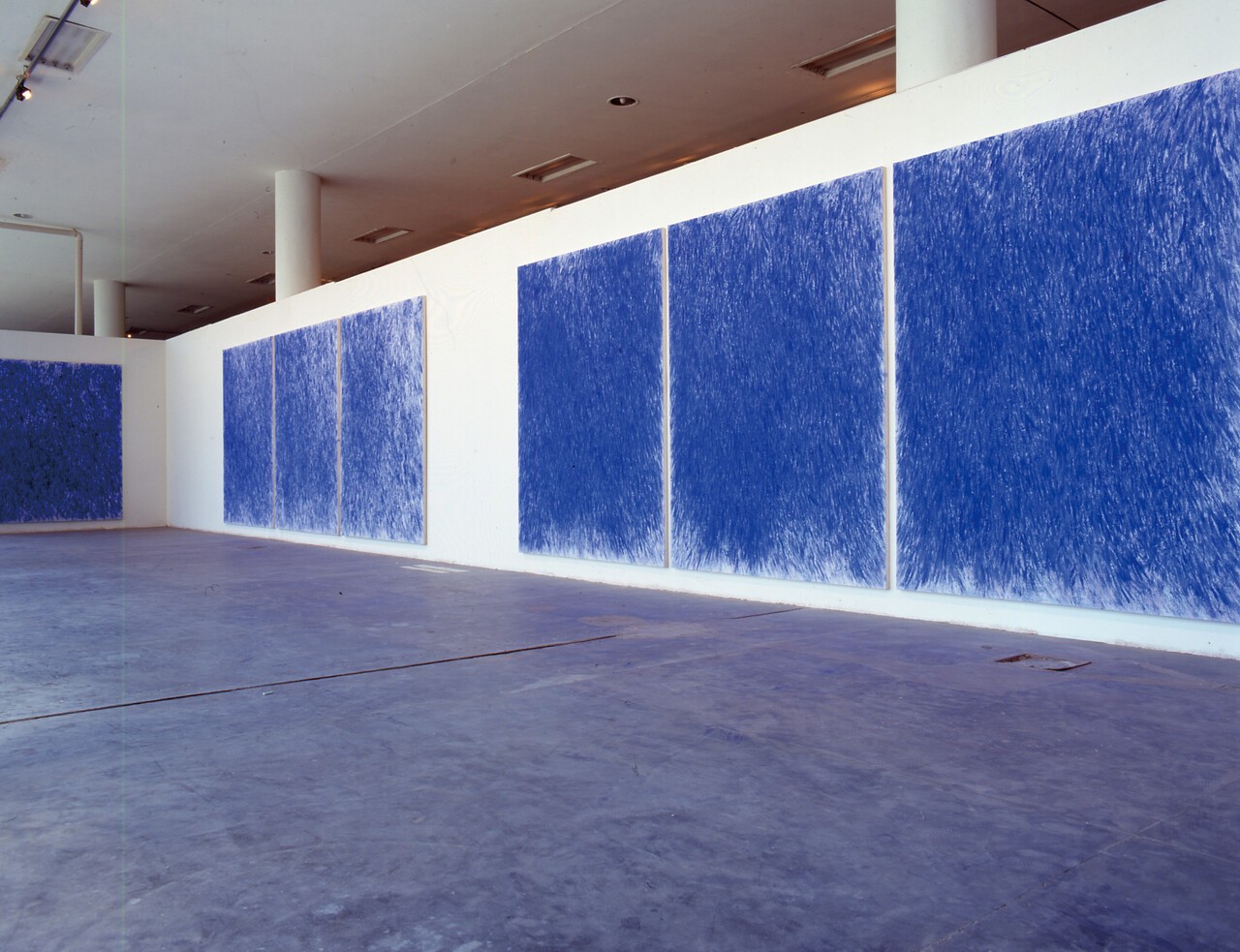
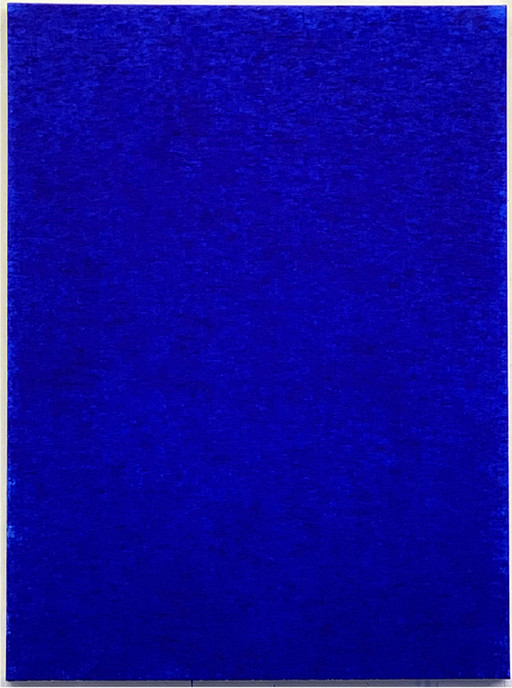
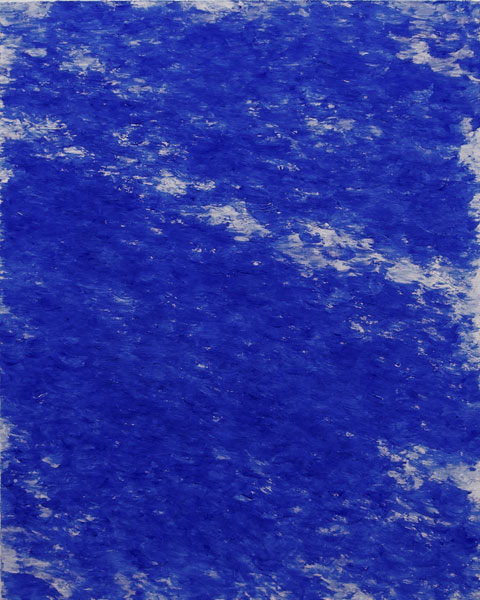
Likewise, Untitled-98-3 (1998) induces a profound chromatic immersion, revealing an exploration of material depth, while ULTRA-MARINE 08-3 (2008), the result of sustained practice, condenses time visually through layered accumulations of paint applied by hand.

While inheriting the spiritual dimension of Korean Dansaekhwa, Kim Tschoon Su established his own singular position by emphasizing materiality and the subjectivity of gesture. Concurrently serving as a professor at Seoul National University from 1996 to 2022, he translated philosophical inquiry into formless blue abstraction, deepening its resonance.

Without ceasing to ask the fundamental question, “What is painting?”, he dismantles the language of representation while exploring the possibilities of pure painterly action. Through the presence of color itself, he continues to articulate some of the most acute artistic questions of our time.

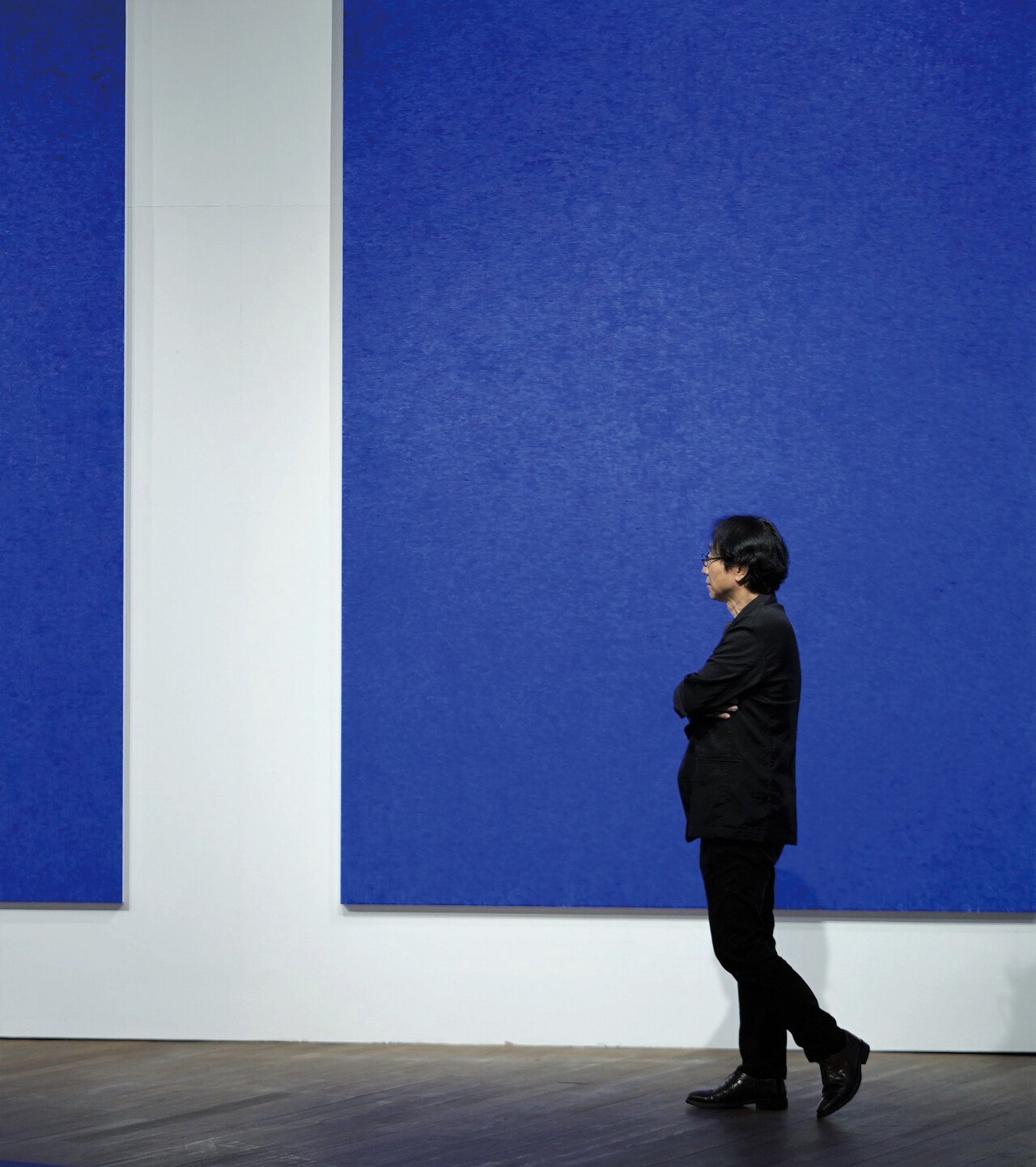
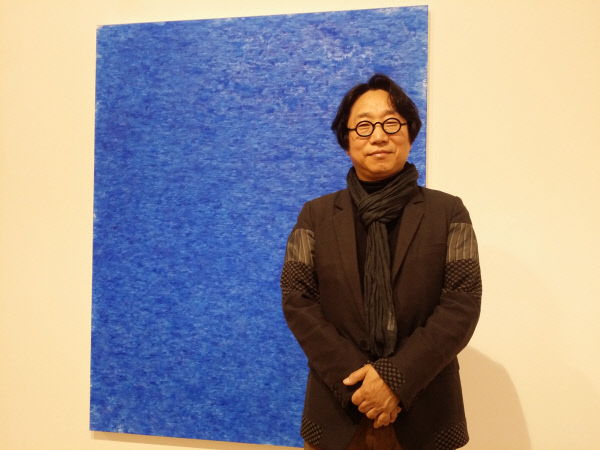
A profound conversation with Kim Tschoon Su at his studio in Toechon-myeon, Gwangju, Gyeonggi Province, reaffirmed how a single blue can contain infinite depths of thought and the extremity of formal exploration.


Kim Tschoon Su, Sweet Slips, 1999 © Kim Tschoon Su

What were the background and specific motivations behind your early 1980s series using photography?

“At that time, one of the central discourses in the art world revolved around ‘seeing’ and ‘the visible’—investigations centered on visual perception. In that context, photography (the lens as eye) appeared particularly compelling to me, and at a moment when my own artistic language had not yet fully formed, I began experimenting with photographic work.

Later, as I transitioned into painting, my practice gradually moved toward an exploration of corporeality. This shift can be traced back to my study of Western art in university, especially the concept of flatness. I strongly resonated with Jasper Johns’s assertion that ‘a flat surface can only accommodate flat images,’ and this awareness of flatness later became a crucial point of departure when I connected it to corporeality in the Strange Tongue series.”

Among countless colors, what decisive aesthetic impetus led you to immerse yourself in blue?

“My full immersion in blue began around 1990, coinciding with the start of the Strange Tongue series. At the time, my intention was simply to build up layers on the surface by using highly transparent pigments. More recently, when repeatedly asked why I use blue, I have paradoxically responded, ‘This is not blue.’ With that answer, I aim to provoke viewers into questioning—why is it not blue? Is it truly blue or not? I want to move beyond a discussion of color itself and open up a conceptual inquiry that interrogates the very premise of what we perceive as blue.”

Why did you begin using your hands instead of a brush from early on in your practice?

“At first, I set aside the brush and tried dabbing paint with crumpled tissue paper. To my surprise, the dissatisfactions I had previously felt seemed to subside, and something more primal—even aspects of myself I did not consciously know—began to emerge. When painting with a brush, not only did I feel constrained by its inherent limitations, but I also felt that ‘I’ was too visibly present.

By ‘myself,’ I mean not just technique or manual dexterity, but also my hesitations, timidity, and other vulnerabilities I would rather conceal. It felt uncomfortable to see those weaknesses laid bare before my own eyes. Ironically, this runs counter to what artists are often taught—that their primary task is to express themselves.”


Kim Tschoon Su, Strange Tongue, 1996 © Kim Tschoon Su

What do you hope to share with viewers through your work?

“Setting aside debates about figuration, materiality, or monochrome painting, the core of the art I pursue can be described as ‘longing.’ This does not refer merely to nostalgia for the past, but to a multi-layered existential uncertainty. In the face of death, there is a reluctance and sorrow at the thought of letting this present moment slip away—that, too, is part of longing. It is also the yearning that arises from the difficulty of genuine communion and communication with others. Above all, it is the sense of incompleteness within the very uncertainty of life and love—the ambiguity of what they truly are—that constitutes longing. Encompassing all these dimensions, I wish to share this sense of ‘longing’ with viewers.”

You mentioned that you intend to continue your blue works painted by hand without easily changing direction.

“For an artist, the most essential quality is a tenacious attitude toward observing one’s subject. This manifests in paradoxical statements such as ‘This is not blue,’ or in a persistent questioning of flatness. I believe my role is to continually probe the essence of art that aligns with my temperament and vocation, and to reflect and practice that sustained inquiry within my work.”

How would you like to be remembered as an artist?

“I hope to embody the attitude of Cézanne, who worked quietly and was later recognized in art history for his greatness, and to hold within my work the ineffable ‘mystery’ and magnetic force that I sense in Rothko’s paintings. I believe that true painting must reveal a mysterious realm beyond logical analysis. We have already entered the age of the metaverse and artificial intelligence, and I cautiously ask whether painting can still assume the role of posing serious questions about human dignity within such a world.”


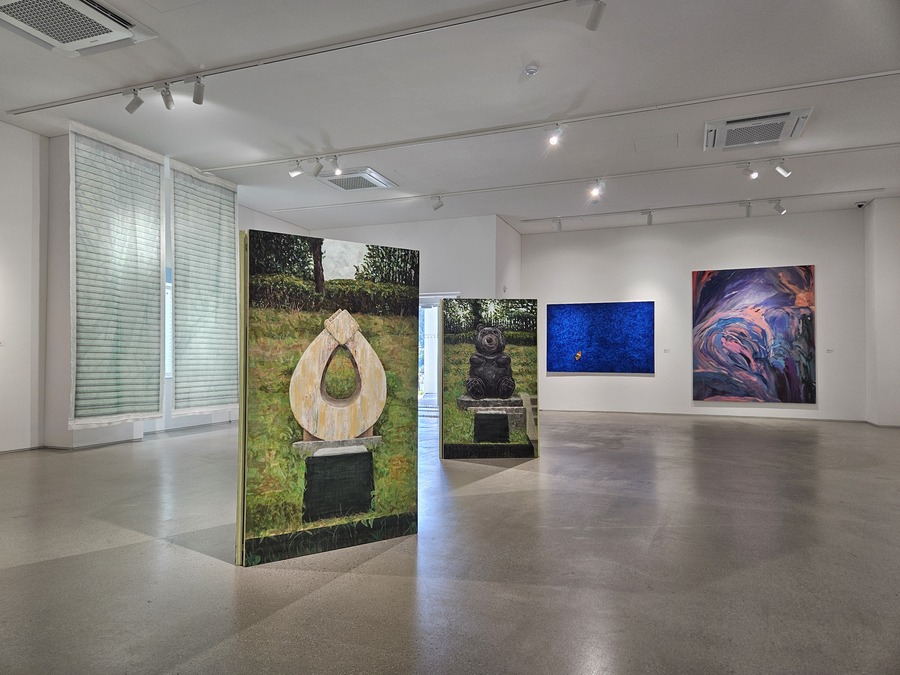
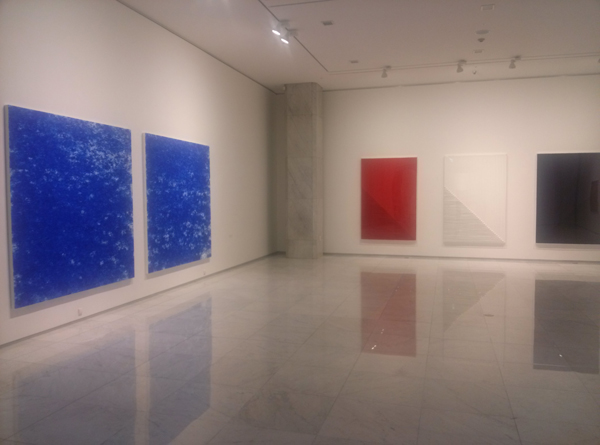
(Left) Kim Tschoon Su, Untitled, 1996, (Right) Kim Tschoon Su, Ultra-Marine, 2010 © Kim Tschoon Su
Reference