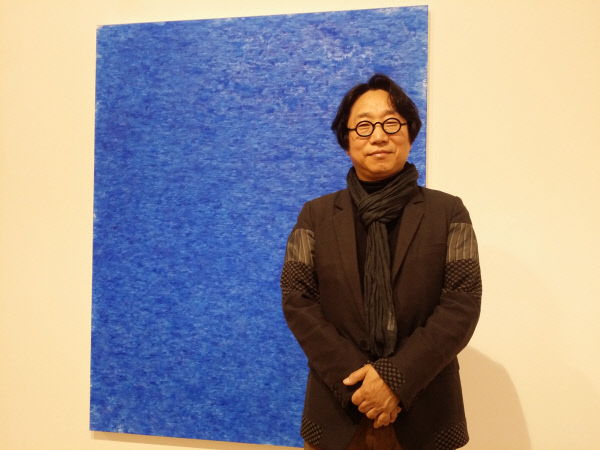
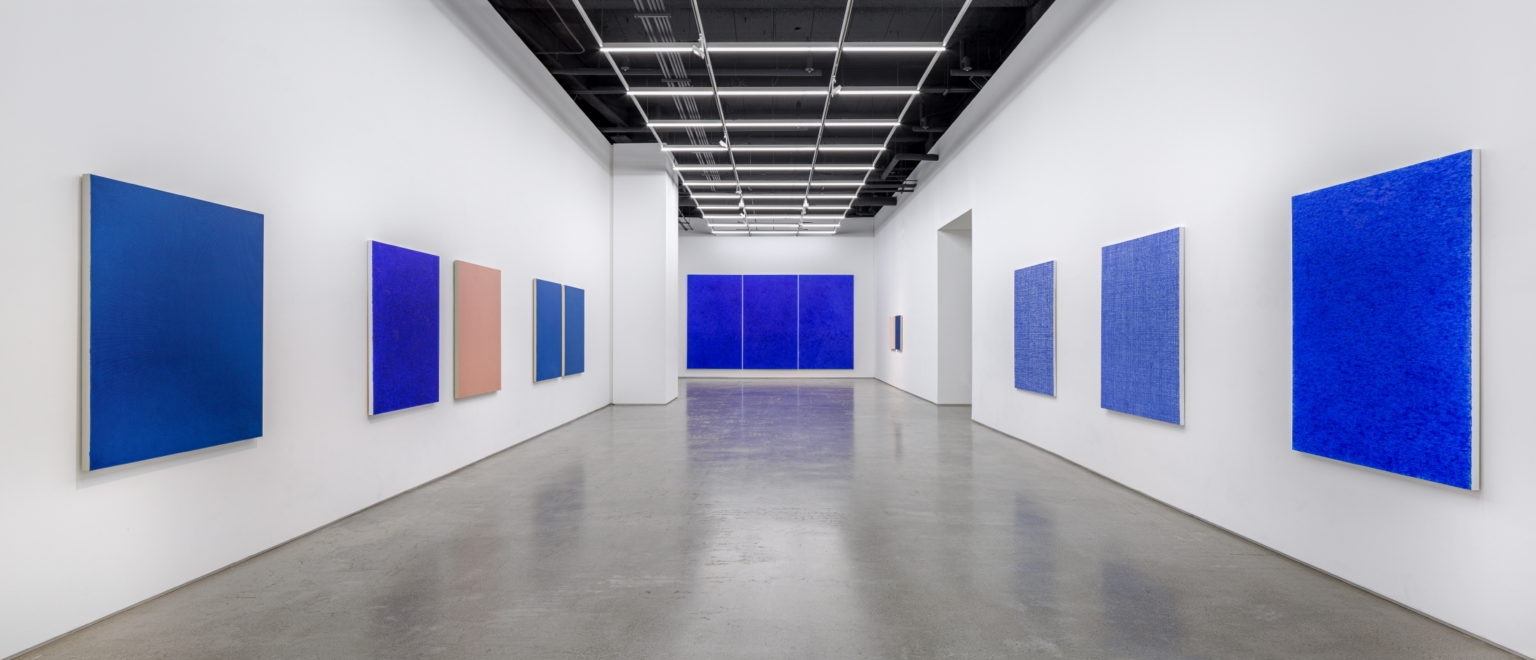
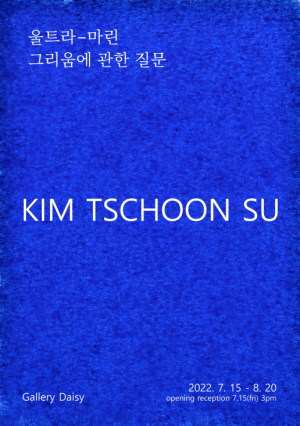
Kim Tschoon Su’s work began with an awakening to the arbitrariness and limitations of language—what he calls the “strangeness of the tongue.” His act of painting is therefore a questioning of the linguistic, of all descriptive modes of utterance. As he wrote in March 1991: “I want to believe that beyond the limits of language—beyond the idea that what cannot be contained in words must be buried in silence—there clearly exists something. And the paradox of attempting to express it in some way, that will, may be another name for the artistic spirit.”
For him, painting—speaking through color, form, and texture rather than words—became a means of exploring this silent realm. Yet in painting, forms that imitate the outward appearance of nature are themselves akin to language. His choice of bodily language was thus an attempt to speak beyond language. Bodily language reveals existence itself rather than describing its external appearance. In this sense, his mode of expression is more direct—and more precise—than painting mediated by figuration.
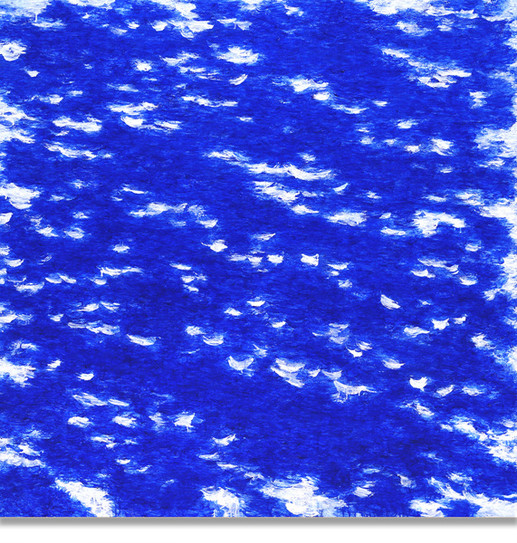
Kim’s abandonment of the brush and his direct application of paint onto the canvas with his hands was a deliberate refusal “to draw.” By uniting body and pigment, paint no longer floats like a mirage within illusory space; instead, it settles firmly on the surface as tangible substance. We come to see not the form produced by paint but paint itself, sensing the movement of his body through it and approaching a secret of existence that cannot be articulated verbally. His practice is thus paradoxical: through the most material properties, he reaches the spiritual. The primal vitality felt in his work derives from this return to a fundamental act.
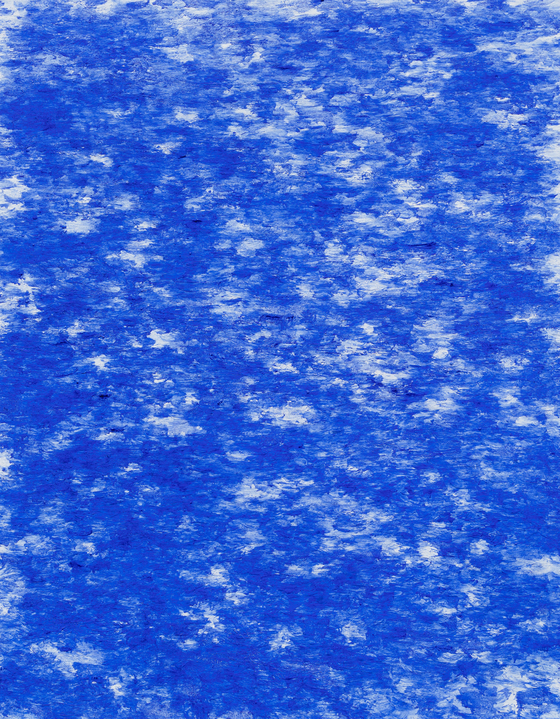
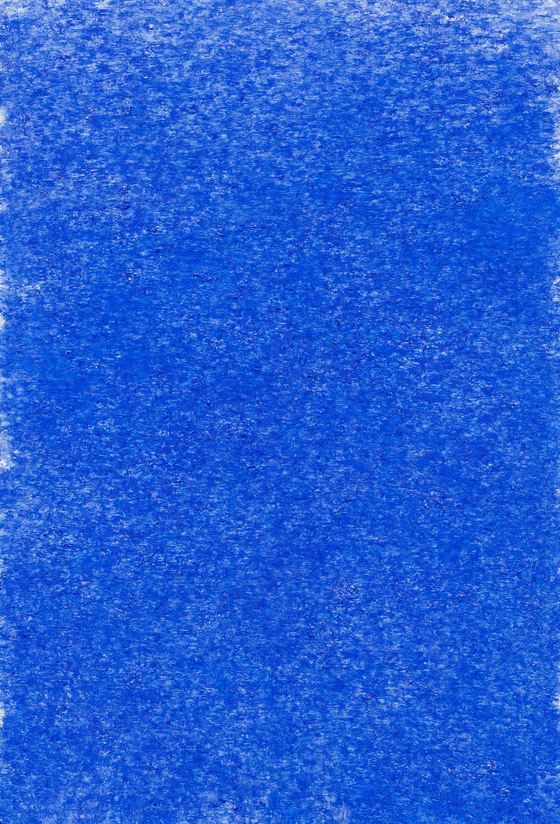
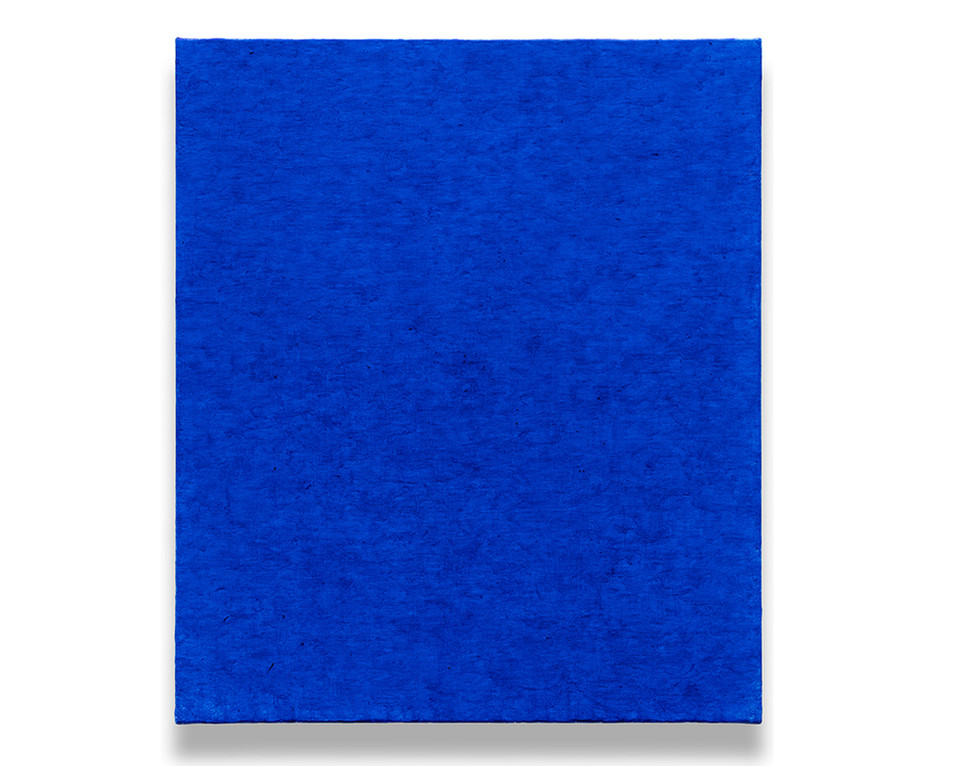
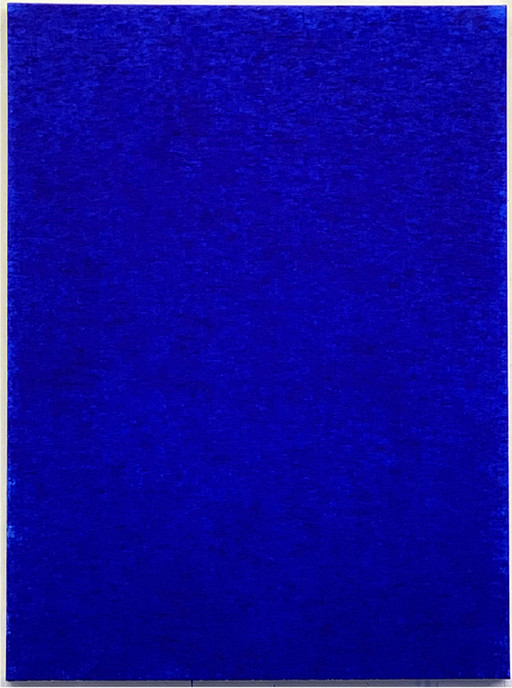
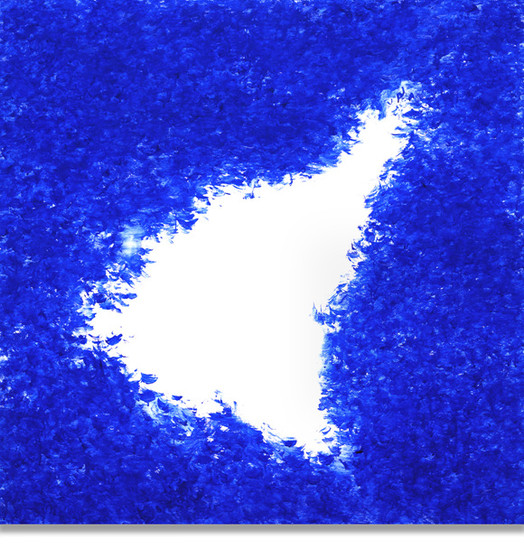
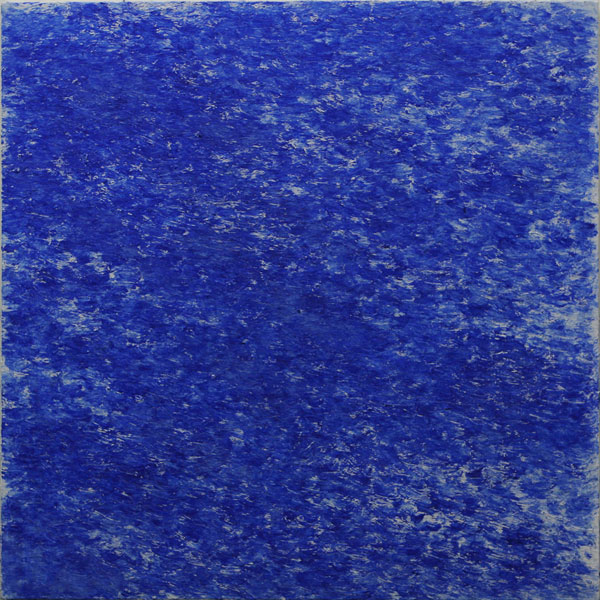
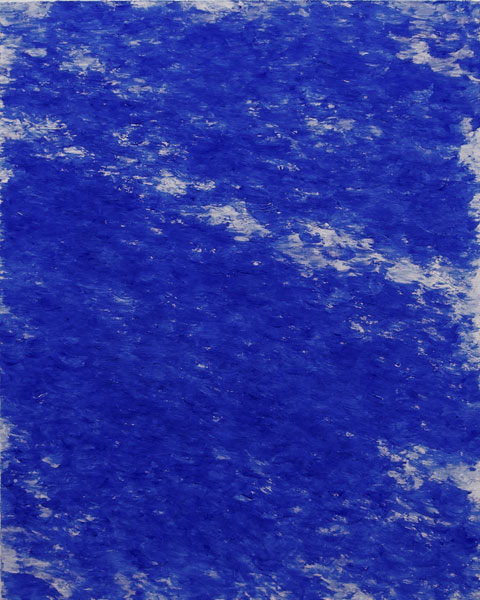
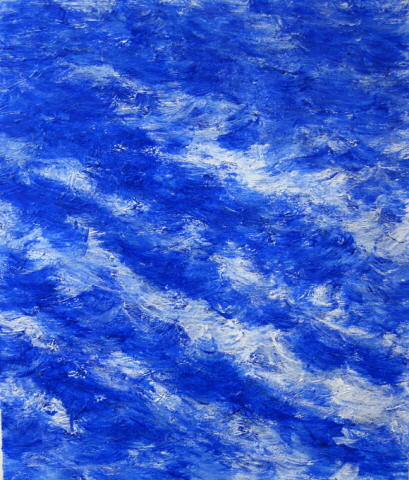
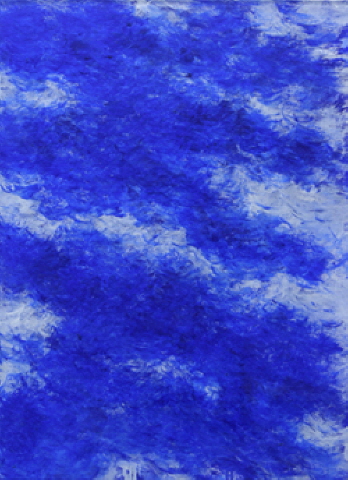
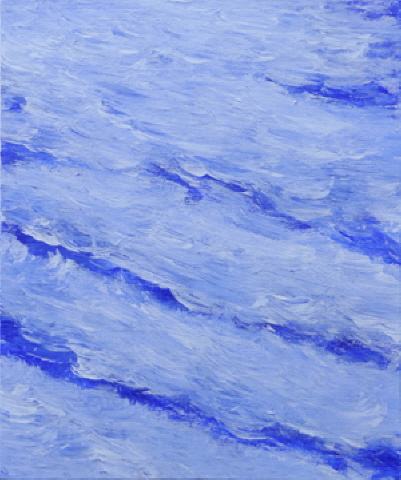
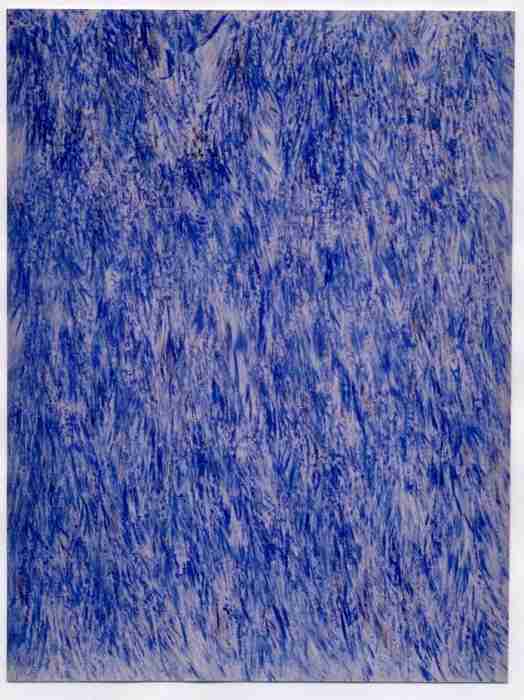
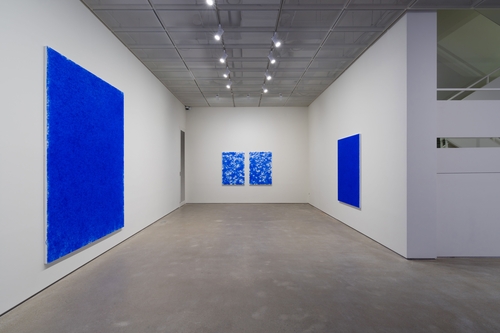
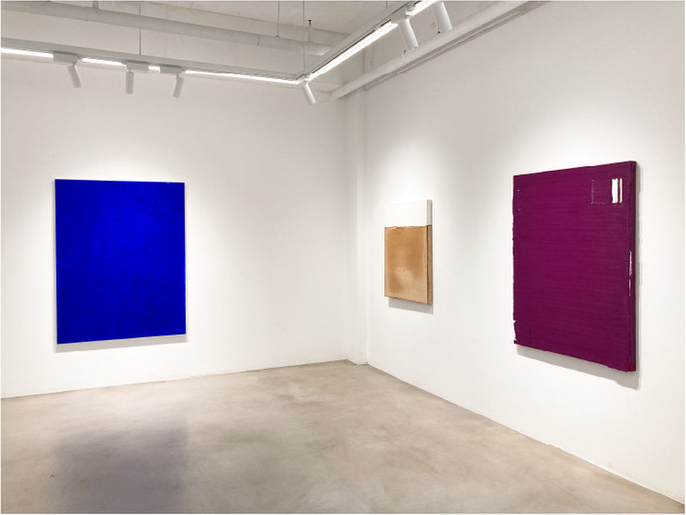
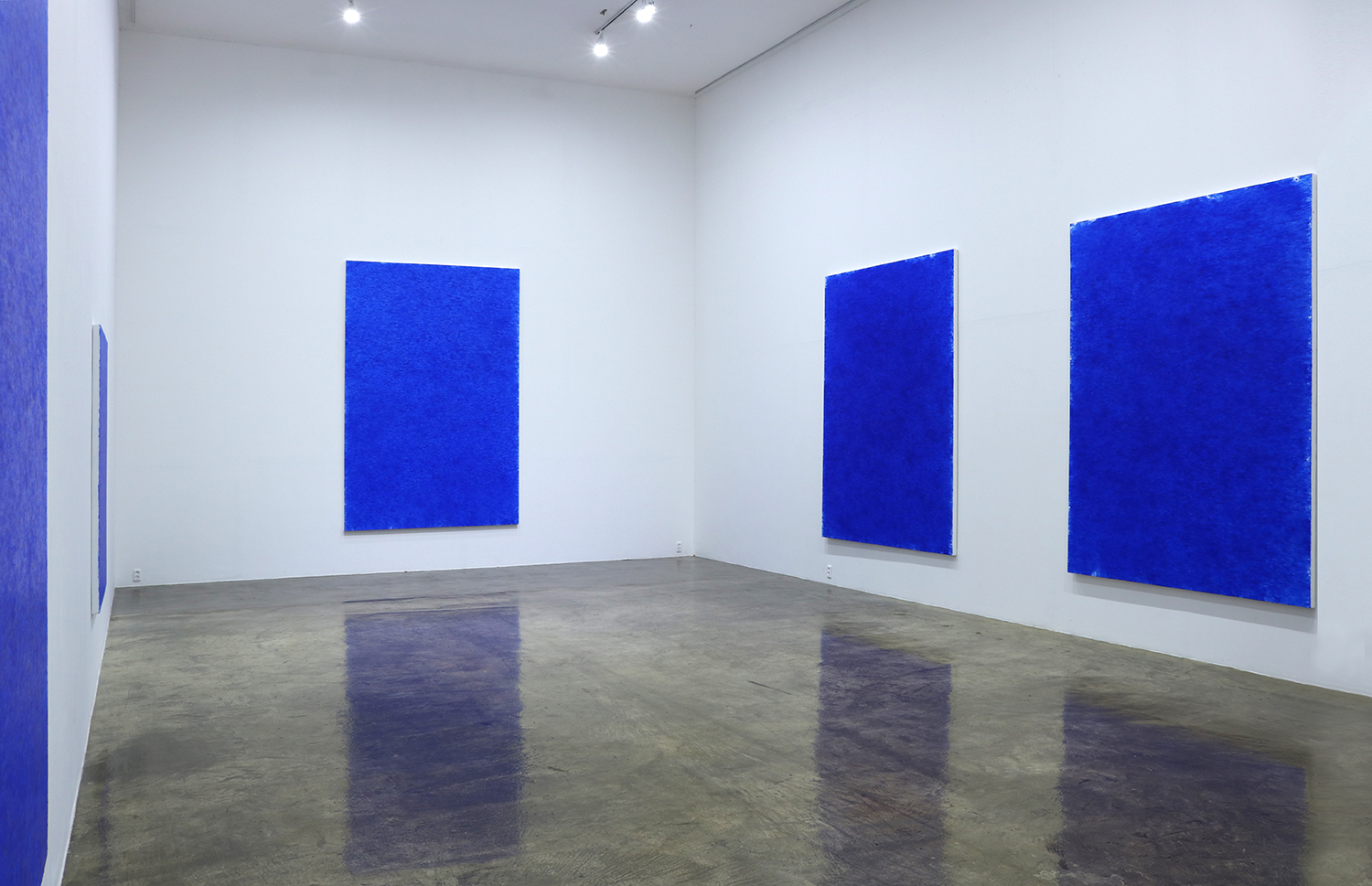
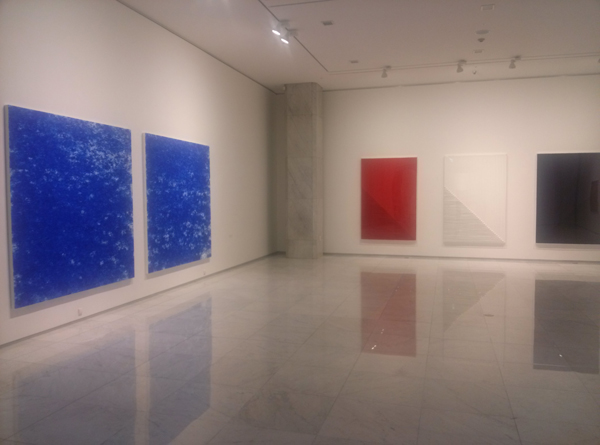
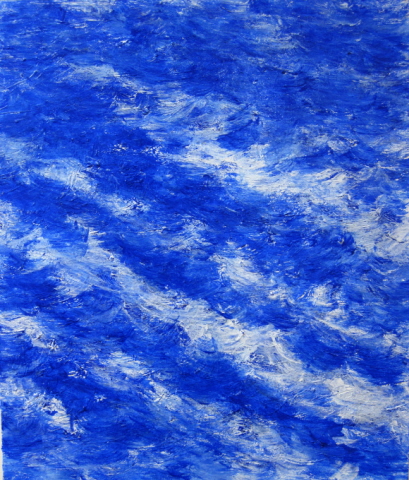
In fact, not only the blue paintings that began in the summer of 1990 but also his earlier works form a continuous inquiry into the meaning of “painting.” He found his answer in bodily movement. Through the repeated act of applying blue and covering it with white, rough or delicate lines gradually fill the surface. Like inhalation and exhalation sustaining life, painting emerges from this cycle of application and erasure. His canvases thus become representations of ceaseless, ongoing life.
The process recalls the Eastern philosophy of yin and yang, in which the world is understood not as fixed substance but as the interaction of opposites. Presence and absence, fullness and emptiness, life and death are treated as equivalents. His equal regard for applying and erasing arises from this same worldview.
The method of making visible through erasure already appeared in his mid-1980s “Window” series. To transcend the gap between the visible world and the real world, he erased painted images. For him, the window is the site where subject and world meet. By erasing the reflected forms, he sought a more essential encounter. Erasure signifies the unity of subject and object, an encounter with an essence beyond sight.
Although mediated by the body, his practice cannot be equated with that of Abstract Expressionists such as Pollock. For them, the canvas was often a site of conquest and the act aimed at unconscious release. For Kim, by contrast, the canvas is an extension of the self, and his gestures strive toward lucid awakening. His repetitive acts resemble a state of non-action leading to enlightenment—a merging of self and world, of painter and painting. The body’s movement, as natural movement, renders the painting literally “natural.”
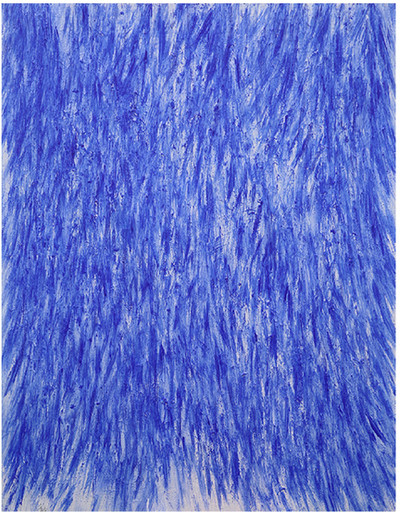
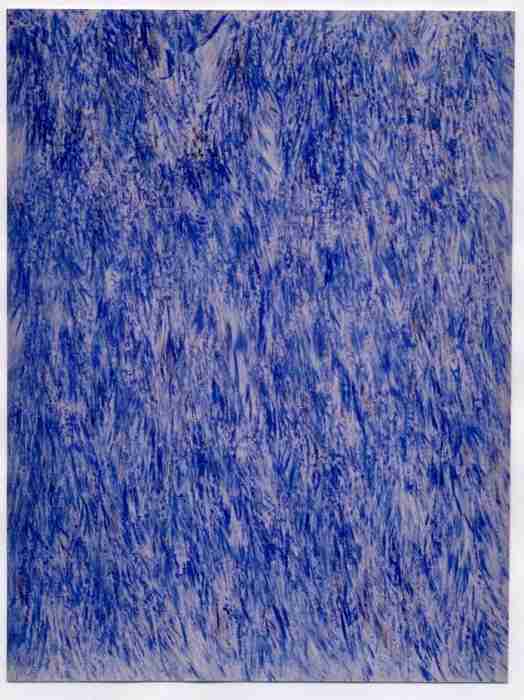
Viewers may imagine waterfalls, lush summer foliage, forest thickets pierced by light, or rugged rocky mountains. While such imagery may be contemplated during painting, what he ultimately seeks to reveal is not form but energy. When nature and artist become one, the energy of nature inhabits the artist’s body and manifests as breathing, dry-brush effects on the surface—evoking the vitality (giun saengdong) found in literati landscape painting.
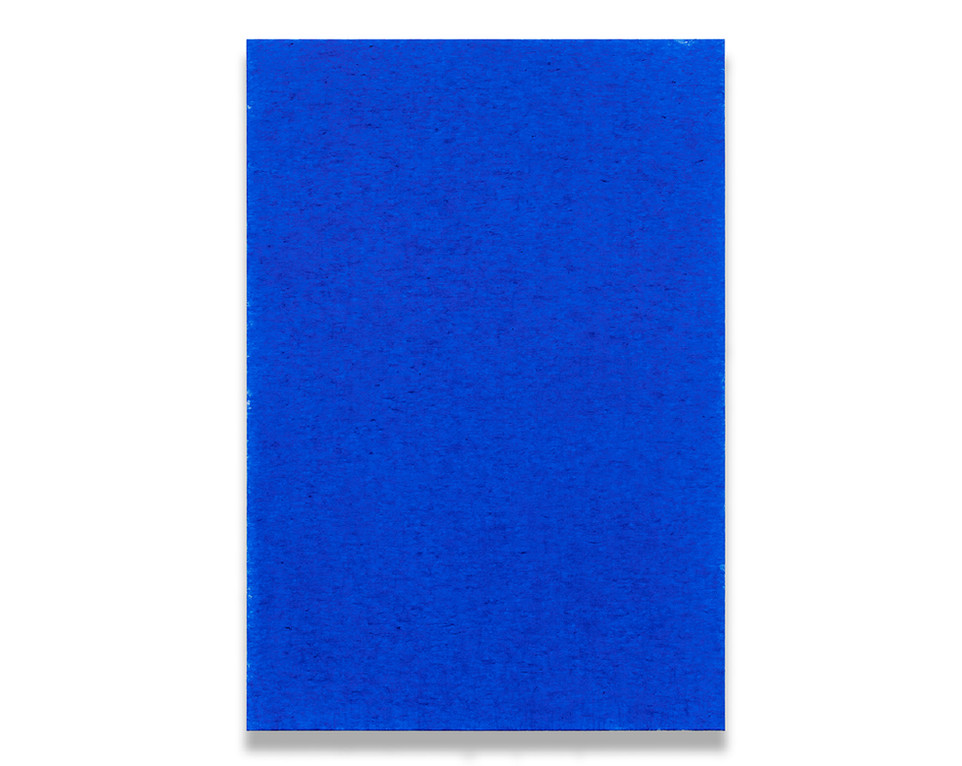
Though the ‘Strange Tongue’ paintings may initially appear similar, close observation reveals subtle evolution. In 1990, leaf- or thicket-like forms were more distinct; by 1991, the touch became finer, recalling Impressionist painting or Yi Sang-beom’s dotted landscapes. In 1992, rough and bold gestures were explored; in recent works, vertical strokes repeat more evenly, as if one could finally hear the steady breath of life. His vision gradually moved away from natural appearances toward their inherent essence, deepening his awareness of the “strangeness of the tongue.”
Kim’s paintings are simultaneously material and spiritual, concrete and abstract. We sense each individual stroke while also perceiving the total atmosphere. By experiencing each moment of bodily gesture, we approach an essence of eternity that transcends fragmented time. Like reading between the lines of a text, his paintings resist analysis and instead communicate a silent truth holistically.
The ambiguous spatiality of these works intensifies their effect. Whereas traditional perspective draws our gaze inward, his paintings allow the eye to move between inside and outside. Paint traces seem to advance and recede, as if floating in air. The all-over hand marks disperse focus, drawing us into subtly shifting infinite space where we hear the resonance of life.
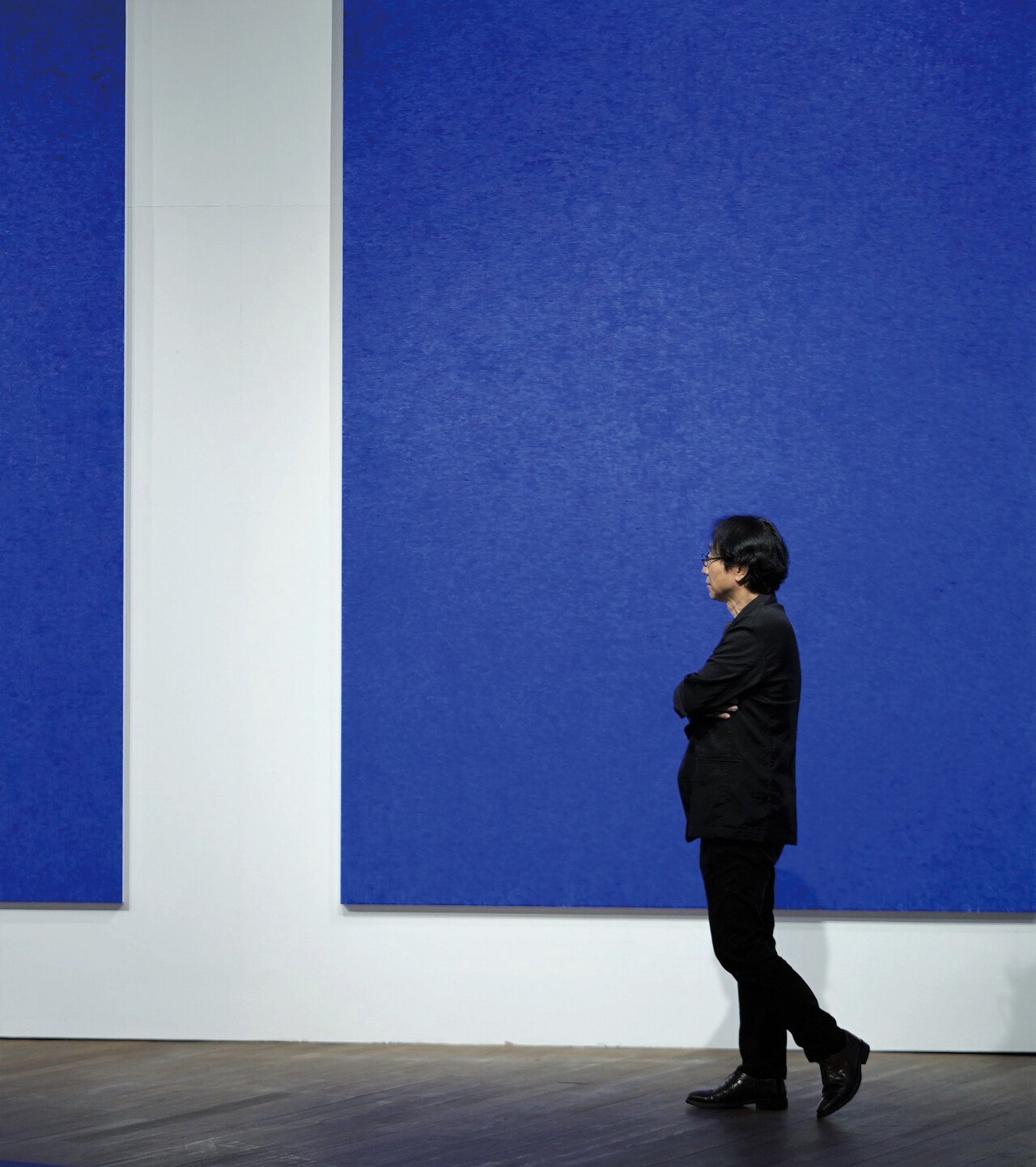
This effect also derives from the distinctive qualities of blue, white, and black—the primary colors he employs. As in Malevich’s white-on-white, Yves Klein’s blue monochromes, or the deep ink of literati tradition, such colors signify realms beyond visible appearance. Though perhaps not consciously articulated, Kim intuitively apprehends these meanings.
At first glance, his restrained palette and repetitive marks may appear monotonous. Yet they are grounded in the intention to attain greater depth and breadth. Believing that minimal means yield maximal effect, he limits color to approach it more profoundly. Repeated similar lines compel attention to subtle variation.
The seemingly simple surface invites concentration and associative thought, opening toward rich possibilities of meaning. This aligns with the attitude of traditional literati painters, who sought spiritual depth through simplicity. Kim’s bodily language transcends dualisms of subject and object, mind and matter, thought and vision—where phenomenological experience meets Eastern natural philosophy. It is here that his paintings attain a resonance that transcends time and culture.