“Compared to the earlier works, this one seems better.” A mid-career artist said this about the exhibition at an after-party. When I asked why, the reply that came back was a cryptic “Can’t you tell just by looking?”—a Zen-like non-answer that is, in fact, widely accepted currency in the art world.
There are exhibitions that make writing a review genuinely awkward. That can happen when the critic knows little about the artist’s background; it can also happen when an artist has long pursued the same subject and a flood of similar commentary has already appeared. Over time, this hardens into a shared consensus—something like a “verified explanation” of that artist’s work. For me, Lee Inhyeon falls into that category. Which is precisely why this review is not easy.
Skimming previously published texts on Lee Inhyeon, I found that their key terms are largely consistent: “breaking away from Western modernism,” “the presence of flatness and materiality,” “process rather than a finished whole,” “looking from the side,” “retinal illusion,” and so on. Many of these texts seem to have been shaped by the artist’s spoken statements and work notes. No wonder they resemble one another all the more. They are, in any case, already such excellent explanations that adding my own flimsy tautologies hardly feels meaningful.
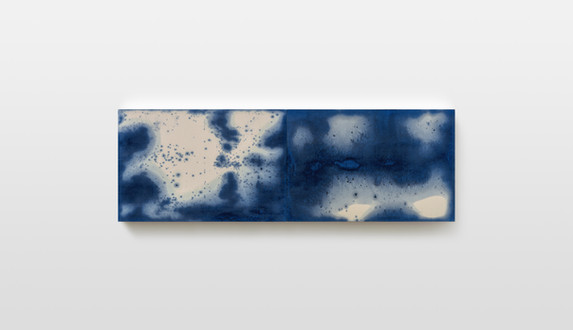
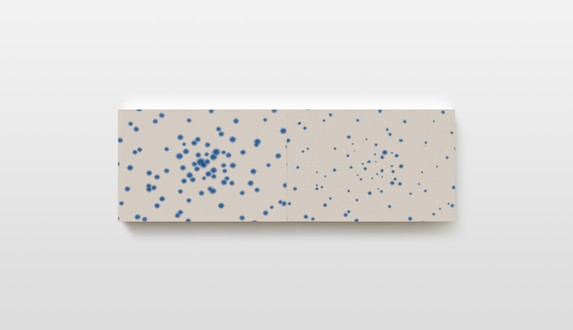
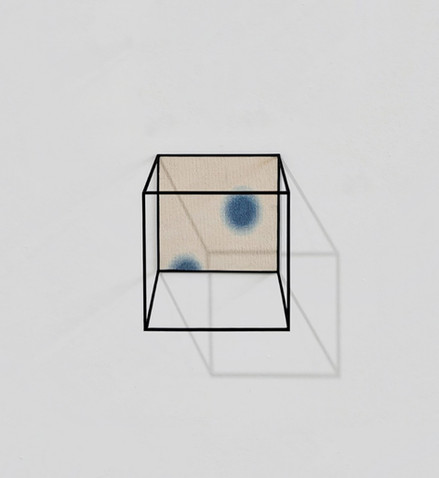
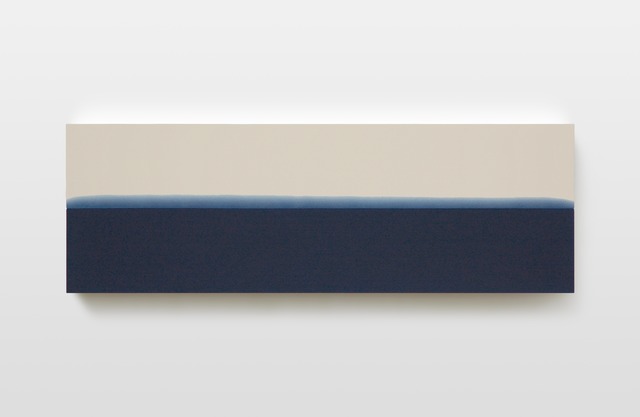
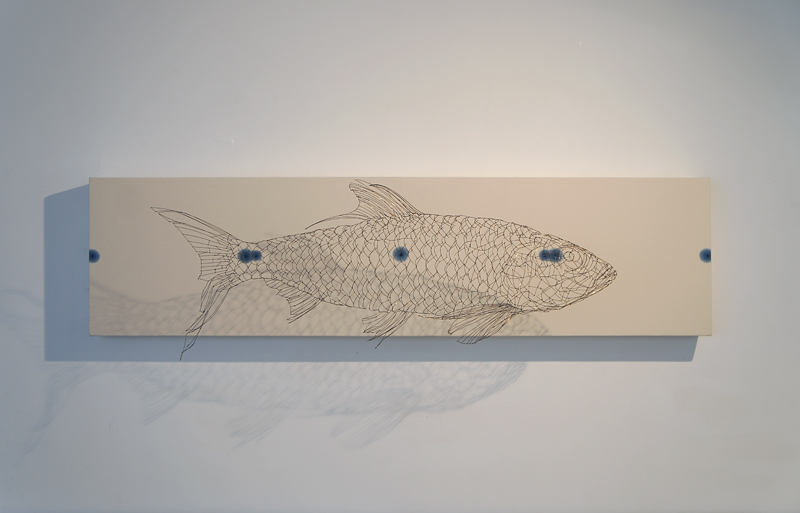
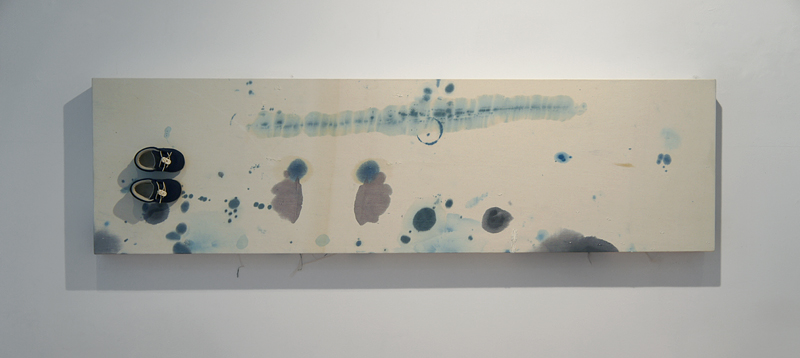
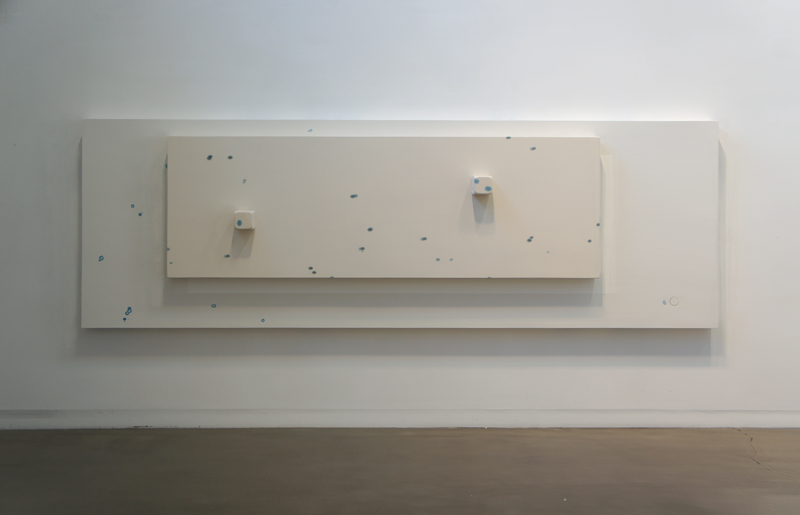
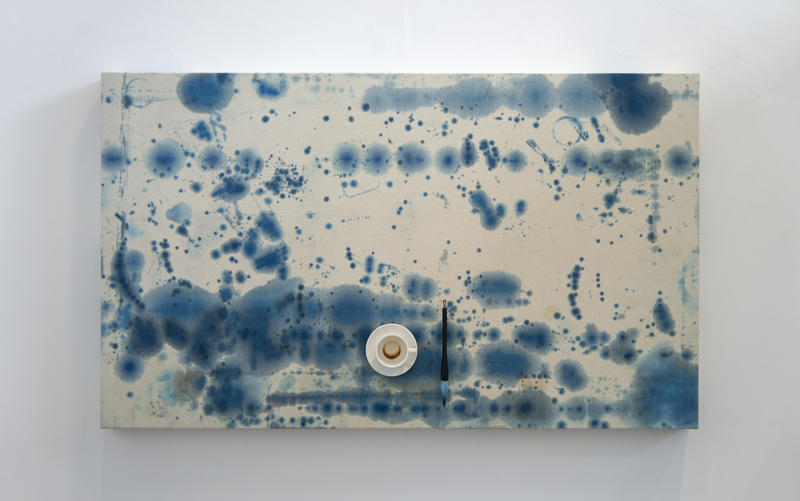
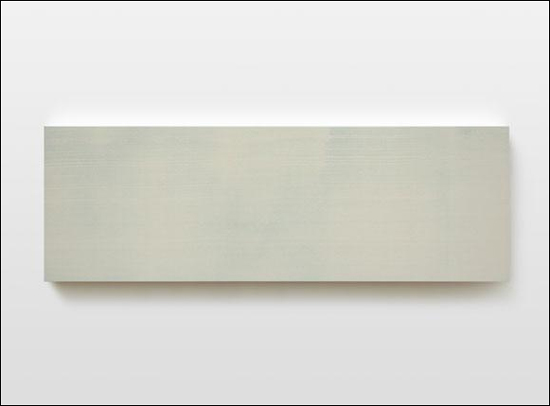
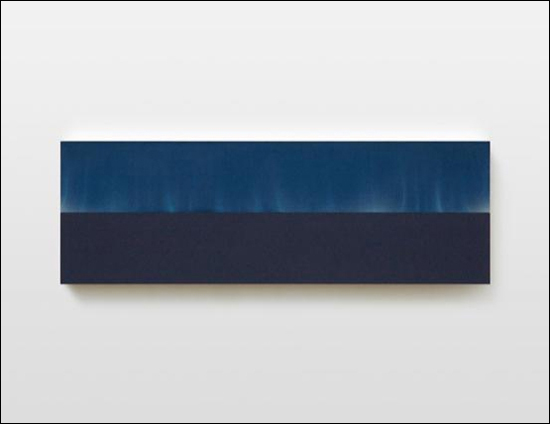
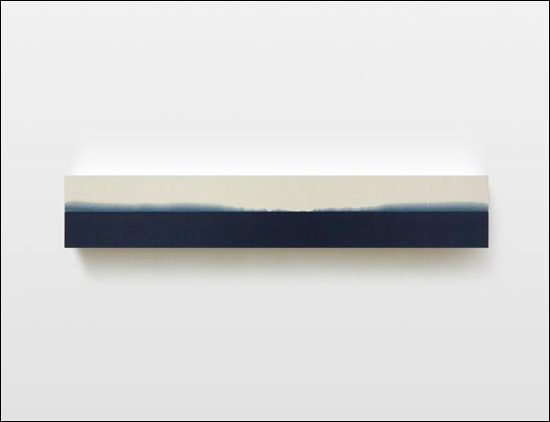
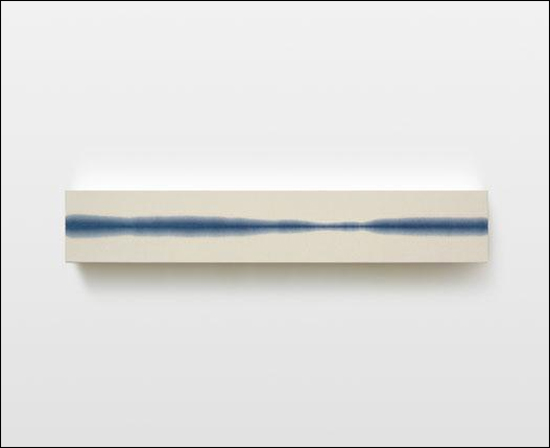
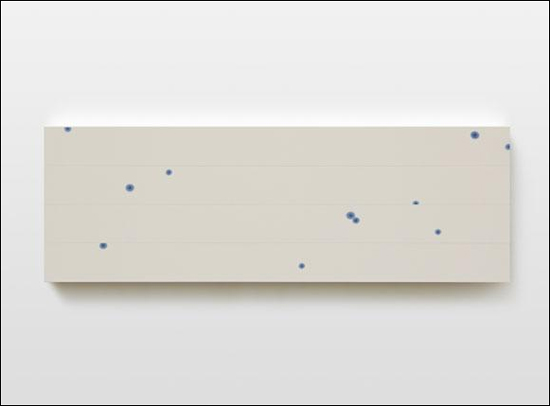
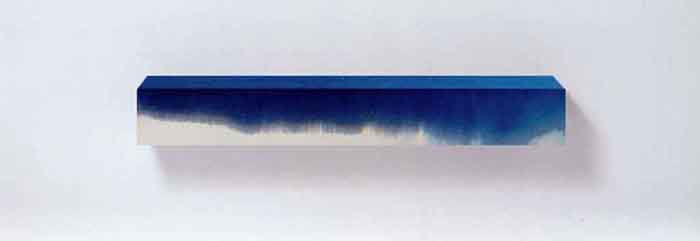
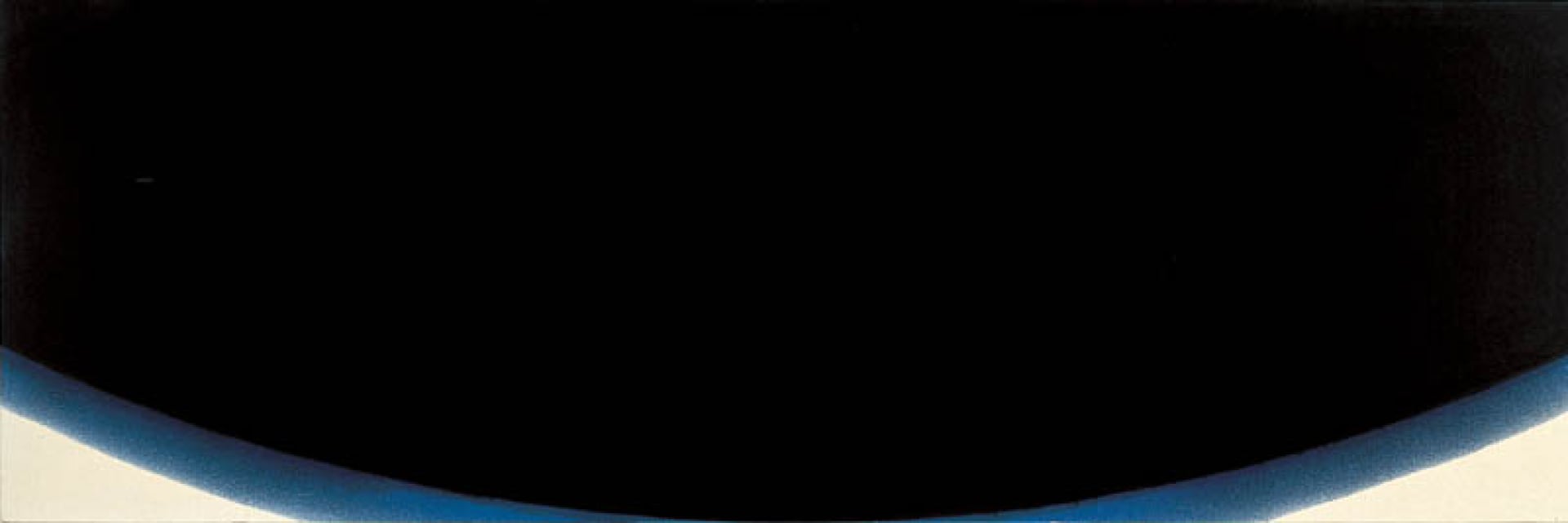
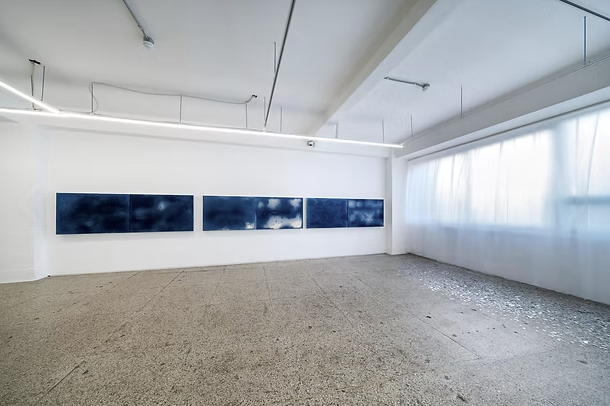
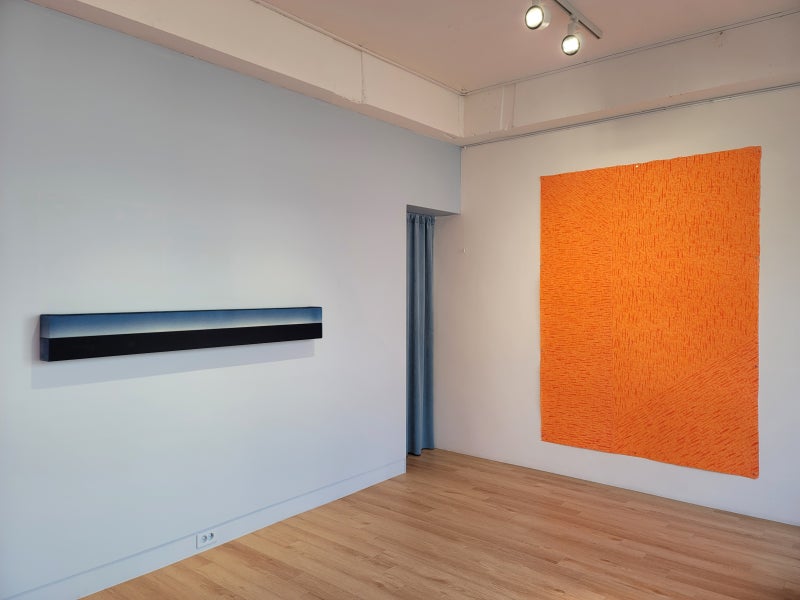
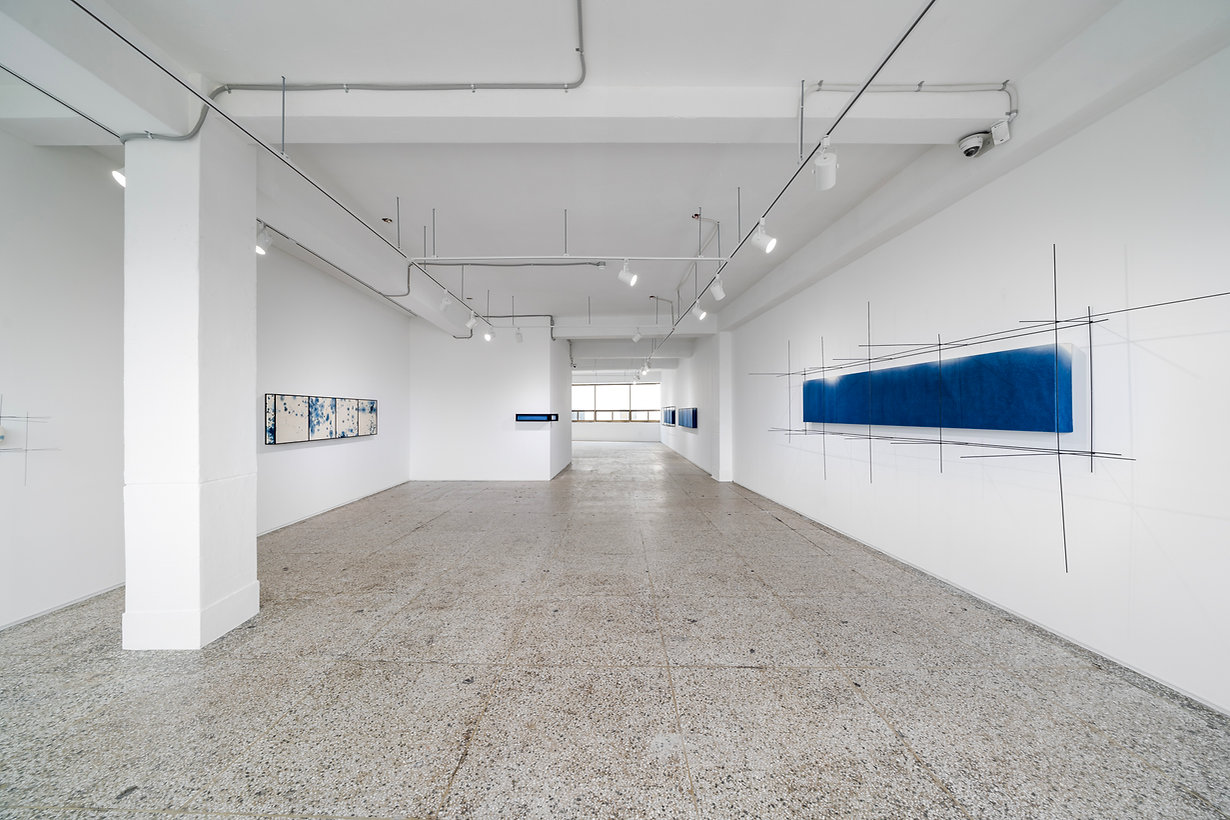
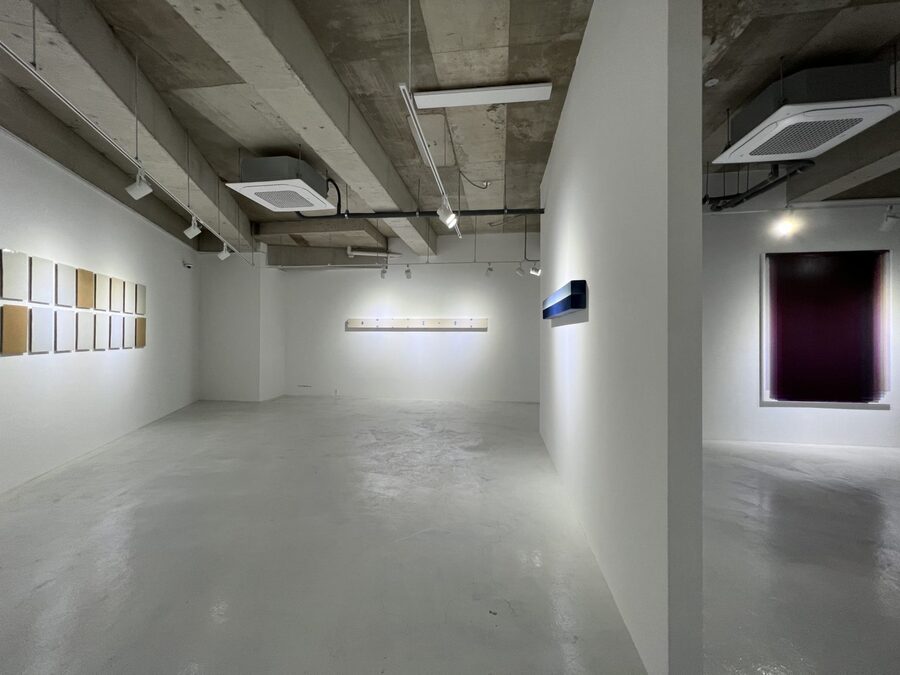
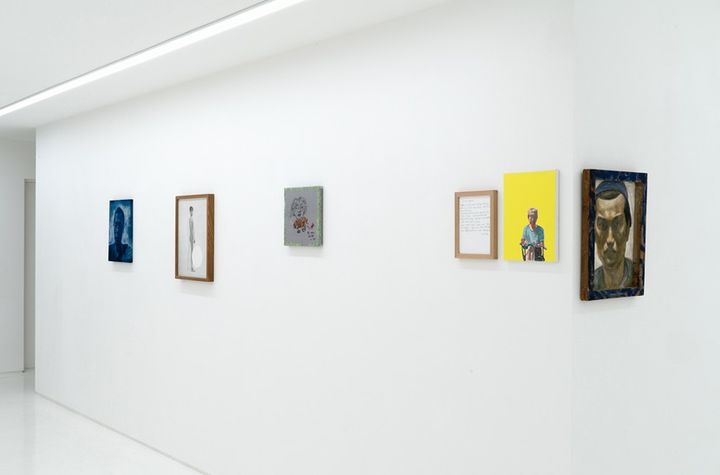
Given the limited space, I will attempt to sidestep this impasse by closing with two questions. The first: what kind of “stratum” has changed through this exhibition? On my second visit, I realized that, without any external prompting, viewers were voluntarily tilting their bodies to look at the works from the side. This was not so much because the familiar explanation—that the side functions like the front as an image surface—proved newly convincing, but because the exhibited works are structured such that only from the side can one observe the tonal shifts in the thinly overpainted layers.
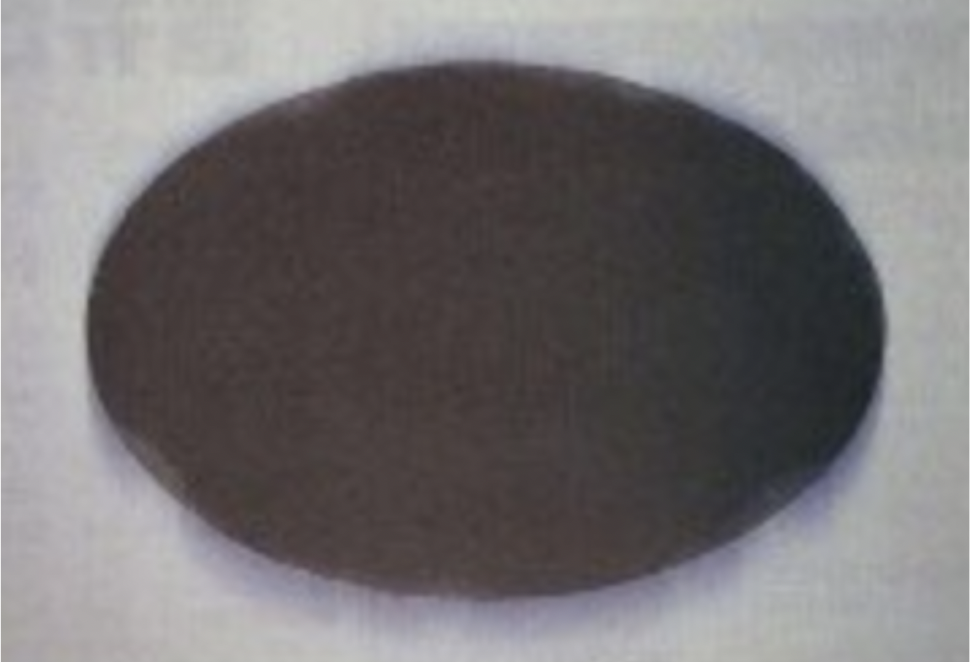
Meanwhile, the monotone “declaration”—painted so faintly it seems barely to touch Lee’s now-validated “modified picture frame”—does not, in my view, go beyond reaffirming a decade-long insistence on correcting our angle of looking. In any case, that is the change this time.
Which leads naturally to the second question. How long will this extended stratum of painting continue to accumulate, when it already tends to generate reviews that sound much the same? According to an interview from just a few years ago, the artist intends to devote at least another twenty years to this subject alone.
Some will remember that he once tried his hand at computer-based work. A critic even wrote a confession of being deeply impressed by it. I understand the sentiment, but I suspect that impression depended on continuity with the earlier works—and, frankly, sounded like an exclamation born of too little awareness of where the digital era actually stands. I sympathize with the health and courage of such an abrupt attempt, but I do not think the work itself was particularly compelling. And sure enough, he returned to painting.
Even if Lee harbors future plans for digital work, the trademark of “the strata of painting” has, in the end, been powerfully “recognized” by us only when premised on the analogue canvas. The reason his seriousness has been accepted without strain for well over a decade, I think, is captured by Kang Taehee’s remark: “Whether or not he pursued beauty, these works all display a neat, composed beauty.” It is not only women for whom prettiness excuses everything. In truth, his work is pretty enough that one almost wants to forgive it.
Now it is time to conclude. Written roughly this way, it becomes the safest kind of review: “Lee Inhyeon’s recent work succeeds in both aesthetic refinement and a consistent thematic consciousness—because, well… can’t you tell at a glance?”