If the obsessive desire to render three-dimensionality upon a flat surface propelled Western art history since the Renaissance, then painters after Manet exhibited another kind of obsession—the compulsion to return to flatness. For these modernists, “flatness” functioned as the last bastion safeguarding the purity of painting. Their relentless self-criticism in pursuit of flatness ultimately led to the complete identification of canvas ground and pigment.
Yet at the very moment this objective was achieved, flatness risked becoming equated with the material presence of the surface itself; painting, in turn, faced the danger of remaining as nothing more than a pure receptacle, relinquishing its capacity to contain anything at all. Caught in this self-contradiction, modernists sought to defend “optical illusion” (C. Greenberg) or “shape as a medium of painting” (M. Fried) in order to prevent painting from collapsing into mere objecthood.
They attempted to inscribe within painting forms that would appear only upon the retina, freed from the characteristics and weight of material. Yet such strategies do not fully guarantee the historical place that painting has occupied. Where, then, should everything that had previously resided within painting go? Must painting now refrain from containing any concrete image, narrative, concept, emotion—even the slightest intention of the artist?
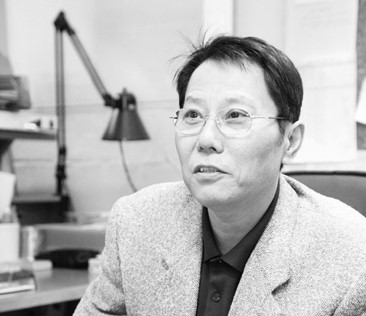
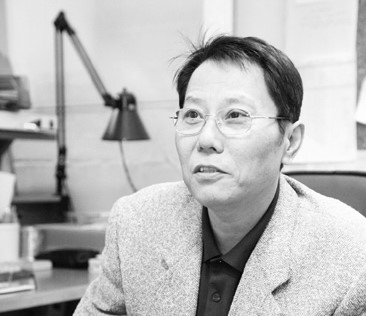
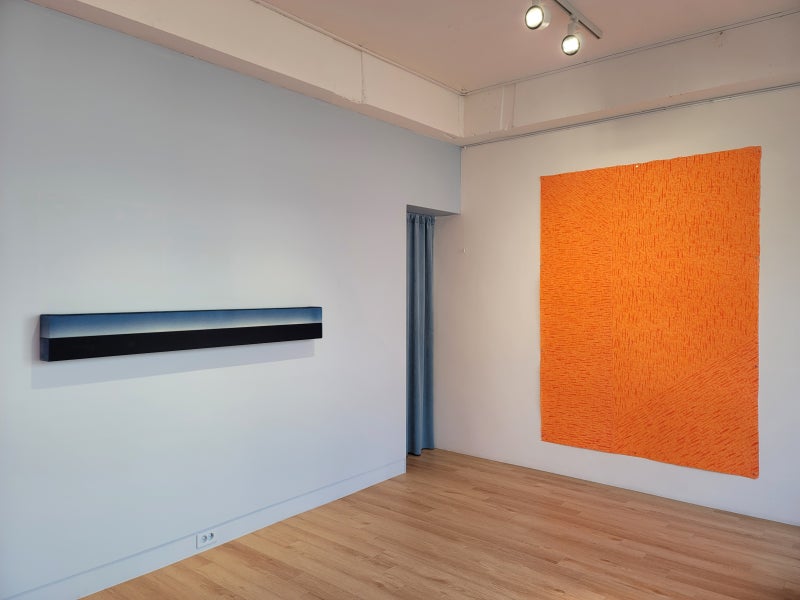
Lee Inhyeon’s practice appears to begin precisely at this juncture. He does not reject the material presence of painting; rather, by accepting it, he recognizes that what has conventionally been inscribed upon the surface under the name of “content” has, in fact, been relocated to its original site—the artist. In doing so, he dismantles the longstanding myth that the subject of production is immanent within the artwork. Stepping gently backward, he casts the painting into an unknown space and observes the process by which it becomes. Thus, Lee’s paintings are not self-contained entities filled with meaning, but units that establish relationships with surrounding space and participate in the formation of that space.
They become a mode of existence cast into the time and space in which they encounter us. We therefore experience his paintings not as self-sufficient nouns, but as verbs situated within painting’s ongoing process of self-reflection. Paradoxically, the more the artist withdraws from the work, the more we find ourselves drawn to the artist behind it. If it has long been habitual in the experience of art to seek the maker within the work, then once that maker appears separated from it, it is perhaps inevitable that we turn our attention more firmly toward the artist standing behind it.
This mode of experience is not unfamiliar, having already begun with Marcel Duchamp’s readymades. (Seen from this perspective, it is no coincidence that Duchamp became a precursor to both Minimalism and Conceptual Art. Minimalism’s emphasis on objecthood and Conceptual Art’s focus on the artist-subject are, in fact, two sides of the same coin.) It follows that the proper way to approach Lee Inhyeon’s work is first to consider his “thinking.”
He begins from the most fundamental question of pictorial experience: “viewing.” His central concern is the proposition that “painting is seen from the front, and therefore painted from the front.” He challenges the history of painting, which has persistently concealed the simple fact that paintings also possess sides, hiding them within frames. Borrowing Michel Foucault’s term, Lee refers to the episteme of painting as its “strata”—a notion arising from this very awareness.
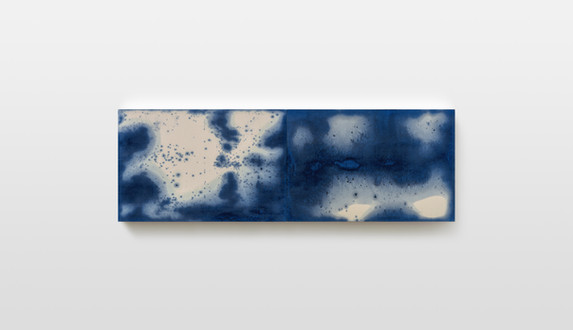
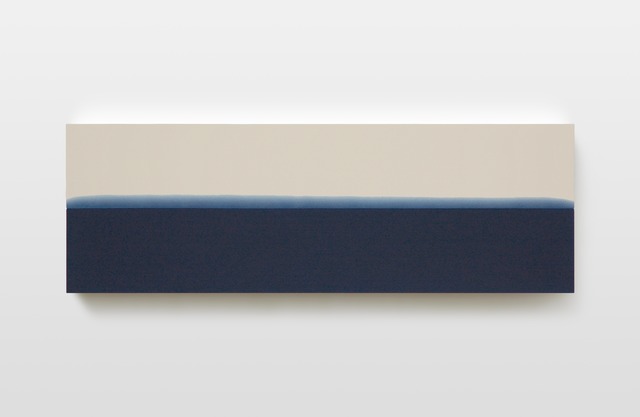
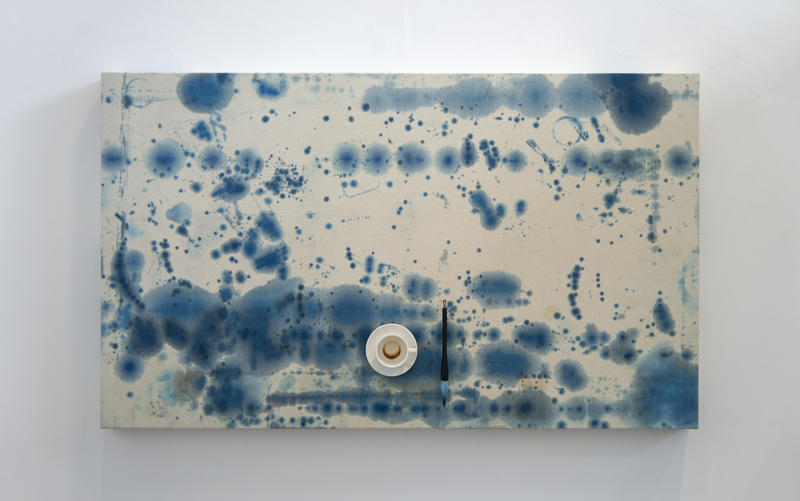
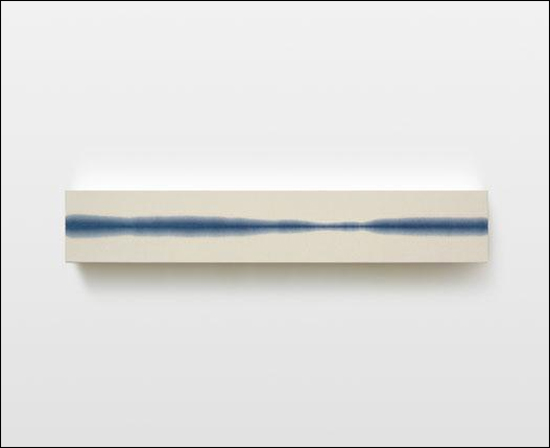
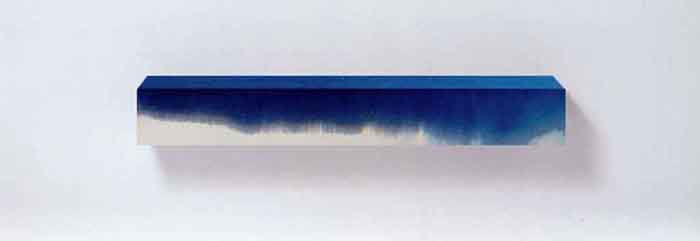
He brings these strata into being through the encounter of materials. By removing the sizing from the canvas and thinning the pigment so that it seeps into the fibers, his staining technique effectively reveals the physical thickness that constitutes the painting. While artists such as Morris Louis and Kenneth Noland employed similar methods to achieve ultimate flatness, Lee deploys them toward an entirely different aim. His surfaces thus become both Greenbergian color fields and material surfaces.
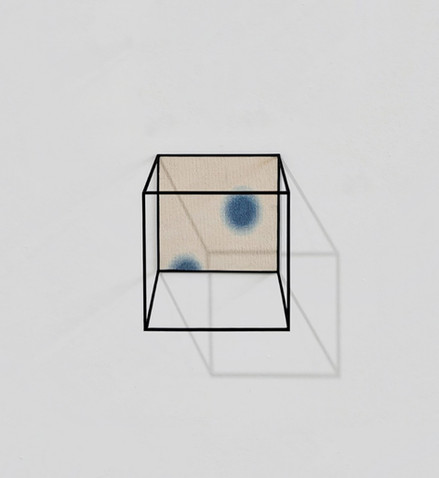
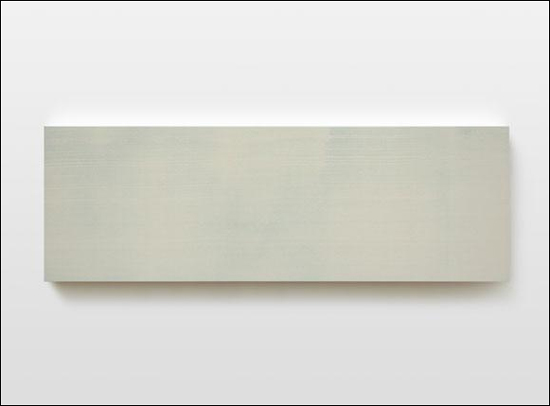
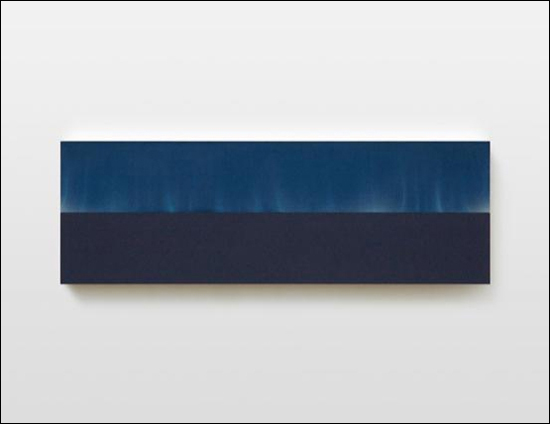
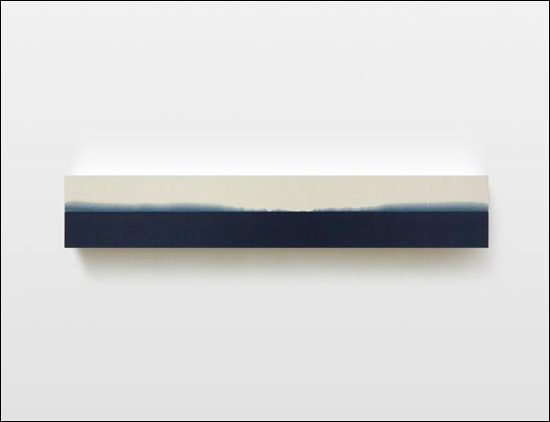
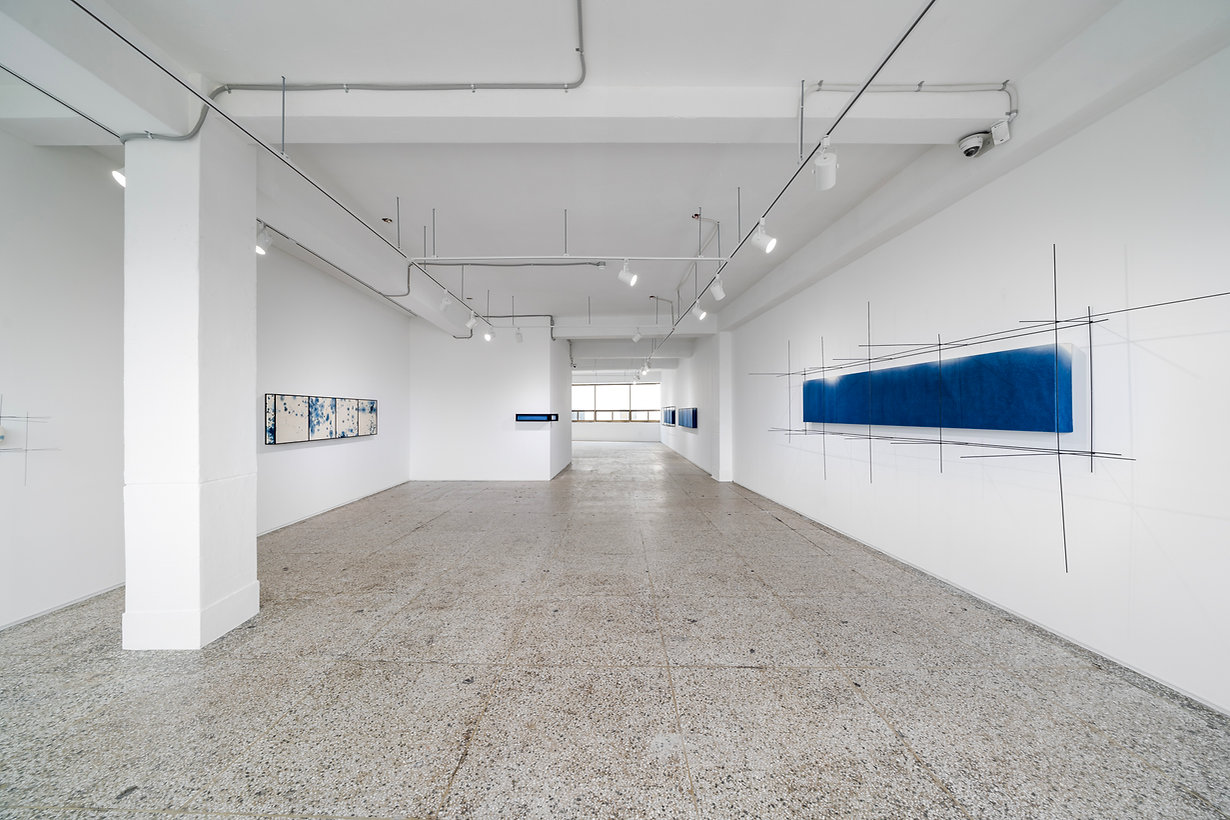
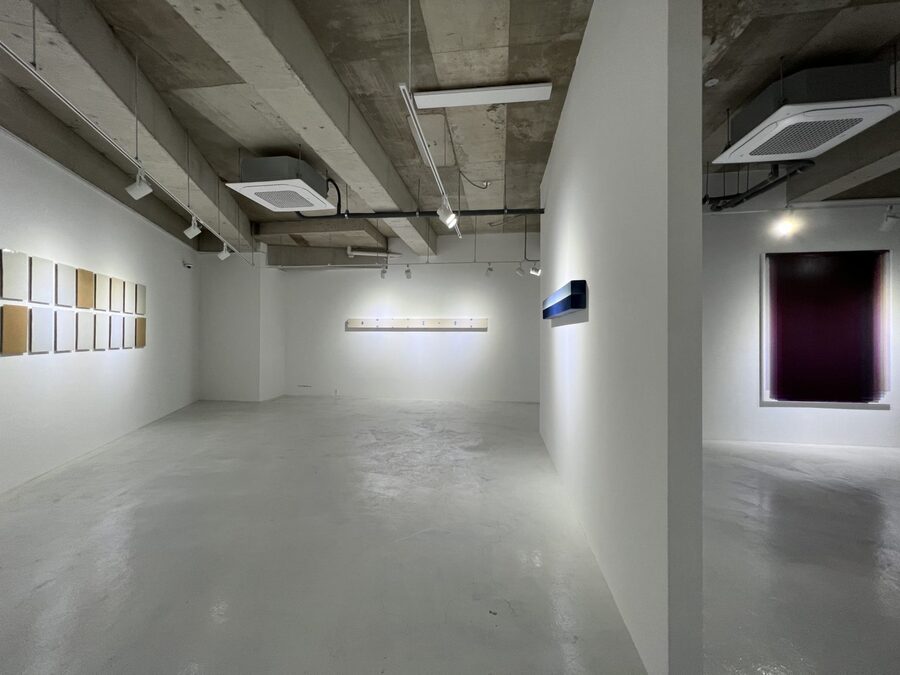
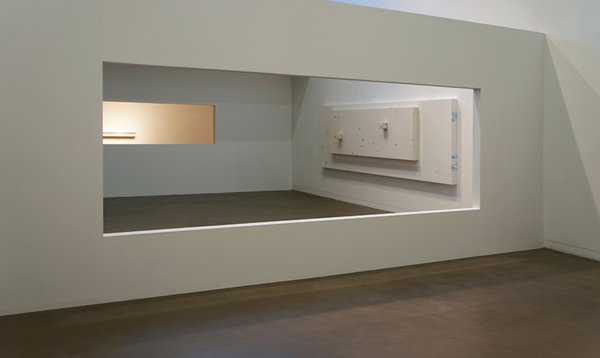
His use of thick, block-like canvases further emphasizes the existence of sides. The substantial depth allows the pigment, absorbed from the front, to visibly bleed along the sides. At times, what was initially the front becomes the side in exhibition, and vice versa. In some instances, two canvases are joined face-to-face, concealing their original fronts within the seam and presenting only their sides. When canvas fabric is fully unfolded and fixed like a diagram, both front and side become frontal. Ultimately, for Lee, the distinction between front and side loses significance.
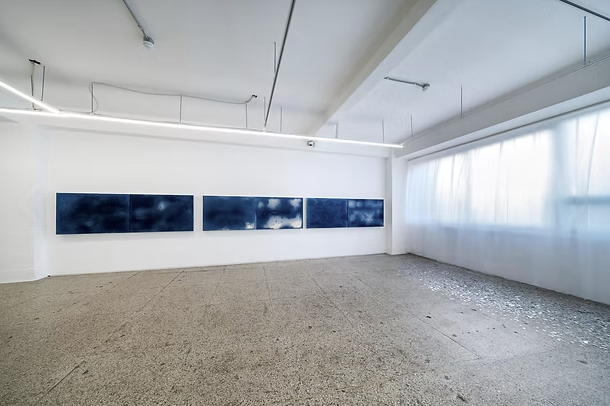
This interrogation of painting’s “frontality” extends to the problem of the “proper” way of viewing. Even before a painting that ostensibly embodies frontality without question, is it truly possible to behold it wholly from the front? Standing at the center of a painting, our vision—bound to the body—inevitably shifts toward peripheral viewing as we approach its edges. Lee’s horizontally extended canvases intensify this awareness.
To see his paintings, we must scan front and side, above and below, and even the front itself while slowly passing before it. To question “viewing from the front” is thus to define painting as a physical entity experienced within the duration of real time. His position stands in opposition to modernists who emphasized frontality and instantaneous cognition as atemporal experience.
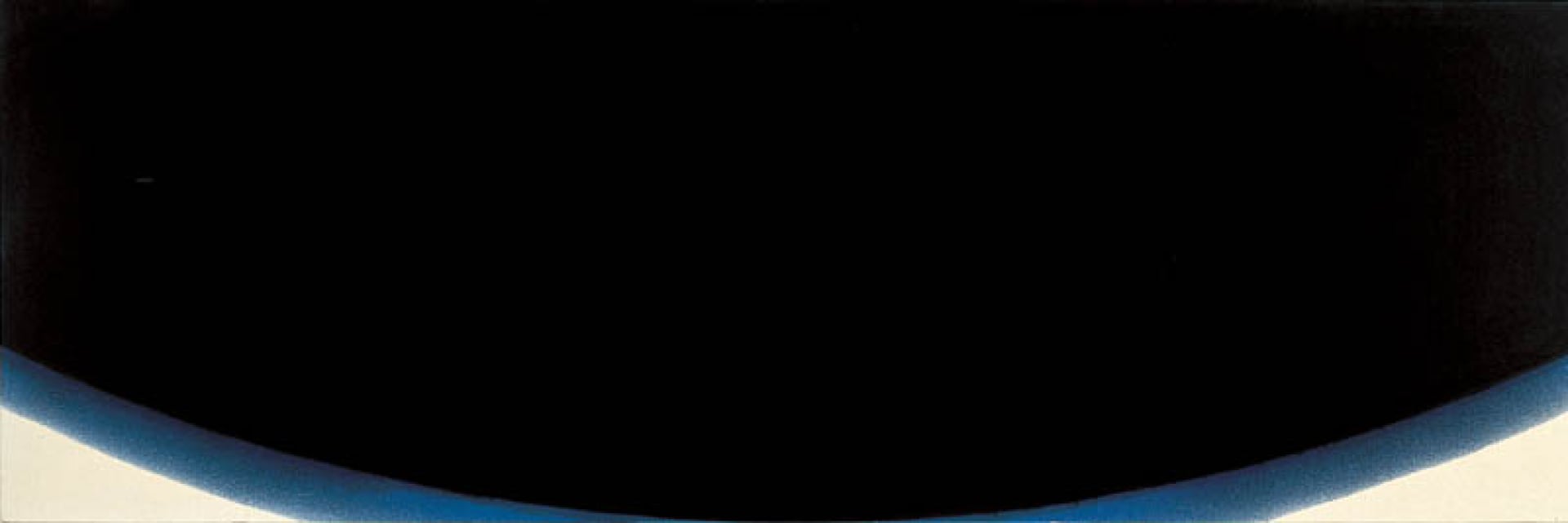
Lee’s painting affirms flatness while maintaining literalness. It is not the modernist flat plane of the frontal surface, but rather the single-layered plane that constitutes the skin of all volumetric bodies. In this sense, he appears to deny illusion—the most essential convention of viewing painting. Yet for him, “viewing painting” means accepting the illusion that arises spontaneously upon the retina. He does not insist that his paintings be perceived solely as flat.
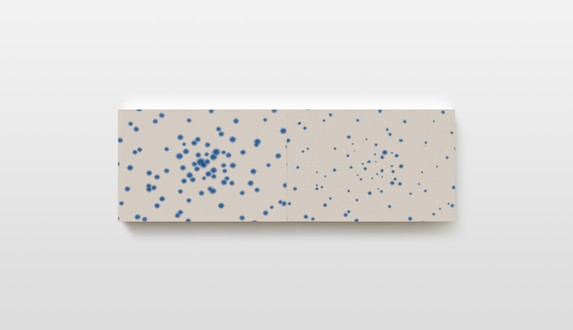
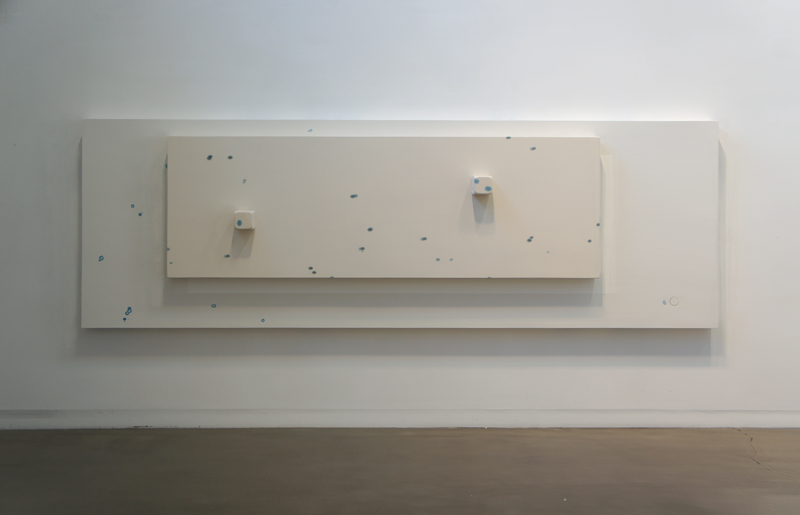
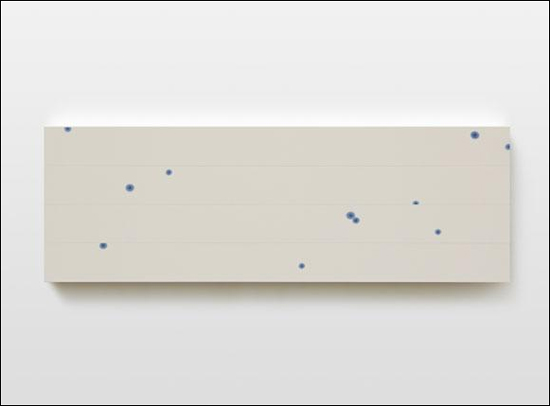
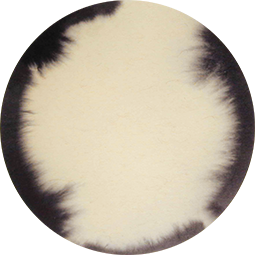
This position is exquisitely exemplified in his paintings composed of spots of pigment. Two dots—one dark, one light—are paired as though casting a shadow, symmetrically repeated on either side of the center. As they approach the edges, their intervals narrow, compelling us to perceive undeniable chiaroscuro and perspectival depth—a visual thickness. Here, what is explored is not a physical stratum but a visual one.
It is at this point that Lee’s work diverges from Minimalism, which sought to achieve pure literalness by rigorously excluding illusion. The illusion he permits differs from that of traditional chiaroscuro or perspective, which situates the viewer at the central frontal axis. Rather, it is a retinal phenomenon experienced through material itself, not through a conceptual grid.
If illusion governed the reality of painting in traditional art, and if it persisted in modernism despite abstraction, and if Minimalism emphasized only the reality stripped of illusion, then Lee embraces illusion through material in order to explore a new mode of experiencing painting. He describes such perception or thought—arising spontaneously within real time and space—as “tendency.”
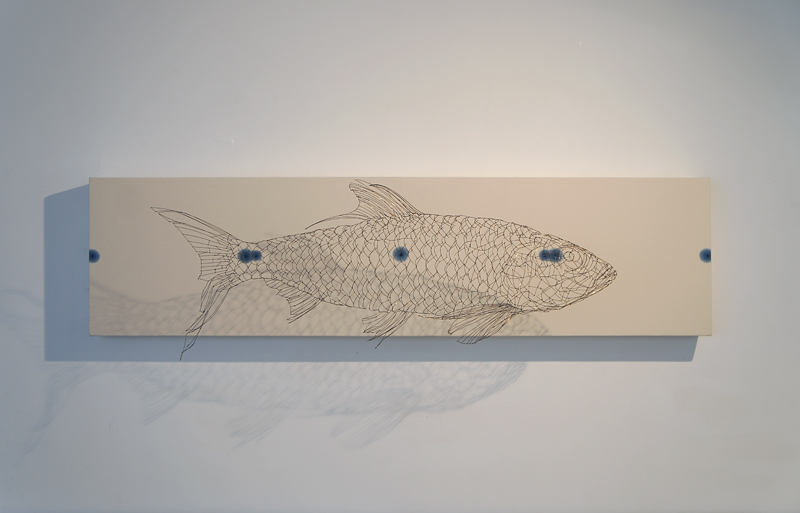
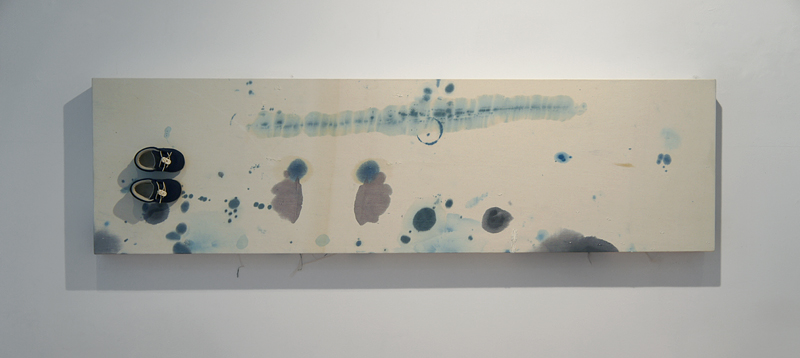
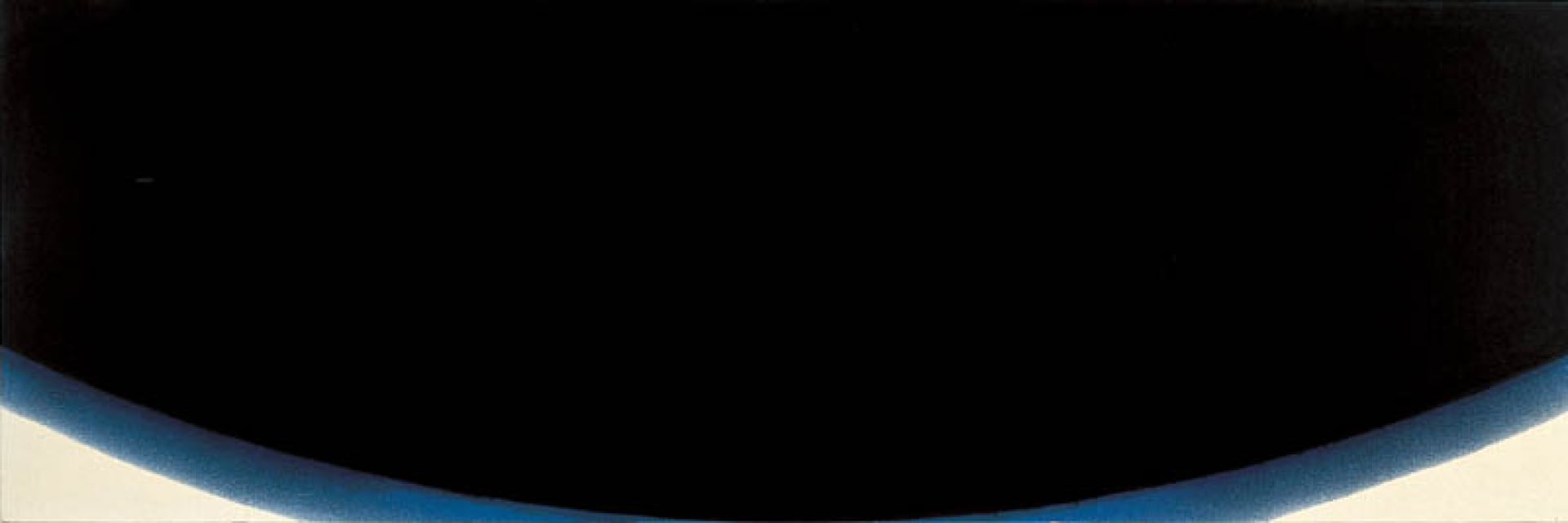
This “tendency” allows even free imagination. Lee does not reject the fragments of reality that emerge spontaneously through material and retinal illusion. A painting in which blue pigment bleeds from the seam between two canvases may evoke Yangsu-ri; when the trace extends more narrowly and lengthwise, it may suggest the Mississippi; spots beneath a wave of pigment seeping downward may recall dark clouds and rain; the juxtaposition of bleeding paint and monochrome surface may conjure a nude reclining upon a bed. He fully acknowledges not only his own imaginative associations but those of the viewer as well.
Thus, poetic reverie enters his “viewing of painting.” His insistence upon real time and space is paradoxically exemplified through printmaking. Each of his prints is unique. By embracing the inherent heterogeneity and singularity within a medium associated with sameness and repetition, he underscores that each work exists concretely within a specific time and space. Yet he does not deny the intrinsic processes of printmaking through monotype or post-production retouching. As in painting, he first accepts the medium’s properties. He begins by creating a photosensitive printing plate from an ink drawing on hanji paper.
By varying exposure times to produce four or five different plates and layering them in printing, he accepts the variations that naturally arise. Rather than forcing uniform editions, he embraces the subtle differences that emerge organically. In this way, his prints embody a fusion of the spontaneity of process and the reproducibility of printmaking—a manifestation of the “tendency” he describes.
Lee discovers, through direct encounters with material, a key to overcoming the binary thinking of oppositions; for him, such encounters signify “naturalness.” In this respect, his thought resonates with phenomenological modes of embodied cognition and with the Eastern concept of wu wei ziran, which transcends the dualism of being and representation. Neither the modernist obstinacy that sought to transcend a world deemed too literal, nor the minimalist paranoia that repeated that literalism tautologically, can adequately account for his work.
Detached from all such positions, he resembles a master who casts his objects into the world, observes what they become, and accepts it. So long as we await those rare and precious experiences—left entirely to chance (R. Krauss), whether we encounter them in life or not—his works will continue to remain mysterious works of “art.”