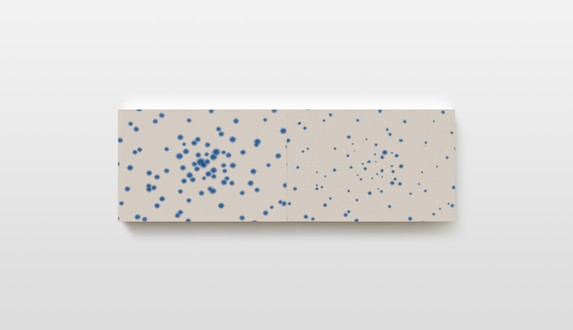
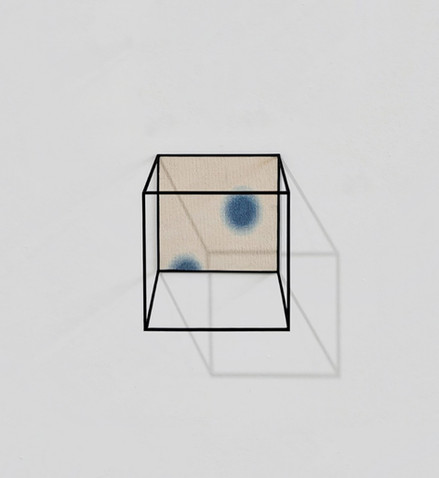
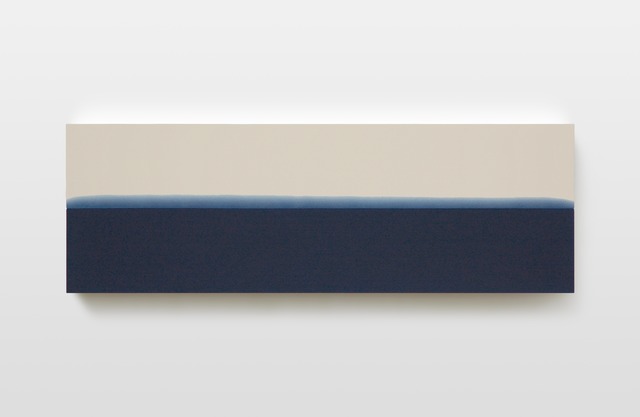
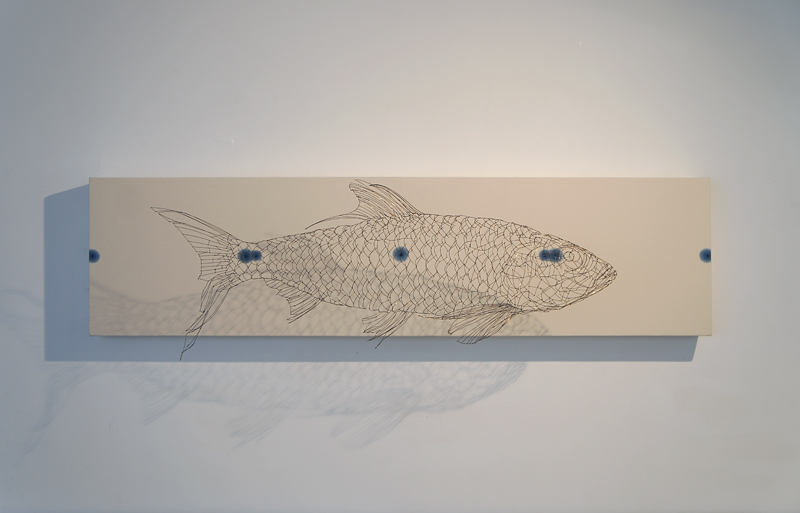
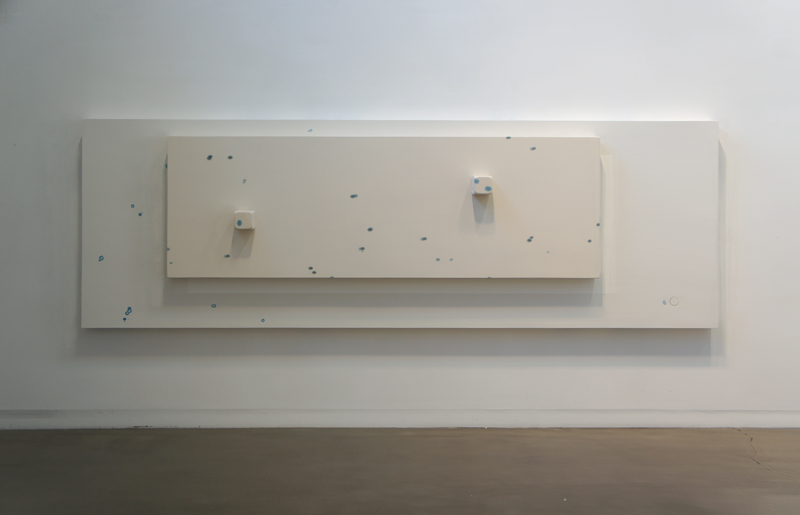
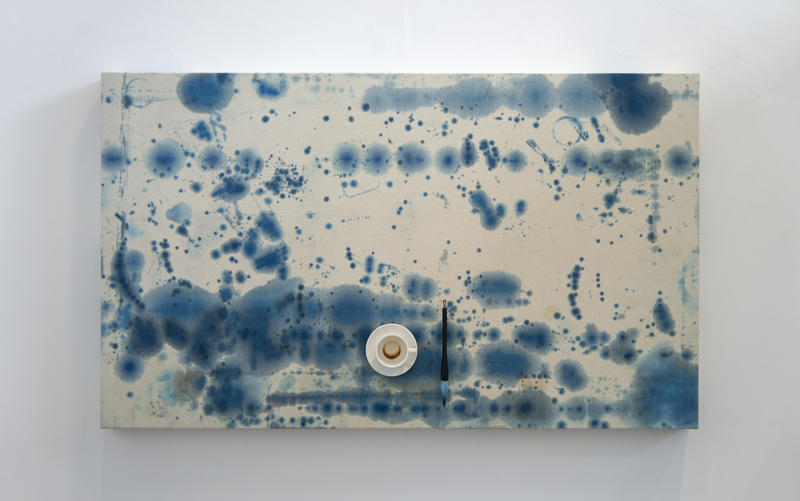
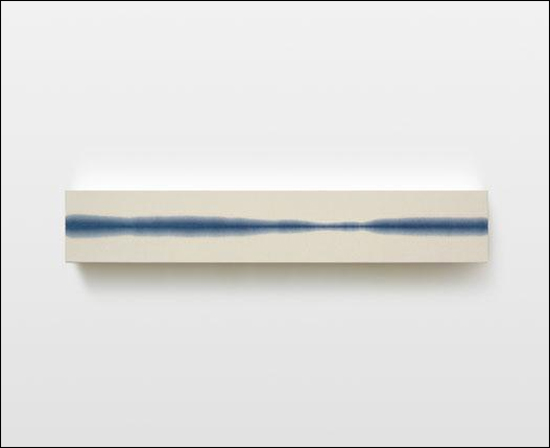
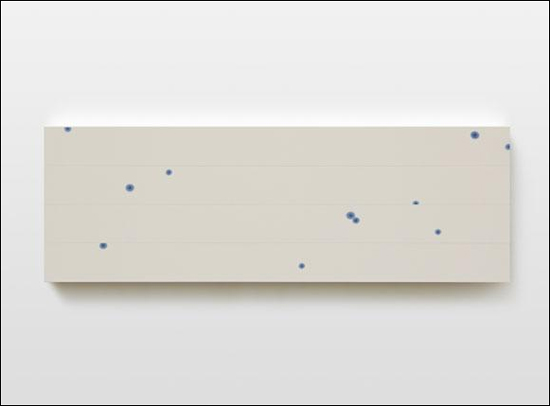
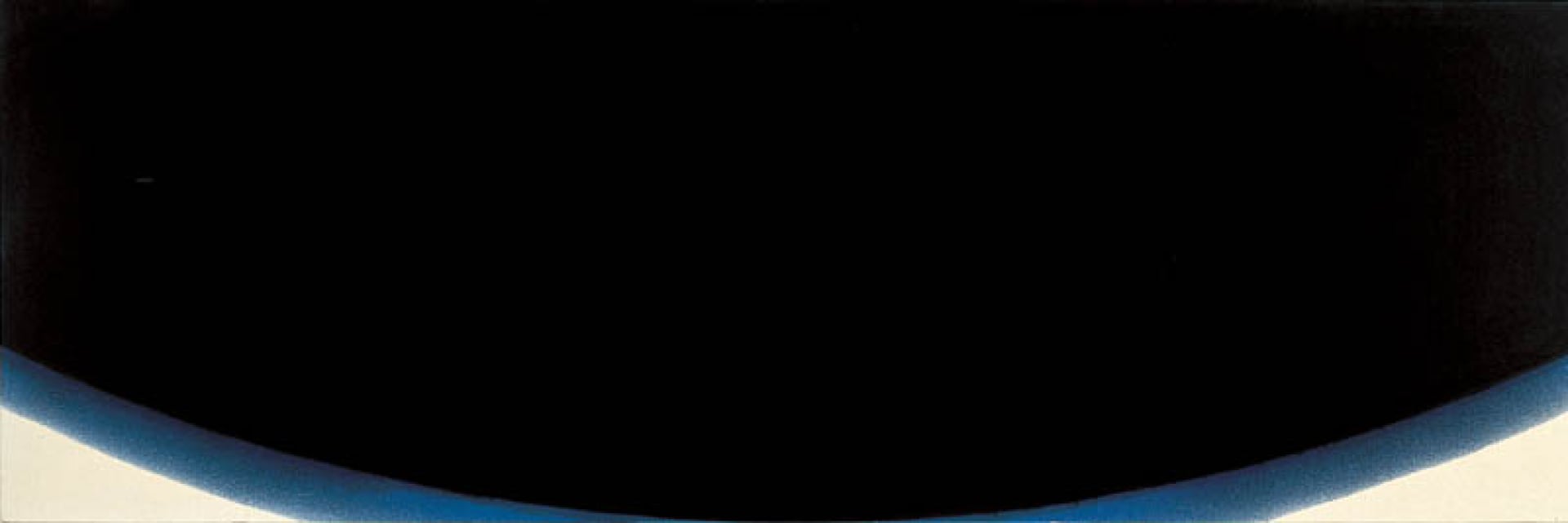
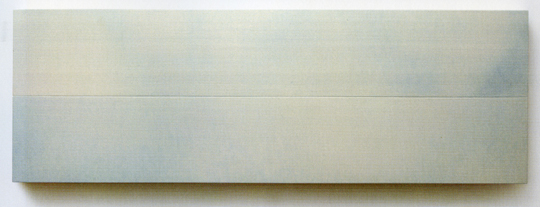
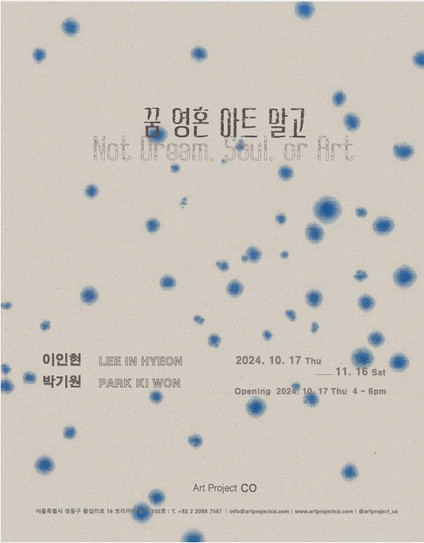
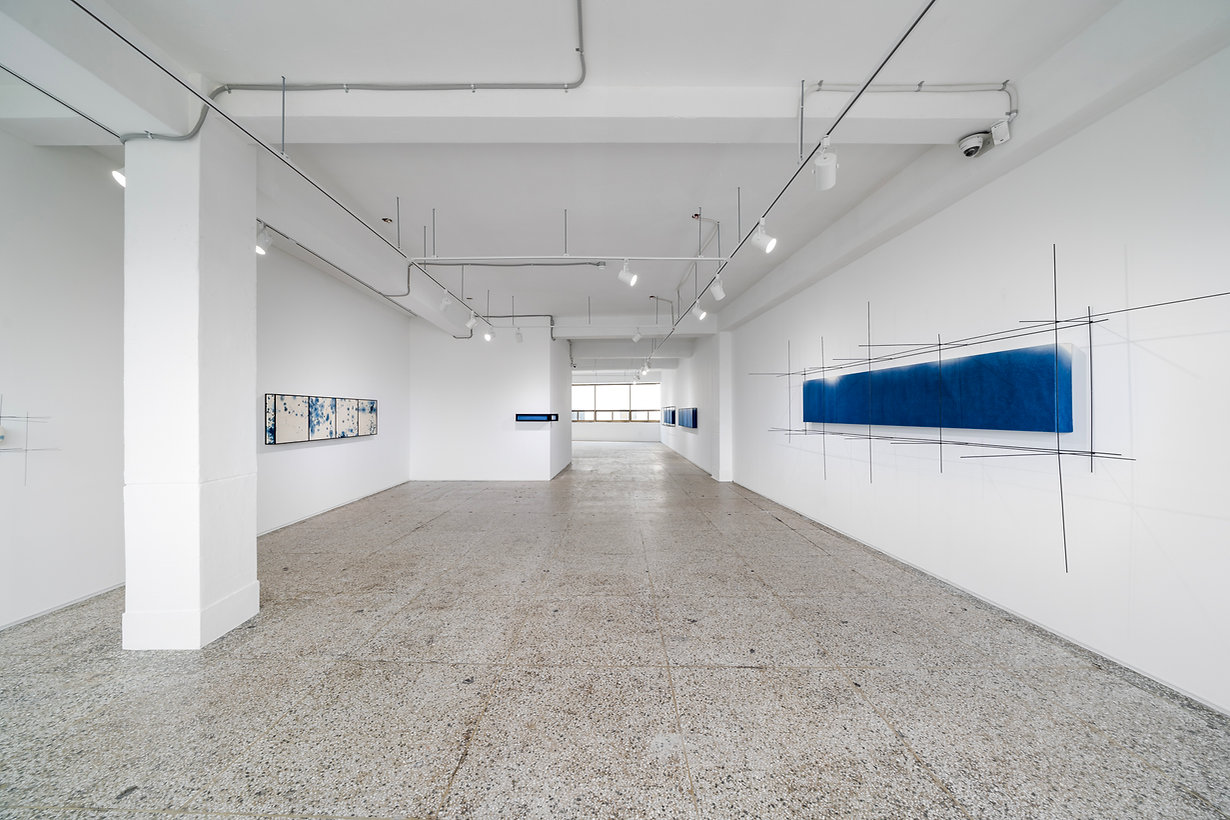
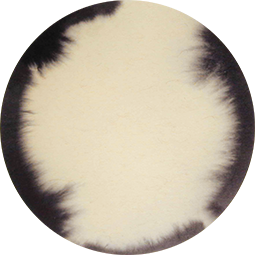
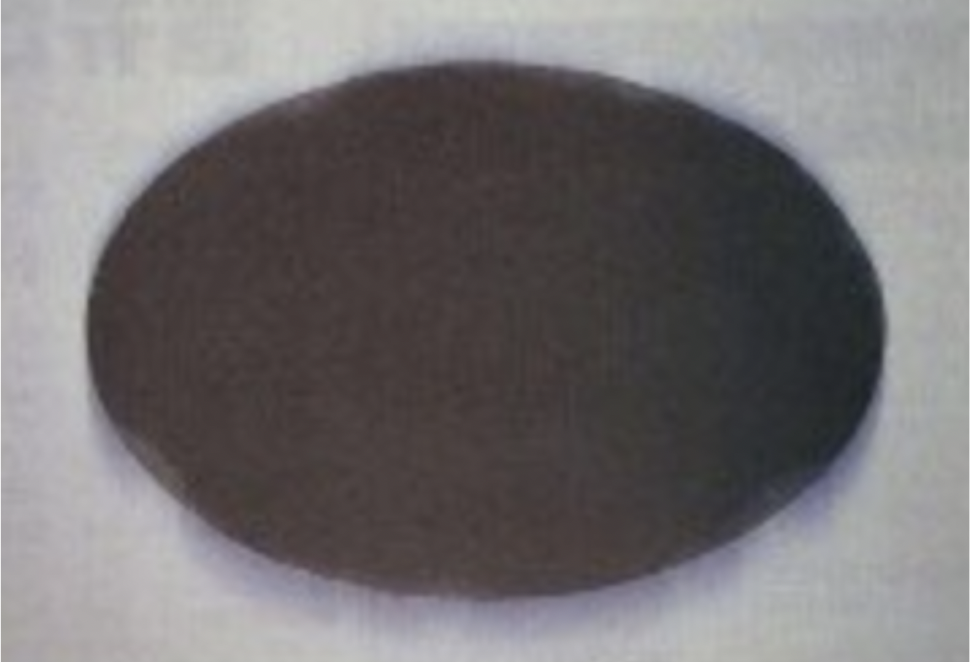
In the case of dots, unlike planes, they appear across all surfaces. Lee Inhyeon’s large and small dots, faintly diffused into oval shapes, possess no fixed surface area; they seem to hover like spheres or holes. Even when placed away from the edges, they appear to seep downward or emerge from within. The thickness of the sides contributes significantly to this three-dimensional effect. The placement of these dots seems to belong not to a flat plane but to a three-dimensional coordinate. (Indeed, some dots are placed on edges and corners.)
When applying dots, one must predetermine their position but must never “paint” the surface or create a plane; the act is one of instantaneous “placing,” unrelated to the canvas surface. The paint must spread solely by its own force. It is less an act of “painting” than of “laying down.” Paradoxically, in this moment, absolute stillness becomes unavoidable during the process. Whether in dot or plane, the work consists solely of “pure” labor, devoid even momentarily of the thought of “painting.”
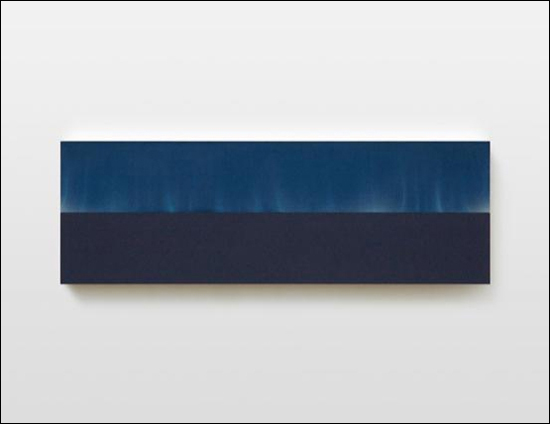
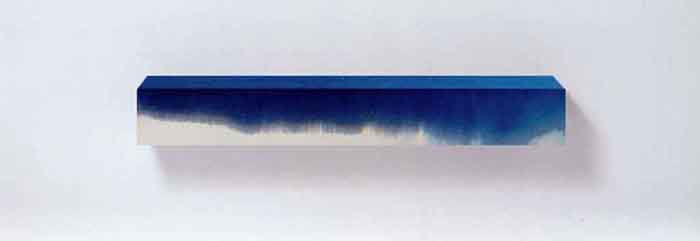
‘L’episteme of Painting’ has been Lee Inhyeon’s overarching theme since the beginning of his career. It is both the title of the work and a method of viewing it—combining “side-viewing,” born of intellectual inquiry, with “layers of paint” produced through pure bodily labor. These works evoke diverse imaginations in viewers. Though they contain no predetermined system of meaning, they retain a sense of freedom and mystery. While one confronts directly the layers of paint and their material immediacy, one may simultaneously perceive distant lakeside landscapes, blue stars rising in a night sky, or the smooth tactility of Swiss cheese.
Yet even while immersed in illusion, one cannot deny that what one sees are symmetrical stains, accidental bleeds, and traces of indifferent labor. This binary tension in viewing may not be a limitation to overcome but rather a reflection upon our own natural condition. Rather than demanding active participation, the work reveals its meaning as the viewer realizes it.
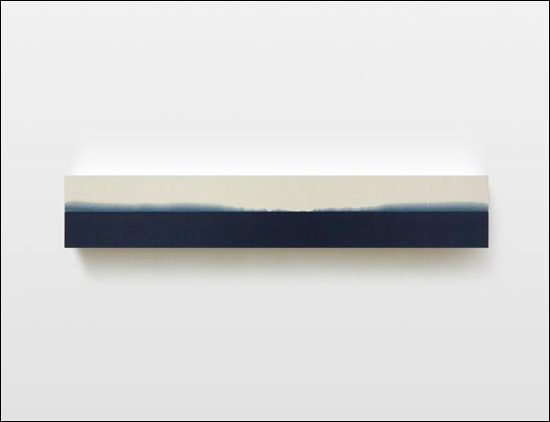
Because his paintings effectively distribute and share materiality and illusion, they invite viewers to approach or withdraw. One finds oneself tilting one’s head from side to side. Before a long vertical work, one may walk slowly, glancing sideways—or even shuffle awkwardly. In large works, one may view the whole from the center, but then the sides disappear.
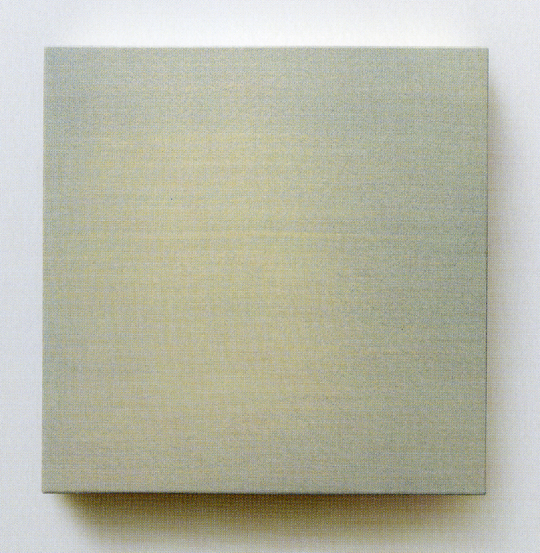
Conversely, when viewing a small 10×10×10 cm cube, one cannot avoid seeing the sides. To perceive or imagine what is hidden, one must approach and look at the side; once doing so, one may imagine what remains unseen. To see the visible and the invisible, the painted and the unpainted, what lies between layers, the viewer—inevitably—must inhabit the same space as the work and experience its mode of existence over time. The most compelling aspect of Lee Inhyeon’s practice lies in this analogy between the existence of the work and the structure of perception.
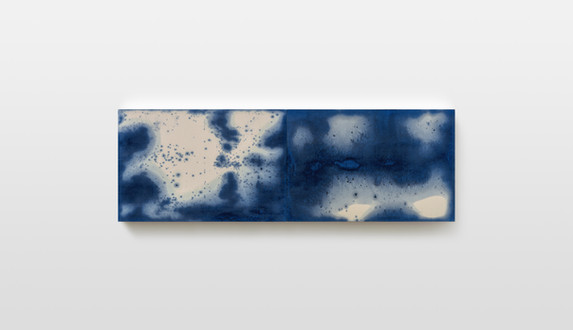
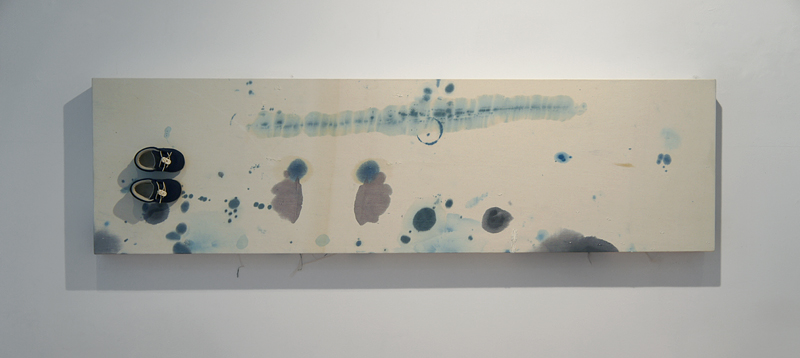
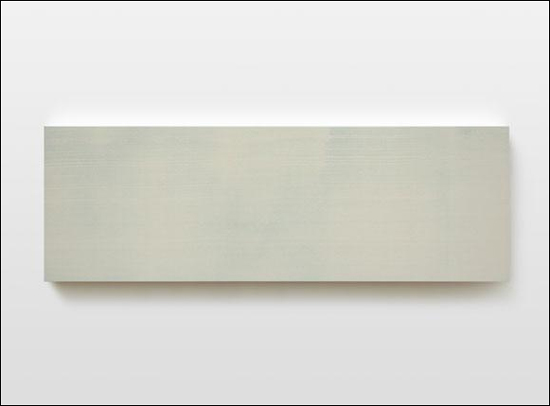
The newly presented works differ markedly from his previous methods. First, raw canvas is spread widely, and a long rod wrapped in cloth saturated with deep blue pigment is prepared. This rod is then passed across the canvas without stopping, grazing it at a constant speed—neither fully pressed nor entirely detached. Whereas earlier works followed meticulously calculated plans anticipating the final image, these new works rely largely on the interaction between canvas and rod.
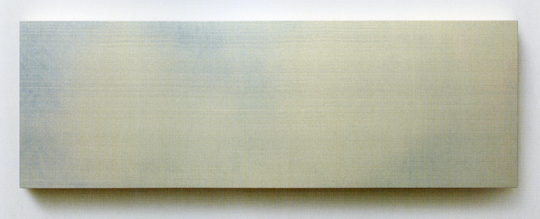
Previously, even accidental effects were refined through trial and error toward an exemplary state. In contrast, the surfaces generated through friction leave little room for intention or control. One might say that the work is controlled so that it cannot be controlled. The subtle irregularities of the canvas and the tremor of the hand are transmitted directly as traces. The resulting canvas fabric is later selectively stretched over frames of varying sizes and sometimes recombined. Only at this stage is the frontal image determined.
The initial gesture was thus intended to be free from control. The subtle tremors of the initial sweep are randomly bent once more when stretched. When canvases are combined, speed and stains are transformed or concealed, twisting the completeness of frontal vision. The thick sides may seem unnecessary—yet for the same reason, there is no longer any need to conceal them. (Indeed, traces and velocity transform most dramatically as they bend over the sides.) The thickness of the canvas now appears to hold air rather than paint.
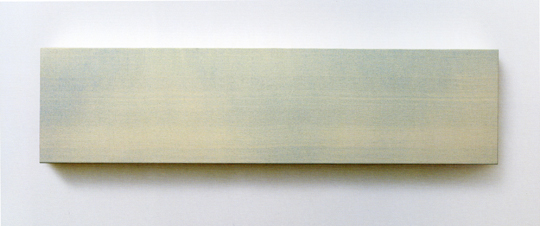
In these new works, although deep pigment is still used, there is no temporal allowance for dense stains penetrating into the surface, and the dots that once occupied predetermined positions have disappeared. The surface overall has become significantly brighter, with little visible accumulation of paint. The act of painting passes once, grazing the canvas across a precarious interval. The once-saturated blue now clings only as fine particles to the fibers of the canvas. Yet the works retain a sense of spirituality or depth, and remain beautiful.
If earlier works evoked tranquil landscapes or reflections on water, these new works suggest sunlight or shadow cast upon them, the sound of wind passing through air, velocity, and frames perpetually unsettled. Viewed obliquely, the surface produces hologram-like diffuse reflections reminiscent of velvet—another material attraction not to be overlooked. Whereas earlier works induced layered illusions within the surface, suggesting wet paint that might seep when touched, the new works scanned along the epidermis of the surface appear as if a thin layer of paint forms another skin atop intact canvas. Rather than overflowing and staining the hand, they resemble a trembling anticipation before touch.
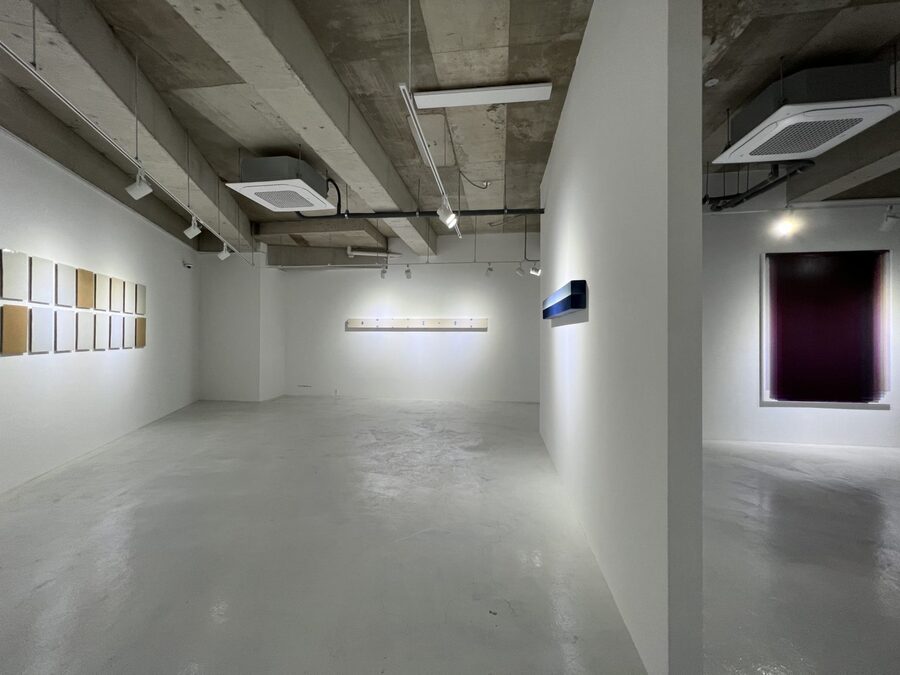
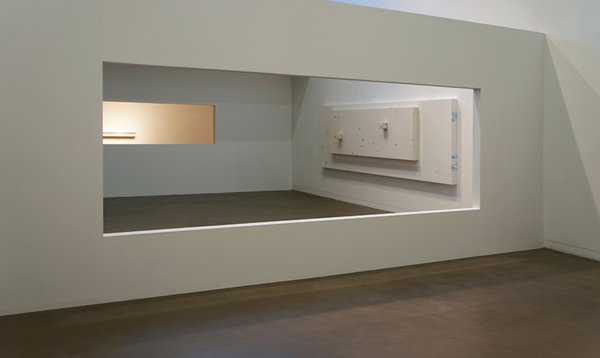
From the standpoint of the visual attitude he has consistently maintained, these methods and sensations move even further from centrality in terms of frontal determination. Compared to the concentration evident in earlier works, these appear like empty stage sets or open windows. The weight previously assigned to the work itself seems lightened. If conventional artworks required vacuum-like conditions—precise lighting, unobstructed sightlines—these works seem to require something to shield them: perhaps the viewer’s own presence, or the shifting light and ambient sound of the space.
In a time when the self-aggrandizing aura of art continues to expand unpredictably, Lee Inhyeon’s new works, despite their simplicity of form, suggest a valid and timely mode of practice. One might say that in his choice and use of materials and tools, he has consistently revealed a paradoxical and radical dimension. Even his insistence on the designation oil on canvas diverges markedly from traditional technique. Likewise, he appears largely indifferent to romanticized notions of artistic vocation. The long rod employed in this work is itself another form of Lee Inhyeon’s canvas.
Over the course of life—and of long history—we have lost many things that brushed past us. Under the names of culture, art, or even our own identities, we have overlooked countless events shaped by justifications and repression. Perhaps Lee Inhyeon’s works suggest such traces and memories. Through his method of production, he may be allowing events formed through collision, friction, fleeting encounters, and misalignment to surface—or to be quietly buried.
We look forward with great anticipation to the imaginations his new works will inspire. In the crisp breeze of September, we cordially invite you to the presentation of Lee Inhyeon’s new works.