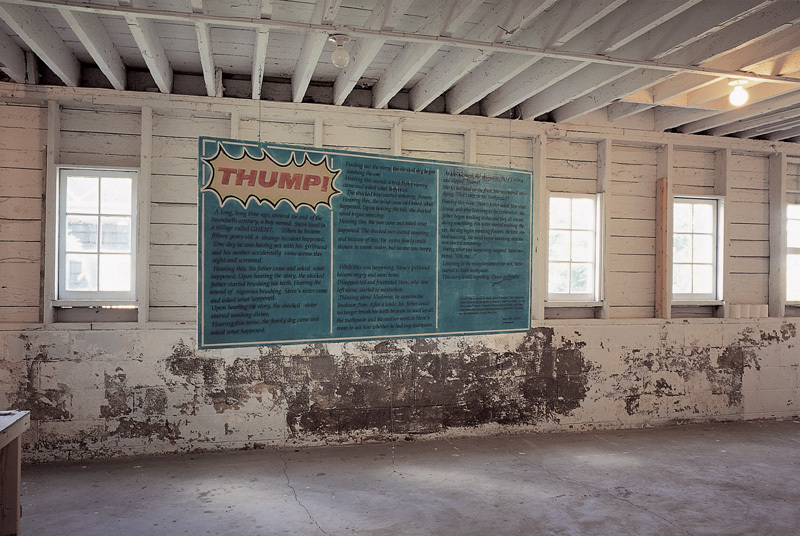
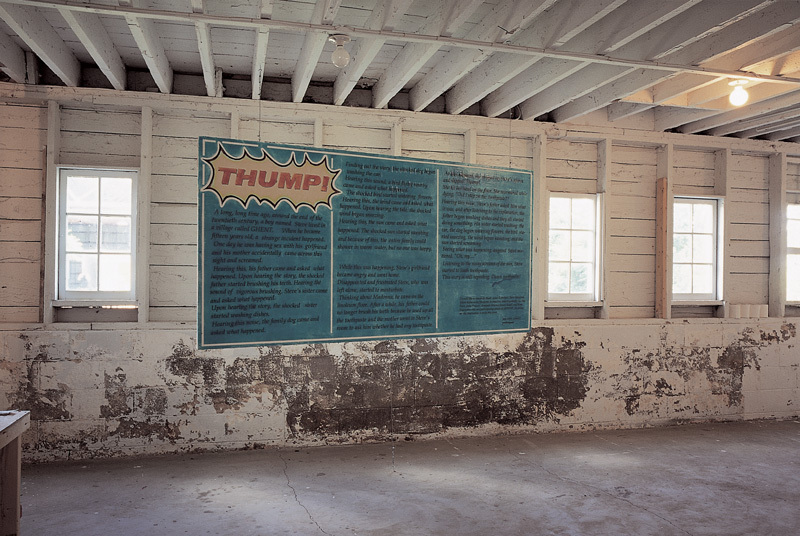
Gimhongsok, Thump!, 1999, 57 toothpastes, plywood, paper, 230 x 140 cm © Gimhongsok

“This twenty-first-century modernity, born of global and decentralized negotiations, of multiple discussions among participants from different cultures, of the confrontation of heterogeneous discourses, can only be polyglot. Alter-modernity promises to be ‘a translation-oriented modernity,’ unlike the modern story of the twentieth century, whose progressivism spoke the abstract language of the colonial West.”

Today, to an artist whose work is the translation of modernity, translation, appropriation and replication must serve as central tools of creation. The universe of Gimhongsok’s art exists within the translation of modernity amidst otherness and variety, and, as a means to emphasize difference or pluralism,  he rejects any hint of exoticism. What he seeks instead is to discover an ever-different yet increasingly similar appearance, that is, an ‘assimilated difference,’ and to shed light on its tenuous identity.

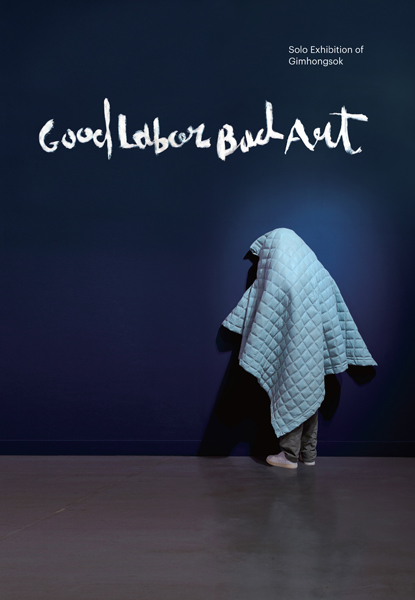
This essay is about the artistic world of Gimhongsok, an artist who creates adaptions of universal variety and distinction, truth and falsity, in his own unique manner. Its purpose is to demonstrate the major concepts that drive his sphere of creation, namely, the bountiful variations of translation and appropriation, originals and copies, forgeries and imitations; as well as come to understand the meaning these concepts create.


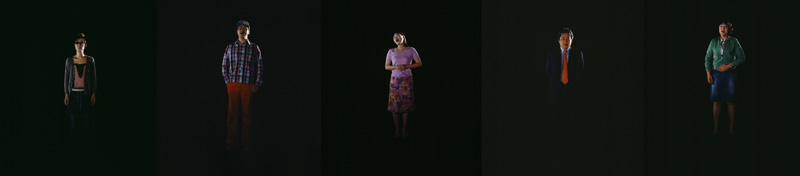
Gimhongsok, 〈G5〉, 2004 © Gimhongsok

Translate differences!

Of the creations drawn from the bounty of humorous and nonsensical notions that float throughout the mind of the artist Gimhongsok, Thump! (1999), Magic Sword of MMCCXCVII (1999) and Shake Sphere (2000) are deliberately ambiguous and moderately absurd yarns falling somewhere between the surrealist and fantasy genres. Their unclear spatiotemporal settings, hyper-textual compositions and illogical developments amplify the bewilder mentensconced in the storylines.

If you were to search for a specific plot or message within these fundamentally meaningless, humorous and ludicrous tales, you would be engaging in a loser’s game. However, this does not indicate that his stories are devoid of intention. The accompanying text for a Gimhongsok exhibition is a sort of ‘device’ that activates and completes the work of art. The text that serves as such ‘a device’ generally operates together with a translation.

One of his earlier texts, Thump! (1999), was translated from the Korean into English, then Japanese and French, and finally back into Korean. Because this text was of course originally authored in Korean, translation was inevitable for communicating with audiences from the region in which the exhibition was held, but the artist deliberately attempted a series of successive translations, rendering each not from the original Korean text, but the previous translation instead. Through this ‘serial translation,’ one is able to experience a variation that is profoundly divergent from the original.

It is likely no exaggeration to state that the process of understanding modern art today means the examination of the meaning of an artwork’s ‘impact’ or ‘reverberations.’ This is why artists have come to concentrate less on creating an earthquake and instead design various ‘devices’ intended to produce aftershocks.

When Jonathan Monk(1969-) showed in his Translation Piece (2002) a documented series of successive translations of a description of Robert Barry(1936-)’s Telepathic Piece (1969), Monk was attempting to first translate the “aesthetic soul” that is impossible to visualize or verbalize and then test its impact. The effect of the story of the main character Steve in Gimhongsok’s Thump!, that is, the nonlinear series of events revolving around love, semen, toothpaste and slipping, is revealed not so much through the delivery of the story’s content, but more through a realm that we consider to be untranslatable.

Gimhongsok’s stories include titles that drift over the course of serial translation, plots that become distorted and an author who grows increasingly vague. The translations are commissioned in order to convey the original text, but they also result in birthing distinct modified versions that include numerous errors. Gimhongsok’s ‘serial translations’ are about error and modification, and the discrepancies produced by this reiterability operate not so much as a hindrance to communication, but rather themselves becoming an act of ‘creation’ whereby novel meaning is sparked.

Translation invariably exposes itself to such reiterability on the premise of transfiguration. According to Walter Benjamin(1892-1940), as the Bible was repeatedly rendered into different languages, variations emerged, and these differences are what give the Bible the bounty that is delivered to its readers.

Gimhongsok’s serial translations are less about seeking out what was lost in comparison to the original text or discovering the truth, but instead they enjoy being different from the original. For one of his works, Gimhongsok had The Human Abstract (2004) a work by the English Romantic poet William Blake(1757-1827), translated first into Korean, and then had the resulting translation consecutively rendered into a handful of languages.

The ultimate step in this process was a final conversion back into the original language of English, and the result was an ambiguous poem that did resemble the Blake original, but could never be referred to as a poem by Blake. Through Gimhongsok’s serial translations producing ‘things that seem different but are similar, and things that seem similar but are different,’ we absorb the minute reverberations of meaning thus produced.

The emergence of an ambiguous identity forms as the original becomes diluted and a subtle nuance settles in, and such an awakening is precisely the ‘assimilated difference’ that Gimhongsok considers to be one of his work’s significant points. In recognizing differences, serial translation allows one to appreciate these distinctions in a much more munificent way than through a mere recording of it.

Gimhongsok’s G5 (2004) is a work of video art in which the national anthems of five Group of Eight economies—the United States, the United Kingdom, France, Russia, Japan—are all translated into Korean and then sung by five native Koreans (including pop music and opera singers, as well as everyday citizens). The selected five Koreans give voice to the anthems of the five nations wonderfully, as though they had just burst out singing their favorite song.

A national anthem is more than a mere tune, however; it is a convoluted code that embodies the history and identity of a nation. Singing an anthem of a foreign nation translated into one’s mother tongue is the contextual deviation of such a code. This deviation modulates the sacred nature, authority, national history and patriotic sentiment in a quite different way from Jasper John(1930-)’s Flag (1954-1955).

Depending on the nationality of the person singing the foreign national anthem translated into his or her mother tongue, the citizenship of the person listening to the singing, and, further, according to the country in which the singing takes place, the reverberations of the singing of a translated national anthem are altered. Gimhongsok’s G5 simultaneously dilutes the symbolism coded into a particular nation and asks precisely what ‘nation,’ ‘nationality’ and ‘identity’ mean in a global era, and how we can redefine their conflicts, confusions and differences.

Translation is the act of such a code traversing time and space, transferring to alien territory and revolting against a culture that belongs to a specific, regulated or identifiable area. Translation is movement, relocation, and a type of circuit. Thus, translation is like the topological transfer of a shape from one code system to another, and while the modified shape is equal to the first, it is constantly different.


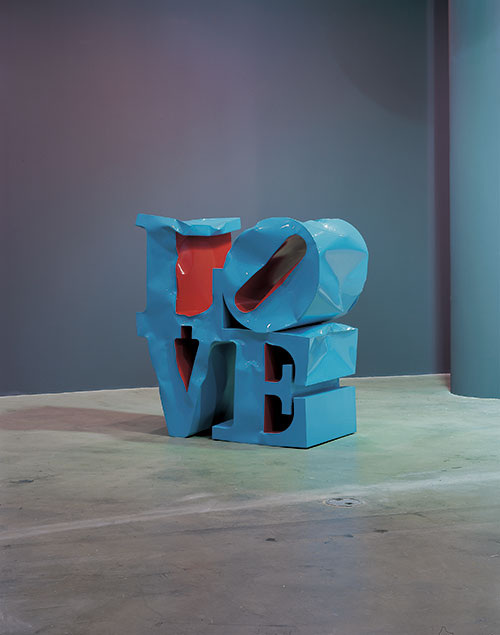
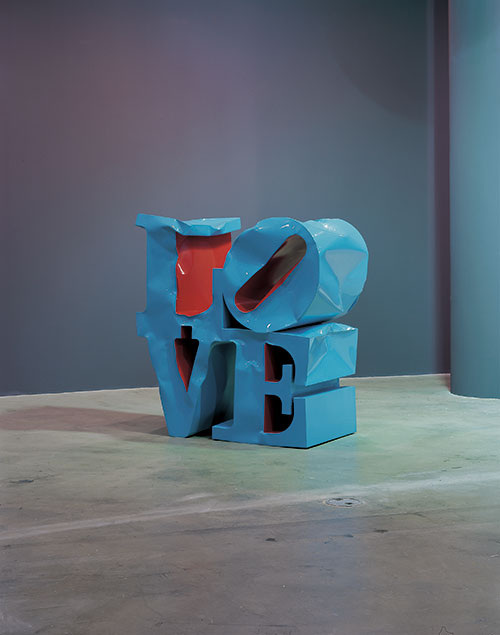
Gimhongsok, LOVE, 2004, Paint on steel, 80 x 145 x 160 cm © Gimhongsok

Appropriation & Customizing

The concept of ‘appropriation,’ which is the usage of existing or already-produced objects to redirect them into a different form or shift them into a different context, enjoys an intimate relationship with translation through their shared methods of showing difference and in testing ‘the impact’ of an artwork. The ‘assimilated difference’ to which Gimhongsok refers is mostly manifested in his art through translation and appropriation.

One day, Gimhongsok was passing down a street when he noticed a reproduction of Robert Indiana(1928-)’s LOVE (1970) inside a building’s display window. Focusing on how this famous work was settled so matter-of-factly in the odd context of a window in a random building in Seoul, the artist slightly enlarged the LOVE he observed in that window, dented it, and transferred it into the context of an art gallery. (LOVE (2004)) Of course, denting an Indiana sculpture is not an act of vandalism against art. If an act of vandalism had been committed in this case, it would have to be the original degradation of the artwork as a display window ornament.

Gimhongsok appropriated this exact situation (as well as Indiana’s sculpture, of course). But such an act is not restricted to Indiana’s sculpture. Gimhongsok appropriates the tableaux of an artwork being consumed as a shop window ornament, regardless of its original significance or historic value; that is, he appropriates an appropriation and in doing so delivers a witty blow related to an artwork’s destiny and mode of consumption. In this manner, appropriation reveals the infinite potential of a single work of art to generate novel meaning.

Today, appropriation is considered a method of producing works of art. Artists delve deep into the full repertoire of form, image and action that has appeared across the history of art, and use as they please the forms that they desire. And why limit this to the history of art? Every genre, every environment, object, and situation that surrounds us, that is, the sum of ‘reality’ itself, has become an ideally generous creative repertoire for the artists of today.

Of course, appropriation art does not advocate a simple variety of repertoires and randomness of choice. Appropriation is a method of creating art, so, while selecting precisely what to appropriate is important, the transfiguration resulting from that appropriation plays a decisive role in the eventual work of art. Bertrand Lavier(1949-)’s IFAFA IV (2004), a fluorescent lamp version of a Frank Stella(1936-) painting; Martin Boyce(1969-)’s Suspended Fall (2005), a recreation of an Alexander Calder(1898-1976) mobile using the dissembled parts of a Arne Jacobsen(1902-1971) chair; Sylvie Fleury(1961-)’s Skin Crime 3 (Givenchy 318) (1997), a crushed automobile spray-painted in a cosmetics hue; and so on…

One interesting method of such appropriation is customizing. Originally a term common among motorcycle or automobile enthusiasts, customizing refers to making a vehicle one’s own by altering the main body or its components or by appending unique decoration. This process of customization is highly useful in explaining the appropriation methods of today’s artists and their subtle distinctions.

Both Gimhongsok’s LOVE (2004) and Sylvie Fleury’s Skin Crime 3 (Givenchy 318) are appropriations of a work by a world-renowned artist—Robert Indiana and César Baldaccini(1921-1998), respectively—but Gimhongsok’s mutilated LOVE, which criticizes the fate and consumption methods of artworks, points in a direction distinctly apart from the context of Fleury’s pink crushed car, crafted by consuming art history as though shopping for makeup. In contemporary art, it is becoming increasingly important to grasp the significance of something that initially appears to be similar but is in fact unique.

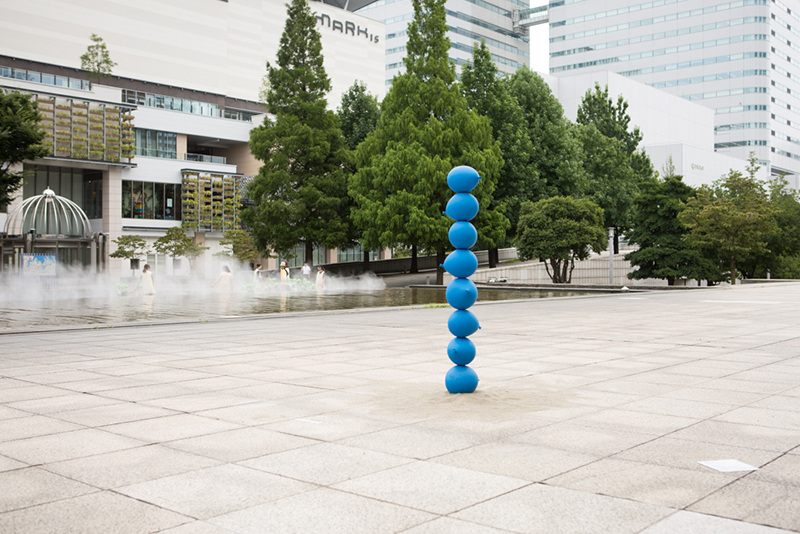
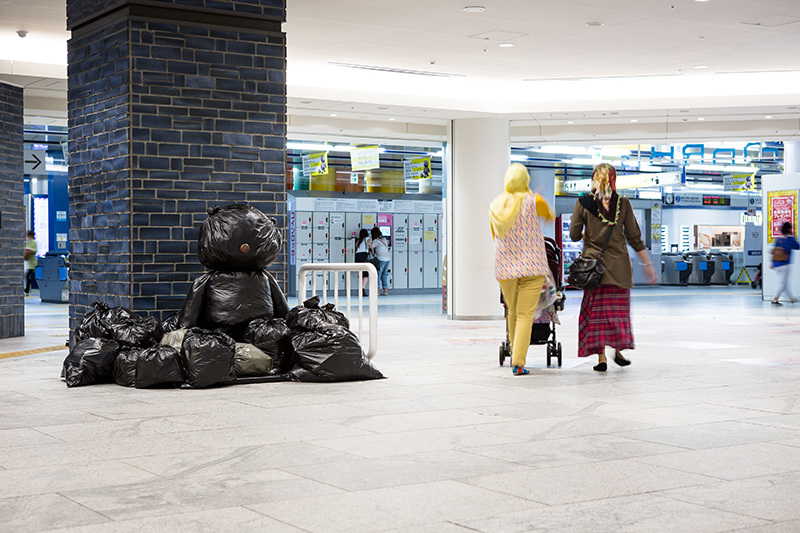
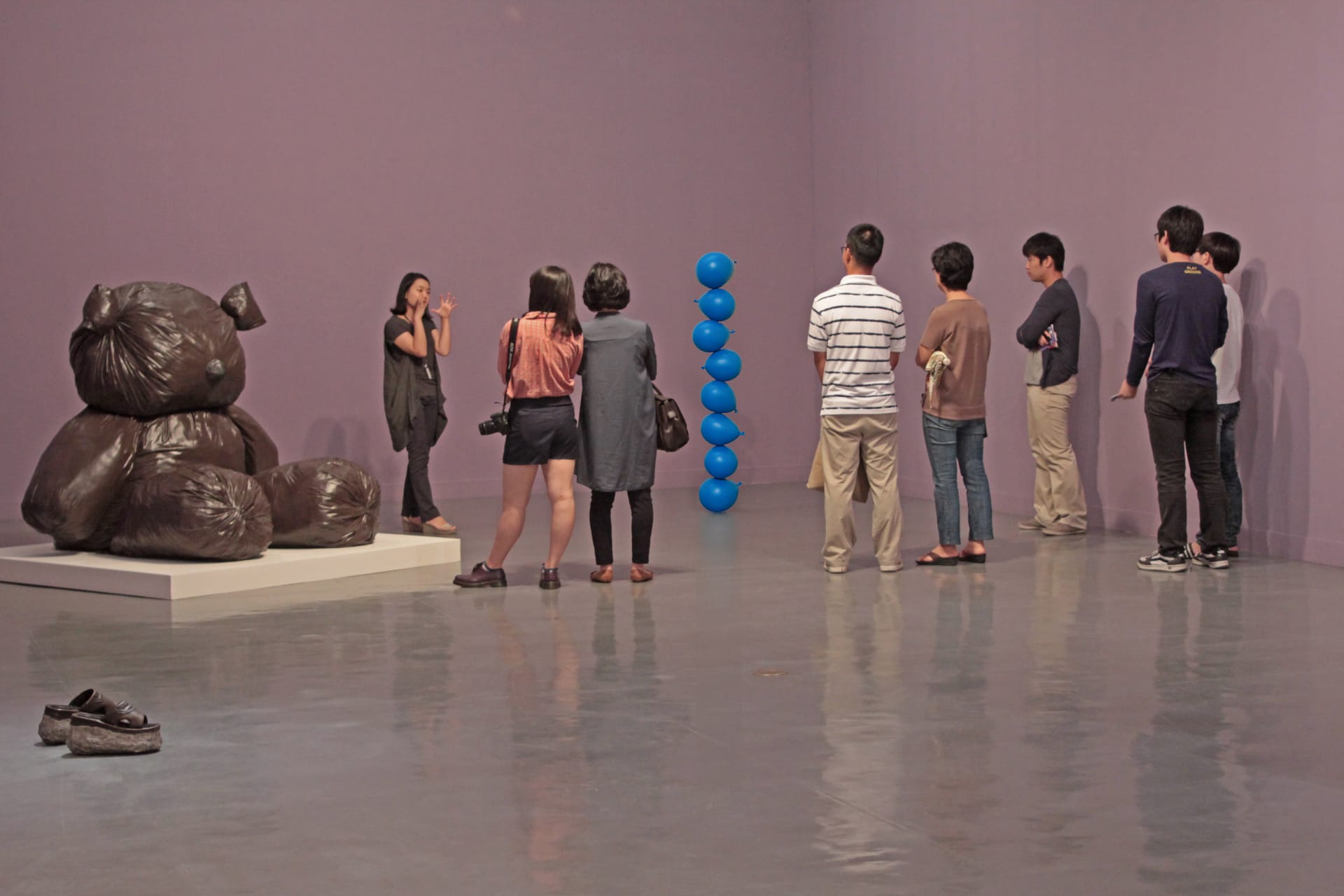
Every repertoire that can possibly exist in this world is available for anyone to select and use. Today, that which is ‘new is not the factors, but the arrangement.’ The aspects of appropriation on which we focus are the how and where of the arrangement of the (identical) factors, and how we are to experience those arrangements. Plastic garbage bags littering the streets, discarded cardboard boxes, abandoned chunks of wood, the homeless…not-unfamiliar situations that can be discovered in every city.

To Gimhongsok, a disorderly view of streets strewn with items that need to be thrown away or tidied up appears as ‘a beautiful momentary structure.’ If Jeff Koons(1955-) was fanatical about supermarket aisle displays, Gimhongsok combs through every lousy and obscure nook and cranny of the streets.

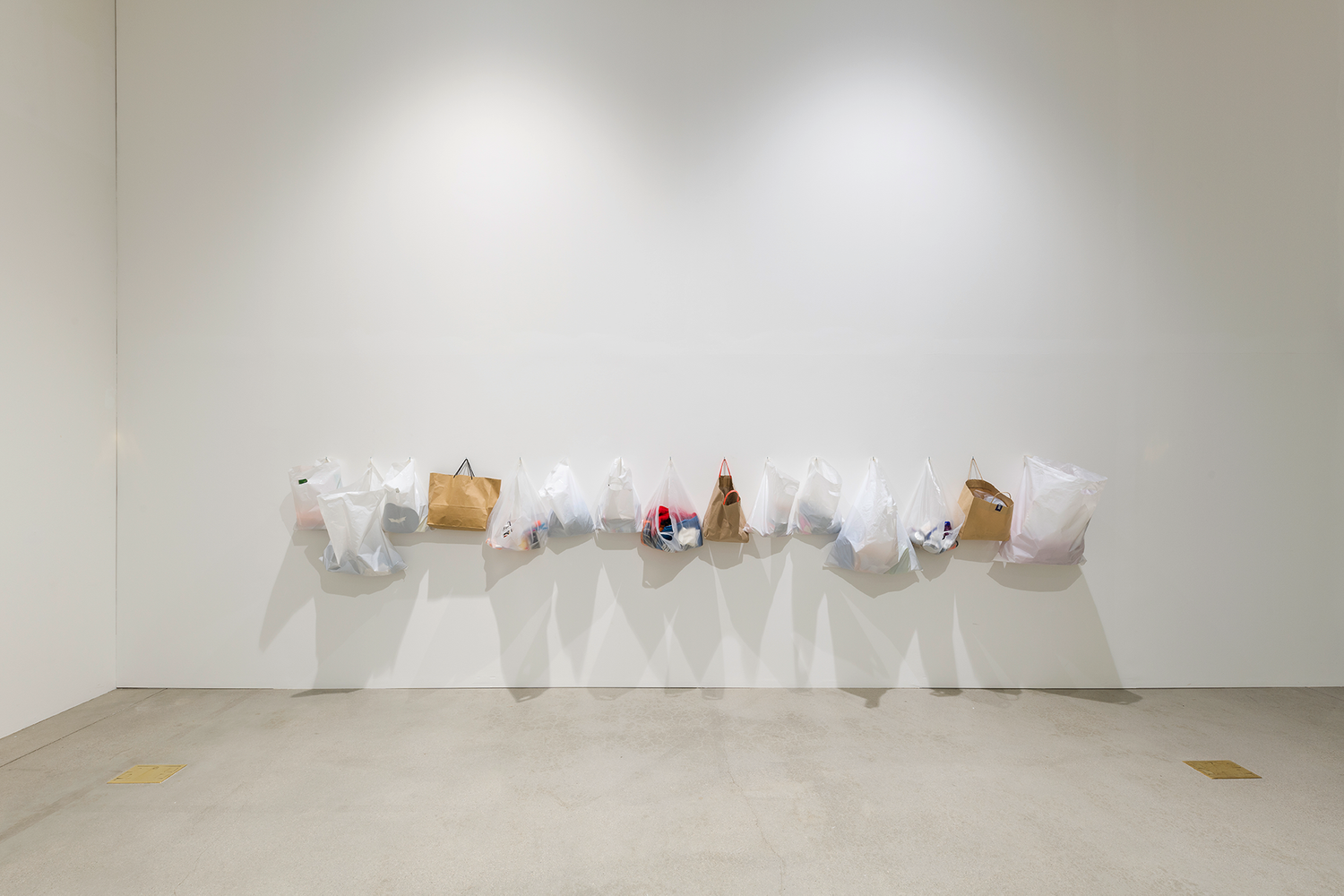
In this manner, Gimhongsok collects neglected plastic garbage bags and casts them in bronze in the form of Koons’ dog and rabbit, which are both universally praised by art collectors. (Canine Construction (2009) and Rabbit Construction (2009)) Imagine the glamorous rabbits of Koons enshrined in the living rooms of world-famous collectors and Gimhongsok’s sculpture cast into Koons’ forms out of plastic garbage bags tossed into a street. For plastic garbage bags, it is a delightful deviation from the everyday. Through appropriation, discarded garbage bags and a cheap plastic rabbit doll from an amusement park can encounter one another and simultaneously create different stories from their own contexts.


Original Copy

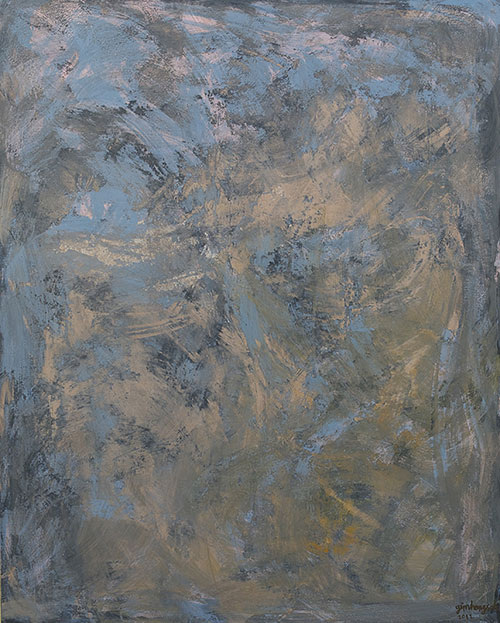
Gimhongsok released his ‘READ’ series through a 2006 solo exhibition. Read what? The series consisted of facsimiles of exhibition catalogs originally related to the artist himself, contemporary artists and other well-known artists who have been seen as trendsetters in contemporary art. They were generally reproduced by either photographing or commissioning skilled painters to create hand-written copies of the originals.

Copying is known as a time-honored method of study. We are familiar with constantly memorizing, transcribing and repeating as a form of acquiring knowledge. However, such a familiar, commonplace form of learning converts, in the context of the creative world, into an inconvenience or at times even into a crime. Technically speaking, Gimhongsok’s painting produced by copying Maurizio Cattelan(1960-)’s sculpture is not a question of originals and copies, since what he copied was the image of Cattelan’s work.

By very kindly specifying the original source as part of the titles of his art, Gimhongsok lawfully(?) lends a new life to images of paintings by Luc Tuymans(1958-)’s and sculptures by Cattelan. (READ-Luc Tuymans, PHAIDON, p226 (2005); READ-Maurizio Cattelan, Electa, Marian Goodman Gallery, 2006, p55 (2008)) Could this perhaps be but a shallow trick to produce works while avoiding the taint of copying? Did he not merely photograph images from other catalogs simply because he was out of original ideas?

Ironically, his ‘READ’ series is of much greater use to those who are ignorant of such parochial suspicions(?) and contemporary art. This stems from the fact that the series itself raises the question of ‘suspicions of copying,’ and because such suspicions not only demolish the simple-minded measures regarding whether or not the works are copied, but also expose questions on a level of even more profound complexity and conflict.

The entire point of the ‘READ’ series is to discuss the questions of do copies pose a threat to the original? What is the relationship between copies and copyrights of images? Is copying an unavoidable manner of communication for our times?

The ‘copyrights’ of the photographer who took the pictures of the originals as well as all the ‘copyright holders’ involved in their publication are implicated in the ‘READ’ series. Through this series, the artist reveals an unofficial route of distributing originals by copying copies, as well as discusses the perilous and yet special relationship between copyright and copyleft, along with its ramifications.

The copyleft movement, a struggle mainly for the abolition of intellectual property, is not simply a tool, but also a model favored by Internet-based culture. Today, however, with the world caught in the throes of post-modernism, such a movement can be applicable across all sectors, and indeed, is advancing toward becoming a necessity. “Prior to the Enlightenment, plagiarism was useful in aiding the distribution of ideas. An English poet could appropriate and translate a sonnet from Francesco Petrarca(1304-1374) and call it his own.

In accordance with the classical aesthetic of art as imitation, this was a perfectly acceptable practice. The real value of this activity rested less in the reinforcement of classical aesthetics than in the distribution of work to areas where otherwise it probably would not have appeared.” A modern take on this classical learning method of imitation, copyleft questions how imitation can be applied in our current context and what the positive/negative consequences might be. Elaine Sturtevant(1930-) carefully scrutinizes works by her favorite artists or those who have exerted a profound influence upon her, and then draws them as they are. For her, copying is a mode of learning and acquiring knowledge, as well as her own manner of consuming and disseminating 20thcentury art.

If so, why then are all of her works, which for the past fifty years have been a continuous stream of facsimiles of artistic masterpieces of the 20th century, attracting renewed the attention and being reevaluated by prestigious art galleries worldwide in the 21st century? Gimhongsok’s ‘READ’ series, consisting of facsimiles of images drawn from the catalogs of contemporary artists catching his interest, appears to be an extension of this brilliant copy art of Sturtevant.

However, his copies elicit a different issue, one of ‘information confusion’ regarding the originals. Viewers who experience his ‘READ’-Francis Alÿs: Politics of Rehearsal, Steidl, Hammer Museum, 2006, p38, p39 (2008)(fig. 9) without the knowledge that the original is a performance created by Francis Alÿs (1959-) are led to understand that the original work is a painting. The copies embodied within the ‘READ’ series are a persuasive reflection of the extraordinary adventures surrounding the numerous bits of distorted information regarding images that drift free, unanchored from their original works and contexts.

In addition, his ‘copies’ conjure the entire tradition of reproduction, and raise queries regarding images and their subjects, seeing and understanding, the differences between them, and the act itself of their production and consumption.


‘Copy as more’

Jorge Luis Borges(1899-1986) claimed in his short story Pierre Menard, Author of the Quixote (1939) that the text of Pierre Menard(1766-1844) is identical with Miguel de Cervantes(1547-1616)’ in every respect, even in its punctuation; but the difference in the spatiotemporal context sharply separating these authors—17th century Spain and 19th century France—assigns an entirely unique meaning to the identical text.

The final destination at which Menard arrives as a result of his aspiration to emulate Cervantes’ masterpiece is a mere replica of the original, but today this copy by Menard has come to reflect the spatiotemporal context and put forward the exquisiteness and abundance of interpretations that arise from such differences. Gimhongsok’s READ-Richard Prince, Untitled(Cowboy) (2005) is a photographic reproduction of a photograph from Richard Prince(1949-)’s ‘Untitled(Cowboy)’ (1989) series. Composed of unmodified photographs of images from Marlboro cigarette advertisements, ‘Untitled(Cowboy)’ is a work of re-photography that became famous in the early 1980s, stirring up a sensation as it became entangled in a copyright infringement lawsuit.

Thanks to Richard Prince, we are now, to a certain degree, liberated from copyright lawsuits and suspicions of counterfeiting in the art world. The question posed by Gimhongsok, who is clearly aware of all this, by repeating this original act of re-photography, is about whether copies could pose a threat to the authors of the originals, namely, to their originality. Copies have long been considered a menace to originals. However, “In a (capitalist) world that is the reflection of an order…artistic creation proposes only to describe…The oeuvre wishes to be the perpetual commentary of a given text, and all the copies that take their inspiration from it are justified as the multiplied reflection of an order whose original is in any case transcendent.

In other words, the question of authenticity does not arise, and the work of art is not menaced by its double.” This assertion by Jean Baudrillard(1929-2007) might seem to allow and justify the act of copying, yet it ironically underlines the signature of the original. This inseparable relationship between a masterpiece and its signature has recently embarked on extraordinary adventures.

Just because someone copies a ‘ready-made’ by Marcel Duchamp(1887-1968) does not make this person Duchamp. Amid the heaps of copies and alterations of his ‘ready-mades,’ the reason why the originality of Duchamp can remainvibrant, or even grow far more striking today than in the early 20th century is that the act of copying gives ‘rise to the uncopyable.’ Daniel Buren(1938-)’s trademark vertical stripes can certainly be copied, but any work lacking his signature, that is, any work that is not ‘in situ’ is not a creation of his.

As such, the meaning and scope of signatures have today assumed the place of the status of works (substances), highlighting the identity of originals. This context is what justifies the act of copying. This justification of copies does not necessarily mean that originality itself ceases to exist; only that the concept of originality has been adjusted.

Gimhongsok’s READ series is of great interest and sparks excitement because it invigorates the bounty of Pierre Menard’s ‘copy’ as described by Borges and at times raises controversies surrounding distribution and circulation through copyleft, and furthermore questions the very meaning of originality in contemporary art.  


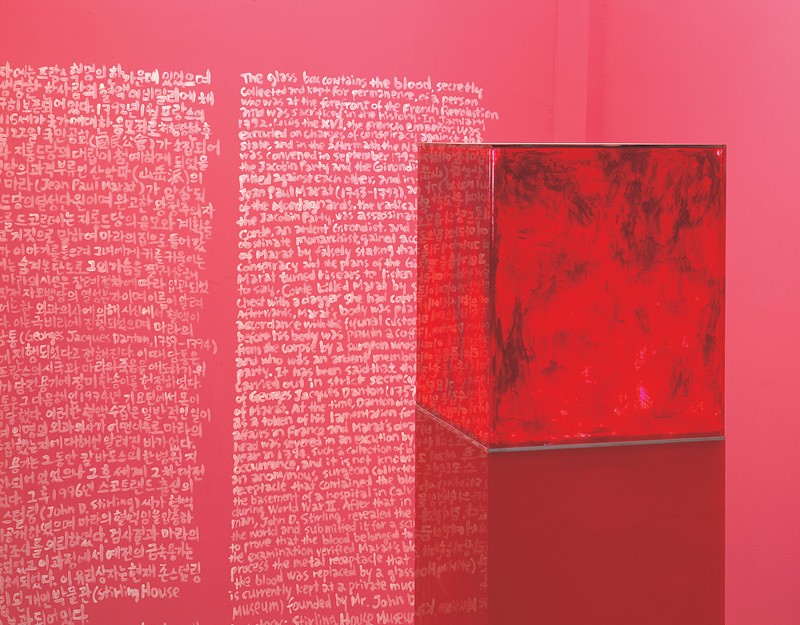
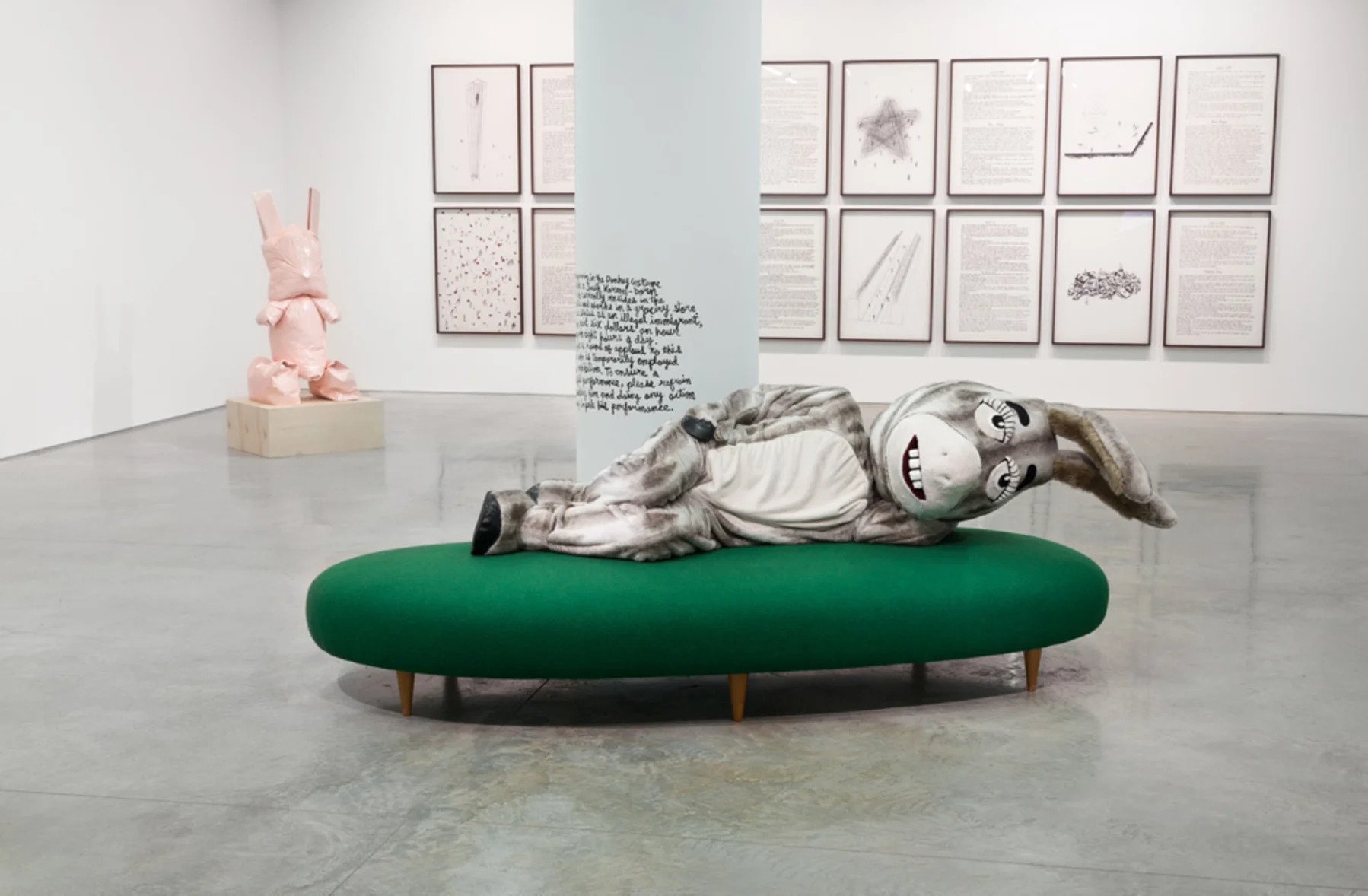
Gimhongsok, Marat's Red, 2004, Glass, steel, electric lamps, text on wall, 60 x 60 x 184 cm © Gimhongsok

Real Fake

What is the orientation of Gimhongsok’s fictional stories, which intricately weave unfamiliarity with familiarity and attempt to spawn confusion across all dimensions of reality and falsehood? Among his stories, one set in 1974 relates how, in the presence of Aleksandr Solzhenitsyn(1918-2008) as a witness, Mao Zedong(1893-1976) and Deng Xiaoping(1904-1997) held a secret summit with the American then-president Richard Nixon(1913-1994) and that evidence supporting this claim still exists Mao Met Nixon (2004); another is about how, upon the assassination of French revolutionary leader Jean Paul Marat(1743-1793), his blood was collected.

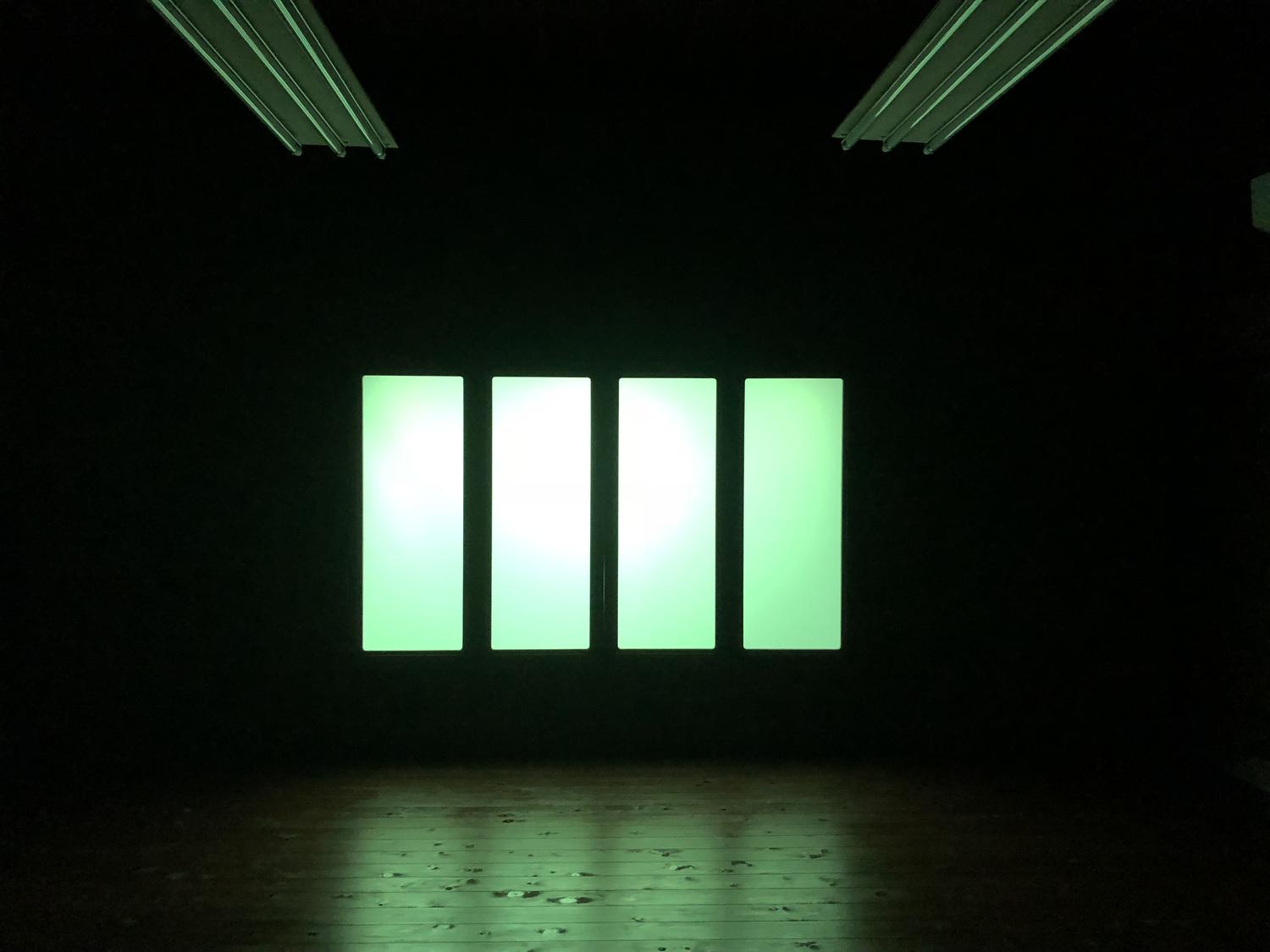
It was then stored by Georges Danton(1759-1794) and is presently being kept in the Stirling House Museum Marat’s Red (2004). Both stories, of course, are entirely fictional, but they are no cheap believe-it-or-not tales designed simply for passing time. Gimhongsok makes a robust appeal for ‘the assumption’ that the falsehoods and realities of history might be formed as part of the process of misreading history or deliberately obscuring the truth.

All of his stories scheme to host an inconvenient rendezvous between truth and falsehood by pushing, with greater credibility and intricacy, lies further down into the truth. Gimhongsok’s falsified works are preposterous yet witty ‘commentaries’ on the history with ‘a capital H’ that we assume to be the truth. Where is truth? If what we know to be the truth is not true… if what we hear and see as facts are not factual… Starting from these ‘suppositions,’ his tales are intriguing in that they make tangible the twin-sidedness of truth through the process of driving truth deeper into falsity and cleverly manipulating that condition into creating a game that grows increasingly more similar to a lie.

His fictional works that appear to be real maximize the cohabitation between the real and fake, challenging our prejudices and stereotypes. To reveal through false statements the fact that truth is purely a construction! To this end, Gimhongsok each time initiates logical sophistries and incisive paradoxes.

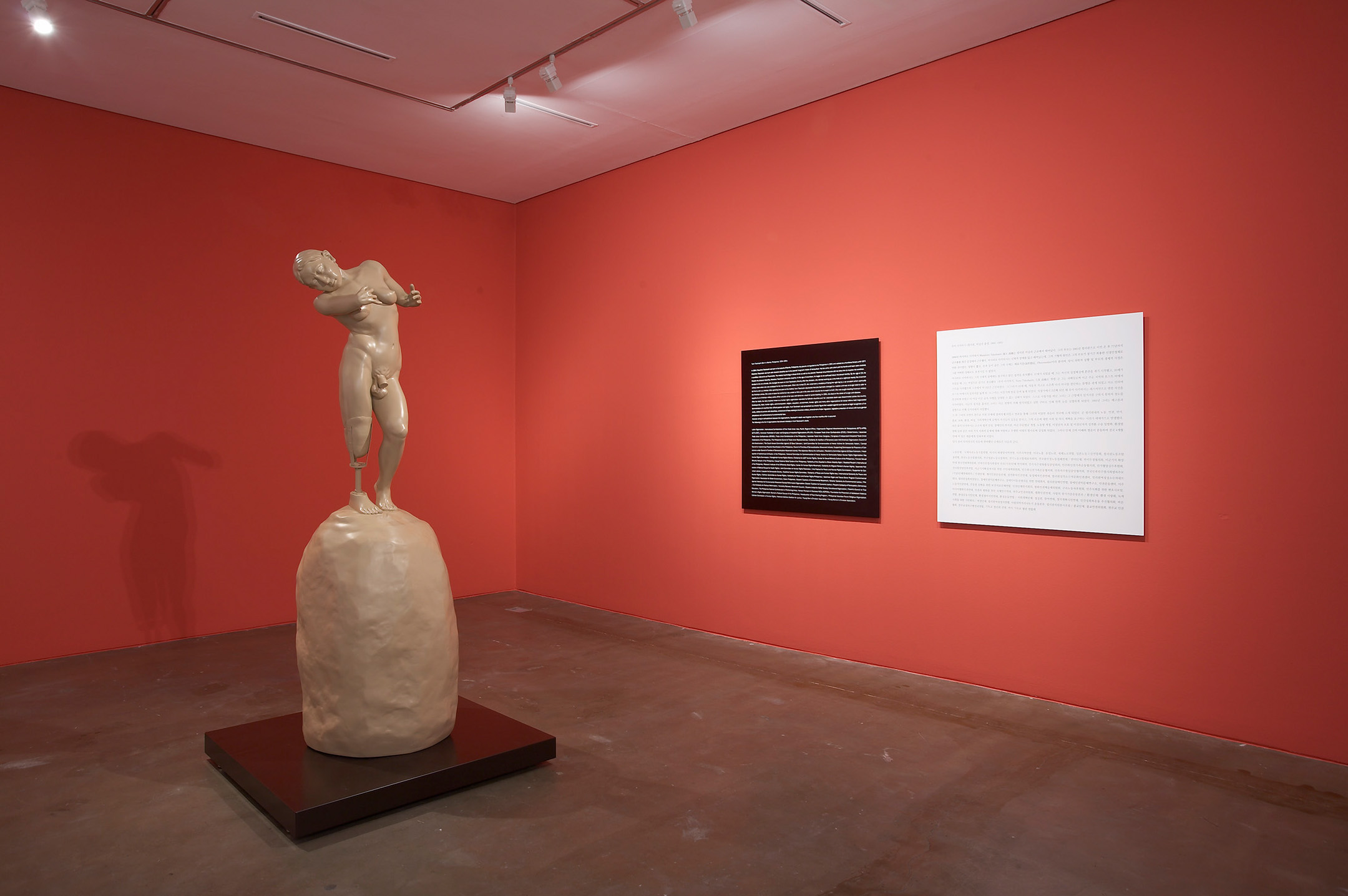
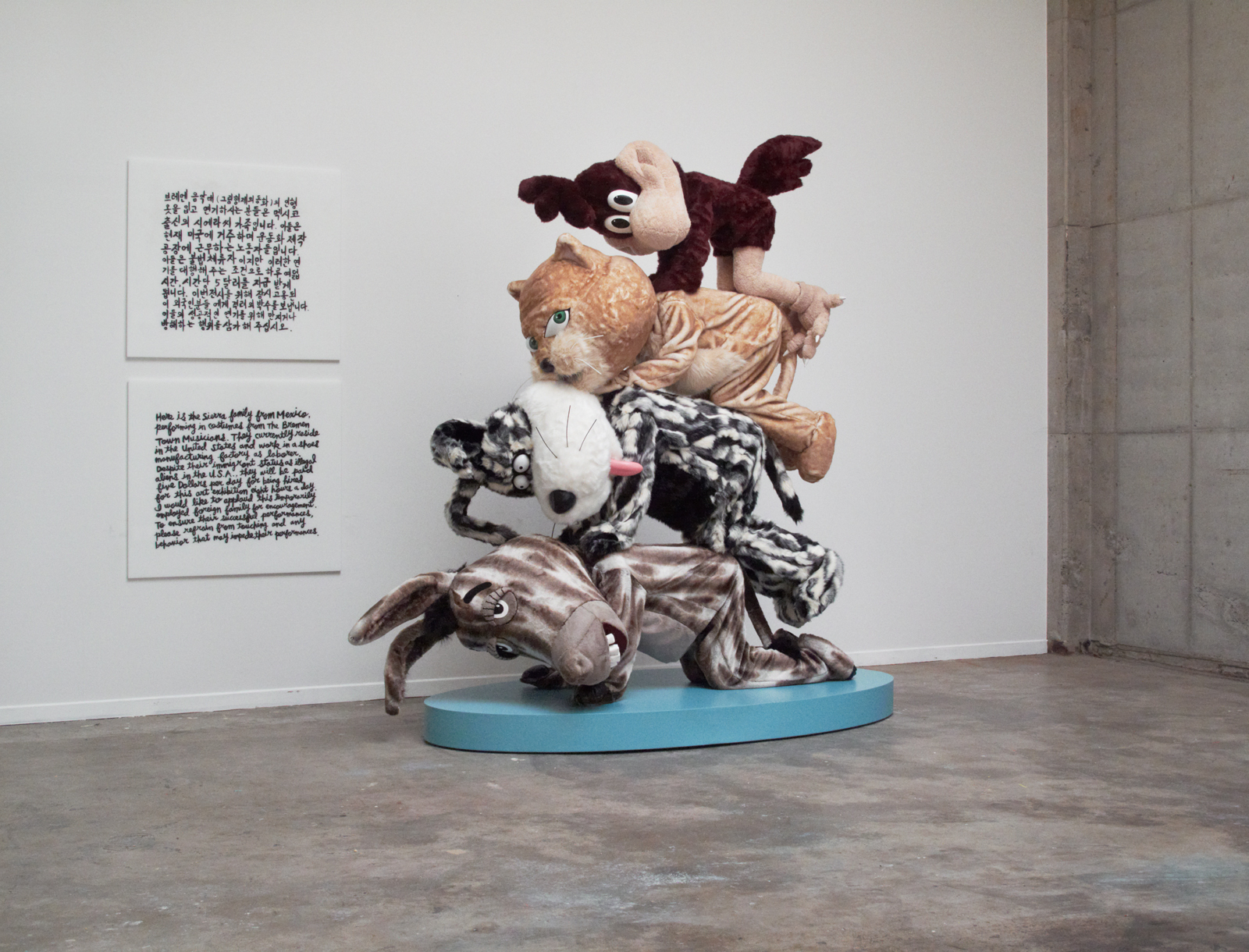
Born in Manila, Masahiro Takahashi is a transgendered woman who attempts to adjust her sex and become a female named Yumi Takahashi, but as a result of a failed gender reassignment surgery becomes a transsexual with an amputated leg. Under such circumstances, she pours out her heart, graphically describing all the abuses of her human rights she has been made to suffer. (Top of the World (2007)) Kim Jeon-il, a North Korean who defected to Japan and applied to the Japanese government for asylum, comes across a notice seeking an actor to play a role of someone caught in a similar situation, and eventually becomes an illegal worker laboring eight hours a day in return for just five dollars per hour. (This is Coyote (2006))

Why does the artist fabricate these unbelievable stories, or rather, ones that are seemingly too fictitious to believe? The characters in Gimhongsok’s works, such as illegal immigrants, migrant workers, victims of sexual torture, transsexuals, and prostitutes, are each time caricatured in a cruel manner, and the artist does not seem to retain a morsel of care or consideration toward the misfortunes of these individuals.

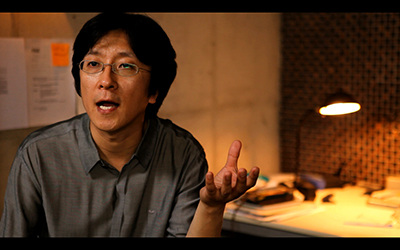
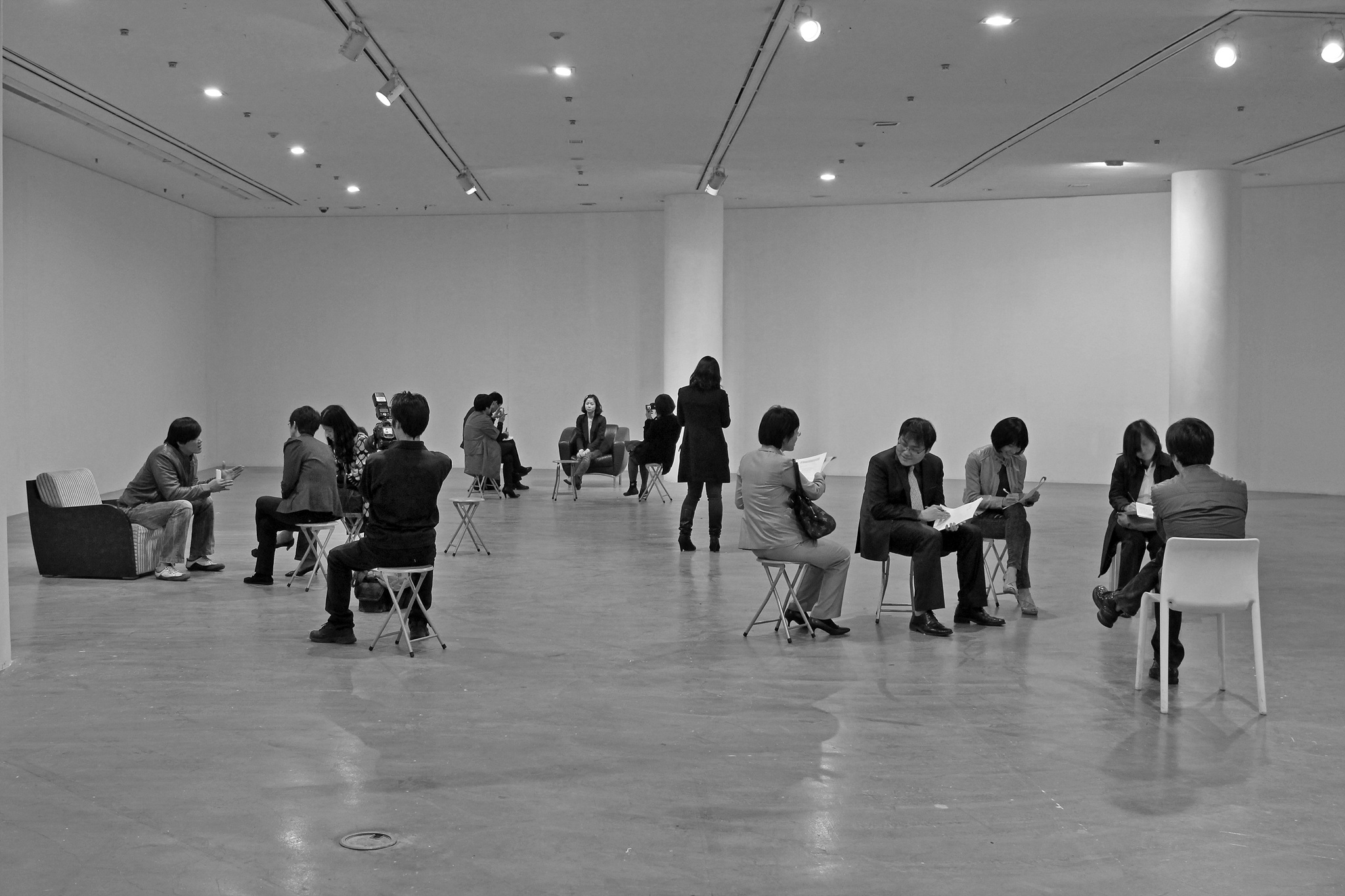
The pain and injustice inflicted upon them and their abject circumstances appear to be degraded into mere accoutrement for a game or a work of art. For one of his works, Gimhongsok employed an East Timorese working in Korea at low wages and interviewed him regarding the inconvenient truth of foreign workers. (The Talk (2004)) No matter how much effort we invest in understanding the interview with this worker from East Timor, the dialog naturally presents too many difficulties for us to achieve a full understanding of their situation.
However, the moment we abandon the effort and are on the point of turning to leave, a brief explanation pops up to sneer at our foolish behavior. The foreign worker is not actually a foreigner, the interview is a fake, and we have been taken in by this entire gimmick, it informs us. We are also completely deceived in another highly unsettling and wicked game in which a reward is offered to anyone who is able to identify a prostitute within a gallery. (Post 1945 (2008))

During the performance in progress, viewers become intent on hunting the prostitute, only to learn that she is an actress hired for the performance. Truly, this rendition might not be extraordinary, but what is important is viewing our completely deceived selves, who had been unaware of this fact. Gimhongsok is indeed inducing this situation. It is the artist’s cunning attempt to demonstrate to us a diorama in which he intentionally leads us to be held under suspicion of voluntarily committing the unethical act of ridiculing the under privileged.
Social minorities, including foreign workers, illegal immigrants, victims of sexual torture and human rights abuses, and prostitutes, form a neglected class engendered by a social system existent in reality; essentially, power. The social minorities in Gimhongsok’s art arrange a symbolic encounter between victim/offenders who are involved in an expanded and more complex dimension of power, hypocrisy, and violence.

The victim/offenders are cruelly exposed both ‘within’ and ‘amongst ourselves.’ What the artist intends to communicate is the brutal reality in which the power of the strong and the pain and sorrow of the weak can only coexist, as well as the duality of humanity that inevitably triggers such a reality. This double-sided nature of people, who incessantly worry about the ethical and unethical, right and wrong, rational and irrational, is what engenders the real world.

It seems that ‘political correctness’ could solve all problems, but this ‘political correctness’ itself becomes another ‘form of power’; and while on the surface equality is championed so that there can be no demarcation between the powerful and the weak, behind the scenes, all kinds of crimes are being committed in the name of equality. Baudrillard’s remark comes to mind: “The perfect crime would be the elimination of the real world.

But what concerns me, rather, is the elimination of the original illusion, the fateful illusion of the world.” In fact, Gimhongsok does not dream of ‘the perfect crime’; rather, he impels Baudrillard’s idea of “the real world itself being criminal” farther and farther to the extreme. Just like ‘the cynique’ from the school of Greek philosophers who responded with absurdities in the face of absurdities, Gimhongsok solves problems of the unethical with the unethical, assaults himself, and attempts at an abundance of paradoxes and sophistries.

References