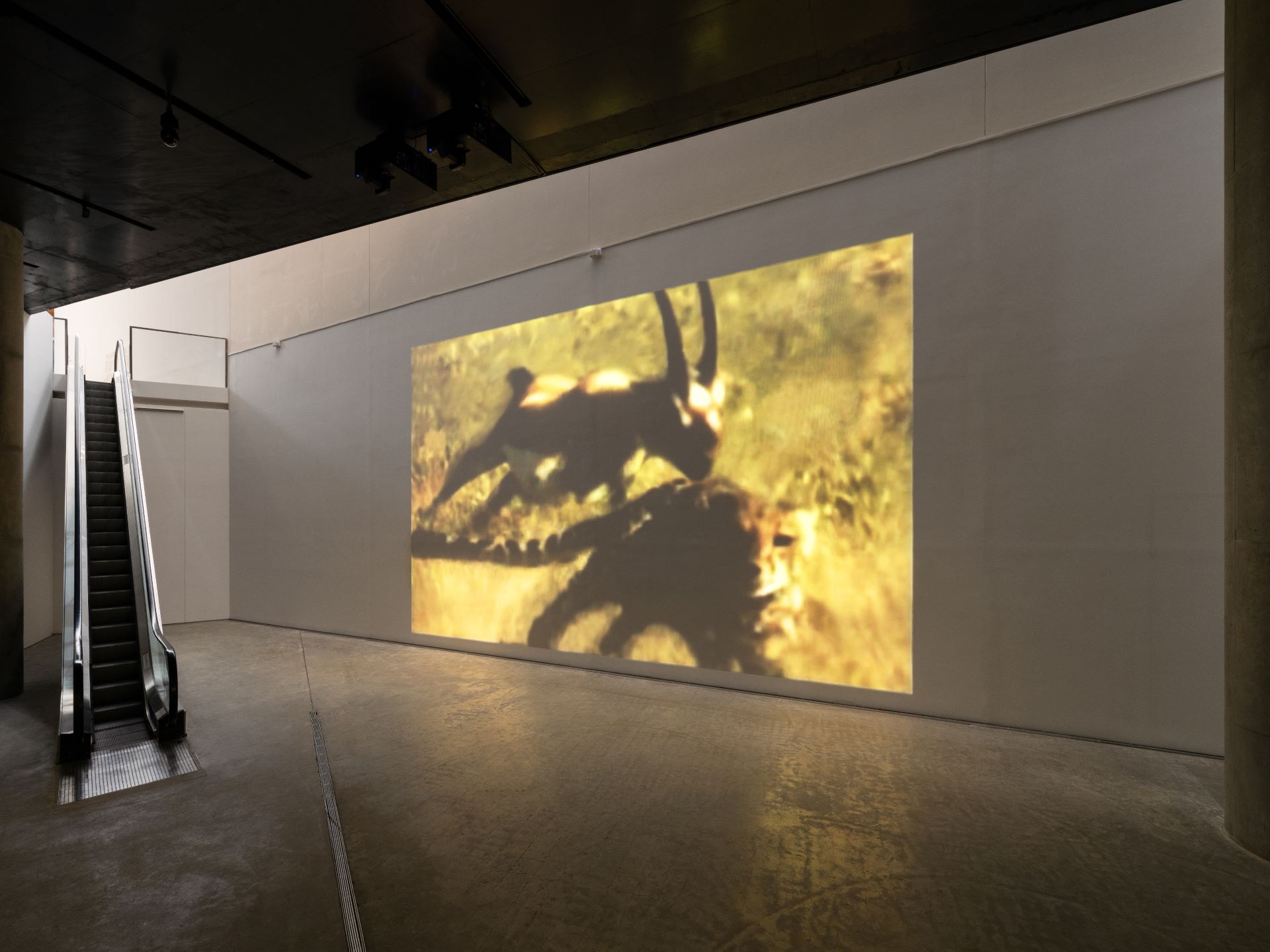
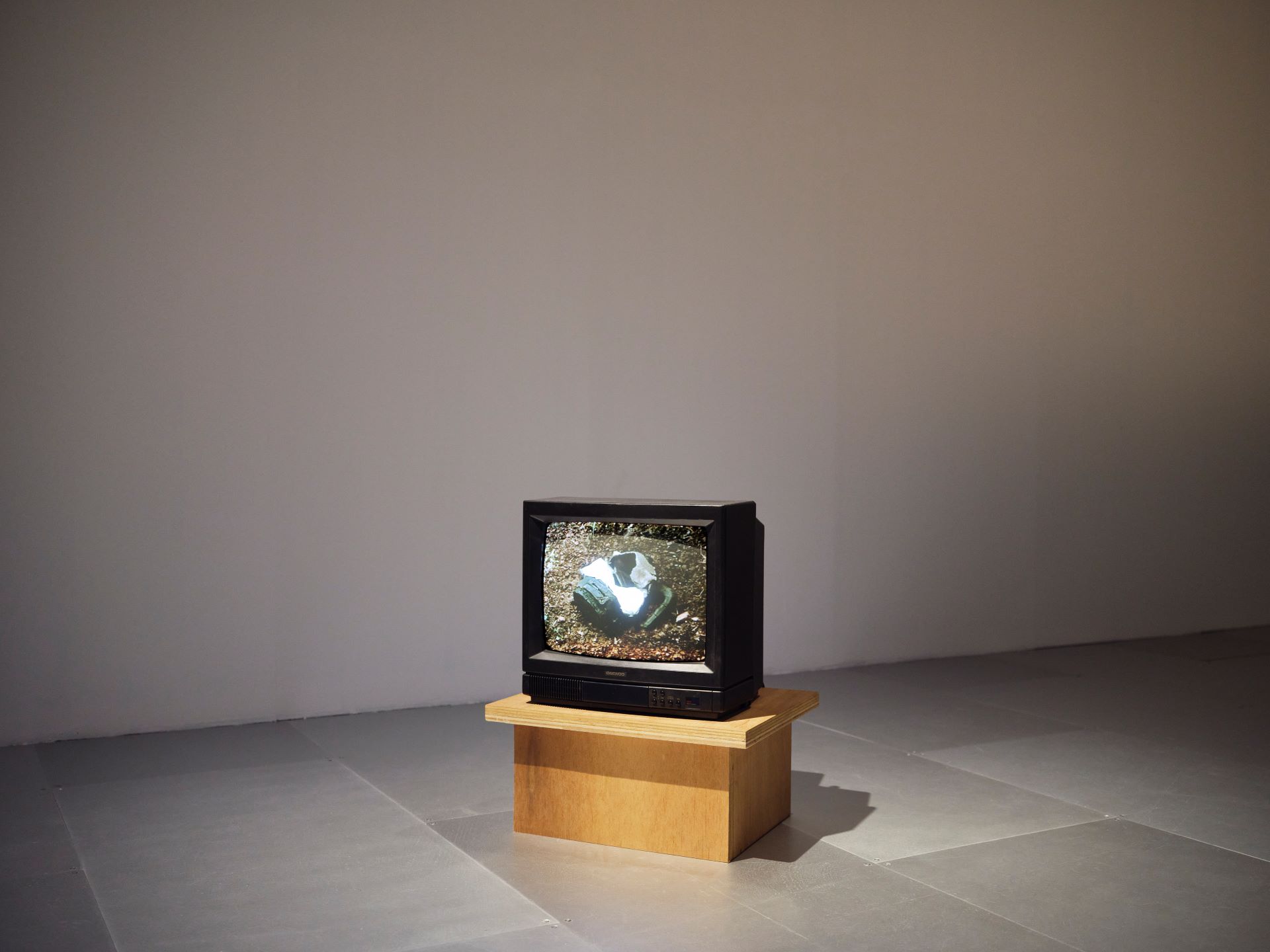
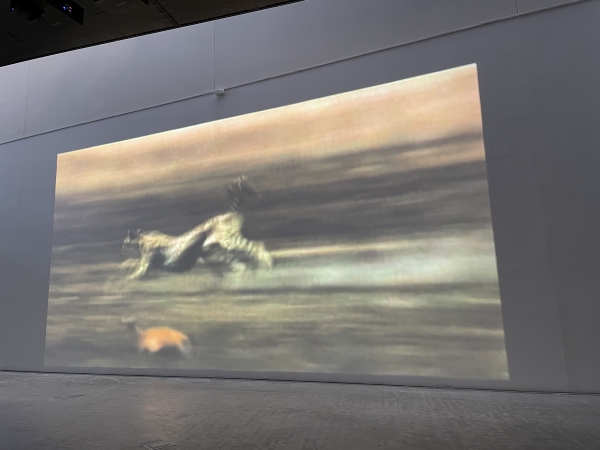
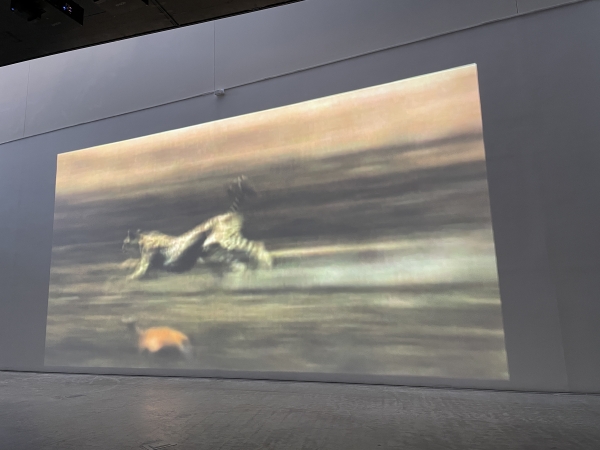
Kim Beom, Spectacle, 2010, Single-channel video, color, silent, 1 min 7 sec © Kim Beom

When Wit Turns Chilling

When people travel through an exotic jungle on safari, they often erupt in cheers at the sight of lions or cheetahs running across the savanna. In the natural ecosystem these animals are terrifying threats to life, yet within the safe, civilized framework of tourism they become objects of pleasure. In this context, the conventional hierarchy of power—“human < beast”—is reversed in the safari of the world. Humans occupy the dominant position. As spectators in the role of tourists, viewers may know the truth of nature tamed by humans yet choose to overlook it, delighting instead in the horror and suspense staged within the civilizational frame.

It is somewhat like deliberately seeking out tragic dramas in order to enjoy the act of shedding tears (David Hume’s “paradox of tragedy”), or like entering a museum and pretending to leave the affairs of the world behind in pursuit of a purely aesthetic experience (Kant’s notion of “disinterestedness”). For a moment, we suspend the calculation of real-world interests and avert our gaze from the material qualities of the object before us or from its social reality. But imagine that you encounter a scene resembling something you once saw on an old television program like ‘Animal Kingdom’.

In a degraded, yellowed video—its original image quality already poor and further deteriorated through duplication—a heavy cheetah flees at full speed while a small gazelle lunges to attack it. At first glance, the fleeting scene might make you wonder if you misread it. Yet the longer you watch, the more absurd the deliberate inversion of predator and prey appears. Soon you realize that this is not a conventional wildlife documentary but a re-creation that twists familiar conventions and subverts common assumptions. As you discover the wit embedded in this brief one-minute-and-seven-second edited clip, you may first find it amusing, only to feel a slight chill run through your head and spine at the critical image that overturns the logic of survival based on the law of the strong devouring the weak.

And when you learn that this is not a hypothetical example but in fact Kim Beom’s Spectacle (2010), currently exhibited in a prominent museum, that initial lightness of feeling may give way to more complex reflections. In short, within the “art ecosystem” that contains this single-channel video work, the museum-safari’s “spectators”—who enjoy watching a cheetah chased by a gazelle as an “artwork”—become the apex predators. And that figure is none other than you or me.

Categorically Interstitial

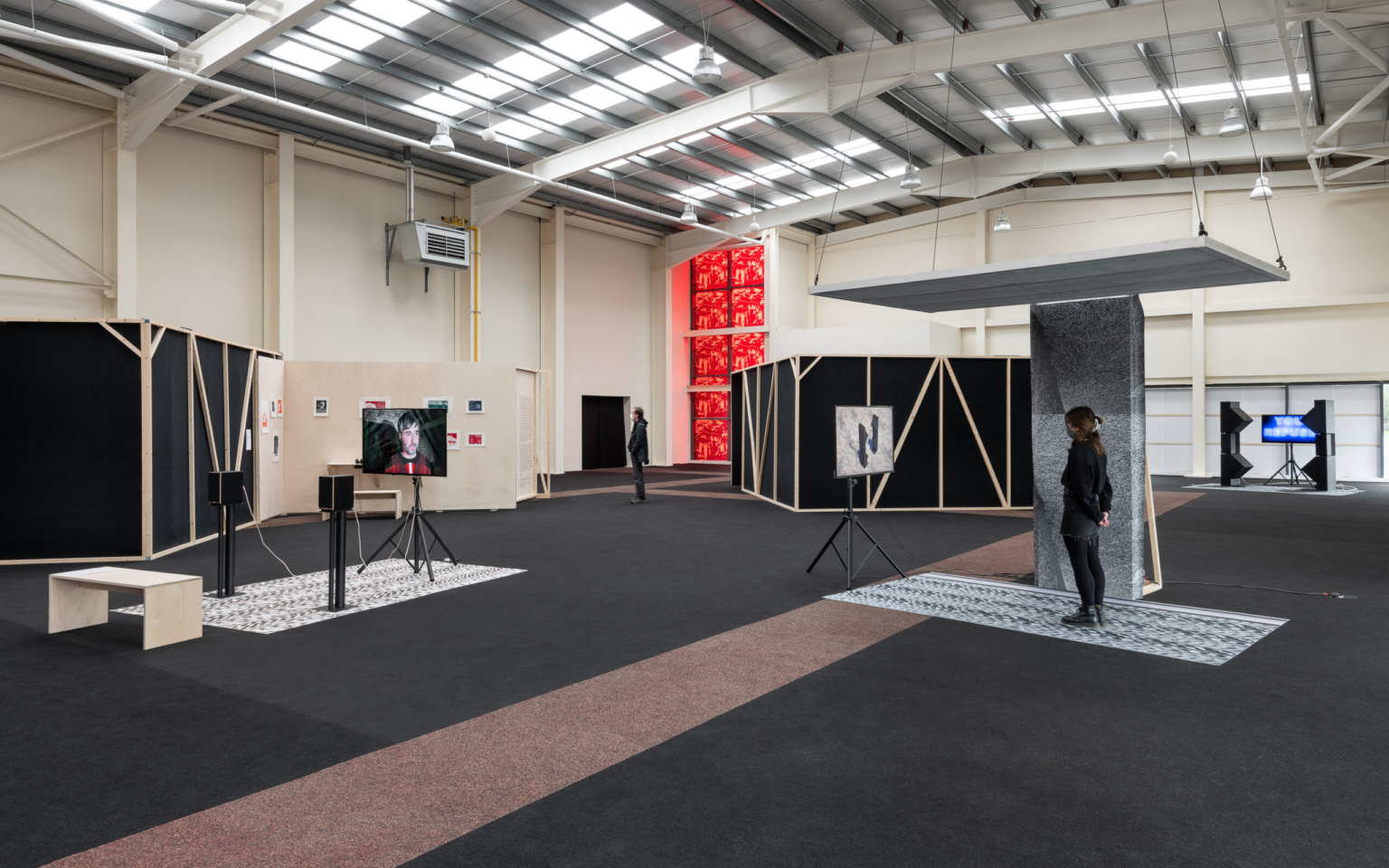
《How to become a rock》 (July 27 – December 3, 2023), organized by the Leeum Museum of Art, marks Kim Beom’s first solo exhibition in Korea in thirteen years. The museum has assembled more than seventy works produced between the early 1990s and the mid-2010s, including paintings, drawings, installations, sculptures, and videos. Over these three decades, Kim Beom has established himself as a significant mid-career figure in contemporary Korean art while also developing a singular artistic voice (this should not be misread in the international art world as meaning otherwise).

If one loosely defines his practice within the framework of Western modern and contemporary art history, it would fall under the category of “conceptual art.” And like much contemporary art, his work has pursued a pluralistic aesthetics that extends beyond the traditional notion of beauty. Seen from this perspective, Kim Beom’s art might not appear entirely unique.

What I mean by Kim Beom’s singular originality, however, lies in the way he interweaves language, signs, ideas, images, texts, logic, materials, situations, and nuances into a network that connects them nose to tail, forming a peculiar zone. Though somewhat awkward to phrase, this zone possesses what might be called a “categorically interstitial” character. In other words, Kim’s works materialize the spaces between the extremes of categories established by conventional perception and cultural habits. They do not simply cross existing boundaries, nor do they occupy an intermediate position.

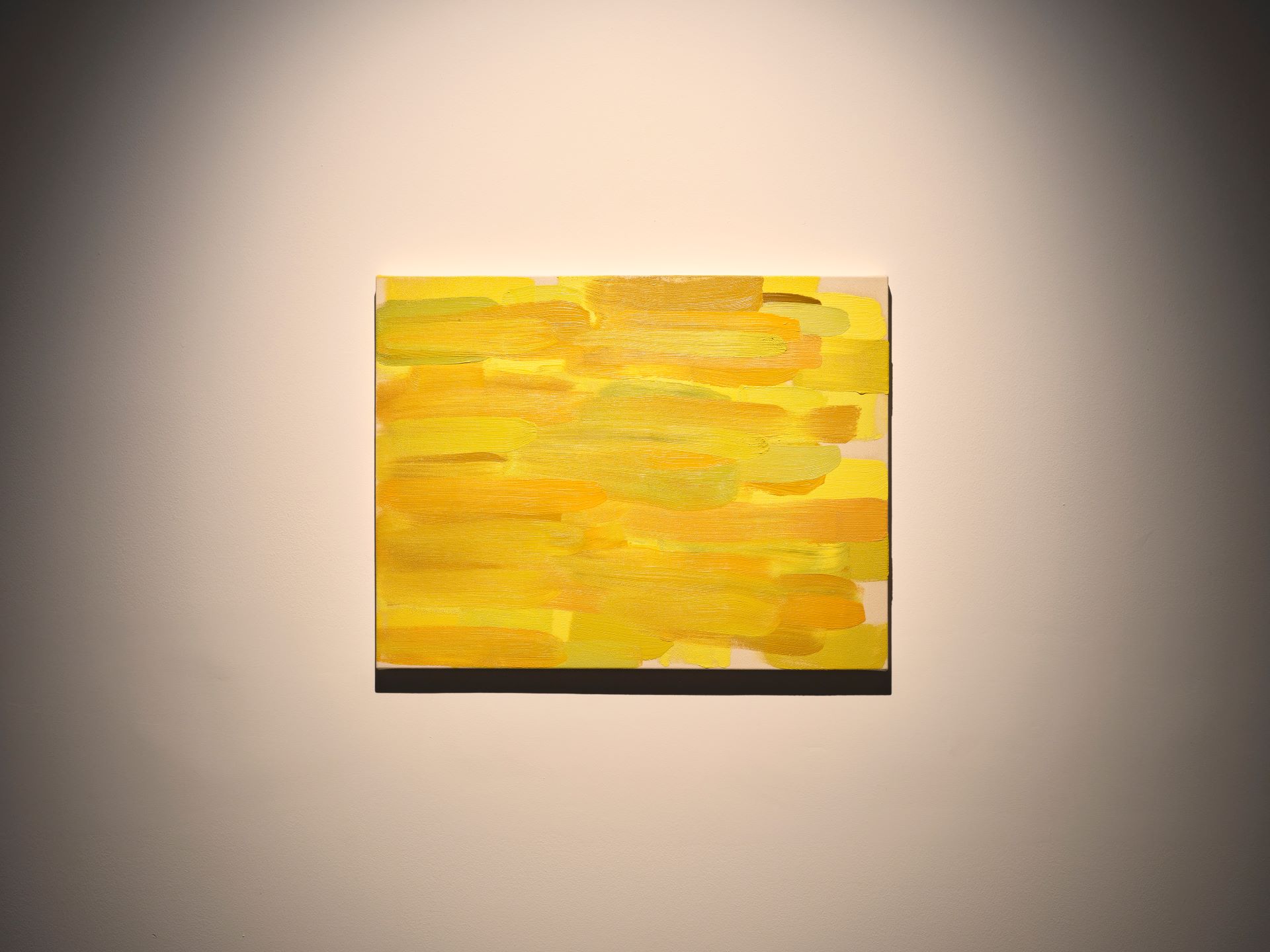
Rather, what I mean is that Kim creates certain latent possibilities—possibilities that rarely emerge within us precisely because the categories already functioning in our world appear so ordinary and stable. Using the normative framework of “art,” he generates multiple forms of potential through his own ideas and materializes them so they become perceptible. Such materialization may appear fragile, as in a drawing on a small sheet of thin paper in which “the trajectory of a hand and brush drawing a skull in black ink” is itself drawn (Untitled, 1991), pointing to a chain of imitation—a picture of a picture of a picture—or to the mirror structure of painting.

At other times it may be powerfully materialized, as in the painting of an enormously complex and extended maze on a nearly five-meter-tall canvas (Untitled (Intimate Suffering #13), 2014), producing a dizzying tension between simplicity and obsessive repetition. In fact, describing Spectacle as a mere inversion of opposing categories—banal convention and witty ingenuity, documentary and fiction, ecology and artifice—would be of little significance. The work does more than reverse positions; it creates new possibilities within the space between those poles. That is precisely what makes it categorically interstitial. It does not emerge from abstruse metaphysics or from an exclusive notion of pure art, nor does it identify itself with them.

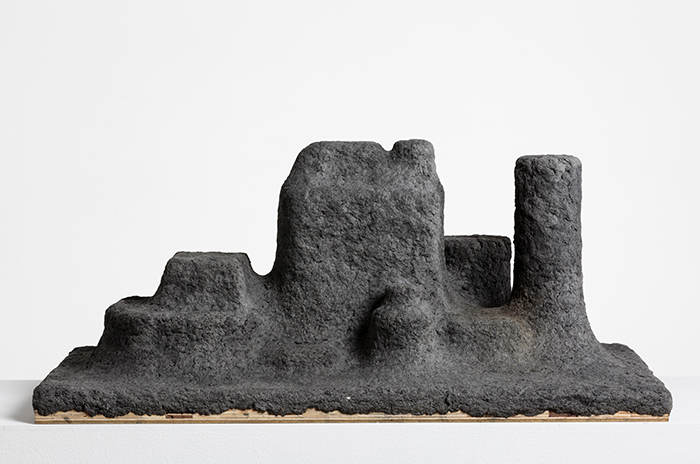
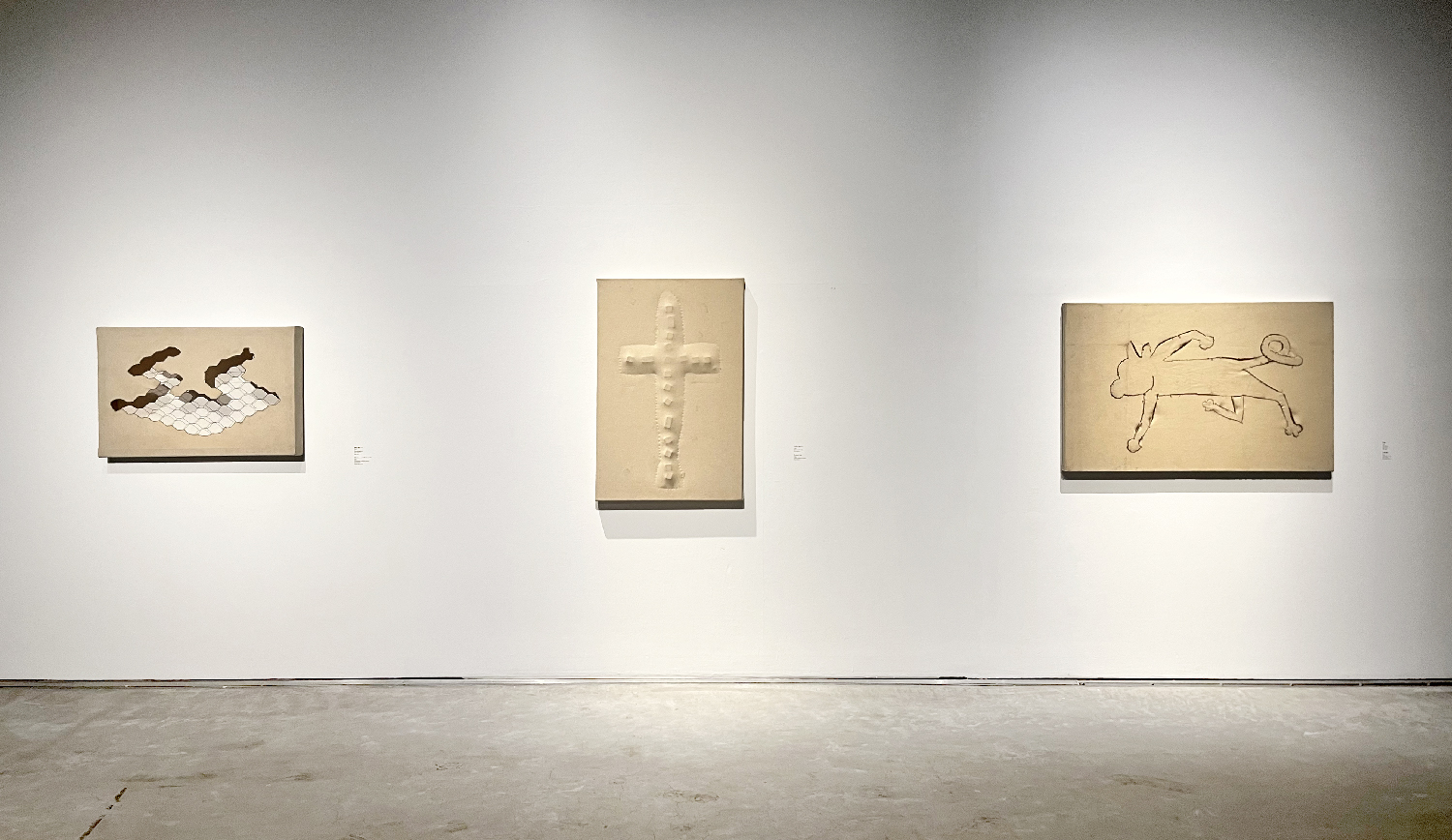
Instead, Kim Beom brings forth ideas that take the familiar categories of everyday perception—common sense, social conventions, patterns of thought and behavior—turning them inside out, crossing them, unsettling them, and reconfiguring them anew. Using modest and humble materials, he realizes these ideas in simple artistic objects. Among the many works he has produced, I will focus on several examples that reveal how such categorically interstitial potential has taken concrete form in Kim Beom’s art.



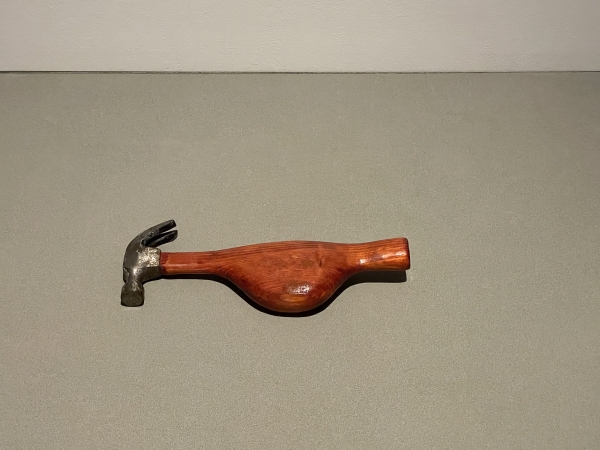
Kim Beom, Pregnant Hammer, 1995, Wood, iron, 5 x 27 x 7 cm © Kim Beom

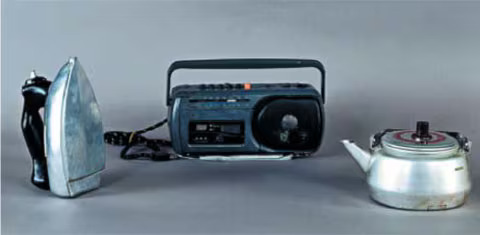
First, there are early works such as Pregnant Hammer (1995) and An lron in the Form of a Radio, a kettle in the Form of an lron and a Radio in the Form of a Kettle (2002). In both works, the ready-made objects indicated in the titles are transformed by the artist into other kinds of beings (with the nature of that transformation likewise described in the titles). A hammer head purchased from a hardware store acquires a bulging, belly-like wooden handle—carved by the artist—thereby becoming an interstitial entity that transfers between signifier and signified as well as between the category of tool and that of living organism.

An iron sprouts an absurd hole at its characteristic triangular tip, as if caught in the midst of transforming into something else, while the antenna rising from one side of a kettle emphatically suggests that the kettle placed here is the temporary realization of the latent state of a radio. Meanwhile, the heating plate newly attached to the bottom of the radio momentarily collapses the original categorical distance between radio and iron, bringing them into sudden proximity. The three objects cling to and entangle one another, embodying the grotesque worldview of these sticky, mutually devouring entities.

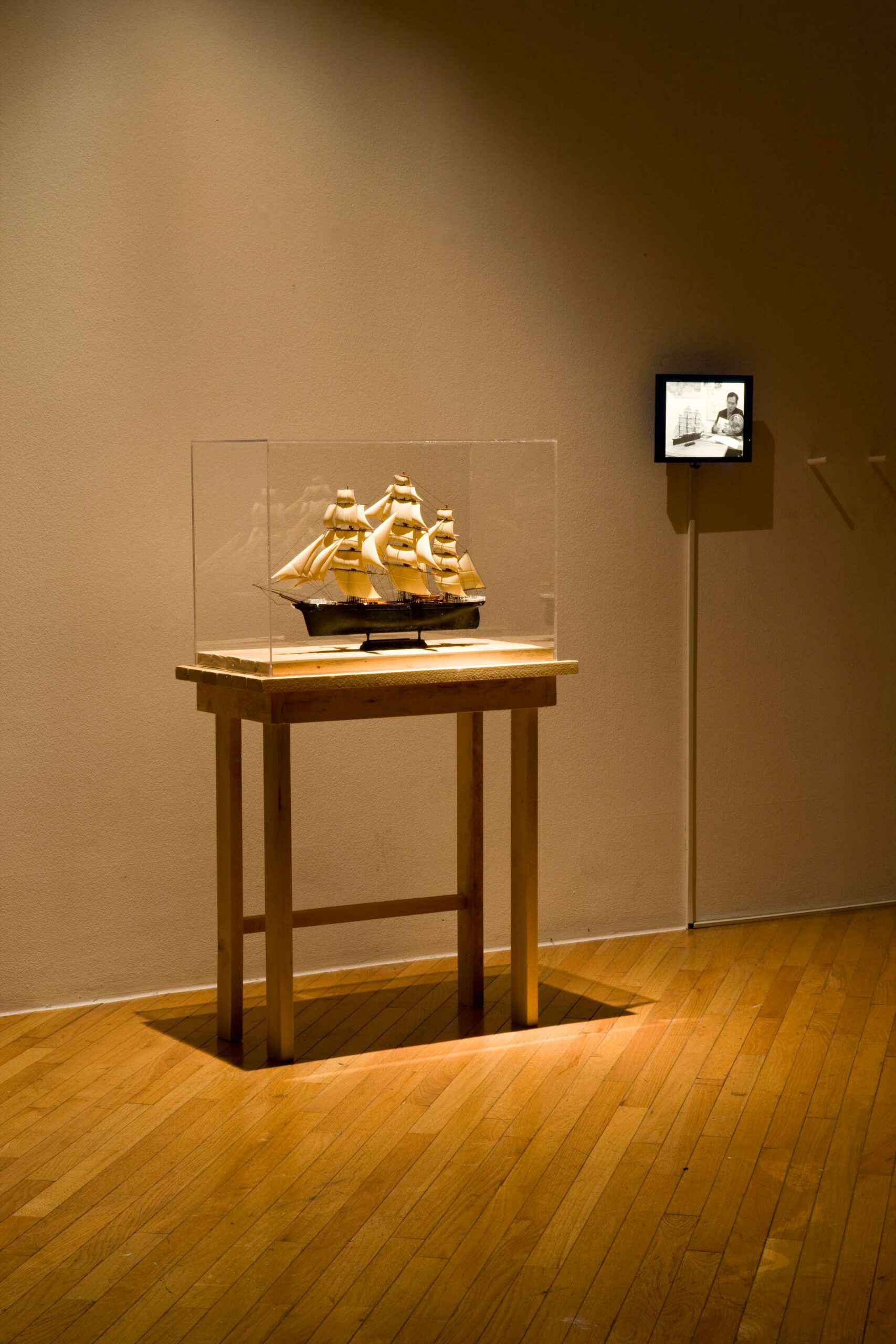
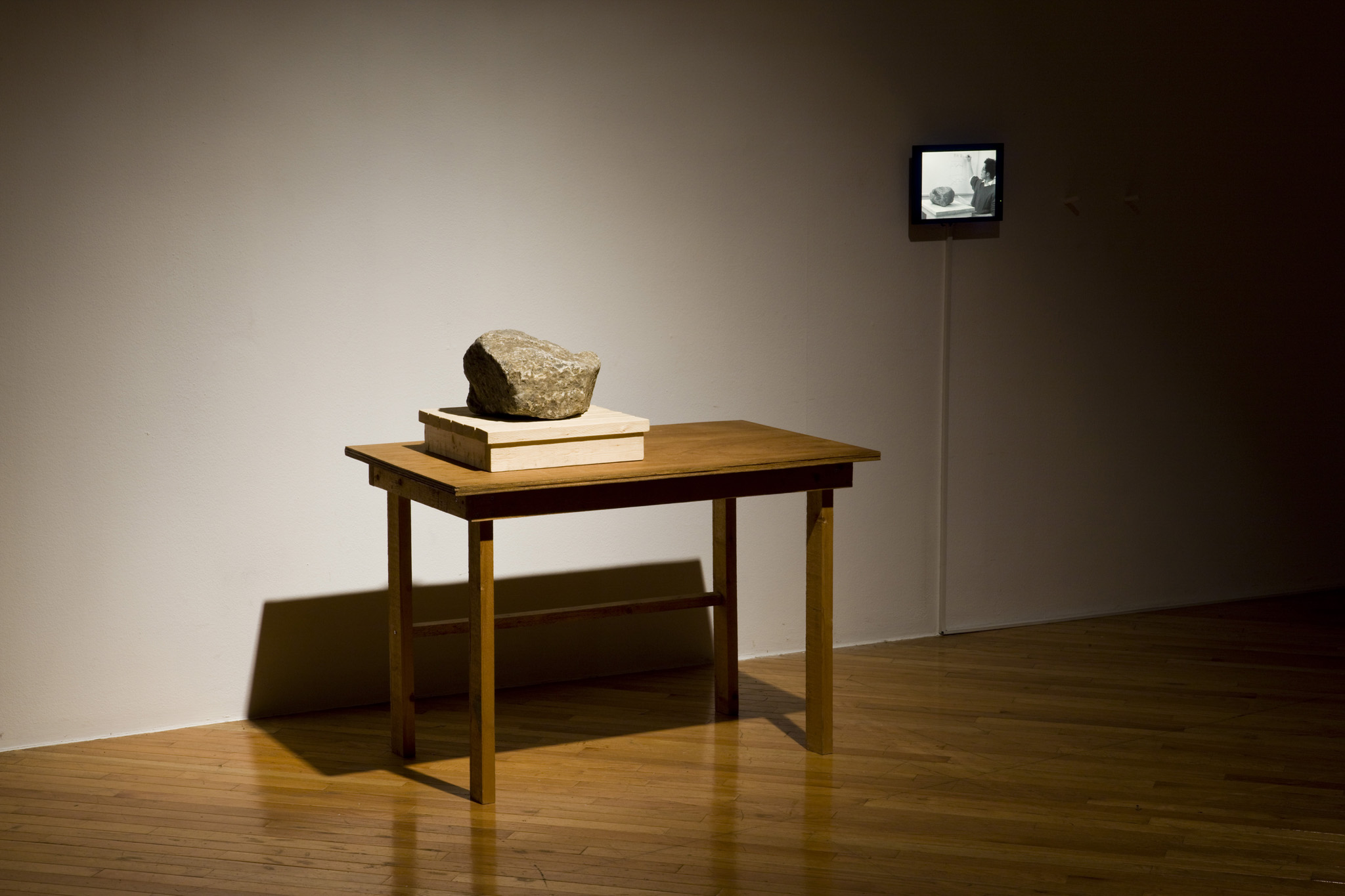
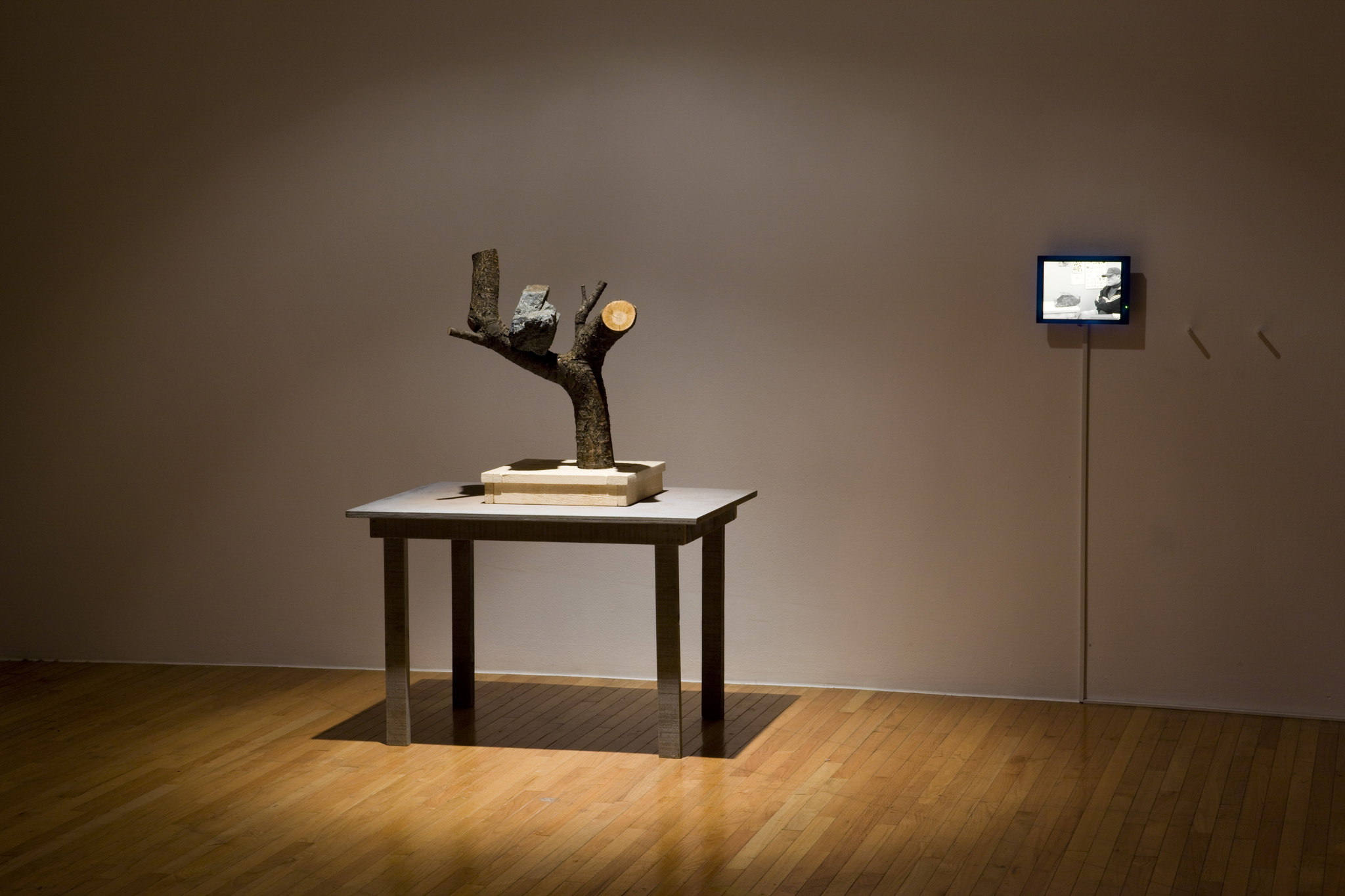
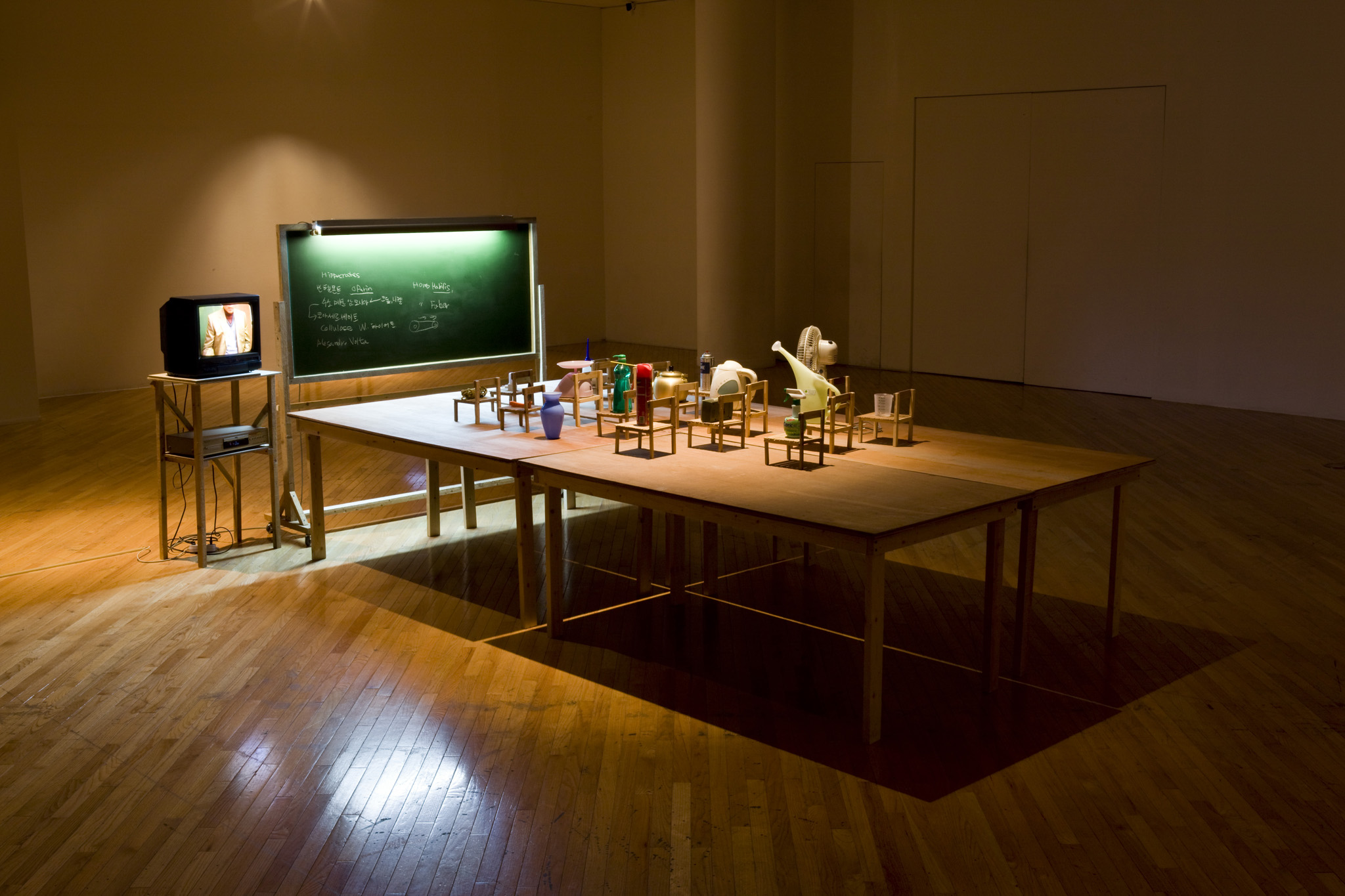
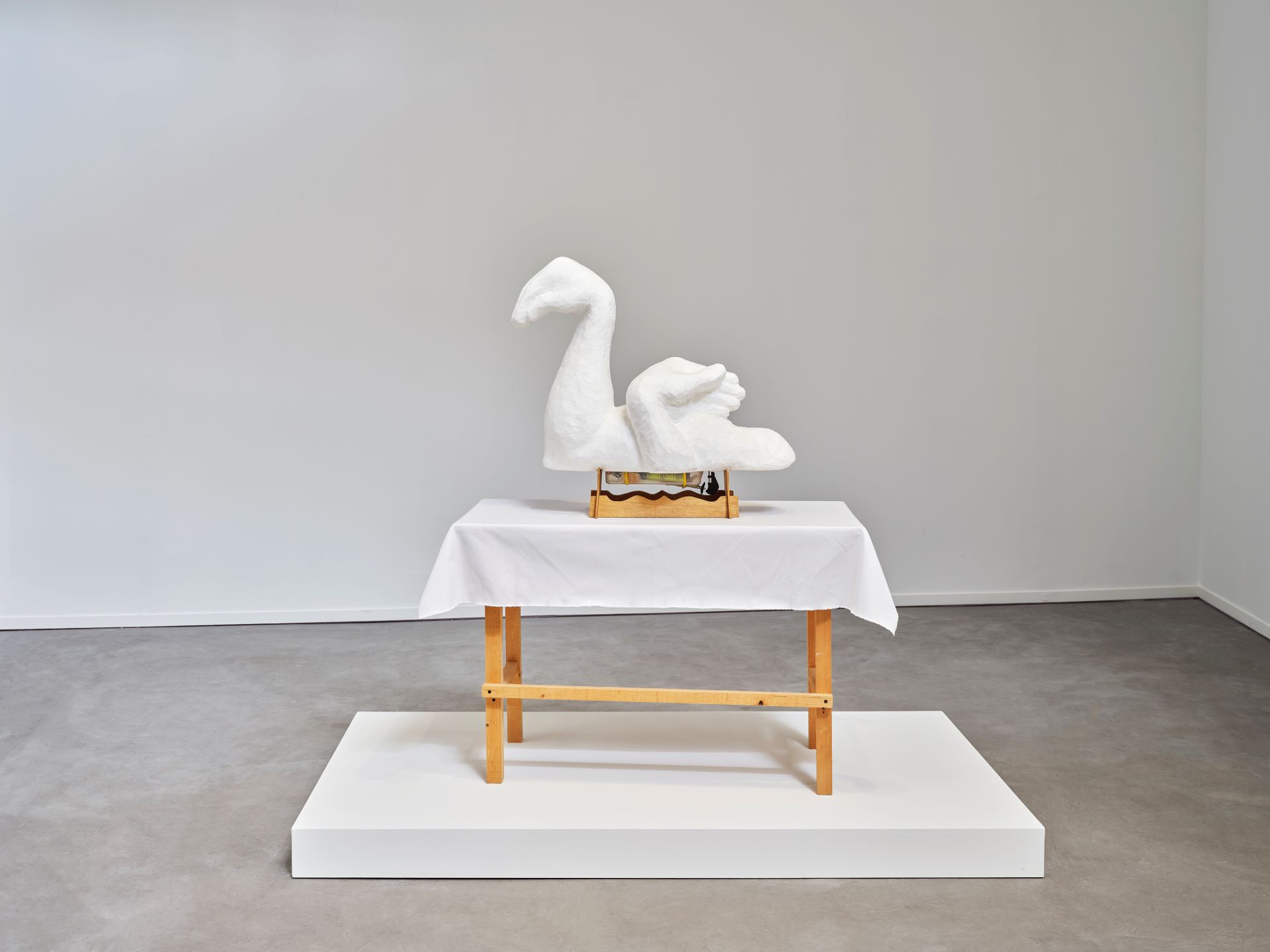
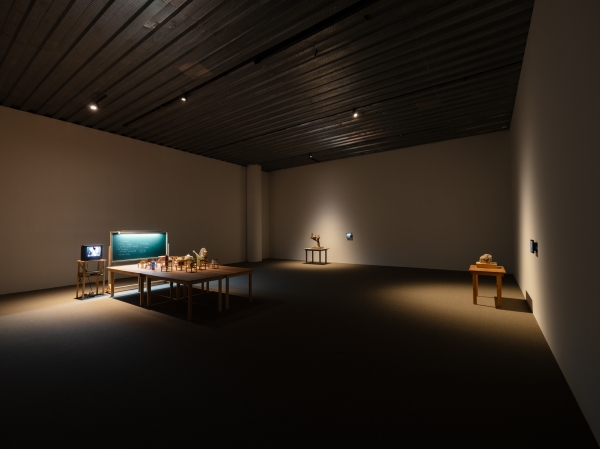
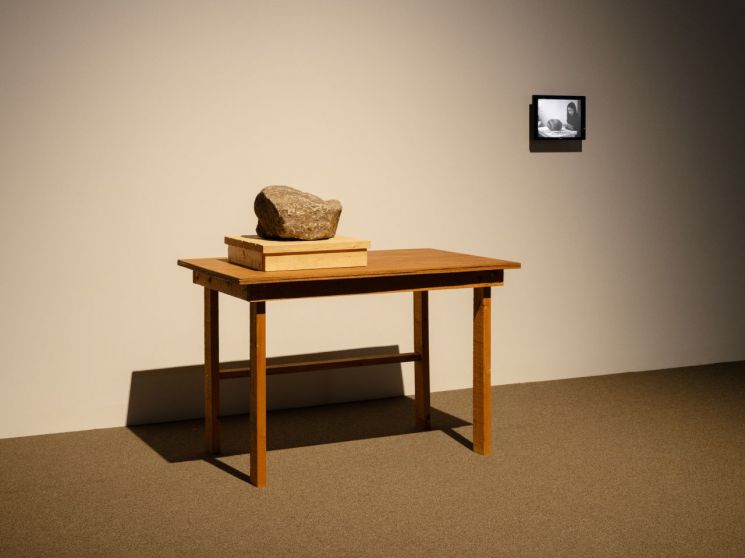
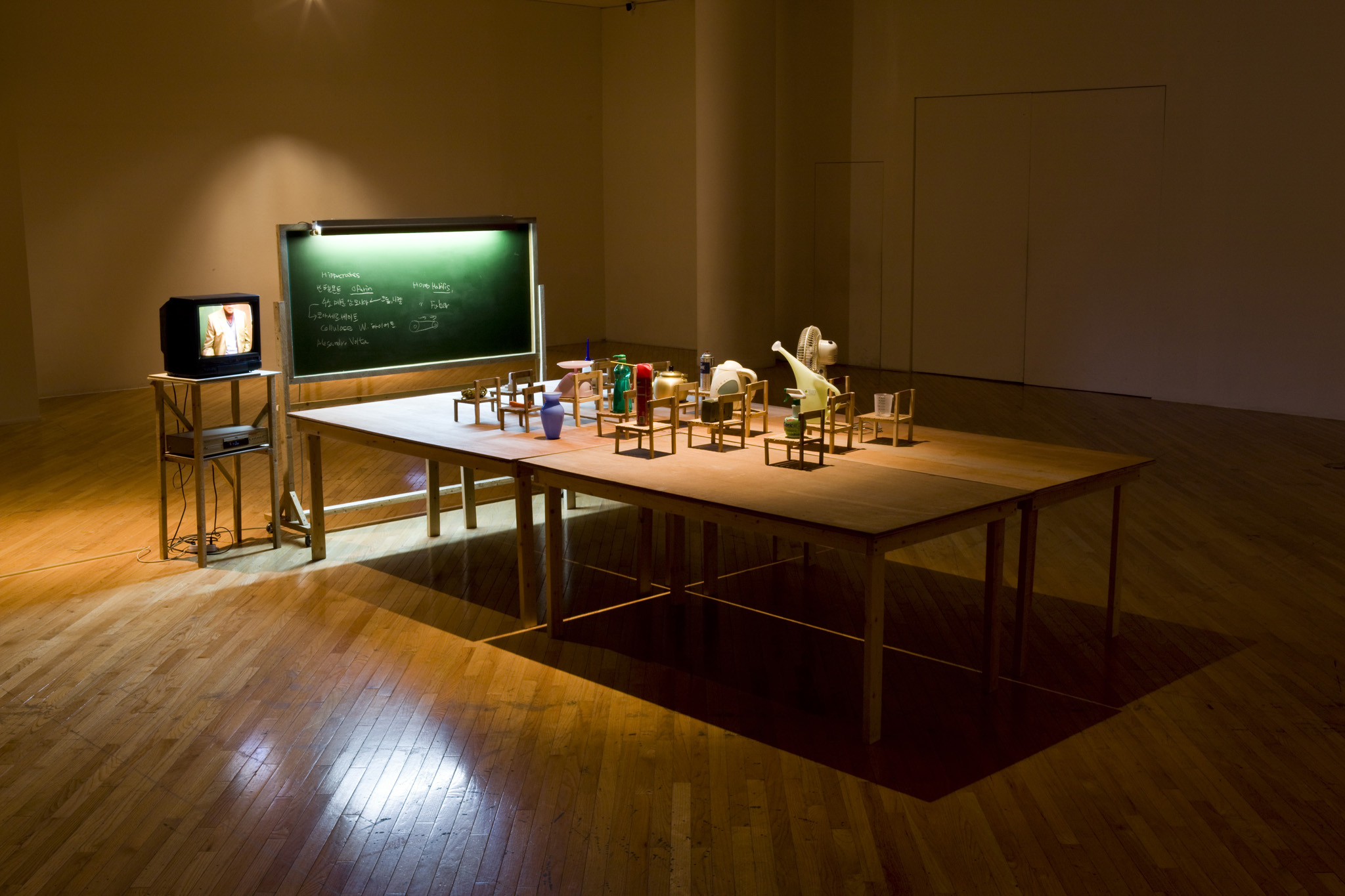
Next, it is necessary to pay attention to the video installation works that Kim Beom produced intensively during the 2010s: A Rock That Learned the Poetry of JUNG Jiyong, A Rock That Was Taught It Was a Bird, A Ship That Was Taught There Is No Sea, and Objects Being Taught They Are Nothing but Tools. The notion that a rock might learn poetry or be taught to internalize its identity not as a rock but as a bird is impossible in empirical reality. Likewise, imagining the inner life of a sailing vessel stripped of its connection to the sea, or the subjectivity of plastic objects arranged in rows like students sitting in a classroom, borders on fantasy for humans who live within the box of rational thought.
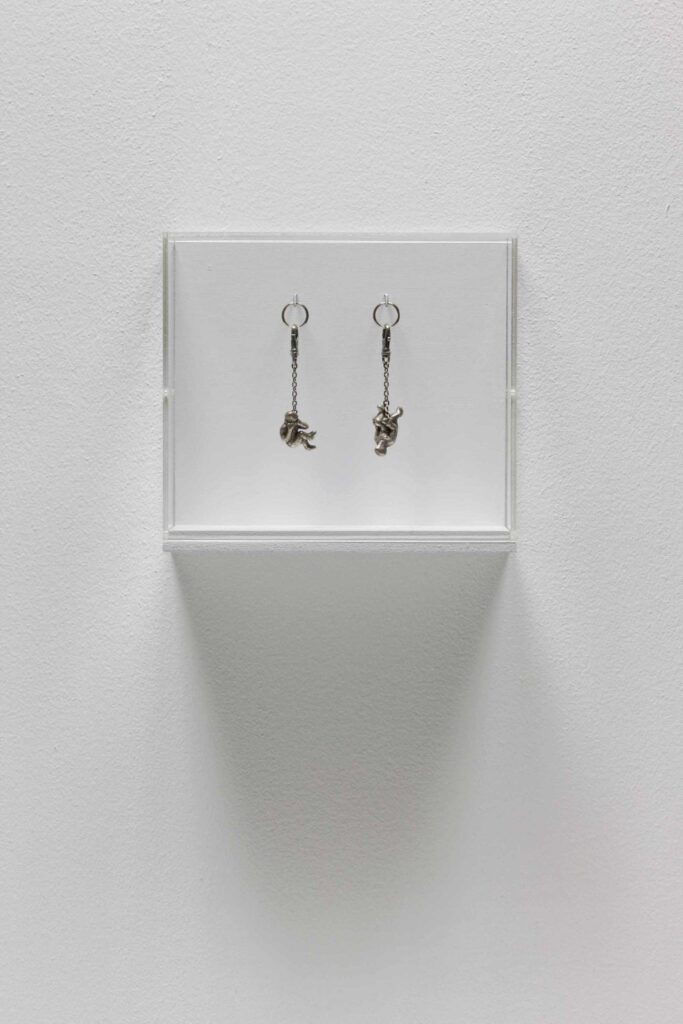
Yet Kim places a single stone on a wooden table (even setting it on a pedestal as though it were a sculpture) and installs a video that shows the stone “studying” the poetry of the modern Korean lyric poet Jung Jiyong for a full twelve hours (as if learning fixed meanings such as “A is B”). In doing so, he pierces through innumerable categorical lines—geology, biology, civilization, Korean language education, animism, metaphor, critique, satire, nervous laughter, severity, even torture—like bullets, opening empty spaces for thought and sensation.

In another work, a small stone is wedged between branches of a tree stump as if a bird were perched there, and in an 87-minute-and-30-second video the stone is “educated” with the assertion, “You are not a rock but a bird.” Once again, established categories are penetrated and their blind spots exposed. However, interpreting such works simply as conceptual art delivering a socially critical message would be superficial. Kim Beom does not seek to awaken within us messages that are already internalized as “correct” or “good,” and thus easily understood even if reality does not align with them.

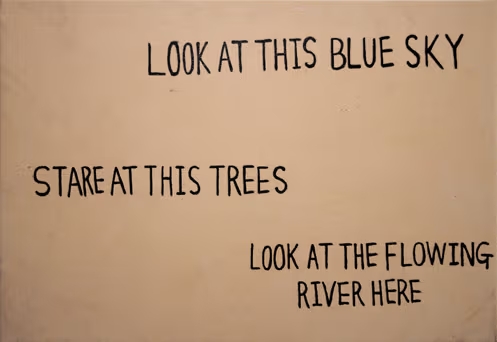
In a brief text titled “Untitled” (2010), Kim describes a place where “ruby” is not the name of a gemstone but “a lake ruled by a great leader,” and another place where “loneliness” does not signify solitude but names “a tribe that harms people.” Reflecting on this example makes clear that, for Kim, the arbitrariness of linguistic signs always already departs from Saussurean linguistics. What Kim’s works materialize as physical and material entities is neither a given theory nor a phenomenon, nor even their opposites.

Rather, it is an inter-quality among events, spaces, beings, modalities, values, and forms—perhaps infinite, perhaps not. It is not something that preexists but something the artist must generate from a latent state.


Installation view of 《How to become a rock》 © Leeum Museum of Art

In fact, the expression “categorically interstitial” is borrowed from the American analytic philosopher Noël Carroll’s critique of horror films. Carroll defines the monster in horror films as a “categorical violation,” further explaining that this occurs when “an object or being is categorically interstitial, categorically contradictory, categorically incomplete, or formless.” Carroll, however, developed this logic on the basis of anthropologist Mary Douglas’s book Purity and Danger: An Analysis of Concepts of Pollution and Taboo. In that book, the chapter “The Abominations of Leviticus” analyzes the cultural conceptual system and epistemological categorizations of ancient Judaism through the Book of Leviticus, which addresses laws concerning sacrifice and religion in the Old Testament.

At that time, religious law distinguished between “pure” and “impure” things, and the latter were deemed unfit for sacrifice and forbidden as food. For instance, eels and insects were considered impure because they lived in water yet were not fish. Likewise, reptiles were impure because they crawled on dry land without being four-legged beasts, and flying squirrels were considered unclean or abominable because they could not be clearly categorized as either birds or animals.

In short, according to Douglas, beings that did not fit within the categories established by existing systems of thought—such as religion—but instead crossed, contradicted, or distorted them were suppressed as impure and abhorrent. Carroll argued that the monsters of horror films likewise function as categorical violators: entities whose species are confusingly mixed and whose attributes or behaviors are multiply designed to produce emotional effects in viewers such as fear, disgust, and anxiety.

The originality of Kim Beom’s art, as I emphasize again, lies in his ability to conceive something categorically interstitial (is it material? is it perception?), bring it out of his mind and reveal it through text and image, and realize it using material substances. Unlike the impure and abominable entities described in the Book of Leviticus as analyzed by Douglas, however, Kim Beom’s categorically interstitial art is not an object of discrimination or exclusion but one of appreciation and inclusion.

And unlike the categorical violations identified by Carroll in horror films, it does not artificially attempt to manipulate the viewer’s emotions. This is because, in the process of making the work, in the complex conditions and contexts in which the artwork exists, and through the viewer’s own emotions and thought, a qualitatively interstitial experience—one that each person senses and understands in their own way—is already promised.


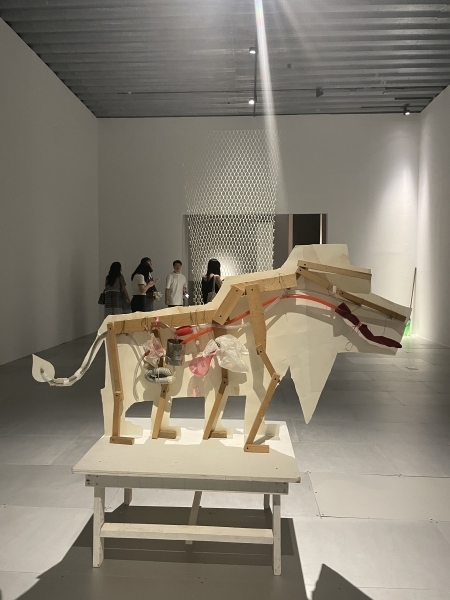
Kim Beom, Untitled (Manufacture #1 Inside/Outside), 2002, Mixed media, 158 x 60 x 94 cm (interior), 200 x 80 x 150 cm (exterior) © Kim Beom

The Emergence of Viewing

Kim Beom’s solo exhibition 《How to become a rock》 provides, for me, an excellent ground on which to analyze and critique the source of the originality that has been consistently developed from the artist’s early works to the present. But what if, from the viewer’s perspective, we try to identify a consistent point of appreciation in Kim Beom’s art? I would argue that Kim has organized a mode of experiencing artworks that elevates our “desire to see” into a “desire to know.”

His works are presented in the museum as visual art objects, and viewers naturally stand before them as such. Yet the viewer’s time with the work cannot be satisfied by visual pleasure alone. Stimulated by the object, the viewer proceeds to examine it from multiple angles, reflecting and speculating on its possible meanings.

In this sense, Kim Beom’s art may appear as aesthetic objects, but they are not merely finished results. Although grounded in material and spatial conditions, they incorporate combinational dynamism in thought and unfold over time, cultivating triggers that activate viewers beyond the role of mere spectators. Thus, instead of the phrase used by the Goncourt brothers when praising Chardin—“the painting is elevated”—I would propose the phrase “the emergence of viewing” as a keyword through which to understand Kim Beom’s works.

References