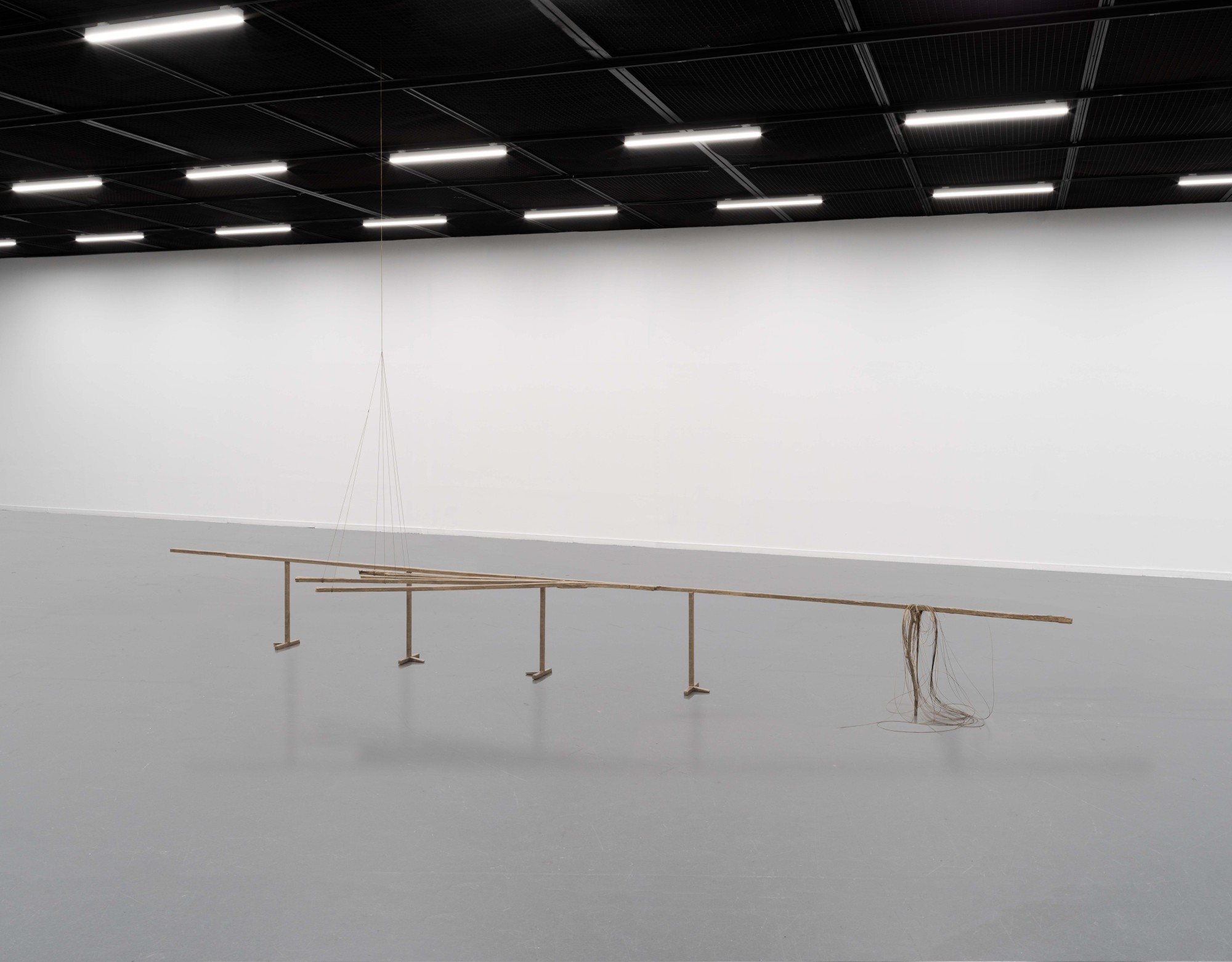
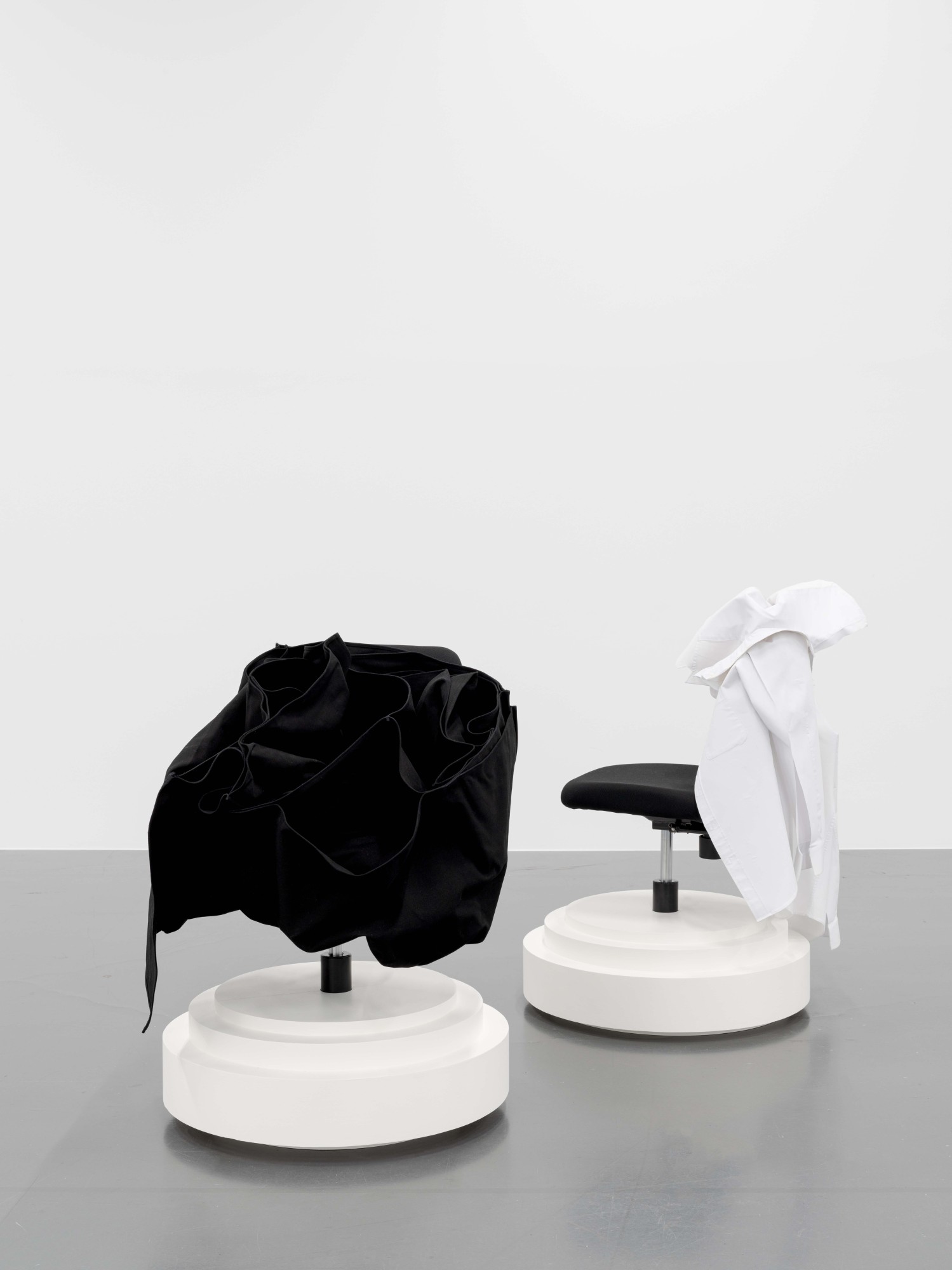
This
exhibition presents an opportunity to engage with recent works that reveal the
artist’s long-standing investigation of the relationship between language and
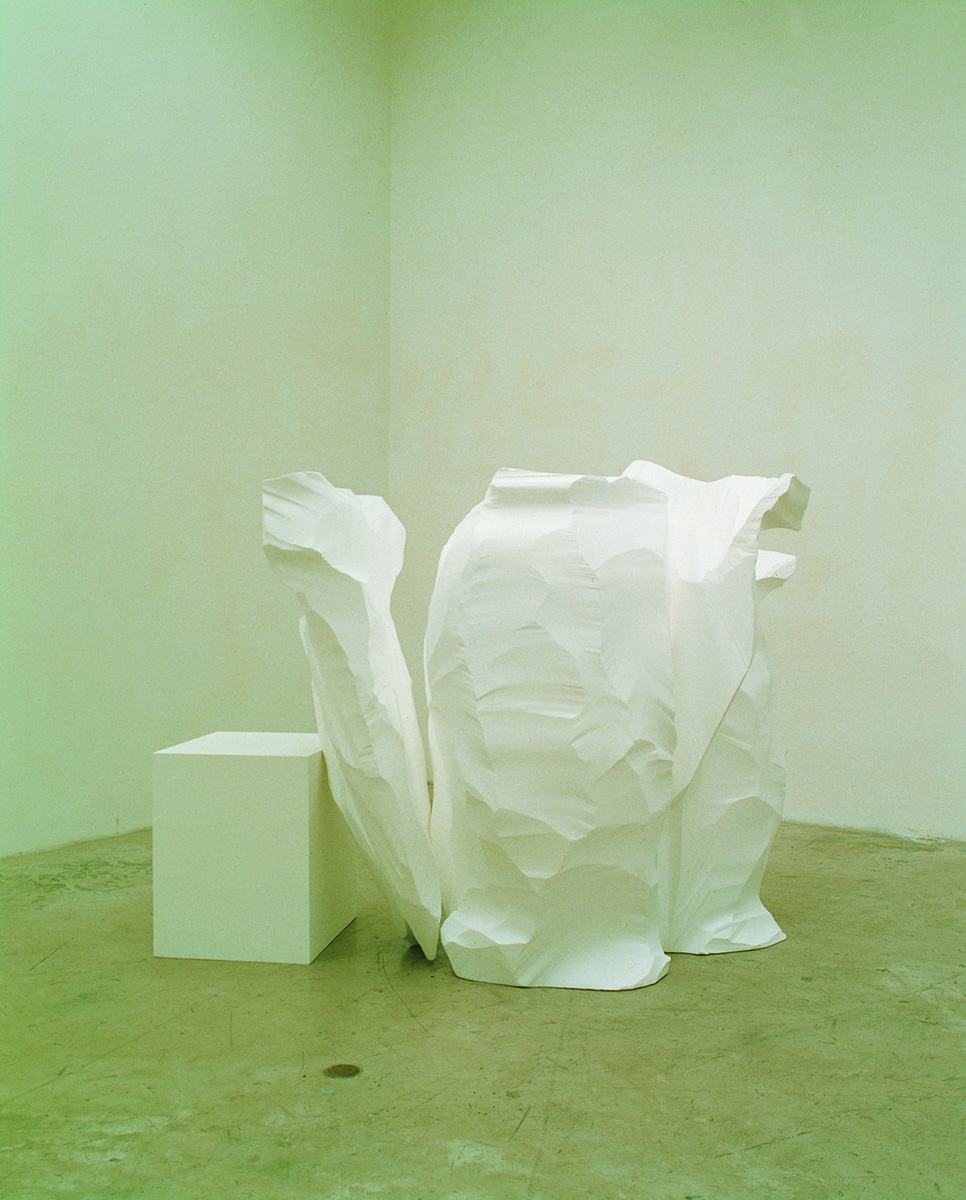
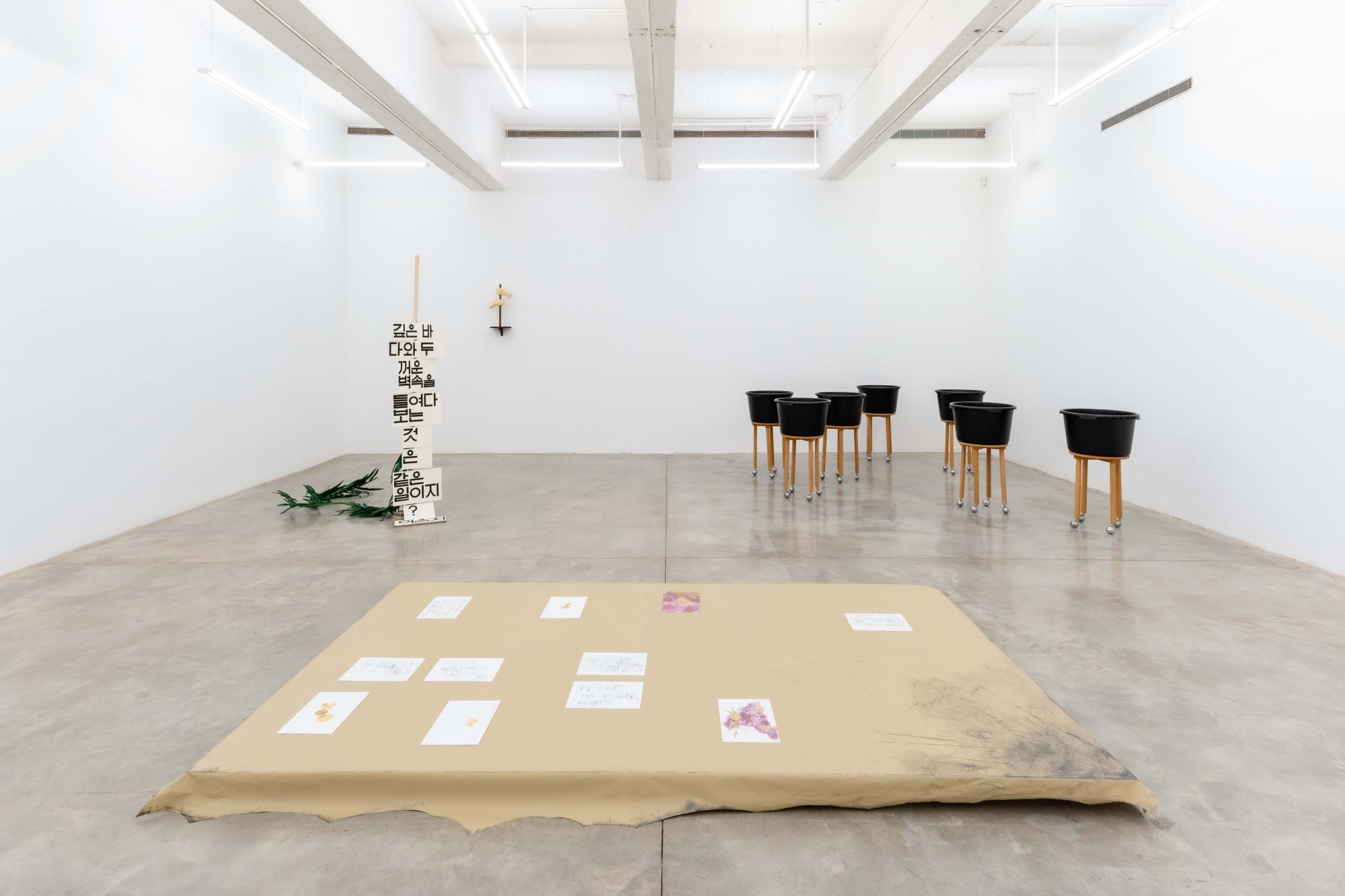
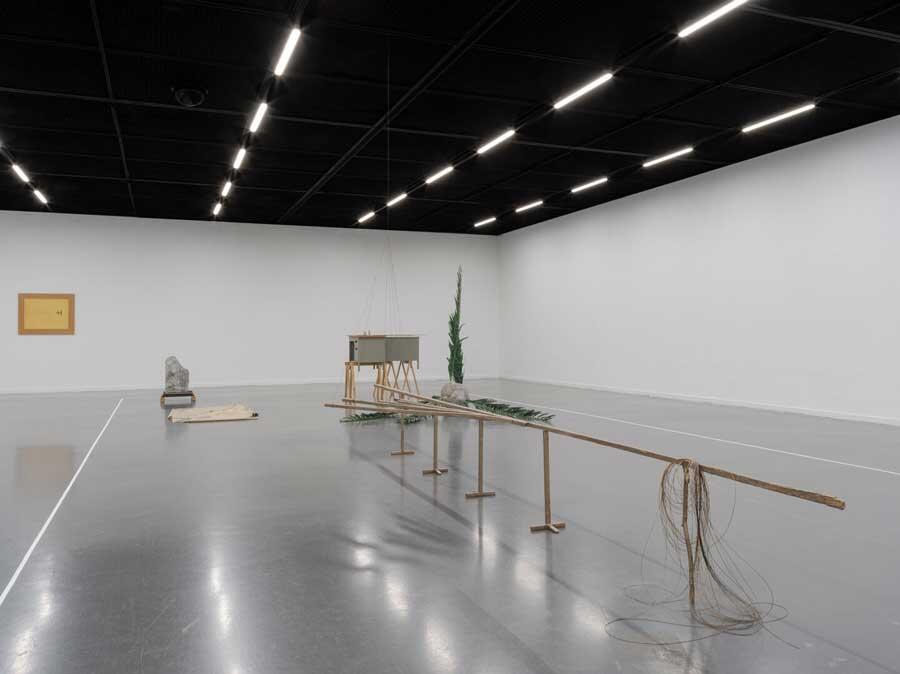
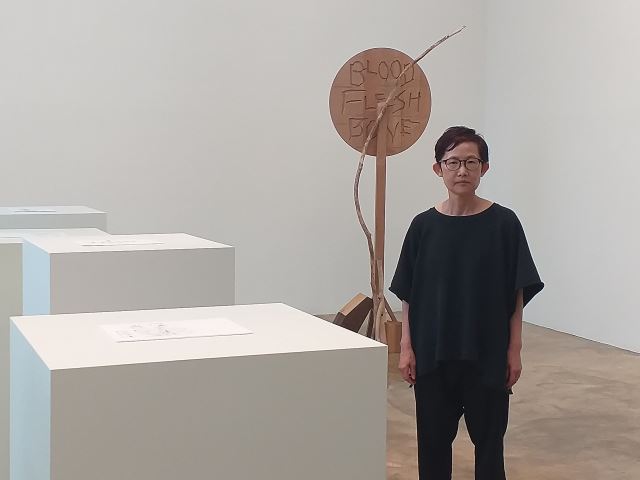
perception. Deep Sea and Thick Wall (2024) is a
standing sculpture composed of white panels silkscreened with text that reads: “staring
into the deep sea and a thick wall is the same? the.” The text itself
is written in typography reminiscent of South Korean grade school art classes
in the 70s and 80s – a time when students had to create posters as part of the
state-mandated collective social education curriculum. It is not that Chung
seeks to align a “deep sea” and a “thick wall” as being the same, but rather
that through sharing in the “act of looking,” she is able to mediate and erase
the perceived boundary between the two. Another series with a prominent use of
language is the A4-sized ceramic drawings.
Some
of them feature simple drawings made with gold glaze, while others have Korean
characters that Chung inscribed using glaze pencils while using a ruler.
Residual traces of pigment smudged by the ruler appear on the white, matte
surface of the porcelain, evoking transience and ephemerality. Therefore, the
consonants, vowels, words, and phrases appear like remnants of form and sound.
Echoing Chung’s maxim – “When the object is cumbersome due to scale, I let
drawing do the work” – the materiality of language is in a sense, an abstract
sculpture.
Some
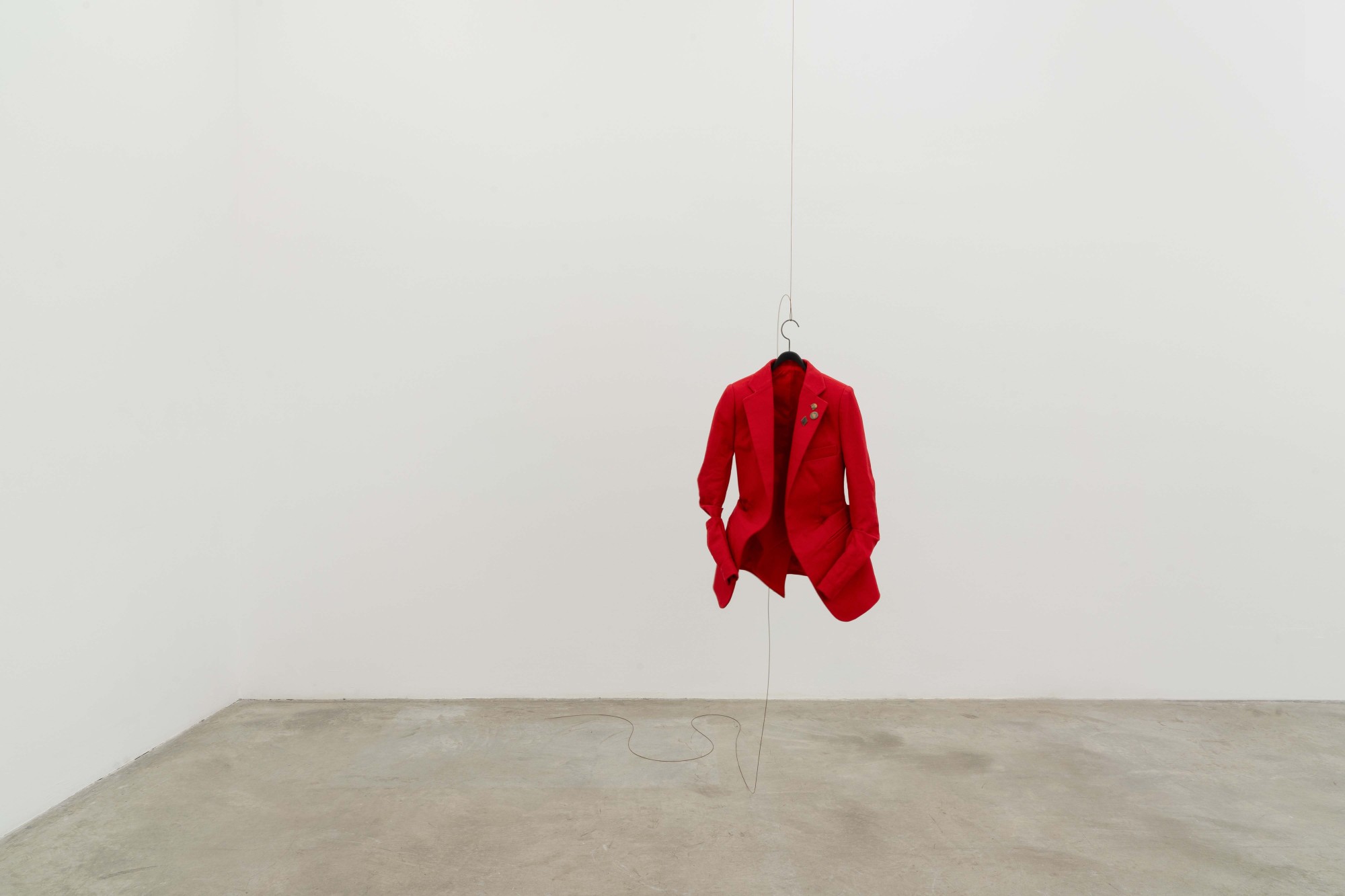
senses are stronger than that of sight. Chung’s most recent work Red (2024)
began with the artist’s vivid memory of encountering writer Charlotte Brontë’s
dress displayed at the Morgan Library in New York. To be conceived as having
belonged to a living person, the dress seemed too peculiar in size, thereby the
experience generated a new relationship between the subject of the dress and
the artist's body. This strange encounter lingered within the artist, creating
an intense urge “to make something from what I've seen and what I know, but at
the same time, has no meaning.”
Let
us now recall the title of Chung's most recent retrospective, What
I Saw Today (Seoul Museum of Art, 2022), which at first may
sound unremarkable and detached. But Chung's decision to use the word “today,”
rather than “yesterday” or “back then,” is significant because her sculptures
aim to go beyond merely describing or representing past experiences in the
present.[3] Chung says, “For the past 4.5 billion years, the sun has
visited us without fail, every single day of the year.”[4]
By
situating her work alongside the sunrise, Chung evokes the continual passing of
time, while still calling to mind that each sunrise is a new and unique event,
because there will always be only one “today.” Essential to Chung’s sculpture
is this heterogenous understanding of temporality that allows for the
experience of simultaneity through time’s cyclical nature, while acknowledging
time’s linearity. Still pertinent in 2024, Chung’s works capture this fleeting
convergence where the subjective and the objective come together in time and
space.
[1] Lee Jong-soong, “Between What Can Be Said and What Cannot Be Said: Thoughts on the Recent Works of Chung Seoyoung,” Space, January 1996.
[2] Lee Hanbum, “Chung Seoyoung and about Chung Seoyoung,” manuscript presented at Language Activity, a public program in the occasion of exhibition Chung Seoyoung Solo Show (Audio Visual Pavilion, 2016).
[3] Jihan Jang, “Ghost, Object, Sculpture: The Sculptural Moment of Chung Seoyoung,” Chung Seoyoung: What I Saw Today (Milan: Skira, 2022).
[4] Excerpted from Chung Seoyoung, Continuity, 2020. Single-channel video installation, dimensions variable.