The following excerpt from the
artist's statement on Park Wunggyu's website offers a key to understanding his
broader practice:
"I am always highly
responsive to things like 'impurity, impure situations, impure emotions.' And I
accept the process of resolving them as a form of play. During this process, I
am often reminded of religion. For example, I associate the shape of a dead
insect’s body with dazzling Buddhist paintings, and clusters of moths stuck to
my window with the packed iconography of a cathedral. I believe that
envisioning the most sacred image from something most base is itself
religious—and also impure. In recent years, I have primarily focused on
insects. But in my work, the specific subject is not of great importance.
Whether it is an insect or a sacred icon, they are no longer separate for me.
What matters more is the attitude with which I look at it, and how I distinguish
it. Thus, the forms revealed in my work are closer to dummies serving similar
functions."
This statement introduces a core
conceptual keyword essential for understanding Park Wunggyu's work:
"negation" (bujung, ‘부정’ in Korean).
The term "bujung" in Korean carries multiple meanings. First, it
refers to "negation" in the logical sense—as in denying the existence
or validity of something (e.g., "He denied her statement"). Second,
"bujung" can also mean "injustice" or
"impropriety" in a normative sense (e.g., "There was an act of
injustice during the college entrance exam" or "A politician’s unjust
accumulation of wealth"). Third, and in ritual or religious contexts,
"bujung" (written as 不淨 in Chinese
characters) can mean something "impure," something that defiles or
violates sanctity—a taboo object (e.g., "impure things" or
"being tainted by impurity").
Though these meanings are
distinct in their Chinese character forms, they often intermingle in everyday
usage. Take, for instance, the phrase, "He is a negative person." Is
this implying that he constantly denies things? That he behaves improperly? Or
that he desecrates what should be sacred? Possibly, all these connotations are
implied. Even in English, the word "negative" or
"negativity" reflects this kind of ambiguity.
What interests me is that Park Wunggyu
himself appears to embrace this polysemy of "negation" as central to
his practice. Consider the phrase from his statement: "I am always highly
responsive to things like 'impurity, impure situations, impure emotions.'"
Here, the term “impurity” resonates simultaneously with injustice (不正), impurity in the ritualistic sense (不淨),
and logical negation (否定). Later, when he says, "I
believe that envisioning the most sacred image from something most base is
itself religious—and also impure," the implication of "impurity"
clearly leans towards the sacred/taboo dichotomy of 不淨.
In his artist’s statement on the
series, he writes: "The ‘Dummy’ series begins with image collection.
Starting with everyday encounters, I save all images of 'negativity' that I
come across on my smartphone into a photo album." The Korean word
translated here as "negativity" is again ‘bujungham’ (부정함), which defies reduction to a single meaning among injustice,
impurity, or denial. Interestingly, the translated phrase "images of
'negativity'" captures this ambiguity well.
Further, Park writes:
"Religious iconography involves certain recurring schemas. The way figures
are arranged within a frame, the decorative motifs, or symbols related to
repetitive numbers—these function as methods of capturing the negative objects
that become sources for my work. They are also a form of self-discipline that
allows me to control how I approach the impure." In this context, the
"negative objects" (bujungham-ui daesangdeul) and "impure
things" (‘bujunghan geot’) are translated respectively as "objects of
negativity" and "injustice" in English, again underscoring the
multiplicity embedded in his use of the term.
All this suggests that when Park
speaks of "negation" (bujung), he is intentionally invoking its full
spectrum—impurity, injustice, and ontological denial. It is a deliberate
conflation that animates his work.
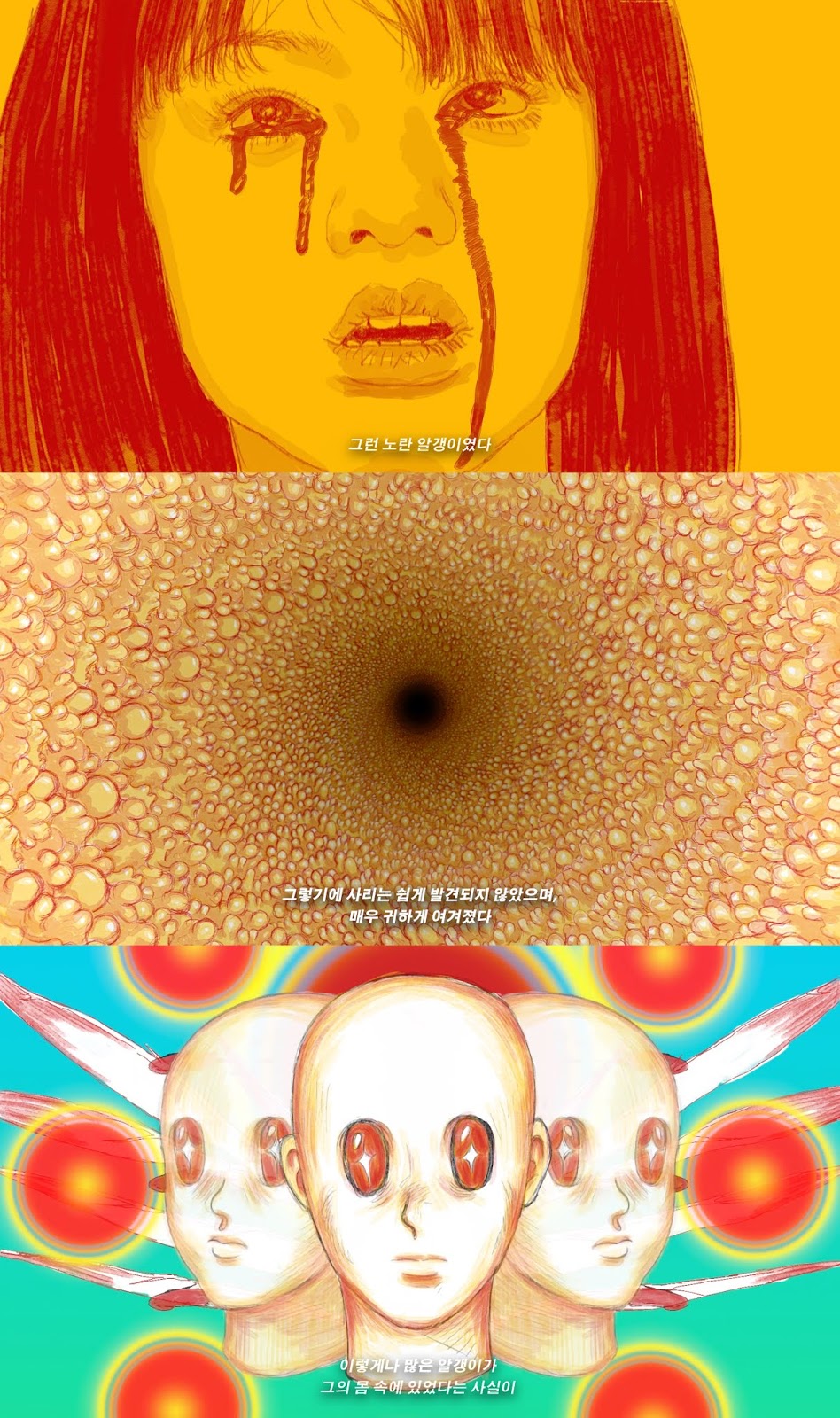
In 2012, in his early career
works such as the ‘Sputum Drawing’ series and Sputum Crystal,
Park Wunggyu strongly emphasized the meaning of “impurity” (不淨) among the many interpretations of “negativity” (부정). By transforming substances expelled from the human body—such as
phlegm and tonsil stones—into visual forms resembling sacred paintings or
Buddhist relics (sari), the artist connected what is “impure” or “dirty” to the
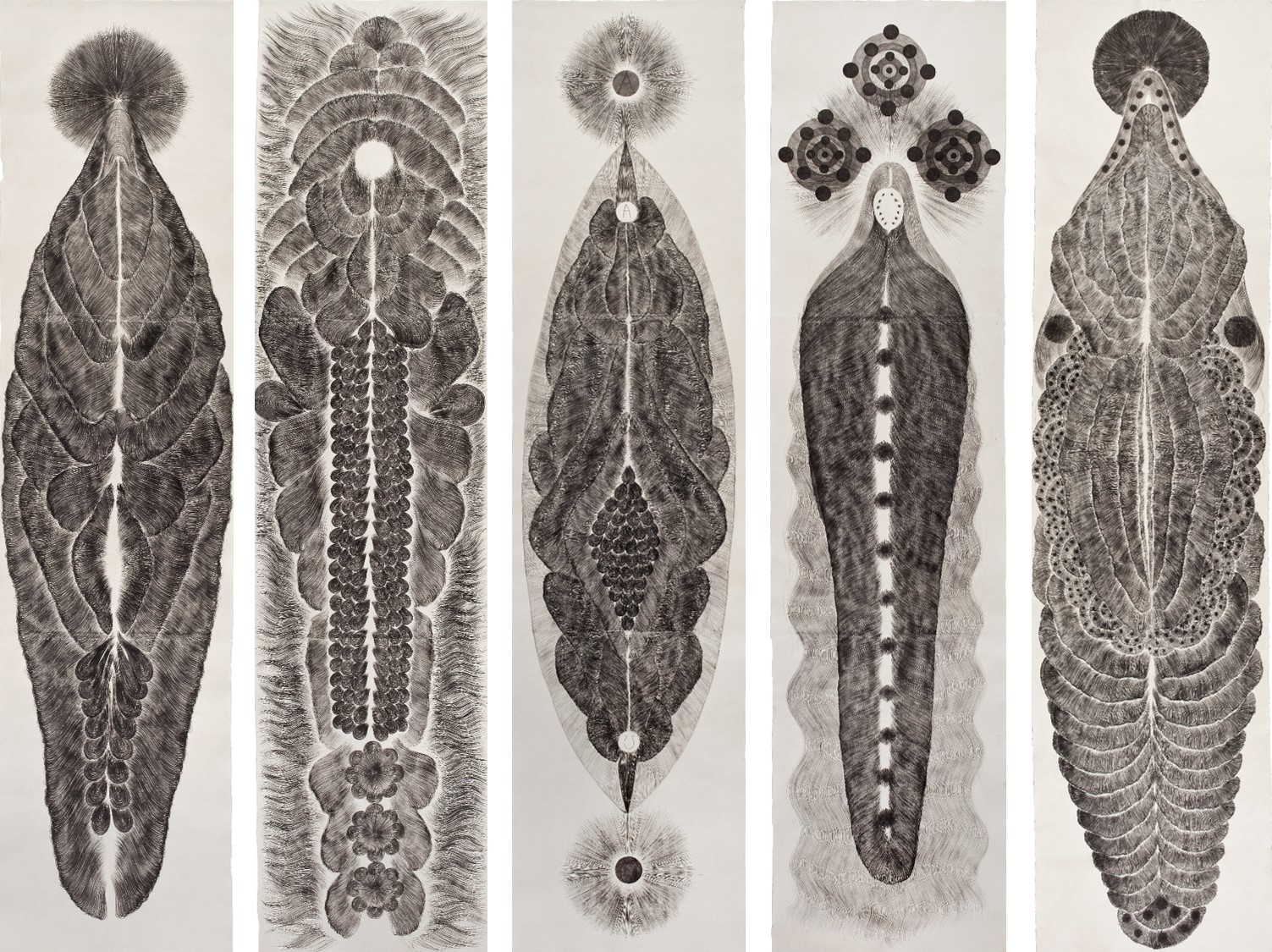
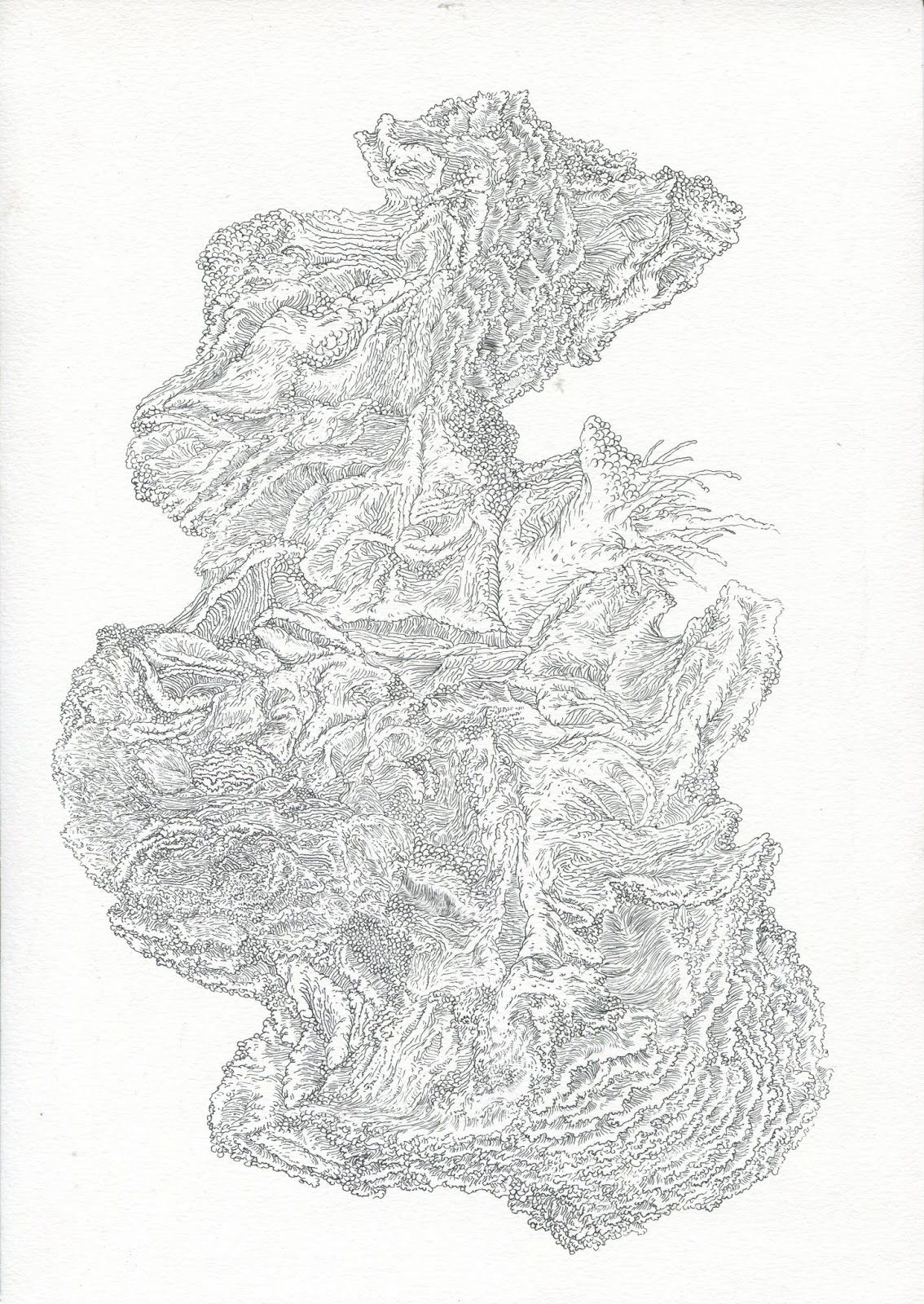
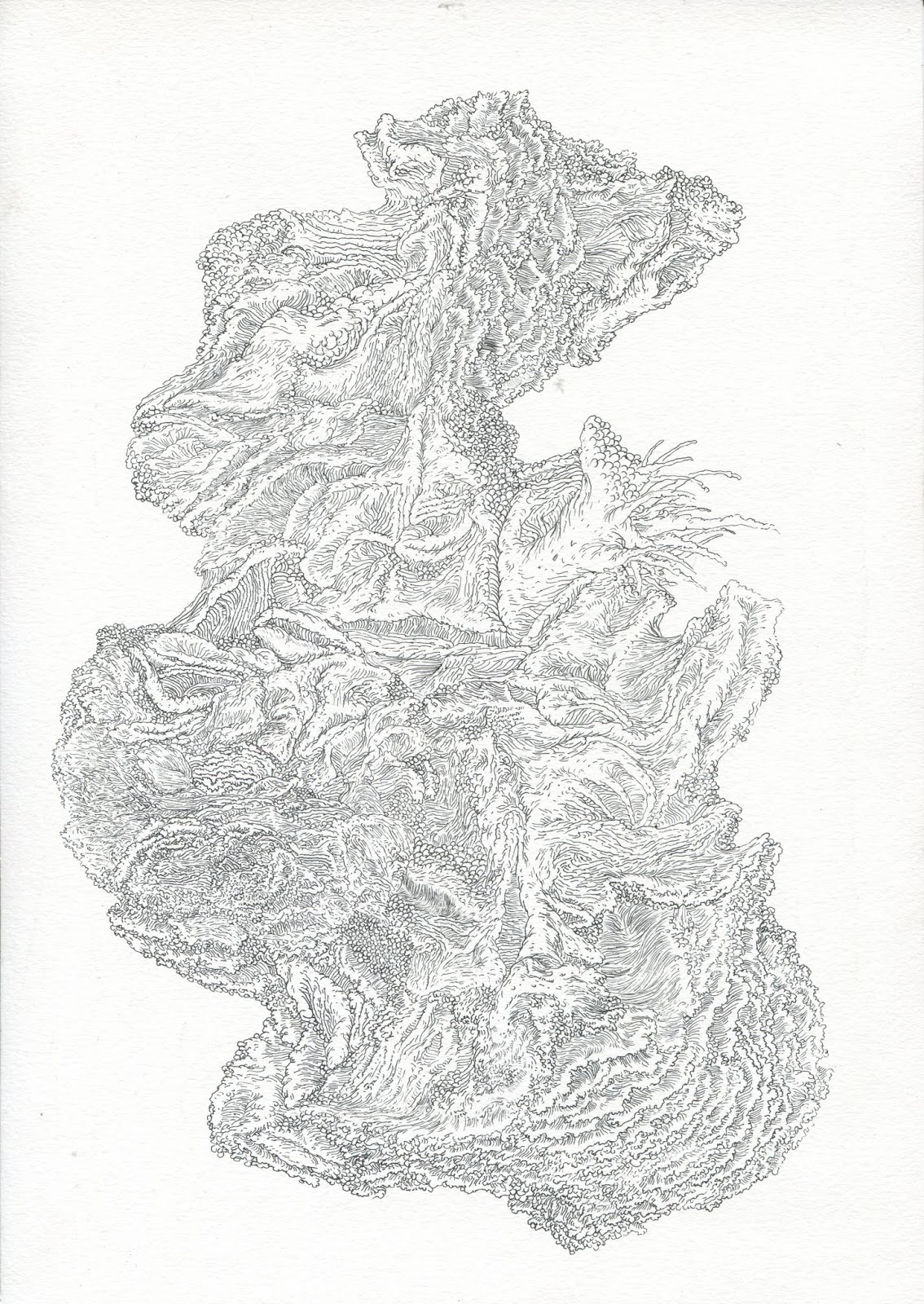
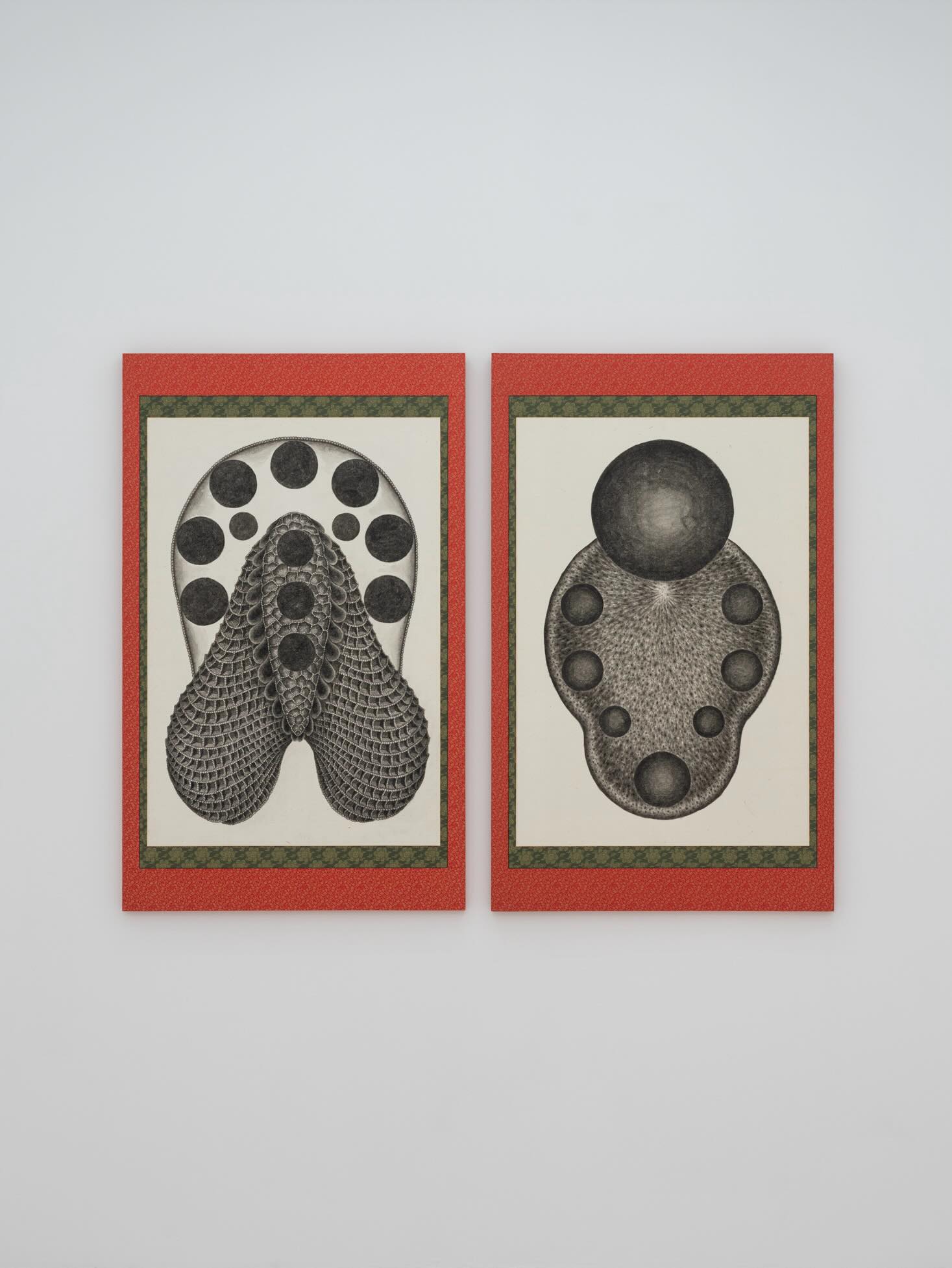
domain of the sacred. In his “Dummy” series, which emerged after 2015 and played
a crucial role in establishing what might be called Park’s signature style, a
different meaning of “negativity” takes center stage. These uniquely patterned
“Dummy” paintings appear at times like insects or bugs, at other times like
plants photographed by Blossfeldt, or even like microscopic organisms seen
under a lens—or they might resemble icons of the Madonna or Christ. Unlike the Sputum
Drawing or Sputum Crystal series, the depicted
subjects in these works are not themselves “impure” (不淨)
by nature. Regarding these works, the artist states:
“I try to read the code of
‘negativity’ within certain objects when I see them. If they meet that
condition, I save them to my photo archive. During the work process, I refer to
these images directly or indirectly. They are not reproduced as-is in my work.
These images are often interbred, mutated, and sometimes become entirely
different forms in the process. What’s important is that I adopt the form of
religious iconography to implement these images.
”
What does it mean to “read the
code of negativity” not only in repulsive insects or bugs, but also in everyday
objects, plants, or even religious icons? I interpret the term “negativity”
here as “negation” (否定)—the refusal
to affirm the being or validity of something. Whether the subject is a
repulsive bug, a beautiful flower, or a sacred icon, what Park does is refuse
to affirm the aura assigned to each—those emotional and normative frameworks
that have become so internalized that they feel natural. The repulsiveness of
bugs, the beauty of plants, or the sanctity of icons is not something
inherently embedded in the objects themselves. These are composites, born out
of a complex mixture of emotions, values, and norms that we have developed
through our relationship with these objects. In this sense, we might refer to
them as possessing a certain "aura."
To “read the code of negativity”
in these objects is to reject those auras—to refrain from being swayed by them
and instead to confront them from a different perspective. And because of this,
these objects can be “interbred,” “mutated,” or transformed into “entirely
different forms” by the artist. In this practice of negation (否定), religious iconographic form plays an essential role. As the
artist points out, religious iconography often represents objects through
“repeating schemata”—that is, through patterning.
As is well known, patterning is
one of the most essential survival mechanisms for living beings. Unless an
organism is able to detect some form of pattern within the chaos of its
surroundings, it will be overwhelmed and unable to survive. Patterning is the
abstracting capacity to group various individual details into coherent
categories. A lion on the hunt cannot afford to give equal attention to every
blade of grass, pebble, or shadow—if it did, it would never catch the rabbit
hidden in the brush. It must be able to abstract all the countless parts that
make up a rabbit—ears, legs, fur—into a singular concept: “rabbit.” Without
this abstraction, hunting would be impossible.
To pattern something is to
understand and order the world in a way that is meaningful for oneself. Through
this, living beings replace the vague dread and anxiety caused by the infinite
chaos of reality with a sense of how to respond and adapt. Humans are no
different. If we were unable to abstract and pattern the overwhelming detail of
the things around us, we would be incapable of taking any action. In Wunggyu
Park’s “Dummy” series, the “method of negation” (否定) operates in precisely this way.
This is why, following the ‘Dummy’
series, Park could say: “In my work, the physical subject itself is not that
important. Whether it’s a bug or a sacred image, these two are no longer
separate to me. What matters more is the attitude with which I regard them, and
the way I distinguish between them.” The focus here is this act of “negation” (否定)—refusing the inherited aura, patterns, or accepted meanings of
objects, and instead patterning them anew through the artist’s own conceptual
framework. This is the ethical and aesthetic force that underlies Park’s
distinctive visual language.
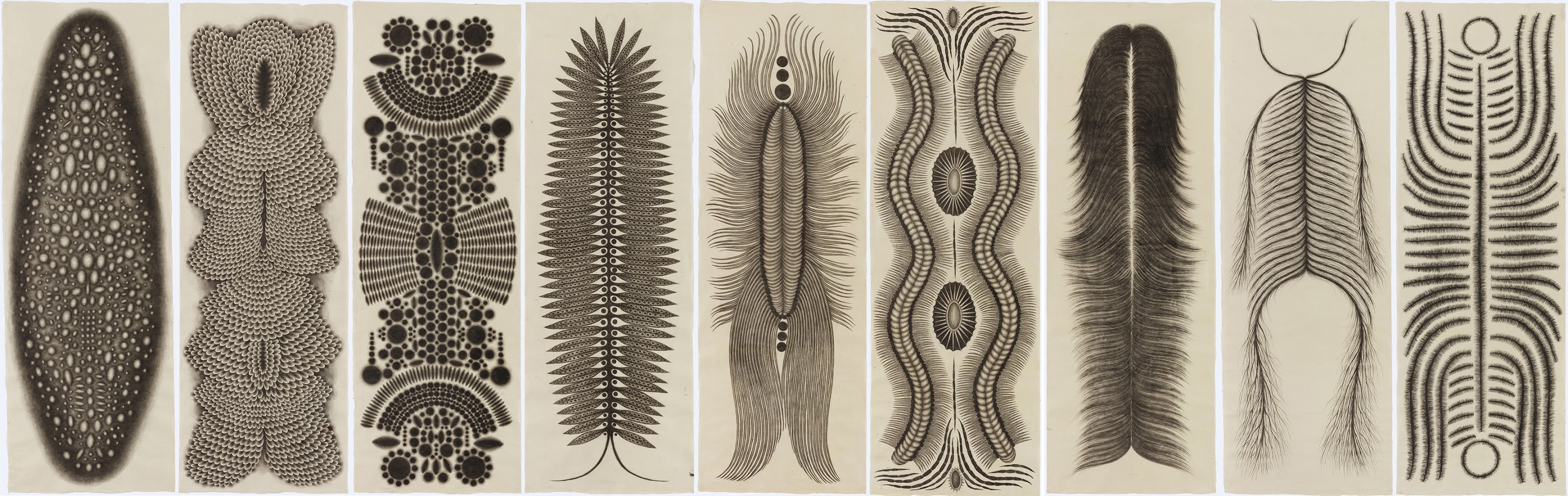
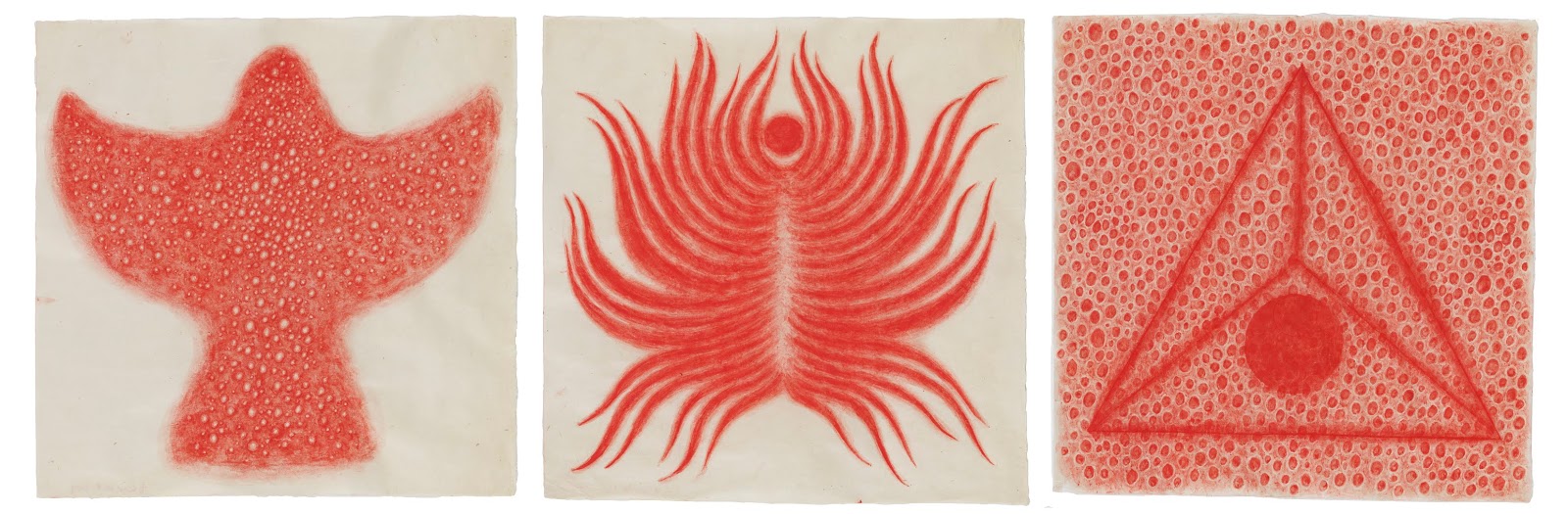
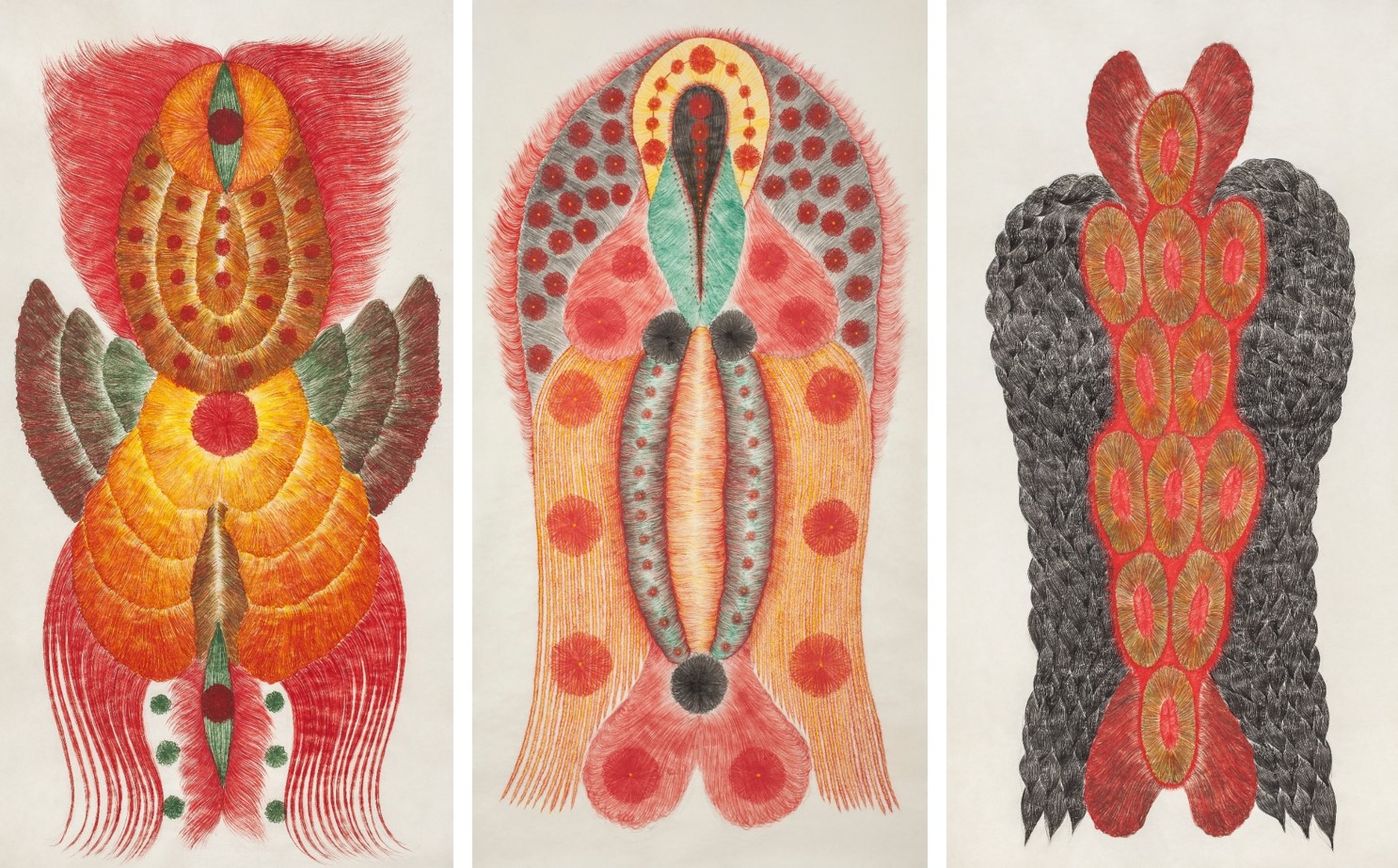
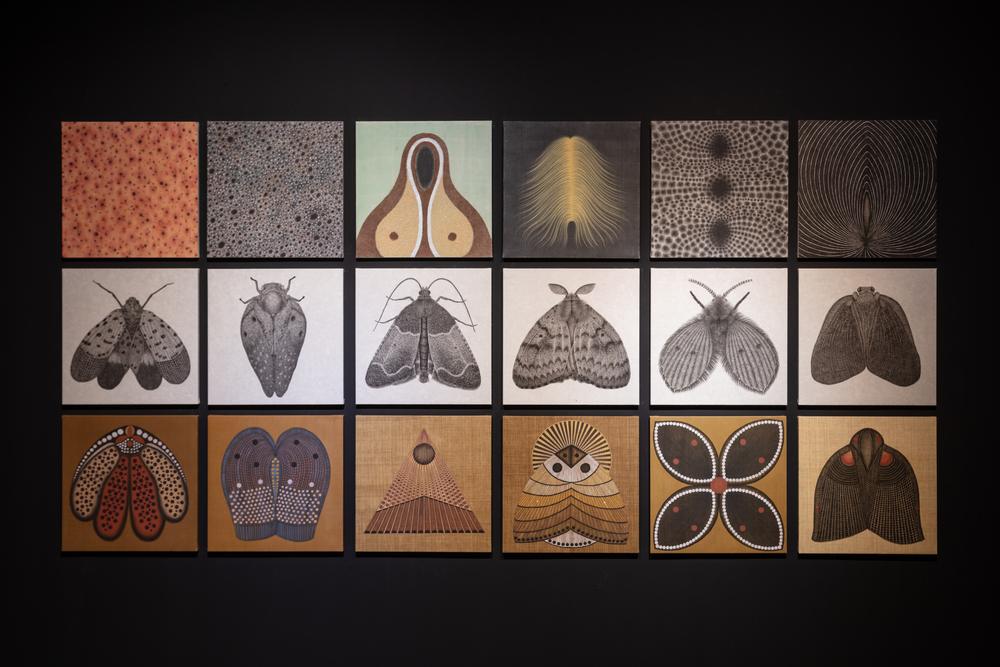
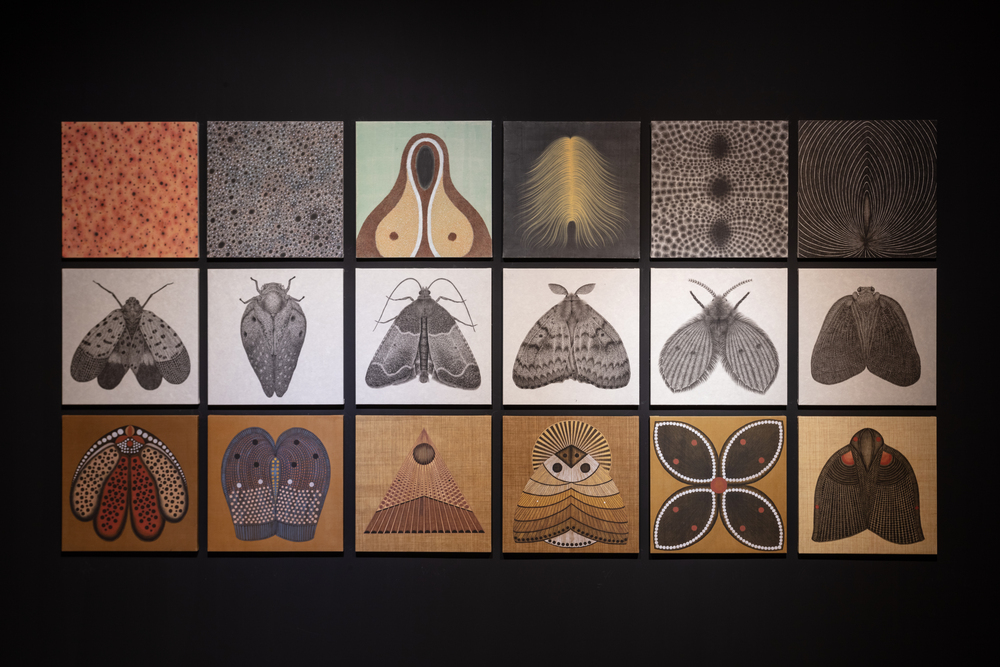
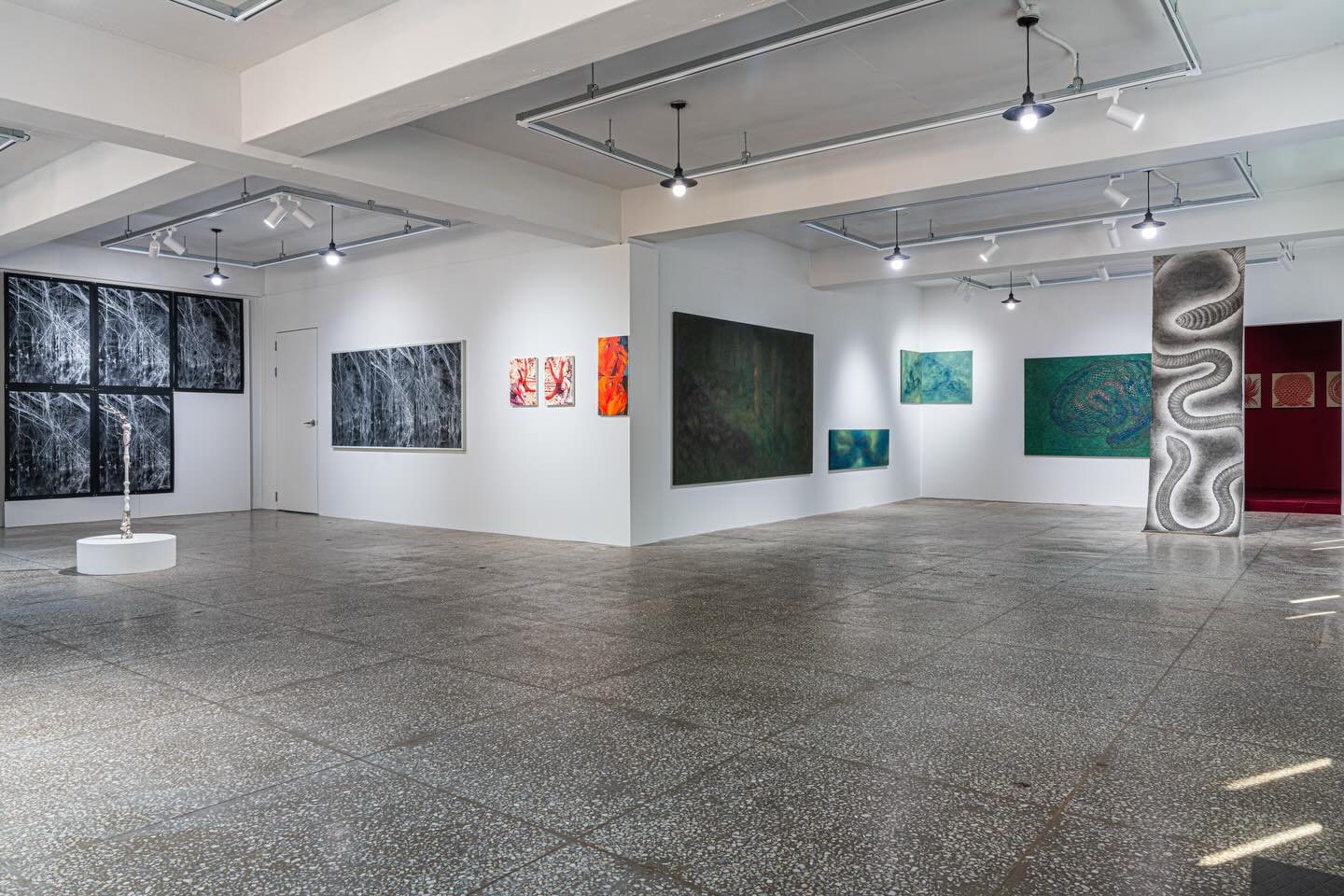
The work Eighteen Moths,
presented before the Saengsaenghwahwa exhibition, is where Wunggyu Park’s
methodology of “negation” (否定) is most
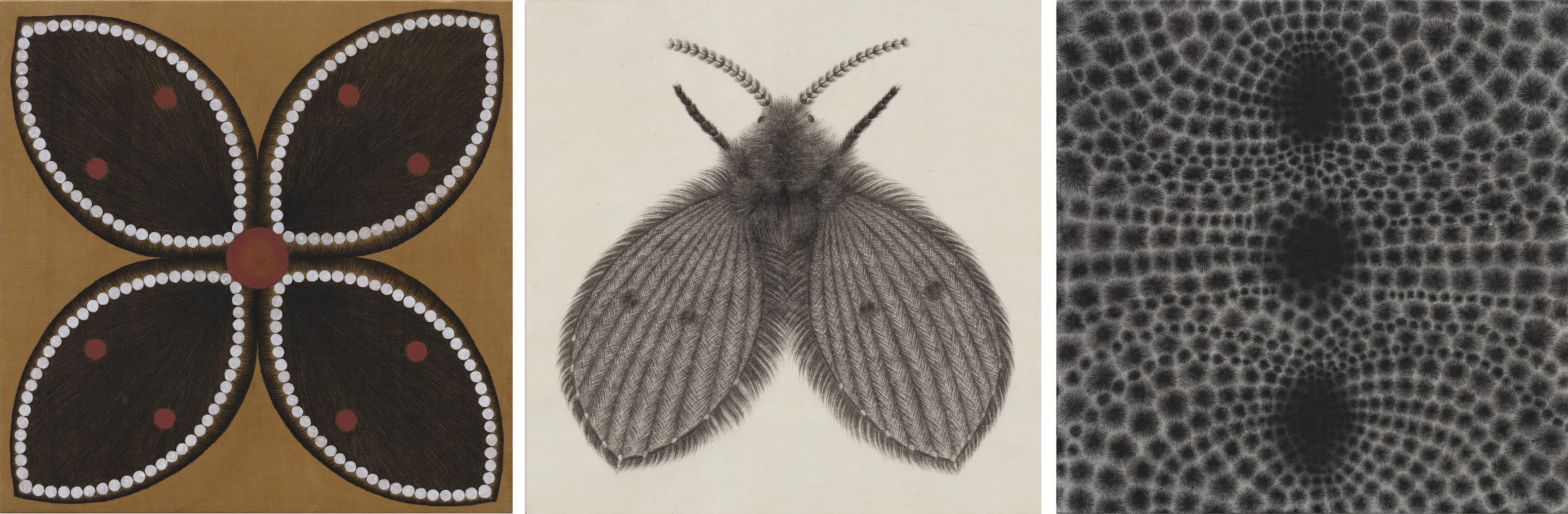
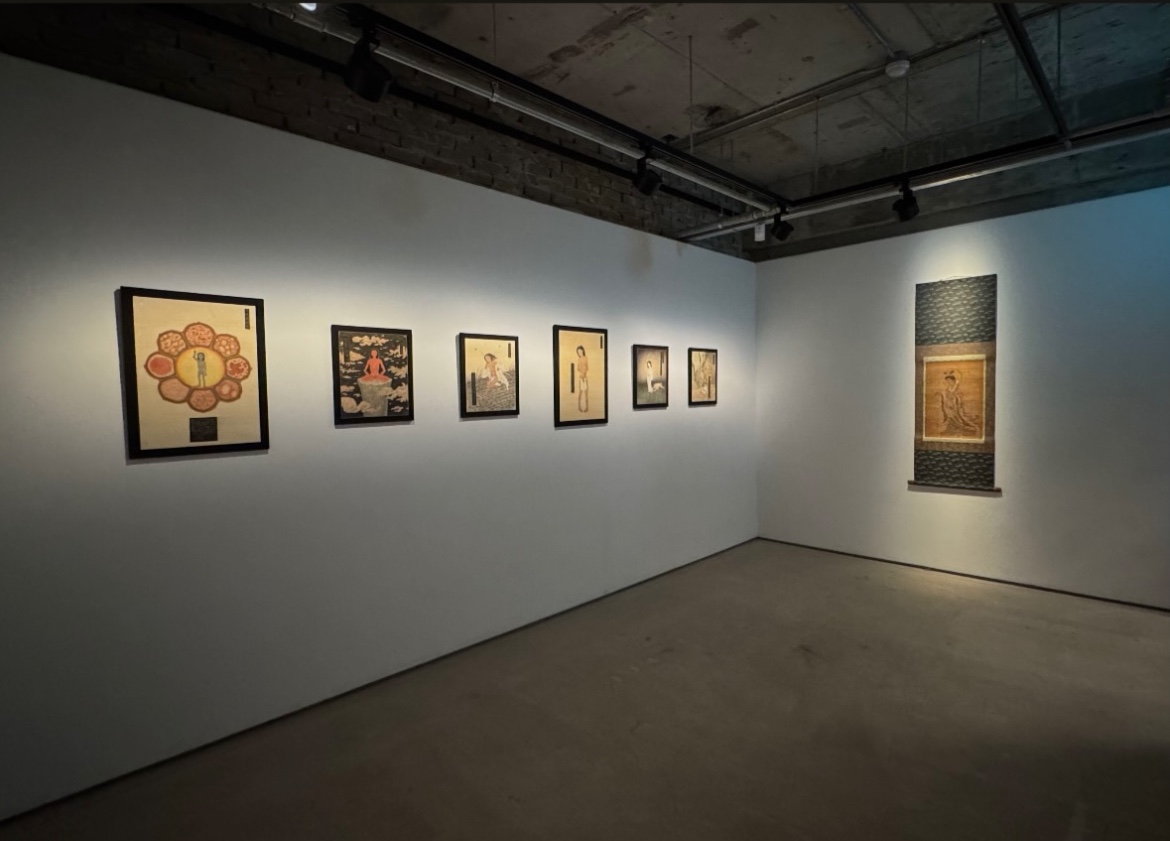
explicitly revealed. Eighteen Moths is composed of a total
of 18 works, grouped into six sets, with each set containing three pieces.
Within a set, the three works differ in form, color, and material. Based on the
installation at Danwon Art Museum, the lowest pieces are painted with pigment
on hemp, the middle ones are rendered in ink on paper, and the topmost works
are painted with pigment on paper. According to the artist, these three types
of paintings represent “three ways of depicting the insects that appear in my
studio.” He describes these methods as “observing closely (neutral), trying to
understand their form and structure (positive), and attempting to feel their
texture (negative).” These three categories are drawn from Buddhist doctrine.
In Buddhism, the 108 earthly desires originate from the three kinds of
sensations—good (好), bad (惡),
and neutral (平)—that arise when our senses (eyes, nose,
tongue, ears, skin) come into contact with external stimuli such as color,
scent, taste, and touch.
Park appropriates these
categories through the concepts of affirmation, negation, and neutrality, and
applies them as modes of depiction: “observing closely (neutral), trying to
understand form and structure (positive), and attempting to feel texture (negative).”
On this basis, Eighteen Moths generates a multitude of aesthetic questions that
ripple outward like ink dropped in water. If we “attempt to feel the texture”
of something we dislike, might that dislike be “negated”? Could the act of
observing something closely render it “neither likable nor dislikable”? If we
try to understand the form and structure of a thing, does that mean what we
once called “good” ceases to be good?
In Buddhist practice, the goal is
to reach a state of equanimity—one no longer swayed by good or bad sensations.
If one were to attain such equanimity, how might the moths clinging to one’s
window at dusk appear? These are the types of questions that arise while
viewing the 18 paintings on the wall. Park, in this way, seems to resemble an
image filter embedded within the vast image-circulation network of our time. He
filters out all the unjust (不正) and impure (不淨) images drifting through the network by negating (否定) them and transforming them into captivating new images. In doing
so, he strives to maintain a state of equanimity as an image filter himself.
In the Danwon Art Museum
installation, Sisters—a painting on aged hemp depicting
“Kali,” the goddess said to bring misfortune with her grotesque appearance—was
gazing meditatively at two red paintings titled Scar, hung
on the wall across from it. The scars, etched onto her skin and rendering her
appearance grotesque, are met with an attitude of calm acceptance. Perhaps this
is the artist’s model for the image filter of negation: a state of composure in
which one faces the grotesque traces on their own body without judgment.