“The world is full of painful stories. Sometimes it feels as
though there aren’t any other kind and yet I found myself thinking how
beautiful that glint of water was through the trees.” – Octavia Butler, ‘Parable
of the Sower’1
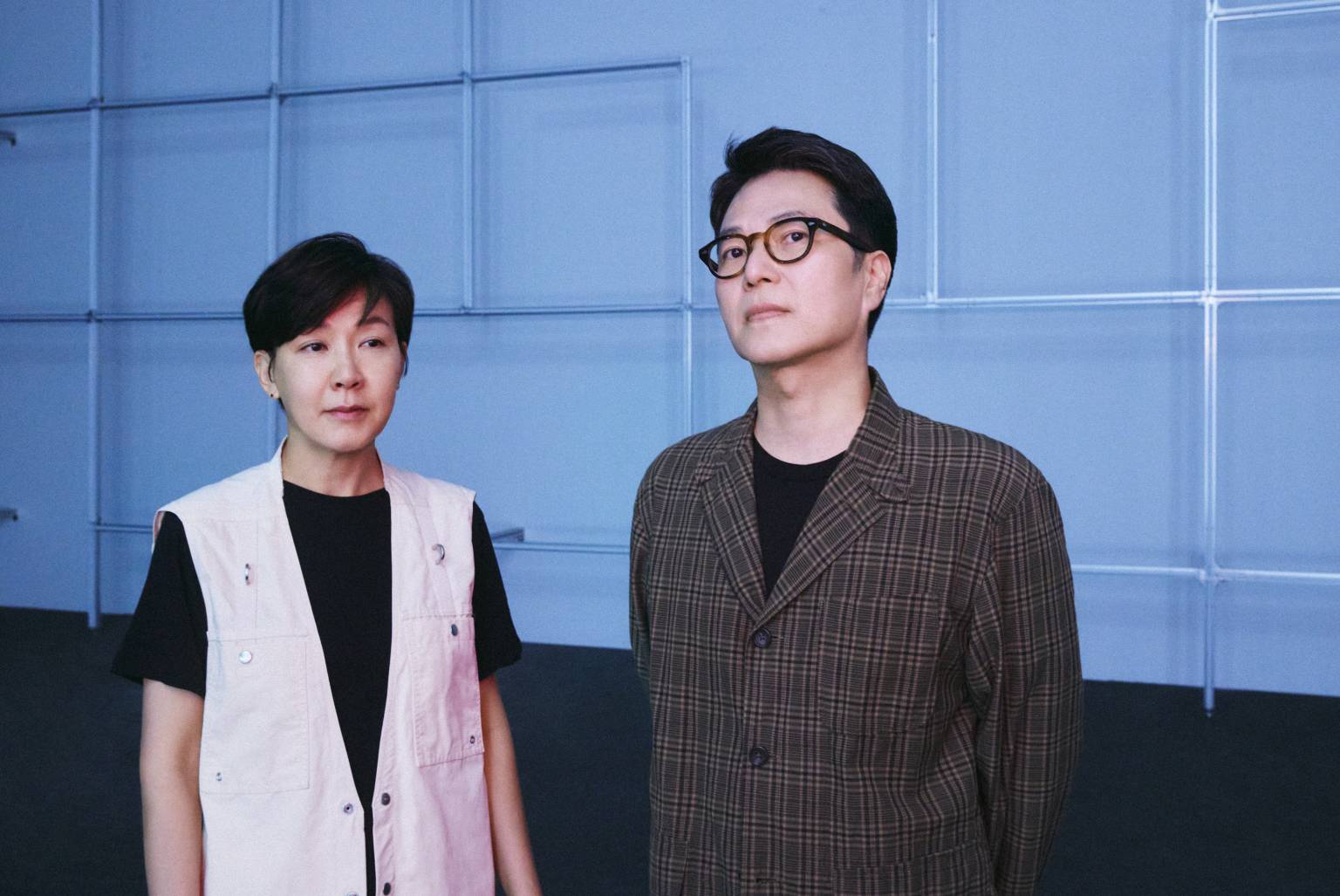
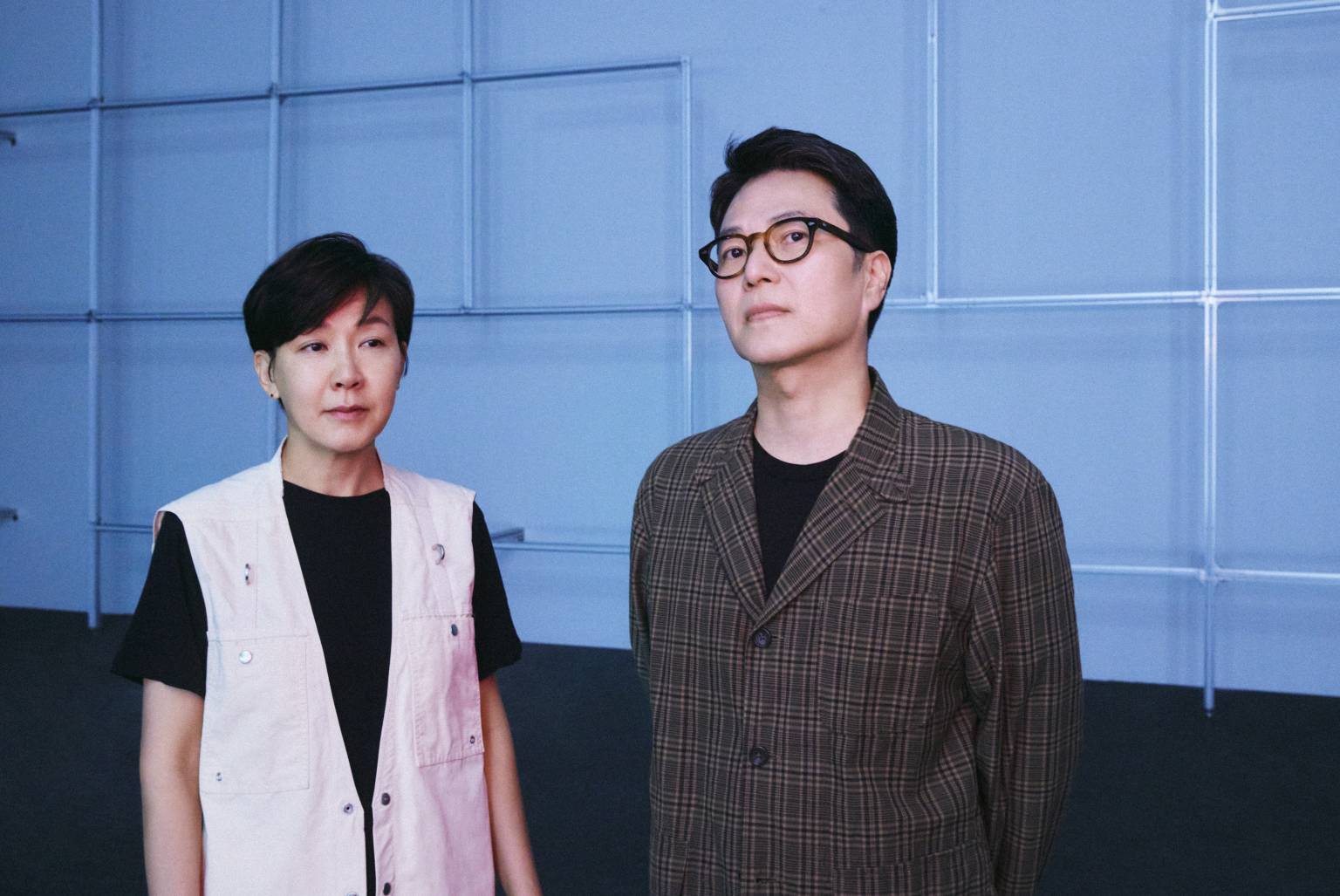
Titled as News from Nowhere (2012), MOON Kyungwon and JEON
Joonho’s first collaborative project raises rather weighty questions on the
current human condition and its uncertain future, and the role of art in the
changing world. The title itself stems from artist and designer William
Morris(1834-1896)’s literary work published in 1890, which explores socialist
yet romantic ideals in art, life and labour.
The story’s narrator William Guest
wakes up from his sleep to a future society where there is no private property,
no authority, no monetary or class system. Industrialisation and capitalisation
didn’t take place in this utopian future, unlike the Victorian England Morris
was living in, but people find pleasure in their work and in the nature nonetheless.
Morrisian socialism appears to be moral outrage at capitalist exploitation and
economic inequality, and the story reflects the author’s ambivalent critique on
both capitalism and the authoritarian forms of the socialist doctrine of the
time.2
MOON and JEON’s work explores the future as the symbolic
reflection of the present in a similar manner, but their representation of the
future is distinctly post-apocalyptic. Utopian scholarship and discourse often
address the distinctiveness amongst the notions of utopia, anti-utopia and
dystopia. Darko Suvin, for instance, defines ‘dystopia’ as “a community where
sociopolitical institutions, norms and relationships between its individuals
are organised in a ‘significantly less perfect way’ than in the author’s
community… significantly less perfect, as seen by a representative of a
discontent social class or fraction, whose value-system defines ‘perfection’.
”.3
On the other hand, Suvin articulates a different type of a
dystopia, “which is explicitly designed to refute a fictional and/or otherwise
imagined utopia,”, as ‘anti-utopia.’.4 MOON and JEON’s project
in this sense conveys a dystopian vision to the future rather than a utopian or
anti-utopian one, for it presumes the near extinction of human kind on the
earth and the subsequent bleak survival yet reserves a room for possibilities.
Rather than fully submitting to the narrative of apocalyptic future, the
artists make us realise and confront the dystopian elements of our times.
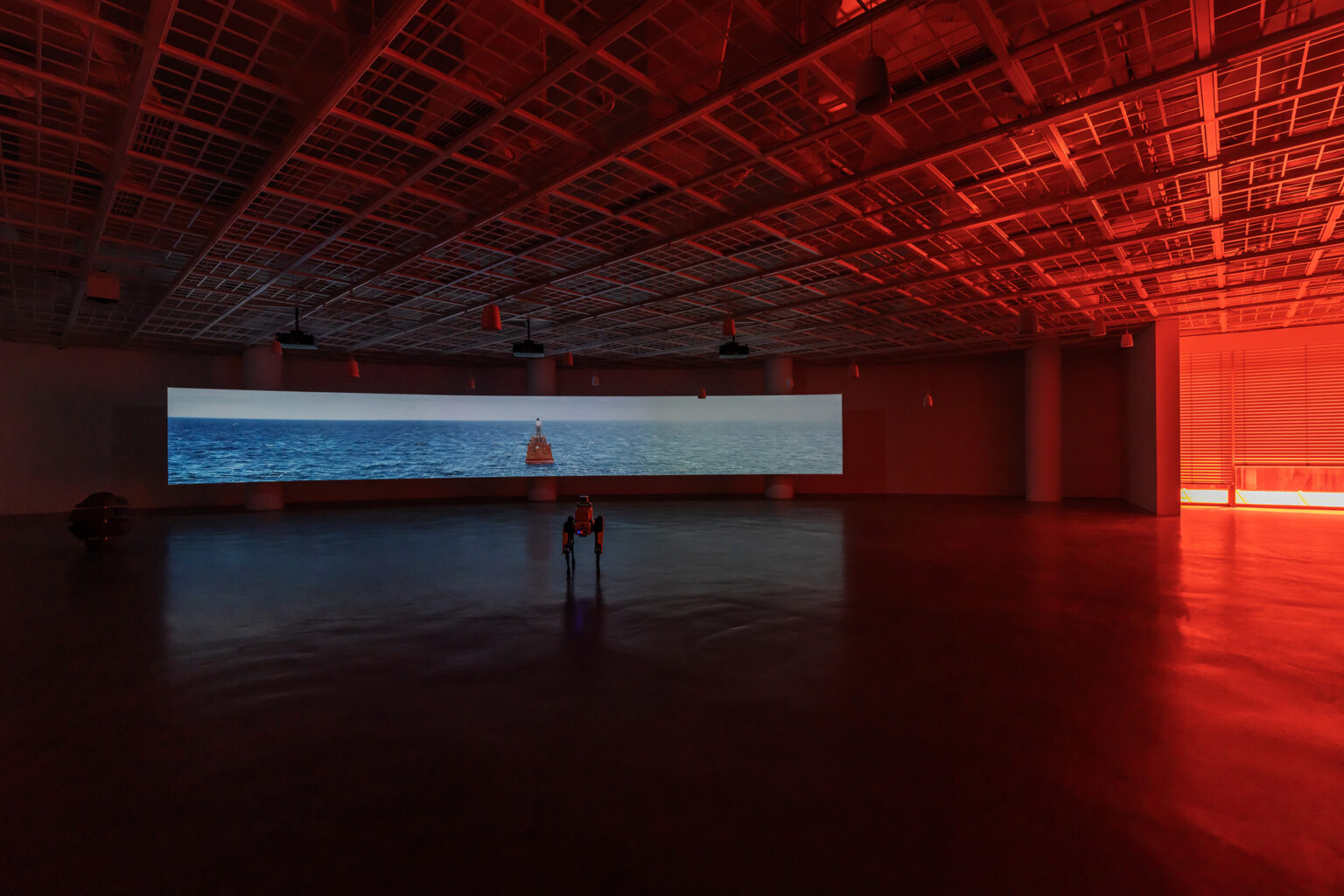
MOON and JEON’s project is complex in its subject and its form,
consisting of a film, a publication and a series of inter-disciplinary
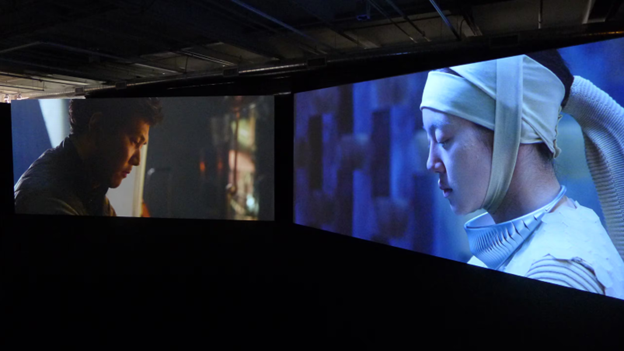
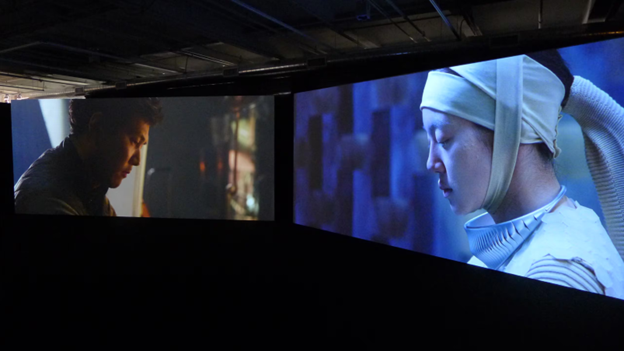
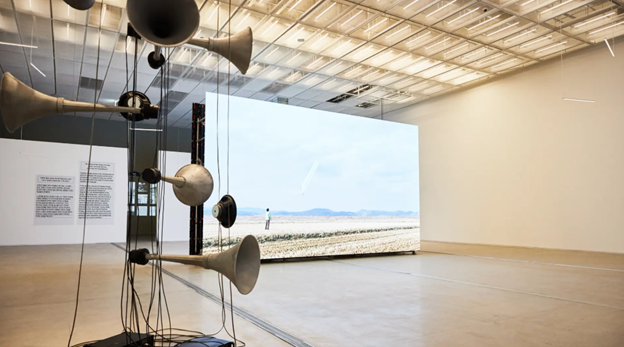
collaborations with architects and product designers. At 《dOCUMENTA 13》 (2012) in
Kassel, Germany, the work was presented as an installation with the two screen
film projection alongside a separate room of architectural and design models
that functions as the archive and the conceptual context of the wider
collaboration.
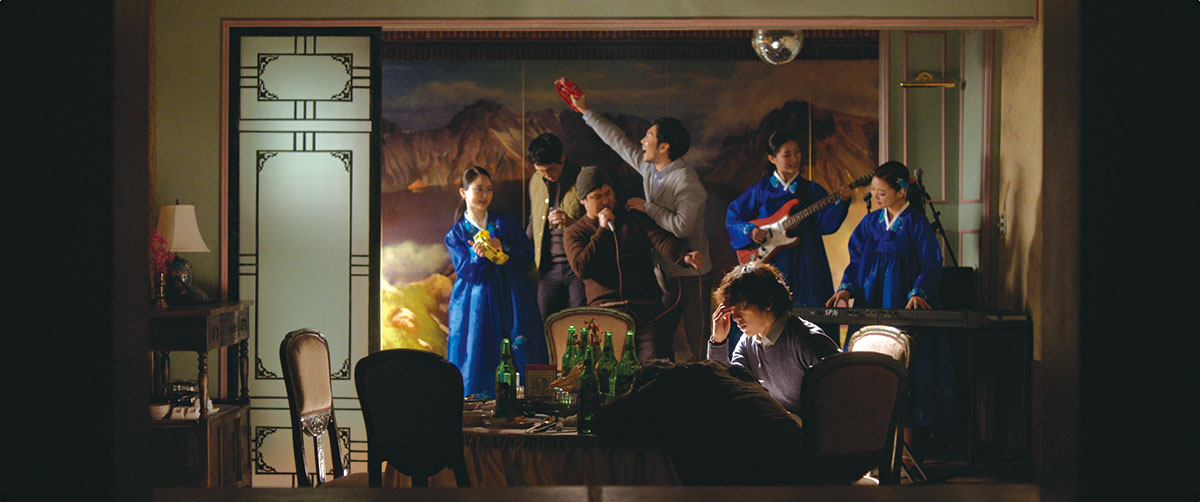
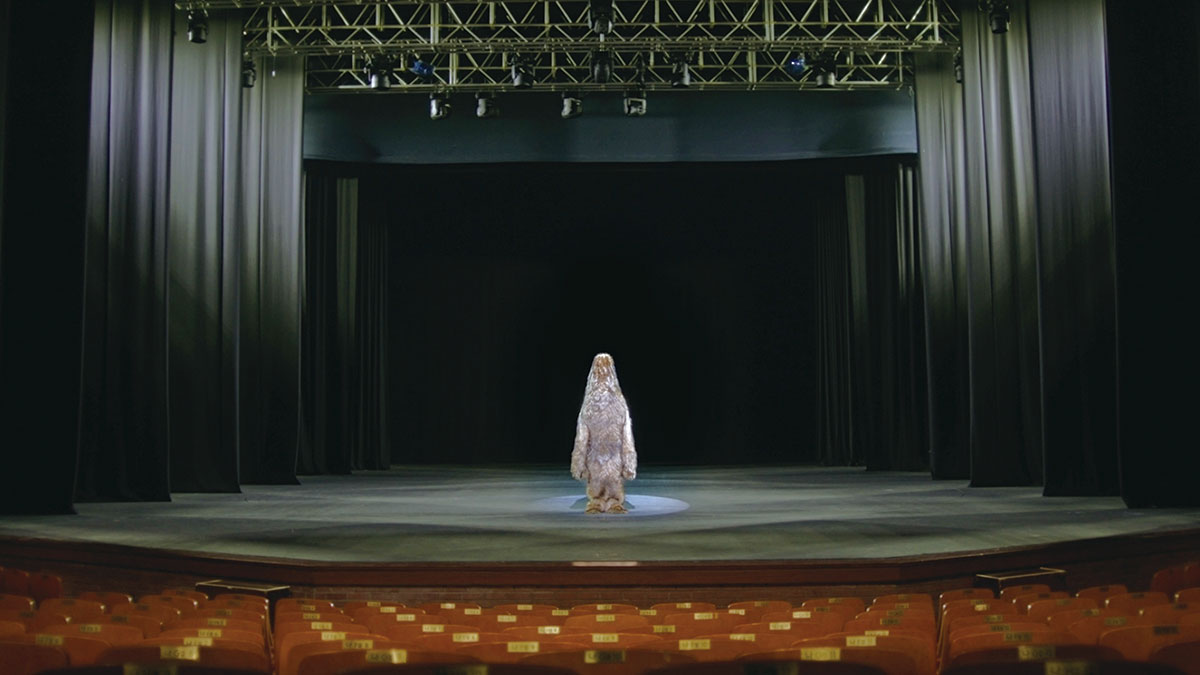
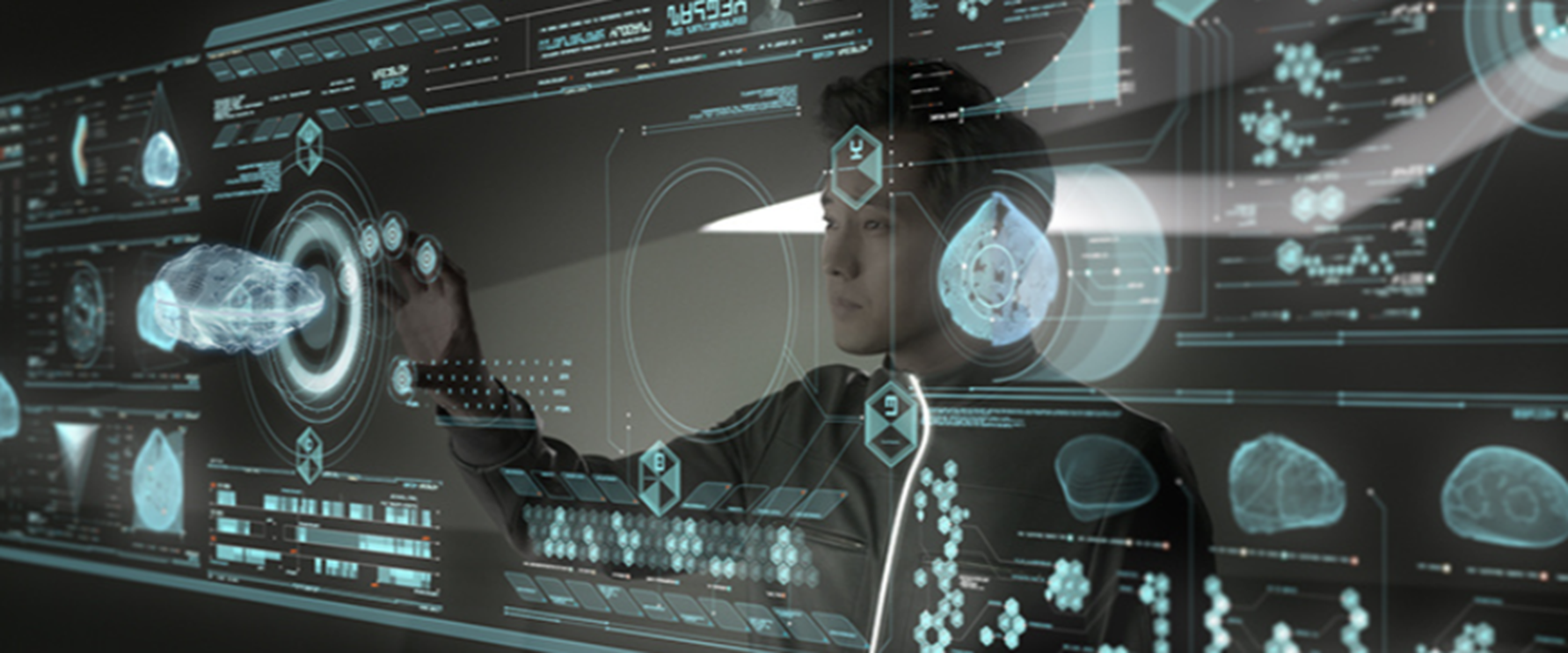
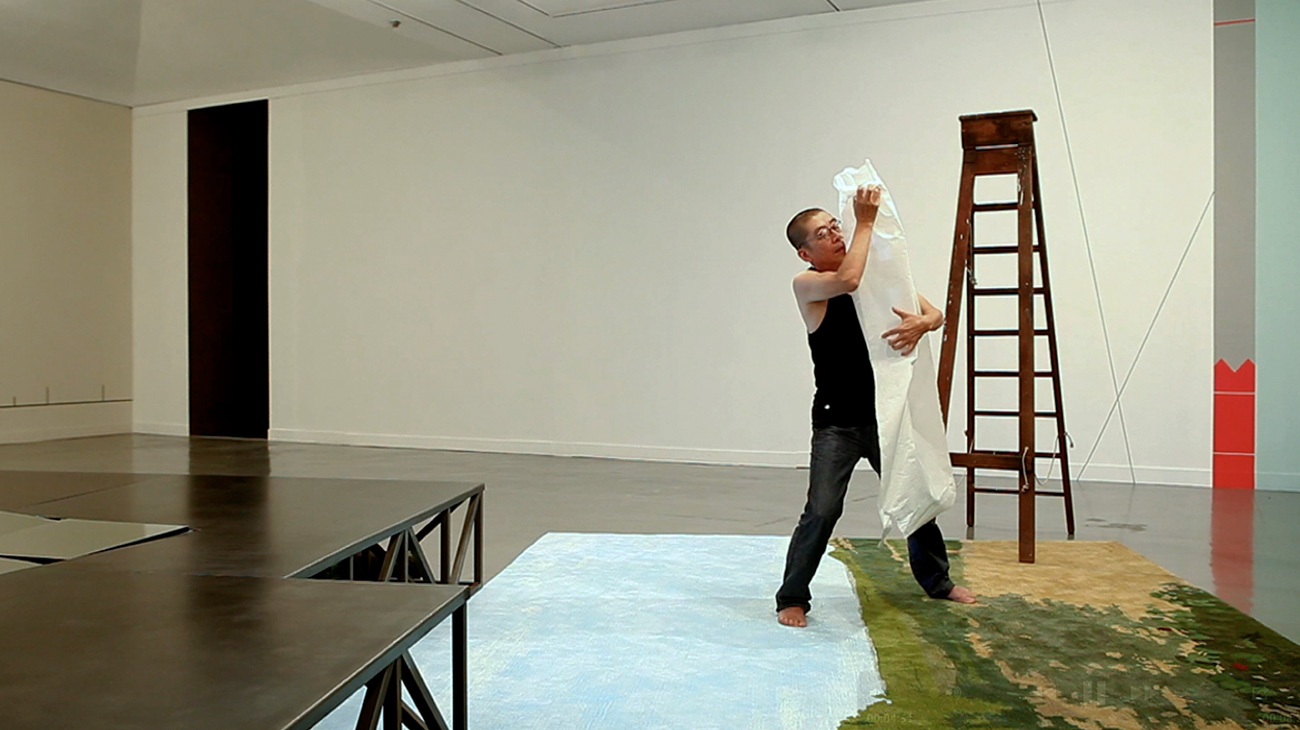
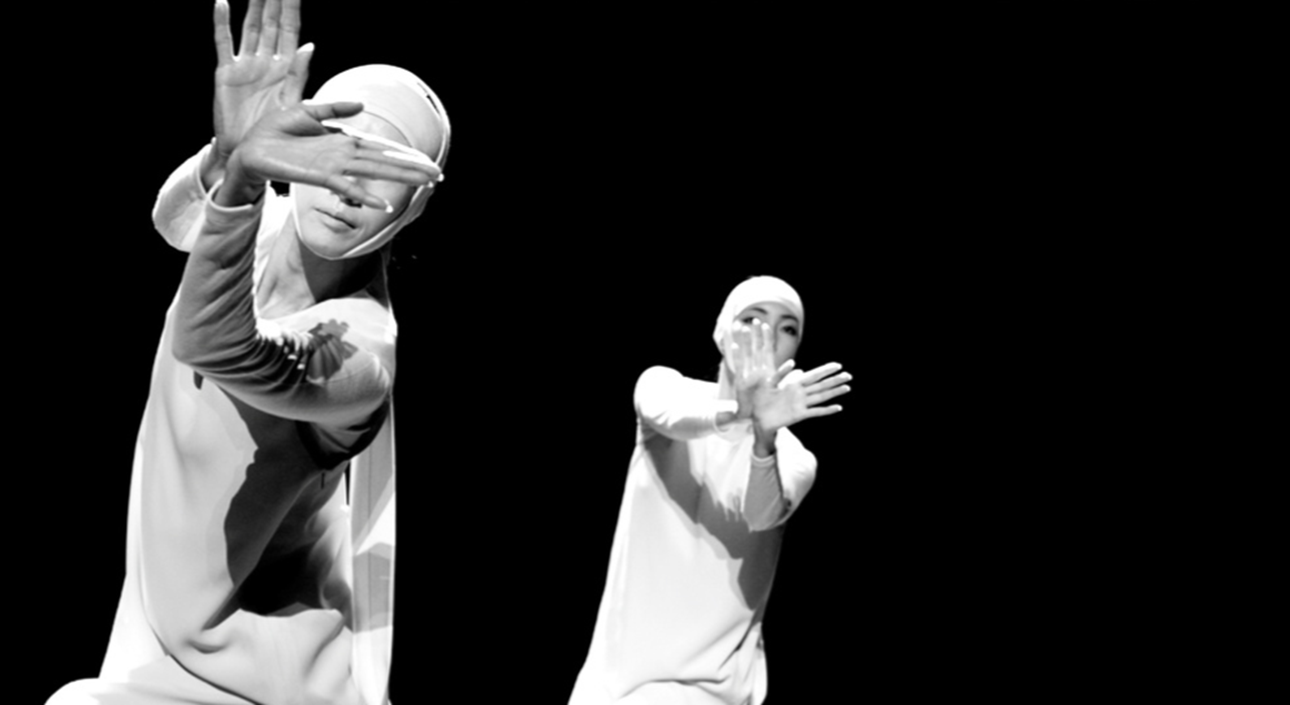
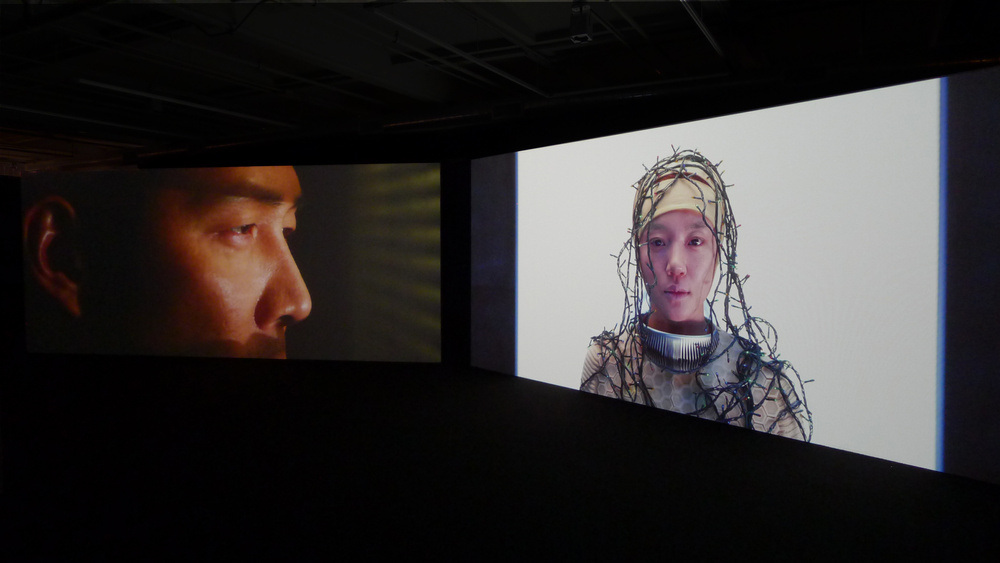
The film, titled El Fin Del Mundo(The End of the
World) (2012), shows the male and female protagonists on
separate yet synchronised screens. The man is in a dimly lit room akin to an
artist’s studio, clearly lacking essential things for survival such as food and
water, let alone art materials. He comes back from outside with a trolley full
of junks at one point, amongst them a dead white dog. While completing what
seems like a sculptural assemblage, the man looks out of the window, sitting
down in the sofa, and eventually and suddenly disappears from the room.
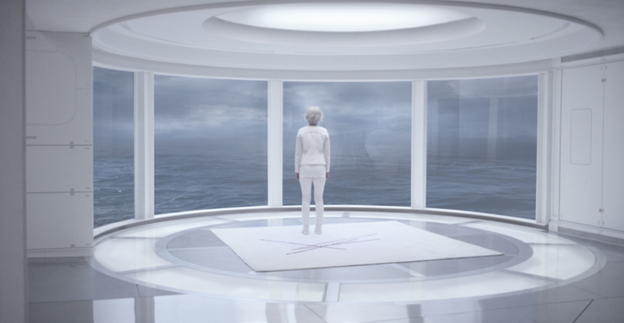
On the
other hand, the woman is in a pristine white room full of white lights and
electronic equipment, dressed in a white protective garment. Sorting and filing
dead branches and dried up plants collected from outside, the woman gradually
fills up a large wall in an orderly, grid like form, with these specimens.
Somewhat disturbed by an unexplained presence, she wanders and finds a room
next door that looks like the man’s last place. The spatial distance between
the man and woman collapses at this point, and the temporal distance becomes
more ambiguous than first appeared, due to the woman’s unexplained yet
psychologically charged reaction to the man’s absent presence.
The film’s professional quality in performance, filming,
mise-en-scène and editing is prevalent, and it ensures the viewer’s recognition
of the particular lexicons of science fiction film genre. Part Blade
Runner (1982), part 2001: A Space Odyssey (1968)
and part Future Boy Conan (1978), El
Fin Del Mundo(The End of the World) addresses several
recognisable traits of dystopian storylines and characters distinctive in the
sci-fi genre, such as a lone survivor in the midst of an apocalyptic disaster,
authoritarian post-apocalyptic corporate power and predominantly absent yet
momentarily resurgent humanity in the dystopian future.
Carolyn Christov-Bakargiev(1957-), the Artistic Director of 《dOCUMENTA 13》,
commissioned numerous new works from participating artists and MOON and JEON’s
project is one of the new commissions. A multiplicity of themes, including
siege, retreat, hope and stage, has been explored in this documenta, and the
participants’ responses to these themes are also multi-faceted and
thought-provokingly diverse. One recurring idea throughout the exhibition is,
however, how art reflects and interacts with the world, in particular amid the
violence of history, from the two world wars and the Vietnam War to the Arab
Spring and the continuing conflict in Afghanistan. MOON and JEON’s project
seems to successfully correspond to and enrich the themes of this year’s
documenta, addressing not so distant issues of the apocalyptic world with a
conscious emphasis on recent disasters and crises.
Looking at the dystopian future in literature and film is often
linked with the desire for a better world, as mentioned earlier. A sense of
critique against the grain of the grim economic, political, cultural and
environmental climate is prominent in MOON and JEON’s project. Their decidedly
practical and solution-focused approach keeps their project bound with
possibilities rather than mere analyses, and it is their desire for change that
is making the project relevant to what the collaborators and advisers have been
doing in their fields even prior to the collaboration.
The artists are not
proposing clear solutions however, but they are creating opportunities for
debates and discussions where alternatives and possibilities can emerge. In
other words, the project not only evokes awareness but also encourages us to
confront the dystopian reality so we can work through them and begin again.
MOON and JEON explain that “Sci-fi is always the fable of the present. By
employing the way to look at the future instead of the present, we wanted to
address current issues, especially in relation to what art is and what art
could be.”5
It is particularly interesting that they are
raising questions of art in relation to the utopian/ dystopian paradigm, since
the extreme nature of their imaginary future seems naturally bound with wider
socio-political issues such as natural or man-made disasters and their impacts
on human existence. The artists’ questions are, however, closely linked with
the condition of human existence, since they assume that the meaning and role
of art will remain to be the key questions for human beings even in the most
extreme conditions, like the end of the world. ‘The end of the world’ is in
fact ‘the extinct of the human kind’, but they do not yield to a mere critique
of the world as it stands and is becoming, but attempt to remind and convince
us what makes human beings as ‘human’ – desire to create and appreciate art.
MOON and JEON continue, “We realised from early on that such
questions couldn’t be answered easily and we began a search for people who
might shed lights on these difficult questions. Talking to people from
different fields and disciplines, like poets, film directors, scientists,
designers and architects, we realised getting away from the inner circle of
visual art was a great way to find a wider understanding of art.”6
The
publication of the project, News from Nowhere: A Platform for the
Future & Introspection of the Present (2012), includes a
number of contributions and interviews with collaborators and advisers.7 Contributors
range from architects and film directors to philosophers, musicians and
scientists, such as Lee Changdong(1954-), Yusaku Imamura(1959-), Go Eun(1933-),
Toshi Ichiyanagi(1933-) and Hans Ulrich Obrist(1968-), and they examine the
present and envision the future in relation to their specialist areas in their
chosen ways.
The artists’ collaboration with architects and product designers
such as MVRDV, Toyo Ito(1941-) and Takram Design Engineering has a particular
benefit in making the project firmly rooted in the real, present world.
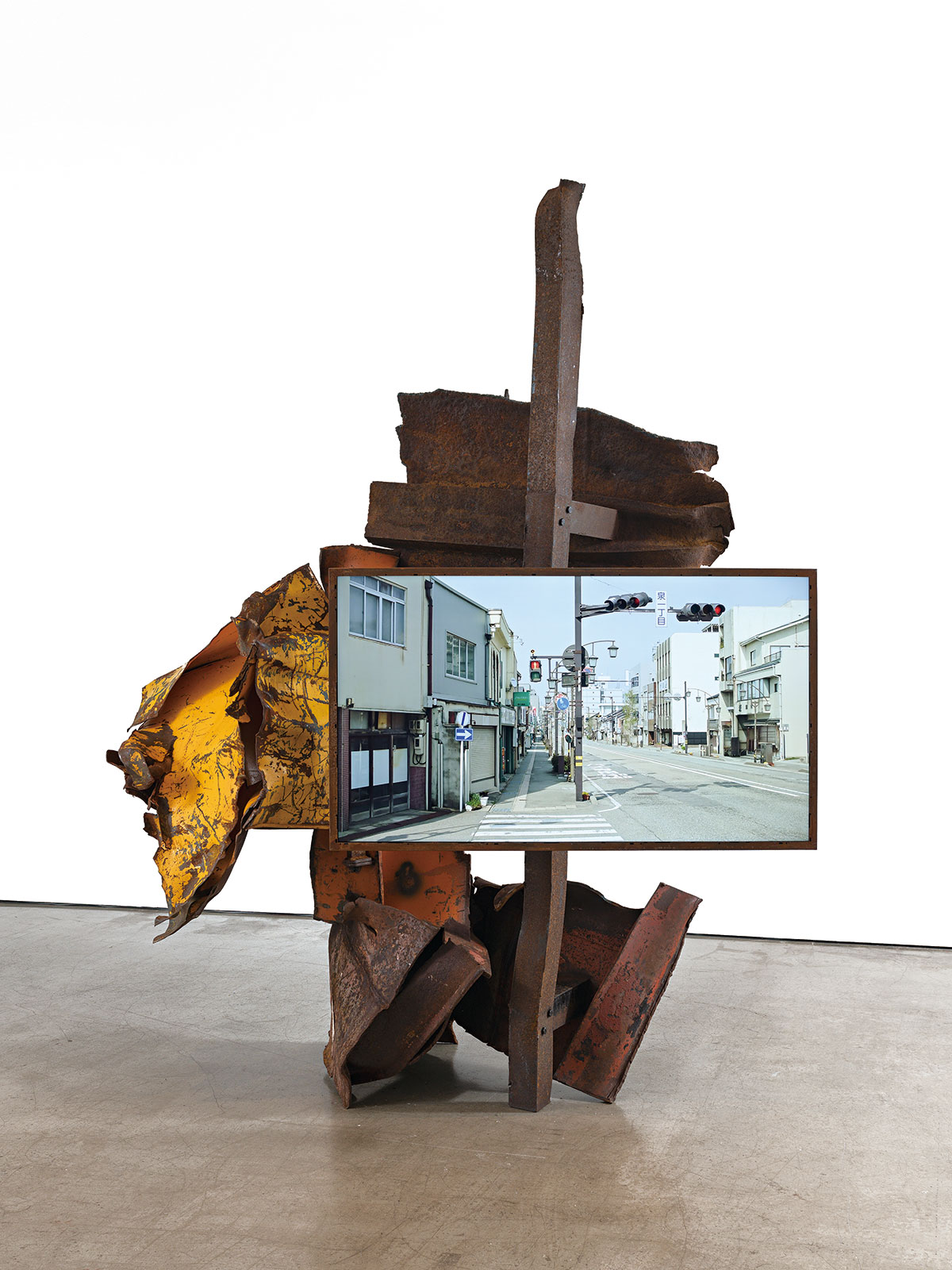
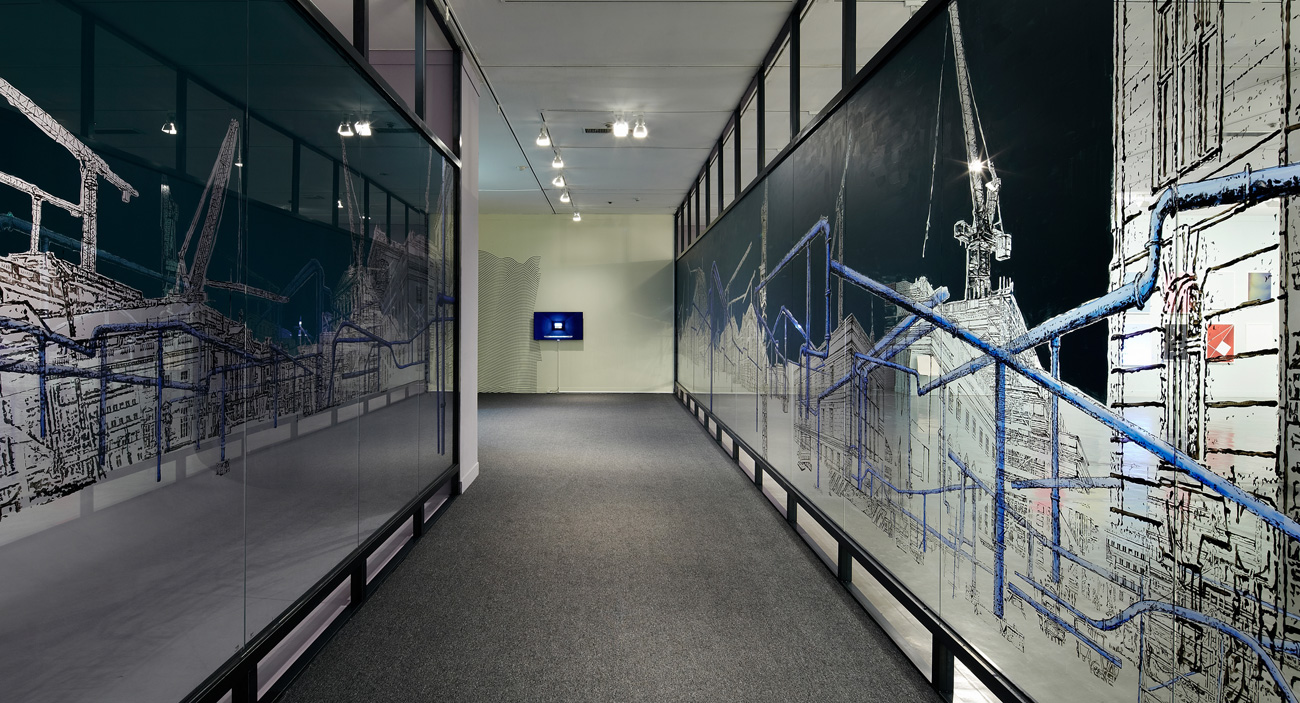
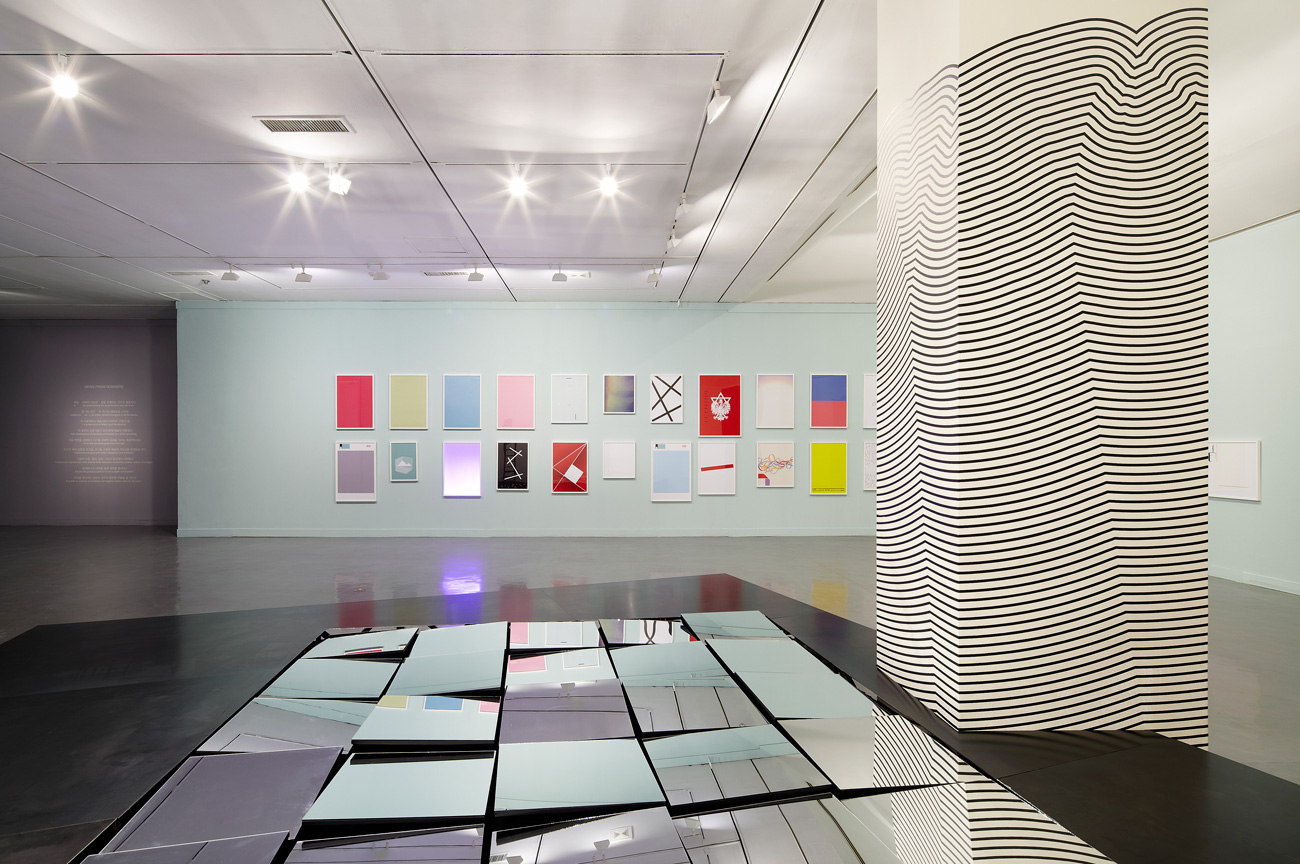
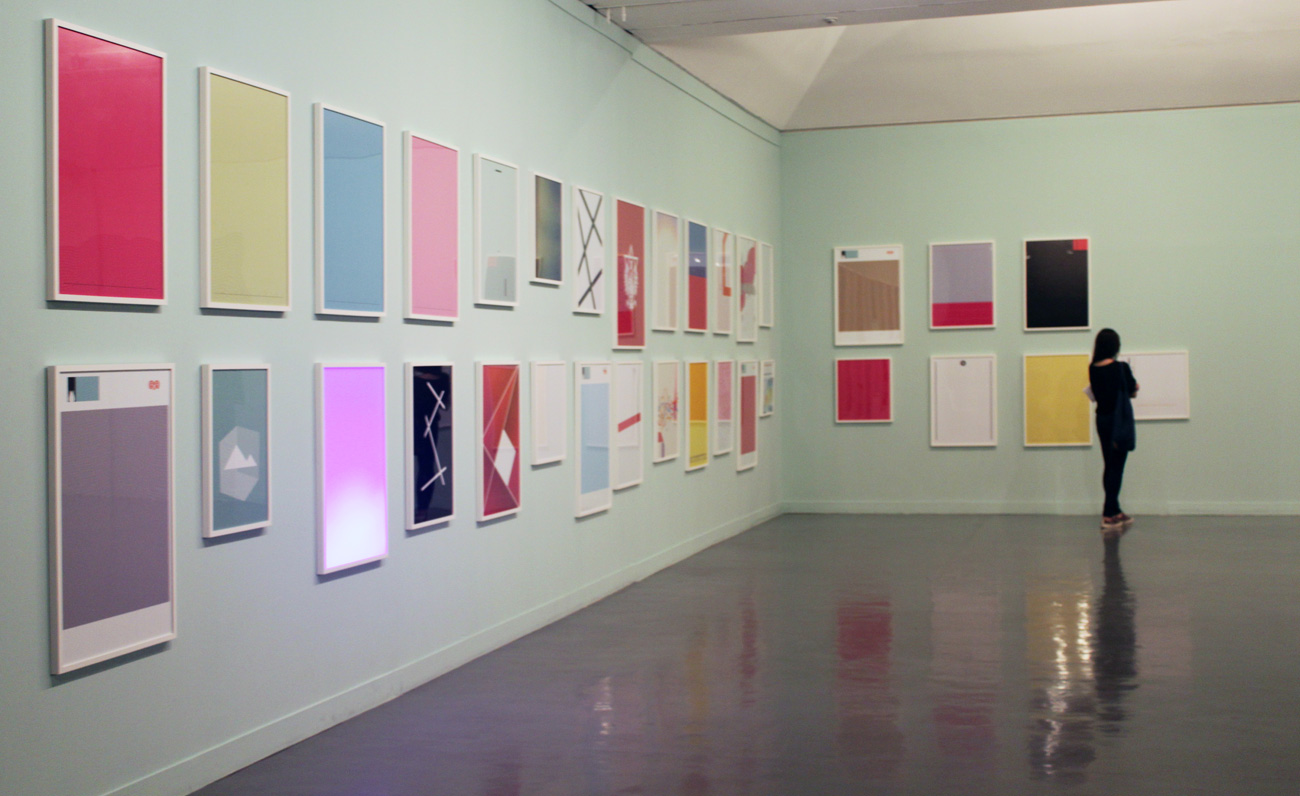
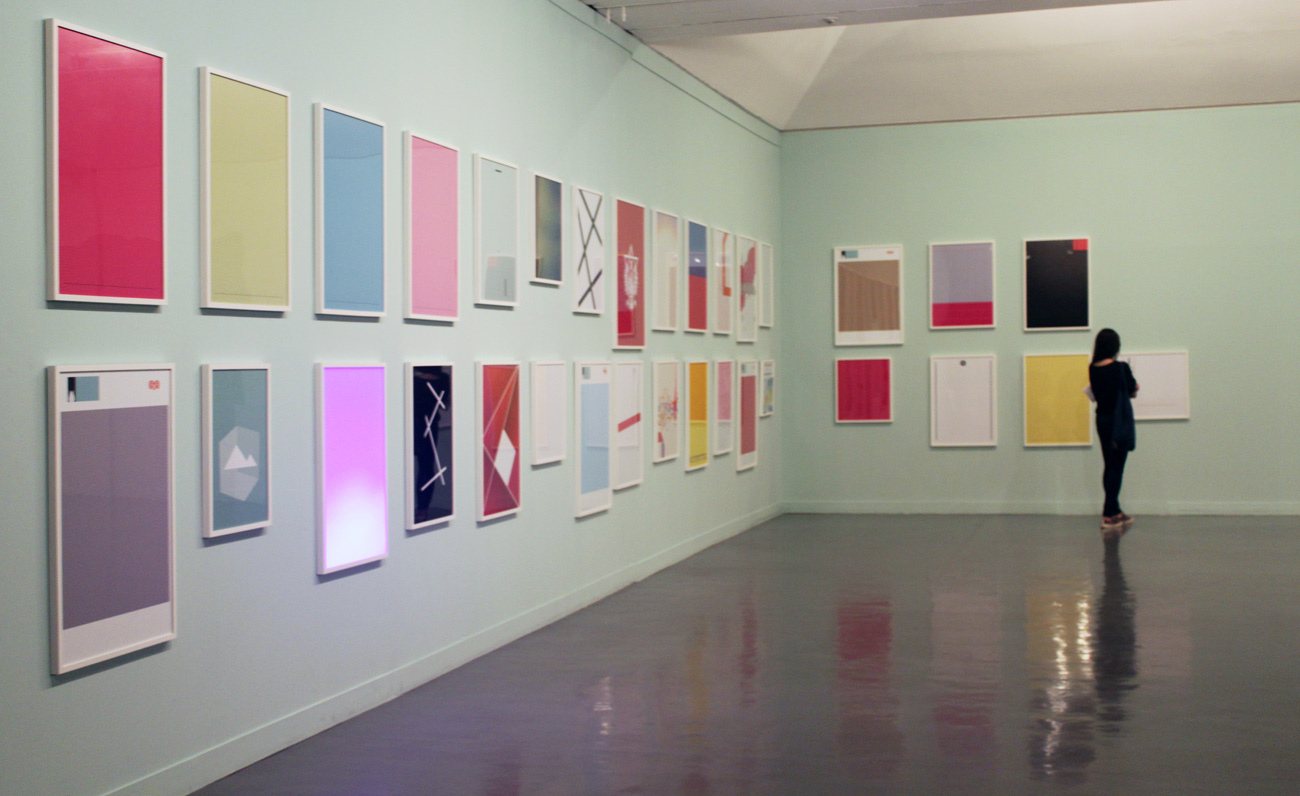
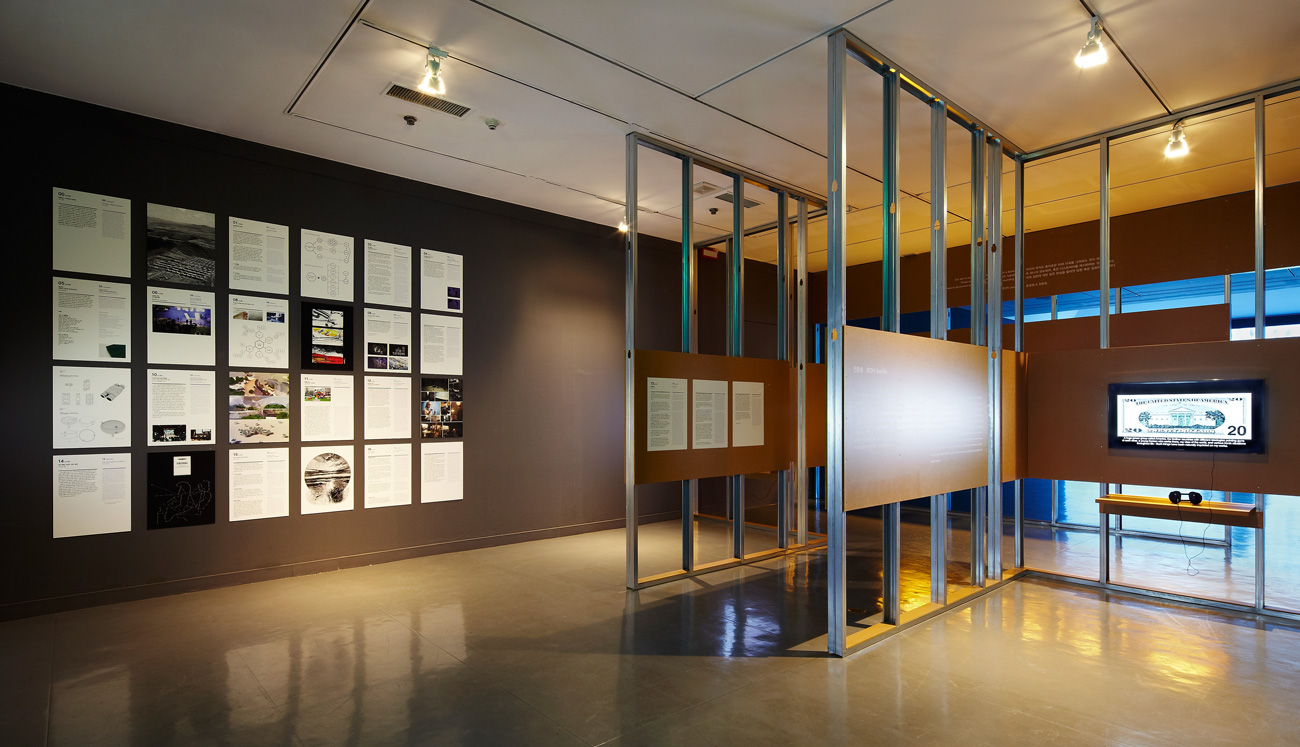
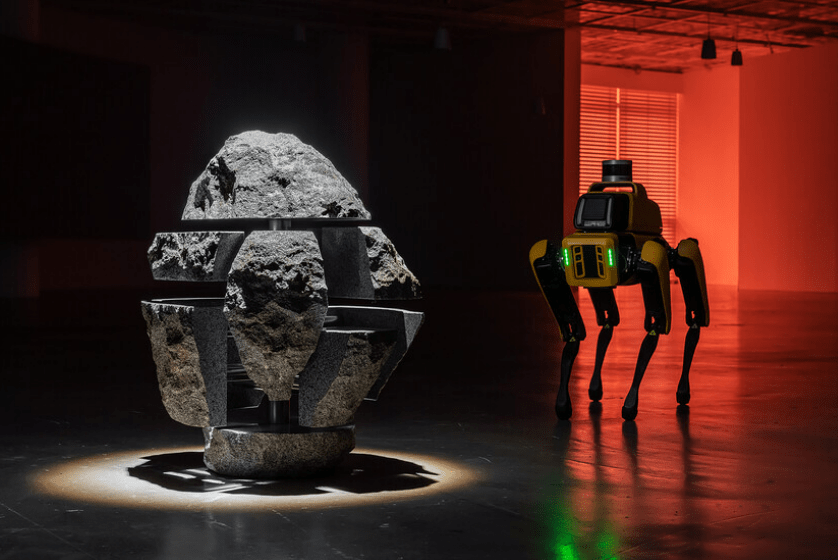
Presented in a room adjacent to the screening area, the installation
titled Voice of Metanoia (2011-12) functions as an
archive. Futuristic lifestyle products, technologically advanced clothing and
reconstruction models for Japan’s Tohoku area are included, reflecting the
collaborators’ interpretation of the thesis suggested by MOON and JEON and
proposing several versions of alternative futures.
Whereas the question of art
could be seen as an abstract effort, ideas attached with inherent functions
seem tangible and utilitarian, however remote or stretched these ideas are from
the current reality. The recent earthquake and tsunami in Japan and the
on-going financial crisis on a global scale bring pertinent background and
necessity to their ideas for alternative ways of living and thinking. It is not
surprising to learn some of the design ideas are already in use in
post-disaster Japan, as seen in the architecture project by Toyo Ito, and it
makes us wonder if and when these ideas will become genuine solutions rather
than hypothetical ones.
Since its first issue in 2010, MOON and JEON’s online
‘newsletters’ have closely followed the development and progress of their
project.8 In sixteen volumes so far, their newsletters explored
the artists’ initial ideas for the film and book projects, while recording
their meetings and conversations with collaborating artists and advisers. These
collaborators and advisers also participated in the artists’ seminars and
workshops in the past two years exploring various issues related to the
project. The generosity in spirit and time these participants have devoted
throughout the process demonstrates their strongly shared concern for the
deteriorating world and its urgency. There seems to be a common acknowledgment
for the need for interdisciplinary collaboration amongst them, since the issues
and crises we are confronting are not limited to individual disciplines but
extensively interconnected.
The overall tone of News from Nowhere project
is inquisitive and indeterminate. It is still possible to discern some
characteristics of MOON and JEON’s individual practices, notably MOON’s
meditative take on the formal language of lens-based art and JEON’s critical
view on the system of art and its power relations. However, they seem to have
resolved the conceived difficulties in artistic collaboration, against the
conventional perception of artistic production as fundamentally individual
endeavour.
The nature of the project as an interdisciplinary collaboration is
undoubtedly a factor for ensuring such collaboration beneficial. Postponing
answers and definite positions in the process of integrating two individual
artists’ views also appears to have had positive effects in this particular
project. As Lee Changdong claims in a conversation with the artists, “art or
the act of creation is not about providing answers but about asking questions.
Answers should be arrived at by the individual. Providing an answer, even
believing that there is an answer, is not an artistic or creative endeavour.”9
MOON and JEON’s project resonates with what Lyman Tower
Sargent(1940-) termed as ‘critical dystopia.’.10 It
re-functions dystopia as a critical narrative form that reveals the inability
of current discourses to correct the world and proposes new ones that
contemplate possibilities, choices and therefore hope. Such progressive
possibilities are inherent in dystopian narrative, and MOON and JEON have now
provided us with a platform for suggesting a better vision for the future with
the News from Nowhere project. Demonstrating
utopian longing in current cultural and socio-political situation, the project
opens up many possibilities for further exploration of utopian dimensions
beyond the dystopian present.
1. Octavia Butler, Parable of the Sower, (New York: Warner,
1993), §21:235-36
Butler, Octavia, Parable of the Sower, (New York: Warner, 1993),
§21:235-36 ?
2. See Anna Pavinskaya, “Janus-Faced Fictions: Socialism as Utopia
and Dystopia in William Morris and George Orwell”, Utopian Studies,
vol.14, no.2, 2003, pp.83-98
Vavinskaya, Anna, “Janus-Faced Fictions: Socialism as Utopia and Dystopia in
William Morris and George Orwell,” Utopian Studies, (March 2003), pp.
83-98
3. Darko Suvin, “Utopianism from Orientation to Agency: What Are
We Intellectuals Under Post-Fordism To Do?”, Utopian Studies, vol.9, no.2,
1998, p.170
Suvin, Darko, “Utopianism from Orientation to Agency: What Are We Intellectuals
Under Post-Fordism To Do?,” Utopian Studies, (December 1998), p. 170
4. Ibid.
5. From several interviews with MOON and JEON, between August
2011-June 2012.
6. Ibid.
7. Mediabus, Workroom, LEE Sunghee ed., News from Nowhere: A
Platform for the Future & Introspection of the Present, (Seoul: Workroom
Press, 2012)
8. See www.newsfromnowhere.kr
9. MOON and JEON, “Reality and Illusion: the 2nd Conversation with
Director Lee Changdong,” Newsletter 7, www.newsfromnowhere.kr
10. Lyman Tower Sargent, “The Three Faces of Utopianism
Revisited,” Utopian Studies vol. 5, no.1, 1994, pp.1-37
Sargent, Lyman Tower, “The Three Faces of Utopianism Revisited,” Utopian
Studies, (June 1994), pp.1-37