Kim’s works, which as such have been variations of an archetype
and an extension of the post-landscape genealogy, see a sort of a tendential
leap or discontinuity roughly around 2016. What is worth mentioning about this
period is the shift from figurative to abstract, or a pivot from figuration to
figurative abstraction, which also coincides with the change in her subject
matter. For the first time in 2016, she diverts her focus from evidence of
nature found in the city (or “leftover spaces” as she would call them),
dragging the axis of her work closer toward the heart of the city. For example,
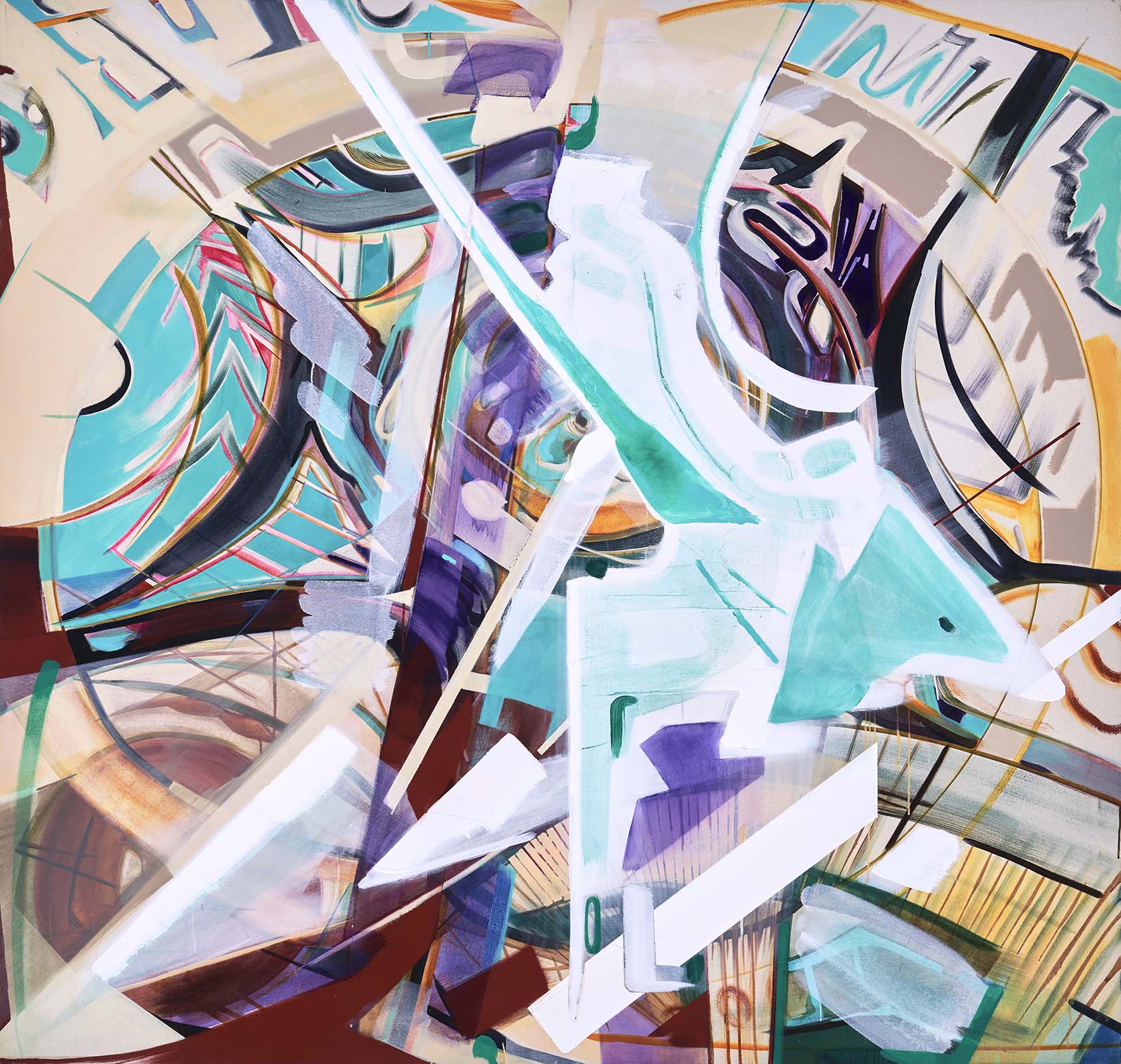
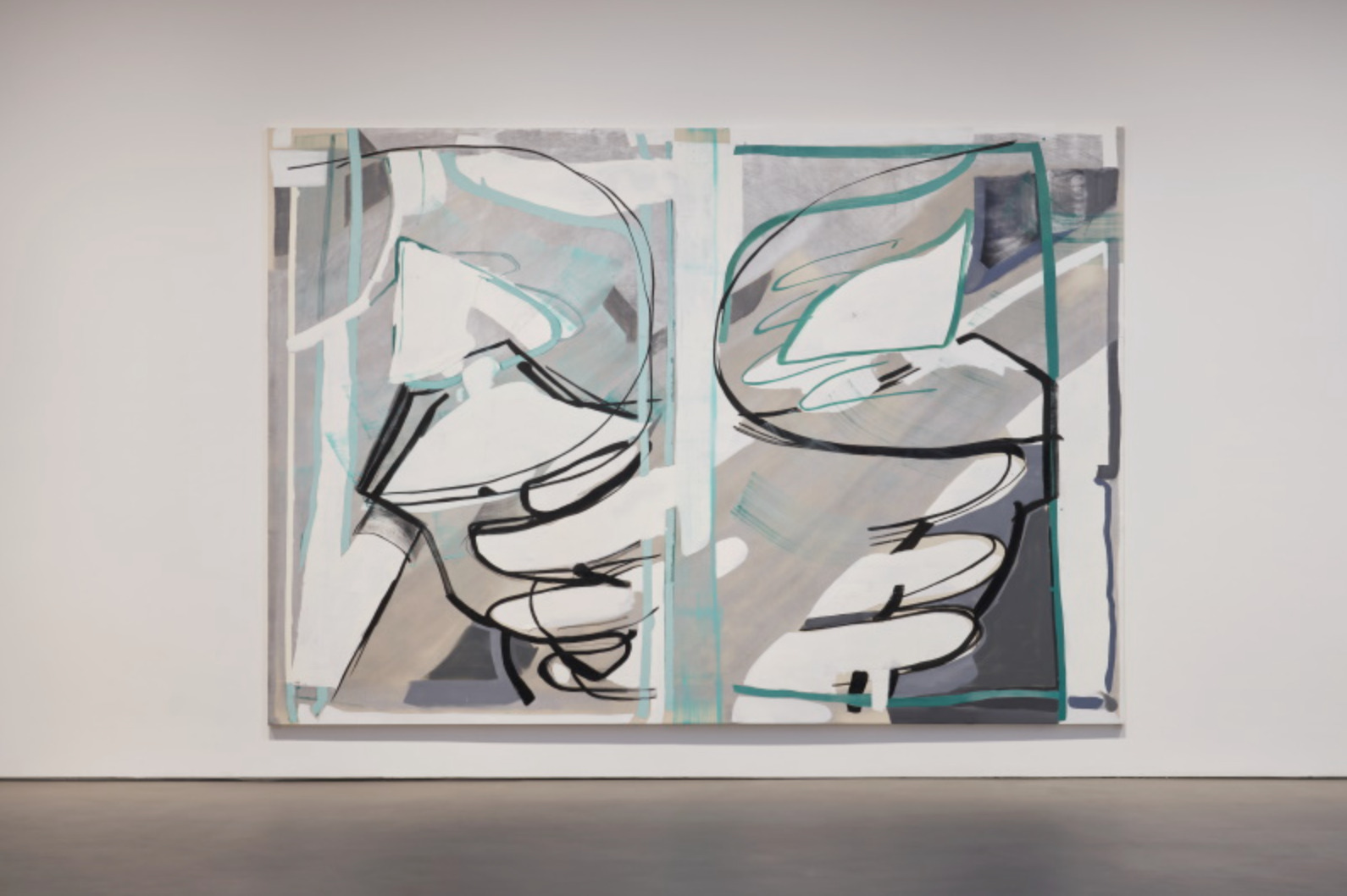
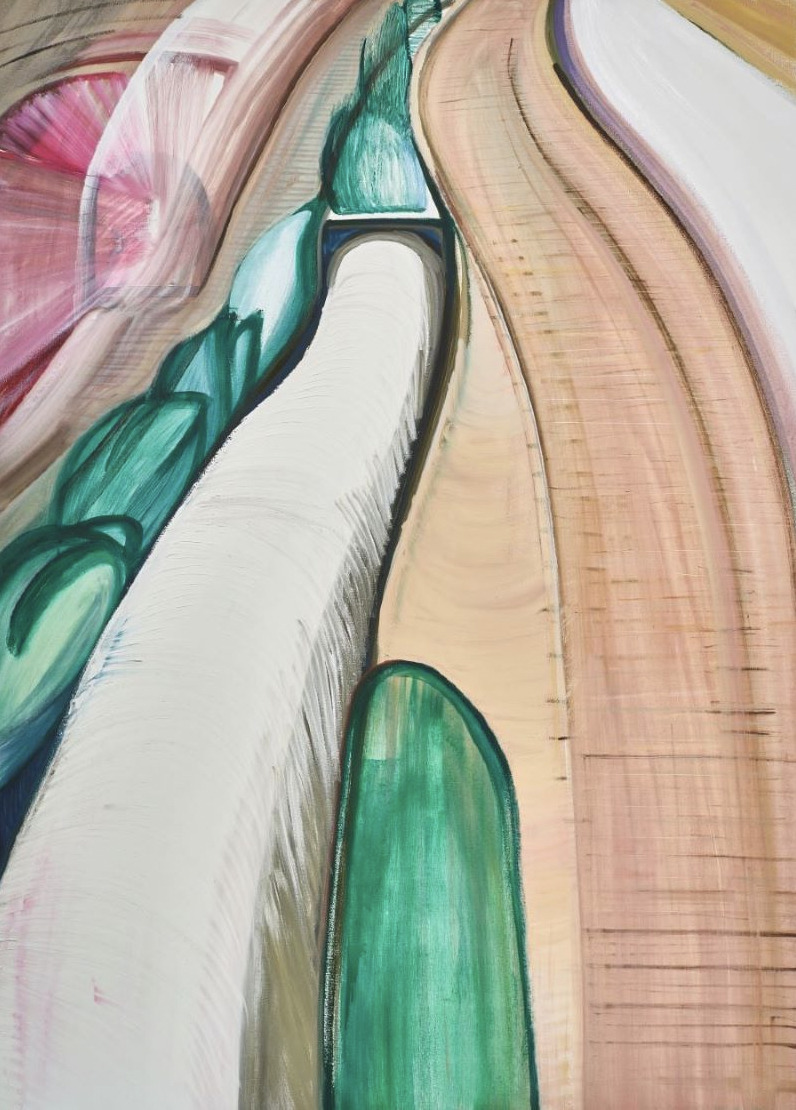
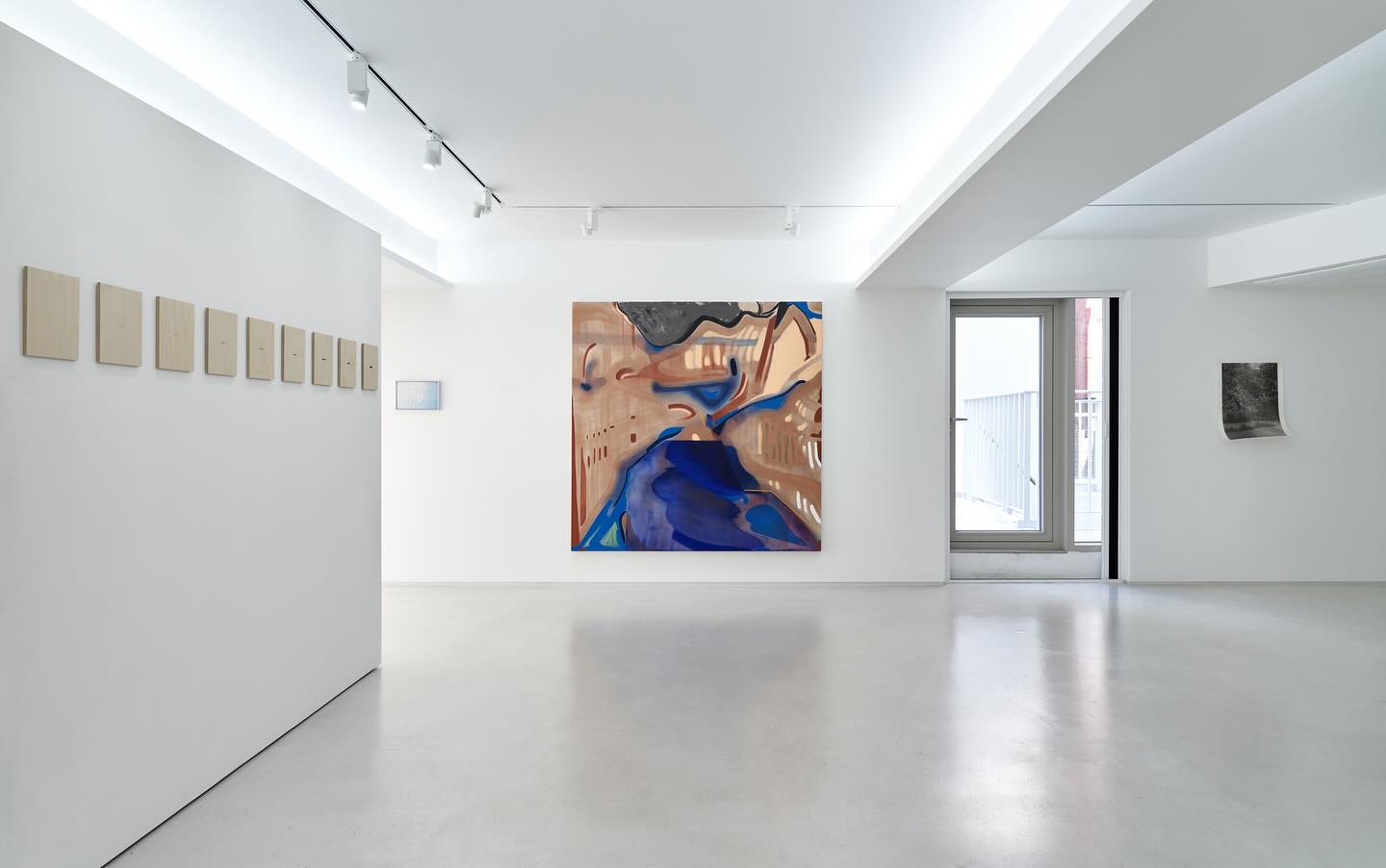
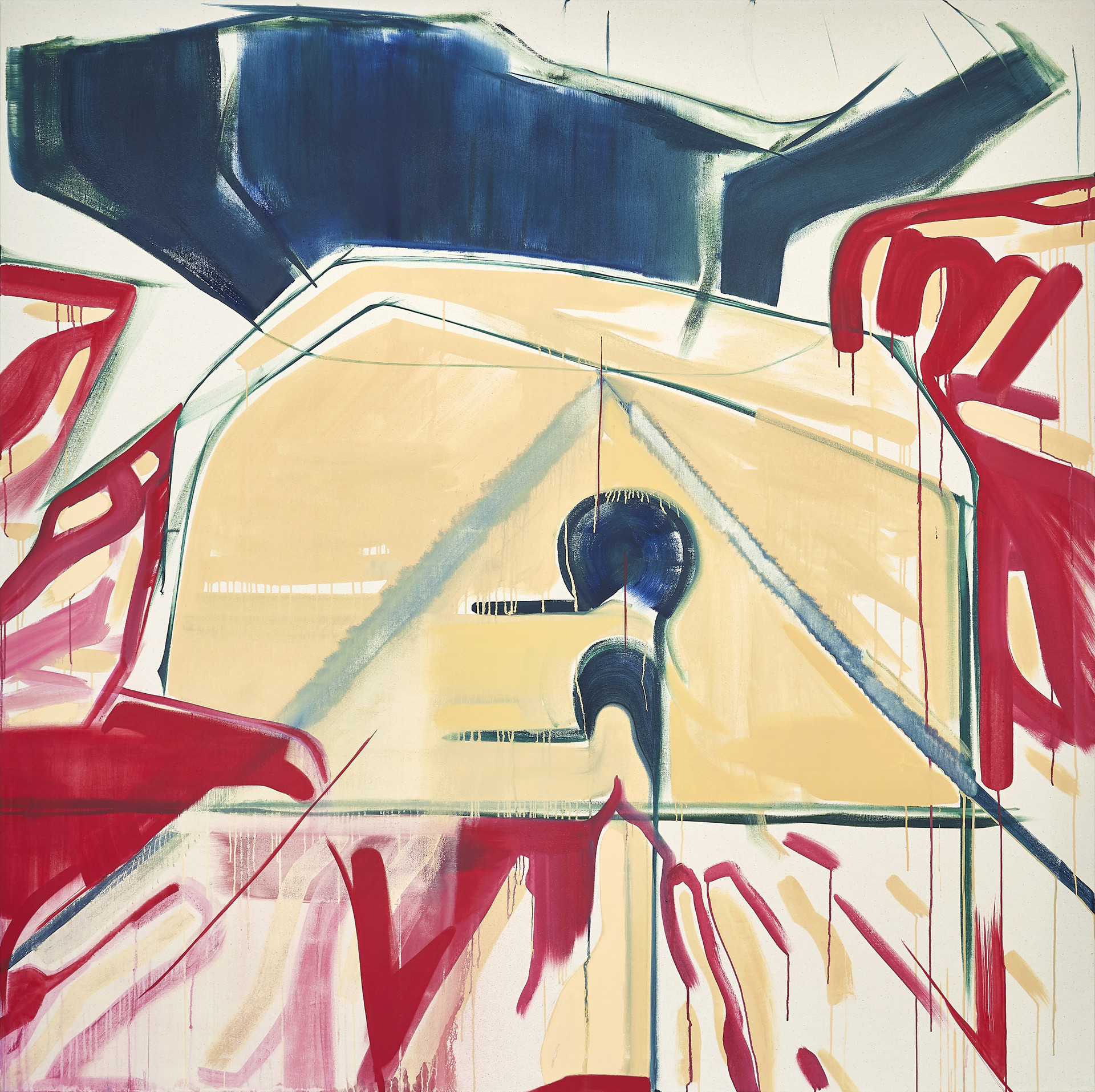
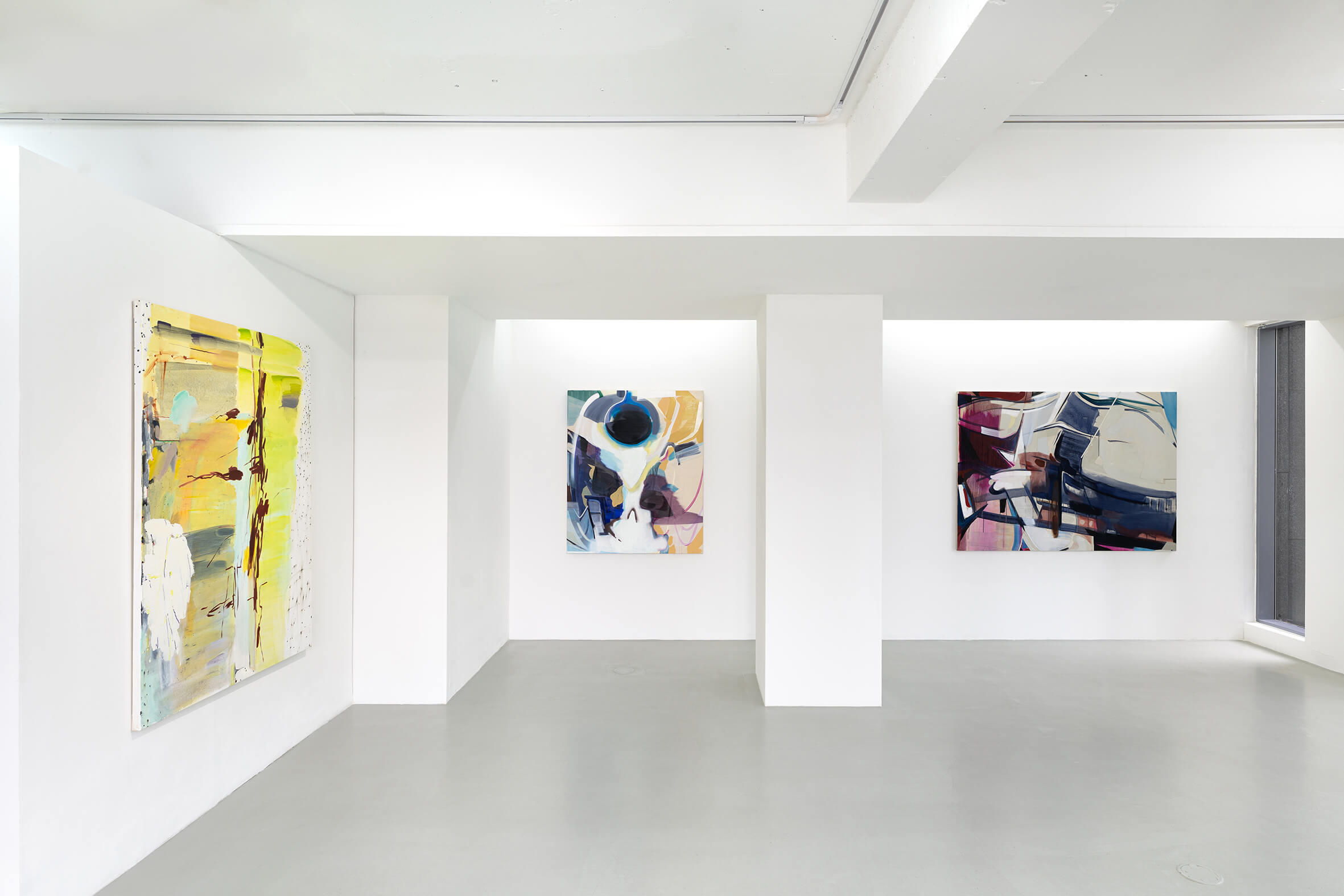
works like 〈Crack〉 (2016) and 〈Leftover〉 (2017) obviously capture parts of facilities that serve a purpose
in the city, but it’s ambiguous as to what the larger subjects are because the
forms are distorted almost to the degree of abstraction. As also demonstrated
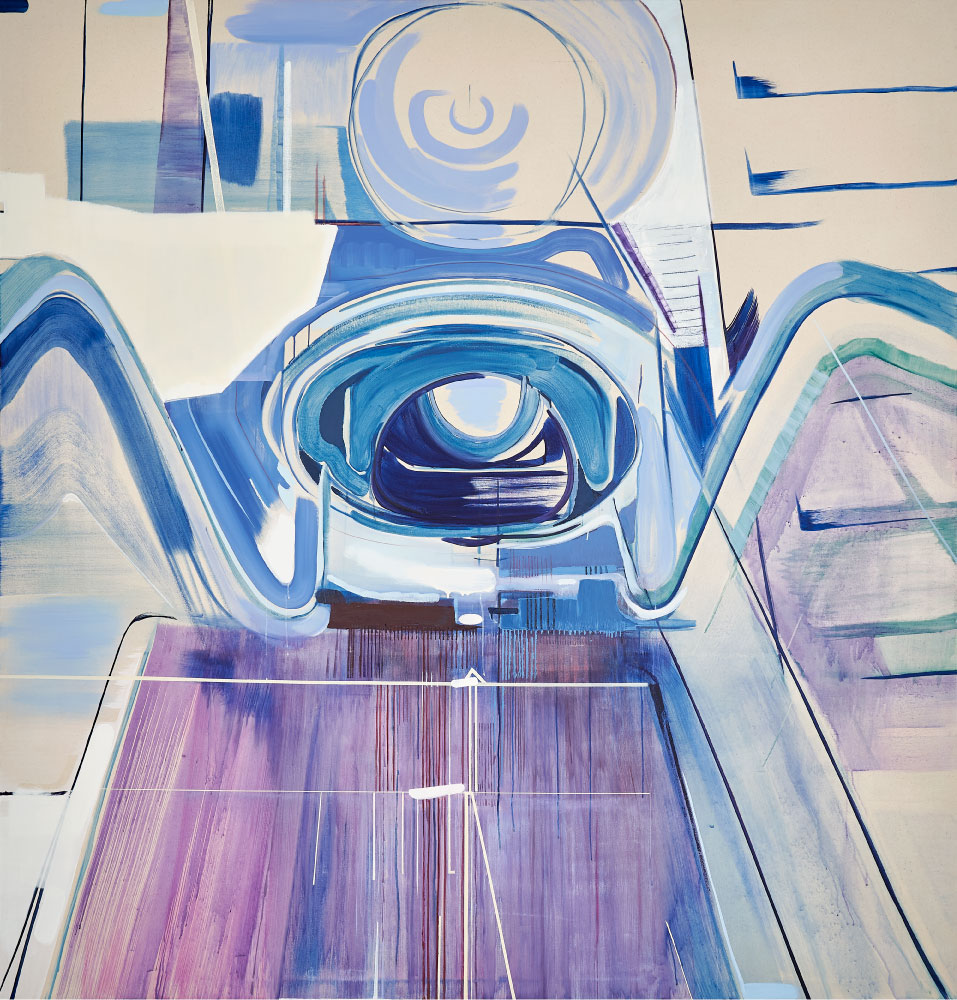
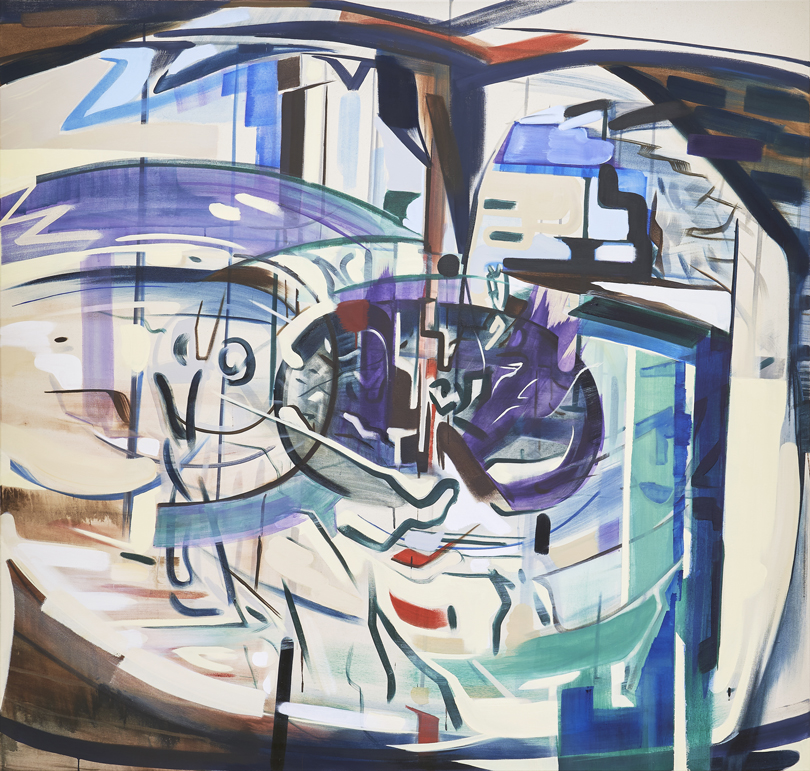
by works such as 〈Division of Isles〉 (2017), 〈An Eye〉
(2018), 〈Grab and Run〉 (2019), 〈Inactivate〉 (2019), and 〈Hubble Bobble〉 (2020) each depicting an idle
parking lot, a tunnel, a passageway to a station, a construction site, and a
lower section of an overpass, her attention is largely directed toward the
retrorse aspects of the so-called “abstracted (modern) spaces.”
The subjects of her newfound interest circa 2016 were, so to
speak, spaces symbolic of forged experiences of modern temporality, more
specifically, the cracks in the hardly detected spaces or the compositional
exterior, the weak links. And here, we recognize foremost the “discontinuity”
as mentioned above—Kim’s imagery turning from “second nature’s mediation of the
first” to “fissures in second nature itself.” This, to quickly visit Freud’s
schema, seems close to a sort of reaction formation (defense mechanism),
because whereas the impossibility of first nature as a result of second
nature’s intervention points to the absence of an outside world, the fissures
in second nature point to the possibility of an inner outside world. In this
case, the discontinuity in the context of her work would signal an attempt to
find a room for possibility, an attempt to sail across the sense of despair
stemming from her early imageries. For example, the cracks, niches, holes,
fissures, and tunnels constantly explored in these works can be read as
allegories for an outward portal that transcends the existing urban premise or
as allegorical practices seeking to gaze at the possible exterior of the city
or modernity. In that sense, the fact that the subject of her interest shifted
from the “range of relationships among the roads, trees, and buildings”2) as
shown in her earlier works to the power, effect, and causality of the city’s
functional parts as shown in her later works is neither arbitrary nor
perceivable as a coincidence.