1. Painting of the (Old) Towel
The old towel that used to dry my face every day has lost its
tenderness and is now tangled, stiff and flat. When it dries, it reveals its
firmest texture and returns to its shape as if someone has laid it out. As days
and years pass, the bodily stains mixed with water leave a faint and dry
expression on a towel that once resembled the skin of an (innocent) animal. Is
there anything more boring than the dull and the dry? The figure that bears
only time remains uninspiring and bodes the once-delayed moment of extinction.
While rubbing one’s wet face, the repeated friction between the two exchanges
force and stains, each accepting changes in their forms. When the acts of
wiping, drying, and again, wiping and drying are all that happen between the
two, the fading and blurring (of one) become an inevitable legacy.
To recount an old and worn towel, which is as insignificant as a
dusty window, to such an extent, may seem more like an immature delusion that
sees the world and oneself with an aggrandized narcissism rather than an
attempt at humanistic rumination and reflection. The intimate and growing
imagination that takes place between “the towel” and “me (the face),” in a way,
implies a person's reservations about speaking more explicitly on the
fundamental undercurrents.
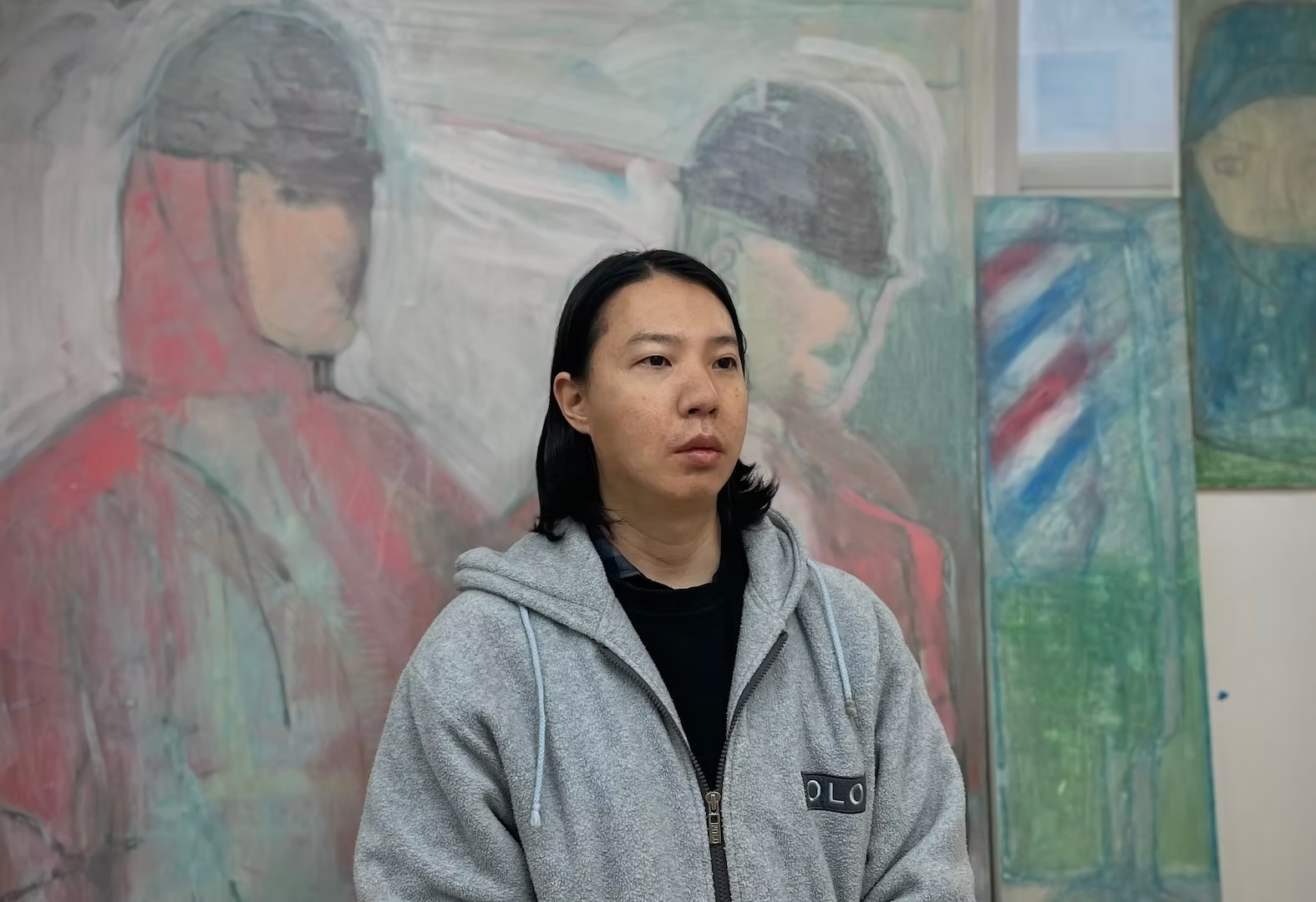
Noh-wan Park sent me four paragraphs under the title, “About the
towel painting.” In the last sentence (in parentheses) of his last paragraph,
he wrote that he hopes that someone will consider depicting a towel he used
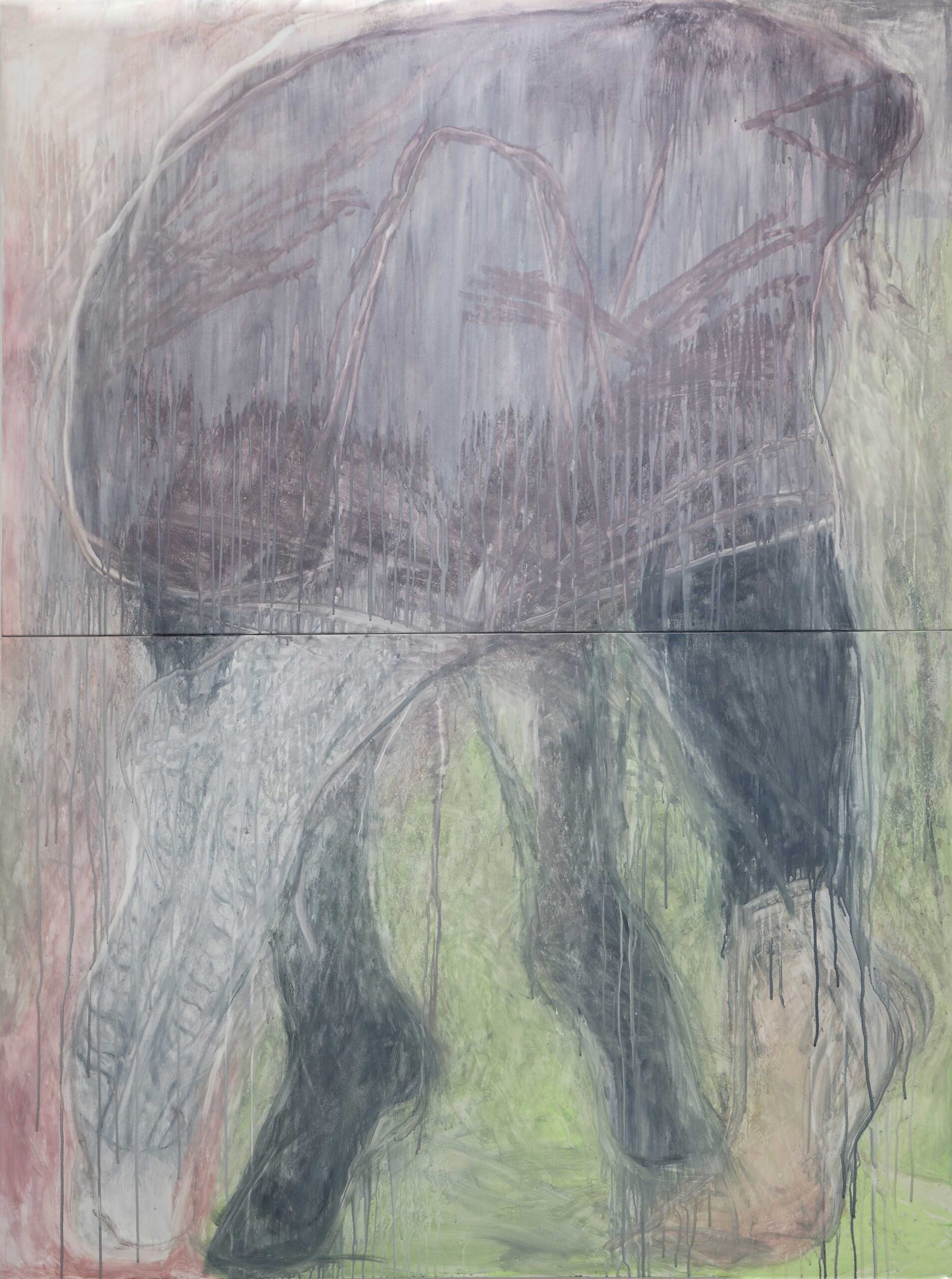
every day on a large canvas to be a “lackluster joke.” Anyone who encounters a
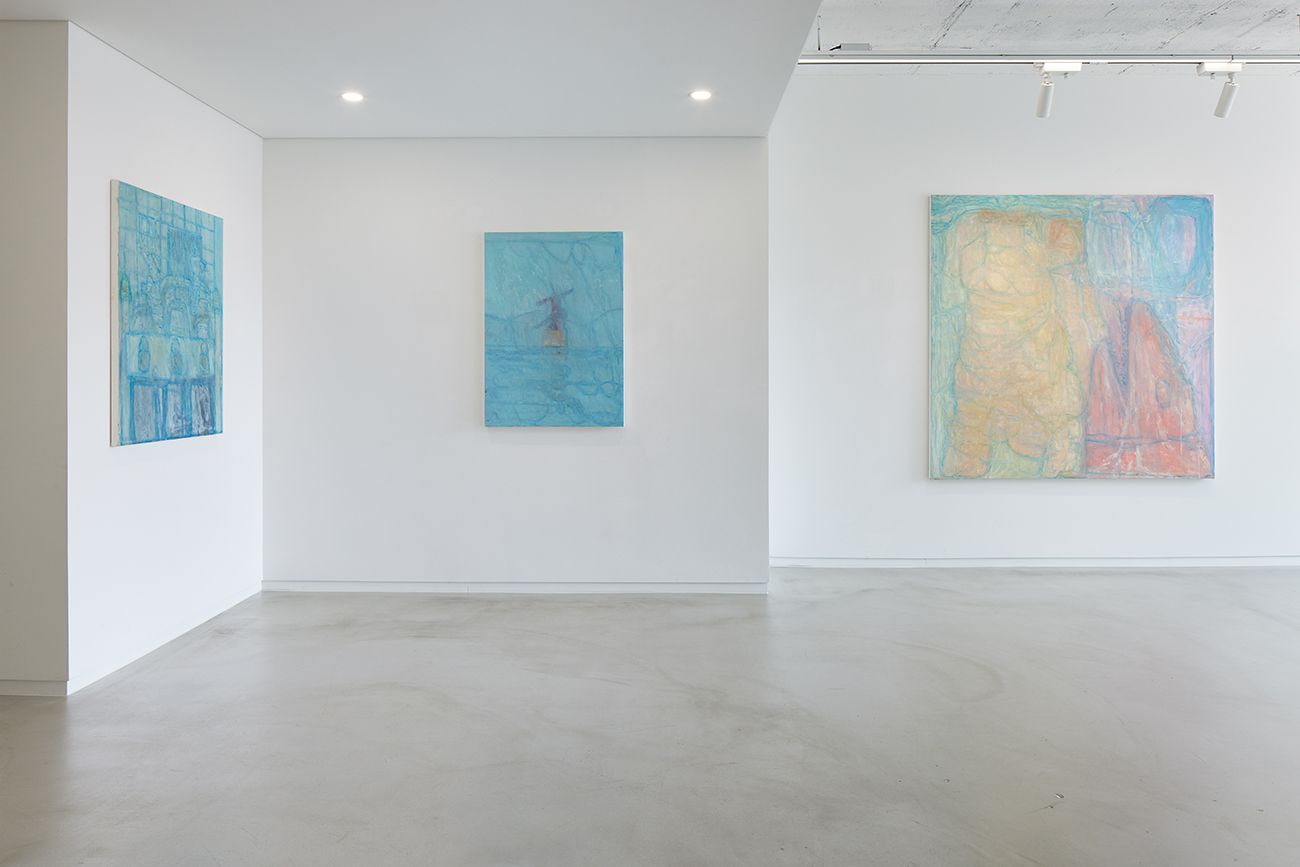
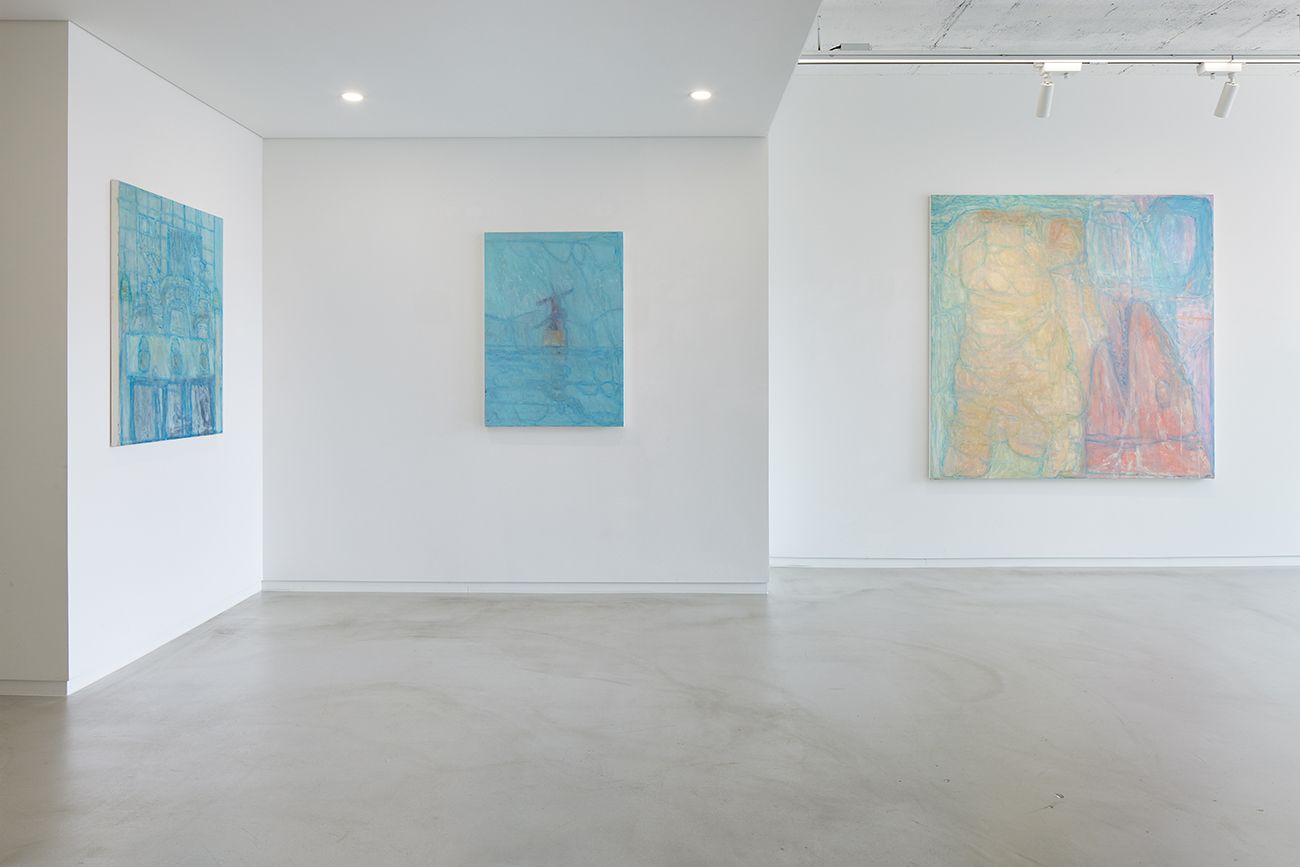
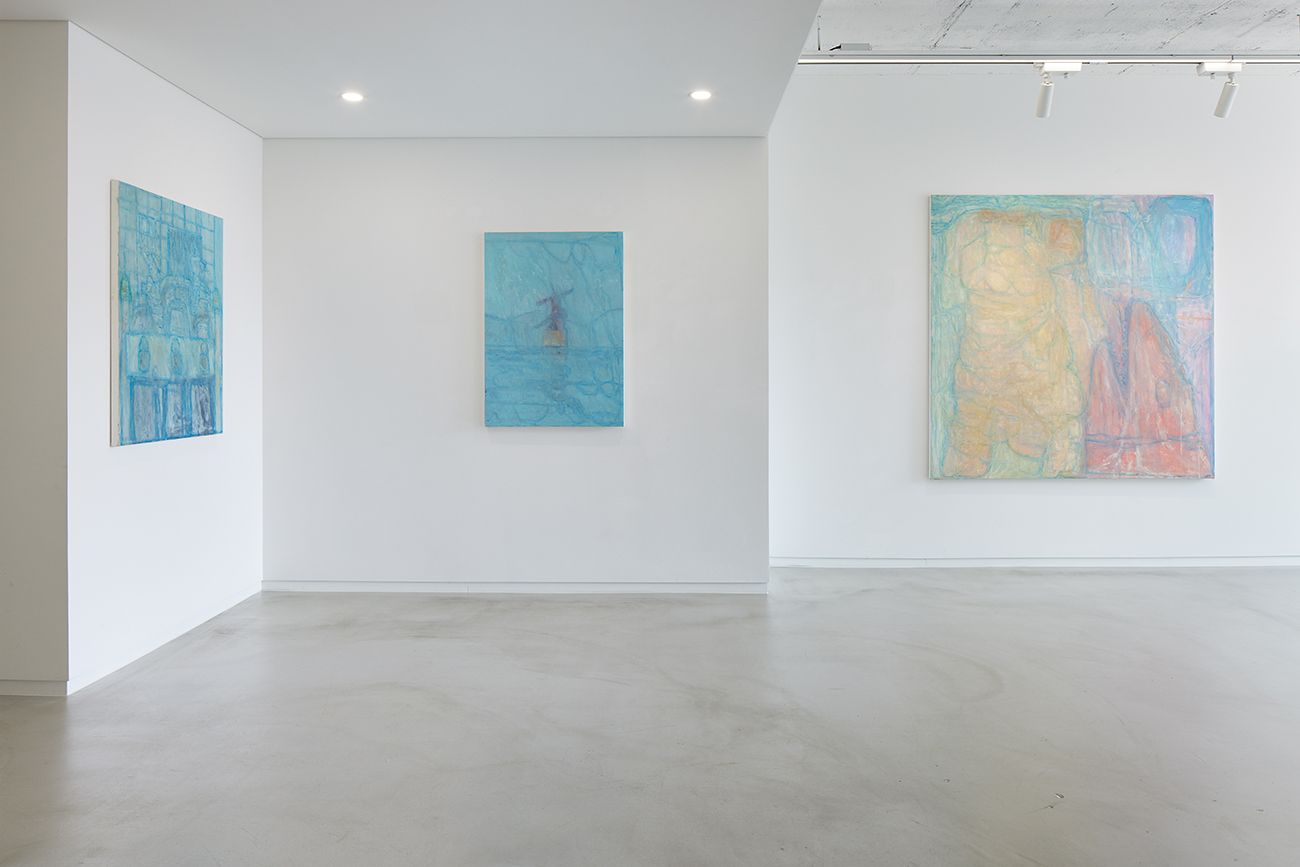
colorful pink abstract painting with a blue hue mixed like stains (of time and
humidity) in the size of 290cm x 250cm will come extremely close to thoroughly
study the striking surface. This anticipation suggests a minor twist that will
soon reveal that “This is a towel” with a certain (new) clue attached to the
corner of the painting. The towel replaces a painting, such as an abstract
large scale color painting. He explains, “I just impulsively wanted to paint a towel
on a large canvas,” an old towel that I got from somewhere as a souvenir and
have used for a while.
With Huge Towel (2022) in front of us, he and I
continued our conversation in two folds. One was about the life of the towel,
and the other was about an old painting. When one spoke of the memories
attached to the towel, the other asked questions about painting, and the
conversation continued as if we were circling around the same place like
excuses and accusations. Park’s desire to simply paint a towel sounded like the
courageous determination to confirm (or reaffirm his intention of) the
conclusion that “this is a painting” under the premise and condition that
anything can be painted and by specifying the methodology and attitude of “how”
to paint. However, while doubting his delusions that he has dramatically
intersected the conditions of painting and the media methodology for it, he
puts off the gravity of a series of his pictorial achievements as a joke and
again, holds back. This supposed whim allows us to gauge the identity of Park’s
paintings - complex and its conquest - which has gained legitimacy through the
“painting of the towel.”
For several years, Park used a towel from “Bucheon Gwanglim
Church” that he brought from home while he was living on his own and came up
with the idea of painting it as an object of his large still life painting. The
fluffy and distinctively loose surface of the towel and the name of the church
printed in crude ink on its edge were directly transferred into the texture of
the painting surface and its self-governing formal logic, allowing him
imitation and identification (by large leaps and bounds). Memories of an old
church souvenir towel mixed with (historic and realistic) experiences of old
paintings construct a double consciousness on the “painting of a towel.” A
certain complex of these “worn” objects reveals his innocent fondness for these
objects along with a gripping obsession of them.
Umbrella (2022) and Boots
(2022) are the same. Park painted umbrellas and boots that were used until they
were worn out and broken. He cannot/does not throw away the boots with cracked
leather and worn soles and the rusty umbrella that barely closes. It is as if
he paints a canvas full of things that are no longer usable and replaces them
into images of ruins where everything has collapsed. At this moment, like
someone who tries to push an old object into the singular state (in the
material sense) and captures it onto an abstract image on the canvas, his body
intensely pours out the lifeless image of reality (such as the ruins) onto the
still surface of the painting.
2. Until It Fades
Park's Huge Towel has (blue) stains. This tint
seeps all over his painting. He explains that they are rather blemishes that
discolor the painting, but when studied carefully, the blue shade fades the
entire painting into a hazy, unexpectedly abstract feel. Perhaps the blue
stain, in essence, critically transfuses the helplessly tarnished image of
reality that has been inserted into the painting’s plane as an abstract
painting, like the experience of (re)recognizing the huge square pink canvas
through the blue ink used for the text “Bucheon Gwanglim Church” that sits
within the Korean Christian Methodist Church.
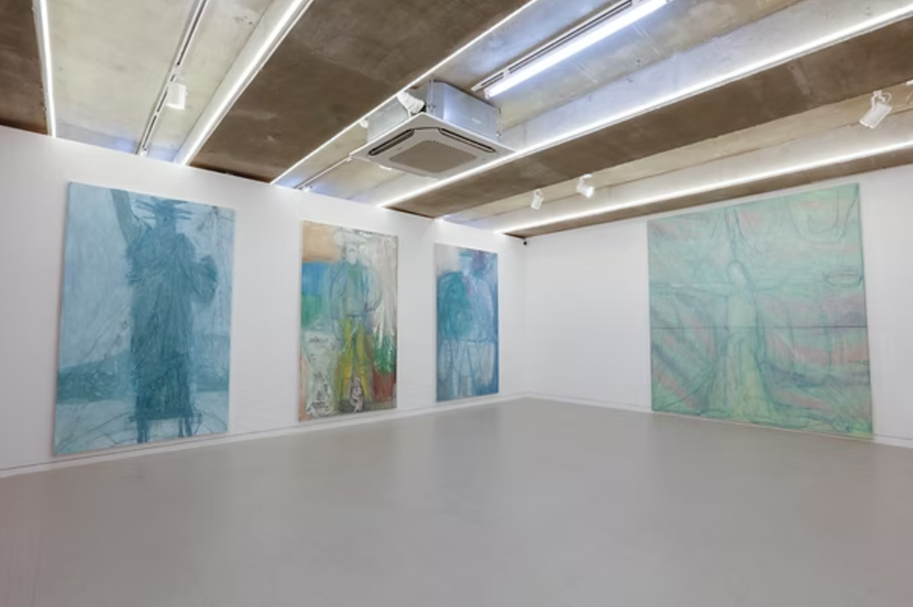
At a closer look at both series Part of Church Flyer
(2022) and Images about Stem Cells (2022), you can see the
blurry blue outlines that fill the painting’s canvas. Church Flyer
No.1, 2, 3, a series of paintings of a part of an evangelist church
leaflet that was found on the streets, were drawn on three parallel canvases
like a three-sided painting, and Images About Stem Cells No.1 and 2
are images of a medical advertisement found on the road. His method of
discoloring the surface of the painting through the blue outlines slightly
differs. Largely speaking in two terms, one is continuously erasing/wiping the
outlines by mixing them with other colors, and the other is forcing the outline
of the figures (which was emphasized in the previous works more) into the
canvas. While these two advance separately, they in fact operate
simultaneously. The church leaflet from the streets divulges the worldly desire
for heaven in a lowly and explicit manner while seeking to share the gospel of
transcendent redemption and God’s salvation; Park intentionally shares this
“failure” by substituting the broken reality and (in fact) malfunctioning world
of salvation into the pictorial scene.
To sustain this failure, he uses watercolor that can melt on the
surface of the painting at any given moment. After securing the texture and
thickness by mixing liquid rubber with the watercolor paints, he obsessively
repeats the painterly labor of drawing, wiping, and drying it until the surface
of the painting becomes hazy. When the blue outlines and other watercolor
paints blend in as if these forms are fused together, Park’s painting does not
lose the tension between the fading of the painting’s surface and the
abstraction but rather makes use of this situation as an excuse to find the
delicate point of balance. This maneuver is also connected to his choice to
degenerate the painting by distorting the shape, as visually prominent in the
Images about Stem Cells series. Park is intensely mindful of the edges of the
canvas. This 2-dimensional limit allows not only the possibility of an abstract
color painting but ironically also the conditions of deterioration. In other
words, during the process of painting the figures with blue outlines on a flat
canvas, Park intentionally invites their distortion that conforms to the
painting’ frame without seeking a perfect representation or structural
perfection. Through these intentional pictorial failures, he weaves the
deteriorated abstraction into fragmentary painterly language.
Untitled (2022), Dried Carrots and
Cabbage Leaves (2022), and Ice Cream Promotion Balloon
(2022), which depict decorative plaster statues sitting by the window, are
consistent attempts to introduce the already deteriorated objects found in
reality into the pictorial realm.
From an “imitation” of worn objects that replicate, replace, or
resemble something, the artist crosses the series of circumstances in which
contemporary painting has been placed in. The painting and wiping of the
watercolors until the subject becomes blurry in the flat conditions of his
painting do not merely restore the deteriorated form in the pictorial sense. In
fact, he must be risking his own blurring by melting and damaging the old
surface of the painting, which has become as stiff as an old towel, and
locating where more stains could be drawn onto the painting. In a more grand
sense, it must be the infallible mission given to an heir of the painting’s
stains.