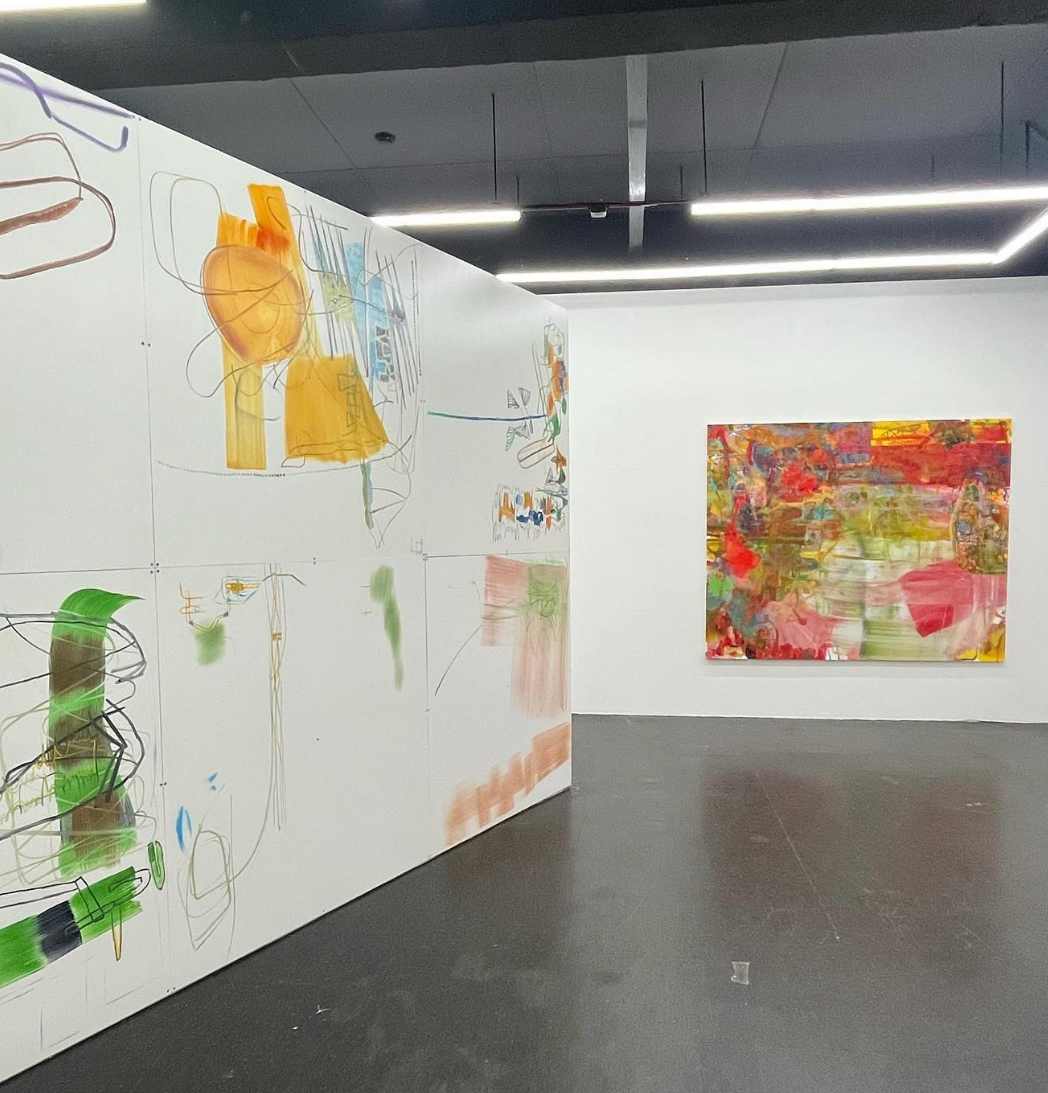
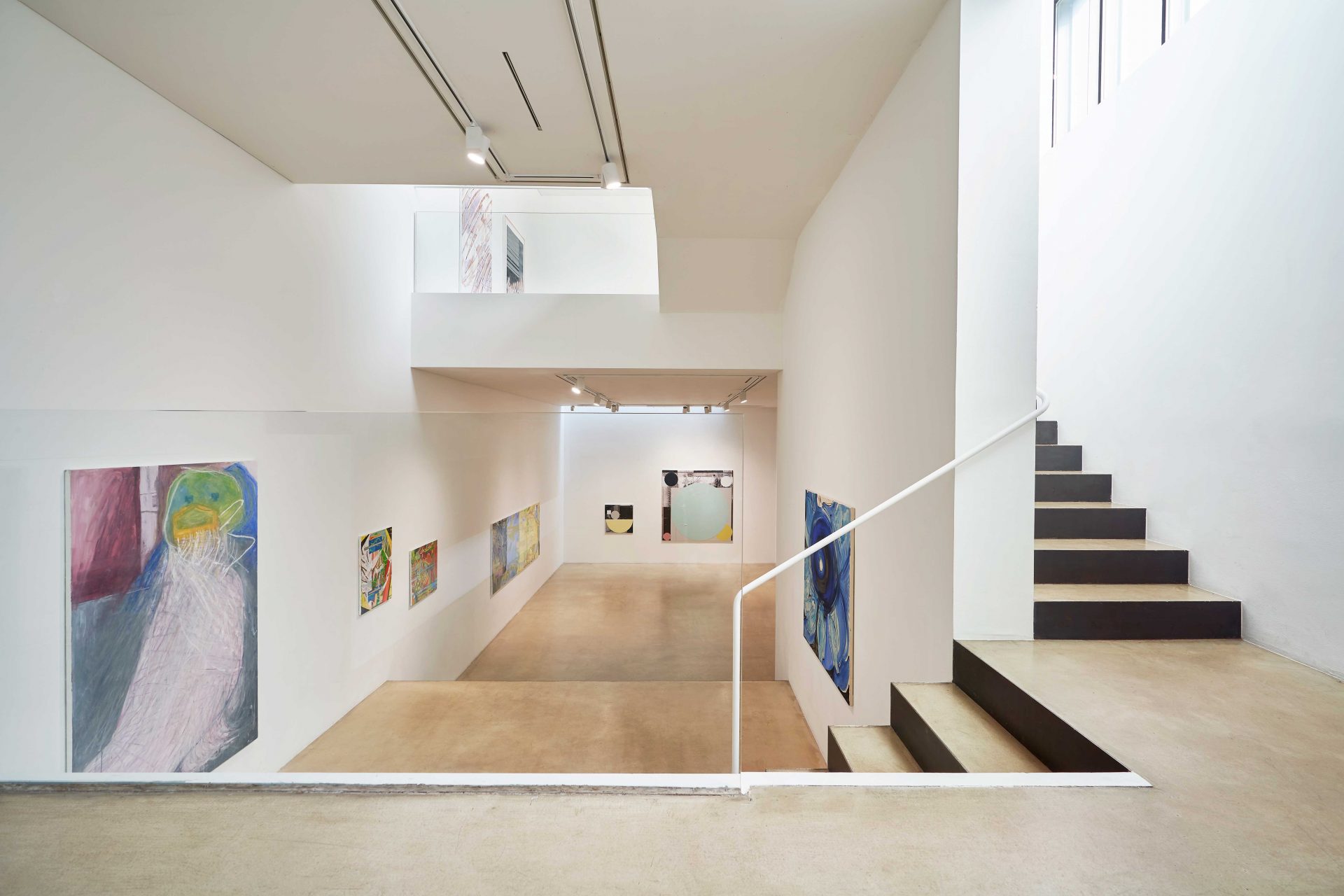
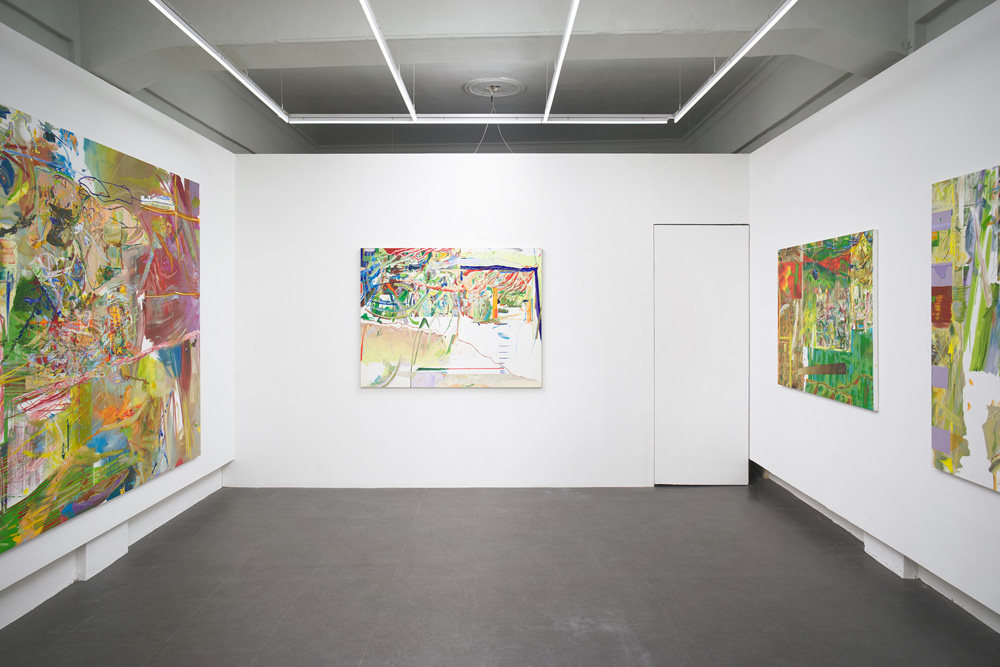
This
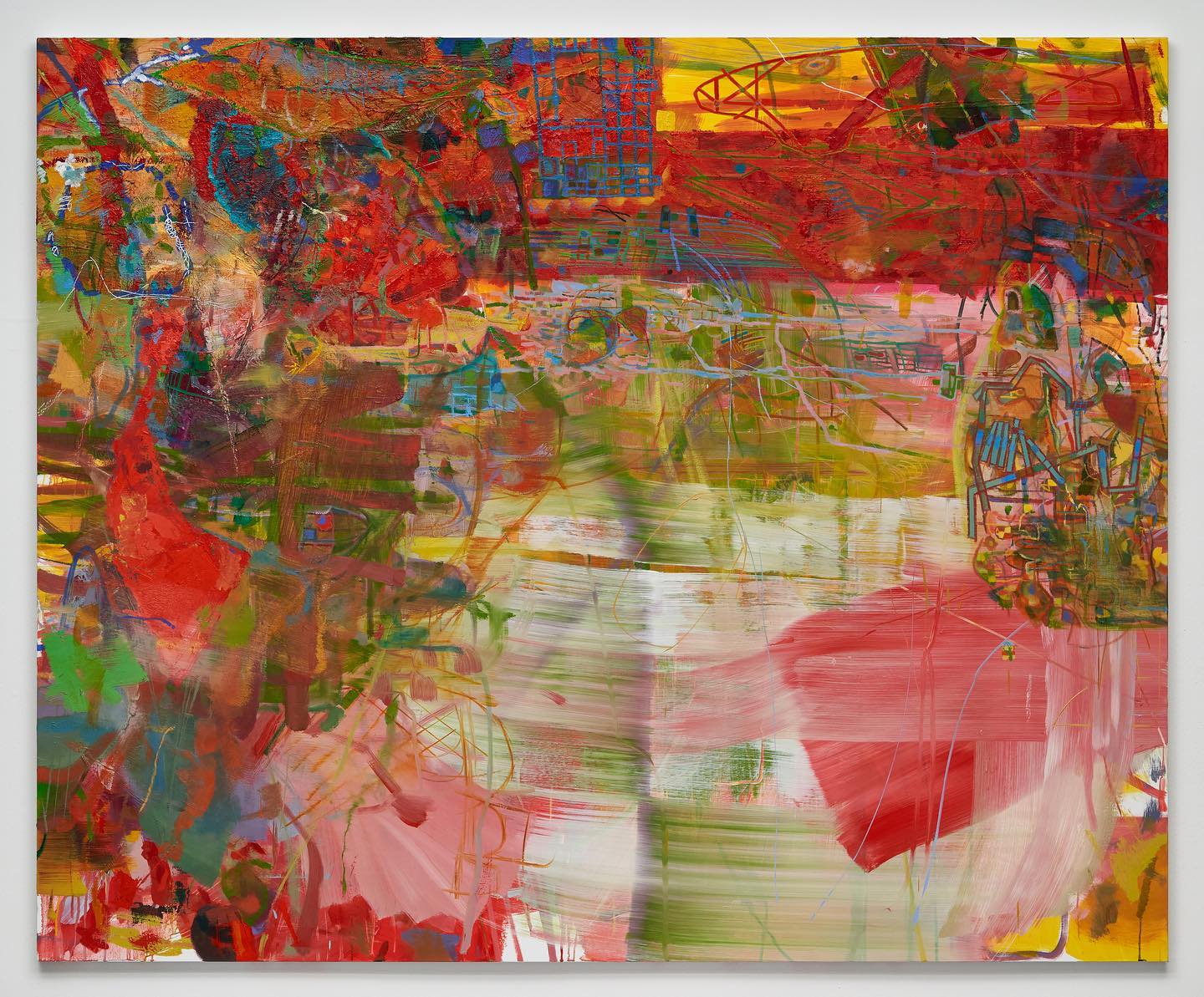
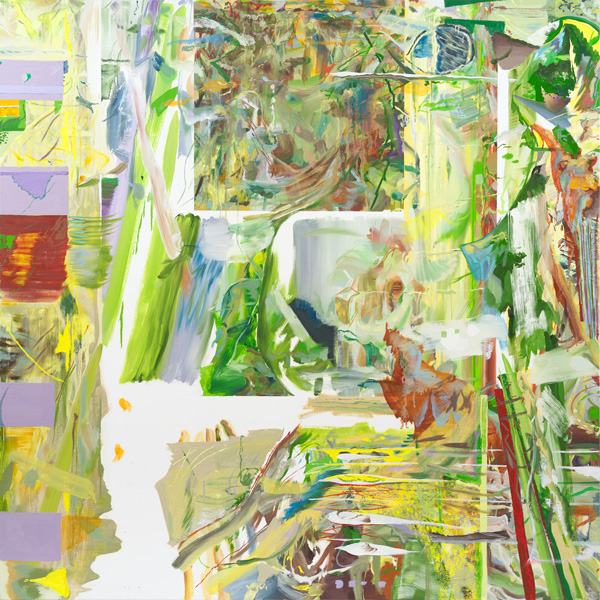
methodology also serves to put quotation marks around the reductive effect
created when compositional flow—attempting to break outward—is reabsorbed by
the canvas’s fixed boundary. The interaction between this outward urge and its
containment within recalls the architectural logic of a labyrinth.⁴ The
brushstrokes, trapped within this “quasi-labyrinth” framed in quotation, lose
their kinetic energy and become static images.
The velocity embedded in these
marks either transforms into a dynamic force that cuts through temporal layers
or sinks into the undercurrent of accumulated time. In this way, Sung’s
brushwork and imagery often form subtle temporal gaps, overlapping with
mechanisms of reflection that arise when the movement of the brush diverges from
or aligns with the trajectory of thought.
By
establishing foundational rules that continually reawaken the conditions of
painting, and by meditating within the limitations of these rules, Sung charts
a path through the abstract maze that all painters must repeatedly retreat from
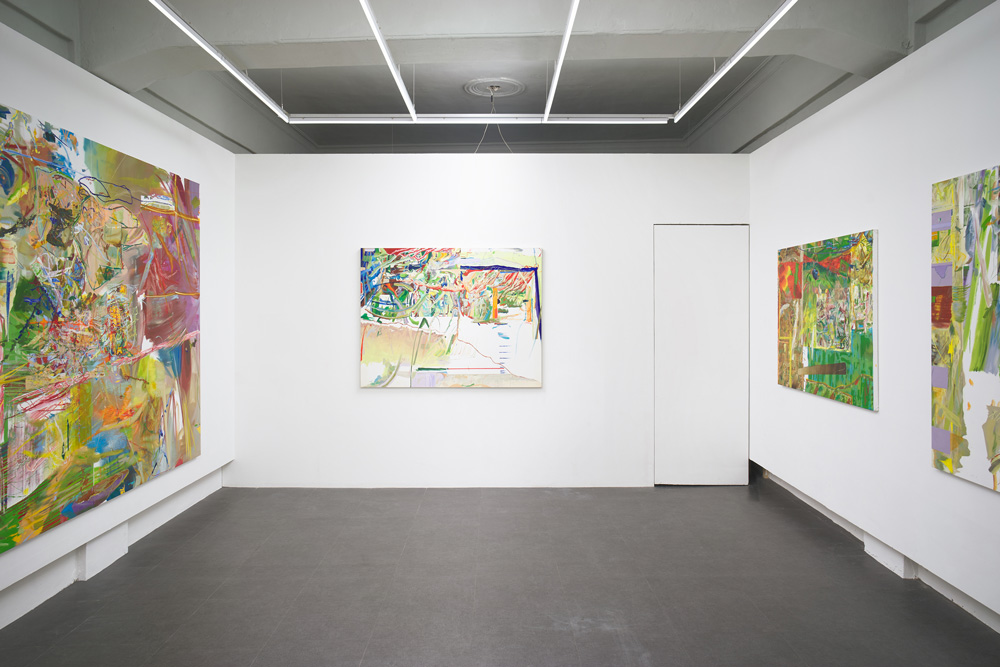
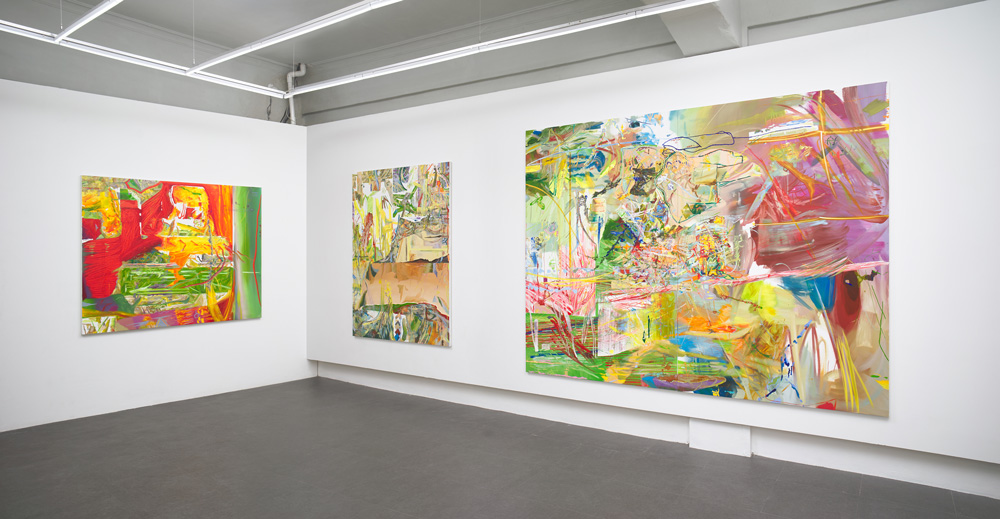
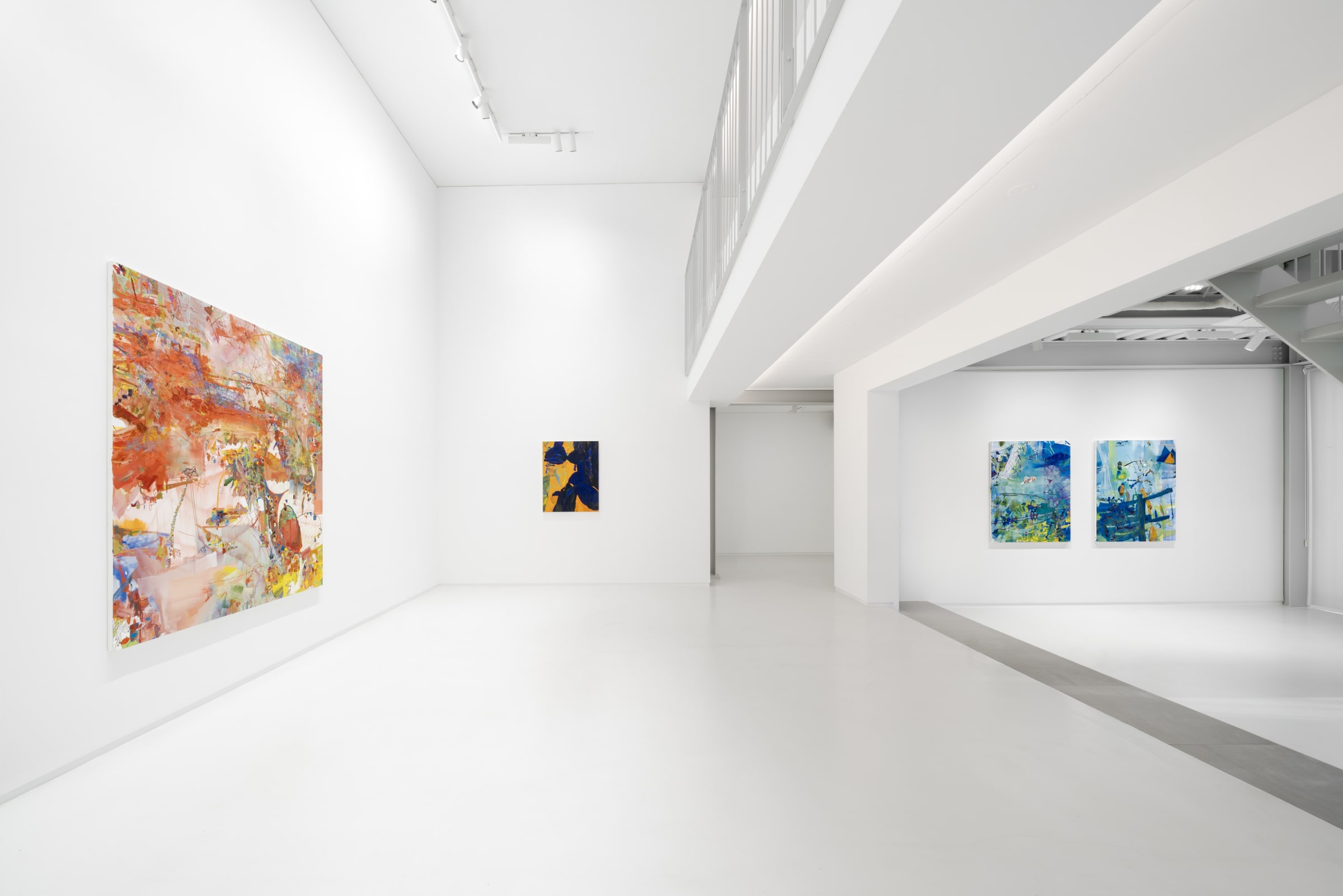
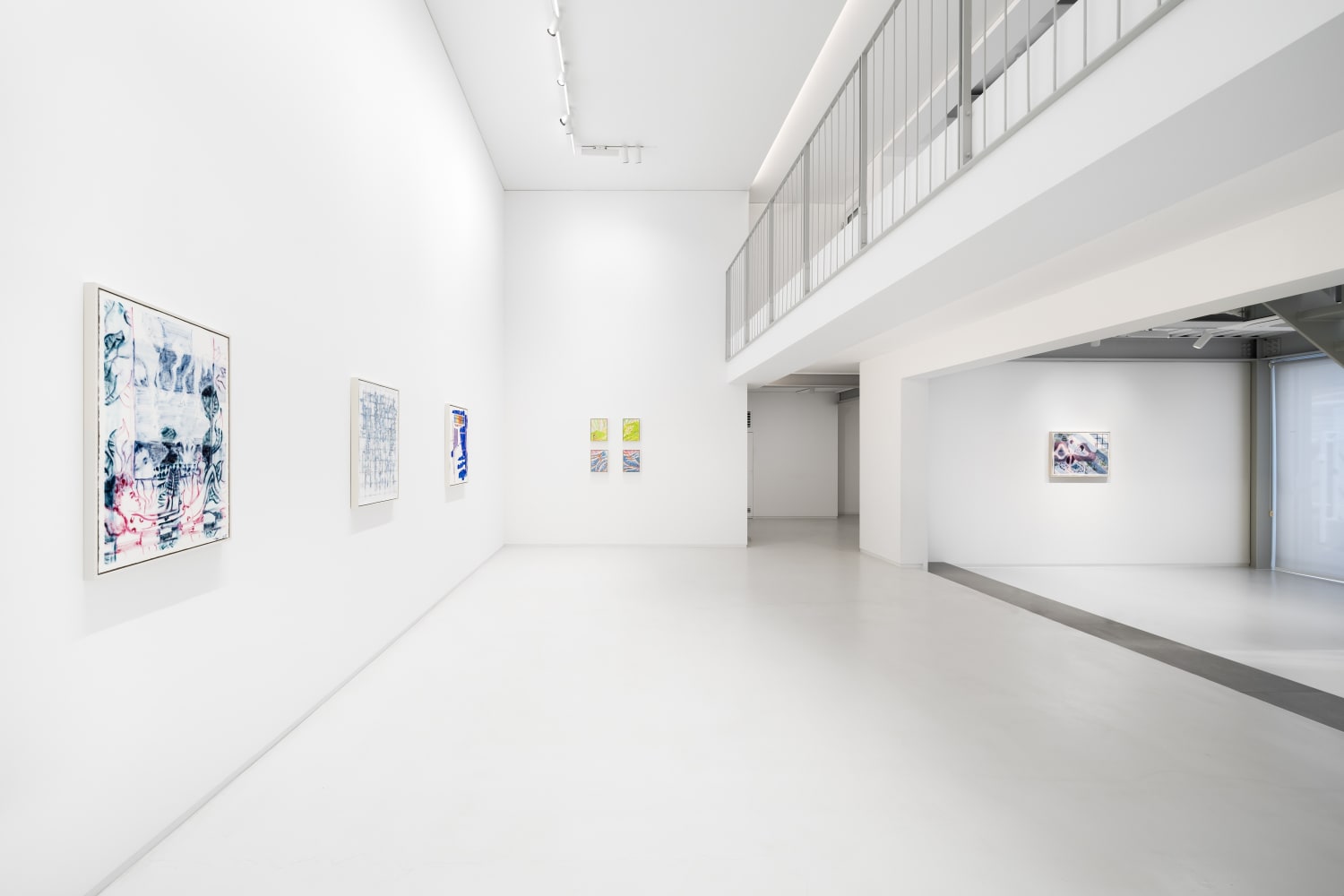
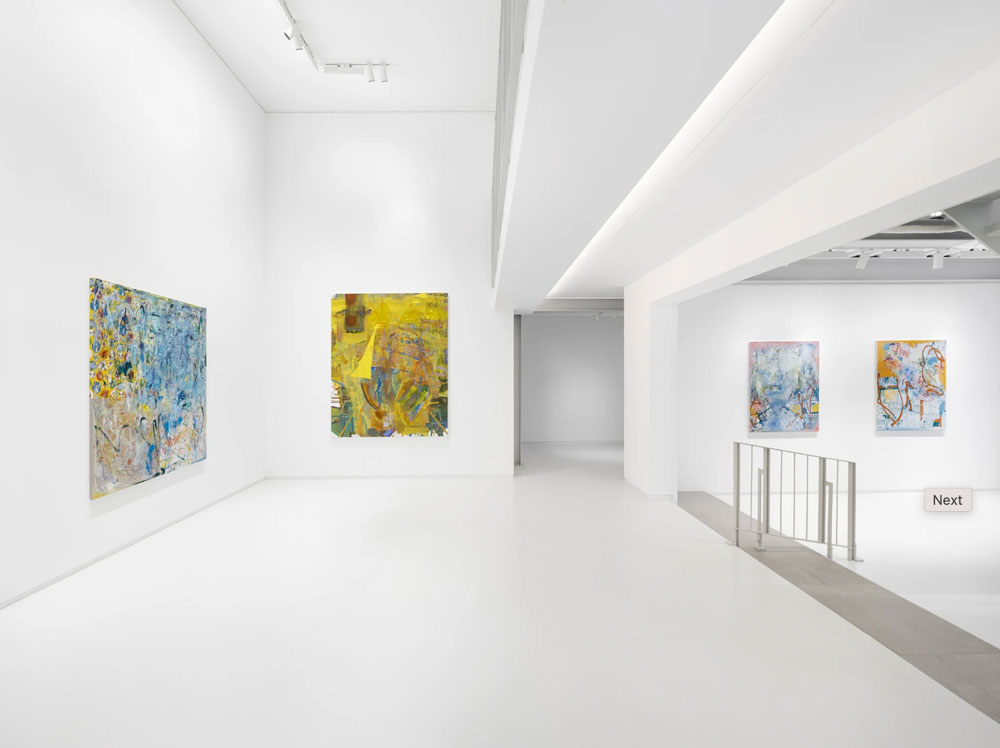
and re-enter. 《Exit Exit》, his debut solo exhibition, occupies two gallery spaces positioned
in an L-shaped configuration on the same floor, but it does not offer two
divergent exits.
At SHIFT, Sung presents a selection of works developed through
a consistent process since 2016. Meanwhile, at Art Space HYEONG, he exhibits
experimental variations that deviate from his primary methodology. Through this
bifurcated presentation, the exhibition hopes to link the specificity of the
artist’s rule-based system with the broader perceptual experience of the
audience.
— Curated
by Jungwoo Park
1) Martin
Gayford, A Bigger Message: Conversations with David Hockney, trans. Eunjeong
Joo, Seoul: Design House, 2012, p. 44
2) Jorge Luis Borges, The Aleph, trans. Byeongha Hwang, Seoul: Minumsa, 1998,
pp. 188–189
3) See artist’s notes
4) Minsung Kang, “Architectural Play: Maze, Cladding, Tectonics,” (MA Thesis,
Kyonggi University), 2002, p. 10