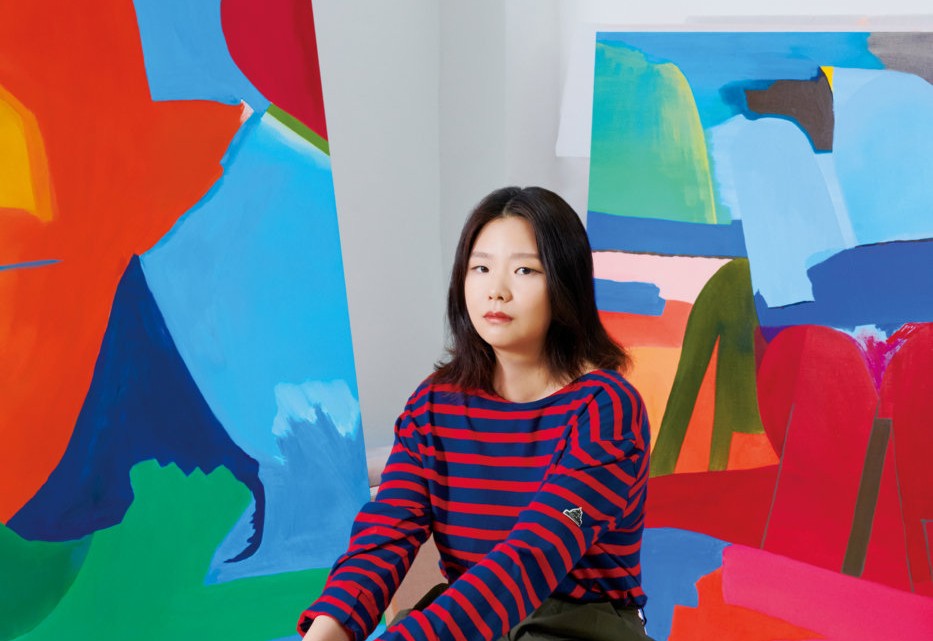
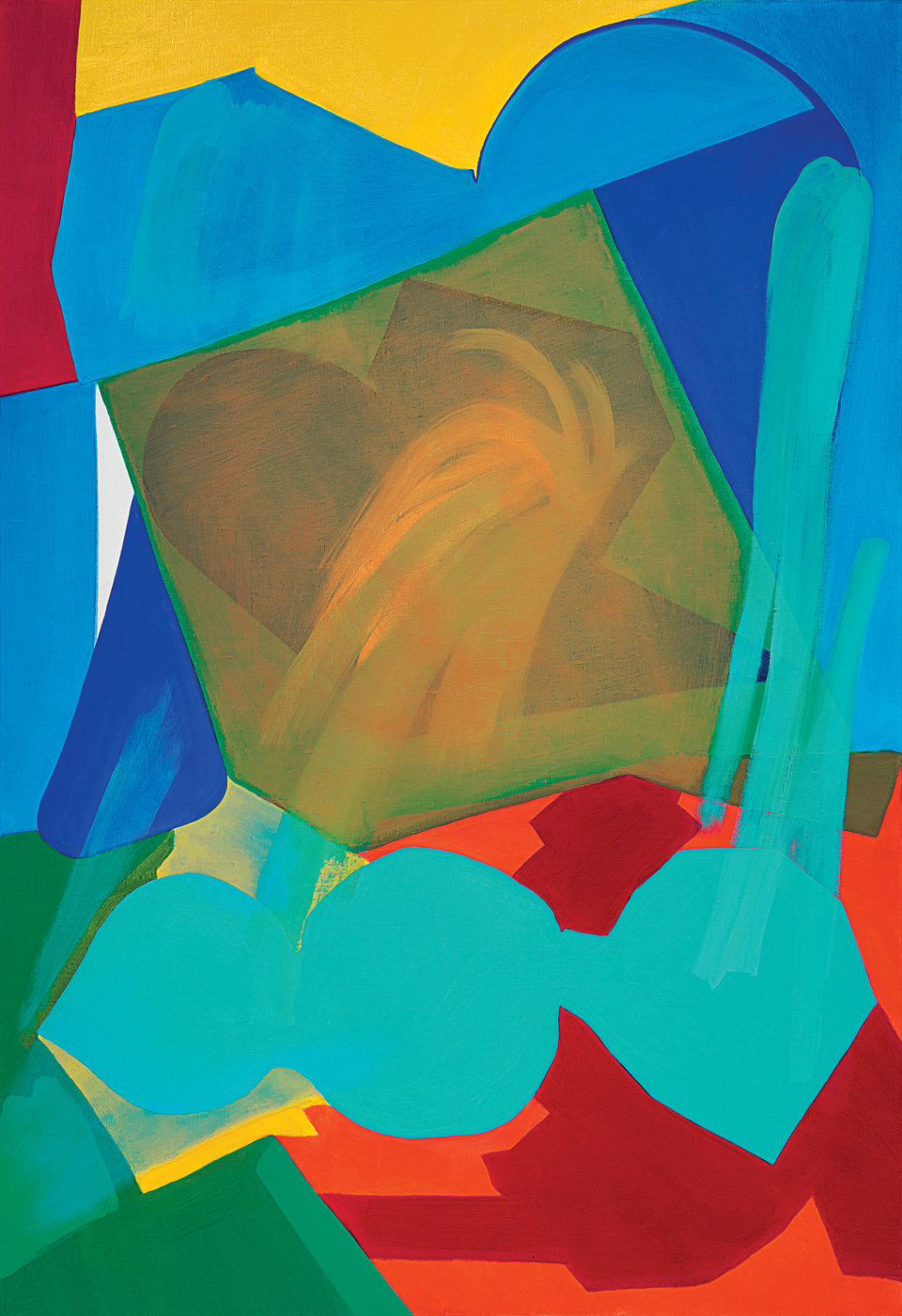
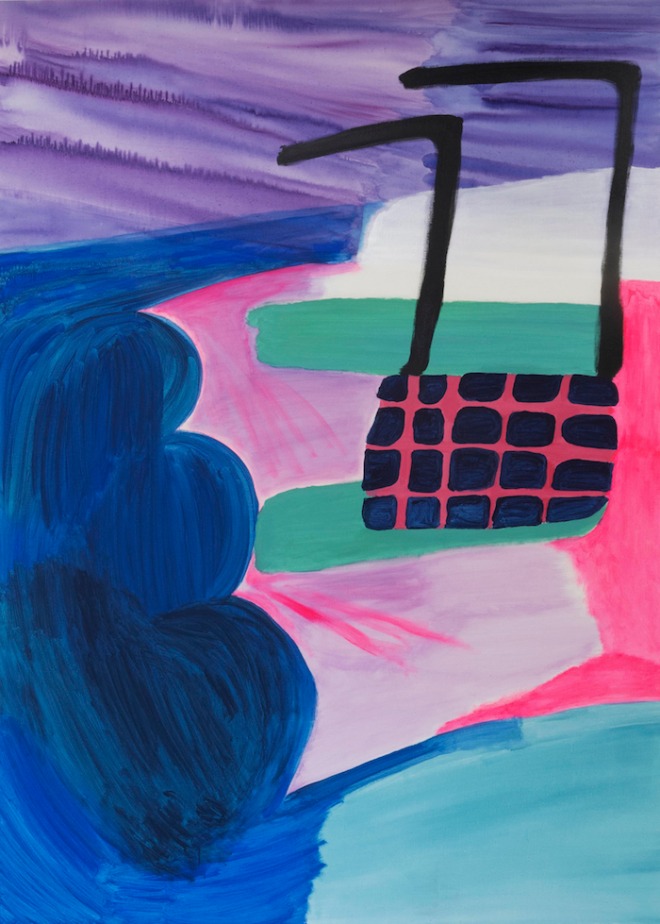
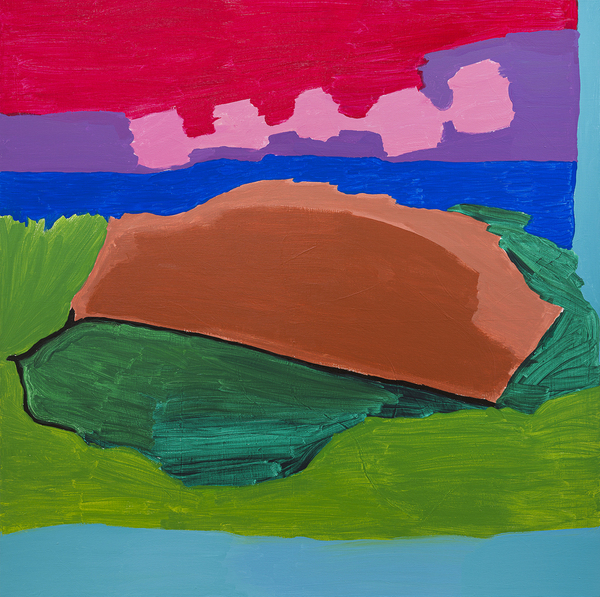
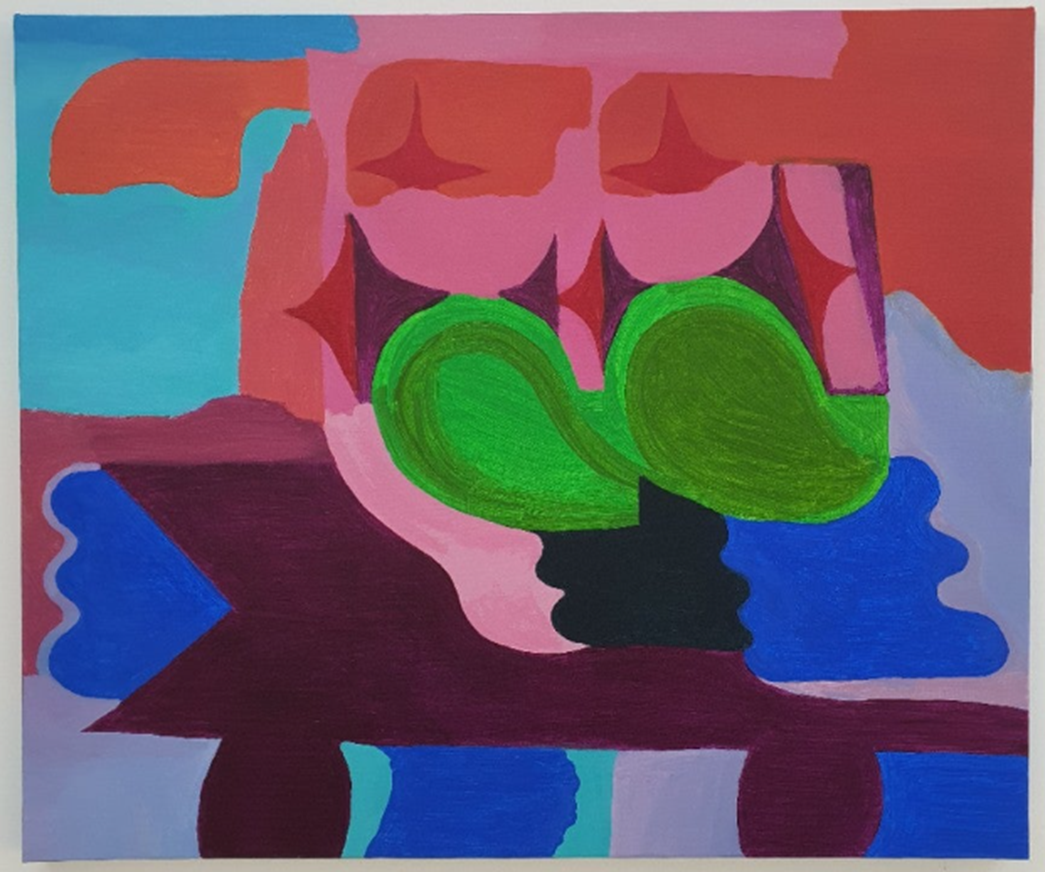
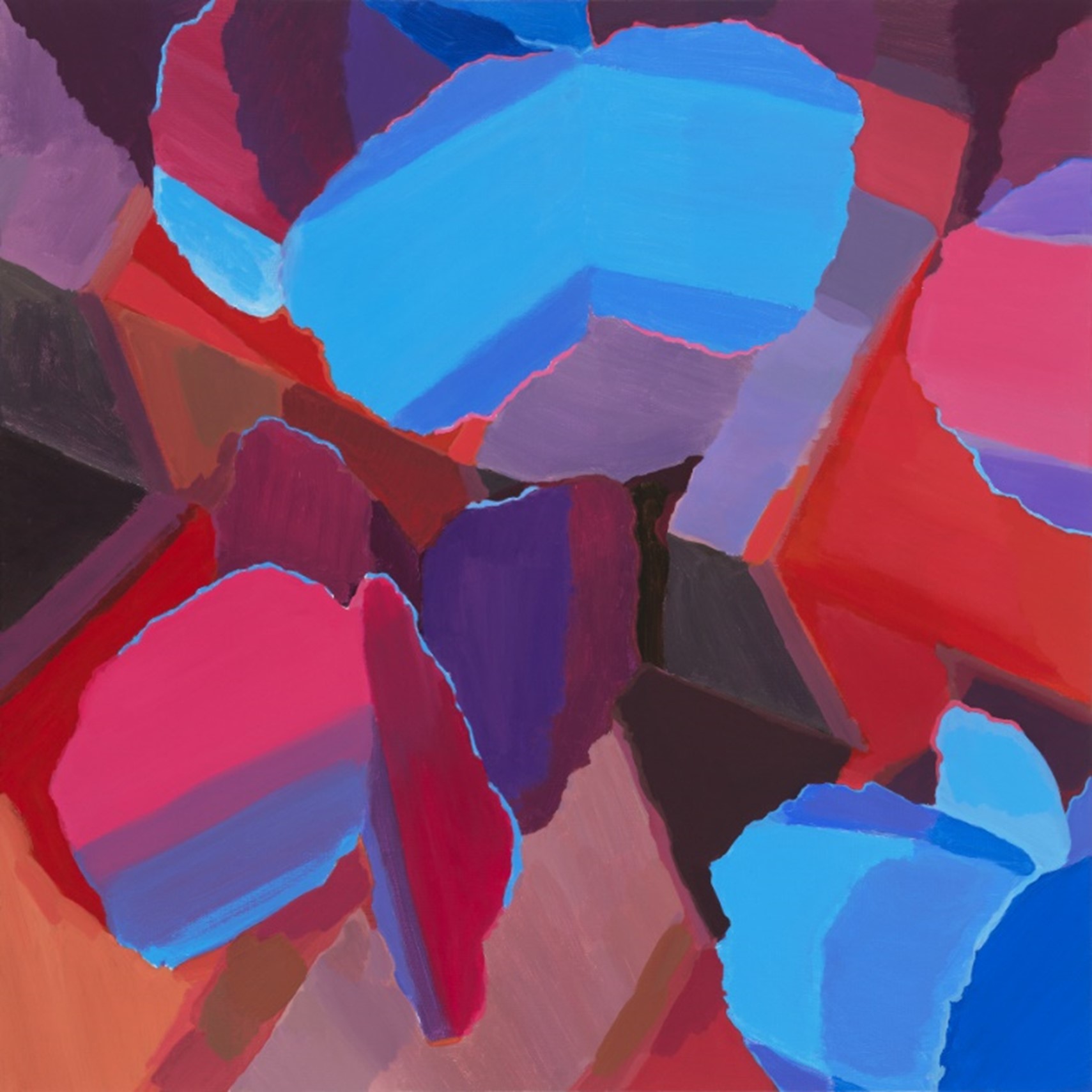
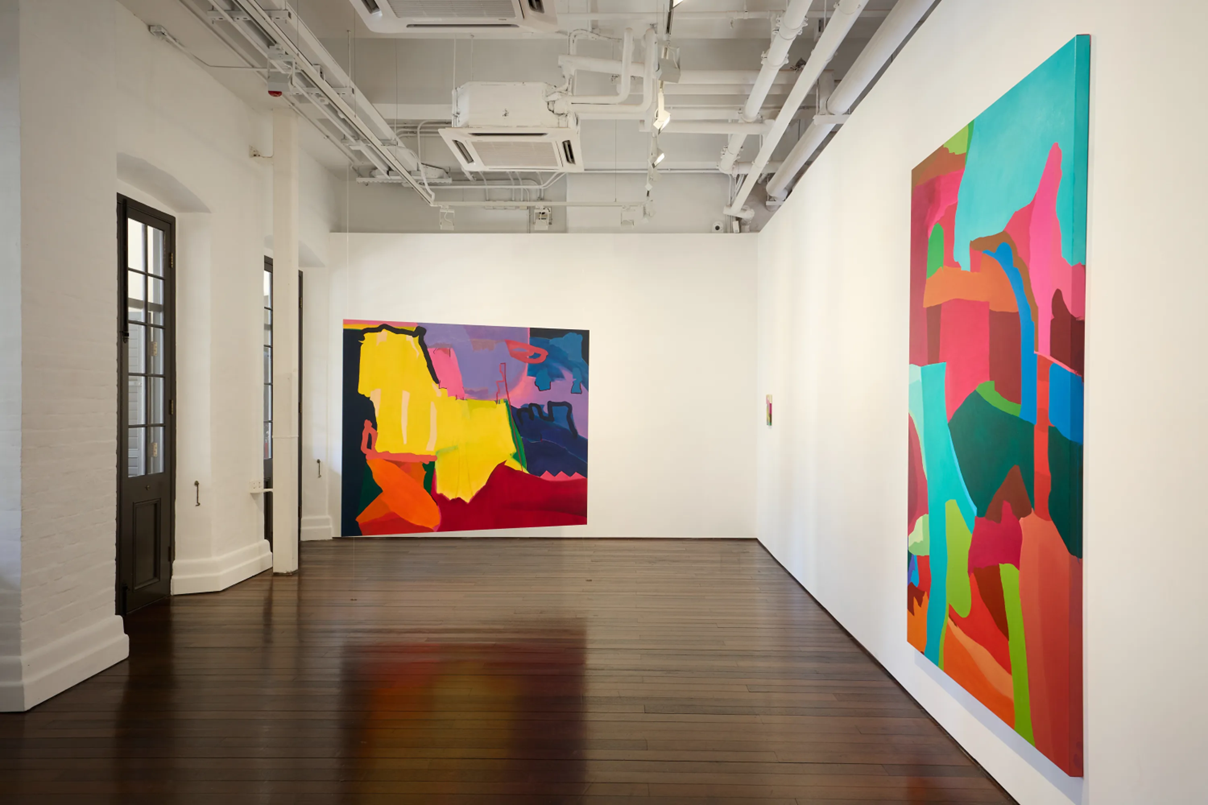
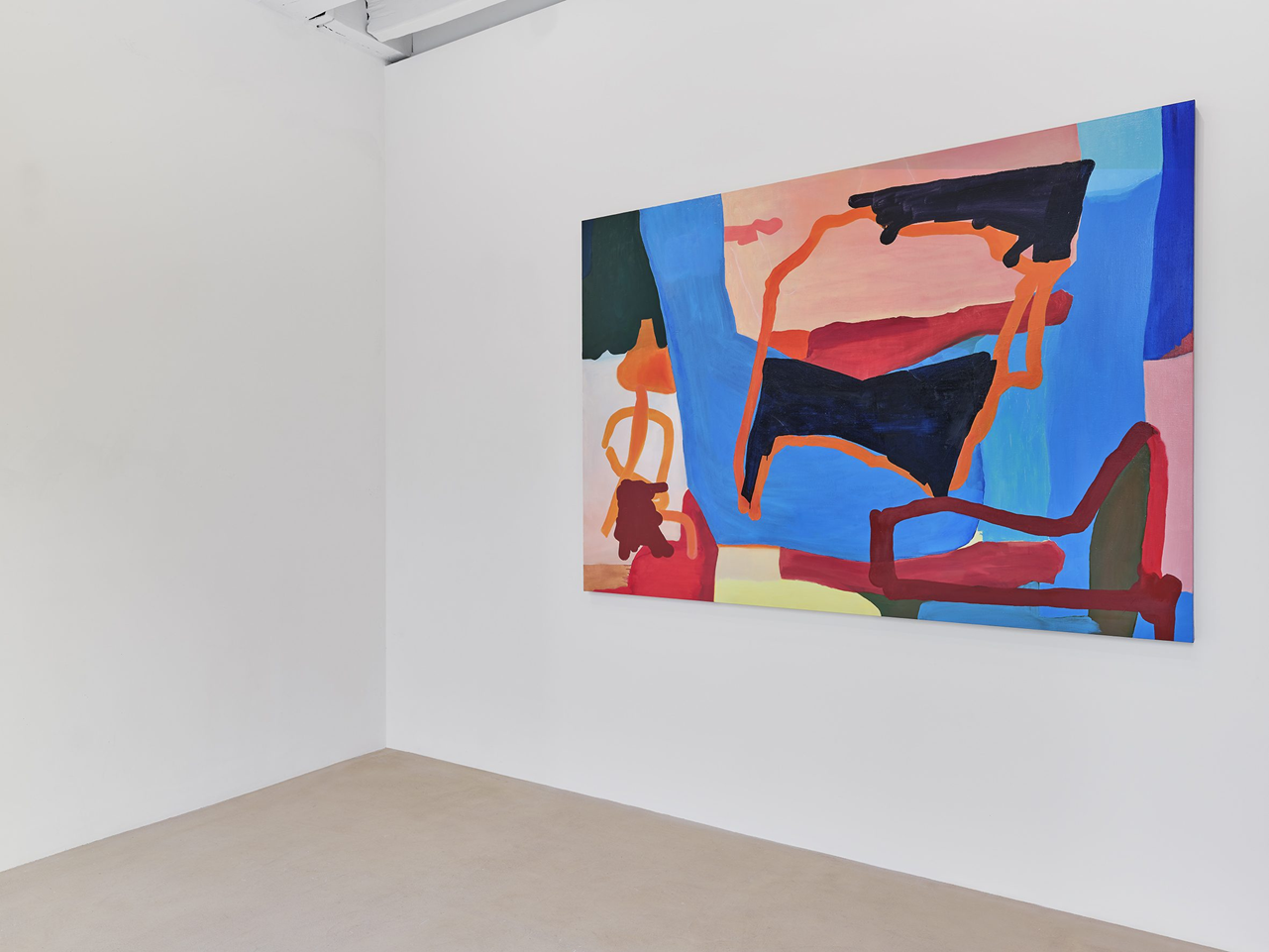
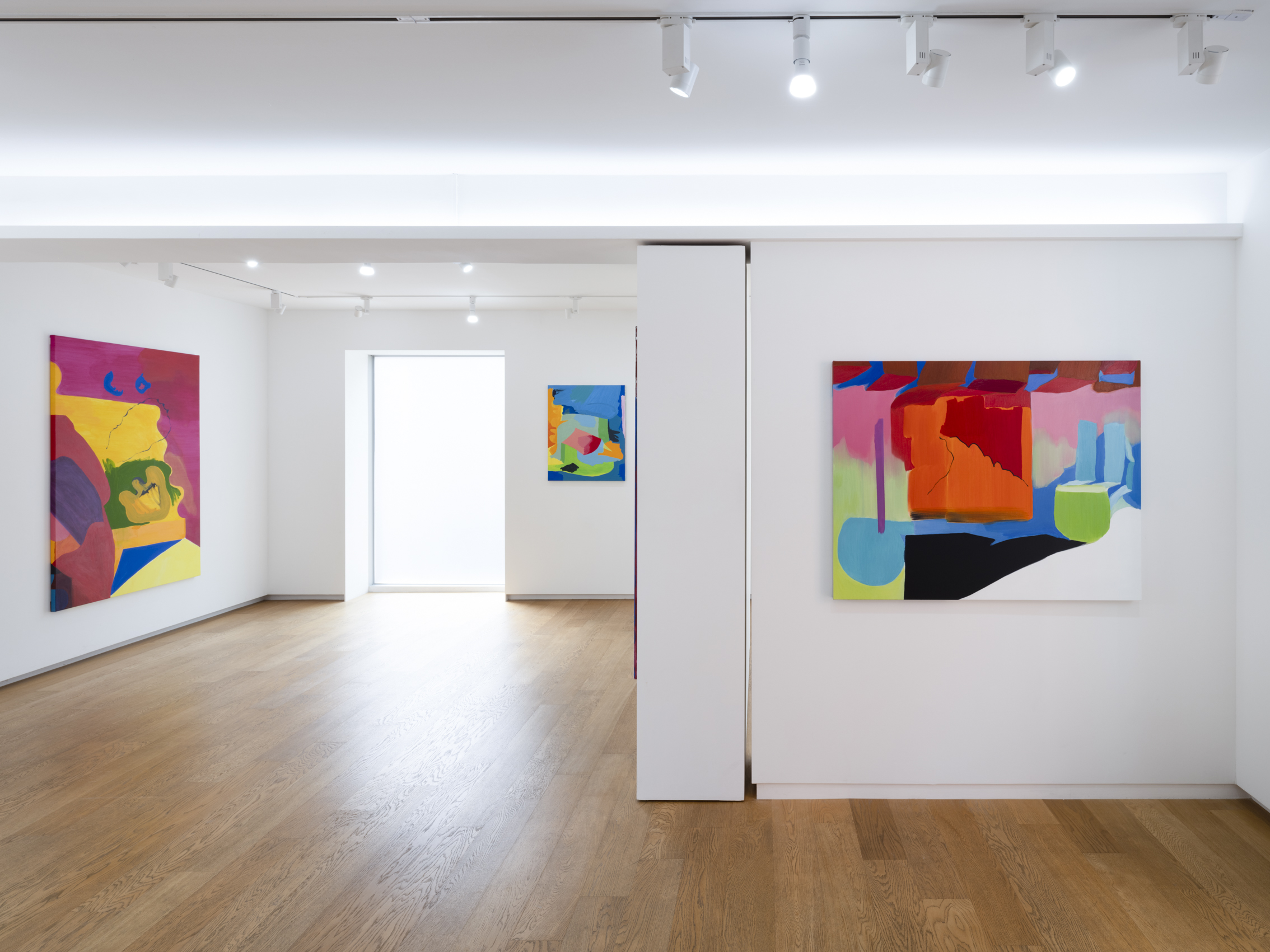
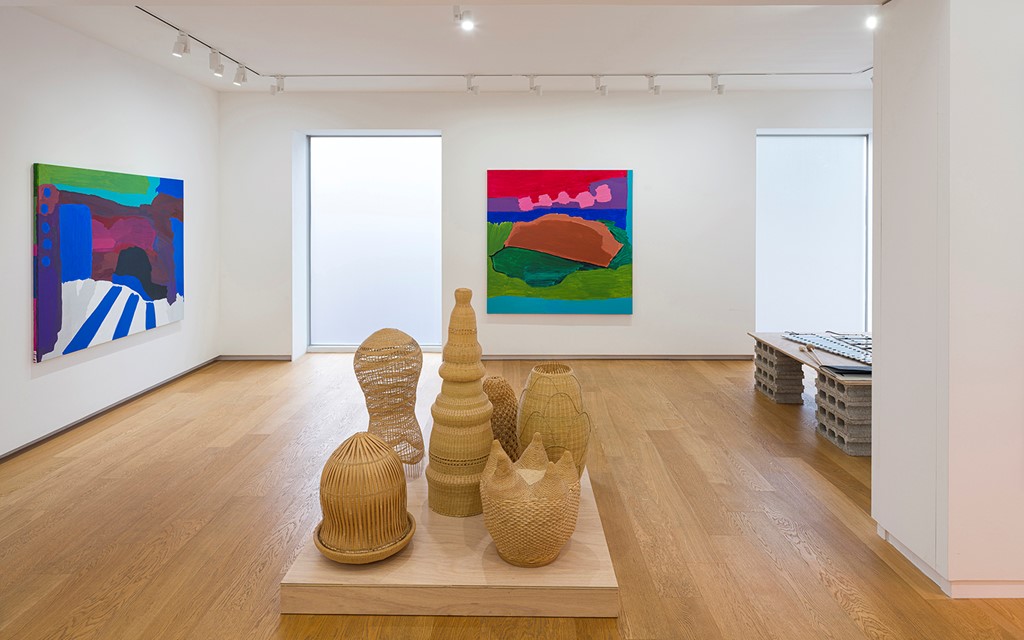
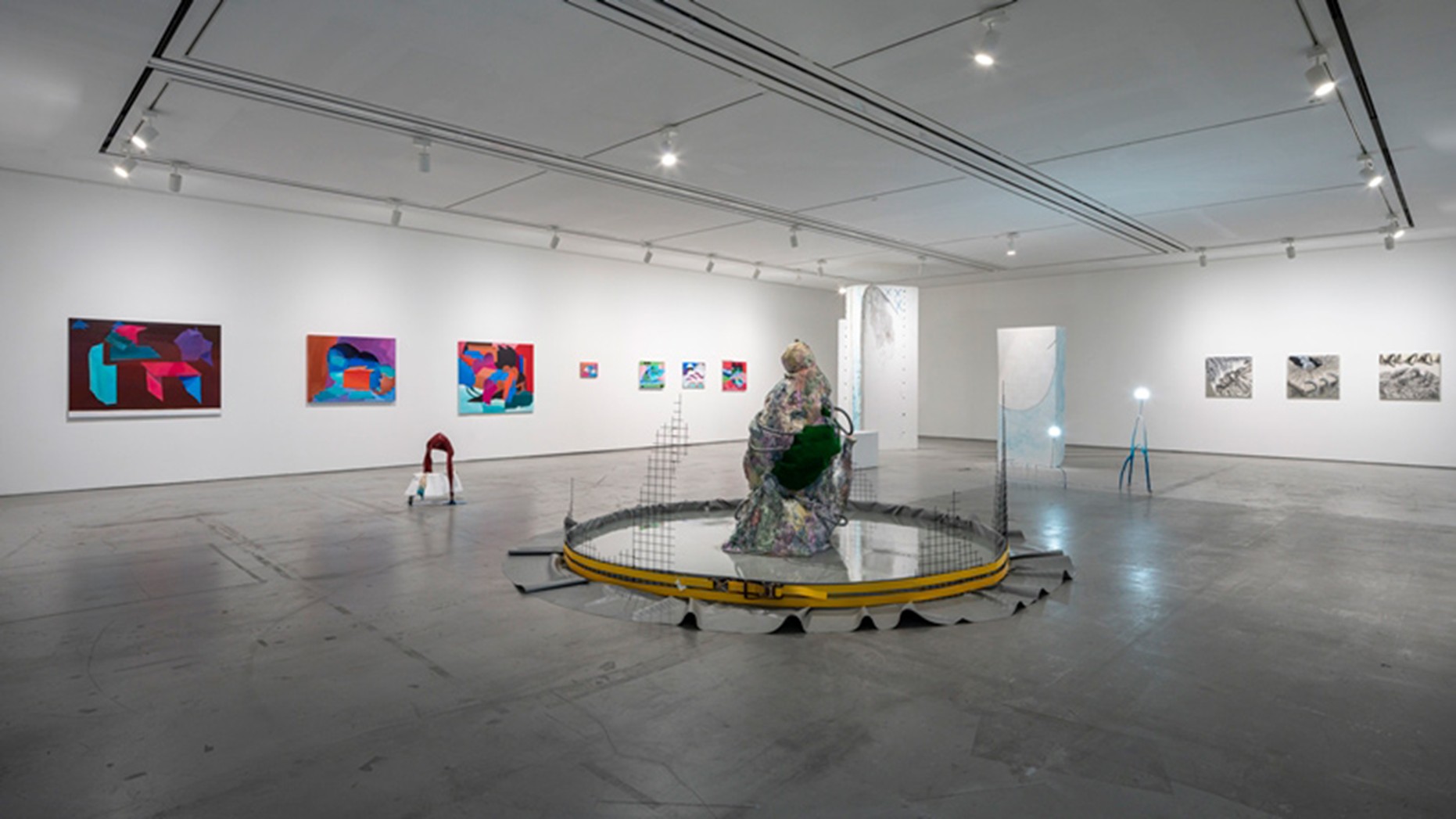
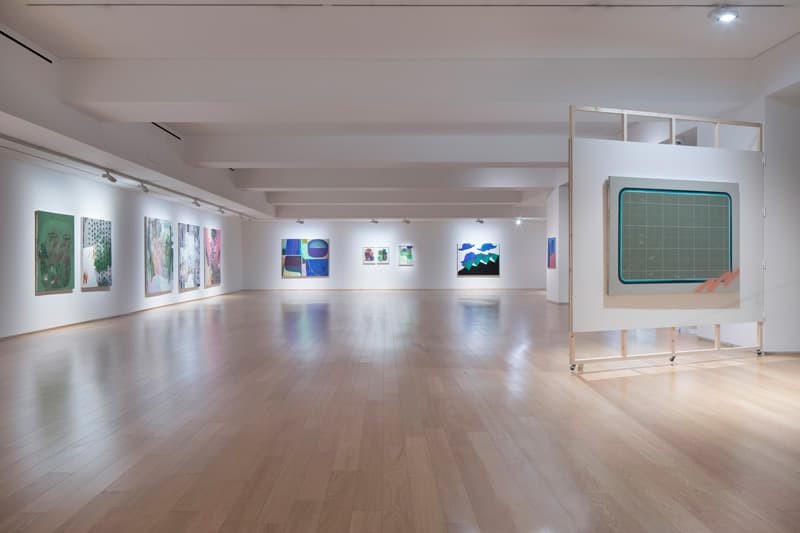
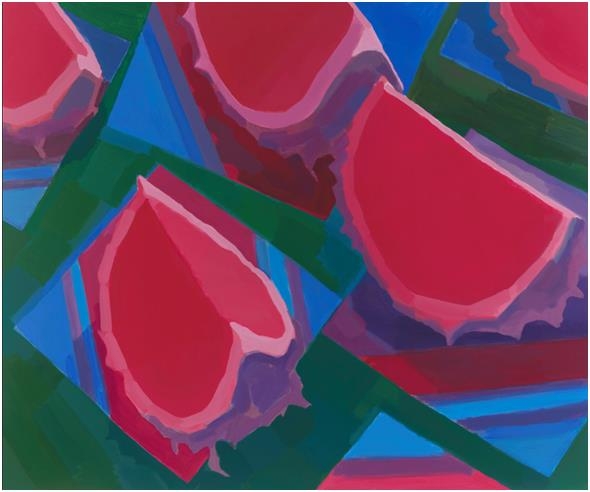
A blank space. Within it, a circular shape emerges, followed by
similar round forms spreading side by side. The paired shapes fold like origami
and line up, moving vertically. Observing the work of Hejum Bä, one feels that
the shapes on the stage-like rectangular canvas move freely, constructing and
navigating their own spatial logic. These painted forms do not represent
real-world objects nor serve as symbolic signs. How then are these forms
generated, and why do they seem active despite being fixed?
Looking back, Bä has dealt with the relationship between image and
the painted surface since works like Coming the Painterly
(2016). The birth of these forms involves the artist’s visual perception.
Perceiving something always involves cognitive processes that turn the object
into an image stored in memory, during which inevitable errors arise. Even when
we believe we thoroughly know an object we see, what remains in our mind is a
subjectively formed, abstract mass—an afterimage. Imagination intervenes in
memory, freely transforming the image. Consequently, the image bears only a
resemblance to the actual object but never truly matches it. Bä began painting
round shapes inspired by the exotic appearance of unfamiliar plants, yet these
forms have no inherent connection to their real-world counterparts. What the
artist originally constructed in her paintings was not a representation of
reality but an autonomous world of images. By deliberately loosening the
relationship between image and object, she opened up more room for images to
move and embraced the active process of image evolution during
perception—thereby stepping away from mimesis.
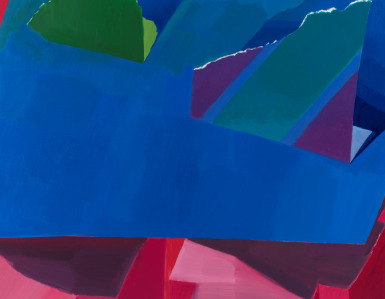
In Some Kind of Order When Words Fail (2018),
Bä assembled colorful, paper-like color planes within the pictorial
surface—images created in her imagination rather than derived from real
objects. These planes share an analogical relationship with colored paper but
do not signify it directly. They represent a dematerialized world of images
floating parallel to reality, untethered from the semiotic system of language
as social convention. These immaterial images take shape on the canvas with
“thin bodies”—having spatial coordinates but lacking volume. These “thin
bodies,” imagined as images in relation to reality, are materially realized yet
remain intangible, occupying a liminal, pictorial realm.
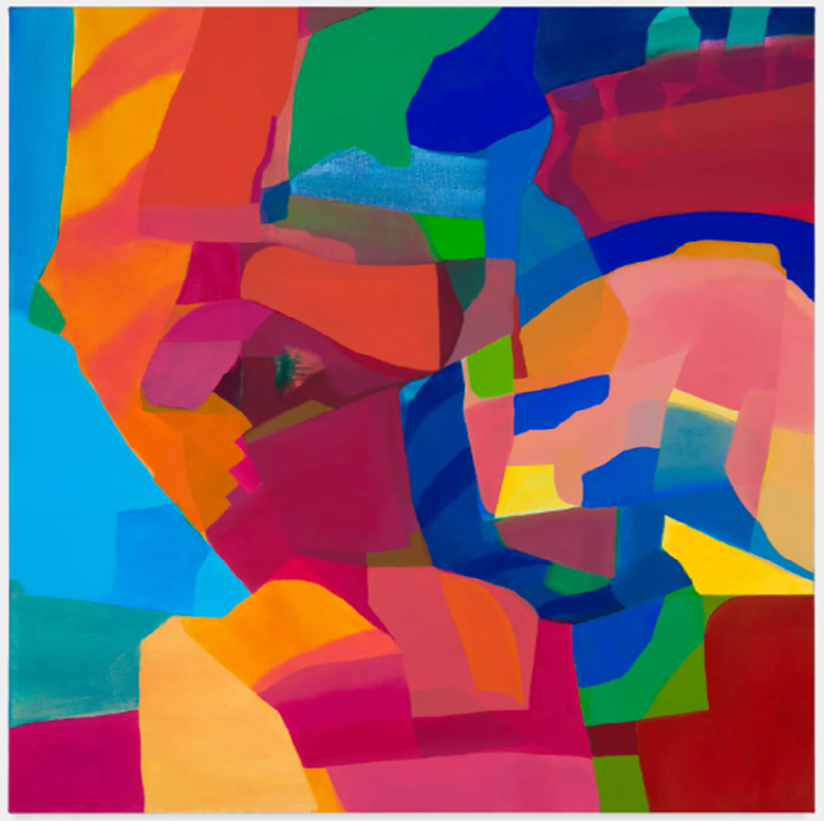
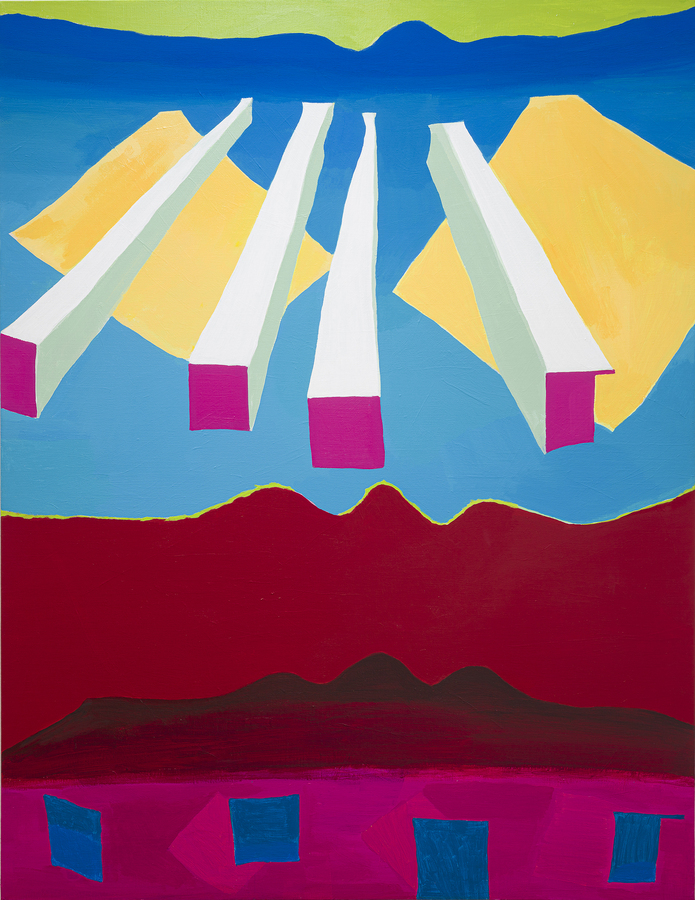
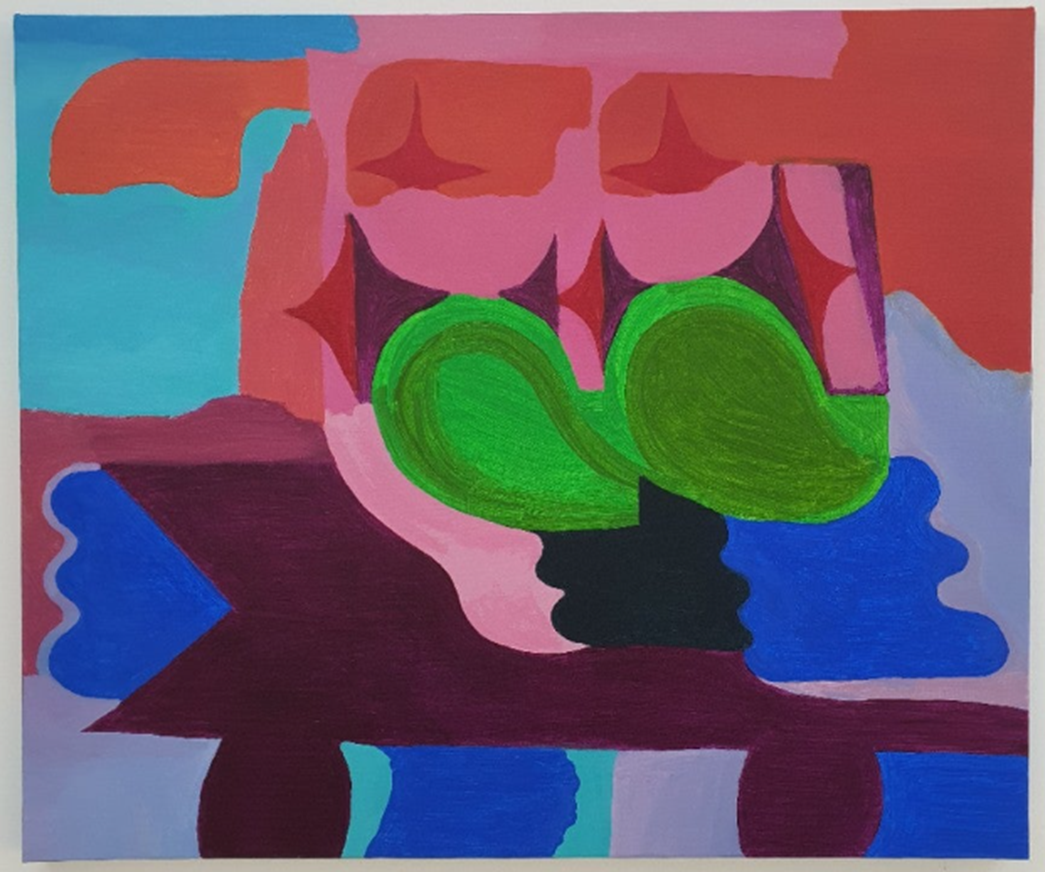
In works like Face (2018), Landing
(2018), and Traveling Between Stairs (2018), Bä placed forms
that evoke—but do not reproduce—something recognizable, arranging them into
dynamic pictorial relationships. Color planes swing open like doors,
lightweight shapes descend like sheets of paper, and butterfly-like forms move
up and down in a choreographed illusion. These seemingly self-moving forms turn
Bä’s paintings into a stage where something is always happening. Like a
scenographer, she constructs the minimal framework necessary to suggest an
event, creating a kind of pictorial “plot” through her drawings. Viewers
interpret these abstract plots to infer potential events. As the title Away
from the Plot (2019) suggests, Bä has recently attempted to break
free even from the plot itself, painting without a fixed goal. The painting
process—balancing color harmony or contrast, adjusting area and brushstroke,
arranging form and background—has become more significant. On the
two-dimensional surface, shapes rise and fall, fold, overlap, and unfold, each
telling a different story depending on the viewer’s perception. These works
resemble poems formed by just a few suggestive words.
Rudolf Arnheim once noted that thoughts demand images and images
contain thought—calling this process “visual thinking.” In painting, the act of
pictorial formation gives spatial presence to the artist’s spatial-temporal
sensibility and evolving thought. Hejum Bä’s works allow viewers to imagine the
very process of form-generation—“picturing” in the literal sense. As forms
synchronize with the artist’s thought process, the viewer, too, perceives them
as if they are emerging across space in real time. The illusion of movement
evoked in Bä’s work arises from the viewer’s own spontaneous cognition. As
these events unfold on a single, plotless plane, they operate purely through
illusion—realized only in the interplay between the artist’s thought and the
viewer’s recognition. Moreover, the dynamic expansion of forms, moving like
characters on a stage, is repeatedly reawakened in the viewer’s mind, remaining
forever in progress.
Through this approach, Hejum Bä activates visual thinking through
images and opens up a poetic world that escapes linear causality. For her, the
pictorial surface is a space where a minimal anchorage is offered to freely
floating images, allowing for the mapping of an as-yet-unknown order. While her
paintings remain mysterious—always on the verge of clarity—they open up inner
worlds for the viewer and raise the fundamental question: Where did that very
first shape we drew with a colored pencil come from? The answer, it seems,
remains an enduring riddle.