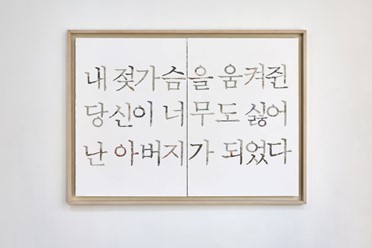
“It
will be cloudy across the country with rains in many places in the southern
regions.”
Those
were the words formed by the immaculate cut–up strips of metal foil neatly
arranged on the window. Then the sky gradually grew darker, and it really began
to rain. As the raindrops began to glide down the glass window against the
sullen scenery outside, the overlapping sentence took on an uncanny meaning. I
found myself reading the same sentence over and over again.
“It
will be cloudy across the country with rains in many places in the southern
regions.”
It
happened on April 9, during the exhibition in commemoration of the 5th
anniversary of the Sewol Ferry Disaster, held in Seoul. Unlike the opening
ceremonies of other exhibitions, the aura inside was as somber as the rainy
outdoors. It was a venue where people laboriously tried to speak again of a
disaster; where people strove strenuously to remember the disaster, lest they
forget; where people called for the remembrance and grieving of this tragic
loss instead of carrying on with everyday life. The exhibition served as a
reminder that even the system of representation of ‘Art’ had come to face the
painful disaster and loss of a specific event, i.e., the sinking of MV Sewol.
In such context, the above sentence became more than a prose of weather
forecast. In summoned the day of tragedy to the present, serving as a political
statement that awakens a certain sadness from the abyss and thereby encouraging
us to act. It gradually transformed into a sentence of deliberation, presenting
us with the way ahead for such politics of sorrow.
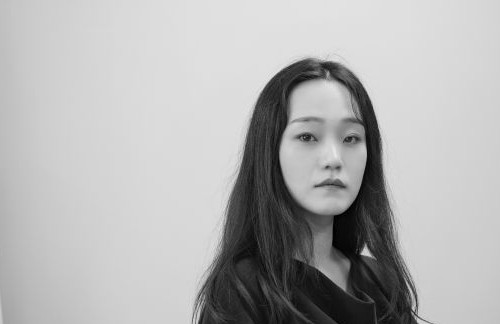
Titled Tomorrow’s
Weather (2019), this work was placed across the glass windows of
several exhibition spaces hosting the commemorative exhibition for MV Sewol.
Each sentence was taken from the weather forecasts of the days when disasters
similar to the sinking of MV Sewol occurred. Keem Jiyoung said that she once
headed to Paengmok Harbor to better comprehend the startling, aphasiac silence
that followed the tragedy of the Sewol ferry. Two seasons drowning in unknown
fear had already passed since the incident by the time she visited the site.
What she saw there, however, was not some extraordinarily ruthless sea that
massacred hundreds of lives. Rather, the sea was the same sea we always knew.
The lazily shifting breeze carried the salty scent of the water, while the
waves repeatedly crashed to create a rhythmic sound. Beautiful sunlight
scattered across the surface of the water. Keem found it strange that the sea
remained as tranquil and beautiful as ever even after such an agonizing
tragedy. She logged the weather of each day and continued to paint the sea. She
recorded the overcast days that followed sunny mornings, the snowy or rainy
days, how the sky gradually grew cloudy only to clear up again, the sultry or
freezing temperatures, the bright and quiet sea, and the dark and terrifying
sea, the waves that continuously moved about and changed, the breeze that
drifted atop the sea every day. Keem painted the subdued, sorrowful cries of
the lives submerged on the seabed.
As
Keem stared into the immutable sea at Paengmok Harbor, she decided to follow a
single calling: to represent and refuse to remain silent or make compromises.
In her first project “Song Unable to be Good” (2015, Samuso CHAGO),
Keem readily chose “non–goodness (unethicalness)” in defiance of the Adornoan
argument that it is unethical to represent another person’s agony (“To write
poetry after Auschwitz is barbaric”). It was around this time that the increasingly
desperate struggle of the families of the Sewol ferry’s victims became more
agonizing by the day. Rhetoric about the ferry’s sinking and its victims often
reached startling levels of provocativeness. Even amidst such sociopolitical
turmoil, Keem courageously suggested, in her first solo exhibition 《Tilted Land Even Wind》(2015, O’NewWall
E’Juheon), that the duty of the artist must be derived from ‘representability’.
Keem recorded the daily wind speed since the tragedy and turned them into drum
beats [Wind (2015)] that thump like the pulse of the
living. A waterdrop glides against a dangerously slanted floor [Floor (2015)],
finding its way atop a cheek, becoming a teardrop. There is a black sea packed
with charcoal powder [Wave (2015)], while a face
quietly keeps its eyes closed [Sleep (2015)]. Such
works allow us to contemplate about how fair death is, in that all human beings
must one day die. Through this, we begin to sense that ‘mimicry’―which has long
served as the roots of art―is finally expanding into ‘re–presentation’.
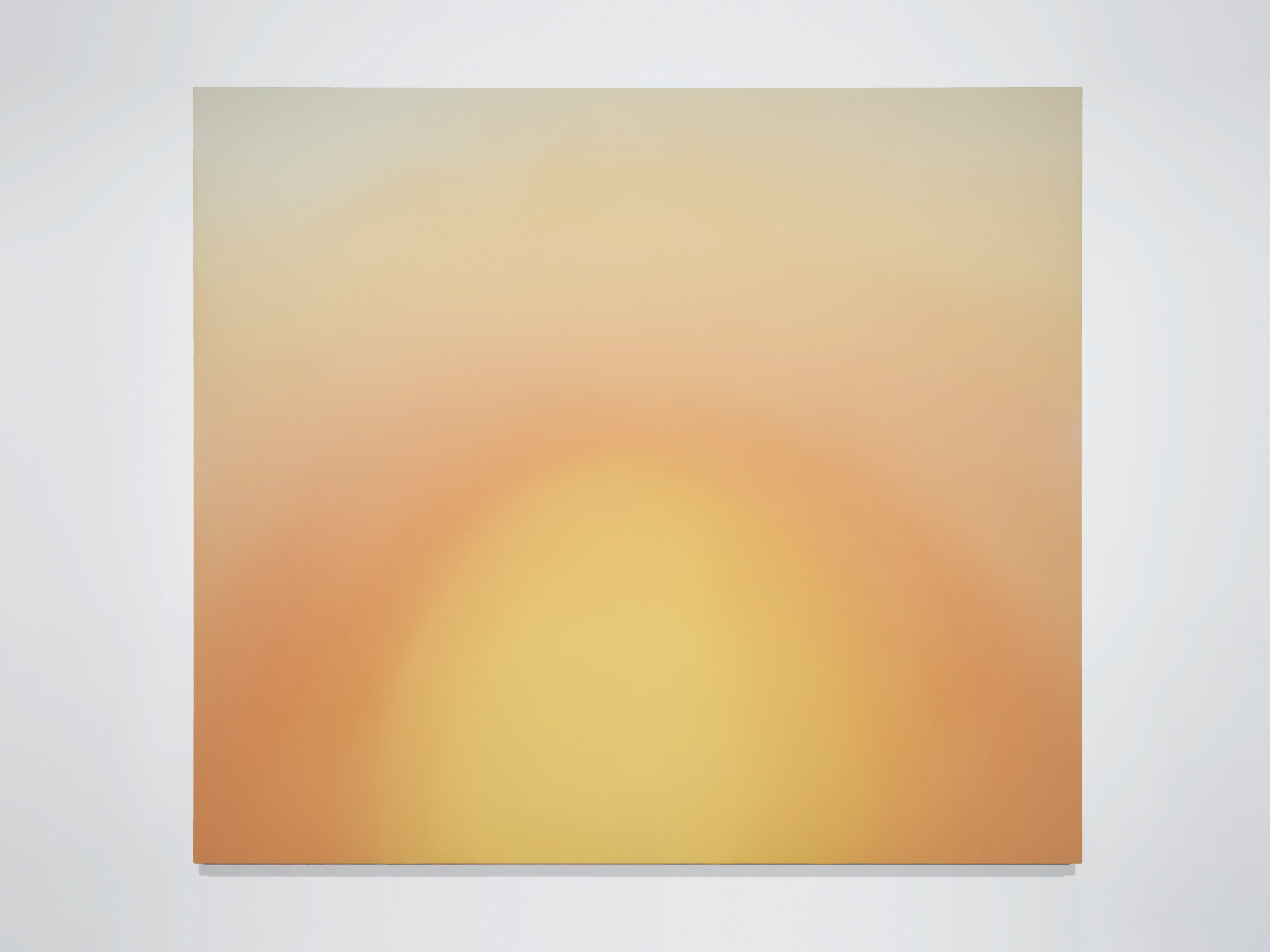
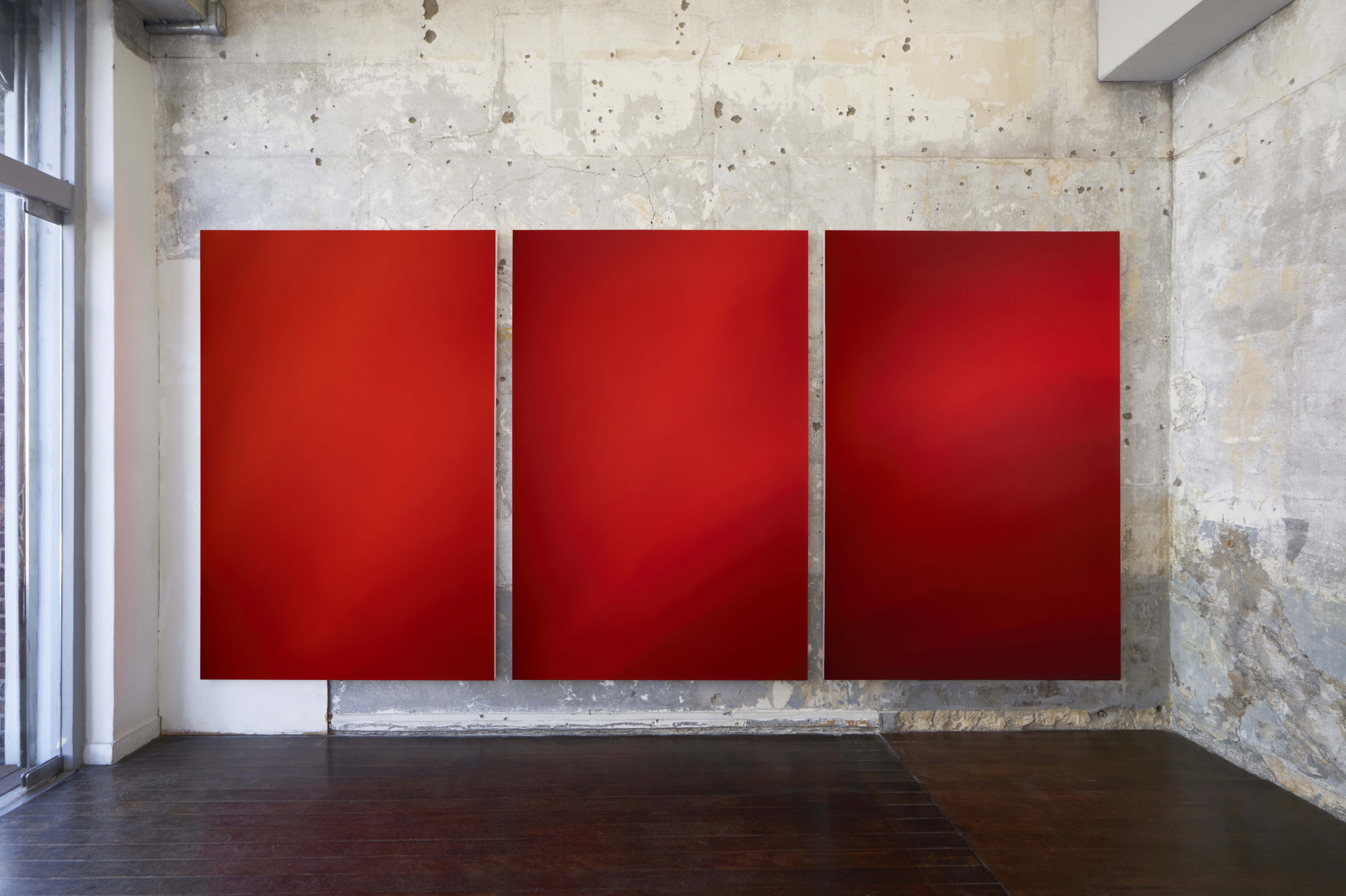
Keem’s
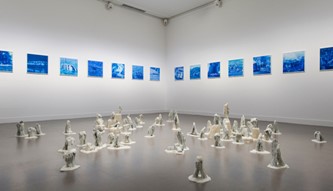
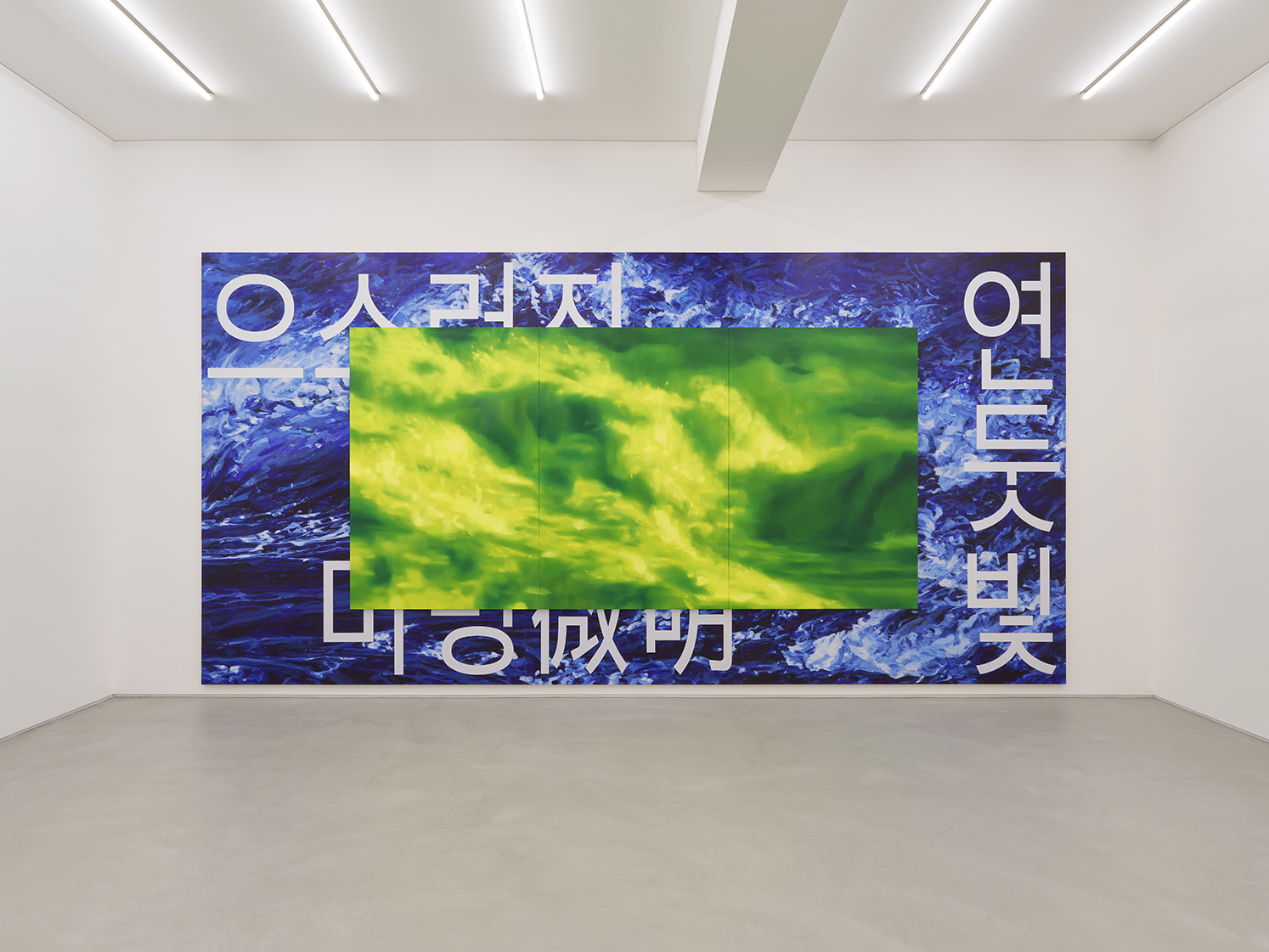
penchant for such representation continued into the Blue Series that
began in 2016, and became uncompromisingly resolute in her second solo
exhibition 《Wind Beyond the
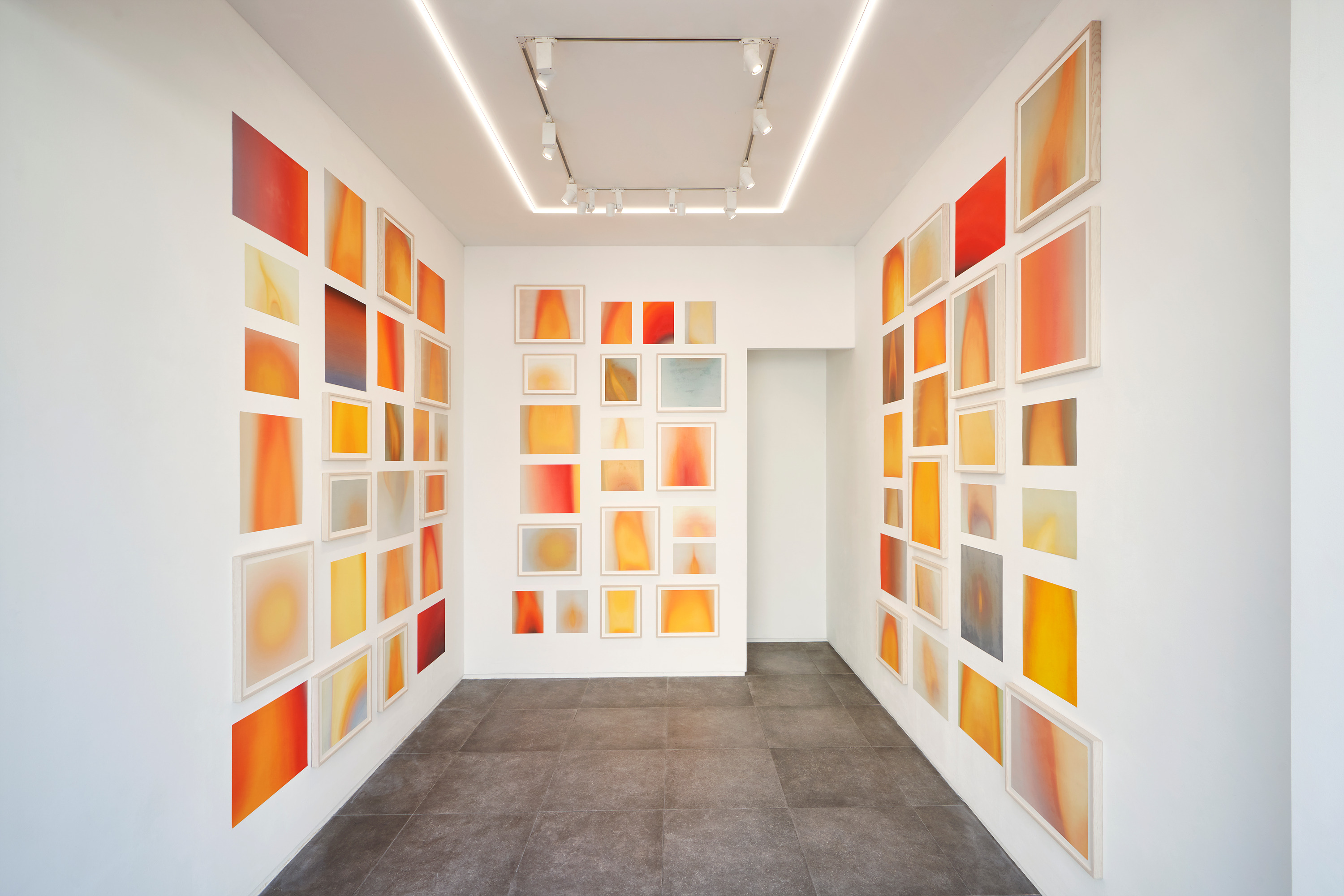
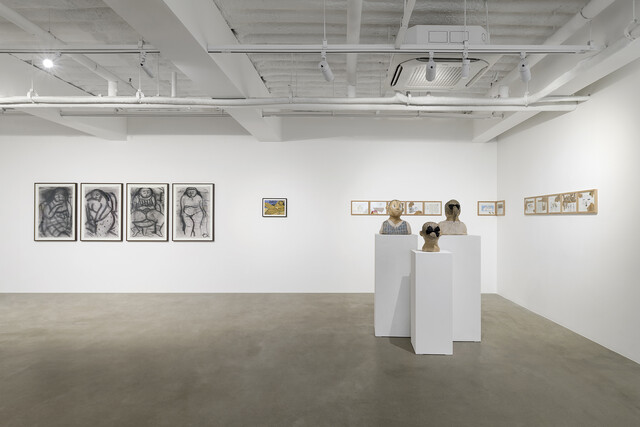
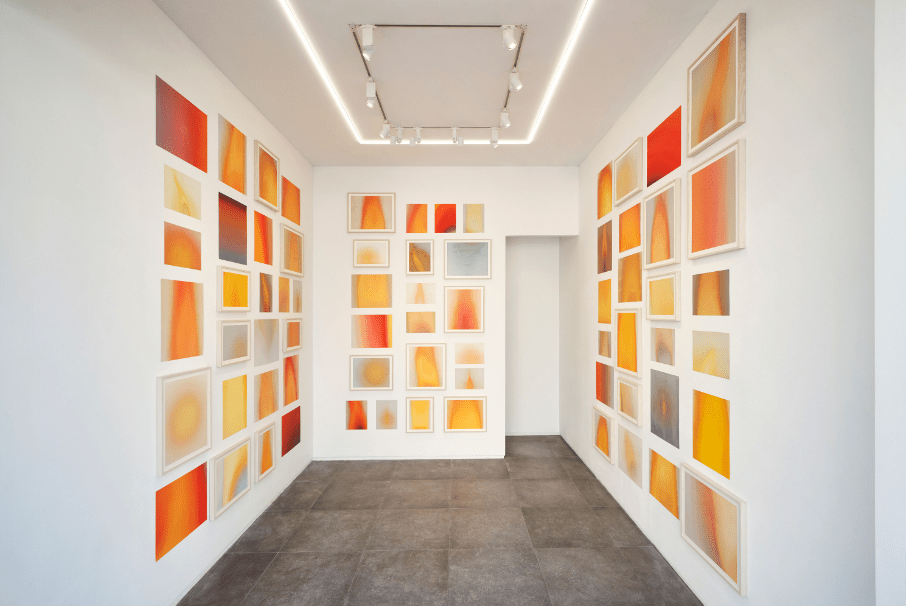
Closed Windows》 (2018, Sansumunhwa). Leaving
behind intense traces of friction with thousands of bold oil pastel strokes
across the paper, Keem patiently portrayed the landscape of disaster. She dug
deep into the dusty archives that remain as rough and blurry images, trying to
dig up materials she hopes could shed light on the structure of this repetitive
disaster. Keem thus collected and ruminated over the data over and over again.
All this nearly obsessive behavior was made manifest in the way Keem moved her
hands to draw the picture. Sometimes she would press firmly, and other times,
lightly glide over the surface, creating forms and volume with the sensation in
her hands. She builds layers after layers, and finds the weighty sentimentality
of the oil pastel shine colorfully at the most unexpected moments, eliciting a
resounding resonance within oneself. One cannot simply disregard the
responsibility of the artist who never fled from these painful images. The
paradox of having to face agony in order to represent such agony must have
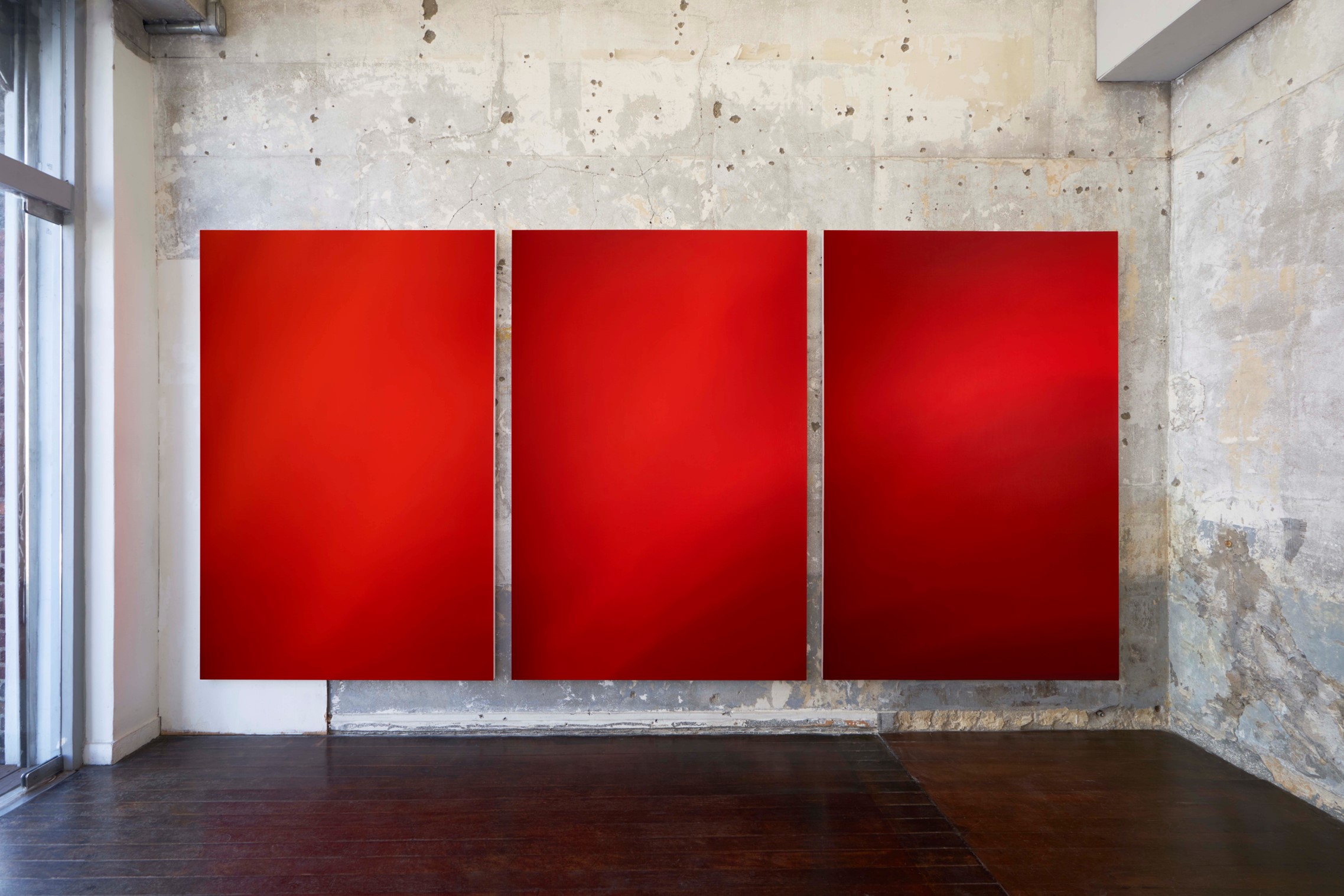
never been easy for Keem. Such relentless determination for representation
would manifest in the monotonic paintings of blue, a color that acutely
re–presents us with both the symbol of ‘hope’ and ‘depression’.
Keem’s
works strongly tend to represent the sensation of agony experienced by the
marginalized and the unjust social structures that lead to such painful
consequences. Diligently reconstituting the methodology for representation is
as important to Keem as the investigation of the dynamics behind a disaster.
Through tenacious efforts to clearly remember every single incident that she
comes to face, Keem spends time in self–introspection in active response to the
sadness that rattles the incident from the inside and out. Notwithstanding the
sad emotions, Keem still rises to the occasion to formulate “The Politics for
Sorrowful People”.¹ That is what Keem must have been striving to approach in
her incessant pursuit of representation.
Then
what does it mean for this relatively ‘new’ artist to live in this age of
disasters, when she should be busy solidifying her own style as she launches
her artistic career? The metaphor of the sinking ship, the endlessly wavering
image of water, and the image of students in uniform have undoubtedly come to
hold different meanings compared to the period prior to the Sewol Ferry
Disaster. In this age where customary metaphors often become counter–ethical
while tranquil images unexpectedly become political, could Keem’s practice then
become a valid pursuit of the categorical imperative of ‘ethical
representation’? Will Keem be able to reassemble and advocate the ethics of
representation for the sake of those who must continue to live on despite the
pain, i.e., ‘the ones left behind’ the disaster who are now also the primary
grievers? It would be fascinating to see where Keem’s new practice heads next.
¹Korean
translated title of: Parker J. Palmer, Healing the Heart of Democracy: The
Courage to Create a Politics Worthy of the Human Spirit, (Bay Area: Jossy–Bass,
2011).